




Abstract
To address sexism, people must first recognize it. In this research, we identified a barrier that makes sexism hard to recognize: rudeness toward men. We found that observers judge a sexist perpetrator as less sexist if he is rude toward men. This occurs because rudeness toward men creates the illusion of gender blindness. We documented this phenomenon in five preregistered studies consisting of online adult participants and adult students from professional schools (total N = 4,663). These attributions are problematic because sexism and rudeness are not mutually exclusive. Men who hold sexist beliefs about women can be—and often are—rude toward other men. These attributions also discourage observers from holding perpetrators accountable for gender bias. Thus, rudeness toward men gives sexist perpetrators plausible deniability. It protects them and prevents the first perceptual step necessary to address sexism.
In 2016, July Dotel sued Walmart for gender discrimination. She argued that her supervisor abused women daily and called women “good for nothing” (Dotel v. Walmart Stores, Inc., 2016, p. 3). However, the U.S. Court of Appeals (Second Circuit) dismissed her case. The court pointed out that her supervisor was rude toward other male employees. “The strongest inference that can be drawn from the record,” the judge wrote, “is that the supervisor was rude to all” (Dotel v. Walmart Stores, Inc., 2016, p. 3). Dotel’s case was dismissed because her supervisor was an “equal opportunity jerk” (Bergstein, 2016).
Most people would agree that the statement “women are good for nothing” is a sexist remark. Yet the court ruled that there was no evidence of gender discrimination in Dotel’s case. On the basis of this example, the present research tested whether observers judge a sexist perpetrator as less sexist if the perpetrator is rude toward men. If confirmed, this would be a problematic fallacy. Sexism and rudeness toward men are not mutually exclusive. A man can both hold sexist beliefs about women and be rude to other men. However, when sexist perpetrators are rude to men, it may seem like they are hostile to anyone. This may lead observers to believe that gender bias is not at play, a belief that perpetuates sexism.
Sexism and Rudeness
We define sexism as attitudes, beliefs, or behaviors that reflect, foster, or promote negative or pejorative stereotypes about women (Lewis, 2018; Swim et al., 2004; Swim & Hyers, 2009). Examples of such stereotypes include the notion that women are nice but incompetent; that women are unfit for stereotypically masculine jobs; and that women are weak, emotional, and irrational. These and other negative stereotypes are harmful. They are used to justify the subjugation of women and create barriers to gender equality (Jost & Kay, 2005).
Despite decades of reform efforts, sexism remains pervasive (Eagly & Miller, 2016; Heilman, 2012; Ibarra et al., 2013; Kennedy & Kray, 2015; Martin & Phillips, 2017; Rosette & Livingston, 2012). Multiple factors contribute to its persistence. For example, people find chivalrous behavior acceptable. Although it may seem benevolent, chivalry perpetuates negative and paternalistic stereotypes about women (Glick & Fiske, 1996). Another factor is men’s lack of support for gender-parity initiatives. Even if they do support them, men sometimes believe they lack the standing to get involved (Sherf et al., 2017). Finally, people often feel reluctant to confront sexist conduct because they fear retaliation (Good et al., 2012; Kaiser & Miller, 2001, 2004; Swim & Hyers, 1999).
We contend that an important but overlooked factor that perpetuates sexism is rudeness. We propose that observers are less likely to recognize sexism when it comes from a perpetrator who is rude to other men. Rudeness pertains to antisocial behaviors generally regarded as discourteous, impolite, or inconsiderate (Pearson et al., 2005; Porath & Erez, 2007). Humiliating, swearing at, and addressing colleagues in unprofessional terms are examples of rudeness.
Like sexism, rudeness is common, is harmful, and undermines the well-being of victims (Porath & Erez, 2007; Porath & Pearson, 2013). However, rudeness and sexism are conceptually distinct from one another. Not all rude behaviors invoke negative and pejorative stereotypes about women. For example, failing to acknowledge a coworker in the hallway is rude but not necessarily sexist. Conversely, some forms of sexism are not necessarily rude. One example is the idea that men should cherish and protect women. This idea promotes the harmful stereotype that women are weak (Glick & Fiske, 2001). Yet it is often perceived as polite and courteous. In sum, sexism goes far beyond rudeness. It promotes, invokes, or reflects pejorative stereotypes about women.
Rudeness may obscure the recognition of sexism by creating the perception of gender blindness: The perpetrator does not notice or pay attention to a person’s gender (Martin & Phillips, 2017). When sexist perpetrators are rude to men, it may seem like they are hostile to anyone. As a consequence, they may appear as though they do not hold biases or pejorative beliefs about women. Rudeness toward men creates an illusion of impartiality, giving sexist perpetrators plausible deniability (Major et al., 2002). This may mislead observers into thinking that an intervention such as gender-bias training is unnecessary.
Statement of Relevance
Sexism can be challenging to identify and eventually root out. However, we contend that even blatant forms of sexism are sometimes difficult to recognize. In this research, we demonstrated how rudeness can makes blatant forms of sexism harder to identify. We found that a man does not seem sexist if he treats everyone—both men and women—poorly. This is problematic because sexism and rudeness are not mutually exclusive. Men who are sexist can be—and often are—rude toward other men. We found that rudeness obscures the recognition of sexism by creating the perception that the sexist perpetrator does not notice or pay attention to gender when dealing with other people. This misleads observers into thinking that an intervention such as gender-bias training is less necessary. Rudeness can therefore protect sexist perpetrators, making their prejudice harder to recognize and correct.
Overview of Hypotheses and Studies
We first conducted a pilot study to examine whether men can both hold sexist beliefs and be rude toward men. Then, we tested whether rudeness toward men obfuscates gender bias: When men are sexist and rude toward other men, observers will likely judge them as less sexist (Hypothesis 1) because they see them as gender blind (Hypothesis 2). Our final study examined downstream consequences. Because rudeness can conceal sexism, it can reduce the prescription of gender-bias training (Hypothesis 3).
We conducted five preregistered studies (total N = 4,663) to examine these ideas. For each study, we report all manipulations, participant exclusions, and dependent measures. We made an a priori decision to choose sample sizes that would allow us to have 80% power to detect a small to medium effect. Across all studies, our samples were sufficiently large to detect an effect (r) as small as .14. All dependent measures are reported below; preregistered exploratory measures are reported in the supplemental online material available at https://osf.io/xu6a7/. In all studies, we recruited participants based only in the United States. All data and materials were approved by the institutional review board at the University of Virginia or The University of Texas at Dallas and are available at https://osf.io/4zrq8/. Table 1 provides a comprehensive description of participants for all studies.
Distribution of Participants Across Studies
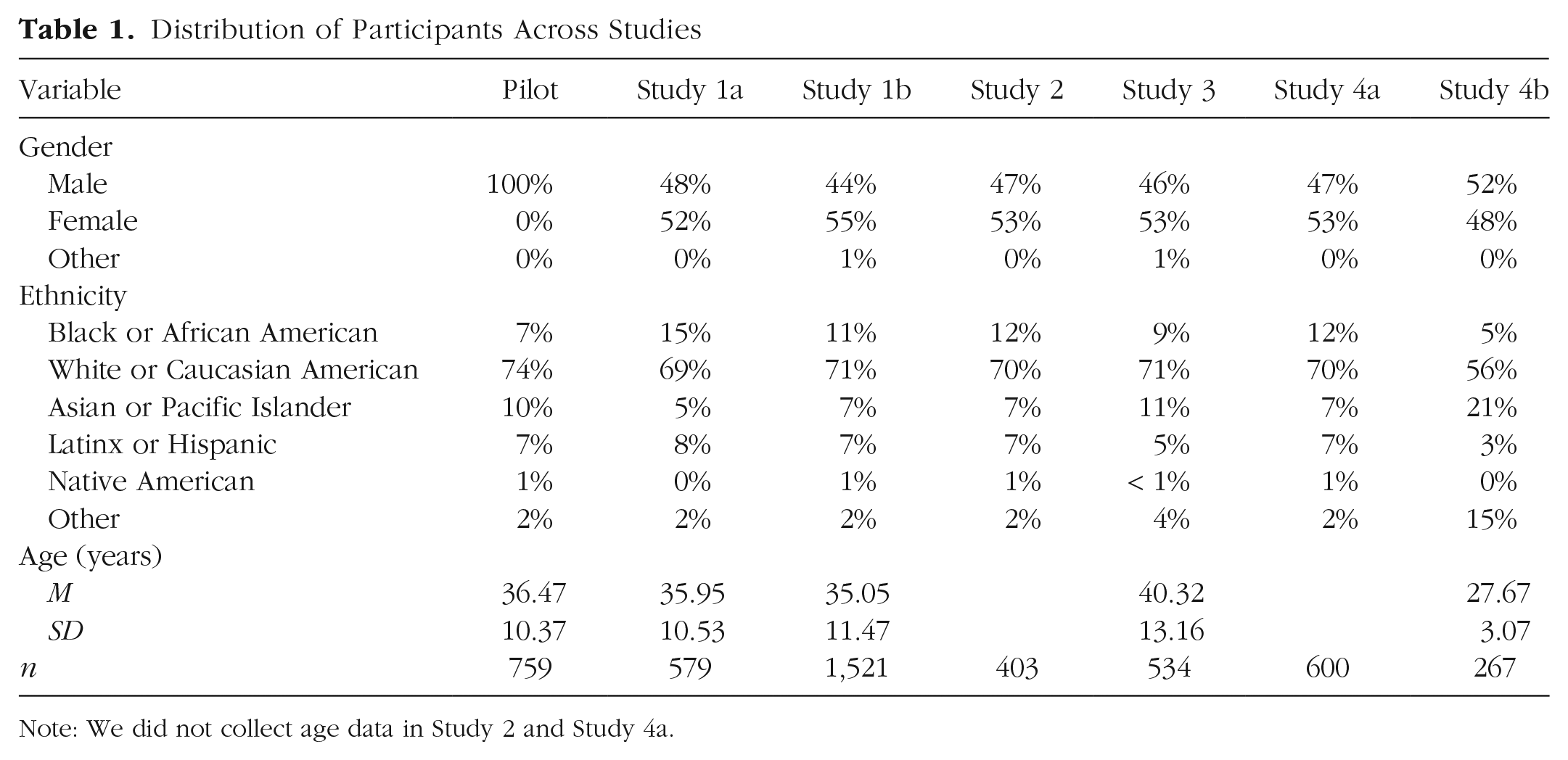
Note: We did not collect age data in Study 2 and Study 4a.
Pilot Study
We examined whether men who self-report sexist beliefs are rude to women and other men.
Method
We conducted a two-part survey among employed men, first measuring their self-reported rudeness at work and then their self-reported sexism (i.e., their attitudes and beliefs about women) a few days later. We were interested in the work context given legal precedents (e.g., Dotel v. Walmart Stores, Inc., 2016) and the pervasiveness of rudeness in organizations (Porath & Erez, 2007).
Preregistration
We preregistered our analysis plan for this study before collecting the data (see https://aspredicted.org/n9qg2.pdf).
Participants
We aimed to collect data from 600 participants and overrecruited to meet this goal because we planned to select only adult men who were employed. A total of 1,153 men recruited through CloudResearch (https://www.cloudresearch.com/; formerly TurkPrime Panels) answered our initial survey. A few days later, we contacted these men again and asked them to respond to a follow-up survey. We posted 1,000 open slots for our second survey and received 1,013 responses. A logistic regression showed no significant differences between men who did and did not complete both surveys in terms of ethnicity, social class, age, or the variables we measured at Time 1 (ps = .08–.92). Following our preregistration plan, we excluded those who did not self-identify as men (n = 5) and those who were not employed at the time of the study (n = 249). Our final sample consisted of 759 men.
Initial survey (Time 1)
The purpose of the initial survey was to obtain self-reports about rudeness at work. We collected the initial survey data in March 2019.
To assess self-reported rudeness at work, we used items from a validated measure from previous research (Cortina et al., 2001) and created two versions. One version asked participants how often they were rude toward their female colleagues in the past year (α = .90); the other assessed how often they were rude toward their male colleagues (α = .90). These measures were presented in counterbalanced order. Both measures contained seven questions: “In the past year, how often have you . . .” (a) “put down a [female/male] coworker or were condescending to them?”; (b) “paid little attention to a statement made by a [female/male] coworker or showed little interest in their opinion?”; (c) “made a demeaning, rude, or derogatory remark toward a [female/male] coworker?”; (d) “addressed a [female/male] coworker in unprofessional terms privately or publicly?”; (e) “ignored or excluded a [female/male] coworker in a social conversation?”; (f) “doubted a [female/male] coworker’s judgment in a matter over which they have responsibility?”; and (g) “made unwanted attempts to draw a [female/male] coworker into a discussion of personal matters?” (1 = never, 5 = frequently). We created a composite variable for each measure.
Follow-up survey (Time 2)
A few days later, we contacted participants for a follow-up survey. This survey assessed participants’ attitudes and beliefs about women using four validated measures (Glick & Fiske, 1996; Swim et al., 1995): (a) The Old-Fashioned Sexism Scale (five items; α = .82; sample item: “Women are generally not as smart as men”); (b) The Modern Sexism Scale (eight items; α = .91; sample item: “Over the past few years, the government and news media have been showing more concern about the treatment of women than is warranted by women’s actual experiences”); (c) The Benevolent Sexism Scale (11 items; α = .90; sample item: “Women should be cherished and protected by men”); and (d) The Hostile Sexism Scale (11 items; α = .94; sample item: “Women are too easily offended”). Although all four scales reflect distinct types of sexism, research shows that these scales tend to be correlated (e.g., Glick & Fiske, 1996; Swim et al., 1995). We computed separate composites for each scale; higher scores reflect more sexist attitudes.
Results
Descriptive statistics and zero-order correlations among all measured variables are available in the supplemental online material at https://osf.io/xu6a7/.
Men who reported holding more negative stereotypes about women also reported being ruder toward their female colleagues—old-fashioned sexism: r(757) = .36, p < .001; modern sexism: r(757) = .21, p < .001; hostile sexism: r(757) = .30, p < .001; benevolent sexism: r(757) = .10, p = .008. These same men who reported holding more negative stereotypes about women also reported being ruder toward their male colleagues—old-fashioned sexism: r(757) = .28, p < .001; modern sexism: r(757) = .15, p < .001; hostile sexism: r(757) = .28, p < .001; benevolent sexism: r(757) = .10, p = .008. Men who reported being ruder toward their female colleagues also reported being ruder toward their male colleagues: r(757) = .79, p < .001. In other words, men who are sexist reported being ruder to both women and men. In the supplemental online material, we describe additional robustness tests and found virtually identical results (see https://osf.io/xu6a7/).
Discussion
Men who hold sexist beliefs reported being ruder toward both their female colleagues and their male colleagues. Thus, sexism and rudeness are not mutually exclusive: Men may hold negative stereotypes about women and also be rude to men.
Study 1: Donald Trump
We tested the hypotheses that when a man is sexist and rude to other men, lay observers will judge him as less sexist (Hypothesis 1) because they will infer that he is gender blind (Hypothesis 2). We tested these hypotheses in a real-world political context.
Method
Participants read tweets written by former President Donald Trump while he was in office. All participants read tweets that contained sexist comments toward women. Some participants saw additional tweets of him berating men. We predicted that the more frequently participants saw Trump being rude to men, the less likely they would be to view him as sexist and the more they would think of him as gender blind. Given that people likely have strong preexisting views about whether Trump is sexist, we considered this a conservative test of our hypotheses.
Preregistration
Study 1 consisted of two samples (see below). These studies were nearly identical, except that sample A included exploratory measures (see the supplemental online material at https://osf.io/xu6a7/). We ran the study a second time to examine the robustness of the effects in sample A. The exploratory measures in sample A were dropped in sample B. We preregistered our analysis plan for sample A (https://aspredicted.org/xc6at.pdf) and sample B (https://aspredicted.org/6iw9v.pdf) before collecting and analyzing the data.
Participants
Sample A (n = 705) and sample B (n = 1,807) consisted of individuals from Amazon Mechanical Turk (MTurk) who were recruited for a study on Donald Trump and his Twitter activities. Following our preregistration plans for both samples, we excluded individuals who failed our attention check (described below; sample A: n = 126; sample B: n = 286). We combined the sample for parsimony (N = 2,100) and analyzed our data controlling for the sample. We describe combined results below and individual study results in the supplemental online material at https://osf.io/xu6a7/.
Pretest
To gather the stimuli for this study, we compiled a list of tweets written by Trump that contained a sexist remark toward a female public figure or a rude remark toward a male public figure. We conducted our search and accessed tweets written between the months of July and August 2019, while he was in office. We identified 21 tweets: Nine were directed toward women and 12 were directed toward men. We then conducted a pretest with 50 MTurk participants (see the supplemental online material). For each tweet, participants rated how “rude,” “sexist,” “funny,” and “serious” it was (1 = not at all, 2 = a little, 3 = moderately, 4 = quite a bit, 5 = extremely). To ensure that we had collected tweets that people could easily recognize as sexist or not, we also asked participants whether the tweet had been written about a male target (coded 0) or a female target (coded 1).
Our criteria for selecting stimuli were threefold. First, we narrowed down the list of tweets on the basis of the gender-recognition rate. This was calculated as the number of pretest participants who correctly identified the gender of the target in the tweet. We selected tweets with a gender-recognition rate greater than 90%. Second, we selected tweets seen as rude and serious (scoring at least 3 on a 5-point scale). Finally, for tweets directed toward women, we selected those rated as at least “a little” sexist (at least 2 on a 5-point scale).
Our final stimuli set consisted of 13 tweets. Four of these tweets were directed toward women and nine toward men (see Fig. 1). To confirm that the final stimuli directed toward women were sexist, we conducted a separate preregistered posttest. We showed participants the tweets directed at women, one at a time, and for each we asked, “To what extent do you think the comment in this tweet reflects, promotes, or fosters negative or pejorative stereotypes about women?” (1 = not at all, 5 = extremely). As detailed in the supplemental online material, the tweets directed toward women were scored as sexist (see https://osf.io/xu6a7/).

Stimuli used in Study 1.
Procedure
We collected data for Study 1 in September 2019. We recruited participants for a study on “Donald Trump and his Twitter activities.” We randomly assigned each participant to one of seven conditions (number of men berated: 0 [baseline], 1, 2, 3, 4, 5, or 6). Across all conditions, participants saw two sexist tweets from Trump. In the baseline condition (n = 307), these were the only tweets they saw. In all other conditions (one man: n = 266, two men: n = 305, three men: n = 313, four men: n = 309, five men: n = 289, six men: n = 311), participants also saw tweets from Trump berating a man. The tweets that participants saw were randomly drawn from our stimuli set.
After viewing the stimuli, participants were asked to indicate whether Donald Trump is “sexist,” “prejudiced against women,” “misogynistic,” and “biased against women” (1 = strongly disagree, 7 = strongly agree; α = .97). Next, participants rated Trump’s gender blindness using three validated items from previous research (Martin & Phillips, 2017): (a) “Donald Trump would describe others in terms of their individual traits rather than their gender,” (b) “Donald Trump does not notice or think about when an individual is male or female,” and (c) “Donald Trump is the type of person who believes that all people are basically the same regardless of their gender” (1 = strongly disagree, 7 = strongly agree; α = .93). After providing their evaluations, participants answered an attention check (“In Donald Trump’s tweets you’ve read as a part of this study, who were the tweets targeting?” Response options were “women only,” “men only,” and “both men and women”). They also completed several preregistered exploratory measures (see the supplemental online material at https://osf.io/xu6a7/) and a demographic questionnaire. Finally, participants were thanked and debriefed.
Results
When participants saw only Trump’s sexist tweets, they thought he was sexist (M = 5.37, 95% confidence interval [CI] = [5.18, 5.55]) and not gender blind (M = 2.94, 95% CI = [2.77, 3.10]; both means differed significantly from the scale midpoint, |t|s = 13.00–14.54, ps < .001, ds = 0.74–0.83). But did they similarly perceive him to be sexist when they saw him being rude toward men? To answer this, we regressed our dependent variables (perceived sexism and gender blindness) on (linearly coded) condition. Figure 2 (top row) shows a linear trend in the predicted direction. Unexpectedly, this effect was not significant (b = −0.02, 95% CI = [−0.06, 0.01]), t(2097) = −1.22, p = .22, partial r2 = .001. However, our predicted effect on gender blindness emerged. The more frequently participants saw Trump berating men, the more they thought he was gender blind (b = 0.04, 95% CI = [0.004, 0.07]), t(2097) = 2.23, p = .026, partial r2 = .002.
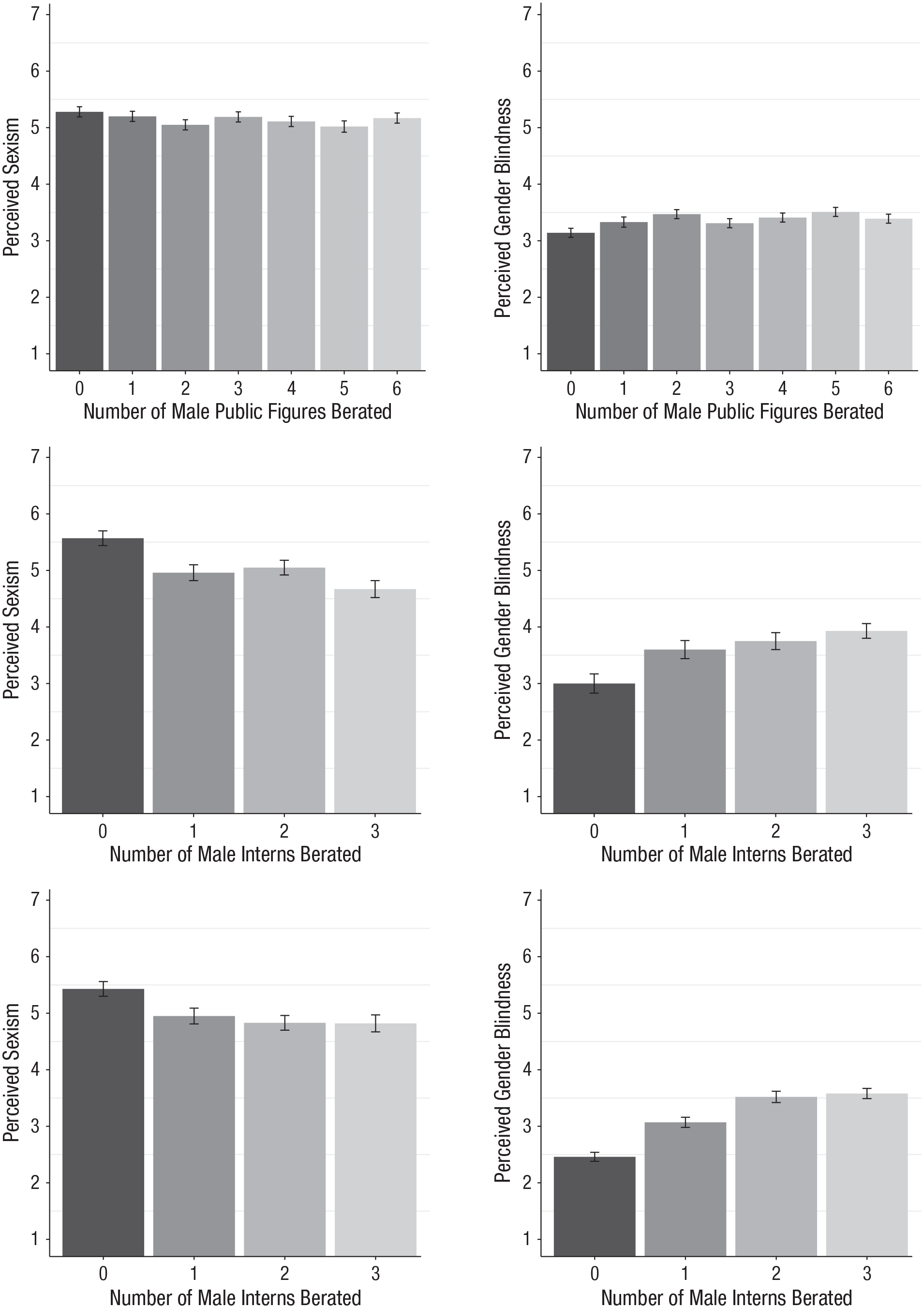
Results from Study 1 (top row), Study 2 (middle row), and Study 4 (bottom row). For each study, mean perceived sexism (left) and gender blindness (right) is shown for each number of men berated. Error bars represent ±1 SEM.
Despite the absence of a significant direct effect, we conducted a bias-corrected mediation analysis (5,000 iterations) in which condition was the independent variable, perceived blindness was the mediator, and perceived sexism was the dependent variable (Zhao et al., 2010). Condition had a significant indirect effect on perceived sexism via perceived gender blindness (ab: b = −0.03, 95% CI = [−0.06, 0.001]). In other words, the more observers saw Trump being rude toward men, the more they thought he was gender blind. Perceptions of gender blindness, in turn, were associated with perceptions of less sexism (see Fig. 3a).
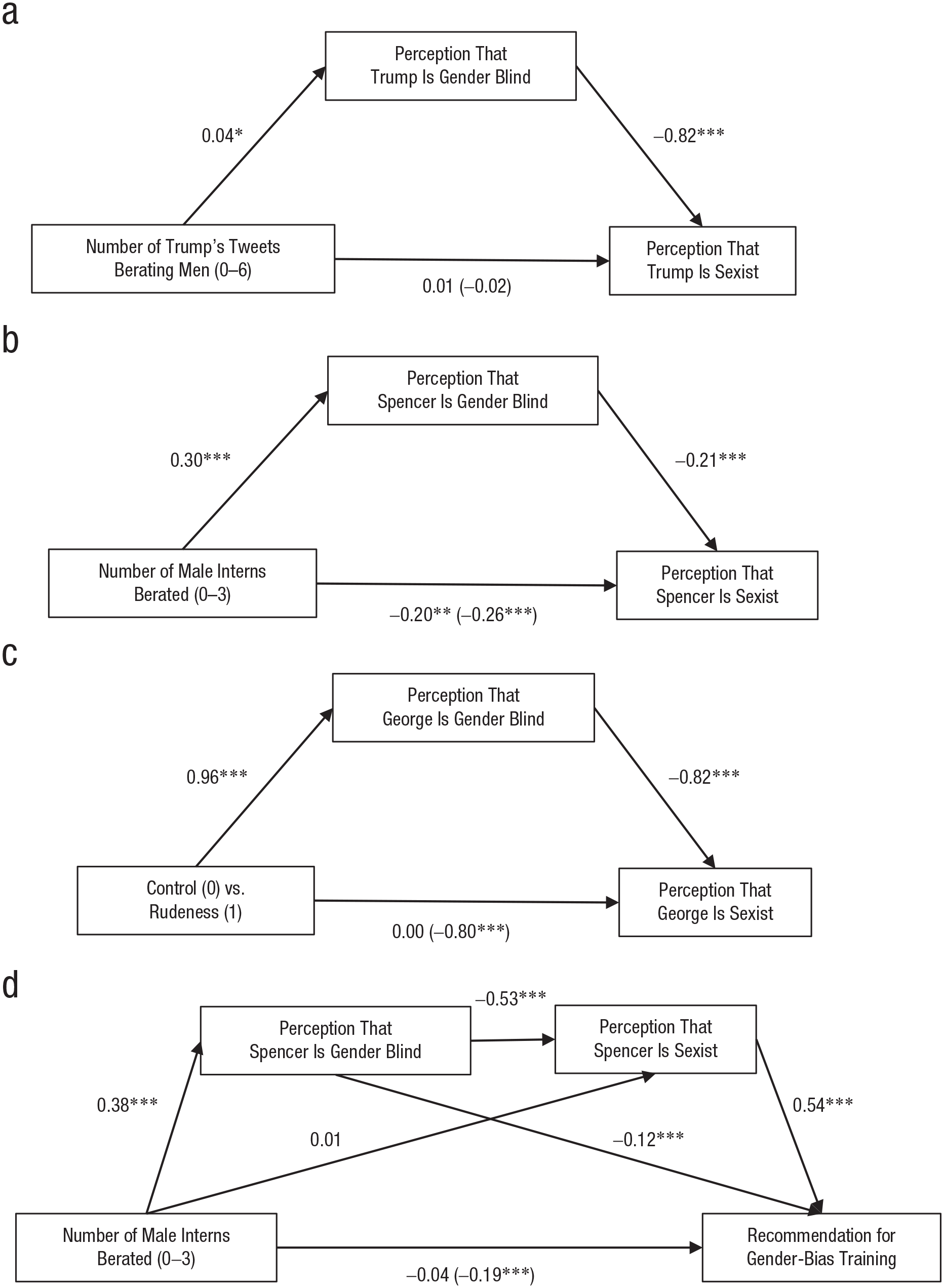
Analyses of indirect effects in Study 1 (a), Study 2 (b), Study 3 (c), and Study 4 (d). In Studies 1 to 3, condition was the independent variable, perceived blindness was the mediator, and perceived sexism was the dependent variable. In Study 4, condition was the independent variable, importance of gender-bias training was the outcome variable, and perceived gender blindness and sexism were sequential mediators. Unstandardized coefficients are presented. For each model, the coefficient in parentheses represents the effect when the model did not control for the mediators. Asterisks indicate significant paths (*p < .05, **p < .01, ***p < .001).
Discussion
Although our first hypothesis was not empirically supported, our second hypothesis was. We found that the more lay observers saw Trump being rude toward men, the more they thought he was gender blind. Perceptions of gender blindness, in turn, were associated with lower perceptions of sexism. Thus, even with a figure as contentious and polarizing as Donald Trump, we found support for Hypothesis 2.
One strength of Study 1 is that it tested our hypotheses in an ecologically valid setting. However, it is possible that we did not find support for Hypothesis 1 because of people’s prior beliefs about Trump. As we detail in the supplemental online material, liberal participants strongly held to their belief that Trump is sexist. To address this limitation, in Study 2, we conducted a conceptual replication in a more controlled and politically neutral workplace context.
Study 2
Method
All participants read about a manager who made a sexist remark toward a female intern. Some participants read that this manager berates other male interns. We predicted that the more frequently participants saw the manager being rude to male interns, the less they would view him as sexist because they would think of him as gender blind.
Preregistration
We preregistered our analysis plan before collecting and analyzing the data (see https://aspredicted.org/7dz85.pdf).
Participants
We planned to recruit a sample size of 400 participants, providing adequate statistical power to detect a medium-size effect. A total of 403 participants from MTurk participated in a study on “how people form judgments of others.”
Procedure
We collected data for Study 2 in July 2019. We asked participants to imagine working at an investment bank with a competitive culture. They read that they had witnessed an intense conversation between Spencer, a managing director, and Amy, an intern. Angered by Amy’s error on a project, Spencer told Amy that he did not understand “why the firm keeps hiring women like you.” A separate preregistered posttest confirmed that participants saw this comment as sexist (i.e., that the comment promotes, reflects, or fosters negative or pejorative stereotypes about women; see the supplemental online material at https://osf.io/xu6a7/).
We randomly assigned each participant to one of four conditions. In the baseline condition (n = 102), participants read about Spencer’s behavior toward Amy only. In all other conditions (one man: n = 101, two men: n = 99, three men: n = 101), participants also saw Spencer being rude to a male intern. For example, participants in the two-male-interns-berated condition read, The following week, you saw Spencer get mad on two separate occasions, involving other MBA interns. The first incident was Spencer getting mad at an MBA intern, Andrew. Andrew was working with another very important client, and Andrew made the mistake of sending them inaccurate forecasts and models. Spencer was visibly upset over this incident when he found out. Spencer told Andrew: “It baffles me how a fucking moron like you got hired in this firm.” The second incident was Spencer getting mad at John, an MBA intern who came in a few minutes late to an important client meeting. Spencer told John that he was a “fucking douchebag.”
We assessed perceptions of Spencer as sexist (α = .87) and gender blind (α = .83) using the same measures from Study 1. Participants then answered two attention checks (“What is the name of the manager in the scenario?” Response options were 1 (Spencer), 2 (Steven), and 3 (Simon); and “How many interns did the manager make a demeaning, rude, or derogatory remark to?” Response options were 1, 2, 3, and 4). They also answered several preregistered exploratory dependent measures (see the supplemental online material at https://osf.io/xu6a7/) and provided demographic information.
Results
Attention check
Most participants (96%) correctly recalled that the manager in the vignette was named Spencer. The more incidents of rudeness that participants read about, the more interns they indicated had been berated (b = 0.67, 95% CI = [0.61, 0.72]), t(399) = 22.63, p < .001 (degrees of freedom are lower because two participants did not answer this question).
Hypothesis testing
When participants read only about Spencer’s sexist remark toward Amy, they thought he was very sexist (M = 5.57, 95% CI = [5.32, 5.82]) and not very gender blind (M = 3.00, 95% CI = [2.66, 3.34]); both means differed significantly from the scale midpoint (ps < .001, ds = 0.59–1.24). To test our hypothesis, we regressed our dependent variables (perceived sexism and gender blindness) on (linearly coded) condition. As can be seen in Figure 2 (middle row), the more participants saw Spencer being rude toward male interns, the less they thought he was sexist (b = −0.26, 95% CI = [−0.38, −0.14]), t(401) = −4.26, p < .001, partial r2 = .04, and the more they thought he was gender blind (b = 0.30, 95% CI = [0.16, 0.43]), t(401) = 4.30, p < .001, partial r2 = .04.
Next, we conducted a bias-corrected mediation analysis in which condition was the independent variable, perceived blindness was the mediator, and perceived sexism was the dependent variable (5,000 iterations). Condition had a significant indirect effect on perceived sexism via perceived blindness (ab: b = −0.06, 95% CI = [−0.11, −0.03]; see Fig. 3b).
Discussion
In Study 2, we found support for both Hypothesis 1 and Hypothesis 2. When a manager made a sexist remark to a female intern and was rude to male interns, he was viewed as less sexist. This occurred because observers perceived him to be gender blind.
Study 3
Although we found support for our hypotheses in Studies 1 and 2, there were limitations. For example, participants in the rudeness condition may have been more cognitively taxed than participants in the control condition from reading more information. Furthermore, the sexist comments were always placed before information about rudeness. These factors may have affected participants’ ability to recognize sexism. In Study 3, we sought to address these limitations.
Method
Participants read a fictitious article, “What It’s Really Like to Work at Amazon.” We took inspiration from a report in The New York Times (Kantor & Streitfeld, 2015). All participants read two stories (counterbalanced). In the control condition, they read Tania’s and Jennifer’s stories. In the rudeness condition, they read Tania’s and John’s stories. All participants read that Tania’s manager made a sexist remark when they first met. We predicted that participants would think of Tania’s manager as less sexist when he was rude to John. This would occur because participants would infer that he is gender blind.
Preregistration
We preregistered our analysis plan before collecting and analyzing the data (see https://aspredicted.org/xa9qv.pdf).
Participants and design
We planned to recruit a sample size of 600 participants, which would provide adequate statistical power to detect a medium-size effect. A total of 606 participants from MTurk participated in a study on “first impressions.” Following our preregistration plan, we excluded participants who failed our attention check (described below; n = 72); results were virtually identical when we made no exclusions. Our final sample consisted of 534 participants (see Table 1). We used a 2 (condition: control vs. rudeness) × 2 (order of narrative: sexist story first vs. sexist story last) between-participants design. We randomly assigned each participant to one of these four experimental conditions.
Procedure
We collected data for Study 3 in March 2021. We asked participants to read a fictitious article, “What It’s Really Like to Work at Amazon.” The article featured two employees who joined Amazon after earning an engineering degree.
In the rudeness-toward-men condition (n = 243), participants read stories from Tania and John. We counterbalanced the order of these stories. Tania’s story was about George, a manager with a reputation as a perfectionist. Tania recalled that their first encounter was intense. “Jesus Christ, Tania, did you leave your brain at the salon, or am I being too technical for you? I need you to think,” remarked George at one point. A separate preregistered posttest confirmed that participants saw this comment as sexist (see the supplemental online material at https://osf.io/xu6a7/). John’s story, on the other hand, was about being berated by George: “There was one time when I turned in a report that had a few inaccuracies, and he dressed me down in front of our entire team. He didn’t hold back on the expletives.”
We followed the same procedure in the control condition (n = 291). The only difference was that we replaced the story from John with a story from Jennifer. Jennifer’s story was identical in length to John’s (530 words). However, Jennifer’s story had nothing to do with sexism or rudeness. Instead, it focused on why she had joined Amazon. 1 Thus, in the control condition, the article was about a sexist manager and included a filler story. In the experimental condition, it was about a sexist manager who was also rude to a man.
Participants evaluated George’s sexism (α = .98) and gender blindness (α = .94) using the same items from Study 1. Participants then answered an attention check (“In the story that you read, did the manager exhibit rude behavior to . . . ?” Response options were “a female employee,” “a male employee,” and “both a female employee and a male employee”). Finally, participants answered a demographic questionnaire.
Results
We regressed our dependent variables (perceived sexism and blindness) on condition (contrast coded: −1 = control, +1 = rudeness), order (contrast coded: −1 = sexist comment first, +1 = sexist comment last), and their interaction. In both models, only the hypothesized effect of condition was significant (both ps < .001). Neither the main effect of order (ps > .15) nor the interaction term (ps > .85) was significant.
As seen in Figure 4 (top), participants believed that George was significantly less sexist (M = 3.07, 95% CI = [2.87, 3.28]) when they read that he had berated John than when they read a different story (M = 3.87, 95% CI = [3.66, 4.08], b = −0.40, 95% CI = [−0.54, −0.25]), t(530) = −5.30, p < .001, partial r2 = .05. Moreover, participants believed that George was significantly more gender blind (M = 4.85, 95% CI = [4.67, 5.04]) when they read that he had berated John than when they read a different story (M = 3.89, 95% CI = [3.70, 4.09], b = 0.48, 95% CI = [0.34, 0.62]), t(530) = 6.94, p < .001, partial r2 = .08 (see Fig. 4, bottom).
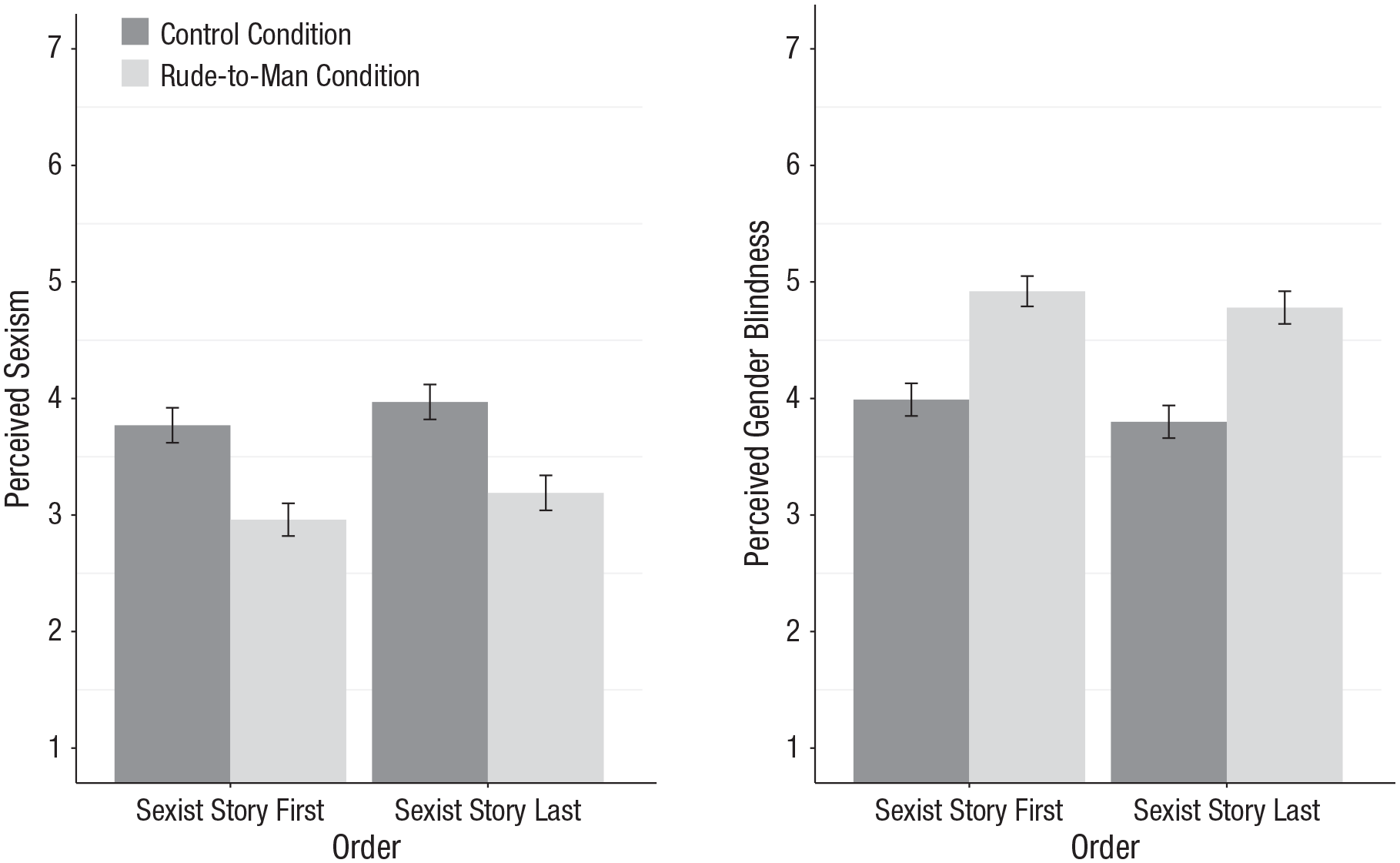
Mean perceived sexism (top) and gender blindness (bottom) of the protagonist in Study 3 depending on the order in which the sexist story was told (first vs. last) and condition (control vs. rude to man). Error bars represent ±1 SEM.
Next, we conducted a bias-corrected mediation analysis in which condition was the independent variable, perceived blindness was the mediator, and perceived sexism was the dependent variable. Condition had a significant indirect effect on perceived sexism via perceived blindness (ab: b = −0.79, 95% CI = [−1.01, −0.57]; see Fig. 3c).
Discussion
We found support for both Hypothesis 1 and Hypothesis 2. Lay observers viewed a manager as less sexist when they saw him behaving rudely to a male employee. This occurred because lay observers believed that he was gender blind. Study 3 also suggests that neither order effects nor cognitive load can explain these findings.
Study 4
Our final study examined the downstream implications of our findings. We hypothesized that rudeness toward men can make sexist perpetrators appear to be gender blind and less sexist, resulting in misguided beliefs that they do not need gender-bias training (Hypothesis 3).
Method
To test our hypotheses, we conducted a direct replication of Study 2 and additionally asked how important it is for Spencer to receive gender-bias training and anger-management training. Although the evidence for the effectiveness of training programs has been mixed (e.g., Bezrukova et al., 2016), we focused on them as an example of a concrete action that managers could take to address these issues. Whereas gender-bias training is intended to address sexism, anger-management training is intended to address rudeness and “being a jerk.” To underscore the importance of these judgments, we administered this study not only to online participants but also to students at two professional schools preparing for careers in management and leadership roles. Study 4 consisted of two samples; we ran this study twice because we wanted a non-online sample to increase generalizability.
Preregistration
We preregistered our analysis plan for sample A (https://aspredicted.org/7d5n9.pdf) and sample B (https://aspredicted.org/gp3yy.pdf) before collecting and analyzing the data.
Participants
Sample A (n = 600) consisted of individuals from MTurk who were recruited for a study on social perception. Sample B (n = 267) consisted of students from two professional schools at the same public university in the South. Because the studies were identical, we combined the sample for parsimony (N = 867) and analyzed our data controlling for the sample. We describe combined results below and individual study results in the supplemental online material at https://osf.io/xu6a7/.
Procedure
We collected data for sample A and sample B in October 2019 and January 2020, respectively. We used the same materials and design as in Study 2 (control: n = 221, one man: n = 215, two men: n = 212, three men: n = 219). After reading the vignette, participants indicated whether Spencer is sexist (α = .90) and gender blind (α = .86) using the same measures from Studies 1 to 3, r(865) = −.53, p < .001. Next, participants answered two sets of questions, presented in counterbalanced order, that assessed the importance of providing Spencer with gender-bias training and anger-management training: (a) “How appropriate would it be to send Spencer to a training program on [gender bias/anger management]?” (1 = extremely inappropriate, 7 = extremely appropriate), (b) “How wise would it be to use company funds to send Spencer to a training program on [gender bias/anger management]?” (1 = extremely unwise, 7 = extremely wise), (c) “How necessary is it to send Spencer to a training program on [gender bias/anger management]?” (1 = extremely unnecessary, 7 = extremely necessary), and (d) “How much would a training program on [gender bias/anger management] help address Spencer’s behavior?” (1 = not at all, 7 = very much so). We computed composite measures of the perceived importance of gender-bias training (α = .86) and anger-management training (α = .78).
Results
We began by examining whether we had replicated the findings from Studies 2 and 3. Participants thought Spencer was very sexist (M = 5.43, 95% CI = [5.28, 5.57]) and not very gender blind (M = 2.46, 95% CI = [2.30, 2.61]) when they saw his sexist comment in isolation (both means differed significantly from the midpoint of the scale, |t|s = 18.85–19.84, ps < .001, ds = 1.27–1.33). However, the more frequently participants saw Spencer being rude toward male interns, the less they thought of him as sexist (b = −0.18, 95% CI = [−0.27, −0.11]), t(864) = −4.78, p < .001, partial r2 = .03, and the more they thought of him as gender blind (b = 0.38, 95% CI = [0.30, 0.46]), t(864) = 9.56, p < .001, partial r2 = .10 (see Fig. 2, bottom row). A mediation analysis showed that condition had a significant indirect effect on perceived sexism via perceived gender blindness (ab: b = −0.20, 95% CI = [−0.25, −0.15]). Overall, our replication was successful.
Next, we conducted a serial mediation analysis in which condition was the independent variable, importance of gender-bias training was the outcome variable, and perceived gender blindness and sexism were sequential mediators (see Fig. 3d). The indirect effect was significant (ab: b = −0.11, 95% CI = [−0.14, −0.08]).
Finally, we examined the perceived importance of providing Spencer with gender-bias training and anger-management training. We conducted a linear mixed model regression, regressing ratings on sample (0 = sample A, 1 = sample B), condition (linearly coded), training type (0 = gender-bias training, 1 = anger-management training), and the Condition × Training Type interaction as fixed effects, with participant as a random effect. As expected, the Condition × Training Type interaction was significant (b = 0.49, 95% CI = [0.41, 0.57]), t(865) = 12.19, p < .001. Participants placed less importance on gender-bias training (b = −0.19, 95% CI = [−0.26, −0.12]), t(1536.22) = −5.36, p < .001, and more importance on anger-management training (b = 0.30, 95% CI = [0.23, 0.27]), t(1536.22) = 8.49, p < .001, the more they saw Spencer berating men (see Fig. 5).
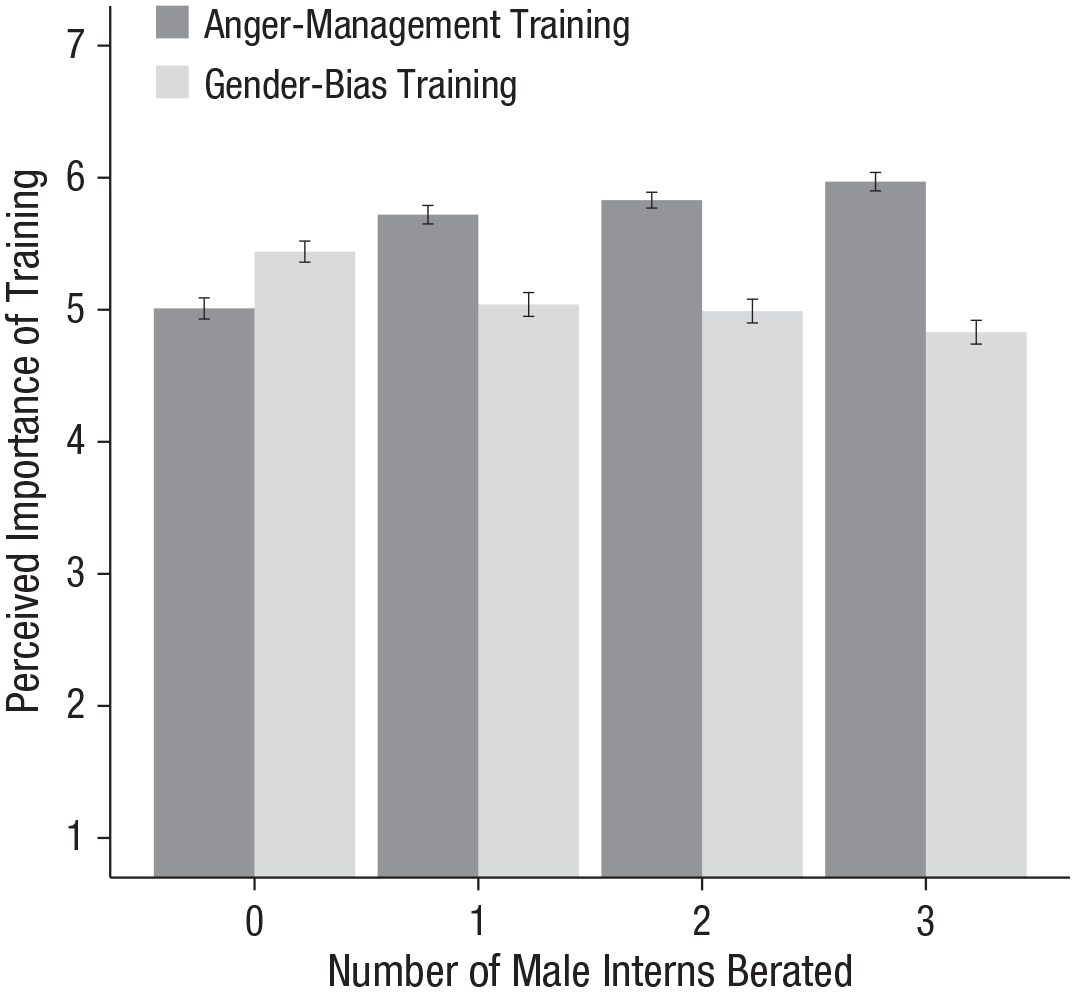
Mean perceived importance of gender-bias training and anger-management training in Study 5, separately for each number of men berated. Error bars represent ±1 SEM.
Discussion
We replicated the results of Studies 2 and 3. Furthermore, we found that these judgments carry important consequences. Participants diminished the importance of gender-bias training the more they saw a sexist manager’s rudeness to men. These findings show that rudeness creates a critical barrier to addressing sexism. It discourages observers from recommending gender-bias training for sexist perpetrators. Although gender-bias training alone is unlikely to eradicate sexism in the workplace, it may nonetheless be an important resource that is disregarded when a sexist manager’s rudeness obfuscates their sexism.
General Discussion
In four experiments, we documented a phenomenon that makes sexism difficult to address. Observers who witness sexism fail to recognize it as such when it comes from a perpetrator who is rude toward men. This failure occurs because observers view the perpetrator as gender blind. This attribution is problematic because sexism and rudeness are not mutually exclusive. A man’s rudeness toward other men does not nullify his sexism. Furthermore, we found a troubling consequence of this effect. Recommendations for gender-bias training diminish when perpetrators are also rude to men. Thus, confrontation may be rare because people often fail to recognize sexism.
This work contributes to the emerging body of work on gender blindness (Gündemir et al., 2019; Hahn et al., 2015; Koenig & Richeson, 2010; Martin & Phillips, 2017, 2019). This literature has largely focused on the benefits of adopting gender blindness as an approach to fostering gender diversity and inclusion in the workplace. For example, scholars have found that women feel more confident in male-dominated environments that focus on similarities rather than differences between men and women (Martin & Phillips, 2017). Scholars have also found that teaching men to embrace a gender-blind ideology can reduce their tendency to endorse gender stereotypes around women’s competencies in science, technology, engineering, and mathematics (Martin & Phillips, 2019). The current research extends this literature by examining how observers form perceptions of gender blindness about men in positions of power and how such perceptions can perpetuate sexism. Specifically, we highlight how being an “equal-opportunity jerk” can create the appearance of gender blindness, which then leads to the erroneous and troubling conclusion that those men do not have gender bias. Thus, much as in the Dotel case, our work shows that gender blindness can be strategically exploited to refute sexism accusations. Moreover, an insidious way to establish that perpetrators are not sexist is to highlight the instances in which they have been rude toward men. In this way, our work highlights a potential shortcoming of adopting gender blindness as an ideology and suggests how it can be exploited to undermine inclusion efforts. For example, men may believe that rather than “supporting women,” an alternative solution to creating gender parity is to “treat everyone horribly.”
It has been noted that overtly discriminatory conduct—characterized by blatant antipathy, antiquated beliefs about women, and endorsement of pejorative stereotypes—is becoming less common because of sweeping changes in antidiscrimination laws, practices, and ideologies in the United States (Brief et al., 1997; Dovidio & Gaertner, 1998; Swim et al., 1995). However, blatant, unambiguous, and obvious forms of sexist conduct continue to exist in society (Dovidio & Gaertner, 1998) and within organizations in particular (e.g., Cortina, 2008). Our findings suggest that one reason for their persistence is that observers may not recognize that everyday acts of rudeness can serve as a convenient mask for bias against women (Cortina, 2008). This has an important practical implication: When a sexist manager is rude toward men, it may appear as though he is not sexist. Thus, women victimized by his behavior will have a more difficult time proving that he is sexist. Rudeness can therefore protect perpetrators.
Our studies focused on overt and hostile forms of sexist conduct because these behaviors are increasingly seen as taboo and should be obvious to observers. However, as many scholars have noted, sexism is a multidimensional construct with hostile and benevolent components (Glick & Fiske, 1996). Future research should examine the inferences that observers make about the benevolent sexism of equal-opportunity jerks. On one hand, observers may doubt that these men have benevolent attitudes toward women; after all, men who berate women publicly do not seem like people who believe in chivalry. On the other hand, observers may believe that these men hold old-fashioned and paternalistic notions, such as the idea that men should protect and provide for “good” women.
It will be important to test the generalizability of these findings beyond U.S.-based online samples. Future research could also examine whether rudeness can obscure other forms of discrimination. Do White people seem less prejudiced when they derogate other White people? Such behavior could create the illusion of color blindness and authenticity (Rosenblum et al., 2020). Understanding how victims make sense of an equal-opportunity jerk is also important. When their boss seems hostile to everyone, women may question their own experiences (Crocker & Major, 1989; Major & Crocker, 1993). Finally, it would be interesting to examine whether rudeness toward other men can license the expression of sexism (Monin & Miller, 2001). Men may feel comfortable expressing sexist views when they feel they have established gender blindness through their rude behavior toward men.
Footnotes
Acknowledgements
We thank Raina Brands, Margaret Neale, Aneeta Rattan, and Melissa Thomas-Hunt for their guidance and constructive comments, and we thank Jennie Kim, Chawit Rochanakit, Margaret Wiwuga, and the Darden Behavioral Lab for assisting with data collection.
Transparency
Action Editor: Kate Ratliff
Editor: Patricia J. Bauer
Author Contributions
P. Belmi conceived the initial idea for the studies, and S. Jun and G. S. Adams refined it further. All the authors designed the studies. P. Belmi and S. Jun collected and analyzed the data. P. Belmi wrote the first draft of the manuscript and the Supplemental Material with input from S. Jun and G. S. Adams, who provided critical revisions. All the authors approved the final manuscript for submission.
