



Abstract
The history of Freemasonry in Poland is linked with the national independence movement. Masonic organizations supported its ideas, even though they were not always compliant with Masonic ethics. Polish Freemasonry was reborn in 1920, with an important role played by three psychiatrists: Rafał Radziwiłłowicz, Witold Łuniewski and Jan Mazurkiewicz, who were Grand Masters of the Grand National Lodge of Poland. Some of the ethical problems discussed at the lodge sessions were later reflected in their academic and social work. Mazurkiewicz’s work was most crucial to the development of Polish psychiatry. His presentation of the clinical picture of schizophrenia, formulated in the 1930s, was identical with the concept proposed by Andreasen and Crow in the 1980s.
Introduction
The roots of Freemasonry, one of the most important cultural and social phenomena of modern times, are clearly European, but the origins of this fraternal organization are as obscure as they are legendary. Historic facts and myth are inextricably woven here into a story which is open to various interpretations, reaching far beyond the horizon of incontestable facts. There has been very little or no research so far into the impact of the Masonic ideas of tolerance, freedom, equality and brotherhood on the development of psychiatry. The degree of this influence was certainly different from one country to another, but in Poland it was especially important because of the country’s specific historic circumstances, marked by 123 years of slavery, and the struggle for independence.
Freemasonry in Poland – its specific character and phases of development
Freemasonry was brought into Poland at the beginning of the eighteenth century by foreigners, particularly officers serving under King August II, and they helped to form the Grand National Orient in Warsaw in 1784. Masons actively participated in the historic changes that took place under the rule of King Stanislaw August Poniatowski, and in the following decades they helped to spread the ideas of liberalism and independence. 1 During the time of the Four-Year Parliament 2 there was a decrease in lodge activity because the local Masons, following the examples of their leaders – King Stanislaw August; Kazimierz Nestor Sapieha, the Second Marshall of the Parliament; Ignacy Potocki the Chairman of the Elementary Books Society and his brother Stanislaw Kostka Potocki, Julian Ursyn Niemcewicz and Scipione Piatiolliegi – were very involved in the work of the Parliament. Many Poles in Napoleon’s army, with Prince Józef Poniatowski leading the way, were Freemasons, and Dąbrowski’s legions 3 which marched ‘from Italy to Poland had the Masonic emblem on their banners (calipers and bevel)’ (Hass, 1980: 299, photos 55, 56). Poland’s National Freemasonry, founded on 5 May 1819 by Walerian Łukasiński, and made up exclusively of officers, set itself the goal of working towards national independence, and restoring Poland within its historic borders. The members did not celebrate St John’s night, as is the Masonic custom, but the anniversary of the Polish Constitution of 3 May 1791. The lodge, enshrined in the ‘flame of love for our fatherland’ and the Brothers gathered at the ‘broken altar of the fatherland’ (Nasierowski, 1996: 27), survived only a few years, and its founder was finally sentenced by the Russians to a lifetime of hard labour and imprisonment. On 1 Aug. 1822, Polish Freemasonry was disbanded by order of the Tsar, to be reborn again only at the beginning of the twentieth century.
At the beginning of November 1909, seven well known members of the Warsaw intelligentsia were initiated in the Parisian lodge ‘Les Rénovateurs’, among them a psychiatrist Rafał Radziwiłłowicz (1860–1929); 4 see Fig. 1. This led to the establishment of a Masonic lodge in Warsaw, on 10 June 1910. The lodge, named ‘Wyzwolenie’ (Liberation), was subordinate to the Grand Orient of France. Radziwiłłowicz, who had been appointed a Master in the ‘Les Rénovateurs’ lodge on 8 Jan. 1910, became the chairman of the ‘Wyzwolenie’ lodge.

Rafał Radziwiłłowicz (source: Museum of Stefan Zeromski, Naleczow)
In the following years, a number of other new lodges were secretly founded. Neither the political police (Ochrana) nor the Tsar’s gendarmerie managed to penetrate the ranks of the Polish Masons or identify a member during their operations, which ended in 1915. Because of the possibility of conspiracy, and because of the growing number of Brothers, it was decided that another lodge was needed in Warsaw; this was called ‘Odrodzenie’ (Rebirth). The ‘Zmartwychwstanie’ (Resurrection) lodge was established around 1917 by merging the two lodges, ‘Wyzwolenie’ and ‘Odrodzenie’. As the names of the newly created lodges indicate, their principal aim was to restore national independence, 5 not only independence from the partitioners’ rule, but also in the name of Masonic ideas, such as the independence of individuals from the burden of negative social attitudes. On 28–30 June 1917, the International Masonic Congress of Allied and Neutral Nations took place, at which the rebuilding of Poland was proposed as one of the principal conditions for peace. At this Congress, André Lebey, the secretary of the Council of the Grand Orient of France, said: ‘Rebuilding an independent Poland, with all its lands reunited, is a necessity; it is one of the cornerstones of the foundations, upon which the most lasting pillars of peace will stand in the future’ (Nasierowski, 1998: 25).
According to the Masonic jurisdiction, a lodge was only considered to be regular after it received a foundation document from another existing Masonic organization, preferably a widely acknowledged and respectable one. This put Polish Freemasons in the delicate situation of having to decide which organization should be approached with a request for such a document. In the first year after the war, such a decision required taking into account the entire political situation of the time, including Masonic internal politics.
The Grand Orient of Italy was eventually chosen, and on 19 Mar. 1920 a new lodge called ‘Kopernik’ (Copernicus), based on Scottish rite, was founded in Warsaw, with Radziwiłłowicz as its Chairman. On 24 Apr. 1920 the lodge received its foundation document from the Grand Lodge of Italy, thus becoming a regular lodge that could be a mother lodge for new lodges founded in the future. Seven brothers were needed to create a lodge and choose a chairman. Between April and September 1920, six new lodges were founded in the capital: ‘Łukasiński’, ‘Machnicki’, ‘Kościuszko’, ‘Wolność Przywrócona’ (Freedom Restored), ‘Sowiński’ and ‘Mickiewicz’. 6 On 11 Sep. 1920 seven Warsaw lodges founded their own management centre, the Grand National Lodge ‘Poles United’, headed by Grand Master Rafał Radziwiłłowicz.
Between 1910 and 1920, Radziwiłłowicz played the role of a go-between among people, parties and organizations, and the lodge life that he was creating was a driving force behind many activities aimed at regaining independence. As a psychiatrist, he helped various people who were arrested by the Tsar’s police; 7 for example, in 1900 he helped Józef Piłsudski to fake mental illness and assisted the organizers of Piłsudski’s hideout in Saint Nicholas the Wonderworker’s Hospital in St Petersburg, thus helping the future leader of independent Poland to avoid another deportation to Siberia. Czesław Świrski, who in 1918 was Piłsudski’s assistant, was in a much more difficult situation. He was sentenced to the death penalty for the robbery of the Tsar’s train on 26 Sep. 1908, and he was only saved by pretending to be mentally ill, helped by Radziwiłłowicz and others. Death sentences for people who were ‘suspected’ of being mentally unstable triggered international protests, especially in Masonic circles where the human rights movement first originated. Świrski’s cause was supported by such well-known figures as Professor of Psychiatry Gilber Ballet, Professor of Neurology Jules Déjerine, the Director of the Pasteur Institute Émile Roux, and the President of the Human Rights Protection League Francis Dehaut Pressensé. Their protests were effective enough for the Russian Minister of Internal Affairs to replace the death penalty with unlimited hard labour.
Social medicine was an important part of Radziwiłłowicz’s work. In 1916 a circle of doctors, who gathered to form a Democratic Medical Election Committee (during the election to the first Warsaw Municipal Council), decided to remain united after the election and establish an association to restore the tradition of the Polish Medical Association, which had been dissolved by the Russians in 1906. This is how the Polish Social Medicine Association was started, with Radziwiłłowicz as its first President, and Witold Chodźko as Deputy President. Radziwiłłowicz, in his capacity as Head of the Polish Social Medicine Association, organized the First Congress of Military Medicine which took place in Warsaw on 1–2 Feb. 1917. One of the resolutions of the Congress was a call for Polish medical doctors to ‘enter the Polish army under Józef Piłsudski in large numbers’. On behalf of the Association, Radziwiłłowicz spoke in public about the improvement of mental healthcare and about introducing proper legal regulations concerning mental illness (mental health acts). He also postulated the creation of a National Mental Health Office, which would supervise the work of mental healthcare institutions.
The contribution of Freemason psychiatrists to the development of Polish psychiatry
Three psychiatrists attained the highest positions in the restored Polish Freemasonry. Radziwiłłowicz was the Grand Master in 1920–1. 8 During the session of the National Grand Lodge held on 16 Nov. 1928, Jan Mazurkiewicz (1871–1947) 9 was elected the Grand Master for 1929–1931; see Fig. 2. Witold Łuniewski (1881–1943) 10 held the office in 1925–6 and 1935–7; see Fig. 3
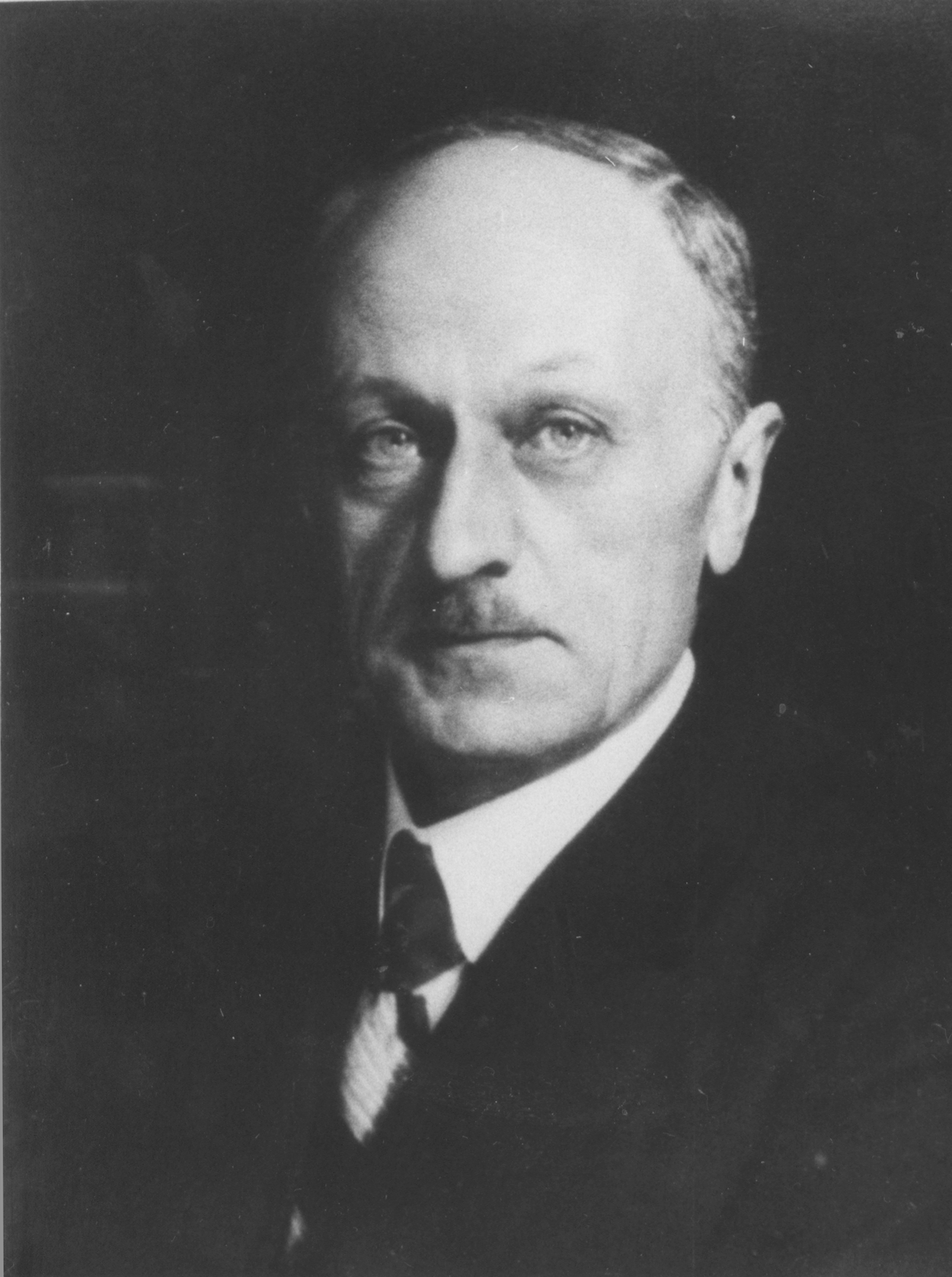
Jan Mazurkiewicz (source: Cabinet of Manuscripts, University of Warsaw Library)

Witold Łuniewski (source: Tworki Mental Hospital Library)
Another Freemason psychiatrist, who played a significant role in the social and political life of the newly independent Poland, was Witold Chodźko (1875–1954), 11 a member of the ‘Kopernik’ lodge, and of ‘Wolność Przywrócona’ in 1928–38. In 1927 Chodźko was confirmed by the Grand Orient of France as a ‘Guarantor of Friendship’, and he remained in this role until 1938. Chodźko was a delegate of the Grand National Lodge of Poland to the Convent of the Association Maçonnique Internationale, 27–29 Dec. 1927. In April 1918, Chodźko became the Minister of Health and organized the National Health Service in the now independent Poland, together with Radziwiłłowicz and Mazurkiewicz, who were also working for the ministry at the time and who dealt mostly with mental health issues. Chodźko remained in his ministerial position in the next few governments. From 1922 he was on many occasions Poland’s delegate to the General Assembly of the League of Nations. He represented Poland on several committees of the League of Nations and was, for example, the President of the Opium Committee in 1936–7.
The first efforts to consolidate Polish psychiatric circles, fragmented by the Austrian, German and Russian partitions, were made at the end of the first decade of the twentieth century. Radziwiłłowicz initiated the First Convention of Polish Neurologists, Psychiatrists and Psychologists held on 11–13 Oct. 1909. He was a member of the Organizing Committee of the Convention as a delegate for the Polish Psychological Association (registered on 5 Mar. 1907) and he chaired the sessions of the psychological section. The second convention took place on 20–23 Dec. 1912 in Krakow, with a focus on Sigmund Freud’s views and mental health care. Radziwiłłowicz, who participated in it, produced a summary of the realization of the resolutions of the first Warsaw convention, and announced the creation of the psychological workshop at the Polish Psychological Society as well as a neurological and biological workshop at the Warsaw Society of Science, and also the creation of a journal Neurologia Polska (Polish Neurology) devoted entirely to the problems of neurology, psychiatry and psychology.
The third convention was supposed to be held in Lvov, but the outbreak of World War I made it impossible, and also prevented the international convention of neurologists, psychiatrists and psychologists, due to take place in Brno. Poles would have boycotted the Brno convention anyway; initially its organizers consented to creating a Polish Committee, and then – under pressure from German medical circles – incorporated it into the partitioners’ committees, without consulting the Poles.
Radziwiłłowicz’s work in the field of psychiatry in independent Poland was in initiating and organizing the First Convention of Polish Psychiatrists, which took place on 30 Oct. and 1 Nov. 1920 in Warsaw. The convention was also marked by the establishment of the Polish Psychiatric Association. Mazurkiewicz was one of the organizers of the convention, with Radziwiłłowicz who became its Chairman. The success of the idea of the convention was also due to the efforts of Chodźko, who was elected to the management board of the newly created Association, alongside Radziwiłłowicz and Mazurkiewicz.
Freemason psychiatrists headed the Polish Psychiatric Association throughout the entire inter-war period: Chodźko in 1920–23 and 1928–30, and Mazurkiewicz in 1923–28 and 1930–47. Radziwiłłowicz was the General Secretary of the Association between 1920 and 1928, and he was also the founder of Rocznik Psychiatryczny (Psychiatric Annual), the journal published by the Association.
In 1922, during the Third Psychiatric Convention in Vilnus, Chodźko said that the ‘Polish school of psychiatry has still failed to emerge […] and it leaves a terrible, severe gap’ (Borowiecki, 1935: 31). Thirteen years later, on the 15th anniversary of the foundation of the Polish Psychiatric Association, a discussion was initiated about the programme of Polish psychiatry, and Mazurkiewicz said: ‘There are publications by Polish psychiatrists, but Polish psychiatry does not exist […]. Today the so-called Polish psychiatry is only an echo, a digest of psychiatry, not even international but exclusively German’ (Borowiecki, 1935: 31).
Over the years the situation improved, thanks to Mazurkiewicz who was the creator of the original concept of the normal and pathological functioning and neurodynamics of the central nervous system, defined in neo-Jacksonian terms.
The psychiatric views of Rafał Radziwiłłowicz
One of the characteristic features of psychiatry at the turn of the twentieth century was the departure of many researchers from neurology, comparative and pathological anatomy, and the move towards research in the areas of the psychopathology and psychodynamics of mental disorders. Radziwiłłowicz, whose work in the initial period of his scientific career focused on brain histopathology, was later mainly interested in clinical, forensic and social psychiatry and psychology.
Radziwiłłowicz supported and popularized pragmatism in Poland, which in a sense can be defined as the US national philosophy. In fact, there are many similarities between pragmatism and Masonic philosophy, which is not surprising as Masonic organizations had a great impact on the social, political and cultural life of the USA, especially when it first became an independent state.
Pragmatism also inspired Radziwiłłowicz’s new outlook on psychiatry. He understood pragmatism, with its evolutionary and biological elements, as a bridge connecting neuroanatomical and psychological approaches. Radziwiłłowicz thought of psychology as an experimental science, and he emphasized the existence of many different research methods in psychology and their ‘equality’. He thought pragmatically that every method should be considered correct if it leads to the desired effects, yet he preferred the introspective method.
Radziwiłłowicz appreciated the significance of biological direction in psychiatry. He emphasized that the term ‘biological direction’ was interpreted too narrowly, as equivalent to the term ‘physiological’. He considered the basis for it to be the ‘method of evolutionary thinking’ taking into account the law of development. He thought that the most important task facing psychiatrists was to define the dynamics of symptoms, through ‘thinking about them in evolutionary terms’. He thought psychiatric classification was of secondary importance. He based his concept of the organization of mental life on the William James’ model, in which personality is presented as a hierarchically organized arrangement of features. Radziwiłłowicz thought that ‘behaviour is a peak expression of mental activity’, as it appears last in development, and therefore is the last to be affected by illness.
He was critical of the views of Bleuler and Kraepelin, who were associationists, and wrote: ‘I cannot follow the trend which is rather common in German and Polish psychiatry stipulating that there is only one God – Kraepelin, and Bleuler is his prophet – no matter how highly I value both as distinguished clinicists to whom I personally owe a lot’ (Radziwiłłowicz, 1927: 6). He was, above all, critical of the extent of the concept of schizophrenia, saying that Bleuler was ‘seduced by the concept he had created and […] included all mental illnesses of non-organic origin in it’ (p. 6).
Radziwiłłowicz emphasized that the aim of building psychiatric classification on a causal principle was doomed to fail: ‘Two main segments of the principle, the first one that the same causes bring about the same effects, and different causes produce different effects, and the second that when the cause ceases so does the effect are not [in this case] at all reliable’ (pp. 6–7). He thought that the entire issue of causality in psychiatry can be summarized as the existence of two factors that cause mental illness, and these are heredity and trauma. A strong hereditary element will initiate mental illness following even a weak trauma, whereas if the hereditary element is weak, it would take strong trauma to cause a similar effect (pp. 7–8). Trauma for Radziwiłłowicz meant mental or physical stress and chemical dysfunctions in the organism. He often emphasized that psychiatry was a young science, was still ‘becoming’, and therefore each classification should be treated as temporary.
Radziwiłłowicz’s position was that of critical realism. He thought that causality was, as such, overrated in psychiatry, whereas purposefulness was underappreciated. He thought behaviour was a peak expression of mental activity, a view which he expressed in the following words: ‘Without wishing to reduce the value of the Cartesian rationality principle “cogito ergo sum” – ‘I think therefore I am’ – I have built upon it a voluntarist, pragmatic principle that I personally subscribe to “ago ergo sum – I act therefore I am”’ (Radziwiłłowicz, 1927: 10, original italics).
Like James, Radziwiłłowicz subscribed to pluralism, which he thought was ‘the only biologically justified view of the world’ (Radziwiłłowicz, 1926a: 31). His pluralist concept was drawn from the structure of human experience, which he identified with life, and with the framework of experience contained in consciousness.
He was the first to introduce the elements of Anglo-Saxon philosophy and psychology into Polish psychiatry. He thought that ‘the one-sided tendency of our [Polish] science to yield to German influence is no good, and if it were to be consolidated with critical English empiricism, it would – without a doubt – increase the efficiency of our scientific pursuits’ (Radziwiłłowicz, 1922: 13).
The psychiatric views of Jan Mazurkiewicz
The second Grand Master, Jan Mazurkiewicz, who was the Head of the Psychiatric Faculty and the Clinic of the Warsaw University, concentrated his efforts on clinical problems. During World War II, he wrote a two-volume monograph ‘The Introduction to Normal Psychophysiology’, which was the peak of his academic achievement. During the Warsaw Uprising of 1944, which ended in the city being demolished and burned down by Germans, many authors lost their works written during the occupation, but Mazurkiewicz was luckier than most. His wife hid the manuscript in cans which he buried in the garden, and thus it survived and was published after the war (Mazurkiewicz, 1950, 1958).
In this book, Mazurkiewicz presented his vision of man as psychophysical unity, at the same time rejecting the reflexological (behavioural) concept. He declared he was in favour of interactionist dualism. From the philosophical point of view, Mazurkiewicz’s view on the mind-body problem shifted all the way from physicalist monism to psychological interactionism. Progress in the physiology of the nervous system had certainly contributed to this significant shift. Mazurkiewicz himself clearly avoided formulating clinical problems in philosophical categories. He based his psychophysiological theory on two principles: the principle of energetism and the principle of evolution, which he adhered to from the very beginning of his academic career. He acknowledged the primacy of feeling over cognition, accepting memory to be the basis of all mental functions, with its energetic, three-phase character (i.e. memorizing/engraphia, concealment, and recollection/ecphoria). He thought the factors that bind together the ingredients of mnemonic units, which are gnostic-emotional-kinesthetic complexes, are time and attention. Like John Hughlings Jackson, Mazurkiewicz distinguished two basic processes: evolution, which is the passage of the permanent, simplest and automatic elements into those that are built in a more complex and most unconstrained way, and dissolution, a reverse process caused by illness, which directly produces negative symptoms, i.e. defective symptoms that affect the highest evolutionary level first and then work their way down to the lowest. All positive, non-defective symptoms are normal for evolutionary lower levels, and are released due to the suppression by superior levels, which are higher in the evolutionary process. Mazurkiewicz developed his dissolution theory with the help of Jackson’s functional and topological assumptions, identifying three development stages of human psychic functions. The first (up to 3 years old) involves the development of reflexive and conditioned activities and subcortical, instinctive dynamisms. In the second period (3–7 years old), prelogical psychic activity starts to develop, which is a reaction to one’s own past and personal experiences, and not to external stimuli, as is the case in the reflexive, conditional activity. This is when figurative thinking and use of visual symbols come into play, along with animatism, symbolization, symptoms of egocentrism and feelings of isolation. The third period (over 7 years old) lasts for over a dozen years; it is a period of developing logical thinking expressed in verbal symbols and the highest psychisms, which are a ‘conscious psychic personality’, ‘conscience’ or ‘will’. Both prelogical and logical activities are of intrapsychic character. Each kind of activity is related to one of the three anatomical levels of the nervous system, which came into being in an evolutionary process. Adult mental activity is a synthesis of reflexive and conditioned, prelogical and logical dynamisms, modulated with subcortical, instinctual dynamisms.
Mazurkiewicz thought that emotions are the basis of behavioural processes, whereas their anatomic and physiological background is in the vegetative system. He thought emotionality was a basic adaptative mechanism, while at the same time he considered it to be determined by the past (family and personal), and also to be the factor that determines the future. According to Mazurkiewicz, dissolution and regression are the basic processes behind mental disorders. He accepted that the process of dissolution creates three different clinical pictures at three evolutionary levels; these are: neurotic, schizophrenic-prelogical and delirious-prelogical.
Mazurkiewicz regarded manic and depressive states as ‘naturally the dysfunctions of (hereditary) subcortial – instinctual moods’. Although they are not dissolution processes as such, they remain in ‘close and multifarious relationships’ with schizophrenia.
He thought that Bleuler’s introduction of the term schizophrenia (split psychosis) was the result of a misconception that the illness process ‘splits the psyche’. What Kraepelin defined as ‘basic disorders’ in dementia praecox, i.e. in schizophrenia (weakened judgement and mental activity, creativity, dulled emotionality, loss of strength to act, leading to the dissociation of internal spiritual life), Mazurkiewicz thought were negative (defective) symptoms caused directly by the illness process. He considered ‘everything that distinguishes one schizophrenic group from another [to be] a positive symptom’ and he identified five characteristic features of schizophrenia: (1) indefinite variety of clinical pictures; (2) the existence of a very limited number of schizophrenic groups, in spite of the unlimited number of clinical pictures; (3) mass occurrence of schizophrenia (schizophrenic process, episodes, syndromes or symptoms), which is linked with the common occurrence of prelogical mechanisms; (4) ‘psychic character of schizophrenia rising from the background of hereditary constitution (physical and psychic)’; and (5) relevance of patient’s age to the clinical picture of schizophrenia.
Whereas Jackson and the French neo-Jacksonians, such as Henri Ey and Julien Rouart, placed dementia states on the lowest level of the dissolution scale that they created, Mazurkiewicz thought that dissolution is equivalent to the death of the organism and that dementia is to do with the regression process. He also thought that a ‘common measure of all […] psychopathological pictures will never be found, because not all of these pictures are the result of dissolution’ (Mazurkiewicz, 1958: 420).
Polish Freemasons’ attitude towards German psychiatry and Nazi ideology
The third Grand Master, Witold Łuniewski, was, like Radziwiłłowicz, mainly involved with forensic psychiatry and ethical problems in psychiatry.
Freemasons were exposed to hostile attacks from many social circles and powers. They remained faithful to their ideas, in contrast to what they called ‘the collective psychosis that altered nations into armed hordes of barbarians, blindly following their commander’, and attracted hatred, becoming a testing ground of the contemporary political situation. They thought that in their times, which seemed to herald a new ‘period of savagery’, only a small group of people could survive, only those ‘Brothers who trust one another and are truly close’; these words were part of the announcement made on 16 Dec. 1937 when Łuniewski finished his term as the Grand Master (Nasierowski, 1998: 247–8). The announcement’s main thesis can be found in the summary of the proceedings of the 16th Convention of Polish Psychiatrists in Lublin and Chełm, 6–8 Dec. 1936: ‘The issue of heredity and prevention in mental illness’ was the leading theme of the convention. The introductory paper on ‘inhibiting the procreation’ of the mentally ill was given by Łuniewski, who concluded that ‘The German law of 14 July 1933 represents an example of a cruel violation of individual rights, which we habitually respect. The entire system of race protection bears the traces of blind fanaticism’ (Łuniewski, 1937: 43). Łuniewski ‘with all insistence spoke against regarding eugenic considerations as the main arguments for forced sterilization’ (M S, 1936: 387). He thought that ‘compulsion would threaten an individual’s right to procreation’. He also emphasized that ‘the main carriers of diseases are not […] the sick people themselves but their families, the healthy family members who bear concealed sickness genes that can manifest themselves in their offspring. [So] in order to be consistent one should really sterilize them.’ Łuniewski thought that the ‘principles of succession of mental dysfunctions themselves are not very well known, yet to base any law of forced sterilization on them, would really only consider the aims of eugenics. The dubious benefits that a society would incur would be nothing in comparison to the individual hurt.’ He also said that ‘the right to procreate should be respected only in relation to those who understand the duties of parenthood, and are able to fulfil them’ (M S, 1936: 387–8). Some other members of the Congress spoke in the same spirit. Mazurkiewicz stated that ‘there are no inherited psychoses in a strict sense of the word; what is in fact inherited is the more or less intense disposition to mental illness’ (Orzechowski and Fuhrman 1937: 196–7, original italics).
Finally, the voice of psychiatric circles was heard. The eugenic law was not passed, in spite of strong internal pressure from the Polish Eugenics Society, and the external pressures expressed in a common belief – at the time considered to be a mark of modernity – that eugenics offered ways of developing medicine, and of solving social problems linked to the long-term care of chronically ill people, especially the mentally ill.
As clearly manifested throughout history, Freemasonry was an easy object of attacks, which were usually aimed at diverting public opinion from the real political and social problems of the time. The situation in Poland was no different. In fact, the years before the outbreak of World War II were marked by a violent anti-Masonic campaign in the press and in Parliament. The organization was finally dissolved by decree of the President of the Republic of Poland, issued on 22 Nov. 1938, although, interestingly, its existence had never been regulated by law.
Conclusions
Polish Masons played an important role in maintaining Polish nationality, through their involvement in the Constitution of 3 May 1791, the first European constitution, and then, after the partitions, in their struggle for restoring independence.
The rebirth and development of Polish freemasonry at the beginning of the twentieth century was greatly influenced by psychiatrists.
The involvement of Mason psychiatrists, aimed at helping those fighting for Poland’s independence may be referred to as political psychiatry. In this case, however, it was specifically rooted in defending human rights, often saving lives.
For many decades Polish psychiatry had been under the influence of German psychiatry. Its development was the process of becoming independent and breaking this strong link. This was shown in the work of Jan Mazurkiewicz, the most distinguished Polish psychiatrist, who in the 1930s created an original concept of the origins of mental disorders within the neo-Jacksonian trend. Mazurkiewicz’s interpretation of the clinical picture of schizophrenia was identical to the concept proposed in the 1980s by Timothy J. Crow (1980: 67–8) and Nancy C. Andreasen (1985: 380–6).
Masonic ethical ideas found their expression in the views and attitudes of Polish Freemason psychiatrists, who rejected the idea of sterilizing the mentally ill and condemned the steps taken by Nazi Germany and German psychiatrists.