



Abstract
Objective
The study aims to assess the high-frequency Vestibulo-Ocular Reflex (VOR) gain across three pairs of semicircular canals using the EyeSeeCam device and to determine normative values.
Methods
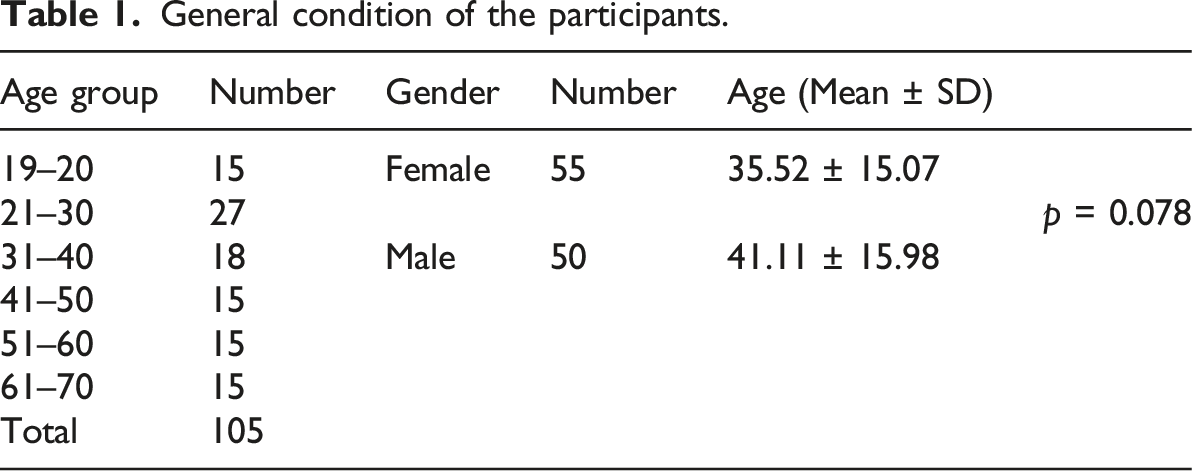
A total of 105 volunteers, aged 19 to 69 years with no history of vestibular disorders, were enrolled. This cohort included 50 males (mean age 41.11 ± 15.98) and 55 females (mean age 35.52 ± 15.07), with no statistically significant age difference between the genders (P = 0.078). Participants were categorized into six age brackets: 11–20, 21–30, 31–40, 41–50, 51–60, and 61–70. For each test, the recording device was consistently positioned on the left side of the goggles, and the tests were conducted by a right-handed operator.
Results
The average regression gain for left anterior-right posterior canals (LARP) was 1.44 ± 0.19, significantly surpassing that of right anterior-left posterior canals (RALP) at 1.09 ± 0.13 (p < 0.001) and horizontal semicircular canals (HSC) at 1.11 ± 0.07 (p < 0.001). No significant difference was observed between the VOR gains of RALP and HSC (p = 0.1077). Additionally, VOR gain values did not show significant variation across different age groups. In a gender-based analysis, a marginally higher HSC gain was observed in females (1.13 ± 0.07) compared to males (1.11 ± 0.07; p = 0.042), while no significant gender disparity was noted for RALP gains (females: 1.09 ± 0.11; males: 1.10 ± 0.14; p = 0.641). Females exhibited significantly higher LARP gain values (1.49 ± 0.18) than males (1.41 ± 0.20; p = 0.002).
Conclusion
This study underscores the stability of high-frequency VOR gain values across ages. However, it also reveals a significant asymmetry in vertical canal gains (LARP vs RALP), suggesting a possible vertical canals monocular directional preponderance. This finding highlights that normative values can be highly specific to the recording and testing protocol. Thus, laboratories should develop their own normative values, customized to their equipment and testing protocols.
Keywords
Introduction
The head impulse test (HIT), also known as the head thrust test (HTT), serves as a critical tool for evaluating the high-frequency function of the vestibulo-ocular reflex (VOR)—a crucial reflex that maintains gaze stability during head movements. Initially, this test was limited to bedside assessments and could only assess the horizontal semicircular canals, heavily dependent on the skill and judgment of the tester, resulting in lower sensitivity.1,2 In 1963, the advent of the scleral search coil technology marked a significant advancement, allowing for detailed recording of eye movements during the test. 3 This innovation, combined with sensors that measured the speed of head and eye movements, made it possible to precisely measure VOR gain, including for the vertical semicircular canals. 4 Despite its accuracy, the scleral search coil was not widely adopted in clinical settings due to its cost, invasiveness, and difficulty in application during acute disease phases. The introduction of video head impulsed devices in 2009, which are easier to operate and can well quantify the VOR gain values, can be better and more widely used in clinical applications. 5
Initially, vHIT was primarily used to assess the horizontal canals, and studies reported slight variations in normal gain values.6,7 With advancements in medical technology and the expanding scope of clinical needs, since 2013, the application of these devices has gradually extended to include the evaluation of the vertical semicircular canals. 8 Incorporating evaluation of the vertical semicircular canals allows for a more comprehensive understanding of the vestibular system’s function in patients, enhancing the accuracy of diagnostic information. However, differences in gain values, especially with respect to the vertical canals, have been observed among different devices. 9 Some studies have reported higher gain values obtained when testing the vertical semicircular canals on the conjugate plane. Without a comparison to the gold standard scleral search coil method, a universal standard is challenging to maintain.
Video recording technology plays a crucial role in the refinement of vHIT. Video goggles are convenient to wear, easy to operate, and well-tolerated by subjects, contributing to the widespread use of vHIT. Previous research shows that vHIT results can vary depending on the proficiency of the examiner, handedness, instrument design, and software calculation methods. Consequently, this study aims to systematically investigate normal gain values across different age groups under conditions where examiners and testing equipment configurations remain relatively constant. This will help clarify the specific characteristics of monocular vHIT for each set of semicircular canals, allowing us to understand the performance of the equipment better and establish normative reference values specific to our center, thereby providing accurate references for clinical applications.
Methods
Study participants
Inclusion criteria: (1) Participants aged over 18 years; (2) Absence of a history of hearing loss, tinnitus, or vertigo; (3) Normal findings on otoscopy, pure-tone audiometry, and impedance testing; (4) Willingness to participate in the study and signing of informed consent forms; and (5) All participants are Chinese. Exclusion criteria: Candidates who did not meet the inclusion criteria were excluded from the study. This study received approval from the hospital’s ethics committee (approval number: XHEC-D-2021-068). All participants have volunteered to join the study and have signed the informed consent form.
Video head impulse test
The study was conducted with EyeSeeCam (Interacoustics, Denmark), and the software version is 1.3.1. During testing, the recording device was consistently positioned on the left side of the goggles, administered by a right-handed examiner. Instruct the subject to continuously fixate on a steady visual target located 150 cm from the participant. Calibrate the device according to the operating system instructions. The horizontal, right anterior-left posterior (RALP), and left anterior-right posterior (LARP) semicircular canals were sequentially tested. Head movements ranged from 10 to 20°, with peak head velocities of 150°/s to 300°/s for horizontal semicircular canal (HSC) testing and 100°/s to 300°/s for vertical semicircular canal (VSC). The entire process was unpredictable to the participants.
Bilateral HSC testing: participants slightly leaned their heads forward and performed effective head thrusts to the left and right for more than 15 times, with head movement angles ranging from 10 to 20°. VSC testing: Participants maintained a forward head posture while fixating on the target point, and the examiner lightly supported their chin with the left hand while gently guiding the head movements with the right hand. For RALP VSC, the head was rotated more than 15 times to the right anterior 45° and left posterior 45°, respectively. For LARP-VSC, the same technique was applied to rotate the head to the left anterior 45° and right posterior 45°, each with more than 15 movements. We can see these details in Figure 1. Normal test result legend (eye see six).
Analysis of gain
The study involves four gain indicators as depicted in Figure 2: instantaneous gain, median gain 0–100 ms, regression gain, and gain asymmetry (GA). (1) Instantaneous gain: The ratio of eye movement velocity to head movement velocity at a specific moment, with the equipment used in this study providing instantaneous gains at 40 ms, 60 ms, and 80 ms, reflecting the relative relationship between eye movement and head movement at different time points. (2) Median gain 0–100 ms: This gain value represents the ratio of median eye velocity to median head velocity sampled from 0 ms to 100 ms after each head impulse begins. (3) Regression gain: The gain derived from the regression equation represents the ratio of eye movement speed to head movement speed. (4) Gain asymmetry (GA): Calculated based on regression gain, GA reflects the degree of asymmetry between the left and right sides within the conjugate plane. This asymmetry was quantified using Jongkees’ formula.
10
The test results of the normal population. (a) The eye and the head movement curve within 700 ms; (b) VOR gain parameters; (c) the regression gain and its gain asymmetry; (d) the gain distribution at different head peak velocity.

Statistical methods
Quantitative data were presented as mean ± standard deviation. A p-value less than 0.05 was considered statistically significant. Data were analyzed using SPSS 26.0 (SPSS Inc., Chicago, IL, USA). Paired t-tests were used to compare gain values between the left and right sides of each pair of semicircular canals, and one-way analysis of variance (ANOVA) was used for comparisons among multiple groups.
Result
General condition of the participants.
Characteristics of VOR gain values
Instantaneous gain (40 ms, 60 ms, 80 ms) reveals the relationship between ocular and head movements at specific moments, while regression gain represents the overall process. Goggle slippage, particularly notable in the first 30–40 ms, and compensatory saccades around 80 ms can distort gain values. 11 However, the 60 ms gain is less affected by these issues, making it a reliable parameter, as confirmed by comparisons with scleral search coil study. 12 Consequently, this study employs the 60 ms instantaneous gain and regression gain values for subsequent analysis.
VOR gain parameters of six semicircular canals in normal population.

R-HSC: right horizontal semicircular canal; L-HSC: left horizontal semicircular canal; RA-VSC: right anterior vertical semicircular canal; LP-VSC: left posterior vertical semicircular canal; RP-VSC: right posterior vertical semicircular canal; LA-VSC: left anterior vertical semicircular canal.
Gain values across the three conjugate planes (Figure 3): 60 ms instantaneous gain: HSC at 1.11 ± 0.08, RALP at 1.15 ± 0.15, and LARP reaching 1.53 ± 0.22. Regression gain values: HSC at 1.11 ± 0.07, RALP at 1.09 ± 0.13, and LARP at 1.44 ± 0.19. Regardless of the 60 ms instantaneous gain or regression gain, the gain values for LARP were significantly higher than those for the other two conjugate planes (Table 3). The gain value parameters of three semicircular canal conjugate planes were compared and analyzed. IG-60 ms, instantaneous gain 60 ms; R-gain, Regression gain. *p ≤ 0.05; ns, p > 0.05; ***p ≤ 0.001; ****p ≤ 0.0001. VOR gain parameters in three conjugate planes of semicircular canals in different age groups. HSC: horizontal semicircular canal; RALP-VSC: right anterior and left posterior vertical semicircular canal; LARP-VSC: left anterior and right posterior vertical semicircular canal.

Characteristics of VOR gain values across different age groups
The results of the one-way analysis of variance revealed no statistically significant differences in the 60 ms instantaneous gain and regression gain for the horizontal and vertical conjugate planes among different age groups (Table 3, all p > 0.05). This indicates that the gain values of HSC and VSC did not exhibit clear systematic changes with increasing age, demonstrating good age-related stability.
Previous studies have indicated that vestibular function declines with age.13,14 In clinical research, Kim et al. reported a significant decrease in VOR gain values in subjects over 70 years old. 15 However, other report has suggested that VOR gain values remain stable until the age of 90, with a significant decline only after 90 years. 16 This study primarily included individuals under 70 years old and did not find any age-related gain value characteristics.
Characteristics of VOR gain values across different genders
VOR gain parameters of three conjugate planes of the semicircular canal and comparisons between genders.

HSC: horizontal semicircular canal; RALP-VSC: right anterior and left posterior vertical semicircular canal; LARP-VSC: left anterior and right posterior vertical semicircular canal.
While previous research found no significant gender differences in gain values for the HSC conjugate plane, 17 our study employing VSC revealed higher regression gains for HSC, as well as higher 60 ms instantaneous and regression gains for LARP, in females compared to males.
Establishment of normal reference gain values
95% CI of normal gain values in three conjugate planes of semicircular canal.

HSC: horizontal semicircular canal; RALP-VSC: right anterior and left posterior vertical semicircular canal; LARP-VSC: left anterior and right posterior vertical semicircular canal.
The regression GA ratio quantifies the extent of gain value discrepancies within the conjugate plane. We define the reference range for normal GA values by setting the upper limit as the unilateral 95th percentile (
Discussion
The VOR is a crucial reflex arc that maintains stable vision during head movements. Under normal circumstances, eye movements are generated in the opposite direction and at the same speed as the head rotation during the impulse. The ratio of eye velocity to head velocity, known as the gain, is close to 1. When the VOR pathway of the semicircular canals is impaired, the eye velocity is often significantly lower than the head velocity (reduced VOR gain) when turning the head toward the affected side. To maintain clear vision, the eyes make a compensatory saccade to realign with the target. Therefore, the gain value directly reflects VOR function, whereas compensatory saccades indirectly indicate VOR performance. 18 Accurately measuring the gain is crucial in HIT.
The majority of vHIT devices typically record monocularly. Previous studies fixed the recording device on the right side and found slightly higher gain values of HSC on the right compared to the left, with no significant differences in VSC.15,19,20 Our vHIT device allows switching the recording side. With the device fixed on the left, we found significantly higher gain values for left HSC (1.13 ± 0.07) compared to the right (1.10 ± 0.07, p = 0.000). The higher gain in adducting eyes compared to abducting eyes results from binocular fusion mechanisms, shorter synaptic pathways, and distinct dynamic characteristics between the medial and lateral rectus muscles.21,22 In our study, the device was configured for left-sided unilateral recording: during left horizontal semicircular canal testing, the camera records left eye adduction, while during right horizontal canal testing, it records left eye abduction. Consistent with these physiological mechanisms, the recorded gain values for the left horizontal canal were higher than those for the right horizontal canal. There were no significant differences in regression gains between the left and right sides within RALP or LARP (Table 2). However, the gain value for LARP was significantly higher than the other two planes, deviating more from the ideal gain of 1. Study has reported that this device tends to yield high gain values and poor repeatability on the vertical conjugate plane. 23 With the recording device positioned on the left side in our study, higher gains were observed on the left side. During head impulses, inertial lag between the camera and eyes induces relative motion in the opposite direction, artificially increasing gain values on the camera side. This discrepancy may be more pronounced in the relatively unconstrained vertical conjugate plane, also manifesting in reduced gain stability. Indeed, the mean deviations of gain values in LARP exceeded those of the other two conjugate planes.
A study by Abrahamsen et al. employing the same device with the camera on the right found that gain value on RALP was higher than that on the other two conjugate planes. 24 Gain values are influenced by device configuration, with systematic differences between instruments. Examiner hand positioning and skill level also affect gains. By standardizing the test method and examiner, our results demonstrate the impact of device factors and inertial slippage, leading to systematic errors that vary between canal planes. Specific reference values should be established, and gain values from less stable conjugate planes interpreted cautiously.
Study has shown age-related declines in primary vestibular afferents and hair cells, suggesting potential vestibular degeneration with aging. 25 While some studies found a non-significant age-related decrease in gain values for HSC with significant declines only after age 90.12,26 We divided subjects into six age groups (Table 1) and found no significant differences in gain values from ages 19 to 69, suggesting that the high-frequency gain values of the VOR exhibit age stability.
In a study of 212 healthy subjects aged 5 to 95, with 110 females (52%, ages 6–93), gain values in HSC were independent of sex. 16 Among our 55 female participants (52%, ages 19–69), there was no significant difference in 60 ms instantaneous gain for HSC and RALP between females and males, while females had slightly but statistically higher regression gains than males. Neither the 60 ms instantaneous nor the regression gain for LARP between groups was statistically significant. May be related to age-related skin laxity leading to potentially poorer stability of the device wear, and the characteristics of the results of this study need to be further explored. Overall, gain differences by sex were inconsistent across planes, precluding definitive conclusions without further study.
A primary limitation of this study is the single-operator, single-device design, which precluded assessment of intra-examiner reliability and made it impossible to isolate operator effects from device performance. Validation of these findings will require further studies involving multiple examiners and devices.
Conclusion
Our study elucidates and analyzes the characteristics of the gain values of the video head impulse test on three pairs of semicircular conjugate planes. Provided that the recording device was fixed on the left side and the operator was fixed to be right-handed, the gain values on the three pairs of semicircular conjugate planes differed. A key contribution of this research is the observation of a significant asymmetry in vertical canal gains, with the gain for the LARP canal plane being markedly higher than that for the RALP canal plane. This suggests a potential vertical canals monocular directional preponderance, possibly influenced by the monocular, left-sided recording setup. Based on our data study of 105 cases, we found that the gain values of the video head impulses were stable in the age group of 19 to 69 years. These findings underscore that normative data can be highly specific to the testing apparatus and protocol used. Therefore, laboratories should establish their own normal reference values for better application in clinical practice.
Footnotes
Acknowledgments
We would like to thank the National Natural Science Foundation of China and Xinhua Hospital Affiliated to Shanghai Jiao Tong University School of Medicine for supporting this work.

Consent to participate
Written informed consent has been obtained from participants for the release of any potentially recognizable images or data contained herein.
Author contributions
Qin Zhang, Mingwei Xu, and Qiong Wu designed the study, collected patients, statistical analyses, and drafted the manuscript. Yuan Yao and Tianyu Gong assisted in drafting the protocol, conducting data collection and processing, and editing the manuscript. Jianyong Chen prepared figures and revised the manuscript. Qing Zhang, Yulian Jin, and Jun Yang critically evaluated the manuscript. All authors reviewed and approved the final version of the manuscript. All authors contributed to the article and approved the submitted version.
Funding
The authors disclosed receipt of the following financial support for the research, authorship, and/or publication of this article: National Natural Science Foundation of China (82471160, 82171137); The Construction Project of the “Discipline Peak-Climbing Plan” of Xinhua Hospital Affiliated to Shanghai Jiao Tong University School of Medicine (XKPF2024B300/XFPF2024B303); Hospital Funded Clinical Research, Xinhua Hospital Affiliated to Shanghai Jiao Tong University School of Medicine (23XHCR05A, 24XHCR05B, PT82171137); National Key R&D Program of China (2024YFC2511100/2024YFC2511105); China University-Industry Collaborative Innovation Fund (2023IT059).
Declaration of conflicting interests
The authors declared no potential conflicts of interest with respect to the research, authorship, and/or publication of this article.
Data Availability Statement
The original contributions presented in the study are included in the article/supplementary material, further inquiries can be directed to the corresponding authors.