




Abstract

Active noise control
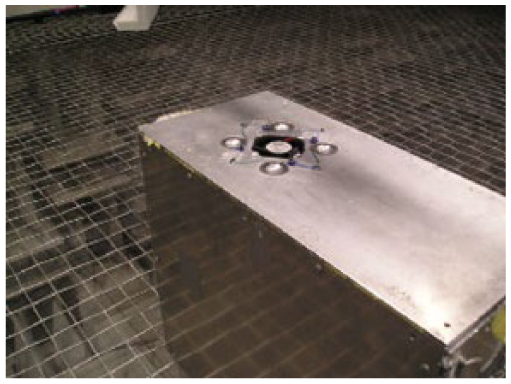
Active noise control (ANC) is based on the principle that two sounds of equal amplitude and opposite phase cancel each other out, leaving silence. Brigham Young University (BYU) has been working on ANC research since 1995 and has received funding from various sources, including Caterpillar. ANC work at BYU involves exploiting one of two types of ANC: (1) affecting the output of a noise source directly at the source and (2) using energy density techniques to globally control the sound in an enclosure. The first type of ANC work has been applied to quieting the tonal noise from cooling fans in desktop computers. The second type of work has been applied to making the operator’s cabin quieter in Caterpillar equipment.
For more information, follow the link: http://acoustics.byu.edu/content/active-noise-control
Ultrasonic noise and transmission
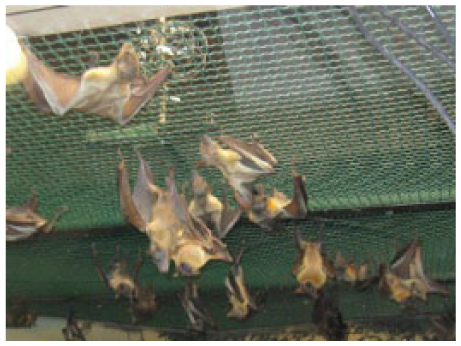
Ultrasonic noise and transmission (UNT) is a new area of active research at Brigham Young University (BYU). Ultrasonic sound is defined as sounds at frequencies above the range of human hearing (>20 kHz). The UNT work at BYU is being funded by the Geophysics Group of the Los Alamos National Laboratory. Undergraduate student researchers at BYU are measuring the levels and frequencies emitted by various natural (mainly animals such as bats) and man-made sources (such as laptops and cell phones). Work is also being conducted by undergraduate and graduate student researchers on measuring the amount of ultrasonic sound that can be transmitted through various common building materials to aide as a nondestructive evaluation tool.
For more information, follow the link: http://acoustics.byu.edu/content/ultrasonic-noise-transmission
Epistemes of modern acoustics: Viktoria Tkaczyk
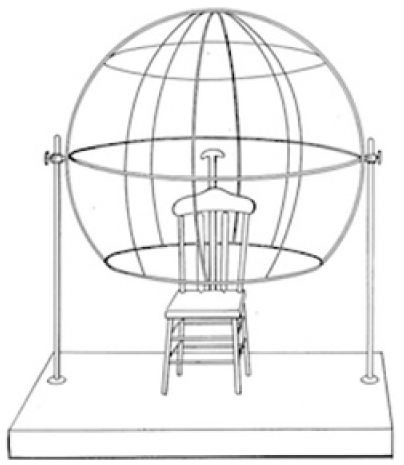
“Epistemes of Modern Acoustics” initiates an intensive consideration of sound in its dual function as an object of scientific investigation and as an epistemic tool. The group thus focuses first on the religious, political, and artistic practices; the media technologies; and the material cultures that prompted a new study of the nature and perception of sound in the modern period. Second, we look at acoustic strategies of knowledge production. What historical knowledge could be acquired or represented only acoustically? When and how were acoustic apparatuses, instruments, and machines deployed as alternative means of research?
These questions are answered through historical case studies in the field of acoustic subdisciplines such as bioacoustics, electroacoustics, and underwater acoustics, or more specifically through phenomena such as acoustic memory, the materials of musical instruments, elevator music, audiometry, and sound photography.
For more information, follow the link: https://www.mpiwg-berlin.mpg.de/en/research/projects/RGTkaczyk
Using low-frequency vibrations to manipulate nanoparticles
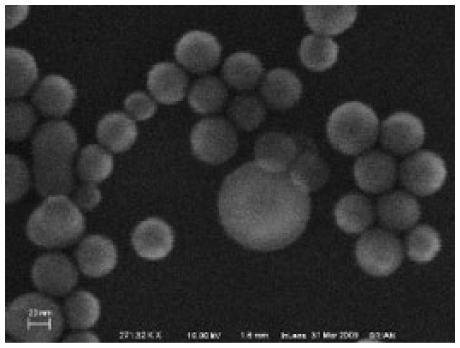
The world of science and technology has been in hot pursuit of the nanoparticles for the last few decades. Bridging the gap between the atomic and the bulk levels, nanoparticles of all materials possess unique properties. These open up an almost endless array of new possibilities for applications in practically every field of human endeavor. The sustained efforts of the scientific community, driven by enormous investments in time and resources, have yielded great advances in the knowledge of the how and why of nanoparticle properties and behavior.
However, for all the possibilities that this new body of knowledge throws open, it would be next to impossible to employ any of it in practical applications without the ability and the tools to select, sort, arrange, and manipulate specific particles as needed. Much work has been done to identify, develop, and refine methods for this purpose.
For example, nanoparticle manipulation (in the range of 100 nm) has been achieved through the use of external magnetic and electric fields to position and sort selective particles. These have also been integrated with electrostatically actuated micro-grippers to “pick and place” particles. In microfluidic systems, methods such as di-electrophoresis, optical trapping, and magnetic tweezers have been used.
For more information, follow the link: http://www.iitbmonash.org/story-45/
Management of hand-arm vibration
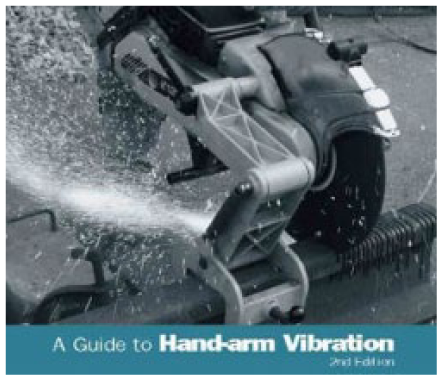
Professors David Edwards and Gary Holt, both of the University’s Centre for Business Innovation and Enterprise (CBIE), Birmingham City Business School, have for many years been at the vanguard of world-leading research into hand-arm Vibration (HAV) and its control and management in the workplace. HAV is a form of vibration experienced by workers who use hand-operated mechanical tools. Repeated or continuous exposure to it can cause serious and sometimes irreversible health problems.
Professors Edwards and Holt have been instrumental in bringing about more accurate measurement of exposure to HAV by workers and have, as a result, improved the ability to better risk-assess and manage this occupational health hazard within all kinds of business that use hand-operated machinery; throughout industry, in this country and internationally.
Their work led to the establishment of the world-leading Hand-Arm Vibration Test Centre. It also underpinned the development of the world’s largest and freely accessible web-based HAV database known as the HAVTec database and it has informed the academic community through a host of peer-reviewed academic publications (see samples at foot of this article). Their published industry guidance on HAV is used by many businesses to help inform HAV management, especially within the plant and equipment sector.
For more information, follow the link: http://www.bcu.ac.uk/research/stories/hand-arm-vibration
Researchers use vibrations to spot weaknesses in train rails
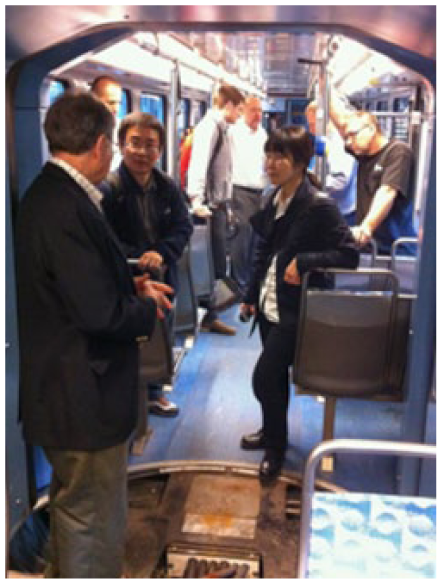
To prevent future accidents, Carnegie Mellon Civil and Environmental Engineering Assistant Professor Hae Young Noh, with Professors Jacobo Bielak (CEE), Jelena Kovačević (ECE), Dean of the College of Engineering Jim Garrett, PhD student George Lederman, and Piervincenzo Rizzo of the University of Pittsburgh, in collaboration with the Port Authority of Alleghany County, are testing new technology to spot possible dangers for trains on tracks before they become problems. The Light Rail system, also called the “T,” is their testing ground.
Noh’s range of research focuses heavily on implementing sensors into structures to improve daily life. In addition to her work with trains, she is using sensors within buildings to detect people for safety and security purposes and to identify how they use resources and spaces.
This project is part of Carnegie Mellon’s Technology for Safe and Efficient Transportation University Transportation Center (T-SET UTC), which is dedicated to making transportation safer and more efficient by improving roadway infrastructure and technology. The T-SET UTC is funded by the Department of Transportation.
Noh and her collaborators’ technology for the tracks is, quite simply, sensors and data analysis.
The sensors, fitted to passenger cars that run the length of the “T,” pick up vibrations that occur along the track. The vibrations are then collected and analyzed. The measurements, which are a mixture of vibrations from the train itself and vibrations from the interaction between the train and track, can be used to determine where possible danger lies.
For more information, follow the link: https://www.cmu.edu/cee/news/news-archive/2015/2015-testing-the-tracks.html
New technique allows ultrasound to penetrate bone, metal
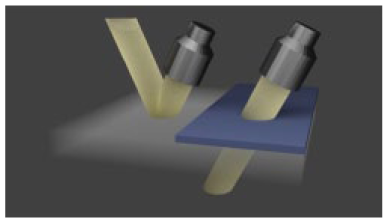
Researchers from North Carolina State University have developed a technique that allows ultrasound to penetrate bone or metal, using customized structures that offset the distortion usually caused by these so-called aberrating layers.
“We’ve designed complementary metamaterials that will make it easier for medical professionals to use ultrasound for diagnostic or therapeutic applications, such as monitoring blood flow in the brain or to treat brain tumors,” says Tarry Chen Shen, a Ph.D. student at NC State and lead author of a paper on the work. “This has been difficult in the past because the skull distorts the ultrasound’s acoustic field.”
“These metamaterials could also be used in industrial settings,” says Dr Yun Jing, an assistant professor of mechanical and aerospace engineering at NC State and senior author of the paper. “For example, it would allow you to use ultrasound to detect cracks in airplane wings under the wing’s metal ‘skin.’”
Ultrasound imaging works by emitting high-frequency acoustic waves. When those waves bounce off an object, they return to the ultrasound equipment, which translates the waves into an image.
For more information, follow the link: https://www.sciencedaily.com/releases/2014/11/141120113449.htm