



Abstract

New approach to sorting cells
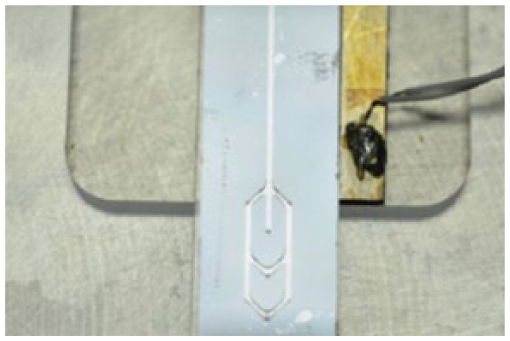
Microfluidic devices hold potential to rapidly analyze cells for applications in medicine and basic research. Researchers have devised systems that can distinguish cells based on their size, deformability, and electrical properties, among other characteristics.
A team of MIT researchers has now developed a new way to sort cells, based on their acoustic properties—that is, how they are affected by sound waves, which depends on how dense and compressible the cells are.
These acoustic properties rely on cell content and structure and are independent of the cells’ size, so this method can be used to separate cell types of similar size. Another advantage to this approach is that it does not require altering the cells in any way with chemical labels.
This technique could potentially be used to develop a handheld device that would make it easier and faster to do a test known as a complete blood count (CBC). This test, which currently requires blood samples to be sent to a lab for analysis, is often done to determine how many red blood cells and different types of white blood cells are present in a patient’s bloodstream.
For more information, follow the link: http://news.mit.edu/2016/microfluidics-device-sort-cells-acoustic-vibrations-0516
The ActiveSilencer™ Enclosure
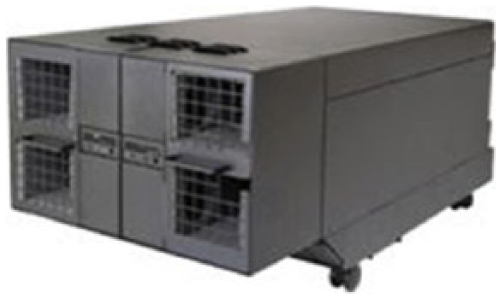
The ActiveSilencer™ Enclosure (ASE™) is custom built for the Intel® Modular Server System MFSYS25 to allow deployment in a small to medium business office. Silentium has worked with Intel to design the enclosure to significantly reduce unwanted server noise by up to 10 dB(A) without causing any thermal or cooling degradation.
This enclosure incorporates Silentium’s unique active noise control (ANC) technology to achieve unprecedented full-spectrum noise reduction, not possible with passive only enclosures.
Intel® Modular Server deployed inside the Active-Silencer™ Enclosure enables a silent and powerful Business-in-a-Box Server or HPC Personal Cluster System with up to six server compute modules, integrated SAN, and built-in Ethernet network that generate the same noise as 1 standard pedestal server.
For more information, follow the link: http://www.silentium.com/products/activesilencer-enclosure
Ultrasonic noise and transmission
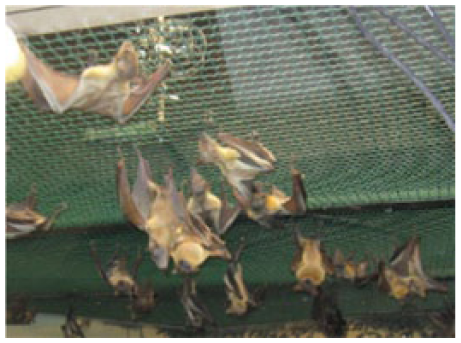
Ultrasonic noise and transmission (UNT) is a new area of active research at Brigham Young University (BYU). Ultrasonic sound is defined as sounds at frequencies above the range of human hearing (>20 kHz). The UNT work at BYU is being funded by the Geophysics Group of the Los Alamos National Laboratory. Undergraduate student researchers at BYU are measuring the levels and frequencies emitted by various natural (mainly animals such as bats) and man-made sources (such as laptops and cell phones). Work is also being conducted by undergraduate and graduate student researchers on measuring the amount of ultrasonic sound that can be transmitted through various common building materials to aid as a nondestructive evaluation tool.
For more information, follow the link: http://acoustics.byu.edu/content/ultrasonic-noise-transmission
AcoustiRACK™ ACTIVE Soundproof Rackmount Cabinet with active noise control

AcoustiRACK™ is a range of Soundproofed Rackmount Cabinets available in forms and comes in various sizes; Miracel® ARA (MARA) 33U, 15U (1000 mm, 1200 mm deep).
Silentium introduces a breakthrough in noise reduction performance with ARA™ of up to 30 dBA equipment noise attenuation. The ARA has been designed to trap and absorb unwanted noise generated inside the rack, while actively allowing free air movement and heat exchange with the outside of the unit, resulting in up to 8 KW cooling/heat dissipation.
Silentium’s proprietary noise-cancelling technology is highly effective in reducing low-frequency noises. Once combined with unique high-quality acoustic materials, this product achieves unprecedented spatial noise reduction over the entire frequency bandwidth of the audible spectrum of up to 20 dBA. These high performances are achieved using the patent pending modular Active Silenced Fan Tray™ (ASFTTM) units, which can be easily applied to any miracle 19″ racks.
For more information, follow the link: http://www.silentium.com/products/rackmount-cabinet-active
Explosions as active sound signals to locate underwater targets

Broad bandwidth, high level acoustic energy flux density over the frequency range of interest, and flexible deployment are characteristics of underwater explosive sound source. It achieves good results when being widely applied in fields like research of underwater sound, inversion of sea bottom geoacoustic parameters, and underwater acoustic countermeasure.
Explosive sound sources have same clear advantages in comparison with conventional-pulsed electroacoustic sonar sources. The desirable side of explosive sound sources is the fact that they are mobile in the sense of being free of connecting cables. And therefore it can be easily launched and detonated at any depth.
They yield a short high-power broadband pulse that is useful when range resolution is important. They are nondirectional and need not be beamformed to send an adequate amount of acoustic energy in the direction of the target. For these reasons, explosive sources in sonar can perform well in research studies and air-dropped applications where their mobility and depth flexibility are of paramount importance.
In the recent research, scientists from the Institute of Acoustics of the Chinese Academy of Sciences systematically study the underwater target localization and parameters (azimuth and range) estimation by the method of utilizing explosions as underwater sound sources.
By deploying explosive sound sources between sonar and underwater target as active sound signals, and using sonar array to receive the explosive signals scattered from the target, the underwater target can be detected.
For more information, follow the link: http://english.ioa.cas.cn/rh/as/201612/t20161228_172980.html
Investigation of the Arpeggio Bells

A set of four novel bells comprising a major triad and octave has been designed and cast in bronze by an Adelaide bronze artist. The bells have a particularly pleasing strike tone as well as beautiful decoration. To identify the origins of the bell tones, and to assist in tuning, the bells have been modeled using finite element analysis. Various aspects of the acoustics of the bells were studied, including the synergies between shape symmetries and modal symmetries and their effects on the tuning and timbre.
This investigation concluded that the decoration on the bell has a crucial acoustic role in addition to its artistic and symbolic ones. Depending on the symmetries of the decoration with respect to the modes, the tuning can be extraordinarily sensitive. In the case of these bells, the tuning sensitivity is such that even the very difficult to control surface patination plays a crucial role.
Thwaites S and Printer H. Acoustics of the Arpeggio Series 1 set of bells. In: Proceedings of the Australian Acoustical Society Conference, Adelaide, Australia, 13–15 November 2002, pp. 176–185.
For more information, follow the link: http://measurement.gov.au/ScienceTechnology/Pages/Acoustics,UltrasoundandVibrationResearch.aspx
Acoustic tweezers move cells in three dimensions, build structures
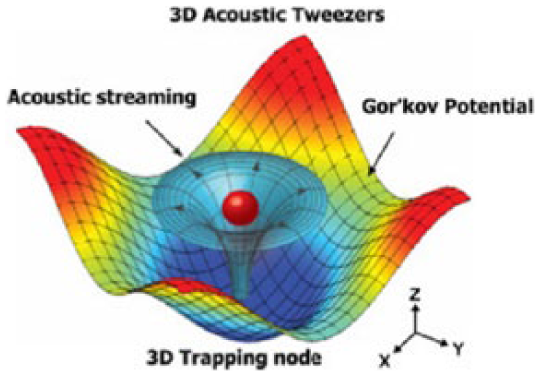
University Park, Pa.—Acoustic tweezers that can move single cells in three dimensions using surface acoustic waves without touching, deforming, or labeling the cells are possible, according to a team of engineers.
“In this application we use surface acoustic waves to create nodes where cells or microparticles are trapped”, said Tony Jun Huang, professor and The Huck Distinguished Chair in Bioengineering Science and Mechanics. “We can then move the cell or particle in three dimensions to create structures in two or three dimensions”.
The trapping nodes are formed by two sets of surface-acoustic-wave generators. When the sound waves from opposite sides meet, they create pressure that catches and positions the particle or cell. Moving the location where the sound waves meet moves the location of the cell or particle. These standing-wave shifts manipulate the tiny objects in two dimensions. The amplitude of the acoustic vibrations controls the movement in the third dimension. The researchers report their work in today’s (January 25) issue of the Proceedings of the National Academy of Sciences.
“The results presented in this paper provide a unique pathway to manipulate biological cells, accurately and in three dimensions, without the need for any invasive contact, tagging, or biochemical labeling”, said Subra Suresh, president, Carnegie Mellon University and part of the research team. “This approach could lead to new possibilities for research and applications in such areas as regenerative medicine, neuroscience, tissue engineering, biomanufacturing, and cancer metastasis”.
For more information, follow the link: http://news.psu.edu/story/389024/2016/01/25/research/acoustic-tweezers-move-cells-three-dimensions-build-structures