



Abstract
To improve the ride comfort of the cab of construction machinery and reduce the harm of vibration to the driver, a nonlinear lumped parameter model of passive hydraulic damping rubber mount (PHDRM) is first proposed. The nonlinearity of multi-inertial tracks is fully considered. Then, the global FE (finite element) fluid-solid coupling model of the isolator is developed in ABAQUS. The multi-field coupling solution and a joint simulation mode are employed in this paper. Meanwhile, the rubber element and inertial track parameters are identified respectively. Finally, multiple sets of dynamic performance experiments are performed on the different PHDRM samples. The experiment results indicate that the simulation results for two modeling methods of the vibration isolation system are consistent with the experimental datum. The modeling approaches have both reliability and accuracy under larger amplitude excitation at low frequency. Furthermore, the effects of different rubber elements and inertial track of PHDRM on low-frequency dynamic characteristics under larger amplitude are investigated and discussed, respectively. The experimental outcomes also provide a practical reference value for nonlinear modeling method research and dynamic performance analysis of PHDRM with complex structures further.
Keywords
Introduction
With the development of modern construction and transportation equipment, more and more attention is paid to the ride comfort and humanized design of construction machinery such as excavators, loaders, earthmovers, etc. In construction machinery vehicles or off-road vehicles, a cab is subjected to vibration from varying degrees of road surface excitation during driving.1–4 When the operator is always working in the vibration state for a long time, the driver’s health is damaged seriously and their body suffers from high fatigue, which even leads to frequent accidents. To improve the operator’s comfort, a proper cab vibration isolation mount is therefore always of considerable means. Many studies focus on the design of semi-active isolators. However, for heavy-duty construction machinery, the manufacturing cost has been greatly increased. Although traditional rubber isolators are widely used in cab isolation systems, the hydraulic mounts for cab requires to be studied widely to improve the ride comfort of construction equipment and industrial vehicles.5–8 The low-frequency vibrations are the main risk factor resulting in drivers’ mental and physical health and lower operator efficiency. Therefore, studying the low-frequency dynamic properties of isolators is important for vibration analysis and design optimization of vibration isolation mounting systems.
Considering the vibration or shock caused by various excitations of road surface and engine transmitted to the cab through the frame, many modeling methods of suspension components are addressed to analyze complex vibration coupling characteristics.9–14 Rubber components have commonly been characterized with viscoelastic models, such as Kelvin-Voigt and Maxwell models.12–13 Zhu et al. 15 used a nonlinear model based on a superposition of elastic, friction and FDV forces to describe the complex behavior of rail pads. Additionally, the mathematical model of fluid dampers with high-viscosity hydraulic oil has increased in recent years.16–19 The literature 20 described a lumped parameter model for hydraulically damped suspension with multi-inertial channels to analyze dynamic characteristics. The dynamic stiffness and the calculation method of hysteresis angle are deduced, and the formula of the peak frequency of hysteresis angle is also given. The literature 21 had studied the influences of design parameters of a hydraulically damped suspension system on the dynamic characteristics of the isolator by modeling and parameter identification technique. However, at present, there is still a lack of research on the nonlinear modeling method of the passive isolator due to complex flow-solid coupling mechanical properties.
Much effort has been made to study the characteristics of rubber isolators and fluid dampers from theoretical aspects or experiments.22–24 According to the literature, 25 the experimental research and the parameter identification are respectively carried out for two kinds of hydraulically damped suspension with different shapes and sizes of the orifice, and the dynamic characteristics are analyzed by comparing with the experimental results. From another perspective, the flow-solid coupling FE simulation analysis method is widely used in engineering applications. Many scholars have adopted the FE method in the structural design of hydraulically damped rubber mounts. CAO Zheng-lin et al. 26 established the nonlinear FE model of hydraulically damped suspension by using INTESIM strong liquid-solid FE method. The static and dynamic stiffness characteristics of the isolator are discussed, and the validity of the simulation results is demonstrated. The literature 27 describes a two-dimensional fluid-solid coupling FE model and structural optimization has been carried out. Christopherson J et al. 28 identified the performance parameters of PHDRM structure by using the nonlinear FE method and used the superplastic constitutive relation to describe the incompressible properties of rubber materials accurately. Moreover, the dynamic behaviors of two different suspension systems were analyzed. However, in the existing studies, fewer reports have been found on the research and calculation of the global FE modeling method for PHDRM. Therefore, it is necessary to establish an accurate simulation model of suspension system for construction machinery cab to analyze the dynamic performance of isolator under different amplitudes at low frequencies.
In this paper, the dynamic performance of passive hydraulically damped rubber mount under larger amplitude excitation is examined at low frequency. First, a lumped parameter model of PHDRM considering the nonlinearity of multi-inertial tracks is developed. Then, the global FE fluid-solid coupling model of the isolator is proposed. Meanwhile, the parameters of PHDRM are identified respectively according to the established Fluid-Structure-Interaction (FSI) model of rubber element and inertial track. Moreover, the low-frequency dynamic experiments of different PHDRM samples are investigated under larger amplitude excitation. The influence of the rubber element and inertial track on low-frequency dynamic characteristics under larger amplitude excitation is discussed and analyzed in detail.
1 Model Description
Since construction machinery cab produces the strong vibration or shaking, it is very difficult to improve the carrying capacity of hydraulically damped rubber mount by redesigning the structural size and weight of the cab, especially medium and heavy construction machinery. Figure 1 shows the 3D model diagram of the inertial track-hydraulically damped rubber mount, which is composed of rubber element, inertial track, rubber bottom membrane, and metal shell, etc. When the hydraulically damped rubber mount works, the top of the isolator is connected to the cab and the bottom to the frame. The external vibration causes the liquid to reciprocate rapidly through the inertial track. The secondary suspension system of construction machinery is widely considered to be mainly low-frequency vibration isolation. Moreover, the optimized structure of isolator internal components, such as rubber element and inertial track can greatly improve the carrying capacity of the isolator and meanwhile the isolator has the low frequency and large damping property. Structure Diagram of 3-D Model for PHDRM.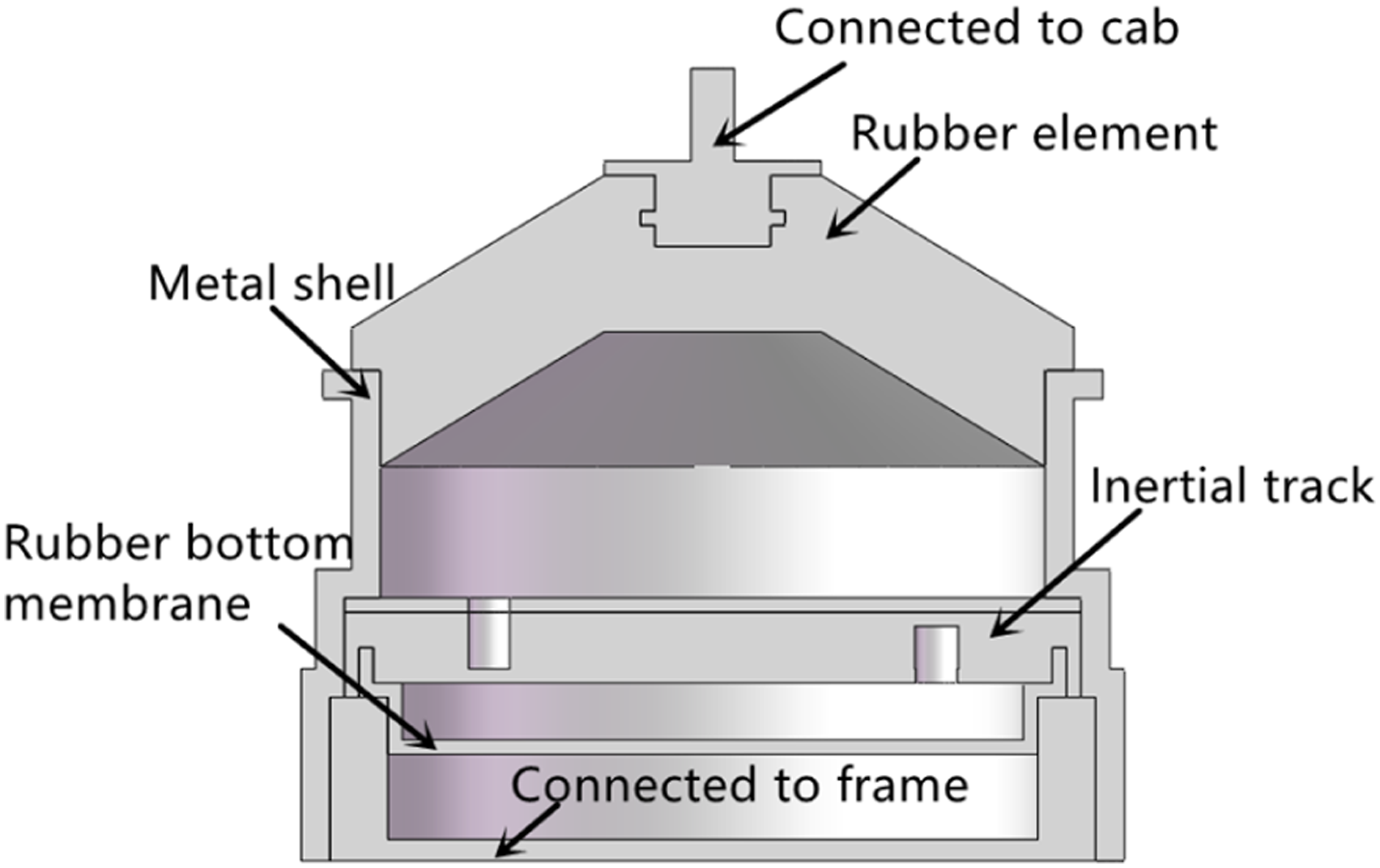
Modeling of hydraulically damped rubber mount
Dynamics model
To analyze and compare the low-frequency dynamic characteristics of hydraulically damped rubber mount, a lumped parameter model considering the nonlinearity of multiple inertial tracks is proposed, as shown in Figure 2. The hydraulically damped rubber isolator can be characterized by a coupled parallel combination of a rubber path and a liquid path, through which motions or forces can be transmitted to the cab. A modified Kelvin-Voigt element is adopted to describe the viscoelastic property of the rubber material. In this model, the parameter Lumped parameter model of hydraulic damping rubber mount considering the nonlinearity of multi-inertial tracks.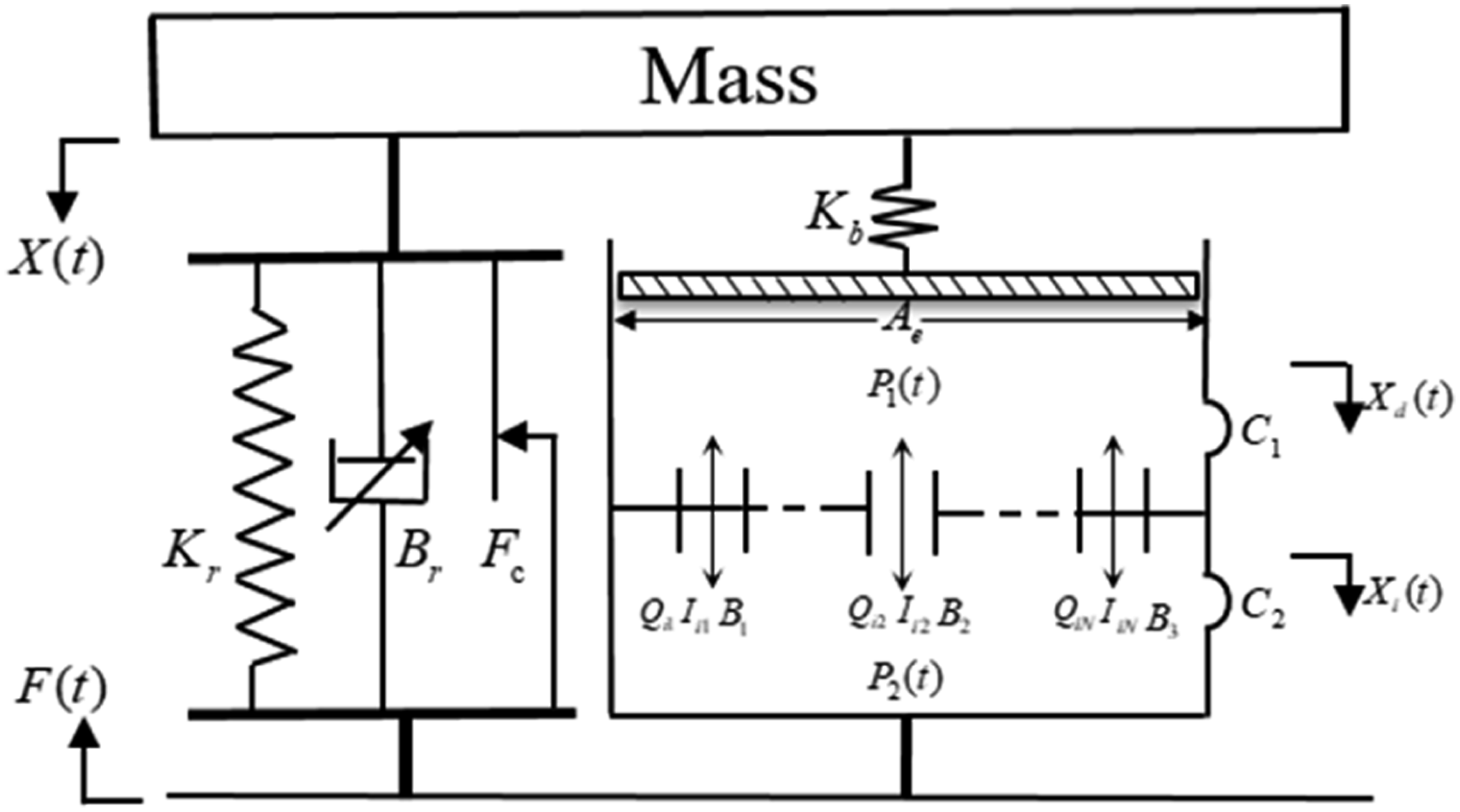
In the condition of the low frequency and the large amplitude, the decoupling disk of the hydraulically damped rubber mount is in a non-working state most of the time. Therefore, it is approximate that the liquid flows only through the inertial track between the upper and lower liquid chambers. Considering the hydraulic oil as a viscoelastic material, the inertia force and damping force of liquid flowing through inertial track are nonlinear, and the nonlinear momentum equation of liquid flow in the inertial track can be derived as follows

Considering the incompressibility of the liquid, the relationship between the motion velocity of the rubber element equivalent piston and the flow velocity of the liquid in the inertial track can be expressed as

The continuity equation of liquid flow can be written as

By substituting equation (2) and equation (3) into equation (1), the nonlinear momentum equation of liquid flow in the inertial track is then given by




Thus, equation (4) can be rewritten as

The force equilibrium equation of the suspension system is established as follows

The state equation of the suspension system is established by the nonlinear momentum equation and continuity equation of the system

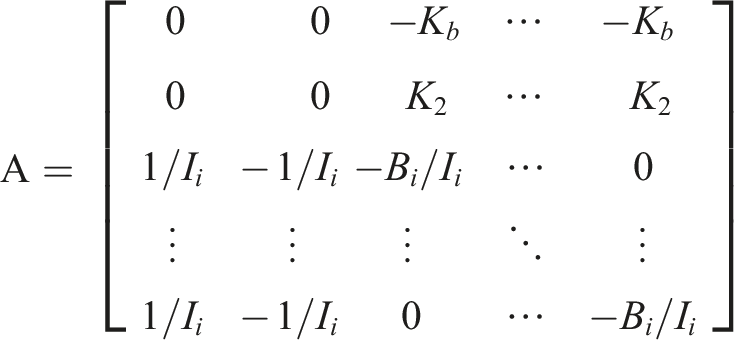



Letting
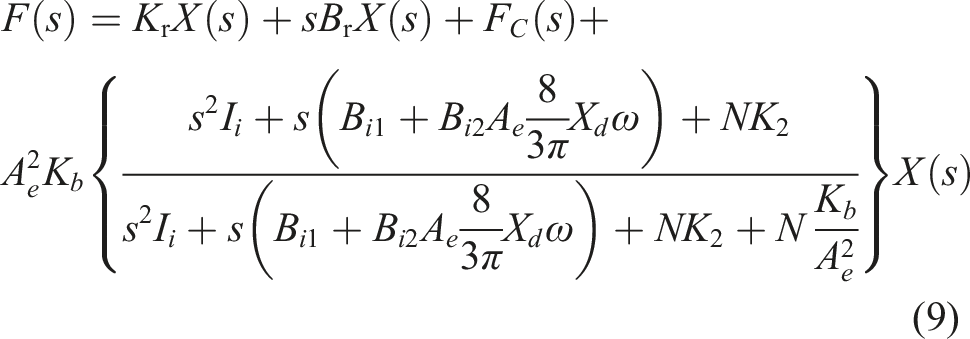
In case of
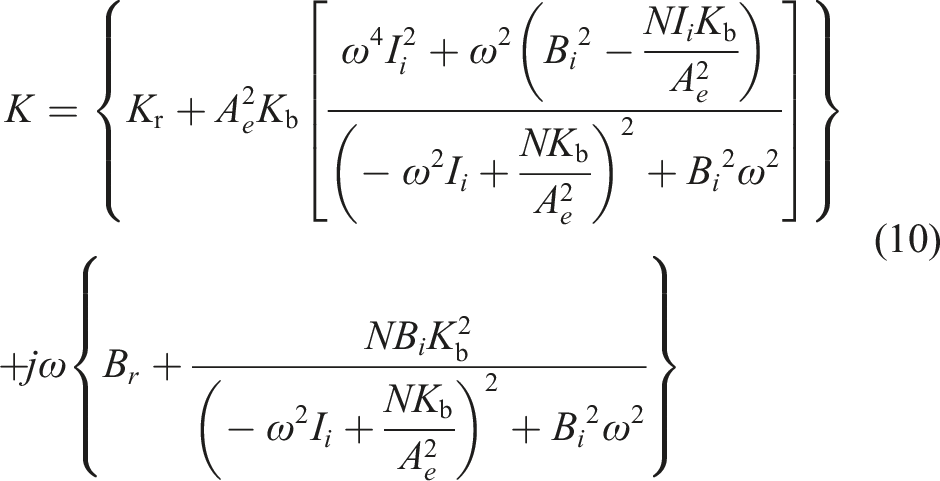
The related parameters can be identified further by the FE modeling method in the next Part. The identified results are substituted into equation (10) and the dynamic characteristics of the hydraulically damped rubber mount can be obtained at low frequency.
FE model
The liquid in the PHDRM can reciprocate between the upper chamber and lower chamber, and flow-solid coupling interactions exist in the chamber of the vibration isolator. Therefore, the global FE model of the hydraulically damped rubber mount based on the fluid-solid coupling method is developed by the joint simulation mode in ABAQUS. Given that the deformation of the metal skeleton of the rubber element is very small, it usually can be neglected. Considering the rubber element as the typical superelasticity material, the Mooney-Rivilin material model can be employed to describe eighty percent of the deformation properties for the rubber element. Also, the Mooney-Rivilin material model has characterized with good stability, of which the strain energy function can be written as follows

When N = 1, the strain energy function of the second-order Mooney-Rivilin material model can be given by

In the process of simulation, the fluid model is shaped with the internal dimensional shape model from PHDRM and is in the same coordinate system as the solid model. Therefore, the fluid model of hydraulically damped rubber mount is established as shown in Figure 3, which consists of three parts, the fluid portion in the upper chamber, the fluid portion in the inertial track, and the fluid portion in the lower chamber. The material parameters of the fluid FE model are respectively the density of hydraulic oil
The interface for each flow-solid coupling is chosen from the solid and fluid models, respectively. To make the FE mesh size of the fluid model and the solid model consistent basically and improve the calculation efficiency, each pair of chosen surfaces in the fluid and solid model should have the same area during the pretreatment process. When the location of the fluid and solid nodes on the flow-solid coupling surface cannot coincide, the displacement of the fluid node is obtained by the displacement interpolation of the solid node, and the stress of the solid node is obtained by the pressure interpolation of the corresponding fluid node. Due to the incompressibility of the fluid in the PHDRM and strong nonlinearity, the fluid-solid coupling calculation is performed in joint simulation mode in ABAQUS. Therefore, the dynamic analysis module is combined with the fluid dynamics analysis module together. Explicit model is used for the solid FE model and CFD Model is used for the fluid FE model
By discretizing the dynamic equations of fluid and solid and introducing coupling boundary conditions, the nonlinear FE equation of fluid-solid coupling system can be yielded Schematic diagram of fluid FE model.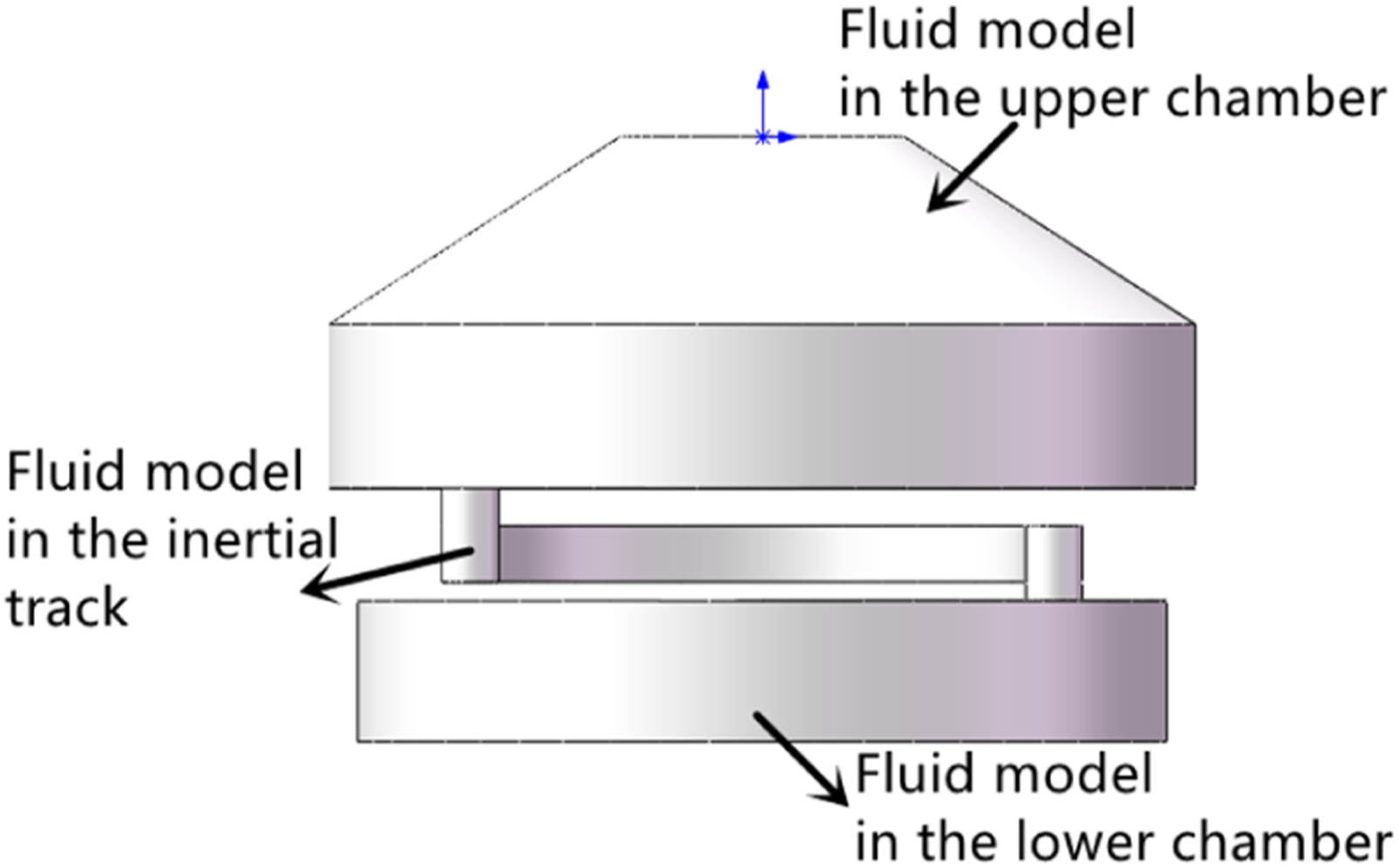

Parameter identification of PHDRM model
Rubber element
The FE mesh of rubber element is built by using ten node quadratic tetrahedron elements C3D10H, and the vertical displacement load of 5 mm is applied. The displacement cloud map of the rubber element is obtained, as shown in Figure 4. It shows a trend of decreasing deformation of the rubber element from the centre mounting hole to the edge. The maximum amount of deformation is distributed around the mounting hole with a value equal to the applied load. The total reaction force can be calculated by extracting the support reaction of all the nodes subjected to the displacement load at the top of the PHDRM. Thereby, the force-displacement curve of the rubber element can be acquired. By the ratio of the total reaction force and the displacement, the static stiffness of the rubber element in the vertical direction is calculated as 236.71 N/mm. The dynamic stiffness can be estimated through the following formula Displacement cloud map of rubber element.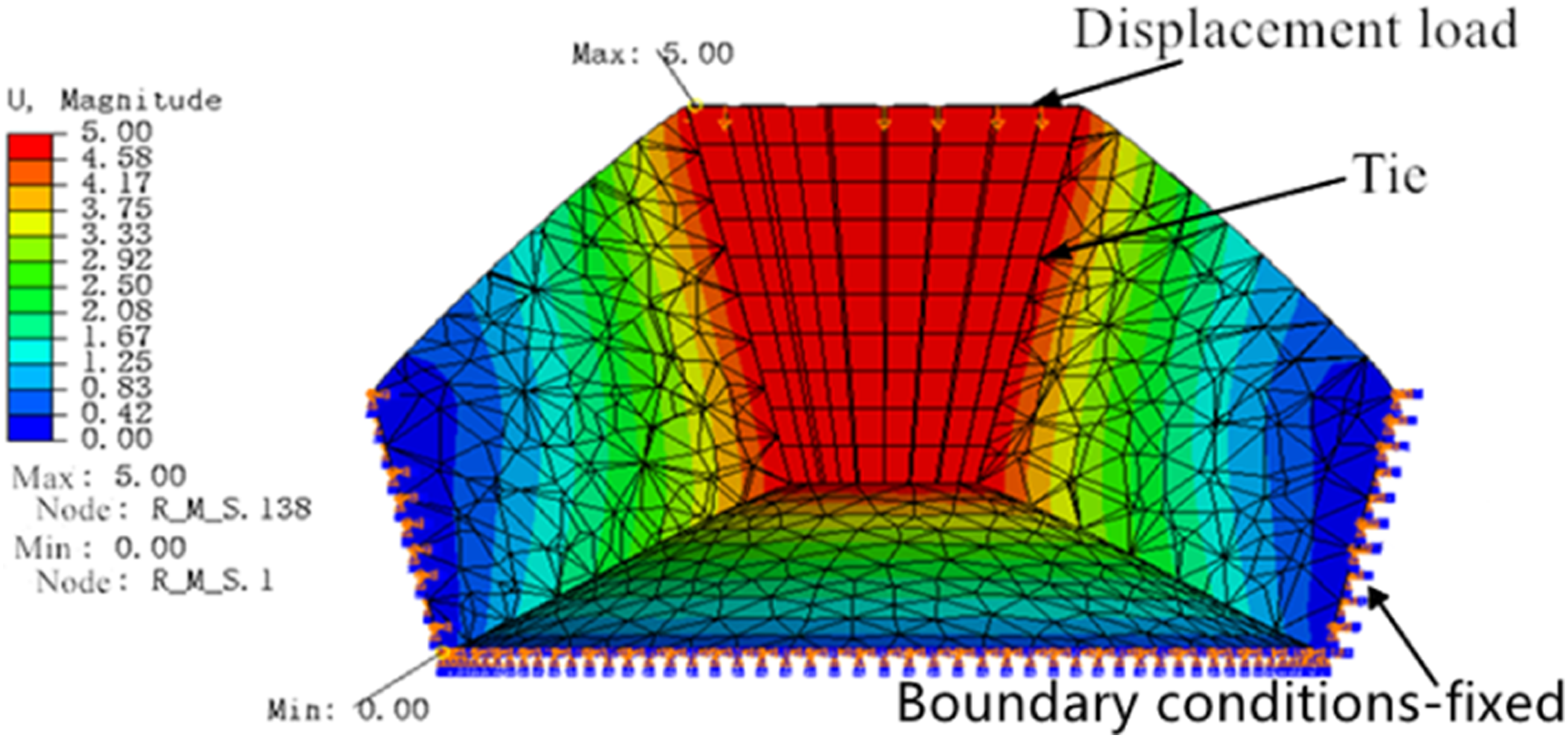

When the liquid in the upper chamber is coupled to the rubber element, the joint simulation mode is created under the action of the displacement loads. The multi-field coupling solution in ABAQUS is applied. A pressure “head” is created for the fluid model and the fluid flows down the bottom surface under pressure. Thus, the bottom pressure of the fluid is set to 0 Mpa, which makes the fluid flows down. Also, experiments show that when the excitation displacement exceeds 3 mm, the equivalent piston area of the rubber element is unchanged and independent on the excitation frequency. Figure 5 shows the displacement cloud map of the fluid model in the fluid-solid coupled FE model. It is clear that the largest amount of displacement occurs the bottom of the fluid under the action of the displacement load. Therefore, the equivalent piston area of the rubber element is written as Displacement cloud map of the fluid model (FSI).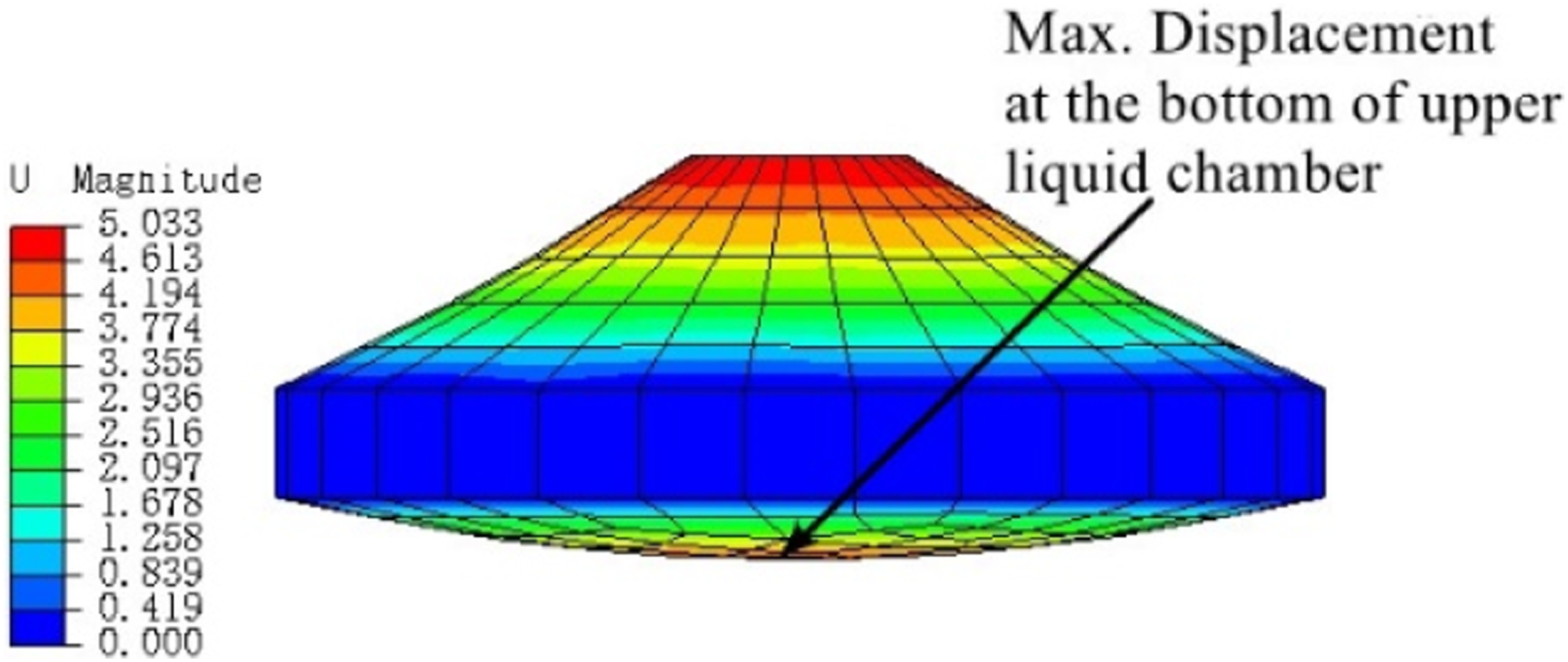


Inertial track
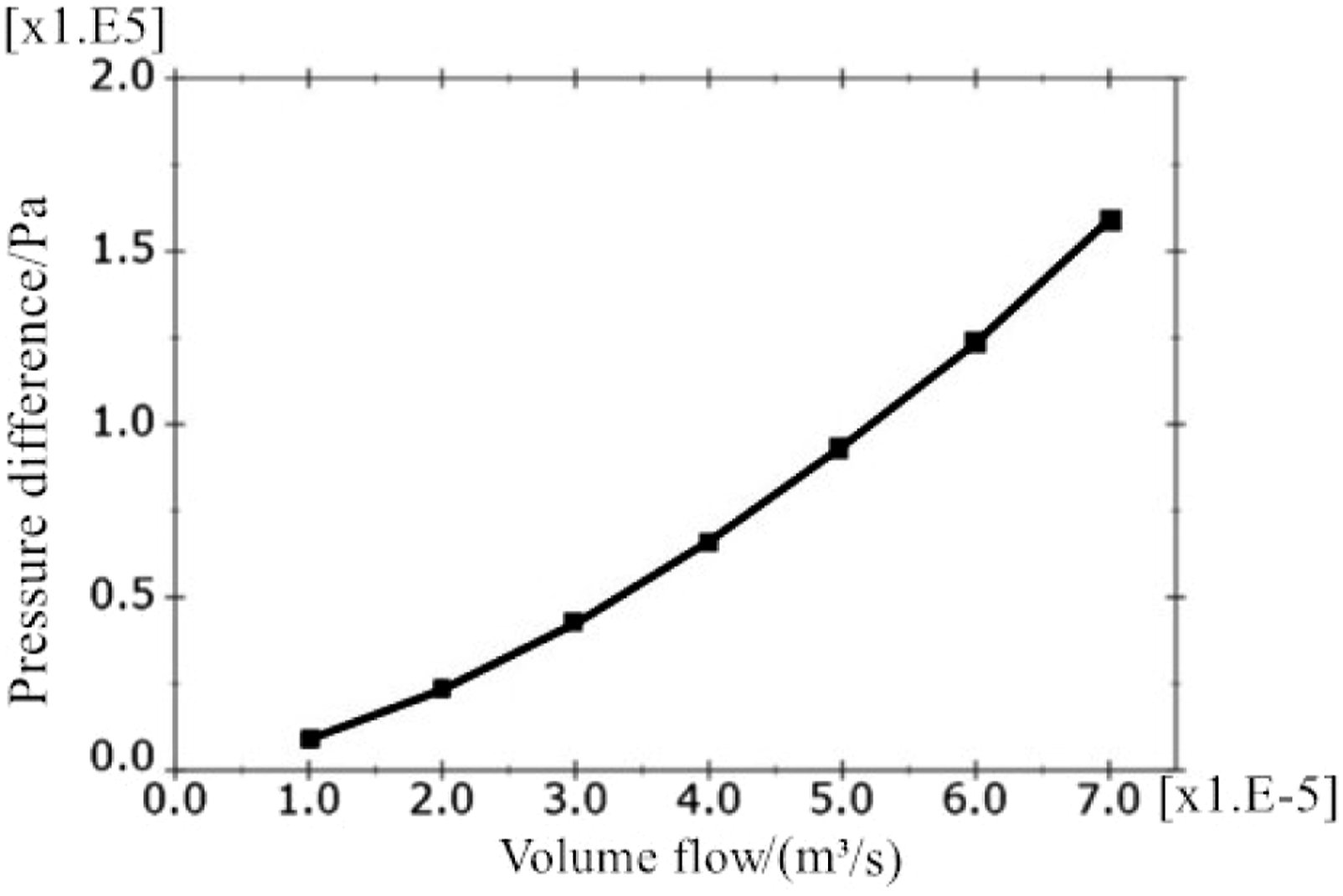
The tetrahedron element FC3D4 is used for meshing the fluid FE model in the inertial track. The inlet cross-section of the inertial track is set as the velocity load surface, and the outlet cross-section pressure is set as 0 MPa. Also, the other surfaces are set as the fluid walls. The cross-section area for inertial track is given as FE cloud map of inertial track at inlet velocity of 4775 mm/s. (a) Pressure distribution cloud map. (b) Flow velocity cloud map. Relationship curve of pressure difference and rate of flow of cross-section.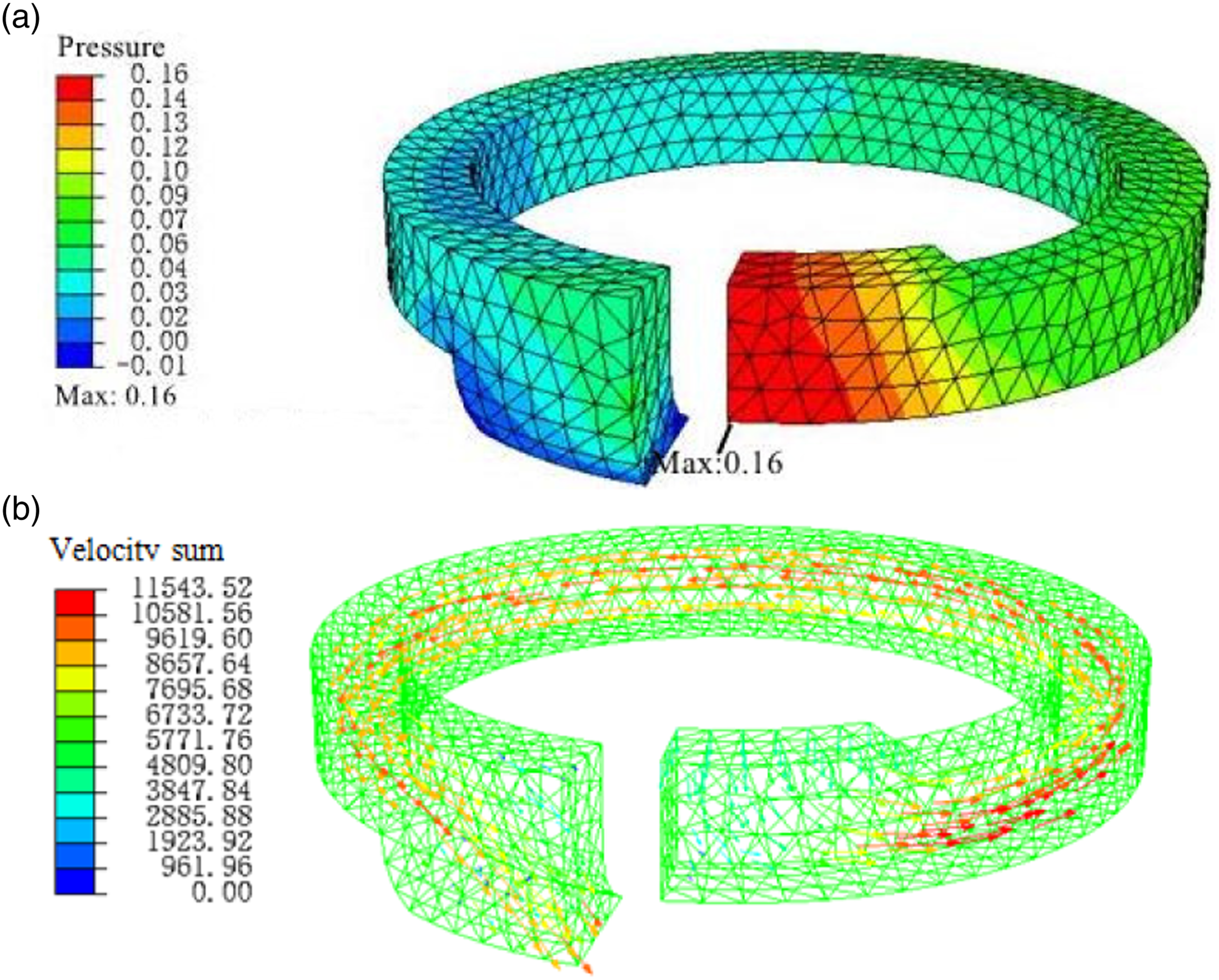

Using ABAQUS multi-field coupling algorithm, the collaborative analysis task can be created based on Lenovo workstation with ZQ E5-2665 2.40 GHz 16-core processor. The motion states and deformations of the fluid at any time throughout the excitation process can be observed by the visual results of nonlinear FE calculation. Figure 8 shows the pressure distribution cloud diagram of the fluid. It can be seen that there is obvious pressure gradient in the inertial track at different times in one cycle, and the pressure distributions of the upper and lower liquid chambers are uniform basically. When t = 0.15s, the fluid pressure of the upper and lower liquid chambers varies obviously. The liquid flows between the upper and lower chambers through the inertial track, and the pressures at the inlet and outlet of the inertial track changes with the reciprocating motion of the fluid. The maximum flow velocity is 2986 mm/s. The maximum motion velocity of excitation displacement is 58.7 mm/s. Therefore, the ratio of the two velocities is about 50.86, which is not different from the ratio of the equivalent piston area of the rubber element to the cross section area of the inertial track. The correctness of the FE model can be verified. The pressure distribution diagrams of Fluid Model at different Times (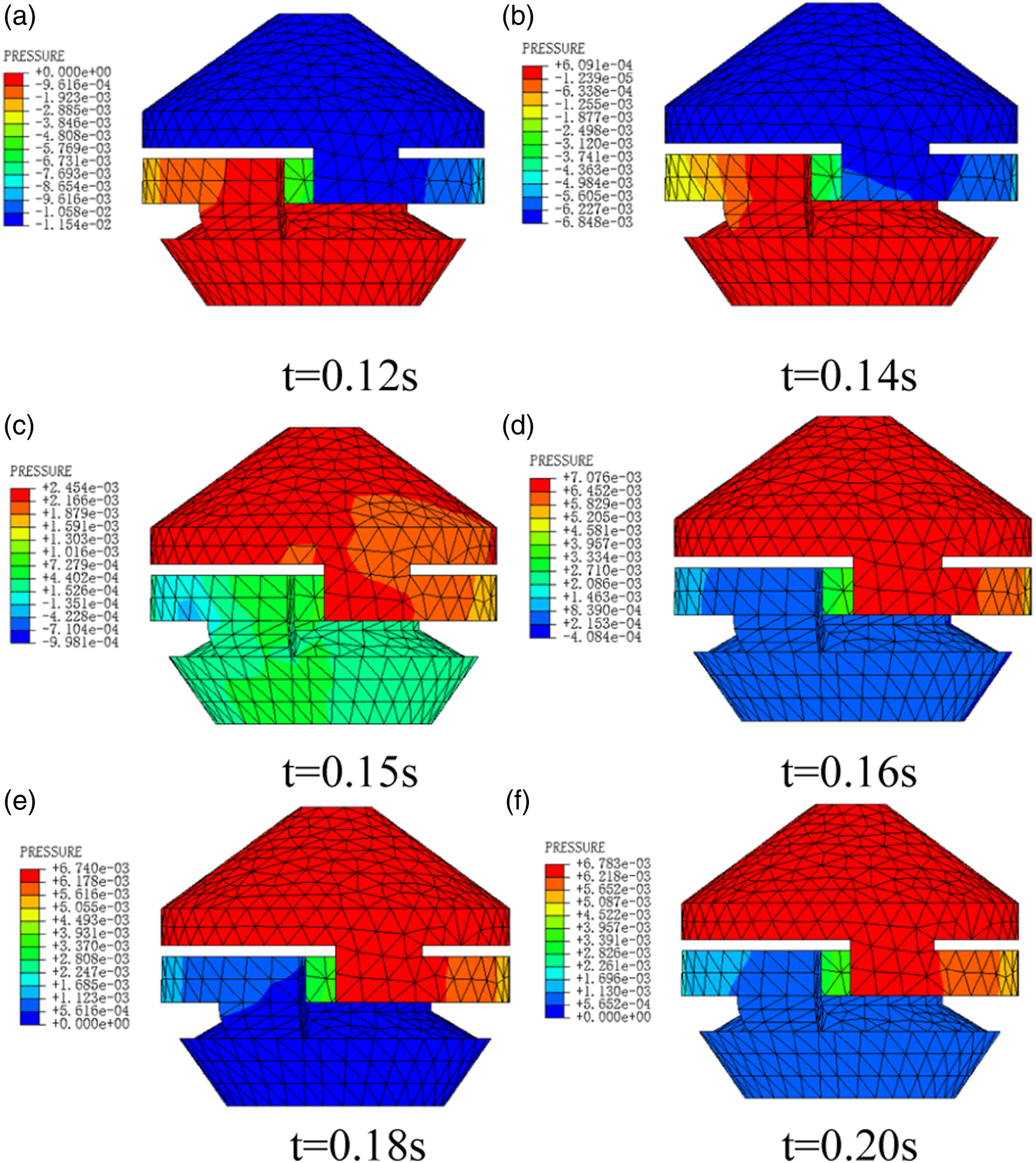
Experiments and discussion
Experimental set-up
In order to verify the effectiveness of lumped parameter modeling and global FEM modeling further, the dynamic performance experiments of the samples of PHDRM were carried out. The working end of the MTS elastomer test platform is connected with the connecting end of the bottom plate of the cab. The isolator is fixed on the test platform, as shown in Figure 9. Considering the total mass of the cab, the steady-state harmonic excitation with the amplitude of Experimental set-up for vibration tests of the isolator systems. (a) Schematic drawing of the isolator clamping. (b) Photograph of the test rig. (c) Different hydraulically damped rubber mount.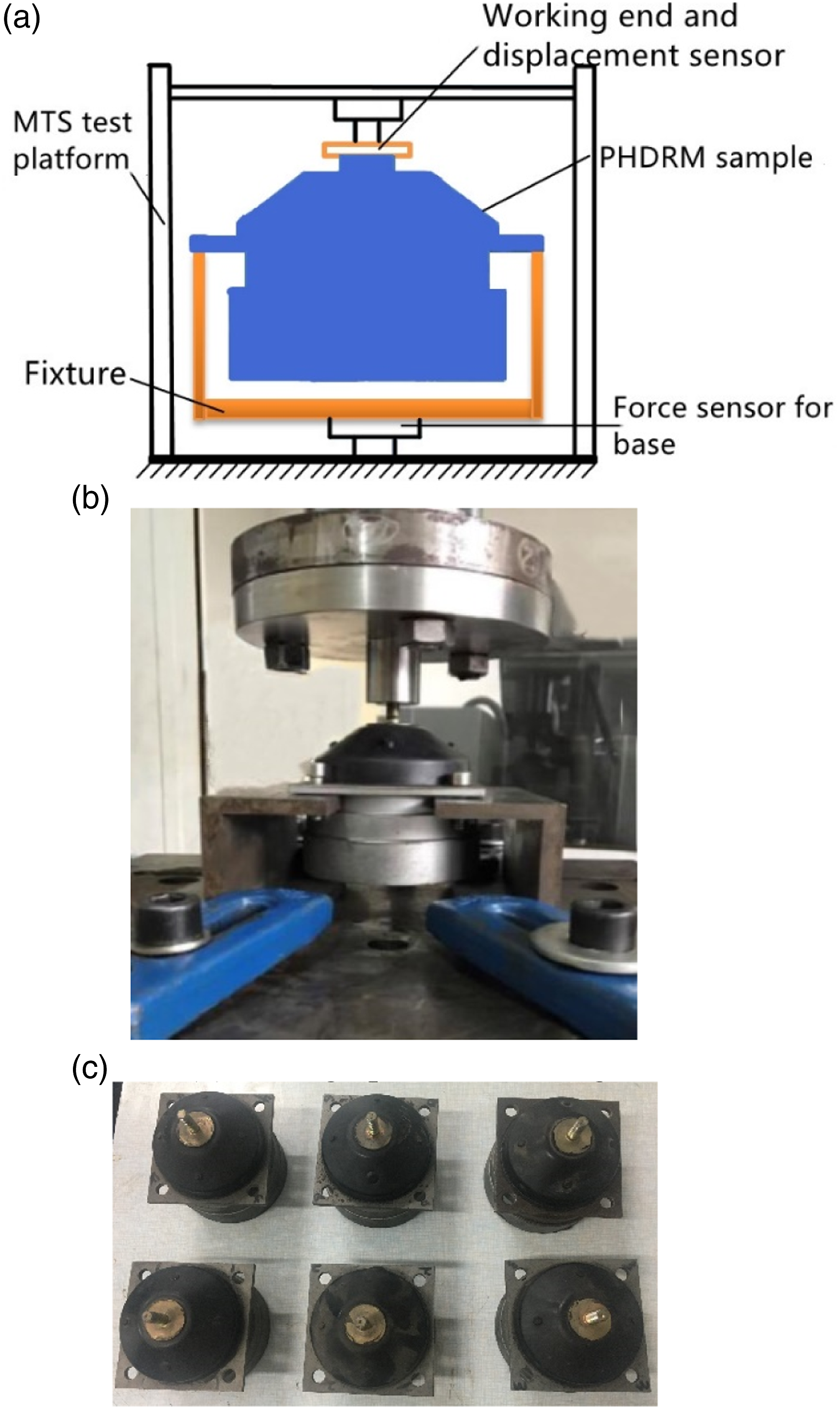

The dynamic stiffness and hysteretic angle mainly reflect the dynamic characteristics of passive hydraulically damped rubber mount. The equation of dynamic stiffness, hysteretic angle, and damping coefficient are respectively written as



Results and discussion
Figure 10 shows the dynamic characteristics of hydraulically damped rubber mount. The experimental datum indicate that at the low frequency the dynamic characteristic curves of PHDRM by lumped parameter modeling and global FEM modeling have good consistency with the experimental results, respectively. Dynamic Characteristics of hydraulically damped rubber mount when 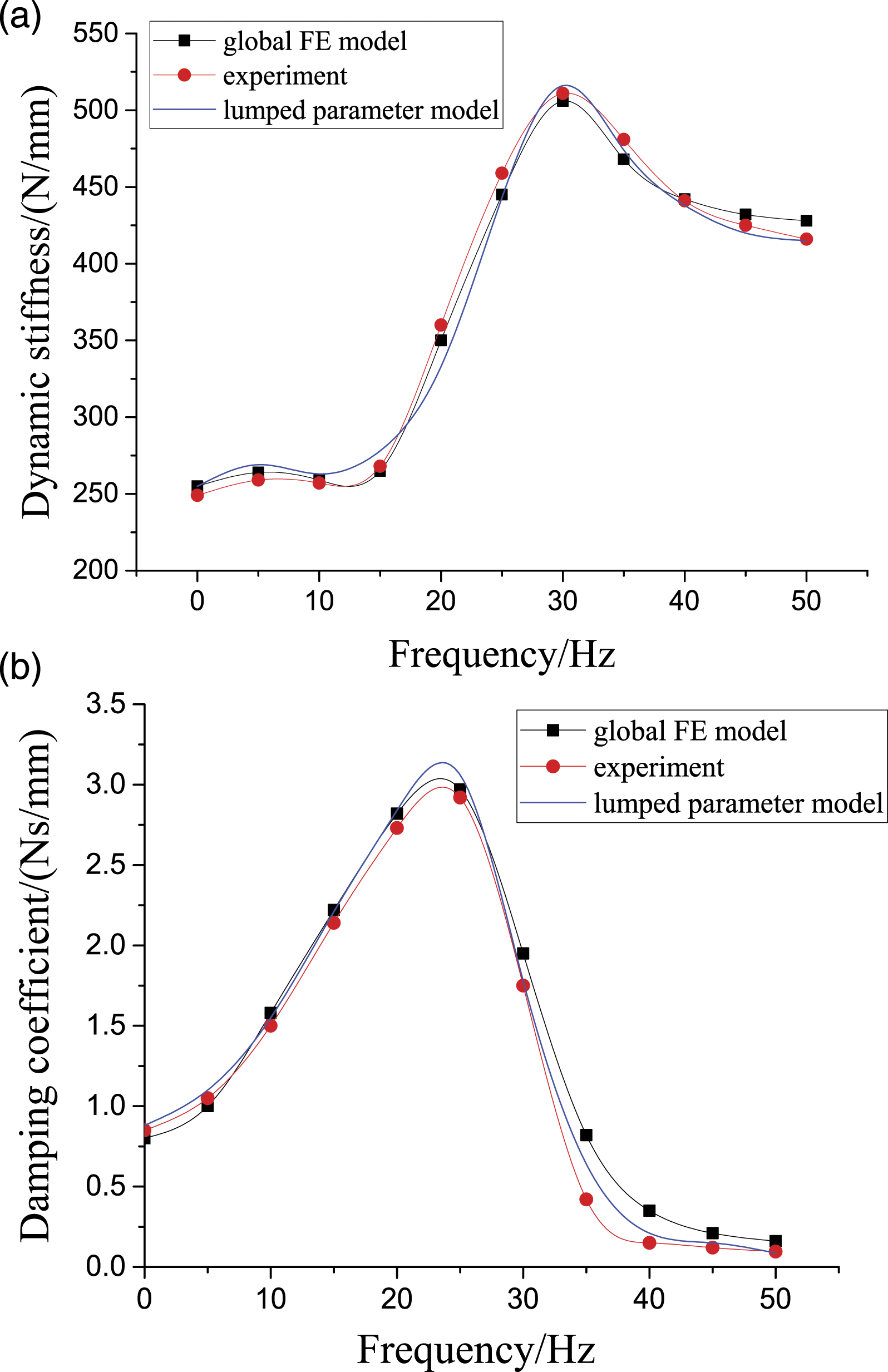
The accuracy of the two modeling methods is validated. Moreover, it can be found that there are still some deviations between the analytical solution and the nonlinear FE solution. When the construction machinery is subjected by road excitation with low frequency and large amplitude, the secondary suspension system of its cab will also receive a larger amplitude. Accordingly, the experiments with the larger amplitude at low frequency of the isolator are conducted. Figure 11 shows the dynamic characteristics of hydraulically damped rubber mount under larger amplitude excitation. Experimental datum show the consistency of curves, which illustrates the two modeling methods have high reliability. Dynamic Characteristics of hydraulically damped rubber mount when 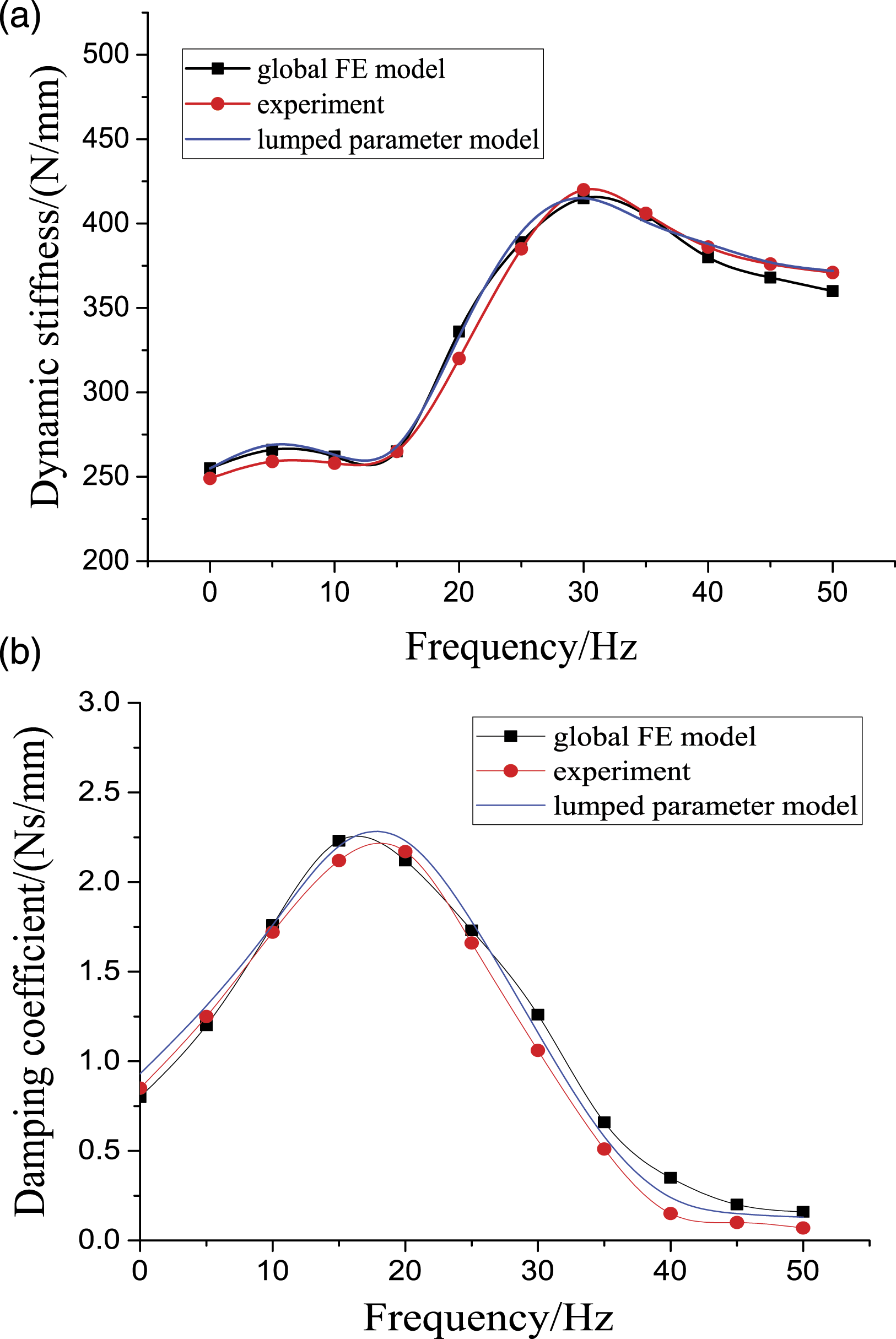
To deeply analyze the effects of rubber element on dynamic characteristics of the PHDRM under larger amplitude excitation at low frequency, the experiments with samples of different hydraulically damped rubber mounts are carried out at the amplitude of Effect of different dynamic stiffness of rubber elements on dynamic characteristics of the vibration isolation system. Effect of different equivalent piston areas on dynamic characteristics of the vibration isolation system. (a) Dynamic stiffness. (b) Damping coefficient.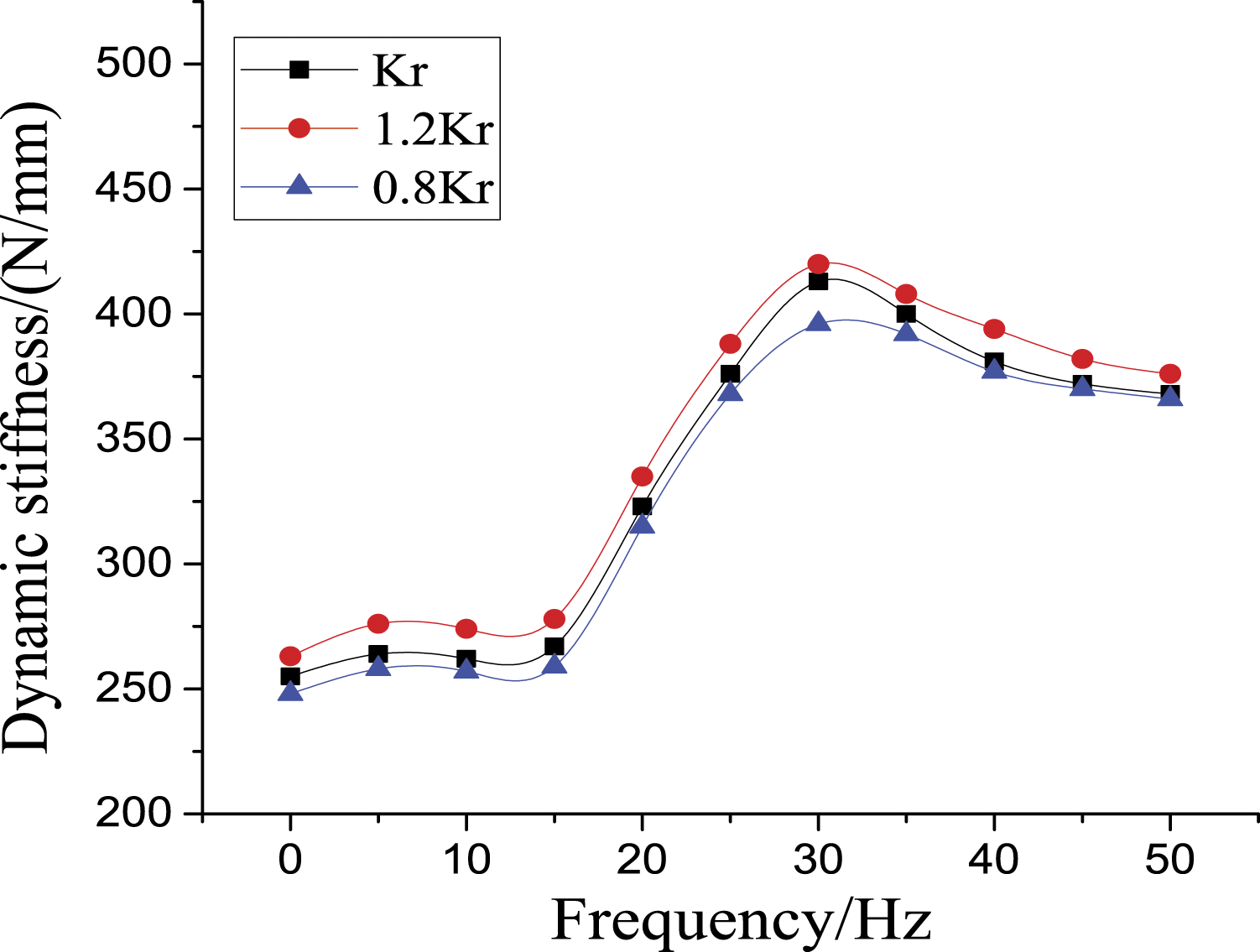
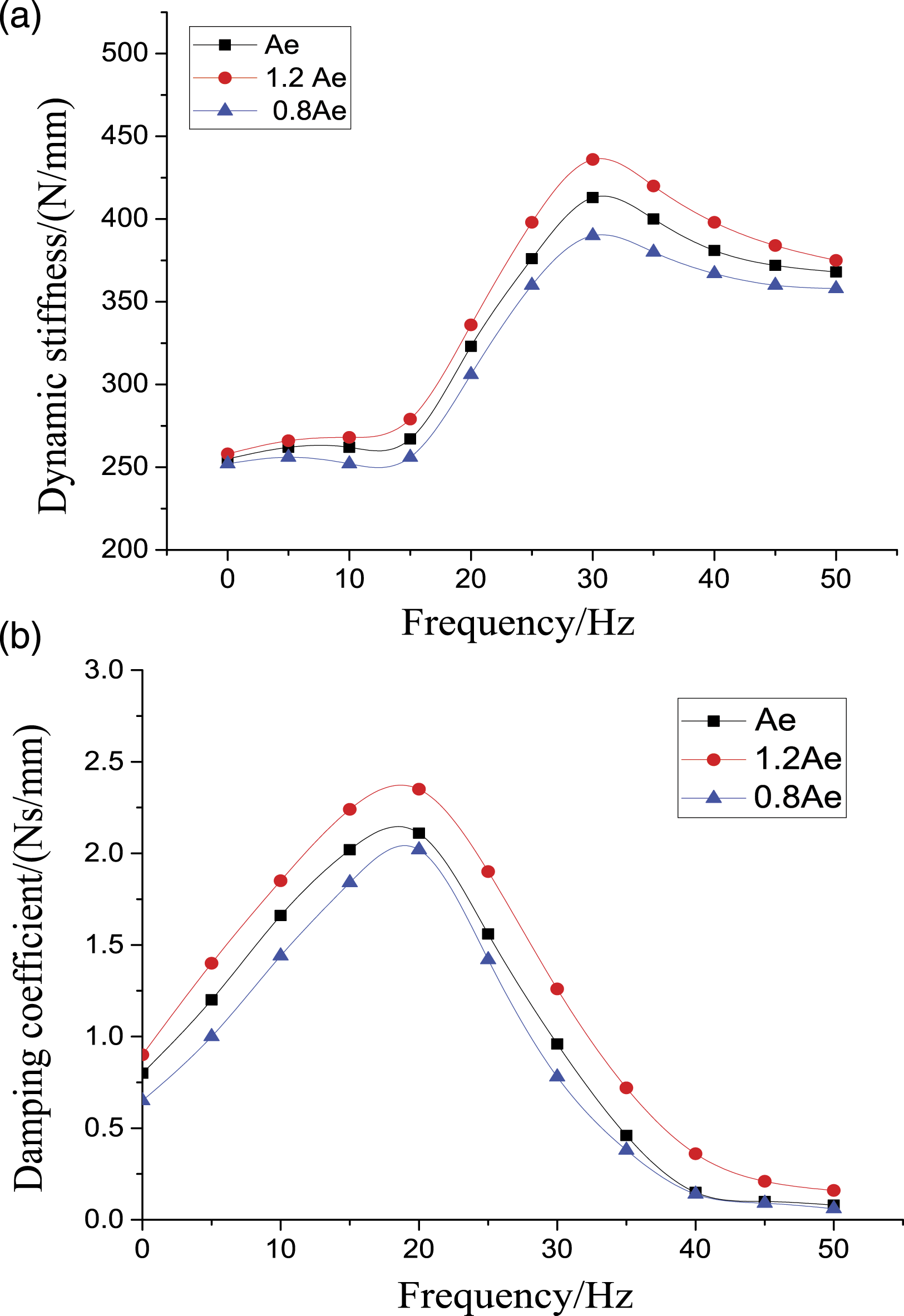
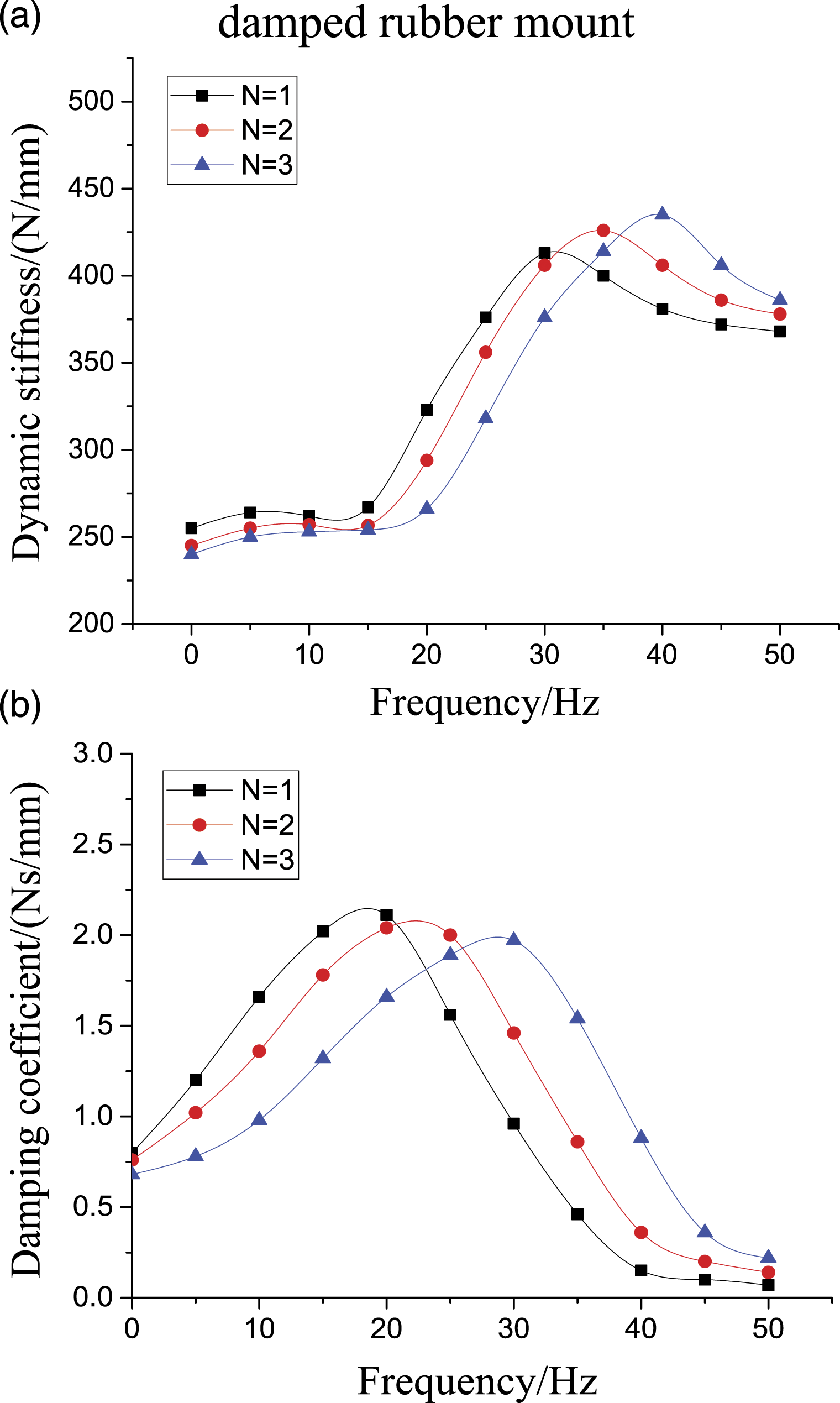
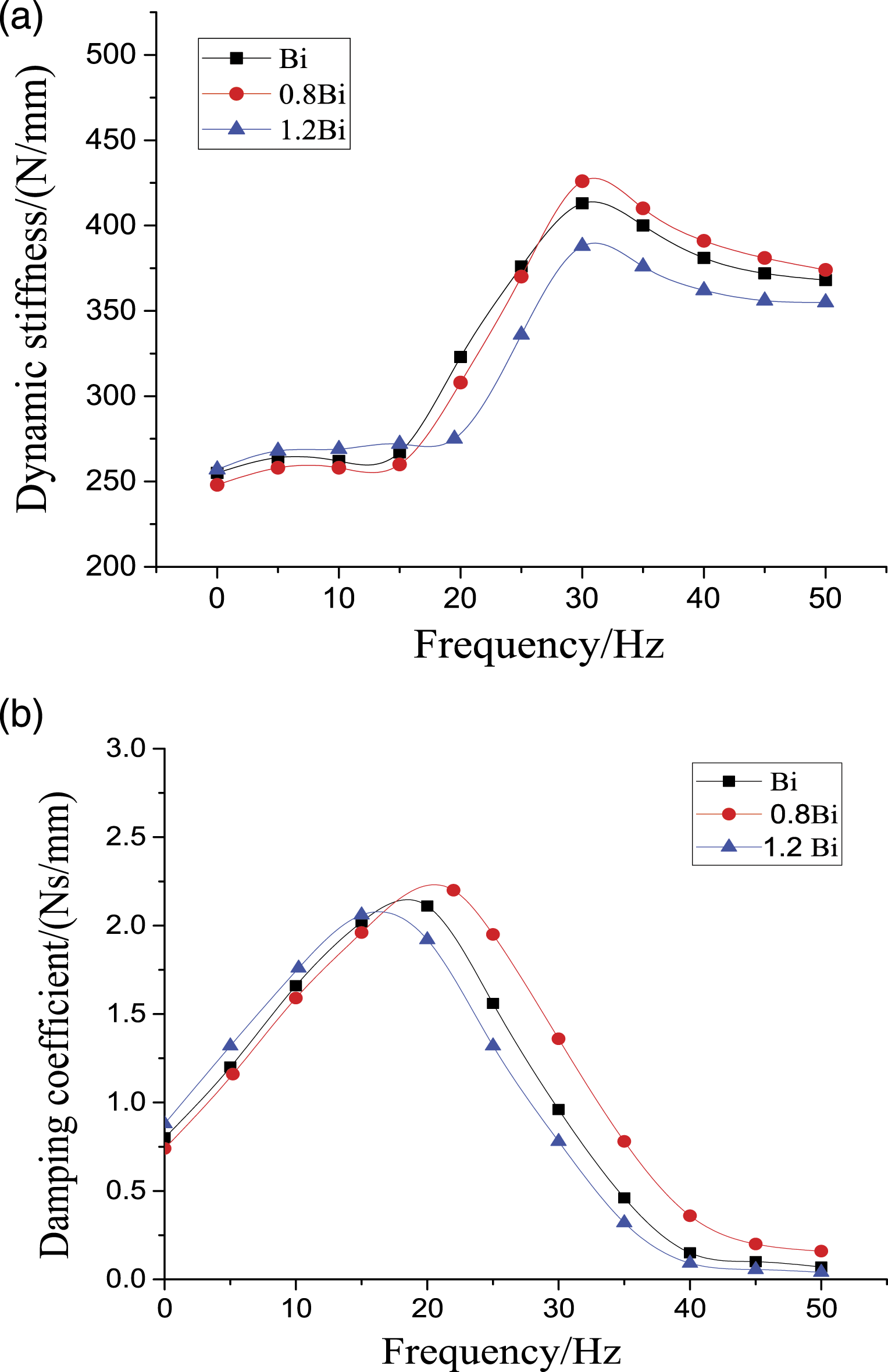
To discuss the influences of the parameters of the inertial track dynamic characteristics of the isolator under larger amplitude excitation at low frequency, several sets of experiments in the changes of cross-section area, length, quantity and the fluid damping coefficient of the inertial track are carried out, respectively. Figures 14, 15, 16 and 17 show the multiple groups of the dynamic stiffness and damping coefficient curves at different excitation frequencies. It can be observed that the peak values of dynamic stiffness of the hydraulically damped rubber mount become larger with the increase of the cross-section area and the number of the inertial track, while the peak variations of damping coefficient show the opposite result. In addition, the peak frequencies of the damping coefficients have been gradually increasing with the increase of the number of inertial tracks. The results illustrate that the effect of the number of inertial tracks on the low-frequency dynamic characteristics and the manufacturing cost should be considered synthetically in the structural design of the PHDRM. Effect of different cross-section areas of inertial tracks on dynamic characteristics of hydraulically damped rubber mount. (a) Dynamic stiffness. (b) Damping coefficient. Effect of different number of inertial tracks on dynamic characteristics of hydraulically damped rubber mount. (a) Dynamic stiffness. (b) Damping coefficient. Effect of different lengths of inertial tracks on dynamic characteristics of hydraulically damped rubber mount. (a) Dynamic stiffness. (b) Damping coefficient. Effect of different damping coefficients of inertial tracks on dynamic characteristics of hydraulically damped rubber mount. (a) Dynamic stiffness. (b) Damping coefficient.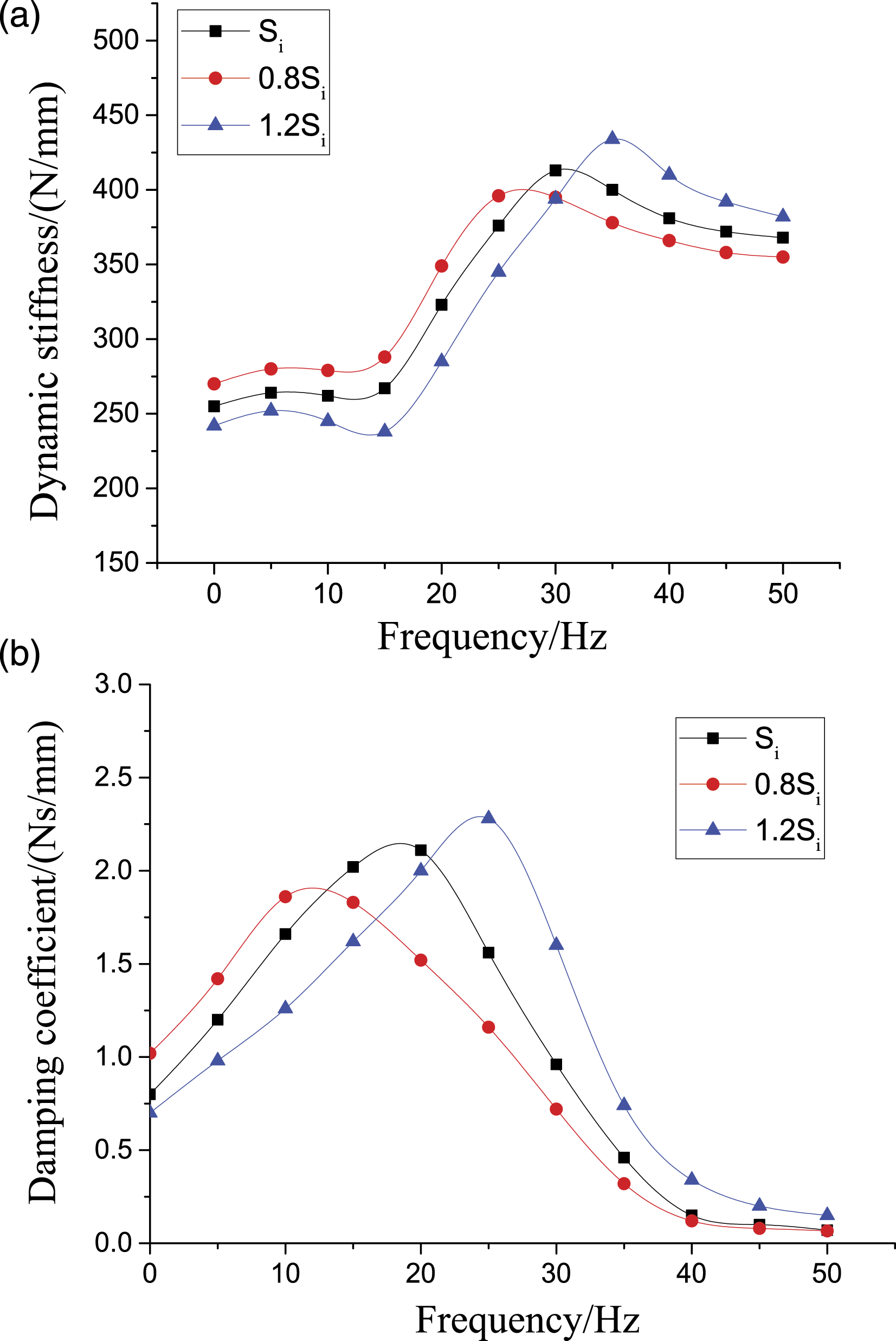
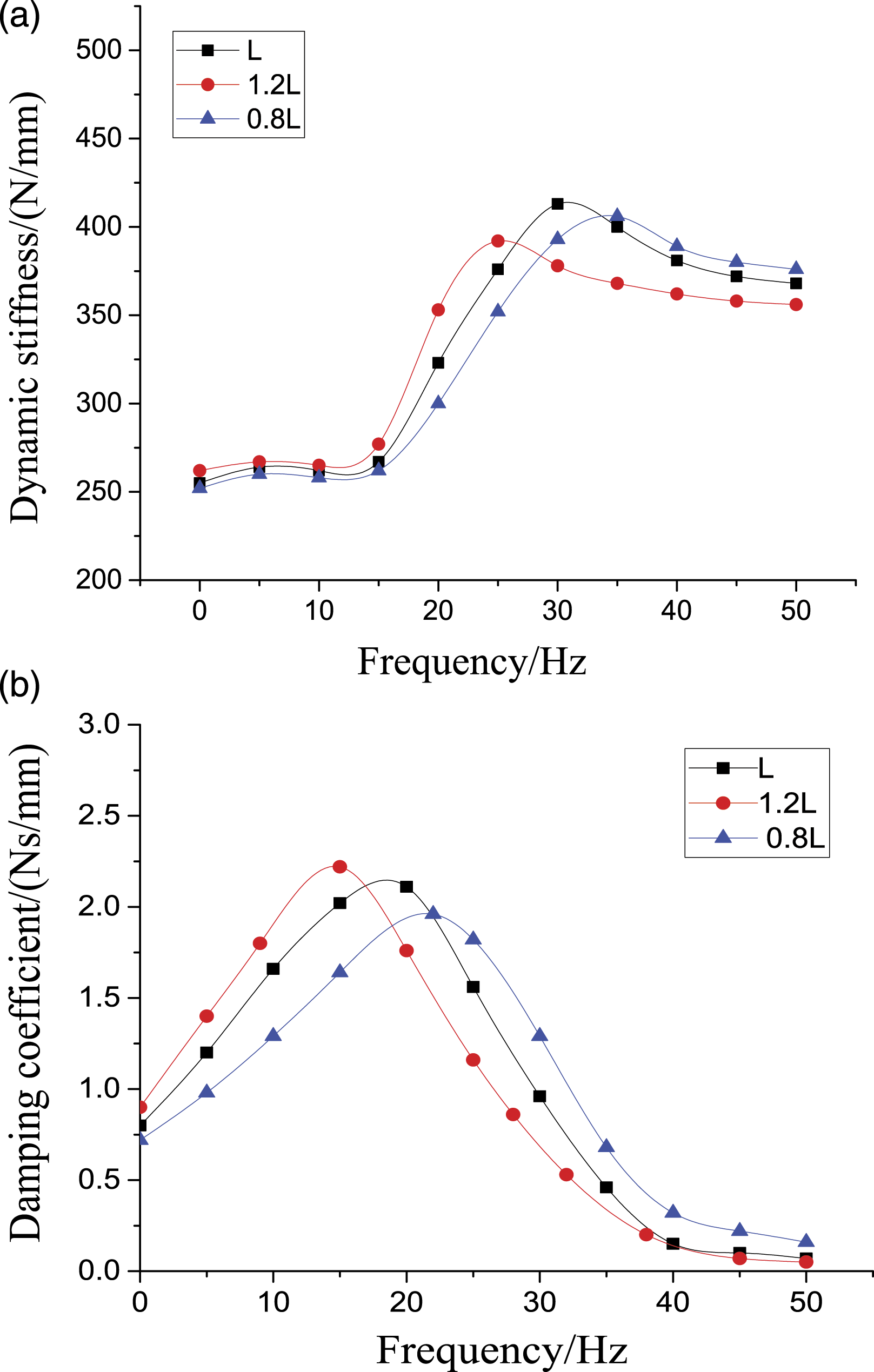
When the length of inertial track has increased gradually, the peak values of dynamic stiffness of the isolator have first increased and then decreased. Meanwhile, its peak frequencies have been decreasing. It can be concluded that controlling the length of inertial track will change the low-frequency dynamic characteristics of the hydraulically damped rubber mount under larger amplitude excitation. The longer the length, the smaller the stiffness will be. It will lead to poor isolation performance even though its peak frequency will decrease. Given the sensitive frequency range of the human body is 0.5∼80 Hz according to ISO-2631, the driver’s ride comfort should be considered fully for the isolation performance of the cab suspension system. When the designed length of the inertial track is slightly small, the peak frequency will be suddenly too large. The low-frequency vibration isolation performance will also be reduced, especially for larger amplitude excitation. Moreover, the peak values of damping coefficient of the vibration isolation have gradually increased with the increase of length and the peak frequency has decreased continuously.
Figure 17 shows that when the damping coefficient of the inertial track is changed, the global variation amount of the dynamic stiffness and damping coefficient curve of the isolator is not very large at a low frequency with a larger amplitude. The peak values of the dynamic stiffness and the damping coefficients have been both decreased with the increase of the damping coefficient of the inertial track. Also, the peak frequency is the same trend. Therefore, it is noted that when choosing a liquid if the viscosity flowing through the inertial track is smaller, there is no obvious damping effect. The stiffness of the suspension system is affected and the vibration isolation performance will reduce. Conversely, when the viscosity of the fluid is larger, the fluid can move more slowly or block the inertial track, which cannot play a good vibration isolation effect.
Conclusions
1) The nonlinear modeling methods of passive hydraulically damped rubber mount are put forward. Considering the nonlinearity of multi-inertial tracks, the lumped parameter model of PHDRM is proposed to predict the suspension system’s dynamic characteristics under larger amplitude excitation at low frequency. Meanwhile, a global fluid-solid coupling FE model of hydraulically damped rubber mount is developed.
2) The rubber element and inertial track parameters are identified respectively through ABAQUS joint simulation mode. The multi-field coupling solution is applied. In addition, a series of experiments are performed to analyze the dynamic performance of the vibration isolation system.
3) The experiment results show that the simulation models have good agreement with the experimental datum under low frequency larger amplitude excitation. It illustrates the modeling methods have better accuracy and reliability. Furthermore, the effects of different parameters of hydraulically damped rubber mount on low-frequency dynamic characteristics under larger amplitude are also respectively discussed. The discussion and summary provide the scientific basis for the design and evaluation of the secondary suspension system of the construction machinery cab.
Footnotes
Declaration of conflicting interests
The author(s) declared no potential conflicts of interest with respect to the research, authorship, and/or publication of this article.
Funding
The author(s) disclosed receipt of the following financial support for the research, authorship, and/or publication of this article: National Natural Science Foundation of China (No.11902207), Hebei Province Foreign Special Talent Introduction Plan Project(2022), Natural Science Foundation of Hebei Province (A2020210018), Cultivation specific project of scientific and technological innovation capacity for colleges students (No. 2021H011705).
