



Abstract
Exploring Noise Reduction in Automotive Disc Brake Systems: Investigating the Impact of Viscoelastic Core Sandwich Plates. This study delves into the phenomenon of brake squeal noise generated by automotive disc brake systems. It focuses on analyzing the response of sandwich plates with viscoelastic cores, which are employed within brake systems to mitigate squeal noise arising from friction between brake pads and the brake disk. Through a series of finite element analyses conducted under varying operational conditions, including friction coefficient and angular velocity, the research aims to ascertain the complex eigenvalue of the disc brake system in order to identify unstable modes. The findings underscore that the incorporation of viscoelastic layers within preloaded, slender sandwich plates introduces nonlinear dynamic characteristics that contribute to the reduction of squeal noise within braking systems.
Introduction
Brake squeals are undesired noises generated by friction between the disk and the pads. This vibration poses a threat to human auditory health. While the squealing noise is frequently linked to braking efficiency, the two are not inherently connected. Numerous theoretical and empirical inquiries have been undertaken in the pursuit of comprehending and regulating the mechanisms underlying brake squealing.
The occurrence of brake squealing during braking is understood as an outcome arising from the acoustic vibrations of braking system components. This instability is attributed to the friction between the brake disk and the brake pads, as documented in studies by Giannini et al. 1 and Brizard et al. 2 Ouyang et al. 3 delve into digital analysis techniques for investigating the phenomenon of brake disk crunching in automobiles. Their study employs linear stability analysis to explore brake cracking patterns. The assessment of braking system stability involves extracting the real component of the eigenvalues from the linear equation system governing its motion. The same friction essential for braking also contributes to instabilities that manifest as brake squealing. Balaji V et al. 4 introduced a numerical approach for computing the intricate eigenvalues of a braking system. The dynamic stability of the brake system is influenced by operational factors such as friction coefficient, angular velocity, and braking pressure. Research indicates that unstable vibration modes arise in the frequency range of 5–7 kHz, primarily attributed to pad vibrations, while other modes stem predominantly from disc vibrations. Denimal et al. 5 put forth the utilization of kriging methodology as an approach to forecast the stability characteristics of automotive brake systems. The current investigation takes into account three parameters: the coefficient of friction and the inclusion of two minor masses within the caliper. The findings highlight a substantial influence of these supplementary masses on the propensity for squealing across various modes. In a related study, Kwanju, K. et al. 6 examined the characteristics of squeal noise in a brake system featuring a flexible pad, focusing on its application within a high-speed railway context. Utilizing finite element analysis, a complex eigenvalue assessment of a disc brake system is performed to identify its unstable modes. The outcomes underscore the impact of key parameters: the coefficient of friction and the pressure force exerted between the brake disk and friction pad. Dai, Y. et al. 7 introduced a dynamic finite element model, integrating friction coupling, to scrutinize the design of brake pad structures for the purpose of reducing cracking noise. The examination demonstrates that eigenvalues featuring positive real components tend to lead to unstable modes that have the potential to generate squealing noise. In a related study, Júnior, MT. et al. 8 applied complex eigenvalue analysis within a finite element model of a commercial brake system. Their findings elucidate the influence of parameters such as coefficient of friction, braking pressure, and temperature on the dynamic stability of the braking system. Massi, F. et al. 9 introduce the fusion of two distinct numerical techniques to ascertain the underlying mechanism of instability and analyze its dynamic behavior.
Damping serves as a pivotal parameter for mitigating squeal noise within disc brake systems. Often, the mitigation or eradication of squealing is achieved through the incorporation of a sandwich plate featuring a viscoelastic layer on the brake pads’ rear face. Exploring the intricacies of natural frequencies and damping within a complex braking system, Gacem, H. et al. 10 showcased the nonlinear dynamic attributes of constructed panels integrating preloaded visco-hyperelastic substances. In this context, the visco-hyperelastic material is employed as a damping layer within the rigid sections, with the entire structure experiencing shear vibrations while under compressive prestress.
This study aims to investigate the alleviation of squealing noise within a disc brake system by introducing a sandwich plate featuring a viscoelastic layer positioned behind the brake pads. The viscoelastic layer’s material characteristics are represented through a Prony series model. The analysis encompasses varying coefficients of friction (µ) between the brake pads and the disk, along with diverse angular velocities (ω) of the disk.
Model geometry and materials
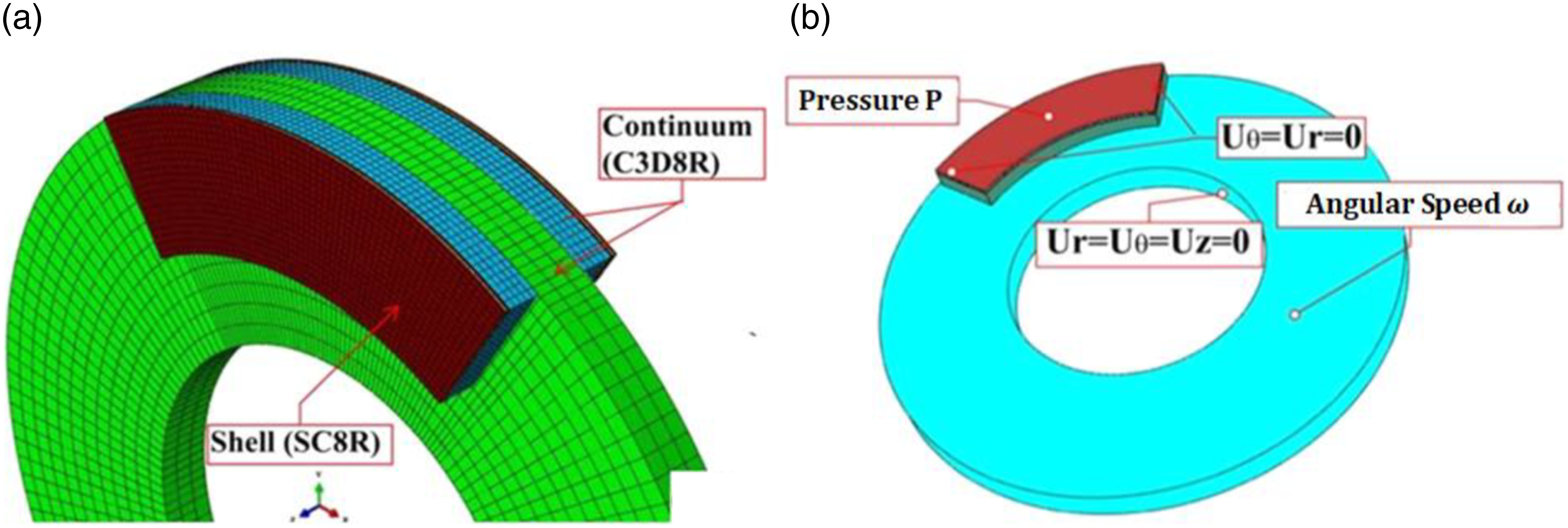
The simplified model of the brake system comprises a setup in which a disc is positioned between two pads, as shown in Figure 1(a). Additionally, each pad is enhanced with a viscoelastic sandwich plate affixed to its back, as illustrated in Figure 2. The sandwich plate is formed by combining two thin layers of steel and a viscoelastic core, resulting in a structure represented as metal/viscoelastic core/metal. The dimensions of these components, along with their respective thicknesses (ts and tv), are specified in Table 1. The geometric dimensions shown in Figure 1(b). (a) Simplified model of a disk brake model. (b) Geometry parameters of disk brake model and Brake pad details. (a) Element types used in the finite element model. (b) Loading and Boundary conditions. Geometric parameters and material properties of the disk brake components.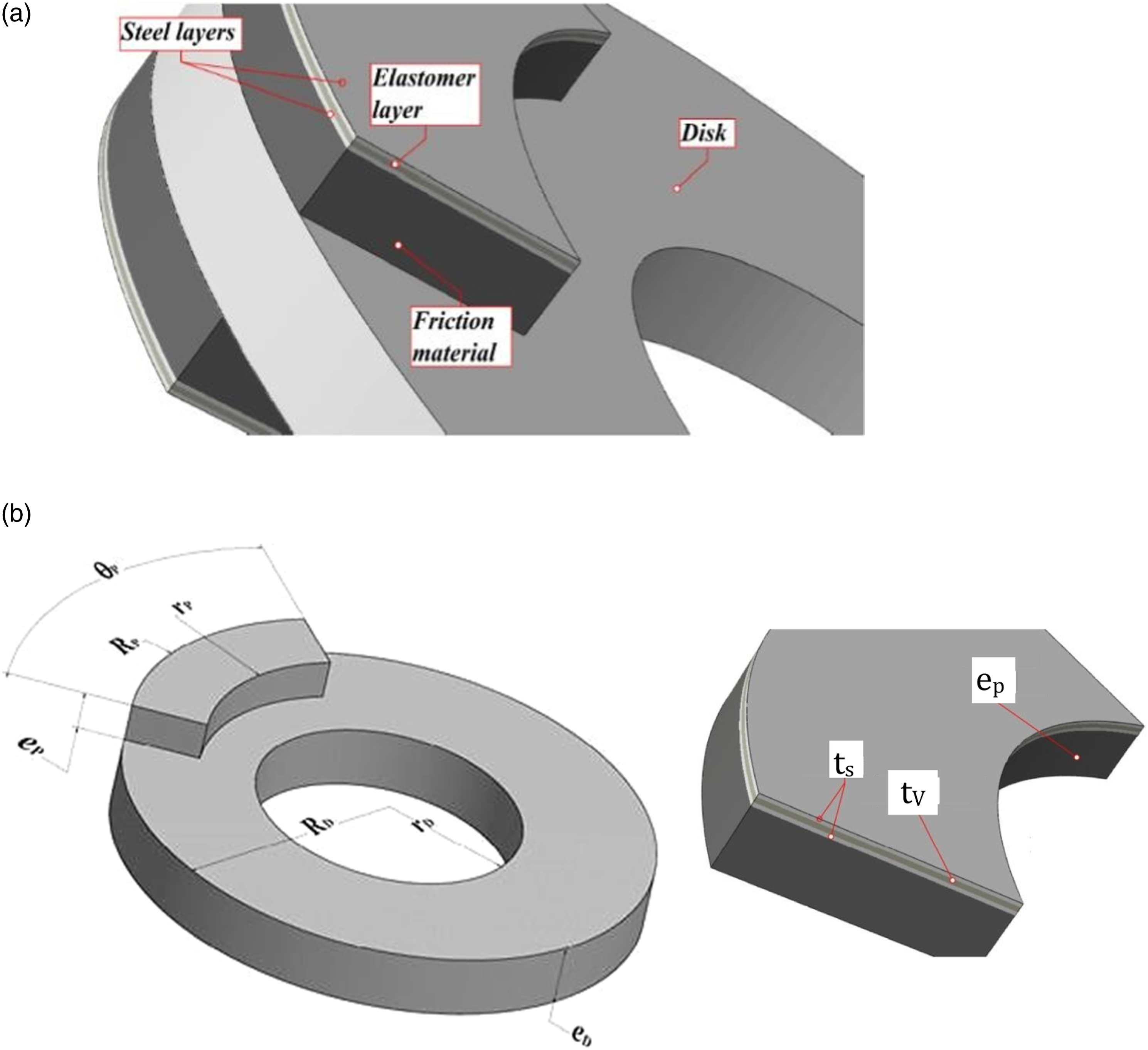

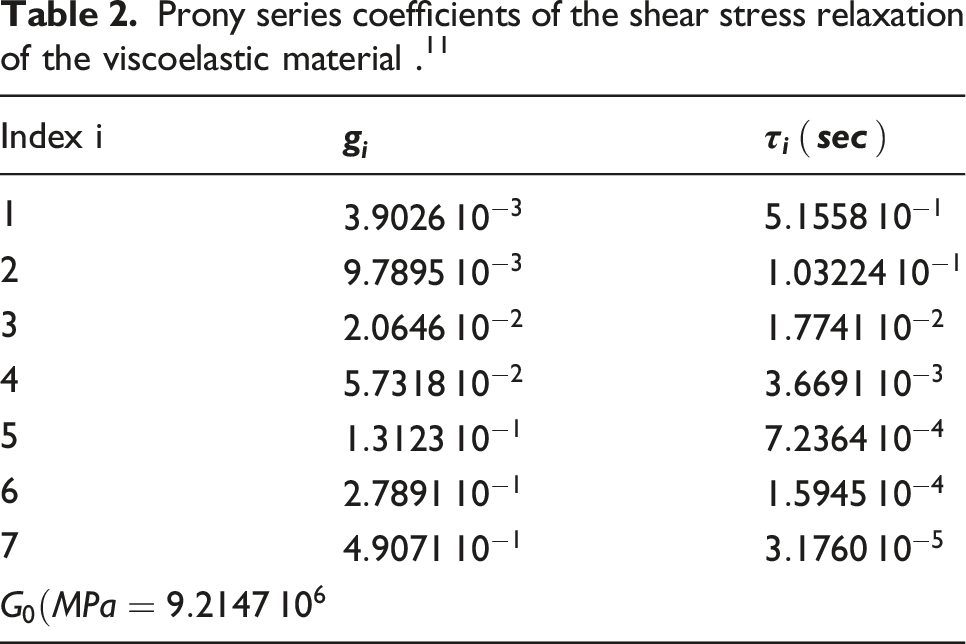
The brake system components utilize specific materials. The brake disks and outer layers of the sandwich plate are constructed from elastic isotropic steel. The brake pads are primarily composed of brake shoe material. The sandwich plate is constructed from layers of steel with a central core composed of viscoelastic polymer. This polymer material demonstrates viscoelastic behavior, characterized by a shear stress relaxation modulus G(t). This modulus can be expressed using a Prony series.
Finite element model
Mesh
A finite element representation was constructed to simulate the assembly of the brake system. This model encompasses a pair of brake pads along with the steel disk, visually depicted in Figure 2. The frictional composition of the brake pads is replicated using C3D8R type elements, which are linear 8-noded continuum reduced integration brick elements incorporating hourglass control. As for the sandwich plate, it is emulated through SC8R type elements. These linear 8-noded continuum shell elements with reduced integration are employed to replicate the three layers of the plate, namely metal, elastomer, and metal.
The disk is likewise simulated using continuum brick elements categorized as C3D8R type. The simulations were executed using the commercial finite element software ABAQUS. 12
Loading steps and boundary conditions
Every Finite Element Analysis (FEA) comprises four sequential steps, outlined as follows: Step 1 - STATIC: Application of pressure to the brake pads. Step 2 - STATIC: Imposing rotational motion onto the disk. Step 3 - FREQUENCY: Determining the natural frequency of the system. Step 4 - COMPLEX FREQUENCY: Extracting complex frequencies through analysis.
The brake system model incorporates boundary conditions, as illustrated in Figure 2(b). On both the right and left sides of the pad, the conditions
The specified displacements are interpreted in relation to a coordinate framework based on cylindrical coordinates situated within the (r, θ) plane of the disk’s standard z-axis, as elucidated in Figure 2(a).
Brake squeal finite element analysis
Analysis of brake squeal noise using FEM
The assessment of the system’s stability, in accordance with the geometric stability hypothesis, provides insight into the potential occurrence of squealing within the modeled brake system. The chosen method involves conducting an eigenvalue analysis of the system. By performing this analysis, the complex roots acquired can unveil the unstable vibration modes within the system. Understanding these unstable modes can lead to the implementation of various control techniques. For instance, modal frequencies can be adjusted by modifying components or introducing damping to render the problematic mode stable. Given the valuable nature of this information, complex eigenvalues are utilized as a metric for evaluating the system’s stability.
The equation that governs the motion of a vibrating system is:
In our specific scenario, these forces are exerted by hydraulic pistons onto the brake pads. This force isn’t characterized by harmonic behavior, but rather it’s a constant force applied throughout the braking process. Due to the inclusion of frictional contact, the symmetry of the stiffness matrix K is not guaranteed. Consequently, this leads to the appearance of complex eigenvalues within the solution of the equation (2). The presence of positive real components within these eigenvalues signifies the existence of unstable modes. These unstable modes could potentially correspond to frequencies associated with squealing in the brake system.
Complex eigenvalue extraction
In the analysis of brake squeal, the primary origin of nonlinearity arises from the frictional sliding contact occurring between the brake disc and the pads. A novel technique for simulating disc brake squeal has been devised, utilizing a complex eigenvalue analysis approach. This method integrates various stages, including applying initial brake preloading, inducing disc rotation, and subsequently extracting both natural frequencies and complex eigenvalues. Notably, this innovative approach streamlines all these steps into a single coherent procedure. As a crucial initial step, the extraction of natural frequencies must be carried out to establish the projection subspace for the subsequent analysis. The equation of motion (2) can be reduced to equation (3) involves considering the unforced system. The unforced system refers to a scenario where there are no external forces acting on the vibrating system. In this context, the eigenvalue problem can be expressed as follows:

The occurrence of squeaking could potentially be clarified by considering the interaction of two adjacent modes phenomenon
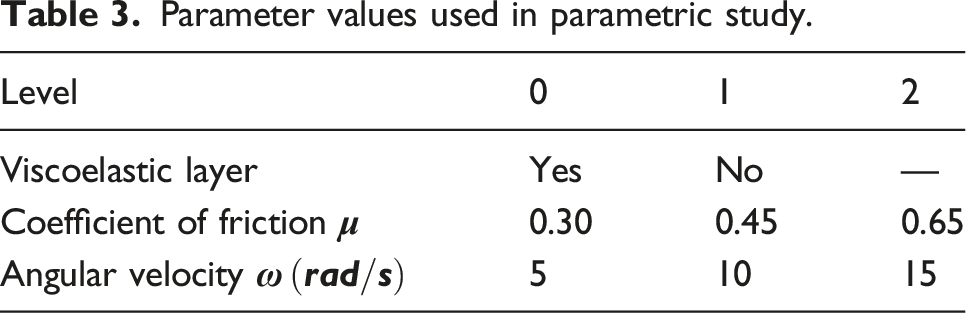
In this particular investigation, a consistent pressure of P = 5 MPa is exerted onto the rotating disk. This pressure is accompanied by an angular velocity ω and a friction coefficient µ, which remains constant regardless of variations in the temperature parameter.

Parameter values used in parametric study.
Results and discussion
The impact of the viscoelastic core on the noise index is investigated under a consistent angular velocity of ω = 5 rad/s. The study examines how the noise index changes in relation to variations in the coefficient of friction µ. The noise indexes are denoted for two scenarios: one without a viscoelastic core represented by
The variation of the noise index across the frequency domain is showcased in Figure 3. The analysis reveals that with lower coefficients of friction, the inclusion of the viscoelastic layer proves effective in diminishing the noise index, particularly in the lower frequency range. However, conversely, the viscoelastic layer has an adverse impact, leading to an increase in the noise index, especially in the higher frequency range. The influence of both the coefficient of friction and the angular velocity on the noise index is computed for three notable frequencies: low (1250 Hz), medium (5250 Hz), and high (7750 Hz). These outcomes are displayed in Figures 4, 5, and 6, respectively. It’s evident that the noise index experiences an increase as the coefficient of friction (µ) rises, especially when the viscoelastic layer is not present. In the low-frequency domain (Figure 4), the introduction of the viscoelastic layer led to noise reduction across the entire spectrum of coefficient of friction values. Nonetheless, the extent of reduction was observed to vary based on the angular velocity. This effect was less effective at higher angular velocities, where the viscoelastic layer exhibited diminished efficiency. When examining the medium-frequency range (Figure 5), the viscoelastic layer also contributed to reducing squealing noise. Notably, the degree of noise reduction was found to be directly proportional to the angular velocity. However, in the high-frequency range (Figure 6), the impact of the viscoelastic layer turned negative, resulting in an increase in squealing noise compared to the baseline scenario. Noise index as a function of µ to ( Effects of μ and ω on the noise index ƞ at low frequency. Effects of Effects of 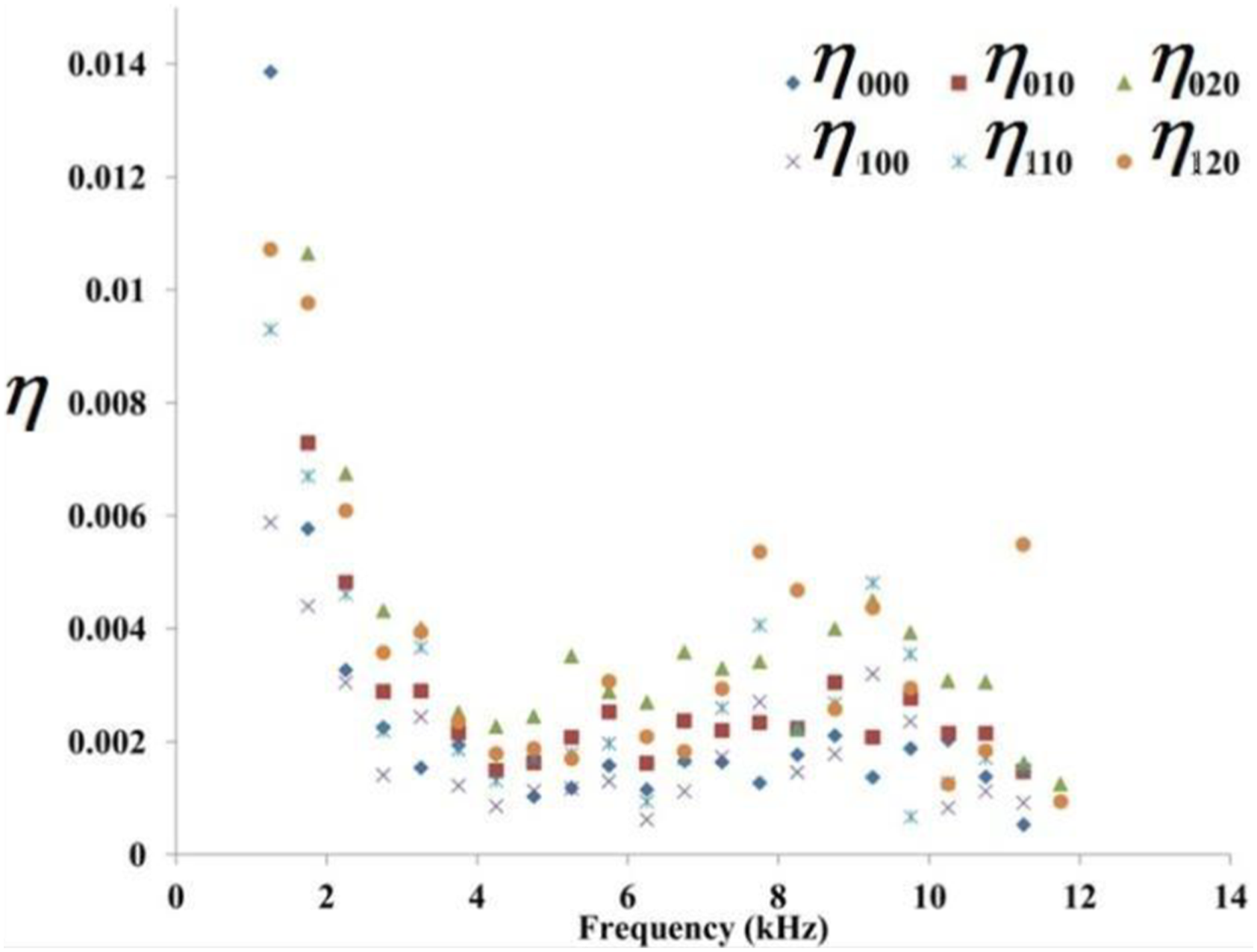
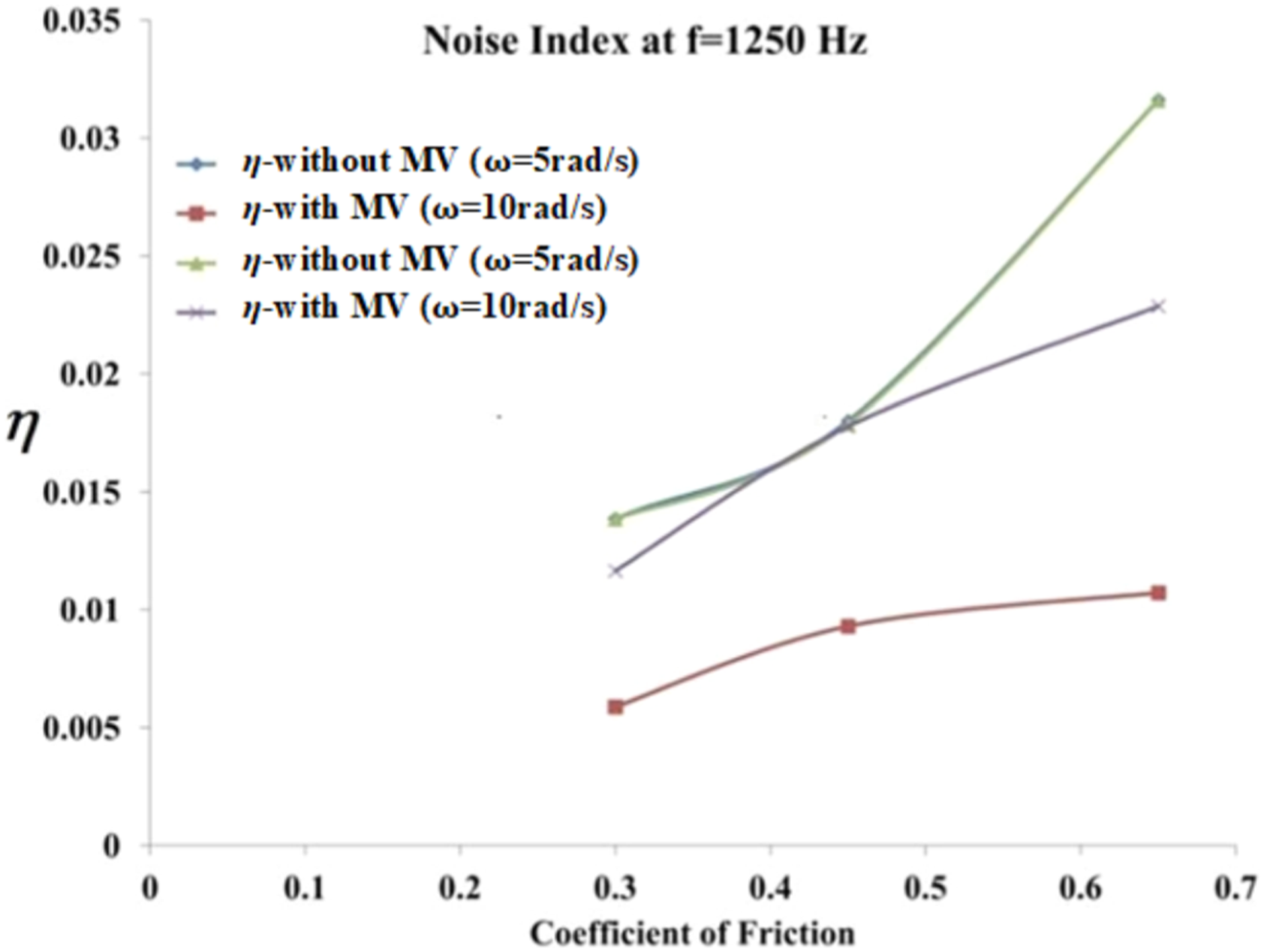

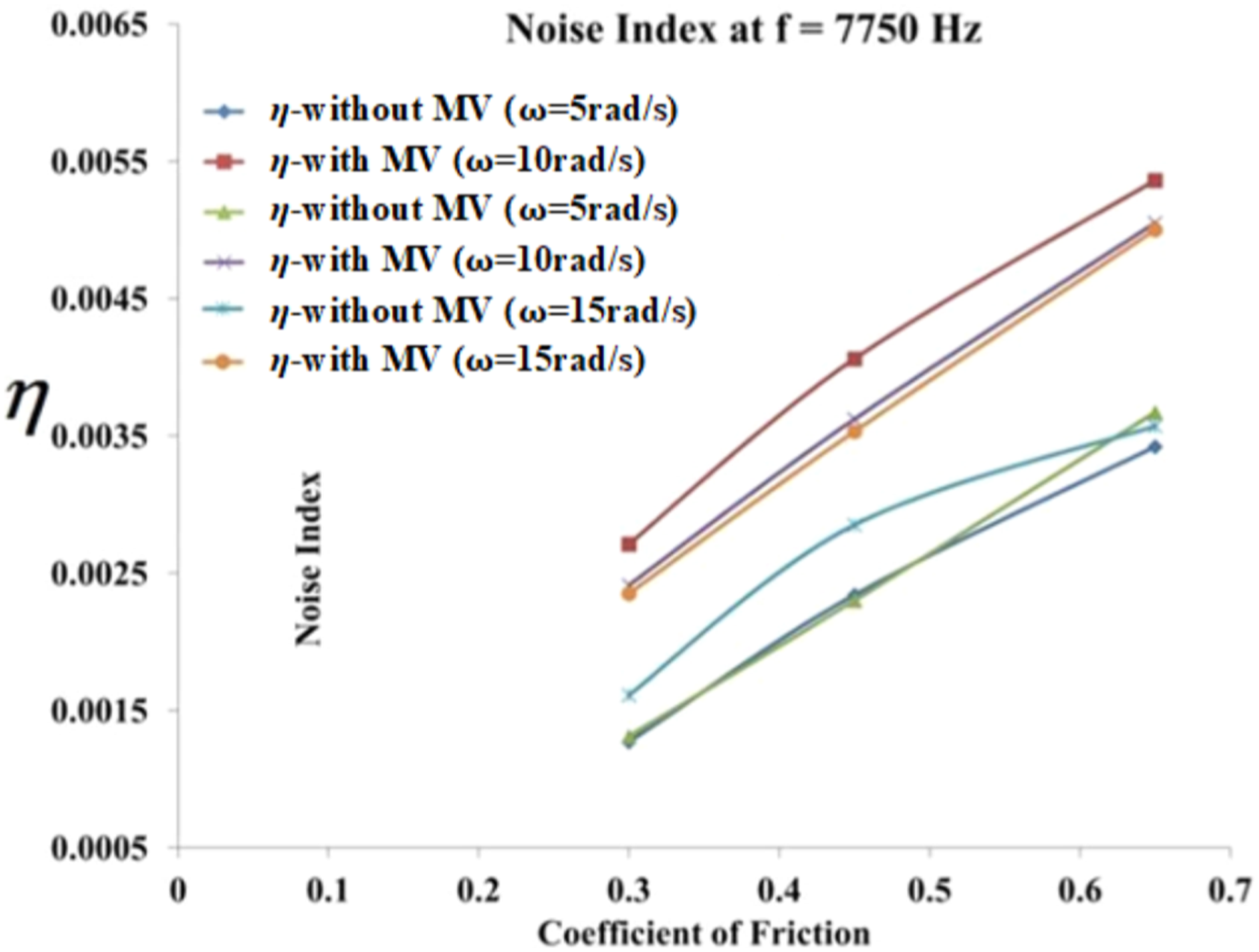
In summary, the incorporation of the viscoelastic layer has showcased its effectiveness in mitigating disc brake squealing across a wide range of frequencies. Nevertheless, at higher frequencies, the viscoelastic layer’s ability to diminish squealing noise was limited. To address this issue, potential remedies include enhancing the damping properties of the elastomer material or considering an augmentation in the number of viscoelastic layers within the sandwich plate. These adjustments could potentially counteract the adverse effects observed at higher frequencies and lead to more comprehensive noise reduction.
Conclusion
In this research endeavor, a systematic examination was conducted to assess the impact of incorporating a viscoelastic layer in reducing brake squeal. This evaluation encompassed a range of angular velocity values for the disc and various coefficients of friction. To facilitate this investigation, a finite element model was developed, enabling the extraction of unstable frequency modes inherent within the model. This approach allowed for a comprehensive analysis of the effects of the viscoelastic layer on brake squeal reduction under diverse parameter conditions. The introduction of a thin layer of viscoelastic material showcased its effectiveness in curbing brake squealing, particularly within the low and medium frequency range of interest (1 kHz to 12 kHz). Nonetheless, its efficiency waned notably at high frequencies. This behavior might be attributed to the stiffening nature of the viscoelastic layer and the reduction in its damping capacity at elevated frequencies. Addressing this challenge could involve implementing multiple layers of viscoelastic material or selecting a material that boasts superior damping properties. These strategies hold the potential to counteract the limitations observed at higher frequencies and enhance the overall performance of the viscoelastic layer in mitigating brake squeal.
Footnotes
Declaration of conflicting interests
The author(s) declared no potential conflicts of interest with respect to the research, authorship, and/or publication of this article.
Funding
The author(s) received no financial support for the research, authorship, and/or publication of this article.
