




Abstract
Bridge decks are the surface of bridges that carry the weight of the vehicles and pedestrians crossing over them. The design of bridge decks varies depending on the span, traffic volume, and material availability. But nowadays, the need for a sustainable approach is required. So, use of a sustainable material for construction and retrofitting purposes is the need of the hour. In the present study, a novel synthetic material polyurethane has been used in bridges. The study deals with the variation in skew angles to determine the response of the bridge deck. The response of natural frequencies on the bridge deck due to the variation in skewness and thickness of steel are analysed under simply supported and clamped boundary conditions. Further, the bridge deck is sandwiched using steel and polyurethane having different thicknesses, and the responses are recorded. Afterwards, a bridge deck is modelled using polyurethane as a special case, to pursue sustainability and justify the RRR (reduce, reuse, and recycle) concept of waste management. A comparative study is also performed between the isotropic steel deck and sandwiched deck by varying the skewness. The skew angle is varied from 0° to 60° with a difference of 10°, i.e., 0°, 10°, 20°, 30°, 40°, 50°, and 60°. The frequencies of the isotropic steel and sandwiched decks are increasing when the skewness is increased. Also, the decks may be modelled in a way to enhances the vibration behaviour by sandwiching the existing steel decks. The free vibration frequencies of the sandwiched decks are comparable to the steel deck of similar thickness, which shows the use of polyurethane as the core material does not affect the vibrational characteristics of the deck, while at the same time reducing the cost significantly. The research lays the groundwork for the creation of engineering recommendations that practitioners can use.
Keywords
Introduction
Bridges have been an important part of human civilisation for thousands of years. The earliest bridges were made of natural materials such as wooden logs, stone slabs or vines, and were mainly built for pedestrian or animal use. The ancient Romans are well known for their advanced engineering skills and constructed many remarkable bridges, including the famous Pont du Gard aqueduct in France. During the Middle Ages, the construction of bridges continued to evolve, with the development of new materials such as cast iron and improvements in engineering techniques. In the 19th and 20th centuries, steel and concrete became the primary materials used in bridge construction, allowing for the construction of much larger and more complex structures. The free vibration analysis of the bridges constructed and to be constructed is quite essential as we tend to avoid any damage that may occur due to natural lateral loads, viz., earthquakes, high winds, etc. Bridges are complex structures that are subject to various forms of vibrations. While bridges are designed to withstand normal dynamic loads, there have been instances where vibrations have led to failures or significant damage. A few examples of bridge failures presented in the next paragraph develop the importance of carrying out vibration analysis of such structures.
We have also a lot of examples in which a statically safe bridge like Tacoma Narrows Bridge (1940) in Washington, USA, famously known as “Galloping Gertie,” experienced a catastrophic failure due to aeroelastic flutter (failed in vibration). Strong winds caused the bridge to vibrate in a self-excited oscillation, eventually leading to its collapse. The Millennium Bridge (2000) in London, UK, faced a unique type of vibration called synchronous lateral excitation. When many pedestrians walked in sync across the bridge, their rhythmic footsteps caused the bridge to sway uncontrollably. The Angers Bridge (1850) in France collapsed due to resonant vibration caused by soldiers marching in step while crossing the bridge. The synchronised footsteps created a harmonic vibration that increased the bridge’s amplitude, ultimately resulting in its failure. The Broughton Suspension Bridge (1831) in Manchester, UK, collapsed just a few months after its construction. The collapse was attributed to excessive vibrations caused by resonance due to soldiers marching in step while crossing the bridge.
These examples highlight the importance of considering dynamic effects and potential vibration-induced failures in bridge design and maintenance. Free vibration analysis of sandwiched bridge decks involves studying the natural frequencies and mode shapes of these structural elements without any external excitation. Sandwiched bridge decks consist of a core material sandwiched between two face sheets, providing enhanced stiffness, strength, and damping characteristics. The natural frequencies represent the frequencies at which the sandwiched bridge deck naturally vibrates, and the corresponding mode shapes illustrate the patterns of vibration throughout the structure. These results are crucial for assessing the dynamic characteristics and potential modes of vibration that the bridge deck may experience during its service life. Some crucial literatures are discussed in the next paragraph to present the necessity of free vibration analysis.
Several reinforced concrete (RC) bridges under dynamic loads are evaluated to obtain impact factors to investigate the bridge’s behaviour. 1 The dynamic effects of vehicles are analysed on highway bridge decks. It considers rough pavement surfaces and employs a probabilistic model using a finite element approach. 2 The Finite Prism method for dynamic bridge analysis for moving vehicles, utilising explicit time integration and uncoupled equations. 3 A trapezoidal rib orthotropic bridge deck systems using finite element analysis are analysed to find a non-uniform stress pattern to address local buckling under negative bending moment and axial forces. 4 Skewed reinforced concrete bridges are analysed using finite-element analysis and compared with American Association of State Highway and Transportation Officials (AASHTO) specifications and Load and Resistance Factor Design (LRFD) procedures, showing overestimating maximum moment and differences in longitudinal moment ratios. 5 Stress concentration at rib intersections in orthotropic steel bridge decks with cut-outs is computed. 6 The effect of the skew angle on the bridge deck is analysed, to find the changes in reaction force, bending moment, torsional moment, and transverse moment. 7 Steel plate reinforcement systems for orthotropic decks are studied to identify fatigue damage caused by shear stresses in adhesive and core interfaces. 8 The deflection and bending moment are computed in reinforced concrete bridges by varying the skew angles. 9 The impact of cross-frame stiffness and spacing on fatigue damage in steel bridges is studied. 10 A parametric study is performed on stiffened plates by varying the stiffener’s geometry to find deflection and stress using the finite element method. 11 A versatile steel bridge alternatives are proposed based on span length. 12 The dynamic behaviour of a hybrid girder bridge with concrete-filled steel tube arches under moving vehicles is analysed. 13 The stress concentration in a steel plate–polyurethane sandwich bridge deck is evaluated when subjected to wheel loading experimentally and numerically. 14 The dynamic behaviour of high-speed railway bridge decks is analysed using semi-analytical Generalised Beam Theory (GBT) formulation to investigate a real viaduct, capturing enhanced response due to resonance during high-speed train crossings. 15 The buckling behaviour of steel-polyurethane sandwich bridge decks is studied to find stress variations across the deck for varying thickness and stiffening rib spacing. 16 An orthotropic steel-concrete composite deck system with improved crack control and high load capacity is investigated. 17 A free vibration analysis is performed on stiffened lock gates considering fluid-structure interaction using the finite element method. 18 The dynamic pressure distribution on rectangular lock gates under harmonic ground acceleration considering surface effects is investigated. 19 The effect of skew angle on reinforced concrete slab bridges is analysed to compute changes in longitudinal and transverse moments. 20 Ultrahigh performance concrete (UHPC)-orthotropic steel composite decks are studied, noting cracks in the rib web and shear connection failure. 21 The effect of surrounding fluid on the natural frequencies of a vertical lock gate is investigated. 22 The skew effect on RC box-girder bridge subjected to Indian Road Congress (IRC) loading is investigated. 23 The dynamic behaviour of reinforced concrete bridges with T-beam and I-girder systems is analysed using response spectrum analysis in CSiBridge software, considering seismic, soil, and vehicular factors. 24 A response surface methodology-based optimisation approach for steel bridge deck systems is proposed to simplify the design process. 25 The performance of skewed bridges is analysed. 26 Skewed bridges are analysed using finite element-based software ANSYS. 27 A parametric study on skew composite bridges is performed. 28 The performance of isotropic and orthotropic sandwich bridge decks under wheel loading is investigated. 29 The dynamic response of stiffened bridge decks under moving loads is analysed for different stiffeners, load velocities, and traversing paths. 30 The effect of surrounding fluid in a dam-reservoir system on a stiffened lock gate structure subjected to external acceleration is investigated. 31 A two-lane simply supported RC T-frame bridge deck is analysed at various span lengths and different vehicle loads and compared with published results. 32 The dynamic characteristics of the steel box-girder model and deck substructure are evaluated with fatigue cracks. 33 The free vibration characteristics of box-girder bridges are evaluated using the finite element method. 34 The natural frequencies of a stiffened lock gate structure interacting with an inviscid fluid are evaluated and compared with the unstiffened lock gate. 35 An arc-shaped stiffener for enhanced fatigue resistance in long-span steel bridges is proposed. 36 The static behaviour of steel-concrete-steel sandwich plates under different loads is analysed using ANSYS Workbench. 37 The effect of fluid on the lock gates subjected to sinusoidal excitation in a dam-reservoir system is investigated using Mindlin’s plate theory and the method of separation of variables. 38 The effect of skewness on prestressed box-girder bridges is studied. 39 The static and dynamic responses of eccentrically stiffened plates are evaluated. 40
The understanding of the differences in natural frequencies between steel and sandwiched decks are not satisfactory based on the current literature. There is little knowledge about how these decks differ for various skew angles. A novel approach is the combination of steel and polyurethane, which this study examines to advance the understanding of structural engineering materials. The finite element method (FEM) is used to analyse the polyurethane deck, highlighting innovation in the field. Real-world applications often involve skewed bridges due to topography, alignment, or geometric constraints. This study provides a realistic understanding of the structural behaviour of such bridges through FEM analysis under different boundary conditions (simply supported and clamped). This analysis helps in understanding the dynamic behaviour of structures, which is critical for practical applications.
This work is unique in focusing on the vibrational analysis of polyurethane-sandwiched bridge decks with varied skew angles, a topic not widely covered in the current literature. By examining the dynamic behaviour of sandwiched bridge structures, this study contributes to the field and highlights the potential for using these decks in new bridge construction, beyond their common use in retrofitting. Sandwiched bridge decks offer lightweight and durable solutions, ideal for retrofitting existing structures without adding excessive weight. They are effective for bridging barriers or aligning with road networks in challenging topographies, such as mountainous or urban areas. While sandwiched decks may not suit all bridge designs, they offer significant benefits in situations where vibration control, lightweight construction, or environmental sustainability are crucial. By investigating the use of ecologically friendly materials such as polyurethane in bridge construction, this study helps to develop sustainable infrastructure practices.
In this study, the natural frequencies of steel and sandwiched decks are compared for different skew angles (0°, 10°, 20°, 30°, 40°, 50°, and 60°) under simply supported and clamped boundary conditions using FEM. We also study the natural frequencies of polyurethane decks to assess their suitability against vibration. The findings offer valuable insights for engineers and designers. The study follows the flow diagram shown in Figure 1. Flow diagram of the study.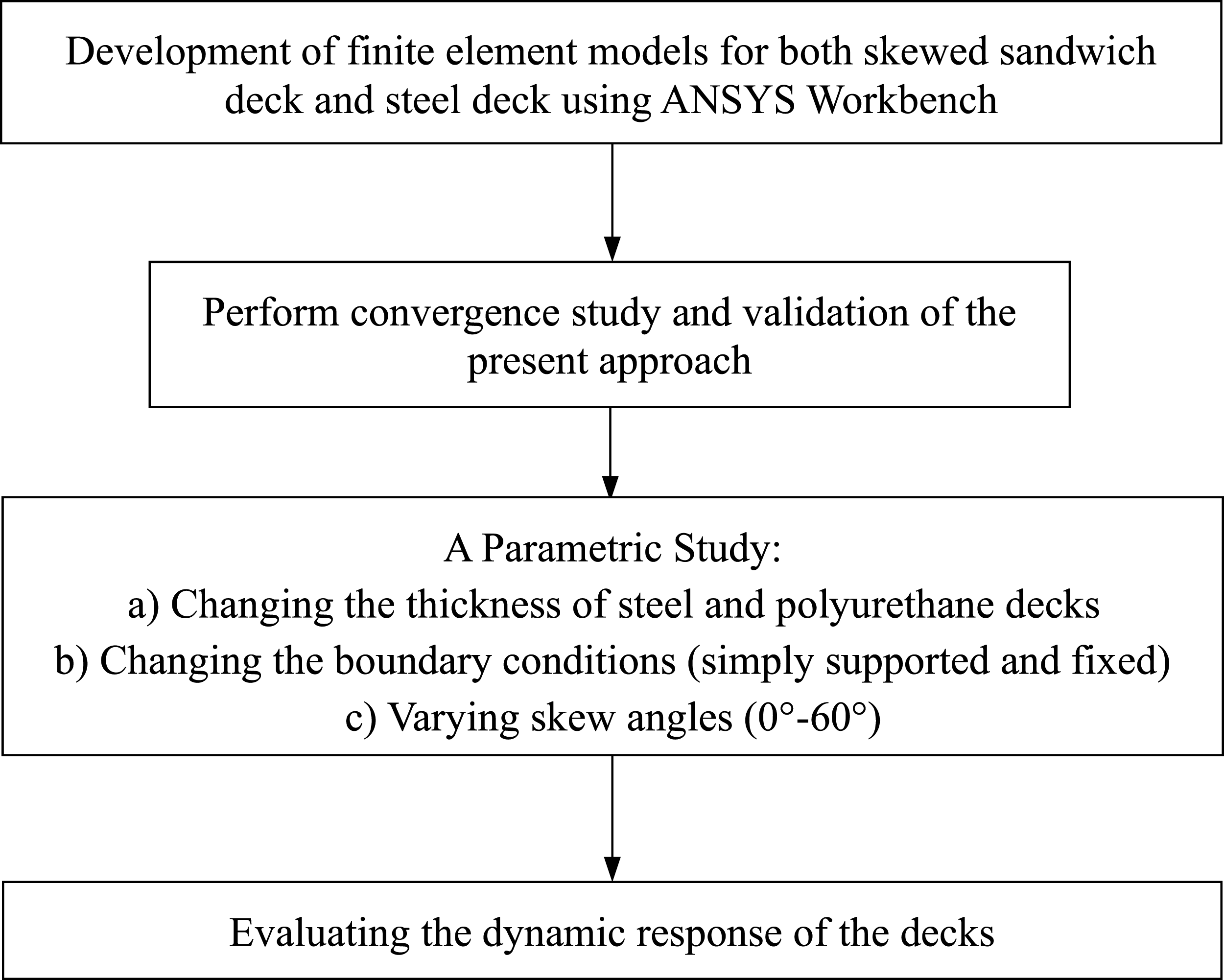
Finite element methodology
Validation
The finite element method (FEM) is used for analysis with the help of ANSYS software. FEM involves dividing a structure into discrete elements interconnected at nodal points, with individual element stiffness matrices assembled based on assumed displacement or stress patterns. Before, proceed to the analysis in the present study, the present approach is validated with the published results in the next section.
Validation of experimental results
A model considered by Shan and Yi (2016) is reproduced for validating the present approach.
14
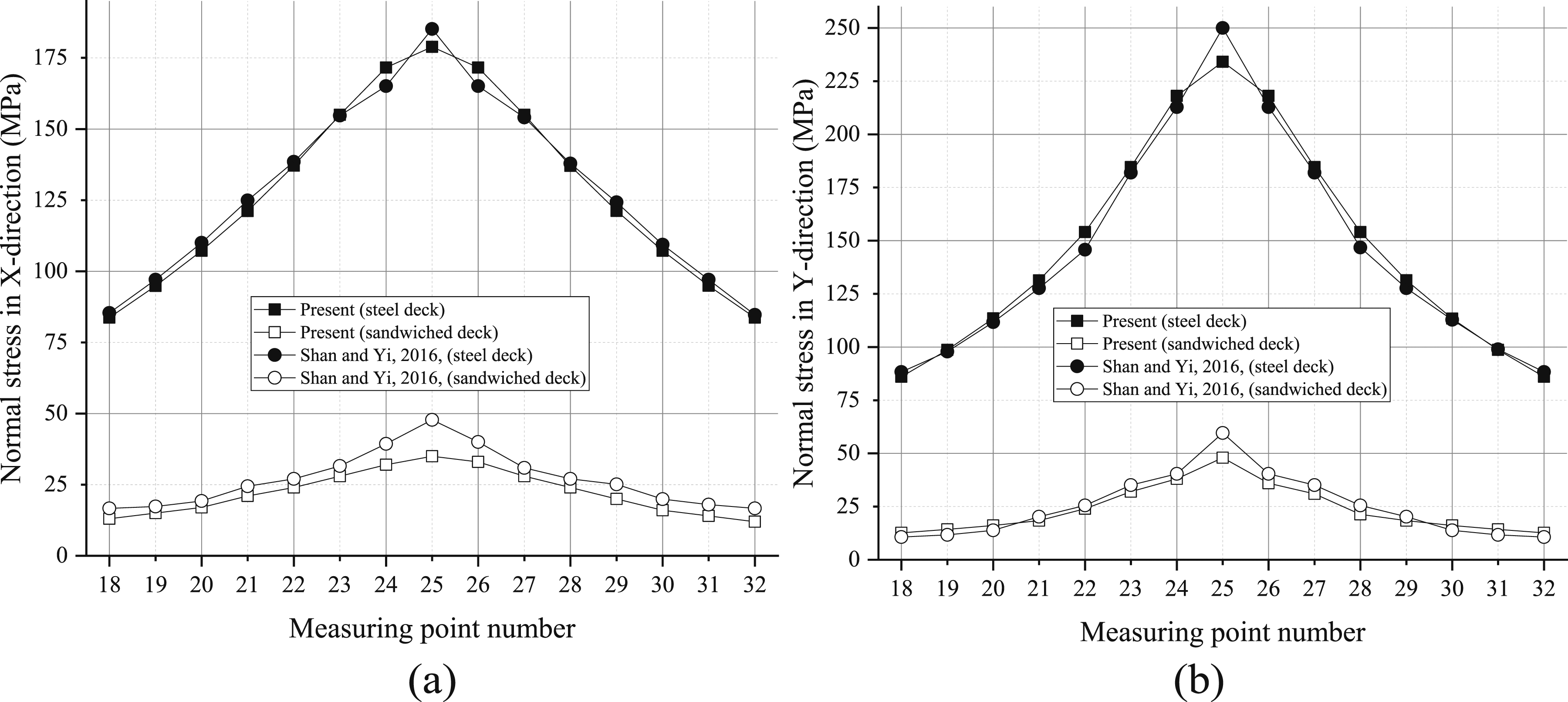
The model of the sandwiched bridge deck considered is of length 720 mm, width 350 mm and thickness 4 mm for steel isotropic deck, and for sandwiched deck thickness of both lower and upper steel plates 2 mm, thickness of Polyurethane core 10 mm, i.e., total thickness is 14 mm. The deck is simply supported on all four edges, and a uniformly distributed area load of 1.667 MPa is applied on a 60 mm × 20 mm area at the centre. The stresses are evaluated at regular intervals of 10 mm in both the longitudinal and transverse directions. The results obtained are compared with Shan and Yi (2016) and are demonstrated in Figures 2 and 3. The present results are found to be in close agreement with the results reported by Shan and Yi (2016). Stresses in X-direction and Y-direction. (a) Points 1-17 in X-direction (b) points 1-17 in Y-direction. Stresses in X-direction and Y-direction. (a) Points 18-32 in X-direction (b) Points 18-32 in Y-direction.
Validation of numerical results
A model is reproduced based on Singh et al. (2020),
22
Pani and Bhattacharya (2006),
41
and Zhou and Cheung (2000).
42
A rectangular steel plate of width 1.5 m, height 1.5 and thickness 10 mm is considered for validation. The mesh size is considered as 5 mm based on the convergence study performed on the existing model. Modal analysis is conducted to access the first six modal (natural) frequencies on this plate and the results are compared with the ones reported in the literature and are illustrated in Figure 4. The results obtained are found to be very close to the ones reported by Singh et al. (2020) and thus the model is validated. Validation of results. (a) Simply supported (b) Clamped.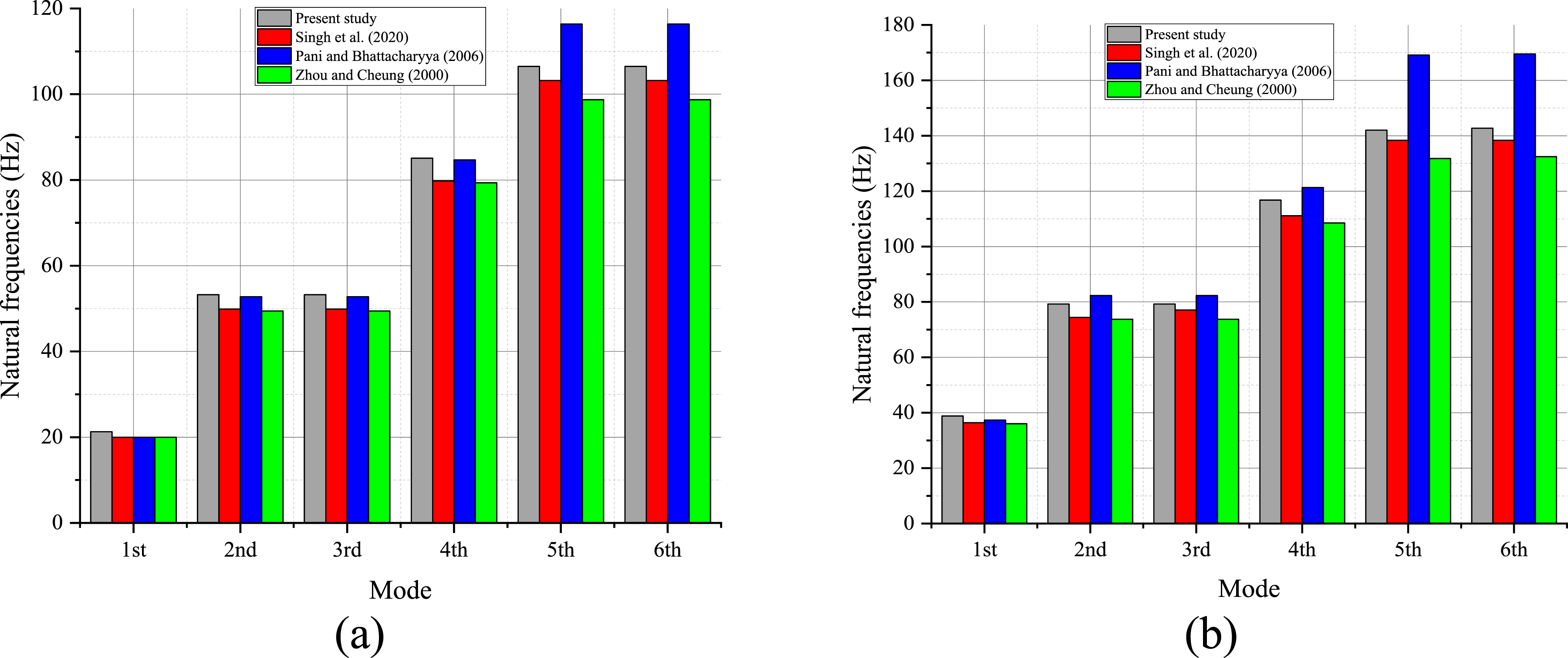
Modelling of bridge deck
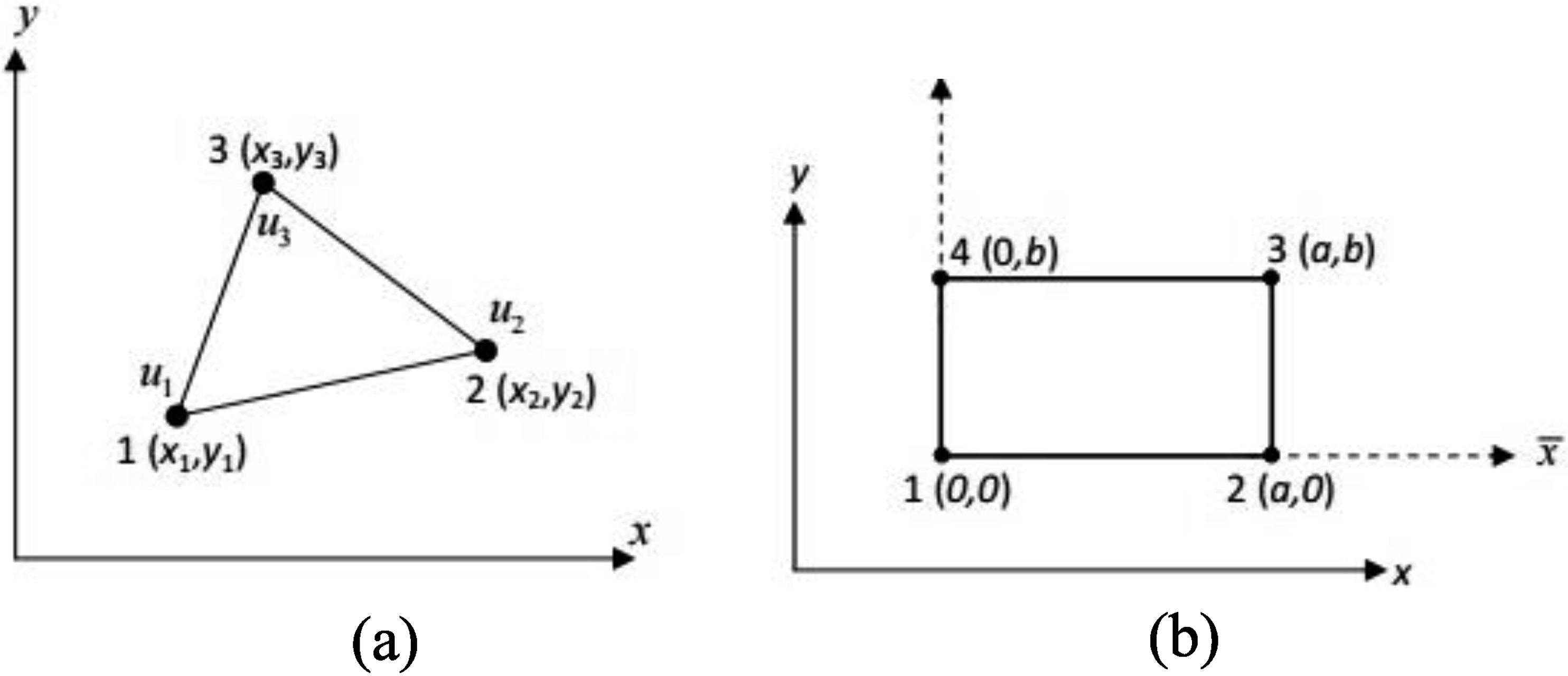
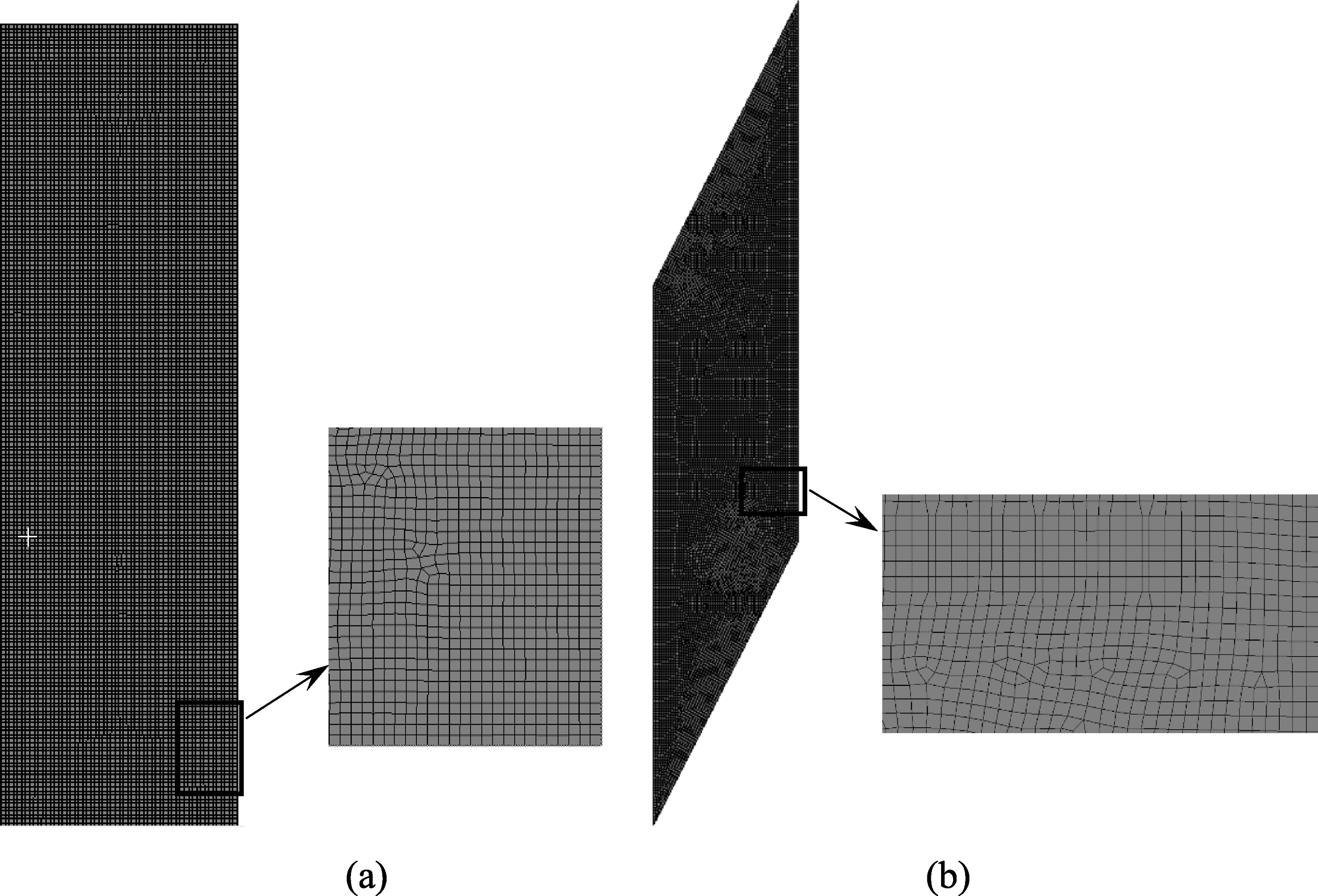
A model of the bridge deck is constructed for analysis, of length 20 m, and width 5.76 m, as shown in Figure 5. Convergence studies examine how the solution varies with mesh or by the discretisation parameter modification, which aids in assessing the correctness of numerical techniques. The study accounts for the convergence of the results and provides a more precise and accurate result as the analysis approach changes. So, the convergence study has been performed in the present study to determine the optimum mesh size. For the present study, convergence study is performed on a steel bridge deck of length 20 m, width 5.76 m, and thickness 150 mm, with fundamental frequency, for clamped boundary conditions on all edges. Fundamental frequency is plotted against mesh size as shown in Figure 6. It is observed that the results are converging after the mesh size of 100 mm. So, the mesh size of 100 mm is considered for the further analyses. This study uses 3-noded triangular elements and 4-noded quadrilateral elements with 6 degrees of freedom at each node. The presence of 4-noded quadrilateral elements is more, as 3-noded triangular elements accommodate the skewness. The details of these elements are shown in Figure 7. Also, the finite element meshing of the straight bridge and skewed bridge decks are shown in Figure 8. Bridge deck. Convergence study. Elements used in the study (source: https://www.brainkart.com/article/2,3-Noded-Linear-Triangular-Element_5951/#google_vignette). (a) 3-noded triangular element (b) 4-noded quadrilateral elements. https://www.brainkart.com/article/2,3-Noded-Linear-Triangular-Element_5951/#google_vignette Finite elements meshing of the bridge deck. (a) 0° skewed (straight) (b) 60° skewed.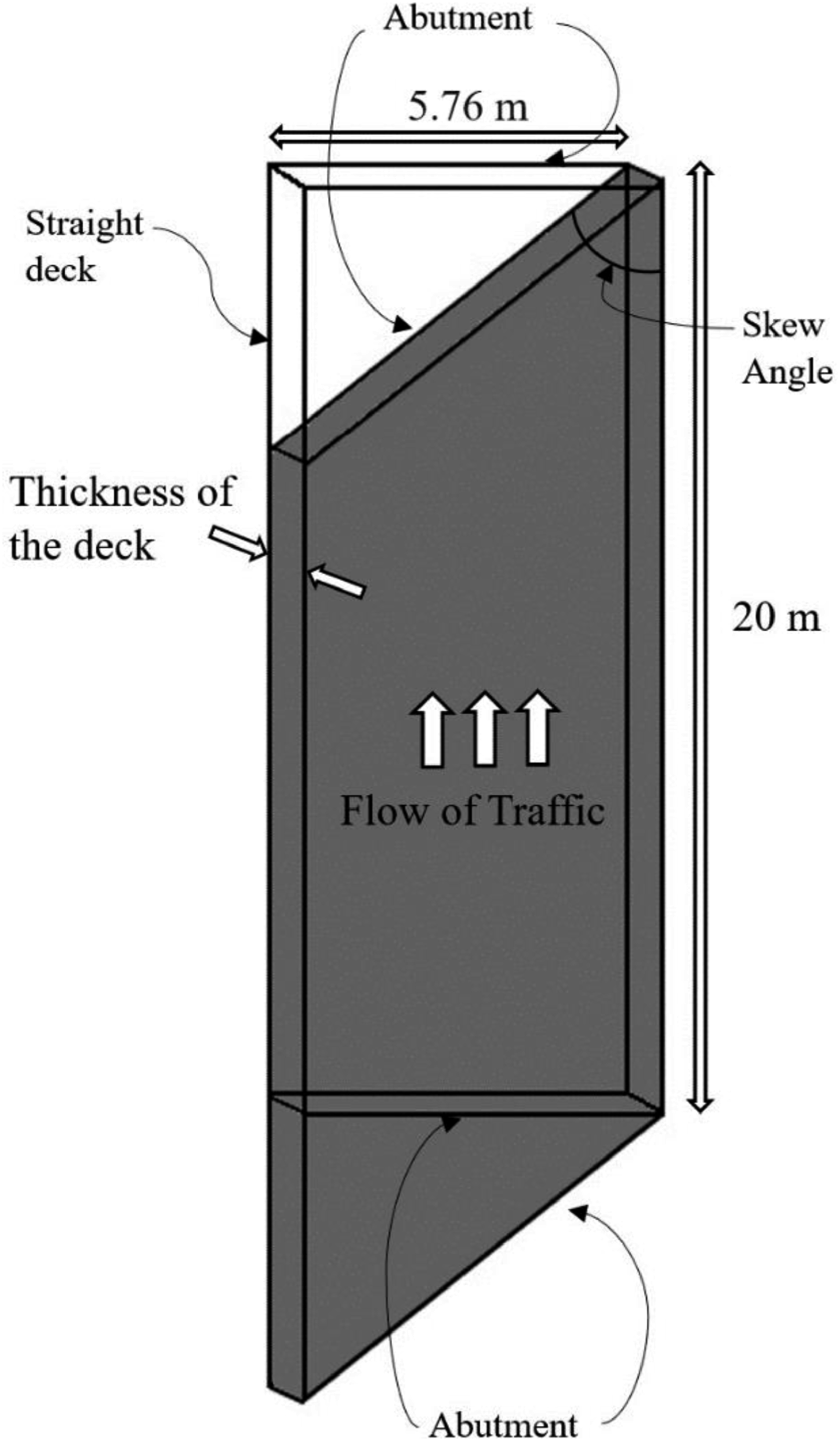

Results and discussion
Properties of steel and polyurethane.


Steel deck anatomy and Sandwiched deck anatomy. (a) Steel deck (b) Sandwiched deck.
Effect of skewness on isotropic steel deck
In this section, a steel deck of length 20 m, width 5.76 m, and thickness 200 mm is modelled for analysis. The results of the first six natural frequencies are shown in Figure 10, to show the variation of the free vibration frequencies by varying the skew angles. The mode shapes of the decks are illustrated in Figures 11 and 12, for simply supported boundary and clamped boundary conditions, respectively. The mode shapes of 0° skewed and 60° skewed decks are only shown to maintain the conciseness of the study and concluded considering all the skew angles. Free vibration frequencies of steel deck for various skew angles. (a) Simply supported (b) Clamped. Mode shapes of isotropic steel straight decks, 0° skewed. (i) Simply supported boundary condition. (ii) Clamped boundary condition. Mode shapes of isotropic steel skew decks, 60° skewed. (i) Simply supported boundary condition. (ii) Clamped boundary condition.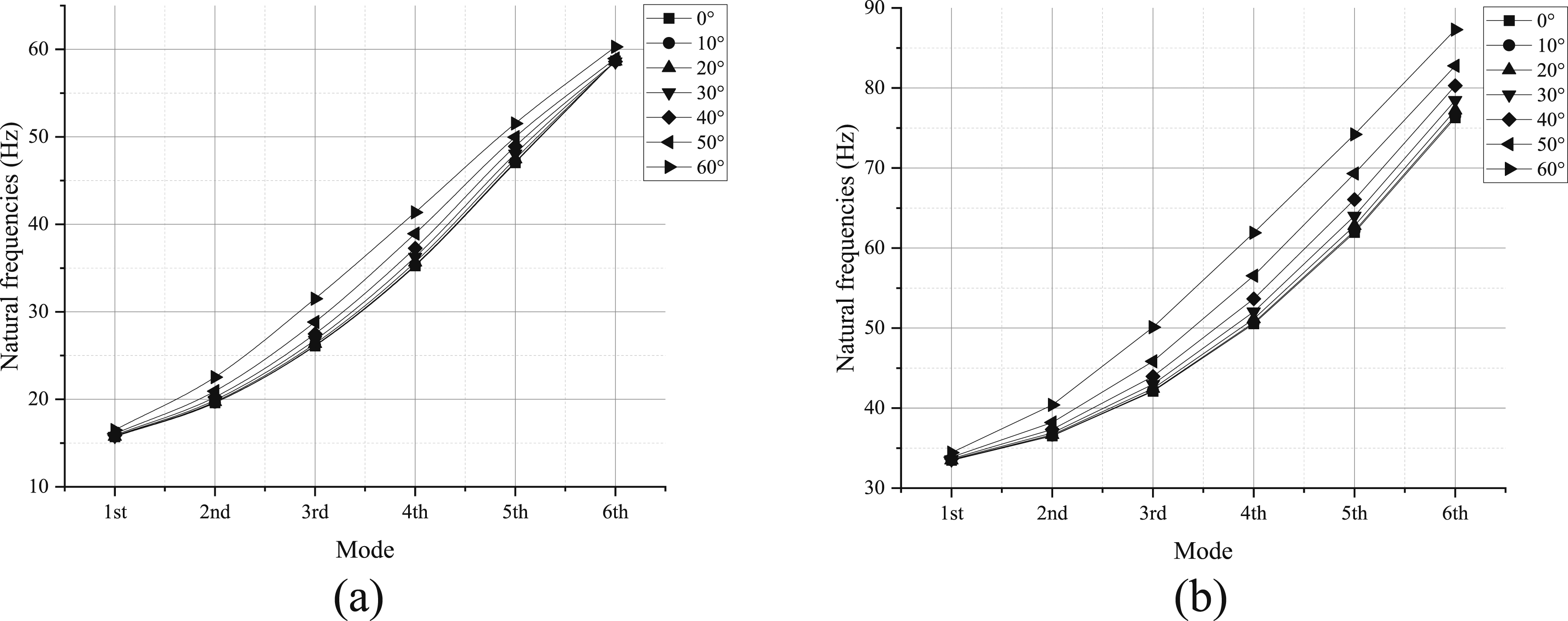
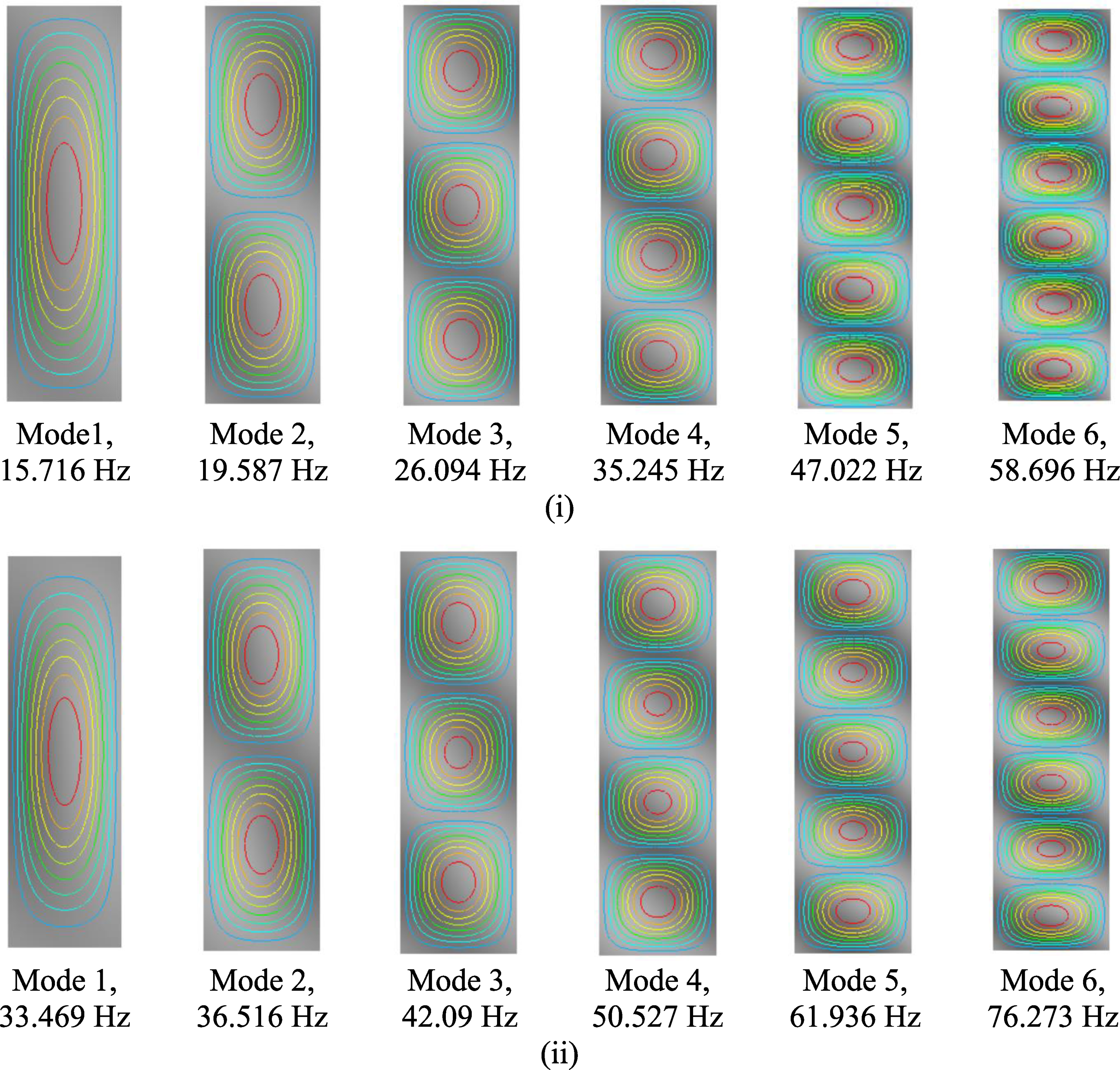
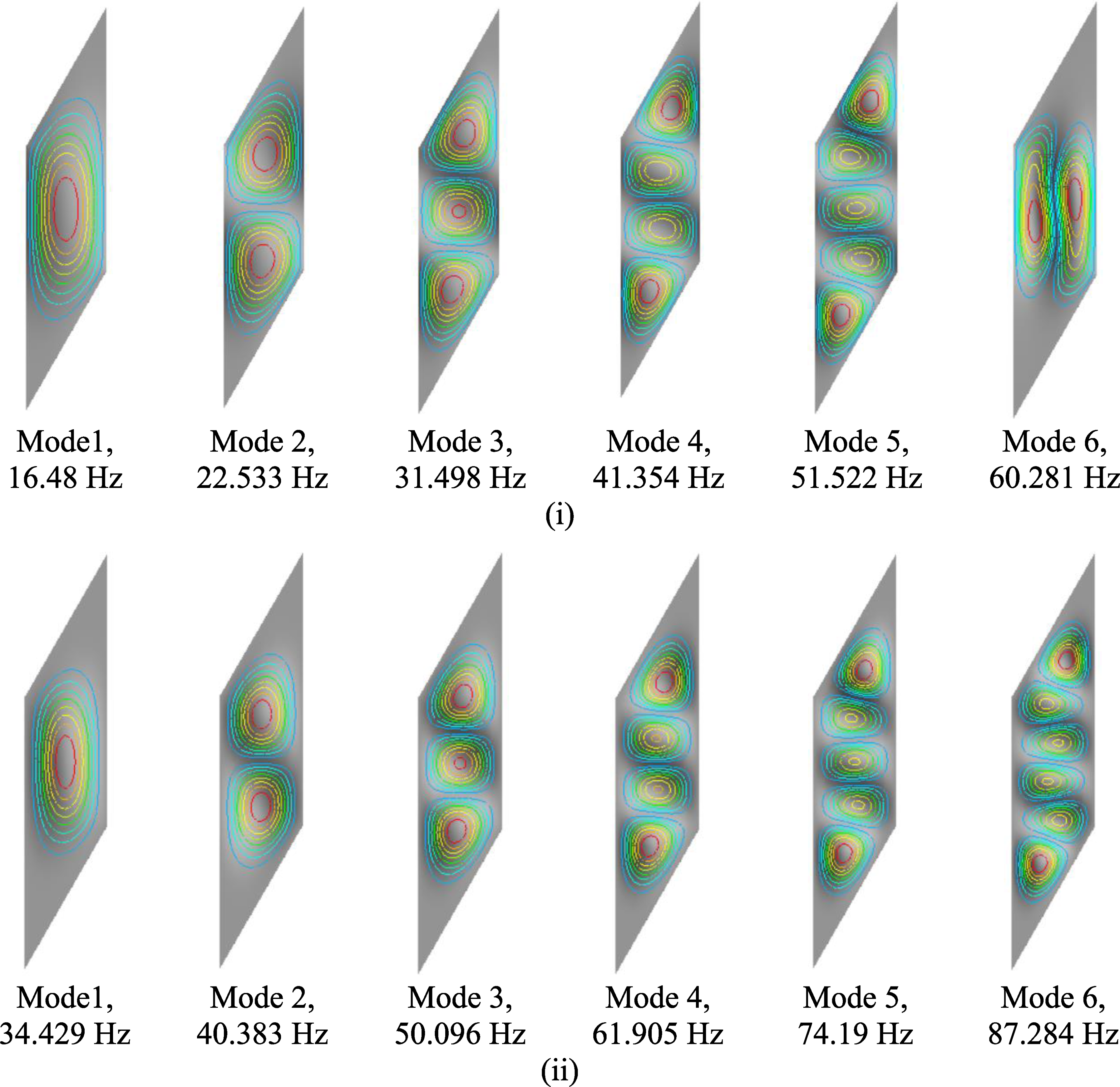
It is observed that there is a slight increase in the natural frequencies with increase in the skew angles, which might be due to the change in distribution of mass. However, the increase is not substantial for fundamental frequency. However, there is an increase of 5-12 Hz in the other natural frequencies. Further, the increment is more promising in the case of clamped conditions. The natural frequencies experience a significant increase of approximately 10 Hz for each mode under simply supported conditions. Under clamped conditions, the natural frequency at a 60° skew angle for the previous mode closely matches the natural frequency at a 0° skew angle for the subsequent mode.
Effect of skewness on sandwiched deck
Combinations used for sandwiched analysis.
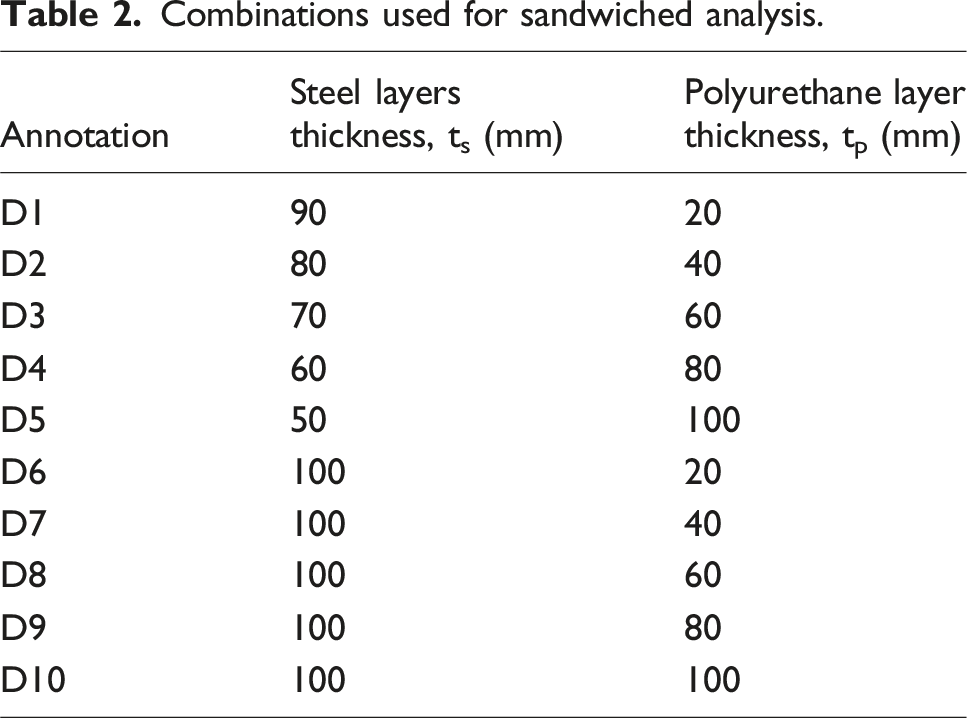

Free vibration frequencies of sandwiched decks for various skew angles. (a) Simply supported (b) Clamped.
The natural frequencies increase for the sandwiched decks on increasing skew angles. The trends of fundamental frequencies are like the steel decks. However, the other natural frequencies increase by only 5-8 Hz. Under simply supported conditions, the rise in natural frequency with increasing skew angle is notably less pronounced compared to the situation with clamped conditions. In the clamped configuration, a discernible increase of a few Hz is observed, whereas, under simply supported conditions, the frequency experiences only a marginal increase of 0.5 Hz.
Comparison between steel and sandwiched decks
The results of the free vibration analysis that was discussed in the earlier sections are compared in this section to understand the differences in the behaviour of decks. But, before proceeding to the results, let’s first explore the merits of uniting steel and polyurethane. Bridge deck layered with polyurethane offer advantages over traditional steel decks, being lighter in weight, resistant to corrosion, and providing superior insulation. This not only reduces overall structural stress and facilitates easier handling and transport but also minimises maintenance costs and extends the bridge’s lifespan. The sustainability of polyurethane materials, with their longer life and lower environmental impact, makes them an eco-friendly choice compared to conventional steel decks. Additionally, the versatility and elasticity of polyurethane enable successful adaptation to skewed bridge geometries, particularly in skewed bridges, outperforming steel counterparts. Prefabricated polyurethane deck slabs further streamline construction processes, offering easier transportation, quicker installation, and minimised traffic disruptions. The results of the free vibration frequencies are compared according to the skew angles. The graphs are presented in Figures 14–20. The free vibration frequencies of the steel deck are large as compared to the sandwiched ones. The presence of polyurethane decreases the free vibration frequencies. Comparison of the decks (0° skewed). (a) Simply supported (b) Clamped. Comparison of the decks (10° skewed). (a) Simply supported (b) Clamped. Comparison of the decks (20° skewed). (a) Simply supported (b) Clamped. Comparison of the decks (30° skewed). (a) Simply supported (b) Clamped. Comparison of the decks (40° skewed). (a) Simply supported (b) Clamped. Comparison of the decks (50° skewed). (a) Simply supported (b) Clamped. Comparison of the decks (60° skewed). (a) Simply supported (b) Clamped.

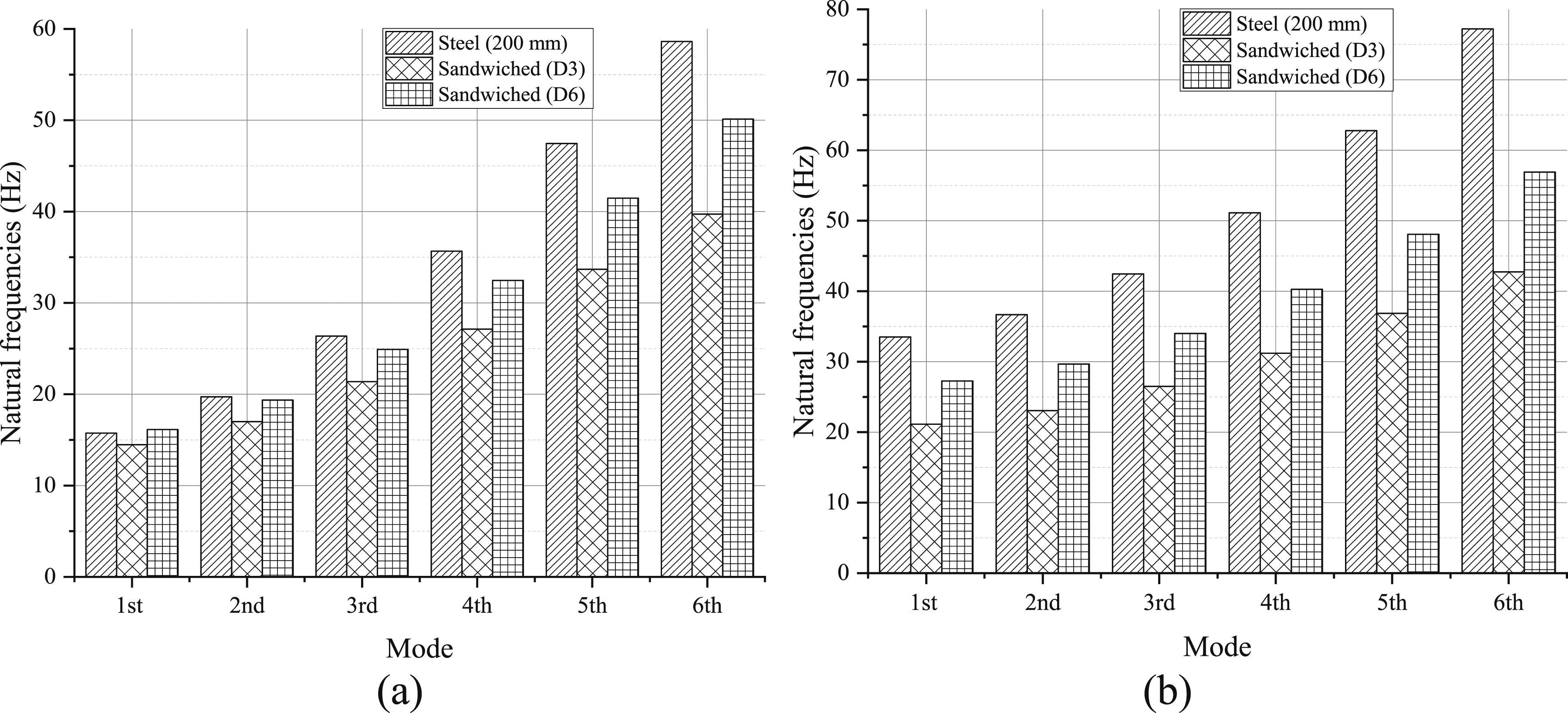
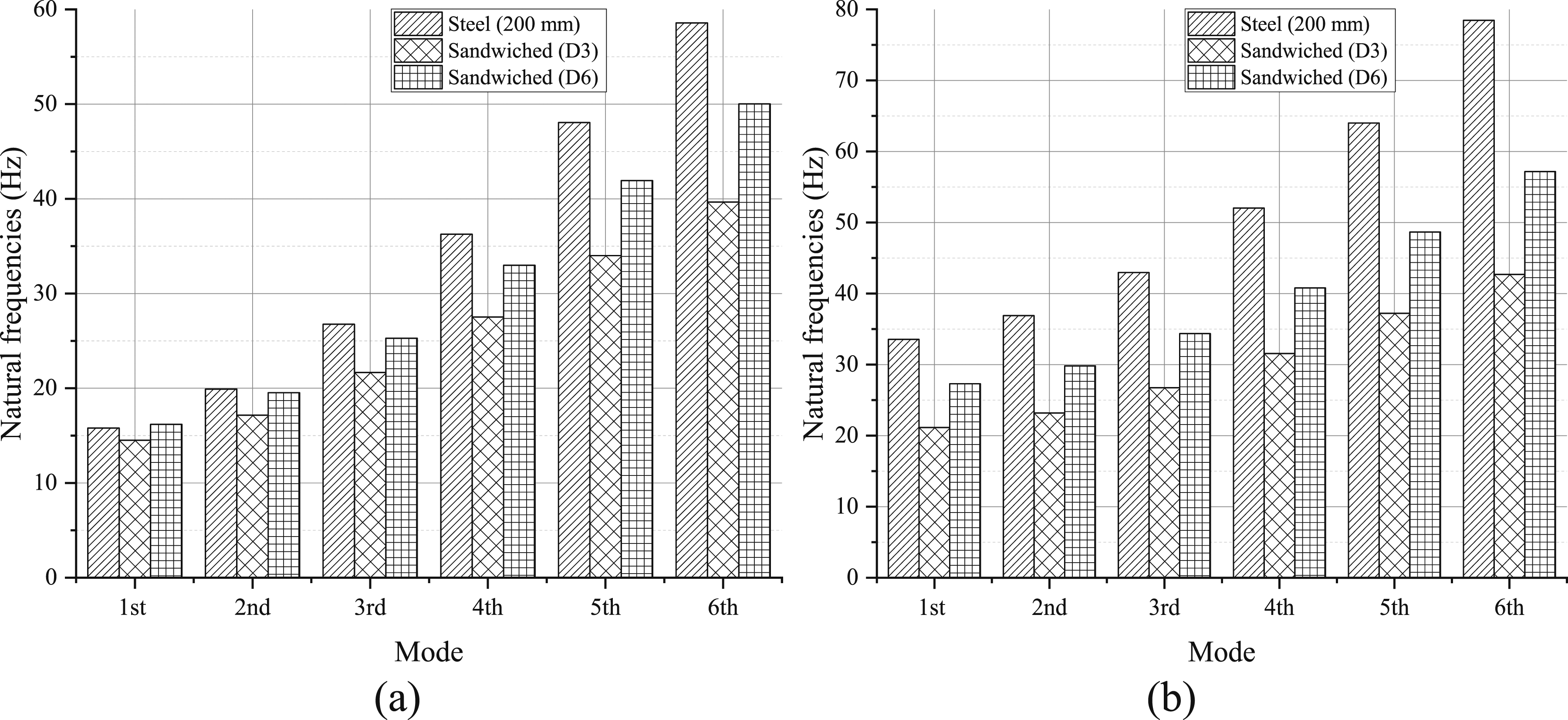
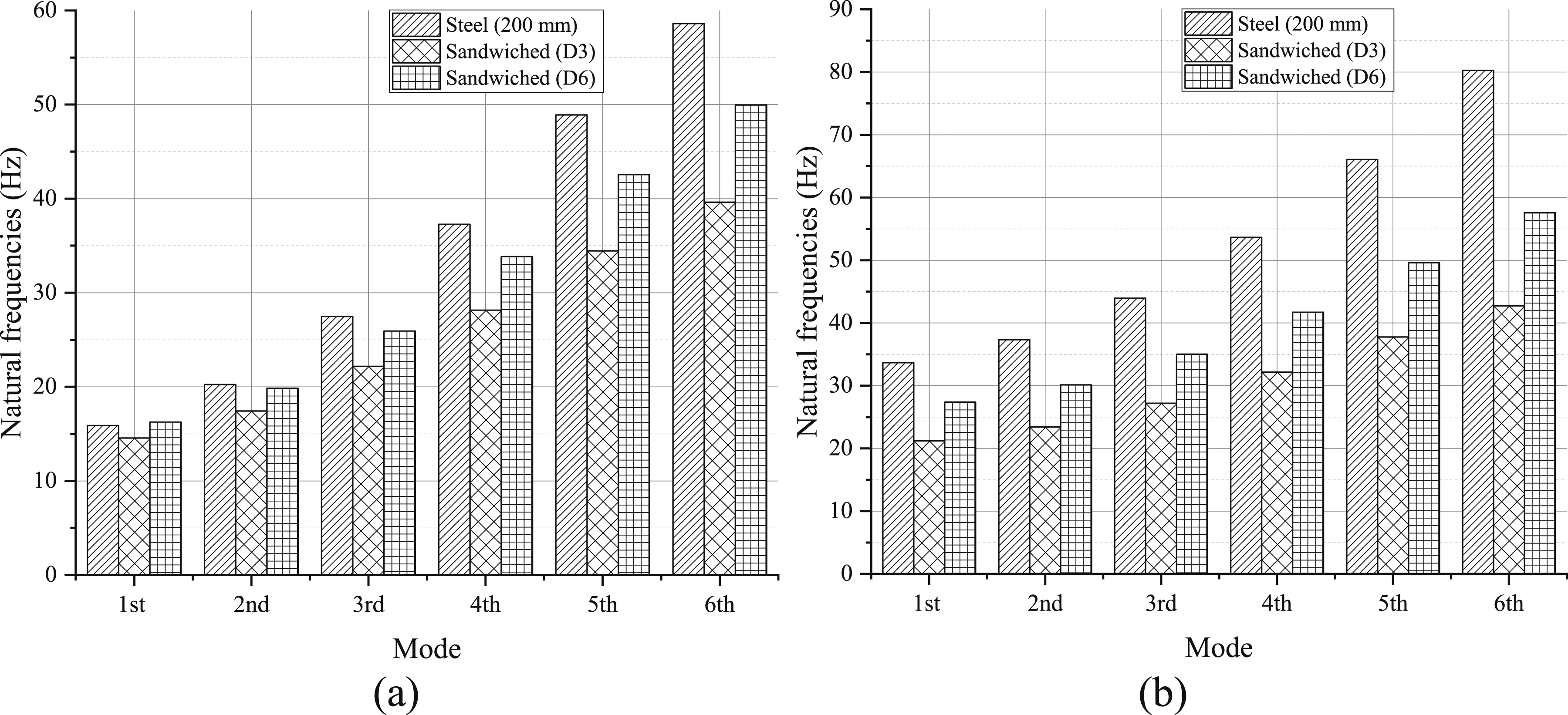
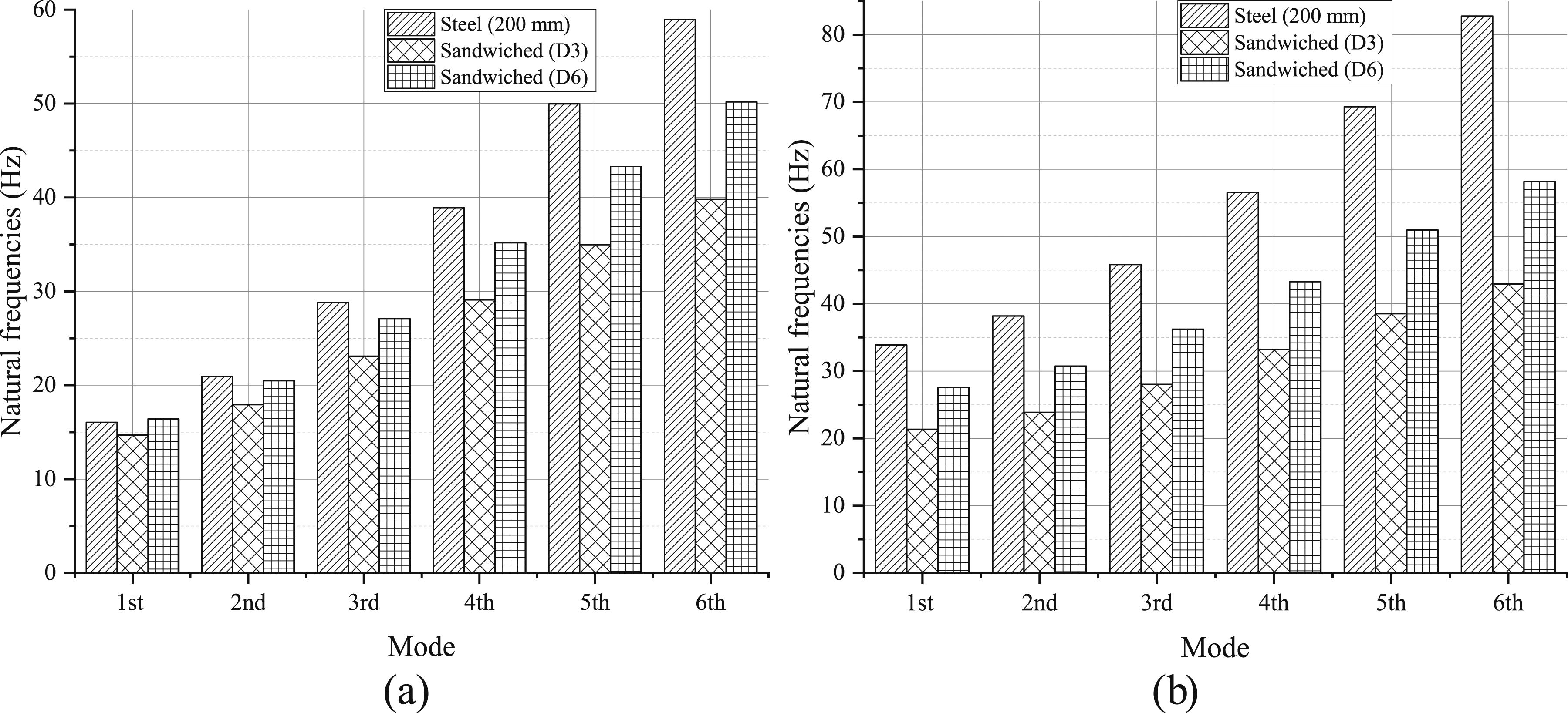
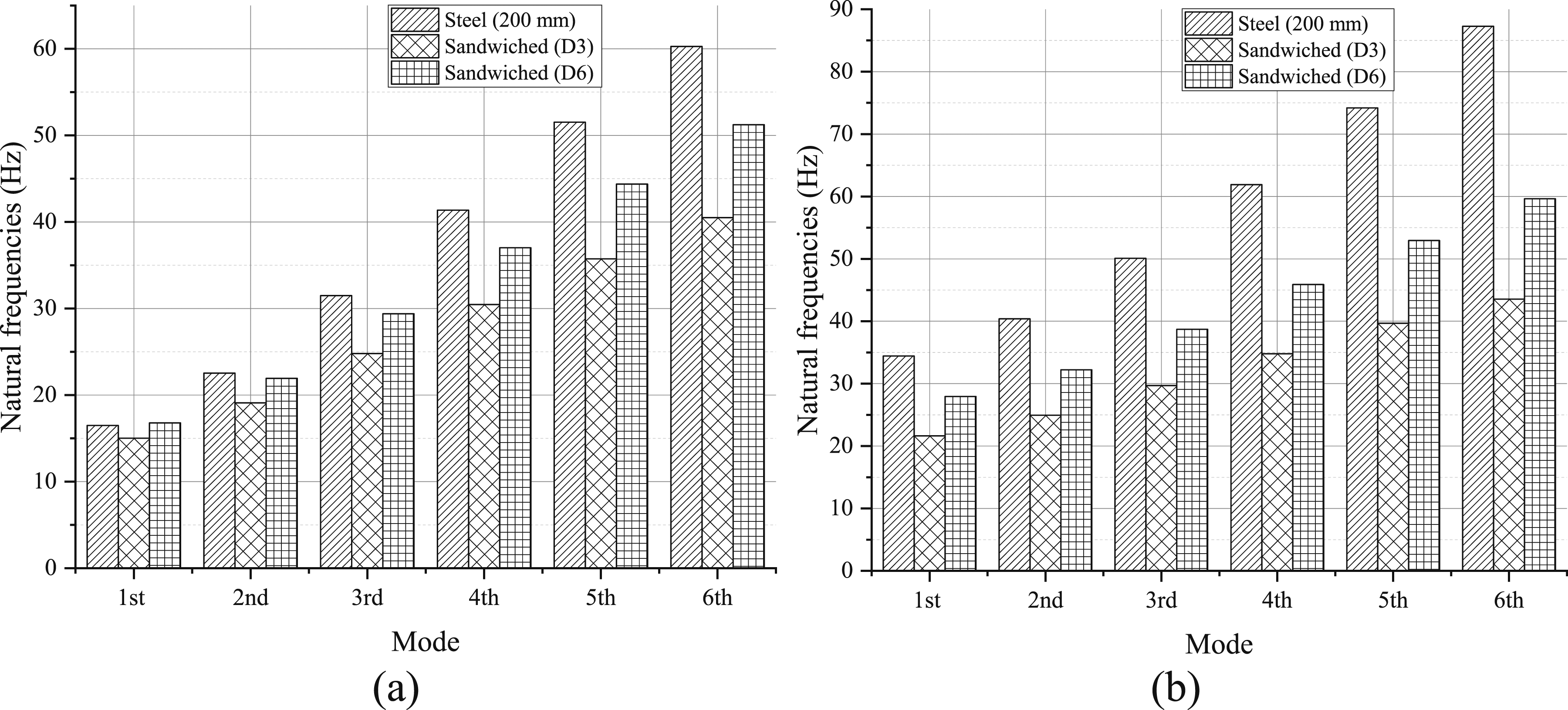
The natural frequency of steel deck is 5-35 Hz larger than the sandwiched decks for clamped condition. However, for simply supported condition, the fundamental frequency, the 2nd natural frequency, and 3rd natural frequency of steel deck is smaller than one of the sandwich combinations by about 1-4 Hz. But the other natural frequencies of steel deck are larger than the sandwiched decks by about 3-20 Hz. Therefore, it can be inferred that the incorporation of polyurethane into the steel deck is unlikely to have a substantial impact on the natural frequencies under simply supported conditions. However, in the case of clamped conditions, a slight reduction in natural frequencies may occur.
Special case: Polyurethane
A special case of only polyurethane deck is discussed in this section. A bridge of similar dimensions as used before, i.e., length 20 m, and width 5.76 m, is used for this analysis as well. The thickness of the deck is increased from 250 mm to 1500 mm, to understand the response of the deck to the free vibration analysis. The results are illustrated in Figures 21–26. As the results suggest, there is an increase in the natural frequencies with the increase in the thickness of the deck. Free vibration frequencies of the polyurethane deck of 250 mm for various skew angles. (a) Simply supported (b) Clamped. Free vibration frequencies of the polyurethane deck of 500 mm for various skew angles.(a) Simply supported (b) Clamped. Free vibration frequencies of the polyurethane deck of 750 mm for various skew angles. (a) Simply supported (b) Clamped. Free vibration frequencies of the polyurethane deck of 1000 mm for various skew angles. (a) Simply supported (b) Clamped. Free vibration frequencies of the polyurethane deck of 1250 mm for various skew angles. (a) Simply supported (b) Clamped. Free vibration frequencies of the polyurethane deck of 1500 mm for various skew angles. (a) Simply supported (b) Clamped.

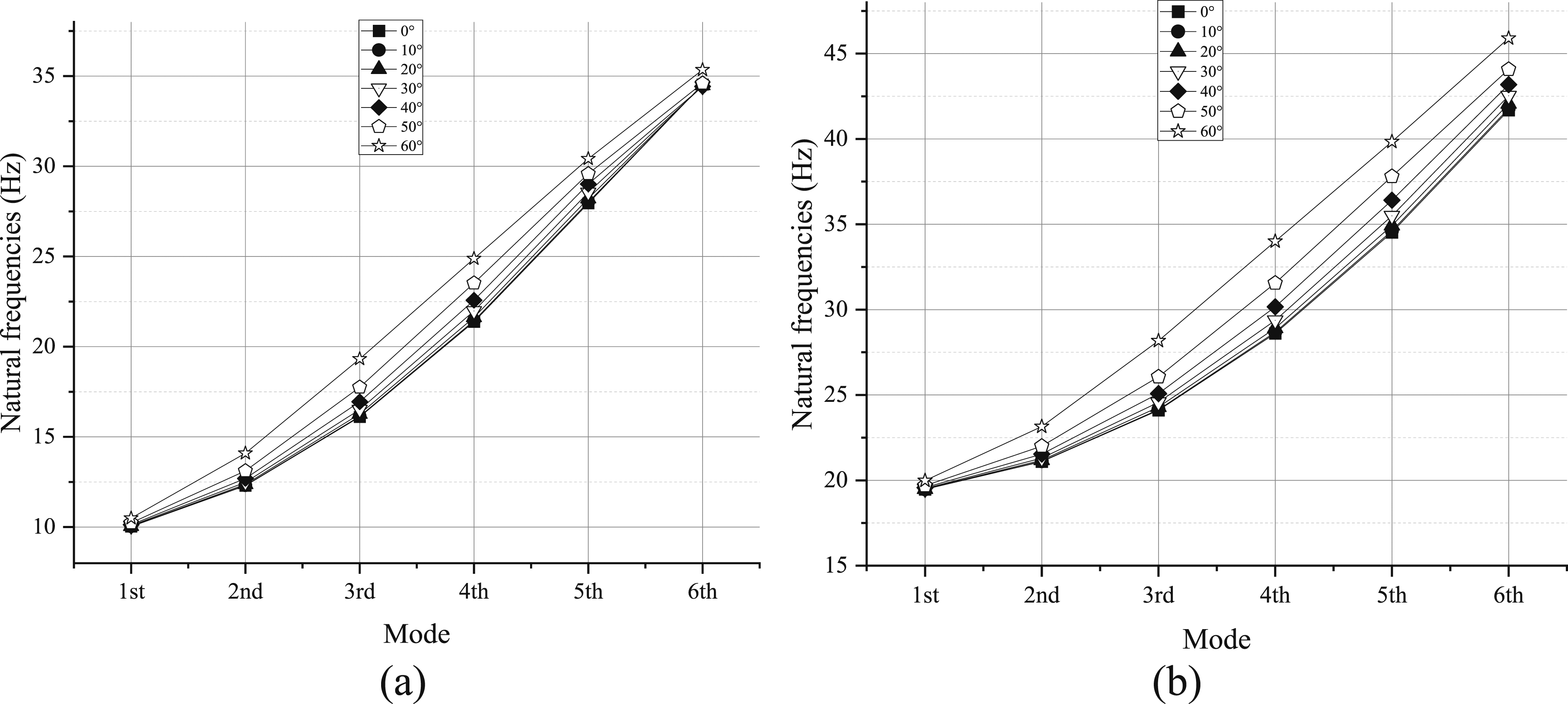
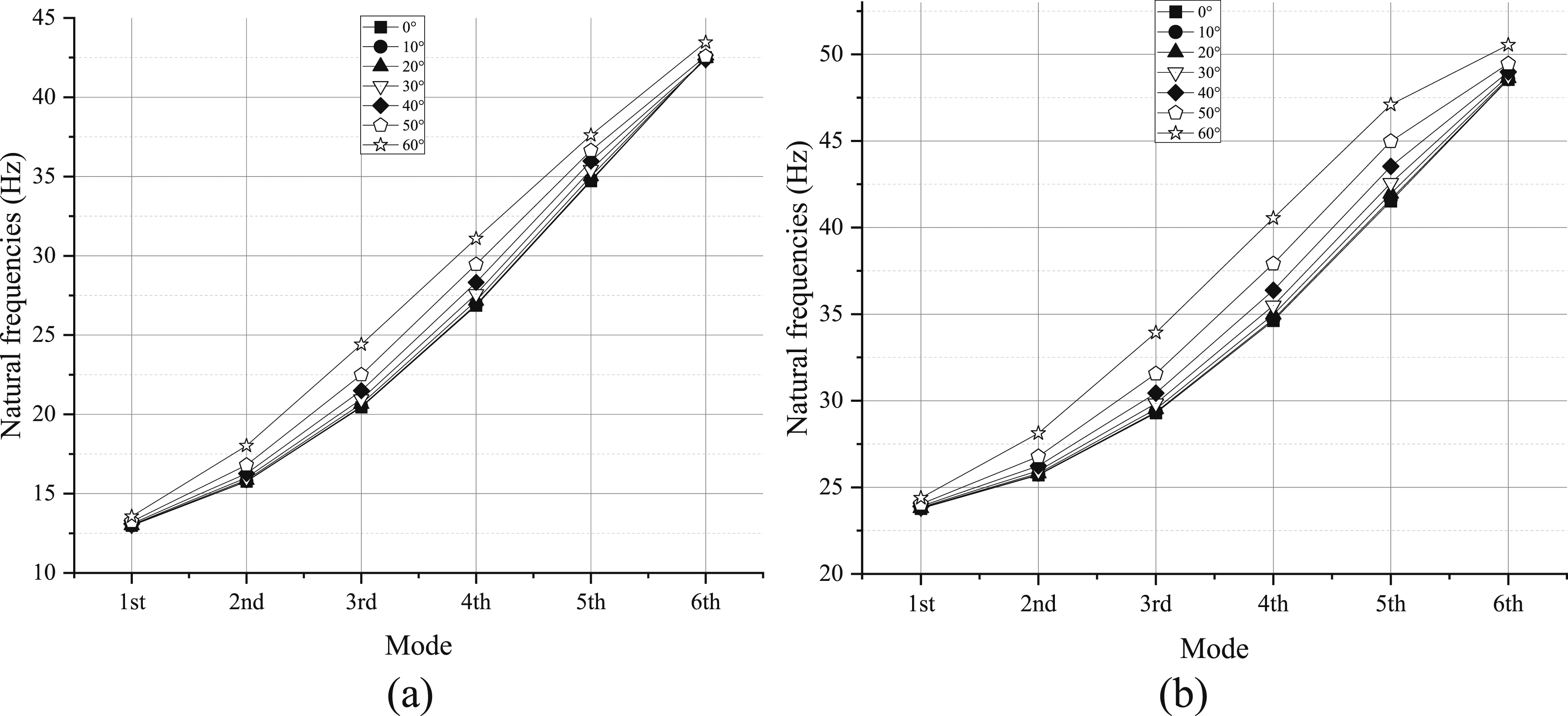
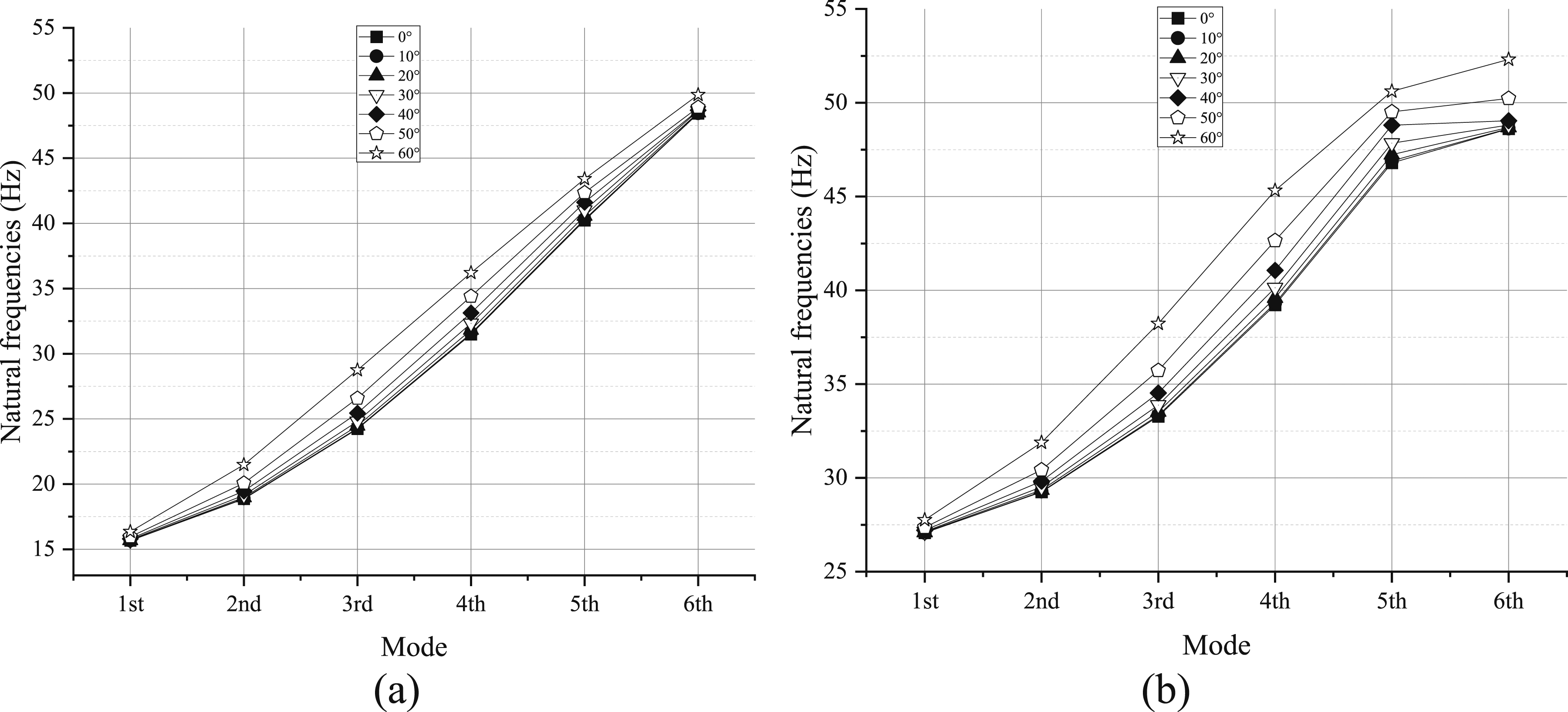
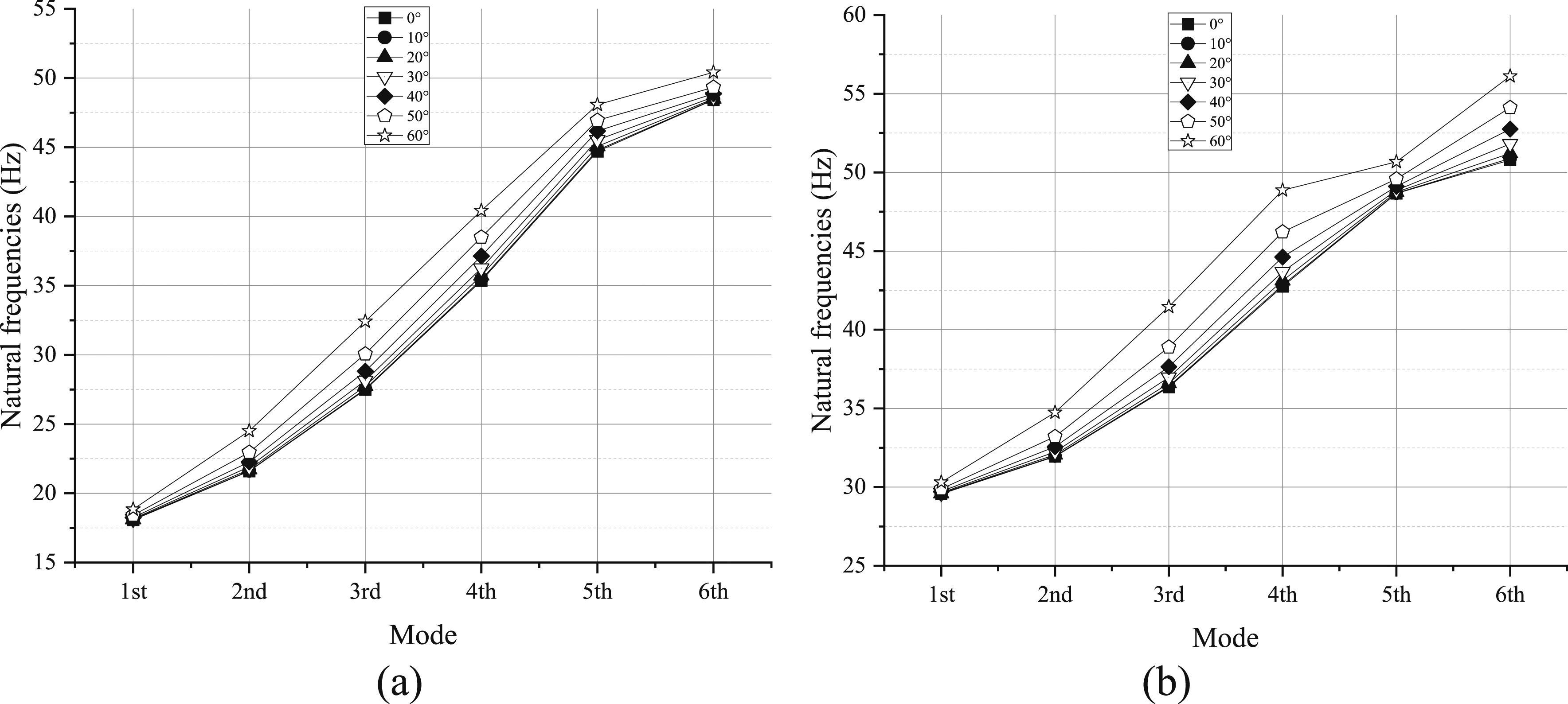
The natural frequencies increase by 18-35 Hz with increase in thickness of the decks. But, in case of simply supported conditions, the natural frequencies of 1000 mm deck is the largest, except for the 5th natural frequency. However, in case of clamped condition, the fundamental frequency of 1000 mm deck is even lower than that of 500 mm deck and it shows a parabolic increase in value. The value of natural frequencies of 1500 mm deck is the highest in case of clamped condition. The findings indicate an irregular shift in natural frequencies with an increase in polyurethane deck thickness. Nevertheless, it is noteworthy that, despite these fluctuations, the natural frequencies under clamped conditions consistently surpass those observed in simply supported conditions across all investigated decks. After increasing the thickness of the polyurethane deck beyond 1000 mm, the fundamental frequency become almost equal to the fundamental frequency of a 200 mm thick steel deck. The higher frequencies are rather lesser in the case of polyurethane deck.
Conclusion
The influence of varying thicknesses, skew angle, and boundary conditions of the steel and sandwich bridge decks on the natural frequencies and mode shapes of the composite deck are investigated using the finite element method. The possibility of optimizing the thickness of the steel and polyurethane layers to achieve specific dynamic performance goals, such as minimizing vibrations or maximising natural frequencies is explored in this study. Following that, a bridge deck is modelled as a particular instance using polyurethane to seek sustainability and justify the RRR (reduce, reuse, and recycle) waste management approach. This technique may also be helpful for the repairing and retrofitting. The conclusions are summarised below, • The introduction of a polyurethane layer in a composite deck was found to exert a notable influence on free vibration response. Comparative assessments against the steel deck highlighted a reduction in natural frequencies and alterations in mode shapes, underscoring the role of the polyurethane layer in modifying the dynamic behaviour of the structure. • On increasing the skew angle, the free vibration frequencies of the steel deck increase by about 5-12 Hz. Hence, in those situations, skewed bridges are preferable compared to straight bridge. • The effect of skew angle is more significant for clamped conditions compared to simply supported boundary condition. The free vibration frequencies in case of clamped condition are more than (almost 1.5-2 times) that of simply supported condition, for steel decks. • Also, for sandwiched decks the free vibration frequencies increase slightly (about 5-8 Hz) on increasing the skew angle. • The free vibration frequencies in case of clamped condition are about 20 Hz more than that of simply supported condition, for sandwiched decks. • For non-skewed bridges, under simply supported conditions, the free vibration frequencies of the sandwiched deck are more than the steel deck, while the free vibration frequencies of the steel deck are more than that of the sandwiched deck under clamped conditions. • For skewed bridges, the free vibration frequencies of steel deck are more than that of sandwiched under both simply supported and clamped boundary conditions. • Polyurethane is often lighter than steel. A lighter deck might result in a lower overall mass and, as a result, a lower natural frequency. This can be useful in applications where controlling vibrations is critical, such as pedestrian bridges or constructions subject to dynamic loads. • The natural frequencies are increased with the increment in the thickness of the polyurethane deck, but this increment is more prominent up to 1000 mm thickness, and beyond that, the increment in the frequencies is less.
Footnotes
Author contributions
Ashwin Anand; Literature review, Analysis, etc. Deepak Kumar Singh; Supervision, Compilation of the paper, etc. Preeti Agarwal; Supervision, Compiling of the paper, etc.
Declaration of conflicting interests
The author(s) declared no potential conflicts of interest with respect to the research, authorship, and/or publication of this article.
Funding
The author(s) received no financial support for the research, authorship, and/or publication of this article.
