




Abstract
Green Energy Harvesters (EH) are nowadays quite an important component of the contemporary green energy sector; thus, experimental data is required for their robust design validation. Existing reliability concepts are not applicable to dynamic systems possessing dimensionality above bivariate, except Monte Carlo-based methods, which are not applicable to measured data, or FORM, SORM methods that require prior knowledge of the underlying distribution. Existing system reliability methods are not always well suited to treat the latter problems, especially given the high-dimensional spatiotemporal nature of the nonlinearity of both system and environmental loadings. Presented case study proposes generic, state-of-the-art multivariate reliability methodology, assessing complex nonlinear system’s lifetime distribution, based on even a limited underlying dataset, extracted from an empirically recorded dynamic system time history. A comprehensive state-of-the-art multivariate reliability assessment along with methodological benchmarking was carried out. Methodology advocated in this study is not only applicable to energy harvesting devices; it can also be utilized for a range of engineering complex sustainable systems, subjected to environmental loads during designed service life.
Keywords
Introduction
Low-frequency EH technology, harvesting wind energy from the ambient environment received extensive research attention in recent decades. EH innovations target energy supply for various low-power, low-cost gadgets, including Micro-Electro-Mechanical Systems (i.e., MEMS), along with Wireless Sensor Networks (i.e., WSN). Piezoelectric Vibration EH (PVEH) has demonstrated that it can transform mechanical vibro-energy into piezo-electrical energy. Unfortunately, mechanical vibrations are often irregular and intermittent. Aero-instability causes resonant vibrations; hence, Flow-Induced Vibrations (FIV) may be utilized to generate green energy. Vortex-Induced Vibration (VIV), galloping, wake galloping, as well as other phenomena constitute examples of FIV examples.1–8
This study benchmarks novel structural reliability method for a multi-dimensional energy harvesting system’s service LifeTime Distribution (LTD) assessment, which is critical for EH design. Recent research has demonstrated the benefits of capturing low-frequency energy from the environment.9–11 Recently, research has been also conducted on developing micro- and nano-scale wind EH. Macroscale wind energy is harvested by an electromagnetic EH, whereas piezoelectric, electrostatic, and triboelectric EH harvest microscale wind energy. 12 These technological advances fuel several low-cost, low-power devices, including MEMS and WSN. Triboelectric generators are based on triboelectric effects, which transform mechanical energy into electrical energy through coupling effects between triboelectrification and electrostatic induction. Through piezoelectric vibration energy harvesting, mechanical vibrational energy from ambient environment may be transformed into piezo-electrical energy. FIVs cause aero-instability manifesting itself as resonant vibrations. Galloping, wake galloping, and VIV are a few examples of phenomena categorized as FIVs. Numerous studies were undertaken during the past decade, utilizing experimental, numerical, and theoretical methods. In. 1 an aero-instability coupled mechanical vibration model, based on an electrical circuit, was presented. In.4, the authors have presented the Computational Fluid Dynamics (i.e., CFD) approach for VIV Piezoelectric EH (i.e., VIVPEH). In, 5 authors have reported series of non-linear tests, optimizing VIVPEH design, using Galerkin’s method to study theoretical VIV piezoelectric EH properties. In recent research, 7 authors reported switching from VIVPEH towards GalloPing EH (GPEH) by adding 2 different Y-shaped connectors. In 8 and, 9 authors utilized bistable, as well as tristable features to examine non-linear GPEH responses.
Most of the previous works were primarily concerned with improving EH performance, paying attention to several critical design elements, including EH severe reaction and fatigue life. The analysis of the EH’s extreme performance and prognostics of hazardous operating conditions constitute crucial steps within the design process,13–18 For instance, writers in19–21 investigated durability and reliability of the P1 MFC transducer, being subjected to forced EH base excitations to forecast degradation and damage rates of the piezoelectric EH. According to recently reported experimental results,
14
EH was damaged when acceleration reached 0.5 g. In
13
, authors studied EH performance with a DuraAct P-876, piezo-sheet being mounted on a horizontal railway, reporting EH failure after about 100 cycles under acceleration of 1g. In
12
, authors investigated long-term EH fatigue behaviour using a P-2 MFC sheet and Finite Element Method (FEM), supported by laboratory experiments.
18
EH steel beam was reinforced with shims that could sustain a flow rate 16 L/min for
Areal (geometrically spread) extremes may be accurately modelled by utilizing e.g., Max-Stable Processes (i.e., MSP) approach. 22 To assess geometrically spread exceedances, accounting for spatial inter-dependencies in extremes, MSP model may be adjusted to the underlying data, gathered over in situ geographical, geometrical or structural geometrical domains. The Extreme Value Theory (EVT) paradigm provides a solid MSP theoretical foundation. The advocated multivariate Gaidai reliability concept may be combined with the MSP, essentially replacing MSP EVT part with sub-asymptotic functional class of distributions.
Reliability of flow-based EHs, including piezoelectric EH/GPEH, is an important operational issue and should be further studied. The analysis of EH’s extreme dynamics and, hence its operational safety has to be examined at the design stage. To assess the durable EH life span, recent research has frequently focused on the dynamic behaviour of EH beams under fatigue loading, caused by certain excitations. The dynamic responsiveness of a GPEH system is investigated for extreme value statistics in this research. A specific galloping energy harvester’s dynamic performance has been studied theoretically and empirically to achieve the second objective. The details of GPEH bluff body and the experimental setup are presented in Figure 1. A laboratory wind tunnel with circular cross-section has been utilized to assess GPEH performance. As seen in Figure 1, a honeycomb EH structure with a 400 mm diameter can be placed within the settling chamber of a wind tunnel to provide a steady incoming flow. The windspeed that was produced fluctuated between 1 and 6 m/s. For physical and geometrical parameters of the EH experimental prototype, ref. Table 1, with Wind tunnel and experiment setup.
110
EH physical and geometrical parameters.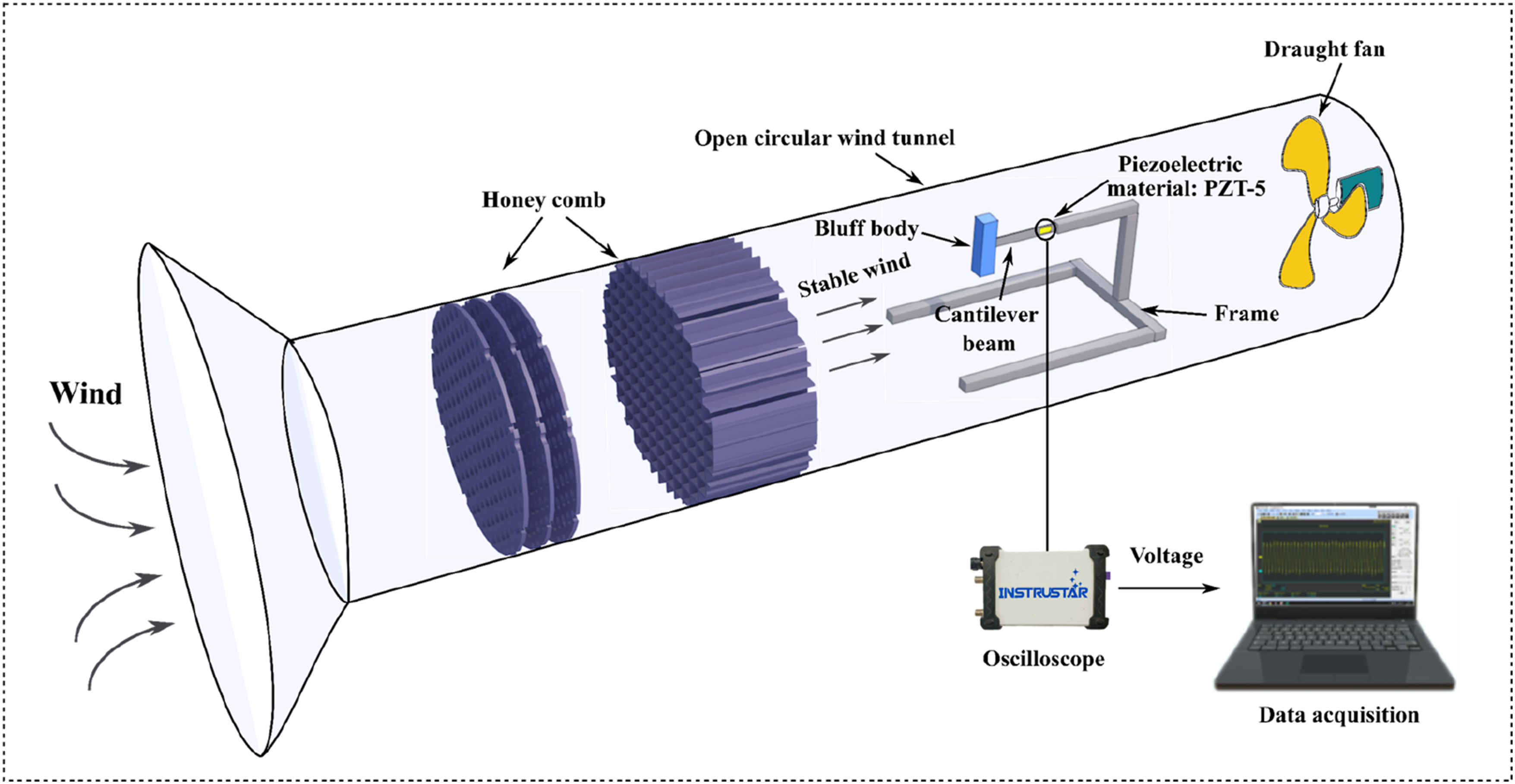
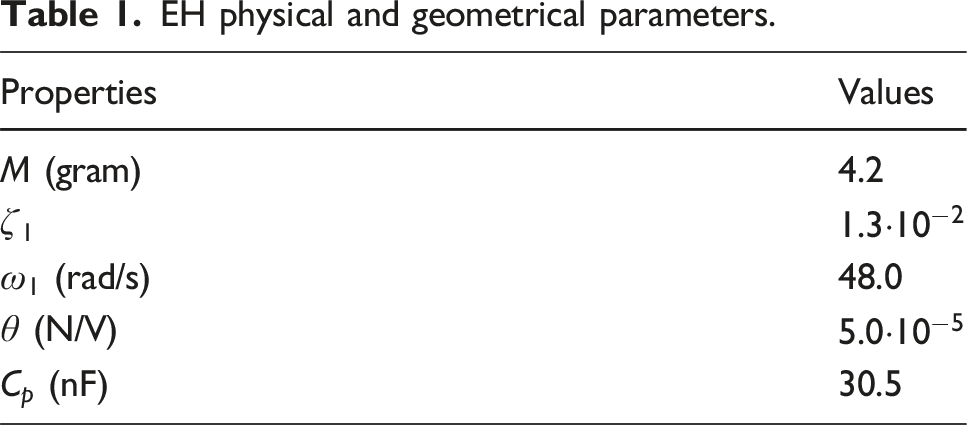
The bluff body was composed of rigid foam and was 0.12 m long, 0.03 m in diameter. The logarithmic decrement approach has been used to test the prototype piezoelectric cantilever damping ratio. Using a hot-wire anemometer, the approaching windspeed U was determined. Utilizing a digital oscilloscope, the voltage
Windspeed ranges.
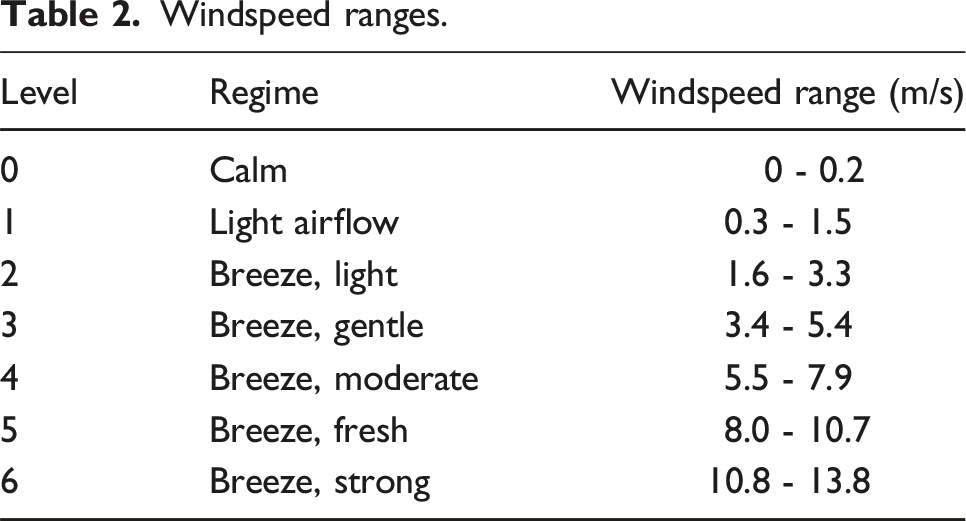
When incoming wind speeds are high for EH (above level 6 m/s), traditional propeller generators perform better since the motor size better fits in situ windspeeds. It’s also significant to note the other EH kinds that currently exist.
Figure 2 presents a schematic flowchart for advocated long-term experimental-based multimodal EH reliability analysis. The suggested multimodal survival assessment scheme offers a consistent solution to data de-clustering, for alternative reliability/statistical techniques to account for the clustering effects see.
26
For a comprehensive review reflecting modern reliability methods within green energy harvesting see.
27
From the management standpoint, this study advocates roust, novel approach for structural lifetime prognostics, and thus related to economic viability. Flowchart for described long-term multivariate reliability assessment.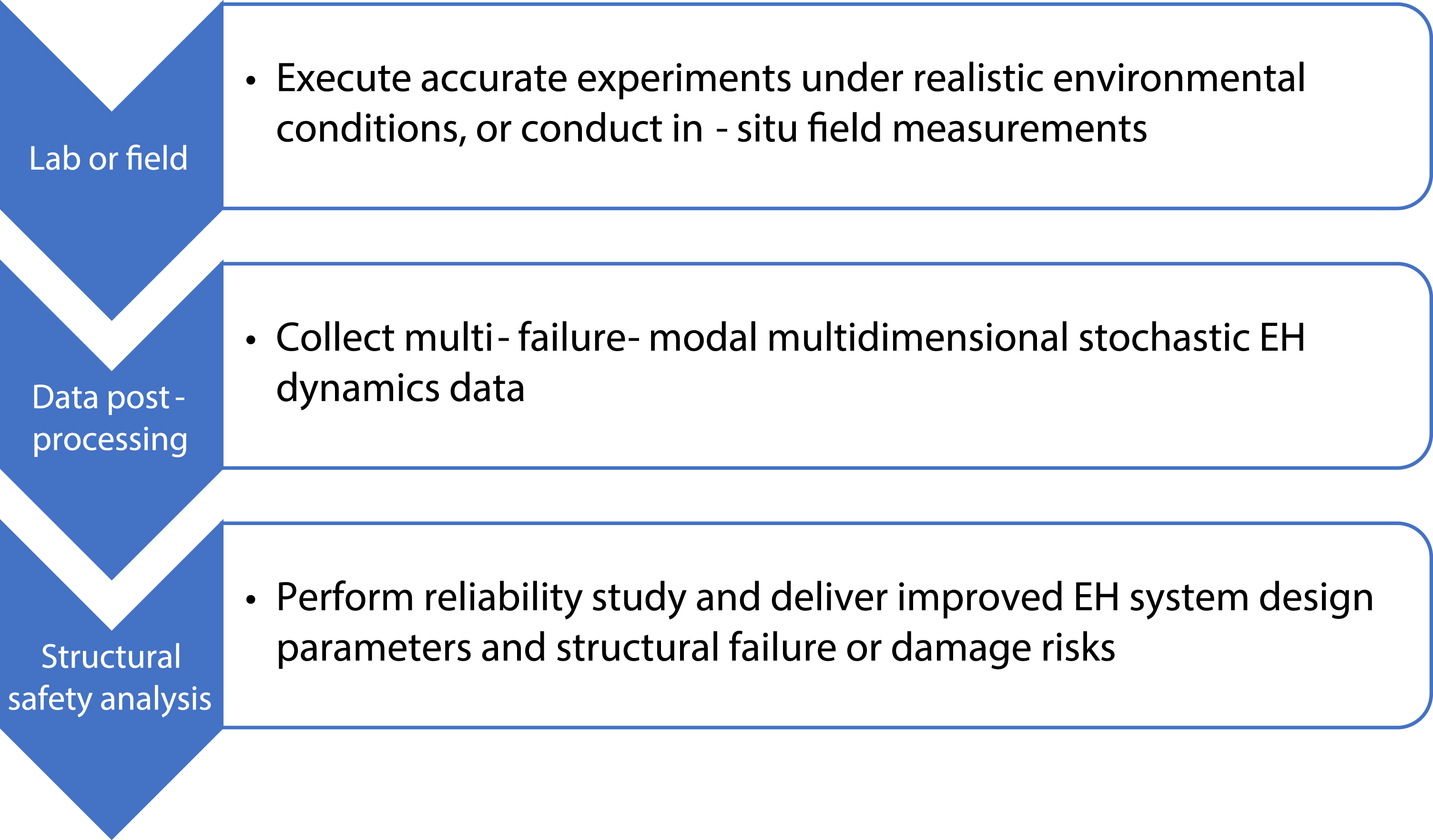
Application to multi-dimensional dynamic control
The failure of a building typically occurs typically due to its incapacity to fulfill specified functional requirements. Structural failure is a comprehensive concept that includes various phenomena, such as loss of stability, elevated reaction levels in displacements, velocities, accelerations, and plastic deformations or fractures caused by overload or fatigue. The consequences of different types of failures also differ substantially. The malfunction of a single sub-component does not necessarily imply that the entire structure becomes incapable of withstanding the applied loads. A sudden loss of stability frequently leads to a complete and catastrophic structural failure. Failure may stem from a convoluted sequence of detrimental events, potentially caused by a combination of unlikely external or human-induced acts and internal deficiencies. Control approaches are often based on the minimization of objective functions (or loss functions), which differ in character depending on the specific control algorithm employed. Loss functions are frequently expressed in terms of the costs associated with response and control mechanisms. Structural dependability criteria and the associated costs of structural failure are rarely explicitly addressed. The failure of a structural multidimensional system can be clearly defined as comparable to the objective function, serving as input for real-time control algorithms, which are categorized as either online or pre-calibrated. 28
Research gap
The research gap can be succinctly delineated as follows: Recent years have witnessed substantial advancements in data-driven artificial intelligence methodologies addressing uncertainty quantification. 29 ; physics-based frameworks for multi-failure-mode system reliability and optimal design, both at the sample level and at the probability density level. 30 ; approaches that integrate uncertainty quantification with increasingly refined deterministic models and rich monitoring datasets. 31 Those above-mentioned approaches are however mostly suitable for numerical MCS models, where multivariate system dynamics can be simulated in a certain way, thus improving underlying data sample. Current reliability approaches, with the exception of those based on Monte Carlo simulations, are constrained in dimensionality, specifically NDOF ≤ 2D. When only a single data sample is available, it is infeasible to employ widely-used Monte Carlo techniques, such as significance sampling, because the underlying dataset cannot be resampled. In the latter scenario, the proposed multivariate dependability approach offered the designer a robust and unparalleled solution.
Method
This Section introduces the novel Life Time Distribution (i.e., LTD) estimation approach for complex environmental dynamic systems, prone to multiple failure or damage modes during planned service duration. Consecutive time-lapses between component-wise maxima indicate crossing threshold, are denoted as 
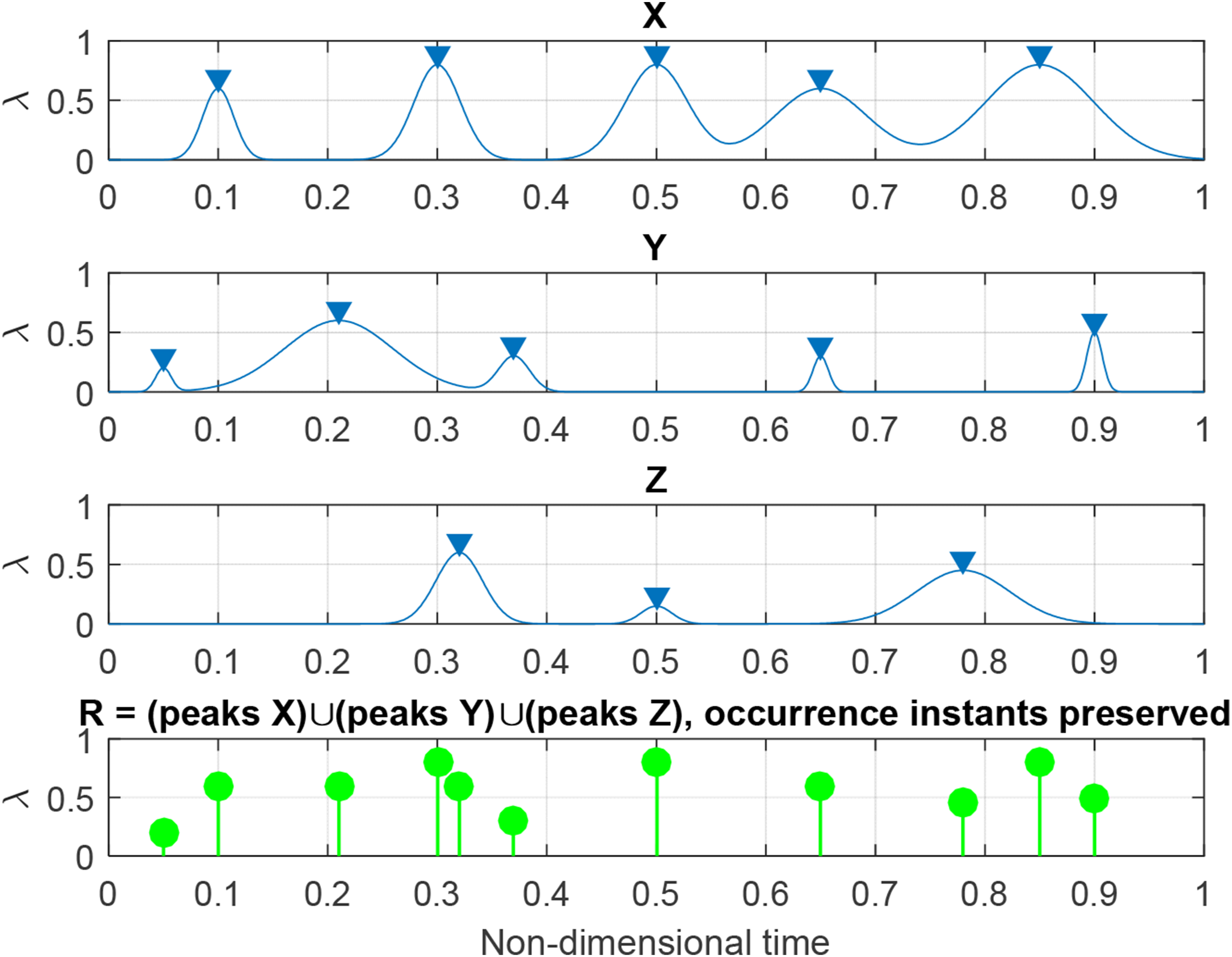
Complex dynamic system’s reliability can be assessing either by employing e.g., enough measurement data or by carrying out extensive direct Monte Carlo Simulations (MCS).19,20,39–45 The cost of computation and experimentation may be practically prohibitive for many complex dynamic energy systems. In the following LTD evaluation method for EH systems will be outlined, which enables the reduction of measurement and MCS costs at the design stage. Taking into consideration EH structural dynamic Multi-Degree Of Freedom (i.e., MDOF) load (or response) system vector: Illustration of 3 component-processes X, Y, Z combined to form the synthetic nondimensional vector R.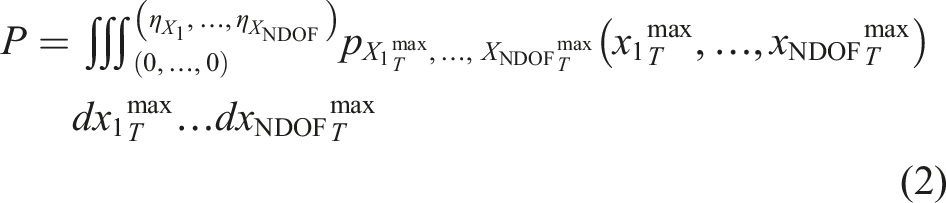


The lifetime RV 

holding 


Note that for multifaceted series-type system its failure is determined by a first passage event, and every parallel-type system can be equivalently restructured as a series-type system.
Results
Piezoelectric EHs scavenge energy from low windspeeds as EH efficiency may dramatically decline as the windspeed hits more significant levels. Therefore, since the stopper would lessen the substantial vibration amplitude that high wind creates, it can be added to EH prototype to avoid damage when windspeeds exceeds a certain threshold. The following equation was utilized to compute the aerodynamic force, which acts on GPEH bluff body, utilizing recorded output voltage 
Equation (10) contains experimental setup parameters:
Measured windspeed PDF frequently follows a Weibull-type PDF with the following shape.
11
Left: measured output voltage V versus synchronous total horizontal force
90
Right: non-dimensional scaled synthetic system’s vector 
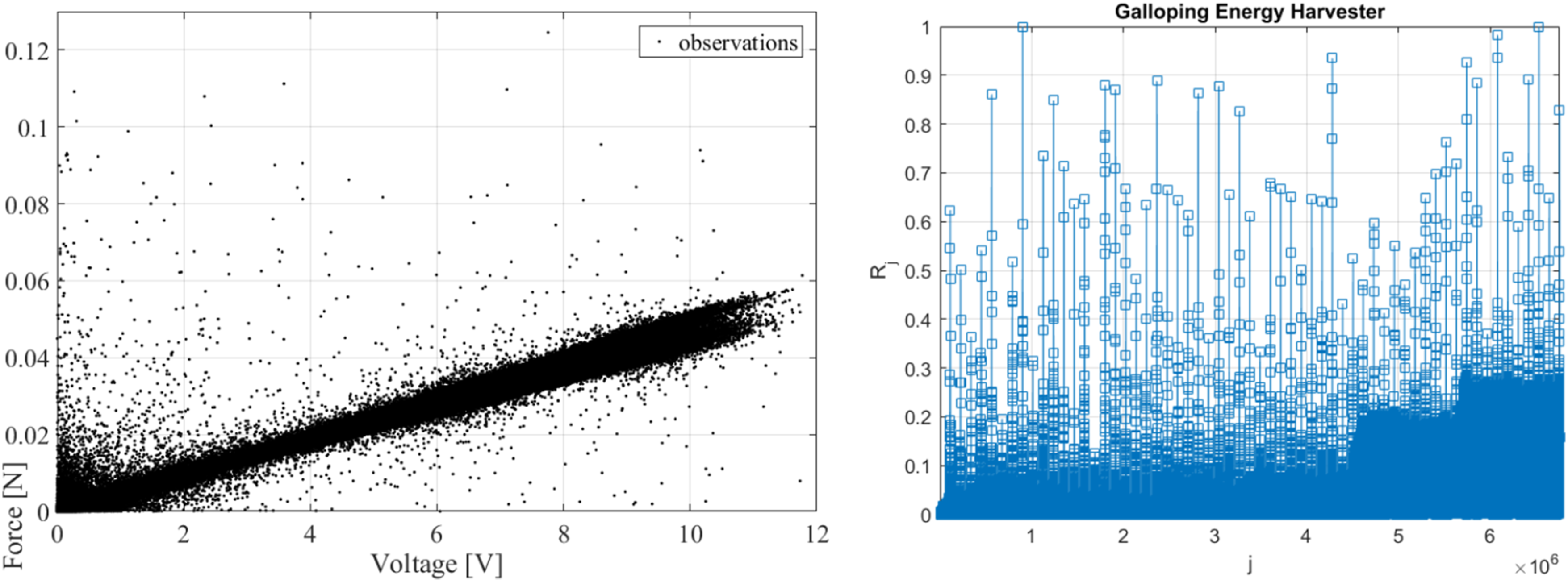
Figure 5 left presents the expected EH system LTD Left: Finding an expected LTD 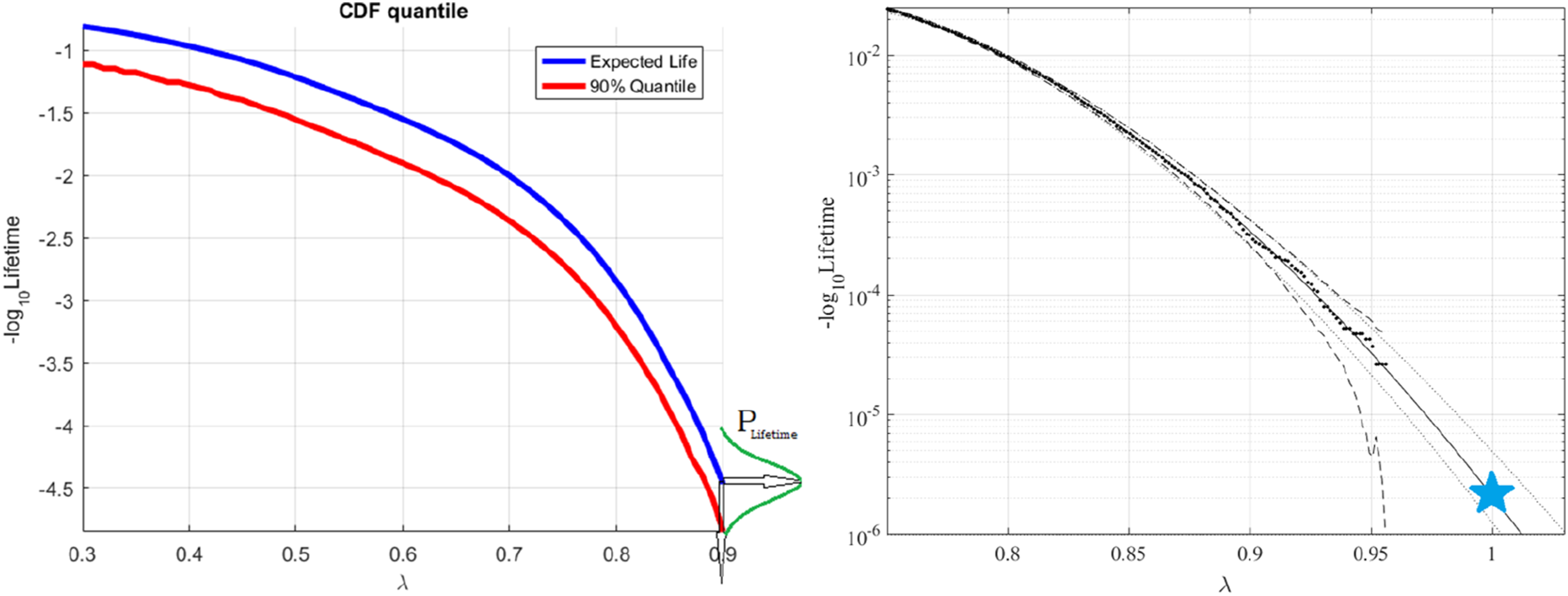
Discussion
Advantages of presented multi-modal risk assessment approach.
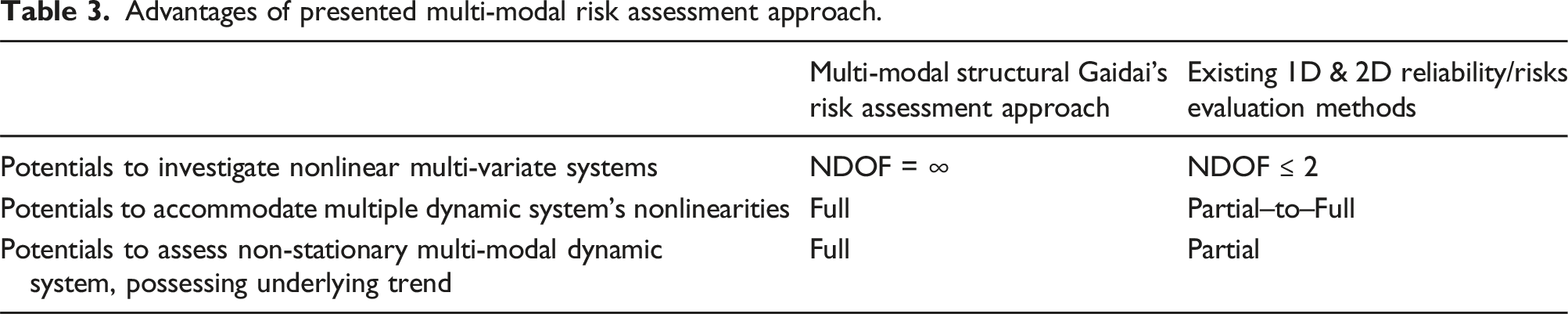
A potential limitation of presented multivariate reliability method is its reliance on dynamic system joint quasi-stationarity presumption. For non-stationary dynamic systems with underlying multidimensional trends, system trends should be first identified, prior to the advocated reliability methodology being applied. Future studies will include temporally-varying components critical (e.g., damage or failure) thresholds
Advocated multimodal reliability methodology can assist in devising dynamic control systems, aiming at the reduction of damage or failure risks.
Presented reliability methodology is mathematically exact, i.e., synthetic vector
Conclusions
Existing reliability approaches lack the capacity to handle high-dimensional systems, given nonlinear inter-correlations between the system’s parts (components). The capacity to assess LTD for non-linear, high dimensional dynamic systems constitutes major strength of the presented state-of-the-art multivariate reliability method. The current study investigated nonlinear EH dynamic behaviour under realistic windspeed conditions. LTD throughout EH’s specified design lifespan was predicted, utilizing a novel multivariate reliability approach. The theoretical basis of the proposed strategy was extensively analysed. Dynamic EH systems are complex and often highly dimensional, necessitating the development of new, accurate, yet reliable methods, utilizing efficiently even limited underlying datasets. Extensive direct MCS, as well as lab./field measurements, are often unaffordable. The novel multivariate reliability method, advocated in this work has already shown to be efficient, if applied to a wide range of dynamic structural systems – forecasts that were made had been overall quite accurate. Primary objective of this case study was to create a generic high-dimensional EH system’s reliability approach that is multivariate, multi-purpose, reliable, yet easy to use. As can be observed, the proposed multivariate reliability methodology generated reasonably narrow CIs. As the example of measured structural EH response in this case study has shown – it is well feasible to forecast LTD of complex EH systems, thus improving their sustainability at the design stage. Regarding further research direction, authors have previously applied modification of presented method to mixed system types, where failure is defined not by crossing 1D threshold by one of critical components, but by out-crossing failure hypersurface in multidimensional space.108,109
Results verification
Even though full scale measured data does not require verification, the applied statistical analysis does. I. Data-based verification: the underlying dataset was reduced 10-fold by retaining only each 10th consecutive data-point within multidimensional timeseries dataset. Forecasts, based on the reduced dataset was found to lie within 95% CI, estimated from the full dataset. II. Method-based verification: for reduced dimensionality, i.e., for 2D system, forecast, based on the proposed multidimensional methodology was compared with Gumbel Logistic copula-based method, found to lie within 95% CI, estimated from the full dataset.
Footnotes
Declaration of conflicting interests
The authors declared no potential conflicts of interest with respect to the research, authorship, and/or publication of this article.
Funding
The authors received no financial support for the research, authorship, and/or publication of this article.
Data Availability Statement
Availability of data & material–measured data will be made available on request from the corresponding author. For source code see https://github.com/OlegGaidai/ (MATLAB code) and  (R programming language).