



Abstract
Enlightened by Van Dijk’s Context Model Theory and Wodak’s Discourse-Historical Approach, this article puts forward the Discourse-Historical-Contextual Approach as the analytical framework for the study of the recontextualization and transformation processes involved in media discourse. It is then applied to the analysis of the First-Instance Judgment of the Peng Yu Case. Through exploring the relevant context models, the article examines why a text is interpreted differently when it is circulated in different contexts. The study also reveals, by investigating the traces of previous texts in subsequent texts, how intertextuality is formed as well as how specific transformations are used in the processes. It is hoped that this study will provide some insights into the understanding of recontextualization and transformation processes in media discourse.
Keywords
Introduction
Ever since Kristeva’s coinage of ‘intertextuality’, this concept has received widespread attention from sociocultural linguists and discourse scholars. 1 It is a useful notion in studying contested issues for it emphasizes the connections across multiple discursive encounters. Recontextualization and transformation can be regarded as two important processes involved in the productive mechanism of intertextuality (Wu, 2010, 2012a, 2012b).
Recontextualization is a notion first developed by Bernstein (1990, 1996) in his study on pedagogy. It refers to a process in which texts, signs, or meanings are extracted from one social practice and introduced into another. It is a dynamic transfer-and-transformation of something from one discourse/text-in-context to another (Linell, 1998). Broad as it is, it can be applied to the study of the shifts of meanings either within one genre or across semiotic dimensions. Therefore, recontextualization is not a concept confined to pedagogy. As a matter of fact, it is widely used in business management, social science, and linguistics. 2 Despite the various definitions of recontextualization, this study adopts the one proposed by Linell, Fairclough and Wodak, and so on (see Fairclough, 1992, 2003, 2004; Linell, 1998; Wodak, 2000), which refers to the relocation of discourse elements from their original context/practice and their appropriation in new context/practice.
Transformation is a concept widely applied in a variety of disciplines, such as mathematics, linguistics, computing, and law theory. The meanings of this notion in these disciplines differ significantly from each other. In a broad sense, we can regard it as restructuring of ‘orders of discourse’, which further brings about relations shifting among different networks of social practice. In this study, inspired by Wodak (2000) and Fairclough (2004), we define transformation as tangible linguistic changes when one discourse is converting from one social practice to another.
A preliminary study of recontextualization and transformation shows that these two notions have been applied to the study of meaning shifts of discourse when the original meaning travels from one context to another. Previous scholars carried out relevant studies in terms of different discourses, such as family discourse, political discourse, and legal discourse. But the importance of the recontextualization and transformation processes involved in other discourses was unfortunately underestimated. Besides, it is easily recognizable that few studies focus on media discourse. Thus, a systemic analysis of the recontextualization and transformation in media discourse can contribute to an intensive understanding of the processes.
The famous Peng Yu Case which took place in 2006 was once regarded as the hallmark of the ‘Deterioration of Chinese Morals’ after it had been reported. Peng Yu, who sent an old injured lady named Xu to the hospital after he got off the bus, was later identified as the man who knocked her down. He was then found guilty by the judge of the court. However, Peng claimed himself innocent. After this incident was reported, the majority of the public was keen on calling upon justice for Peng Yu, blaming the judge and the plaintiff of the case. Since then, ‘similar’ cases, where people helped those who were in need but were then framed and blackmailed, were referenced back to the ‘Peng Yu Case’ and even entitled ‘Peng Yu Case in Some Place’. However, early in 2012, a surprising shift in the case occurred. Peng Yu, who was the defendant of the case, admitted that he had indeed collided with the plaintiff and thus the original judgment in 2006 turned out to be reasonable. With the First-Instance Judgment being reiterated in news reports, TV shows, and commentaries of the public, the statements of reasons for the court’s decision were in on-going processes of recontextualization and transformation. Apparently, these reasons acquired negative meanings and absurd connotations through these processes and misled the public, but finally regained their original meaning after Peng’s confession. This dramatic fluctuating story makes its circulating materials the perfect data for this study.
In this study, altogether four types of materials are collected as the data. They are legal judgments, news reports from newspapers, TV programs, and online commentaries. Mainly featured by qualitative analysis, this study begins with research on the context models in which the data were produced. Then the intertextual and interdiscursive relationships among them are investigated extensively, followed by a close study on the specific transformations the judgment went through in the recontextualization processes. With such a thorough analysis on how recontextualization processes are involved in the transformation of meanings in media discourse, this study is of great importance both for its enlightenment on recontextualization and transformation patterns of discourse and for its guiding significance in improving readers’ critical awareness.
Theoretical background
Van Dijk (2008, 2009) proposes a sociocognitive context model in contrast to the view that context is regarded as stable, objective, and independent factors of a situation, such as gender, class, or other social conditions. He argues (2008: 4) that it is the way participants define a situation rather than the social situation itself that influences (or is influenced by) the discourse. Context models are the interface among society, situation, and discourse. Van Dijk (2008: 76) argues that setting, participants (Self, Others), communicative, and other actions/events should be included in a simple context model schema. To be more specific, setting means time/period, space/place/environment, and participants include communicative roles, social roles types, membership or identities, relationships among participants, shared knowledge and beliefs, intentions and goals, and so on. The contexts of the First-Instance Judgment of the Peng Yu Case change greatly, ranging from court documents to online commentaries. Thus, we will first discuss the transformation of the context models in the process of recontextualization on the basis of Van Dijk’s context model.
The Discourse-Historical Approach (DHA) centers on political issues and seeks to integrate as many of the genres of discourse referring to a particular issue as possible, as well as the historical dimension of that issue (Van Leeuwen and Wodak, 1999). It is precisely through the integration of all available information on the historical background, the original sources, and the exploration of the diachronic change of certain types and genres of discourse that the historical dimension of the social events is addressed. According to Van Leeuwen and Wodak (1999), three key dimensions are included in this approach: the content of the data, the discursive strategies employed, and the linguistic realization of these contents and strategies. The feature of the greatest salience is the interdisciplinarity. The DHA tries to establish the connection between the linguistic system and the social structure. As Wodak (2001) argues, endeavors to work interdisciplinarily, multimethodically, and on the basis of a variety of different empirical data, including background information, contribute to the relatively objective understanding of the research issue. With this in mind, Wodak (2001) proposes a three-step analytical framework for this approach. Step 1 is establishing the specific contents or topics of a particular discourse. In Step 2, analysts are supposed to unveil the inner and complicated interdiscursive and intertextual relationships. In other words, the relationship between discourses and texts will be explored. With respect to the third step, discourse-historical analysts are expected to examine linguistic means, namely, genres and texts, by analyzing how the linguistic strategies and rhetorical devices are used. In the process of recontextualization of the First-Instance Judgment of the Peng Yu Case, intertextual and interdiscursive strategies, which are realized by specific linguistic forms, appear to be essential and can thus be analyzed through the DHA.
As mentioned earlier, recontextualization and transformation are deeply involved in the productive process of intertextuality and interdiscursivity. Here, the term ‘interdiscursivity’ was coined by Fairclough at the beginning of the 1990s when he accounted for the more overarching concept of ‘intertextuality’. He defined intertextuality in the following way: ‘the property texts have of being full of snatches of other texts, which may be explicitly demarcated or merged in, and which the text may assimilate, contradict, ironically echo, and so forth’ (Fairclough, 1992: 84). When tracing intertextuality back to its origin, we discovered that Kristeva proposed this concept based upon Bakhtin’s heteroglossia. Later on, French discourse analysts Authier-Revuz and Maingueneau classified intertextuality into two categories, namely, ‘manifest intertextuality’ and ‘constitutive intertextuality’. Manifest intertextuality refers to the cases where one text is overtly drawn upon within another through the techniques of discourse representation, presupposition, negation, metadiscourse, and irony. In contrast, constitutive intertextuality refers to the mixture of different discourse conventions such as genres, styles, and discourse types. In order to emphasize that the focus is on discourse conventions rather than other texts as constitutive, Fairclough proposed the new term ‘interdiscursivity’ to replace ‘constitutive intertextuality’. According to Fairclough (1992: 124), the principle of interdiscursivity applies at various levels: the societal order of discourse, the institutional order of discourse, the discourse types, and even the elements that constitute discourse types. In the same vein, this principle also takes effect on the data that will be discussed below.
The Discourse-Historical-Contextual Approach
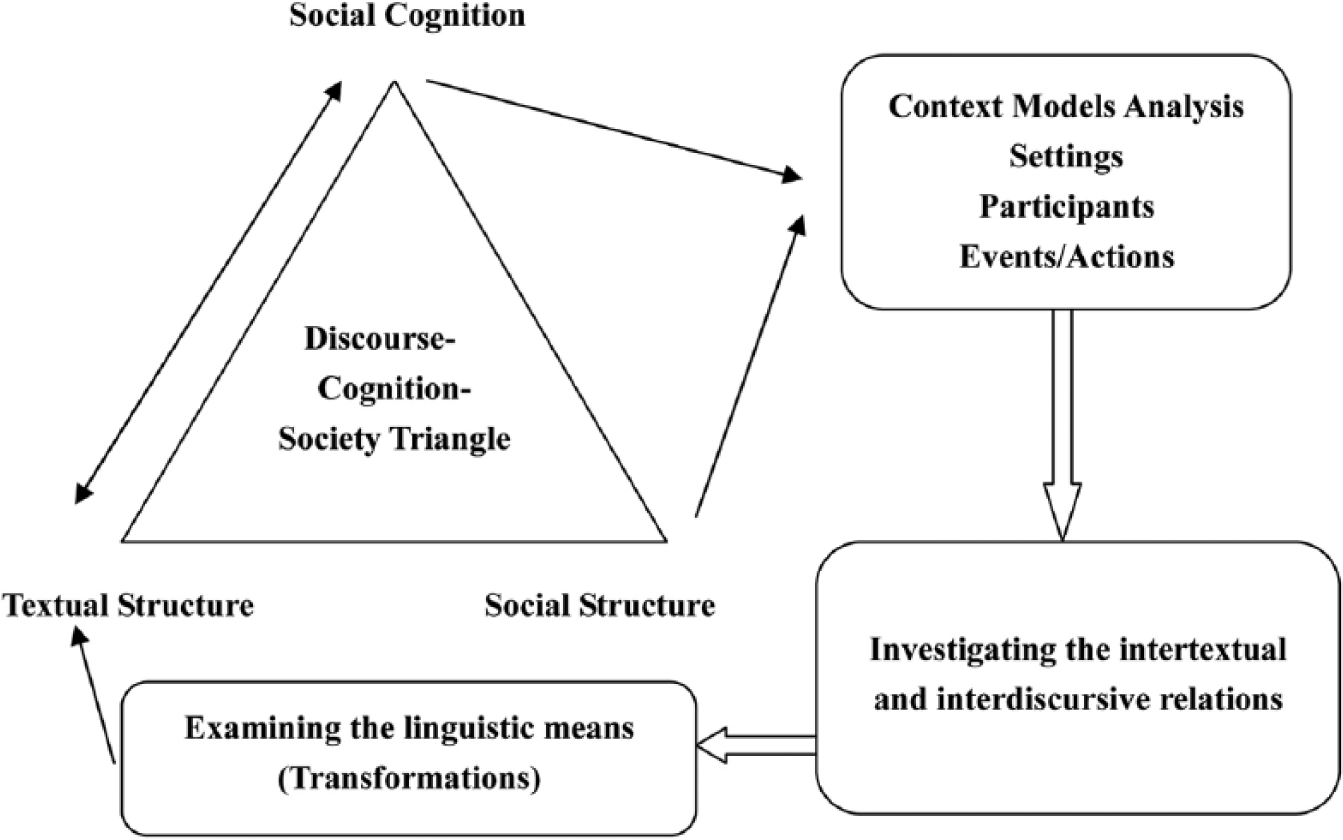
Based on the aforementioned theories, and taking into account their fitness for this study, we make an integration of them and propose the following Discourse-Historical-Contextual Approach (Figure 1).
Discourse-Historical-Contextual Approach.
As we can see, there are three dimensions in this discourse–cognition–society triangle. Discourse here includes all the semiotic elements of communicative events. Cognition, according to Van Dijk (2001: 98), includes both personal and social cognition. Factors such as personal and social beliefs, goals, evaluations, and emotions should be taken into account in cognition analysis. Society in this case includes both local and situational interactions among participants and broader or global structures of the society. In fact, the analysis of cognitive and social dimensions can be regarded as providing local and global contexts of the relevant discourse. And these contexts are vital in the understanding of discourse.
In this study, we will begin with the analysis of the context models of each data, through which an interface between the general cognitive structure and social structure of the Peng Yu Case is constructed. Then we will come to the intertextual and interdiscursive analysis, where genres, styles, texts, and the corresponding topics of the data will be studied to investigate the interdiscursive and intertextual web formed in the data. Finally, the transformations the First-Instance Judgment undergoes will be explored explicitly so as to examine the linguistic means. Transformations such as addition, deletion, abstraction, rearrangement, and falsifications shown in the data will be investigated in this dimension.
Context models of the recontextualization process
When Van Dijk (2008: 104) analyzed the discourse production process of news reports, he included the following elements in a provisional context model of a journalist: the current setting, relevant equipment, communicative and social identities and relations, general sociocultural knowledge, as well as context knowledge, professional knowledge, ideologies, communicative intentions, emotions, and so on. Apparently, the above items cover most of the contextual elements when a journalist compiles a news report. In this study, we will analyze the context models (mainly in terms of production) stimulated in the process in which the First-Instance Judgment of the Peng Yu Case was recontextualized in the news reports, TV programs, and commentaries.
Stimulated context model of the First-Instance Judgment
To better stress the important aspects of the context models, we present Figure 2.

Context model of the judge.
The big rectangle illustrates the judge’s context model simulated when he wrote the judgment of the case. It is most likely that he compiled the judgment on 2 September 2007, in his office at the court. When he did so, he had more or less the potential readers in mind. However, the status between a judge and the involved people was different. The judge had power over the ordinary people because the decision of the former had direct influence on the latter, which explains why the judge didn’t need to make every step of the judgment clear to the public. He could routinely follow the basic procedures of compiling a judgment. In this case, the specific elements are the evidence of the case and the communicative goals, for example, the testimonies from different parties, the evidence collected, and the damage test report from the hospital. Meanwhile, what are invariant are the social and communicative roles the judge plays and the professional knowledge and beliefs he shares with other legal professions. With the processing of this context model, the judge wrote the First-Instance Judgment of the Peng Yu Case.
Context models control all situationally variable structures of text and talk: sound structures (intonation, pitch, speed, etc.), syntax, lexical selection, and more in general style, register, and rhetoric, that is, the way in which things are said, rather than only what is being said (Van Dijk, 2008: 101). As the judge represents the authority and has higher status over the readers, the style of the judgment tends to be formal. Besides, this context model controls the register of the judgment. Since the judge is equipped with professional knowledge, during the actual production, the context model controls the text to be written in the register of law.
Stimulated context model of the reporter from the Southern Metropolitan Daily
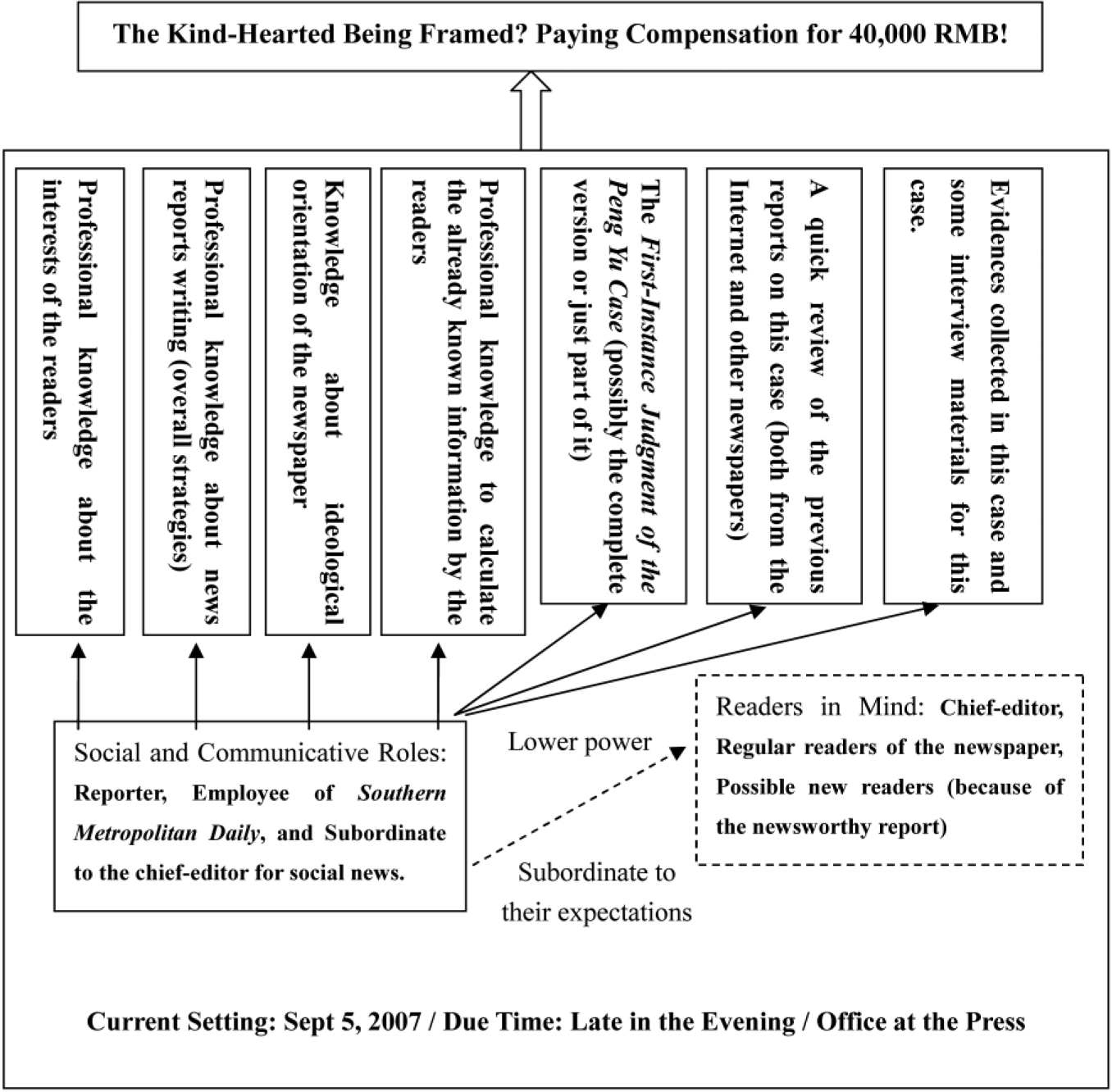
By the time the judge pronounced the judgment of the Peng Yu Case, a great many newspapers were writing follow-up reports on this event, including the Southern Metropolitan Daily. At that time, the public was lured into believing that Peng Yu helped the old lady when she fell down, but instead of being rewarded, he was framed and taken advantage of by the old lady. Thus, the judgment was totally contrary to the public’s expectations. Presumably, the reporter would have the following context model (see Figure 3) when he started to interpret the judgment of this case and then wrote the news report on it.
Context model of the reporter in Southern Metropolitan Daily.
In this context model, the social and communicative roles of the subject were the reporter, an employee of the Southern Metropolitan Daily, as well as the subordinate to the chief editor for social news. When the reporter was writing the news report, it is assumed he kept in mind the interests of the editor and the readers. Like the routine part of the judge’s context model, all the possible ingredients of the professional knowledge of a reporter are in place before the writing process of a news report. The reporter only needs to activate this partial context model and update it with the case-specific knowledge about the event to be reported. This specific knowledge is unique to different context models in which events are reported. As mentioned earlier, the case had attracted a great deal of attention ever since it was reported on the Internet. Due to lack of time, it is very likely that the reporter didn’t go through the whole text of the judgment; instead, he might have just read small parts from it or from other news reports. The reporter had all these in the context models when he compiled the report.
Thus, the reporter had the cross-event knowledge as well as event-specific knowledge in his context model when he started writing the news report. In the writing process, he constantly applied a number of professional norms and values (cross-event) to calculate the newsworthiness of each aspect of the event being reported and decided which aspect to report, since for a journalist, the general norm is only to tell what is deemed to be unknown to the readers and newsworthy to the press (Van Dijk, 2008). Controlled by the processes involved in the context model, the reporter wrote the headline, byline, lead, and the body part of the report.
Stimulated context model of the TV presenter
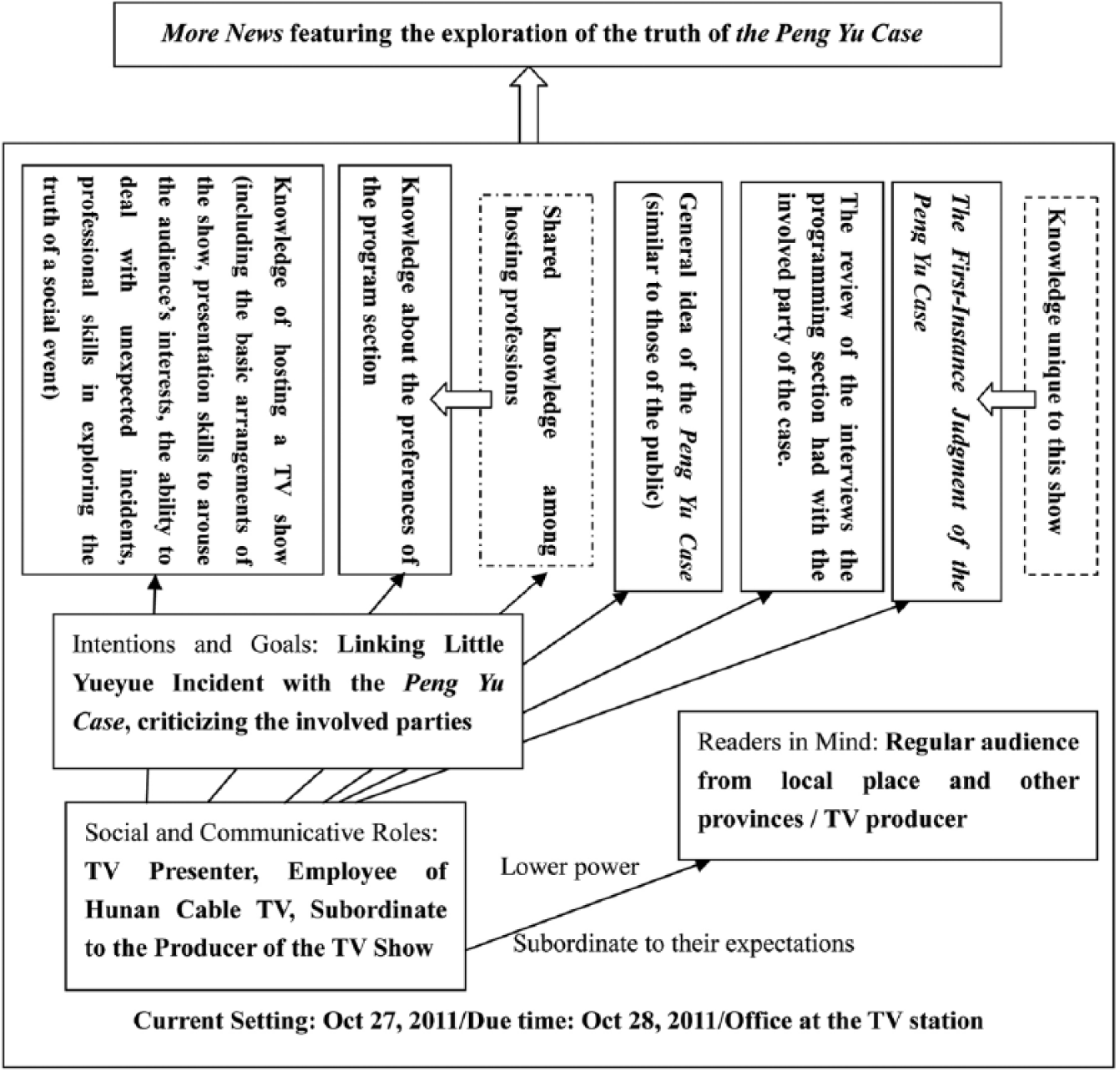
On 13 October 2011, in Foshan, a two-year-old toddler, Wang Yue (nicknamed ‘Yueyue’) was hit by a vehicle. But the hit-and-run accident was only the introduction to a shocking scenario in which 18 pedestrians ignored the injured child and walked away, before Chen Xiamei, a 57-year-old woman, noticed the child while she was collecting trash, picked Yueyue up and looked for her parents. The chilling video of the incident brought introspection to the whole nation and a wide-ranging discussion started throughout the country. In general, the public blamed the cold indifference of the pedestrians. When it came to the cause of their apathy, quite a few ‘netizens’ linked it to the bad influences of the Peng Yu case. Against such a background, Hunan Cable TV planned a program on the topic of the Peng Yu Case, in which they explored the ‘truth’ about this case. Now let’s explore the possible context model (see Figure 4) in which the presenter of the program prepared the script.
Context model of the TV presenter.
The current setting of the TV presenter involved the time during which the program was produced, which was between 27 and 28 October 2011. The place was most likely the office at the TV station. The social and communicative roles in this context model were the program presenter, an employee of Hunan Cable TV, and the subordinate to the program producer. Major intentions and goals included linking the Little Yueyue Incident with the Peng Yu Case (blaming the relevant parties for the bad influence the case had on the public), attracting a wider audience as well as increasing the brand awareness of the program. In this context model, there was some common knowledge the presenter used for every episode of the program as well as knowledge unique to this episode, while the particular knowledge of this context model comprised the general perception of the Peng Yu Case, the introspection the public had from the Little Yueyue Incident, the interviews the relevant staff had with Zhou, the moderator of the Internet forum in which the case was first reported, and the neighbors of the old lady, as well as the judgment of the case (very possibly just segments of it).
As previously mentioned, context models control how things are said in the current situation. During the process of production, the presenter first edited the content of the discourse and then conveyed it to the audience. The norm of what is deemed to be told is controlled by social and professional ideologies. Under such context model, the presenter also applied professional knowledge while preparing the script of the program. When starting the shooting of the program, she made a somewhat biased interpretation of the judgment. Actually, long before the program was shown, negative perception of the Peng Yu Case existed in the presenter’s mind. The only idea the presenter wanted to express was the huge negative effects the judgment had on the public.
Stimulated context model of the commentator
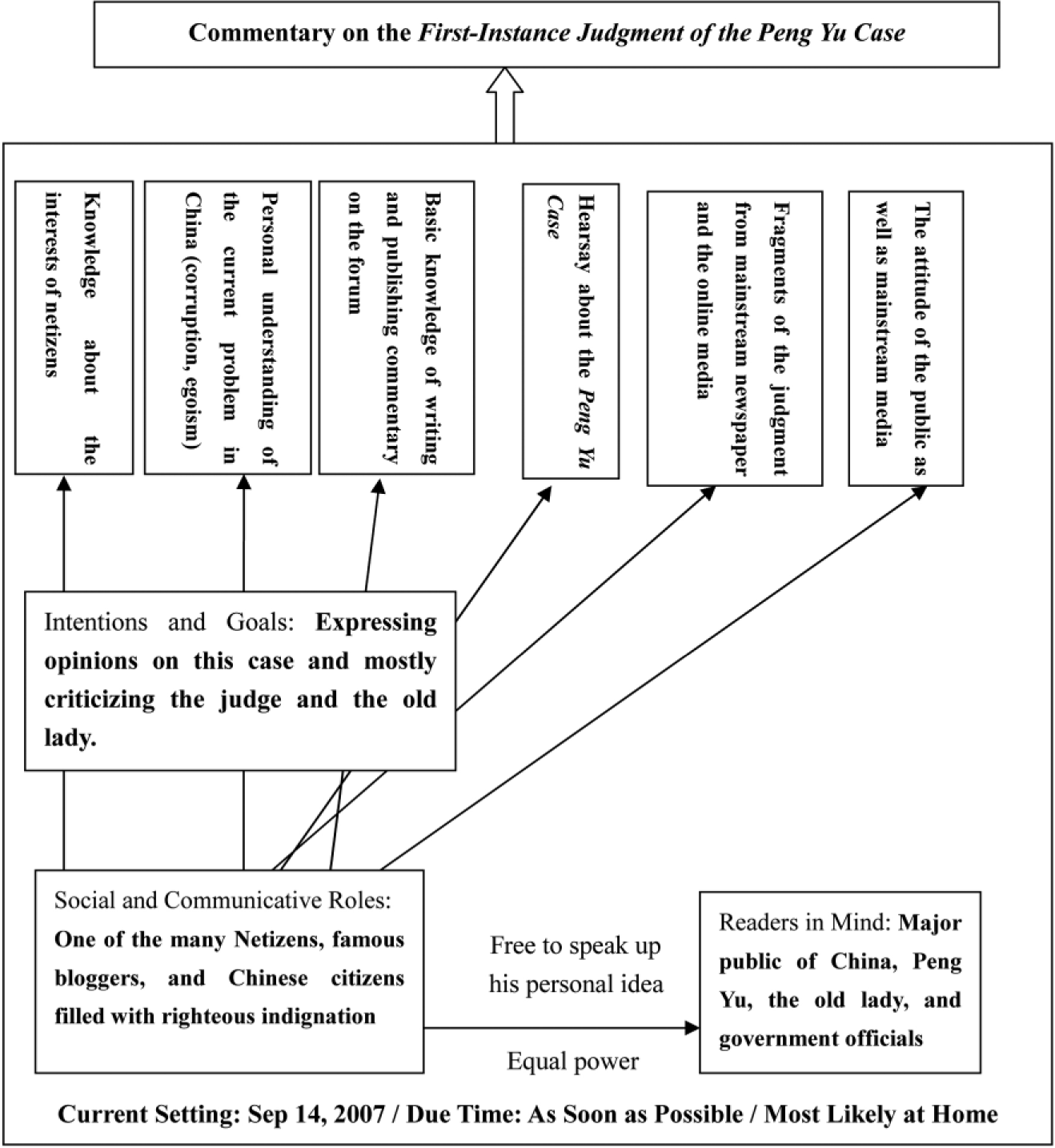
The judgment of the Peng Yu Case attracted not only the attention of the media but also the majority of the public. Ever since the case was first reported in a forum on the Internet, quite a few bloggers and netizens expressed their opinions on this event. The majority of them were busy criticizing the old lady, which means that they had formed their view on the case even before the judgment. Now let’s explore the context model (see Figure 5) in which one of the commentators from the Tianya Community, the most influential Internet community in Mainland China, edited his commentary on the judgment of this case.
Context model of the commentator.
As shown in the context model, the current setting in this case was relatively relaxed, with no specific due time and the commentator’s home being the location. The social and communicative roles of the commentator were netizens, famous bloggers, and Chinese citizens filled with righteous indignation. When he was producing the commentary, he had the potential readers in mind: the public who might be concerned with the development of the case as well as the government officials. This time, the author and the potential readers were more or less of the same status and power. Generally speaking, the purposes for writing commentaries are to criticize or praise the social phenomenon, arouse the public’s attention to something, and call the public to action. In this case, the communicative goals and intentions were to express a personal opinion on this case and criticize the relevant parties involved (the judge and the old lady). Thus, the style of the discourse is casual and represents the personal critical ideology. Within such a context model, the commentator wrote his commentary in which the fragments of the judgment were quoted and interpreted as a whole.
Stimulated context model of the reporters of Liao Wang News Weekly
Early 2012 witnessed a surprising shift of the case owing to Peng Yu’s confession. He admitted that he indeed collided with the old lady and caused her fall. With the sudden change of this case, the media and the public referred back to the judgment of the case. Then the same judgment was quoted and reported in many newspapers quite differently. We are going to explore the context model (see Figure 6) of the reporters who tried to correct their previously mistaken reporting of the case.
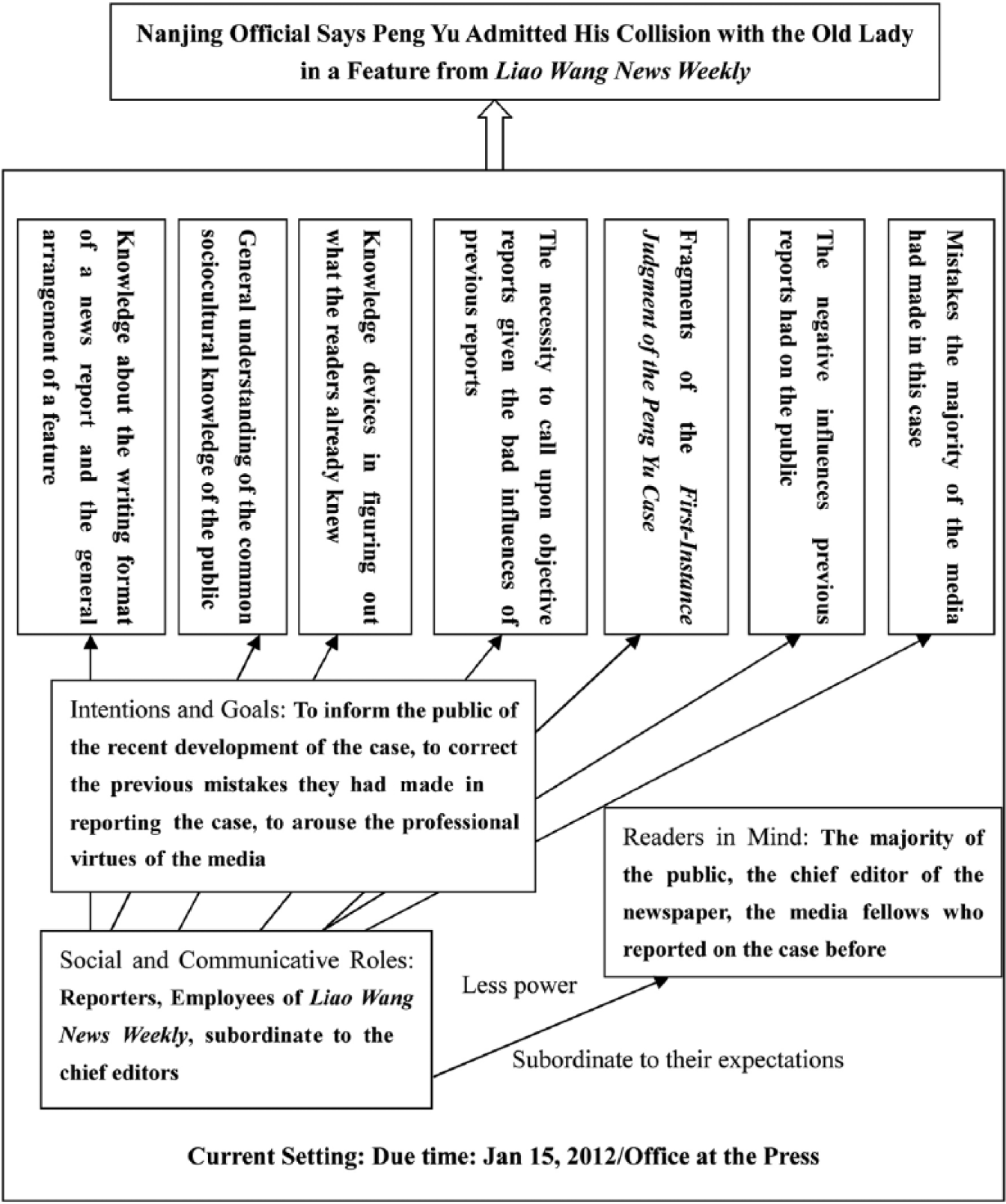
Context model of the reporter in Liao Wang News Weekly.
This article was launched on 16 January 2012, thus we can assume the current time setting of the context model to be a certain point before that timeline. The physical environment of this context model was most likely the offices of the two reporters. Social and communicative roles were more or less similar to those of the previous models, with the co-writers being reporters, employees, and subordinates to their supervisors. Not only did they inform the public of the recent interviews with the Nanjing official, Liu Zhiwei, and Peng Yu’s confession, but they also tried to generalize the mistakes the involved parties (the legal officials, Peng Yu, the old lady, the media, as well as the public) had made throughout the development of the case. The two co-writers of this feature also had professional knowledge on writing an article and they understood the sociocultural orientation of the public and their preferences, which are the cross-event knowledge the reporters have in every context model when they compile an article. Under such a context model, the two reporters began writing this report and the text of the judgment was once again mentioned in the report.
Stimulated context model of the reporter of Inspector Daily
The exclusive news report of Liao Wang News Weekly attracted widespread attention because of the ‘surprising truth’ of the case. This belated truth resulted in the majority of the public rethinking this case. In the commentary of Inspector Daily, the author explored the ways in which media was turned into a way to manipulate the public. Now let’s explore the context model (see Figure 7) in which this commentary was written.

Context model of the commentator in Inspector Daily.
The commentary was published on 18 January 2012 based on the news feature of Liao Wang News Weekly on 16 January, thus the time setting of the commentator’s context model was 17 January 2012 or before. The place setting of the model was very likely an office at the press since the author is a professional commentator of the newspaper. In this model, the communicative and social roles of the subject were commentator, employee of Inspector Daily, as well as a subordinate to the chief editor of the newspaper. The purposes of writing this commentary were to respond to the unexpected turn of events regarding this case, to reflect the mistakes the media had made during the whole process and to propose suggestions for objective reports in the future. There was certain knowledge shared in every piece of commentary writing, for example the knowledge of those formats and styles, the ability to analyze a social problem, and the general understanding of the current society and the shared sociocultural knowledge. There was also knowledge that the commentator needed in particular for this case. Under such a context model, the commentator began to write this commentary in which the judgment was mentioned again but with different meanings.
Thus, the text of the judgment was interpreted and constantly taking on new meanings when it spread. To better understand the process, let’s have a look at Figure 8.
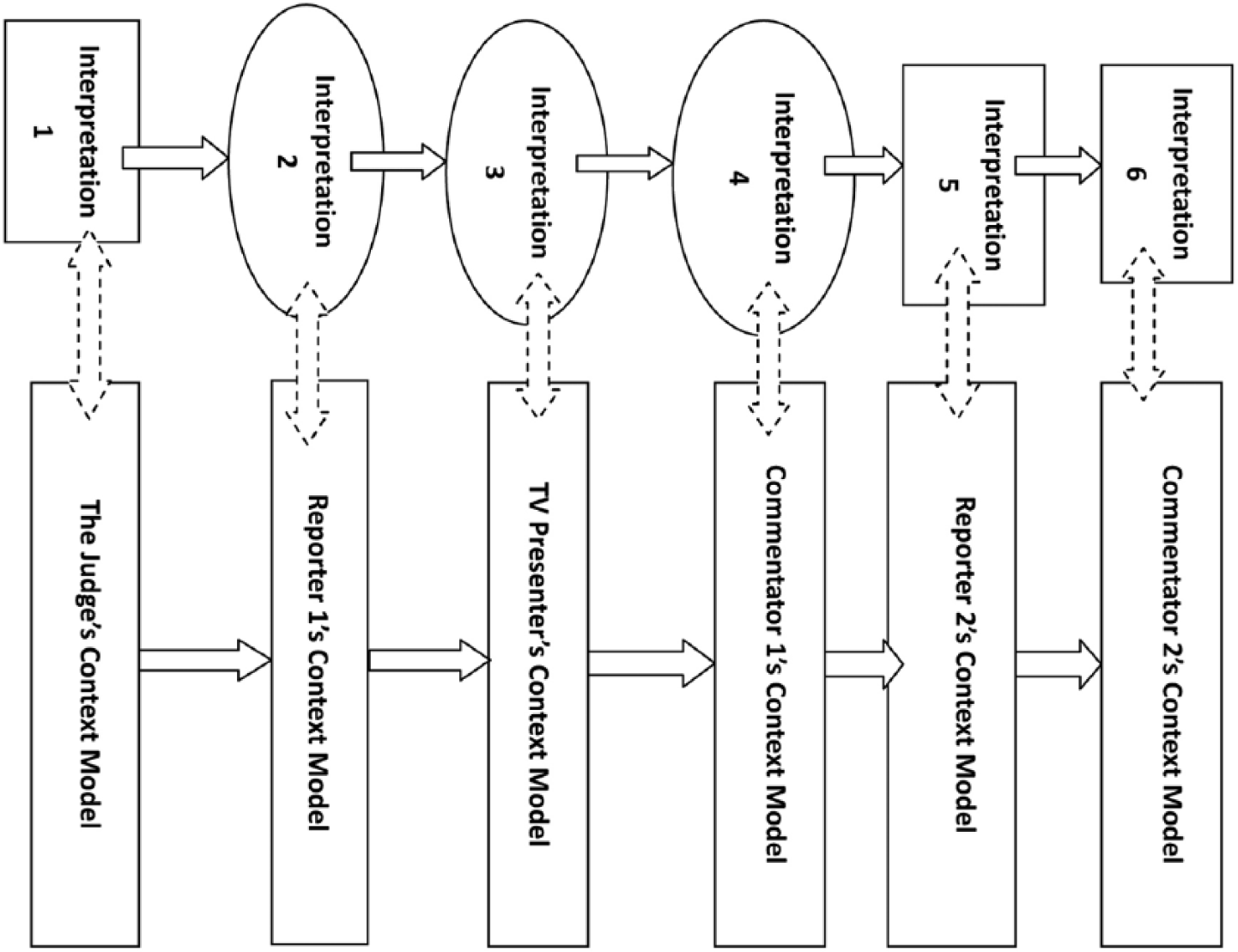
Context models of the recontextualization process.
As can be seen clearly, in the circulation of the judgment, different subjects had different context models although they were, in some way, related to each other. And with the unique context model, unique interpretations of the text arose. The interpretation started with the judge of the case. In his context model, it was reasonable that Peng Yu should compensate the old lady a certain amount of money. However, when the reporter was reading the judgment, he had come up with a different interpretation. And apparently, this interpretation created some effects on the subsequent understanding of the case because many similar interpretations (as indicated in the oval frames) followed afterwards. The interviews with one of the government officers and Peng Yu’s confession constituted a large part of the context model of reporter 2, thus he had a completely different interpretation of the judgment compared to those of reporter 1. Afterwards the judgment was discussed in many news reports and commentaries. But this time, the interpretation was focused on the positive side of the judgment, which was similar with the original interpretation (as indicated in the rectangular frames).
In this way, the First-Instance Judgment went through different context models and gained different interpretations.
Intertextual and interdiscursive analysis of the recontextualization process
The exploration of the context models in which the interpretations of the judgment take place gives us the general idea of the reasons why the meanings of the same text undergo the particular changes through the recontextualization process. To better understand the internal relationships among the data, we need to think about the intertextual and interdiscursive relationships manifested in the recontextualization process, exploring the relationships among discourses, genres, texts, and topics.
Intertextual and interdiscursive relationship web
Enlightened by Wodak’s (2000, 2001) studies on intertextual and interdiscursive relationships, we present Figure 9 to illustrate the complicated interdiscursive and intertextual relationships among the collected data.

Intertextual and interdiscursive relationship web.
As we can see from Figure 9, we categorize the data into three discourses, namely, discourse of the Judgment, discourse about the disputes over the Judgment, and discourse about the truth and reflection of the Peng Yu Case. The interdiscursive relationships here are indicated by the three big overlapping ellipses (note that discourses here are not discourse types, which makes it reasonable to include different genres in one discourse).
Several genres are included to form one discourse, except for the discourse of the Judgment. News reports from the newspapers, TV programs, and informal commentaries posted on the Internet (indicated by the dashed ellipses in the figure) form the discourse of the disputes over the Judgment as well as discourse about the truth of the case.
Under each genre is a solid rectangle, which stands for the texts collected in this study as data. The assignment of texts to each genre is signaled by simple arrows. The dotted arrows between the texts stand for the time axis. As we can see from the figure, the texts are arranged in chronological order here. The special arrows with circle-end here indicate the intertextual relationships among these texts.
Below each text are several solid ellipses. They are the corresponding topics of each text. In contrast to the posted article on the BBS (Bulletin Board System), the First-Instance Judgment contains the following topics: statements of the defendant, the plaintiff, and the witness; main evidence and decisions of the court; grounds of the decision (the fact of the collision between the defendant and the plaintiff; the ineffectiveness of the witness’ testimony; the inappropriate time for the defendant to bring up his theory of doing a good deed; and the motivation for the defendant to pay for the medical bills); and the resolution of the compensation. Topics of the texts in the second discourse are more or less the same. Topics like ‘Peng was wronged’, ‘the court failed to uphold justice’, and ‘negative influence the judgment of the case had on people’s future conduct’ are included in the serial reports from newspaper and TV programs, as well as the commentaries of the public. As shown in the figure, topics of the third discourse partly overlap the first discourse. They are as follows: ‘the fact of collision’, ‘reaction of the public towards the truth’, ‘reflection of mainstream media’, and ‘the devastating effects the whole event has on social morality and social relations among people’.
Note here that the connections among the topics are shown by the dotted arrows. Instead of reporting all the grounds of decision in detail, the media focuses only on one of them (on closer examination, only part of the first reason). Moreover, they pick up topics from the previously posted articles on the BBS and the public’s first impression on the case. Through this vivid illustration, we clearly understand how the mixtures of the grounds of decision from the judgment with other topics from previous Internet articles set the judgment in the marginal position instead of at the center of the report.
After Peng Yu’s confession, journalists traced back to the grounds of the decision in a more intensive way than they did in reporting the judgment before. As we can see from the interdiscursive and intertextual web, the topics of the third discourse greatly echo those of the first discourse, namely, the First-Instance Judgment.
Manifest intertextuality
As mentioned before, manifest intertextuality can be achieved through discourse representation, presupposition, metadiscourse, negation, and irony (Fairclough, 1992: 118). When analyzing the data, we found that discourse representation and presupposition are frequently used in the data. For instance,
1) 昨天, 南京市鼓楼区法院对彭宇案做出了一审判决, 称 Gulou Court in Nanjing made its First-Instance Judgment of the Peng Yu Case yesterday, stating that ‘
The underlined sentence is within quotation marks in the news report, which suggests that it is directly quoted from the judgment itself, with no alteration. This is part of the reason for the judgment in this case, which is obviously a direct discourse representation, forming manifest intertextuality. Right after the introduction of this judgment, the reporter commented his opinion on the judgment of the case. Below is one more example:
2) 无论群情如何激愤, 不管舆论怎么指责, 总之, 彭宇输了!在社会大众的心目中, However angry the public maybe, whatever criticism the court may receive, Peng Yu lost, the one who was
In this commentary, the author used a positive phrase ‘doing boldly what is righteous’ to describe Peng Yu’s actions, presupposing that the verdict against him was not just and he was actually helping the old lady, echoing the majority of the previous texts on this case. Note here that, when put in the position of an attribute, the descriptions are difficult to challenge (Fairclough, 1992: 121). It is exactly through presupposition that the producer of a text manipulates the readers into believing something.
Interdiscursivity
Interdiscursivity can be categorized as blended interdiscursivity, chained interdiscursivity, switched interdiscursivity, and embedded interdiscursivity (see Wu, 2010, 2012a, 2012b). A close observation of the data has shown that blended interdiscursivity is of the greatest salience in this study. Thus, special attention will be paid to this type of interdiscursivity.
Blended interdiscursivity refers to the interdiscursive phenomenon where genres, styles, or discourse types are merged in a more complex and less easily separable way (Wu, 2012b). Typically, different genres and communicative purposes will be integrated in this kind of interdiscursivity. First, let’s focus on the news report from South Metropolitan Daily. Published in this newspaper, theoretically speaking, the genre should be typical news reports. However, when examined, elements of other genres can also be found here. Now let’s have a look at the following example:
3) 两个月前庭审期间坚持‘以后碰到这种事还会出手相助’的彭宇, 在昨天走出法院大门时也没有了当时的坚决, ‘ 此案唯一目击证人陈先生高呼:‘ Peng Yu, who, two months ago, claimed that he would continue helping people in need despite this case, said, ‘ The only witness Mr. Chen roared, ‘
The underlined words came from the defendant and the witness, and they were typical colloquial language. Instead of transforming this informal conversation, the reporter kept the informal style as they were. Note also that the underlined words ‘my friends’ is a direct address, which is frequently used in colloquial language to bring the addressers and addressees together. Thus, the combination of informal conversation style and formal news reporting style makes up the blended interdiscursivity.
As shown clearly, different elements of genres such as judgment, storytelling format, commentary, and news report are combined together in this news report, thereby forming blended interdiscursivity.
Likewise, different intentions can also be found in this news report. On the one hand, the main purpose of this news report was to inform the readers of the latest development of this case; on the other hand, the reporter also tried to influence or, better still, manipulate the readers into believing everything in the news report.
As a matter of fact, different styles are also obviously integrated in this news report. For one thing, the general style of the report was formal with the restricted rules being observed; for another thing, the reporter quoted informal conversation directly from the defendant Peng Yu and the ‘witness’ Mr Chen, contrasting the general style of the report.
In this section, drawing upon Wodak’s (2000, 2001) DHA, we first studied the general intertextual and interdiscursive relationships among the data. Then detailed analysis of manifest intertextuality and interdiscursivity shown in the data was conducted, based upon Fairclough’s (1992) categorizations of this linguistic phenomenon. The analysis shows that the data demonstrate strong intertextual and interdiscursive tendencies in the recontextualization and transformation processes. On the one hand, subsequent texts constantly refer back to previous texts, forming manifest intertextuality; on the other hand, used in an emerging context, subsequent texts are of new registers, styles, and genres, forming interdiscursivity.
Transformations
Transformations have been categorized into several types by scholars such as Fairclough (1992, 2003), Van Leeuwen and Wodak (1999), and Wodak (2000, 2001). On the basis of their classifications and detailed observation of the data, we propose the following categorizations of transformations in the recontextualization process: addition, deletion, abstraction, rearrangement, and falsification.
Addition
Fairclough (2003: 139) states that elements such as explanations, legitimations, and evaluations may be added along with ‘what happens’ when one tries to represent an event. More often than not, journalists or any other professional may add these elements to the discourse they are to produce so that it sounds convincing. In this study, addition refers to what is added when the First-Instance Judgment is recontextualized in emerging contexts. Consider the following example:
4) 昨天, 南京市鼓楼区法院对彭宇案做出了一审判决, 称‘彭宇自认, 其是第一个下车的人, 从常理分析, 他与老太太相撞的可能性比较大’。裁定彭宇补偿原告40%的损失, 即45876元, 10日内给付。判决书中还称 Gulou Court in Nanjing made its First-Instance Judgment of the Peng Yu Case yesterday, stating that ‘Peng claimed to be the first one to get off the bus; judging from common sense, he was very likely to have collided with Xu, the plaintiff’. The court decided that Peng Yu should compensate the plaintiff 40% of her loss, i.e. 45876 Yuan, within 10 days. It was also written in the judgment that
The precondition ‘If Peng Yu didn’t collide with the old lady’ doesn’t come from the judgment itself. Instead, it is added by the journalist during his writing of the news report. The added part, together with the subsequent reasoning, serves as a de-legitimization device in this report. According to Van Leeuwen and Wodak (1999), legitimization/de-legitimization is an important part of additions. It answers the questions why or why not social practice or parts must be the way they are. More often than not, they are not intrinsic to the practice. They often serve to construct new social practices, to transform, justify, or perpetuate the existing practice. With this addition, the grounds of the court’s decision have been transformed into this: the court believes that under any circumstance, there would have been no need for Peng Yu to accompany the plaintiff to the hospital. Clearly, the absurd inferences contribute to the de-legitimization of the judgment. And with all these transformations, the ground becomes inconclusive.
Deletion
As Wodak (2000) argues, no representation of any social practice can represent all there is to be represented. When speakers/writers start their representation of a social event, they have to make choices on what to include and what to exclude. Thus, deletion is a frequently used transformation in the circulation of discourse. In the recontextualization process of the judgment of the Peng Yu case, deletion has been used by the journalists, the TV presenter, as well as the public. Now let’s have a look at the following example:
5) 9月3日, 鼓楼区法院做出一审判决, 认定原、被告相撞事实, 其主要理由: On September 3, the court of Gulou District made its judgment, maintaining that the defendant and the plaintiff did collide with each other. The major reasons for the judgment were:
Contrasting the above example with the judgment of the case, we will find that the journalist traces back to the reasons for the judgment. He mentions most of the statements of the reasons in the judgment, let’s say three out of four. The fourth reason which is one of the most controversial statements in the judgment was missing, where Peng Yu’s money for the plaintiff’s medical condition is identified as advanced payment. It is a statement frequently showing up in the disputes over the judgment. By deleting this contentious statement and keeping the other three, the journalist successfully defends the judgment, making it fair and relatively reasonable.
Abstraction
According to Fairclough (2003: 106), abstraction refers to the degree of generalization. In reporting a social event, the speakers/writers can either report it in a detailed way or describe it in a brief way. In the spread of the Peng Yu Case, none of the writers of the discourses have reported the judgment completely. In other words, all of them have adopted the transformation through abstraction to some degree. Here is a typical example:
6) ——自称搀扶救助一位摔倒的老太太却成被告, 法院‘推理分析’做出判决, 网友号召捐款支持被告
—Aiding bystander was sued by the old lady he helped, the court made its judgment according to ‘rational analysis’, then netizens were calling upon donation for him.
Titles are, by definition, an abstraction of the contents of the news reports. Clearly, the title here sets the tone of the news report, which is against the judgment. The subtitle here makes some references to the reasons for the judgment, that is, ‘rational analysis’. It is a highly abstracted version of the reasons, making deduction the only basis for the court’s decision. The quotation marks here are also worth attention, for it signifies the negative attitude of the journalist toward the judgment. With the combination of the headline and the subtitle, the journalist successfully sets the tone ‘poor Peng Yu being framed’ in this news report. And when readers read the report, they are likely to form the same impression on the case.
Rearrangement
Rearrangement, according to Fairclough (2003: 109), refers to the changes of order in representing social events. Social events can be represented in chronological order or order of importance. They may be first represented in a specific order, and then be retold in a narrative order. Below is one typical example extracted from the transcription of the TV program More News concerning the judgment of the case:
7) 五年过去了,‘彭宇案’依然是悬念重重,彭宇到底是救了人还是撞了人?很多事实都不清楚。而因为法院‘按照常理’的推断, 直至今日, 这场案件的争论, 仍然持续。案件主审法官王浩在一审判决书中写道‘ Presenter: It has been five years since the judgment of the Peng Yu Case was made. But doubts about the judgment are still going on. Did Peng help the old lady or did he collide with her? No one knows the truth. More importantly, the judging principle (judging from common sense) adopted by the judge stirred great disputes. It was written in the judgment that
In this TV program, when the host introduces the judgment she doesn’t represent it in the given order. She picks up the underlined part as the first and the only statement of reasons for the court’s decision. And soon after this arrangement, she adds an evaluation that with this judging logic being implemented, the social morality advocated has been damaged. Thus, through the rearranging transformations of this paragraph, the host expresses her biased opinion of this judgment.
In fact, the rearrangements within the discourses about the disputes over the judgment are very much alike. All the discourse producers change the order of the judgment, picking those of greatest contradiction as the first judging reason. Through these transformations, they can easily have their opinions of the case perceived and accepted by the public.
Falsification
With the popularization of casual media, such as BBS, blogs, and micro blogs, falsification becomes a frequently used device for people to attract the public’s attention. Here, falsification means the writers purposely manipulate the readers into believing certain contents come directly from someone else or some texts, for instance through adding quotation marks. When news is spread on the Internet, this kind of transformation is more likely to be adopted due to the lack of supervision. In fact, even some newspaper and TV programs began to acquire this toxic transformation. Now let’s look at the following example:
8) 判决书称‘从常理分析,彭宇与老太太相撞的可能性比较大。 Moreover, it was written in the judgment that ‘judging from common sense, it was very possible that Peng collided with the old lady;
This example comes from the commentary in Tianya BBS. Contrasting this example with the judgment, we can easily find that the first half of the quotation was from the judgment, while the latter half (the underlined part) was created by the commentator himself. Falsification here also gave the readers the wrong impression that the above sentence was directly from the judgment itself, which caused the misinterpretation on the part of the readers. As shown in the previous example, falsification easily misleads the readers, thus creating misinterpretation among them, and this kind of transformation often changes the meaning of a text in the recontextualization process.
In the ‘Transformations’ section we have discussed five types of transformations adopted in the recontextualization process of the judgment. In general, the examples of each kind are abundant, but they differ in frequency. Table 1 and Figure 10 will provide a clear picture of their distributions in the data.
Transformation distribution in the data.
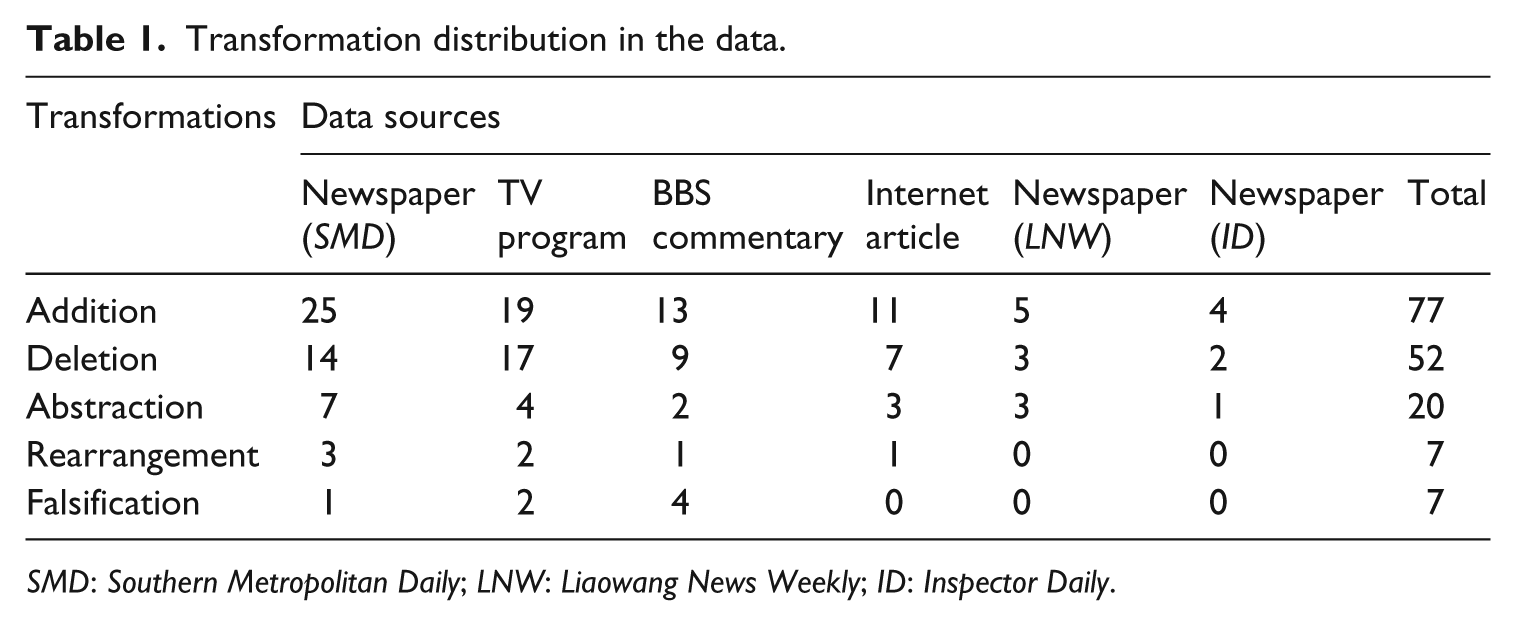
SMD: Southern Metropolitan Daily; LNW: Liaowang News Weekly; ID: Inspector Daily.
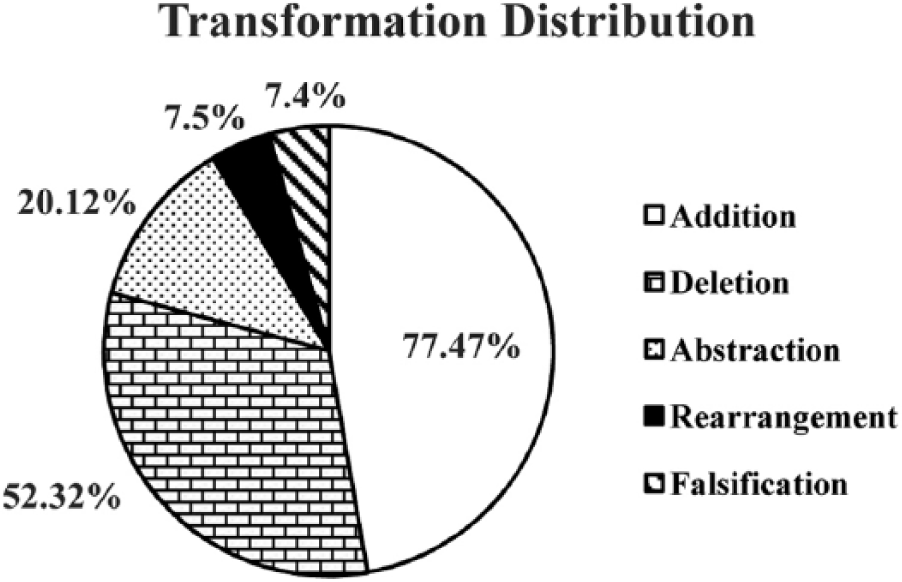
Pie chart of transformation distribution in the data.
As we can see from Table 1 and Figure 10, addition and deletion are, on average, more frequently used in the recontextualization process of the judgment, followed by abstraction and rearrangement. Although falsification is not so frequently used in the process, it should be pointed out that it is very effective when it comes to manipulating addressees and giving them wrong impressions.
Conclusion
This study is an exploration of the recontextualization and transformation processes involved in the First-Instance Judgment of the Peng Yu Case. Enlightened by Van Dijk’s (2008, 2009) Context Model Theory and Wodak’s (2000, 2001) Discourse-Historical Approach, this article puts forward the Discourse-Historical-Contextual Approach as the analytical framework. Through detailed analysis within this framework, major findings can be summarized as follows.
First, the very same judgment went through huge changes in terms of the public’s perception because it was recontextualized in completely different context models. On close examination, we find that what matters most for the context models of this study are social and communicative roles, professional knowledge, contextual knowledge, communicative goals, and intentions. In general, the context models can be divided into three types, with one belonging to the judge, one belonging to those who were previously against the judgment, and one to those who had a new interpretation of the judgment. With the intention of attracting the public’s attention and promoting the influence of the media, reporters distort the judgment and manipulate the public into believing what they report about the case. It is after Peng Yu’s confession that journalists start to re-read the judgment and end up with an interpretation that is different from the previous one. Thus, it is the alteration of the contextual factors that changed the interpretation of the very same text.
Second, through the analysis of the intertextual and interdiscursive relationships among the data, it is found that they can, in a specific sense, be divided into three types: discourse of the judgment, discourse of the criticism of the judgment, and discourse of the clarification of the judgment. Different genres such as judgment, news report, TV program, and commentary, together with the corresponding styles, texts, and topics, are involved in these three discourses. Devices such as quotation, irony, and presupposition are frequently used in this recontextualization process to construct manifest intertextuality between these three types of discourses. For most of the data, traces of blended interdiscursivity formed through mixing these different discourse conventions can be found without much effort.
Third, the First-Instance Judgment of the Peng Yu Case went through many transformations when it was recontextualized in the subsequent discourses. Specific transformations included addition, deletion, abstraction, rearrangement, and falsification, and they were not equally distributed in terms of usage. Specifically, addition and deletion were most frequently used in the data, with text-producers’ intentions to emphasize certain parts of the judgment. Abstraction was also used everywhere due to the discrepancy between the reported discourse and the reporting discourse. Rearrangement, more often than not, was used to better demonstrate the text-producers’ viewpoint. Falsification, though usually used in informal genres such as online commentary, effectively reshaped the original judgment, causing misinterpretations by the readers. These different types of transformations were used by text-producers to adapt the original text to different emerging contexts.
Footnotes
Declaration of conflicting interests
The author(s) declared no potential conflicts of interest with respect to the research, authorship, and/or publication of this article.
Funding
The author(s) disclosed receipt of the following financial support for the research, authorship, and/or publication of this article: This article is one of the research results of (1) the project ‘Analyzing Interdiscursivity in Contemporary Chinese Public Discourse’ (13CYY089) funded by National Grants of Philosophy and Social Sciences of China, and (2) the project ‘Recontextualization and the Transformation of Meanings in Discourse Circulation’ (2015JCRC09) funded by Grants of Chinese Central Universities.