



Abstract
The paper aims at determining the role played by funds from the European Union in the development of renewable energy sources in Poland in the context of European Union cohesion policy. We have derived data from the official European Funds Portal for the size of projects and the financial support obtained from the European Union for the use of a specific renewable energy source. We have analyzed all (928) projects related to hydro- and geothermal energy, biomass (together with biogas), wind, and solar energy implemented in all 16 voivodships (administrative regions of the second order, NUTS 2). It must be mentioned that, in the programming period 2007–2013, the available European Union funds made it possible to obtain the largest support for all investments in renewable energy sources in Poland so far. The total value of the projects co-financed from these funds has amounted to 2 billion euro. Analyzing the value of investments in technologies based on varied renewable energy sources, an evident disproportion in either the size of particular installations or the costs of investments is observed. We demonstrate that large wind farms constitute more than 60% of the total value of investments in renewable sources subsided by the European Union. Small projects have also been subsided, but mainly those related to solar energy. Generally, the wind energy investments are established in northern and western parts of Poland, including Zachodniopomorskie, Pomorskie, Dolnośląskie, and Łódzkie voivodships, while the solar energy investments are found in the eastern and southern parts of Poland.
Introduction
The most important investment policy priorities of Europe 2020 1 include promoting growth, employment, quality of life, and sustainable development. In the context mentioned above, particular attention should be focused on the energy sector. The changes occurring in the energy sector, including the presently observed process of the deregulation and diversification of energy sources and a shift towards renewable sources, are the results of the implementation of the European Union (EU) cohesion policy. The increase in the use of renewable energy sources (RES) not only improves the condition of the environment and strengthens energy independence, but, what is particularly important, it also creates new opportunities for socio-economic development and generates new jobs, thereby contributing to faster convergence of European regions. It is also a response to the principles of the cohesion policy according to which the development of the EU is based on strengthening social and economic cohesion by decreasing disparities in the level of the development of regions and improving their competitiveness.
In this context, it is important that the power industry, as a sector of economy, is a part of national and international policy. Therefore, its development, including energy use of particular RES (water, wind, solar, geothermal, biomass, and biogas), requires policy support, as well as institutional and legislative–financial solutions.2–8 In the context mentioned above, it should be underlined that the range of the production of energy from RES in the Member States is regulated by appropriate documents among which the fundamental one is the Directive of the European Parliament and the Council no. 2009/28/EC. 9 In the Directive, there can be found mandatory national goals concerning the share of energy from RES in the final energy use by 2020 (known as the 20-20-20 targets). At the same time, the energy culture dominating in some area10–14 related to, among others, the structure of RES affects the differentiated level of the use of RES in the world, including the EU states. In Poland, for instance, complicated political and historical past which is reflected in high energy use, the dominance of coal as the main source in the structure of energy production (in the case of Poland it is hard coal—coal culture), as well as centralization of the national energy market and energy dependence from Russia,15,16 are significant barriers in the diversification of energy sources and development of renewable energy. Therefore, the share of RES energy in primary energy in Poland is nearly two times lower than the Union average. 17 Hence, different goals are set for individual EU states, e.g. for Poland, the share of RES in energy production is to amount to 15% by 2020. Moreover, the long-term energy policy in the EU (until 2050) assumes full decarbonization of the energy sector. 18 Taking the above into consideration, the development of renewable energy in Poland requires institutional support as well as applying administrative and financial tools. EU funds are an extremely significant assistance when it comes to the range of the increase of RSE use in Poland.
These financial resources make it possible to provide equal chances not only for states but also for European regions. Thus, they strengthen the social, economic, and territorial cohesion of the entire EU. As Bran et al. 19 underlined, even if the cohesion policy offers opportunities for development of green economy, the success to achieve the cohesion policy objectives is represented by capacity to absorb funds in an effective manner. It should be noted that development of RES has obtained large financial support in the programming period 2007–2013. The funds for RES have been used to implement the Cohesion Policy (Cohesion Policy, European Regional Development Fund) and the Common Agricultural Policy (European Agricultural Fund for Rural Development). In Poland, financial funds for the above-mentioned programs (app. 1 billion euro) have been obtained from 16. Regional Operational Programs (in Polish: Regionalne Programy Operacyjne, RPO), the Operational Program Infrastructure and Environment (in Polish: Program Operacyjny Infrastruktura i Środowisko, POIiŚ), and the Rural Development, EU Program (in Polish: Program Rozwoju Obszarów Wiejskich, PROW), mainly in regard to actions related to the functional diversification of agriculture and rural multifunctional development.
In the context mentioned above, the paper aims at determining the role of EU funds in the development of RES in Poland in the context of the cohesion policy. It seems very significant to point (1) which regions (voivodships in Poland) have obtained the largest support for extending RES, (2) who is the main beneficiary of these investments, and (3) what types of RES have been generally rewarded by the EU.
Materials and methods
In order to achieve the aim, we have derived data from the official European Funds Portal 20 on the size of projects and the size of the financial support obtained from the EU for a particular RES. We have analyzed all (928) projects related to hydro- and geothermal energy, biomass (together with biogas), wind and solar energy implemented in all 16 voivodships (an administrative region of the second order, NUTS 2) in Poland. All projects have been co-financed from 16. RPO and the POIiŚ (state as of 31 December 2014).
Moreover, we have used data concerning the structure of RES production derived from the Energy Regulatory Office (in Polish: Urząd Regulacji Energetyki, URE), the Agricultural Market Agency (in Polish: Agencja Rynku Rolnego, ARR), and Eurostat. 21 We have considered the years 2007–2013, i.e. the period of the implementation of the first National Cohesion Strategy in Poland. We have employed methods of data aggregation and modification, including mathematical–statistical analyses (correlation, regression) and methods of data presentation (maps, maps with diagrams, charts).
In the context of realization of cohesion policy, it must be mentioned that in accordance with the particular 80/10/10 algorithm, all the European regions participate in the distribution of 80% of total funds according to their population. The remaining 20% of funds is distributed only among those regions whose gross domestic products (GDP) per capita is less than 80% of the national average and in which the cross-poviat (an administrative region of the fourth order, NUTS 4, LAU 1) unemployment rate is higher than 150% of the national average. The 80/10/10 algorithm will make it possible to build the competitive strength of all the voivodships, while maintaining the highest level of support for the poorest regions at the same time. The applied option of distributing funds will also ensure the pursuit of objective l of the EU cohesion policy, as it assumes smaller differences in the distribution of funds from structural funds, while maintaining the highest level of support for the weakest voivodships (regions of Eastern Poland; Ministry of Infrastructure and Development 22 ).
Research results
Considering the importance of renewable energy in development of energy sector, it must be mentioned that, in Poland, production of energy is based mainly on fossil fuels. First place belongs to coal, while RES provide less than 10%.
23
Compared to the situation in the EU-28, Poland is in a difficult, both economic and energy, situation. The energy structure of the EU-28 is diversified, while in Poland, the energy production is based on one source (Figure 1). Moreover, the domination of obsolete power stations and power grids is accompanied by steadily expanding demand for electrical energy in Poland. The Polish Energy Group (in Polish: Polska Grupa Energetyczna) estimates that in years to come the demand for electricity will be rising in Poland at a rate of 1%–1.7% a year.
23
Energy primary production in EU-28 and Poland, 2013. RE: renewable energies. Source: developed by authors based on data available at Eurostat.
21

Nowadays, the development of energy system should be based on the particular assumptions related to the sustainable development. In accordance with the principles of the contemporary energy hierarchy, the priority is sustainable production (primarily from renewables).
24
Furthermore, in the case of EU countries, the development of energy sector should be consistent with the cohesion policy. Essential instruments for the implementation of cohesion policy are EU funds. Analyzing the significance of EU funds in the development of renewable energy in Poland in the context of the cohesion policy, we have noticed the increasing role of RES in energy production, including electricity in Poland. In 2012, the share of energy generated on the basis of RES amounted to 4%; in 2013, it grew to 6%.
23
This trend is more evident when we analyze the capacity of renewable energy plants. In the years 2005–2014, more than a fivefold growth of total capacity installed in power plants using RES was observed. The largest growth in the installed capacity—more than 3.6 GW—was noted in wind farms which were and will be (as the results of regression show) the core of renewable energy in Poland (Figure 2).
Total installed capacity of all power plants based on RES vs. total installed capacity of wind power plants in the years 2005–2014 in Poland with a trend line and a regression equation. Source: developed by authors based on data available at URE.
23

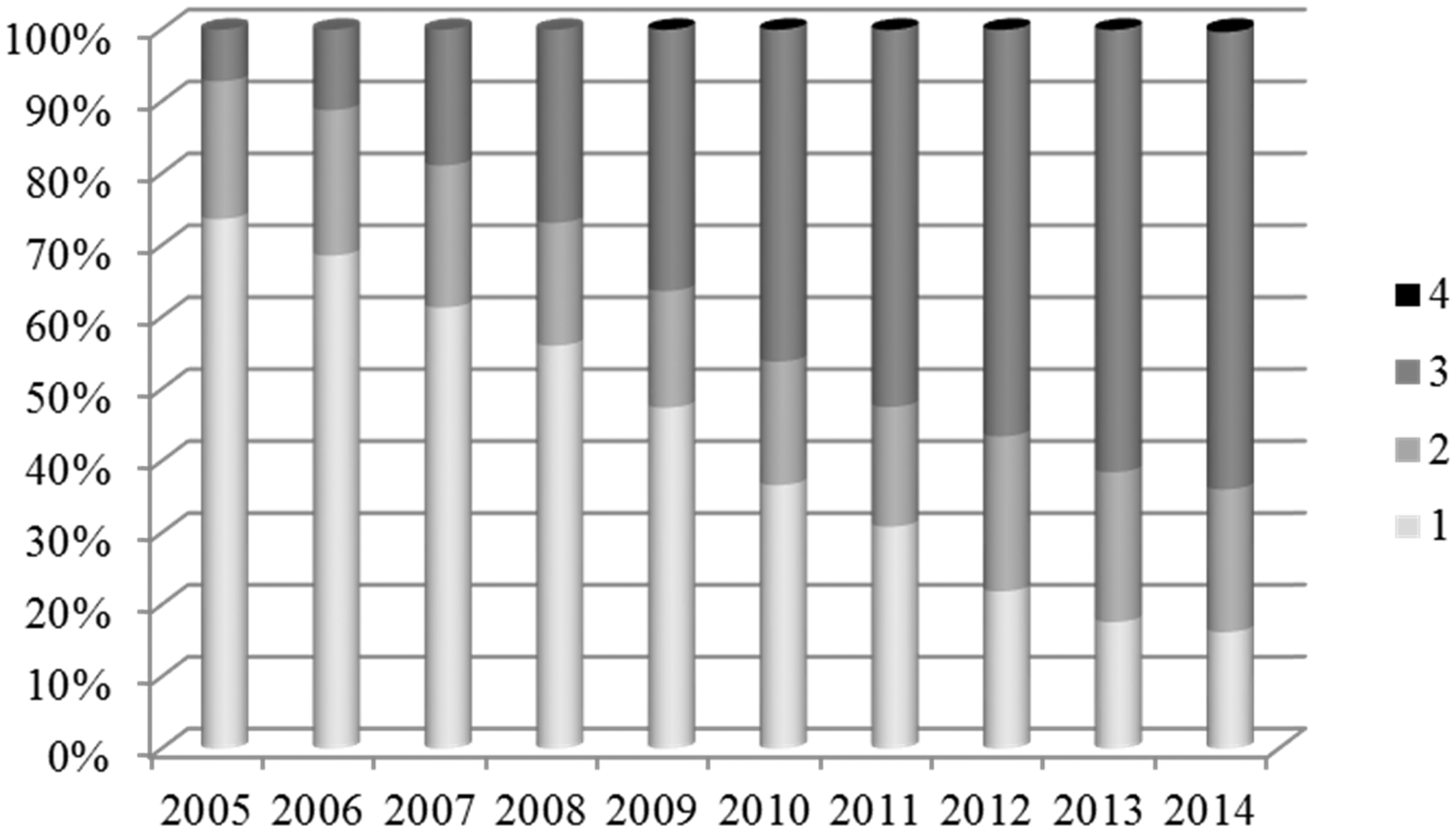
At the end of 2014, the capacity installed in wind power plants totaled 63.6% of the capacity installed in all RES technologies in Poland. Moreover, a fivefold growth of installed capacity in power plants based on biomass was registered in the analyzed period. Power plants of this kind, with total installed capacity of more than 1 GW, are the second, after wind farms, power among all RES. With regard to the production of energy from RES, biogas, including agricultural one, is becoming more and more significant. It is worth mentioning that in Poland, since 2009, electricity has been produced in photovoltaic plants (Figure 3).
Share of electricity generated from different technology types of RES in Poland in the years 2005–2014. 1: hydropower plants; 2: biomass and biogas power plants; 3: wind power plants; 4: photovoltaic power plants. Source: developed by authors based on data available at URE.
23
In the programming period 2007–2013, the available EU funds made it possible to obtain the largest support for all investments in RES in Poland so far. The total value of the projects co-financed from EU funds has amounted to 2 billion euro, i.e. 2% of the value of all projects implemented in Poland and subsided by EU funds. As it can be concluded from the research so far, the funds available at regional level played an immense role within 16 Regional Operational Programs. The means acquired from Regional Operational Programs have been spent mainly on modern and innovative investments used for producing thermal energy from RES as well as financing small-scale installations for producing electricity (including the ones based on solar energy). On the other hand, the funds from the Operational Program Infrastructure and Environment were used for co-financing relatively large investments connected with the production of electricity from RES (mainly based on wind energy and biogas). And so, the average value of the project acquiring the support from the funds of Regional Operational Programs between 2007 and 2013 reached about 800 thousand euro (the overall value of no project was over 20 million PLN, i.e. app. 4.762 million euro), whereas the average value of a project co-financed from the Operational Program Infrastructure and Environment was over 20 times higher and reached over 16 million euro.
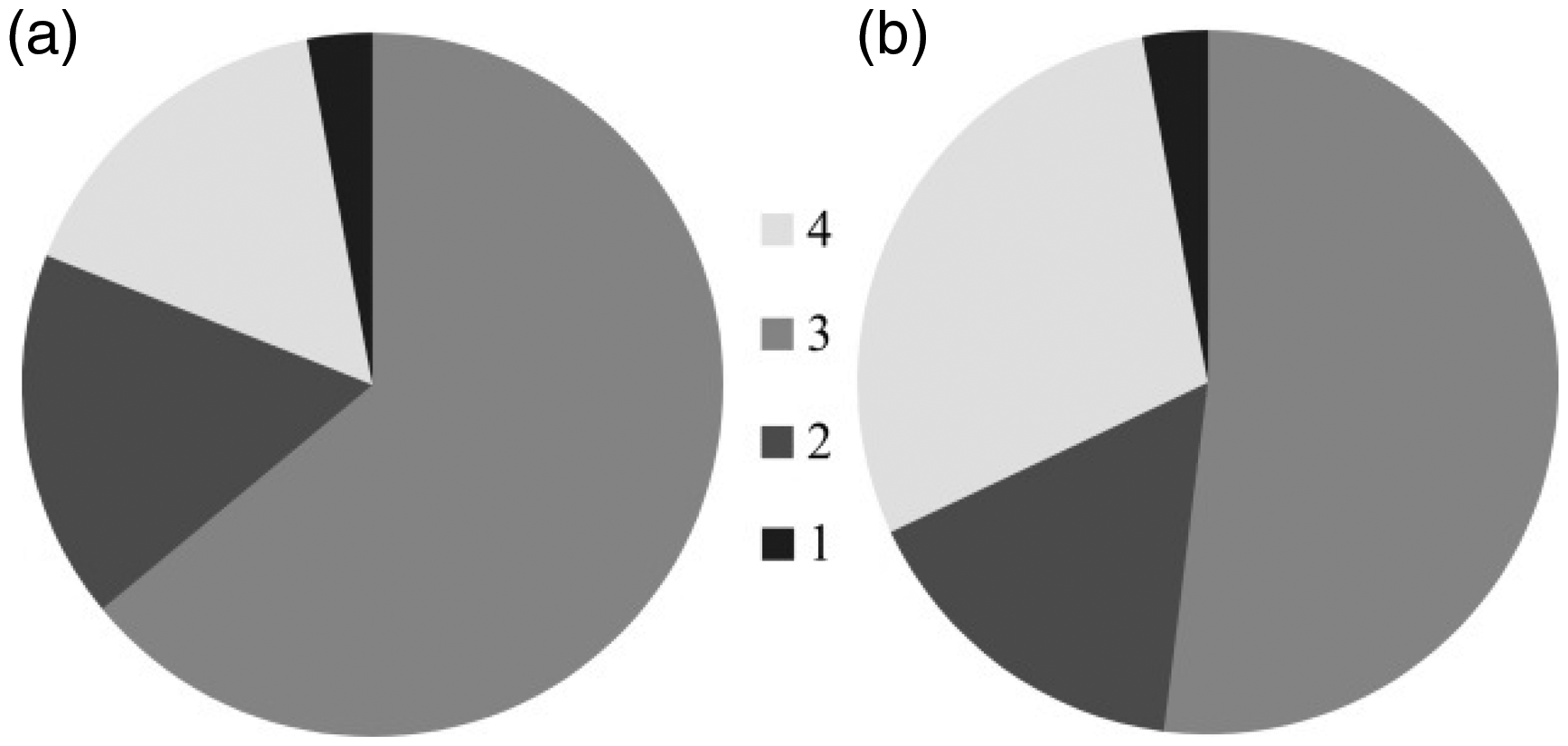
Analyzing the value of investments in technologies based on varied RES subsided both from 16. Regional Operational Programs and the Operational Program Infrastructure and Environment, an evident disproportion in either the size of particular installations or the costs of investments is observed. Projects of higher value used wind energy. They included almost 65% of the total value of all investments in RES and more than half of the obtained financial support. With regard to the value of projects and the obtained financial support, these projects were followed by biomass and solar energy. At the same time, 30% of the financial support received for all RES investments was spent on the purchase and assemblage of installations using solar energy (Figure 4).
Structure of RES in projects co-financed from EU funds in Poland in the programming period 2007–2013. A: the share of investments in particular RES in total value of investments in all RES; B: share of financial support from the EU obtained for all investments in particular RES in total financial support for all investments in RES; 1: hydro- and geothermal energy; 2: biomass (together with biogas); 3: wind energy; 4: solar energy. Source: developed by authors based on data available at PFE.
20
The financial support offered by the EU for RES development in Poland was implemented in two ways. On one hand, large projects were subsided. The projects were related to wind energy and their average installed capacity reached 10 MW. In terms of value, they formed the core of all investments in RES subsided by the EU. On the other hand, smaller projects (with installed capacity not higher than 1 MW) using, for example, solar energy were promoted. The main element which differentiates these types of projects is the beneficiary. With respect to wind power plants, 90% of beneficiaries were external firms—companies—with headquarters in large cities (mainly in Warsaw). But with regard to solar technologies, 60% of beneficiaries were local governments, often within a partnership formed by the cooperating units of local governments.
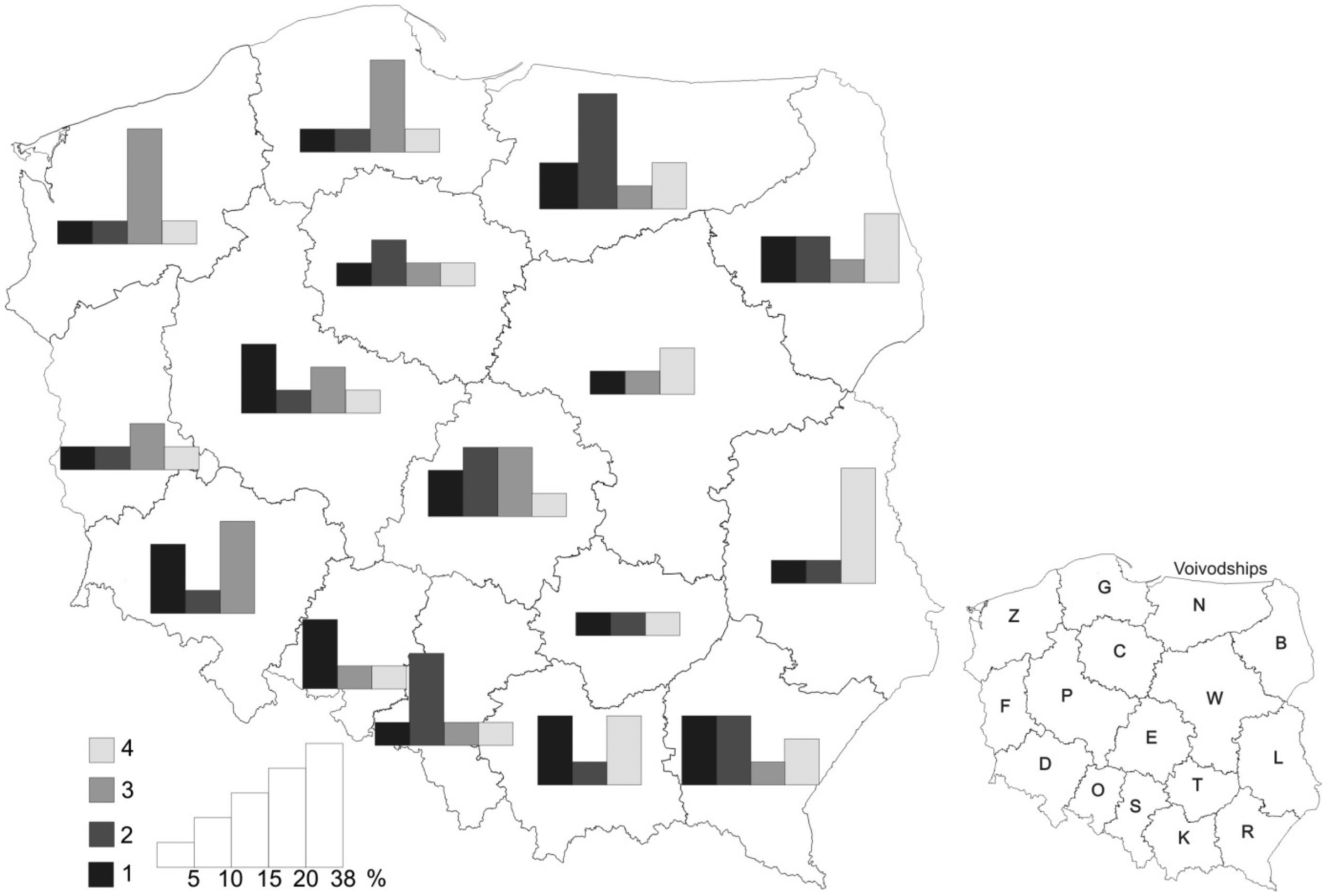
Investments in energy technologies using RES are not distributed equally in Poland. There are areas where RES investments were implemented on a large scale. What is more, “specialization” of particular regions has been noticed. In terms of the total value of projects, the leaders were voivodships in which wind power plants were formed. This type of investments is the most expensive one (the average value of an investment in a wind farm over 10 million euro). There have been also observed large solar projects, including photovoltaic ones, which generate high costs. The total value of projects implemented in four voivodships: Zachodniopomorskie, Pomorskie, Dolnośląskie, and Łódzkie accounted for more than half of the value of national investments in RES subsided by the EU. Only two of the above-mentioned voivodships, i.e. Pomorskie and Łódzkie, obtained 40% of this value (Figure 5). In these two voivodships, mainly projects concerning wind power plants, then solar installations (including solar power plants), were subsided. It is worth noting that in terms of GDP—the main indicator of cohesion policy—the greatest renewable energy projects (in the context of value) are in the regions (voivodships) with the highest GDP per capita (average from 2007 to 2012 years); the correlation coefficient is 0.84 (p < 0.5). Among these voivodships are Mazowieckie and Śląskie.
Value of RES projects co-financed from EU funds in Poland in the programming period 2007–2013. A: share of projects implemented in voivodships in the total value of all projects related to RES in Poland; B: share of financial support from the EU for projects implemented in voivodships in the total value of financial support from the EU for projects related to RES in Poland; Voivodships: B: Podlaskie; C: Kuiawsko-Pomorskie; D: Dolnośląskie; E: Łódzkie; F: Lubuskie; G: Pomorskie; K: Małopolskie; L: Lubelskie; N: Warmińsko-Mazurskie; O: Opolskie; P: Wielkopolskie; R: Podkarpackie; S: Śląskie; T: Świętokrzyskie; W: Mazowieckie; Z: Zachodniopomorskie. Source: developed by authors based on data available at PFE.
20

Considering the development of wind energy, we should emphasize that new investments co-financed by the EU were implemented mainly in the voivodships in northern and western Poland, i.e. in Dolnośląskie, Pomorskie, and Zachodniopomorskie. These are areas naturally predestined to the development of wind farms in Poland. 25 Hence, in this part of the country, the highest number of wind farms in Poland has been indeed built so far. 26 Besides natural determinants (i.e. the strength and speed of the wind, land orography), one of the most important factors affecting the location of wind farms is the accessibility of space measured by the density of settlement network. In this context, it should be mentioned that most of the investments co-financed by the EU and related to wind energy are located in the Łódzkie voivodship which is characterized by a relatively compact settlement network. There are 3.6 sq. km per one settlement while in Poland this value amounts to 5.6 sq. km (BDL GUS, 2015). 27
In turn, investments related to solar energy dominate in eastern and southern Poland, including the following voivodships: Podlaskie, Lubelskie, and Małopolskie. Taking into consideration the nature factors, it is worth noting that the above-mentioned voivodships can be characterized by favorable conditions for the development of solar energy plants. 28 An exception at the national level is the Lubelskie voivodship. In Lubelskie, we have noted the highest number of projects (124) related to the use of RES and co-financed from EU funds in Poland. What is particularly interesting is that 98% of these projects are based on solar energy and 86% are implemented in rural areas. Moreover, among the beneficiaries, the prevalence of local governments (70%) is noted in Lubelskie. The partnership located in the northern part of the voivodship deserves special attention. It is formed by five rural gminas (administrative regions of the fifth order in Poland, NUTS 5, LAU 2) and one urban–rural gmina. 29 Projects using solar energy for the production of both thermal energy and electricity are implemented in Lubelskie. The value of the projects amounts to 5% of the value of all projects and the financial support from EU funds in the voivodship for the implementation of solar installations.
Projects related to hydro- and geothermal energy subsided by EU funds also attained an important position. Among all analyzed projects, only those related to hydro- and geothermal energy were implemented in all 16 voivodships in Poland. Their dominance (60% of the value of all national projects using hydro- and geothermal energy), however, has been observed in southern, southwestern, and western Poland, in such voivodships as Podkarpackie, Małopolskie, Opolskie, Dolnośląskie, and Wielkopolskie. It should be emphasized that hydro-energy investments constitute more than 24% of the value of the projects; the rest are investments related to geothermal energy, mainly low temperature, i.e. the production of thermal energy by the usage of heat pumps, the use of which, unlike in case of hydro energy, does not depend on natural conditions. In turn, hydro-energy investments subsided by the EU were mainly related to building small hydro power plants in regions where the traditions of energy generated from water are still vivid. 30 This situation is observed in, for example, the Dolnośląskie voivodship. The beneficiaries of hydro-energy projects were firms, in 70% local ones, whose headquarters were located near the place of the implementation of an investment. In relation to geothermal energy, we should add that these projects generally included the purchase and assemblage of heat pumps. The investments were usually accompanied by the modernization of public buildings. Accordingly, most of the investors were local governments and partnerships representing both urban and rural areas.
Biomass and biogas have leading positions among all RES. The value of investments in biomass and biogas amounted to almost one-fifth of the total value of all analyzed projects. The largest projects were implemented in four voivodships: Warmińsko-Mazurskie, Śląskie, Podkarpackie, and Łódzkie (Figure 6). Taking into account the nature factors, it is worth noting that the mentioned voivodships can be characterized by favorable conditions for the production of energy based on biomass and biogas. Biomass and biogas are produced here both in rural areas (based on agricultural and food waste) as well as urban ones (based on communal waste). Mainly local governments competed for this type of financial support. Investments related to biomass and biogas were often accompanied by the modernization of public buildings. Biogas projects, in turn, were the initiative of local firms investing in power plants with installed capacity amounting to1 MW, including those based on agricultural biogas. It is worth mentioning that at the end of 2014, there were 57 agricultural biogas plants in Poland. In 2012, their number was twice smaller than in 2014. Agricultural biogas plants have been noted mainly in northern, western, and southwestern Poland.
31
Within the actions related to functional diversification of agriculture, small-scale agricultural biogas plants located next to farms were co-financed from the Rural Development, EU Program 2007–2013. Due to an arduous investment process, the projects of biogas plants co-financed from these financial means are currently in the phase of implementation. In Poland, 176 farmers applied for financial support for building micro-scale biogas power plants. Most of them come from the Wielkopolskie, Kujawsko-Pomorskie, Lubelskie, and Mazowieckie voivodships.
32
Share of investments in particular RES co-financed from the EU in the programming period 2007–2013 in voivodships in the total value of these investments in Poland. 1: hydro- and geothermal energy; 2: biomass (together with biogas); 3: wind energy; 4: solar energy; Voivodships: B: Podlaskie; C: Kuiawsko-Pomorskie; D: Dolnośląskie; E: Łódzkie; F: Lubuskie; G: Pomorskie; K: Małopolskie; L: Lubelskie; N: Warmińsko-Mazurskie; O: Opolskie; P: Wielkopolskie; R: Podkarpackie; S: Śląskie; T: Świętokrzyskie; W: Mazowieckie; Z: Zachodniopomorskie. Source: developed by authors based on data available at PFE.
20
Conclusion
The changes occurring in the Polish energy sector, including the diversification of energy sources and the increasing role of renewable energy, are the expression of the implementation of the EU cohesion policy. The use of RES has a great impact on the convergence of European regions and of the Member States. It leads to an increase in the number and scale of investments, encourages innovations, and improves (i) the quality of natural environment, (ii) the competitiveness of regions, and (iii) territorial cooperation, for example, as the result of the exchange of experience with regard to the use of RES.
This situation is reflected in the structure of the financial support obtained from the EU within 16. Regional Operational Programs and the Operational Program Infrastructure and Environment realizing the principles of the National Cohesion Strategy in the years 2007–2013. As a result of the functioning of the programming period between 2007 and 2013, local governments formulated their priorities for the first time, partly worked out the strategies concerning the development of renewable energy. Moreover, available subsidies contributed to the decentralization of energy sector in Poland and directing its development on the base of RES available locally.
More than 60% of the total value of projects related to RES and subsided by EU funds was spent on large wind power plants whose average installed capacity is up to 10 MW. Next, almost 20% of the total value of RES projects was allocated for smaller installations—biomass and biogas power plants—with average installed capacity amounting to 1 MW. These investments were often implemented in the Warmińsko-Mazurskie, Śląskie, Łódzkie, and Podkarpackie voivodships. It should be emphasized that totally for all projects based on wind energy, biomass, and biogas, 70% of all financial support for RES in Poland in the programming period 2007–2013 was spent.
In addition to large projects, which in the case of wind power plants were realized mainly by external firms, there were implemented smaller investments using water, geothermal, solar energy, and, more rarely, biomass, and biogas. Considering investments in hydro-energy, we should notice that hydropower plants were built in areas with traditions of energy generated from water, mainly in the Dolnośląskie voivodship. In turn, projects based on geothermal energy included the purchase and assemblage of heat pumps. These investments were often accompanied by the modernization of public buildings. Their beneficiaries were local governments representing urban and rural areas. With respect to solar energy, we have noted that the total value of solar projects amounted to 16% of all investments in RES, but the implementation of the projects totaled 30% of all financial support from the EU in Poland. These solar projects were mainly realized in eastern and southern Poland. Like in the case of heat pump and some projects based on biomass, local governments were the most active beneficiaries of solar energy.
In order to further implementation of cohesion policy of the EU, in relation to spending the funds between 2014 and 2020, which are even to a greater extent than before directed to support the shift towards a low-carbon economy, there is a need to promote distributed energy system and small-scale installations based of local RES. As we have demonstrated analyzing the structure of EU funds in Poland in the programming period 2007–2013, this trend is most evident in eastern and southeastern Poland, in the Warmińsko-Mazurskie, Podlaskie, Lubelskie, and Podkarpackie voivodships. These voivodships were the leaders in the use of varied RES, mainly solar energy. The formation of small-scale RES installations affects the social, economic, and territorial cohesion of regions, and thus of the entire EU. Development of distributed energy based on endogenous resources is the key both to the transformation of the energy sector, as well as to socio-economic development of the weakest regions in Poland and EU, with the lowest GDP per 1 capita, including the Polish voivodships of eastern and south-eastern Poland.
It is worth mentioning here that local governments made a considerable group of applicants between 2007 and 2013, and keeping in mind, the increase of the efficiency of spending funds between 2014 and 2020, the need of greater involvement in the application process of enterprises and individuals, especially the owners of detached houses, should be emphasized. Another step in programming the development of renewable energy in Poland is the modernization of energy distribution and implementation of smart grids solutions. Taking into consideration the fact that nowadays the lack of certainty of investment directions resulting from the fluctuation of the legal-administrative surroundings of the RES sector makes a crucial problem, much broader support for innovative small-scale technologies of significant market potential, including prosumer photovoltaic installations, small-scale biogas power plants, and small-scale wind plants, is highly desirable. There is the need for a greater scale of institutional assistance of small-scale energy development (regardless the used source of energy), since producing energy in small-scale installations, basing on locally available sources of energy, has contributed to a great extent to strengthening of territorial cohesion of the regions of Poland.
Footnotes
Declaration of conflicting interests
The author(s) declared no potential conflicts of interest with respect to the research, authorship, and/or publication of this article.
Funding
The author(s) received no financial support for the research, authorship, and/or publication of this article.
