




Abstract
Biomass energy has the characteristics of renewable and decentralized and plays a certain role in mitigating climate change. Now it is considered to be a very important renewable energy and has great potential for development. Based on Science Citation Index Expanded and Social Sciences Citation Index databases, this paper retrieved the publication data through topic search using the keywords biomass energy and related words during 2007–2016. This paper investigates the development characteristics in biomass energy research based on bibliometrics methods and data mining techniques. The main purpose of this paper is to explore the knowledge structure and citation landscape in this field. The general development trends, Essential Science Indicators publications characteristics, and leading journals in this area are discussed. The main advantage of this analysis is based on massive data which can, to some extent, reveal the macrostate of the development of the field.
Introduction
The energy crisis and environmental pollution are the two main factors that impede the sustainable developmentof the economy and society.2,3 Excessive energy consumption makes the scarcity of energy resources more and more prominent.1,4,5 While trying to improve the efficiency of existing energy use, countries around the world are actively seeking new ways of using energy.6,7 Fortunately, renewable energy provides an opportunity to address these two worldwide difficult problems.8,9 Biomass energy is one of the important sources of renewable energy10,11 and it is the only renewable energy that can be used for power generation, heating, and fuel simultaneously.12,13 In order to realize the transformation from traditional fossil energy economy to bio-energy economy and promote the sustainable use of biomass raw materials and energy utilization, many countries have not only enacted measures to promote the development of biomass energy, but have also developed specific development goals and planning. 14 The development and utilization of biomass energy has attracted wide attention from governments and scientists.15–17
At present, biomass energy is a hot research topic and well-established scientific research direction. There are thousands of scholars and scientists who undertake research in this area. The scientific publications about biomass energy are already more than 200,000, according to Web of Sciences (WoS). What’s more, the increasing trend is accelerating. In these circumstances, in order to fully understand the current situation and development trend of biomass energy research, it is of great significance to summarize the development course and existing problems of biomass energy and to indicate the direction of follow-up research based on comprehensive literature review.
Voloshin et al. 18 made a deep analysis of the biofuel production from plant and algal biomass. Jambo et al. 19 highlighted the prospects for development of the third-generation bioethanol feedstock. Doshi et al. 20 presented the economic efficiency and cost of the conventional biofuels, and pointed out the necessity and urgency of the development of a third-generation feedstock based on algae. Dong et al. 21 made a comprehensive review on lipid recovery of the biofuel production. Biodiesel is renewable, nontoxic, and biodegradable, and it has important economic value and broad application market. Saluja et al. 22 discussed the types and causes of instability and explored the current situation and development trend in this area. Based on the scientific publications on biofuels between 1998 and 2007, Gomes and Dewes 23 investigated the development history and orientation of the field of biofuels. Yu et al. 24 made scientometric review on low carbon energy technology investment based on bibliometric analysis methods.25–31 The historical development process; auctorial collaboration degree; and the distributions of geography, journals, and subjects in this field are well investigated. In addition, the influential authors and institutions, as well as highly cited articles are explored in this study. Based on the bibliometric analysis methods,32–35,36,37 Mao et al. 38 investigated the field of biomass energy. A total of 33,072 biomass energy-related publications were investigated on various aspects, such as authorship, countries and institutions distributions, influential papers, and keywords.
Obviously, more and more studies have recognized the necessity of tracing the trajectory of biomass-related researches. However, up to now, some key issues have not yet been effectively addressed, such as the status quo of research on the development of biomass-related research, the distribution pattern of scientific research subjects in the field of biomass energy research, and what are the main journals of biomass energy research, and so on, all of which are worthy of academic attention. This paper analyzes the hot issues from the perspective of research papers and provides a reference for relevant research and decision-making in this field, and also provides useful clues for the tracking and retrospective of biomass-related research.
The paper is organized as follows. The next section describes the data and methods used in this paper. The subsequent section presents the empirical results. The final section summarizes the main results and conclusions of this study.
Data and methods
ISI WoS is the Web version of the three citation databases built by Thomson ISI and consists of three separate databases: Science Citation Index Expanded (SCIE), Social Sciences Citation Index (SSCI), and Arts & Humanities Citation Index.39,40 It covers more than 8500 academic journals in the fields of natural sciences, engineering, social sciences, arts, and humanities. 41 The data used in this paper are derived from ISI WoS, mainly because it has been widely used by scholars in the field of bibliometrics.42,43
Since the consensus on the concept and definition of biomass energy has not yet been reached, existing papers tend to collect the literature data that contain the expression “biomass” 38 in the titles, abstract, or keywords. Based on the comprehensive analysis of the advantages and disadvantages of existing data collection methods and the purpose of this study, this paper constructed the following bibliographic records search strategy.
Topic search= (biomass OR biofuel OR biodiesel OR bioethanol OR biomass power OR biogas)
Timespan= (2007–2016)
Document type= (Article or Review)
Databases= (SCIE or SSCI)
Topic search means searches for topic terms in the following fields within a record: 1) Title, 2) Abstract, 3) Author Keywords, and 4) Keywords Plus®. 44
Based on the above search strategy, a total of 172,029 records were obtained. These publications appeared in 23 languages, covering hundreds of countries and regions. According to the number of publications, the top 3 countries are the USA (38,781), China (27,945), and Germany (10,461). This also demonstrates the dominant position and influence of these countries in the field of biomass energy research.
Essential Science Indicators (ESI) is a depth analysis tool based on the WoS core collection database. Based on ESI, the influential countries, institutions, and publications, as well as research frontiers in a field of research can be identified.45,46 It has been widely used by policymakers; managers; intelligence analysts; and information specialists in government agencies, universities, businesses, laboratories, and publishing companies.47,48 In this paper, we collected the ESI publications in the field of biomass energy for investigating the emerging trends. A total of 3185 biomass energy publications were retrieved on 12 April 2017. The annual biomass energy publication counts and quantitative distribution of ESI papers over the last decades are shown in Figure 1.
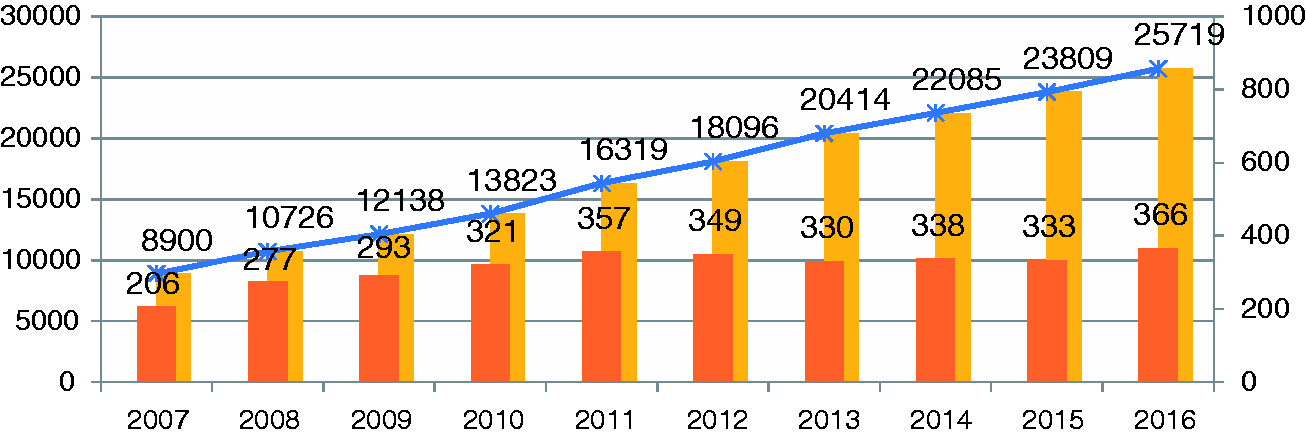
Annual biomass energy publication counts and quantitative distribution of ESI papers.
The main purpose of this paper is to explore the knowledge structures and citation landscape in the field of biomass energy from 2007 to 2016. Among the many literature data visualization software, VOSviewer is a very effective tool that can display the complex relationship of the publications in that specific domain.49–51 In this study, cooperative network among countries were presented based on VOSviewer. Furthermore, customized data mining methods are presented to discover the pattern and characteristics of international cooperation. Additionally, H-index and impact factor (IF) are also applied to study the intellectual structure of biomass energy. The definition of the index is that a scholar with an index of h has published h papers each of which has been cited in other papers at least h times.52,53
Empirical results
General analysis
As we all know, the number of published papers can reflect the size of the research scale to a certain extent. According to Figure 1, from 2007 to 2016, the scale of biomass energy research has maintained a rapid growth rate which revealed the characteristics of biomass energy research flourishing around the world. Figure 2 shows the geographical distribution of the top 20 productive countries in this area.
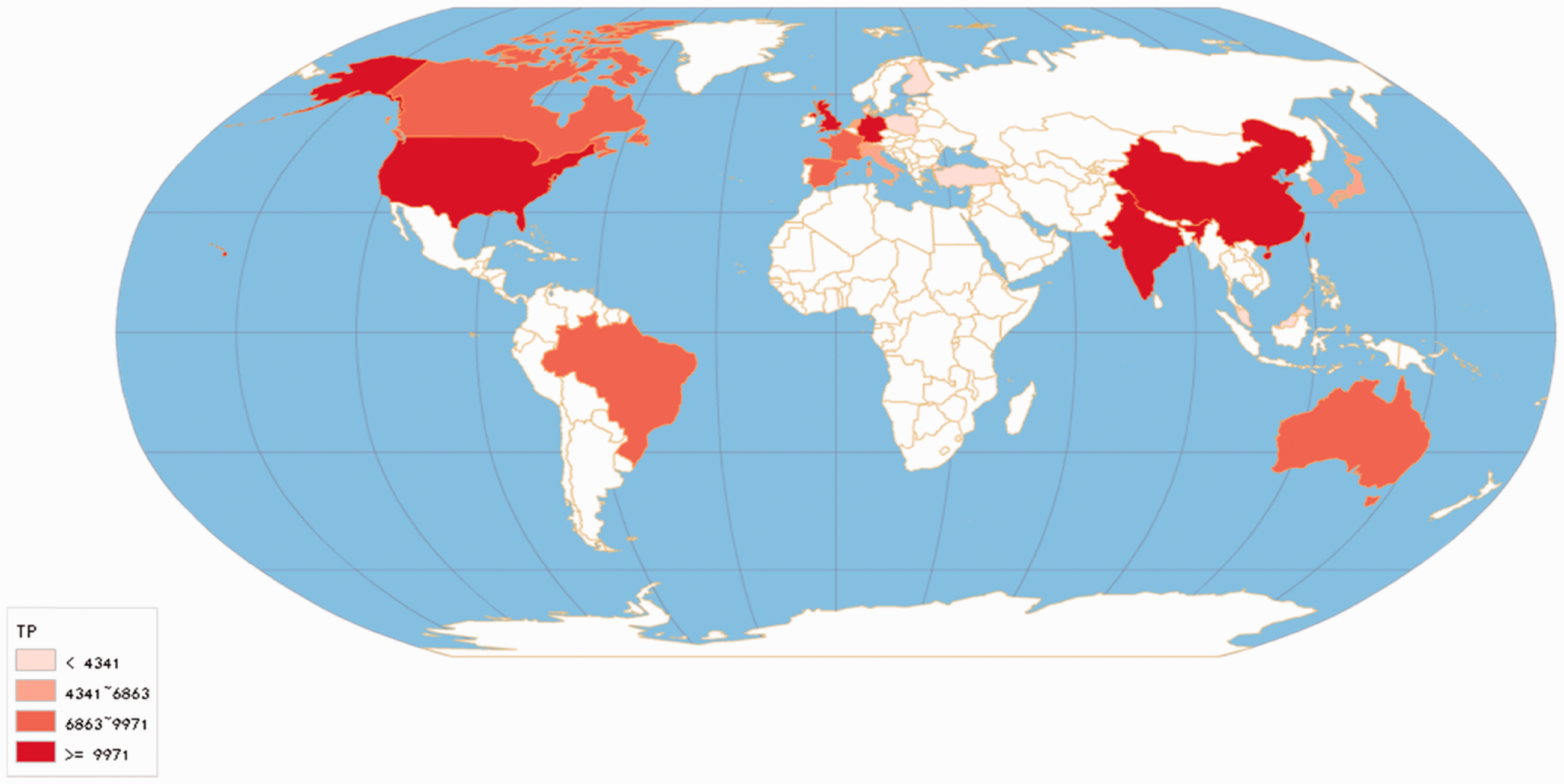
Geographical distribution of the top 20 productive countries. TP: total number of papers.
The leading edge of USA is very prominent in the field of biomass energy research. In 2007, the USA published a total of 2273 papers in this field, three times of China (745), the second productive country in the world. As shown in Table 1, the USA produced more than 20% papers in the field of biomass energy during the past 10 years (2007–2016). But this lead is slowly declining. In 2016, China’s paper production was 5902, surpassing the number of papers of USA in the field. Over the past 10 years, China has made significant progress in the field of biomass energy research. China’s number of papers increased seven times during this period, from 745 in 2007 to 5902 in 2016. From a global perspective, China has the largest increase in the world share. China’s share of the world in the field of biomass energy rose from 11.45% in 2007–2011 to 18.94% in 2012–2016 (see Table 1). Table 1 also included other detailed information about the top 20 most productive countries in this field during the past 10 years (2007–2016). Note: TP07–11 means the total publications during 2007–2011; TP12–16 means the total publications during 2012–2016.
Publications of the top 20 countries between 2007 and 2016.

TP: total number of papers; TP07–11: the total publications during 2007–2011; TP12–16: the total publications during 2012–2016.
Studies have shown that the total number of citations of a country can reflect the overall picture of the country’s academic influence. The citation of USA is far more than other countries in the field of biomass energy. The USA accounted for 27.62% of all citations during 2007–2011 and 23.50% during 2012–2016. In addition to the USA, China, UK, and Germany are more influential than other countries in the field of biomass energy; they received 357,439, 231,625, and 20,078 citations, respectively. China’s academic influence is expanding in the field of biomass energy, and the citation share of China is only 9.94% in 2007–2011 and 14.34% in 2012–2016 (see Table 2).
Citations distribution of the top 15 countries between 2007 and 2016.

TC: total citations; TP: total number of papers.
Since the TC index is greatly influenced by the total number of papers (TP), the average number of citations per paper (TC/TP) describes the average impact of each paper. Therefore, the index of TC/TP can better reflect the average influence of each paper. As shown in Table 2, the average citation of each paper is 17.98. Regarding the index of TC/TP, the Netherlands ranks first with the value of 23.53 and it was followed by UK (23.23), USA (20.90), and Denmark (20.67).
In particular, although the TC and TP of China are all ranked second, the value of TC/TP is only 12.79, not only far below the USA, UK, Germany, and other countries, but also lower than the average of the research area (17.98). Further analysis revealed that, during 2007–2011, China received only 9.94% of the citations in the world share based on the 11.45% of its papers. During 2012–2016, China received only 14.34% of the citations in the world share based on 18.94% of its papers. The above analysis shows that the progress of academic influence in China is remarkable, but compared with the development of the number of papers, the development of academic influence is relatively lagging behind. Figure 3 shows the average citations of the top 15 countries (based on TC) in the field of biomass energy from 2007 to 2011, 2012 to 2016, respectively.
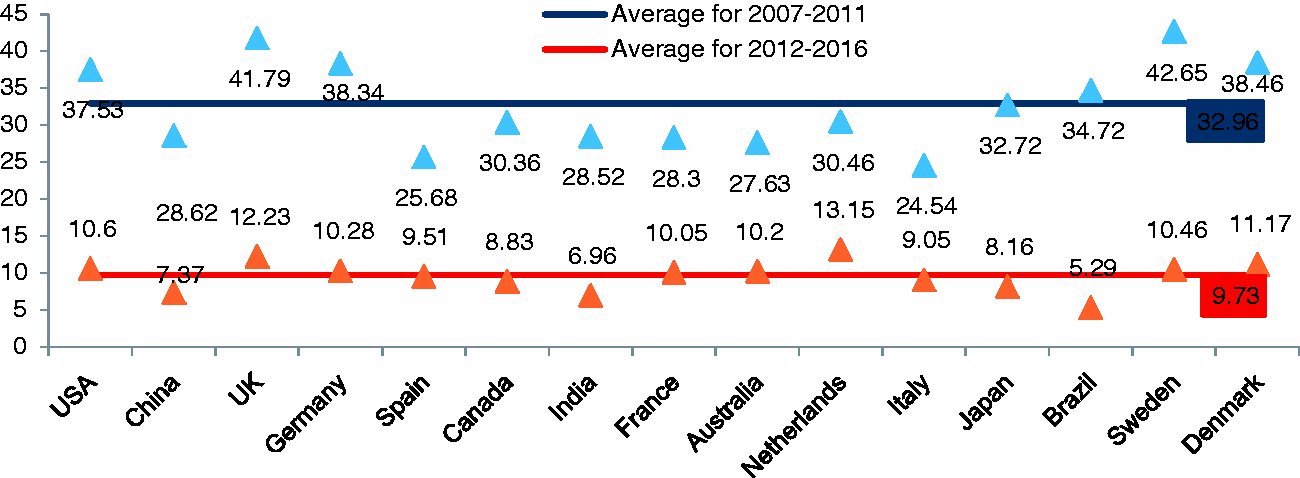
Average citations of the top 15 countries.
ESI publications
With the development of communication technology and network, the number of scientific research achievements has increased at a rapid pace. However, there are only a few important achievements which can greatly promote the development of the subject. In addition, most of the important results can be obtained with higher citation frequency. Therefore, the ESI papers are widely used in the evaluation of scientific research. Table 3 shows the detailed information of the ESI papers in the field of biomass energy (data analysis time was 12 April 2017). There are 3185 highly cited papers, accounting for 1.85% of the TPs (172,029).
ESI publications of the top 20 countries between 2007 and 2016.
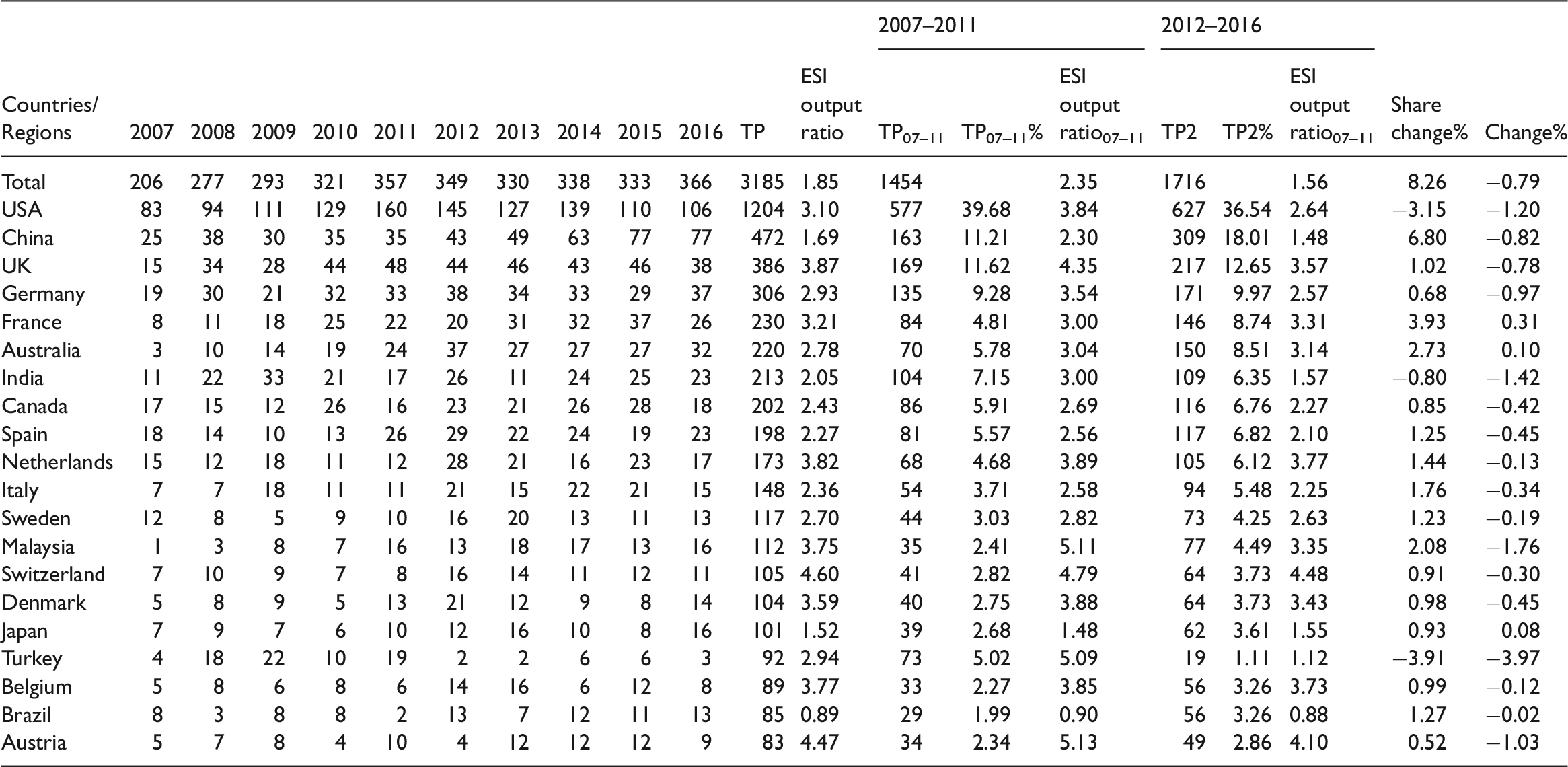
ESI: Essential Science Indicators; TP: total number of papers
The TPs of USA in the field of biomass energy are 38,781 (see Table 1), of which there are 1204 papers included in ESI database. The ESI papers’ output rate of USA is 3.10% which is more than the world average of 1.85%. On the output rate of ESI publications, Switzerland had the best performance with the ratio of 4.60% and it was followed by UK (3.87%), Netherlands (3.82%), and Belgium (3.77%).
China’s ESI highly cited papers have increased by leaps from 2007 to 2016, from 25 in 2007 to 77 in 2016, indicating that China has made significant progress in this area. However, compared with the world level, China still has a lot of room for improvement. For example, between 2007 and 2016, there were 472 ESI papers in China, accounting for 1.69% of the total amount of biomass energy papers in the same period. This ESI paper output ratio is not only much lower than that of the USA (3.10%), United Kingdom (3.87%), and Germany (2.93%), but also lower than the world average rage (1.85%) and some developing countries such as India (2.05%), Malaysia (3.75%), and Turkey (2.94%). Previous research results show that the amount of ESI publications of China in the field of biomass energy has made great progress, but there is still a big gap with other countries. Figure 4 shows the output rate of ESI publications of the top 20 countries (based on total ESI publication numbers) in the field of biomass energy from 2007 to 2011, 2012 to 2016, respectively.
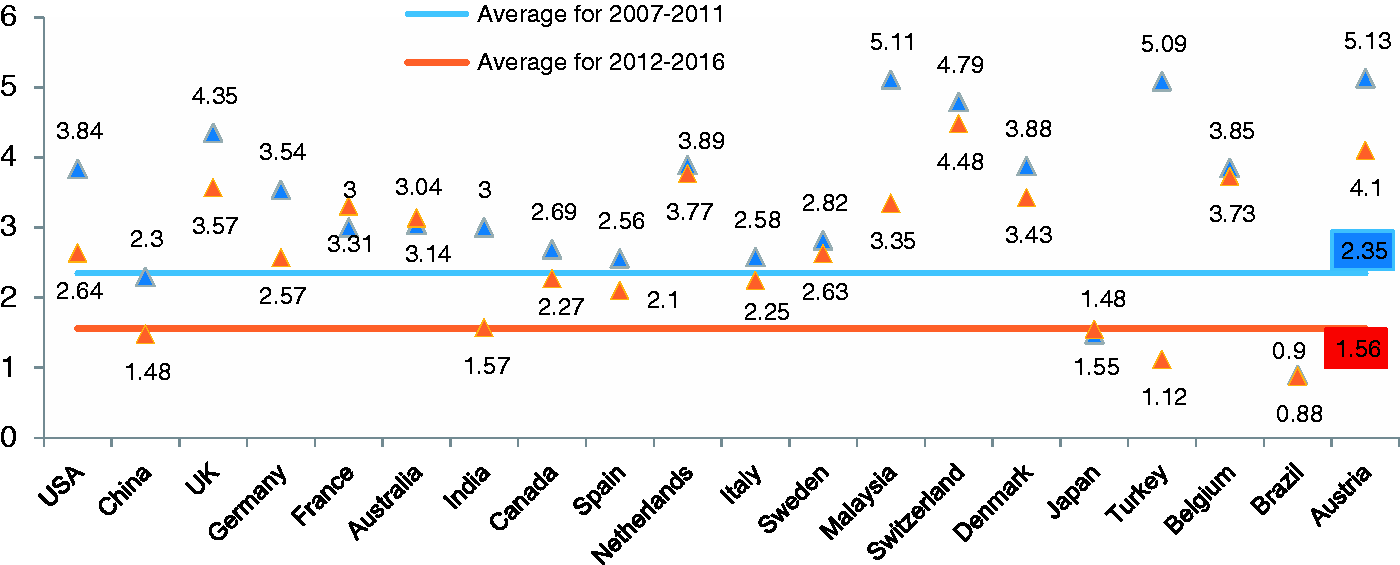
Output rate of ESI publications of the top 20 countries.
Leading journals analysis
The IF is one of the most important indexes for determining the importance of journals. However, it varies widely in different disciplines. Since biomass energy is an interdisciplinary field of research, it is difficult to accurately judge the importance of journals by relying solely on IF. In this paper, five indexes such as TP, IF, five-year IF, ESI publication number, and TC/TP were used to rank the journals in the field of biomass energy. For each indicator, the journals are sorted separately. Ranked first, giving 1; second, 0.95; third, 0.9; and so forth, 20th in line 0.05. In addition, assume that the weights of the five indexes are the same, the final journal ranking results are shown in Table 4. The top 10 journals in biomass energy are Renewable Sustainable Energy Reviews, Bioresource Technology, Applied Energy, Soil Biology Biochemistry, Atmospheric Chemistry and Physics, Fuel, Environmental Science Technology, Chemical Engineering Journal, Energy, and Biomass Bioenergy. Tables 5 and 6 show the countries in the top 10 journals.
Journal ranking.

ESI: Essential Science Indicators; 5-IF: five-year IF; IF: impact factor; TC: total citations; TP: total number of papers.
Leading countries in Journal 1–5.
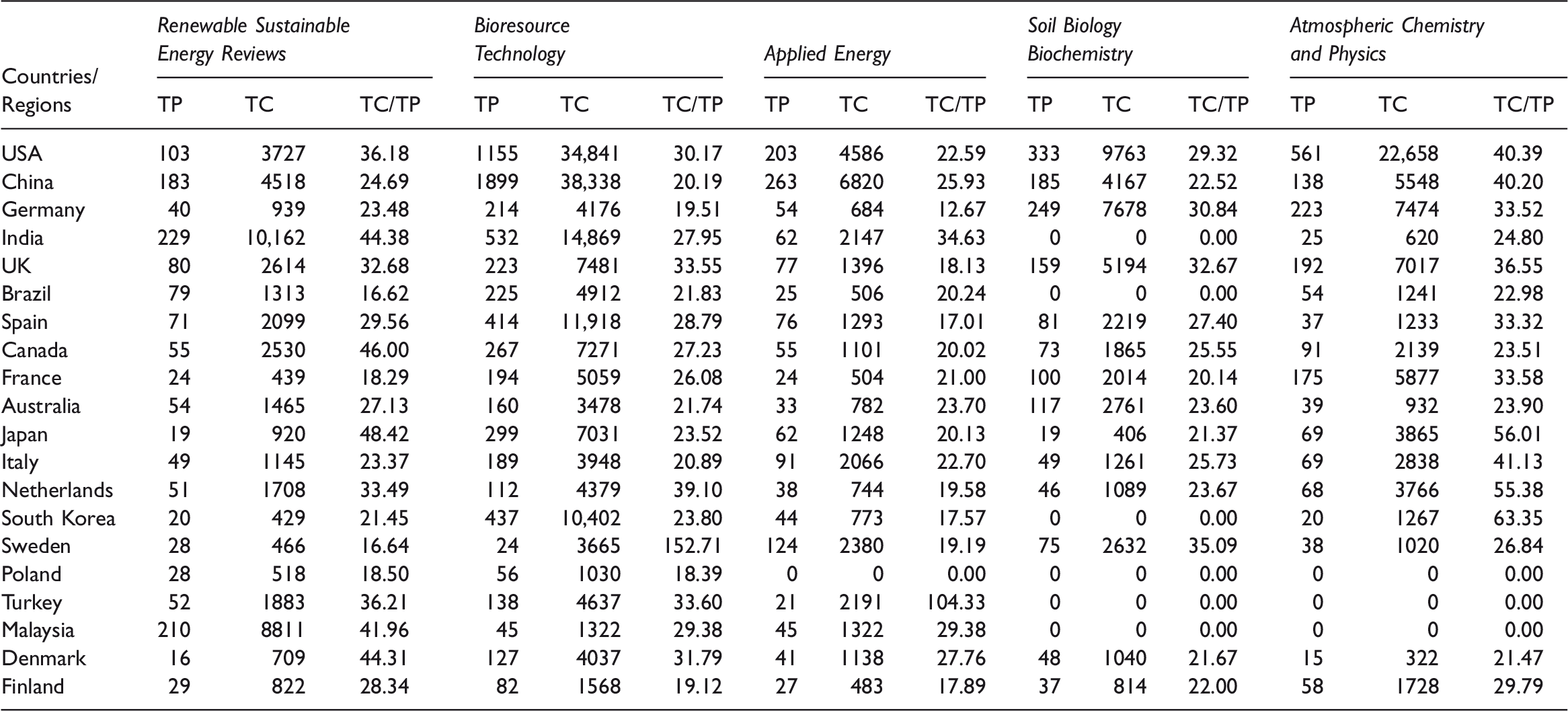
TC: total citations; TP: total number of papers
Leading countries in Journal 6–10.

TC: total citations; TP: total number of papers.
Conclusion
Based on the large amounts of WoS data, this paper investigated the development characteristics of the biomass energy publication which appeared from 2007 to 2016 by means of bibliometrics and data mining. The leading edge of USA is very prominent in the field of biomass energy research. From a global perspective, China has the largest increase in the world share. The citation of USA is far more than other countries in the field of biomass energy. The progress of academic influence in China is remarkable, but compared with the development of the number of papers, the development of academic influence is relatively lagging behind. Switzerland had the best performance on ESI papers’ output rate and it was followed by UK, Netherlands, and Belgium. China’s ESI highly cited papers have increased significantly, indicating that China has made significant progress in this area. However, compared with the world level, China still has a lot of room for improvement. The top 3 journals in biomass energy are Renewable Sustainable Energy Reviews, Bioresource Technology, and Applied Energy.
There is no doubt that the analysis based on massive data can, to some extent, reveal the macrostate of the development of the field. Based on the analysis of this paper, it is possible to explore the inner structure of the biomass energy publication.
Footnotes
Declaration of conflicting interests
The author(s) declared no potential conflicts of interest with respect to the research, authorship, and/or publication of this article.
Funding
The author(s) disclosed receipt of the following financial support for the research, authorship, and/or publication of this article: The work was supported by the project of philosophy and Social Science in Zhejiang under Grant 16NDJC159YB, the Zhejiang Science & Technology Plan of China under Grant 2015C33024, and the Zhejiang Provincial Natural Science Foundation of China under Grant LY17G010007.