



Abstract
The concept of energy hub as the interface in multi-carrier energy systems has been introduced recently. This concept motivates the researchers to concentrate on multi-carrier energy systems with the purpose of achieving more efficient performance. Multi-carrier energy systems as the upcoming energy providing systems should economically operate in comparison with conventional decoupled energy systems. Economic dispatch of a multi-carrier energy system including the combined electrical-gas network with distributed resources is studied in this paper. Applying the mentioned problem to real systems leads to a large-scale nonlinear problem which should be optimized by using the optimization techniques. In this paper, adaptive group search optimization algorithm is utilized to solve the multi-carrier economic dispatch problem. The decomposing solution is implemented in order to facilitate the optimizing procedure. Additionally, the proposed method is applied to an 11-hub test system and the obtained results are analysed. The efficiency of the proposed approach is then evaluated.
Keywords
Introduction
Nowadays, various kinds of energy resources and different energy networks are operated. Economic issues besides the efficient operation are the main concerns of utilities, operators and engineers. Until now, various energy services have been operated independently, which is not optimal from economic point of view. 1 Emersion and growth of distributed energy utilization was the first step by which the energy services and distributed generation (DG) applications obtained the chance to operate simultaneously. Presence of DG infrastructures in a power system has significantly raised its performance. Peak load shaving, efficient operation and cost reduction are known as the most important effects of renewable energy production. Emersion and penetration of DG production in power networks increase the necessity to pay more attention to the optimal operation of DG-based power systems. In this regard, the economic dispatch (ED) and optimal power flow (OPF) of power systems including various types of intermittent resources have been studied in the literature.2–4
In recent years, an integrated view of energy systems including multiple energy carriers, for example, electricity, natural gas and various intermittent resources have been suggested. In a multi-carrier energy (MCE) system, unlike the conventional networks, different energy infrastructures such as electricity and natural gas systems perform correlatively. 5 Introducing energy hub concept lets the MCE systems convert or store various forms of energies. It is noteworthy to mention that an energy hub is known as an encasement including various types of converters for absorbing different forms of energies at its input ports and supplying various loads at its outputs. 6 Up to now, different models are proposed for the energy hub in the literature containing various components and applications. In particular, the main differences of such models are using various inputs, converters, storage systems and outputs in the hub structure. 7 The dominant structures used for energy hubs are studied in Mohammadi et al. 7 and weaknesses, strengths and challenges are discussed. According to this article, selecting the converter type of an energy hub mainly depends on its input energies. For instance, the input electrical energy passes through a transformer. On the other hand, in order to supply both the electrical and heating loads via natural gas energy, combined heat and power (CHP) systems are required. Moreover, other energy generation systems, depending on their structure, meet practical converters while passing through an energy hub.
During recent years, some researches have been done in order to investigate the efficiency and optimal operation of MCE systems. The OPF of MCE systems is studied in Geidl and Andersson. 8 A mathematical approach is proposed in this paper in order to optimize the power flow problem in an MCE system. However, the proposed OPF method has problem in handling the large-scale energy networks. It should be noted that the simultaneous modelling of natural gas and electricity networks results in a non-convex optimization problem with computational difficulties. A general model for energy hubs is proposed in Almassalkhi and Hiskens. 9 The mentioned model is achieved thorough a reformulation considering energy hub structure. A strict linear model for the energy hubs is presented in this paper considering some simplifying assumptions. Then, a mathematical model of OPF studies in an MCE system is presented. In this regard, energy hub concept and also the steady state OPF of electricity and natural gas networks have been investigated in a real-time system. 10
There are few papers assigned to the multi-carrier systems ED problem even though it is one of the mostly used tools in the power system studies. ED stands as a short-term determination of the optimal output of a number of generation facilities to meet the requirement of system loads, at the lowest possible cost subjected to physical and operational constraints. MCE system should be able to economically operate and supply the demands. However, the ED problem can be extended to MCE systems. Economic energy dispatch and conversion in the hubs are two main issues in the MCE systems. Under such conditions, the classical ED methods should be modified to meet the system requirements such as optimal conversion between different carriers. The ED of CHP systems is known as one of the fields of MCE system studies. 11 CHP is one of the mostly used converters in the energy hub structure which facilitates the simultaneous operation of electricity and heat systems. The ED of CHPs is studied in Beigvand et al. 12 considering different structures of energy hubs. The proposed method of this paper, called energy hub ED, incudes a general economic representation covering a wide range of energies and hubs with different converters. However, the main goal of this paper is to optimally dispatch the energy within the hub. Assuredly, studying the ED of the whole MCE system besides the energy hub optimal energy dispatch would be more practical.
A new solution is proposed in Moeini-Aghtaie et al. 13 which is applicable to large-scale multi-carrier networks. It develops optimization and modelling of the multi-carrier ED (MCED) problem. Also, it presents probabilistic ED optimization model of MCEs considering wind turbines (WTs) as the intermittent resources. The multi-agent genetic algorithm is proposed to solve the MCED problem in Moeini-Aghtaie et al. 13 ED for multiple carrier energy systems and multiple hubs is proposed and solved by a new version of particle swarm optimization (PSO) algorithm in Beigvand et al. 14 Proposing and utilizing a novel optimization algorithm make the obtained results more practical. In order to concentrate on ED of the MCE system, the energy hub inputs are the electrical energy received from the electrical network and also gas power supplied by the natural gas system. As evident, DGs would play an important role in MCE system operation due to reducing energy cost, generated pollution and etc. Accordingly, considering DG infrastructures in the energy hub vicinity would make the studies more comprehensive and practical. On the other hand, the main problem of the proposed algorithm seems to be getting stuck in local optima instead of reaching global solution.
As mentioned, DG plays an important role in MCE systems. A certain MCE system, unlike a single energy infrastructure, is composed of not only electrical and natural gas network, but also WT, photovoltaic (PV) generation and so on. Decreasing level of pollutant emissions and cutting the expenses of energy supplying are known as the main effects of utilizing various DG infrastructures. On the other hand, the stochastic nature of renewable resources makes the analysis more complicated. A new stochastic model for planning of energy hub systems with considering the uncertainty of wind power generation is presented in Dolatabadi et al. 15 A stochastic model for scheduling a wind integrated smart energy hub is proposed in Dolatabadi et al., 16 which not only supplies electrical and thermal load, but also, extra electricity can be sold to the network to maximize the revenue.
In this paper, PV generation is also considered in hubs vicinity in addition to WTs in order to make the problem more practical. Accordingly, uncertainties would be increased. On the other hand, cooling loads are considered as the third group of loads connected to energy hubs besides the electrical and thermal loads. Hence, it is obvious that the considered ED problem would be more comprehensive and also complicated and an efficient optimization algorithm would be needed.
The aim of this paper is to study the ED of MCE systems implementing the adaptive group search optimization (AGSO) algorithm. The heuristic optimization algorithms are widely used in different research fields. Since it is impossible to achieve the definite optimal solution by using heuristic approaches, trying various algorithms is recommended. The group search optimization (GSO) algorithm is a novel heuristic algorithm based on animal searching behaviour. 17 GSO is known as a robust and competent evolutionary algorithm which shows up as intense ability in solving optimization problems. Considering limited runtime process, the conventional GSO may have problem in achieving to a global optima. In order to overcome mentioned issues, the modified versions of GSO are proposed and implemented for various optimization problems in the literature.18–22 The AGSO algorithm is recently proposed in order to solve the OPF problem in Daryani et al. 22 However, it could show up acceptable performance in achieving better solutions. Due to the efficient operation, the AGSO algorithm is implemented to solve MCED problem in this paper.
The rest of this paper is organized as follows. In the next section, a general vision of MCE systems is described. Moreover, the mathematical presentation of problem is presented in section ‘Modelling of MCE systems for ED’. Then, the proposed algorithm and its implementation for the considered problem are provided in section ‘Optimization algorithm’. Section ‘Test system under study’ stands as a general description of the considered test system. Also, section ‘Simulation results and numerical analysis’ includes the simulations, obtained results and numerical analysis.
Modelling of MCE systems for ED
This section offers the main principles of MCE system and energy hub structure. Moreover, characteristics of WT and PV production are introduced as the intermittent resources of system.
MCE system
The MCE system composed of interconnected energy hubs and various energy services. It is note-worth that, employing the accurate models of energy carrier systems as well as proper modelling of the energy hub is important in operation of the mentioned MCE systems. Figure 1 illustrates schematic model of an MCE system.
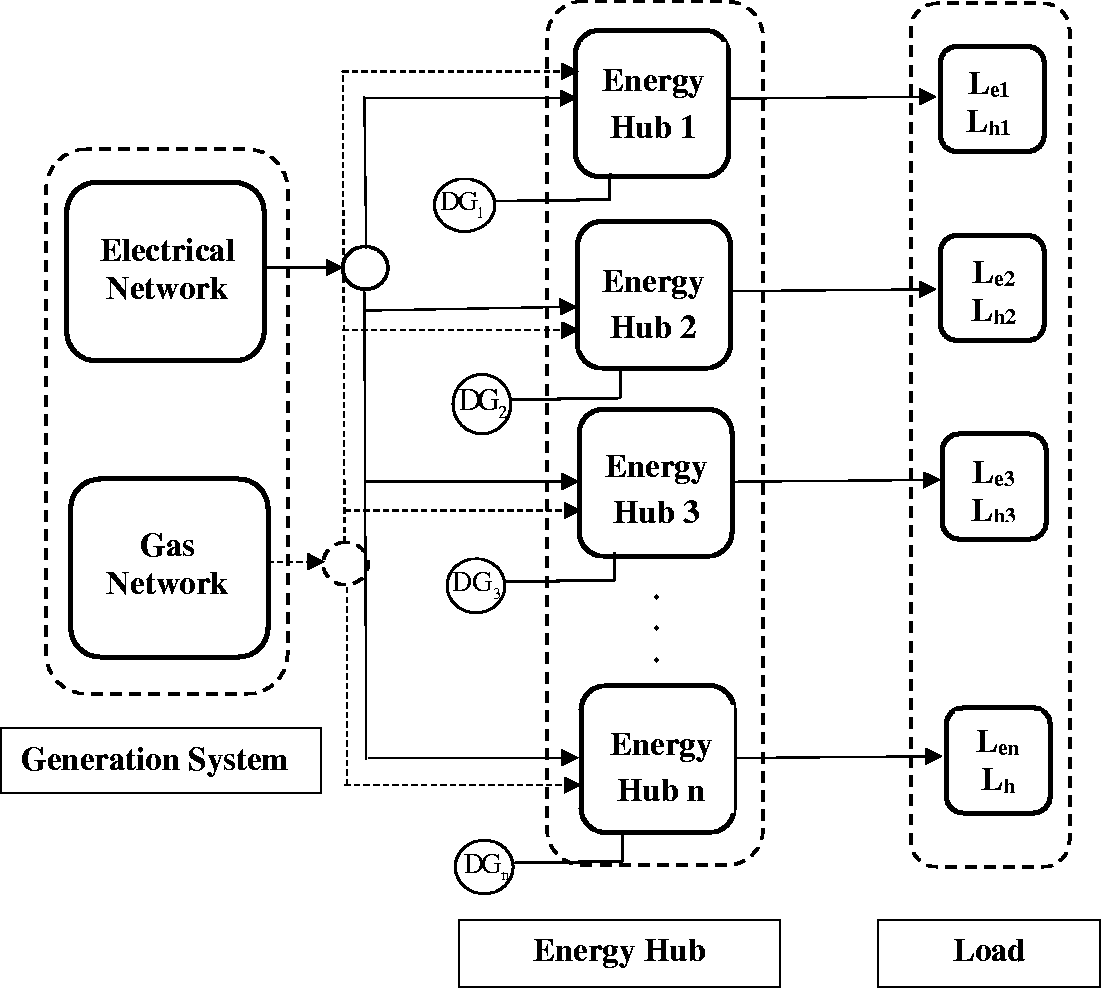
Typical MCE system.
Energy hub modelling
An energy hub is indeed an interface between power producers, consumers and the transportation infrastructure. The energy hub receives various forms of energies such as electricity, natural gas, wind power and PV energy at its input ports. On the other hand, it delivers appropriate electricity and heating (or cooling) services at its output ports.
The energy hub mainly is an encasement including various converters such as transformers, power electronic devices, CHP technology and heat exchangers. Converters can supply the connected loads by establishing redundant connections between input and output ports in an efficient way. Figure 2 illustrates a typical energy hub with its converters.

General structure of an energy hub.
The interconnections between inputs and outputs of an energy hub can be modelled by a coupling matrix

A single converter is normally denoted by its converting coefficient. However, in a multiple input–output energy hub, due to using several converters, the input energy may split up to different converters. Consequently, other coupling factors known as dispatch factors are introduced. The mentioned factor is mainly responsible to show how the energy dispatches between the hub converters. Moreover, it plays an important role in MCE optimization procedure and is the key approach which enables the energy hub to operate more efficient than conventional decoupled systems. The multiple energy hub input–output relationship can be stated as
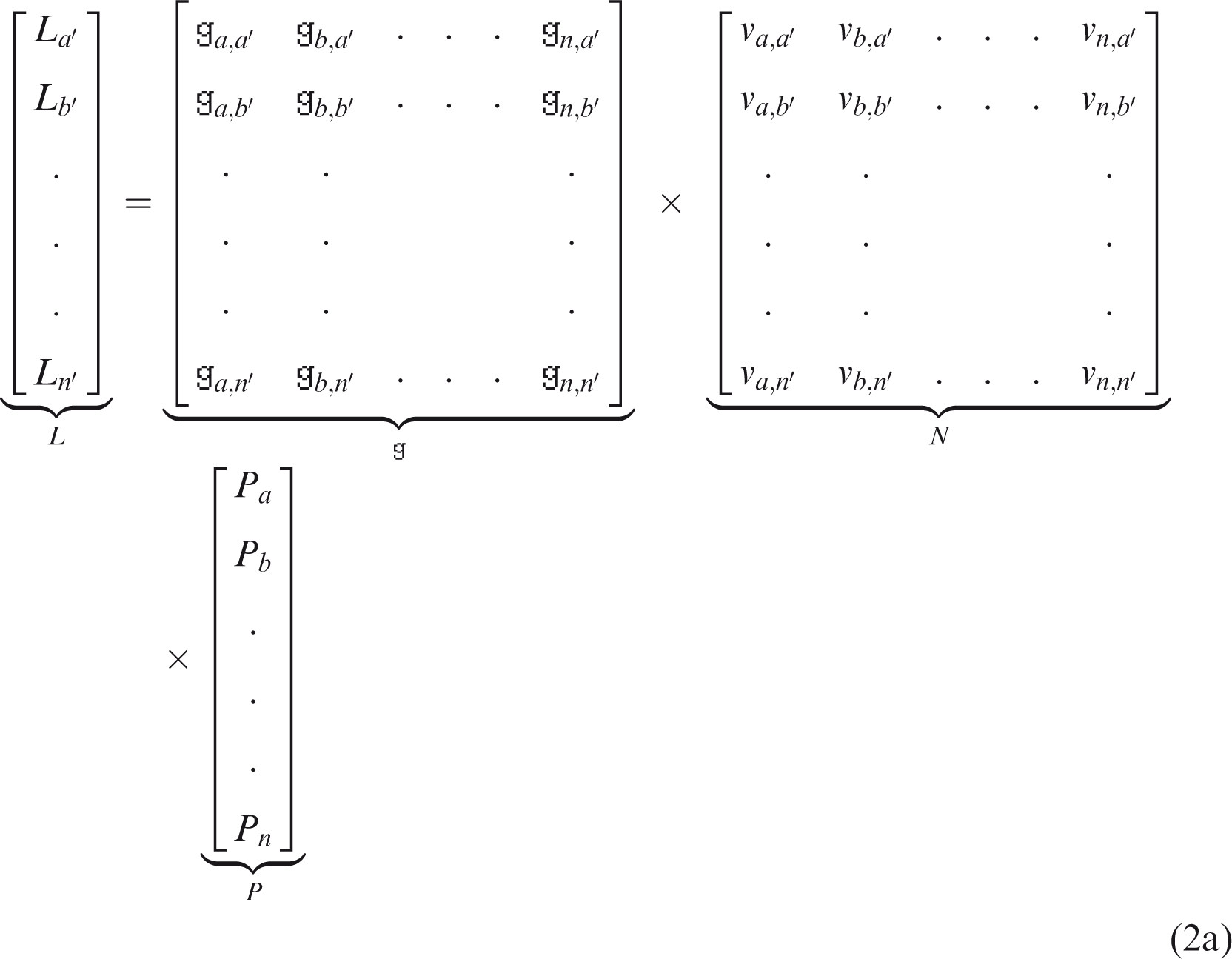

The converter coefficients are supposed to be constant in this paper. Accordingly, the
As mentioned earlier, the energy hub has various converters depending on the kind of the energy received at input ports. In this paper, the electricity power (Pe), natural gas (Pg) and also wind (Pw) and PV powers (PPV) are considered as hub’s input energies. Also, the electricity (Le) and heating (Lh) (or cooling (Lc)) loads are connected to the output ports which should be supplied efficiently. Figure 3 illustrates the structure of energy hub studied in this paper.
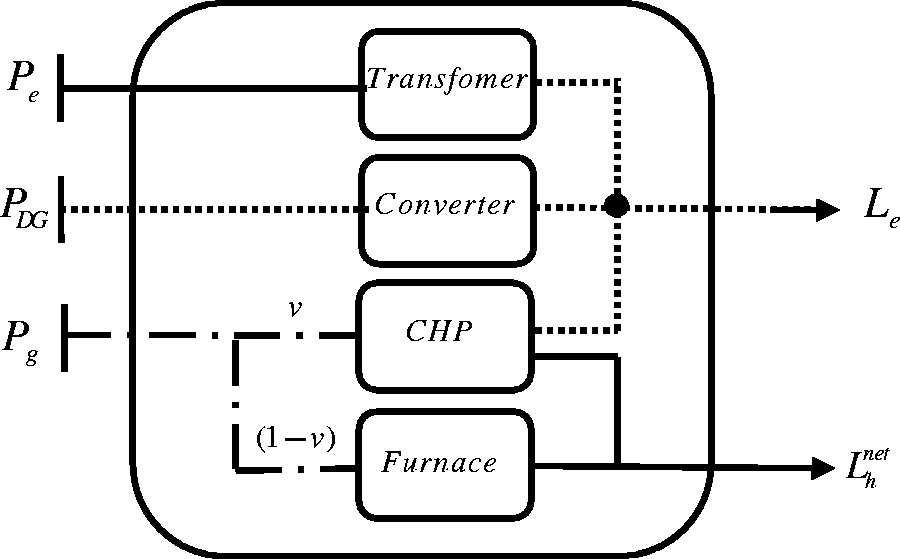
Structure of the considered energy hub.
In order to represent the hub mathematically, equation (2) would be reformed as

As mentioned above, v is the dispatch factor which shows the energy dispatch between CHP and the furnace.
The cooling loads connected to specified energy hubs have similar roles as heat loads. Therefore,



Accordingly, the following equations are obtained

Capacity of converters and other physical and practical concerns constrain the value of v in each hub. Such constraints are as follows and should be considered in generating feasible dispatch factors during the optimization procedure. More interested readers could find detailed explanations in Hanjie and Baldick
10
and Moeini-Aghtaie et al.
23


Consequently

The probabilistic distributed power generation based on point estimate method
In order to consider stochastic output of the WTs and PV panels, an efficient characterization approach is required. As mentioned before, produced power of the WTs and PV panels are stochastic in nature. Accordingly, an appropriate probabilistic approach should be modelled. Several probabilistic methods have been introduced in the literature.15,16 According to these methods, certain distributions are allocated representing the possibility of each event. Recently, several software tools have been also introduced for estimating the future states due to the available data. For instance, PVGIS is a PV generation estimation tool which simplifies the estimating process. 24 Among the approximate methods or simulation ones, the point estimate method (PEM) is found to be one of the most efficient and accurate approaches which has a relatively low computational burden. 25 PEM is an efficient well-known method which is widely used in various fields of power system studies deals with statistical data. 26 In order to implement the PEM in power system studies, it is required to use the historical records available for wind speed and sun radiation of the site under study. In this paper, the two PEMs are implemented in order to deal with the stochastic studies. Moreover, the historical data of wind speed and sun radiation are used to calculate the wind power of each turbine and PV generation of panels. The required historical data of wind speed and sun radiation are available in www.powerauthority.on.ca/sop/. 27 As a result, based on the available data, the mean, variance and skewness can be obtained. In fact, the necessary parameters of PEM have been calculated and can be fed to the probabilistic ED problem. As follows, fundamentals of the two PEMs and also, the wind power and PV generation functions are described. It is noteworthy that turbines and PV panels are considered without correlation. Accordingly, each DG will be studied individually.
Two PEMs
In this section, a brief explanation of two PEMs is presented. The main goal of this technique is to estimate a value of the desired parameter based on its historical data. For this purpose, the mean, variance and also skewness of the historical data should be available. After calculating the mentioned parameters, two estimated values and also their probability values are computed as



Afterwards, the desired parameter which is supposed to be the wind speed and the sun radiation (corresponding to each hour) would be calculated as

Wind power generation
After calculating the wind speed of each turbine during different hours, the generated wind power is calculated as
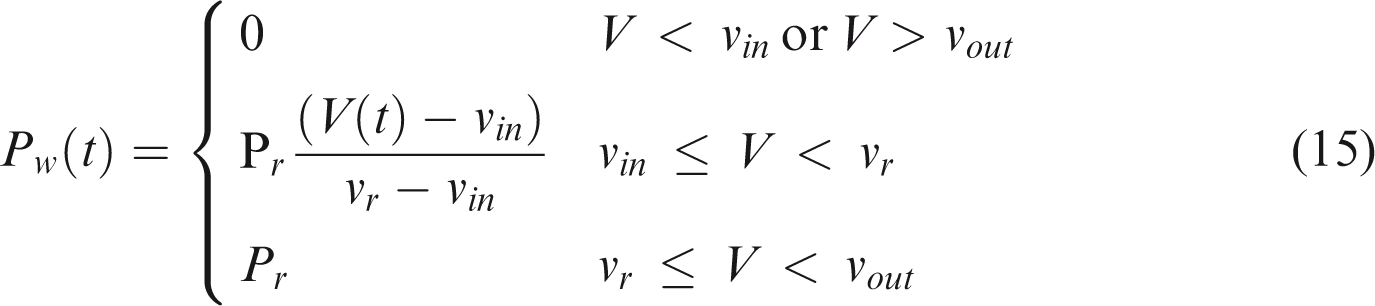
In order to obtain the treatable results, various types of energies and all of the calculations are considered in per-unit (p.u.). Accordingly, Pr is considered equal to 1 p.u. in equation (15).
PV power generation
PV is a term which covers the conversion of light into electricity by using semiconducting materials that exhibit the PV effect. Solar PV has specific advantages as an energy source. More importantly, its operation generates no pollution and no greenhouse gas emissions. A typical PV system employs solar panels, each comprising a number of solar cells, which generate electric power. PV generation has the potential to provide a significant portion of future world electrical energy.
28
The main disadvantage of PV systems is their stochastic nature due to intermittent radiation of sun. Dust and clouds also diminish the power output. In this paper, such probable parameters are neglected and only the effects of sunlight changes during a day are taken into account. Clearly, PV generation would be approximately equal to zero during the night time. This parameter would have the growing amount as the day starts. It would have a peak value about noon. Afterwards, it would gradually decrease until zero. In other words, the PV generation would have a general pattern similar to the normal distribution. The operation of each PV panel depends on the amount of solar radiation, ambient temperature and characteristics of the module itself. In this paper, the solar radiation for each hour of the day is obtained by the two PEMs utilizing the historical data. When the estimated points of solar radiation and the related probability values are obtained for each hour, the probabilistic output power of the PV panels is calculated using the following equations
29





PPV is the output power of the PV module and sa is the average solar irradiance at each hour. The ambient temperature is assumed to be constant in this paper in order to reduce the computational burden.
ED for MCE systems
The main goal of the considered optimization problem is to determine the optimal operation of each energy hub as well as various loads being supplied. This paper attempts to achieve an optimal solution which simultaneously provides the energy hubs internal optimization and also the system ED. Accordingly, an efficient heuristic method is applied to obtain the dispatch factor of each hub. The dispatch factor determines how the received gas energy would be split up between CHP unit and furnace. Knowing the amount of energy hub loads (Le, Lh and Lc), the generated wind power (equation (15)), PV generation (equation (20)) and also the dispatch factor values, it is possible to identify the input powers of each hub (Pe and Pg) according to equation (7). Thereupon, the electrical and gas injected to each bus will be set. The next step deals with the ED of energy carriers which tries to find the optimum generation amount of the involved units while the total cost of energies is as low as possible.
In order to mathematically show the proposed ED model of energy hubs, the objective function including the electrical and gas costs should be minimized. All types of the considered loads in each hour should be supplied and hence, they are represented as an equality constraint in the optimization process. The lower and upper bounds of the hub’s input carriers and also the dispatch matrices are incorporated in the proposed model as inequality constraints. The mentioned constraints are formulated
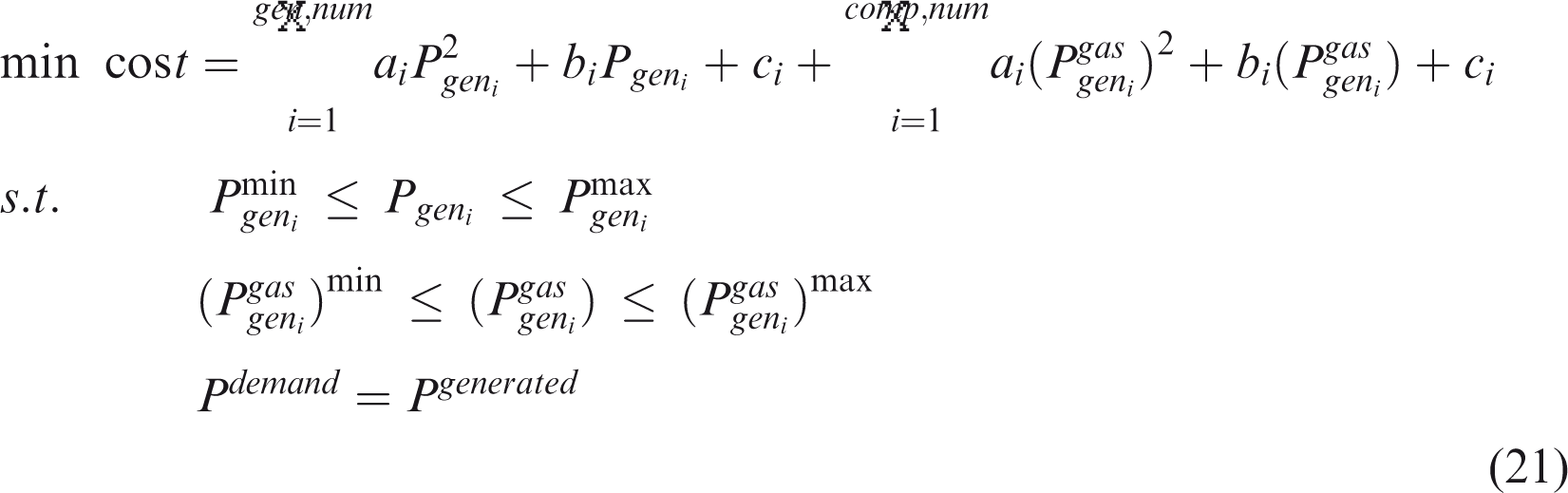
Implementing the proposed optimization algorithm, the optimal dispatch of each hub and the economic condition of energy carriers are found. The low computational burden and high probability of achieving optimum solutions are the superiorities of the proposed approach.
Optimization algorithm
This paper enlists the GSO algorithm for solving the MCED problem. Therefore, in this section, the principles of the conventional GSO and its modified version, nominated as AGSO, are reviewed.
The main idea of the GSO is inspired by animal group-living and specially searching behaviour. This method utilizes either ‘producing’ as the finding process or ‘scrounging’ as the tracking strategy. The GSO algorithm is a population-based heuristic algorithm. The GSO members are categorized into three types known as producer, scroungers and rangers.
At each iteration, a group member which has the best fitness value is considered as the producer. The producer is a member which tries to find the best opportunities. For this purpose, the producer uses its vision ability. The vision ability is a process to test some points in the vicinity of its current position. Scroungers on the other hand, make joining moves toward the producer with the aim of finding better solutions. The third member is named as Rangers and makes random walks. Detailed explanations are available in He et al. 17
The AGSO algorithm is achieved by applying some modifications on the conventional GSO. As explained in Daryani et al., 22 in the limited runtime process, the conventional GSO mostly stuck in local optimums instead of achieving to a global one. In this regard, the modified versions of GSO provide more efficient searching tools.18–22 In the following, the proposed AGSO is discussed.
According to the conventional GSO and other modified versions, ranger members are committed to perform random walks in the search area. Additionally, if a ranger finds better fitness value in comparison with the producer, the mentioned ranger is replaced as producer. It is worth to consider that in some cases, the producer may be located in the local minima, while still provides better fitness value in comparison to the available rangers. However, some rangers may have chance to approach to better solutions in the following iterations. Hence, it could be worthy not to ignore the potential rangers during the optimization procedure. The aim of the proposed AGSO algorithm is to pay more attention to the ranging process. Based on the conventional GSO, only producer member is equipped to the vision ability. It seems that, if some other members have this ability as well, the searching process would be prompted. Moreover, the probability of getting stuck in the local minima would be minimized.
During each iteration, the ranger members also are sorted with respect to their fitness value. The ranger member with the least fitness value is appointed as producer of rangers. The producer of rangers, also, is equipped to the vision ability and looks for the probable better opportunities.
Test system under study
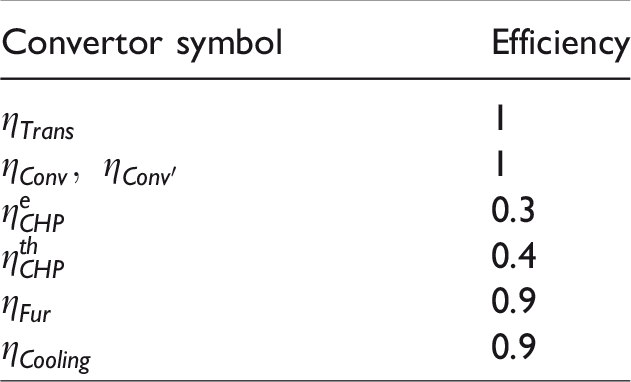
In this section, the considered system is briefly introduced. The studies are conducted on an 11-hub test system where there are 14 buses in the electricity network and 20 nodes in the gas network. More interested readers can refer to Moeini-Aghtaie et al. 13 for further information. This test system comprises the similar energy hubs whose characteristics have been studied in detail before. Other data of the hubs, including hubs’ convertor efficiencies, electrical loads, installed capacity of CHPs and thermal (cooling) loads are included in Tables 1 and 2, respectively. More required data including the power system data, basic data and also information about generators and compressors are available in http://ee.sharif.edu/∼e_hajipour/index_files/ Gas_1 Electeric_Case.pdf. 30
Hub convertor efficiencies.
Energy loads and wind turbines' data in the 11-hub test system.
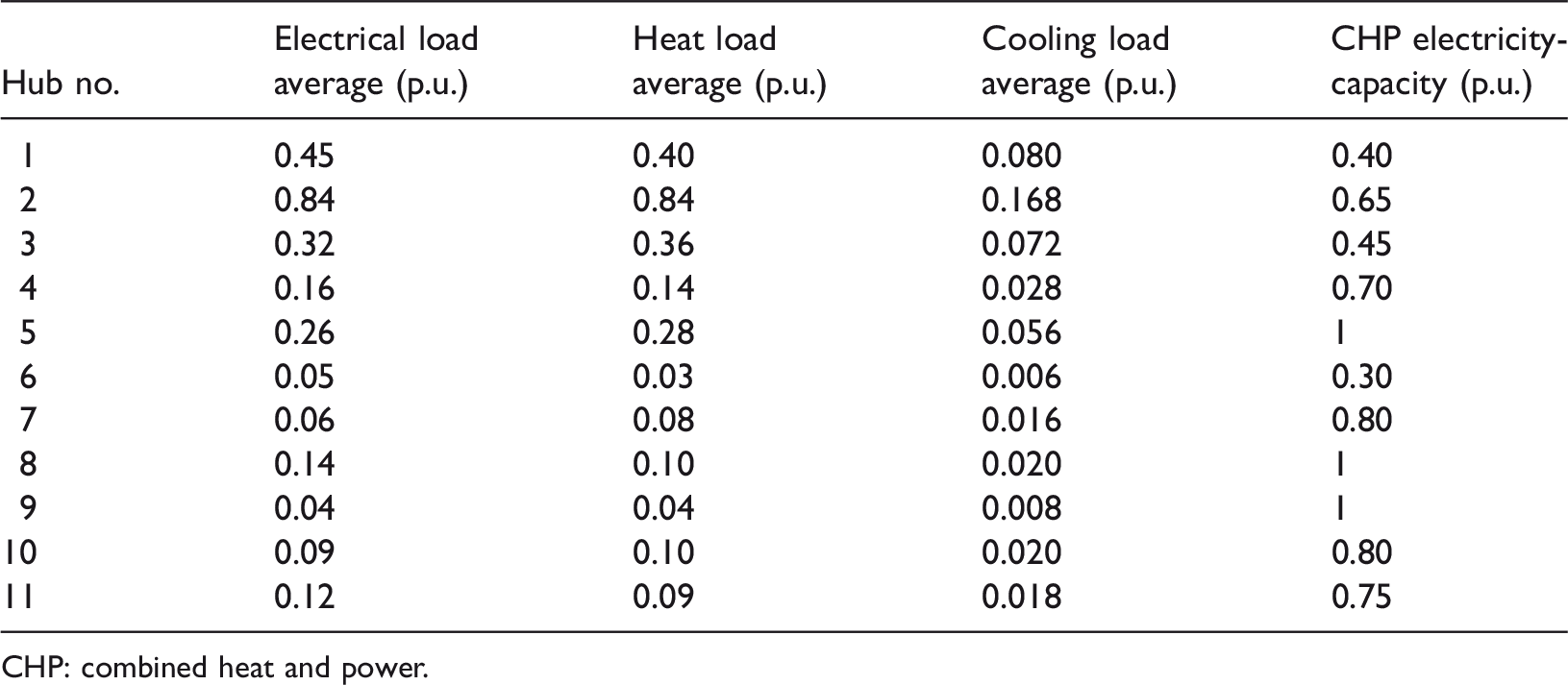
CHP: combined heat and power.
Simulation results and numerical analysis
In order to validate the performance of the proposed method, some simulations are performed on the mentioned test system. In this paper, the member numbers of AGSO group are considered 30 and the maximum iteration number is 120. The simulations are carried out via MATLAB.9 running in a 2.5 GHz personal computer. As mentioned earlier, the optimal dispatch factors of energy hubs are calculated at different hours. These factors indicate how much of the delivered gas at the input ports of the hubs should be allocated to the electrical loads and how much should be accounted for the thermal loads. The mentioned problem is studied in two cases as follows.
Case 1
In this case, the intermittent resources are neglected. In other words, the electrical and gas networks are the only authorities for the load supplying. As obvious, renewable energy resources add probabilistic analysis to the power system studies. As well, this case aims not to involve with such sophisticated problems and tries to concentrate on energy hubs and MCE system solely. On the other hand, it should be considered that absence of the intermittent generations in the vicinity of energy hubs would result in higher operation costs.
The ED of the MCE system is studied with considering load changes every hour. As mentioned earlier, the electrical and gas networks supply the connected loads. Thereupon, after optimizing the ED problem with considering the proposed AGSO algorithm, the total costs corresponding to each hour are obtained which are included in Table 3.
Total costs of MCE system in 24-h period.
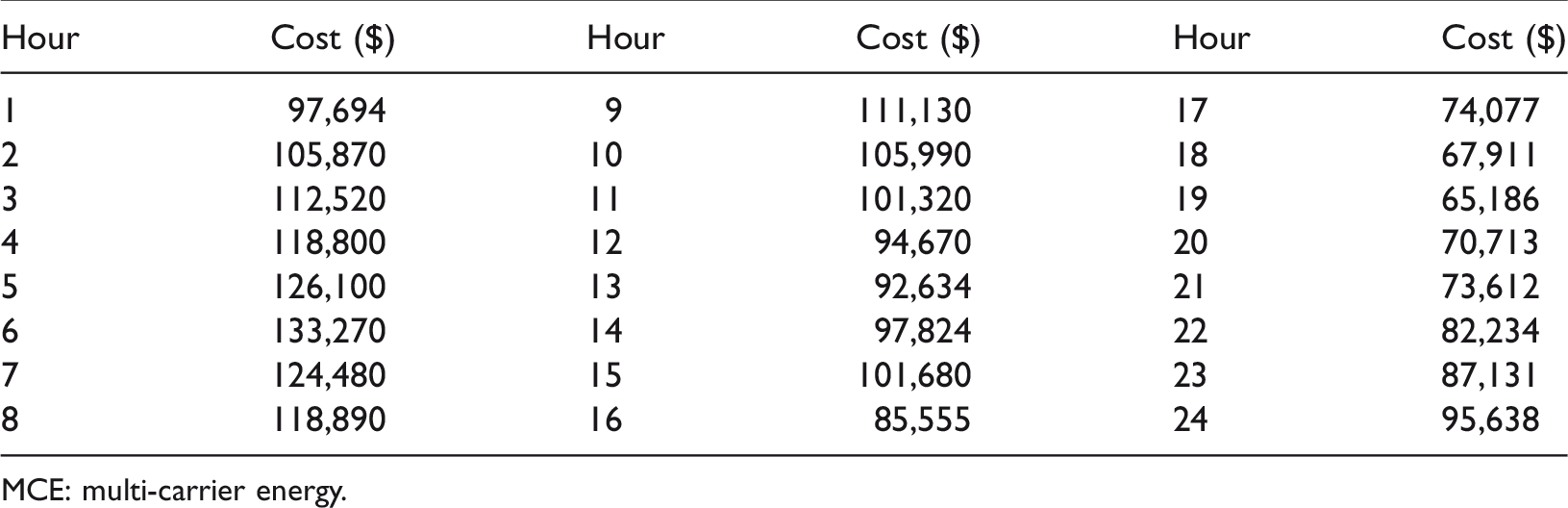
MCE: multi-carrier energy.
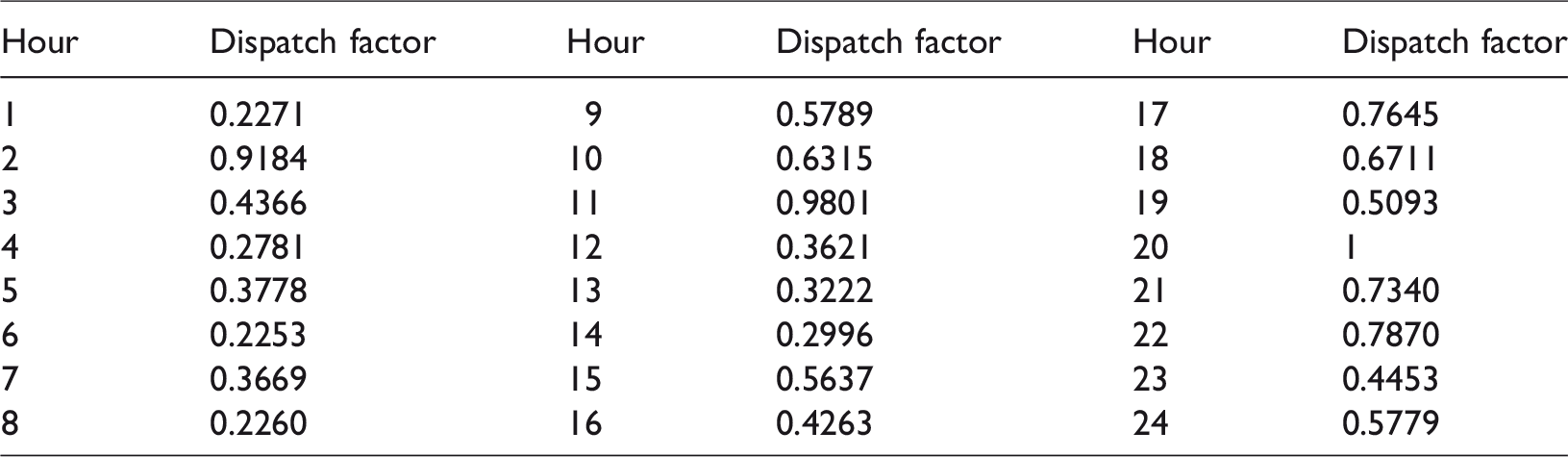
Implementing the proposed method, the optimal dispatch factors of energy hubs are obtained at each hour. As an example, the resulting dispatch factors of hub 5 corresponding to different hours are shown in Table 4. In order to investigate the way, these factors relate to the connected loads, variations of the electrical and thermal loads of the same hub are also illustrated in Figure 4.
Dispatch factors corresponding to hub 5 in a 24-h period (Case 1).
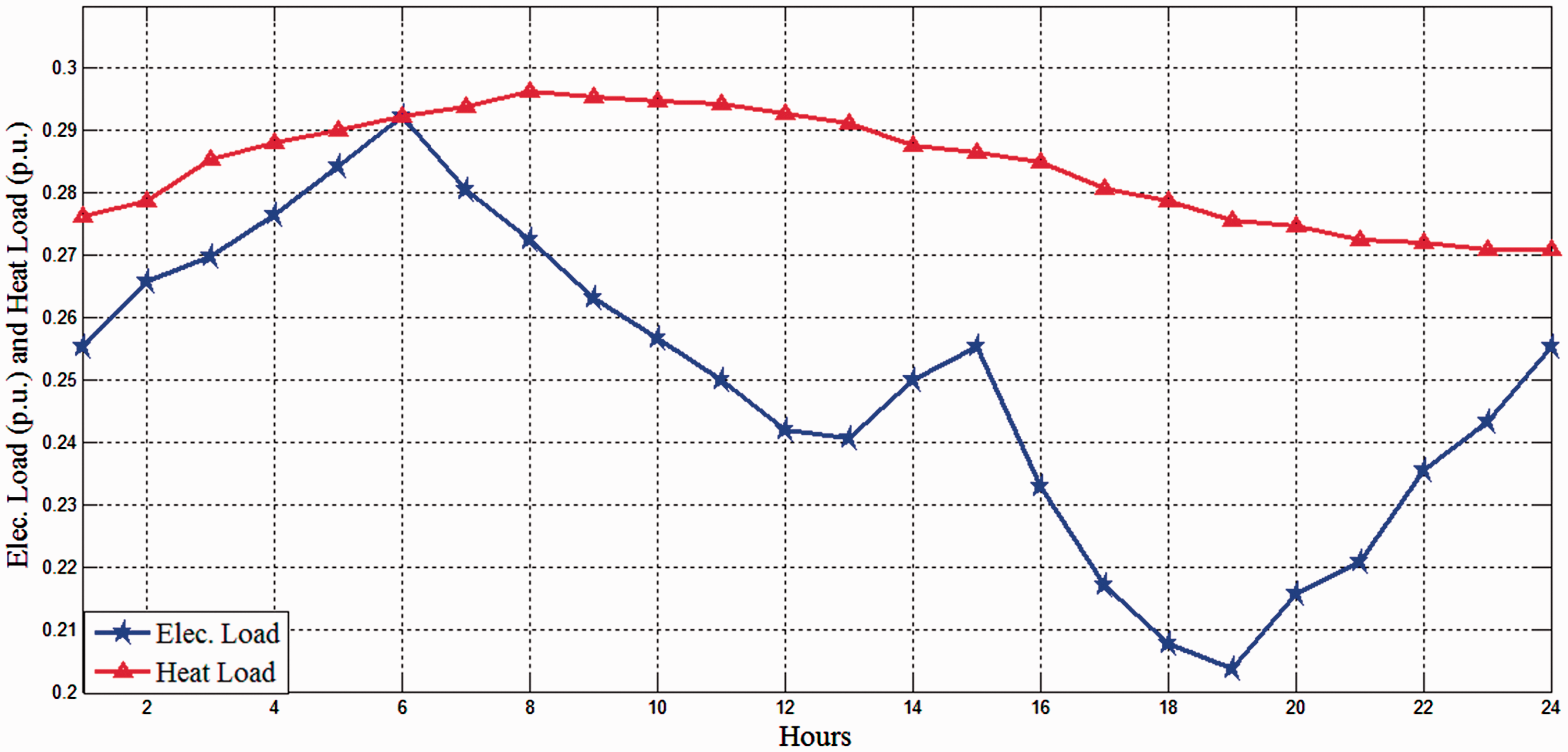
Electrical load and heat load of hub 5.
Obviously, the dispatch factor gets different values depending on the connected loads. During first hours (until 6), both thermal and electrical loads are raised. Thus, dispatch factor does not have a certain trend. However, as the thermal load is approximately higher, more gas power forwards toward the furnace. Hence, the dispatch factors are relatively low. During next 6 h, thermal load is relatively constant, but the electrical load decreases significantly. On the other hand, electrical power is more expensive than gas power due to the considered cost coefficients. Thus, it is economical to supply the electrical loads using the gas power (through the CHP output). Therefore, dispatch factors are somehow higher during these hours. Similar analysis could be presented for the rest of the hours.
Case 2
In this case, intermittent resources are available in the hub vicinity in order to make studies more practical. Wind energy and PV generation are the considered renewable power generations. It is noteworthy that WTs are installed in the hubs 1, 3, 5, 7, 9 and 11. On the other hand, PV panels are available at hubs 2, 5, 8 and 11. It is expected to achieve economic benefits utilizing the intermittent resources. In this regard, it is noteworthy to compare system operation costs considering both presence and absence of renewable power generation. Figure 5 illustrates total cost values achieved in this case compared with case 1, during a 24-h period.
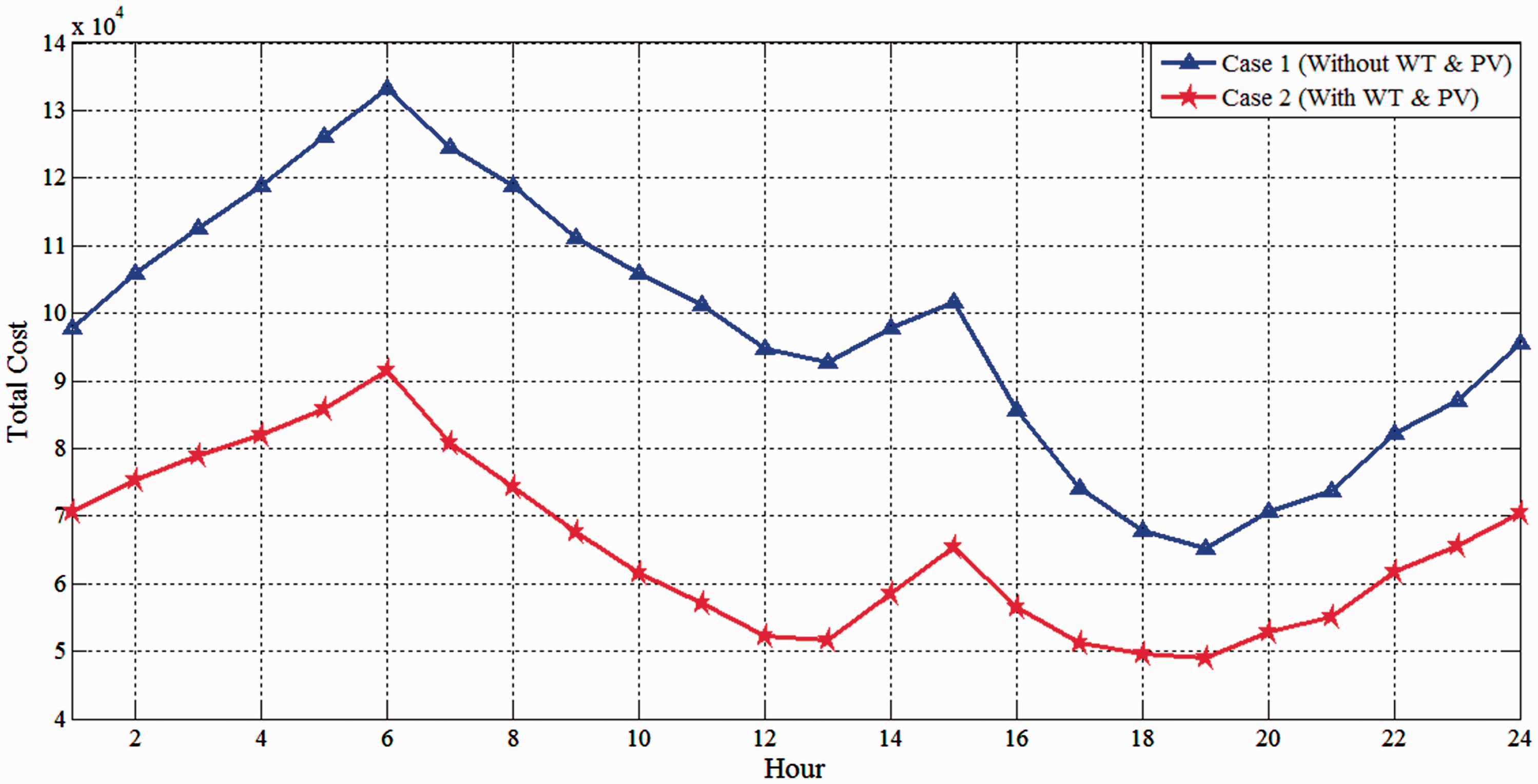
Total cost variations in 24-h period.
As evident, installing intermittent resources in the hub vicinity has impressive effect on the system operation cost. DG resources such as WT and PV act as negative electrical loads. Therefore, the energy absorbed from the network decreases and this results in operation cost reduction. Since the installed DG capacities are less than connected loads, the cost patterns in both cases are similar, but have quantitative differences. However, utilizing DG infrastructures leads to approximately 30% reduction in the energy costs.
In order to investigate the impact of renewable generation on economic discussions more accurate, the following interpretations are noteworthy. Figure 6 illustrates the connected thermal and electrical loads to the hub 5 during 24 h. The generation of WT and PV connected to this hub is also depicted in this figure. Moreover, Table 5 indicates the resulting dispatch factors achieved by AGSO algorithm.
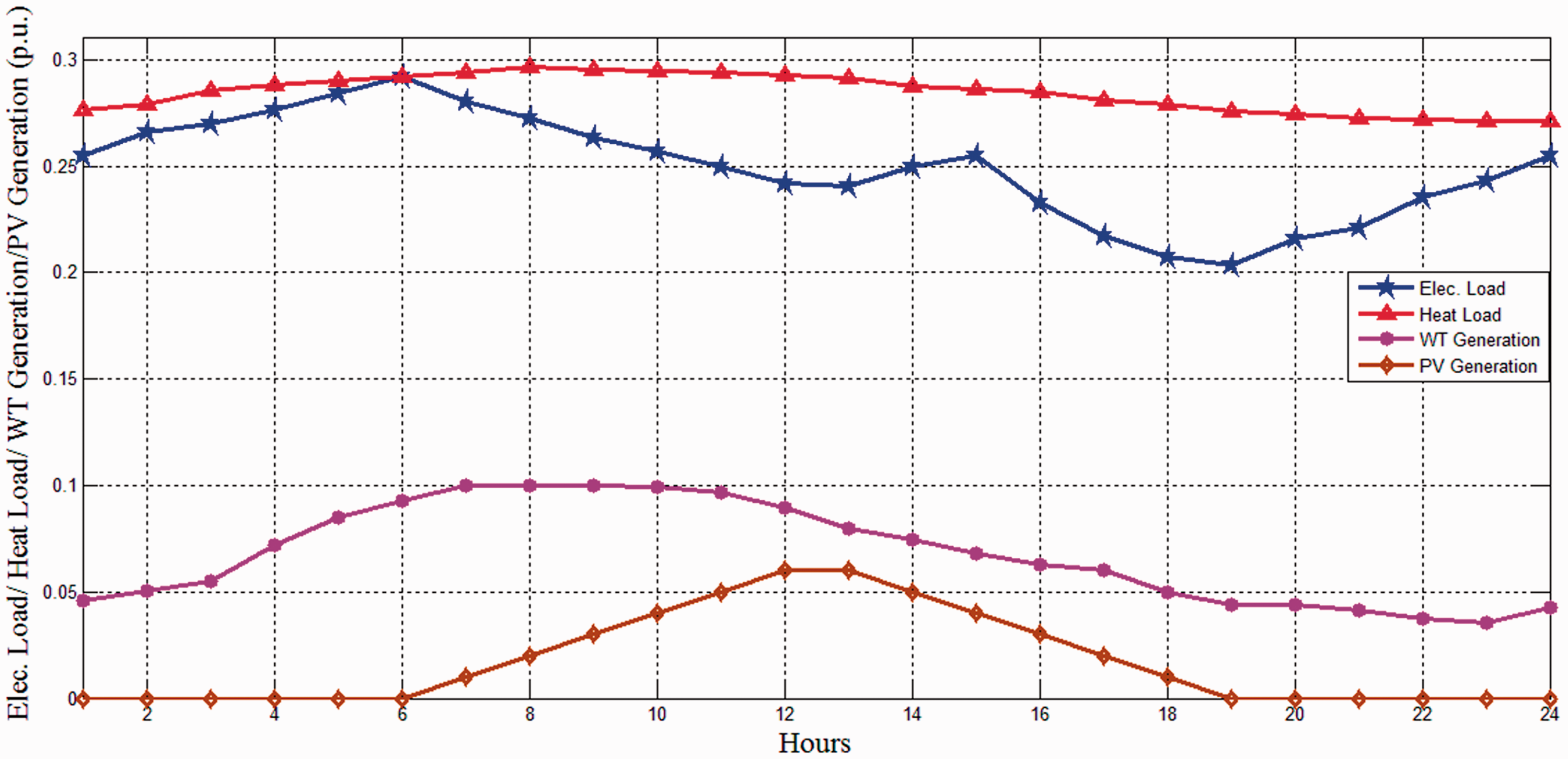
Electrical load, heat load, WT and PV generation of hub 5.
Dispatch factors corresponded to hub 5 in 24-h period (Case 2).
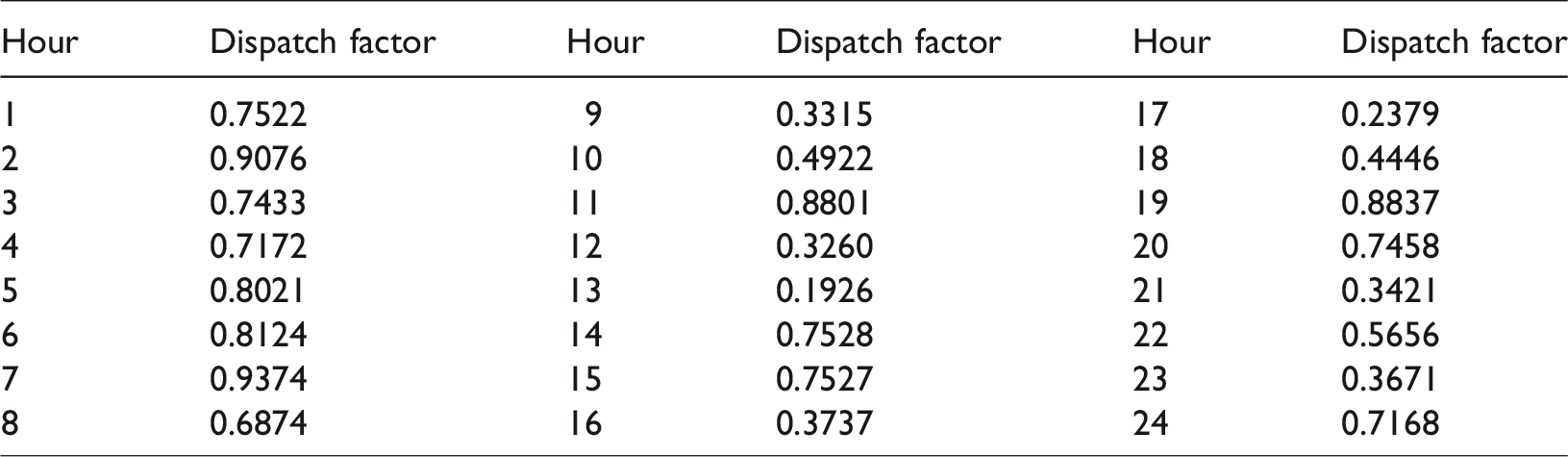
Going through Figure 6 and simultaneously investigating the results of Table 5 provide valuable information. As considered, supplying energy through the gas system is cheaper. Accordingly, it is preferred to supply much portion of loads through the gas network. Thereupon, as the gas power portion in supplying electrical loads gets higher, the higher value of dispatch factor would be obtained. The optimization process is implemented for each hour of operation. Consequently, considering the cost coefficients, the optimal operation and ED of system is achieved.
As outlined above, wind power and PV generation not only decrease electricity costs, but also reduce the total cost significantly. Figures 7 and 8 illustrate the electrical, gas and total costs of the energy system, when the energy networks are decoupled and when they are coupled through the hubs (both considering renewable energy sources in vicinity).
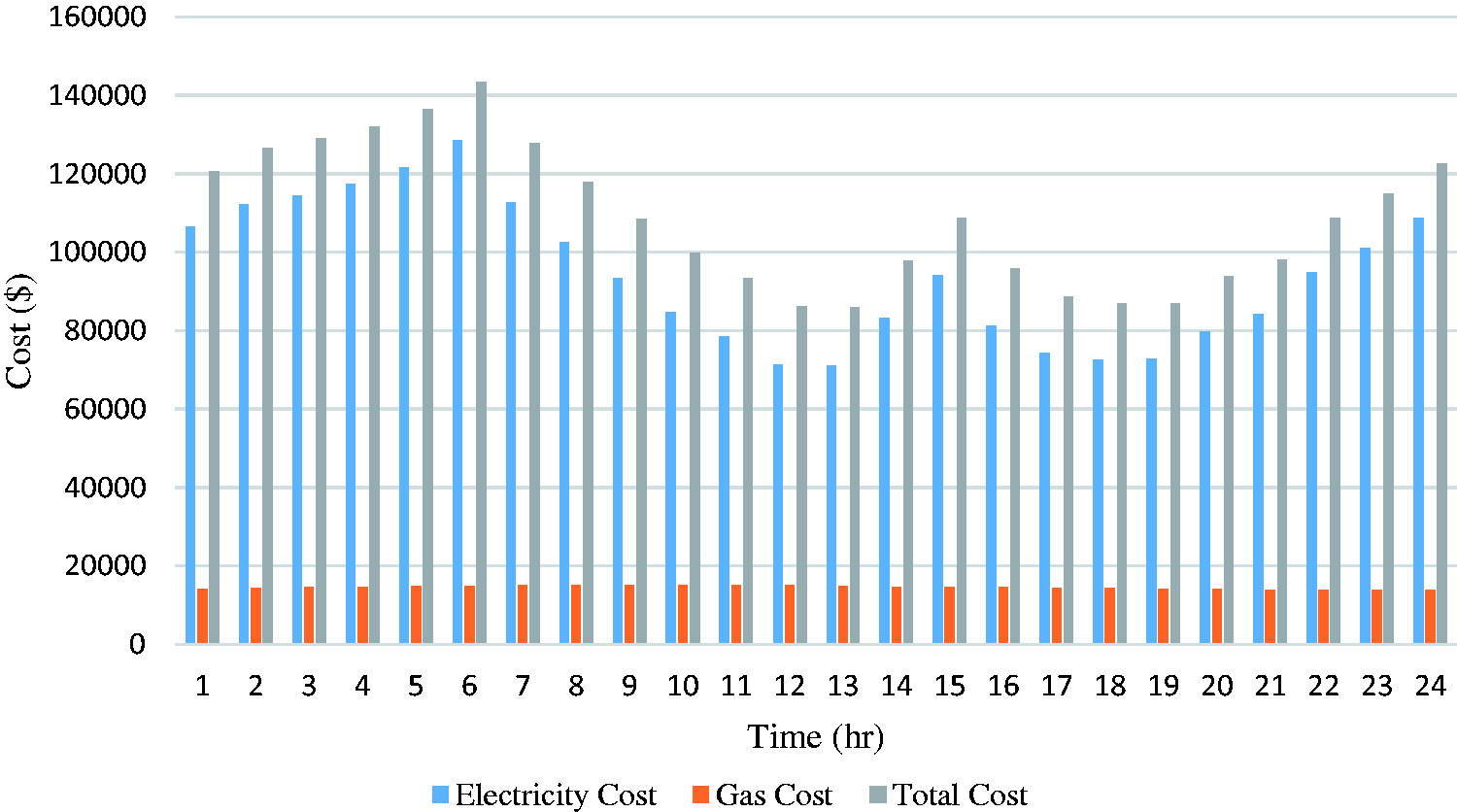
Variations of electrical energy, gas and total cost for a decomposed energy system in 24-h period.
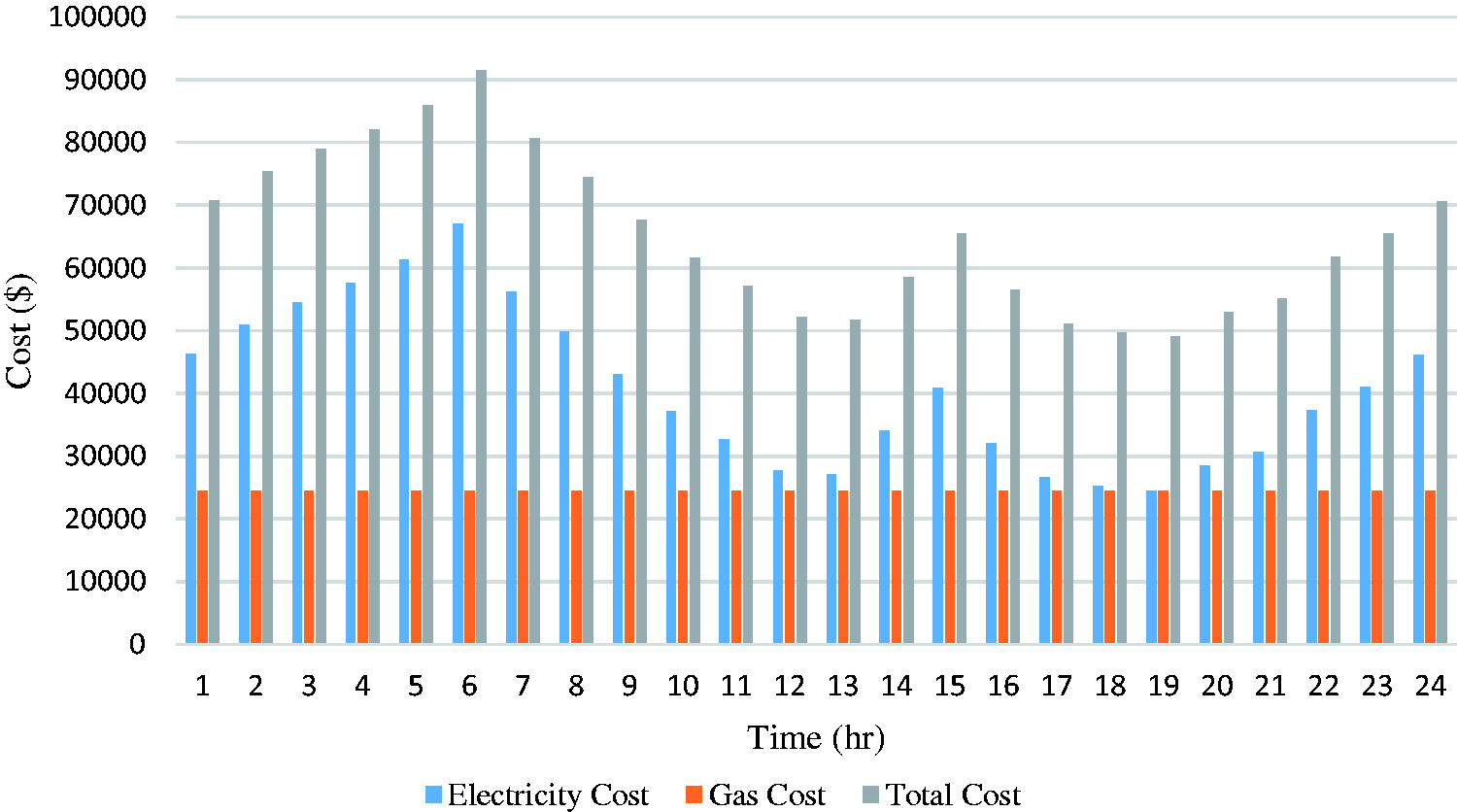
Variations of electrical energy, gas and total cost for a MCE system in 24-h period.
According to Figure 8, variations of the MCE system costs are mainly affected by the electrical loads. This is due to the constant values calculated for gas energy costs. Utilizing the intermittent resources besides the MCE system and energy hubs leads to efficient and optimal operation. As evident, this leads to significant reduction of costs during peak hours of consumption.
AGSO Performance evaluation
In order to investigate efficiency of the AGSO algorithm to solve the MCED problem, the problem is also modelled by one of the other well-known optimization methods, that is, PSO algorithm. The conventional GSO algorithm is also implemented to indicate capabilities and advantages of the proposed AGSO algorithm. Figure 9 illustrates optimization procedure of the AGSO, GSO and PSO for the MCED problem of the studied 11-hub test system. Optimization evolution related for t = 16 is presented. As observed, the AGSO algorithm, due to its ranger members equipped with vision ability, indicates superior convergence and reaches better solution.
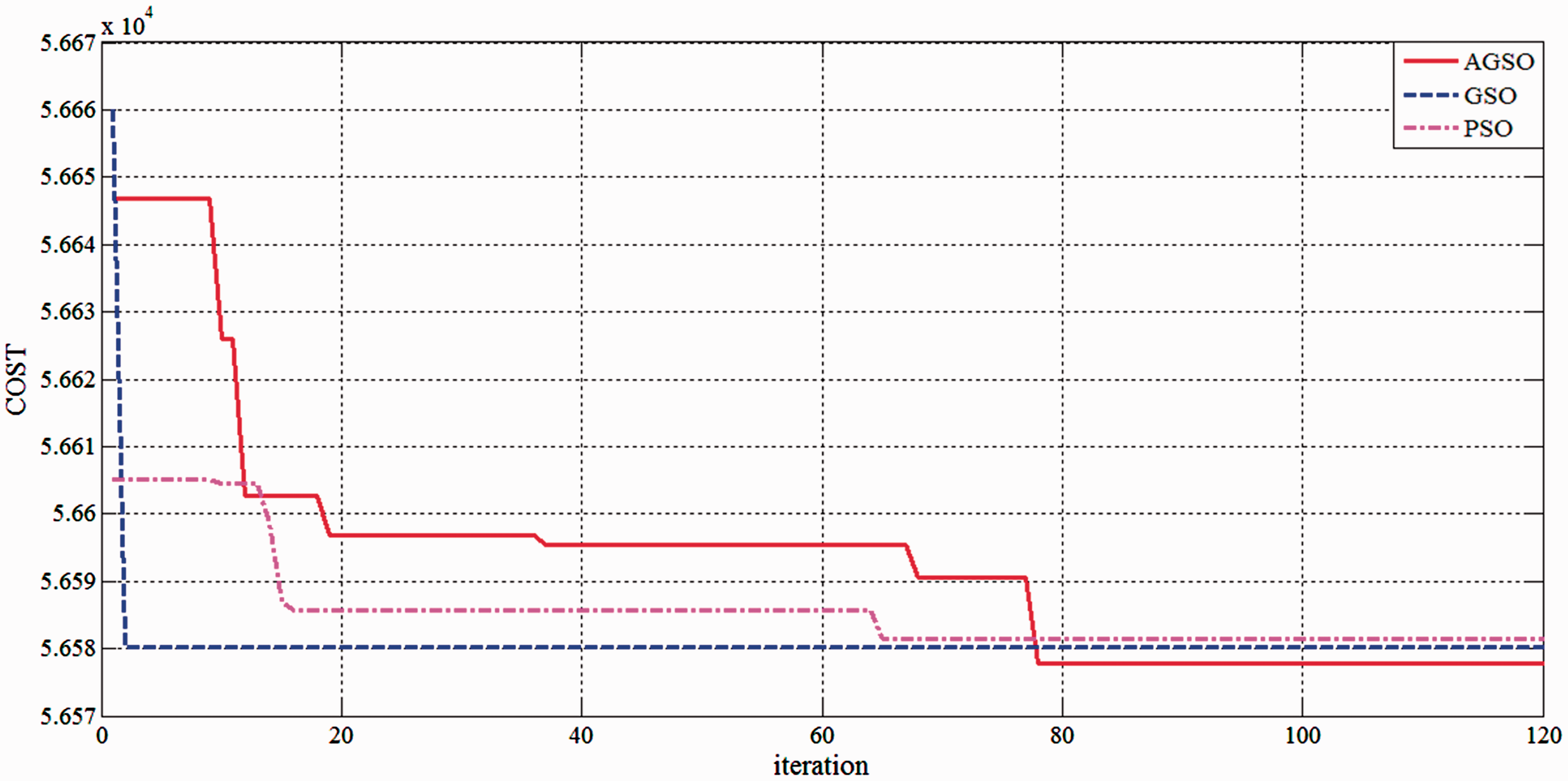
Convergence procedure of AGSO, GSO and PSO for the 11-hub test system at t = 16.
Evaluating the effect of converter coefficients on MCE system operation
The aim of this section is to investigate the effects of converter coefficients on MCED problem. As mentioned, the converter coefficients are supposed to be constant in this paper. Accordingly, the η matrix will be a constant efficiency matrix. On the other hand, dispatch factor matrix N is assumed as a variable matrix. Although the dispatch factors play the key role of MCED optimization procedure, variation of converter coefficients would also affect the obtained results. In this section, the CHP electrical and thermal coefficients are considered equal to 0.4 and 0.45, respectively. 15 The second case study is repeated and the dispatch factors corresponding to hub 5 are illustrated in Table 6.
Dispatch factors corresponded to hub 5 in 24-h period.
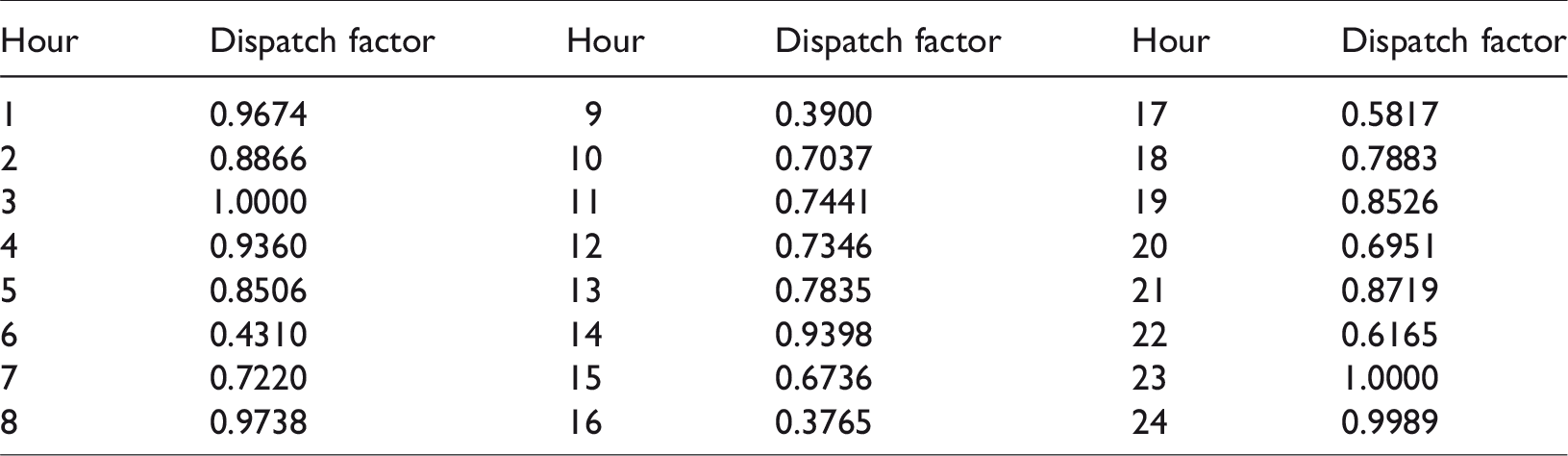
Comparing the results of Tables 5 and 6 indicates that, due to increasing in the CHP efficiencies, larger portion of natural gas energy goes through the CHP. Accordingly, in the most of hours, the dispatch factor gets bigger value. On the other hand, by assigning more energy to the CHP, more portion of electrical and heating (or cooling) loads would be supplied through the CHP infrastructure and accordingly by the natural gas power. As the natural gas energy is considered to be cheaper, increasing in the CHP efficiencies leads to system total cost reduction. The MCE system costs obtained in this case is compared with the results of case 2, as indicated in Figure 10. Influence of increasing of the CHP efficiencies on the system cost reduction is obvious in this figure.
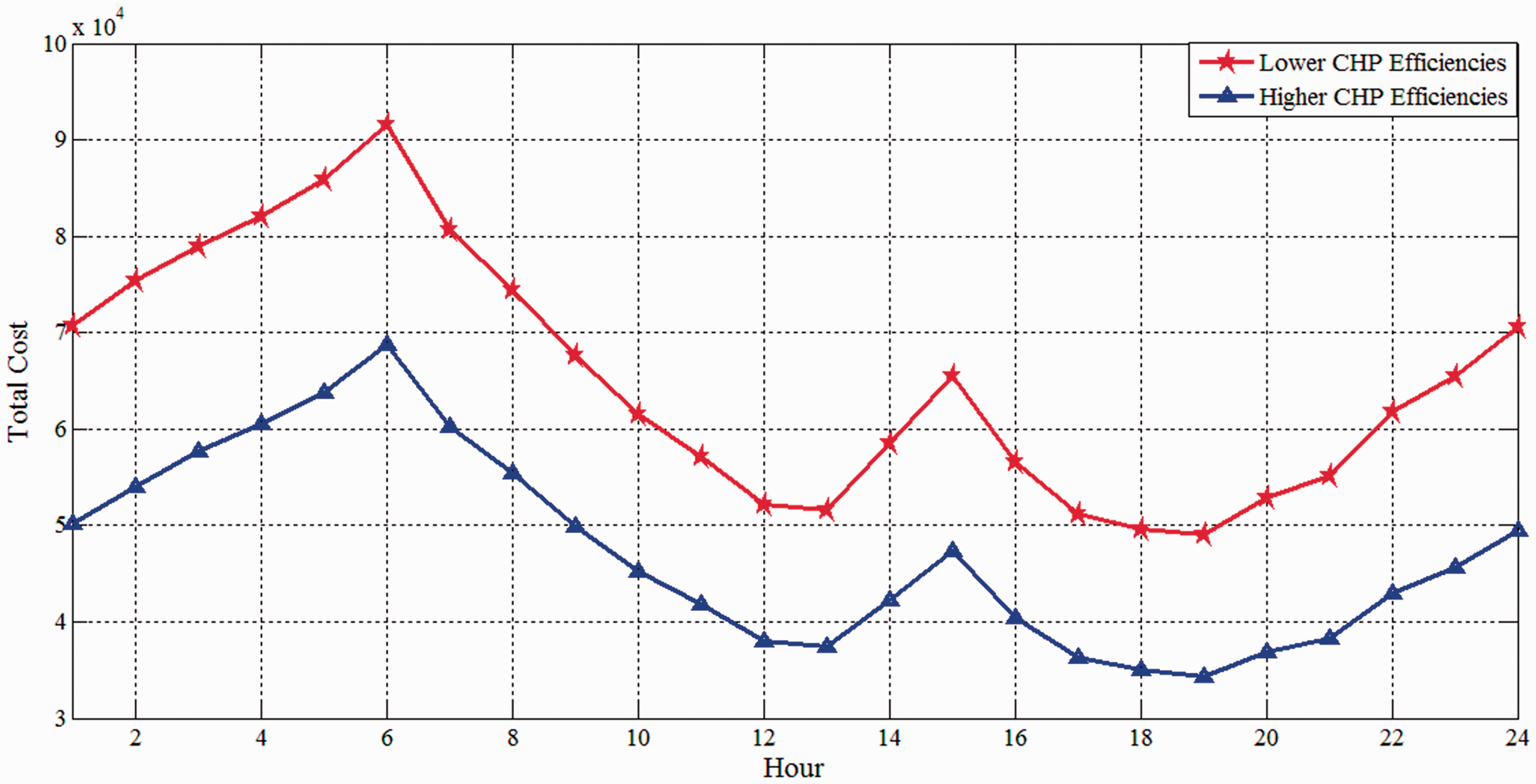
Total cost variations in 24-h period.
Conclusion
The coordinated energy systems are known as the future energy infrastructures. However, there have been little efforts to investigate the MCE systems’ characteristics. This paper studies the ED of multi-energy carriers. The coordination among various energy carriers is realized by employing the energy hub concept. Considering the mathematical model of energy hub and ED equations, formulation of the MCED problem is obtained. Wind power and PV generation are considered as the renewable energy resources installed in the hub vicinity. DGs and their stochastic operation result in uncertainties which make the probabilistic studies necessary. This non-convex nonlinear problem is handled by AGSO technique. AGSO algorithm concentrates on ranger members besides the producer one. Accordingly, the searching area would be thoroughly scanned. The proposed method, due to its improved searching abilities, indicates efficient performance in reaching to better solutions. In order to alleviate the computational burden of MCED problem, a decomposed model is established through dispatch factors associated with the energy hubs. The proposed approach is considered both with and without DGs. Although DGs would raise the complexity of problem, system cost would have impressive reduction. Coordinated operation of energy networks in addition to DG presence in the considered system has significantly improved efficiency and performance of the system. The obtained results such as the optimal decision variables for each hub and the imposed costs of the system confirm the effectiveness of MCE systems in the coordinately operating of energy networks.
Footnotes
Declaration of conflicting interests
The author(s) declared no potential conflicts of interest with respect to the research, authorship and/or publication of this article.
Funding
The author(s) received no financial support for the research, authorship and/or publication of this article.