



Abstract
Since the 1990s, the volume of biogas produced in the world has been increasing. Biomethane (upgraded biogas) is a more versatile renewable fuel. Biogas transportation from production sites to upgrading facilities induces a scale advantage and an efficiency increase. Therefore, exploration of costs and energy use of biogas transportation using dedicated infrastructure is needed. A mathematical model to determine the optimum location for a certain biogas upgrading plant has been presented. It was developed to describe a local biogas grid that is used to collect biogas from several digesters and to deliver it to a central upgrading point. The model minimizes operational and maintenance costs per volumetric unit of biogas. The results indicate that cooperation between biogas producers in collecting biogas by means of a star layout reduces the cost of biomethane production (investment costs by 22.4–24.8% and operating and maintenance costs by 1.7–10.9%) relative to using a decentralized method. Merging smaller digesters into a smaller number of larger biogas upgrading plants reduces the biomethane production costs for the same biogas volume source.
Introduction
Biomethane (upgraded or enriched biogas) is a well manageable renewable energy resource. It can be transported, stored and utilized as natural gas. Therefore, biomethane is one of the most viable renewable energy resources as compared with others (synthetic gas, biofuel briquettes, wind and solar energy). 1 Usage of biomethane is important in improving the energy security of any country and reducing the emission of greenhouse gases. 2
There are multiple options for biogas utilization: combined heat and power (CHP) units; boilers; cookers; engine-generators; direct sale (delivery to industry, district heating, etc.).2,3 But biogas upgrading for further utilization as biomethane and its by-products is more economically attractive. 4 In the world, and especially in the European Union, the number of biogas upgrading facilities increases all the time. 5 Biomethane can be used in the same way as natural gas: as a vehicle fuel, for heating purpose, in power generating, etc. 6
There are a lot of substrate sites (crop, swine and dairy farms, etc.) which are situated nearby.7–11 There are the following upgrading options: decentralized one (on a farm or a similar site) and centralized one (agricultural, municipal or industrial biogas plants connected to the centralized upgrading system via biogas pipelines). Under current market conditions, biomethane production costs depend on the scale of facilities.2,12,13 The existing technologies have rather specific resources’ consumption requirements for biogas upgrading. 6
Small-scale biogas upgrading facilities are not competitive enough as compared with large-scale centralized ones. So, there is a problem with optimal facility siting. To solve the location problem, one should have information on the feedstock (capacity and location of biogas plants) and biomethane consumers. The most promising way is to transport biogas from small-scale producers to centralized biogas upgrading plants. This reduces both operational and maintenance costs.
Large-scale biogas and biomethane plants depend on transporting the substrate to digester and the residue to farms. The complexity of these procedures makes it hard to reach the profitability level. An alternative concept is to connect small-scale biogas plants (farm-based) into a system. This concept excludes the need for transportation of substrate and residues. Raw biogas is transported through a pipeline grid to a centralized biogas upgrading plant. 14 In this way, biomethane can be produced more effectively.
Small-scale biogas production at sites placed in a grid system can achieve the same economic benefits as a large-scale renewable gaseous fuel production. This system can later be extended by means of connecting new biogas plants.
Its operational process is as follows. From a farm biogas plant, raw biogas is transported, via a local grid pipeline, to a centralized biogas upgrading plant. Biomethane obtained is pumped to end user(s) (natural gas grid, vehicle filling station, etc.). To maximize the profitability of this method, it is important to determine the optimal location of the centralized biogas upgrading plant.
There are numerous studies considering business models for the biogas industry, including those studying their central upgrading; 10 costs and energy use of biogas transportation 15 ; the scale advantage on the upgrading system; 16 spatial evaluation of biogas plants and infrastructure 17 ; cooperative biogas to biomethane development. 18 The above studies calculate the costs of biomethane obtained for each digester, whether its biogas will be upgraded on-site or at a central location and also find out the advantages of centralized biogas upgrading. However, a relatively simple and correct mathematical model is still needed for decision-making. The innovation of this study is that it determines the optimal coordinate of a centralized biogas upgrading plant using information about biogas plants (capacity and location) and end-user location.
The aim of this study was to determine the optimal location for a biogas upgrading plant so that to minimize the production costs of biomethane.
Materials and methods
For this study, mathematical models were developed to ground optimal location of a centralized biogas upgrading plant. They allow determining minimum costs and energy use for the centralized biogas upgrading plant.
In the first mathematical model, an objective function is a minimum of operational and maintenance costs. Biogas digesters are connected to the centralized upgrading facilities by dedicated pipelines. Biomethane is transported to the end user. The length of these pipelines and their diameters are calculated.
Finally, the total costs of the biogas pipeline grid and upgrading facilities are determined. Investment costs are based on the following:
The length and diameter of pipeline segments; The compressor costs; The desulphurization and drying facilities costs; and The biogas upgrading facilities costs.
The choice of diameter is a trade-off between the investment costs for pipeline and energy costs for gas transportation. The mathematical model of pipeline optimization is based on steady-state flow, a specified maximum allowable absolute pressure19,20 and outlet gas velocity.
Furthermore, electricity, operational and maintenance costs are added. The final results are presented as the optimal coordinates of the centralized biogas upgrading plant, investment costs, operational and maintenance costs, energy consumption per volumetric unit of biogas.
The second mathematical model is simplified. Its objective function is a minimum of transport work for biogas to be transmitted to the centralized upgrading facilities.
A biogas infrastructure may collect renewable gaseous fuel from different digesters and transport it to an end user. There are two primary type of layout of biogas collection grid: star layout and fishbone layout. The first layout allows transporting the biogas through a single individual pipeline. In the second layout, the biogas from several digesters is collected through relatively smaller pipelines into a larger pipeline.21,22 In our study, the star layout was assumed.
At a digester site, rudimentary upgrading equipment (biogas clean-up) and compressor are installed. The compressed biogas is transported through a single pipeline straight to the central biogas upgrading plant. The biomethane obtained is delivered through the pipeline to the end user (Figure 1).

Centralized biomethane production.Source: developed by the authors.
To find the most cost-effective biogas upgrading facility, two different scenarios were considered. Scenario 1: each biogas plant has an own upgrading facility. The produced biomethane delivers to consumers (natural gas grid, natural gas filling station, etc.). Scenario 2: biogas from each plant is delivered to the large upgrading plant. The produced biomethane and by-product are delivered to the consumers.
Results
Point of relational optimum for biogas upgrading plants
Specific investment costs for the biogas upgrading facility is a monotone nonlinear function (Figure 2).
23
An equation for calculation of the specific investment costs has the following form


Specific investment costs for biogas water scrubbing upgrading facility.Source: adapted from Bauer et al. 23
This is the monotonous differentiable function. Its domain can be divided into two areas which have a different rate of change. Let us make a straight line L, which connects values of function SIC(FBG) on the borders of its domain. The point of rational optimum (FBG0) is the point where the values of the function SIC(FBG) has a maximum distance from the linear function L(FBG) (Figure 3).

Determining of rational optimum’s point.Source: developed by the authors.
Let us find the above point. An equation of a straight linear function has the following form

It should determine a maximum value of the following function

The first derivative of the function is equal to

Let us equate the first derivative to zero

The function’s optimum point can be found from the equation

The derivative of function SIC(FBG) is equal to

Therefore

and

Specific costs for biogas upgrading may be described by a power function (Figure 2). So, for water scrubbing technology the optimum point is 301.67 m3/h. If existing biogas plants have a capacity less than the optimum point, then the centralized biogas upgrading plant is appropriate. Otherwise, the sole facilities may be preferable.
Figure 2 shows a significant cost increase with a reduced capacity of technological equipment. The total production costs of the biomethane supply depend on capacity too. The increase of biogas upgrading plant capacity results in a decrease in the specific electricity consumption. In the range of capacity from 250 to 2000 m3/h, it may be described by the second-degree polynomial function (Figure 4). 23

Average electricity consumption for water scrubbers.Source: adapted from Bauer et al. 23
Mathematical models
There are some biogas plants. They have coordinates (x1, y1); (x2, y2); … (xn, yn) and capacities V1, V2, …, Vn. There are also coordinates of the end user (xe, ye). A biogas upgrading plant should be built. The coordinate of its optimal location must be found.
There are a number of methods to solve the above problem. In more simple methods, the criteria for optimal location are transportation work or cost. 24 The second group of models uses the objective functions such as the minimum of total costs, minimum of supply chain costs, etc.18,20,25,26 To determine the optimal location the linear programming is the most widely used methodology. 27
We offer to consider two models. Transport work is the objective function of the first model. This is a simplified model. The second model takes into account pipeline and equipment costs also. Its objective function is operating and maintenance costs.
Land acquisition, right-of-way, easement, permits and difficult terrain are not factored in both models. They depend primarily on national legislation and national features. The factors can raise the total pipeline cost twice.28,29
Mathematical model simplified
The criterion is minimum logistical costs. The volume of transport works (the objective function) is
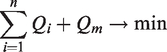
The value of ith transport work for biogas is expressed as

The value of transport work for biomethane

The distance between a certain biogas plant and the biogas upgrading facility

The length of pipeline from the biogas upgrading plant to the end user

The second mathematical model
The second model takes into account the actual pipeline (including laying), operational and maintenance costs.
The biogas is a biologically active gas. It contains water, ammonia (NH3), hydrogen sulphide (H2S), organic acids, fatty acids, etc. 18 To avoid clogging and corrosion of the transport system’s parts, the above compounds have to be removed. For this purpose, the set of pre-treatment installations are used. The desulphurization and drying equipment capital costs depend on biogas plant capacity (Figure 5). And the specific energy usage amounts 0.98 Wh/nm3.30,31

The operational cost of pre-treatment installation is equal to

The biogas has to be transported via a pipeline from a digester to an upgrading plant. Whereas the production of biogas is a process under atmospheric pressure (only slightly elevated), a compressor is needed to transport renewable gaseous fuel. All types of compressors (screw, reciprocating, etc.) are applicable for medium-pressure (under 0.3 MPa) raw biogas pipeline system. Their capital costs depend on compression rate (Figure 6).32,33

The energy consumption for both biogas and biomethane transportation is equal. The electric power consumption of ith compressor location can be derived.
20

The operating and maintenance cost of a gas compressor is determined as

Pipelines are used to transport both biogas from ith biogas plant to the central biogas upgrading plant and biomethane from the central biogas upgrading plant to the end user. Biogas flow rate of ith biogas plant is expressed as

The biogas flow depends on biogas plant capacity and annual operating time
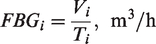
The maximum gas velocity at the outlet of a pipe for a medium-pressure pipeline system has to be less 15 m/s.
Then, the inner diameter is equal to

After determination of pipe inner diameter, the initial investment costs can be found

Pipeline costs for dedicated biogas (biomethane) pipelines can vary greatly. They may be broken down into material costs, laying costs, land acquisition, right-of-way purchases and difficult terrain. 34 The total pipeline extension cost is commonly between EUR52,000 and EUR148,000 per km.28,29,35 In our study, only material and laying costs have been used. Laying a pipeline in the countryside costs EUR62/m. 20 Information about plastic gas pipe is obtained from dedicated price lists.36,37 Pipeline cost depends on its inner diameter, material and a producer (Figures 7 and 8).


The operating and maintenance cost of gas pipeline is determined as

The operating and maintenance cost of biogas upgrading plant is determined as

The objective function for the centralized biogas upgrading plant is expressed as

The project is advisable at the following condition

The operational and maintenance costs of decentralized biomethane production Odu is found analogously to centralized biomethane production.
The algorithm to determine the optimal location of the centralized biogas upgrading plant contains some steps (Figure 9). The digester installations have been defined. The design procedure decides whether biogas produced will be upgraded on-site or at a central location. This is done by means of the following algorithm:

Algorithm of the design procedure.Source: developed by authors.
Determine rational optimum’s point for accepted upgrading technology.
If at least one biogas plant has a capacity less than the above, a central upgrading facility may be used.
Determine centralized biogas upgrading plant location.
Create a biogas hub which location is the closest to the calculated point.
The most studies devoted to determining of the optimal location either a biogas plant or a biomethane plant (on-site biogas production and further upgrading of biogas to biomethane). Choosing an appropriate location for a biogas upgrading plant is a task which uses a lot of factors. They are divided into several groups. These factors are quantitative (Table 1).
Factors of different studies.

Source: developed by authors.
Result of modelling
The cost of biogas upgrading strongly depends on the scale of the plant. Economics calculations show that the biomethane production can be profitable when at least 500 nm³ biogas per hour can be used. 38 However, even larger plants are of more interest because scale effects can be achieved by central upgrading and linking different biogas producers to one upgrading installation. As the profitability of upgrading systems especially depends on the capacity, it would appear sensible to collect and upgrade biogas from several biogas plant facilities at one large upgrading plant. A few of such projects are already realized. This is a perspective way for every country.
Now in the world, there are some centralized biogas upgrading projects: in Brazil, Germany, Denmark, Sweden, the Netherlands.7,9,10 An average centralized biogas upgrading plant being in operating services from 3 to 60 anaerobic digesters. Pipeline grids amount from 3 to 150 km. Biomethane is distributed to the vehicle filling stations, natural gas grid, CHP and boilers. The same projects are under consideration in a number of countries, for example, in Latvia, 25 Denmark, 39 Austria 18 and the USA. 8
The existing projects can help to verify the mathematical models suggested. Two projects were considered. For Latvia (a prospect project) and Braland (Sweden, the project is in operation), the mathematical modelling has been fulfilled. To fix coordinates of biogas plants and a biogas upgrading plant, the arbitrary Cartesian coordinate system was applied. The calculation gives the following results.
As to Latvia, biogas plants had the following capacity (m3/h): plant No. 1 – 984; plant No. 2 – 224; plant No. 3 – 137. 25 Two anaerobic digesters are situated to the left of the rational optimum’s point (for water scrubbing facilities) (Figure 10). It means that the centralized upgrading facility has the advantage. According to our calculations, the optimal location is coinciding with the previous results. But the simplified model gives somewhat different results (Figure 11).

Rational optimum’s point (for Latvia project).Source: developed by authors.

Optimal location of biogas upgrading plant (Latvia).Source: developed by authors.
For Biogas Bralanda AB project, the modelling was carried out (Figure 12). The capacity of biogas plants and a central upgrading plant is less than the rational optimum’s point (Figure 13). The actual locations of the centralized biogas upgrading plants (their coordinates) determined by the proposed mathematical model are somewhat different. The main reason is the model does not take into account costs for necessary infrastructure. Construction of a biogas upgrading plant in the open field is more expensive than construction of one nearby an existing biogas plant.

Optimal location of biogas upgrading plant (Sweden).Source: developed by authors.

Rational optimum’s point (for Sweden project).Source: developed by authors.
Comparisons of centralized and decentralized biogas upgrading complexes are presented in Figures 14 and 15. As it can be seen, the centralized biomethane production cuts investment costs by 22.4%–24.8%. The operating and maintenance costs are reduced by 1.7%–10.9%. Investment costs in decentralized biogas upgrading plants and biomethane pipelines to the end user are, million EUR: Latvia project – 10.63; Bralanda – 3.08.

Comparison of the project (Latvia).Source: developed by authors.

Comparison of the project (Sweden).Source: developed by authors.
The simplified model results in less investment costs. The mathematical model having the operation and maintenance costs as objective function results in less biomethane production cost.
Practical implications
The economic growth has led to the increase in energy demand. The biogas (biomethane) production plays a significant role in developing sustainable energy sources and reducing environmental burdens. Some regions have a relatively high density of biogas plants location. The centralized biogas upgrading facilities should be paid more attention because producing biomethane in large scale is an efficient way to reduce green gas production costs and improve economic benefits. That is why the determination of the optimal biomethane producing plant location is of practical interest. The necessary information for the above calculation should be factored in:
Capacity and location of biogas plants; Location of an end user (natural gas grid, vehicle fuelling station, etc.); Pipeline costs (including total extension, land acquisition, easement, difficult terrain, etc.); Specific costs of a biogas upgrading plant.
Based on the study carried out the following policy implications are proposed for the further development: coordinate the development of centralized biogas upgrading systems; specify areas, where they are preferable; the capacity, location and technology of the biogas upgrading facilities should be determined by local natural and economic situations.
Conclusion
The method for the rational optimum’s point for biogas upgrading plants has been suggested.
Mathematical models were developed to determine the optimal location of the centralized biogas upgrading plant. The criteria of them were (i) minimum of transport work and (ii) operating and maintenance costs. The first model gives a location with minimum investment costs.
The modelling showed that the cooperation of the biogas producers in joint upgrading biogas system reduces investment and operating costs of biomethane production. The high efficiency of the off-site biogas upgrading plant could justify the transport of biogas to the central biogas upgrading facility.
Further research aims at the simulation of the infrastructure costs if upgrading facilities are situated off anaerobic digester sites. It is of particular interest to study the influence of a pipeline extension on the efficiency of centralized biomethane production. It should be studied comparison of two options: (i) decentralized biogas plants and a centralized biogas upgrading plant; (ii) centralized biogas plant and biomethane production.
Footnotes
Declaration of conflicting interests
The authors declared no potential conflicts of interest with respect to the research, authorship, and/or publication of this article.
Funding
The authors received no financial support for the research, authorship, and/or publication of this article.
 , Berlin, Germany). His fields of research are alternative fuels and energy-saving technology.