




Abstract
The chemical composition of several by-products, chips, screw waters, and concentrates from a fiberboards manufacture green industrial process, which only employs wood and water, was deeply evaluated. The three by-products analyzed represent different steps of the industrial process. In addition, different types of wood: pine, walnut, chestnut, oak and cherry tree, were evaluated. For all of them, total polyphenols content, and antioxidant activity have been assessed, showing significant differences. To characterize the volatile compounds, an environmentally friendly technique, solid-phase microextraction has been employed. Besides, aqueous and generally recognized as safe organic extracts obtained from the by-products have been prepared, and their chromatographic fingerprint was obtained by gas chromatography-mass spectrometry and liquid chromatography-tandem mass spectrometry to identify extractable organic wood components. Significant differences were observed between the studied by-products and wood types. More than 30 different compounds were successfully identified in the screw waters, and concentrates, including terpenes, sesquiterpenes, or polyphenols. Regarding the obtained extracts, up to 30 compounds were identified in the chips, screw waters, and concentrate extracts, highlighting the presence of 13 polyphenols in the cherry tree chips and more than 20 compounds with interesting properties in the concentrate extracts. This work contributes to improve the knowledge about the chemical composition of several wood industry by-products, which could be exploited to obtain natural extracts with added value for their reuse in the food, cosmetic, or pharmaceutical industry, reducing also the environmental impact of the industrial activity.
Keywords
Introduction
Worldwide, the wood industry generates a large number and a broad type of waste products. Among the different wood industry types, the related with the production of high-density fiberboards (HDFs) usually employs chemical additives during the manufacture procedure; therefore, the generated by-products can be toxic and their safely reuse implies a high cost. 1 However, there is an alternative to manufacture green fiberboards based on the use of wood, from sustainable woods, and water as green raw materials. This environmentally friendly procedure is based on the self-adhesion of the wood fibers without the need to add chemical additives. In this way, lignin, which is naturally present in wood, acts as a natural glue, preventing the emission of the toxic formaldehyde2,3 and obtaining ecological and biodegradable HDF which can be re-exploited after their useful life, producing energy as a natural heat source.
This green manufacture procedure also converts the different by-products generated during the green fiberboards manufacture into a highly attractive source of bioactive compounds that are originally present in the wood employed as raw material. The reuse of these alternative low-cost raw materials benefits the economy of the industrial process. They could be employed to obtain natural extracts with added value. In fact, the potential of natural extracts obtained from the residues of the wood industry, such as chips or leaves, in the cosmetic industry for the formulation of cosmetics4–6 or as food additives, 7 has been demonstrated. For this reason, it is important the characterization of their main chemical constituents and, in this way, several studies have been reported.8–12 However, most of these studies are focused on the evaluation of a specific by-product or a wood type, mainly Eucalyptus,8,9,13 and the characterized by-products usually derived from “classical” manufacture procedures, that imply the addition of chemical additives being, therefore, not suitable for their safe reuse. Besides, the extraction techniques usually employed are laborious, implying several extraction steps, and a high organic solvents consumption.
The main goal of this work is the chemical characterization of three different wood manufacture by-products from different steps of a green industrial process. Besides, different types of wood are considered. In this way, wooden chips from pine (Pinus pinaster), walnut (Juglans regia), and cherry tree (Prunus avium), coming from the first industrial step, were selected; screw waters, derived from the chips (chestnut, Castanea sativa, and oak, Quercus robur) washing with a screw pump, and the main industrial by-product, called concentrate, that remains after a condensation and evaporation step of the screw waters, was also investigated.
Depending on the structural characteristics of the studied by-products, different extraction and analysis techniques were proposed. The first approach consisted on the obtaining of the volatile composition for the screw waters and concentrates employing an environmentally friendly technique, solid-phase microextraction (SPME), followed by gas chromatography-mass spectrometry (GC-MS). SPME is a very suitable tool, since it can be used in situ, without sample pre-treatment, it does not require the use of organic solvents and allows the extraction and concentration of the extracted analytes in a single step. Regarding determination, GC-MS provides the required sensitivity and selectivity for the determination of the most volatile compounds at trace levels. The second approach consisted on the obtention of aqueous and green organic extracts, prepared in ethanol and ethyl lactate, which were directly analyzed by GC-MS, and by liquid chromatography-tandem mass spectrometry (LC-MS/MS), for the identification of the most polar and less volatile compounds.
Therefore, this work contributes to an exhaustive study and characterization of the different green wood by-products chemical composition and explores their potential for future reutilization in the cosmetic, food, or pharmaceutical industry.
Experimental
Reagents and materials
Water and methanol both MS grade were supplied by Scharlab (Barcelona, Spain), ethanol (EtOH) absolute (>99.8%) was provided by VWR (Leicestershire, England), ethyl lactate was supplied by Fluka Analytical (Steinheim, Germany), and formic acid (>99%) was provided by Merck (Darmstadt, Germany). Folin–Ciocalteu (FC) phenol reagent, 2,2-diphenyl-1-picrylhydrazyl, and gallic acid (99%) were obtained from Sigma-Aldrich (Steinheim, Germany). Sodium carbonate (Na2CO3) was provided by Panreac (Barcelona, Spain), and sodium sulfate anhydrous (Na2SO4) was provided by Carlo Erba Reagents (France). Commercial 65 µm polydimethylsiloxane/divinylbenzene (PDMS/DVB) fiber housed in a manual SPME holder was obtained from Supelco (Bellefonte, PA, USA). The fiber was conditioned as recommended by the manufacturer (270°C for 30 min), inserting it in the GC injector with carrier gas flow. The studied polyphenols, their chemical abstract service (CAS) number, suppliers and MS/MS transitions employed for their identification are summarized in Table S1.
Studied by-products
The three different studied by-products, chips, screw waters, and the concentrates were provided by the wood board industry Betanzos HB (Betanzos, Galicia, Northwest Spain), specialized in the elaboration of HDFs employing a green industrial procedure based on high-pressure pressing using water without chemicals additives. Figure 1 partially summarizes the industrial procedure, showing the origin of the three studied by-products and the chromatographic techniques employed for their characterization.
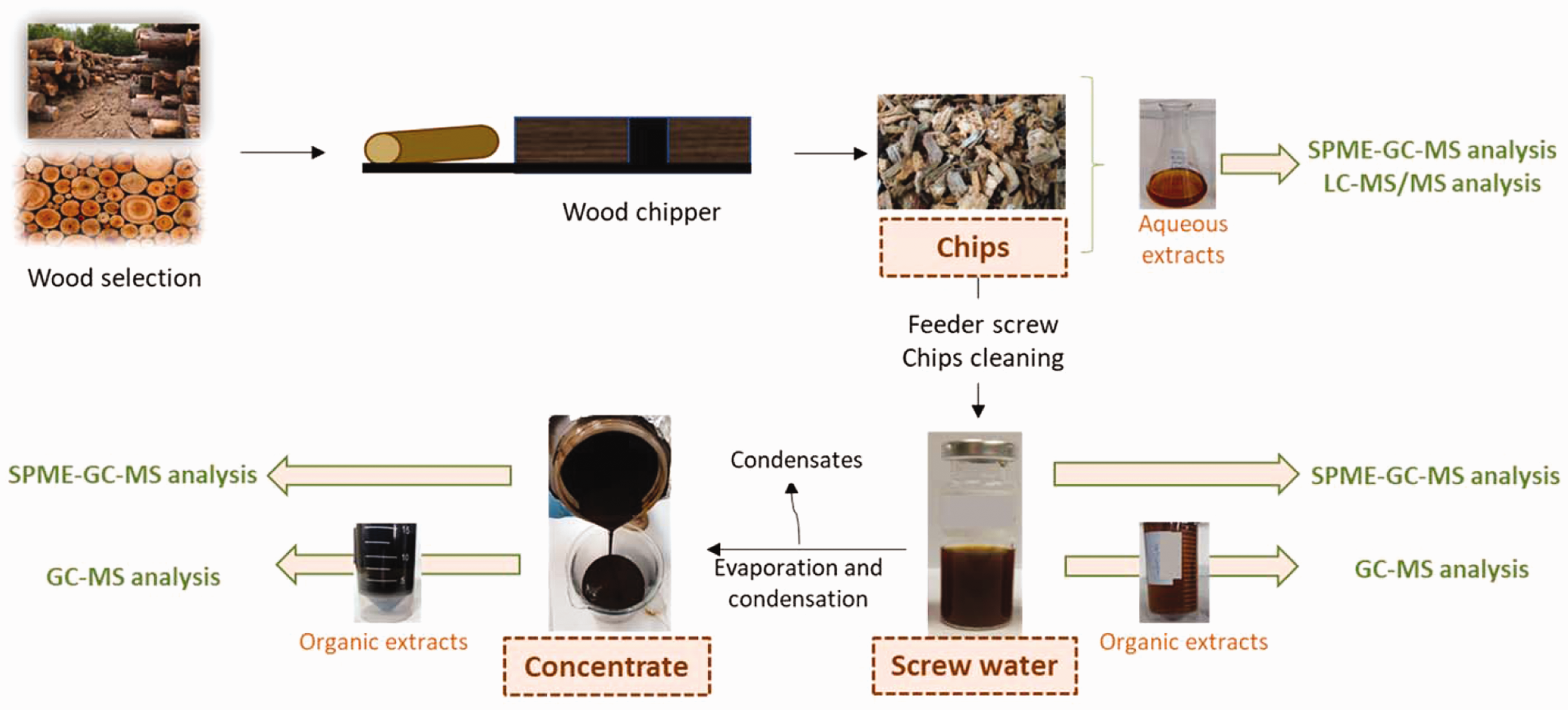
Schematic representation of the industrial wood fiberboards manufacture procedure, showing the origin of the studied by-products and the chromatographic techniques employed for their characterization.
Three different wood chips from pine tree, cherry tree, and walnut were directly collected after the chipping procedure and kept in a container protected from light until their analysis. Screw waters and concentrates from chestnut and oak tree were collected in 2.5 L plastic bottles, and they were also kept at room temperature and protected from light until their analysis.
Solid–liquid and liquid–liquid extraction
To obtain the different wood chips extracts (pine tree, walnut, and cherry tree), a green solid–liquid extraction was performed. The experimental procedure is summarized in Figure 2(a). Seventy grams of the corresponding chips were mixed with 300 mL of water and kept under magnetic stirring. Two different temperatures were employed to perform the extraction: 25°C for 16 h, and 80°C for 16 h and for 168 h (a week). After the corresponding extraction time, the aqueous extracts were filtered by gravity flow and directly analyzed by SPME-GC-MS and LC-MS/MS.

Experimental procedure for obtaining (a) aqueous wood chips extracts and (b) screw water and concentrate organic extracts.
For the obtaining of the chestnut and oak screw waters and concentrates-derived extracts, the extraction efficiency of two different solvents was tested: ethanol and ethyl lactate. Both were selected for their demonstrated extraction effectiveness of bioactive compounds from different wood industrial wastes and plants. 14 The experimental procedure is represented in Figure 2(b); 25 mL of the different screw waters and concentrates were mixed with 25 mL of the correspondent solvent (ethanol or ethyl lactate) into a Falcon 50 mL conical centrifuge tube and the mixture was centrifuged at 1372 rcf (relative centrifuge force) for 10 min employing an Ortoalresa Digicen 21centrifuge (Madrid, Spain). Afterward, the organic supernatant was filtered by gravity flow, 1 mL was transferred to a 1.8 mL glass-vial, and Na2SO4 was added to remove possible aqueous content. Finally, the dried extract was filtered through 0.22 µm polytetrafluoroethylene (PTFE) filters and directly analyzed by GC-MS. It is important to note that the extraction procedure produced a homogeneous precipitate of the wood fibers which is easy to handle and isolate, and it can be also reused in the manufacturing process.
SPME procedure
Ten mL of the corresponding (pine tree, walnut, and cherry tree) chip aqueous extracts, and chestnut and oak organic screw waters and concentrate extracts were placed in a 22 mL glass vial (see Figure 2(a) for the chip aqueous extracts). The vials were sealed with aluminum caps furnished with PTFE-faced septa and immersed into a water bath maintained at 100°C under magnetic stirring. After 5 min of thermostating, the PDMS/DVB fiber was introduced into the vial and exposed to the headspace over the sample for 30 min. Afterward, the fiber was retracted into the needle of the holder syringe and thermally desorbed in the GC injector for 5 min at 270°C, and GC-MS analysis was carried out.
Total polyphenols contents and antioxidant activity procedures
The total polyphenols content (TPC) of the raw wood by-products and their derived extracts were determined according to the FC colorimetric method described by Singleton and Rossi. 15 The TPC was quantified employing a calibration curve (y = 0.0700x − 0.0358) ranging from 3 to 20 mg L−1 (R2 = 0.9970), prepared with gallic acid standards solutions and expressed as milligram of gallic acid equivalents in the liquid extract (mg GAE L−1). The antioxidant activity (AA) was determined employing a modified method of Brand-Williams et al. 16 The AA was calculated employing a calibration curve (y = 0.896x − 0.0614) prepared with Trolox ranging from 0.1 to 1 mM (R2 = 0.9994). The AA is expressed as millimolar Trolox equivalents in the liquid extract (mM TRE L−1). In both cases, a Shimazdu UVmini-1240 Spectrophotometer (Japan) was employed to measure the absorbances.
GC-MS analysis
The GC-MS analysis was performed using an Agilent 7890 A coupled to an Agilent 5975 C inert mass spectra detector (MSD) with triple-axis detector and an Agilent 7693 autosampler from Agilent Technologies (Palo Alto, CA, USA). A Zebron-Semivolatiles (30 m × 0.25 mm i.d., 0.25 µm film thickness) column obtained from Phenomenex (Torrance, CA, USA) was employed. The oven temperature was set at 60°C (held 1 min) to 290°C at 5°C min−1 (held 1 min). Helium (purity 99.999%) was employed as carrier gas at a constant flow of 1.0 mL min−1. The total run time was 48 min. The sample volume was 1 µL when direct injection was performed (organic extracts analysis). The injector temperature was 270°C. The MSD was operated in the electron impact ionization positive mode (+70 eV), and the temperatures of the transfer line and the ion source were set at 290°C and 150°C, respectively. For an exhaustive characterization of the concentrate organic extracts, a polar DB-WAX column (50 m × 0.20 mm i.d., 0.20 µm film thickness) obtained from Agilent Technologies was also employed. In this case, the oven ramp was programmed from 50°C (1 min) to 240°C at 8°C min−1 (held 25.25 min), at a constant flow of 0.6 mL min−1. The total run time was 50 min. In this case, the injector temperature was kept at 240°C, and the transfer line at 230°C.
In all cases, full scan (FS) acquisition mode was employed, monitoring mass/charge (m/z) fragments between 25 and 700. The tentative identification of the compounds was performed by comparison (match >80%) between the obtained experimental MS spectral and the provided by the commercial spectral library database (NIST).
LC-MS/MS analysis
The identification of the polyphenols in the aqueous chips extracts was performed by LC-MS/MS. A Thermo Scientific (San José, CA, USA) instrument based on a TSQ Quantum Ultra™ triple quadrupole mass spectrometer equipped with a HESI-II (heated electrospray ionization), and an Accela Open autosampler with a 20 µL loop was employed. The chromatographic separation was achieved on a Kinetex C18 column (100 × 2.1 mm, 2.6 µm, 100 Å), obtained from Phenomenex. The temperature of the column was set at 50°C. The mobile phase consisted on water (A) and methanol (B), both with 0.1% formic acid. The eluted gradient started with 5% of B (held 5 min), it was increased to 90% of B in 11 min and kept constant for 3 min. Finally, initial conditions were reached in 9 min. The injection volume was 10 µL, and the mobile phase flow rate was 0.2 mL min−1. The total run for each injection was 25 min. The mass spectrometer and the HESI source were working simultaneously in the positive and negative mode, monitoring two or three MS/MS transitions for each compound. MS/MS transitions for the identified polyphenols are summarized in Table S1.
Results and discussion
Wood chips
Wood chips are one of the first by-products derived from the wood processing industry (see Figure 1). Several studies reported the presence of volatile organic and antioxidant compounds in wood chips extracts. However, most of them are focused in the study of oak wood, which is the main raw material employed for the wine and other alcoholic beverages aged. Besides, in most cases, the extraction of the wood chips is long-time consumption, with several experimental steps, and it is performed employing toxic organic solvents such as dichloromethane.10–12
In this case, three different species of tree chips were evaluated: pine tree, cherry tree, and walnut. To characterize the volatile and bioactive compounds present in the chips, the efficiency of an environmentally friendly solid–liquid extraction procedure, employing water at two different temperatures, 25°C and 80°C, has been tested (the procedure is detailed in “Solid–liquid and liquid–liquid extraction” section). Several parameters such as pH, density, TPC, and AA were evaluated, and the results are summarized in Table 1. As can be seen, TPC and AA values were slightly higher for the extracts obtained at 80°C.
Basic physicochemical parameters, TPC, and AA for the studied wood by-products.
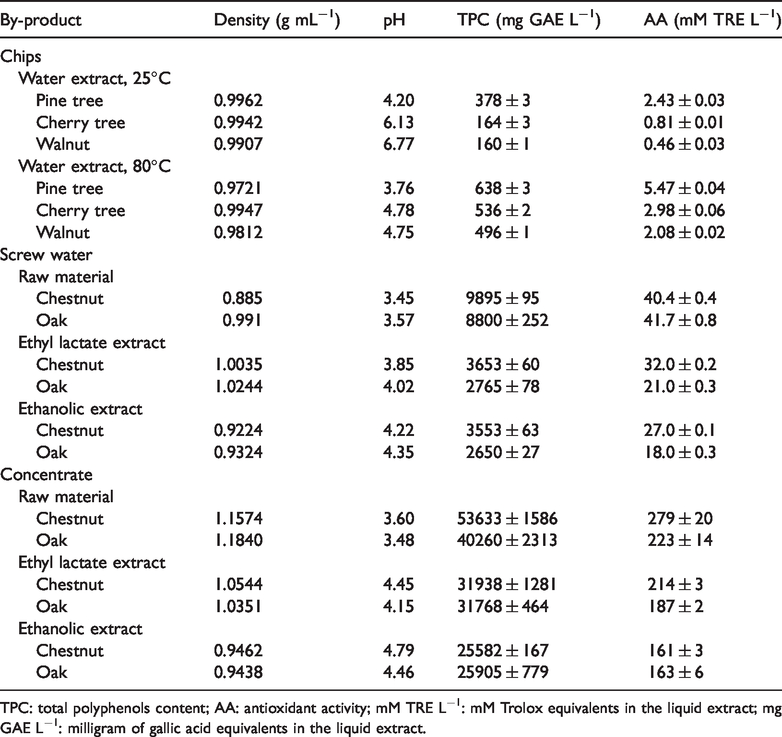
TPC: total polyphenols content; AA: antioxidant activity; mM TRE L−1: mM Trolox equivalents in the liquid extract; mg GAE L−1: milligram of gallic acid equivalents in the liquid extract.
The chromatographic profile for the three different wooden chips aqueous extracts was obtained by SPME-GC-MS. The procedure is described in “SPME procedure” section. The obtained chromatogram for each wood species after performing the solid-liquid extraction at the two studied temperatures is shown in Figure 3(a). As can be seen, the chromatographic profile was clearly different for the three evaluated wood species. However, no significant differences regarding the composition of the extracts were observed between performing the chips extraction at 25°C or 80°C, although the abundance of the peaks was clearly higher when the extraction was performed at 80°C. Regarding the extraction time, no significant differences were observed between 16 h and 168 h (a week) (data not shown). Therefore, for practical reasons, 16 h was selected. Individual SPME-GC-MS chromatograms, under the selected extraction conditions (80°C for 16 h), for the different wood chip extracts, are shown in Figure 3(b). The tentative identification of the compounds was performed by comparing the experimental mass spectra with those included in the NIST database commercial library (match >80%). The analysis revealed the presence of 17 different compounds that are summarized in Table 2. Eleven out of the 17 identified compounds were found in the pine tree chips extract, whereas 6 and 5 were identified in the walnut and cherry tree chip extracts, respectively. Highlights the abundance of α-terpineol (peak 2) in the pine tree chip extract. This compound is a well-known monoterpene, usually employed as perfuming agent in cosmetics and as flavoring in the food and beverages industry. Several biological properties of α-terpineol include antioxidant and antitumoral activity as well as cardiovascular and antihypertensive effects. Regarding the most abundant detected compounds in the cherry tree and walnut chip extracts, respectively, trans-benzylideneacetone (peak 3) is employed as flavoring agent in food and perfumes, and 1,2,3-trimethoxy-5-allylbenzene (peak 7), also known as elemicin, is a phenylpropene with a high antibacterial activity.17,18
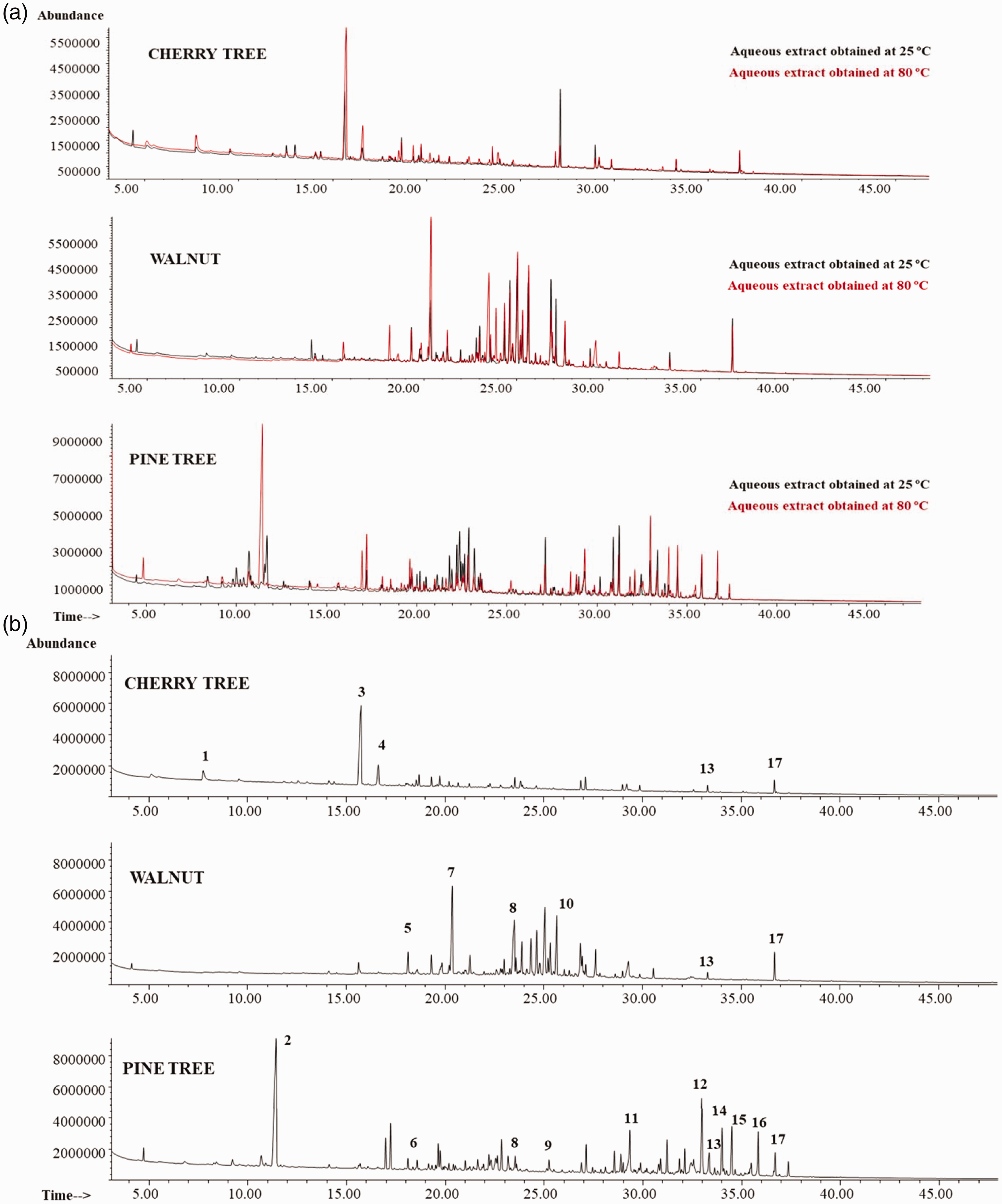
Cherry tree, walnut, and pine tree aqueous extracts: SPME-GC-MS analysis (a) comparison between the studied extraction temperatures and (b) identified compounds.
Identified compounds by SPME-GC-MS analysis in the wooden chips aqueous extracts (solid-liquid extraction at 80°C for 16 h).

CAS: chemical abstract service.
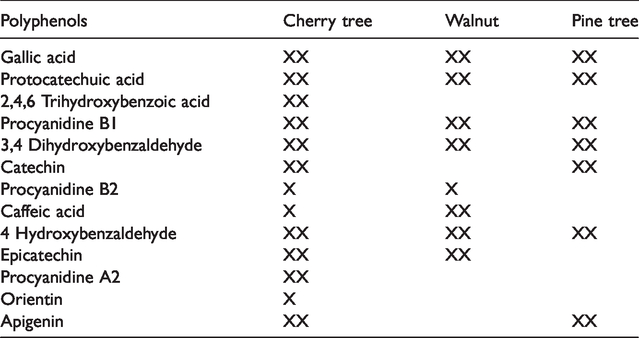
To evaluate the presence of polyphenols, the chips extracts were also directly analyzed by LC-MS/MS. In this case, an unequivocal identification of the compounds was possible using commercially available standards of polyphenols, and working in Selected Reaction Monitoring (SRM) mode, monitoring two or three MS/MS transitions per compound (see Table S1). The identified polyphenols are summarized in Table 3. As can be seen, up to 13 different polyphenols were detected in the extracts, being all of them found in the cherry tree chips extract, whereas on the other hand, 8 and 7 of such polyphenols were found in the walnut and pine tree chips extract, respectively. The presence of polyphenols, compounds which possess a high radical scavenging activity, provides an additional value to the extracts due to their demonstrated beneficial properties (antioxidants, anti-inflammatory, antimicrobial, etc.). 19 Three of them, 2,4,6-trihydroxybenzoic acid, procyanidine A2 and orientin, were only identified in the cherry tree chips aqueous extract, and to the best of our knowledge, this is the first time that the presence of these three polyphenols is reported in cherry chips. 20 A SRM reconstructed chromatogram for the cherry tree chips extract is depicted in Figure 4.
Identified polyphenols in the different wooden chips aqueous extracts (solid–liquid extraction at 80°C for 16 h) by LC-MS/MS analysis.
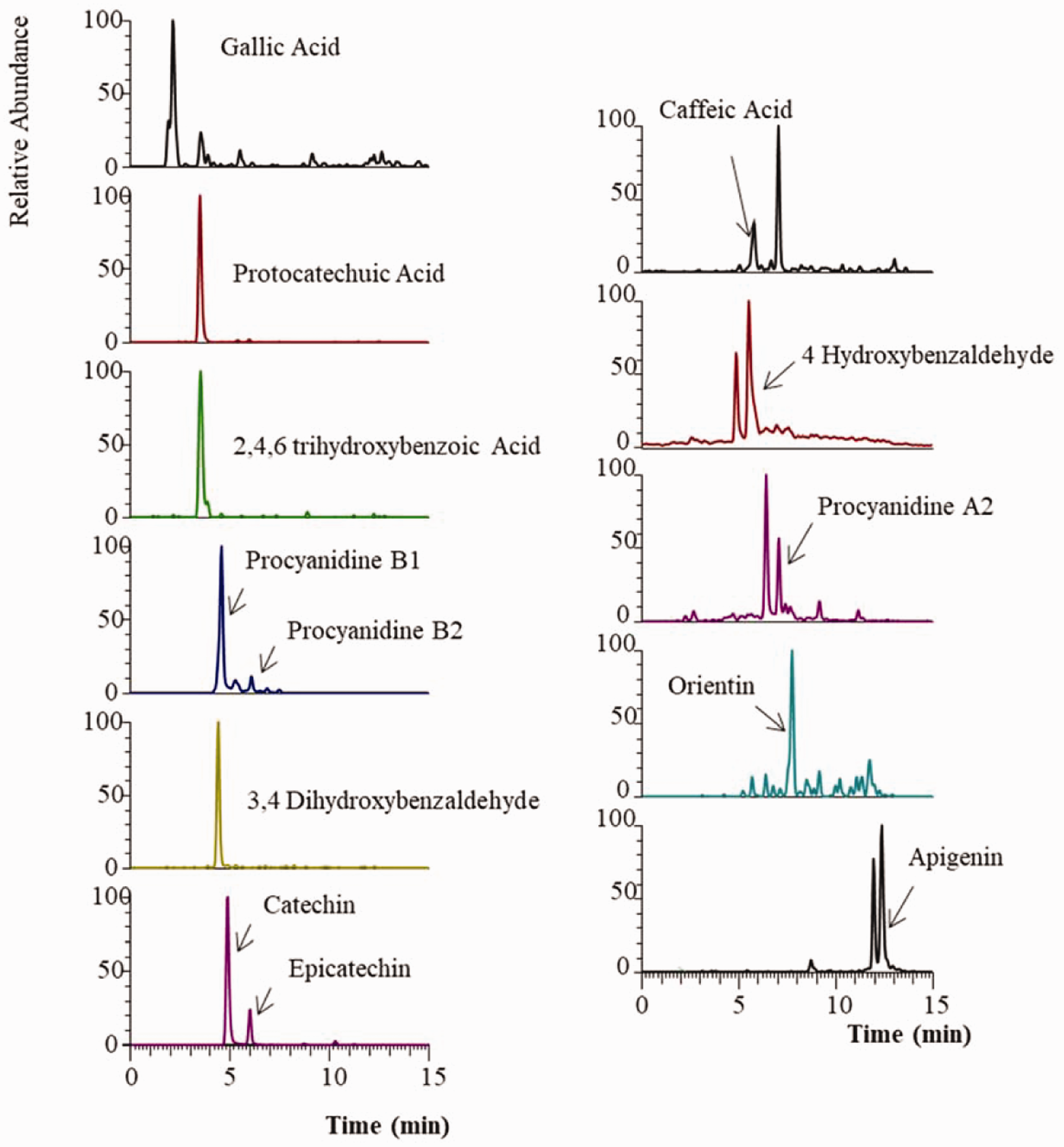
Cherry tree chips aqueous extract: SRM reconstructed chromatogram obtained by LC-MS/MS analysis.
It is important to note that, although TPC and AA values for the aqueous chips extracts were clearly lower than those obtained for the other studied by-products (see Table 1), the possibility to obtain environmentally friendly chip extracts employing only water without the addition of organic solvents and chemical additives could favor the reuse of them as flavor agents in the cosmetic or in the alimentary industry, revalorizing the potential of this primary wood industry by-product.
Screw waters
Basic physico-chemical parameters and TPC and AA values were obtained for chestnut and oak screw waters, and they are summarized in Table 1.
Both screw waters were also directly analyzed by SPME-GC-MS (the procedure was previously described in “SPME procedure” section). Figure 5(a) shows the overlapped chromatograms obtained for both screw waters. As can be seen, the chromatographic profile was similar, although the abundance was clearly higher in the oak screw water (red chromatogram). Figure 5(b) shows the individual chromatogram for each screw water, and the identified compounds are summarized in Table 4. As it is shown, up to 30 different organic compounds were identified in the screw waters, being the most abundant ones the sesquiterpenes γ- and β-eudesmol (peaks 18 and 20) and hinesol (peak 19), especially in the oak screw water. The beneficial properties of these compounds that are considered as antitumoral, antioxidants, and antimicrobials have been reported. 21 Other identified compounds with interesting properties were oxygenated monoterpenes (eucalyptol (peak 2), β-linalool (peak 3), α-terpineol (peak 4)), sesquiterpenes (globulol (peak 16)), and fatty acids such as myristic acid (peak 22), palmitoleic acid (peak 25), hexadecanoic acid (peak 26), linoleic acid (peak 27), and oleic acid (peak 28), in both screw waters.
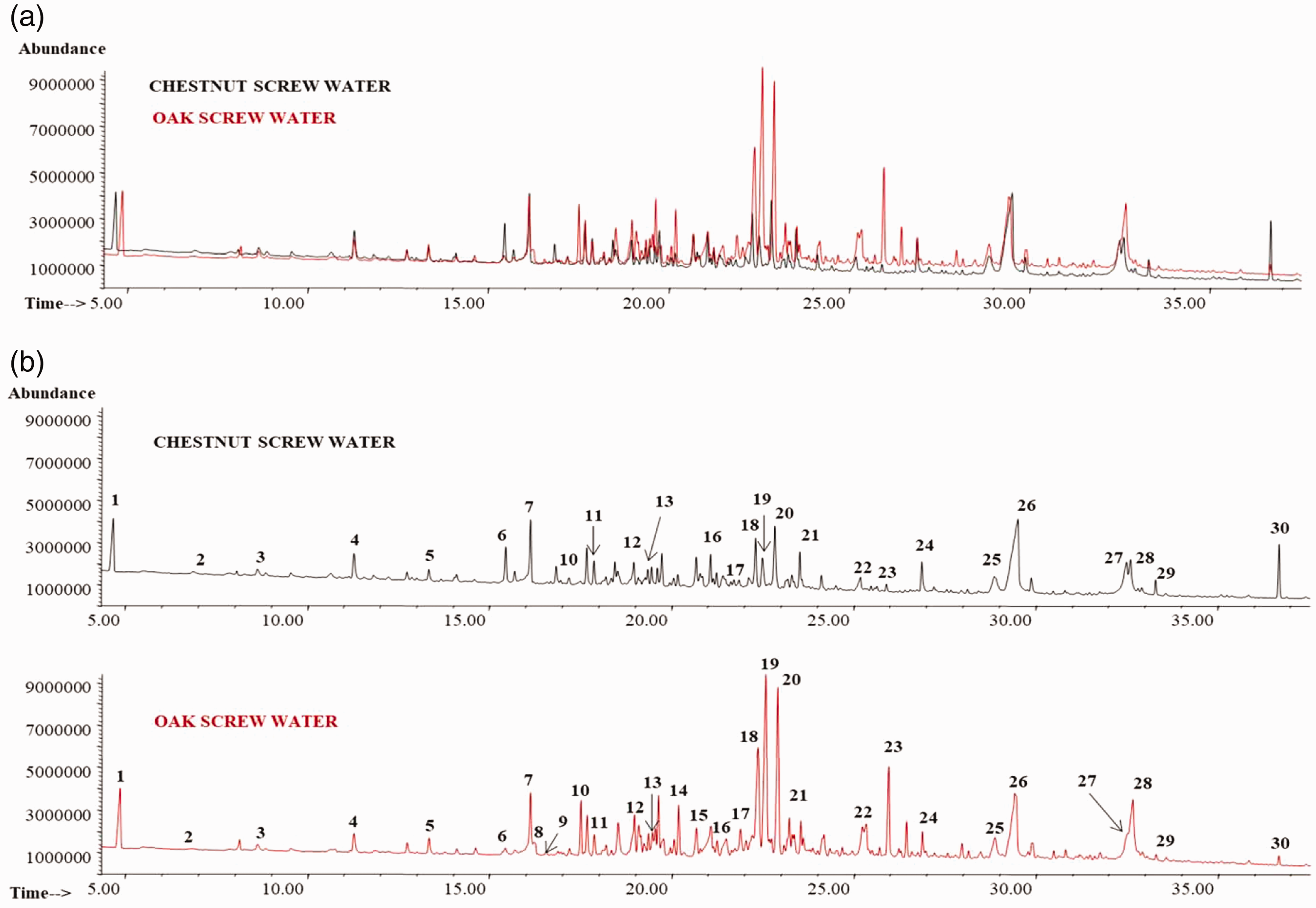
Chestnut and oak screw water: SPME-GC-MS analysis (a) overlapped chromatograms and (b) identified compounds.
Identified compounds in the chestnut and oak screw waters by SPME-GC-MS analysis.

CAS: chemical abstract service.
NIST number.
Chestnut and oak screw water organic extracts, in ethanol and ethyl lactate, were also obtained (see “Solid–liquid and liquid–liquid extraction” section) and directly analyzed by GC-MS analysis. These solvents were selected since they are considered environmentally friendly and generally recognized as safe and, as such, safe agents according to the European Food Safety Authority. Their use in food products is allowed by the United States Food and Drug Administration and the European Union, being both a suitable option for the reutilization of the obtained extracts in the food industry.
Figure 6(a) and (b) shows the obtained chromatograms for the ethanolic and ethyl lactate-based extracts, respectively, for the chestnut and oak screw waters. As can be seen, the chromatographic profile was completely different depending on the employed extraction solvent but similar for both types of screw waters. The identified compounds are summarized in Table 5. Up to 14 different compounds were identified. Six of them were found in the ethanolic extract (peaks 1–6), whereas eight different compounds (peaks 7–14) were detected in the ethyl lactate-based extract. As can be seen, the presence of two acids, acetic acid (peak 1) in the ethanolic extracts and, lactic acid (peak 12) in the ethyl lactate extracts in both types of screw waters were detected. Their presence is usually associated with the wood carbohydrates and lipids degradation. Other identified compounds, also associated with sugars degradation, were furfuryl alcohol (peak 3) and pyranone (peak 4), which have been reported in oak wood extracts. 11 Besides, monoterpene alcohols, such as linalol (peak 2), were found only in the ethanolic chestnut screw water extract and geraniol (peak 11) in ethyl lactate-based screw waters extracts.
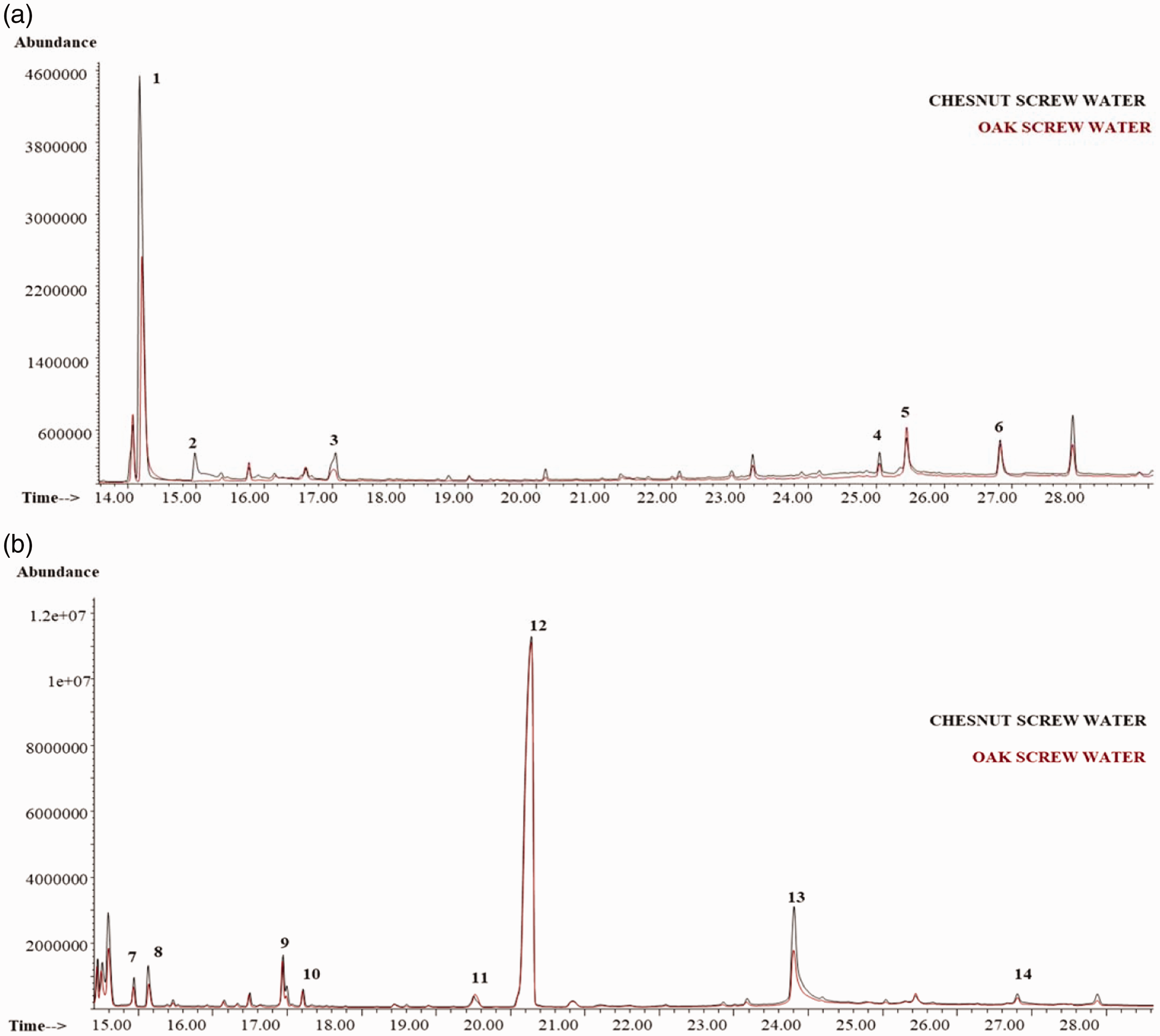
Chestnut and oak screw organic extracts (GC-MS analysis) prepared in (a) ethanol and (b) ethyl lactate. Asterisks indicate differences between retention time are due to the different solvents employed.
Identified compounds in the screw water organic extracts by GC-MS analysis.

CAS: chemical abstract service.
Concentrates
The density, pH, TPC, and AA values for the chestnut and oak concentrates are summarized in Table 1. In view of the high AA and TPC values compared with the other studied by-products, both concentrate samples were analyzed by SPME-GC-MS, and also their derived organic extracts, in ethanol and ethyl lactate, were analyzed by GC-MS employing two different chromatographic columns, a polar, and a non-polar column for an exhaustive characterization.
The chromatographic profile obtained by SPME-GC-MS for the chestnut (black) and oak (red) concentrates is shown in Figure 7(a). As can be seen, up to 32 different organic compounds were identified in both concentrates, and they are summarized in Table 6. As it can be expected, the presence of furanic aldehydes and ketones coming from the thermic degradation of celluloses and hemicelluloses, such as 5-methylfurfural (peak 1), 5-(hydroxymethyl)furfural (peak 3), 5-butyl-4-methyldihydro-2H(3H)-furanone (peak 7), 2,3,4-trimethoxydibenzofuran (peak 14), and 2,4′-dihydroxy-3′-methoxyacetophenone (peak 15), has been observed. Most of these compounds have interesting properties and applications. For example, 5-hydroxymethylfurfural is considered to be a natural and non-toxic formaldehyde replacement, since it contains an aldehyde group together with an alcohol functional group, allowing several structural possibilities once broken into furan monomers, which are called the sleeping giants of renewable chemicals due to their high potential. 22 Several compounds related with the thermal decomposition of lignin, such as syringol (peak 8), and its derivatives phenolic aldehydes syringaldehyde (peak 20) and vanillin (peak 9) have been also identified in both concentrates, and other authors reported their presence in oak wood extracts.10–12
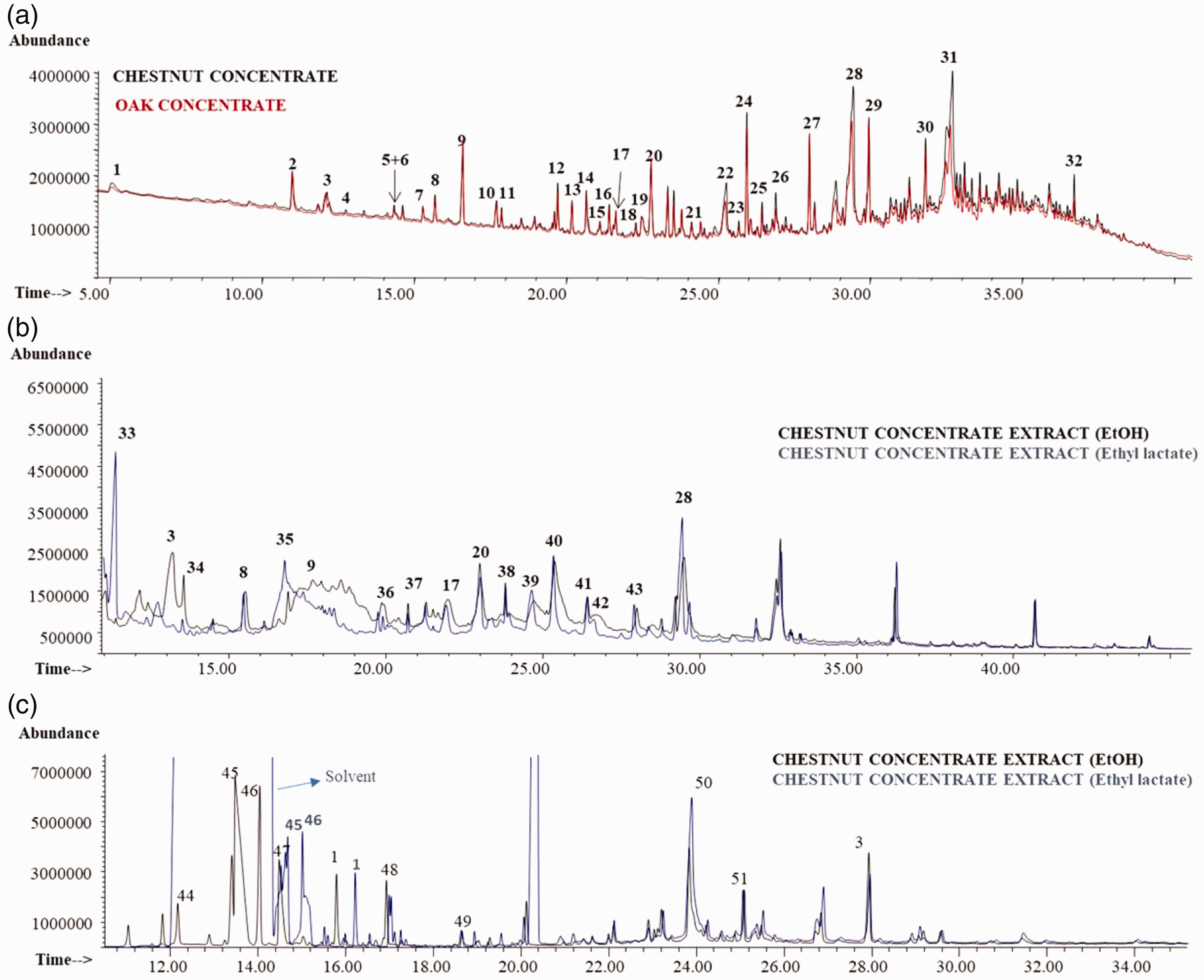
Chestnut and oak concentrates: (a) SPME-GC-MS analysis, (b) organic extracts: GC-MS analysis (non-polar column), and (c) organic extracts: GC-MS analysis (polar column).
Identified compounds in the chestnut and oak concentrates by SPME-GC-MS, and GC-MS analysis, respectively.

NIST number.
However, although a high number of organic compounds with interesting properties have been identified in the chestnut and oak concentrates, the direct use of these wood manufacture by-products is complex due to their high density (see Figure 1 and Table 1). Therefore, organic extracts in ethanol and ethyl lactate were obtained and deeply characterized by GC-MS employing both non-polar and polar chromatographic columns. The obtained results were similar for both concentrate extracts; therefore for simplicity, only results for chestnut concentrate derived extracts are shown. Figure 7(b) and (c) shows the overlapped chromatogram for the chestnut concentrate extracts (ethanolic in black, ethyl lactate in blue) obtained in the non-polar and polar chromatographic column, respectively. The identified compounds are summarized in Table 6.
As can be observed, several compounds identified in the organic extracts were previously identified in the concentrate raw material, such as 5-methyl furfural (peak 1), syringol (peak 8), vanillin (peak 9), antiarol (peak 17), and syringaldehyde (peak 20). However, several syringol- and vanillin-derivatives such as acetosyringone (peak 41), syringic acid (peak 42), homosyringic acid (peak 43), and methyl vanillyl ketone (peak 37) have been only detected in the extracts. The presence of these compounds has been reported in oak and chestnut wood extracts.10–12,23
On the other hand, the use of a polar chromatographic column allowed the identification of several acids which were not identified employing the non-polar column, such as acetic acid (peak 45), formic acid (peak 47), or lactic acid (peak 50). Besides, four compounds derived from sugars degradation such as furfural (peak 46), α-furfuryl alcohol (peak 48), 2(5H)-furanone (peak 49), and pyranone (peak 51) were successfully identified employing the polar column. The presence of these compounds have been reported in different wood extracts, and some of them have been described as responsible of the “toasted” and “honeyed” organoleptic characteristics, positively valued in wood-aged alcoholic beverages.11,23 Among them, furfural (peak 46), used as solvent or as an extraction agent, has been included among the top 30 added values chemicals from biomass for its importance as renewable- and non-petroleum-based chemical raw material.24,25
Conclusions
This work contributes to the bioactive profiling of three wooden industry by-products, wood chips, screw waters, and concentrates obtained from different types of wood. A high number of volatile and semi-volatile organic compounds from different chemical nature have been identified in the studied by-products and in their derived aqueous, ethanolic, and ethyl lactate extracts, highlighting the presence of terpenes, sesquiterpenes, omega-3 fatty acids, and precursors of fragrance synthesis. Most of the identified compounds present antioxidant, antimicrobial, antifungal, and interesting organoleptic properties demonstrated that these industrial wastes could be employed to obtain natural extracts with added value, which could be an interesting option for their reuse in the food, pharmaceutical, and/or cosmetic industry, reducing the environmental impact of the wood industry activity and obtaining, in parallel, an economical profit.
Supplemental Material
sj-pdf-1-eae-10.1177_0958305X20919939 - Supplemental material for Wood processing industry by-products as a source of natural bioactive compounds
Supplemental material, sj-pdf-1-eae-10.1177_0958305X20919939 for Wood processing industry by-products as a source of natural bioactive compounds by Maria Celeiro, J Pablo Lamas, Rosa Arcas and Marta Lores in Energy & Environment
Footnotes
Declaration of conflicting interests
The author(s) declared no potential conflicts of interest with respect to the research, authorship, and/or publication of this article.
Funding
The author(s) disclosed receipt of the following financial support for the research, authorship, and/or publication of this article: This research was supported by project IN852A2016/41 (CONECTA-PEME, Xunta de Galicia). The authors belong to the Galician Competitive Research Group GPC2017/04 and to the CRETUS Strategic Partnership (ED431E 2018/01). All these programs are co-funded by FEDER (UE).

Supplemental material
Supplemental material for this article is available online.
Author Biographies
References
Supplementary Material
Please find the following supplemental material available below.
For Open Access articles published under a Creative Commons License, all supplemental material carries the same license as the article it is associated with.
For non-Open Access articles published, all supplemental material carries a non-exclusive license, and permission requests for re-use of supplemental material or any part of supplemental material shall be sent directly to the copyright owner as specified in the copyright notice associated with the article.
