



Abstract
Biomass burning is largely divided into six types: open burning, agricultural waste burning, meat and fish roasts, wood stoves and boilers, furnaces, and charcoal burners. Biomass burning is largely characterized by incomplete combustion due to the difficulty of appropriate control, which results in the emission of a large amount of air pollutants and the generation of harmful substances such as volatile organic compounds (National Institute of Environmental Research, 2014). Burning agricultural residue releases a large amount of fine particulate matter (PM). Open burning of agricultural residue, burning agricultural residues without incineration facility, in the rural areas are frequently observed Therefore, management based on accurate analysis of emission characteristics is needed. In Korea, most agricultural residues except for rice straw are incinerated in the field. Agricultural residues with a high incineration ratio are Chili and Perilla. The characteristics of PM emission by agricultural residues combustion were analyzed for Chili and Perilla. PM measuring equipment are Stack sampling system and Cascade Impactor (PM10, PM2.5 Impactor, Johnas, Paul Gothe GmBH). This study, the emission characteristics of PM-10, PM-2.5 generated in the combustion of agricultural residues were examined in consideration of moisture content.
Keywords
Introduction
Biomass burning is a generic term for biomass combustion that occurs in nature, whether artificial or natural. About 90% of biomass burning globally is known to be related to human activities. 1 Biomass burning is known to be an important cause of global warming by not only emitting various particulate and gaseous air pollutants, but also large amounts of greenhouse gases such as carbon dioxide, methane, and nitrous oxide. 2 Since 2011, South Korea has been using the Clean Air Policy Support System (CAPSS) to secure basic data necessary for national air conservation policy establishment and related research. 3 Biomass burning emission sources were included in, but were excluded from official national data due to uncertainties in emission factors and activity data. 2 Through the improvement of the activity data, the source of Biomass burning emissions was also included in the official emission statistics from 2015 emissions. 3
Since 2015, emissions from biomass burning have accounted for 6.24% for PM-10 and 12.2% for PM-2.5 of the total particulate matter (PM) emissions in South Korea, which was the fourth largest source after non-road mobiles, fugitive dust, and manufacturing industry. 4 In biomass burning, the agricultural waste burning category accounted for the largest proportion of emissions for particulate matter. 5 Most agricultural residue, except rice straws, are subjected to in situ burning. 6 In biomass burning, burning of agricultural waste accounts for the largest proportion of PM emissions, which is again dependent on the crop. Chili stalks and perilla stalks were selected as the test materials, that accounted for the largest amount of crop burning by unit area among agricultural residue. Crop burning amounts of chili stalks and perilla stalks per unit area were 290.7 g/m2 and 263.4 g/m2, respectively. 7 Since 2015, annual PM-10 emission due to agricultural waste burning in South Korea was approximately 9,183 tons, corresponding to approximately 63.1% of the total PM-10 emissions due to biomass burning (14,552 tons), while annual PM-2.5 emissions were about 7,621 tons, (approximately 63.2% of the total PM-2.5 emissions (12,060 tons)). 3 Rice straws are used as feedstuffs for livestock after being processed by a round straw baler. The other crop wastes such as orchard pruning wastes, corn, chili, perilla, and sesame are burned in situ without further treatments. 8
Since in situ agricultural waste burning directly emits PM (PM-10 and PM-2.5) into the air, it is important to accurately identify the characteristics of PM emissions. Agricultural residue are frequently burned in situ without complete drying. In case of high moisture content in the wastes, incomplete combustion is enhanced, leading to relatively higher emissions of particulate matter. 9 Thus, moisture content in the samples is one of the important characteristics that should be studied in the context of PM emissions. Particulate air pollution is a serious problem and has received extensive attention in rural area. 1
In order to secure the reliability of the emission characteristics and emission factors of fine particulate matter in the incineration of agricultural residues, it is necessary to secure data considering the characteristics of the water content sample. When incineration of agricultural residues on site, they are often burned without being sufficiently dried. When the moisture content is high, incomplete combustion is increased, and relatively more fine particulate matter. 10 Therefore, it is necessary to determine the discharge characteristics of fine particulate matter in consideration of the moisture content of the sample.
Previous studies analyzed the characteristics of PM emissions generated during agricultural waste burning without considering moisture content. In both studies, agricultural residues (Chili and perilla) were measured three times each, and the discharge characteristics of PM-10 and PM-2.5 were identified, and emission factors were developed.2,8 However, the value of the emission factor shows a difference of about 2 to 4 times, so it is necessary to develop a more reliable emission factor.
To determine the characteristics of PM emissions from agricultural waste burning and reliability of emission factors, the present study investigated emission characteristics (mass concentration, mass concentration by particle size, distribution rate by particle size, and change in mass concentration) with the consideration of sample characteristics (particularly moisture content). In addition, the moisture content of agricultural residues, which fluctuates with the passage of time and temperature before incineration of agricultural residues, was measured for about 20 days. As a result, emission factors of PM-10 and PM-2.5 were presented considering the site conditions.
Previous studies
As a result of the analysis of previous studies (Table 1), it was confirmed that the discharge of fine particulate matter due to biomass burning is second only to non-road transport pollutants, dust scattering, and manufacturing industries. 9 In some studies, the emission coefficient of fine particulate matter according to the incineration of agricultural residues was presented, but the characteristics of agricultural residues (water content) were not considered. According to previous studies, it is stated that the moisture content must be considered when calculating the emission factor of fine particulate matter from incineration of agricultural residues.10,11 In this study, in order to secure differentiation from previous studies, the characteristics of the discharge of fine particulate matter generated when agricultural residues are incinerated were identified by considering the moisture content of agricultural residue samples.
Domestic and foreign precedent research related to this paper.

Methodology
Sampling method
Before measuring the concentration of fine particulate matter emission, it should be well-informed of test method on air pollution and the manual of the equipment.12,13 Measurement procedures prepared in accordance with the air pollution process test standards should be implemented. 13 When measuring weight concentration and analyzing ions and heavy metals, a filter paper made of certified Teflon material is used. In the case of filter paper for carbon analysis, only quartz filter should be used. The filter paper used in this study is a Glass Fiber Filter. 14 It must be manufactured and stored according to the material of the filter paper and the equipment used. During the filter paper manufacturing process, external dust inflow should be minimized. The filter paper should be dried for 1 to 3 hours at 110 °C for pretreatment, then put in a sterilized Petri dish and stored in a room temperature desiccator for cooling (Figure 1).
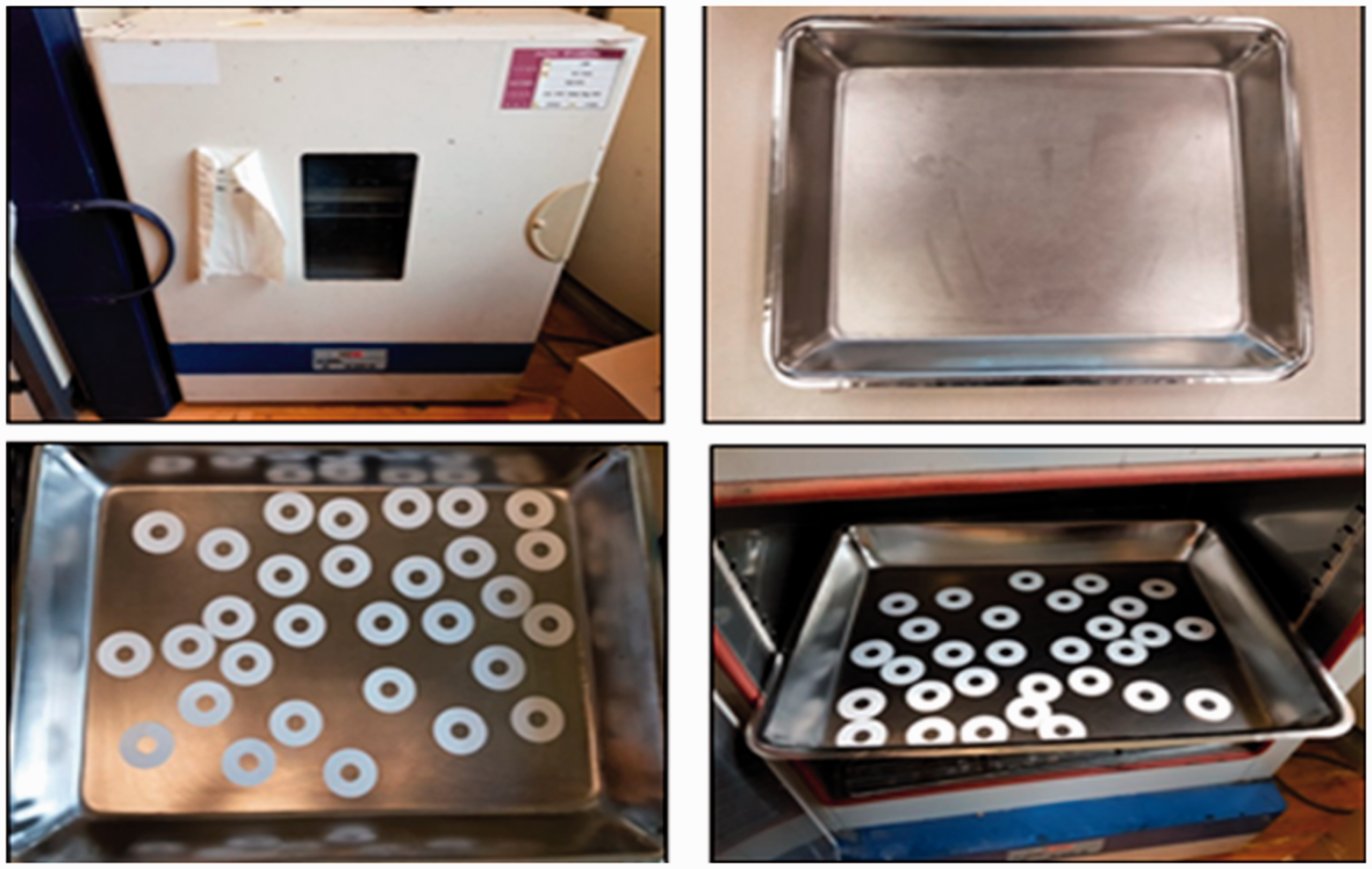
Drying of glass fiber filter paper.
Figure 2 shows the burner used for the characterization of PM emissions, which was generated during agricultural waste burning. The experimental chamber was designed based on the EPA Method 5G method. 15 The chamber dimensions were 6 m in width, 2.6 m in length, and 2.4 m in breadth. The size of the hood for collecting smoke (generated during agricultural waste burning) was 1.5 m in both width and length, and the diameter of the duct was 250 mm.
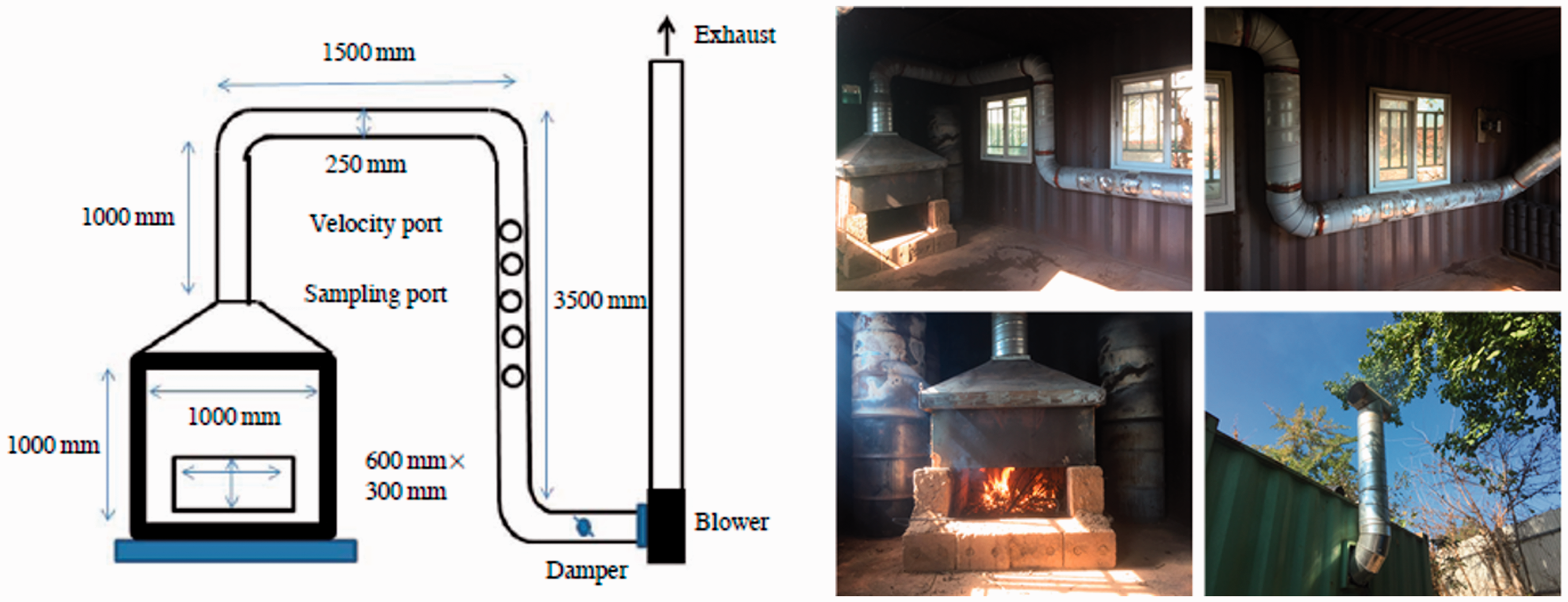
Experimental chamber. EPA method 5G: Determination of particulate matter emissions from wood heaters (dilution tunnel sampling location).
The characteristics of PM emissions due to agricultural waste burning were investigated in situ as follows (Figure 3): after collection of chili stalks and perilla stalk samples from the fields, sufficient quantity of samples were stored for agricultural waste burning. The obtained samples were produced in 1 kg unit considering the chamber volume of the burner and burning time.

Procedure for the incineration of agricultural residues (1).
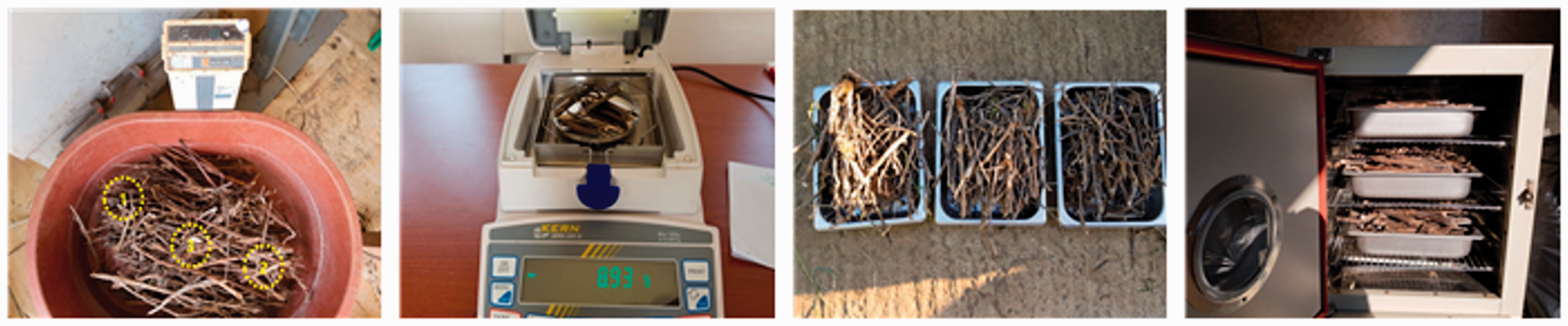
Moisture content measurement of sample.
To identify emission characteristics depending on moisture content in the sample, moisture content was measured using a high-performance moisture analyzer. In the process of measuring moisture, three samples were randomly obtained among 1 kg of samples. Thereafter, moisture was measured three times using an high-performance moisture analyzer. Average data was used as moisture content data. In order to secure a sample with a low moisture content, a 1 kg sample was divided into 3 places and dried so that it could be evenly dried in an oven (Figure 4).
Thereafter, the samples were added to the burning chamber. The samples were ignited with a gas torch. For measurements, PM was collected on filter papers (Glass Fiber Filter, Pall) under isokinetic sampling condition using a Cascade Impactor (PM-10 and PM-2.5 Impactor, Johnas, Paul Gothe GmbH) and a dust suction apparatus (Stack sampler, CAE) (Figure 5).
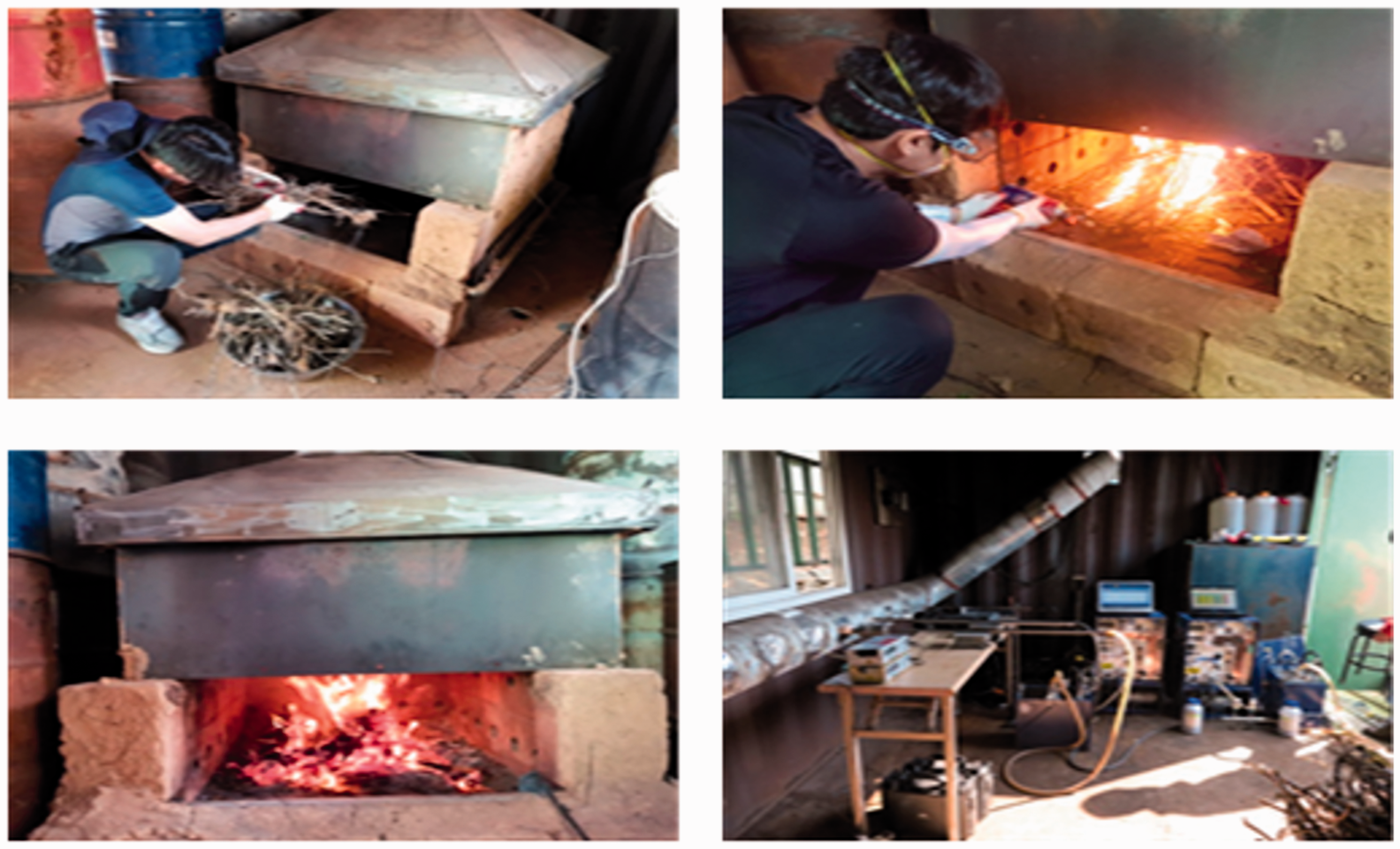
Procedure for the incineration of agricultural residues (2).
The constant velocity suction condition must be satisfied, and constant velocity suction means that the suction speed of the pump is 95% to 110% of the internal flow velocity of the inner diameter of the nozzle. The suction amount for isokinetic sampling is obtained by the following equation (1)14

Glass Fiber Filter weight measurement process is shown in (Figure 6), and the filter should be handled in the laboratory where humidity and temperature are maintained to minimize the occurrence of errors. 13 It should use a balance that can measure to 0.01 mg. The weight of the Glass Fiber filter should be measured using tweezers. The external exposure time should not exceed 2 minutes and the number of measurements should be made 3 or more times.

Glass fiber filter weight measurement process.
Calculation of emission factors of PM

Emission factors of the test materials (chili stalks and perilla stalks) were calculated as per equation (2), where particulate matter concentration (mg/m3) was a measured value, and total discharge amount (m3) was calculated using gas vent diameter (m3), flow rate (m/s), and measurement time (min).
Results
Concentration of particulate matter emitted from chili stalks burning
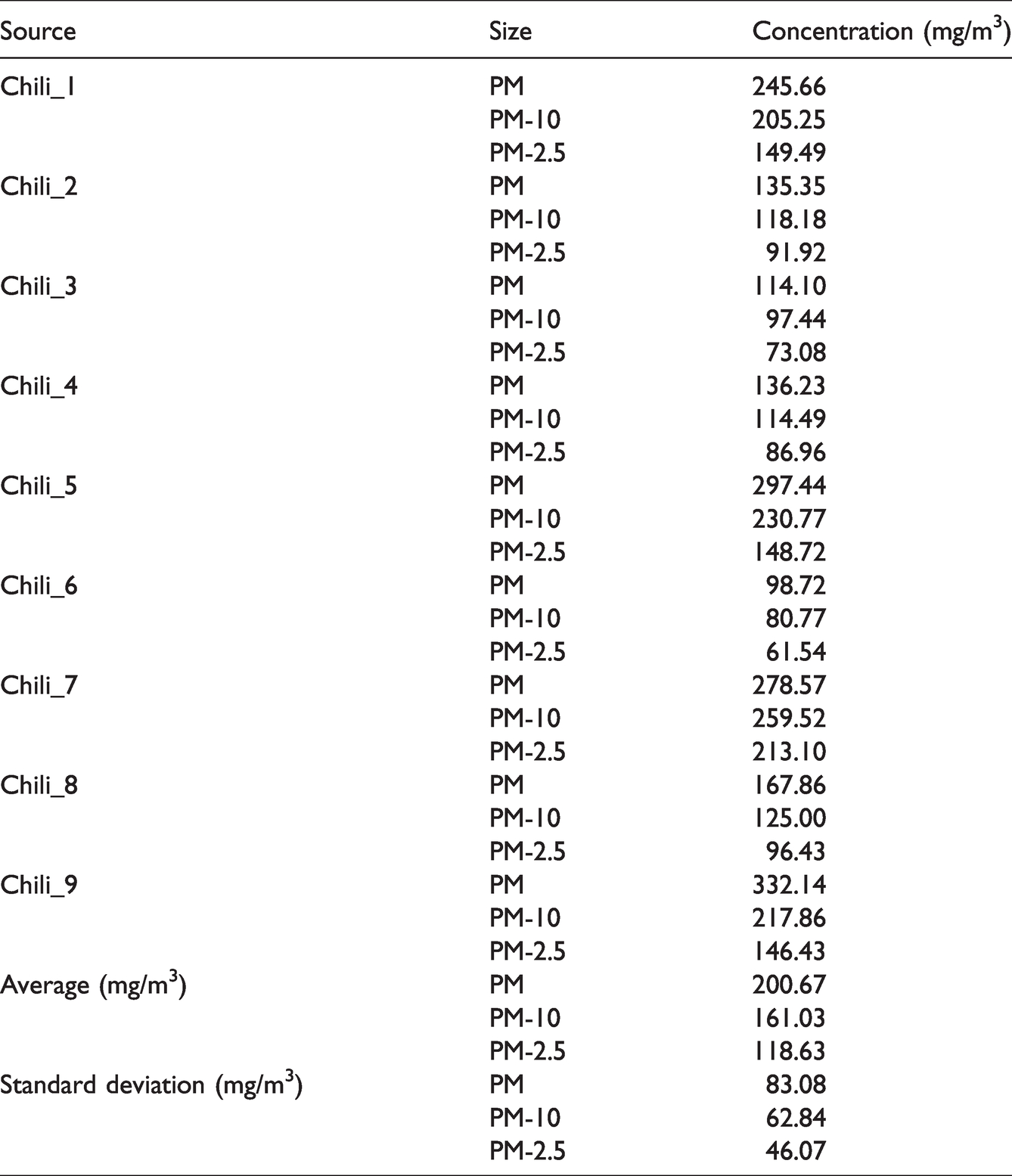
Fractions of PM (PM-10 and PM-2.5) generated during chili stalks burning were measured nine times under isokinetic sampling conditions (Table 2). Obtained results indicated the mean mass concentration of chili stalks as 200.67 mg/m3 for PM, 161.03 mg/m3 for PM-10, and 118.63 mg/m3 for PM-2.5. Standard deviations were 83.08 mg/m3 for PM, 62.84 mg/m3 for PM-10, and 46.07 mg/m3 for PM-2.5.
Concentration of fine particulate matter by the burning of the Chili.
Mean distribution rates (by particle size) of chili stalks were estimated based on analytical values of mass concentrations; large particles (≥10 µm) accounted for 19%, 10 µm-2.5 µm particles for 21%, and particles ≤2.5 µm for 61% (Figure 7).
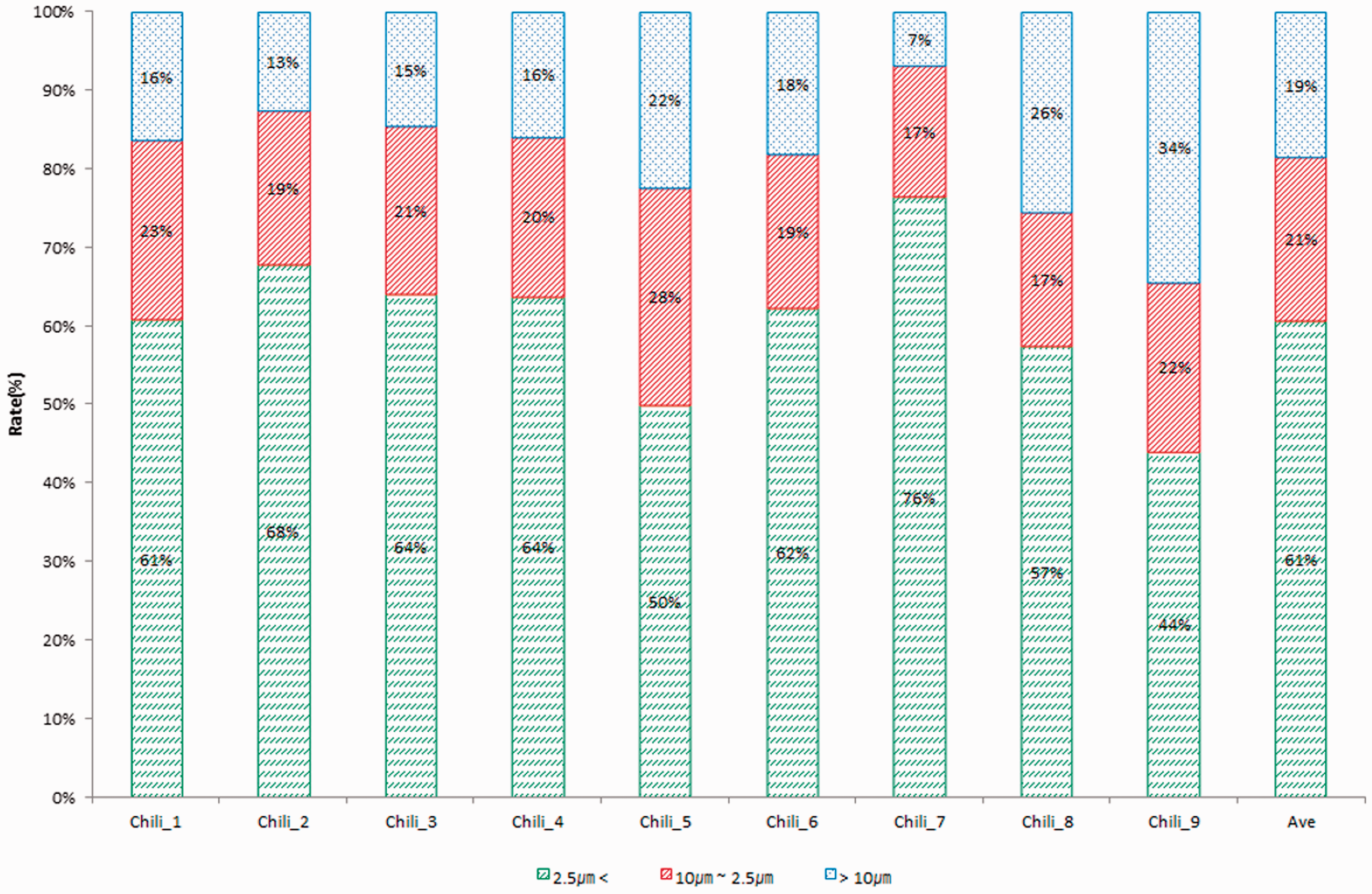
Particle size distribution during incineration of chili.
As moisture contents of chili stalks samples became higher, the difference in mass concentration between PM and PM-2.5 increased (Figure 8). A higher moisture content enhanced the level of incomplete combustion, leading to higher dust emissions with relatively larger particles. When the moisture content of the chili stalks sample was 3%, difference in mass concentration between PM and PM-2.5 was 37 mg/m3, which increased to 122 mg/m3 for 7–8%, and 186 mg/m3 for 9% moisture content.
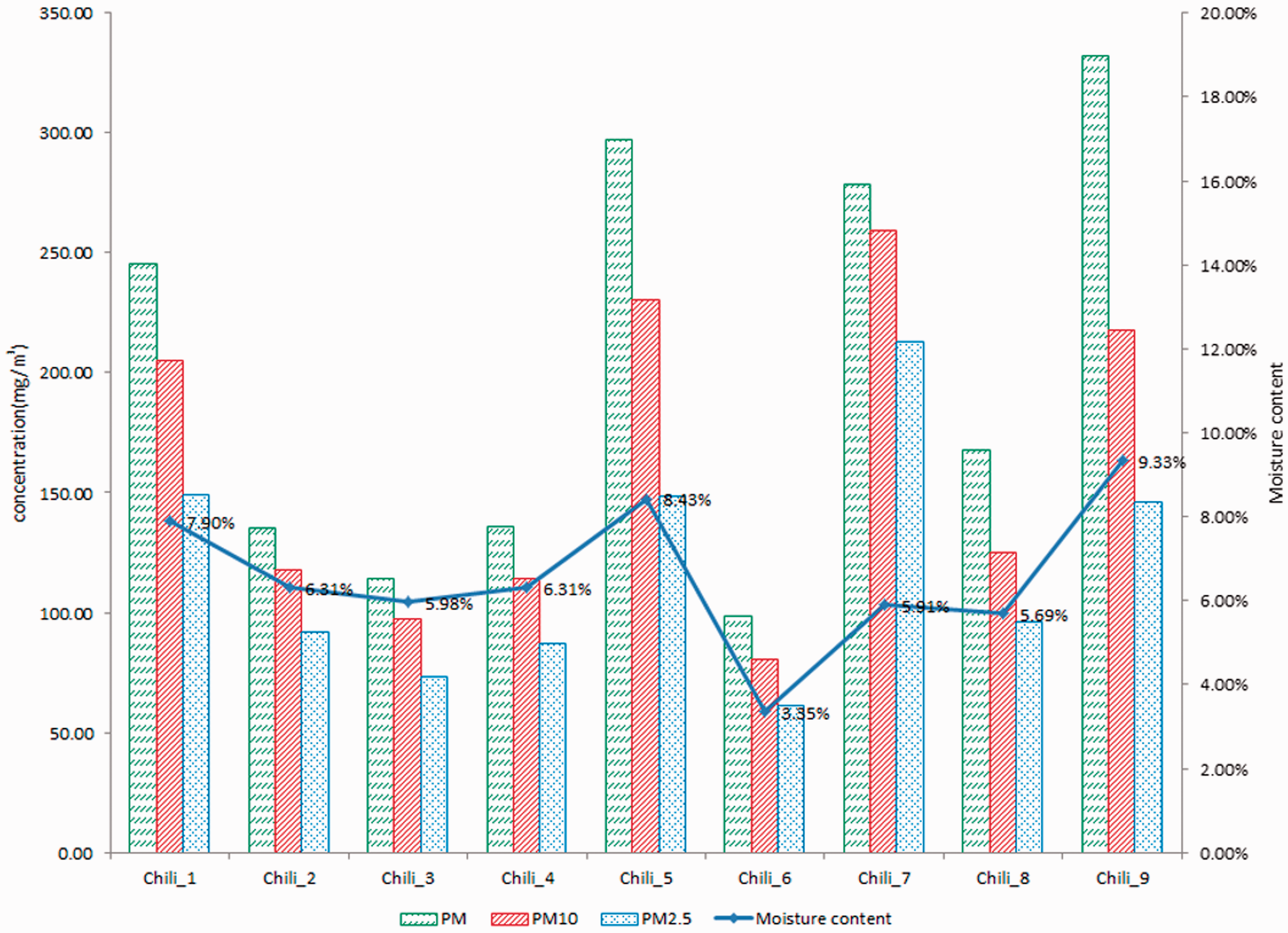
Changes in concentration of chili according to moisture content.
Emission factors of chili (PM-10 and PM-2.5)
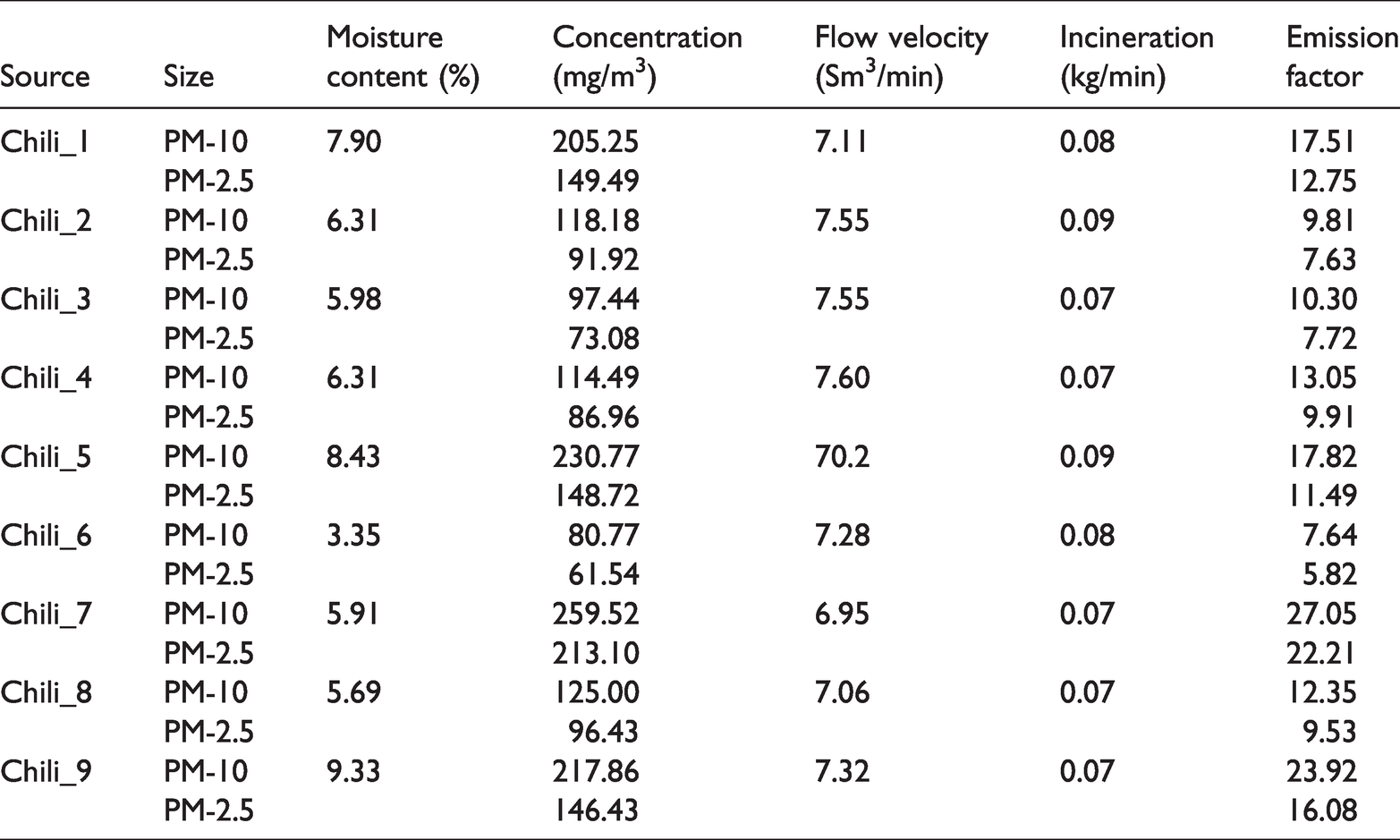
Emission factors of PM-10 and PM-2.5 from chili stalks are shown in Table 3, in which these factors ranged between 7.64–27.05 g/kg and 5.82–22.21 g/kg, respectively, depending on the sample characteristics. Mean emission factors of PM-10 and PM-2.5 from chili stalks (nine measurements) were 15.49 g/kg and 11.46 g/kg, respectively, while their standard deviations were 6.62 g/kg and 5.06 g/kg, respectively.
Emission factors of Chili (PM-10 and PM-2.5).
Concentration of PM emitted from perilla stalk burning
Fractions of PM-10 and PM-2.5 generated during perilla stalk burning were measured a total of eleven times under isokinetic sampling conditions (Table 4). Mean mass concentrations of perilla stalks were found to be 200.67 mg/m3 for PM, 289.47 mg/m3 for PM-10, and 243.79 mg/m3 for PM-2.5. Standard deviations were 141.80 mg/m3 for PM, 143.23 mg/m3 for PM-10, and 149.72 mg/m3 for PM-2.5.
Concentration of fine particulate matter by the burning of the Perilla.

Mean distribution rates by particle size of perilla stalks were resulting were found to be 9% for particles 10 µm or larger, 16% for 10 µm-2.5 µm particles, and 75%, for particles 2.5 µm or smaller (Figure 9).
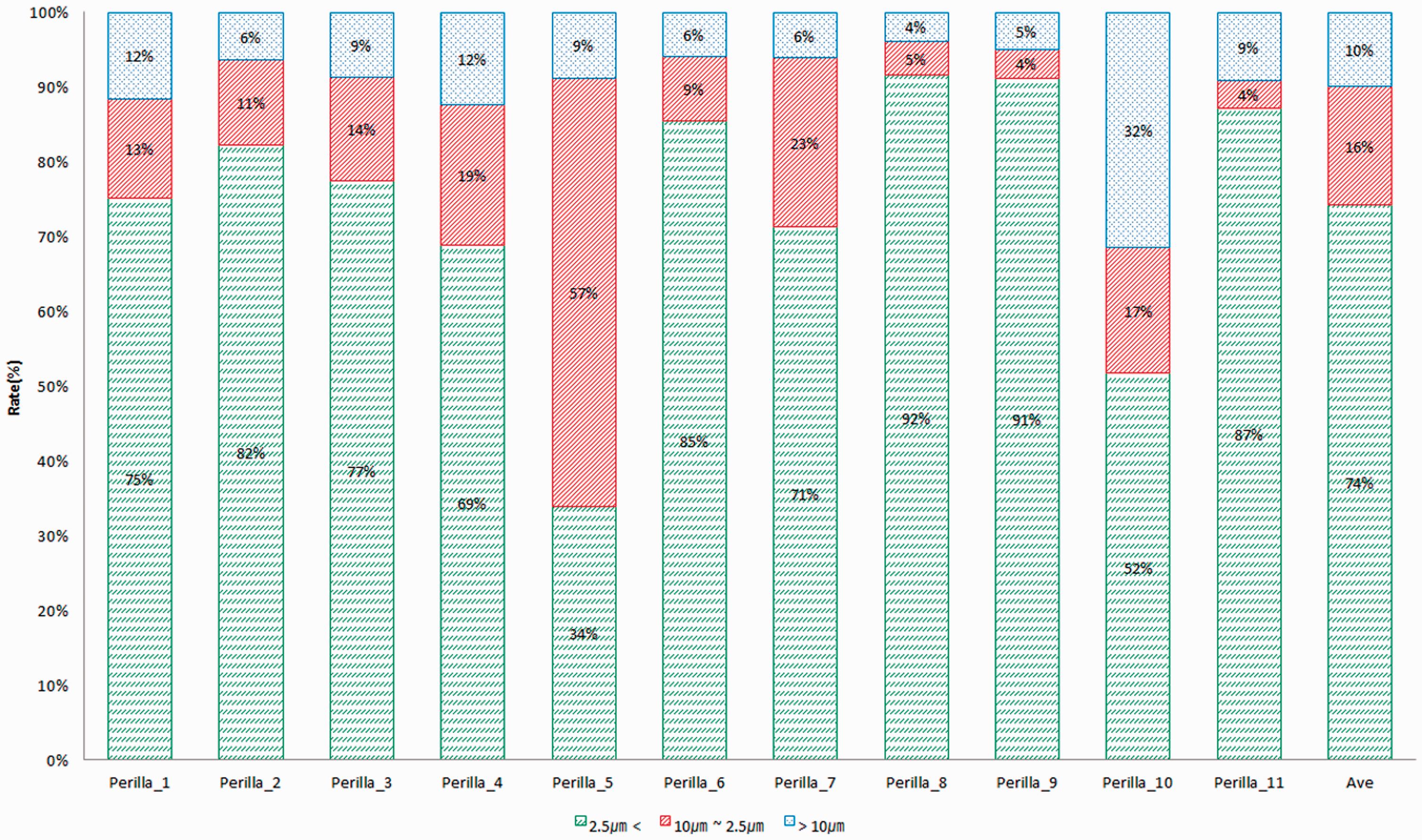
Particle size distribution during incineration of Perilla.
As the moisture content of perilla stalk samples increased, and the difference in mass concentration between PM and PM-2.5 are directly proportional (Figure 10). When the moisture content of perilla stalk samples were 5–8%, difference in mass concentration between PM and PM-2.5 was 62 mg/m3, which were 89 mg/m3 for 11–13% and 66 mg/m3 for 16–17% in moisture contents.
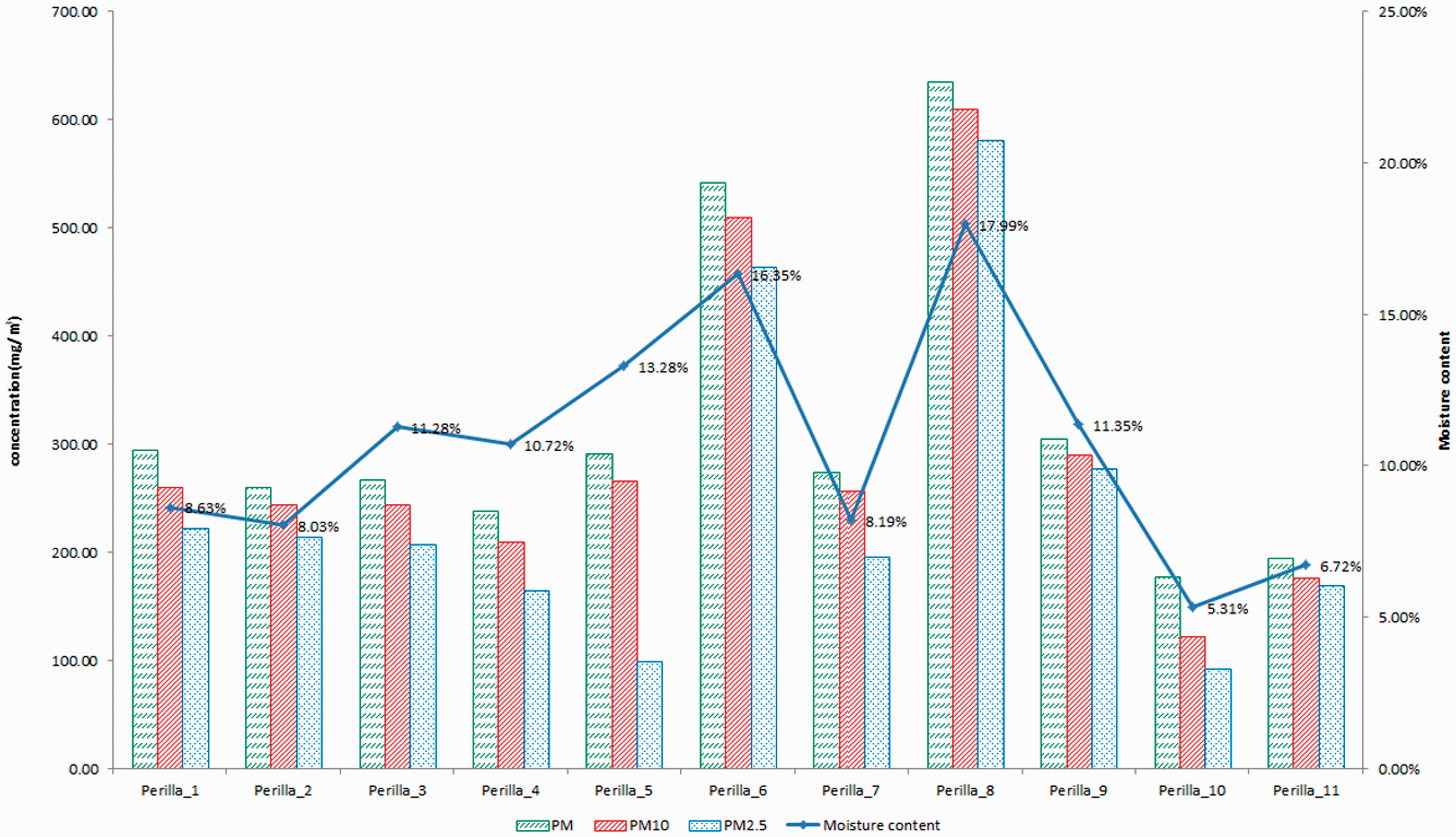
Changes in concentration of perilla according to moisture content.
Emission factors of perilla stalks (PM-10 and PM-2.5)
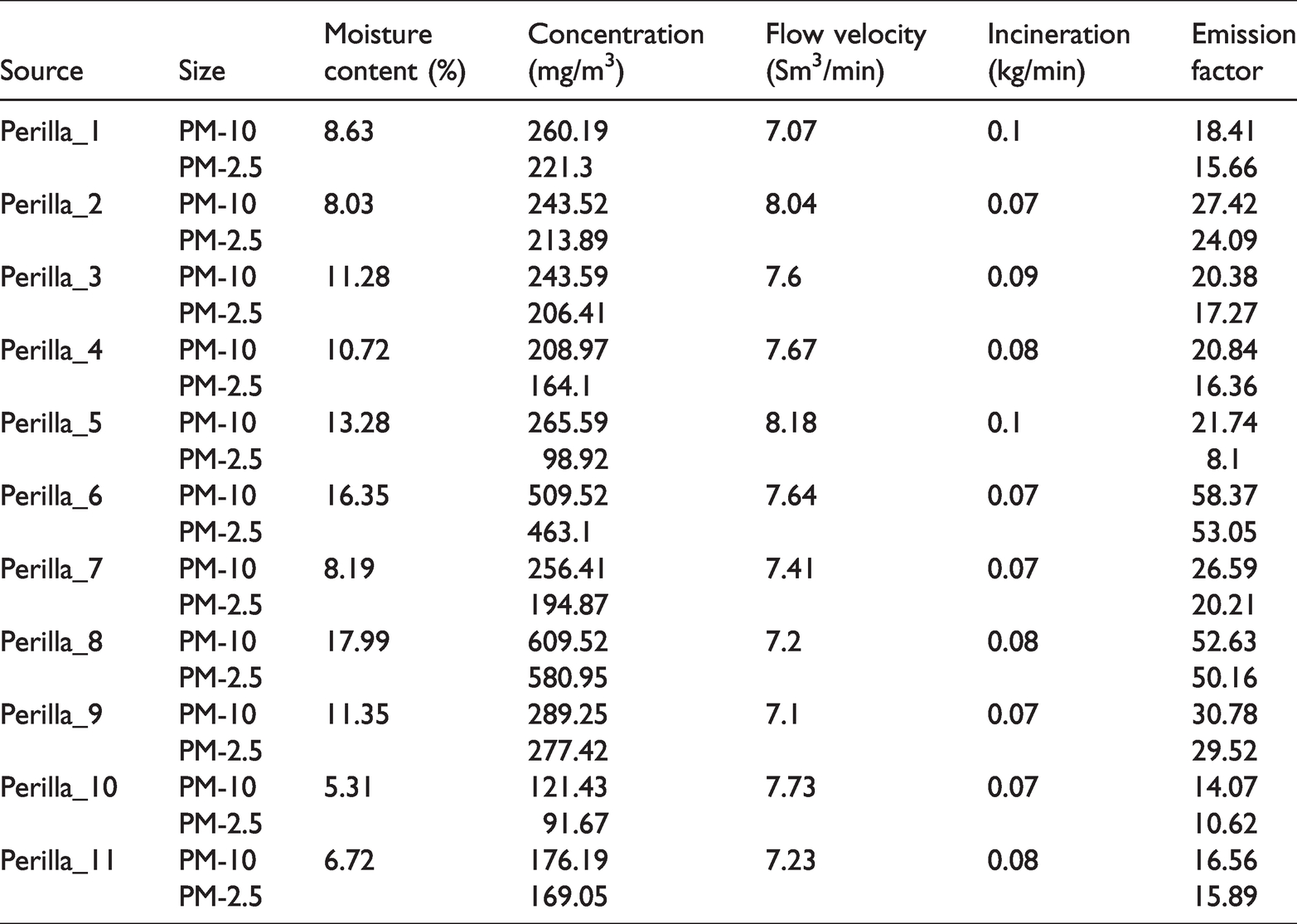
Emission factors of particulate matters (PM-10 and PM-2.5) from perilla stalks are shown in Table 5, in which emission factors of PM-10 and PM-2.5 ranged between 14.07–58.37 g/kg, and 8.1–53.05 g/kg, respectively, depending on sample characteristics. Mean emission factors of PM-10 and PM-2.5 from chili stalks after 12 measurements were 27.58 g/kg and 23.40 g/kg, respectively, and their standard deviations were 13.90 g/kg and 14.32 g/kg, respectively.
Emission factors of Perilla (PM-10 and PM-2.5).
Comparison of emission factors with those in preceding studies
There are few studies on emission factors of PM (PM-10 and PM-2.5) in the agricultural waste burning category. Studies on evaluation of emission factors of PM from agricultural waste burning in South Korea includes the study, “Improvement of air pollution emission data by biomass burning” by the Environmental Industry and Technology Institute (2014) and the study, “Improvement of evaluation method for biomass burning emission” by the National Institute of Environmental Research (2017). We compared emission factors from the two studies with those of chili stalks and perilla stalks in the present study (Table 6).
Comparison of emission factors with those in preceding studies.

When the emission factors of PM from the present study and those of the study by the Korea Environmental Industry and Technology Institute (2014) were compared, differences in emission factors of PM-10 for chili stalks and perilla stalks were 5.8 g/kg (37.1%) and 2.5 g/kg (9.8%), respectively and differences in PM-2.5 emission factors were 3.6 g/kg (45.5%) and 0.7 g/kg (2.8%), respectively. When compared with emission factors of PM estimated by the National Institute of Environmental Research (2017), differences in PM-10 emission factors for chili stalks and perilla stalks were 18.9 g/kg (54.9%) and 14.6 g/kg (34.2%), respectively. For PM-2.5 emission factors, differences were 22.1 g/kg (65.7%) and 18.2 g/kg (43.4%), respectively.
The reason why there were large differences in emission factors for PM in the agricultural waste burning category was that sample characteristics such as moisture content, impurities, and others, as well as burning method and experimental methods (discharge, sample input amount, and measurement time), differed in agricultural waste burning. The present study considered various moisture contents by sample to calculate emission factors of PM from chili stalks (9 times) and perilla stalks (11 times), due to which the reliability for the emission factor inventory of PM in the agricultural waste burning category was improved.
Emission factors of particulate matters in agricultural residue considering in situ states
Moisture contents of chili stalk and perilla stalk samples were measured by leaving them at a bare ground (Figure 11). To investigate changes in moisture contents of agricultural residue depending on temperature and time course, moisture contents were measured in a total of seven times from October 19th to November 16th in 2017. Based on the measured moisture contents, emission factor values were calculated for in situ state.
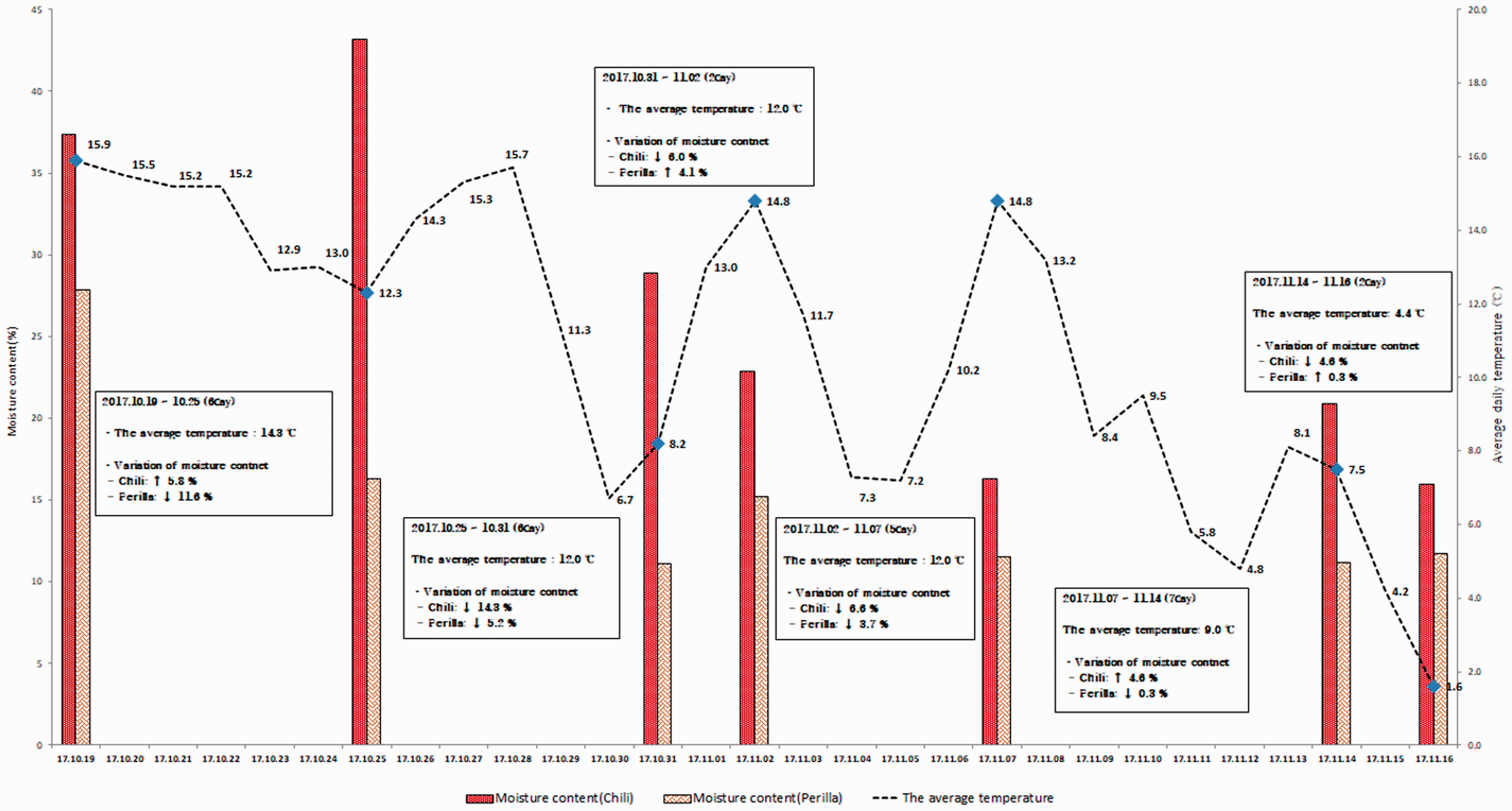
Fluctuation of moisture content of sample due to temperature and time.
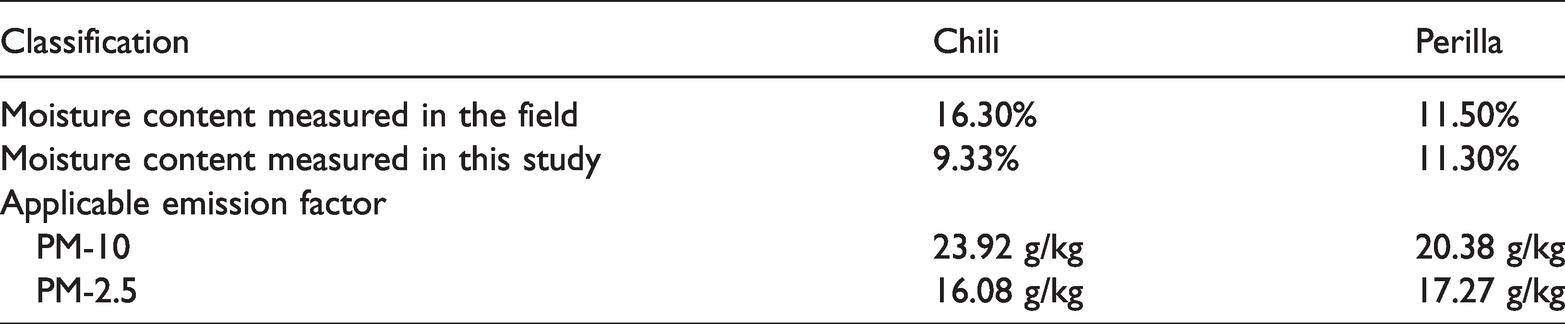
Moisture contents of chili stalks and perilla stalks that were naturally dried on the bare ground for twenty days were 16.3% and 11.5%, respectively. Of the results for moisture contents in the present study, similar moisture contents were 9.33% for chili stalks and 11.3% for perilla stalks. When calculated based on moisture contents of agricultural residue for in situ burning, PM-10 emission factors were 23.92 g/kg for chili stalks and 20.38 g/kg for perilla stalks. PM-2.5 emission factors were 16.08 g/kg for chili stalks and 17.27 g/kg for perilla stalks (Table 7).
Emission factors of particulate matters in agricultural wastes considering in situ states.
Conclusion
The present study calculated emission factors of PM-10 and PM-2.5 generated during agricultural residue burning in South Korea. To analyze the characteristics of PM emissions in agricultural waste burning, changes in PM-10 and PM-2.5 concentrations were examined considering moisture contents. Mean mass concentrations of chili stalks were 200.67 mg/m3 for PM, 161.03 mg/m3 for PM-10 and 118.63 mg/m3 for PM-2.5. Mean distribution rates by particle size were 19% for 10 µm or larger particle, 21% for 10 µm-2.5 µm, and 61%, the largest proportion, for 2.5 µm or smaller particles. Mean mass concentrations of perilla stalks were 316.01 mg/m3 for PM, 289.47 mg/m3 for PM-10, and 243.79 mg/m3 for PM-2.5. Mean distribution rates by particle size were 9% for 10 µm or larger particles, 16% for 10 µm-2.5 µm, and 75%, the highest proportion, for 2.5 µm or smaller particles.
Based on the characteristics of PM emissions during agricultural waste burning, emission factors of PM were estimated. Emission factors for PM-10 and PM-2.5 of chili stalks ranged between 7.64–27.05 g/kg and 5.82–22.21 g/kg, respectively. Mean emission factors for PM-10 and PM-2.5 from cilil after nine measurements were 15.49 g/kg and 11.46 g/kg, respectively. Their standard deviations were 6.62 g/kg and 5.06 g/kg, respectively. PM-10 and PM-2.5 emission factors of perilla stalks ranged between 14.07–58.37 g/kg and 8.1–53.05 g/kg, respectively. Mean emission factors for PM-10 and PM-2.5 from chili stalks after twelve measurements were 27.58 g/kg and 23.40 g/kg, respectively. Their standard deviations were 13.90 g/kg and 14.32 g/kg, respectively. Also, moisture contents of samples that naturally dried on the bare ground for twenty days were also measured, by which emission factors of PM in the agricultural waste burning category were estimated. Estimation of PM-10 emission factors based on moisture contents of in situ agricultural waste burning resulted in 23.92 g/kg for chili stalks and 20.38 g/kg for perilla stalks. PM-2.5 emission factors were 16.08 g/kg for chili stalks and 17.27 g/kg for perilla stalks. It seems that identification of emission factors for PM considering in situ moisture content state should be able to raise the reliability of PM inventory in the agricultural waste burning category.
In South Korea, PM emissions due to biomass burning accounted for the fourth largest proportion following non-road mobiles, fugitive dust, and the manufacturing industry. In particular, agricultural residue in the agricultural waste burning category have been burned in situ without using any air pollution prevention facility. Since particulate matters (PM-10 and PM-2.5) are directly emitted to the air during in situ agricultural waste burning, the amount of emission should be accurately estimated through identification of emission characteristics. Experts believe that the emissions statistics for the Biomass-burning sector are unreliable. Therefore, It is necessary to continuously improve the emission factors, activity data and calculation methods of the agricultural residue combustion sector.
This study has the following meanings. First, the reliability of air pollutant emissions was improved by supplementing the inventory of fine particulate matter in the field of biomass burning, which is known to have low reliability. This will secure important data necessary for solving the fine particulate matter problem.
Second, the moisture content was not considered for the emission factor of fine particulate matter caused by the incineration of existing agricultural residues. In this study, the fine particulate matter emission factor of the incineration sector of agricultural residues was calculated considering the moisture content. Therefore, it is believed that it will contribute to more accurately calculating the amount of fine particulate matter emitted when incinerated agricultural residues.
Third, before the incineration of agricultural residues, the moisture content of agricultural residues that fluctuates over time was measured for about 20 days, and the emission factors of PM-10 and PM-2.5 were presented considering the field conditions. According to the difference in minimum and maximum moisture content, PM-2.5 emissions differed about 3–14 times, and moisture content was found to be an important factor in increasing the emission of fine particulate matter when incinerated agricultural residues.
The present study evaluated characteristics of PM emission and emission factors with considering characteristics of agricultural waste samples, which improved the reliability of the particulate matter inventory. This data should be necessary for estimation of PM emission in the agricultural waste burning category in the future.
Footnotes
Declaration of conflicting interests
The author(s) declared no potential conflicts of interest with respect to the research, authorship, and/or publication of this article.
Funding
The author(s) disclosed receipt of the following financial support for the research, authorship, and/or publication of this article: This work is financially supported by Korea Ministry of Environment(MOE) as ‘Graduate School specialized in Climate Change’ and National Institute of Agricultural Sciences, Climate Change Assessment Division.
