



Abstract
In this paper, an attempt has been made to highlight major developments of vertical axis wind turbines (VAWTs) in the last few decades. The effects of various design parameters such as airfoil, number of blades, solidity, aspect ratio, blade helicity, and overlap ratio have been critically analyzed. Wind energy is the most promising renewable, cost-effective, efficient, and accessible source for both domestic and commercial applications. Horizontal axis wind turbines are highly developed and are being used for medium-to-large scale power projects. VAWT are considered viable options for urban and semi-urban areas. These turbines have several characteristics, such as omnidirectional, power generation in weak and unstable winds, esthetically sound, safety, and low noise. Darrieus turbines with a fixed blade-type have starting problems at low wind speeds. Savonius turbines have good starting capability; however, their power coefficients are lower than other types of VAWT. To overcome the shortcomings of conventional wind turbines, an innovative engineering solution was sought in the design of hybrid VAWT. The analysis revealed that hybrid wind turbines have addressed the deficiencies to an extent; however, the overall performance is still less than that of conventional wind turbines. Several recommendations have been made based on state-of-the-art information from the perspective of future studies and acceptability. It was concluded that vast opportunities for wind turbine applications are available in urban areas; however, further academic research is required on critical aspects such as self-starting at low wind speeds, efficiency, structural reliability, design improvement for aerodynamic performance, and wind resource assessment.
Keywords
Introduction
Since the beginning of the industry setup, the consumption of energy has increased rapidly in the world. It is expected that energy resources based on fossil fuels are not sufficient to meet the global energy requirements. Furthermore, fossil fuel-based energy is not considered to be a good choice because of high carbon emission, non-renewable and climate warming, etc.
1
The industrialized setup has undergone significant unfavourable changes, which have a significant negative influence on the environment and the available energy resources. Additionally, rising energy consumption points to both an energy crisis and environmental problems. Today, approximately 80% of the overall global energy is produced from fossil fuels; therefore, the quantity of these resources available on earth is limited, and a gradual decline has been observed over time.
2
The possibility of reducing fossil fuels has directed interest in renewable energy sources. To stop further depletion of natural resources and severe environmental deterioration, potential technology systems must consider sustainable growth principles and accomplishment criteria in technological processing, outcome, and operating limits.
3
Various worldwide climate shifts have been brought on by the excessive release of greenhouse gases like carbon dioxide.
4
According to the perspective of world energy technology, greenhouse gas emissions from different energy sectors will be significantly increased in the next few decades without the development and implementation of alternative energy sources. The analysis shows that approximately 1200 grams of CO

Reduction in CO
The energy produced from renewable or natural resources can be termed green energy. The negative impacts caused by this energy are less than those of the other systems. Wind energy can be harnessed using rotating devices and converted into electrical energy for household or commercial applications. 12 It is a low-cost solution in terms of maintaining existing systems, using renewable energy, and utilizing upcoming technology.13,14 A graphical representation of renewable energy depicting the need to harness ongoing issues is shown in Figure 2. Wind energy is an emerging technology for electricity production and has become very important in the last few decades. The installed capacity of wind energy has nearly doubled every three years during the past two decades of the twenty-first century. 15 By the end of 2016, the total installed capacity had increased to 487 GW (4% of global electrical power) and this number is gradually increasing. Infrastructures and technology have rapidly advanced. Wind energy is considered to be a mature and convincing renewable source of energy. In 2019, an accumulative power capacity of approximately 651 GW was produced from wind energy. 16 According to another survey conducted in 2013, by the end of 2050 wind energy technology will meet approximately 18% of global power requirements. 11 Extensive efforts have been made to improve wind energy technology aiming to decrease the import of energy from other countries and to meet the power requirements. Research by different countries has been carried out to identify favorable sites for wind velocities. According to the worldwide wind energy report, the power generation capacity of wind energy systems can be extended to 2000,000 MW by the end of the year 2025. Substantial wind with the potential of power is found near highways, urban areas, high-rise buildings, and railway tracks. Wind potential is available with varying intensities in different areas. An efficient power-producing device is required to capture wind energy that must cater to environmental changes, turbulence, and speed ranges.6,17

Graphical representation of renewable energy depicting its need to address ongoing issues. The figure shows that renewable energy sources have the features to provide secure, safe, sustainable, and economical power. (Reprint with written permission from Elsevier). 18
Wind energy scenario and its national need
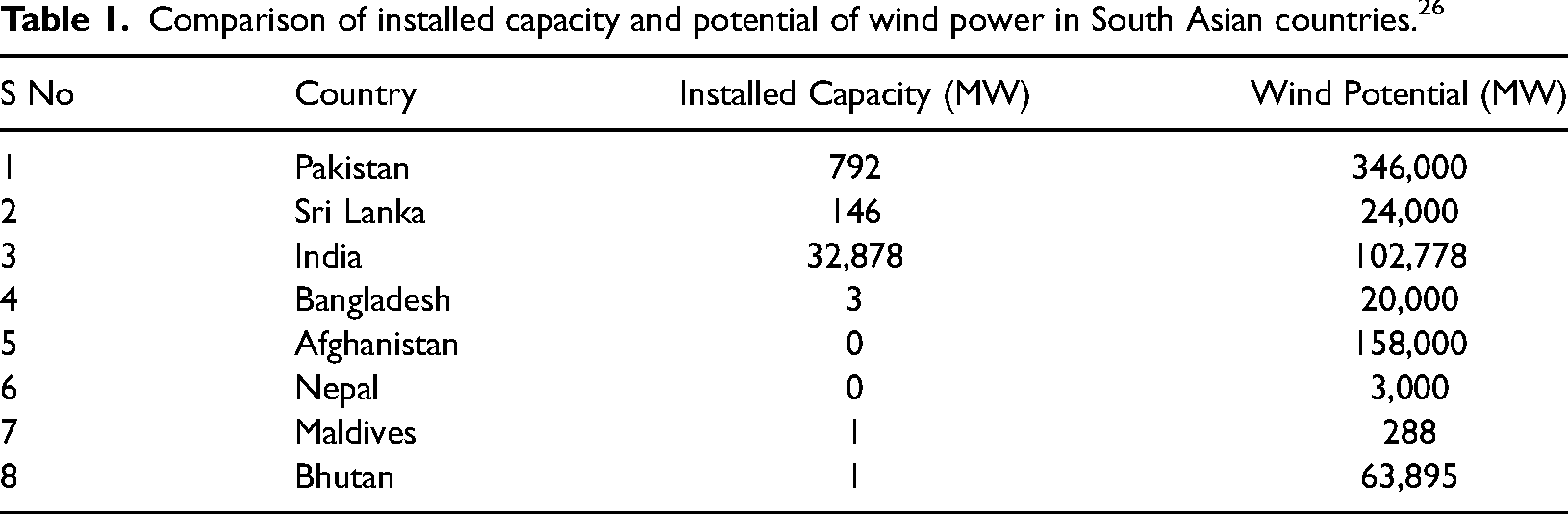
As the earth’s average temperature and global warming are continuously increasing owing to the use of fossil fuels. According to a survey, by the end of 2030, approximately 50% of the world’s energy consumption will increase. An urgent solution that considers safety and environmental friendliness is required to address these ongoing energy issues.19,20 In response to growing environmental concerns, renewable energy options were developed. 21 The determination of accurate wind speed data along with turbulence level for any site is critical for the effective performance of wind turbines. Prediction of wind profiles in urban locations is more difficult than in rural areas because of barriers.22–25 Conventional techniques for electricity generation are mostly based on natural gas and oil. Despite the consumption of fossil fuels, low electricity production is a serious concern that hinders the development of a country. Electricity produced by wind resources is more efficient, safe, and economical than fossil fuels. The cost factor and air pollution are associated drawbacks of power generation by these existing means. The installed capacity of wind power generation in some countries is shown in Figure 3. The figure shows that China, USA, and Germany are leading with an installed wind power production capacity of more than 1000 GW, whereas a very small contribution can be seen from Brazil and Pakistan. Efforts are required from such countries to contribute to green energy production. A comparison of wind energy potential and installed power capacity in South Asian countries is presented in Table 1. The data shows that besides having great potential for wind power, a very low installed wind power capacity can be seen in some countries such as Pakistan, Afghanistan, and Bhutan. By taking initiative and introducing effective policies, encouraging wind farm firms can greatly help re-power their energy capacity. Research in this area is crucial to make it an affordable, viable, and dependable power solution for off-grid sites and various domestic as well as commercial applications. 11 The growth of an efficient wind energy-production mechanism incorporates sustainability in various regions, minimizes the strain on the available grid setup, strengthens the economy, and meets the electricity requirements.

Installed capacity of wind power generation of different countries. Besides having the great potential of wind energy in Pakistan and Brazil, power produced by this renewable source is very less as compared to other countries. (Reprint with written permission from Elsevier). 18
Comparison of installed capacity and potential of wind power in South Asian countries. 26
The utilization of wind flow patterns for electricity generation has been a challenging task for engineers, developers, researchers, and significant work has been done in the last few decades. During the research, attention was given to computational programs, resource assessment techniques, environmental aspects, blade materials, aerodynamics, test methods, modeling, and simulation.
This review paper highlights some important findings of VAWTs from published papers, technical reports, and manufacturer’s literature. Information related to the limitations and scope of different VAWTs was evaluated in this study. Some ongoing development and commercial activities in the field of wind turbines are also highlighted. It was observed that vast opportunities for wind turbine applications are in urban areas; however, further academic research is required on critical aspects such as design improvement for aerodynamic performance, cost reduction, and resource assessment for urban operating conditions.
In the second section, the classification of wind turbines with respect to the axis of rotation, aerodynamic forces, and power production capacity have been discussed. Some important parameters involved in the design and analysis of wind turbines have also been highlighted. In the third section, the aerodynamic performance analysis of the Darrieus VAWT is presented. Recent studies using experimental and computational techniques, including the effects of various design parameters, have been highlighted. The fourth section focuses on the design and development of Savonius wind turbines. The performance analysis of Savonius wind turbines based on rotor design modifications, number of blades, and overlap ratio was summarized. In the fifth section, recent progress in the development of wind turbines in the form of hybrid VAWTs is discussed. The importance of hybrid VAWT and the combined effect of various Darrieus and Savonius parameters has been emphasized. Based on the findings of different design configurations of wind turbines, analysis and discussion are provided in the sixth section. In the seventh section, conclusions are drawn based on the analysis of various wind turbines. The analysis provides meaningful results to explore further design modifications to improve the performance parameters.
Novelty of the research
This paper provides a thorough analysis of the literature on different wind turbine designs. With a focus on the key characteristics, benefits and drawbacks, and continuing research, a modest attempt has been made to highlight some of the significant advances of VAWTs. On the basis of the state-of-the-art information, some recommendations have been made for further research and the acceptance of wind turbines. Further academic research is necessary to make VAWTs feasible, reliable, and inexpensive power generating technology for numerous low and decentralized power applications. The paper will also serve as an information hub by citing the most pertinent sources for each project, making information about these projects more accessible.
Wind turbines and their classification
Wind is produced as a result of uneven heating of the earth from solar energy, which leads to a change in atmospheric pressure. Wind energy can then be harnessed by an appropriate device called a wind turbine. As a result of wind flow, the shaft starts rotating and a generator attached to the shaft starts producing electricity that can be used for household applications through the grid station. Wind turbines are used to transform wind kinetic energy into electrical power, which is a clean way to produce electricity. 27 However, there are some issues to use this technology, such as initial development expenses, installation capacity, especially for large communities, the requirement of large wind farms, and the availability of wind energy sites. 28 To enhance the utilization of renewable wind sources, awareness of available potential must be transmitted at all levels.23–29 Considering the potential power solution, the installation of small-scale wind turbines over high-rise structures to sustain the transition phase has been recommended.30–33 Wind turbines can be classified based on their power capacity, aerodynamic forces, and axis of rotation. Based on the axis of rotation, there are two major types: horizontal axis wind turbines (HAWTs) and VAWTs. 34 A sketch diagram depicting shaft and rotor orientation of the HAWT and VAWT is shown in Figure 4. The flow chart of various configurations of wind turbines based on their axis of rotation, aerodynamic forces, and power production capacity is shown in Figure 5.
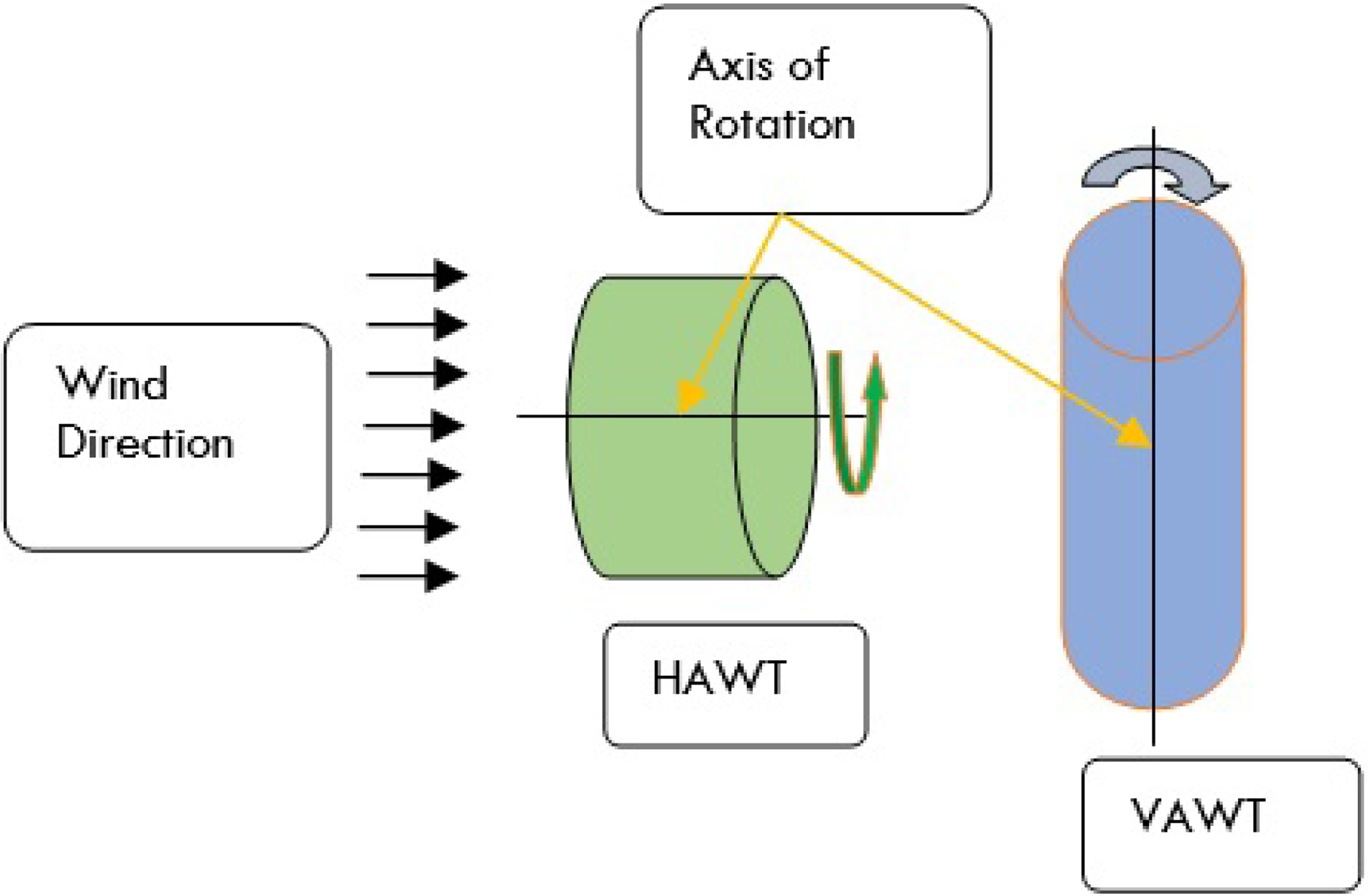
Orientation of shaft and rotor in HAWT and VAWT. 35
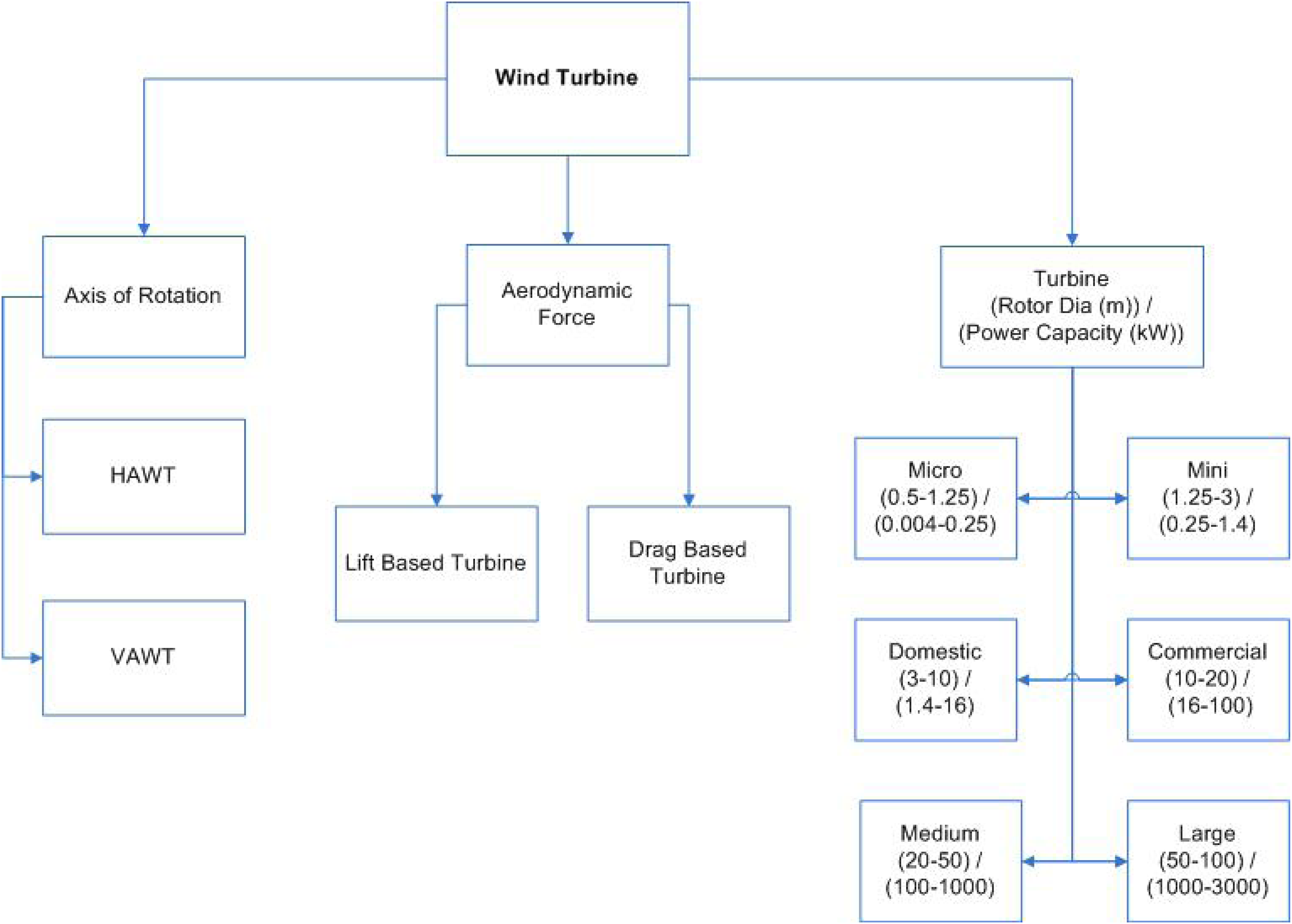
Classification of wind turbines based upon the axis of rotation, aerodynamic forces, and power capacity. 11
The HAWTs have been widely used for decades. The rotating axis of the HAWT is parallel to the wind direction and horizontal to the ground. 36 On the contrary, the shaft of the VAWT remains perpendicular to the ground. Both HAWTs and VAWTs are used in various sizes (up to 100 m rotor diameter) and power production capacity (up to 3 MW). The small turbines may be used for auxiliary power sources, household applications and power traffic signal lights, etc. whereas; large turbines are used for domestic power supply as well as at an industrial level. Although massive wind farms currently produce the majority of the world’s wind energy, the number of small size wind turbine installations has been rising in recent years. 37 Over the past few decades, the size of wind turbines has amplified to a scale of 100. HAWTs are highly developed and these are being utilized all over the world but recent research and development work in the field of VAWTs can lead the wind energy technology in the near future. 6 HAWTs are not omnidirectional and for better power output; they must change their direction with the wind. Also, for wind direction alignment, directional control mechanism must be installed on it. 38 HAWTs are widely used for most commercial applications around the world and most medium to large scale projects are based on such turbines. 39 For small-scale utilization and urban areas having turbulent or intense wind patterns, these are not considered viable options. VAWTs are considered to be a potential option for semi-urban areas and cities.40,41 Based on aerodynamic behavior, VAWT can be further categorized into two subgroups, drag-based VAWTs (Savonius) and lift-based VAWTs (Darrieus). In both types of turbines, the corresponding lift or drag force is used to extract power from the available wind. 11 To improve the wind turbine’s performance parameters, several techniques based on numerical as well as experimental investigations have been recommended in the literature.42–44
Important parameters of wind turbine
The performance of both HAWT and VAWT depends on design parameters which have been discussed in subsequent sections.
Power
Theoretical available power in the wind can be determined by Eq 1.
45


Power coefficient
It is the ratio of the power generated by the wind turbine to the power available in the wind (Eq 3).

Torque
The amount of torque produced by the wind turbine can be estimated by Eq 5.
48

Tip speed ratio
The power coefficient can be used to calculate the aerodynamic efficiency of wind turbines based upon the tip speed ratio (TSR) that is stated by Eq 6.
49

Solidity
It is defined as the measurement of VAWT occupied area and can be calculated from the ratio of blade face area to the rotor swept area.
52
It also depends on the chord length (
Swept area
It is the area through which incoming wind flows. It may be circular in the case of HAWT or a product of base and height. Output power is directly proportional to the swept area.
Airfoil
The type of airfoil has a great effect on power production. In the past, most of the turbines were designed with NACA series symmetric airfoil, 54 but for VAWTs these airfoils were having starting issues. Due to more tangential thrust of cambered airfoils at low angle of attack (AoA) compared to that of symmetric airfoils, they have the potential to overcome these issues. 55
Chord length
The chord length of the blade is another important parameter. Solidity depends upon chord length and affects the aerodynamic performance of the wind turbine. At the lower TSR range, an increase in power output has been observed by using a higher solidity ratio (large chord length with a smaller diameter) as compared to the higher TSR range. 48
Number of blades
The number of blades plays a vital role in the design process and most of the existing configurations are installed with three blades. There are several design configurations for the number of blades required for a suitable turbine, depending on the aerodynamic efficiency, available cost, and reliability factor. However, with an increase in the number of blades, to balance the rotor design, efficiency gets reduce and a complicated dynamic stability is required to the blade hinge to alleviate the loads. One reason for the selection of three blades is that a wind turbine having two blades causes noise problems and that having four blades add weight penalty. 6 The second reason for three-blade rotor selection is relatively more energy extraction from the wind sites followed by the conversion by the installed generators into electricity for domestic as well as commercial projects.6,56
Design velocity
It is the velocity for which the wind turbine is required to be designed. Most of the time, the operational or average wind velocity is considered to be the design velocity. 57
Aspect ratio
It is the ratio of blade height (h) and rotor radius (R) as given in Eq 8.
Cut-in & Cut-out speed
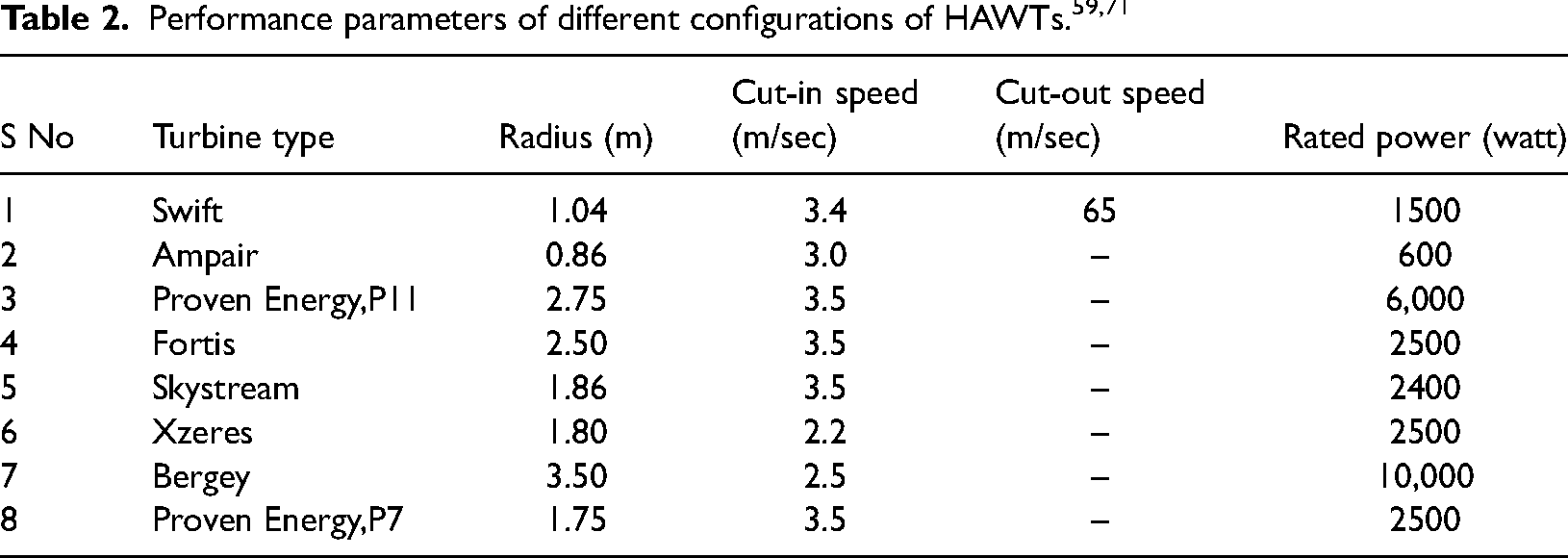
The lowest speed at which a turbine begins to generate electricity is known as the ’cut-in speed’. It can vary from 0.1 to 10 m/sec depending upon turbine self-starting capability. Cut-out speed is the maximum speed constraint to ensure system preservation and safety above which the turbine will cease generating electricity. It can vary from 10 to 40 m/sec depending upon the specification of the turbine. 59
Horizontal axis wind turbines
Horizontal axis wind turbines are commonly used all over the world. In this category, the axis of rotation remains horizontal or parallel with the ground. Generally, these turbines are designed with three blades and installed at a height (approx.

Major components of HAWT. Nacelle contains most of the components installed behind the rotor that rotates with the help of yawing mechanism to align with the incoming airflow. 70
Vertical axis wind turbines
The axis of rotation in VAWTs remains perpendicular to the wind as well as the ground. The primary advantages of VAWTs are acceptance of wind from any direction (omnidirectional), low noise pollution, high starting torque, single moving part, compact size, free from the yawing mechanism, respond well to variation in wind direction, the capability to operate in a broad range of wind speed and turbulence, design simplicity and capability to give direct rotary drive. 72 Moreover, the uniform section, untwisted, and straight blades of VAWTs are easy to fabricate.73–75 They have better adaptable features to the unsteady wind and low environmental impact. VAWTs also have a strong ability to resist wind along with low cut-in speed and are quite easy to integrate with urban infrastructure due to design simplicity.11,52 Because most of the components of VAWTs are installed on the ground that leads to ease of installation and maintenance activities. The most common components of VAWT required during the design and fabrications process are the rotor, hub, blades, tower, shaft, generator, link rod, and foundation. Schematic showing these components of VAWT is given in Figure 7.49,76 Straight-bladed VAWT type consists of untwisted and uniform cross-sections which make them easy to extrude. On the contrary, blades of HAWTs should have tapered and non-uniform cross-sections to get optimum performance parameters.13,77 In the recent past, the performance of VAWT has improved a lot due to research and advancements in rotor technology. These enhancements helped to increase performance over a broad operational range in challenging urban environment.78–81 Various configurations of VAWTs based upon aerodynamic forces are shown in Figure 8. A detailed discussion of these configurations is given in detail in subsequent sections. These may be divided into two categories based on the aerodynamic forces that are exerted on the turbine blades i.e. lift-based (Darrieus) and drag-based (Savonius) VAWT. In Darrieus turbines, lift force on each blade produces positive torque while the negative torque from drag force counters with it. The overall contraction between these two opposing torques defines the turbine output torque. In contrast, the drag force of the Savonius turbines produces power. Compared to Savonius turbines, Darrieus turbines may have higher maximum efficiency. 36 Darrieus turbines can extract more power per unit area from the wind, whereas Savonius turbines are simpler in design, but their efficiency is very low. 82
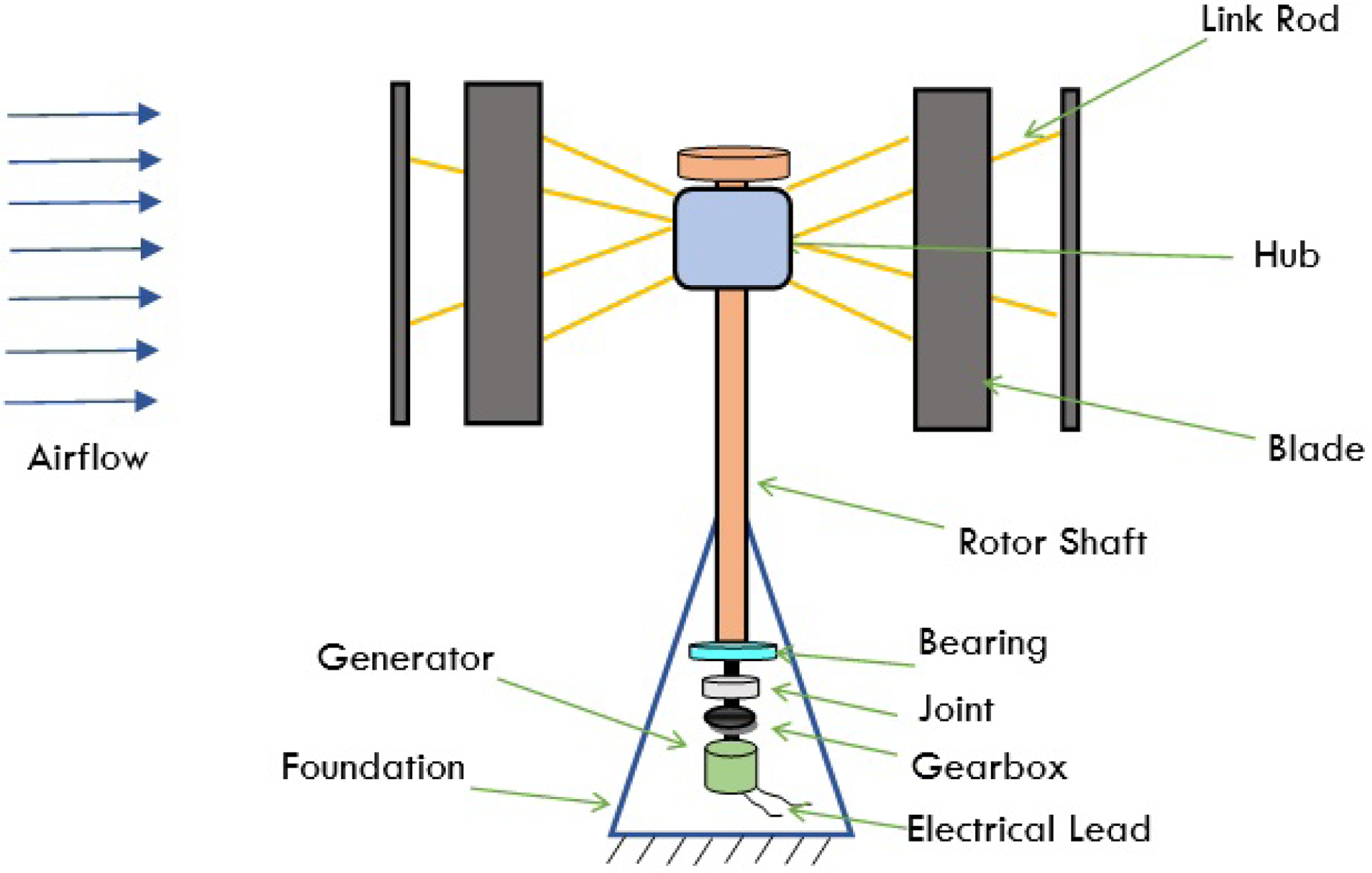
Major components of VAWT, the incoming airflow is perpendicular to the rotating shaft and turbine blades. Most of the components are installed on the ground that leads to ease of installation and maintenance activities. 76
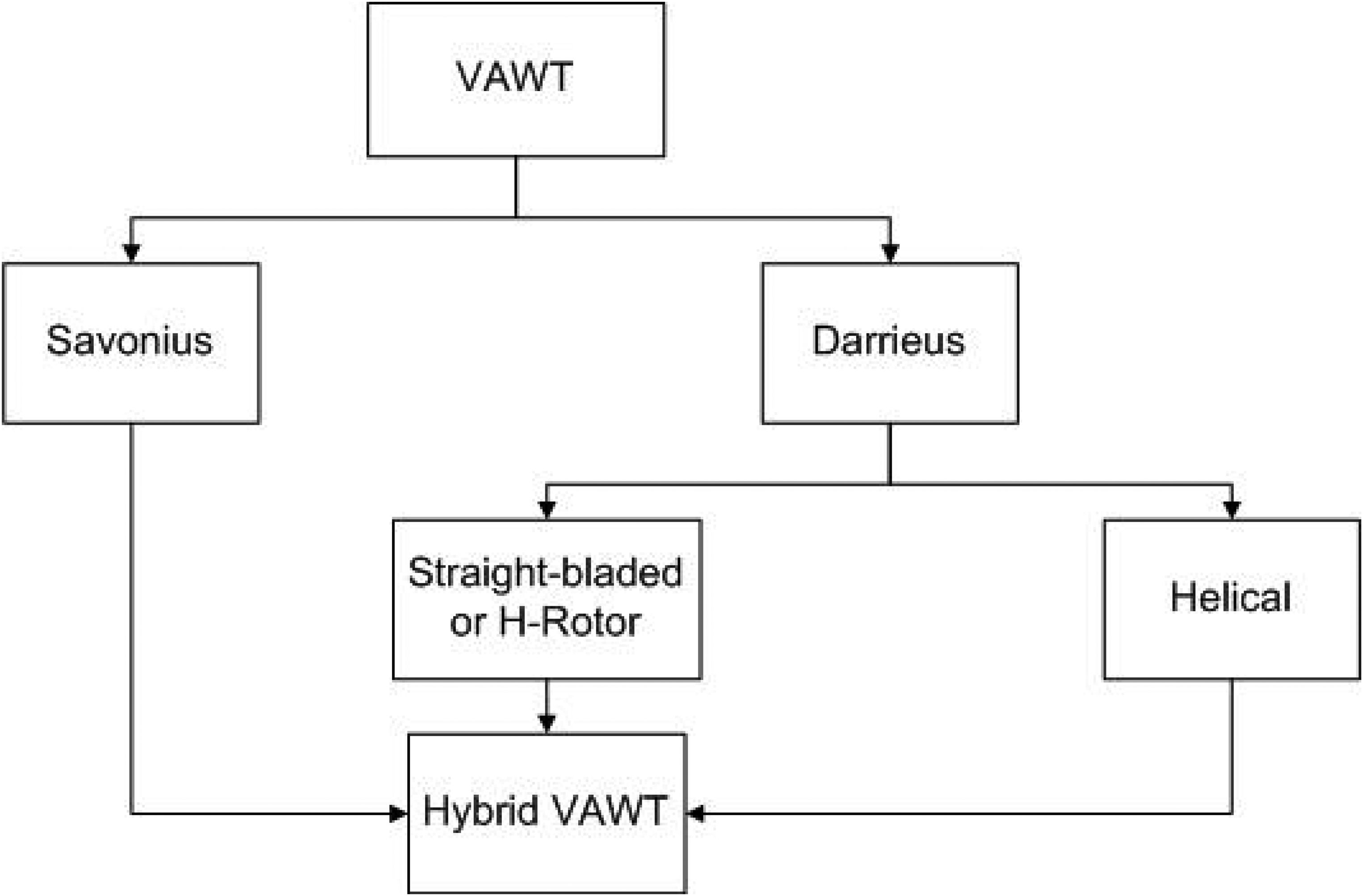
Various configurations of vertical axis wind turbines based on aerodynamic forces. Savonius turbine is a drag force-based turbine, whereas Helical, H-Rotor, and Darrieus are lift force-based turbine. Hybrid VAWT is a combination of lift and drag-based turbines.
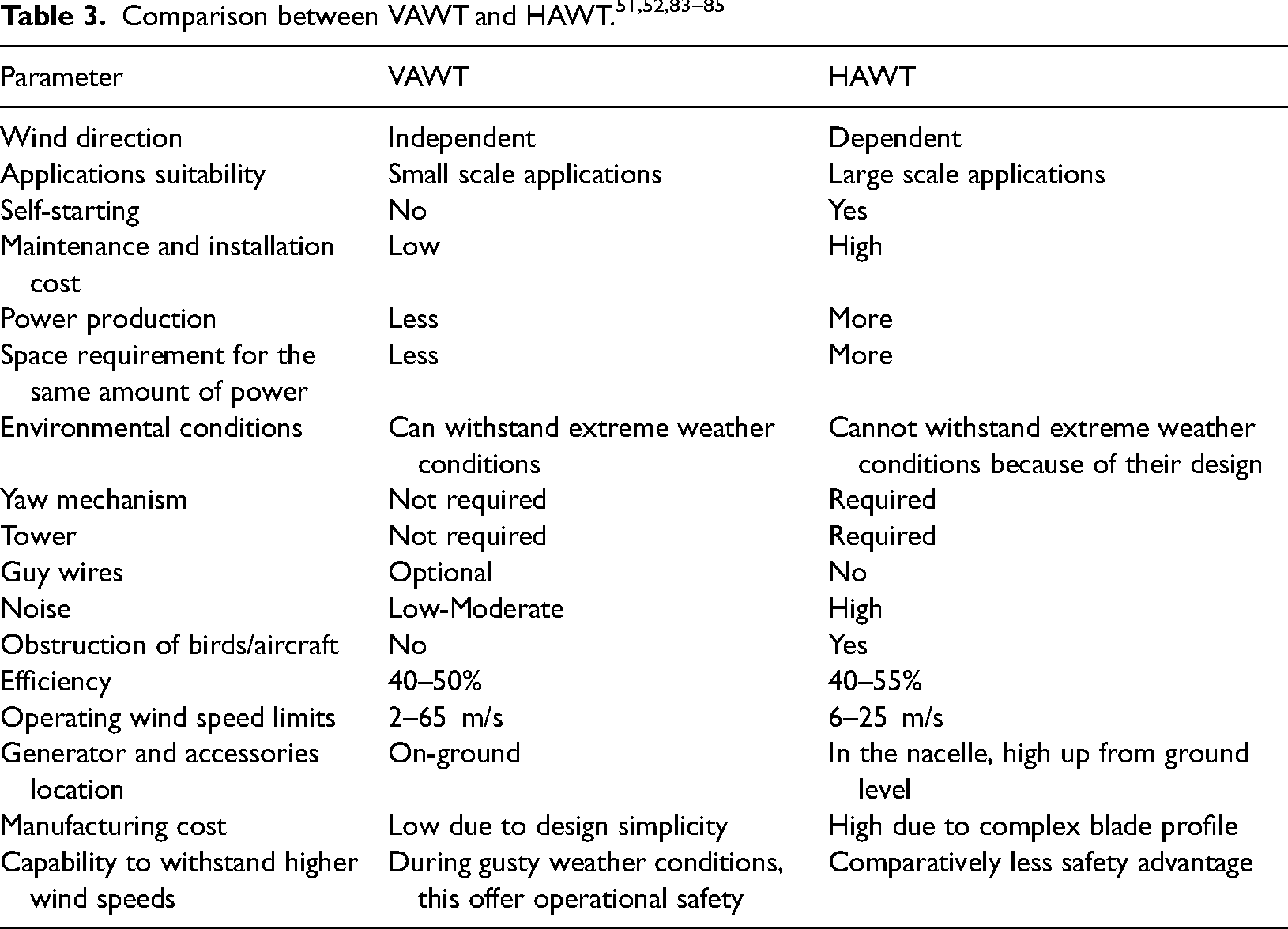
A comparative study of HAWT and VAWT was carried out including various aspects of operation, maintenance, advantages, and applications. 52 The summary based on some of the salient features of both types of wind turbines showing their merits and demerits is given in Table 3.
Darrieus wind turbines
Darrieus wind turbines were invented by a French Engineer G. J. Mary Darrieus. The lift-based wind turbines consist of two or more blades. 86 These airfoil shape blades are installed with the centralized rotating shaft. The flow of wind over the airfoil surface creates a lift force that pulls the rotor blades. At high rotating speeds, Darrieus VAWTs can generate more power than drag-based turbines. 87 The curved or egg beater shape wind turbines commercially installed earlier in California allow minimizing the bending stresses produced on the blades. 88 H-Rotor turbine is the simplest type of Darrieus VAWT consisting of straight blades. This configuration may be of fixed or variable pitch blades. Investigations have shown that fixed blade designs have difficulty in starting, particularly in low wind ranges and for such configurations, an external power source or starting generator is required to initiate the turbine’s spinning. On the contrary, starting problems can be resolved by using variable pitch configuration, however, the design of such turbines is complicated which restricts their utilization for small-scale applications. Initially, most of the configurations were designed with symmetric airfoils which were incapable to self-start. From an acceptance perspective, the self-starting mechanism holds fundamental importance. 77 Efforts have been made on these turbines to enhance the aerodynamic efficiency by increasing the lift and decreasing the drag effects.83,89 The working principle of the Darrieus turbine is shown in Figure 9.
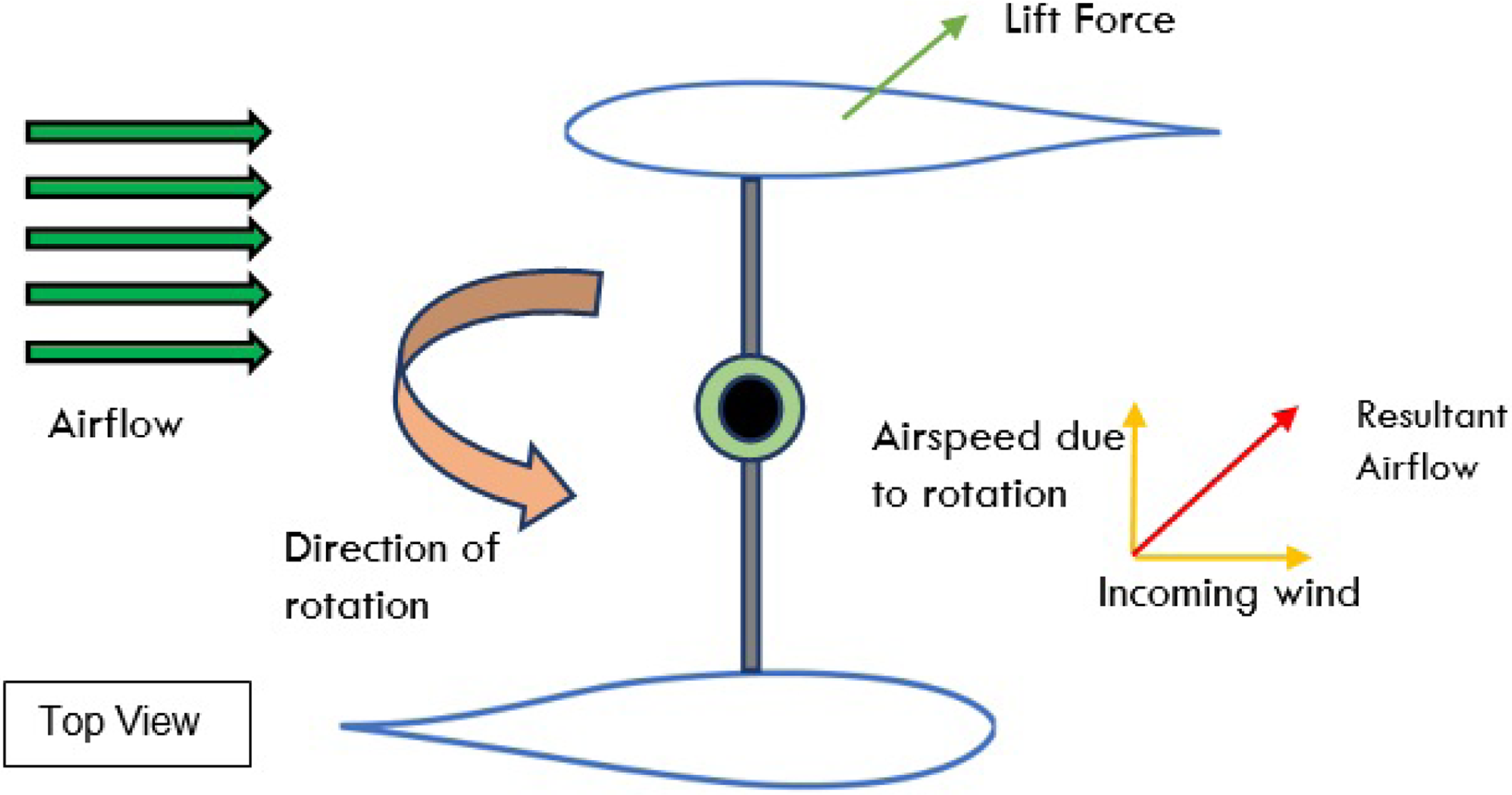
Top view of Darrieus turbine showing its working principle. Shaft and blades rotate under the action of lift force that results in electricity generation. 86
Aerodynamics of straight-bladed VAWT
Despite having the design simplicity, the aerodynamic analysis of the straight-bladed VAWT is very important. The associated flow velocities both in upwind and downwind sides of the turbine are shown in Figure 10. 90

Diagram showing forces and associated flow velocities acting on a blade profile. (Reprint with written permission from Elsevier). 91
Variation of local relative velocity
Considering the axial flow occurring on the turbine blade, the velocity component in normal (V



Variation of local angle of attack
From Figure 10, it can be observed that the local angle of attack depends on the velocity component as given in Eq 14.


Variation of normal and tangential force
The resultant components of the lift and drag in normal direction can be expressed as coefficient of the normal force (C



Power and Torque
The tangential and normal components of acting forces for arbitrary azimuth (orbital) location are considered as a function of the orbital position. The average value of tangential force (F


Performance analysis of Darrieus wind turbines
To optimize the design configurations and to enhance power output, extensive research work has been carried out by various scientists in the last few decades. Darrieus wind turbines have self-starting issues and starting torque, as well as the efficiency of these turbines, needs to be improved for utilization in large-scale projects. Efforts have been made to overcome the shortcomings of conventional Darrieus VAWT through innovative designs.92,93 Self-starting issues have also been tried to resolve by the development of tailored airfoils.94–97 To study unsteady and complex flow problems related to wind turbines, computational fluid dynamics (CFD) is considered to be an effective engineering tool and it has been widely accepted in industrial sectors and academic fields.98–101 CFD simulations are helpful to simulate the fluid flow, optimize and verify the performance of design before costly prototypes and physical tests.102–105 In some cases, the 2D simulation approach may be insufficient as the simplified geometry generally suggests an over prediction of the results due to the absence of the detached tip vortices which renders 3D flow.
106
Moreover, the appropriate aerodynamic simulation of VAWT carries a substantial challenge. There is a cyclical variation in azimuth direction in the AoA during the turbine operation. At the low TSR range, when the value of the AoA exceeds transiently beyond the airfoil static stall angle, a dynamic stall can occur. Ahmad et al.
107
studied the effect of design parameters of H-rotor VAWT using one factor at a time and the design of experiments (DOE) techniques. The analysis was performed in a QBlade software followed by numerical simulations of the optimized design. The analysis revealed of approx. 8.43% improvement in the maximum C
Mitchell et al.
113
performed a computational analysis of VAWT to improve the self-starting capability by using a novel vented airfoil. The results showed an improvement in the tangential force at high AoA (>90

Block diagram of wind tunnel testing system. The figure shows the mechanism to capture the airflow by the turbine rotating the shaft. The rpm and torque are measured by the sensors, which can then be used to determine the performance parameters. 112
Gulve et al.
38
studied the influence of drag force on turbine efficiency. The blades were modified with a J-type Darrieus turbine. The drag-based turbine was analyzed at various rpm settings (30–97 rpm). The blades were fabricated using a GI sheet with a wooden frame. Results showed that turbine efficiency was decreased by 1.5% due to frictional losses and manufacturing flaws. Cambered airfoil plays a significant role in self-starting at a low TSR range (0–2). Beri et al.
55
investigated the influence of asymmetric airfoil on self-starting of VAWT by using the moving mesh technique. The blades were designed with NACA2415 airfoil and unsteady flow around the VAWT was investigated. The results were obtained at various TSR values and a great impact of using cambered airfoil on self-starting of VAWT was observed. The torque values were found positive at TSR
Summary of selected studies on the straight and helical-bladed Darrieus wind turbines.

Computational fluid dynamics (CFD).
Numerical analysis (Num).
Experimental testing (Exp).
Findings
Following are some of the findings of Darrieus wind turbines based upon the investigations carried out in the last few years.
Darrieus wind turbines have self-starting issues. Therefore, for low wind speed areas, these may not be a feasible option.
38
At low TSR (0.8-1.2), the C Surface roughness also affects the performance characteristics. At low wind speeds ( Variation of thickness ratio may not impart a significant difference in performance characteristics, however, higher drag force by thick airfoil can degrade the C For a certain wind speed range, with an increase in Reynolds number, output power gets increased however, it remains unchanged with further increase in Reynolds number.54,90 At high wind speeds (>3 m/sec), low digit symmetric airfoil provides better performance than high digit symmetric airfoil.
90
Cambered airfoil plays a significant role to improve self-starting capability; however, overall performance may be reduced.
55
Blade helicity can contribute to improving self-starting capability. However, the maximum C At high wind speeds ( Different design modifications contribute to performance enhancement; therefore, critical analysis is required to explore the optimum geometric parameters. Investigations may be carried out to improve self-starting capability, operation at low wind speeds, starting torque, and further enhancement of efficiency.
Savonius wind turbines
Savonius turbines are drag force-driven turbines with some integral augmentation of rotor performance accessible due to the air flows transversely besides individual vane and mutual coupling of both halves of the rotor. These types of turbines were first invented by a Finnish engineer S.J. Savonius in the year of 1929. The blades of this turbine are simplest and rugged. These turbines are easy to manufacture, last longer in extreme weather conditions, and require less maintenance. Aerodynamic drag force is used for the rotation of blades to produce electrical power. The working principle of the Savonius turbine is shown in Figure 12. The parameter
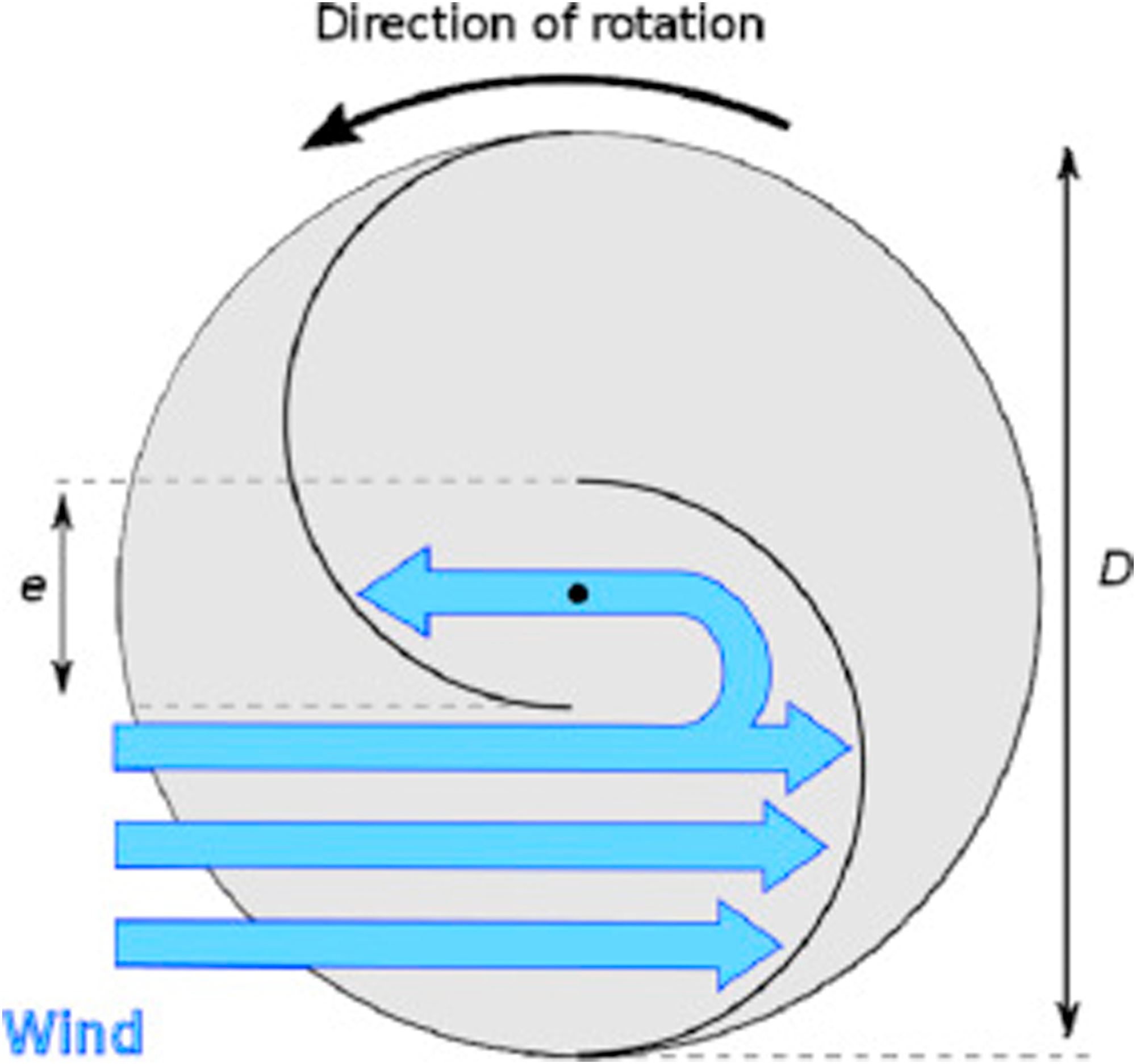
Working principle of Savonius turbine, a drag force-based turbine. Blades rotate under the action of drag force that results in electricity generation. (Reprint with written permission from Elsevier). 86
Performance analysis of Savonius wind turbines
In the last few decades, efforts have been made to improve the efficiency of these turbines that include blade shape, rotor design modifications, number of blades, and overlap ratio.131–133 Performance analysis of Savonius turbines has been carried out to explore their efficient design configurations. Torres et al.
134
performed numerical analysis of Savonius VAWT to improve its aerodynamic performance. The Kriging technique was used to optimize the design parameters followed by a response surface methodology. The optimized parameters resulted in a maximum C
Bouzaher 141 studied the performance parameters of Savonius VAWT by using flexible blades. The variation of torque during expansion and contraction of blades during the complete cycle resulted in an improvement of torque coefficient by 112% and 6% for the highest and lowest expansion amplitude, respectively.
Dunn et al.
28
investigated the performance of roof-mounted Savonius turbine to determine its feasibility. The S1223 airfoil blades were designed with and without enclosure configurations and rotor-shrouds were analyzed to optimize the efficiency. Experimental analysis of the scaled-down model was carried out based upon the wind data obtained from the wind simulation program. Additionally, the rotational velocity and voltage variations were measured using rpm meter and step generator, respectively. The results showed that the turbine with the enclosure had about 73% more power than without an enclosure. The C
Aboujaoude et al.
142
modified the Savonius wind turbine by using the optimized axisymmetric deflectors. The results revealed an improvement of C
Kamoji et al.
143
studied the influence of aspect ratio on performance parameters. They examined the turbines with different aspect ratios between 0 and 1. The design with an aspect ratio of 0.7, blade arc angle of 124
Summary of selected studies on Savonius wind turbines.
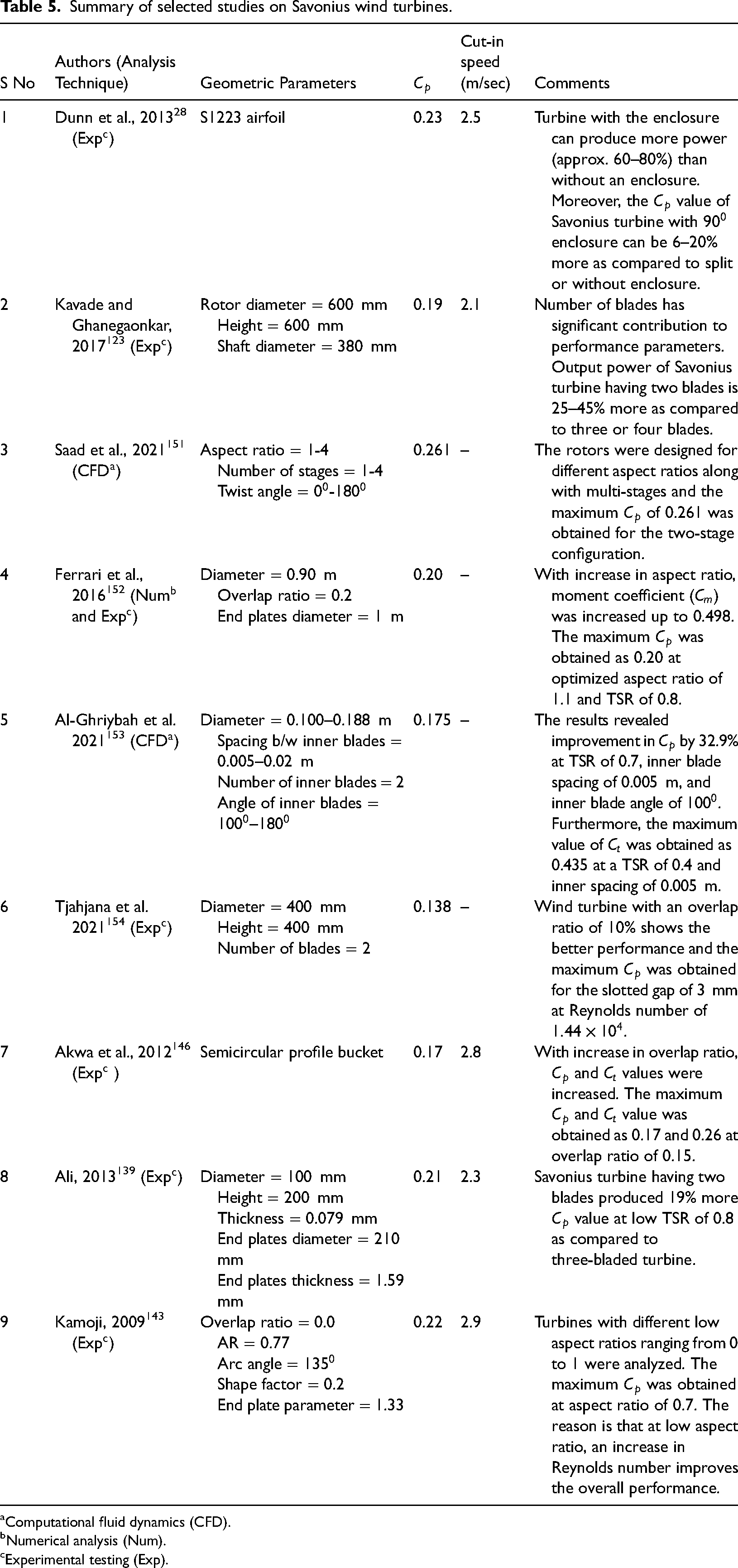
Computational fluid dynamics (CFD).
Numerical analysis (Num).
Experimental testing (Exp).
Findings
Following are some of the findings of Savonius turbines based upon the investigations carried out in the last few years.
Savonius VAWT is a good option in low wind speed operations (2–4 m/sec) that extends their applications for measuring instruments or household applications.
73
The blades of this turbine are simple, easy to manufacture, last longer in extreme weather conditions, and require less maintenance.
82
Self-starting capability of these turbines is good as these can start at low wind speeds (2–3 m/sec).73,123 These have high starting torque that allows them to generate power at low TSR.133,135 The C For small-scale applications, these can be an economical option.
28
Turbines having twisted blades have better performance characteristics (6–10%) as compared to curved, straight, or airfoil-based rotors.
17
Enclosure contributes to improve overall efficiency of Savonius wind turbine. The analysis revealed that the turbine with the enclosure installed at 90 Number of blades can affect the performance characteristics. Turbines having two blades have better C At the lower range of aspect ratio (0.5) maximum C Turbine designed with optimum overlap ratio (approx. 15.0%–16.8%) can augment the overall output power.146,156 The overall performance of these turbines is less as compared to other conventional VAWTs. Therefore, further investigations in the area of design optimizations are required to critically analyze the shortcomings of existing designs. The characteristics i.e., self-starting capability, design simplicity, high starting torque, enclosure, and shroud can be embedded with the Darrieus wind turbine to design a modified hybrid VAWT.
Hybrid vertical axis wind turbines
To overcome the shortcomings of conventional designs, an innovative technical approach is sought in the design of VAWT. The advantages of both Darrieus and Savonius turbines can be combined to design a hybrid VAWT. This turbine is based on both lift and drag forces to get the maximum benefits at various wind speed ranges. The hybrid turbine may be designed by combining straight-bladed Darrieus with Savonius, Helical Darrieus with Savonius, or Helical Savonius with Helical Darrieus. Generally, Darrieus or lift-based turbine is attached at the outer side to extract maximum wind energy, whereas Savonius or drag-based turbine is installed at the inner side close to the rotating shaft to give self-start at low wind speed. Furthermore, some hybrid turbines have also been designed with tandem arrangements depending upon the type of turbine to get the maximum advantages. 157 A two-dimensional top view of hybrid VAWT is shown in Figure 13.

Two-dimensional view of hybrid VAWT; a lift-drag force-based turbine. The rotor rotates under the combined effect of lift and drag forces to get advantages of both types of turbines. 83
Why Hybrid VAWT?
The design and development of VAWT is a stimulating field and involves state-of-the-art engineering ideas to achieve promising wind energy outcomes. It requires a systematic approach, encompassing efficient design, and detailed aerodynamic analysis such as CFD, wind tunnel testing, and empirical engineering design tools. Previous studies of conventional VAWTs have investigated the improvement in one of the performance parameters by compromising the other i.e., efficiency of the designed turbine was declined as compared to conventional Darrieus VAWT, however, the self-starting capability was improved. The design and development of hybrid VAWT is a modern innovative idea that combines the features of both the Darrieus and Savonius VAWT. It exhibits the potential to overcome the shortfalls of conventional designs. A pictorial view representing salient features of hybrid VAWT is shown in Figure 14. The hybrid VAWT is an active area of research in the field of engineering. A limited number of researchers have endeavored to present the conceptual and preliminary design of hybrid VAWTs. Several design configurations have been studied by combining conventional turbines. Most of the representative designs are still in the development phase and only a few experimental prototypes have been operationally verified. This area of research needs further exploration and improvement. Further academic research is required on critical aspects such as cut-in speed, self-starting, efficiency, performance analysis, and structural reliability, etc. The hybrid VAWT can prove to have a force multiplier effect by providing a safe, effective, and cost-efficient power-producing solution. Moreover, hybrid VAWT has the potential to perform well in gusty wind areas, self-start at low wind speeds, and produce more power as compared to conventional wind turbines.83,158

A hybrid VAWT is an attractive alternative for many household and commercial applications because of its distinctive features such as good starting torque, self-starting capability, good efficiency, low cut-in speed, operate well under steady as well as turbulent flow areas, and over a wind range of wind speeds.
Performance analysis of Hybrid VAWTs
Hybrid VAWTs are considered to be a viable option in urban areas. Research in designs of hybrid VAWTs has been carried out by various researchers to address the deployment in industrial setup and to enhance operational capability.
84
In this regard, prospects have also been documented for the Research and Development of VAWTs.
159
Some innovations in designs of VAWT i.e. power window,
160
dual VAWT,
161
and Variable-Geometry-Oval-Trajectory Darrieus turbines
162
have been analyzed. The hybrid turbine can be a viable solution in urban areas to extract power from unpredictable weather conditions. Comparison of lift and drag-based VAWTs show that the C
Ahmad et al.
155
proposed a novel design configuration of hybrid VAWT. The design parameters of symmetric and cambered airfoil-based double-Darrieus hybrid VAWT were optimized using the DOE. The maximum C
Kou et al.
168
performed experimental testing to investigate the self-starting capability and output power of hybrid VAWT. The turbine was designed with an H-blade rotor consisting of NACA0012 airfoil blades mounted on the vertical shaft separated by 120
Sharma et al.
158
investigated the effect of overlap ratio on performance of hybrid VAWT. The turbine consisting of three blades was analyzed by varying overlap ratio of 10.8-25.8%. The maximum C
Sun et al.
83
investigated aerodynamic performance characteristics of the lift-drag-based turbine using experimental and computational techniques. The study was focused to analyze the effect of distance between drag blade and central rotating shaft. Four different models were prepared by installing a drag type blade at a distance of 0, 50, 100, and 150 mm respectively, away from the spindle. The results showed that the turbine model having a drag blade close to the rotational center had more C
To analyze the effect of the shroud, hybrid VAWT was designed and experimentally tested by Machlin. 12 The wind velocity data was taken by using a wind anemometer. Based upon the available wind data, the hybrid turbine was designed with lift and drag-based components. The shroud in the drag-based part was also incorporated for protection as well as to avoid unwanted disturbances. The design optimization was carried out based on the characteristics of the urban environment and wind pattern. The project was accomplished by using several blade designs considering the efficiency factor, cost, noise, reliability, vibrations, aesthetics, and ease of manufacturing. Results revealed that the designed turbine impart an improvement in performance characteristics.
The starting torque of Savonius wind turbines is usually high while the peak C
Summary of selected studies on Hybrid wind turbines.
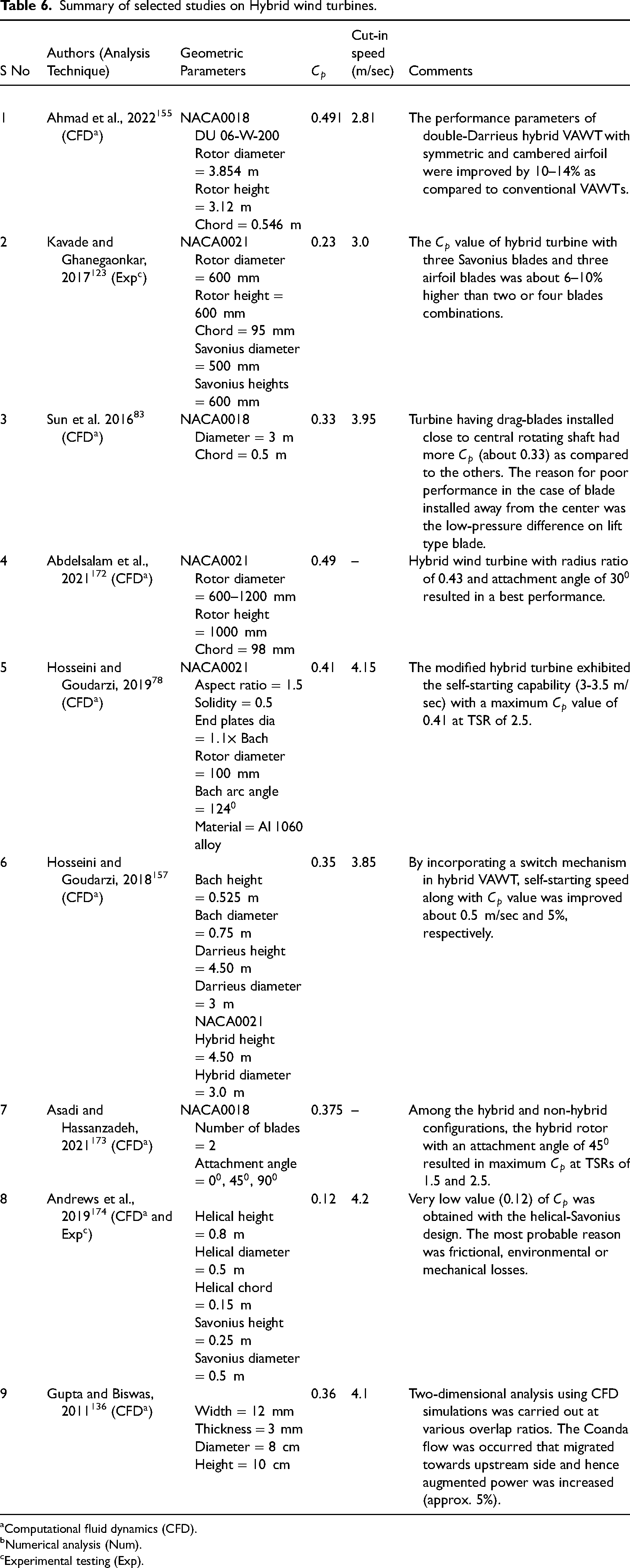
Computational fluid dynamics (CFD).
Numerical analysis (Num).
Experimental testing (Exp).
Findings
Following are some of the findings based upon investigations carried out by various researchers.
The hybrid VAWT is a viable solution in urban areas to extract power from unpredictable weather conditions.11,13,116 The shortcomings of conventional VAWTs i.e., low C Hybrid VAWT designed with same geometric configurations as of individual conventional turbines can provide overall better performance characteristics; however, a small compromise of C At higher TSRs (>3), the efficiency of hybrid VAWT is less than straight-bladed turbine due to drag induced by the Savonius turbine. Moreover, the Savonius part imposes a negative torque on the hybrid turbine and acts as a brake to reduce the power produced by the Darrieus rotor.
78
Overlap ratio has a significant contribution in performance characteristics. With an increase in overlap ratio, the resultant C Number of blades also affects the overall performance. The C The turbine model having Savonius blades installed close to the central rotating shaft can produce more C Shroud installed on conventional Savonius turbine or modified hybrid turbine can improve performance parameters as it can avoid unwanted disturbances.
12
The advantages of both Darrieus and Savonius can be obtained by designing an efficient hybrid VAWT. This combined turbine has improved the performance characteristics but the overall efficiency is still less than conventional HAWTs.
78
Further investigations in the area of design optimizations are required to critically analyze the shortcomings of hybrid VAWTs.
Analysis and discussion
Analysis of various configurations of HAWT and VAWT showed that both types of turbines have unique features. HAWTs are large power-producing turbines; however, there are some drawbacks related to design, structure, environmental conditions, installation, maintenance, and noise. On the other hand, VAWTs are low-power-producing turbines and are mostly used for small-scale projects. However, owing to certain features such as low cost, noise, ease of maintenance and operation in both smooth and gusty wind conditions, these have been widely accepted for most applications. The cut-in speed and C

Analysis of maximum C
Conclusion
Wind turbine design and development have been at the forefront of engineering innovation for the past few decades. Wind turbine technology is a stimulating field that involves state-of-the-art engineering ideas to achieve promising energy efficiency. It requires a systematic approach, encompassing efficient design and detailed aerodynamic analysis, such as computational fluid dynamics, experimental testing, and empirical engineering design tools. This review paper highlights some important findings of vertical axis wind turbines from published papers, technical reports, and the manufacturer’s literature. Some ongoing development and commercial activities in the field of wind turbines are also highlighted in this paper.
HAWTs are highly developed and used in steady wind conditions where a constant stream and appropriate direction of the wind are available. Vertical axis wind turbines have certain advantages such as omnidirectional, easy maintenance, independence of yaw mechanism, operation in turbulent flow and low wind speed areas, high operating wind speed limits, and low noise signature. Compared to Darrieus turbines with fixed blade types, Savonius turbines can start up quickly, however, their power coefficient is 0.12–0.25, which is less than that of other types of VAWTs. The low C
The design and development of hybrid vertical axis wind turbine is an active area of research in the field of engineering. This modern concept of high-performance and state-of-the-art designs can render promising features. Several design configurations have been studied by combining conventional turbines. Based on studies and state-of-the-art information, it can be concluded that a hybrid VAWT is an attractive choice for the present circumstances. Research in this area is crucial for making it an affordable, viable, and dependable power solution for off-grid sites and various domestic and commercial applications. It was also observed that vast opportunities for wind turbine applications are in urban areas; however, further academic research is required on critical aspects such as design improvement for aerodynamic performance, cost reduction, and resource assessment for urban operating conditions.
Scope of further studies
The design and development of wind turbines is an active area of research in the field of engineering. The overall efficiency of the VAWT is still less than that of the conventional HAWT. From the perspective of the future growth of VAWTs, attention may be given to explore ways to improve the power coefficient and self-starting capability. Hybrid VAWTs have the potential to be improved by incorporating the features of existing conventional VAWTs. In this regard, the double-Darrieus hybrid VAWT concept can be explored by replacing the Savonius turbine with a cambered airfoil blade at the inner side, and optimization of design parameters such as the distance from the central rotating shaft and pitch angle. The conceptual design of an innovative configuration of a Double-Darrieus hybrid VAWT is shown in Figure 16.

A conceptual design of an innovative configuration of double-Darrieus hybrid VAWT. In order to address the shortcomings of the existing hybrid VAWT, the Savonius turbine has been replaced with a cambered airfoil-based Darrieus turbine.
Footnotes
Data Availability
The data that supports the findings of this study are available within the article.
Declaration of conflicting interests
The authors declared no potential conflicts of interest with respect to the research, authorship, and/or publication of this article.
Funding
The authors received no financial support for the research, authorship, and/or publication of this article.
