




Abstract
Higher heating value, energy and exergy analysis of bio-oil and biochar from microwave pyrolysis have been assessed. The energy efficiency for the pyrolysis system has been analyzed by the comparisons of energy based on heating values. The exergy analysis was done using standard relationships by the fraction of energy actually available for practical uses as biofuel. The yield of bio-oil and its higher heating value (HHV) were increased by 2–13% and 25–130% respectively when the microwave power increased from 500 W to 700 W, then both are decreased at 900 W. Using activated carbon (AC) had a remarkable effect on increasing the yield and HHV of bio-oil by 18–31% and 3–7 times respectively more than other cases. By using the additives, the yield of biochar decreased remarkably, while its HHV increased by 12%-40% compared to without additive. The maximum energy and exergy rate (1.74 MJ/h) of the bio-oil were obtained at 700 W level of microwave power using AC additive, while for biochar were 1.95 MJ/h and 2 MJ/h when no additive used. The maximum values of energy and exergy of the bio-oil were computed to be 27% and 26% respectively at 700 W using AC as an additive. The maximum values of energy and exergy efficiency of biochar were calculated to be 33% and 32% respectively when pyrolyzed at 500 W using AC. The energy and exergy efficiencies of the pyrolysis system were computed to be maximum value of 53.3% and 52.8% respectively at 700 W using AC additive.
Introduction
Among all the renewable sources of energy, bioenergy from biomass is the largest renewable energy source which is contributing to about 9.5% of the total energy supply in the world. 1 In addition, biomass is the only source, producing solid (biochar), liquid (bio-oil), and gaseous (syngas) fuels compared to other sources of renewable energy and supplying heat and power. 2 Hence, the energy from the biomass represents an alternative source of energy that can meet the global energy demand as fuels 3 and a substitute for the fossil fuels in addition to protect the environment. 4 Pyrolysis, one of thermochemical conversion routes, is highlighted as a promising technology for converting biomass into more usable forms of energy 5 and high-quality products from the environmental and economic standpoints. 6 However, this process is usually carried out in conventional pyrolysis (CP) with the help of an electrical heating mechanism. 7 In this heating mechanism, heat transfer is hindered by several factors resulting into an inefficient and energy-intensive activity. 8 Therefore, microwave-assisted pyrolysis of biomass (MAP), in recent years, is introduced as an emerging pyrolysis technology 9 for saving time, energy, achieving higher heating performance, 8 precise control over the process, and selectivity of the desired yield of products compared to CP. 10
The bio-oil and biochar produced from the pyrolysis process have versatility in their applications 11 both at users’ and commercial levels compared with the pyrolytic gas (syngas) because of their easy storability and transportability. 12 The bio-oil (liquid product) from the microwave pyrolysis contains a large number of chemical compounds (more than 300 compound) which are differs in the composition and properties as compared with the diesel and other petroleum oils. 13 These considerable number of components make the bio-oil, a potential source for various applications. While some of these chemical compounds can be used as a source of energy and can replace the use of fossil fuels, 14 many other chemicals can be used for pharmaceutical and packaging industries. Likewise, the biochar can be used as a biofuel in the boiler, 15 in the production of activated carbon, in absorbing microwave, conditioning the soil, etc. 16 Thus, both the products (bio-oil and biochar) are considered to be the desirable products for this investigation.
Energy and exergy are the practical thermodynamic tools to assess energy efficiency of a system. By analysis of the energy and exergy aspects for a system or process, its quantity and quality can be known. Exergy basically refers to the fraction of energy actually available for practical uses. 17 It is therefore expressed as the quantity of utilizable work, derived from an energy system at the time of maintaining thermodynamic equilibrium with reference to its surrounding environment. 18 It explores the various factors causing a decrease in the efficiencies, because of many unavoidable irreversibilities occurring during the process and indicates the scopes for further improvement. 19 However, there are only limited information regarding the energy and exergy analysis of pyrolyzing the biomass through microwave heating technique. 20 Especially, the exergy analysis of bio-oil and biochar 21 as a source of energy still needs further studies in order to study the possibilities of improving the efficiency for the technology, on the aspects of enhancing the yield 22 and to change their chemical composition besides reducing loss of thermal energy from the device to the outside environment. 23
There are different ways to address the energy and exergy analysis of the pyrolytic products. 20 Although pyrolysis products are complex in nature, the energy and exergy efficiency can be easily evaluated in terms of their calorific values. 23 The exergy analysis of the streams through pyrolysis system comprises of four aspects i.e., kinetic, potential, physical, and chemical forms of exergy. Kinetic form is related to the velocity of a stream, while potential exergy is related to its position. 24 Physical exergy is the maximum work obtainable when bringing the material from its initial state to the thermodynamic equilibrium by the physical process. 21 Chemical exergy is computed by formulating the reactions of a given chemical with the elements in the environment and finding the maximum theoretical work that could be obtained from this reaction. 25 Kinetic, potential, and physical exergies are usually neglected in the pyrolysis process owing to their small values since all inputs and outputs considered are at ambient temperature (25 °C) and pressure (1 atm). 26 Thus, only the chemical energy and exergy have been included in the current study based on calorific values for bio-oil and biochar. 27
On the other hand, the bio-oil produced from MAP of CS has low quality in terms of low calorific value, 28 high oxygen contents 29 and poor chemical composition. 30 Also, biochar needs more improvements 31 in terms of improving its calorific 32 and its elemental composition. 33 Otherwise, this leads to decrease the energy and exergy efficiencies of these pyrolytic products as well as for the pyrolysis system. 34 In view of this, improvement in the pyrolysis and energy-recovery efficiency is a critical matter in biomass-to-bioenergy techniques.
The analyses for the energy and exergy aspects have been made both for bio-oil and biochar, the desired products, for this study, with the help of using additives in order to study the possibilities of improving efficiency for the technology, on the aspects of enhancing the yield and to change their chemical composition. The selection of the additives, for microwave pyrolysis, should be based on achieving one or more of the objectives of improving the absorption of microwaves which enhancing the heating performance, 35 maximizing the yields of desirable pyrolysis products and improving the quality of these products. 36 Thus, a good additive is required to help catalyzing the reaction in a short time and with minimum microwave power consumption as well as improving the quality of biochar and bio-oil. 37 Carbon-based additives such as silicon carbide (SiC), activated carbon (AC), 34 and sodium carbonate (Na2CO3) 33 may be effective additives for the selectivity in the increase of the yield of the desirable products and enhancing their energy and exergy efficiencies through enhancing their HHV and elemental (CHNS/O) composition. 38 Therefore, these additives are selected and evaluated in this study. Furthermore, the analyses for the energy and exergy aspects of the pyrolytic products have been undertaken in order to know their quantity and quality respectively which are not tested before under the selected additives. The energy efficiency for bio-oil and biochar as well as pyrolysis system have also been evaluated by the comparisons of energy based on heating values. While exergy flows are computed using standard relationships by the fraction of energy actually available for practical uses as biofuel.
Materials and methods
Biomass feedstock and pyrolysis additives
The CS was collected from the cornfields (Bhubaneswar, India) after harvesting the corn crop. The stover was sun-dried until the excessive moisture is removed, then it was shredded mechanically for reducing the size of the particle of feedstock to about 10 mm. The characterization of the CS was done and the results are mentioned in Table 1. Silicon carbide (SiC) having model number AKSHAR1621 was used as a microwave additive, which was purchased from a local chemical lab in Bhubaneswar. The SiC was in powder form with a particle size of 200 µm, purity of 99%, and a density of 3.02 g/m3. A commercial activated carbon (AC) was purchased in granular form and was, also, used as a pyrolysis additive. The properties of AC were 2 mm, 1050 m2/g, 0.35 cm3/g, and 1.8 nm for particle size, specific surface area, micropore volume and pore width respectively. The sodium carbonate (Na2CO3) was also purchased in powder form with a particle size of 80 mesh, purity 99.9%, and density of 2.54 g/m3 (Merck brand). The specific surface area, total pore volume, and mean pore size of Na2CO3 were 560 m2/g, 0.37 cm3/g, and 2.8 nm respectively.
The composition and characteristics analyses of raw corn stover.
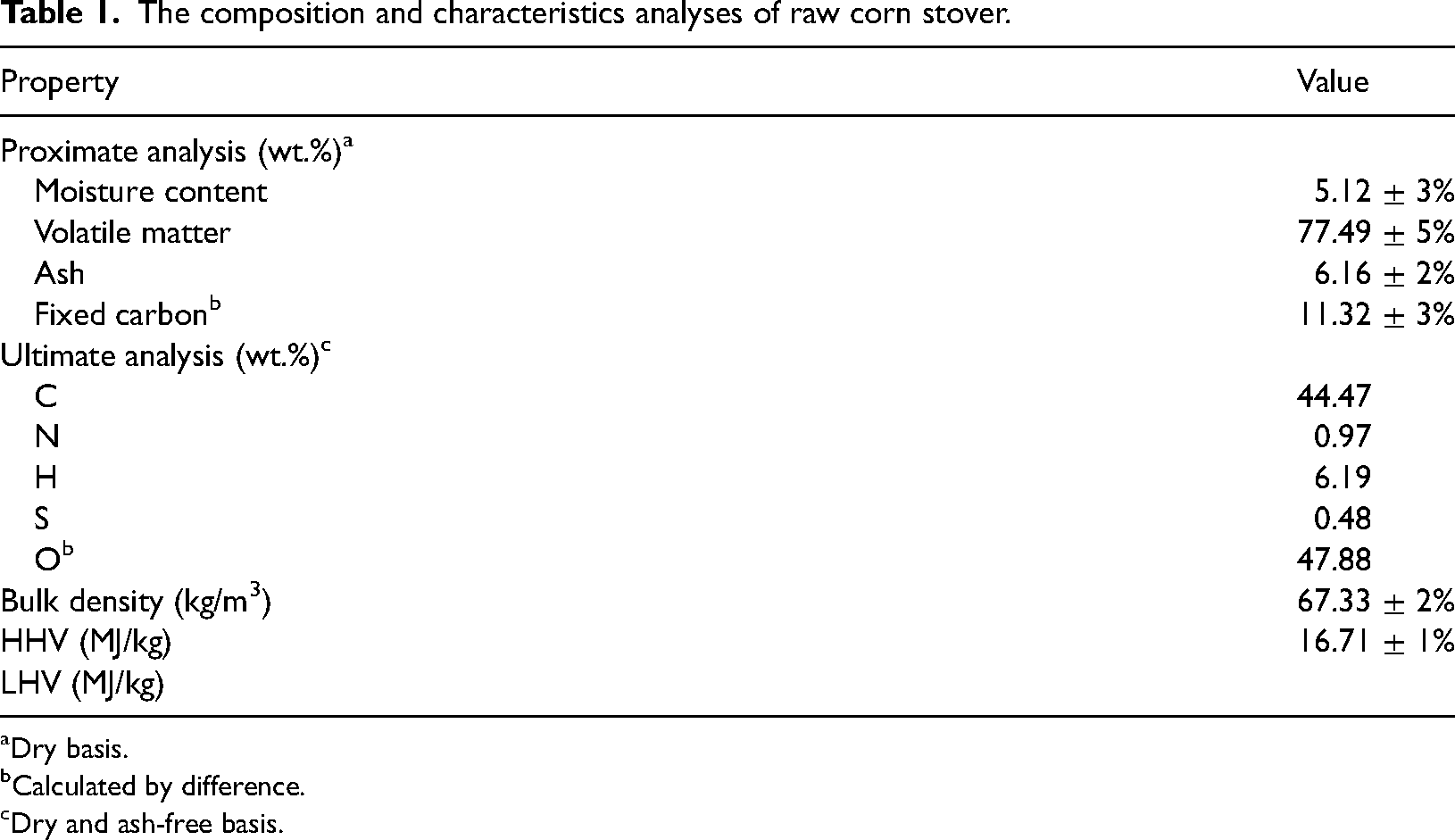
Dry basis.
Calculated by difference.
Dry and ash-free basis.
Experimental set-up and procedure
A modified domestic microwave oven (LG, 28 L convection oven), with 1-liter cylindrical quartz reactor was used in the current study. The microwave oven was operated at 2.45 GHz frequency with a maximum input power of 1200 W. 27 Figure 1 presents the diagram of the experimental set-up and other relevant information about the experimental set-up and the procedures followed as described in detail in our previous work. 34
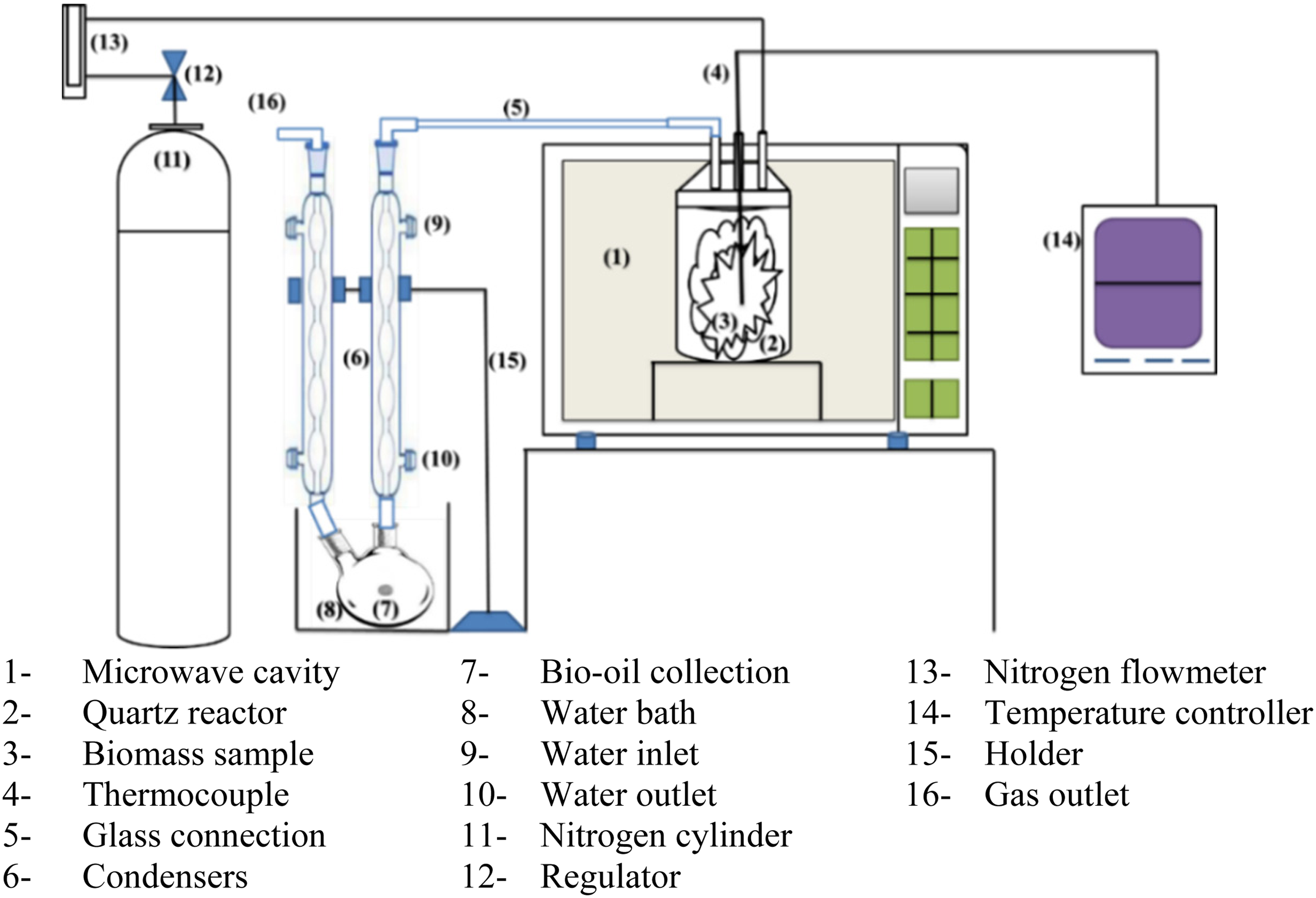
The schematic diagram of microwave-assisted pyrolizer.
A fixed amount of 60 g of feedstock without or with additive (10% of feedstock) was introduced into the reactor. 26 The experiments were conducted under different levels of microwave power (500, 700, and 900 Watt) and at constant reaction time of 15 min based on our previous work. 34 A carrier gas (nitrogen) with a 50 mL/min flow rate was allowed to pass through the sample for about 2 min before starting experiment in order to ensure an oxygen-free environment. To study the heating performance of the pyrolysis, a thin K-type thermocouple was entered into the feedstock sample in the reactor. The thermocouple was covered completely with the sample in order to avoid the sparks and to correctly record the temperature. The biochar and bio-oil products were collected and weighed directly, then stored for the experimental investigations.
All the experiments were carried out in triplicate to ensure the good reproducibility of the experimental results. The data were presented with the average value and their corresponding standard deviations (mean ± standard deviation (SD)). The Statistical Package for the Social Sciences, i.e. (SPSS ver. 20.0, IBM) software was used for the statistical analysis of the experimental data. The statistical significance of the parameters, i.e. microwave power and the additives, considered in the present study and their interaction with each other, was performed by the one-way analysis of variance (ANOVA) at a significance level of 0.05.
Products analysis
The main objective of the present study is to evaluate the effect of different pyrolysis additives on the energy and exergy aspects of the bio-oil and biochar from microwave pyrolysis process. Therefore, the CHNS and HHV for both products have been analyzed and evaluated under different conditions. This is because only CHNS/HHV are required to compute the energy and exergy aspects.
The proximate analysis of biomass was determined using different standard methods. These methods are ASTM E871 and ASTM E872 and ASTM E-1755-01 for moisture content (MC), volatile matter (VM), and ash content respectively under dry bass (db.). Whilst, the fixed carbon (FC) was measured by mass balance with the help of the following equation:
FC (% db.) = 100 − VM (% db.) − Ash (% db.)
The CHNS analysis for both bio-oil and biochar were carried out using Elementar (Germany make, model UNICUBE CHNS/O analyzer) as per standards ASTM D5291 and ASTM D1552. The HHV for raw CS and biochar were determined using bomb calorimeter. On the other hand, the HHV of bio-oil was calculated by a standard equation 39 based on the elemental composition of the bio-oil samples.
Energy and exergy analysis
The analysis for the energy and exergy aspects of the pyrolytic products in this study has been undertaken in order to know their quantity and quality respectively. The flow of input energies into the system and output of the pyrolysis products has been shown in the Figure 2.
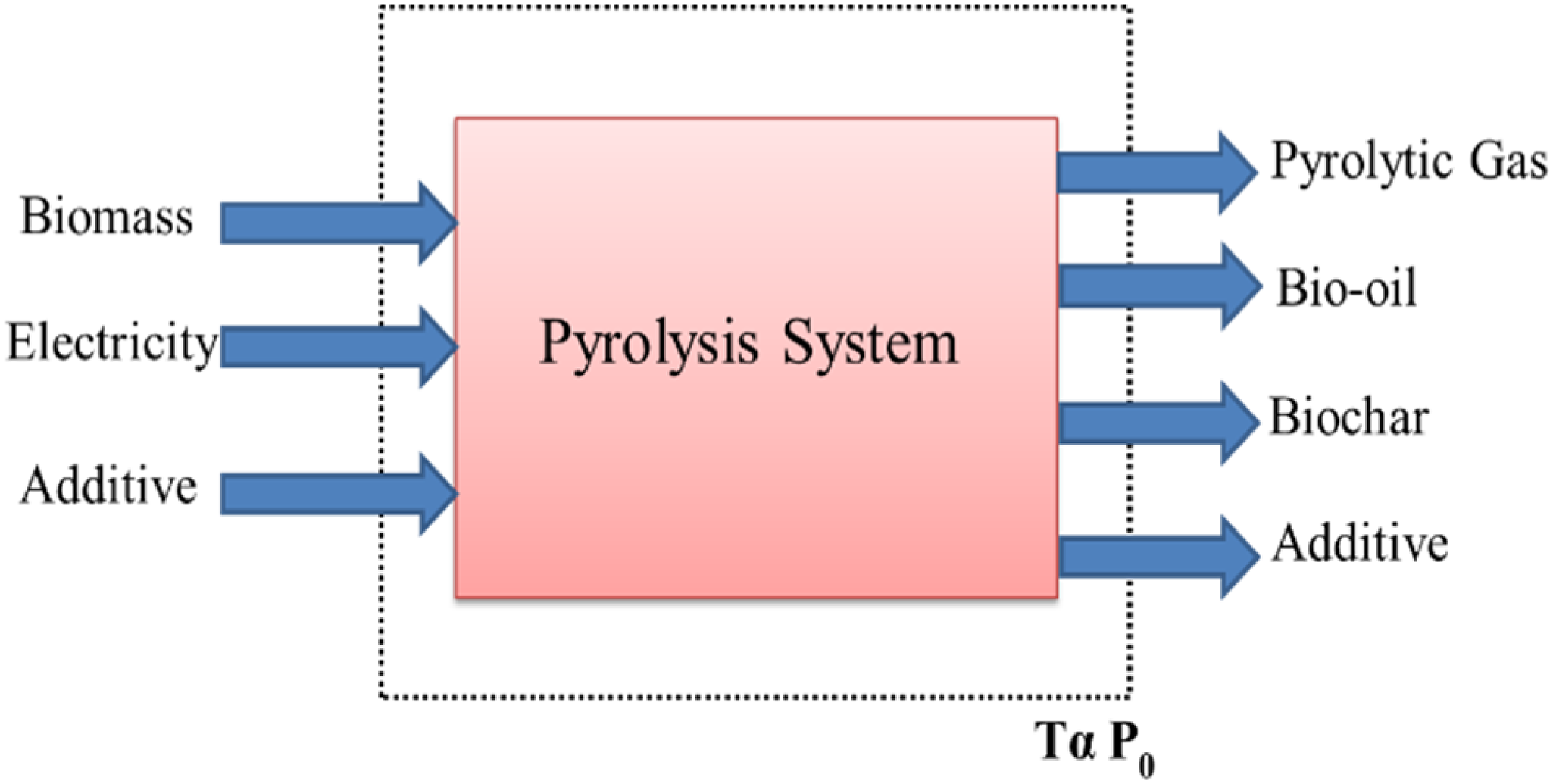
Energy and exergy flow for the pyrolysis system.
The boundary of the system is defined by the ambient temperature (Ta) and atmospheric pressure (P0), eliminating transfer of heat as an energy provider. Energy and exergy contents in ash, release of energy because of the process of condensation with the help of circulating cool water along with the purging of N2 gas to maintain inert environment in the reactor have been omitted owing to their quantities in small amount. 21 The energy and exergy contents in additives used have been also omitted because the additive was separated from the biochar product after the completion of the process, thus the energy and exergy of the additive are of equal values in input and output as per Eq. (1).
Energy analysis
Energy balance for the pyrolysis process system can be written as per Eq. (1). 20

Where Ėnbiomass, Ėnelectrical, and Ėnadditive denote the energy rates for the inputs such as biomass, electrical energy for microwave reactor and additive respectively. Likewise, Ėnbiochar, Ėnbio−oil, Ėngas, represent the energy rates for pyrolysis products i.e., biochar, bio-oil, and gas respectively and Ėnloss, the energy loss rate of the pyrolysis process. While considering the total energy of a stream, the kinetic energy and potential energy may be neglected, and it can be calculated 17 as per Eq. (2).

Where

Where ṁ and HHV are mass flow rate and higher heating value for the stream respectively. To comprehensively evaluate the performance of the pyrolysis system, energy efficiencies for biochar (ηbiochar), bio-oil (ηbio−oil), and pyrolysis system (ηsystem) are calculated based on the energy rate of output of the streams divided by the sum of the energy rates of each input (Ėninput) by the following Eqs. (4–7).




The energy and exergy efficiencies of the gaseous product from the pyrolysis system have been ignored as biochar and bio-oil are the two desirable products considered in the present study.
Exergy analysis
The exergy balance for the same pyrolysis system can be written as per Eq. (8).

Where Ėxbiomass, Ėxelectrical and Ėxadditive denote the exergy rates of inputs such as biomass, electrical energy to the microwave reactor and additive respectively. The energy and exergy value of the electrical component are same. Likewise, Ėxbiochar, Ėxbio−oil, and Ėxgas represent the rates of output products of pyrolysis process for biochar, bio-oil and gas respectively and Ėxloss is the rate of exergy loss. The exergy rate for biomass, biochar, and bio-oil can be calculated by Eq. (9).

Where

Where H, is the weight fraction of element H in the ultimate analysis. The value of β can be determined by Eqs. (12, 13, and 14) for the biomass, biochar, and bio-oil
23
by correlating the mass fractions of Carbon (C), Hydrogen (H), Nitrogen (N) and Oxygen (O) of the streams.



Like energy analysis, exergy efficiencies for biochar (Ψ biochar), bio-oil (Ψ bio−oil), and pyrolysis system (Ψ system) are calculated
23
based on exergy output of the streams divided by the total exergy inputs (Ψ input) by Eqs. (15, 16, and 17).
18



Results and discussion
Chemical composition and heating value
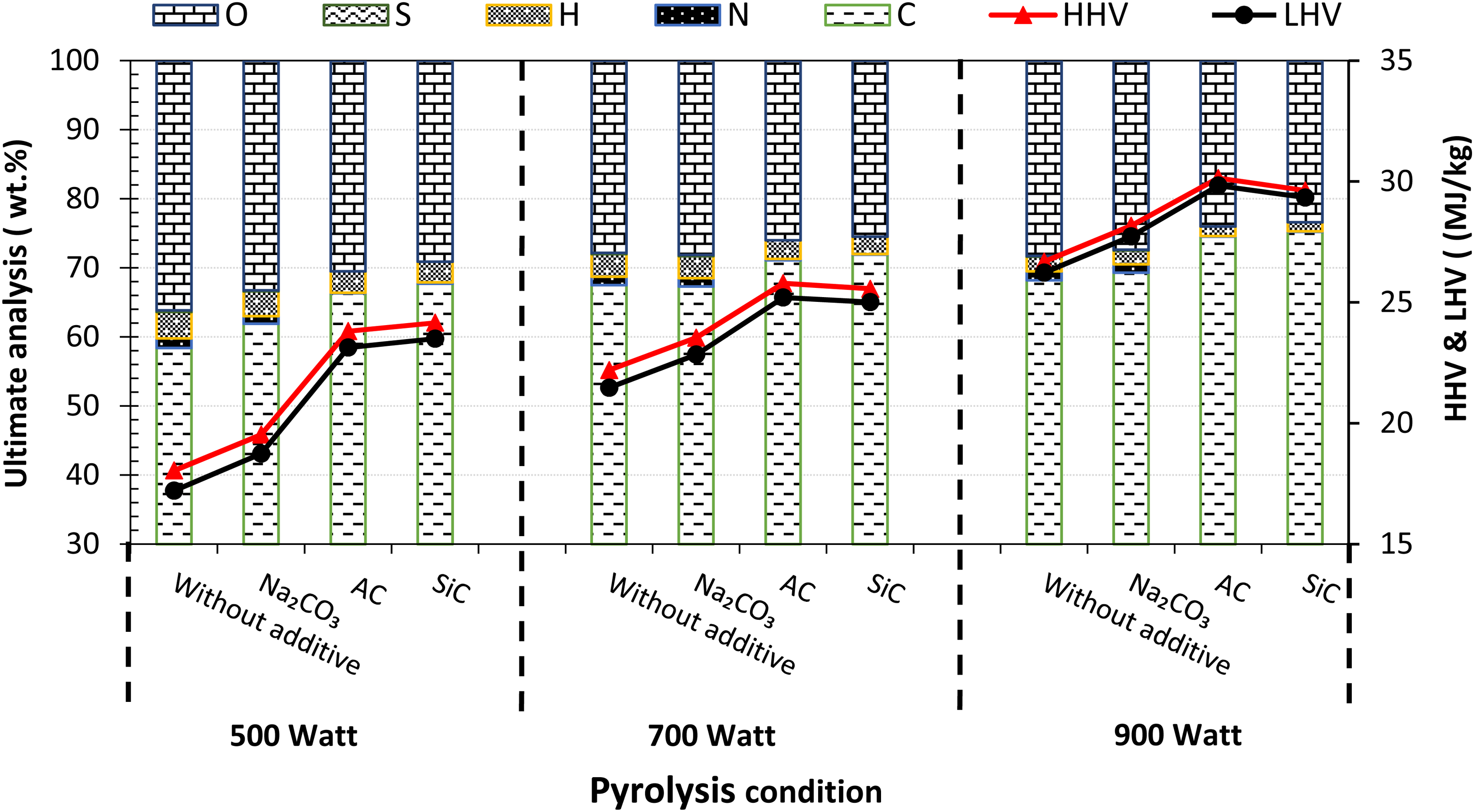
Figure 3 shows the elemental analyses (CNHS/O), HHV, and LHV of the bio-oil produced at different levels of microwave power and different additives. The proportions of carbon and hydrogen elements were slightly increased as the microwave power was increased from 500 W to 700 W, then slightly decreased when further raised to 900 W. While the oxygen content exhibited in the opposite trend. This behavior led to generate double bonds carbon compounds i.e., alkenes and benzenes containing lower carbon and hydrogen. 41 However, the increase of the microwave power from 500 W to 900 W had no significant contribution to change the proportions of nitrogen and sulfur elements in the bio-oils. Also, the HHV was found to be increased markedly when the microwave power was increased from 500 W to 700 W, then a bit decreased when the microwave power was increased to 900 W. The HHVs of the bio-oils were increased by the range of 25–130% when the microwave power was increased from 500 W to 700 W, then decreased by 6–17% when a further increase in the microwave power to 900 W. This can be explained by the increase in the carbon and hydrogen contents and decrease in the oxygen content as identified in the bio-oils when the microwave power was increased from 500 W to 700 W. 33 The difference between HHV and LHV as observed in this study was because of the difference in the contents of hydrogen present in the bio-oil samples under various pyrolysis conditions.
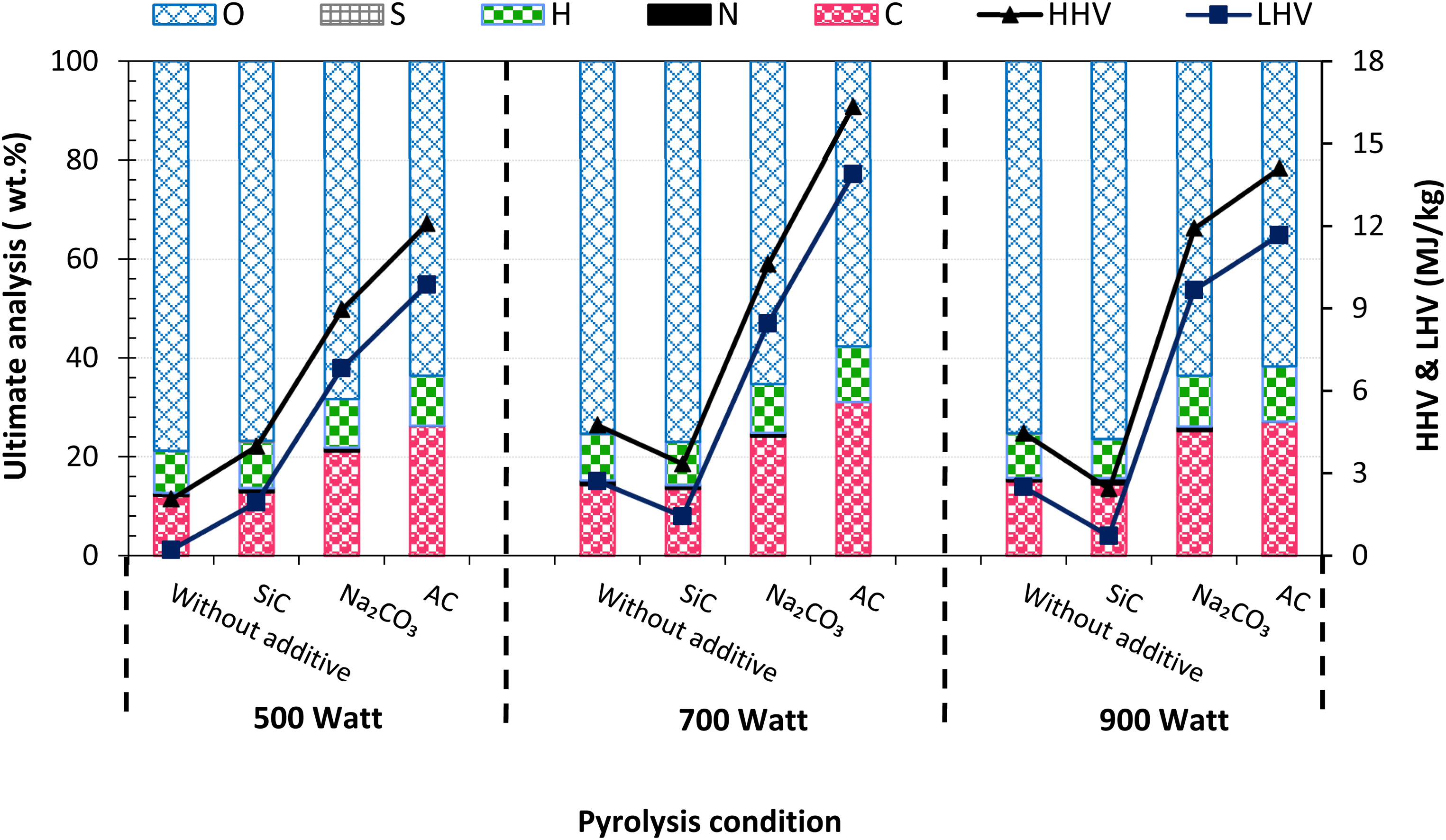
Elemental composition and heating values of bio-oil under different microwave power.
While analyzing the effects of the additives, it is clearly seen that the bio-oils produced with Na2CO3 and AC, contained higher proportions of carbon and hydrogen compounds compared to using SiC and without additive cases, as shown in Figure 3. Therefore, the carbon and hydrogen compounds in the bio-oils were increased by 75–91% and 14–15% respectively when using Na2CO3 compared to without additive. Whilst the corresponding increment were found to be respectively 1.8–2.3 times and 1.2–1.5 times more when using AC additive. This may be because of promoting the hydrogenation reactions 42 among the hydrocarbon molecules present in the pyrolysis volatiles by the addition of Na2CO3 and AC, resulting in the addition of hydrogen atoms to hydrocarbon molecules in the bio-oils. 43 In addition, a low proportion of nitrogen and sulfur elements was identified in the bio-oils when using Na2CO3 and AC additives compared to using SiC and without additive. On the other hand, the addition of the SiC increased the HHV of the bio-oil by 93% at 500 W microwave power compared to without additive. However, under the microwave power of 700 W and 900 W, the HHV of the bio-oils were found to be lowered by 32% and 46% respectively when adding SiC compared to without additive. This can be explained that, under the higher microwave, i.e., 700 W and 900 W, the secondary cracking reactions were promoted to produce a quality gas product by converting carbon and hydrogen elements in the pyrolytic vapors to form CO2 and H2 gases. 33 Also, it was observed that the addition of the Na2CO3 increased the HHV of the bio-oil by 2–5 times more as compared to without additive. Whilst, use of AC increased the HHV of bio-oil by 3–7 times more as compared to the bio-oil produced when no additive used. This indicates that both Na2CO3 and AC could potentially promote catalytic reactions to form more carbon and hydrogen contents and reduce the oxygen content in the bio-oils.
The elemental analyses (CNHS/O), HHV, and LHV of the biochar produced at different microwave power and different additives are shown in Figure 4. It is clearly seen from Figure 4 that the proportion of carbon compound was markedly increased as the microwave power was increased from 500 W to 900 W, in contrast, the proportion of the oxygen and hydrogen compounds were decreased sharply. The carbon content in the biochar was increased by 14–17%, meanwhile, the oxygen content was decreased by 20–22% when the microwave power was increased from 500 W to 900 W. The possible reason is that, at a higher microwave power (900 W), the CS was exposed to greater microwave radiation, thus, generated higher heat energy resulting in the higher reaction temperatures. 27 Consequently, carbon compounds were left while the oxygenated fractions present within the CS were likely to be decomposed and released as pyrolytic volatiles. 44
Elemental composition and heating values of biochar under different microwave power.
Also, it was observed from Figure 4 that, the HHVs of the biochar were found to be in a wide range of 18–32 MJ/kg which were found to be higher by 8–91% than raw CS (16.7 MJ/kg). The increase in the microwave power from 500 W to 900 W led to increasing the HHV of biochar markedly. The HHVs of the biochar were improved by the range of 28–48% when the microwave power was increased from 500 W to 900 W. The difference between HHV and LHV of the biochar as observed in this study, was found to be low values and was because of the difference in the hydrogen content present in the biochar samples under different pyrolysis conditions. On the other hand, the biochar produced with Na2CO3, AC, and SiC additives, contained higher proportions of carbon compounds with lower content of oxygen compared to without additive as shown in Figure 4. Therefore, the carbon content in the biochar is increased by 8–16%, meanwhile, the oxygen content is decreased by 13–20% when using all additives compared to without additive. This may be because of the enhancement in the deoxygenation and devolatilization 41 that occurred due to a further rise in the process temperature owing to the increased absorption of the radiation from the microwave when using the additives. 44 Figure 4 also indicates that the addition of all additives promoted the HHV of the biochar compared to the biochar produced without additive under all levels of microwave power under the study. It was observed that there was the improvement of HHV of the biochar by 12–18% while adding Na2CO3 catalyst compared to non-catalytic biochar. Whilst, use of AC and SiC catalysts led to increase of the HHV of biochar markedly by 20–40% and 17–39% respectively compared to non-catalytic biochar.
Energy and exergy rates of bio-oil and biochar
As per the theoretical considerations (section “Energy and exergy analysis”), the energy and exergy rates of biochar (Ėnbiochar and Ėxbiochar) and bio-oil (Ėnbio−oil and Ėxbio−oil) have been calculated with respect to with and without additive under different levels of microwave power under this study. Raw CS as feedstock and the electrical energy required to operate pyrolysis system are inputs, while bio-oil and biochar, ignoring gas product, are the system outputs. The energy and exergy from the additives are ignored as it is separated from the biochar before conducting the analysis.
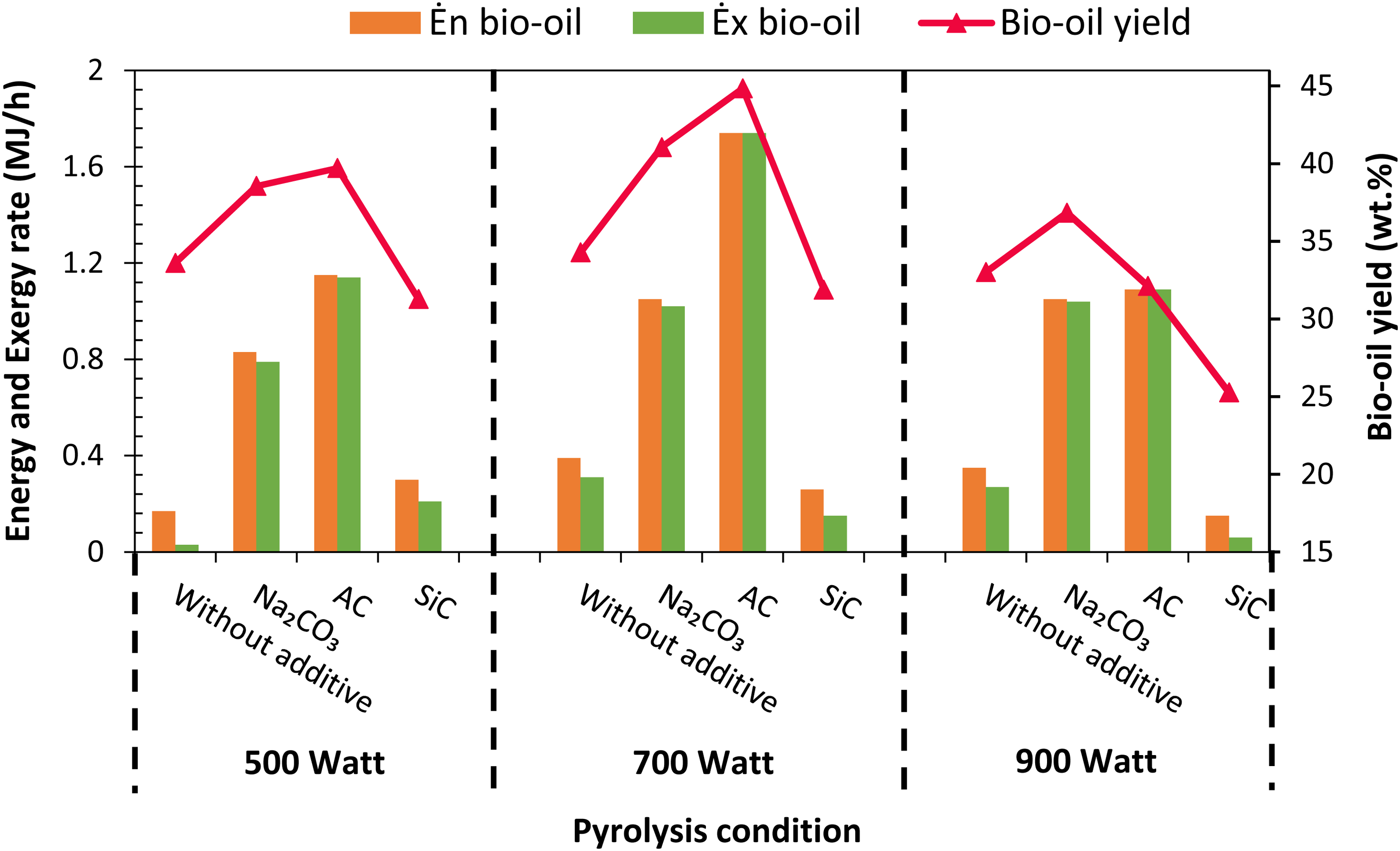
For bio-oil, the increase in the levels of microwave power from 500 W to 700 W caused an increase in the yields of bio-oil and then, it was decreased when a further rise in the microwave power from 700 W to 900 W, as shown in Figure 5. This is because of the accelerated process of the pyrolysis with the effects of rising temperatures due to the increasing microwave power, causing, therefore, more yields in the bio-oil by rapid condensation of released volatile materials and thus lowering in the yields of biochar. The maximum bio-oil yield (45 wt.%) in the present study was found to be higher than the value (27 wt.%) reported by Martín et al. 45 which produced at 500 W and AC catalyst Also, it is higher than the values (32 wt.%) reported by Wang et al. 46 which was produced at 600 °C with biochar as an additive.
Energy and exergy rates and yield of bio-oil under different microwave power.
On the other hand, the use of Na2CO3 and AC increased the yields of the bio-oil significantly while the use of SiC decreased the yield of bio-oil compared to without additive. 42 This may be because of the fact that, use of both Na2CO3 and AC promotes the extensive thermal cracking of the feedstock resulting in the higher conversion of the feedstock into the pyrolytic volatiles and then condensed to form a higher yield of bio-oil. 47 For more specific, the bio-oil yields were increased by the ranges of 18–21% and 22–32% when using both Na2CO3 and AC additives respectively compared to without additive. Furthermore, the results obtained from the statistical analysis showed that all the variables (microwave power and using different additives) were statistically significant on the yield of the products at a significance level of 0.05 with p-value of 0.005–0.007.
Figure 5 also shows the energy and exergy rates of bio-oil under different pyrolysis conditions. Overall, it can be seen from Figure 5 that the energy and exergy rates of the bio-oil were enhanced with increasing the microwave power from 500 W to 700 W. Whilst at higher microwave power (900 W), the energy and exergy rates were found to be slightly decreased. This was because of the enhancement in the HHVs of bio-oil with the increase in its yield. 47 As energy and exergy rates of bio-oil are calculated based on the respective yield and composition which affect the thermal properties, therefore, the values change as the reaction temperature changes. The values of energy rate of bio-oil were computed to range from 0.15–1.74 MJ/h while the exergy values ranged from 0.03–1.74 MJ/h. With respect to the use of the additives, the energy and exergy rates of bio-oil were enhanced markedly when using Na2CO3 and AC additives compared to using SiC and without additive. This phenomenon can be explained by the fact that the use of Na2CO3 and AC helped in increasing the bio-oil yield with enhancing its HHV. More specifically, when using AC, the energy and exergy rates were respectively increased by 3–6 times and 3–5 times more compared to without additive. While the corresponding increments when using Na2CO3 were respectively 2–4 times and 2–3 times more.
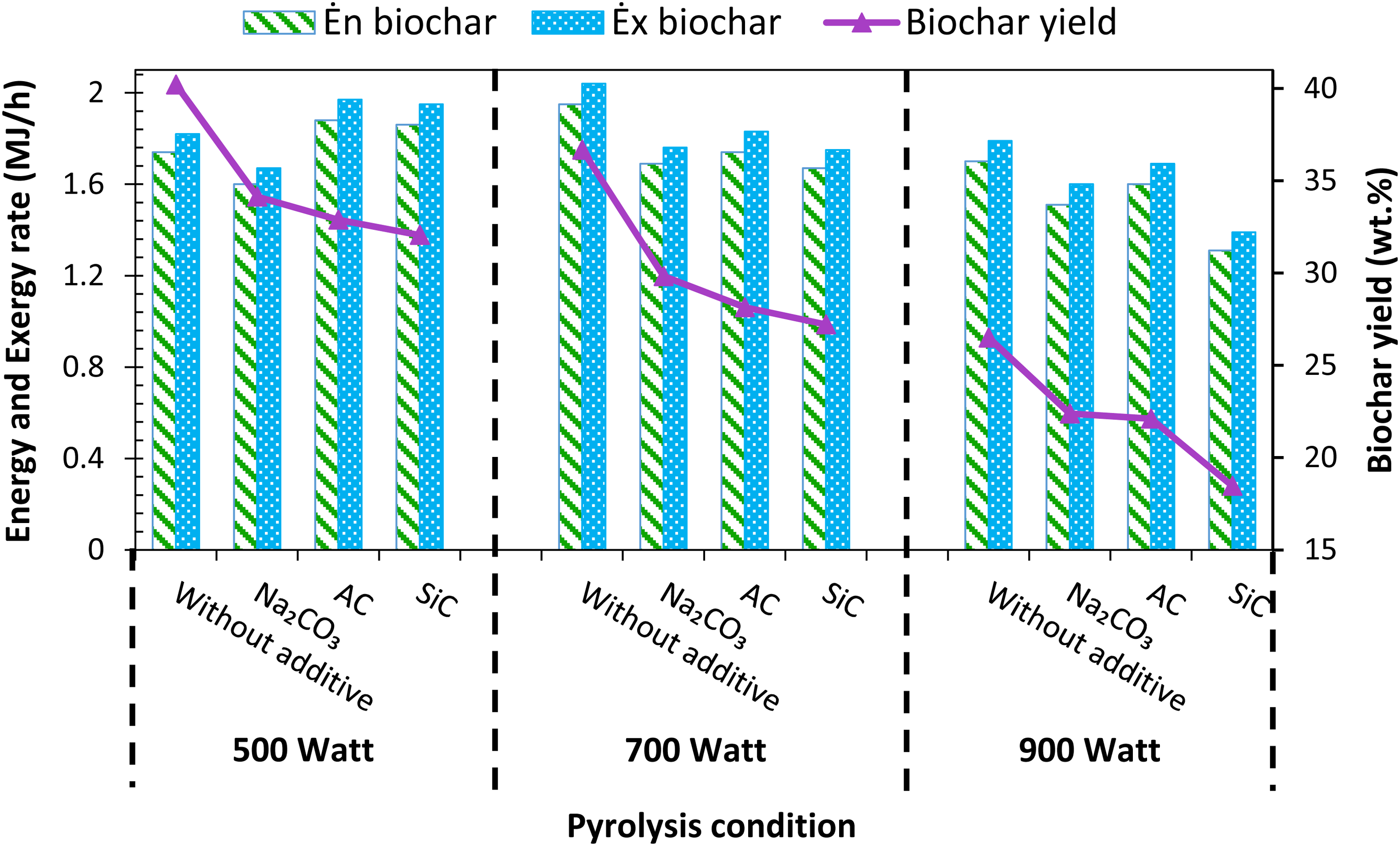
For biochar, the increase in the levels of microwave power from 500 W to 900 W and using all additives caused a decrease in the yield of biochar, as shown in Figure 6. A high microwave power level means a high reaction temperature and a high heating rate and vice versa. Thereafter, the heating rate and reaction temperature significantly affect the distribution of pyrolytic products. Under low microwave power (500 W), the heating rate and the reaction temperature were low which led to producing a high yield of biochar (40 wt.%). In contrast at higher microwave power and using all additives the biochar yield was low (19 wt.%).
Energy and exergy rates and yield of biochar under different microwave power.
Figure 6 also shows the energy and exergy rates for biochar under different pyrolysis conditions. It can be seen from Figure 6 that, the energy and exergy rates for biochar were enhanced with increasing the microwave power from 500 W to 700 W when no additive was used. Whilst at higher microwave power (900 W), the energy and exergy rates were found to be slightly decreased. This was because of the enhancement in the HHV of biochar even with the reduction in its yield. At low microwave power, use of AC and SiC additives led to increasing the energy and exergy rates of the biochar compared to using Na2CO3 and in case of without additive. This is because of the significant increase in the HHV of the biochar even with the reduction in its yield. Whilst, at a moderate and higher microwave power (700 W and 900 W), use of all additives caused the reduction in the energy and exergy rates of the biochar. This may be because of the more reduction in the yield of biochar while the enhancement in its HHV was not sufficient.
Energy and exergy efficiency of the MAP system
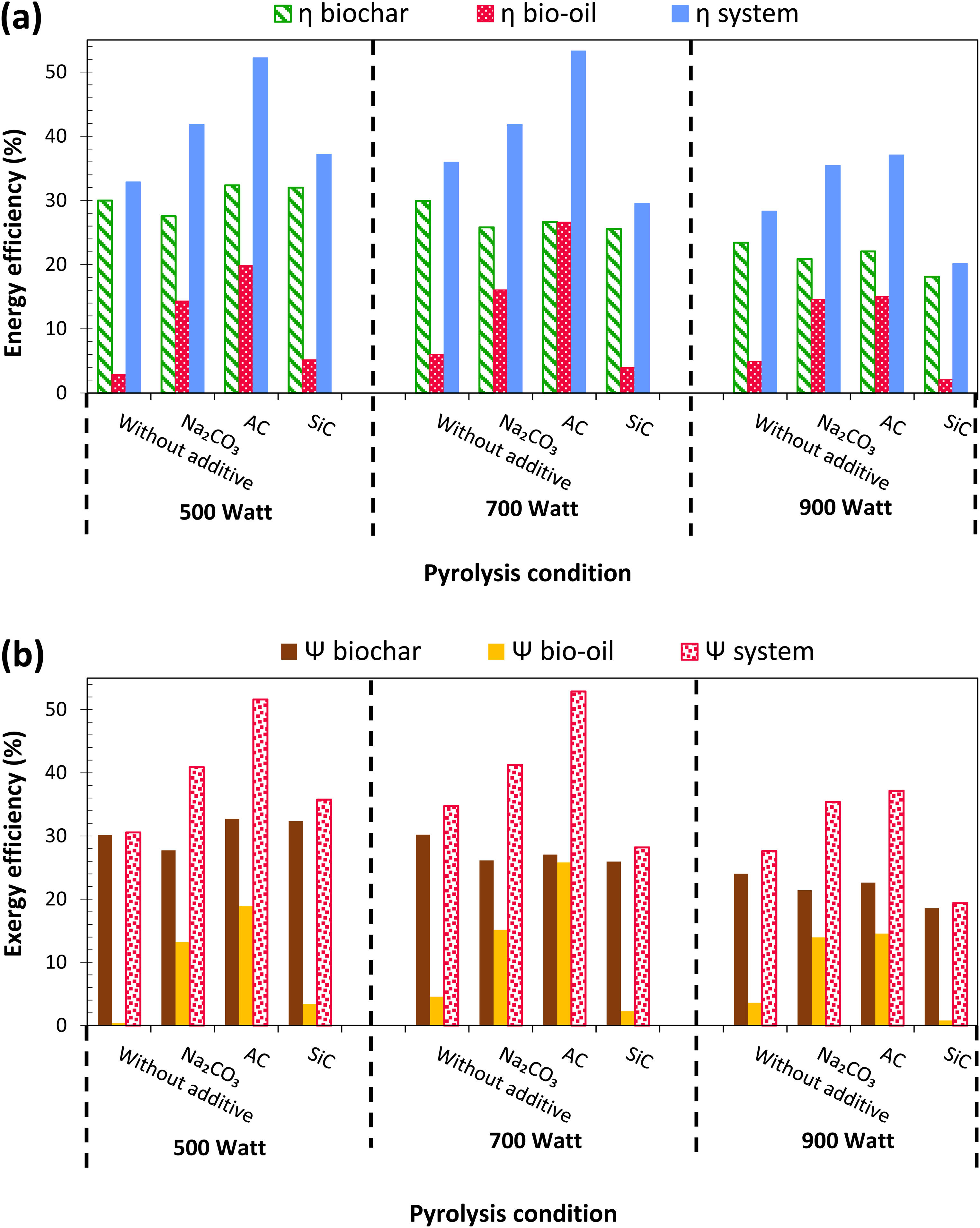
Figure 7 shows the energy and exergy efficiency of biochar (η biochar and Ψ biochar), bio-oil (η bio−oil and Ψ bio−oil), and pyrolysis system (η system and Ψ system) at different levels of microwave power and using different additives. For biochar, the energy efficiencies in the range of 17% to 32% were found to be lower than its exergy efficiencies in the range of 18% to 33%. The similar results are as reported by Wang et al. 18 and Keedy et al. 48 For bio-oil, the results were found to be in the opposite trend where the energy efficiencies in the range of 2% to 27% were higher than the exergy efficiencies in the range of 0.4% to 25%. In addition, the η biochar and Ψ biochar of biochar were decreased with increasing the microwave power from 500 W to 900 W due to the significant reduction in the yield of biochar yield even with its increased calorific value. Hence, the maximum η biochar and Ψ biochar efficiency of 33% and 32% respectively were obtained when pyrolyzed at 500 W microwave power and using AC as additive. 21
Energy and exergy efficiency of biochar, bio-oil, and pyrolysis system under different microwave power: (a) energy efficincy and (b) exergy efficincy.
For bio-oil, the η bio−oil and Ψ bio−oil efficiency were increased with increasing the microwave power from 500 W to 700 W due to its enhanced yield and HHV. Whilst, both were decreased at 900 W due to the significant reduction in the yield of bio-oil as well as its HHV. 49 Furthermore, use of the additives led to decrease the energy and exergy efficiency of biochar. On the other hand, energy and exergy efficiencies of bio-oil (η bio−oil and Ψ bio−oil) and pyrolysis system (η system and Ψ system) were enhanced significantly with using both Na2CO3 and AC additives compared with using SiC and without additive. This phenomenon can be explained by the significant increase in the yield of bio-oil and its calorific value in the case of using Na2CO3 and AC additives (Figures 3 and 5) which, also, led to increase in the energy and exergy efficiencies of the pyrolysis system. 33 The maximum energy and exergy efficiency (53.3% and 52.8%) of pyrolysis system were obtained when pyrolyzed at 700 W and using AC as additive. This is because of the enhancement in the HHVs of bio-oil and biochar (Figures 3 and 4) compared to other pyrolysis conditions even with less yield of biochar.
As a result, use of AC as an additive can enhance the energy and exergy efficiency of the pyrolysis system. The less in exergy efficiency of the pyrolysis system may be due to the lower heat values of the products for less practical utilization and more loss of heat energy during the process. The results also showed that both the efficiencies in the case of using Na2CO3 and AC catalysts were higher than non-catalytic case. This improved performance was mostly due to the higher yields of bio-oil and its HHV and relatively less loss of heat because of more heat accumulation in the feedstock at the molecular level. The details of calculations related to the energy and exergy analysis can be found in Appendix A.
Conclusion
Lower and higher heating values of bio-oil and biochar produced through microwave pyrolysis of corn stover using different additives have been investigated along with their energy and exergy analysis. The energy efficiencies were computed based on the heating values of the pyrolytic products under study. While, the exergy analysis was done using standard relationships by the fraction of energy actually available for practical uses as biofuel. The findings of the present study are summarized below.
The use of all additives in this study favored reducing the yields of the biochar compared to without additive. However, use of AC and Na2CO3 favored increasing the yield of bio-oil significantly due to their catalytic effects, while SiC decreased the yield of bio-oil. The additives, used, helped in producing biochar with high calorific value, in contrast the use of AC contributed a significant effect in the enhancement of HHV and yield of the bio-oil. The maximum energy and exergy rate (1.74 MJ/h) of the bio-oil were obtained at 700 W level of microwave power using AC additive, while for biochar were 1.95 MJ/h and 2 MJ/h which obtained when no additive used. The energy and exergy efficiencies of pyrolysis system were found to be of higher values when using AC compared to using SiC and Na2CO3 or without additive. As a result, use of AC, as an additive can enhance the energy and exergy efficiencies of the pyrolysis system.
Supplemental Material
sj-docx-1-eae-10.1177_0958305X221122929 - Supplemental material for Conversion of biomass into biofuel by microwave pyrolysis: Assessment of energy and exergy aspect
Supplemental material, sj-docx-1-eae-10.1177_0958305X221122929 for Conversion of biomass into biofuel by microwave pyrolysis: Assessment of energy and exergy aspect by Ahmed Elsayed Mahmoud Fodah and Taha Abdelfattah Mohammed Abdelwahab in Energy & Environment
Footnotes
Acknowledgements
The authors gratefully acknowledge Al-Azhar University, Cairo, Egypt for providing financial support to carry out the research work.
Competing interests
The authors declare that there are no known competing financial interests or personal relationships that could have appeared to influence the work reported in this paper.
Authors’ contributions
The Authors have equally contributed to the work. Ahmed E.M. Fodah: Conduct the experiments, Data analysis, and writing-original draft preparation. Taha A.M. Abdewahab: conceptualization, methodology, and revision. All authors have read and approved the final manuscript.
Availability of data and materials
All data generated or analyzed during this study are included in this published article.
Declaration of conflicting interests
The author(s) declared no potential conflicts of interest with respect to the research, authorship, and/or publication of this article.
Highlights
Funding
The author(s) received no financial support for the research, authorship, and/or publication of this article.

Supplemental material
Supplemental material for this article is available online.
References
Supplementary Material
Please find the following supplemental material available below.
For Open Access articles published under a Creative Commons License, all supplemental material carries the same license as the article it is associated with.
For non-Open Access articles published, all supplemental material carries a non-exclusive license, and permission requests for re-use of supplemental material or any part of supplemental material shall be sent directly to the copyright owner as specified in the copyright notice associated with the article.
