



Abstract
Generation of energy has to increase due to society's demand escalation. However, generation from conventional sources is one of the major reasons for greenhouse gas emission, which is a key reason for global warming and climate change issues. To mitigate the emission of greenhouse gas and to protect the environment from pollution, renewable energy sources (RESs) are the one and only effective solution till date. To reduce the fluctuation of RESs on energy generation, a RES-based hybrid system is an innocuous solution. Here, a brief discussion of hybrid systems and their opportunities are presented and reviewed the role of the different combinations of renewable energy-based hybrid systems to reduce environmental pollution, generation costs, improve efficiency, and achieve a continuous power output of the system. A discussion is made on the importance of the site selection and the importance of different kinds of storage systems for energy generation. Result of article gives a brief idea regarding different factors to design future hybrid energy system (HES).
Introduction
Background and significance
Global temperature is increasing rapidly due to the increasing amount of greenhouse gases in the air. Because of the increase in global temperature, glaciers and ice caps have already started melting which is the cause of the increase in sea level. The increasing sea level threatens the coastal cities and low-lying islands. 1 All these are happening due to large-scale use of fossil fuels that creates environmental contamination. From electrical or power background, the main sources of greenhouse gases emission are fossil fuel-based energy sectors as it burns fossil energy. In 2020, the emission of greenhouse gas from electricity sectors was almost 28% of total greenhouse gas emissions all over the world. 2 Figure 1 shows the sector-wise percentage of greenhouse gas emissions all over the worldwide in 2020. A report from the International Energy Agency (IEA) wrote that, if the policies of generating energies are remaining unchanged by 2050, emissions of CO2 will raise up to 130% of current levels.
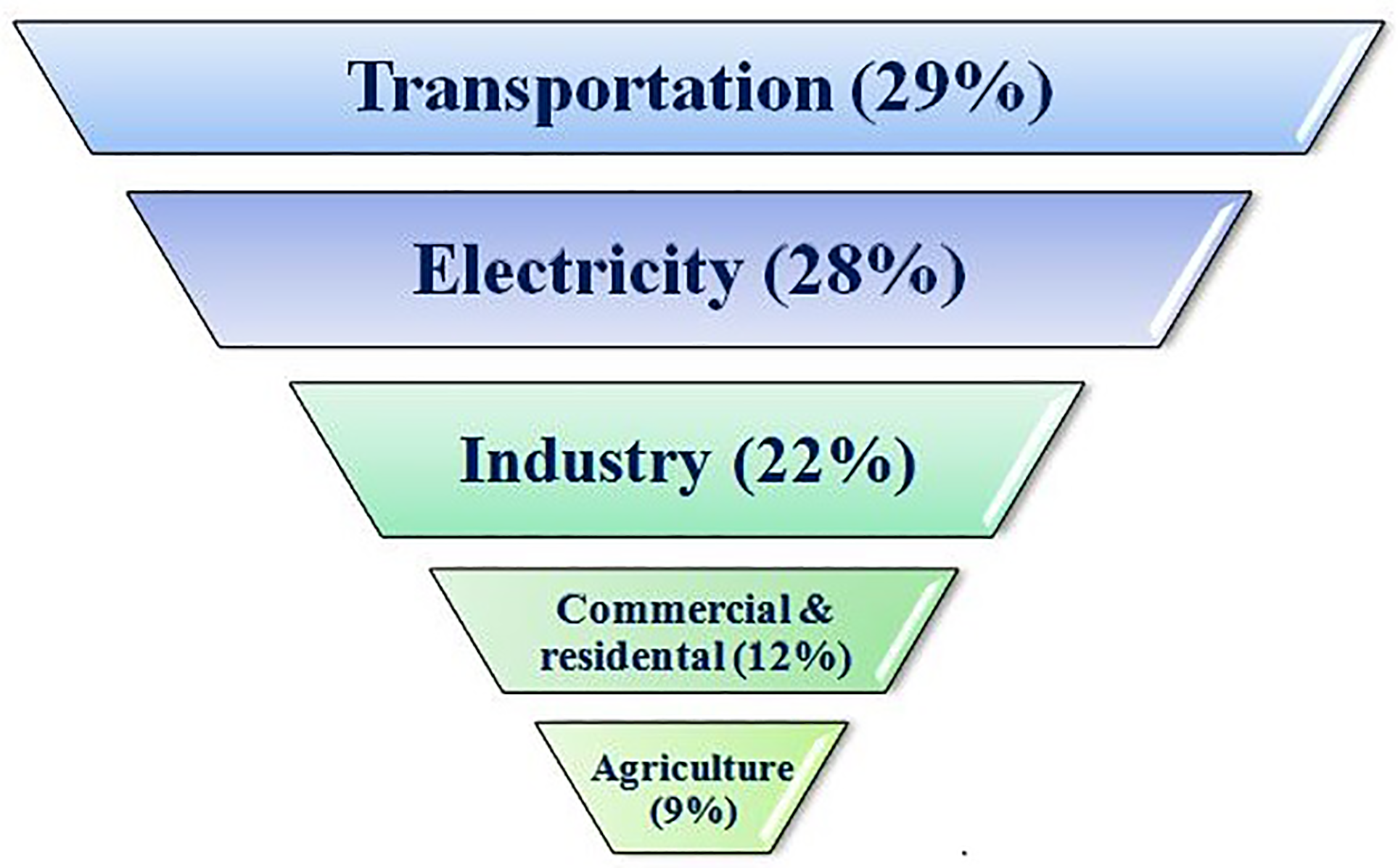
Sector-wise percentage of greenhouse gas emissions all over the world in 2020.
Renewable energy sources (RESs) are clean energy sources which do not create severe damage to the environment.3,4 The primary clean energy sources like solar, hydropower, and wind have less impact on the environment when they are used as the source of energy for electricity generation. 5 In the field of energy generation, the emission of greenhouse gases can be reduced by upgrading the share of generation from clean sources. 6 Clean energy can lessen the dependence on fossil energy. 7 However, various types of modern clean energy technologies can be used for reliable energy generation. In concentrating solar power (CSP) technology, printable organic solar cells are one of the current solar energy technologies for generating reliable electricity. About 30 nations all over the world have more than 20% of total energies that are supplied from renewable sources. Many of the countries nowadays aimed to get 100% renewable energy in the future. Almost 47 nations all over the world have electricity of 50% that is coming from renewable energy resources. India has nearly about 42.70% wind energy and 40.40% solar energy of total installed grid renewable energy. Figure 2 shows the installed grid cooperative renewable energy capacity of India in 2021. 8
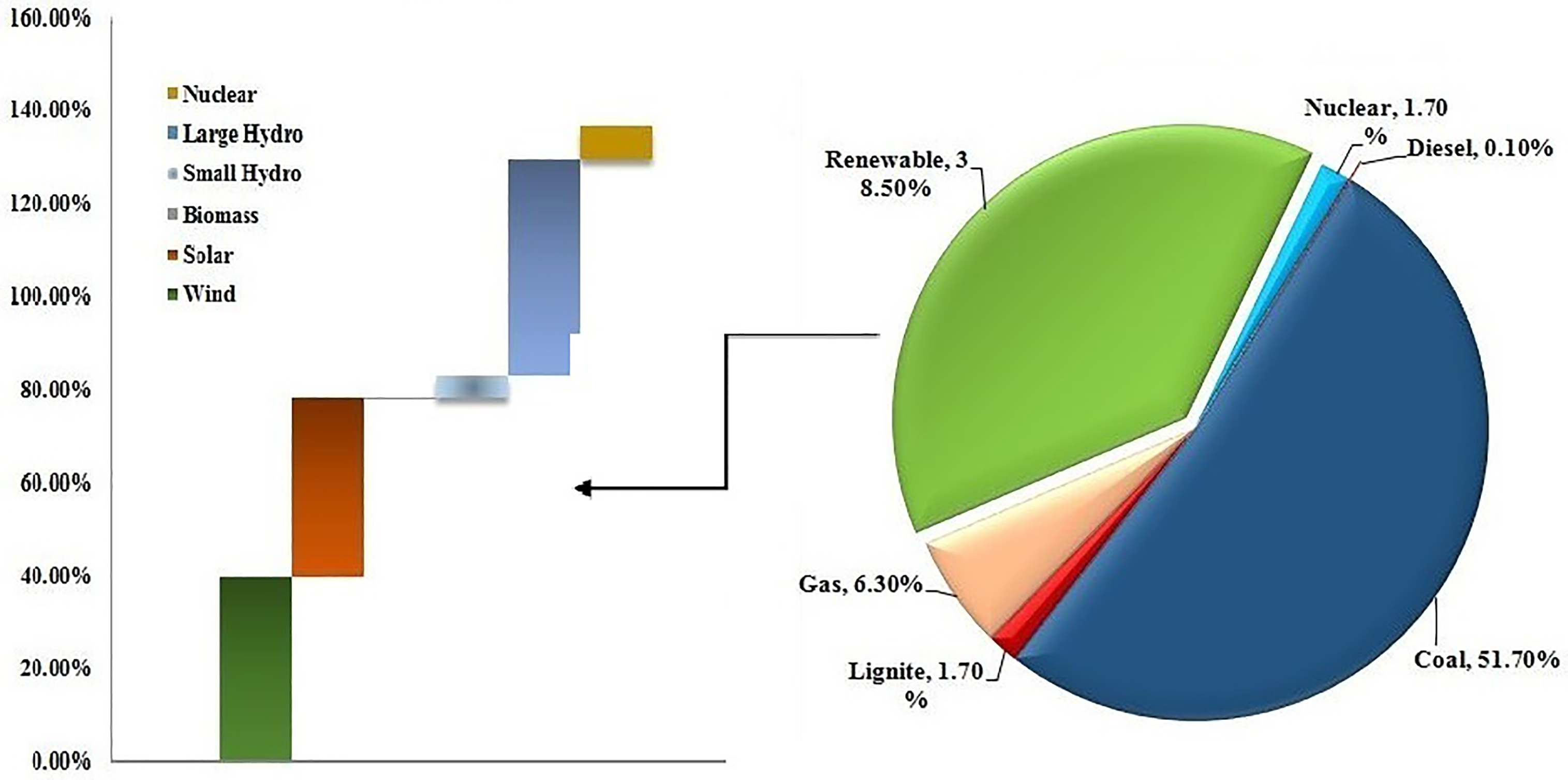
The installed grid cooperative renewable energy capacity of India in 2021.
The application of renewable sources of energy in the field of power generation is increasing. 9 But due to some drawbacks, renewable energy systems are unable to reach guarantee reliability. 10 Energy generations from RES like solar, wind, and hydro are clean 11 but these energy sources are variable in nature due to the seasonal variation. Because of their alternate nature characteristics, it is quite impossible to get continuous generation of energy from these sources. Direct integration of them into the power grid may make the power generation unstable. 12 Hence, this problem needs to reduce to get continuous and reliable energy generation. Two or more energy sources-based hybrid energy system (HES) can overcome such problems and it can provide a continuous generation of energy. 13 However, for a continuous energy supply from power plant, system needs proficient management of energy. Thus, storage is required for them. The energy storage system (ESS) plays a very important role in fulfilling energy demand. 14 Different types of ESS are battery storage, supercapacitor, hydrogen storage, pumped hydro energy storage (PHES), etc.. 15 Among them, the battery storage system is a related choice for small-to-medium size plants and the pumped storage system is appropriate for large size hydroelectric plants. Moreover, a combination of battery and supercapacitor is the frequently used as hybrid ESS.16,17
Problem definition
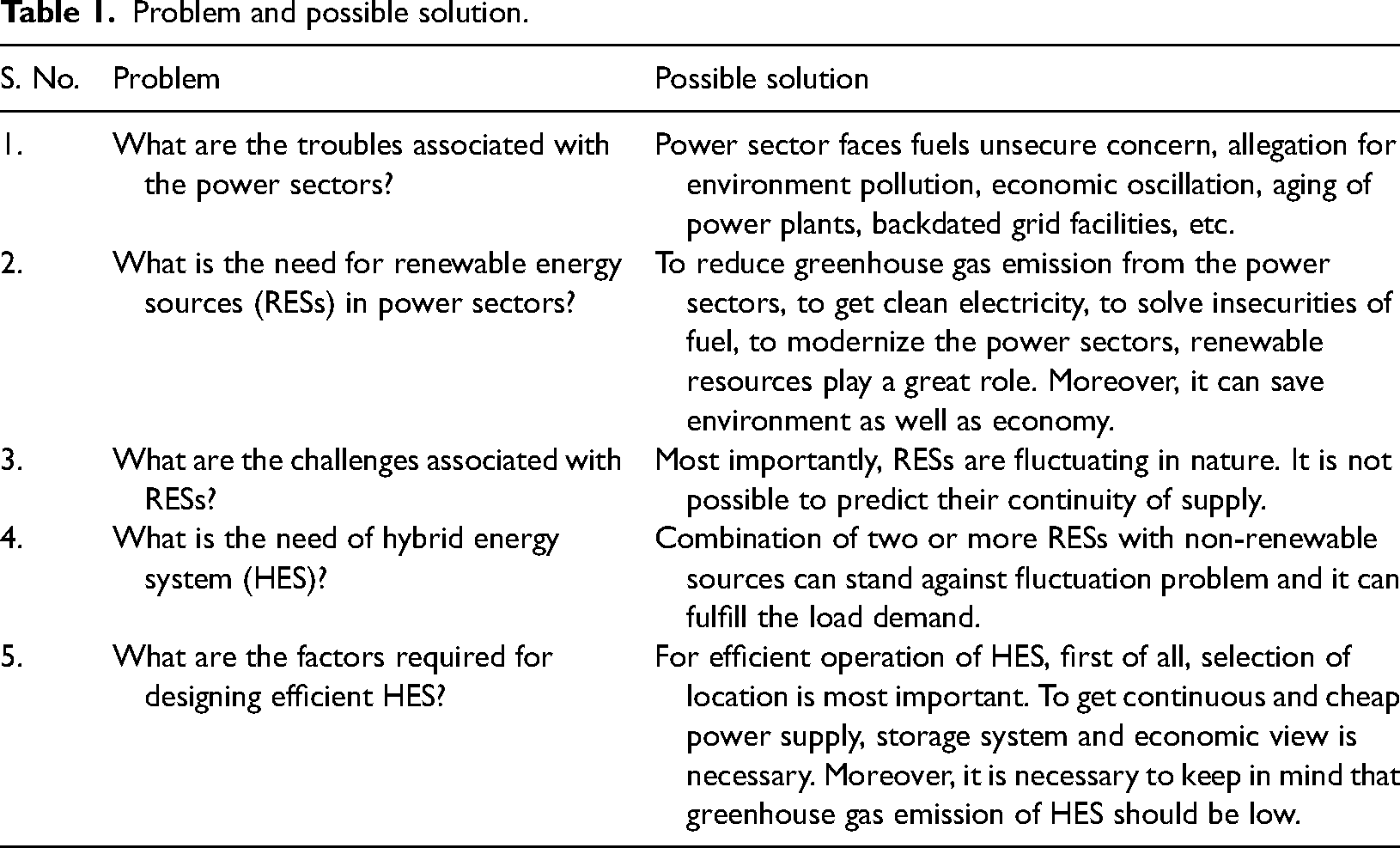
Therefore, considering all the previous circumstances mentioned above, this section presents a detailed discussion about research problem and suggesting some possible solutions in Table 1.
Problem and possible solution.
Literature survey
To decrease greenhouse gas emissions and to keep economic profit, renewable resource-based hybrid power system is the best choice. Though, to maintain uninterrupted energy supply to the consumers, a grid-connected or off-grid hybrid power system required an appropriate energy storage opportunity. 18 However, the implementation of the power plant in hilly areas and remote areas is a challenging task. Here, some important research and review articles are highlighted which focused on hybrid power systems.
A study has been made by Baruah et al. 19 for the techno-economic possibility of an independent hybrid plant to give electricity in the East District of Sikkim, India. Here, to choose the best one among 31 possible combinations of various renewable resources, analytical hierarchy process is taken. The result indicates that photovoltaic (PV) wind biogas syngas hydrokinetic battery-based hybrid system is the best choice for this location.
Ranjbaran et al. 11 have given a systematic analysis and review of different phases of floating PV (FPV) systems and a comparison is made between the FPV system and ground-mounted PV system. Here, different interconnected topologies of FPV are taken for finding the best output. It is found in the result that total cross-tied FPV-based system is more efficient, and has the ability to reduce water evaporation and carbon dioxide.
Li et al. 20 have discussed about configuration, mechanism, characteristics, and upgraded status of hybrid geothermal and solar power plants. Moreover, a new method is proposed here to rank the hybrid solar-geothermal power plant. For the best performance, the article suggested to go with supercritical organic Rankine cycle (ORC)-based hybrid system among the subcritical ORC, single flash, double flash, and Kalina cycles.
Groppi et al. 16 talked about the solution to unpredictability and irregularity of RESs. For such context, different storage technologies like underwater compressed air storage, hydrogen storage, battery storage, pumped hydro storage (PHS), thermal energy storage, vehicle to grid, etc., are consider here for finding the best suited one. Result shows that battery ESSs are suitable for small and medium scale power plant and PHS system are suitable for large-scale power plant, both are popular technologies for the islands.
To avoid curtailment issues of renewable resources, Khan 21 analyzed the different maximum power point tracker (MPPT) techniques of various renewable power generation systems and the hybrid systems for getting maximum power all the time. Here, perturb and observe algorithm (P&O), particle swarm optimization, genetic algorithm, global MPPT incremental conductance, fuzzy logic, neural network, adaptive neuro-fuzzy interface system, etc. MPPT strategies are used for finding the efficient one. The result shows that artificial intelligence based on hybrid MPPT provides a better presentation.
Objective of article
The main objective of the study is to present a systematic review for analyzing the role of various renewable energy resource-based hybrid systems in the compliment process. For selecting the articles, an inclusion and exclusion process is shown here. Moreover, this article also offers an intensive survey on the importance of HES by focusing on different factors like site selection, uninterrupted power output (UPO), ESS, economic operation, greenhouse gas emission, and efficient operation of RES-based HES.
Article structure
The background and the importance of HES are shown in Introduction section. In Methodology for selection of studies section, the methodology for selecting the articles has been shown. In Importance of HES section, the importance of RES-based HES has been discussed. This section also includes various journal article studies by considering the factors like site selection, uninterrupted power output (UPO), ESS, economic operation, pollution reduction, and lastly future improvement of HES. Finally, Conclusion section concludes the article. Figure 3 shows the taxonomy of the article.
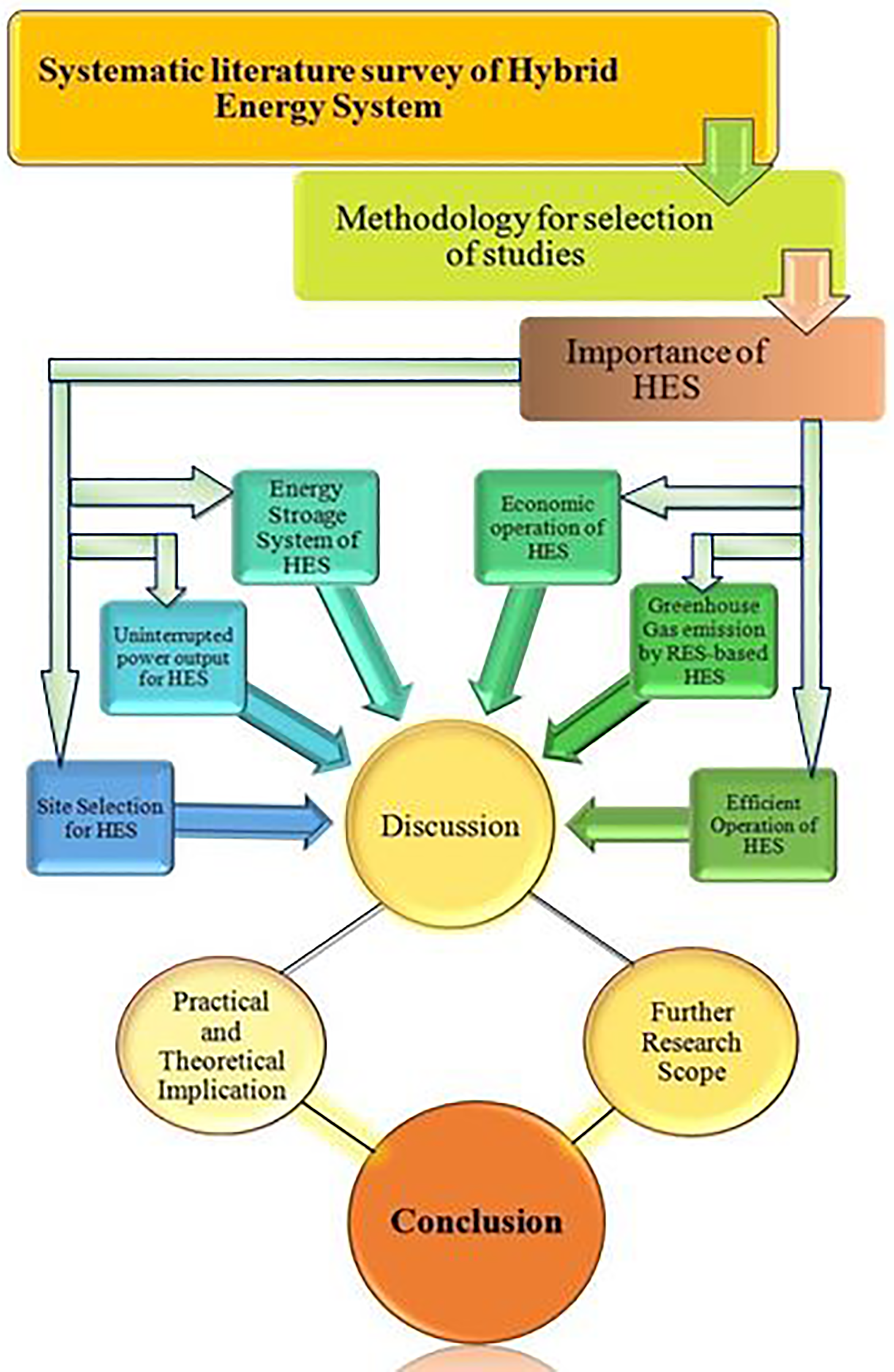
Taxonomy of the article.
Methodology for selection of studies
The process for selecting studies is as follows:
Initially, select any database and put the keyword. After recognizing different studies, separate them according to their relevant keywords, abstracts, and titles. Ignore all the unrelated and similar studies. Fresh articles are ready to read.
Here, a systematic literature review framework including the use of inclusion and extraction criteria is taken for structuring the article. Table 2 shows the inclusion and exclusion criteria. For this, different databases are selected like Google Scholar, ScienceDirect, Scopus, and IEEE Explore and 350 probable studies were recognized. After recognizing according to their relevant keywords, abstracts, and titles, a total of 100 studies were nominated from different databases which were scrutinized for further findings. This process is simple and there is no chance for miss out of any research studies. We used the following search string: (Renewable Energy Sources*) AND (Hybrid Energy System* OR HES) AND (“Green House Gas Emission*” OR “Climate Change*”) AND (Energy Storage*). Therefore, Figure 4 shows the year-wise number of types of studies. Figure 5 shows process for selecting the articles.
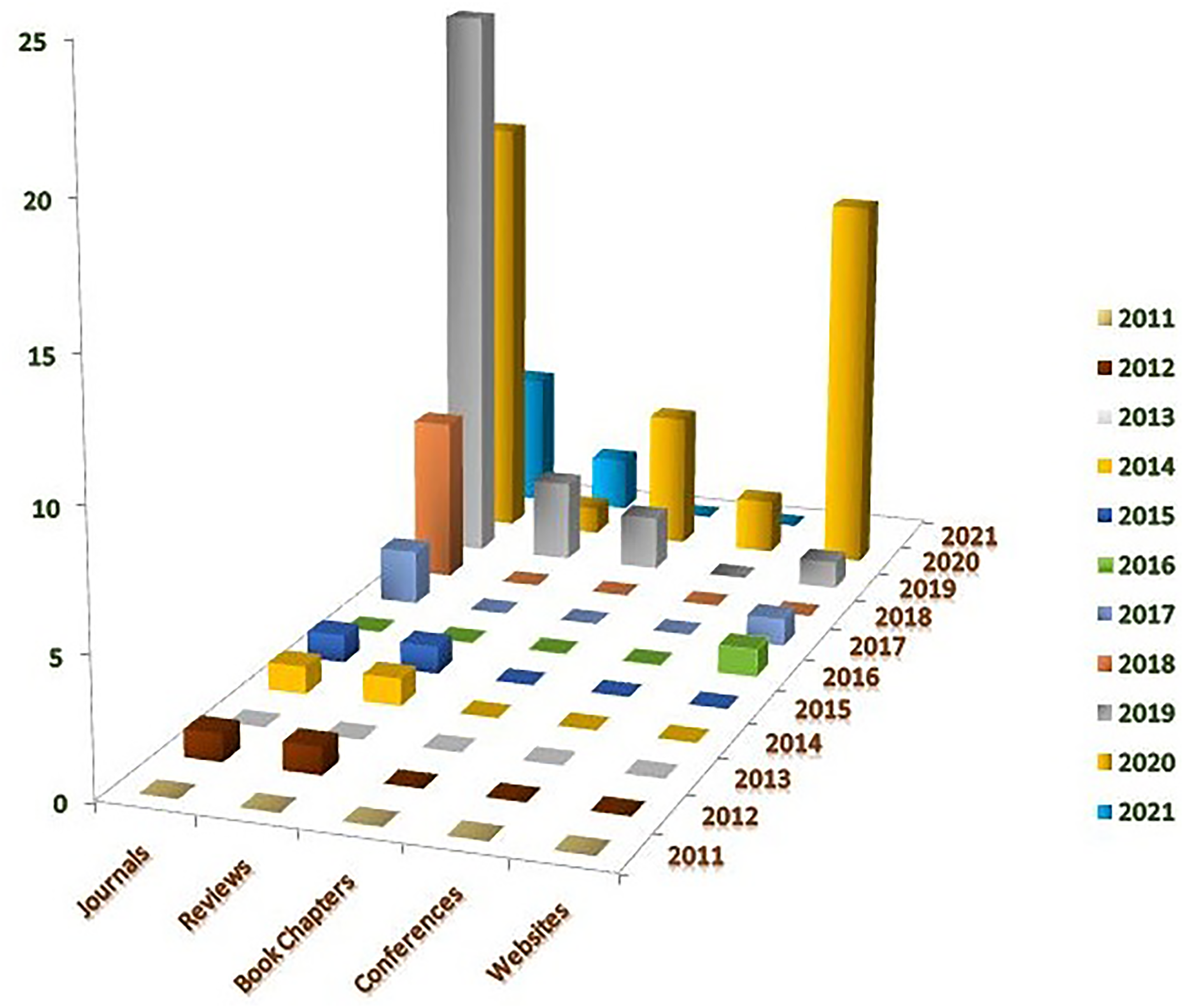
Year-wise number of studies.
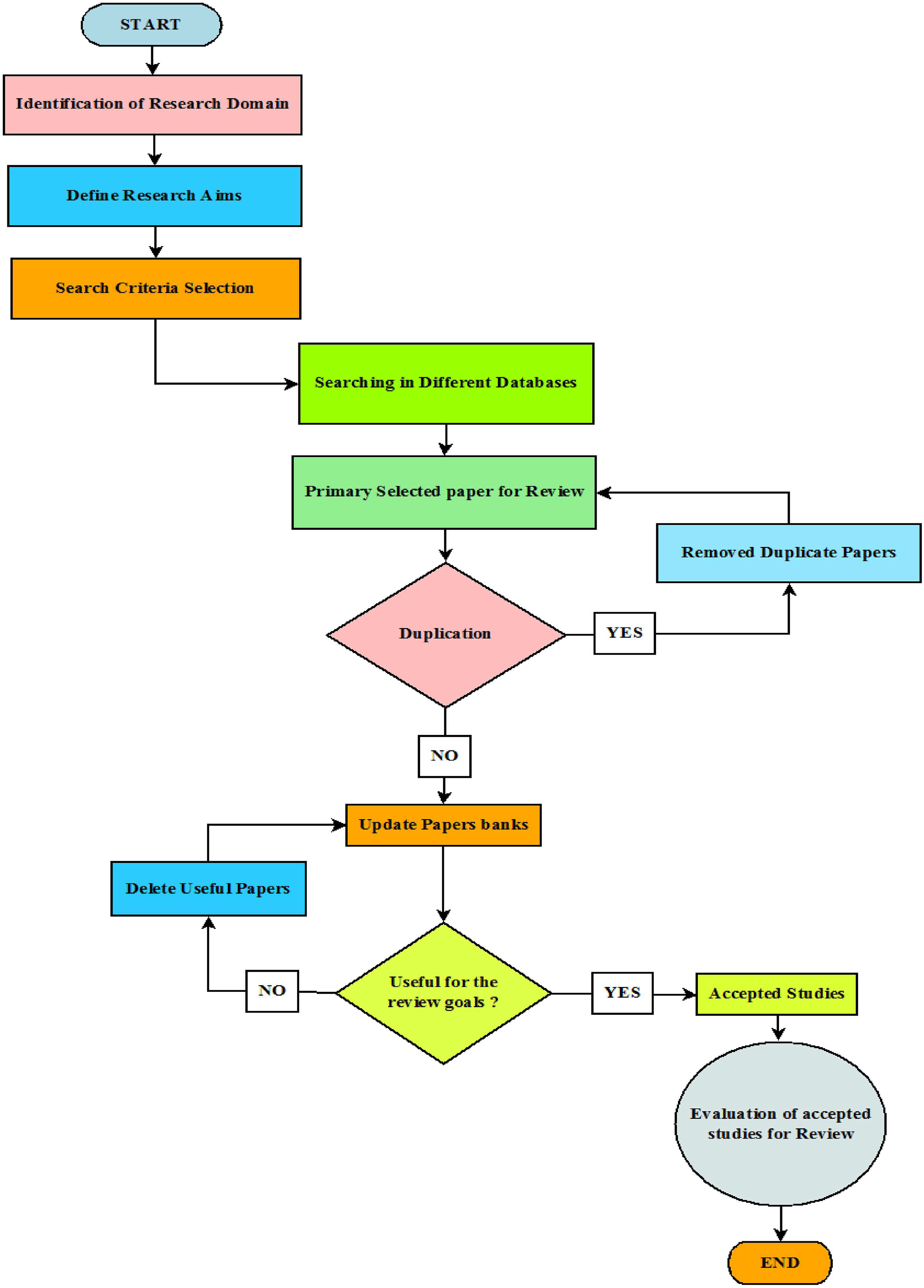
Process of review.
Inclusion and exclusion criteria.

Importance of HES
HES configurations include chemical and electrical ESS and fuel cells which are connected through a smart grid. 22 Figure 6 shows a block diagram of HES. In 2018, oil-based power plant supplied the highest energy when compared to other sources total over the world. 23 However, to fulfill the increasing electricity demand, the generation of electricity has to increase. The generation of electricity from a single source of energy may face various problems. HES can improve this system performance, reduce cost, and can be tailored as the requirements of users. The demands of HES are to reduce generation cost and to improve the system efficiency by reducing unstable power as supply are increasing day by day. 9 However, RES-based HES can reduce environmental pollution and it can maintain the system's reliability. 24 Moreover, the selection of location is a very important part of the implementation of HES as it is based on the availability of renewable sources. For an example, if the selected location for hydro wind HES is not sufficient enough to supply RESs for power generation, it can reduce the plant efficiency. Moreover, the initial investment cost of a RES-based system is high but it requires less maintenance cost. 19
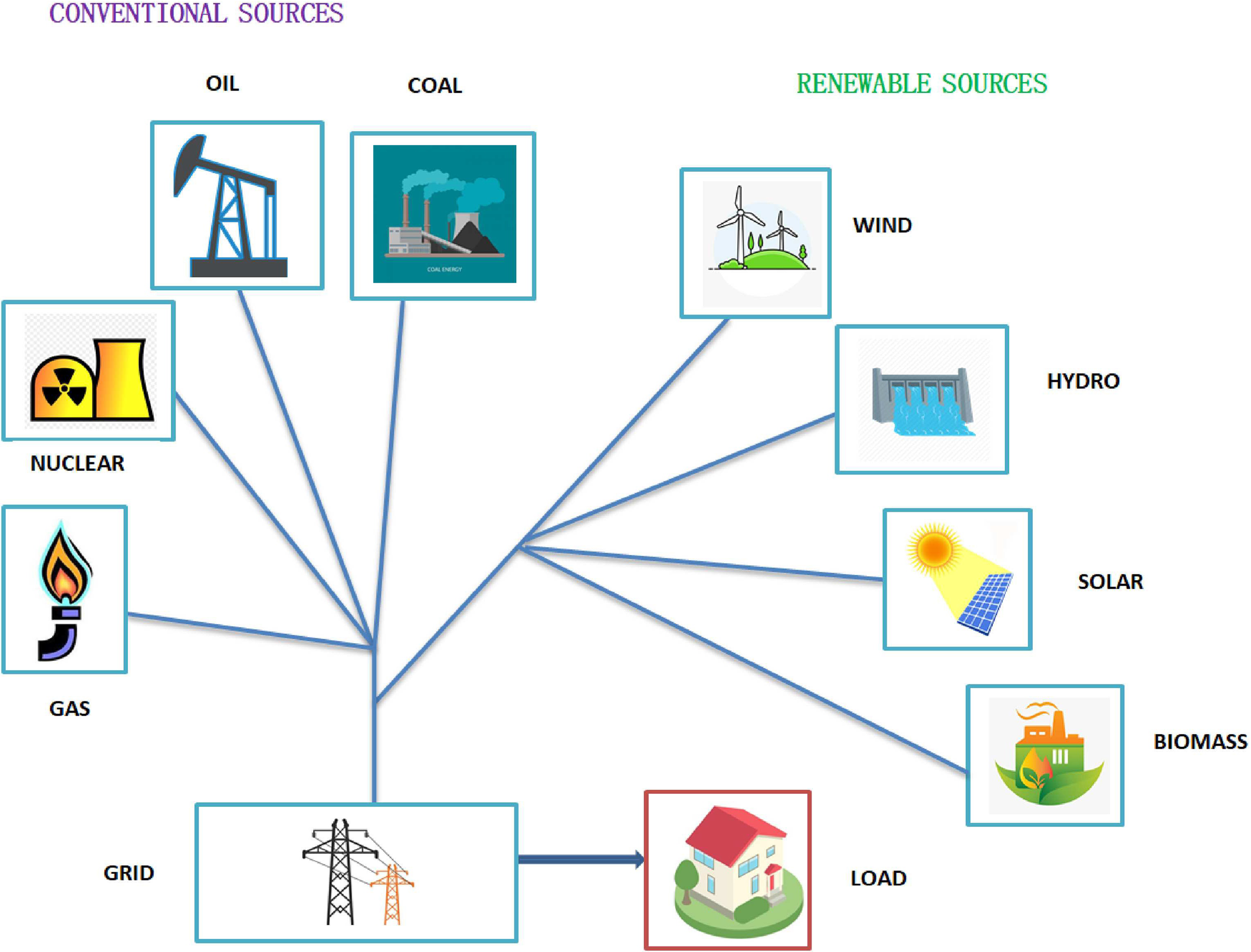
Block diagram of hybrid energy system (HES).
The opportunities for HES are as follows:
Using proper size of RES-based HES, short-term scheduling problems can be reduced and smooth output power can be achieved. By integrating a FPV system with hydroelectric power system, the water loss due to evaporation and the required area for PV plates can be reduced. In rural areas, energy production from locally available renewable sources can decrease the crisis of electricity. Integration of cost-effective substitute in the HES. By implementing storage in the HES, the power shortage problem can be mitigated. Figure 7 shows pointed factors related to HES.
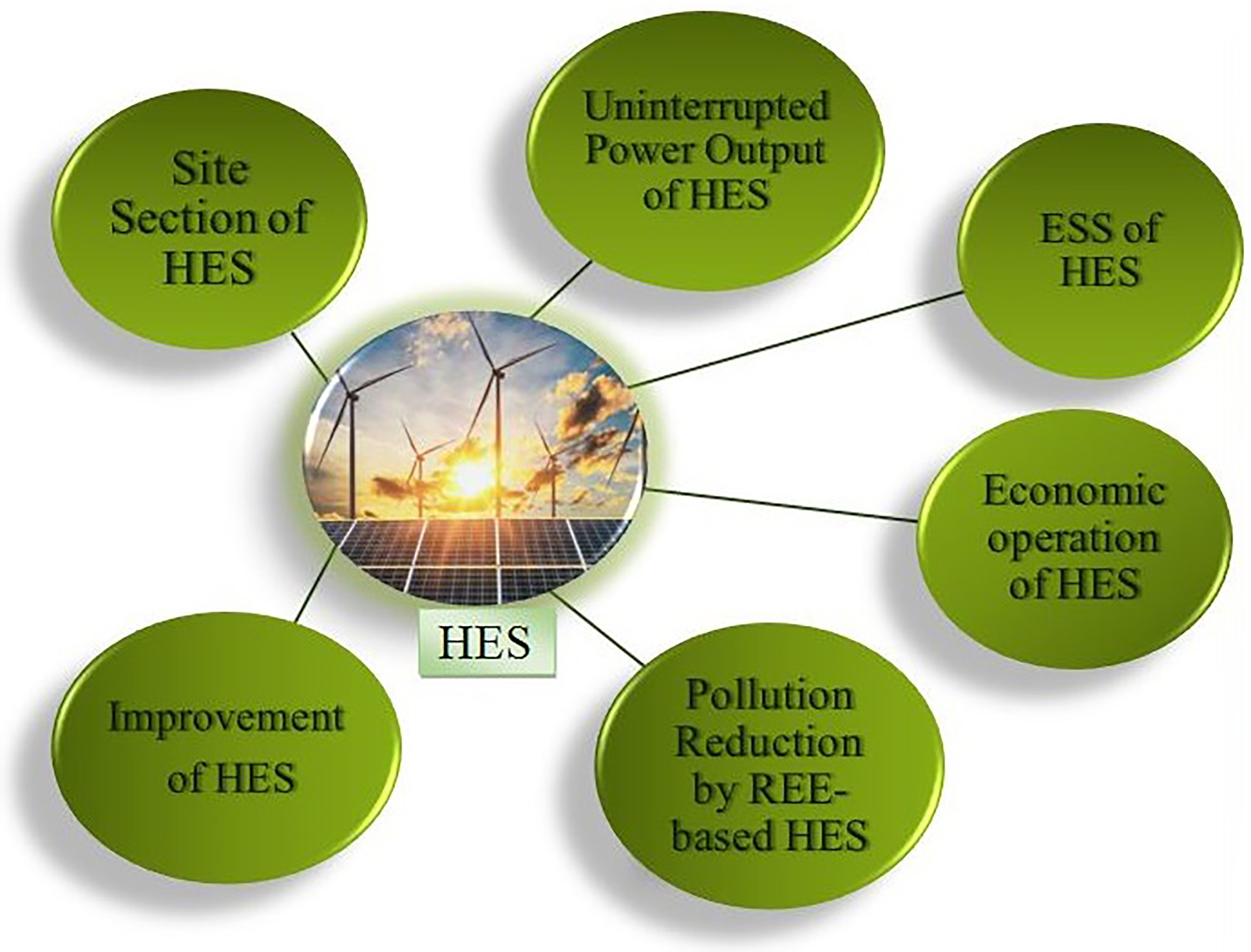
Pointed factors related to hybrid energy system (HES).
Site selections of HES
Renewable sources are not obtained in all the locations for efficient electricity generation. If all the sources are not available in the implementation place, then the output of hybrid system will not be efficient. Therefore, the selection of appropriate place for installing a hybrid power plant is the primary problem. For example, the wind speed of the selected location should be in the range of 12–14 km/h for running any wind turbine. But, for the generation of highest wind power, 50–60 km/h is the required wind speed. For solar power plant, a huge area is required for placing the solar plates. The water head and flow of the water should be sufficient for producing power from hydro power plant with a proper grid connection, and it should be necessary that this water level is not too much environmental hazardous.25,26 Implementations of a hydro wind PV power plant requires speedy wind, proper solar irradiance, and sufficient hydro flow rate for efficient electricity generation. Therefore, focusing on the above factors, some of the research articles are added in this section for analyzing the importance of site selection for HES.
Based on output power complementary coefficient, a size optimization design is introduced by Tang et al. 27 to integrate the wind and PV plants with hydro power plant. In this model, the size and location of wind PV hydro power plant is examined. For analyzing the complementary benefits of power output of hydro-wind-PV plant, a case study has been done in Yalong River basin, China. The stretches area of Yalong River basin is from 26° 32′ N to 34° 20′ N to 96° 52′ E to 102° 48′ E. This area is chosen in such way that maximum rated output can be extracted from all the sources.
Odou et al. 28 highlighted the energy shortage in rural areas of Africa, especially in Benin, and the aim is to reduce this problem. The techno-economic feasibility of renewable is analyzed for sustainable remote electrification in Benin. To obtain the most economical, reliable benefit of hybrid system, location of the plant plays an important rule. The location of Fouay village is at 11.3° N and 3.17° E, which is 273 m above from sea level. Therefore, grid connection is quite complex for this location but a stand-alone system with storage facility is helpful for this locality. Result of the analysis shows that PV diesel generator (DG) battery-based HES is the ideal optimal scheme. It reduces the cost of battery Energy Storage System by reducing its requirement about 70% and it will decrease the emission of CO2 about 97% as compare to conventional DG.
The optimum design and techno-economic evaluation of renewable HES in the remote location of Korkadu, India is highlighted by Murugaperumal et al. 29 For the electrification of Korkadu village, a feasible configuration of HES was obtained by utilizing the resources which are available in the village. The per day average speed of wind and annual solar radiation are, respectively, 3.81 m/s and 5.37 kWh/m2/day for this location. Population of cattle is almost 150 in the village and availability of dung is 80 kg/day. Therefore, as the sources are sufficient, the result shows that PV/wind/biogen-based HES is the best HES solution for this village. Moreover, this HES helps to minimize the energy storage losses.
Nandi et al. 30 find a proper location in Middle East where average annual solar radiation is 6.15 kWh/m2/day, wind speed is 5.60 m/second, and the average annual temperature is 23.25°C. Therefore, all the sources for making HES are enough to get better outcome. Total solar energy generated from their proposed HES is 41.04, 48,455 kWh/year, and wind energy generation is 1,59,3,22,890 kWh/year which are 20.5% and 79.4% of the total energy, respectively. The total amount of production of renewable energy per year is 2,000,771,345 kWh and the levelized worth of energy is 0.00417 $/kWh and the overall net present worth is $106,890,700. Therefore, all these results indicate the location that they have chosen is the perfect one for HES.
A techno-economic analysis of two different hybrid systems was done in Bandar Dayyer where the wind speed is about 3.17 m/s and solar radiation is about 5.96 h./day; so the area is suitable for the implementation of a hybrid power plant. 31 This location of the city is from 27°50′24′′ N to 51°56′16′′ E which is about 12 m above the sea level. Therefore, Bandar Dayyer is a suitable place for the implementation of HES.
An off-grid renewable energy-based HES with two energy storage options is proposed and analyzed using the data of the selected location of Algeria for efficient operation. 6 In Table 3, summary of studies based on site selection of HES is shown. Figure 8 shows the percentage of articles studied for site selection of HES.
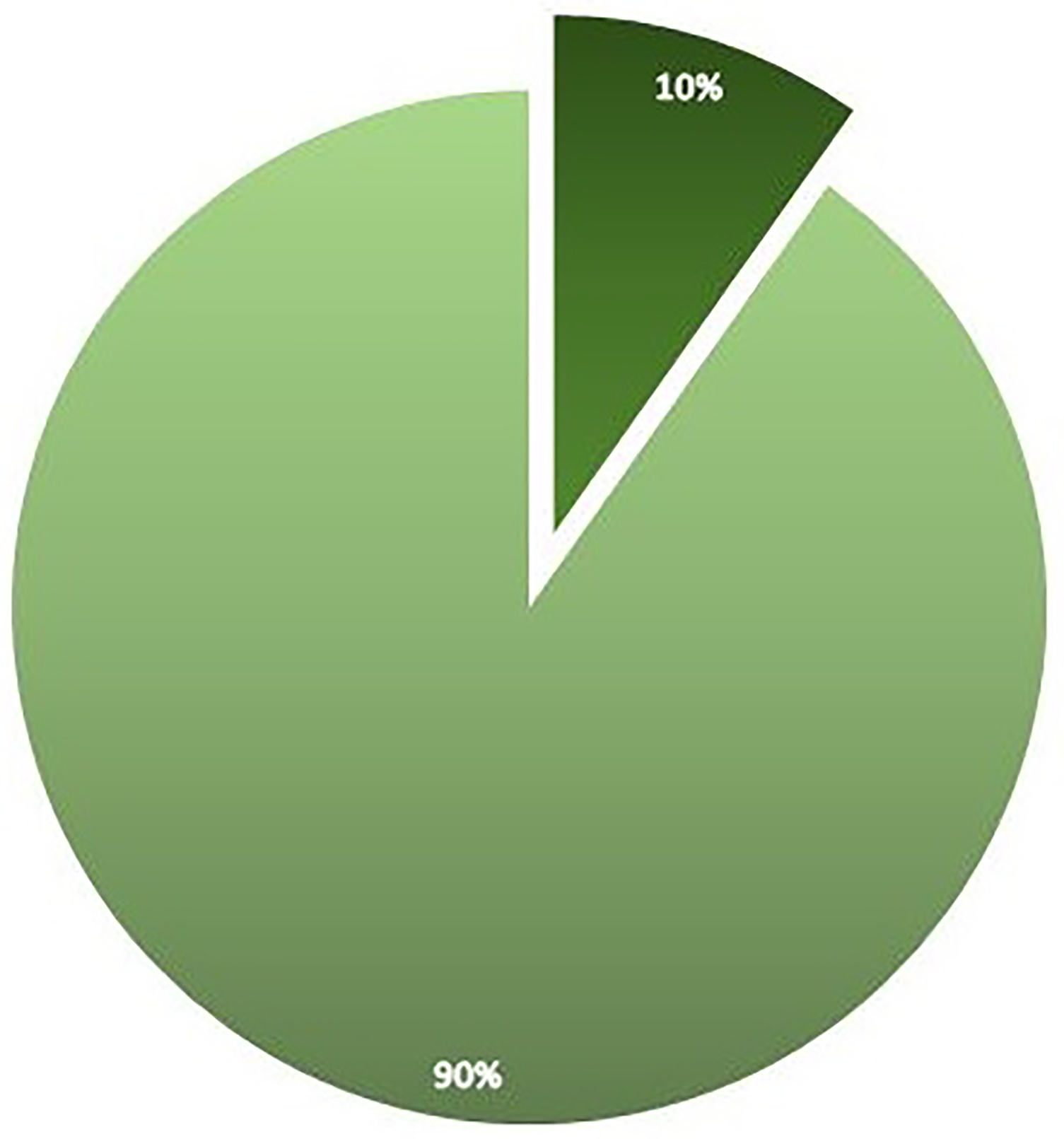
Percentage of articles studied for site selection of hybrid energy system (HES).
Review on site selection of hybrid energy system (HES).

PV: photovoltaic.
UPO of HES
Global and regional vogues reveal that demand of energy will soon be counterbalanced by extensive implementation of RES. However, intermittent, random, and fluctuating characteristics of wind and solar energy complicate their direct acceptance in the power grid. Hydropower has the good adjustable capability, rapid response, and gives continuous output and hence hydropower is the most preferable option for smooth electricity generation. A discrete mathematical simulation model of the hydro solar HES is used by Jurasz and Ciapala 32 to increase water retention and smoothen the power output. The installation of more water turbines in hydropower plants for greater flexibility is a good option for maintaining the hydropower capacity factor. Electricity generation from the hydropower plants is the best choice for maintaining the relation between energy production and water usage. Zhang et al. 33 developed a multi-objective mathematical model that considers the dissimilarity among the daily outputs of a HES with variable load characteristics. For describing the everyday load demand of power grid, this innovation presents a multi-segment line generalization method. The result indicates the upstream regulation and expansion of the storage capacity of the hydro reservoir which gives a better solution for power generation. To evaluate and quantify the ability of hydropower plants, historical mean data of daily runoff characteristics, an indicator of complementary guarantee rate (CGR) can be used. Wang et al. 34 said that for smoothing out the fluctuations of the output of wind and solar power systems, hydropower can integrated. For the coordinated operation (CO) of cascaded hydropower, to neighboring the PV and wind facilities, a double-layer model can be used. In the case study of northwestern China, where hydro wind PV cluster project shows that local complementary hydropower (LCH) short-term fluctuations are able to smooth out with less impact on the capacity factor (−0.02). Long-term fluctuation can be reduced by global complementary hydropower (GCH) which is the cause of large capacity factor reduction (−0.25). The discharging fluctuation of GCH is markedly lesser (70–75%) than that of LCH which indicates that the introduced technique is an efficient approach for eliminating the discharge fluctuation of the hydro, wind, and photovoltaic power (HWPP) system. Hence, the output fluctuations can be removed from the system if the capacity of hydropower reaches 2200 MW. From this study, it is clear that combining hydropower with solar and wind power is a promising way to de-carbonize the electric system.32–34 Bhattacharjee et al. 12 proposed an on-grid renewable energy-based HES for getting uninterruptable power supply operation using Internet of Things (IoT) devices-based EMS. Now, Table 4 shows the summary of studies based on smooth power output of HES. Figure 9 shows the percentage of articles studied for UPO of HES.

Percentage of articles studied for uninterrupted power output (UPO) of hybrid energy system (HES).
Review on uninterrupted power output (UPO) of hybrid energy system (HES).

PV: photovoltaic.
ESS of HES
Various categories of RES are the initial choice of several countries. The random natures of RESs are unreliable. To make a reliable and continuous energy supply for fulfilling the growing load demand; ESS in the plant plays an important role. 35 Lithium-ion batteries, supercapacitors, and flywheel, Redox flow batteries, and PHS are the common types of ESS. 36 Salameh et al. 37 has done the examination on performance of ESS like battery, supercapacitor in a combined PV/FC/DG HES and the results shows that the performance of the hybrid system (based on levelized cost of energy (LCOE) and GHG) is good with the supercapacitor storage system. A combination of supercapacitor and battery storage system through an appropriate control method can balance the active power, control the frequency of system, voltage dynamics, and improve the output feature of the HES under a different situation like load fluctuation, variable wind speed, etc. 38 Li-ion and lead–acid (LA) batteries can improve the performance of a HES with less net present cost (NPC) and COE. 39 Berbaoui et al. 40 use a combination of DG/PV/battery HES to reduce the cost and carbon emission. The PHES system is one of the most suitable storage systems to improve the penetration level of renewable sources in any power plant. PHES is an option of a pollution-free storage system and the construction of a PHSE system is suitable where water is available at an enormous amount. 41 Due to water scarcity in the dry season, the generation is reduced or stopped in many plants. Hence, the PHS system plays a vital role in the reduction of the power shortage problem and improves the generation efficiency of a power plant. Bhattacharjee et al. 42 reduce the energy generation cost and improve efficiency by reducing the power generation problem of a hydropower plant during the dry season in a PV-pumped hydro storage system. A reliability assessment is done by Rathore and Patidar 43 using analytical method and Monte Carlo simulation (MCS) of a PV wind PHES system and compared the result with the system based on PV wind battery which shows that PHES is much economical and environment friendly and it is emerging as a green energy source all over the world. The short-term scheduling problem is highlighted by Xia et al. 44 which occurs due to the variable nature of wind energy and complex confinement of hydropower. During incorporation of the PHES system, wind power fluctuations can be managed and short-term scheduling problems are solved. Also, the use of the PHS system in a power plant can improve the economic conditions. Mousavi et al. 45 designed a PV-PHES based microgrid that will provide a cost-effective solution as compared to PV battery system. The PV-PHS model is well efficient for controlling the power of pumps and flow rate of the turbine at daytime with various tariff of energy and generation of power. During both the time of peak hours and off-peak hours, PHES is able to minimize the cost of electricity. Use of PHS-based hybrid system gives a lower levelized cost for which energy generation cost can be reduced. 46 Grid-connected hybrid wind pumped hydro storage system is designed for providing continuous power supply to the consumers. 1 Now, Table 5 shows the summary of studies based on HES with ESS. Figure 10 shows the percentage of articles studied for ESS of HES.
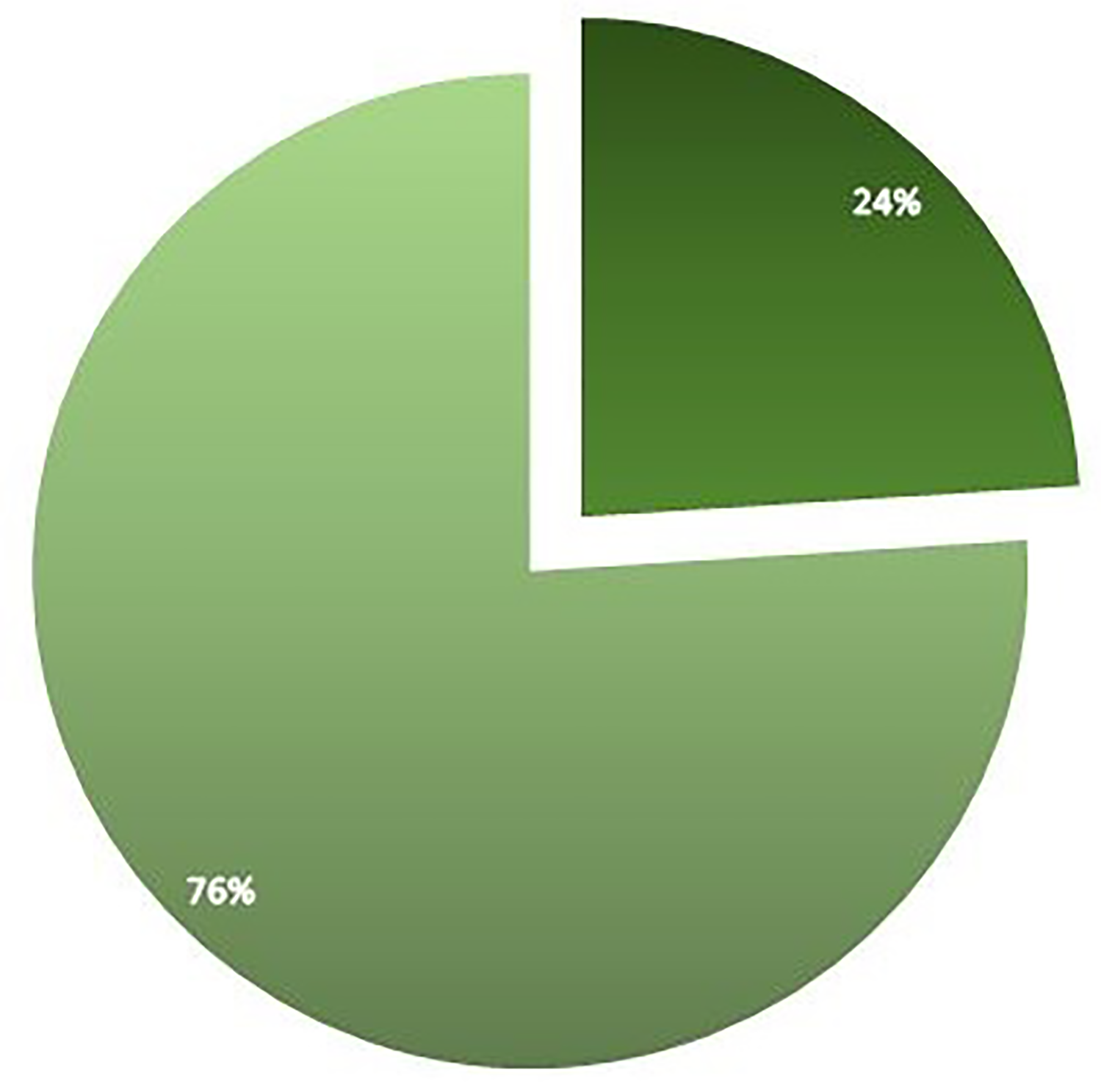
Percentage of articles studied for energy storage system (ESS) of hybrid energy system (HES).
Review on energy storage system (ESS) of hybrid energy storage (HES).
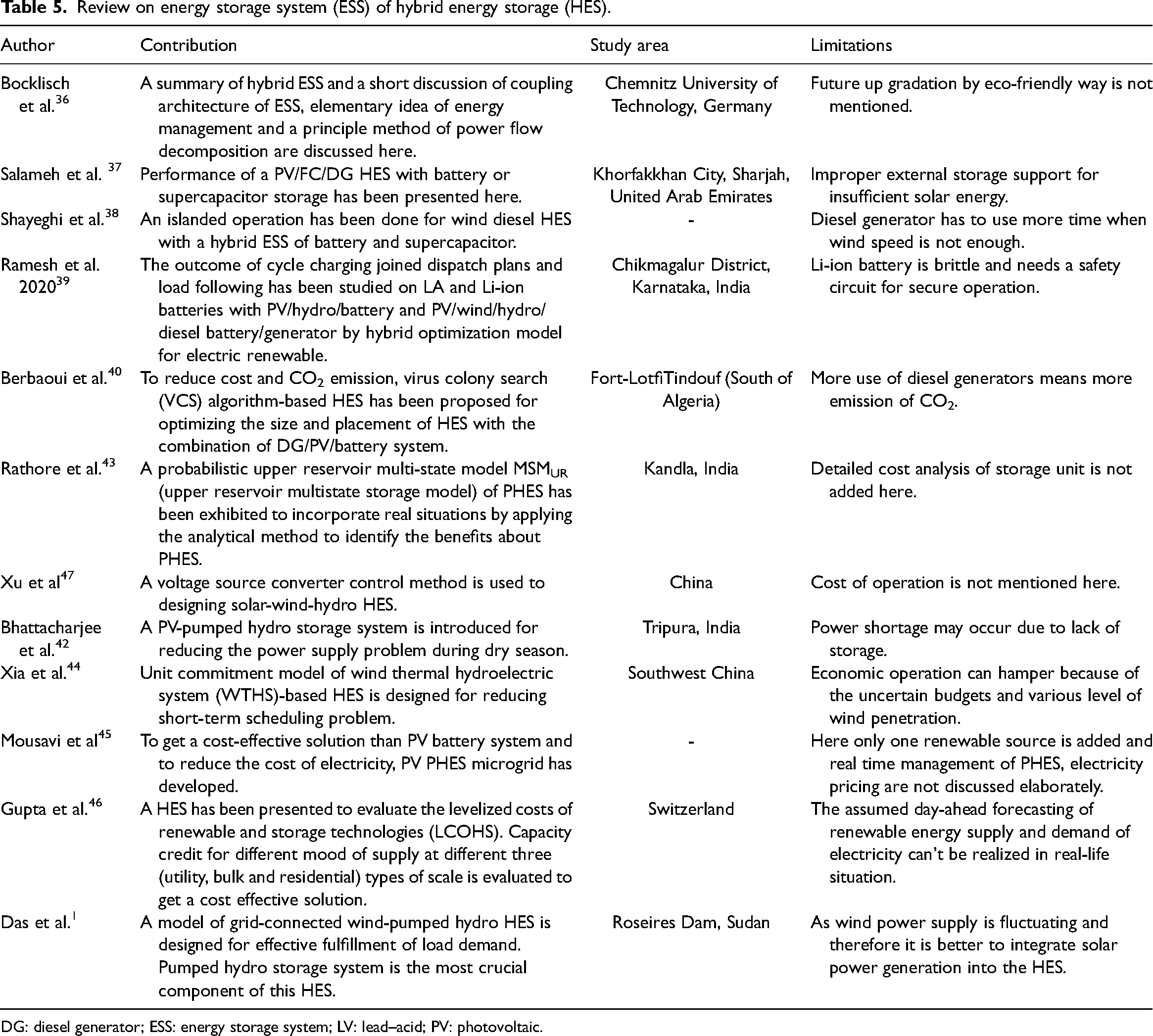
DG: diesel generator; ESS: energy storage system; LV: lead–acid; PV: photovoltaic.
Economical operations of HES
Depending on the non-renewable energy sources, the upliftment of the economy would increase the prices of electricity, and the overall development of economy will be difficult in the future. Using of RES can cut down the cost of energy generation and it can provide successful development of the economy. The intermittent nature of solar and wind like RESs may be the cause of various challenges for the reliable and economical generation of electricity. Power load dispatcher faces difficulty in developing the plan for power generation of the day. Hence, to maintain economy, secure and reliable operations by applying effective policies for reducing the intermittent nature of RES are required. To overcome these challenges, Sun et al. 48 suggested an ideal combined scheme of operation for PSH and hybrid PV wind complementary energy generation system which is internally connected with a voltage source converter-based multi-terminal high-voltage DC (HVDC) system and reduced revenue loss using unit commitment solution. Using this combined operation scheme (COS), dispatch cost is stabilized in a thermal hydro wind PV system. Yin et al. 49 showed that a thermal hydro wind PV system's operational cost is less when the correlation between wind PV generations is strong. It also is observed that for an intermediate base case transmit solution with a lesser cost; the proposed stochastic model is an appropriate solution under uncertainties. There, the total life cycle cost of any HES should be at a minimum level so that the system will economical and reliable. Zhang et al. 50 want to reduce total life cycle cost and to increase the system reliability by optimum sizing of stand-alone wind solar HES using chaotic search-harmony search-simulated annealing (CS-HS-SA) coefficient heuristic approach. However, if the configuration of a hybrid power plant is not optimal, then it will be difficult to get a reliable supply of power. Hence, to achieve low cost of energy from HES and a reliable supply of energy, the configuration of the plant should be optimal. Rao optimization technique is an ideal metaphor-less technique that can be applied for solving the optimization issue of a HES and it helps to find an optimal configuration of a HES for any particular area. The optimal configuration will give the best optimal cost of energy and loss of power supply probability (LPSP). 51 To make a reliable and constant electricity supply in remote locations, Xu et al. 52 proposed a stand-alone HES that is based on RES. It is observed that the use of the PV wind HSPSI HES can reduce the LCOE by 32.8% and 45.0%, respectively, than the PV HSPSI and wind HSPSI HES in Xiaojin, Sichuan, China. Trade-off analysis among the two objectives is done based on Pareto optimality theory by means of multi-objective particle swarm optimization (MOPSO). If the consumption of fuel can be reduced in any fossil fuel power plant by increasing the use of RES, the cost of generation can be cut down. In a hybrid PV/diesel/PHS system, during normal and high radiation periods, the need for a DG is low for which cost is reduced. 53 On the other hand, for better economic performance, grid frequency should be maintained. PHS operation is be considered to reduce the effect of imbalanced cost because of the mismatch between actual and predicted wind power. 54 Whereas the combined benefits by CO of the pumped storage power system (PSPS) and FPV system can be achieved using a hybrid integrated floating photovoltaic-pumped storage power system (IFPV-PSPS). The FPV system helps to reduce water evaporation loss and land requirement of a solar PV system. This technology also helps to get a bugget friendly and profitable generation of clean energy. 55 Profit in the economy of HWPGS is higher through coordinated scheduling than their differentiated operations. 56 Voting-based HES is another example of economic HES which have the facility to include consumer preferences in the energy management operation cost-effectively. 14 Therefore, it can be said that HES based on RES can reduce the cost of energy generation. In Table 6, the summaries of reviews based on economical generation of electricity using RES-based HES are shown. Figure 11 shows the percentage of articles studied for economic operation of HES.
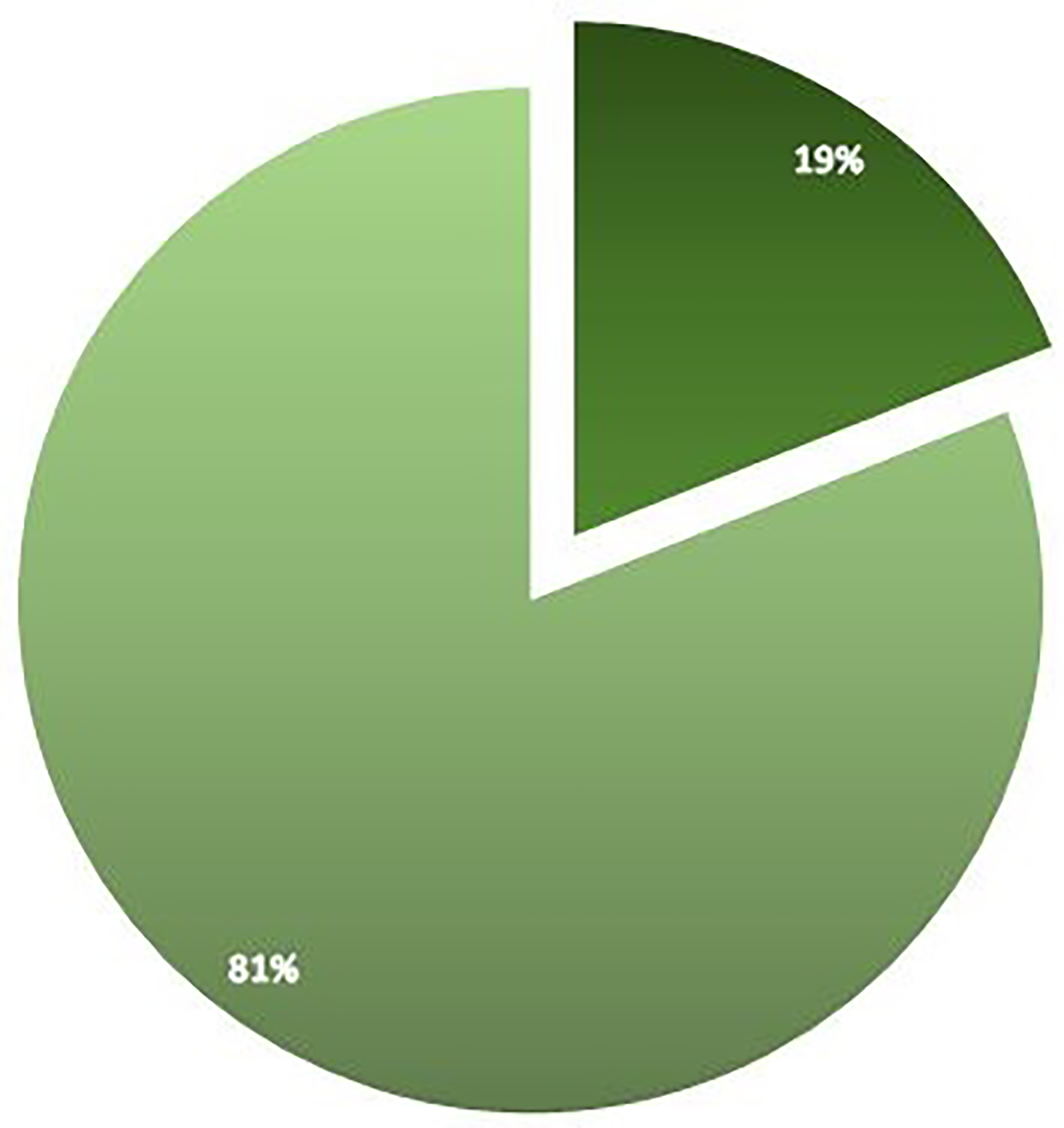
Percentage of articles studied for economic operation of hybrid energy system (HES).
Review on economical operation of hybrid energy system (HES).

PV: photovoltaic; RES: renewable energy source.
Greenhouse gas emission by RES-based HES
The generation of energy from fossil fuel is the reason of pollution in environment because, when fossil fuel burns, it releases CO2 in the environment that results in increasing atmospheric temperature. 57 Power generation sectors released NO2, SO2, and other gases which are the main cause of acid rain. Almost 2.7 billion people all over the world are living their lives without a less polluted cooking facility and 1.2 billion people are living their lives with no electricity. Hence, RES may be the source of electricity production in the future with less effect on nature. The combination of two or more RES will give a more reliable supply of power. Nag et al. 58 proposed a solar wind hydrokinetic bioenergy type HES to get an efficient supply of energy with low cost and less pollution. However, the demand for energy is increasing gradually and the storage of fossil fuel is reducing. 59 Hence, it is necessary to find alternative ways of energy generation. Kirmani et al. 60 introduced a HES with solar wind and coal energy to reduce the rate of environmental pollution and also to find an alternative solution of energy production. Using of RES can reduces the use of fossil fuel and hence reduces carbon emission. A grid-connected HES with a PV and wind reduces the emission of carbon by about 110329.56 kg from Ennore, Chennai, India. In Bijie, Guizhou, China, the emission of carbon from a Chinese coal combusted electricity generation is reduced by about 17389.25 kg using an optimized hydro wind thermal complementary HES. 61 The emission of CO2 is reducing nearly by about 1696*104 t/year in the northwest power grid by applying the wind energy in the grid using the hydro wind compensating principle. Wang et al. 62 also wanted to enhance the power quality and to maintain optimal scheduling by applying the peak regulation capacity of hydropower system. Moreover, it is necessary to get rid of the curtailment problem and achieve a reliable supply of power. To reduce wind power curtailment problems and reduce carbon emission, Ding et al. 63 proposed a hybrid solar wind power plant. The rate of CO2 emission is minimized by about 15,470 t/year than coal-fired power plants in an 80 MW hybrid system of Zhangbei, China. In the rural areas of Ethiopia, 99% of houses and 70% of industries used biomass and local energy sources like diesel; coal to fulfill their energy demand. Gebrehiwot et al. 64 examined the electrifying capability of Golbo II village of Ethiopia by a HES and showed that HES with PV array, wind energy, battery storage, and a DG is the best option in which almost 80% electricity is generated from solar PV. It indicates in the reduction in generation cost as well as the emission of CO2 is by about 37.3 tons. Panda et al. 65 analyzed different combinations of HES for finding the best solution to reduce pollution. In India, 57% of electricity is produced from coal energy. To reduce the burden on the national power grid because of the urban lifestyle and development of industries, Maqbool et al. 66 aimed to fulfill the demand for electricity in most of the rural areas of India by an optimal PV biomass grid microgrid. This RES-based micro-grid can reduce the CO2 emission from 454.24 tons to 250.19 tons (around 55%) in Wanigam Pattan village, Baramulla District, and Jammu and Kashmir. An off-grid PV diesel HES in South Khhorasan, Iran can achieve a fuel saving of about 8948 l than a stand-alone diesel power plant. The CO2 emission is reduced by 59.6% than diesel power plant using improved harmony search, simulated annealing, and a geographic information system (IHS-SA-GIS) algorithm. 67 Implementation of 100% RES-based system can reduce carbon emission as well as energy cost 68 Three configurations of HES have been designed to get the most efficient and less pollution-generating configuration. 5 Hence, RES utilization makes the energy generation process pollution-free, economical, and efficient. Table 7 shows the summary of studies based on pollution reduction by the RES-based HES. Figure 12 shows the percentage of articles studied for pollution reduction by the RES-based HES.

Percentage of articles studied for pollution reduction by the renewable energy source (RES)-based hybrid energy system (HES).
Review on pollution reduction by the renewable energy source (RES)-based hybrid energy system (HES).

PV: photovoltaic.
Efficient operation of HES
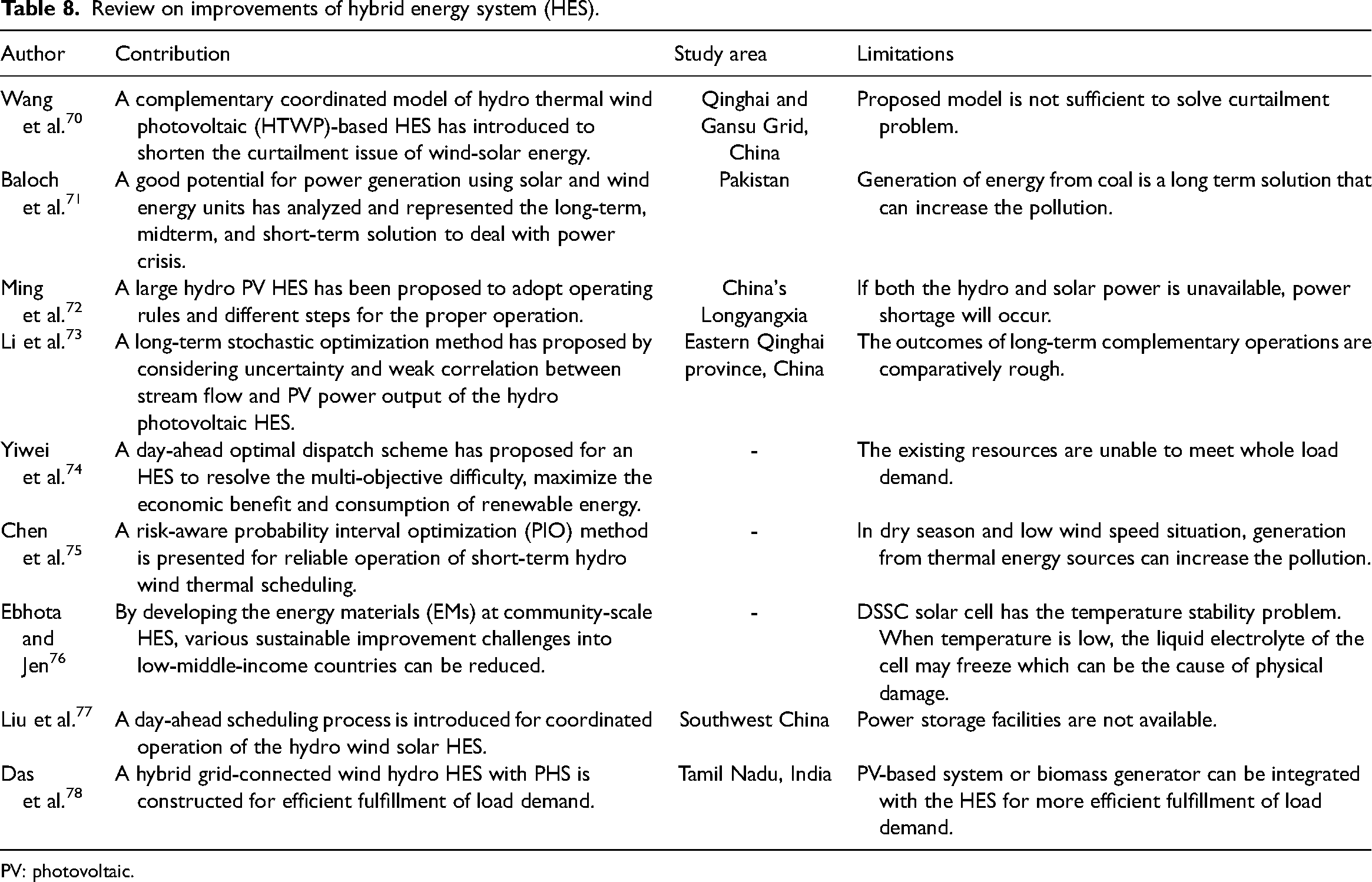
An efficient power supply can reduce the energy cost and make the power plant more longevity. Today's world needs a huge amount of energy to fulfill the demand of developed society. 69 But the rising seriousness related to the energy crisis and problems of environment limits the use of fossil sources of energy. Different fossil energy sources like coal, natural gas, and petroleum products create a hazardous impact on the environment. Therefore, environmental hazards should be reduced as well as the energy demand has to fulfill economically. Therefore, an alternative way of energy generation is required for the reliable and pollution-free future. But the curtailment problem hampers the development of HES and reduces the plant efficiency. A complementary CO model of hybrid hydro thermal wind photovoltaic (HTWP) plants is used to reduce the curtailment problem and to improve the efficiency of the system. 70 Improper policies and absence of appropriate planning may be the reason of energy crisis. Baloch et al. 71 give a long-term, midterm, and short-term solutions to deal with power crisis, to improve efficiency, and reduce environmental pollution. Short-term solution can be done by reducing electricity theft using prepaid meters. The power plants which are not fully operational or constructed should be completed as soon as possible and power management techniques have to implemented in the power plants to reduce the power crisis problem. By implementing wind power plant, short-term problem can be reduced. By reducing the losses of electricity in transmission and distribution and using renewable energy sources for power generation can help to reduce midterm solution, improve efficiency, and reduce environmental pollution.70,71 Ming et al. 72 proposed different steps for the proper operation of a large hybrid hydro PV power plant to increase system efficiency and reliability. PV energy loss function is estimated using short-term simulation model which identify the correlation among PV curtailment rate and hydropower generation. By this, the proposed model can increase production of hybrid power plant and power supply reliability and decrease water shortage index (WSI). PV energy loss function incorporated by a multi-objective long-term optimized model based simulation and six rule curves of operation using multi-objective cuckoo search (MOCS) algorithm is designed by Ming et al. 72 Long-term stochastic optimization method is used to decrease the uncertainty impact and improve efficiency. Li et al. 73 presented four schemes using the stochastic optimization technique in different conditions of stream flow and PV output of hybrid power plants. The long-term stochastic optimization model has two constraints, namely operational and physical constraints (which have reservoir storage, water balance, release, output power, and the power grid constraints). Three-stage method based on the Bender decomposition algorithm can enhance the computational efficiency of the scheduled model of a hybrid system that consists of solar, wind, hydro, thermal, and pumped storage system. 74 Chen et al. 75 solve the probability interval optimization (PIO) model of a hydro -wind thermal hybrid system using an evolutionary predator and prey strategy (EPPS) method and showthat PIO model is robust and effective to measure HWTS combination with the fluctuation of wind energy. Ebhota and Jen 76 highlighted that by improving the energy material, the efficiency of HRES can be improved. Use of HRES with pumped storage hydroelectric power or DG can reduce the fluctuation in supply. A day-ahead scheduling process is proposed by Liu et al. 77 for CO of the hydro wind solar HES. It was done to aid peak shaving and reduce the problem of fluctuation and to reduce the power shortage problem for which efficiency of the system will increase. Das et al. 78 proposed an on-grid HES based on wind and hydro sources with PHS to efficiently satisfy the energy requirement of consumers. Table 8 shows the summary of studies based on improvement of energy generation efficiency using HES. Figure 13 shows the percentage of articles studied for future improvement of HES.
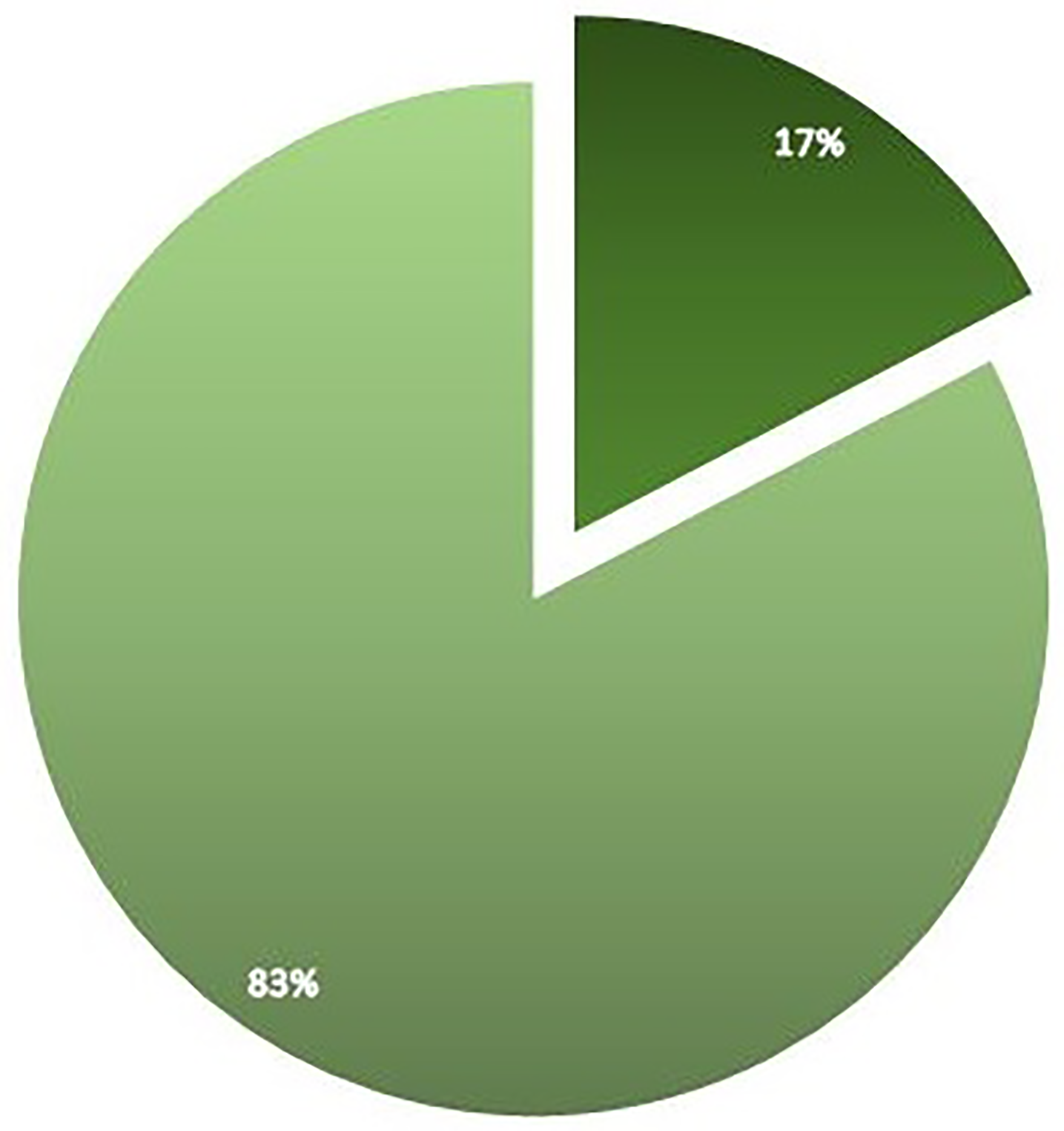
Percentage of articles studied for future improvement of hybrid energy system (HES).
Review on improvements of hybrid energy system (HES).
PV: photovoltaic.
Discussion
After doing the literature surveys of different countries, we have found that China has maximum number of studies on HES and it has the highest installed grid-connected renewable energy capacity. Figure 14 shows installed grid cooperative renewable energy capacity of G20 countries. Moreover, in this section, we provide practical and theoretical implications of HES with their future research scope as per the findings of our literature survey.
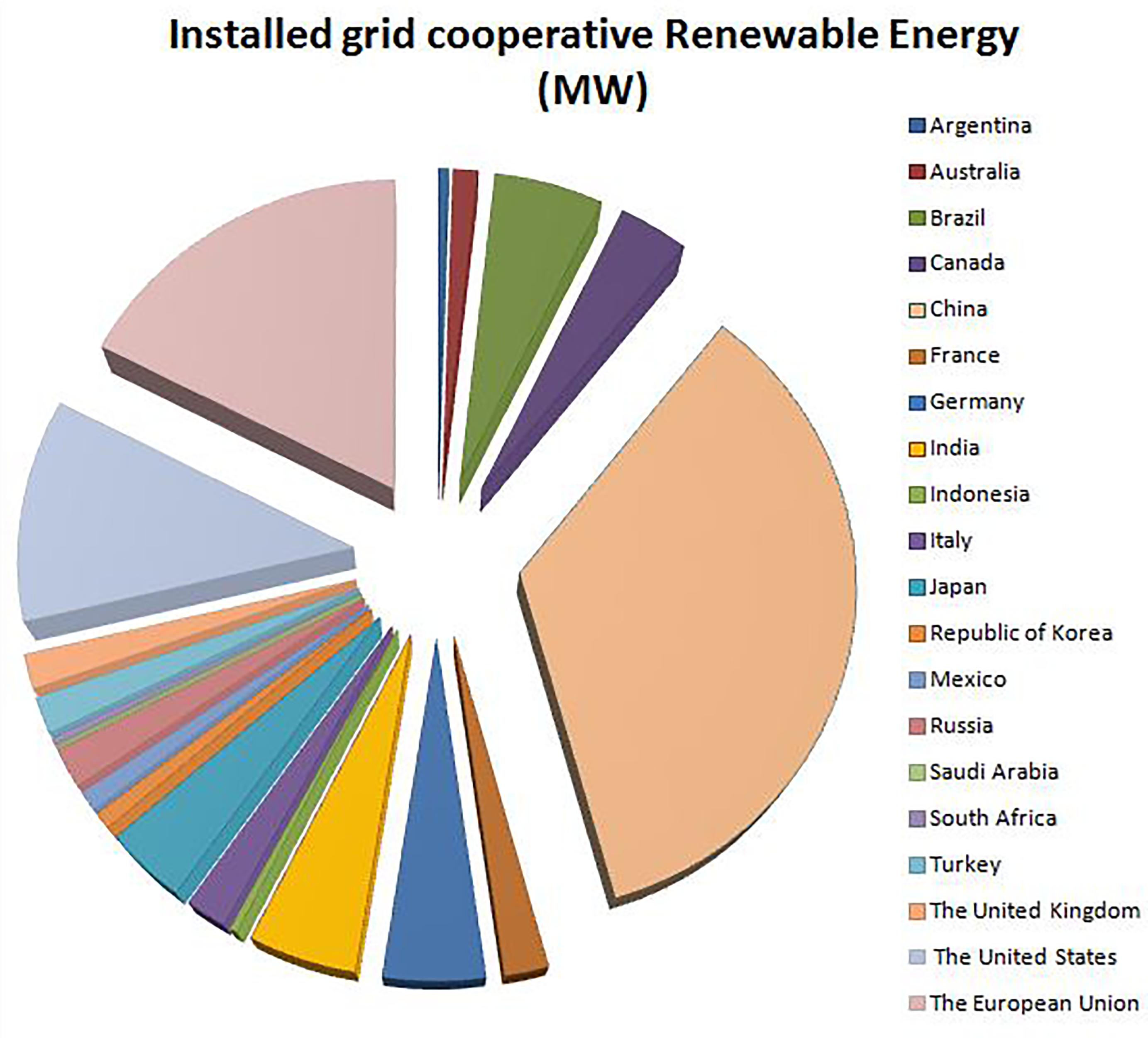
Installed grid cooperative renewable energy capacity of G20 countries. 79
Practical and theoretical implications
Implication shows the reasonable relation between the condition of research and the result of it. Simply, it is the combination of finding research problem and the area for applying. Theoretical implication shows the interesting areas form previous theories. More or less, theoretical implication gives an idea about the research gap from past theories for future work. Practical implication designates the direction how to get the result of analysis practically. It explains real-world relation of the outcome. 80
Limitation
The major important limitations for designing HES are as follows:
To maintain and maximize economic profit by reducing operational cost, trading cost and generation cost To use efficient and cost-effective ESS that can help to maintain uninterrupted power supply using RESs. To reduce the forecasting error of RESs for planning different policies and management techniques. To select optimal location for installing HES is a challenging task as it helps to efficiently utilize RESs. To reduce the curtailment problem of HES for improving its overall efficiency.
Present scenario of research
In the present scenario, the researchers are developing open-source robust modeling tools for simulating and optimizing HES. For example, hybrid optimization and performance platform (HOPP) is a software tool which helps in sizing, analyzing, designing, and setting topologies of HES.
To find out the optimal location for HES, the researchers are creating high-resolution maps regarding different renewable resources using National Databases.
The researchers are making partnerships with industries for improving the measurements and observations of renewable resources.
The researchers are tracking classical patterns in technology and economic expenses for analysing future innovation opportunities.
The researchers are designing and validating updated control technologies for maximizing energy generation from renewable resources with ESS at hybrid circumstances.
Further research scope
Interconnections between eectric vehicle with HES can store energy sustainably. It can eliminate uncertainty issue of charging station.
HES are combined with green batteries like liquefied air, redox batteries for environment-friendly storage system.
One platform is necessary that can provide all data regarding availability of renewable energy resources for the selected location.
Efficient energy management techniques should be developed to minimize operational cost and improve economic for HES.
Attachment of carbon tower and filters are necessary for reducing emission from pollution-generating power plants.
Advance algorithm should be developed for predicting future data of renewable energy resources without any errors.
Conclusion
Generation of electricity from conventional sources emits huge amount of pollutant in the environment, hence by integration of suitable RES in the existing plants can reduce the pollution rate. The generation of power from RES is pollution-free and its refueling is cost free. Due to the advantageous characteristics of RES, the sources get valuable remark in today's generation field. The main disadvantage of RES is high variability that can be overcome by combining two or more RESs for energy production. This article presents a comprehensive literature survey on RES-based HES by focusing on environmental aspects, economical operation, site selection, reliable generation, and also storage system. This review demonstrates that:
The electricity generation by RES in remote areas can help to reduce electricity problem, transmission cost and loss, etc., if RES are sufficiently available. An appropriate location for an HES will help to give an efficient output by properly utilizing all available RES of that location. ESS is very much important for the betterment of power supply by HES in rural areas. As the electricity generation from RES are fluctuating and heavily depends on weather condition, storage is the most important node. Generation cost is much lower as RES are abundantly available in nature. Therefore no fuel cost is required during the operational mode of RES-based HES. The generation of energy from renewable sources is less polluting. Thus, for green energy generation, the RES-based HES are the future of the earth. Moreover, using of FPV system can reduce evaporation, which means loss of water hydro PV-based HES. China has the maximum number of studies on HES and the second position is occupied by India, as per this survey.
Therefore, this study opens various future research directions based on various techniques of voltage and frequency control of power generation by which the efficiency of the power plants can be improved; by reducing forecasting error, cost of energy generation can be reduced, which can include in a new direction of open research; during power generation from seawater, the use of corrosion-resistant material is beneficial for a better output; attachment of carbon tower and filters into the HES to reduce emission of GHGs; integration of electric vehicle with HES can eliminate uncertainty of power supply; improvement in the life cycle efficiency of ESS. Truly, RES-based HES can improve system reliability, efficiency, and it can give the clean green earth to the mankind.
Footnotes
Declaration of conflicting interests
The authors declared no potential conflicts of interest with respect to the research, authorship, and/or publication of this article.
Funding
The authors received no financial support for the research, authorship, and/or publication of this article.
