




Abstract
To achieve the goals of carbon peaking by 2030 and carbon neutrality by 2060, the Chinese government must reduce fossil energy consumption, stimulate the extraction of unconventional natural gas such as shale gas, and construct a green, low-carbon cycle economic development system. This study investigates the impact of government subsidies on shale gas companies’ research and development (R&D) inputs and innovation performance from multiple perspectives, including internal and external environments and the nature of the companies. The sample consists of Chinese shale gas companies listed between 2013 and 2019. The findings were as follows. First, the investment made by shale gas firms in R&D mediates the relationship between government subsidies and firm performance in technological innovation. Second, the contribution of government subsidies to innovation performance differs in different internal and external regulatory environments. Finally, the intensity of intellectual property protection (IPP) positively moderates the direct and mediating models of government subsidies and innovation performance. Accordingly, the government should increase its contributions to the shale gas industry, improve the regulatory mechanism for donations, and strengthen the protection of intellectual property rights for the R&D of new shale gas technologies.
Keywords
Introduction
To date, the Chinese government has made repeated proposals to build a green low-carbon cycle development system, 1 increase energy utilization efficiency, improve the proportion of non-fossil energy consumption, lower carbon dioxide emission, 2 and increase the carbon sink capacity of ecosystems. 3 It is a specific measure proposed by the Chinese government to speed up shale gas development on a large scale, 4 which relates to top-level design goals, such as carbon peaking and carbon neutrality.5,6 Some experts believe that shale gas will cause a significant change in the world’s energy structure in the future and have a profound influence on the natural gas and energy industry. 7
The United States has led the world in shale gas exploitation and has established itself as a country with a highly developed shale gas industry. Given the social and economic benefits of the U.S. shale gas industry, 8 other countries have followed suit in shale gas extraction. 9 In China, the exploitation of shale gas started late, and many obstacles have emerged during development. 10 However, after years of research, significant achievements have been made in exploring shale gas from the perspectives of technology and team building. 11 In this context, China has implemented several policies that support shale development. 12 Despite entering a period of rapid development, it remains necessary to promote further development and improvement in technology and production. Given the dual carbon strategy policy introduced in China and the accelerated marketization of natural gas, it is crucial for the redevelopment of the shale gas industry to quickly cross the economic threshold, 13 which is essential for addressing the difficulty of exploration and development, and the pressure for green environmental protection. 14 Therefore, government subsidies for innovative research and development (R&D) are significant for shale gas companies. Reasonable, scientific, and adequate government subsidies can enable these companies to overcome technical barriers in the shortest time, optimize the structure of energy utilization nationwide, and lead to industry growth. 15 Moreover, innovation performance and economic benefits can be improved effectively.
It is essential to effectively extract shale gas 16 and develop a future strategy for the shale gas industry. 17 Syed et al. 18 summarized the recent progress in the evaluation of shale gas production performance and intelligent models for shale gas development. Yang et al. 17 compared the main differences between China and the United States in shale gas extraction, and many other scholars studied the economic and environmental benefits of shale gas development. 19 Existing studies have mainly examined firms’ innovation performance from the perspective of government subsidies, firm growth rate, and productivity, or in conjunction with national tax incentives. 20 Wei et al. 21 argued that government incentives for the shale gas industry are insufficient, especially financial subsidies, which should be increased to seize development opportunities. Bai et al. 22 argued that government subsidies stimulate shale gas firms’ investments and increase their expected returns. Gao et al. 23 argued that the innovative development of shale gas firms is closely related to their level of technology and motivation.
Regarding the relationship between the development of the shale gas industry and the intensity of environmental regulations, Wang et al. 24 argued that strict rules, while increasing the cost of shale gas extraction, would ultimately lead to a cleaner future for the industry. Chen et al. 25 argued that increasingly stringent methane leakage regulations are necessary for the shale gas industry to achieve climatic benefits. Mei et al. 26 argued that the ecological compensation for residents is adversely affected by shale gas. Boudalia et al. 27 argued that a country's energy and environmental policies should be based on the experiences of other shale gas-producing countries and consider the impacts of those nations’ decisions on climate change and human health. Wang et al. 28 analyzed the drivers of carbon emissions in different industries and recommended low-carbon development in other sectors.
This study's contribution is demonstrated by the originality of its research viewpoint. This study examined how to build a customized government subsidy implementation plan to minimize foreign dependency and maintain energy security in the context of domestic energy structure transformation. The development of unconventional natural gas and natural gas markets has been the subject of several in-depth studies conducted by local and international researchers. However, these studies are less methodological and more dispersed. There are numerous empirical accounts but very little theoretical research. Using a multiple linear regression model, this study explores the mediating effect of R&D input on the link between shale gas businesses’ innovative performance and government subsidies in China and the moderating influence of intellectual property protection (IPP) in that relationship. In addition, this study classifies the complete sample by differentiating regulatory settings and property rights, and investigates whether substantial disparities exist under different scenarios. With regard to the green growth of China’s shale gas sector, the conclusions of this study are more applicable to enterprise-level measures for IPP or government subsidies.
Literature review
Government subsidies, R&D investment, and innovative performance
Government subsidies are required to encourage economic growth and industrial upgrading as a crucial tool to regulate market failure in a socialist market economy. Currently, government subsidies are regarded as a practical approach to national macro control and the primary path to spur the development of strategic emerging industries. 29 Scholars are concerned with the correlation between government subsidies and firms’ innovation performance. Through an empirical study on the impact of the state's financial support policy on the performance of listed companies, Du and Mickiewicz 30 concluded that the financial subsidy policy could play a role in increasing enterprise solvency, resulting in rent-seeking and laundry management. However, Jung and Feng 31 suggested that government subsidies reduce the financial pressure on enterprises. By signaling government support for enterprises, 32 government subsidy can help reduce the financing pressure placed on enterprises and enhance their economic efficiency. 33 China's shale gas industry has brought rapid development. 34 In this context, China's financial strength could be improved by vigorously promoting the production and operation of the domestic shale gas industry.
The mediating role is the effect of government R&D subsidies on the innovative performance of companies by exerting influence on their R&D input and, thus, their performance in innovation. 35 According to earlier studies, subsidies impact the innovation performance of enterprises and influence R&D input. This impact is manifested throughout the process, from increasing R&D input to improving innovative performance. 36 By reducing a firm's capital consumption, government subsidies allow it to invest more in R&D projects in which it would not have invested without a capital budget.
Owing to increased government attention to corporate innovation and increasing subsidies for innovation activities, government subsidies have been regarded as a significant influencing factor in corporate innovation activities. 37 Enterprises can scale their R&D inputs into independent innovation to improve their technological capabilities and economic performance. Since government R&D subsidies are automatically regarded as a “black box” in domestic and international studies, their consideration is only given to the source (input) and result (output) because the process and mechanism of the nature of subsidies are ignored. Undeniably, there is a causal relationship between them, regardless of whether subsidies can promote or inhibit R&D input. 38 Additionally, government subsidies can logically promote the importance of R&D activities, which increases corresponding investment. This is conducive to boosting innovation performance. According to the results, R&D input can produce a catalytic effect on innovation. From a firm's perspective, innovation subsidies serve as compensatory measures for improving innovation capability.39,40
Heterogeneity of government subsidies on innovative performance
External and internal regulation
External and internal environments affect enterprise innovation. The term “external environment” refers to market rivalry, environmental rules, and other elements unrelated to a firm's growth process, while “internal environment” refers to the firm’s management level and profitability circumstances. 41 As China’s shale gas business grows fast, enterprise competitiveness increases. The government is increasing efforts to safeguard innovation in the shale gas business.
Consequently, the number of patent applications (PAP) by province and the level of market competitiveness were chosen as the two external environmental indicators in this study. Lin et al. held that the patent system was a prerequisite for effective government subsidy policies, 42 and that firms receiving government subsidies tended to have more patent output, according to Sweet and Eterovic. 43 Most studies use either the number of PAP or patent grants to assess the level of innovation performance. Herein, the number of PAP is chosen over grants 44 because of the likelihood of patented technology influencing firm performance during the application course, according to Min et al. 45 In this case, patent application data can be made steadier, more credible, and timely compared with the number of grants. In an increasingly competitive market, the only way for companies to survive and grow is to constantly improve their innovation capabilities. Gu indicated that the correlation between market competition and innovation is non-linear, 46 conforming to an “inverted U-shaped” relationship. 47 Neither low nor high competition is beneficial for creation.
The factors influencing the contribution of government subsidies to R&D input include enterprises'size, profitability, and educational level. The operating income growth rate, which indicates the change in operating income in the past year, is an important indicator used to assess an enterprise's growth status and development ability. Piosik believed that the higher the revenue growth rate, the stronger the development ability of an enterprise. 48 To some degree, education can reflect not only the cognitive level of an individual but also their knowledge structure and capacity to analyze the current market situation. According to Zhao et al., the improvement of enterprise innovation ability is closely linked to employees with industry insight, 49 accurate understanding, and excellent research ability. 50 By contrast, the availability of these abilities is closely associated with the level of education received by employees. 51 This study combines the two aspects of capital and staff and uses the operational revenue growth rate and employee education level as internal environment measuring indicators.
Nature of enterprise property rights
Depending on whether an enterprise is state-run, firms can be classified into two categories: state-owned enterprises (SOEs) and non-state-owned enterprises (non-SOEs). According to Wu and Hu, the nature and structure applied by enterprise owners are the determining factors in resource allocation and corporate governance, which profoundly affect their research and innovation capabilities. 52 Liang et al. found that a unique political relationship was always maintained with the government owning large-scale SOEs. They can use this information to receive state subsidies, overstate their investments, or access higher subsidies. Excessive contributions reduce the total scale of R&D input by large-scale SOEs. As government subsidies tend to significantly affect the R&D input of non-SOEs, the government's R&D funding policy must involve a thorough review of the asset status and nature of enterprises. 53 Based on the research of Ahn et al., it is essential to build an effective screening mechanism and enforce a differentiated subsidy strategy that can increase subsidies directed at private enterprises and widen the financing channels for SOEs. 54 Currently, SOEs form the backbone of the national economy and industrial development. Meanwhile, the will and interests of the government partly determine the behavior of SOEs, whereas non-SOEs show more flexibility, resilience, and adaptability to fierce market competition.55
Intensity of intellectual property protection
As a significant institutional factor affecting companies’ innovation activities, intellectual property rights are related to their motivation for innovation and contribute to reducing speculative behavior, such as knowledge loss and technological imitation, improving the predictability of corporate innovation activities, ensuring the return on research and innovation activities, and stimulating enterprises’ motivation to engage in research and innovation. 56 According to Hao et al., the higher the level of IPP, the more significant the impact of increasing R&D input on the innovation performance of enterprises in the region. Conversely, the lower the level of IPP, the less critical the impact. 57 Jandhyala found that, as a significant reflection of regional innovation capability, the number of patents granted effectively reflected the level of protection given to intellectual property in a region. 58
This study uses multiple linear regression to evaluate the influence of government subsidies on the innovation performance of shale gas companies. 59 Multiple linear regression allows for a broader and adaptable selection of variables. 60 Incorporating a random error element into the methodology renders the results more scientific.61,62 Referring to earlier research, this strategy has been acknowledged by most academics and is compatible with the hypotheses of this work. 63 Additionally, compared to earlier research, the following parts of this study are novel: First, it examines the effect of government subsidies on innovation performance, the role of R&D input, and the strength of IPP. The regression findings were made more accurate by studying the routes of the impacts of multiple elements. Second, examining heterogeneity is crucial to the current literature. Consequently, this study classifies the samples according to the type of ownership and in a novel manner according to the various internal and external regulatory environments that they face.
Method
Sample and data
The data used for the empirical study included corporate PAP from the China Corporate Innovation Research Database, regional patent grants, and regional PAP from the China Statistical Yearbook published by the National Bureau of Statistics; the remaining data were sourced from the wind database. The following principles were followed for data selection to minimize interference with the empirical study: Companies listed in shale gas with incomplete data were excluded. Additionally, ST and *ST listed firms were eliminated, with 30 companies finally obtained as the research sample. Data from the 30 national shale gas listed companies from 2013 to 2019 were selected for this study. STATA was used for the statistical analysis, and the variables were processed using the winsorization method.
Variable selection
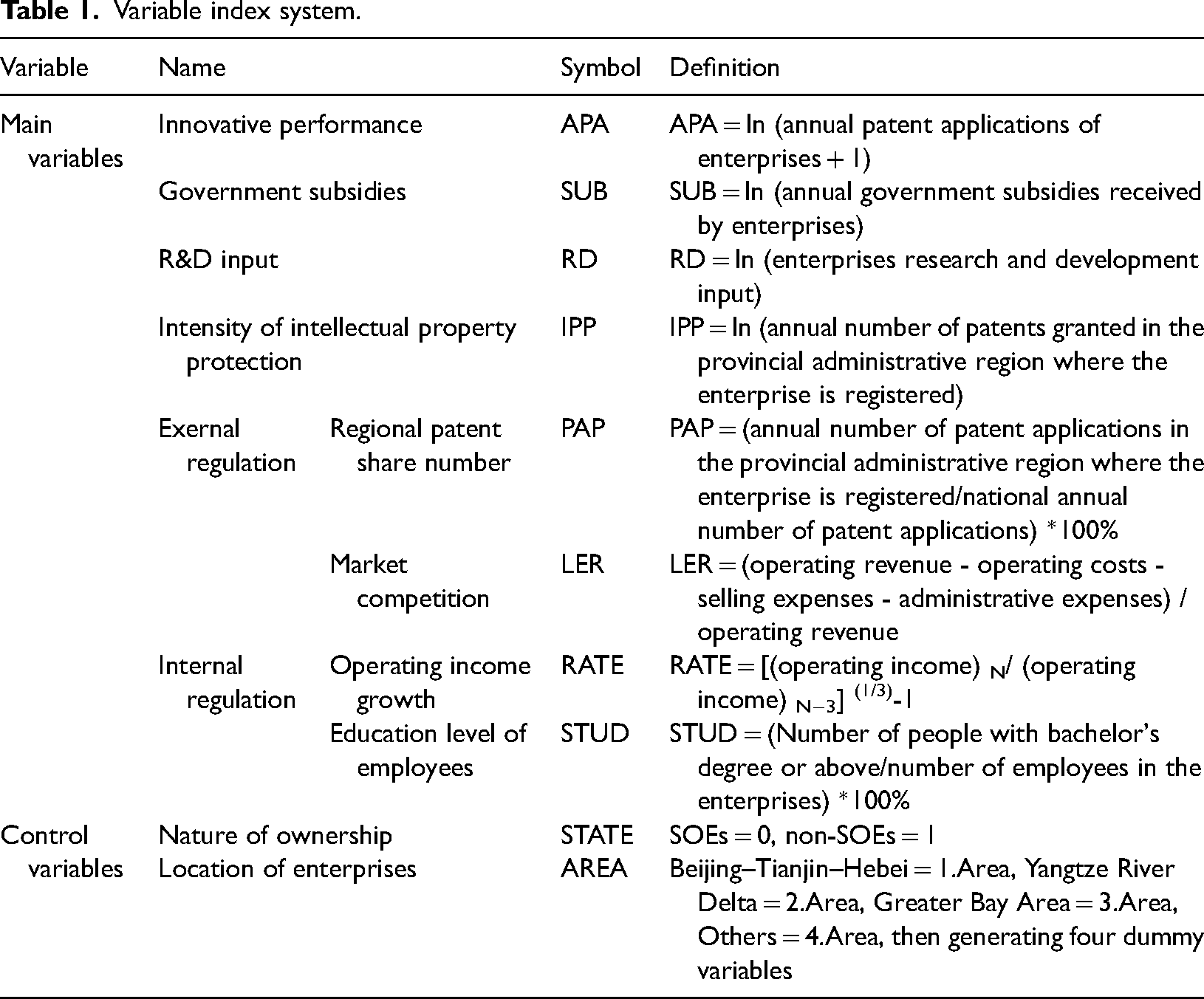
This study uses invention performance (APA), government subsidies (SUB), R&D input (RD), and level of IPP as explained, explanatory, mediating, and moderating variables, respectively. The level of market competition (LER) and proportion of regional PAP are used as additional indicators to gauge the external environment. The variables used to gauge the internal environment are businesses’ revenue growth rate (RATE) and employees’ educational attainment (STUD). The control variables include the enterprise's location (AREA) and ownership structure (STATE). Table 1 provides precise information.
Variable index system.
Research model
Analysis of the intermediary effect
Sequential regression tests are a common method for testing mediating effects. 64 If the SUB impacts the APA directly and indirectly through RD, then RD is the mediating variable. 65 The test for moderating effects requires three steps. First, the equation of SUB on APA is generated. Second, if the regression coefficient of SUB is statistically significant, the following step is taken: In the second stage, the regression equation of SUB on RD was constructed, and if the regression coefficient of SUB was significant, the third step was executed. Finally, a combined RD and SUB regression equation for APA was created. If the RD regression coefficient is substantial, the mediation effect is valid.66,67
As shown in Eq. (1), Model 1 tests the role of government subsidies in the innovation performance of shale gas firms, where APA represents shale gas-class firms’ innovation performance, SUB denotes government subsidies, and 


Analysis of the regulating effect
To verify the moderating character of IPP intensity in the mediation process of “government subsidy—R&D input—innovative performance” while distinguishing the direct moderating effect from the mediating effect, the following model was designed in this study. Model 4 investigates whether IPP moderates the immediate effects. If the SUB*IPP and SUB coefficient test findings are significant, it implies that IPP mediates the relationship between SUB and APA. Model 5 examined whether IPP had a moderating influence on the initial portion of the mediating effect. If the coefficients of SUB*IPP and SUB are both significant, it suggests that IPP moderates the relationship between SUB and RD. Model 6 examines whether IPP moderates the second half of the mediating effect. If the coefficient test results for RD*IPP and RD are significant, IPP moderates the relationship between RD and APA.


The null hypothesis in this study was H0: β1 = 0. An increase in government subsidies has no significant impact on the number of enterprise PAP, and the change in enterprise innovation performance is random. The alternative hypothesis was H1: β1 ≠ 0. An increase in government subsidies significantly affects enterprises’ number of PAP. This study aims to test whether β1 is significantly nonzero. Significance level A is assigned and compared with the probability p-value of the test statistic. If the probability p-value is less than the significance level A, the null hypothesis should be rejected; that is, if the probability p-value is less than the significance level A, the effect of government subsidy on innovation performance is significant, whereas if the probability p-value is greater than the significance level A, we should not reject the null hypothesis, that is, β1 = 0, that the increase of government subsidies has no significant impact on innovation performance.
Results
Descriptions, correlation analysis, and multicollinearity test
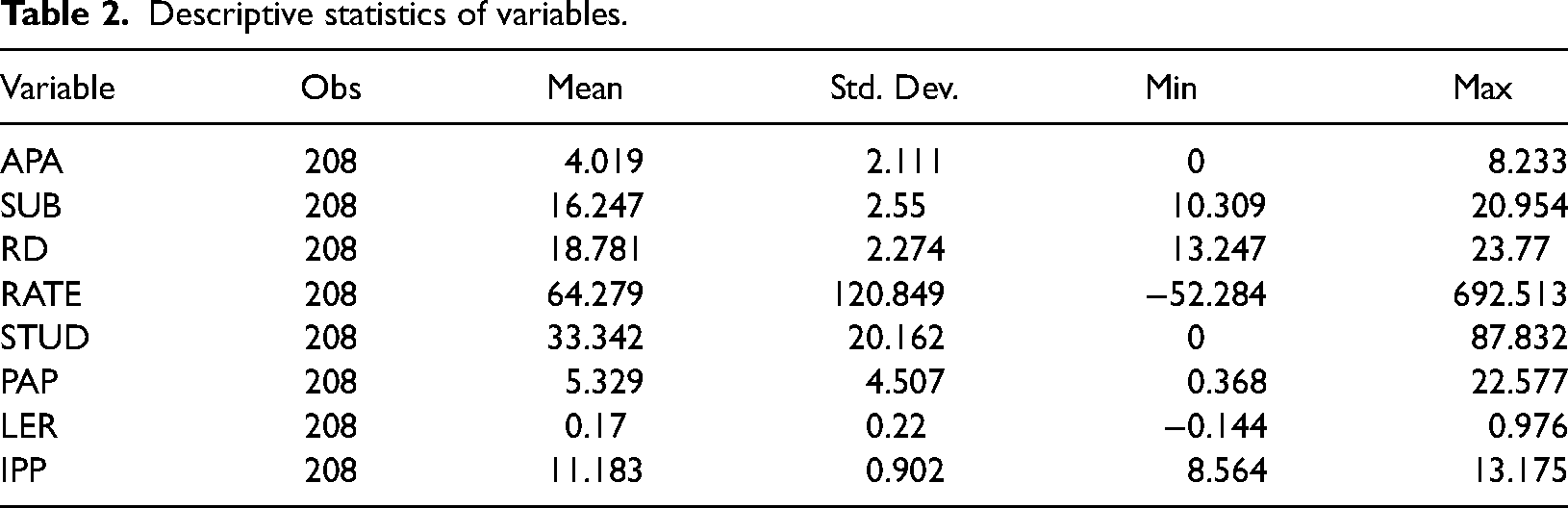
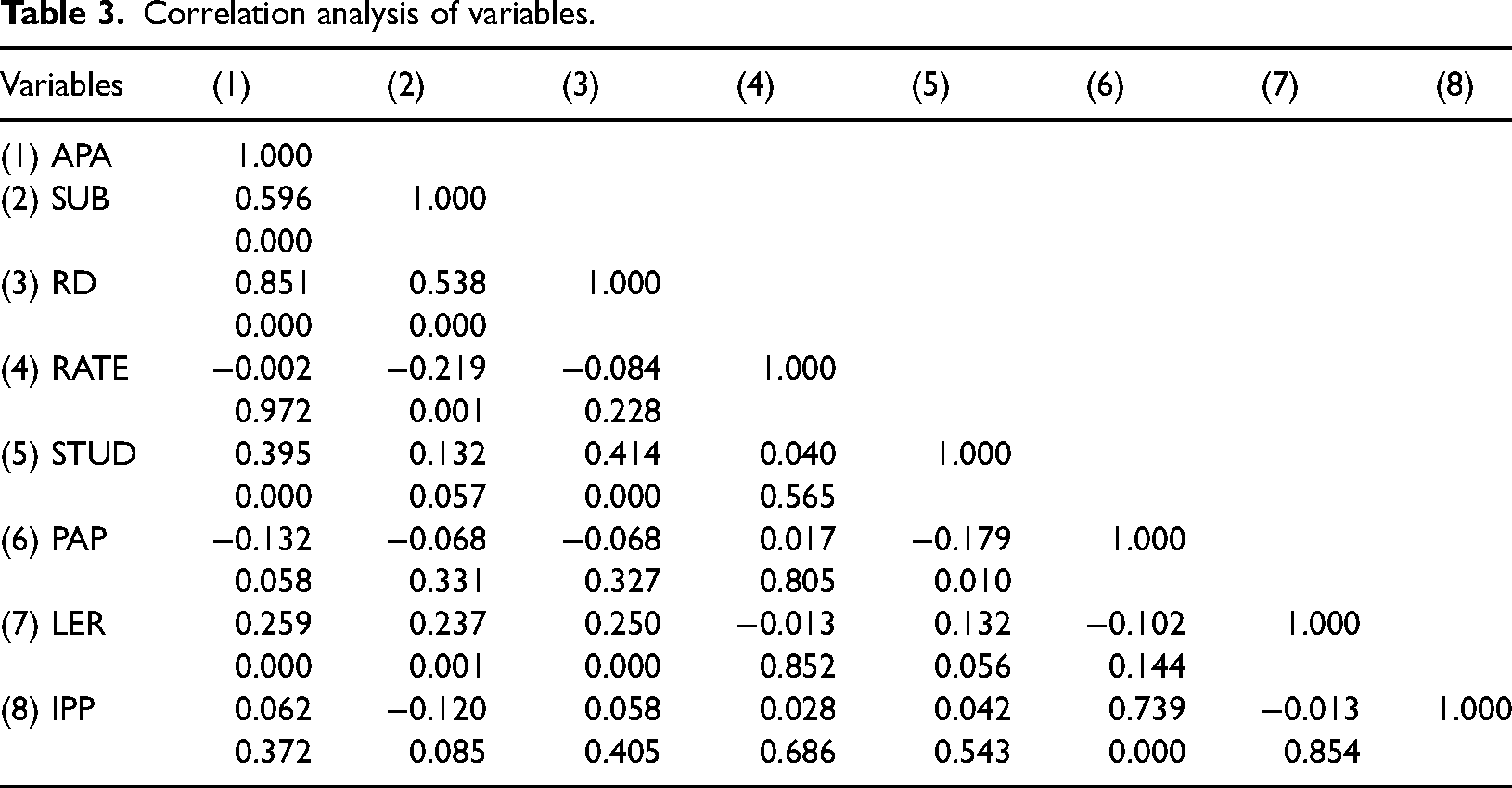
As shown in Table 2, the maximum value of APA is 8.233 and the minimum value is 0, indicating a substantial disparity between the number of PAP submitted by various businesses. Similarly, the maximum value of SUB is 20.954 and the minimum is 10.309, indicating a significant disparity in government subsidies for the shale gas industry. Table 3 presents the correlation analysis of the variables conducted in this study. According to the analytical results, government subsidies are positively correlated with shale gas companies’ innovation performance and R&D input. Additionally, a significant positive correlation exists between R&D inputs and innovation performance.
Descriptive statistics of variables.
Correlation analysis of variables.
The VIF values for each variable are listed in Table 4 to avoid multicollinearity. These values were less than 2.1, indicating that potential multicollinearity in the sample data did not significantly affect the regression results.
Multicollinearity test.

Regression analysis of government subsidies (SUB), R&D input (RD), and innovative performance (APA)
Correlation between SUB and APA
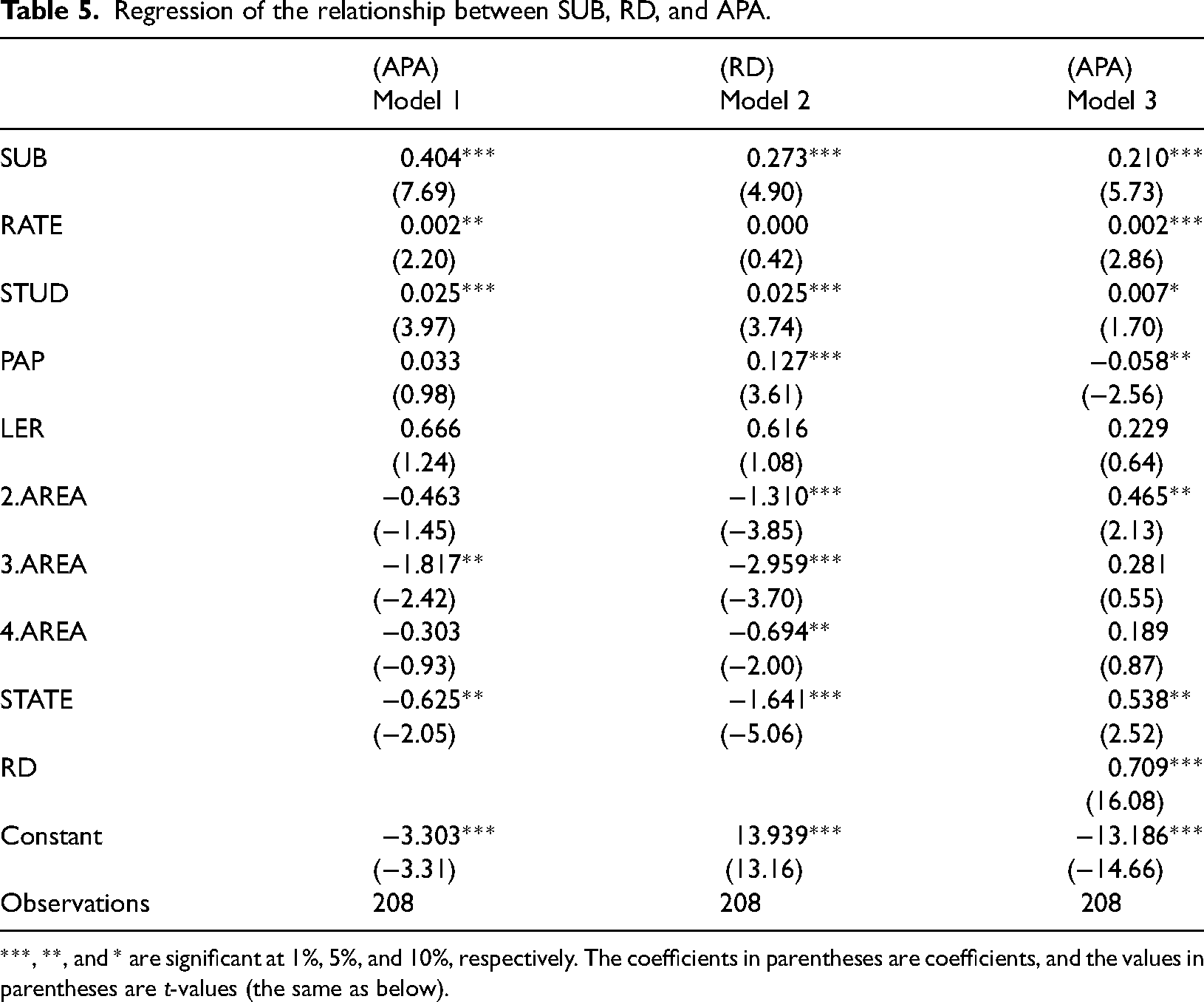
As shown in Table 5, Model 1 was used to test the relationship between SUB and APA. The regression results suggest a significant positive relationship between PAP and government subsidies (β1 = 0.404, p < 0.01). This indicates that the null hypothesis, H0: β1 = 0, was rejected, and that there is a correlation between SUB and APA. Therefore, government subsidies contribute directly to innovation performance.
Regression of the relationship between SUB, RD, and APA.
***, **, and * are significant at 1%, 5%, and 10%, respectively. The coefficients in parentheses are coefficients, and the values in parentheses are t-values (the same as below).
Model 2 was applied to test the relationship between SUB and RD, which resulted in a significantly positive relationship between RD and SUB (β1 = 0.273, p < 0.01). This indicates that the null hypothesis, H0: β1 = 0, was rejected. Therefore, government subsidies significantly contribute to R&D inputs.
Model 3 introduced the RD variable into Model 1, and the regression results suggest a significantly positive correlation between PAP and government subsidies (β1 = 0.210, p < 0.01) when RD is treated as a mediating variable. In addition, an extremely positive correlation between RD and PAP (β2 = 0.709, p < 0.01) suggests a significant contribution from the mediating variable RD to innovative performance. This indicates that the null hypothesis, H0: β2 = 0, was rejected, and that there is a correlation between RD and APA.
It can be seen from above that there is a partial mediating impact of corporate R&D input between government subsidies and corporate innovative performance. Government subsidies have a significant and positive impact on corporate innovation performance. However, they also affect corporate R&D inputs, which enhance innovative corporate performance.
Regression analysis by internal and external regulations
The role of government subsidies in fostering innovative performance varies across internal and external regulatory frameworks. Firms should be incentivized to innovate in better development environments. The sample was separated into four groups based on favorable and unfavorable internal and external environments to test the differing effects of internal and external environments on firms. Here, the internal environment is simplified as the share of R&D personnel’s education, and the external environment is simplified as market competition. The medians of the two variables were then calculated, with the high and low internal and external environments combined to obtain four groups: internal high and shallow high (GROUP 1), internal high and shallow low (GROUP 2), internal low and external high (GROUP 3), and internal low and external low (GROUP 4). Accordingly, the four groups of subsamples were introduced into Eq. (1), Eq. (2), and Eq. (3).
As shown in Table 6, the results of Model 1 suggest a significant connection between APA and SUB in GROUP 1, GROUP 2, and GROUP 4 (β1 = 0.229, p < 0.05; β1 = 0.208, p < 0.1; β1 = 0.293, p < 0.01). In GROUP 3, there was no significant correlation between APA and SUB. This indicates that the null hypothesis of H0c: β1 = 0 was rejected and a correlation exists between SUB and APA.
Regression of different environments on APA.

*p < 0.1; **p < 0.05; ***p < 0.01.
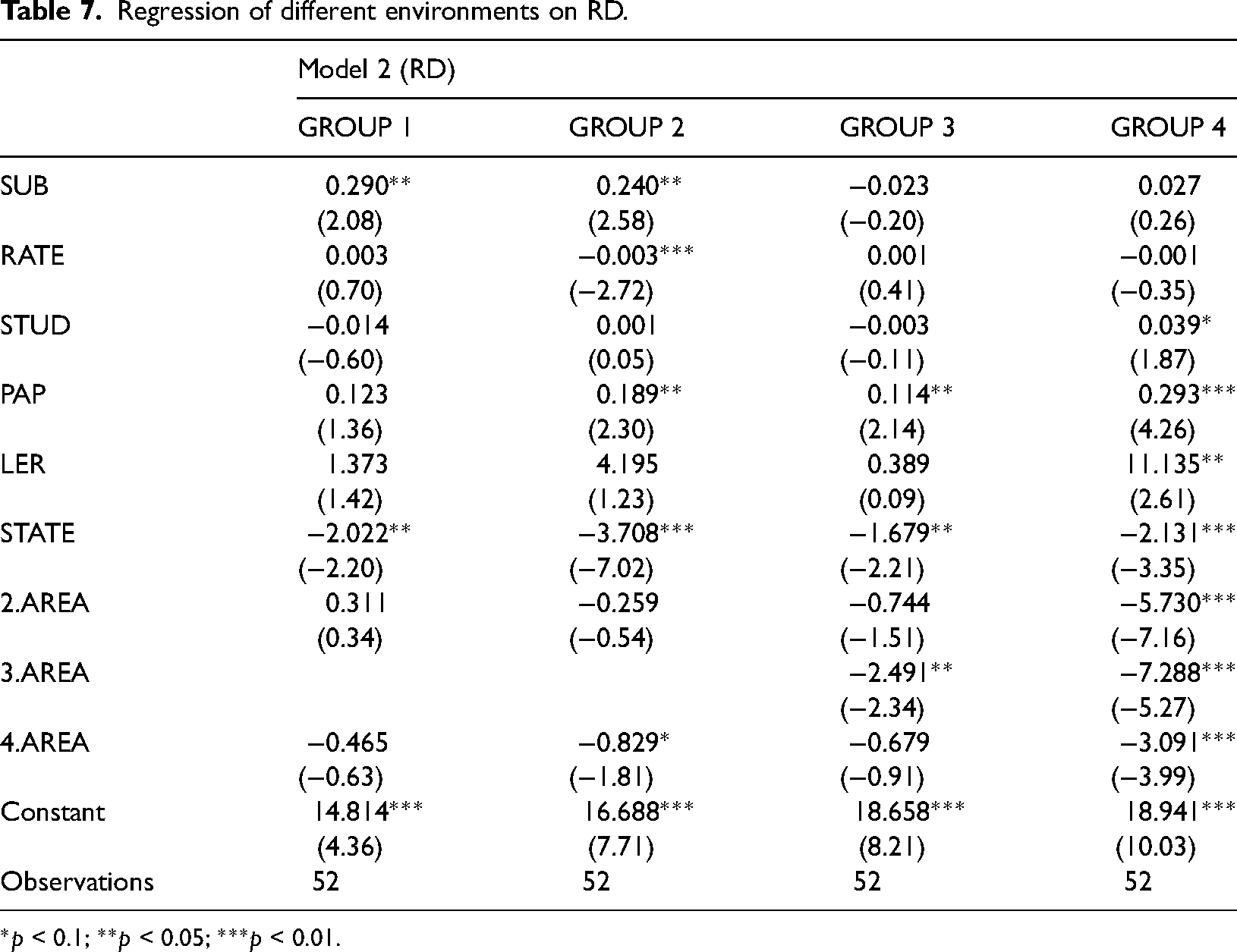
Model 2 results in Table 7 suggest a significantly positive relationship between RD and SUB for GROUP 1 and GROUP 2 (β1 = 0.290, p < 0.05; β1 = 0.240, p < 0.05), which implies that SUB is significantly promotive to RD in both environments.
Regression of different environments on RD.
*p < 0.1; **p < 0.05; ***p < 0.01.
Model 3 shows the effect analysis after the mediating variable RD was introduced. Only GROUP 4 showed a significantly positive relationship between APA and SUB (β1 = 0.279, p < 0.01). Government subsidies are conducive for improving a firm's innovation performance. In addition, APA is positively connected to the relationship between firms’ RD to a significant extent in all environments, indicating that RD can promote firms’ innovation performance.
Based on the results, government subsidies can significantly improve the innovation performance of firms in all environments, which is only the case in environments with higher levels of internal regulation, that is, GROUP 1 and 2. In this circumstance, R&D input has a mediating impact on the full economy, and government subsidies boost innovation performance by increasing firms’ R&D input (Table 8).
Regression of different environments on APA after adding RD.

*p < 0.1; **p < 0.05; ***p < 0.01.
Regression analysis by nature
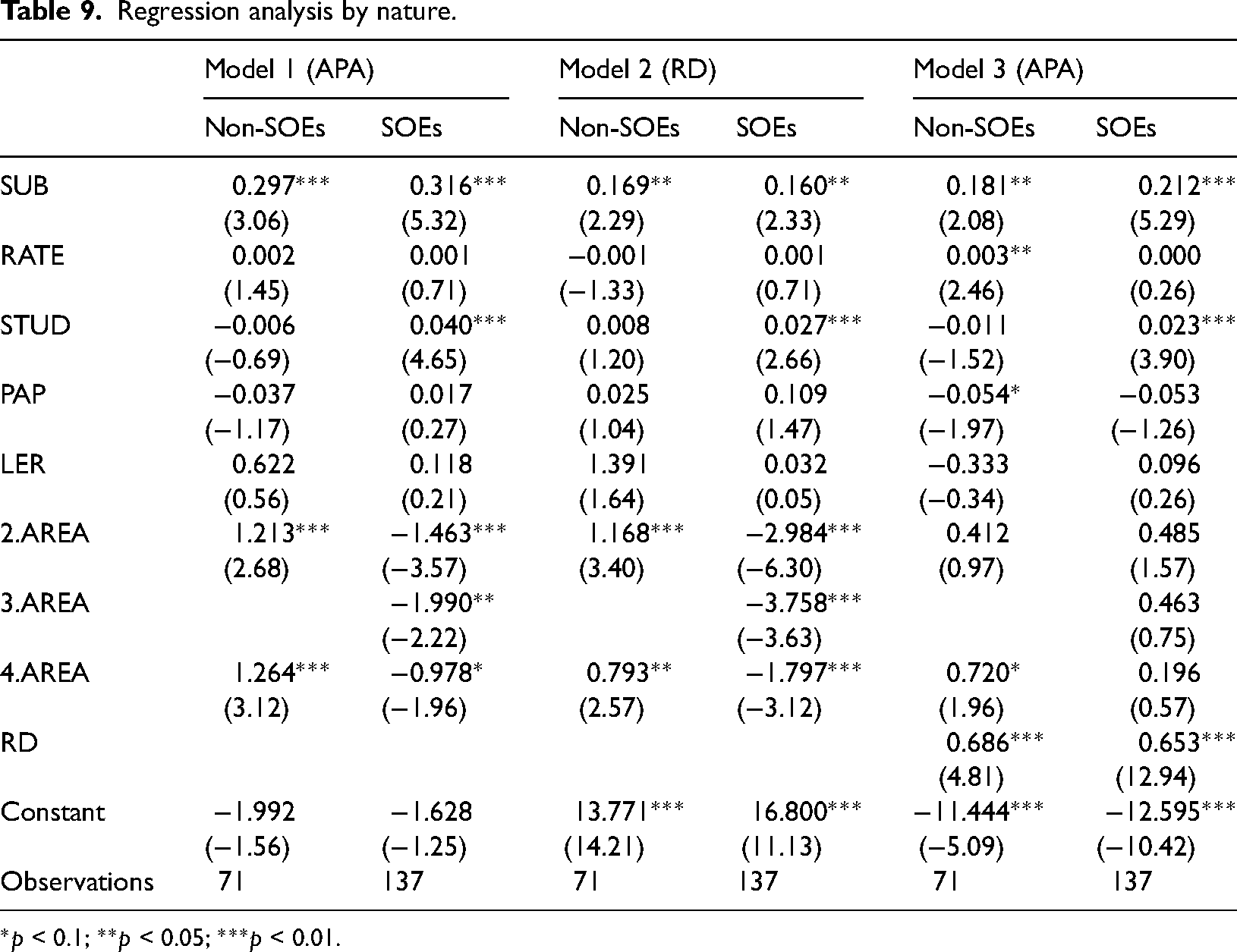
As shown in Table 9, Model 1 results demonstrate a significantly positive relationship between APA and SUB for non-SOEs or SOEs (β1 = 0.297, p < 0.01; β1 = 0.316, p < 0.01), suggesting the direct contribution of government subsidies to the innovative performance of non-SOEs and SOEs. This indicates that the null hypothesis of H0: β1 = 0 was rejected, and that a correlation exists between SUB and APA.
Regression analysis by nature.
*p < 0.1; **p < 0.05; ***p < 0.01.
Model 2 results indicate a significantly positive connection between RD and SUB in non-SOEs and SOEs (β1 = 0.169, p < 0.05; β1 = 0.160, p < 0.05), which means that government subsidies significantly contribute to RD for both types of firms.
In Model 3, RD is introduced as a mediating variable. In addition, there is a significantly positive relationship not only between PAP and government subsidies in non-SOEs and SOEs (β1 = 0.181, p < 0.05; β1 = 0.212, p < 0.01), but also between PAP and R&D input in non-SOEs and SOEs (β2 = 0.686, p < 0.01; β2 = 0.653, p < 0.01). SUB and RD contribute to the APA for both types of firms.
It is demonstrated that a direct promotional effect of government subsidies on innovation performance exists for non-SOEs and SOEs. Moreover, RD partially mediates the relationship between government subsidies and corporate innovation performance for non-SOEs and SOEs. Government subsidies play a significant and positive role in corporate innovation performance. They also affect corporate R&D inputs and enhance firms’ innovation performance.
Moderating effect of the intensity of intellectual property protection
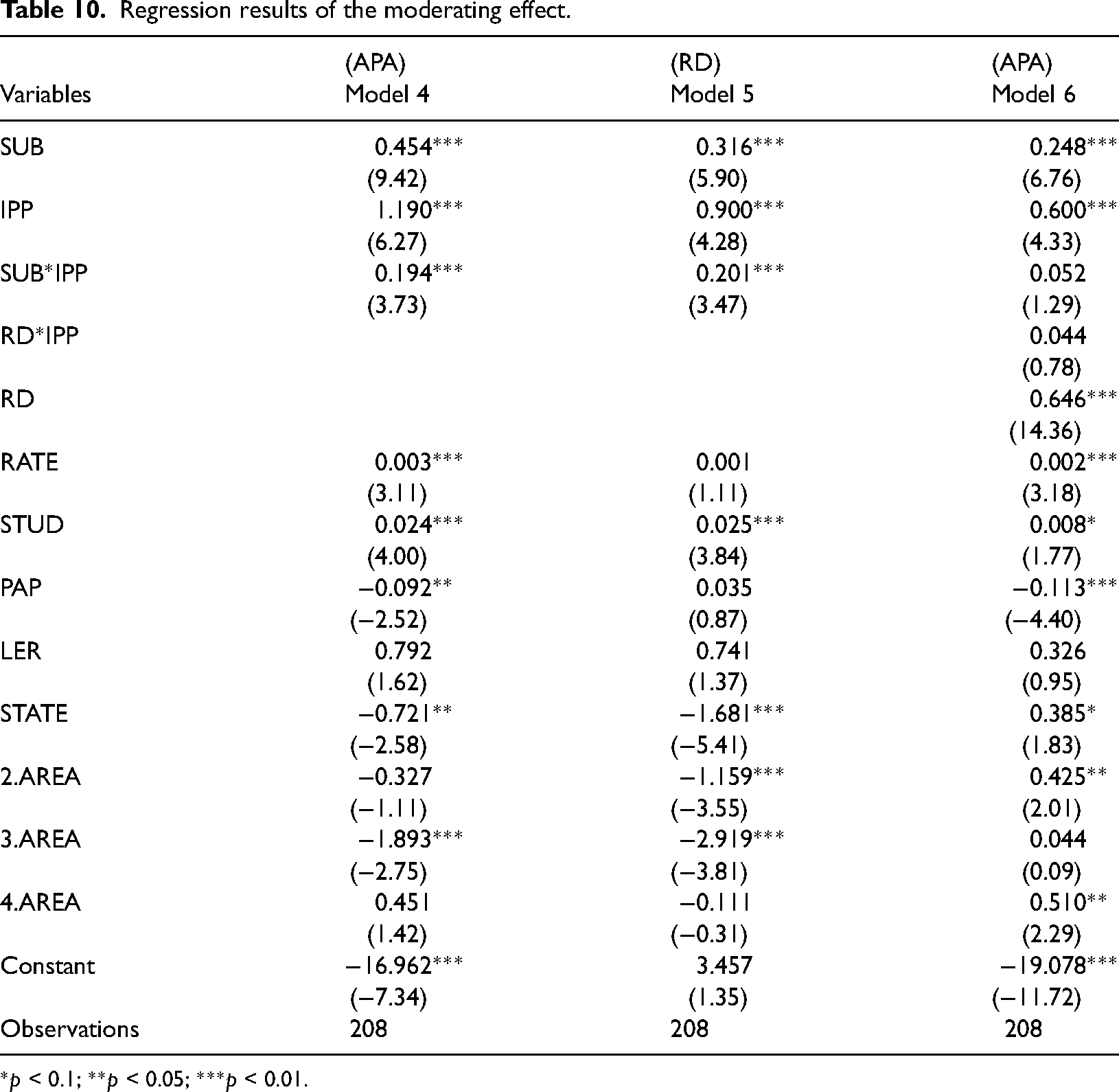
According to Table 10, Model 4 is used to test the direct effect of SUB on APA and the moderating influence that the IPP has on the direct effect, in which SUB contributes significantly to the APA (β1 = 0.454, p < 0.01). In addition, the interaction term between SUB and IPP significantly contributes to innovative performance (β3 = 0.194, p < 0.01). This indicates that the null hypothesis of H0: β3 = 0 was rejected, and that the intensity of IPP between SUB and APA has a positive moderating effect.
Regression results of the moderating effect.
*p < 0.1; **p < 0.05; ***p < 0.01.
Model 5 and Model 6 are applied to examine the moderating role of IPP in the first half of the mediating effect—“SUB – RD” and the second half—“RD – APA” after RD is introduced as a mediating variable. In Model 5, SUB significantly affected RD (β1 = 0.316, p < 0.01) as did the interaction term between SUB and IPP (β3 = 0.201, p < 0.01). It is suggested that IPP intensity exerts a positive moderating effect in the first half path of the mediating development—“SUB – RD.” IPP positively moderates the first half of the mediating course—“SUB – RD.”
In Model 6, RD contributes significantly to APA (β5 = 0.646, p < 0.01), although no significance is shown by the coefficient of the interaction term between RD and IPP (β4 = 0.044, p > 0.1), indicating that IPP intensity exerted a positive moderating effect in the second half of the mediating effect. However, this effect is insignificant for “RD-APA.”
Thus, IPP intensity exerts a positive moderating effect on the direct and mediating effects.
Robustness test
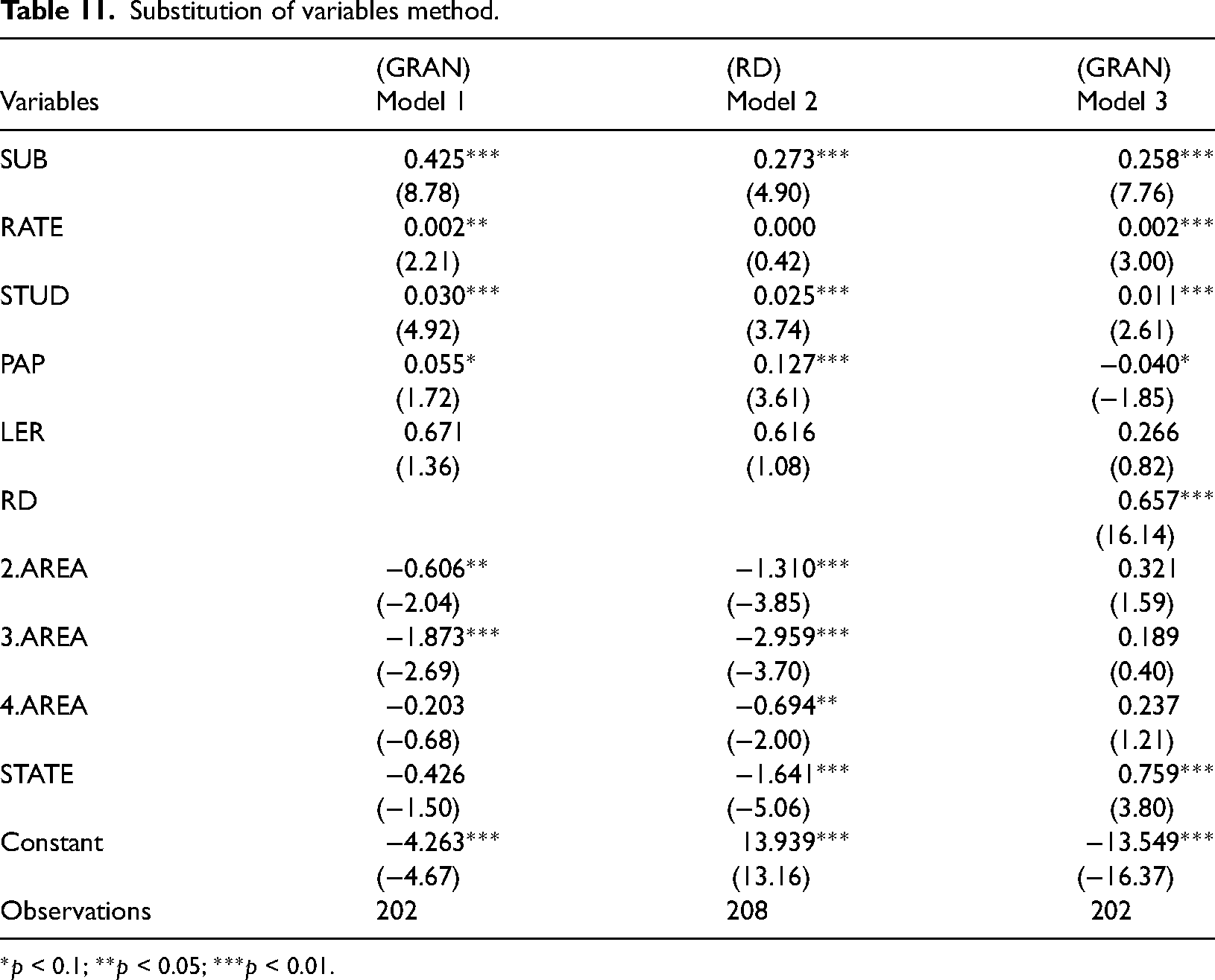
In this study, the robustness was evaluated from multiple perspectives. First, explanatory variables were altered. The number of patents granted during the current year can also be used to evaluate the innovation performance of a company. Therefore, this study tests the number of patents granted (GRAN) instead of the explanatory variable. Second, the government subsidies were delayed by a single period. As there may be latency in the effect of government subsidies on PAP, this study uses a one-period lag for the regression of government subsidies. The robustness of the model is confirmed by the fact that the significance and direction of influence are unaffected by minor variations in the significance level and coefficient size of the empirical findings. The robustness evaluation results are presented in Tables 11 and 12.
Substitution of variables method.
*p < 0.1; **p < 0.05; ***p < 0.01.
Lagged variable method.

*p < 0.1; **p < 0.05; ***p < 0.01.
Conclusions and policy implications
Conclusions
As the above studies suggest, government subsidies directly contribute to the innovation performance of shale gas firms, and R&D input plays a promotive mediating role between the two. Additionally, government subsidies can maintain a significantly promotive character in corporate innovation performance in all environments, except for those with high levels of internal regulation, where R&D input produces a full mediating effect. Government subsidies boost corporate innovation performance by increasing R&D input. The intensity of IPP plays a positive moderating role in the direct and mediating models of government subsidies and innovative performance, which substantiates the argument that competition in the shale gas industry in the future will ultimately result in competition for innovative technologies and intellectual property rights. 68 Technological innovation extracts more energy required to renew traditional energy sources and enhances the efficiency and environmental friendliness of shale gas energy. Therefore, it is necessary to continuously promote R&D inputs and technological progress in fields related to shale gas. Finally, government subsidies play a positive role in the innovation performance of SOEs and non-SOEs, and R&D input plays a promotive intermediary role between the two. Having gained access to shale gas exploration and development over time, private companies are no longer inferior to SOEs in terms of hardware and equipment or software configuration access. The inherent characteristics of shale gas in China, which is widely distributed and shallowly buried, make decentralized extraction more suitable for small- and medium-sized firms. However, SOEs are not competitive in the traditional shale gas extraction market, hindering the market from playing a decisive role in resource allocation. 23
Policy implications
Shale gas in China is riskier and more expensive because the shale gas industry is still in its infancy and has encountered a number of developmental process concerns. Consequently, the legislature has the authority to lengthen the funding period, choose the funding amount based on circumstances, and suitably ease funding requirements for the shale gas industry. 69 The legislature should create a supportive regulatory framework to monitor the use of subsidies and assess the success of creative shale gas initiatives. To specifically check and monitor the usage of subsidies, a credit record of businesses seeking subsidies may be created. A shale gas company’s use of illegal subsidies will be recorded in the violation file, which will impact any future application for subsidies. This would ensure that the subsidies are used effectively by businesses ex ante and ex post and stop them from breaking the law to gain immediately. 70
Additionally, a new scenario emerged in the Chinese shale gas industry in which both players competed in the same field. In contrast to conventional gas drilling, shale gas drilling is quick and fast-paced and has low profitability, which makes it challenging for private enterprises to stand out. Many private businesses unfamiliar with the shale gas industry lack the necessary financial resources as well as oil and gas extraction expertise. 71 From a short-term perspective, the shale gas business must rely on the continuing innovation of researchers in significant SOEs. In the long term, governments must boost non-state enterprise subsidies and create creative financing schemes for shale gas production. To effectively support the development of small and medium enterprises (SMEs), government departments can fully exploit the role of shale gas industrial parks as clusters of small- and medium-sized businesses. They can also advise SMEs to acquire patented technologies while supporting them in their innovative activities of shale gas development and utilization through incentives and subsidies, science and technology innovation vouchers, etc. 72
Third, technical innovation should be the sole driving force behind the engagement of all parties. Shale gas extraction technology R&D may require sizable investment in resources and people. 73 Energy firms’ reliance on intellectual property rights is essential, and if corporate IPP is neglected, innovative enterprises will be seriously jeopardized. 74 Shale gas extraction on a large scale without proper environmental protection is likely to have negative effects on nations and the entire world. Therefore, it is essential to improve technological innovation to resolve this issue.
Finally, there is a well-established local gas pipeline and market as the primary extraction locations for shale gas production in Sichuan and Chongqing. Users find it difficult to accept the more expensive shale gas that must compete with conventional gas for market share. Therefore, to monitor and be well informed to accomplish sustainable operations and efficient shale gas development, shale gas development and utilization firms need deterministic financial subsidy data. To provide gas sources for the integrated development of natural gas and new energy, and to create a multi-energy complementary power supply system, national shale gas production bases should also be energetically promoted. When developing policies for the integrated development of shale gas and new energy under the “double carbon” objective, relevant departments should, at the same time, intensify their research and implementation of supporting policies, allocate new energy targets like scenery for oil and gas enterprises, and support their involvement in the development of “shale gas power generation and new energy” resources.
Contributions and limitations
In this study, some Chinese-listed companies in the shale gas category were used as the study object. Panel data for these companies between 2013 and 2019 were selected for analysis. On this basis, a multiple linear regression method was used to analyze the impact of government subsidies on the innovation performance of shale gas companies and to establish whether R&D input has a mediating effect on the link between the two. Several in-depth studies have been conducted on the development of the shale gas market. However, most studies have focused on exploration technology, extraction status, and market prospects. 75 The scientific value of this study was demonstrated by examining the need to enhance the domestic energy mix. This study explores the link between government subsidies and the innovation capability of shale gas firms, as well as how to design a realistic subsidy policy to close the gap in the natural gas industry in terms of technological advancement. In addition, this study considers China's national conditions and current level of IPP. The sample was categorized according to company ownership, and internal and external contexts. This fosters the overall growth of the shale gas sector by assisting the government in directing the transformation and development of firms in varying ownership and development phases.
As a preliminary result, this study has some drawbacks. First, a few statistical models have been used for the shale gas industry study, domestically and abroad. Therefore, the literature of this study is limited. Second, the small number of listed shale gas companies in China makes this study’s results and analyses less comprehensive. Finally, government subsidies have multiple purposes. However, many companies do not explicitly disclose the type of government subsidies in their annual reports.
Footnotes
Data availability statement
Data is still under use by CLEAN-Air (Africa) for future work, but can be made available to researchers upon reasonable request directed to the corresponding author.
Declaration of conflicting interests
The authors declared no potential conflicts of interest with respect to the research, authorship, and/or publication of this article.
Funding
The authors disclosed receipt of the following financial support for the research, authorship, and/or publication of this article: This work was supported by the Research project of State Intellectual Property Office of China, Major Project of National Social Science Foundation of China, Projects of National Social Science Foundation of China, Young Talent Research Program of China Association for Science and Technology, National Natural Science Foundation of China, (grant number SS21-B-015, 20ZD205, 19CFX052, 2022316, 71974144).
Ethical approval
The study was conducted according to the guidelines of the Declaration of Helsinki, and approved by the Institutional Review Board at the University of Liverpool (IRB no. Ref. 2019/4811) and the Moi University Institutional Review Ethics Committee (No IREC/2019/35).
Informed consent statement
Informed consent was obtained from all subjects involved in the study.
