




Abstract
The present research was mainly focused on the production of biodiesel from Annona squamosa oil using a synthesized Ni-doped CaO nanocatalyst. The optimization of the transesterification reaction parameters was studied through response surface methodology. The highest biodiesel yield of 99.1% was achieved with the optimized conditions of 7.86% catalyst concentration, 442 RPM, 15.19:1 molar ratio of methanol to oil, reaction temperature of 55.8°C and reaction time of 63.3 min. The results obtained from reaction kinetics study showed a good fit with a first-order kinetic model. The activation energy and R2 value were determined to be 53.7 kJ/mol and 0.90, respectively. The synthesized Ni-doped CaO nanocatalyst was characterized using Scanning Electron Microscope with Energy Dispersive X-ray Spectroscopy which confirms the presence of nickel, calcium and oxygen. Also, the average size of the nanocatalyst was found to be 48.79 nm. The Fourier Transform–Infrared Spectroscopy results showed the occurrence of functional groups such as C-H and C = O bonds in the synthesized Ni-doped CaO nanocatalyst. The presence of fatty acid methyl esters in the produced biodiesel was analyzed through Gas Chromatography-Mass Spectrometry analysis. The obtained results from the current study provides the possibility and insights for sustainable biodiesel production and a greener environment.
Introduction
The global energy landscape is currently facing significant challenges due to scarcity of energy sources, escalating energy prices and concerns about energy security. 1 In the view of reducing greenhouse gas emissions and demand for crude oils, there is urgency of transitioning to low-carbon and renewable energy systems. 2 It is also estimated that the fossil fuels demand will increase by 40% in the year 2040 and global energy demand will rise by 50% by the year 2025. 3 A viable approach to solve these energy problems would be the use of biodiesel which is normally a sustainable and nontoxic fuel made from biological sources. When compared to conventional diesel fuel, biodiesel is considered to be more environmental friendly due to its advantages like lower greenhouse gas emissions. 4 While over 60% of power generation still relies on fossil fuels, biodiesel offers similar characteristics to diesel while being considered safer and less harmful to the environment. 5 Additionally, its use can also contribute to lowering air pollution as evidenced by a 47% drop in particulate and smog emissions.6,7
Traditionally, biodiesel has been produced from edible plant sources leading to concerns about potential imbalances in the food supply chain. 8 To address this issue, researchers have explored nonedible plant sources as alternative feedstocks for biodiesel production. 9 Nonedible seed oils such as jatropha, karanja and castor bean seed oils when converted to biodiesel offer several advantages including high combustion efficiency and biodegradability. Utilizing the nonedible seeds as feedstocks can reduce the reliance on limited crude oil supplies and contribute to a more sustainable fuel source for the transport sector. 10
The reaction parameters were optimized using response surface methodology (RSM) which combines mathematical and statistical techniques. 11 RSM allows for predicting the optimal response of variables to achieve the highest possible yield, thus reducing the number of experimental runs required. 12 The synthesized Ni-doped CaO nanocatalyst was characterized using techniques such as scanning electron microscope (SEM) with energy dispersive X-ray spectroscopy (EDAX), X-ray diffraction (XRD) and Fourier transform–infrared spectroscopy (FT-IR). The presence of fatty acid methyl esters (FAME) was confirmed by using gas chromatography-mass spectrometry (GC-MS) analysis.
The motivation of this study is to contribute to the development of a sustainable biodiesel production process by investigating the potential of Annona squamosa seed oil and the synthesized Ni-doped CaO nanocatalyst for biodiesel production. The novelty of the study relies on the utilization of a synthesized Ni-doped CaO nanocatalyst for transesterification of A. squamosa seed oil which is unique for its increased conversion yield of biodiesel and reusability. Overall, the findings of this research can advance our understanding of alternative and environmentally sustainable energy sources while also contributing to the ongoing efforts to address the global energy challenges of the 21st century.
Materials and methods
Materials procurement
The A. squamosa oil used for biodiesel production was extracted from seeds with optimized conditions using the Soxhlet apparatus. The detailed extraction process was already published in the literature. 13 The chemicals used for the experiments such as nickel and calcium acetate, ammonium sulfate, sodium hydroxide and methanol solvent were procured from Santhosh Chemicals, Chennai, India. All of these chemicals were of analytical grade and used without further purification.
Synthesis of Ni-doped Cao nanocatalyst
The synthesis of Ni-doped CaO nanocatalyst was done using the co-precipitation method. 14 0.1 M nickel acetate and 1 M calcium acetate solutions were prepared for 100 mL using deionized water and named as solution I and II, respectively. The solutions I and II were mixed together and stirred continuously for 30 min using a heated magnetic stirrer. After the required time, 8% of the ammonium sulfate solution was added dropwise into the stirred mixture. The stirring was continued for an additional 2 h followed by the addition of 0.4 M NaOH solution until a pale green precipitate was formed. The mixture was then separated by filtration using Whatman filter paper and the filtrate was washed with ethanol then again followed by deionized water. After washing, the pale green particles were dried at 80°C for 3 h in a hot air oven. Finally, the dried Ni-doped CaO nanocatalyst was calcined at 600°C for 3 h in a muffle furnace and stored in an air-tight container for future use. 15
Characterization of the synthesized Ni-doped CaO nanocatalyst
The morphological structure and elemental composition of the synthesized Ni-doped CaO nanocatalyst were studied using SEM-EDAX analysis. The study was carried out using an FEI-Quanta FEG 200F system. The phase structure and crystallinity of synthesized Ni-doped CaO nanocatalyst were determined using XRD. The analysis was carried out using Bruker (D8 Advance) equipment employing Cu K radiation at 40 kV and 30 mA. The functional groups present in the synthesized Ni-doped CaO nanocatalyst were studied by using FT-IR. The FT-IR spectral measurements were taken at room temperature and with a resolution of 1 cm−1 using a Perkin Elmer system spectrophotometer in the wave number region of 4000–500 cm−1.
Production of biodiesel through transesterification reaction
The transesterification of the A. squamosa oil was conducted through a batch process. The reaction was conducted in a conical flask using a magnetic stirrer with the required quantities of catalyst, methanol and A. squamosa oil (Figure 1). Various reaction parameters were investigated to optimize the transesterification process. The reaction parameters included concentration of catalyst (1, 3, 5, 7, 9% w/w), molar ratio of oil to methanol (1:4, 1:6, 1:8, 1:10, 1:12, 1:14 v:v), reaction temperature (50, 55, 60, 65, 70, 75 °C), reaction time (30, 40, 50, 60, 70, 80 min) and stirring rate (200, 300, 400, 500, 600, 700 RPM). The assumption of ranges for these reaction parameters was fixed based on the literature study. 16
After the reaction process, the reaction mixture was subjected to centrifugation to separate the catalyst for subsequent reusability. The retrieved catalyst was allowed to dry for making the catalyst suitable for consecutive reaction cycles. The phase separation between the lighter phase (biodiesel) and the denser phase (glycerol) was carried out using a separating funnel. The resulting mixture was allowed to settle within the separating funnel over a 24 h period to facilitate complete phase separation. 17 The glycerol and biodiesel layers were separated and stored in separate containers.
The biodiesel yield was estimated using Equation (1),

Optimization of biodiesel production through one variable at a time and central composite design methods
The optimization of reaction parameters for transesterification reaction was investigated using both one variable at a time (OVAT) and central composite design (CCD) methods. The variables such as catalyst concentration, RPM, molar ratio of oil to methanol, reaction temperature and reaction time were varied and studied. Furthermore, a series of experiments were designed using Minitab statistical software. 18
The experimental plans were structured to encompass a range of parameters including lower, middle and higher values. The lower, middle and higher values were fixed based on the results obtained from the OVAT method. Specifically, the experiments were designed with the following parameter values catalyst concentration (6, 7, 8%), RPM (300, 400, 500), molar ratio of oil to methanol (1:10, 1:12, 1:14), reaction temperature (60, 65, 70 °C) and reaction time (55, 60, 65 min).
19
The framed quadratic equation was shown in Equation (2),

Characterization of produced biodiesel
The presence of FAME in the produced biodiesel was analyzed using GC-MS analysis. The GC-MS analysis was conducted using the Agilent 8890 GC system equipped with a single quadrupole mass spectrophotometer analyzer.
Kinetics of biodiesel
The kinetic study of biodiesel production from A. squamosa oil was carried out at various reaction temperatures and times. The kinetics of the transesterification reaction was studied using Equation (3),


Results and discussion
Characterization of synthesized Ni-doped Cao nanocatalyst using SEM-EDAX
The morphological and structural properties of the synthesized Ni-doped CaO nanocatalyst were studied using SEM-EDAX analysis. The obtained SEM image displayed a heterogeneous nature featuring a distinctive rough surface. The influence of dopants was evident which led to the formation of aggregates that facilitated efficient nanocatalyst binding and subsequently contributed to the enhancement of biodiesel yield. A close examination of the obtained SEM image revealed aggregated nanospherical structures of the nanocatalyst as depicted in Figure 2(a). SEM analysis also provided insights into particle size revealing an average nanocatalyst size of 48.79 nm. The EDAX analysis of the synthesized Ni-doped CaO nanocatalyst confirmed the presence of nickel, calcium and oxygen. The elemental composition results show the presence of nickel at a higher concentration of 74.51 wt% followed by 19.44 wt% of oxygen and 6.5 wt% of calcium as illustrated in Figure 2(b). The SEM-EDAX characterization sheds light on the structural attributes of the synthesized nanocatalyst and provides valuable information for understanding its performance in biodiesel production. The observed aggregations and their effects on the catalytic efficiency underline the potential of the catalyst in sustainable energy processes. 22

Graphical layout of the experimental work.
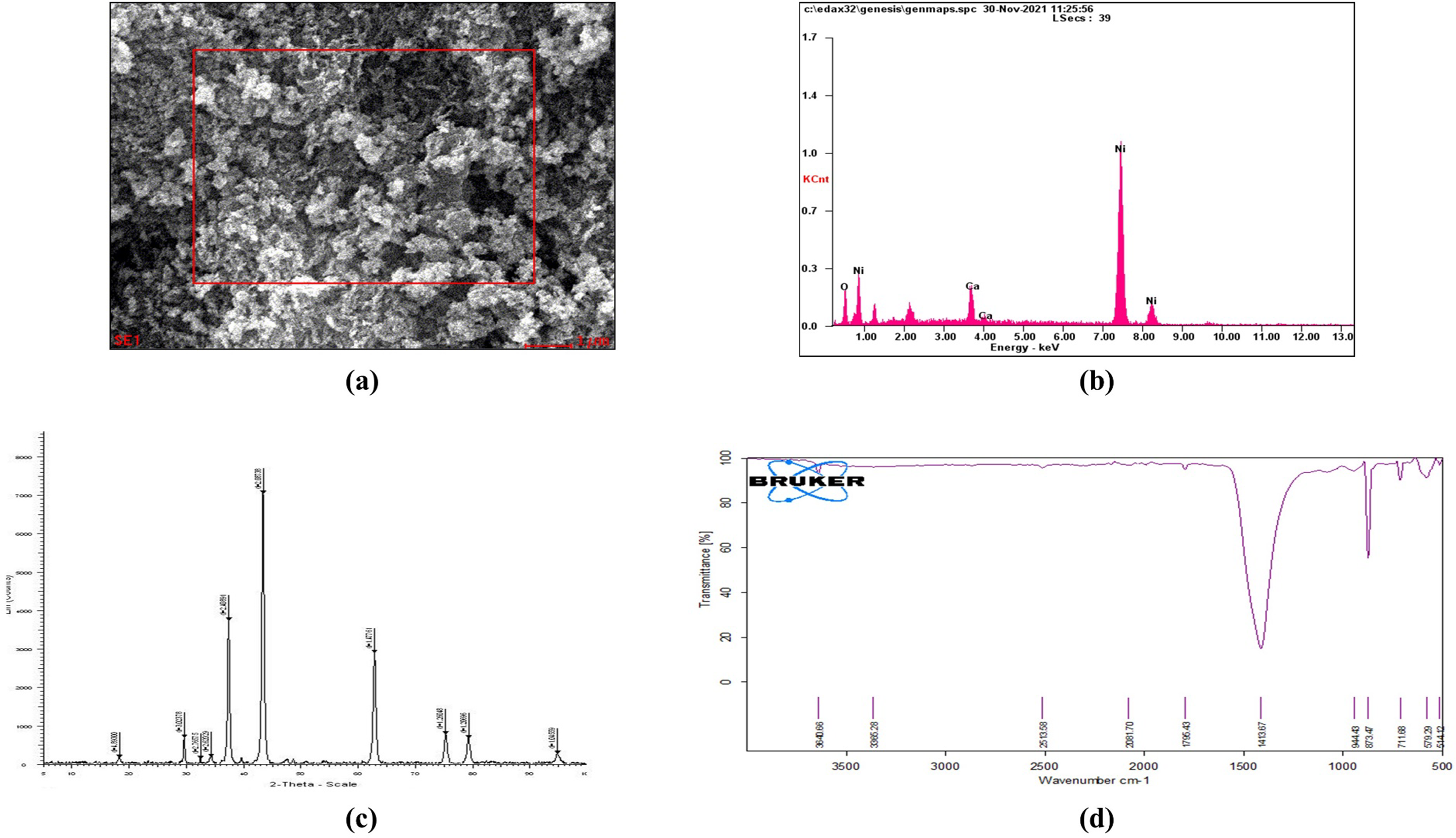
(a) SEM image; (b) EDAX image; (c) XRD and (d) FT-IR spectrum of the synthesized Ni-doped CaO catalyst.
Characterization of synthesized Ni-doped Cao nanocatalyst using XRD
The crystalline phase structure of the Ni-doped CaO nanocatalyst was studied using XRD analysis. The obtained XRD graph shows significant peaks at 2θ angles of 37, 43, and 64° which indicated the presence of calcium oxide as illustrated in Figure 2(c). Notably, the XRD graph demonstrated remarkable coherence featuring sharp and distinct peaks, thereby confirming the presence of a single phase within the synthesized Ni-doped CaO nanocatalyst. This observed pattern was compared and found to be in perfect agreement with the standard peak characteristic of CaO. The comprehensive XRD analysis contributed significantly to understanding the crystalline properties of the synthesized nanocatalyst affirming its potential for efficient catalytic processes. 23
Characterization of synthesized Ni-doped Cao nanocatalyst using FT-IR analysis
The obtained FT-IR spectrum of the synthesized Ni-doped CaO nanocatalyst is depicted in Figure 2(d). The peaks observed at 3640.66 cm−1 and 1415.67 cm−1 corresponded to the stretching vibration of the O-H group. The presence of the C = O stretching vibration of the triglyceride ester linkage was confirmed by the observed peak at 1795.43 cm−1. Additionally, bending vibrations of the alkane group were evidenced by peaks observed at 873.47 cm−1 and 711.68 cm−1. Also, the peak observed at 579.29 cm−1 indicated the presence of disulfide (S-S) bonds, accompanied by a trace amount of halide compound within the synthesized nanocatalyst. 24
Optimization of reaction parameters through the OVAT method
Effect of molar ratio of oil to methanol on biodiesel yield
The molar ratio of oil to methanol plays an important role in transesterification reaction for obtaining a higher biodiesel yield. The molar ratio of oil to methanol was varied from 1:3 to 1:13 while maintaining a constant nanocatalyst concentration of 5% and a reaction temperature of 60 °C for 30 min. Notably, the molar ratio of oil to methanol of 1:12 achieved the maximum biodiesel yield of 93.9% when compared to other molar ratios as shown in Figure 3(a). As a result, the optimal molar ratio of oil to methanol for biodiesel production from A. squamosa seed oil was determined to be 1:12. This observation emphasized the criticality of selecting an appropriate molar ratio of oil to methanol to ensure the highest possible biodiesel production as excessive amounts of methanol more than required level may not contribute to higher biodiesel yields. 25
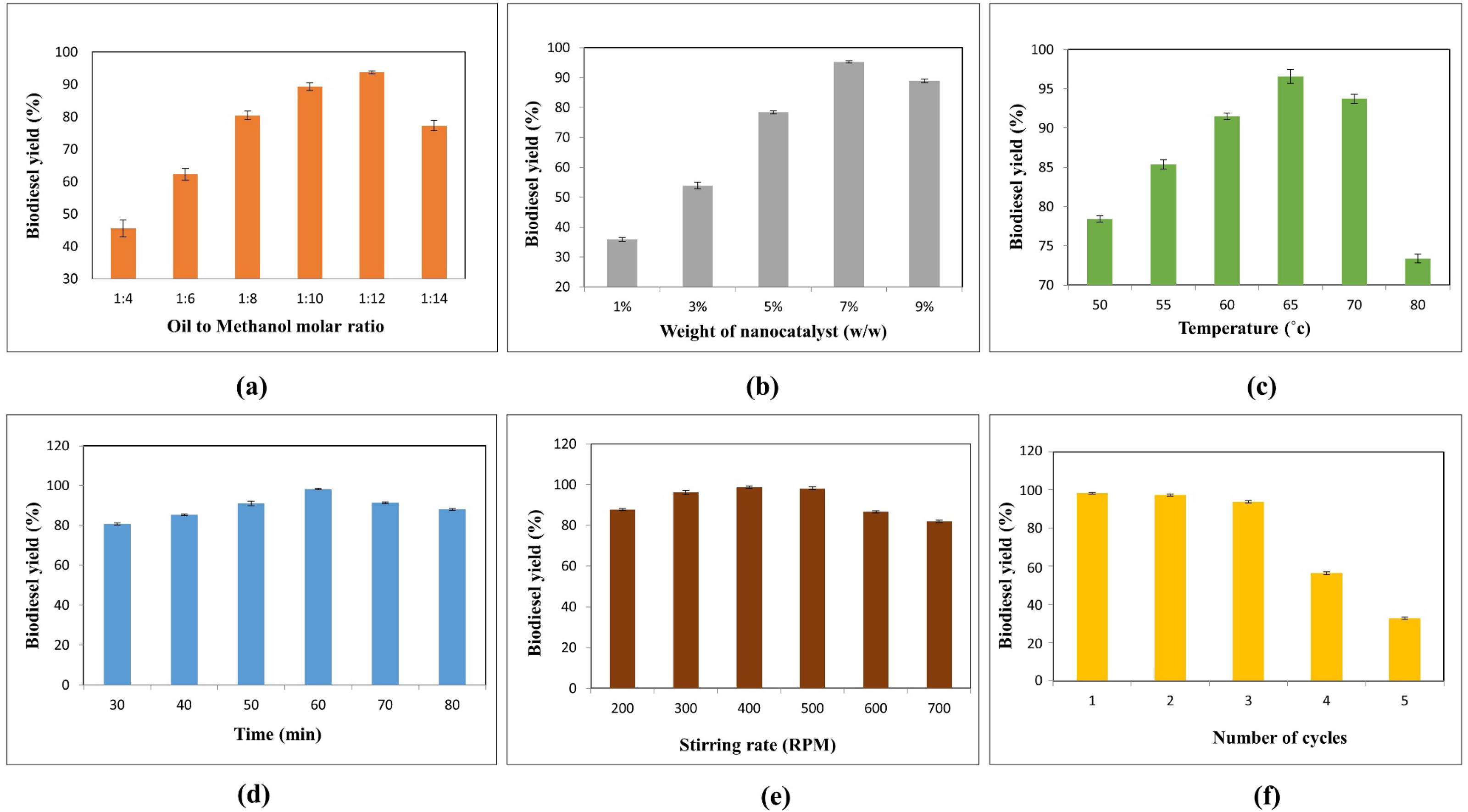
Optimization of the reaction parameters (a) oil to methanol molar ratio; (b) weight of catalyst; (c) temperature; (d) time; (e) stirring rate, and (f) number of cycles for reusability for production of biodiesel from Annona squamosa seed oil.
Effect of nanocatalyst concentration on biodiesel yield
The concentration of the nanocatalyst plays a major role in speeding up the transesterification reaction with lesser reaction time. The optimization of catalyst concentration was studied by fixing the 1:12 molar ratio of oil to methanol and a reaction temperature of 60 ˚C for a duration of 30 min for all reactions. The catalyst concentration was varied between a range from 2 to 9 wt% with intervals of 1 wt%. The biodiesel yield of 95.1% was obtained at 7 wt% catalyst concentration as depicted in Figure 3(b). Notably, the catalyst concentration beyond the optimal point did not yield further enhancement in biodiesel yield. Thus, the optimal catalyst concentration for the transesterification of A. squamosa oil using the synthesized Ni-doped CaO nanocatalyst was found to be 7 wt%.26,27
Effect of reaction temperature on biodiesel yield
The reaction temperature was varied within the range of 50 to 75°C while keeping other conditions constant such as the reaction time of 30 min, catalyst concentration of 7 wt% and a molar ratio of oil to methanol at 1:12. The highest biodiesel yield of 97.5% was attained at a reaction temperature of 65°C as illustrated in Figure 3(c). It is noted that beyond the optimal temperature of 65˚C, further elevation in the reaction temperature led to a decrease in biodiesel yield. 28 This effect can be attributed to the vaporization of methanol which thereby reduced the availability of the reactant and subsequently impacted the overall biodiesel conversion. 29
Effect of reaction time on biodiesel yield
The reaction time directly influences the transesterification reaction and it's important to optimize the required time of reaction for acquiring the highest biodiesel yield. Reaction time was varied from 30–80 min with intervals of 10 min and studied to examine the effect of time on the biodiesel yield. Figure 3(d) shows that a maximum biodiesel yield of 98.1% was obtained at 60 min and there were no changes observed after 60 min. Hence, the optimized value of reaction time was found to be 60 min.30,31
Effect of the stirring rate on biodiesel yield
The impact of stirring speed on the transesterification reaction was studied by varying the RPM. The stirring speed offers a balanced and effective level of agitation, contributing to a suitable biodiesel yield through the transesterification reaction. The biodiesel yield showed a notable increase reaching 98.7% when operated at a stirring speed of 400 RPM as depicted in Figure 3(e). However, the subsequent increase in the stirring rate did not produce any changes in the biodiesel yield. 32 As a result, a stirring rate of 400 RPM was found to be the optimum value for a higher yield of biodiesel.
Effect of the catalyst reusability on biodiesel yield
The study on the reusability of the catalyst plays a pivotal role in the potential commercialization of a heterogeneous catalyst. After the completion of the initial cycle, the catalyst was retrieved from the reaction mixture via centrifugation. It was subsequently dried to facilitate its reuse in subsequent transesterification cycles. 33 The optimization of catalyst reusability was carried out at conditions of temperature at 65 ˚C, methanol to oil ratio of 12:1, 7% of catalyst concentration and a reaction time of 60 min. The biodiesel yield showed a higher conversion % over three cycles, after which a gradual decline was observed as depicted in Figure 3(f). This diminishing trend can be attributed to the reduction of the calcium oxide content due to washing and the continued transesterification reaction process, impacting its catalytic efficiency.34,35
Optimization of reaction parameters through CCD method
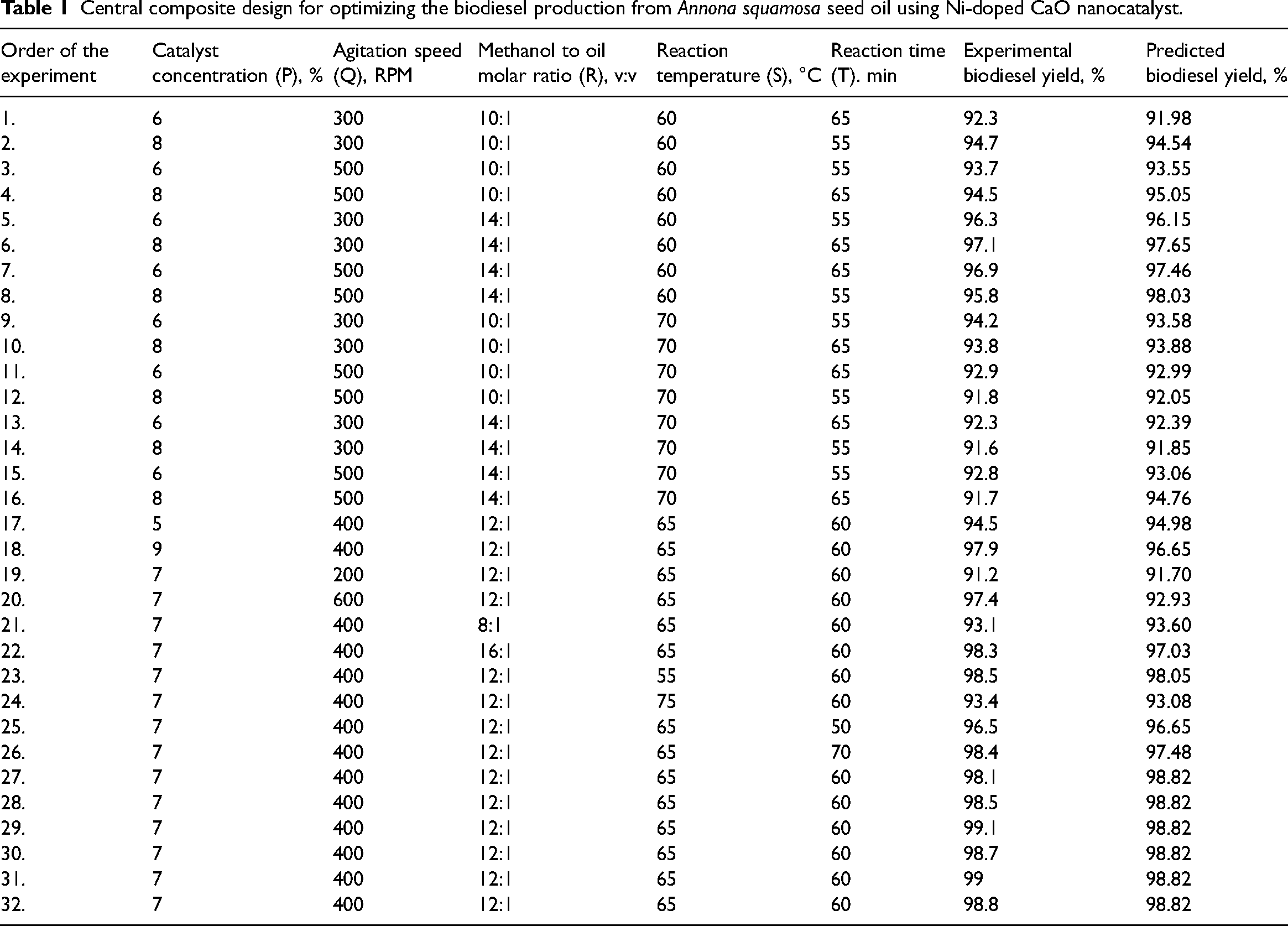
The 32 experimental trials were conducted for optimizing and comparing the experimental with the predicted yield of biodiesel using the Minitab software and thus were shown in Table 1. The obtained results were analyzed statistically to derive the quadratic equation of the model and also the significant effect of the reaction parameters on the biodiesel production was studied.36–38 The obtained quadratic polynomial equation of biodiesel production from A. squamosa oil was shown in Equation 5,

Central composite design for optimizing the biodiesel production from Annona squamosa seed oil using Ni-doped CaO nanocatalyst.
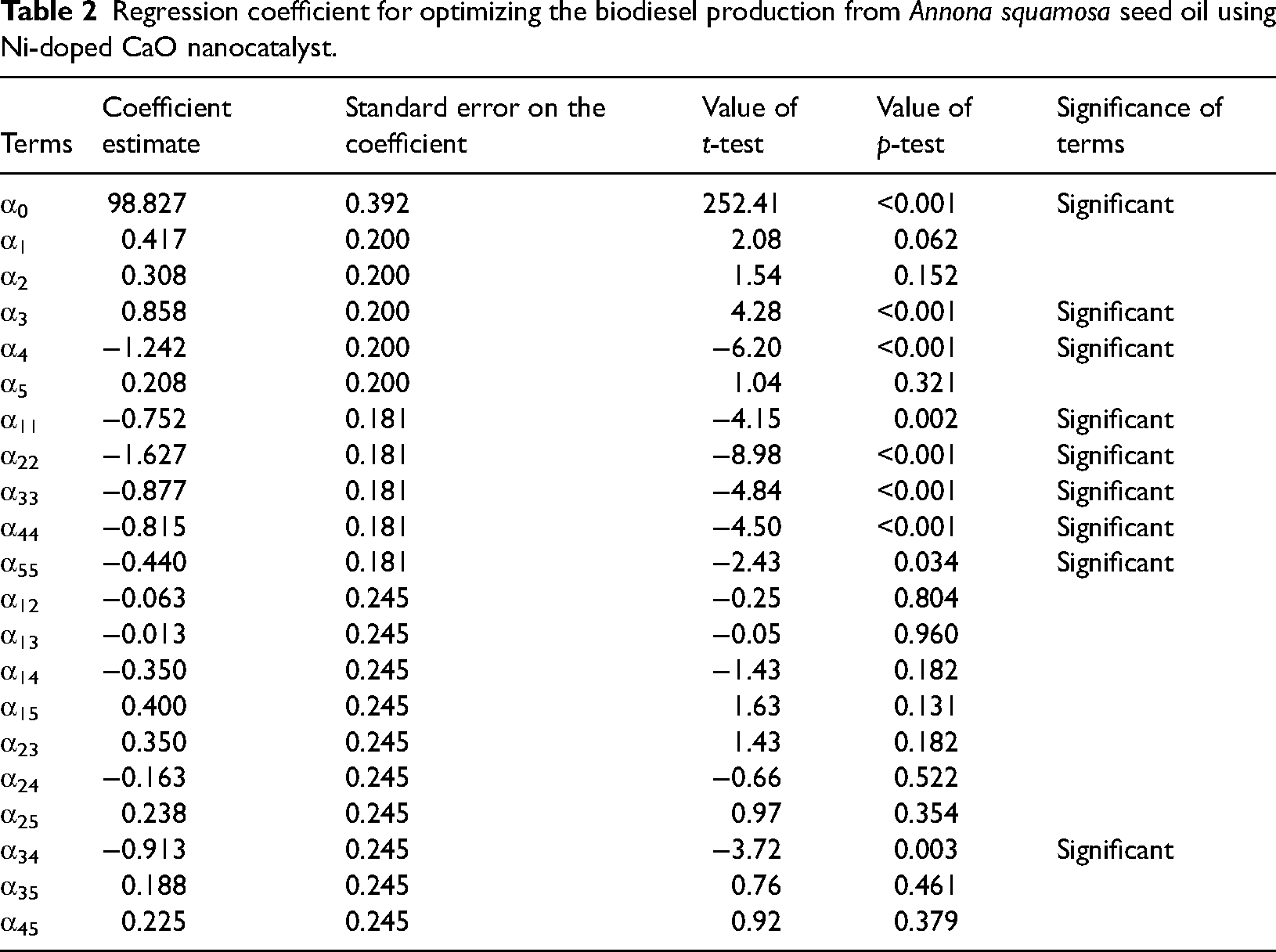
The P, Q, R, S and T in the equation denote the transesterification reaction parameters such as catalyst concentration, RPM, molar ratio of oil to methanol, temperature and time, respectively. The outcomes of the regression coefficients and ANOVA analysis have been summarized in Tables 2 and 3. The parameters such as the molar ratio of methanol to oil and the reaction temperature were found to be having significant impacts on the biodiesel yield.39,40 The regression coefficient (R2) value was determined to be 94.9%. The relationships between reaction parameters and their impacts on biodiesel yield were studied using the contour plots. The obtained contour plots illustrated the critical effects of varying parameters on the biodiesel yield as shown in Figure 4. From the results, 99.1% of biodiesel yield was obtained under optimized conditions of 7.86% catalyst concentration, stirring rate of 442 RPM, molar ratio of methanol to oil at 15.19:1, reaction temperature of 55.8 °C, and reaction time of 63.3 min.41,42

Contour plots on biodiesel conversion from Annona squamosa seed oil.
Regression coefficient for optimizing the biodiesel production from Annona squamosa seed oil using Ni-doped CaO nanocatalyst.
Analysis of variance analysis for optimization of the biodiesel production from Annona squamosa seed oil using Ni-doped CaO nanocatalyst.

Kinetics study of biodiesel production
The kinetics of the biodiesel production process were studied at various intervals of reaction time and temperature. The study revealed that the reaction followed the first-order kinetic model where the rate of biodiesel production was linked to the progression of time. The plotting of the graph between ln [Y] versus time (t) facilitated the determination of the rate constant through the derived slope of the plotted lines. The study of first-order kinetics exhibited an exceptional fit to the experimental data.43,44 The minimum energy requirement for the biodiesel production process was estimated by determining the activation energy. The graph was plotted between ln K versus 1/T which enabled the determination of the activation energy for biodiesel conversion, yielding a value of Ea = 53.7 kJ/mol.45–47
Characterization of biodiesel using GC-MS analysis
GC-MS analysis was conducted to study the presence of methyl esters in the produced biodiesel from A. squamosa oil.48,49 The obtained chromatogram confirmed the presence of methyl esters showing the successful conversion of the A. squamosa oil into biodiesel through the transesterification process using the synthesized Ni-doped CaO nanocatalyst.5,50 The obtained GC-MS library search showed the presence of hexadecanoic acid methyl ester, methyl stearate and ethyl oleate. These compounds were detected with distinct retention times of 26.32, 31.32, and 31.81 min, respectively. The obtained chromatograph of the produced biodiesel is shown in Figure 5.

GC-MS spectra of the obtained biodiesel from Annona squamosa seed oil.
Conclusion
The optimized conditions of the reaction parameters have led to the highest possible biodiesel yield from A. squamosa oil using the synthesized Ni-doped CaO nanocatalyst. This study has successfully demonstrated that A. squamosa oil has a significant potential to be used as a biodiesel feedstock. The positive results of this study provide a basis for future research in the area of sustainable biodiesel production. Further research could be conducted to investigate the techno-economic aspects of the production process. The development of environmentally friendly biodiesel production techniques can be achieved by utilizing other nonedible feedstocks with the synthesized catalyst.
Footnotes
Declaration of conflicting interests
The authors declared no potential conflicts of interest with respect to the research, authorship, and/or publication of this article.
Funding
The authors received no financial support for the research, authorship, and/or publication of this article.
