



Abstract
Clean fuel and technology play a pivotal role in realizing sustainable development goals 9 and 12. Specifically, clean technology is essential for transitioning from fossil fuels to renewables, promoting sustainable development and fostering a cleaner environment. This study delves into the primary driving forces of ecological quality in India spanning from 2000Q1 to 2020Q4, encompassing international clean energy financing, access to clean fuel and technology, globalization and trade. To address the interdependence of explanatory variables and capture results across different quantiles, we employ the recently proposed multivariate quantile-on-quantile regression alongside multivariate quantile regression. Our study's outcomes reveal that international clean energy financing, access to clean fuel and technology, and globalization positively impact the load capacity factor, thereby enhancing ecological quality. Conversely, economic growth and trade exert a negative influence on the load capacity factor, resulting in a decline in ecological quality. Based on these findings, we propose policy recommendations for consideration.
Keywords
Introduction
The issue of climate change is a significant and urgent global dilemma, presenting a pressing danger to our planet and having wide-ranging consequences in several areas. 1 The increasing release of greenhouse gases (GHGs) has prompted widespread concern about the direction of global climate change. 2 It is commonly known that if appropriate steps are not taken to prevent global warming, an environmental disaster of unprecedented size could arise. 3 Climate change is exacerbated by human activities, posing serious threats to ecosystems, human health and social progress. 4 In 2022, China, the United States, India, the European Union's 27-member states, Russia and Brazil were found to be the six largest emitters of GHGs. As a group, these countries are responsible for producing 61.6% of global GHG emissions while using up 63.4% of the world's fossil fuels and accounting for 61.1% of the world's total population. When looking at statistics from 2021, we can see that China, the United States and India all increased their emissions the following year (2022), with India showing the largest proportional increase (5%). Conversely, the remaining three big polluters, including Russia, reported decreases in their emissions, with Russia leading the way with a considerable fall of −2.4% (European Commission, 2023). It is important to note, however, that only 12% of the sustainable development goals (SDGs) are on track globally at this time, according to a report by OCHA (2023), highlighting the urgent need for more robust and sustainable policies to promote environmental conservation and cultivate a greener world.
India, ranked as the second most polluted nation globally, is confronted with a substantial decline in life expectancy as a result of fine particulate air pollution (PM2.5), which entails a 5.3-year shortfall in comparison to the guidelines set forth by the World Health Organization. The alarming status of India is underscored in the 2021 World Air Quality Report, which ranks 63 of the 100 most polluted cities globally. Water pollution is a matter of utmost importance, as an estimated 70% of surface water is unsuitable for human consumption. India is deemed exceptionally susceptible to the climate crisis by the IPCC, as it is prone to heatwaves, droughts and other extreme weather phenomena. The enormous population of India presents waste management challenges, as the country generates 277 million tonnes of municipal solid waste each year. Significant regions have experienced a 90% decline in biodiversity, and 12% of monitored animal species are categorized as ‘endangered’. Sixteen percent of freshwater species are imperiled by water contamination, which has caused an 84% decline in freshwater biodiversity. Forest degradation, encompassing wildfires, is accountable for a 19% decline in the overall tree cover of India. The sectoral contribution of GHG emissions in India is further illustrated in Figure 1. India's performance in fulfilling its SDGs is at 63.45%, as reported by the Sustainable Development Report. 5 However, this places India at the 112th position out of 166, highlighting the need for more comprehensive and effective sustainable policies to tackle these pressing issues.
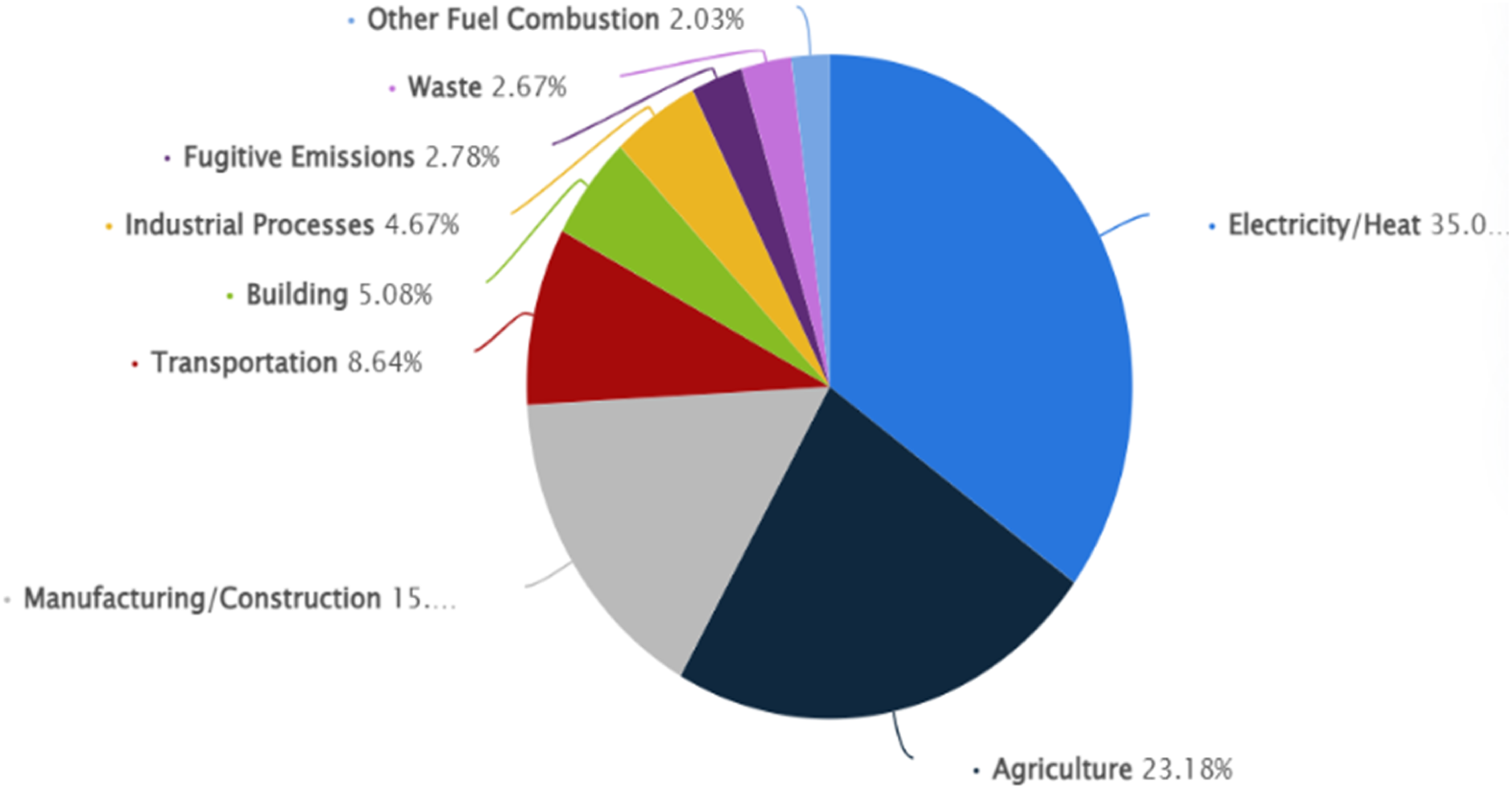
GHGs emissions in India in 2020, by sector.
Previous studies have identified several factors that influence environmental quality in India. These factors include population density, urbanization, policy variables, 6 energy consumption, financial development, and economic growth, 7 financial development, 8 income inequality, 9 urbanization, 10 renewable energy generation, 11 tourism development, 12 energy consumption, globalization, foreign direct investment, and remittances inflows, 13 technological innovation14–16 and geopolitical risk 17 have also been identified as factors affecting environmental quality in India, among others. However, this study considered international clean energy financing (ICEF), accessing to clean fuel and technology and other control variables such as globalization, economic growth and trade to explain environmental quality. Clean energy financing performs a vital role in bolstering ecological quality by providing essential resources and support for the adoption of innovative fuels and technologies.18–20
Given the backdrop and context provided, our study poses a pivotal question: Do international clean energy financing and access to clean fuel and technology enhance environmental quality? This inquiry represents a novel contribution to the energy literature, as it seeks to assess the relative impacts of ICEF and access to clean fuel and technology on environmental quality in India. Spanning from 2000q1 to 2020q4, our analysis incorporates additional factors such as economic growth, globalization and trade into the assessment of the load capacity factor (LCF). In scrutinizing the relative efficacy of ICEF and access to clean fuel and technology for a developing energy-dependent nation like India, our study employs multiple quantile-on-quantile regression (MQQR). This method enables us to explore how independent variables affect various quantiles of the dependent variable, offering a nuanced understanding of the underlying relationships. From the perspective of climate mitigation policy, our findings imply that the Indian government should devise policies aimed at promoting ICEF and access to clean fuel and technology to foster long-term improvements in environmental quality.
Short summary of past studies
The escalating impact of human-induced activities on the ecosystem has resulted in substantial damage, contributing to climate change and global warming. This, in turn, has led to a range of adverse effects such as wildfires, extreme cold weather, flooding, heavy rainfall and more. In response to these repercussions, policymakers, in collaboration with various intergovernmental organizations, are actively assessing the factors influencing ecological quality to formulate targeted policies. Despite numerous studies initiated on this subject, inconclusive or mixed results have surfaced, with variations attributed to the specific country or countries under investigation, the study period and the methodologies employed.
The connection between technology, access to clean fuel and ecological quality is mixed. The impact of access to clean fuel and advanced technology on ecological excellence can be both favourable and unfavourable, contingent on several factors and their management. Clean fuel technologies, encompassing renewable energy sources, along with cleaner-burning fuels, have the potential to substantially mitigate water and air contamination in comparison to conventional fossil fuels. This results in an enhancement of ecological quality by safeguarding water and air conditions. Additionally, advanced technologies often facilitate more resource-efficient practices, diminishing waste and mitigating ecological deterioration. For example, consider the study initiated by Pata et al., 21 focusing on China, a significant producer of CO2. They employed quantile-based methods from 1990 to 2020. The findings indicated that both technology and clean energy contribute to ecological integrity by enhancing LCF 1 . Additionally, in the pursuit of proposing SDGs, Kirikkaleli and Adebayo 22 analyzed the global economy to explore drivers of ecological excellence. Their results, based on data from 1990 to 2020, suggested that the increase in ecological excellence is associated with advancements in technology and the utilization of renewable energy. On the flip side, the manufacturing of advanced technologies frequently entails the extraction of rare metals and minerals, causing disturbances to habitats, soil deterioration and other ecological consequences. Inadequate handling of resource extraction can inflict damage on ecosystems. For illustration, using data from 1990 to 2015, Adebayo and Kirikkaleli, 23 in their analysis using the time-frequency-based analysis for the Japanese case, suggested that technology lessens ecological quality with clean energy promoting it.
The interrelationship between globalization, trade and ecological quality is intricate and multi-dimensional. While globalization and increased trade can drive technological progress, enhance living standards and foster economic progress with potential benefits for ecological practices, they also pose risks of ecological squalor and threats to ecological excellence. Taking the LAC region as a case study and with the aim of formulating SDGs, Pata et al. 24 applied the panel Toda-Yamamoto approach to investigate the drivers of load factor (LF) with a central focus on trade and globalization from 1990 to 2018. Their findings revealed that trade enhances LF by intensifying ecological excellence, while globalization diminishes LF by reducing ecological integrity. Similarly, focusing on newly industrialized countries, Guo et al. 25 employed the CS-ARDL estimator in their analysis to explore the drivers of ecological footprint using data from 1990 to 2019. Their discoveries indicated that trade and globalization contribute to ecological excellence by reducing ecological footprint. In a related study, Ghazouani and Maktouf, 26 analyzing data from 1971 to 2014 for oil-exporting countries, reported that trade promotes ecological deterioration, with globalization having an insignificant impact.
The influence of global clean energy financing on ecological quality plays a pivotal role in solving ecological issues. This type of financing, dedicated to supporting initiatives and projects centred around clean and sustainable energy sources, carries both negative and positive impacts on ecological integrity. On a positive note, investments directed toward clean energy technologies and various renewables can substantially lessen GHGs. This transition away from fossil fuels promotes climate change lessening, boost air quality and diminishes ecological contamination. Furthermore, clean energy financing bolsters the adoption and advancement of innovative technologies that progress energy efficiency, fostering a more sustainable utilization of resources. Examining the top ten economies, Meo and Karim 27 investigated the significant influence of green financing on ecological quality using a nonlinear approach, specifically QQR. Their comprehensive findings validate the favourable impact of green finance on reducing CO2, suggesting that green financing is environmentally friendly. Similarly, the study conducted by Sharif et al. 28 reported a comparable discovery, highlighting the emissions-reducing role of green financing. Additionally, Saleem et al., 29 investigation spanning from 1990 to 2018, employing a panel estimator, revealed the effective contribution of green financing in mitigating CO2 levels.
Gap in the literature
The review of the existing literature leads to a clear conclusion that numerous studies have investigated the determinants of ecological quality using both time series and panel analysis. While these studies have provided valuable insights into the factors influencing ecological quality, none have specifically delved into the roles of access to clean fuel and technology, as well as ICEF in enhancing ecological quality. This identified gap in the literature is addressed by the current study, which, for the first time, examines the effects of clean fuel and technology and ICEF on ecological quality, taking into account the influence of globalization and trade. While previous research has utilized indicators such as CO2, ecological footprint, carbon intensity, and carbon efficiency to measure ecological sustainability, our study utilizes the LCF as a more comprehensive indicator. LCF considers not only the supply side but also the demand side of environmental issues, providing a holistic perspective. 30 Moreover, our research diverges from that of Mahalik et al. 13 through the utilization of the LCF as a proxy for ecological quality. Additionally, we enhance their model by integrating the influence of ICEF and accessibility to clean fuel and technology. Furthermore, to overcome limitations observed in prior studies, we depart from conventional methods and employ the innovative MQQR. This approach explores the impact of independent variables on other independent variables, offering a more nuanced understanding of the relationships involved. In summary, our study contributes significantly to the existing literature by addressing gaps in previous research and providing fresh insights into the complex dynamics of ecological quality.
Material, model and methodology
Data
This study uses annual data from 2000 to 2020 2 to examine the impact of ICEF, access to clean fuel and technology, and globalization on environmental sustainability in India, taking into account the effects of economic growth and trade. Although indicators such as CO2 emissions, ecological footprint, carbon intensity and carbon efficiency are used in the empirical literature to measure environmental sustainability31–35, in this study, the LCF, which is a more comprehensive indicator as it takes into consideration not only the supply side but also the demand side of environmental issues, is preferred. 30 This study, for the first time, unveils the impact of ICEF on ecological integrity. ICEF supports to emerging nations for clean energy research and development and renewable energy production. 3 Table 1 provides all the details of the variables.
Variable description.

To address the potential issues associated with small sample sizes and heteroskedasticity, a two-step transformation process was employed in the study. Initially, we applied a natural logarithm to the annual data, and subsequently, this logarithmic data was converted into a quarterly frequency format, utilizing a quadratic-match summation approach. Furthermore, to mitigate any concerns related to multicollinearity, we performed a first-order differencing of the logarithmic quarterly series. In these transformations, we closely follow Balcilar et al., 36 Olasehinde-Williams et al. 37 and Pata et al. 21
Model and methodology
In this study, we empirically examine the impact of ICEF, accessing to clean fuel and technology, and globalization on the LCF for India by controlling the impact of economic growth and trade. In order to accomplish this objective, the following model is developed:
The concept of quantile regression (QR) was introduced by Koenker and Bassett in 1978 39 as a solution to solve the constraint of ordinary least squares regression (OLSR). While OLSR focuses on modelling the conditional mean of the predicted variable, QR, on the other hand, models the conditional distribution of the predictor variable through the use of quantiles. QR provides the advantage of enabling more realistic inferences, particularly in cases involving non-normally distributed, nonlinear, and unstable data that deviate from the assumptions of OLSR. In essence, QR allows for the examination of the influence of a set of factor variables on the conditional quantiles of the dependent variable.40–42
The study model presented in equation (1) can be tested with the multivariate quantile regression (MQR) by considering the multicollinearity issue in the following manner:
As can be understood from the above, the QR focuses on the conditional distribution of only the predicted variable. In response to this limitation, Sim and Zhou 43 introduced the quantile-on-quantile regression (QQR), which extends the modelling approach to encompass not only the conditional distribution of the predictor variable but also the conditional distribution of the factor variable. This innovation enables the QQR to investigate the relationship between two variables at various quantiles of their respective distributions. In essence, the QQR assesses how the conditional quantiles of a factor variable impact the conditional quantiles of a predicted variable.
It is clear from here that the QQR method has a bivariate structure. Alola et al.
38
introduced the MQQR method, which is an adaptation of the QQR designed for application in multivariate models. The study model presented in Equation (1) can be tested via the MQQR by considering the multicollinearity issue as below:
Details of the study analysis are presented in Figure 2.

Analysis process.
Empirical results
Preliminary analysis
In this section, we scrutinize the statistical, multicollinearity, nonlinearity and instability characteristics of the quarterly first-order differenced logarithmic series. Our aim is to assess the suitability of the MQQR method for this research. Upon examining the descriptive statistics offered in Table 2, it becomes evident that LCF exhibits a negative average over the specified sample period, in contrast to the other variables which exhibit positive average. Furthermore, the data highlights that ICEF displays a higher level of volatility compared to the other variables. Additionally, LCF, ICEF and GLO are positively skewed, while ACFT, EG and TRA exhibit negative skewness. Notably, all series exhibit positive excess kurtosis, except for ACFT and GLO. The Jarque-Bera (JB) normality test, as developed by Jarque and Bera, 44 reveals that ACFT and GLO follow a normal distribution pattern throughout the sample period, while the remaining series exhibit non-normal distributions. In contrast, the quantile-quantile (Q-Q) plots in Figure 3 show that LCF, ICEF, EG and TRA clearly deviate from normality, while ACFT and GLO deviate slightly from normality.
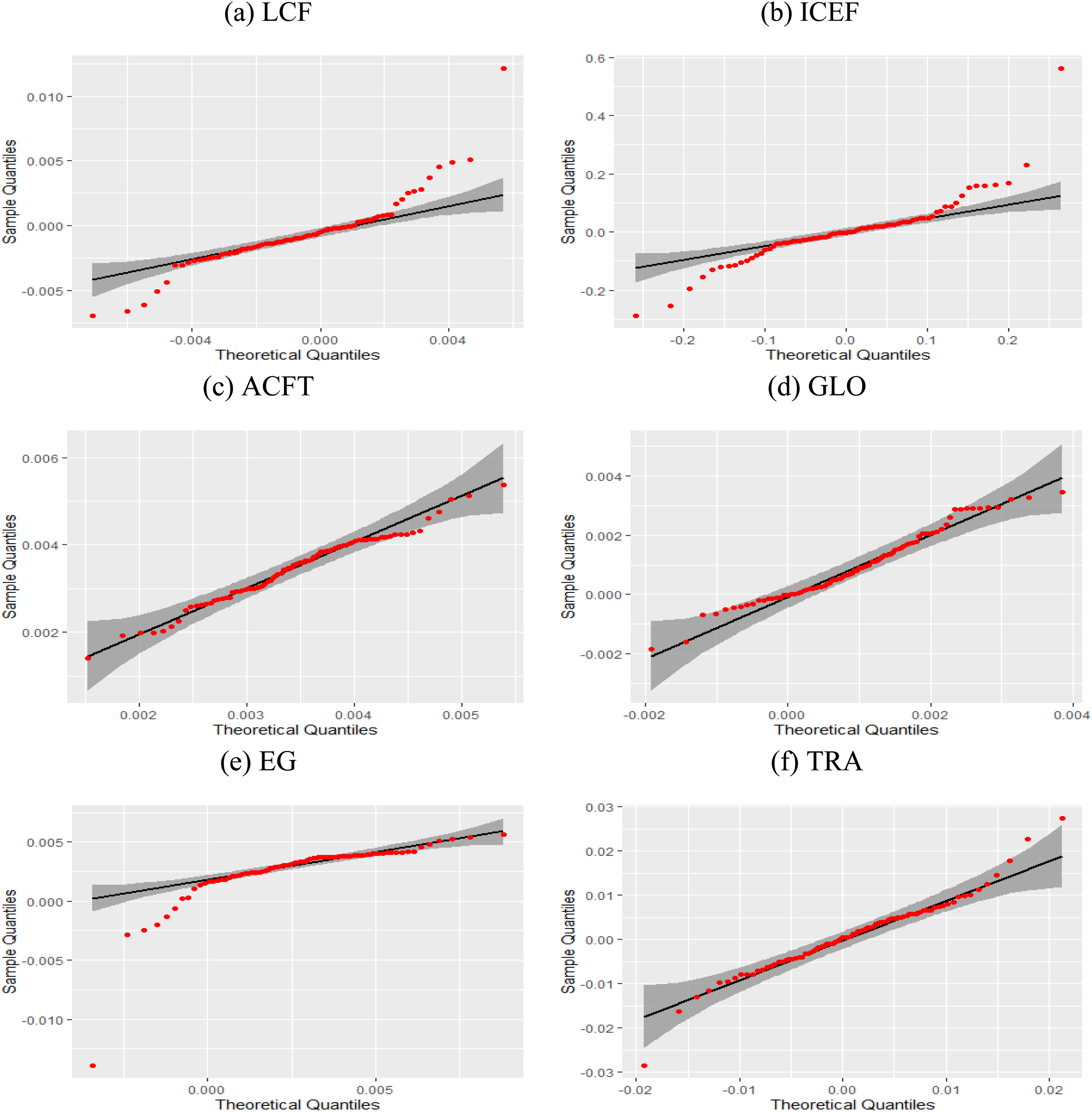
Q-Q plots: (a) LCF, (b) ICEF, (c) ACFT, (d) GLO, (e) EG, (f) TRA.
Descriptive statistics.
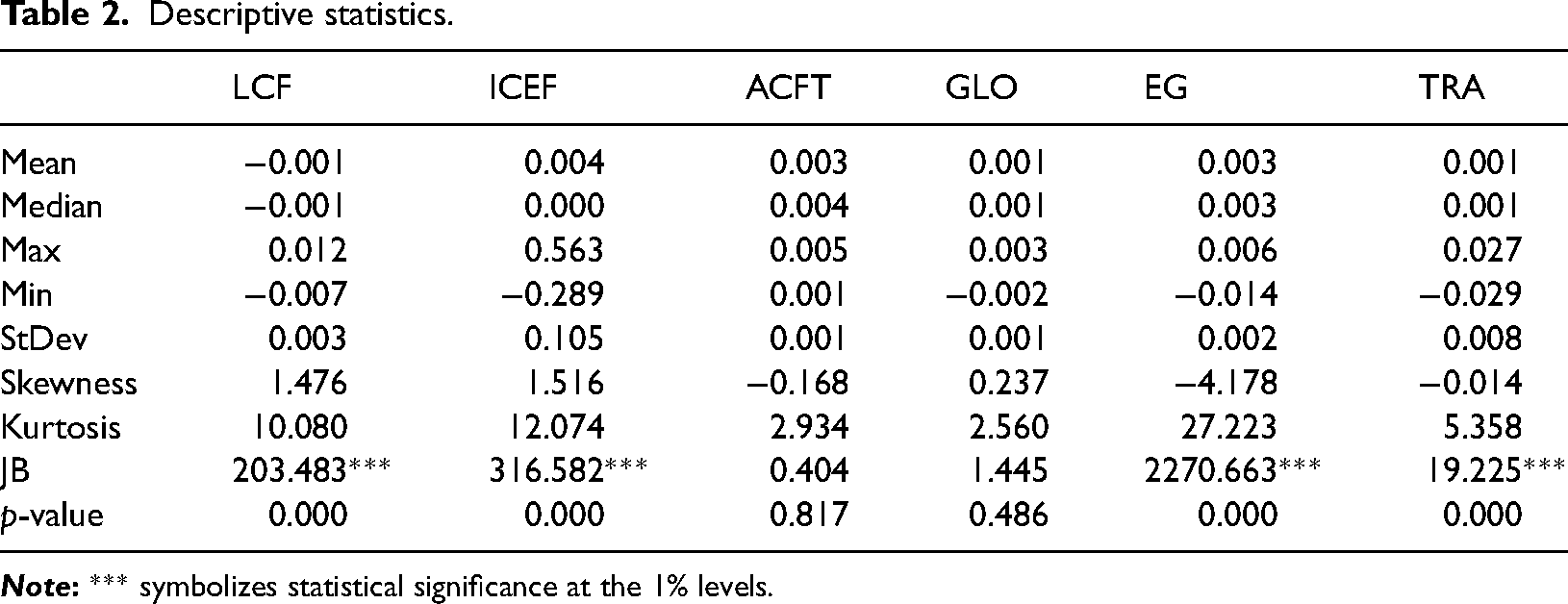
Table 3 provides a comprehensive overview of our multicollinearity analysis, including the pairwise Pearson correlation coefficients and the variance inflation factor (VIF) results. These metrics are crucial for assessing the potential presence of multicollinearity among our variables. Notably, a correlation coefficient exceeding 0.80 between independent variables is indicative of high correlation. The results presented in Table 3 affirm that substantial correlations do not exist among our factor and control variables. Furthermore, a deeper understanding of multicollinearity is obtained by examining the VIF statistics. Values of VIF greater than 5 have been suggested to be indicative of multicollinearity concerns, as noted by Caglar et al. 45 However, the findings in Table 3 demonstrate that all VIF values are below 5. This outcome underscores that there is no evidence of multicollinearity within the model presented in equation (1).
Multicollinearity results.
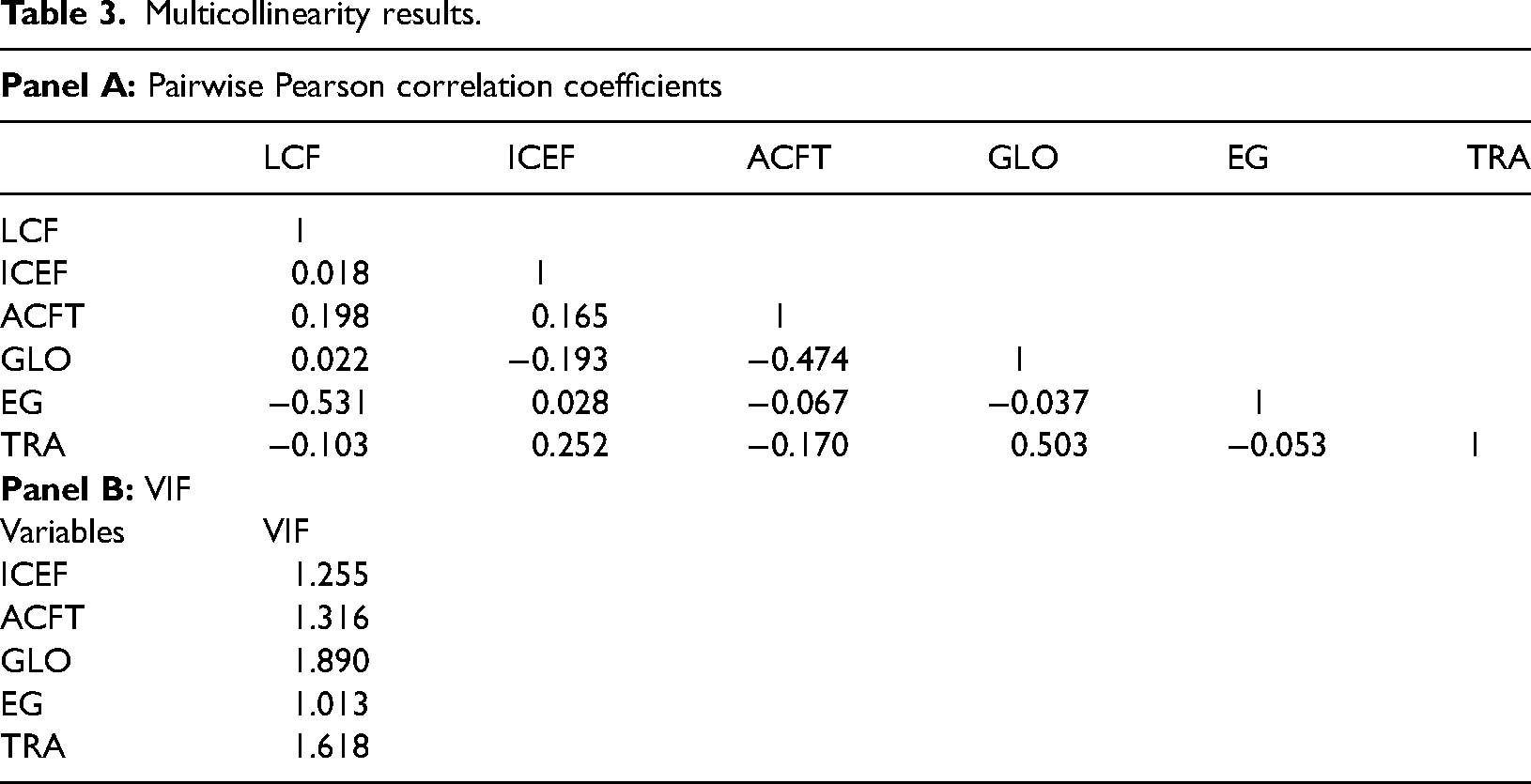
Table 4 illustrates the nonlinearity results of the data series under consideration, obtained by employing the BDS test, as developed by Broock et al., 46 following Alola et al., 47 Lee et al. 48 and Özkan et al.. 49 It is evident from the results that the null of linearity is rejected for LCF and ICEF at the m: 2, for ACFT, GLO and TRA at the all dimensions, and for EG at the m: 5 and 6. Based on these findings, we can conclude that all data series of the study present nonlinearity in the sample period.
Nonlinearity results.
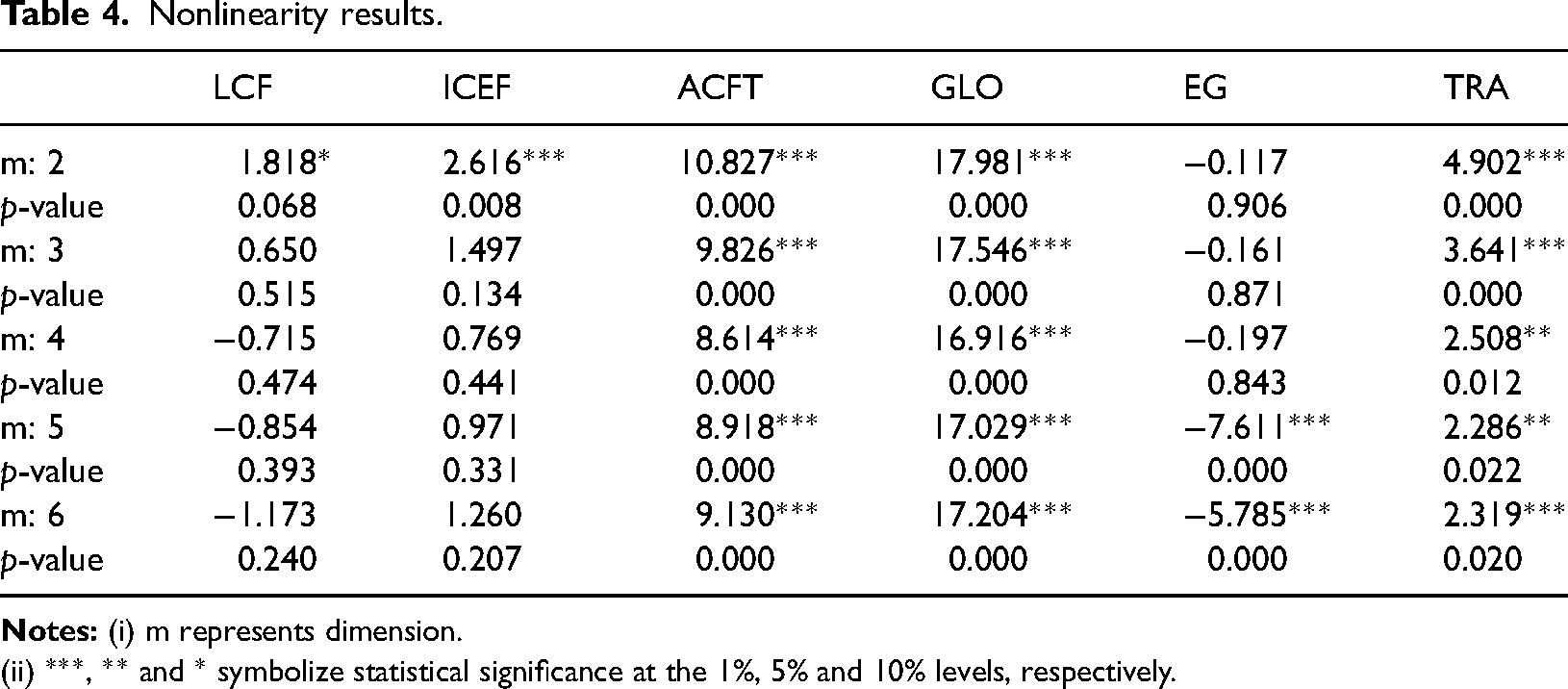
(ii) ***, ** and * symbolize statistical significance at the 1%, 5% and 10% levels, respectively.
Table 5 demonstrates the instability results estimated via Max-F, Exp-F and Ave-F methods, as introduced by Andrews 50 and improved by Andrews and Ploberger, 51 in line with Khan et al., 52 Olanipekun et al. 53 and Olasehinde-Williams et al. 54 It can be seen from the instability results that the null of stability is rejected for LCF, ACFT, GLO, EG and TRA with all methods, and for IECF with Max-F and Exp-F methods. According to these findings, it can be said that all the data series under consideration are instable in the sample period.
Instability results.
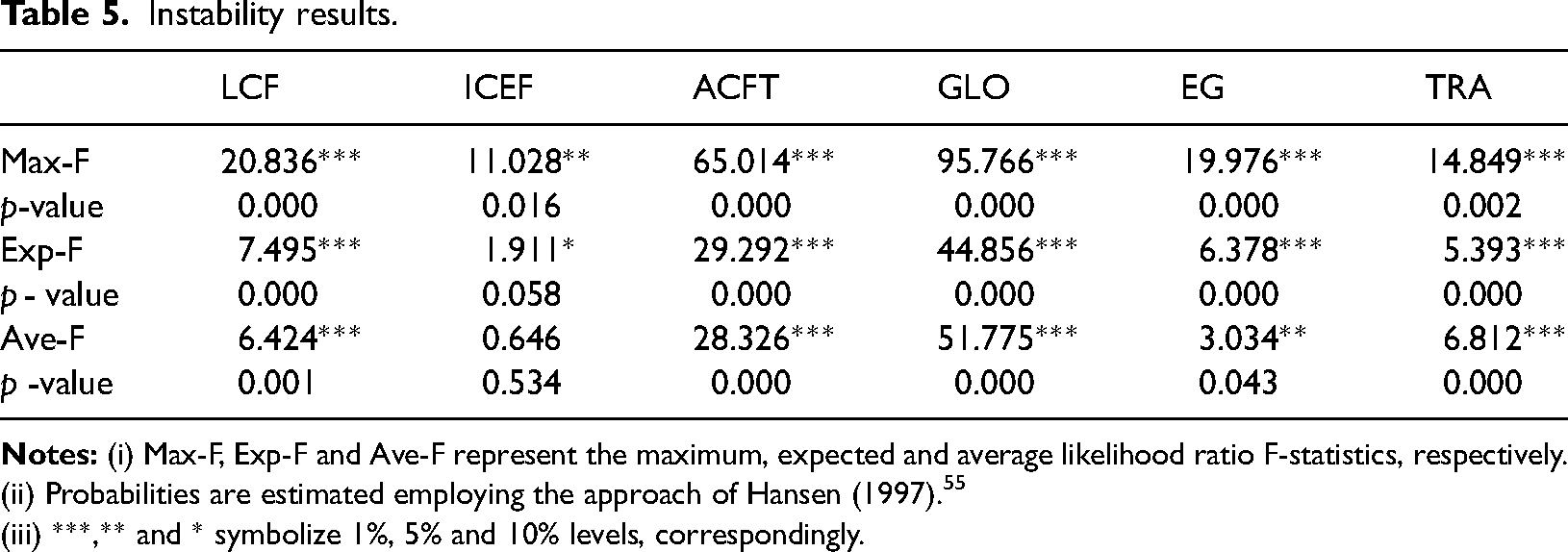
(ii) Probabilities are estimated employing the approach of Hansen (1997). 55
(iii) ***,** and * symbolize 1%, 5% and 10% levels, correspondingly.
The findings derived from the descriptive statistics, Q-Q plots, nonlinearity and instability tests collectively convey a strong suggestion that econometric methods focusing on the conditional distribution, as opposed to focusing merely on the mean of the distribution, are more apt for this study. In essence, these insights align with our rationale for employing the MQQR.
Multivariate quantile-on-quantile regression results
This study utilizes MQQR methodology to examine the influence of multiple factors on LCF. The advantage of employing MQQR is its capacity to offer a holistic comprehension of the interplay among various factors across diverse quantiles of the dependent variable concurrently. This approach enables researchers to scrutinize the fluctuations in the interrelationship between multiple explanatory variables and the dependent variable across distinct segments of the distribution. Therefore, MQQR facilitates the identification of heterogeneous effects, thereby offering insights into the dynamics of the analyzed phenomenon.
These factors encompass ICEF, access to clean fuel and technology, globalization, economic growth and trade. As previously stated, the conventional QQR method is a univariate approach that may overlook other influential variables affecting the dependent variable in the analysis. To overcome this limitation, we modified the QQR method to include multiple independent variables. Our novel nonparametric MQQR method assesses the interrelationship between the quantiles of the dependent variable and those of numerous independent variables. The evolution allows for a more complete understanding of the relationship. In addition, our evaluation of environmental quality utilizes the LCF, a newly devised measure computed by dividing Biocapacity by ecological load. An increasing LCF is indicative of an improvement in environmental quality, while a decreasing LCF suggests a decline. In contrast to commonly used environmental indicators such as ecological footprint, carbon dioxide, sulphur dioxide, nitrogen oxide emissions and similar metrics, the LCF presents a unique and alternative methodology. Consequently, the coefficient of the LCF necessitates an interpretation contrary to widely accepted norms. For example, a decrease in ecological footprint has traditionally been associated with enhanced environmental quality, whereas an upsurge in CO2 is indicative of a deterioration. On the other hand, an increase in LCF corresponds to an enhancement in ecological conditions.
Figure 4(a) depicts the analysis conducted to examine the influence of ICEF on the LCF in India while controlling for other relevant variables. The findings confirm an overall positive impact of international financing for clean energy on the LCF. It is worth noting that this relationship demonstrates varying degrees of strength across various quantiles. The correlation between ICEF and the LCF is particularly significant within the quantiles ranging from 0.70 to 0.95. This suggests that an increase in ICEF is associated with a corresponding increase in the LCF. The results of this study are consistent with the arguments made by Paramati et al. 56 and Meo and Karim, 27 thereby offering further substantiation for the positive influence of ICEF on environmental sustainability. The authors contend that the apparent positive relationship between international financing for clean energy initiatives and the LCF can be ascribed to the environmental advantages linked to such projects. The provision of additional funding indicates a departure from traditional energy sources that have adverse environmental impacts, thereby leading to enhanced environmental conditions. Clean energy initiatives frequently coincide with the principles of ecological sustainability, as they aim to decrease the ecological load and improve biocapacity. Furthermore, the development of clean energy technologies serves to alleviate pollution, thereby yielding a beneficial effect on the low-carbon future.
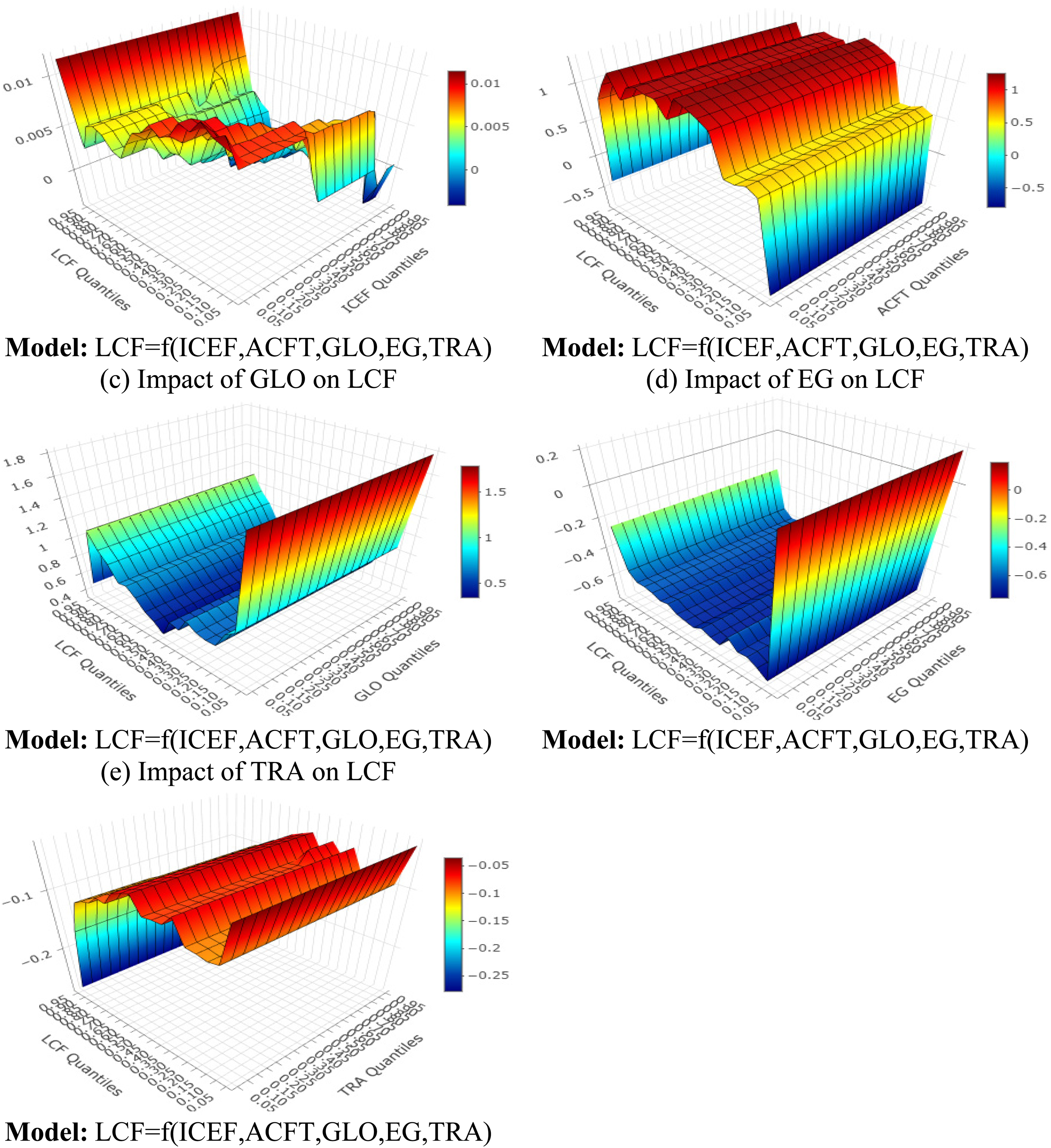
Multivariate quantile-on-quantile plots: (a) impact of ICEF on LCF, (b) impact of ACFT on LCF, (c) impact of GLO on LCF, (d) impact of EG on LCF, (e) impact of TRA on LCF
Figure 4(b) depicts the impact of access to clean fuel and technology on the LCF. The findings underscore a significant positive correlation between accessing clean fuel and technology and the LCF, while controlling for other influential variables. Notably, at lower quantiles, a negative relationship between these variables is evident. However, at medium and high quantiles, a robust positive association emerges. Clean fuel technologies, as elucidated by Zeng et al., 57 contribute to fostering an environmentally sustainable energy landscape by curbing emissions and enhancing energy efficiency. Moreover, advancements in environmentally friendly technology diminish reliance on natural resources, aligning with the objectives of the LCF. In addition to the efficiency and sustainability improvements spurred by technological progress, policy backing, augmented investment and the global transition towards cleaner energy solutions may have bolstered the LCF. As depicted in Figure 4(c), globalization exerts a noteworthy positive influence on the LCF. These findings resonate with those of Shahbaz et al. 58 and Li et al., 59 who contend that the heightened LCF associated with globalization stems from the sector's heightened openness to trade, collaboration and market-driven innovation. An uptick in demand for eco-friendly goods stimulates innovation, fostering the adoption of cleaner production methods and facilitating knowledge dissemination on sustainability, both made feasible by globalization.
The results, displayed in Figure 4(d), confirm the overall negative interrelationship between economic growth and LCF. However, we found a strong positive interrelationship between economic progress and LCF at higher quantiles of growth (0.70–0.95). Environmental suitability is reduced due to GDP, according to research by Mikayilov et al. 60 and Shahbaz et al. 61 In contrast, high levels of GDP are associated with better environmental quality. 62 Common economic development patterns explain the correlation between low GDP and poor environmental quality, in contrast to better environmental conditions as GDP rises. Increased pollution is a potential early effect of industrialization. In many cases, improvements in environmental quality coincide with increases in national GDP, as countries adopt cleaner technologies and more sustainable practices.
Figure 4(e) displays the effect of trade on the LCF. The overall relationship between trade and LCF is negative, though its strength varies across quantiles. The findings that trade degrades environmental quality are also supported by studies by Ertugrul et al., 63 Wang et al. 64 and Dou et al. 65 The observed negative interrelationship between trade and ecological quality implies that higher levels of trade are related with a decline in environmental conditions. Consistent with the viewpoint of Adebayo and Kirikkaleli., 23 heightened trade frequently stimulates a surge in the demand for natural resources, culminating in escalated extraction rates. Consequently, this phenomenon precipitates habitat destruction, the depletion of natural resources and deforestation, all of which are contributory factors to ecological deterioration. Moreover, trade facilitates the cross-border movement of goods, thereby amplifying transportation activities and the associated emissions. 66 Additionally, most developing nations including India are characterized by lenient ecological regulations and soft trade policies, which can lead to increase in ecological contamination.
Robustness check (multiple quantile regression)
Furthermore, we expanded our analysis in line with the methodologies of Alola et al. 38 and Ozkan et al. 67 by employing MQR to corroborate the findings of MQQR. To discern coefficients for various quantiles of exogenous variables, the MQQR technique decomposes the standard QR estimates. The quantiles of LCF are depicted in Figure 5, alongside MQR and MQQR estimates. In Figure 5(a), the impact of ICEF on LCF in India is depicted, revealing a positive influence across all quantiles of LCF, while considering the influence of Access to Clean Fuel and Technology (ACFT), Globalization (GLO), Economic Growth (EG) and Trade (TRA). This finding aligns with the MQQR results displayed in Figure 4(a), suggesting that ICEF promotes LCF. Figure 5(b) illustrates the effect of ACFT on LCF, considering the influence of ICEF, GLO, EG and TRA. While ACFT has a negative impact at the extreme lower and higher tails (0.05 and 0.95), in the majority of quantiles (0.10–0.90), its effect on LCF is positive, corroborating the MQQR results shown in Figure 4(b). Figure 5(c) presents the influence of GLO on LCF, considering the effects of ICEF, ACFT, EG and TRA, demonstrating a positive effect across all quantiles (0.05–0.95) of LCF. This suggests that GLO enhances ecological quality, confirming the findings of Figure 4(c). In Figure 5(d), the impact of EG on LCF is revealed, considering the effects of ICEF, ACFT, EG and TRA, indicating a reduction in LCF, thereby exacerbating ecological damage. This outcome corresponds with the MQQR results in Figure 4(d). Lastly, Figure 5(e) displays the effect of TRA on LCF, showing a negative influence across all quantiles (0.05–0.95) of LCF, affirming the MQQR findings depicted in Figure 4(e). Our MQQR findings are bolstered by the observation that their trend closely resembles that of the MQR.
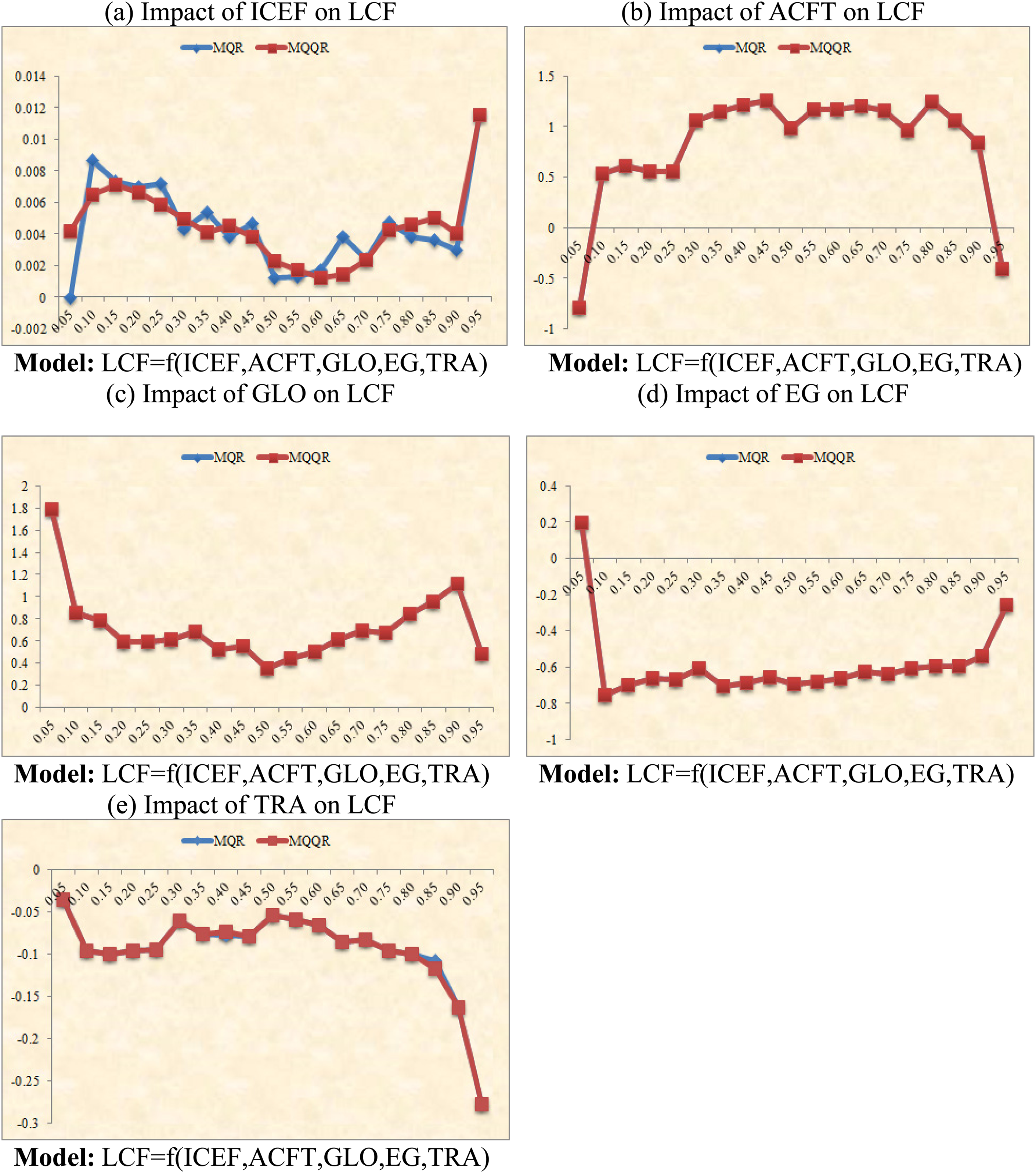
Averaged multivariate quantile-on-quantile regression and multivariate quantile regression results: (a) impact of ICEF on LCF; (b) impact of ACFT on LCF; (c) impact of GLO on LCF; (d) impact of EG on LCF; (e) impact of TRA on LCF
Conclusion and policy recommendations
Conclusion
The aspirations to achieve carbon neutrality by 2070 and significantly reduce carbon intensity underscore India's dedication to enhancing atmospheric quality. However, persistent reliance on fossil fuels, unsustainable globalization practices, and extensive use of environmentally unfriendly methods in agriculture pose challenges to meeting India's environmental goals. In this context, the current investigation aims to inspect the factors influencing ecological quality in India. Diverging from previous approaches, our study employs the LCF, considering both the demand and supply sides of the ecosystem, as a comprehensive measure of ecological quality. Additionally, we contribute to the literature by inspecting the nonlinear impacts of clean fuel, technology and ICEF on ecological quality. Utilizing data from 1970 to 2019, we apply advanced econometric techniques suitable for handling nonlinear approaches, including MQQR and MQR. The results of our study indicate that ICEF, access to clean fuel and technology, and globalization positively influence the LCF, thereby improving ecological quality. Conversely, economic growth and trade have a negative impact on the LCF, leading to a decrease in ecological quality.
Policy remarks
The findings of this study offer valuable insights into the factors affecting the LCF, a crucial indicator of ecological sustainability, in India. The results indicate that ICEF, accessing to clean fuel and technology, and globalization positively influence the LCF, while economic progress and trade have a negative impact on environmental sustainability. Based on these findings, we have developed some important policy implications for Indian policymakers and government authorities.
Firstly, recognizing the favourable impact of ICEF on the LCF, Indian policymakers should actively pursue and advocate for international funding directed towards clean energy research, development, and renewable energy production. By bolstering collaborations with international organizations and nations specializing in clean energy, India can expedite its transition towards cleaner and more sustainable energy sources, thereby enhancing environmental quality. Secondly, enhancing access to clean fuel and technology for a larger segment of the Indian population is imperative. To achieve this, the Indian government must prioritize investment in infrastructure research and development (R&D). Government initiatives should emphasize ensuring that advancements in clean fuel and technology not only benefit urban residents but also reach those residing in rural areas, making them more affordable and accessible to all. Thirdly, given the significant influence of globalization on India's environmental sustainability, policymakers in India ought to adopt a balanced approach to globalization. This entails prioritizing the promotion of sustainable practices within the global supply chain, international trade frameworks and cross-border collaborations. Strategies may include integrating environmental criteria into trade agreements and fostering responsible practices throughout the globalization process. Fourthly, while economic growth remains paramount for enhancing the living standards of the Indian populace, it is imperative to proceed with a keen awareness of its potential environmental ramifications. Policymakers should explore avenues for incorporating environmentally friendly technologies and regulations to mitigate the adverse effects of economic growth on the LCF. Fifth, India's trade policies should be harmonized with environmental sustainability objectives, with particular emphasis on reducing the carbon footprint associated with both imports and exports. Policymakers could contemplate implementing measures such as carbon tariffs, setting emission standards for traded goods and incentivizing eco-friendly trade practices to align trade policies with environmental goals.
In conclusion, this study suggests that a comprehensive and integrated approach to environmental sustainability is required in India. The government, in collaboration with international partners, should prioritize clean energy financing, equitable access to clean fuel and technology, responsible globalization and green economic growth and trade strategies. By doing so, India can work towards increasing its LCF, ensuring a more sustainable and resilient environment for current and future generations.
Limitation of study and future paths
While our current investigation delved into the determinants of ecological quality through the adoption of recently introduced nonlinear methodologies, it is not without its limitations. Primarily, the unavailability of data for certain years posed a significant constraint in our analysis. Therefore, future research endeavours should prioritize incorporating more recent data as soon as they become accessible. Furthermore, notable variables such as geopolitical risk, country risk, financial globalization and gender considerations were not included in our study, warranting attention in future inquiries. Additionally, our use of the LCF as a proxy for ecological quality does not encompass the entirety of ecological quality/degradation. Thus, it is imperative for forthcoming studies to explore alternative proxies such as carbon intensity, GHG emissions, carbon emissions, and ecological footprint. By encompassing these proxies, a more comprehensive and accurate policy framework can be formulated. Lastly, our study solely focuses on India as a case study, potentially limiting its generalizability to other country contexts. Nonetheless, the methodology and framework employed here can serve as a template for replication in other countries or regional analyses, facilitating the development of more holistic policy measures.
Supplemental Material
sj-docx-1-eae-10.1177_0958305X241244516 - Supplemental material for SDG achievement through international clean energy financing and access to clean fuel and technology
Supplemental material, sj-docx-1-eae-10.1177_0958305X241244516 for SDG achievement through international clean energy financing and access to clean fuel and technology by Chen Xiang Jie, Oktay Özkan, Muhammad Saeed Meo and Muhammad Ramzan in Energy & Environment
Supplemental Material
sj-docx-2-eae-10.1177_0958305X241244516 - Supplemental material for SDG achievement through international clean energy financing and access to clean fuel and technology
Supplemental material, sj-docx-2-eae-10.1177_0958305X241244516 for SDG achievement through international clean energy financing and access to clean fuel and technology by Chen Xiang Jie, Oktay Özkan, Muhammad Saeed Meo and Muhammad Ramzan in Energy & Environment
Supplemental Material
sj-docx-3-eae-10.1177_0958305X241244516 - Supplemental material for SDG achievement through international clean energy financing and access to clean fuel and technology
Supplemental material, sj-docx-3-eae-10.1177_0958305X241244516 for SDG achievement through international clean energy financing and access to clean fuel and technology by Chen Xiang Jie, Oktay Özkan, Muhammad Saeed Meo and Muhammad Ramzan in Energy & Environment
Footnotes
Data availability
The datasets used and/or analyzed during the current study are available from the corresponding author on request.
Declaration of conflicting interests
The authors declared no potential conflicts of interest with respect to the research, authorship, and/or publication of this article.
Funding
The authors received no financial support for the research, authorship, and/or publication of this article.

Supplemental Material
Supplemental material for this article is available online.
Notes
References
Supplementary Material
Please find the following supplemental material available below.
For Open Access articles published under a Creative Commons License, all supplemental material carries the same license as the article it is associated with.
For non-Open Access articles published, all supplemental material carries a non-exclusive license, and permission requests for re-use of supplemental material or any part of supplemental material shall be sent directly to the copyright owner as specified in the copyright notice associated with the article.
