




Abstract
Rapidly evolving innovation and digitalization have captured the focus of policymakers and scholars regarding their potent role in influencing environmental quality. The present research analyzes the impact of these variables on the carbon emissions of Brazil, Russia, India, China, and South Africa economies from 1990 to 2021. This research also explores the impact of economic growth, quadratic green innovation, and green energy on carbon emissions. Using several panel diagnostic tests, this research validates heterogeneous slopes, the presence of cross-sectional dependence, and significant cointegration. Due to the mixed integration order, this research uses a cross-sectional augmented autoregressive distributed lag model, and the results show that economic expansion and green innovation are significant drivers of emissions in both the short and long run. However, digitalization, quadratic green innovation, environmental policy stringency, and green energy are significant in improving environmental quality and sustainability. The long-term results are tested by employing a series of parametric and nonparametric regressions. This research recommends further investment in environmental research and development, digital technologies, green innovation, and the strengthening of environmental policies to attain sustainable development.
Introduction
The Brazil, Russia, India, China, and South Africa (BRICS) nations account for a large share of the worldwide gross domestic product (GDP) and the corresponding share of carbon dioxide (CO2) emissions. Currently, they constitute approximately 41% of the global population and 24% of the worldwide GDP. 1 Moreover, they contribute approximately 40% of global CO2 emissions. 2 Therefore, the policy challenge is how to achieve higher per capita GDP while not adversely affecting the environment. According to Ramanathan et al. 3 , the development paths followed in these economies will help or hinder the achievement of global climate targets. However, no systematic knowledge exists on how various factors, such as economic growth, digitalization, green innovation, and policy stringency, interrelate to impact emissions across these heterogeneous economies.
With respect to sustainable development and anticlimate change programs, the complex relationships among technological innovations, economic development, environmental policy, and energy production have attracted the interest of researchers, policy-makers and practitioners. In the context of increasing fears about growing CO2 emissions and environmental degradation, the roles of digitalization and green innovation are the subject of numerous debates on how to separate economic growth from environmental damage. This research aims to explore whether digitalization and green innovation help environmental recovery by reducing CO2 emissions. Recent decades have seen the rapid spread of digitalization, which is characterized by the integration of information and communication technologies (ICTs) into a number of spheres of life. This reconfiguration has transformed industries, changed consumer patterns, and redefined human relations, bringing both prospects and challenges for environmental sustainability. 4 Supporters claim that digital technologies can support better resource utilization, increase energy efficiency and enable smart solutions for environmental monitoring and management. 5 On the other hand, disbelievers warn of the potential reversing effects and unintentional outcomes of digitalization, such as high energy use, electronic waste, and privacy concerns related to data. 6 As shown in Figure 1, the increasing level of digitalization—proxied as the number of individuals using the internet—has rapidly increased in all emerging economies. In ascertaining the true influence of digitalization on pollution, a comprehensive examination of the available data might offer a critical solution, which could also help governments and policymakers by offering nuances on this complex association.
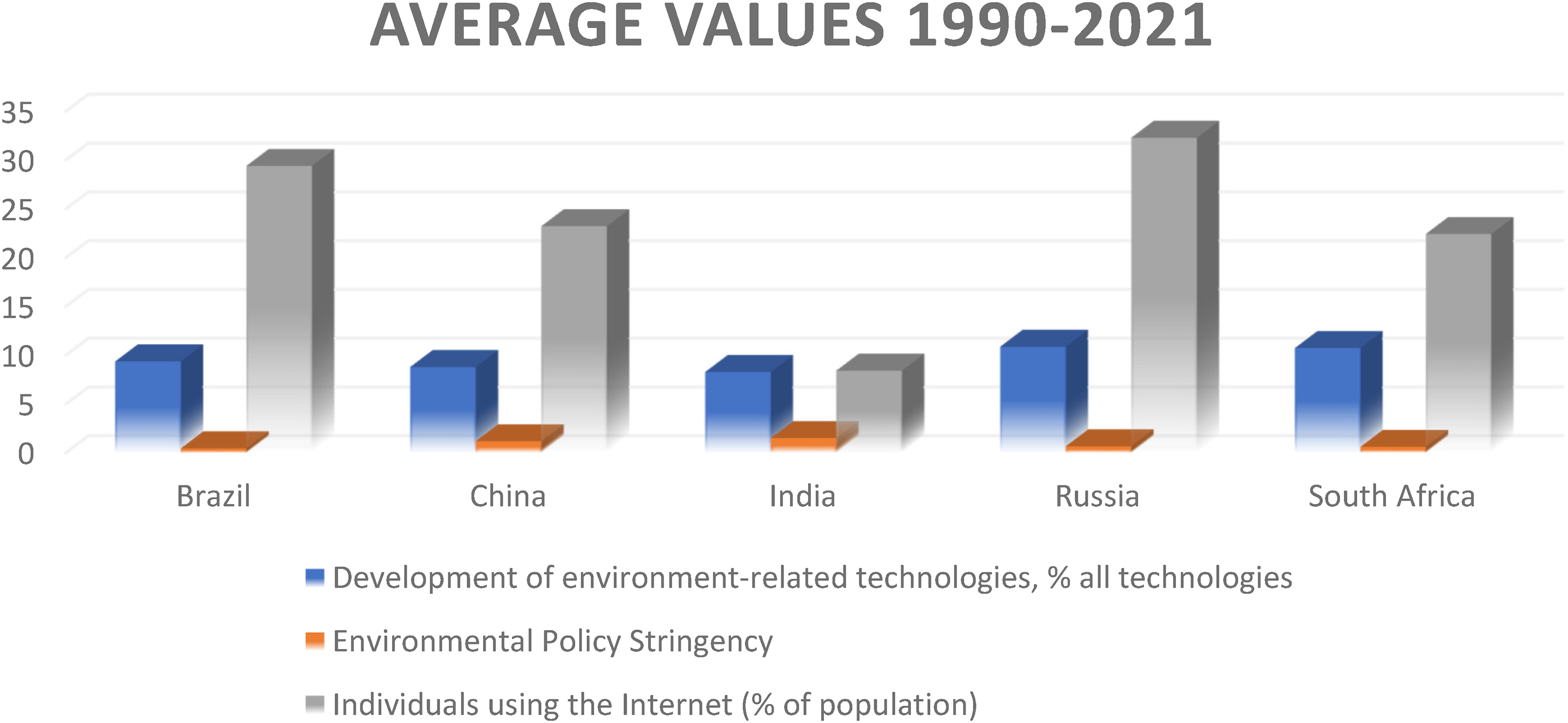
Average values of green innovation, policy stringency, and digitalization in BRICS economies.
Simultaneously, green innovation has been recognized as a leading enabler of sustainable development, providing technological responses to control environmental harm and transform toward a low-carbon economy. Green innovations can be considered a wide array of practices, technologies, and strategies that are used to decrease the consumption of resources, reduce the generation of waste, and encourage the adoption of renewable energy. 7 Clean energy technologies, eco-friendly production processes, and other green innovations offer the potential for decarbonizing industries, improving energy efficiency, and increasing environmental resilience. 8 In the BRICS economies, the adoption of green innovation is at a noteworthy speed, and most of these economies target environmental recovery (see Figure 1). The degree to which green innovation can effectively reduce carbon emissions is, however, a question that has yet to be empirically verified, especially given the broader socioeconomic factors and policy environment framework.
In addition to digitalization and green innovation, economic growth determines environmental outcomes since the quest for wealth leads to high energy consumption, industrial activity, and resource exploitation. Traditionally, rapid economic progress has been linked to increases in CO2 emissions and environmental pollution, highlighting the dichotomy between the development agenda and environmental preservation. 9 However, some researchers have claimed that the separation of economic growth from environmental damage is possible with the help of technological development, policy measures, and the transition to sustainable production and consumption patterns. 10 Therefore, the transformation to green energy sources has become an instrumental approach for reducing CO2 emissions and promoting environmental sustainability. Solar, wind, and hydroelectric power, among other renewable energy technologies, provide viable alternatives to fossil fuels and therefore can help reduce greenhouse gas emissions and improve energy security. 7 However, the speed and size of renewable energy utilization are influenced by several factors, including technological maturity, market behavior, policy support, and institutional frameworks. 11
In addition, environmental policies and regulations have a large influence on environmental outcomes by rewarding, standard setting, and directing behavior toward sustainable practices. 12 The implementation of strict environmental policies, which include carbon pricing mechanisms, emission trading systems and pollution controls, has been confirmed to be an efficient way of curbing pollution emissions and stimulating green innovation through the internalization of environmental externalities and thus investments in clean technologies. 13 Most developed economies are characterized by stringent environmental policies, which consequently increase their environmental recovery practices. However, the BRICS economies have yet to be explored in the context of environmental quality assessment via policy stringency.
This research aims to discover the effects of digitalization and green innovation on CO2 emissions within BRICS nations. Over the last three decades, international organizations and communities have exerted pressure on various resource-rich regions to develop advanced approaches and practices regarding a low-carbon economy. Therefore, these variables could be instrumental in determining the environmental quality of emerging nations. Additionally, this study aims to elucidate the crucial effects of economic progress, green energy and environmental policy stringency on environmental quality and CO2 emissions. These sectors have been widely targeted for addressing climate change issues. Therefore, the importance of these factors cannot be ignored. More precisely, this study proposes to statistically study the linkages among those variables with the help of rigorous econometric techniques, including the cross-sectional augmented autoregressive distributed lag (CS-ARDL) approach, along with several parametric and nonparametric methods. By investigating these dynamics between 1990 and 2021, this study aims to determine the effectiveness of digitalization and green innovation in reducing CO2 emissions and promoting environmental sustainability within emerging economies.
The BRICS economies constitute a group of emergent nations in terms of development level and the availability of resources. This means that when a global comparison is made on the basis of economies, it is more diverse than when a comparison is made on the basis of a country or group of homogeneous economies. This is particularly true, as suggested by Rasiah et al., 14 as lessons learned in BRICS countries can indeed be invaluable for any other emerging country faced with a similar dilemma of progress at the cost of sustainability. Although the general policy directions are being presented, there is an understanding that certain particulars of policy prescriptions may have to be country-specific. The purpose of the current research is primarily to help policymakers understand the relationships among economic development, technological development, and environmental outcomes. Thus, this research can help identify the relative effects of digitalization, green innovation, and policy stringency on CO2 emissions, and the results can be used to prepare better targeted measures. For example, green innovation has an even greater effect on emission reduction than a broad drive toward digitalization does; thus, R&D investments should be targeted in this area rather than in the broad ICT infrastructure. 15
This study adds to the literature in various important ways. First, it broadens the understanding of the bond between digitalization, green innovation, and carbon emissions in BRICS nations’ specific environments. The consideration of emerging economies adds an element of innovativeness to the research, given the peculiar socioeconomic characteristics, institutional frameworks, and policy environments predominant in BRICS countries, which have not been emphasized in previous studies. Second, this research contributes to advancing knowledge by considering in detail the nexus between digitalization, green innovation, economic development, green energy and environmental policy stringency and provides a comprehensive view of environmental sustainability. 16 Through simultaneous consideration of multiple factors, this research provides detailed analyses of the complicated forces that determine environmental outcomes in emerging economies, thus enriching both academic research and policy discussion on sustainable development. 9
Furthermore, the utilization of modern econometric techniques, for example, the CS-ARDL approach, improves the methodological strength of the research, guaranteeing that the results are both powerful and dependable. 7 Although this study poses a number of new combinations of variables and may suggest new possibilities for methodological approaches, its major value is its policy consequences. As it provides a picture of how various aspects affect CO2 emissions in most emerging economies worldwide, it serves to fill a gap in knowledge with respect to the development of sustainable strategies. From the arguments presented by Stern, 17 climate policymaking needs to consider the structure of the global economic and technology systems, especially in those economies that are experiencing robust growth. This research aims to provide an understanding that can be of use to the formation of national policies in BRICS countries, as well as international climate change discussions. This research is quite timely, especially as the issue of climate change continues to receive more attention than before. The subsequent Paris Agreement and any COP meetings emphasize that all nations, including emerging markets, have to shift toward low-carbon development trajectories. 18 This study may help achieve the Sustainable Development Goals (SDGs), particularly SDG 13 (climate action without sacrificing development) and SDG 8 (cent work and economic growth), through identifying which specific methodologies (digitalization, green innovation, and policy measures) are efficient in decreasing emissions or the negative impact of climate change on the world economy.
Review of the literature
This section reviews the empirical literature prevailing in the context of connections between different economic, technological, and energy-related factors and the quality of the environment. The literature on the importance of economic expansion or growth on CO2 emissions is comprehensive and diverse. The environmental Kuznets curve (EKC) hypothesis in BRICS countries has been mixed in the past 19 and 20 claimed that the EKC hypothesis is valid for BRIC countries and India, which illustrates that economic development leads to a decrease in emissions. Similarly, the EKC paradox is valid in the context of NAFTA members and G-20 economies.21,22 However, the EKC hypothesis has been refuted by Ozturk and Al-Mulali 23 and Zambrano-Monserrate et al. 24 concerning BRICS countries and the absence of the hypothesis's applicability to Brazil. These conflicting findings therefore raise questions about the dynamic model linking economic development with environmental pollution in emerging economies. Furthermore, in a panel study of Chinese provinces, Zhang et al. 25 demonstrated that both economic expansion and carbon emissions steadily increased from 2011 to 2019. In the case of Serbia, Mitić et al. 26 utilize the ARDL approach and conclude that economic expansion initially harms environmental quality by emitting pollution while improving environmental quality once the optimum level of economic growth is achieved. Similarly, several studies, including Jebabli et al., 27 Wahab et al., 28 and González-Álvarez and Montañés, 29 have offered evidence regarding the destructive influence of economic development on environmental quality, as targeting greater economic growth requires rapid industrialization and a boost in economic activities, which, despite contributing to economic production, require more fossil fuel energy. As a result, the higher demand for fossil fuel energy significantly accelerates environmental deterioration by increasing pollution levels. In the context of achieving environmental sustainability, studies by Azzeddine et al., 30 Zhao et al., 31 and Zhang et al. 32 examined the state of decoupling and recommended policies to decouple economic expansion from environmental pollution. However, the decoupling process could only be possible once fossil fuel energy dependence is minimized in the industrial sector. 33 Despite such empirical evidence, the lack of consensus highlights a need for a more detailed, country-level understanding of how development trajectories and policy environments differ and might affect health outcomes themselves and related behaviors. Like any other socioeconomic phenomenon, it can be assumed that certain factors, including the economic structure, energy mix, and policy environment, significantly define the relationship between economic growth and renewable energy deployment in BRICS countries, highlighting the need for the development of country-specific strategies and solutions in the context of sustainable development.
The extent to which green innovation can contribute to lowering CO2 emissions has been a subject of controversy, especially in emerging economies. Chen and Lee 34 revealed that green patents and technology innovation in the G7 countries significantly alleviated CO2 emissions and minimized carbon intensity, and Cheng et al. 35 reported similar impacts in China. However, Ganda 36 reported inconclusive findings regarding the relationship between green innovation and emissions in BRICS nations, whereas Mensah et al. 37 reported that the effect of green innovation on emissions is greater in developing nations. As mentioned earlier, moving toward a higher income level could improve environmental quality, referred to as the EKC hypothesis. However, the EKC stresses the enhancement of green innovation and green energy to replace traditional fossil fuels with clean sources, which may favor environmental sustainability and lead to the attainment of SDGs 7, 8, 11, and 13. 38 In the case of Ghana from 1980 to 2018, Ahakwa et al. 39 used quantile‒quantile regression and asserted that green energy and green innovation are significant drivers of environmental sustainability. Zeng et al. 40 investigated the BRICS economies from 1990 to 2022 and concluded that technological innovation and foreign trade are the leading drivers of pollution emissions. However, the study claims that green energy, energy efficiency, and green energy output are significant promoters of ecological stability. More recently, Balsalobre-Lorente, Nur, et al. 41 and Balsalobre-Lorente, dos Santos Parente, et al. 42 investigated the G7 and BRICS economies, respectively, by using panel econometric approaches. The study concludes that green energy and innovation significantly reduce the ecological footprint. In the case of 20 green innovator economies, Koseoglu et al. 43 use panel econometric approaches to analyze data from 1993 to 2016 and claim that both green innovation and green energy are significant indicators of ecological stability, as these factors reduce pollution levels in the region. Similarly, the latest works by Xiao et al., 44 Li et al., 45 Abbasi et al., 46 Shen et al., 47 and Tariq et al. 48 analyzed various regions and claimed that both green energy and green innovation are significant drivers and factors of environmental sustainability and carbon emissions reduction. These differences indicate that the effects of green innovation and energy efficiency on CO2 emissions may be moderated by the technological development level, innovation absorption capacity and supporting policies and facilities. The dissimilarity in the efficiency of the programs and policies being implemented is reflected in the different results found in various studies, which reveals that while encouraging green innovation is important, facilitating specific preconditions that will allow such innovations and energy efficiency to aid in emissions reduction is equally imperative. Further studies should therefore be geared toward establishing specific contexts and mediators through which green innovation and energy efficiency could result in greater effectiveness in pursuing sustainable outcomes in such growing economies.
The advancement of digitalization has led to mixed consequences related to CO2 emissions in emerging economies. Zhang and Liu 49 and Higón et al. 50 argued that ICT development has a negative effect on CO2 emissions in China and developed countries; therefore, control technologies can improve energy efficiency. On the other hand, Avom et al. 51 concluded that ICT adoption augmented the level of CO2 emissions and energy consumption in South Asian and Sub-Saharan African countries. The empirical literature concerning digitalization and environmental policy stringency is rich and covers a diverse range of economies and regions. For instance, Yao et al. 52 scrutinized the connection between digitalization and environmental quality in the BRICS and OECD economies. According to the STIRPAT model, digitalization in the industrial sector substantially reduces CO2 emissions, and this influence is stronger in developed economies. In China, Ma et al. 53 examined the period from 2003 to 2019 and discovered that digitalization was a significant factor in reducing the CO2 emission level in the country, which has strengthened since the last decade. More recently, Wang et al. 54 analyzed the G7 countries from 1996 to 2019 by employing the CS-ARDL approach and asserted that both digitalization and environmental policies are significant drivers of environmental sustainability in the region. However, the key reason behind such a reduction in emissions is that digital inclusion and environmental policies encourage energy transition in an economy. 55 Similarly, Lu et al. 56 examined China from 1995 to 2022 by utilizing the ARDL approach and concluded that digitalization and stringent policies, along with education, significantly reduce CO2 emissions and encourage the transition and adoption of green energy. With respect to the influence of stringent environmental policies, Liu et al. 57 investigated the Asia Pacific region over the period from 1991 to 2021. The research uses the nonlinear ARDL method and asserts that a positive shock in policy stringency significantly reduces the emissions level, and vice versa when the policy stringency faces a negative shock. In a cross-country analysis of 30 OECD economies, Frohm et al. 58 claimed that stringency in environmental policies has a noteworthy and destructive effect on increasing emissions levels, which is crucial for attaining environmental recovery. Similarly, the latest investigations by Albulescu et al., 59 Li et al., 60 and Wolde-Rufael and Mulat-Weldemeskel 61 empirically reported the progressive nature of stringent environmental policy in attaining environmental sustainability, which is achieved via its adverse influence on CO2 emissions. Previous studies offer mixed results concerning the environmental implications of digitalization and environmental policy stringency. The disparity of findings across different locations indicates that the characteristics may differ across aspects such as the level of industrialization, infrastructure, and technologies implemented. This calls for a better understanding of the effects of digitalization on emissions since such effects are both direct and indirect in the rapidly growing economies of BRICS countries, given that technological advancement plays an important role in growth.
The literature review reveals several important knowledge gaps related to the analysis of the dynamics of CO2 emissions in BRICS countries. This is because many previous empirical analyses have focused on specific aspects, such as economic growth, digitalization, green innovation, and environmental policy strength, but no attempt has been made to incorporate all of these factors in conjunction with the CO2 emissions of BRICS nations. This gap is, however, crucial, especially when economies are rapidly growing and when these factors are interrelated. Furthermore, the inconsistent results for BRICS countries support the authors’ argument that a region-specific study that considers the structural characteristics of these economies via advanced econometric approaches is needed. Furthermore, these works do not explore the temporal changes in the factors that can affect the level of CO2 emissions in depth, especially when the latest technological advances are considered together with the growing concern for climate change globally. This can offer some important lessons for policymakers wishing to promote economic growth that is consistent with environmental sustainability in emerging countries.
Data and methods
Theoretical framework
This section provides the theoretical foundation while covering the transmission mechanism between the variables. The relationship between economic expansion and CO2 emissions is intricate and is defined by the EKC paradox. First, economic progress may generate greater emissions due to advancements in the volume of consumption as well as production. However, at upper income levels, environmental concerns, technological advances, digitalization, and structural changes could result in emission reductions. Typically, when the economy grows, the demand for energy to produce and consume goods and services also grows. However, it can also be positive by promoting technological progress and shifting structural features toward less carbon-dense industries. As the EKC hypothesis indicates, beyond a certain income level, growth may work toward emission reduction via efficiency and awareness.
Similarly, digitalization or digital technologies can influence CO2 emissions via numerous pathways. The first phases of digitalization can be associated with increased emissions resulting from energy-heavy infrastructures and behavioral patterns, whereas in the second and third phases, digitalization converges to emission reduction, represented as efficiency gains and virtualization. According to the EKC hypothesis, the process of digitalization may result in emission cuts as economies move to service- and knowledge-based models. In addition to theories, empirical evidence also indicates the opportunity for digitalization to reduce emissions through smart solutions, energy efficiency improvements, and teleworking. Digitalization has an impact on carbon emissions through several channels. It improves the demand for energy through the application of smart systems that help reduce energy consumption by buildings and industries as well as transport. Dematerialization is also made possible through digitalization since physical products are substituted with digital counterparts such as e-books and virtual meetings. In addition, it produces the information impact by displaying the actual usage energy consumption data to enable decision-making in real time. Nonetheless, this also carries certain downsides, whereby digitalization can result in rebound effects and indeed lead to a higher demand for energy.
Theoretical perspectives such as the Porter hypothesis suggests that strengthened environmental rules can promote innovation, which in turn reduces emissions and enhances competitiveness. Green innovation, which involves technologies and practices aimed at environmental sustainability, is one of the most powerful options for mitigating CO2 emissions. After initial investments in green innovation, established green technology should reduce emissions over time because of learning curves and scale-up issues. The progressive role of green innovation could also be evident in empirical studies claiming the accomplishment of a low-carbon economy transition via green innovation. Green innovation can reduce emissions through a number of channels. Energy efficiency is achieved through the creation of better technologies, materials or systems, which increase productivity. It also produces substitution effects because it offers consumers carbonless options for some products or energy types that are heavily emitting. Moreover, green innovation fosters the development of a circular economy, particularly in terms of more efficient recycling and a reduction in waste in general, thereby reducing the overall use of resources and the resulting emissions. Finally, it can cause behavior change since it can lead to innovations that lead to the adoption of more sustainable consumption practices.
The severity of the effects of environmental policies on CO2 emissions is reflected in regulatory structures, market incentives and technological pathways. Regulatory impact assessment frameworks and policy instrument choice theory propose that stringent policies can efficiently adopt externalities and encourage emissions abatement. Hence, to achieve environmental sustainability, stringent environmental policies could be central to reducing emissions and stimulating technological development. Tight environmental regulatory measures for emissions can be achieved through different avenues. Such measures may require mandating a certain level of emission, promoting clean technologies or penalizing high-emission activities. Policies can also create demand, which can lead to the uptake of new capital investments into low-carbon technologies and practices. However, to be beneficial, the recommendations require design, implementation, and enforcement. Policies may also result in carbon leakage if they are not coordinated globally.
Conversion to renewable/green/clean energy sources such as hydroelectric power, wind, and solar energy is an important practice for reducing CO2 emissions. According to energy transition theory, investments in green energy infrastructure and technologies can replace fossil fuel-based energy sources, which ultimately lead to a reduction in emissions. The significance of green and clean energy sources could also be evident in research studies claiming not only pollution reduction but also sustainable development. Renewable resource power systems, including solar, wind, and hydroelectric power, create electricity with little or no direct emissions of carbon. In the process of replacing conventional sources of energy such as fossil fuels, green energy lowers overall emissions of carbon in the power sector. Moreover, the use of green energy can act as a catalyst for innovation in energy storage and grid technologies, thus increasing the emission reduction capacity.
Data and model construction
Following the theoretical depiction as well as the research objective, this research highlights the importance of the variables discussed earlier, which enables this research to develop the primary research model, given below:

Estimation technique
When examining panel data with time series along with cross-sections, the first stage of this process is to complete a descriptive evaluation, followed by normality checks on all the components. By means of statistical tools, this work measures the median, mean, and range (maximum, minimum) of the panel data. In addition, the standard deviation is also analyzed, which is essential for detecting the basic volatility of a variable. The calculated standard deviation quantifies dispersion due to changes in observation values over time. Kurtosis and skewness are also used in the present study to test the normality of the data.
Prior to performing the stationary analysis, we applied two diagnostic approaches. The
63
tested cross-sectional dependence (CD) approach and the
64
slope coefficient heterogeneity (SCH) are among these methods. However, if we disregard such test analysis, the method that we use could be very misleading.
65
Following this approach, the CD test can be expressed statistically as follows:



The diagnostic results validated the occurrence of panel CD and SCH issues in the panel data. Therefore, in this study, the 66 CIPS stationarity measuring technique was used, an extension of the 67 test used to determine the presence of a unit root that is necessary for long-run forecasts. The assessment assumes (H0) the existence of a unit root in a series. However, if p-values are less than 1, 5, or 10%, H0 is likely to be disallowed. The first difference, i.e. I(1), can also be checked if the variable holds a unit root at level, i.e. I(0). The CIPS assessment also resolves panel CD and SCH problems. After the stationarity test, this research uses the advanced cointegration test—the Durbin‒Hausman test—proposed by Westerlund, 68 which not only addresses the issue of CD and SCH but also accounts for the mixed integration order of the variables by providing both group and panel statistics.
Indeed, several aspects are connected with common shocks, such as the global financial crisis and the oil cost, which could lead to the panel CD issue. If commonly observed variables are correlated with regressors, then the results may be ambiguous. Thus, for the information set consisting of SCH and CD, the use of CS-ARDL is appropriate. The problems are solved via the CS-ARDL method, which uses the dynamic common correlated effect method.
69
Equation (1) can subsequently be translated into the subsequent shape at the initial stages of the CS-ARDL:








In addition to the CS-ARDL approach, this research uses a series of parametric and nonparametric approaches, including panel regression with Driscoll–Kraay standard errors, linear regression with heteroskedastic panel-corrected standard errors, and moment quantile regression. The former two estimators offer estimations on the basis of mean values, whereas the latter considers the issue of nonnormality.
Results and discussion
Interpretation of the results
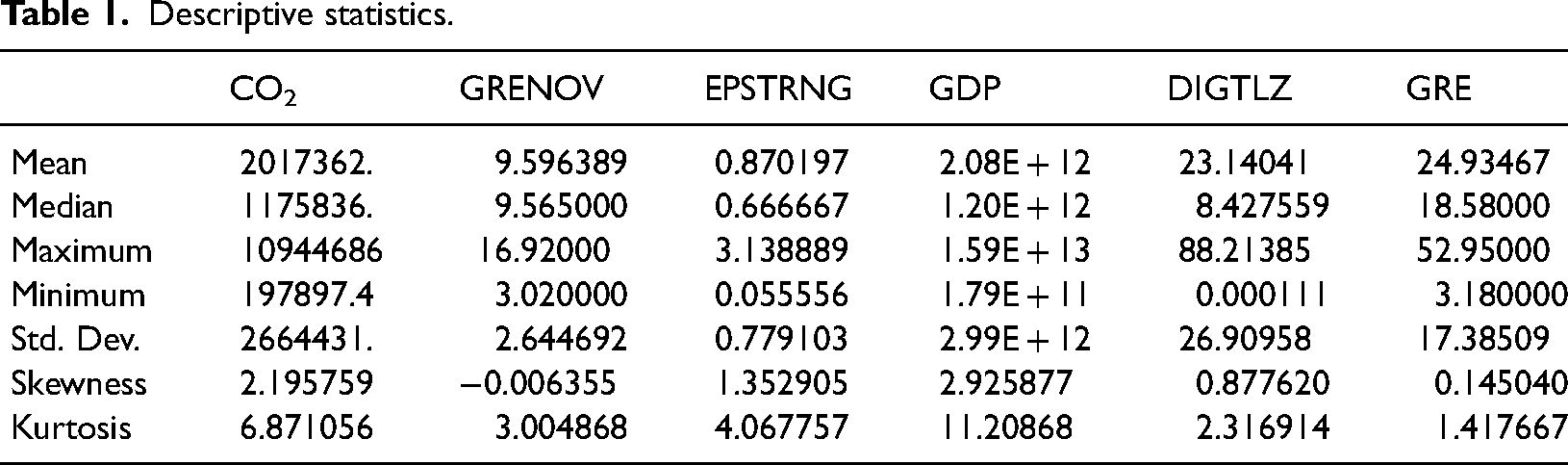
To empirically analyze the panel data for BRICS economies, this research initially offers an evaluation of the descriptive statistics reported in Table 1. The mean and median values are positive for the regressors with minimal differentiation. Additionally, the minimal and maximal observation points are noted as positive points, which indicate the progressive nature of each variable. However, substantial variation has been observed in the range statistics, which allows this work to assess the standard deviation for each considered variable. The latter captures the basic volatility of the variable by indicating the difference between the variable observations and their respective mean values. Therefore, this research noted GDP as the leading volatile factor, followed by CO2 emissions and DIGTLZ. Concerning the basic measures of data normality, both skewness and kurtosis are measured, which offer different (higher) estimates than their respective critical values. Therefore, this study evaluates the nonnormal data dispersion of variables.
Descriptive statistics.
Prior to identifying long-term relationships, this research employs diagnostic tests, including the SCH and panel CD tests. The estimations covering SCH are offered in Table 2. These results indicate that SCH as well as SCHadj. p < .01 indicated significant differences. Owing to such significant statistical values, the null assumption might be neglected, and it is determined that the coefficients are heterogeneous.
Slope homogeneity.

Note: Significance level is depicted by ***(1%), **(5%), and *(10%).
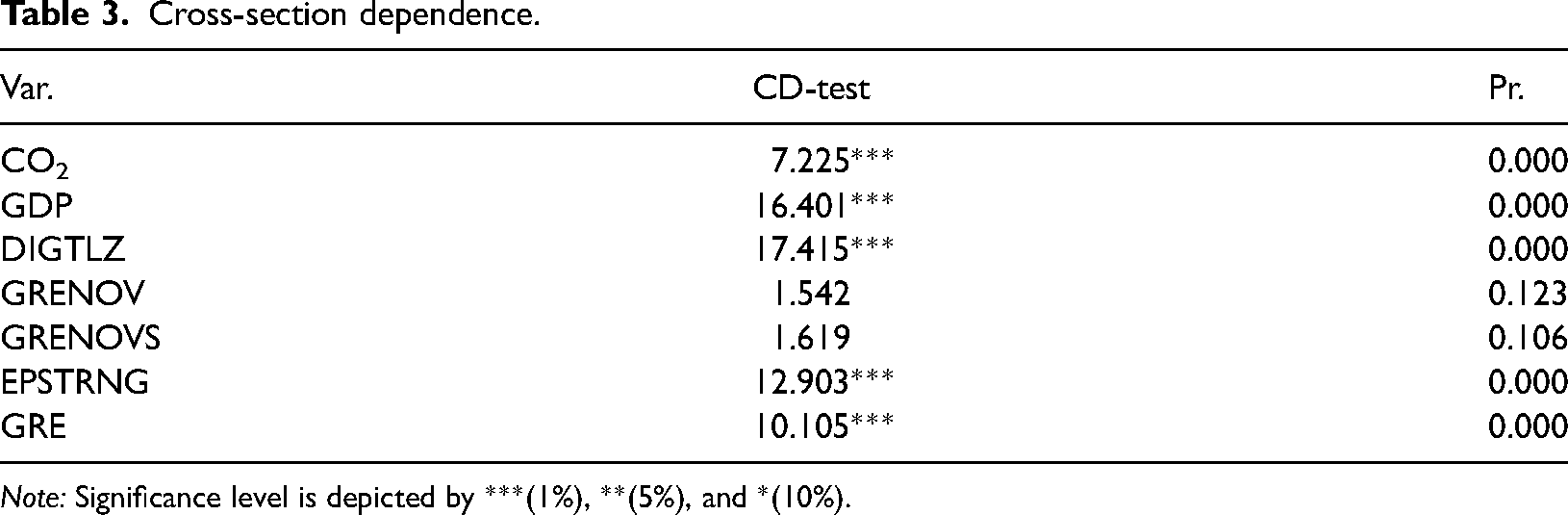
Another diagnostic test, i.e. the panel CD test, is described in Table 3. Notably, all the variables except for the GRENOV and GRENOVS variables presented significant statistical values. This indicates that any shock in a sector in one country could have a spillover influence on a similar sector in other countries. The GRENOV and GRENOVS depict nonsignificant estimates, which reveal that these factors do not have spillover characteristics in the selected panel data.
Cross-section dependence.
Note: Significance level is depicted by ***(1%), **(5%), and *(10%).
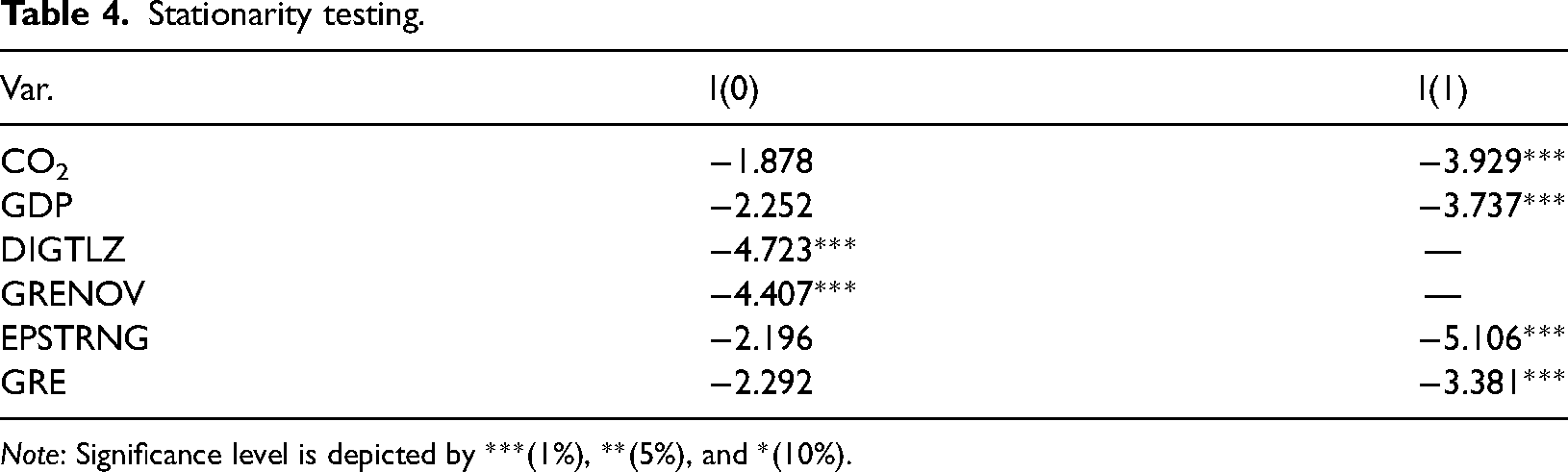
Concerning the prerequisites of panel data analysis, it is vital to examine the stationarity of elements. Therefore, the current research uses a suitable unit root estimator that accounts for both SCH and panel CD issues. Specifically, the 66 CIPS test was utilized, and the empirical results are presented in Table 4. This research detected the diverse nature of the panel variables. where DIGTLZ and GRENOV are stationary at I(0), whereas CO2, GDP, EPSTRNG, and GRE are nonstationary at the specified level. Therefore, this research tends to analyze the unit root at I(1). The results obtained at I(1) show highly substantial (p < .01) estimates, which neglects the null assumption of this test “unit root exists” and concludes that stationarity of all variables.
Stationarity testing.
Note: Significance level is depicted by ***(1%), **(5%), and *(10%).
Owing to the presence of SCH and panel CD issues, the use of conventional cointegration approaches may provide misleading results. This research uses the novel Durbin‒Hausman cointegration test, 68 which addresses not only the abovementioned issues but also the mixed integration order of the variables. The empirical outputs of the stated test are presented in Table 5. The null assumption of this research entails no significant cointegration between the variables. However, both the group and panel statistics are found to be significant. Hence, the null assumption could be ignored, and it is determined that the variables under consideration exhibit a significant equilibrium association in the long run. The occurrence of long-term stable associations allows this research to examine the coefficients for each study variable.
Cointegration test.

Note: Significance level is depicted by ***(1%), **(5%), and *(10%).
This research revealed several issues in the panel data, including the SCH, panel CD, and mixed integration order. Thus, this research uses the third-generation CS-ARDL approach, and the empirical results are tabulated in Table 6. This research distinguished short- and long-term analyses. With respect to the short-term results, this research revealed that GDP and GRENOV have positive impacts on the emissions of BRICS nations, where only GDP is significant. However, DIGTLZ, GRENOVS, EPSTRNG, and GRE adversely influence CO2 emissions in the study region. Among these variables, only GRENOVS is insignificant, whereas the remaining variables are significant enough to impose a noteworthy variation in the emissions trajectory. In contrast, the long-term results show that GDP and GRENOV have similar (positive) impacts on CO2 emissions, where GDP is significant and GRENOV is insignificant. Covering the progressive impact of GDP, the experimental literature offers numerous pieces of evidence that are consistent with these research outcomes, such as.27,31,32 However, the long-term impacts of DIGTLZ, GRENOVS, EPSTRNG, and GRE are negative and significant, except for those of GRENOVS (nonsignificant). The adverse influence of these factors indicates the driving mechanism of environmental sustainability in the long and short run. These estimates are consistent with the literature.44,46,48,52,56,57 The CS-ARDL approach offers a convergence term (ECM), which reveals the speed of adjustment toward equilibrium. Specifically, the ECM offers a value of −0.960, which is negative and highly significant—demonstrating that with each passing year, the short-run model approaches equilibrium at a 96% speed of adjustment.
CS-ARDL estimates.
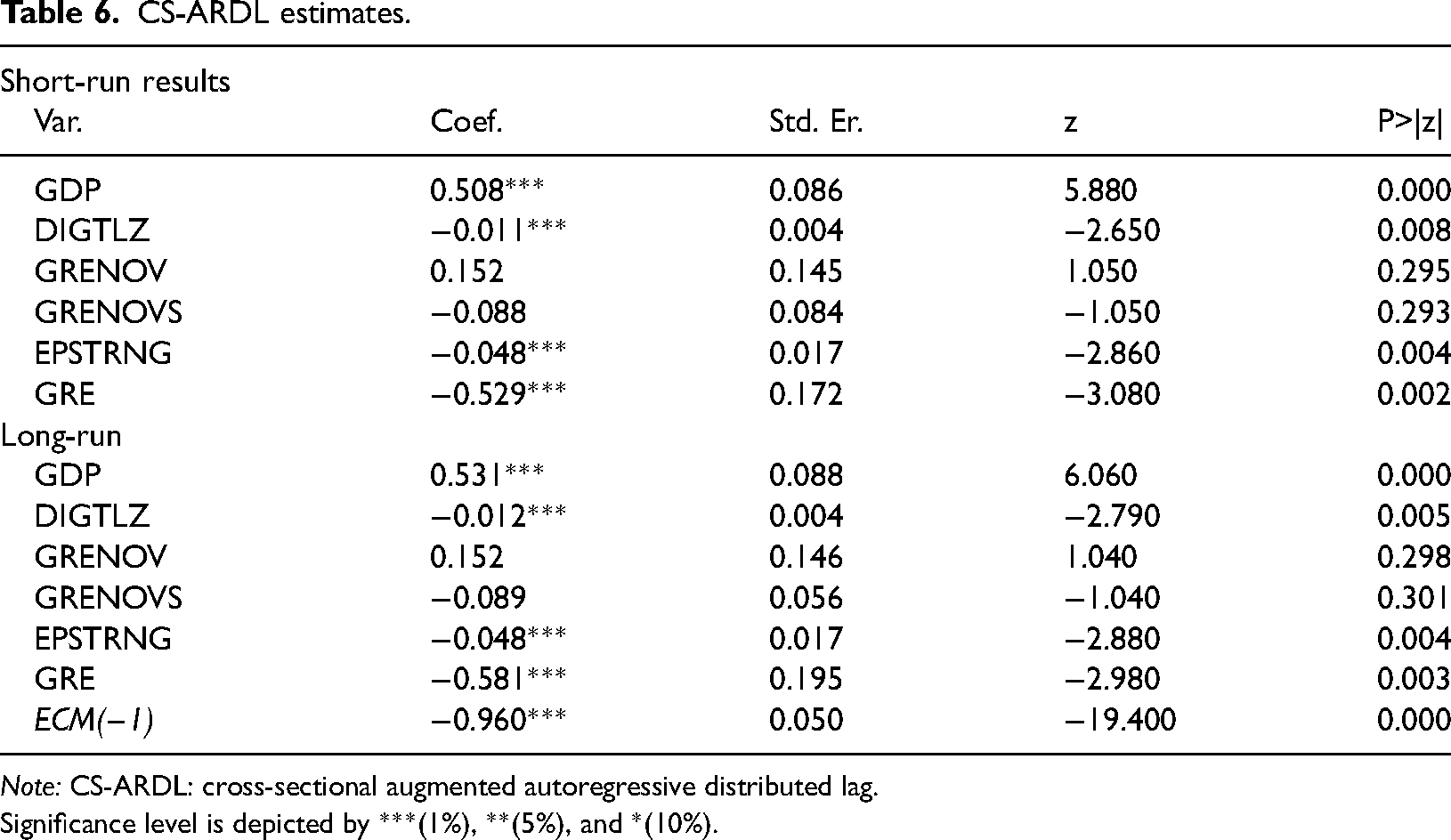
Note: CS-ARDL: cross-sectional augmented autoregressive distributed lag.
Significance level is depicted by ***(1%), **(5%), and *(10%).
In addition to the CS-ARDL analysis, this research tested the authenticity of the long-term estimates via several parametric and nonparametric approaches. Specifically, regressions with Driscoll–Kraay standard errors, linear regressions, heteroskedastic panel-corrected standard errors, and MMQR approaches are used, and their outcomes are presented in Table 7. This research noted that only GDP and GRENOV have substantial yet destructive impacts on environmental quality, as these factors significantly increase CO2 emissions in the selected region. These results are similar to the above-discussed estimations as well as the scholarly predictions.26,28,40 However, the influences of DIGTLZ, GRENOVS, EPSTRNG, and GRE on CO2 emissions are destructive, while they are favorable for the environmental sustainability of the BRICS economies. These empirics are highly significant where p < .01 and .05, which is also consistent with the empirical outputs of the existing works,39,47,52,53,55,57 which are valid in different panel and time series economies.
Robustness analysis.
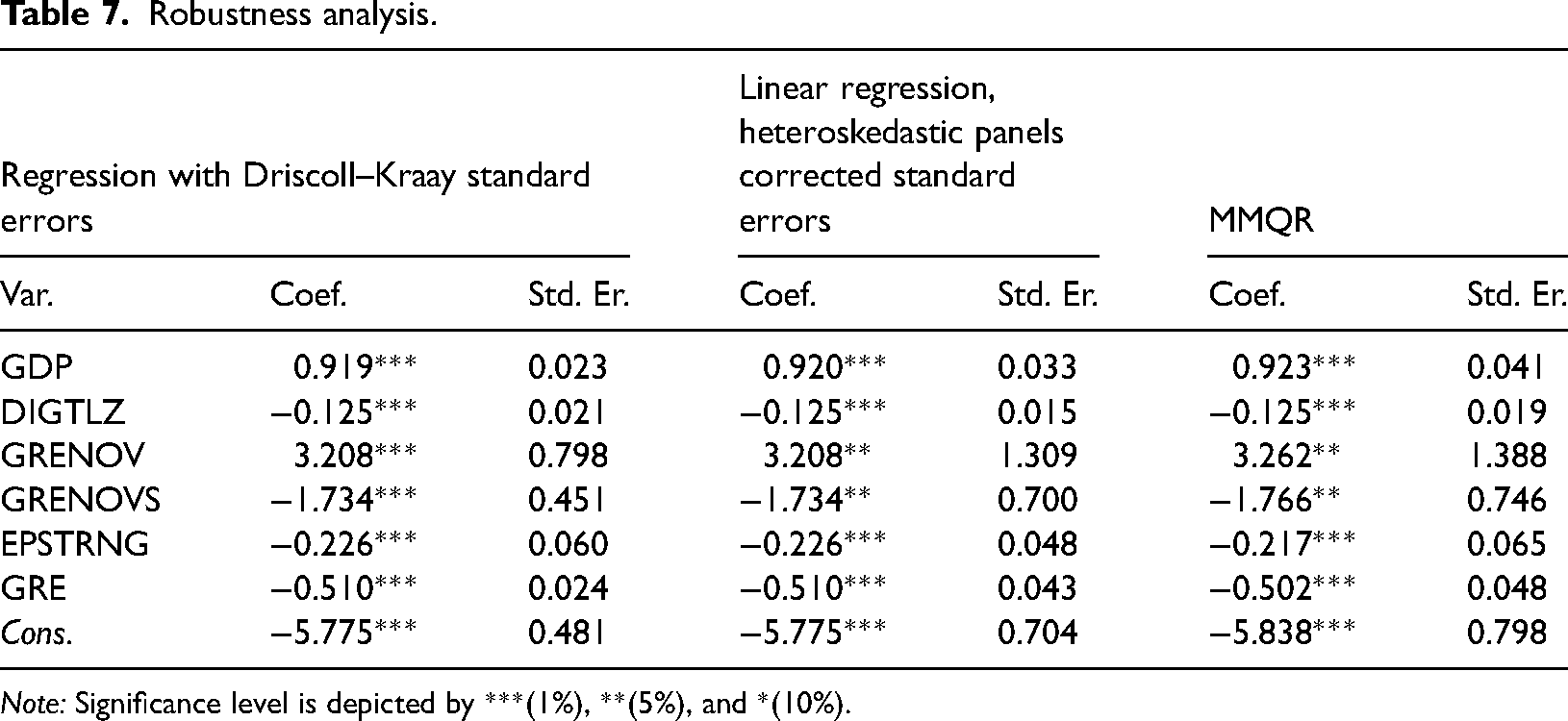
Note: Significance level is depicted by ***(1%), **(5%), and *(10%).
Discussions
In this study, the CS-ARDL method is used along with several parametric and nonparametric methods to analyze the complex associations among GDP, green innovation, stringent environmental policy, digitalization, green energy, and environmental degradation in the BRICS economies. The findings of this research provide more detailed information on the dynamics that define environmental sustainability in these emerging nations. The empirical results demonstrate that economic growth increases CO2 emissions in the short and long run, echoing the “scale effect” in environmental economics. 72 This indicates that the BRICS economies have not crossed the EKC point. These effects are true as economies grow due to increases in production and consumption, hence leading to high energy demand and emissions. This disputes the “grow first, clean up later” paradigm, hinting that nations in the BRICS bloc need to sever the link between growth and emissions even more unambiguously. New policy initiatives could include carbon pricing to mobilize environmental costs, 73 green growth programs to focus on low-carbon sectors 74 and circular economy strategies to decouple resource use from economic growth. 75 All these changes could assist BRICS countries in striving toward more sustainable development pathways, which may even skip some of the environmentally detrimental effects that other industrializing economies face.
The impact of digitalization on the empirical outcomes is noted as negative and helps decrease CO2 emissions both in the short run and the long run, supporting the arguments on the effectiveness of digital technologies in combating climatic change. From an economic perspective, digitalization can improve energy efficiency, optimize the use of resources, and promote a change in the model of the economy from the material sector to the service sector, which leads to a decrease in emissions. Nevertheless, this finding favors policies that encourage digital transition as a constituent of climate change management in BRICS countries. In accordance with these results, new policy initiatives are possible for smart sustainable cities, such as increasing the pace of 5G and Internet of Things technologies for smart city projects, 76 developing digital emissions reporting and monitoring systems across industries, 77 and developing digital sharing economy platforms to support resource minimization. 78 These measures could use the digital potential to build stronger and more efficient structures for BRICS countries.
Linear and nonlinear green innovation trends show that innovation processes are always multilayered in terms of environmental results. First, green innovations can still have a positive effect on emissions, but they involve adoption lags and possible rebound effects. However, having analyzed the experience of countries and industries and having combined various innovations with one another, it becomes possible to note that their number gradually causes a sharp decrease in emissions. This implies that BRICS countries must continue embracing and scaling up green innovation to realize deep emission reductions. Innovative policies could include the launching of progressive research and experimentation for tax credits that increase with green innovation, 15 the creation of green technology transfer programs both for BRICS countries and international countries, 79 and the development of green innovation zones equipped with essential infrastructures and privileges. 80 These policies could help spur the growth of green technologies that would trigger a kind of transitional change in BRICS economies where green technology leads to a significant reduction in emissions.
The results that both environmental policy stringency and green energy reduce emissions in both periods have critical implications for policy making. Policies controlling emissions mean that firms and households are encouraged to reduce emissions, while green energy is a direct replacement for energy from fossil-based sources. This provides strong support for the assertion of this research that both command-and-control and market-based instruments to implement environmental policies as well as investments in renewable energy sources in BRICS countries are effective. Innovational policies may embrace the introduction of a common carbon price for BRICS member countries, 81 the development of a comprehensive BRICS carbon market for the trading of carbon credits 82 and the creation of the BRICS Green Energy Fund aimed at advancing green energy initiatives. 83 These measures could create a full cycle of emission reduction measures that use both the approach of forcing through legal requirements and the approach of incentives for the use of clean energy in BRICS countries.
Conclusion and policy implications
While economic growth causes emissions, digitalization, nonlinear green innovation, environmental policy stringency, and green energy drive emissions to decrease in the short and long term. These outputs epitomize the development-environment puzzle in rapidly developing economies, where an important focus is placed on the prospects of digital technologies and green innovation in addressing climatic change, whereas a focus is also given to the importance of strict environmental measures and renewable energy implementation. Thus, on the basis of the estimation of the specified factors, BRICS countries can focus on more sustainable development by utilizing these elements. This study is relevant to the literature on sustainable development in emerging economies and will serve as a useful reference material for policymakers who are keen on investors in a bid to achieve sustainable growth without harming the environment.
Finally, on the basis of the results of our analysis, we present a policy matrix for the comprehensive strategy of BRICS countries in combating the complex problem of CO2 emissions and sustainable economic growth. Thus, the policy should include progressive carbon pricing policies that correlate with growth rates and ensure the assimilation of environmental costs by rapidly developing countries. In light of this, using the emissions-reducing capability of digitalization, policies should therefore increase the pace across industries on the shift to a digital path, including smart energy management systems and digitized monitoring of emissions. The broad features of green innovation imply the need to build and sustain a green innovation ecosystem through additional incentives for green innovation to stages beyond R&D through targeted funding for green innovation and encouragement of green technology clusters and areas. The emphasis on policy stringency to reduce emissions indicates the need to improve and synchronize environmental policies within BRICS countries, possibly via a united cap and trade market. Moreover, since green energy occupies a central position, economies should sharply increase investments in renewable energy facilities; this can be accomplished with the creation of a special BRICS Green Energy Fund. Finally, this research suggests creating linked policies in which these aspects conjoin, for instance, the construction of specialized areas for green technology, which must meet strict environmental and renewable power provisions and requirements.
Despite its significant contributions, this study has several limitations. First, the accumulation of data at the country level might also distort the picture of real emissions and the success of policies implemented across different sectors. Future research could further divide the study by attending to various economic sectors to obtain a detailed understanding. Second, our study period is up to 2021, which means that there is the possibility of not capturing the full effects of the latest technologies and recently implemented policies. Furthering the study period to include more data as data “get older” might capture these trends. Third, while the study isolates an evaluation of CO2 emissions, it does not consider other greenhouse gases. Further studies should consider extending the number of environmental variables that should be taken into consideration. Finally, the quantitative method identifies essential connections and may not represent the intricacy of the process in realizing policy difficulties. Concurrent qualitative studies of the political economy of environmental policy in BRICS countries could therefore offer useful supplementary information to the above questions for policy formulation and delivery.
Footnotes
Research highlights
Declaration of conflicting interests
The authors declared no potential conflicts of interest with respect to the research, authorship, and/or publication of this article.
Funding
This work has been supported by the Researchers Supporting Project RSP2024R203, King Saud University, Saudi Arabia.
