



Abstract
Adaptive transparent system (ATS) is an aspiring and effective building system that can adapt itself through environmental changes in spontaneous and reversible ways. It proposes an automatic and real-time response to indoor and outdoor conditions by increasing building energy efficiency and user comfort. This research presents a critical analysis to provide a preference order of the smart materials being used in the adaptive transparent systems. The approach of using smart material technologies in the building façades is discussed as the promising research direction for the future. A comprehensive literature review is conducted to identify the smart materials used in adaptive transparent systems along with their properties. Seven types of smart materials that are aerogel (AG), phase change material (PCM), photovoltaic (PV), electrochromic (EC), thermo-chromic (TC), thermo-tropic (TT), and liquid crystal polymers (LCP) are selected based on evaluation criteria determined by the literature. The identified criteria are bulk density (BD), thermal conductivity (TCd), sound insolation (SI), fire retardation (FR), heat transfer coefficient (HTC), solar transmittance (ST), air purification (AP), annual energy saving (AES), cost saving (CS), ultraviolet (UV)/near infrared (NIR) control (UNC), and embodied carbon (EC). The identified seven smart materials are investigated with the help of two multi-criteria decision-making (MCDM) techniques named analytical hierarchical process (AHP) and technique for order preference by similarity to ideal solution (TOPSIS) for analysis and ranking of materials. Results of the analysis demonstrate that PV is the most optimum material for adaptive transparent systems while others are ranked according to their performance.
Introduction
The façade is a key component of a structure that shapes its aesthetics and acts as a physical partition dividing the inner space from the surrounding environment. Building façades serve an important role in both the appearance and functionality of a building to protect occupants and improve the indoor environment. 1 It is also responsible for managing other environmental phenomena such as wind, precipitation, temperature, and sun radiation in order to maintain a comfortable indoor environment. Modern adaptive façades developed in recent times respond fast and independently to transient changes in boundary conditions, enhancing user comfort and overall building performance.2,3 The term “adaptive façade” was first used in literature by Knaack et al. in 2007, 4 and a number of definitions have been put forth since then; some of these are included. Loonen et al. 5 defined a climate adaptive building shell (CABS) which can adapt its functions or behavior in response to indoor and outdoor control variables reversibly and repeatedly over time. Wang et al. 6 defined an acclimated kinetic envelope (AKE) that can adapt itself through changes in reversible and mobile ways. Additionally, Attia 7 described the kind of façade that primarily reacts to the inside and outside environments to improve the building's energy efficiency and comfort for users. Adaptive façades can be categorized and described according to their innovative technology and features. Eleven distinct varieties have been recognized, every one with unique specifications, constraints, capabilities, user interfaces, and updated iterations. Given that adaptable transparent systems and smart adaptive façades have similar needs, potential, user interfaces, and constraints, the former is the most pertinent.2,8 Therefore, adaptive transparent systems can be considered intelligent, responsive, and switchable façade systems.
On the other hand, Smart materials are specialized construction materials that may change their form, color, and properties in response to a variety of stimuli, such as changes in temperature, light exposure, electric fields, and motion. These materials have become more important in building envelopes because they allow the outside to adapt to changes both within and outside the structure. They are used to manufacture shelters. Because they allow the surface of the building to react automatically to changes both inside and outside, smart materials are crucial for building envelopes. Additionally, as many of these items and materials may directly or indirectly absorb matter and energy from the environment, the usage of smart materials can improve the flow of matter and energy. 9 Property change material type and energy exchange material type are two categories of smart materials that have been identified. 10 Smart material systems are defined and classified based on their response to stimuli. Three systems are identified, that is, passive smart material systems, active smart material systems, and hybrid smart material systems. 11 The third type of smart material system is considered for adaptive transparent systems.
ATS is a high-performance innovative façade system that deals with advanced technologies to make the façade environment friendly. 12 The advanced translucent fenestration system (ATFS) is a type of window system that is designed to transmit a high amount of diffused daylight while also providing good insulation properties at night. It involves enhancing performance with the use of intelligent materials like AG. However, AG is not a viable solution due to its high cost and poor structural qualities. 13 Other types of ATFS use capillary insets between the window panes to allow for better light diffusion and reduce convection and heat radiation. 14 Double skin façades, which consist of an outer and inner layer separated by an air cavity, offer various benefits over traditional building façades. 15 The cavity may be mechanically or naturally ventilated, or it may be connected to other ventilation systems. The use of technologies like PV cells and PCMs in double skin façades is also possible. PCMs operate as additional thermal mass in buildings and store and release energy at certain temperatures, which lowers thermal fluctuations. The most typical PCM utilized in double skin façades is paraffin-based, while salt-hydrated and bio-based PCMs are also feasible possibilities. 15 A type of building envelope known as switchable glazing, uses glass planes that can alter their capacity to transmit light and heat in response to environmental factors like light, temperature, and voltage. EC, TC, TT, and LCP materials are used in these systems to enable the glass to achieve several intermediate states of semitransparency. Despite the numerous advantages of these technologies, they also have high material and installation costs and uncertain durability. 16 Another type of developed façade system known as the advanced solar shading and daylighting system (ASSD) includes window cavity shading. This kind of integrated system is stealthier and has better aesthetics. The system becomes more resistant to deterioration brought on by wind and weathering when the fenestration cavity is integrated into it. 17 Building integrated energy conversion technologies allow buildings to harness energy from renewable sources, such as solar radiation, and use it to power the building or connect it to other systems. 18 Five types of systems have been identified in the literature: (i) AFTS, (ii) HDSF, (iii) Switchable Glazing (SG), (iv) ASSD, and (v) Building Integrated Energy Conversion (BIEC). The first three types are the focus of the proposed research. Based on the input that encourages their adaptability, smart material families are classified and summarized in Table 1.
Summary of studies including properties of smart materials.
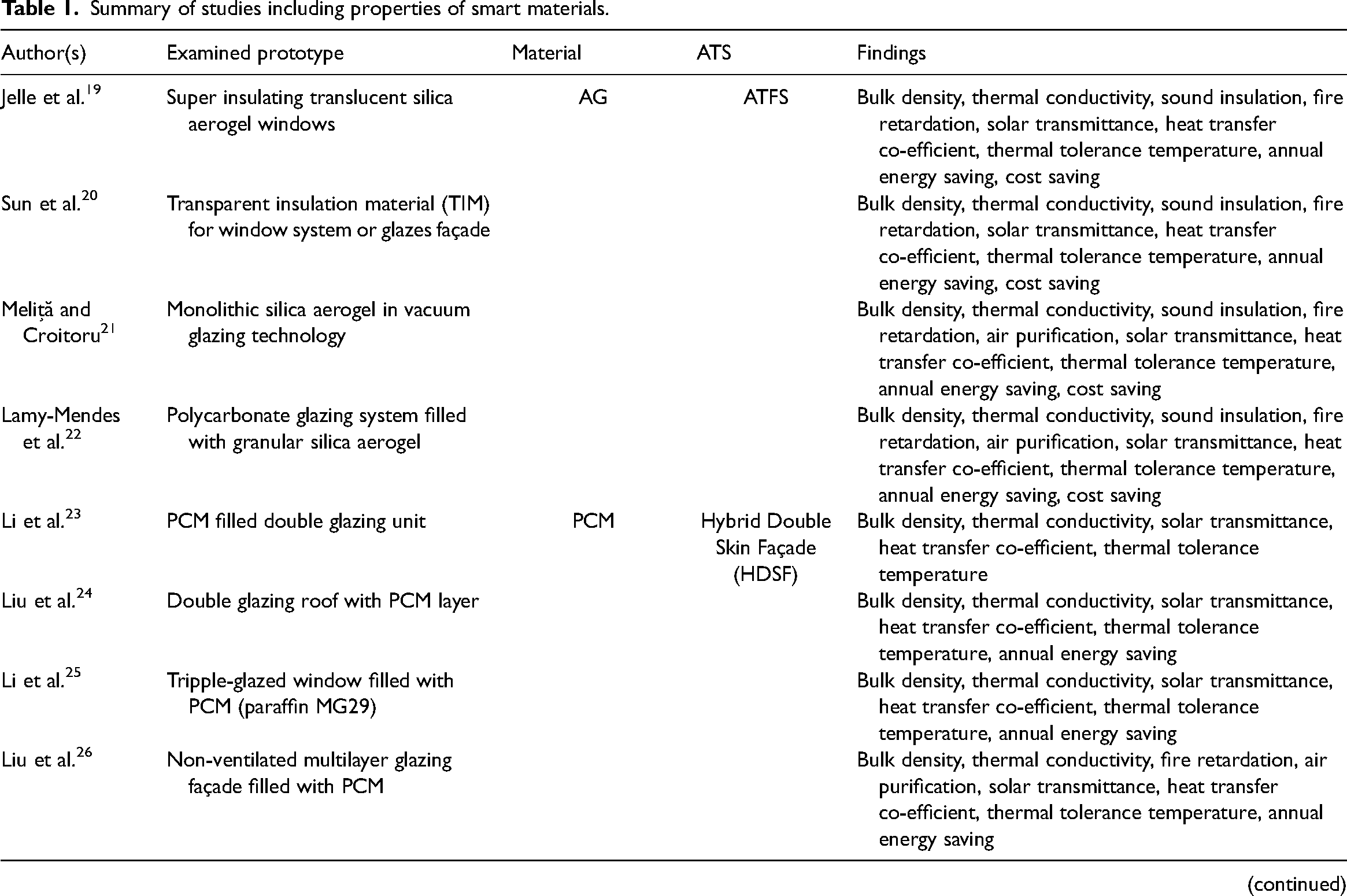
In the material selection process, the most important stage is ranking and choosing the right material for a particular application. Holloway explained the importance of material selection in engineering applications. 47 MCDM techniques play a very important role in material analysis and ranking. Jahan et al. reported the use of MCDM techniques for material selection in engineering applications.48,49 Hambali et al. reported the importance of AHP in material selection problems. 50 Hambali et al. proposed AHP method for the selection of suitable material for bumper beams.51,52 Mayyas et al. presented the use of the AHP technique for material selection in vehicular structures. 53 Ratohod and Kanzaria conducted research on the selection of proper PCM with the help of the TOPSIS and fuzzy TOPSIS techniques. 54 Mansor et al. described the application of AHP for the evaluation of suitable natural polymers for vehicle brake components. 55 Khorshidi and Hassani reported analytical research on material selection in aluminum/silicon carbide composite using TOPSIS method. 56 Nasab and Anvari presented the MCDM approach for the material selection problems by using Complex Proportional Assessment (COPRAS), Data Envelopment Analysis (DEA), and TOPSIS tools. 57 Singh et al. proposed a hybrid approach of fuzzy AHP and M-TOPSIS for composite material selection for structural applications. 58 M-TOPSIS is a multi-criteria decision-making method for evaluating multiple options simultaneously by assigning a priority order based on the alternatives’ similarity to an ideal solution. AHP and TOPSIS are the most popular, simple and logical methods as well as easy to use. A comprehensive literature survey is conducted to gather the qualitative data about smart materials and adaptive transparent systems and quantitative data to determine the alternatives and evaluation criteria for critical analysis and ranking. Seven types of smart materials and five types of adaptive transparent systems are identified from literature described in Table 1. The research considered the seven types of smart materials and three types of adaptive transparent systems decided on the basis of conducted detailed literature survey. The AHP and TOPSIS techniques are used to prioritize and analyze materials based upon thirteen evaluation criteria obtained from the literature survey. Reviewing the use of smart materials in adaptive transparent systems from existing knowledge is a research limitation as reported. 2 This research is intended to bridge the gap by presenting a comprehensive literature survey and critical analysis of smart materials used in adaptive transparent systems.
Research methodology and methods
Center for integrated facility engineering (CIFE) horseshoe research method is utilized for a detailed literature survey. This method is found very easy, quick, and explicable providing defensible research results. 59 The CIFE horseshoe diagram used in the proposed research is presented in Figure 1.
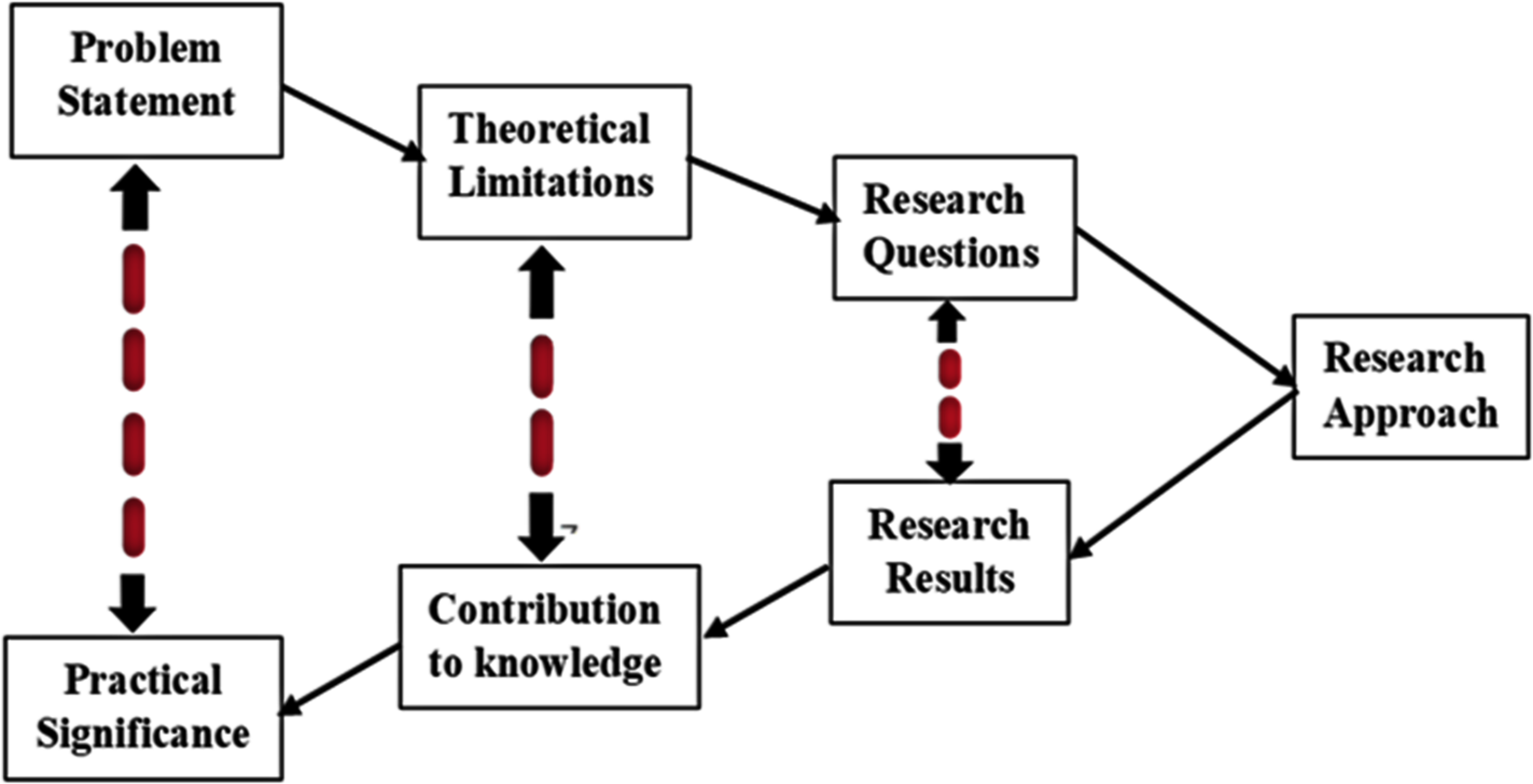
CIFE horseshoe diagram adapted from Ref. 59
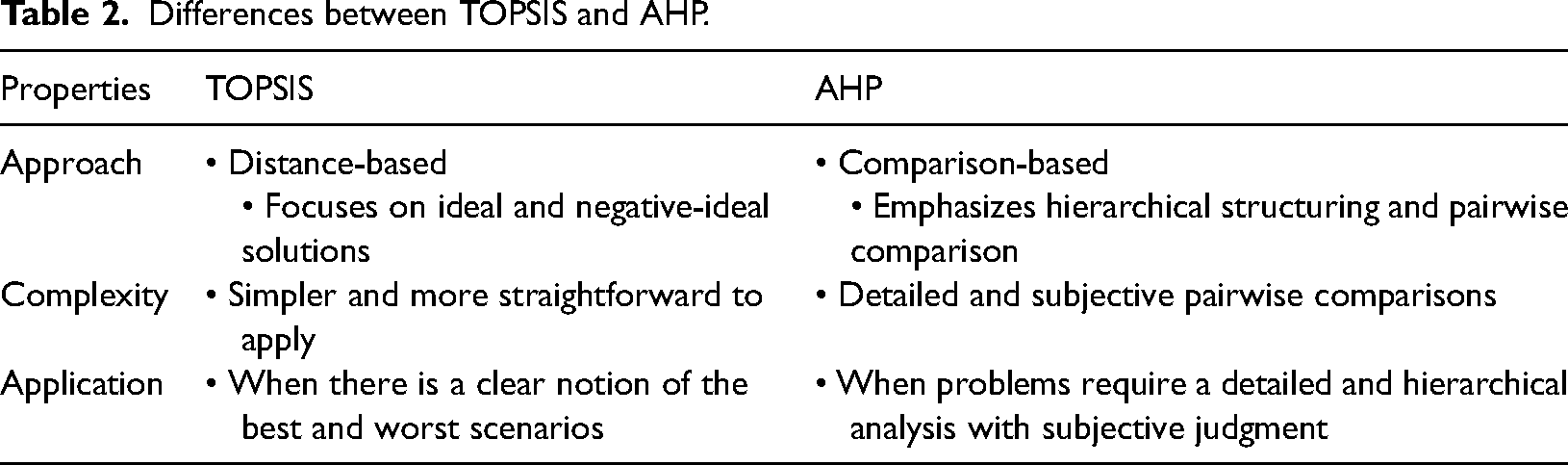
The data mining research method is used for the collection of data which include pre-processing and data cleaning processes to remove all duplications, etc. and the quantitative data analysis (QDA) method is adopted for analysis purpose with the help of secondary data and MCDM techniques. The data was firstly collected with the help of Google Scholar, Elsevier Engineering village, and Web of Science database searches by using the key words; adaptive façade, adaptive technologies, transparent façade, smart materials, façade materials, phase change materials and then reviewed by CIFE horseshoe research method concept to identify the elements relevant to smart materials and adaptive transparent systems found in the literature. The proposed methodology can be easily understood by the workflow of material analysis and ranking as shown in Figure 2. This workflow is broken down into two stages: the first stage discusses the process of doing a thorough literature survey, and the second stage involves critical analysis. Table 2 explains the differences between TOPSIS and AHP.
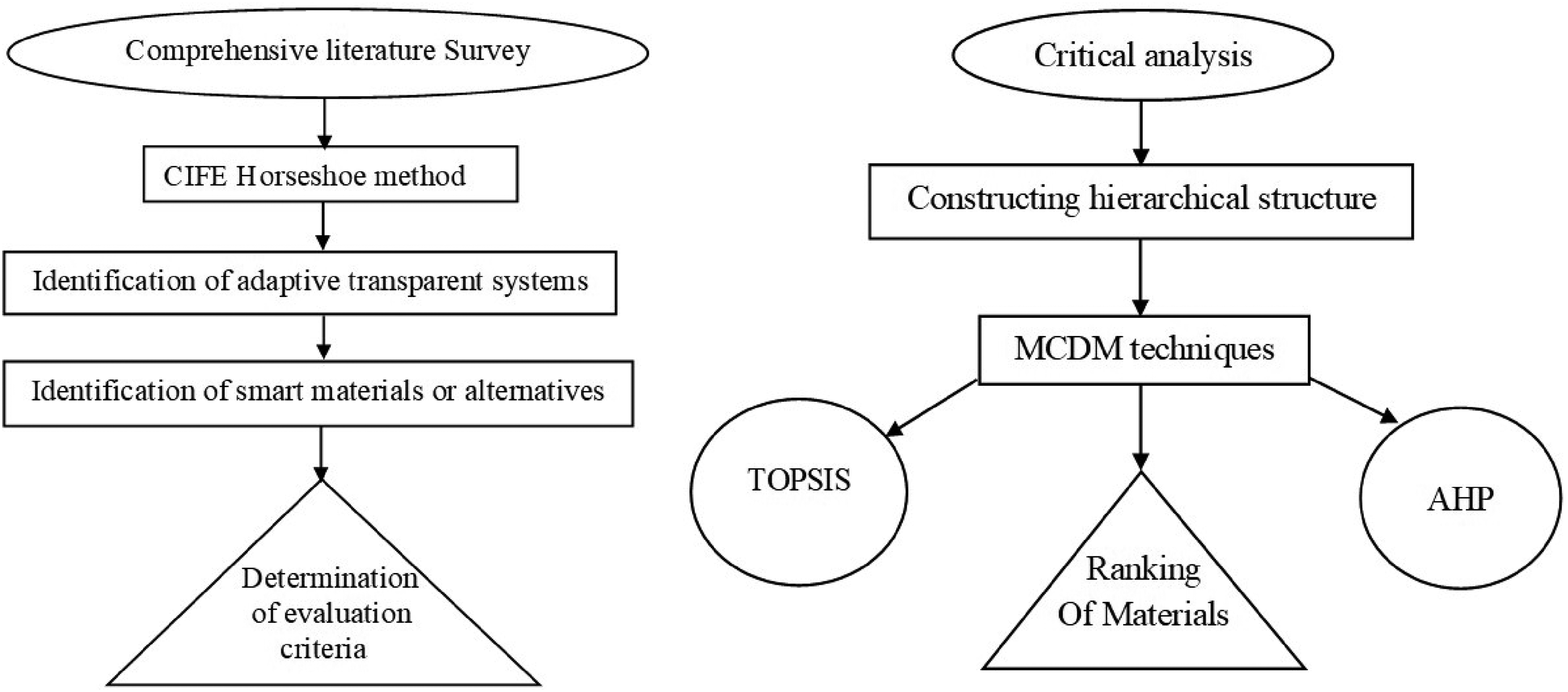
Workflow of material analysis and ranking.
Differences between TOPSIS and AHP.
The literature survey is conducted with the help of CIFE Horseshoe diagram research method, and almost one hundred and thirty articles are reviewed by following this diagram. In this method, the program processes the data initially and subsequently, it generates geometrical objects that are correctly interrelated. The limitations of the existing research are identified which ultimately contributes to the knowledge from research results. Within this methodology, seven smart materials and five types of ATSs are identified from the literature. Out of these five ATSs, three ATSs are selected with seven smart materials. Thirteen evaluation criteria are identified from the literature based on smart material properties. The selection of evaluation criteria is based on literature. After the determination of alternatives and criteria, a hierarchical structure is developed as shown in Figure 3. In this diagram, thirteen evaluation criteria with seven alternatives and three ATS can be seen. After developing a hierarchical structure, critical analysis is conducted by using MCDM techniques identified from the literature for solving decision making problems. AHP and TOPSIS methods are selected for the evaluation of smart materials and ranking.
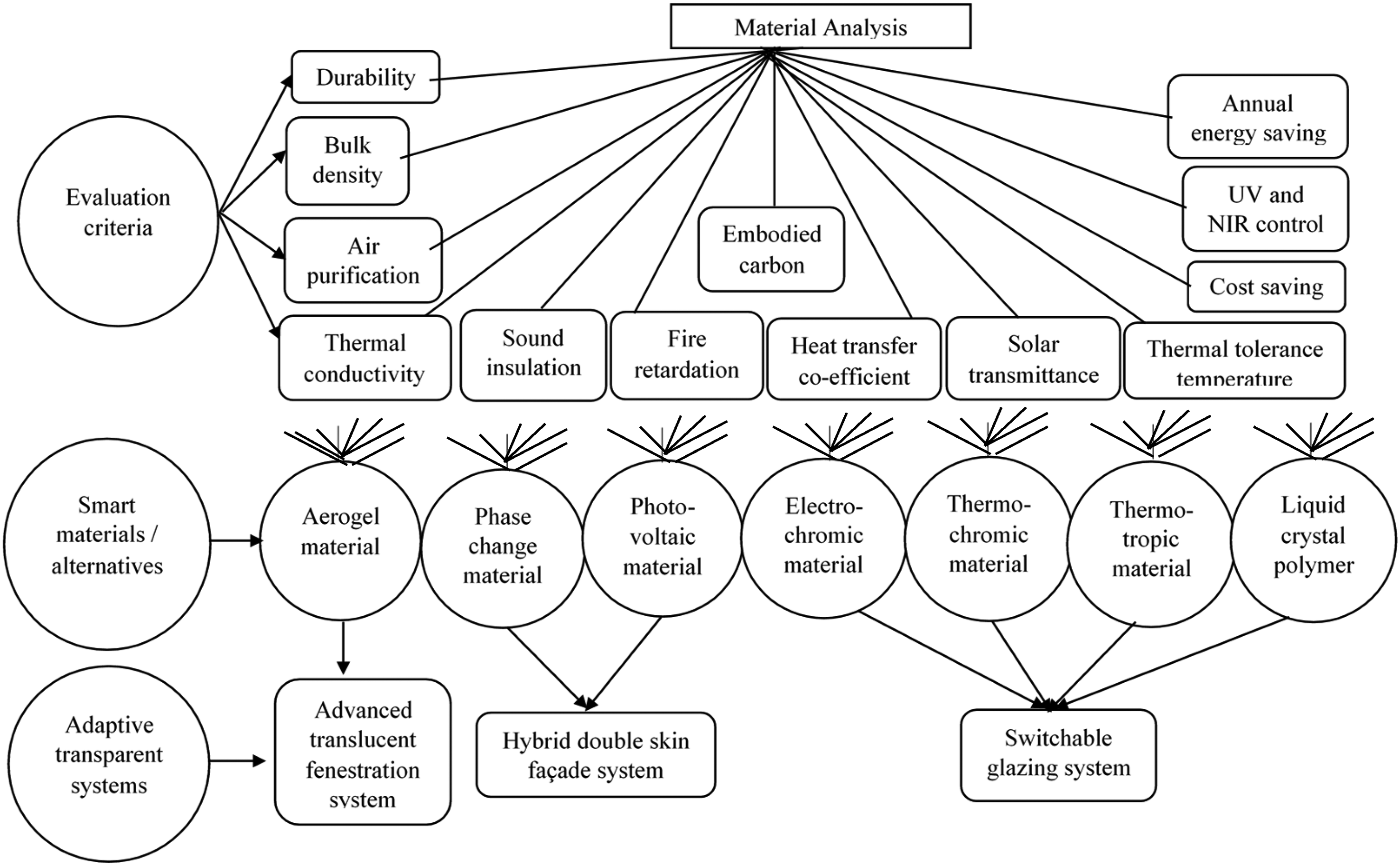
Hierarchical structure diagram of material analysis.
AHP method
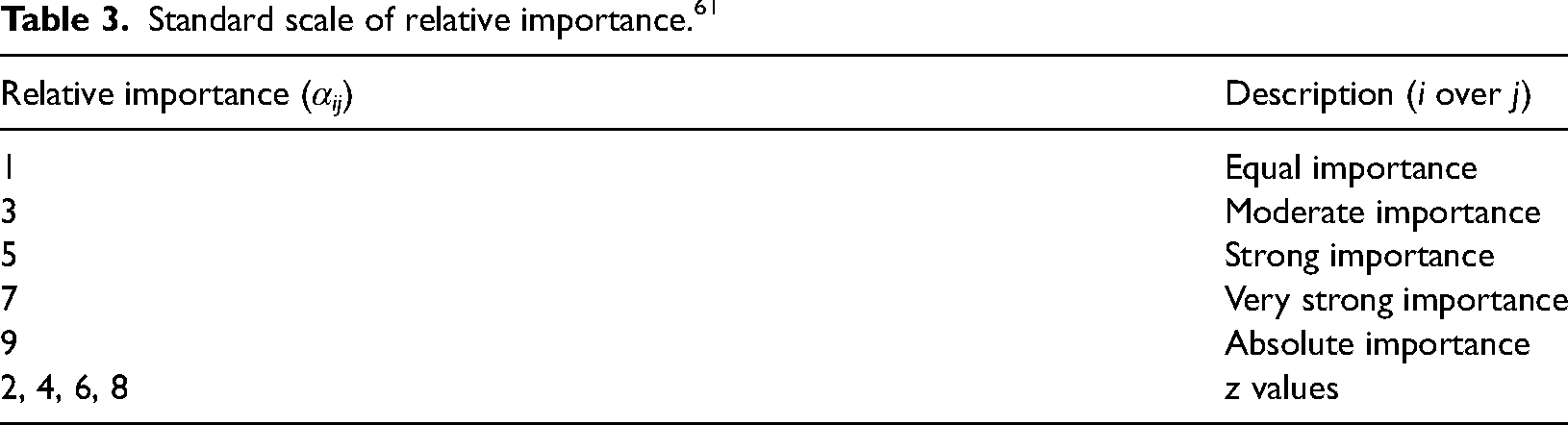
Saaty introduced the AHP approach 60 to resolve multiple criteria complex problems. It is a very useful method to analyze numerous decision-making situations and also has wide applications in several fields of science and technology. It is a highly flexible, simple, and easy-to-use method with one advantage over other MCDM techniques which is its design. The AHP method is designed in such a way that it includes both tangible and non-tangible factors which is an important aspect of the decision process for subjective judgment. 56 The AHP method is generally divided into three steps. In the first step, a hierarchical structure of complex decision problems is developed with a goal or objective at the top level, the multiple criteria which define the alternatives at the second level, and the decision alternatives at the third level. The second step is to construct a pair-wise comparison matrix to determine the relative importance of the criteria within each level by using the standard scale of relative importance Table 3. In the third step consistency check is performed to ensure the evaluation of the pair-wise comparison matrix whether it is acceptable or not. 54
Standard scale of relative importance. 61





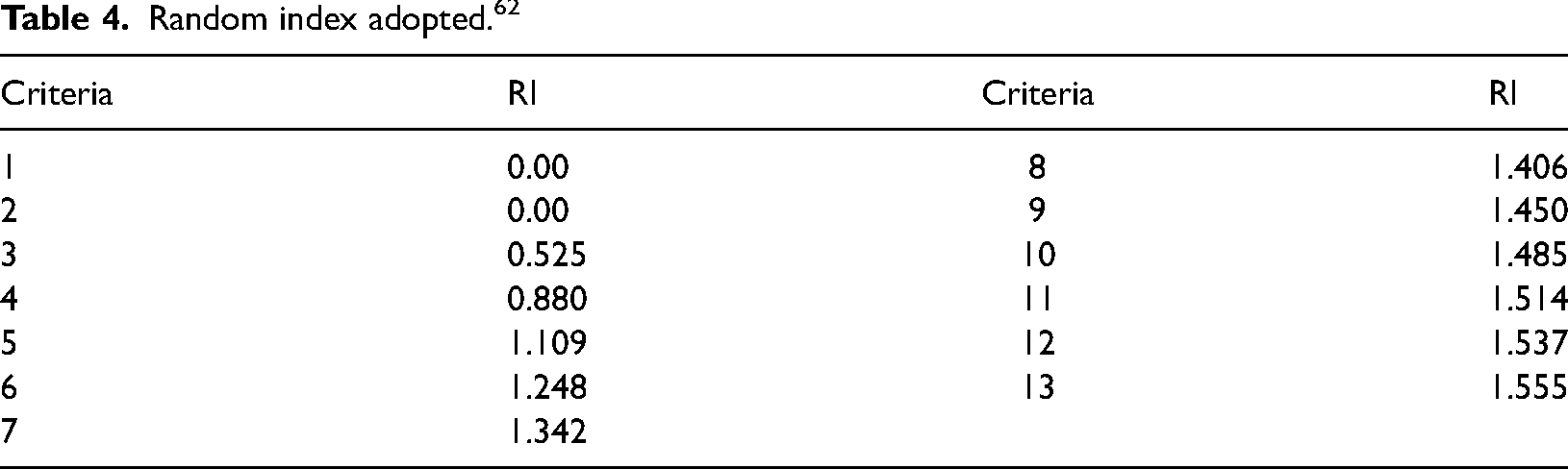
Random index adopted. 62
TOPSIS method
Hwang and Yoon 64 originally applied the TOPSIS technique in 1981 to solve an MCDM problem with multiple sets of options based on the philosophy of Euclidean distance theory. According to this theory, the Euclidean distance between the given alternative and the positive ideal solution (PIS) and the negative ideal solution (NIS) is evaluated and the best alternative is selected which has the least distance from the PIS 65 and longest distance from NIS. The TOPSIS method has following steps. 66








Evaluation criteria for analysis
The evaluation criteria identified for analysis are entirely based on the performance and structural properties of smart materials as presented in Appendix A. There is a total thirteen number of parameters selected for the evaluation of seven smart materials or alternatives that are briefly described as follows.
Bulk density (BD)
It is the ratio between mass and occupied volume of material expressed in g/cm3, kg/m3, and lb/ft3. It is the most important and basic property of any material as it influences the cost and function of the material. The higher value of BD decreases the cost but increases the dead load which harms functioning. Hence, a minimum value of BD is favorable in building façade.
Thermal conductivity (TC)
The conduction property of a material is also an important factor in a transparent façade. It quantifies the rate at which heat passes through a material, driven by a temperature gradient. It is a negative factor for hot season and a positive for winter.
Sound insulation (SI)
The property of a material to resist sound waves from propagation is known as SI. Acoustic insulation is a factor associated with human comfort and affect human behavior. It should be kept in the normal audible range.
Fire retardation (FR)
The ability of a material to slow down the rate of spread of fire is FR. It is an important aspect of safety.
Air purification (AP)
It is the property of a material to absorb or adsorb CO2 from the environment or has a non-polluting effect on its surrounding during its lifetime. It is an important environmental factor that cannot be ignored.
Solar transmittance (ST)
The amount of light energy transmitted through a material surface influences the visual comfort and daylight factor. It is also an important parameter for a transparent façade.
Heat transfer coefficient (HTC)
The rate of heat transferred to the building through any material surface i.e. glass. It is a positive factor for winter and a negative for summer.
Thermal tolerance temperature (TTT)
The temperature a smart material can withstand or tolerate. It may be the temperature at which a material changes its phase from solid to liquid state or opaque to transparent state and vice versa. It varies according to the type of smart material.
UV and NIR control (UNC)
Material can control the dangerous solar radiation, that is, UV and NIR to pass through its surface. This is also an important factor in human health.
Cost saving (CS)
The amount of money saved through purchasing material or saving with a payback period or power generation potential. It is the major influencing factor of materials.
Durability (D)
The material's ability to exist for a long time without deterioration and to require minimum lifetime maintenance is known as durability. It is the most important property of a material to withstand climatic changing conditions like wind load, temperature, rain, etc., and other wear and tear from an earthquake, storm, etc.
Annual energy saving (AES)
This is the amount of energy that is annually saved by the material through minimizing heating and cooling load or in the form of thermal energy storage. It is a very effective evaluation criterion.
Embodied carbon (EC)
Embodied carbon is the sum impact of all the green-house gases emitted from a material during its life cycle. It covers emissions of carbon during a building's whole life, such as during heating, cooling, and other processes, as well as emissions of EC during the extraction, production, construction, maintenance, and disposal of materials.
Results and discussion
The hierarchical structure diagram is developed with the help of evaluation criteria and the alternative materials as presented in previous section to determine the optimal material for ATS. After the construction of the hierarchy diagrams the weights of the criteria to be used in the evaluation process are computed through the AHP pairwise comparison methodology. In the pair wise comparison process, each criterion is compared with others using Satty's scale of nine points. This comparison is used to prioritize all criteria developed from a deep literature survey. Thus thirteen criteria are compared and prioritized in a pairwise comparison matrix by using equation (1) as shown in Table 5. The priority order of all criteria is given in descending way as under:
Pair-wise comparison matrix for criteria.
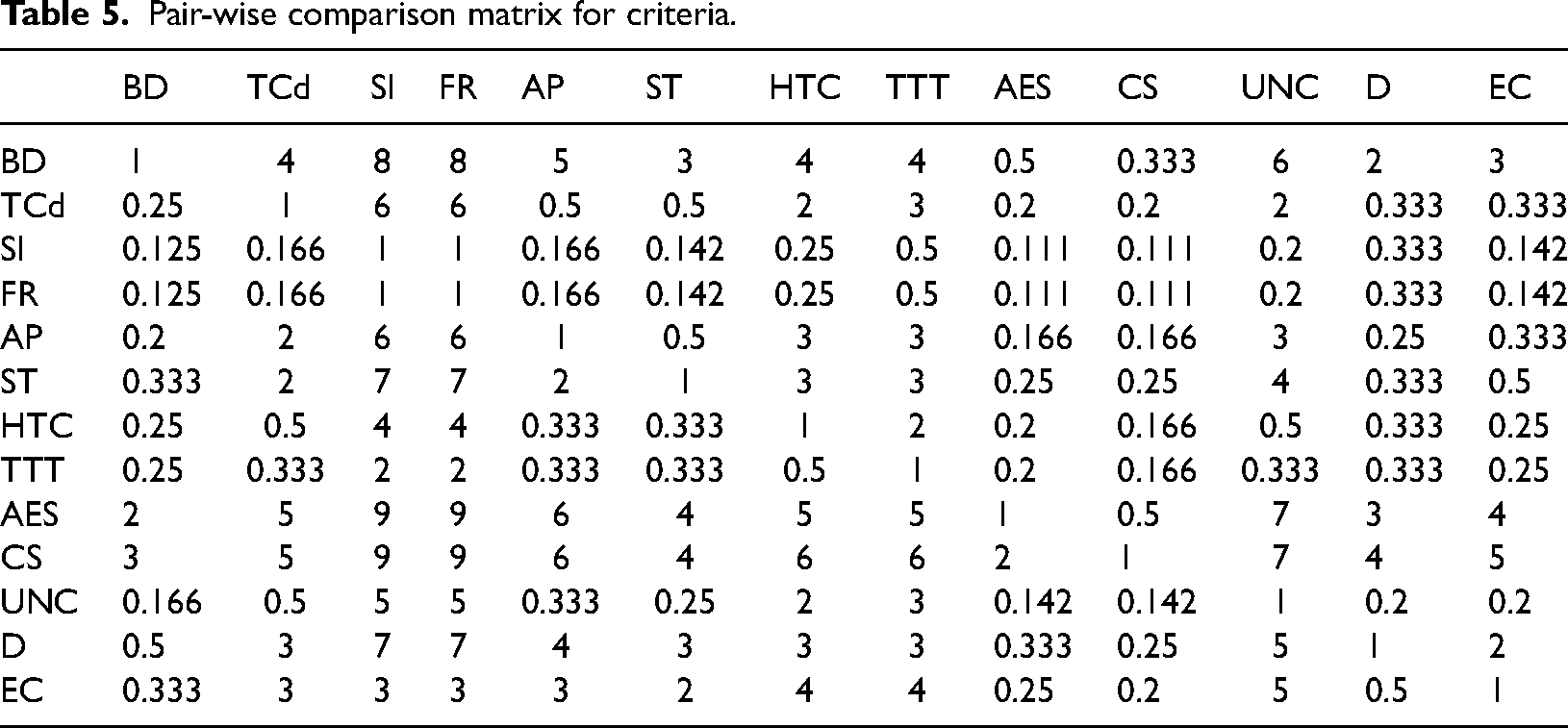
CS is the most prominent feature which is prioritized as it is somewhat important than AES, BD, ST, D and significantly important than EC, TCd, AP, HTC, TTT and absolutely important than SI, and FR. Ultimately, it has the highest criteria weight of 22.8%.
AES is another important factor of a material with energy saving potential resulting in saved cost. It is given more moderate importance than BD, D, EC, and ST, fair importance compared to AP, HTC, and TTT, and further importance than SI and FR. Consequently, it has a criteria weight of 17.98% at the second number.
BD is important to façade self-weight as an increase in material BD makes the façade massy and heavy weight. So, it is ranked in such a way that it is moderately important than D, EC, ST, HTC, TTT, and very strongly important than SI and FR. Thus, the criteria weight of bulk density is 13.18% at the third number.
D is also an important feature related to material life span. Thus, the priority order of it is given as it has moderate importance than EC, ST, TCd, HTC, TTT, AP, and stout importance than SI, and FR. So, it is ranked in fourth position with a criteria weight of 8.97%.
EC is a very influencing factor in environmental health. Hence, it is prioritized as it is more moderately important than ST, TCd, AP, SI, and FR and greatly important than HTC, TTT, UNC. Therefore, it has 8.52% criteria weight.
ST is also an important feature of daylighting and user comfort. So, it is prioritized such as it is moderately important than TCd, AP, HTC, TTT, UNC and very strongly important than SI and FR resulting in a criteria weight of 6.73%.
AP is related to the environment cleaning factor which is given moderate importance over TCd, HTC, TTT, UNC and greater importance than SI and FR having criteria weight of 5.31 at seven number.
TCd is also important to solar interaction and user comfort. Thus, it is prioritized as moderately important than HTC, UNC, and TTT and strongly more important than SI and FR with a criteria weight of 4.69%.
UNC is a factor related to human health and it is ranked as it has moderately more importance than HTC, and TTT and has clear importance than SI, and FR. It has a criteria weight of 3.57%.
HTC is also related to user comfort and has moderate importance than TTT, SI, and FR with a criteria weight of 3.16%.
TTT is related to façade material requirement for actuation or phase changing. It is moderately important than SI and FR having a criteria weight of 2.32%.
SI and FR factors are equally important with the same priority order and criteria weights of 1.33%. These are ranked at thirteen number due to the rare chances of occurrence as a façade almost covers these factors on its own.
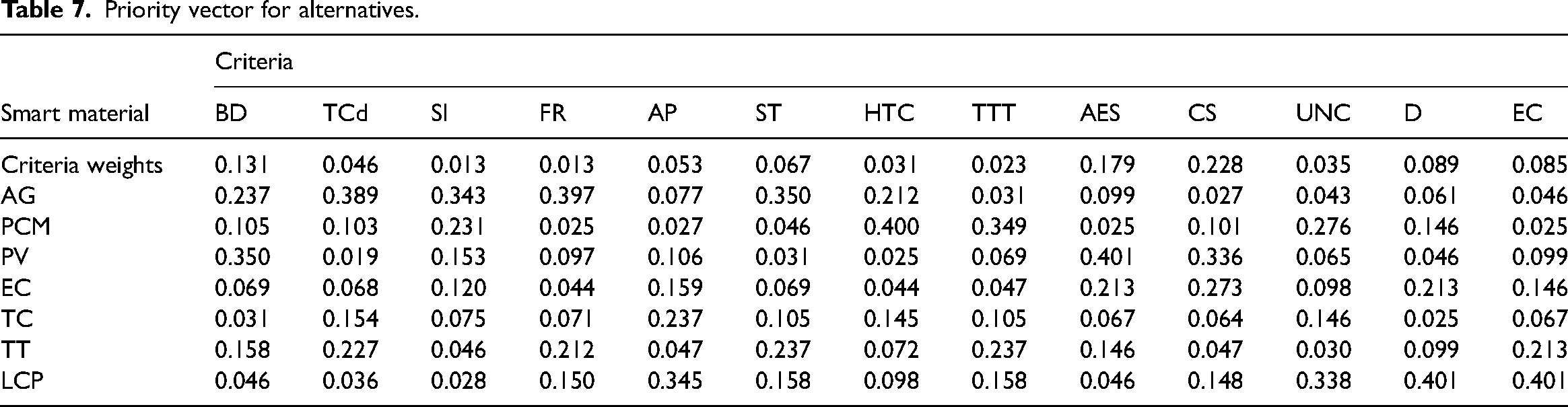
A normalized matrix is developed by dividing each number of pairwise comparison matrices by its column sum. Taking the arithmetic mean of the normalized matrix by using equation (2) form a priority vector of alternatives to criteria and the sum of vector values is 1. Relative normalized weights of criteria are calculated with the help of equations (3) and (4). Then CR is calculated by using equations (5)–(8) respectively to check whether the importance given to criteria in the comparison matrix is correct or not. A CR value less than 0.1 is good and if it is greater than 0.1 the input priority values should be re-evaluated. The same steps are revised for the evaluation of alternatives. The obtained relative weights, CI, and CR of criteria are tabulated in Table 6. The priority vector for alternatives is tabulated in Table 7 and the overall priority vector with ranks is presented in Table 8.
Results with AHP.

Priority vector for alternatives.
Overall priority vector.

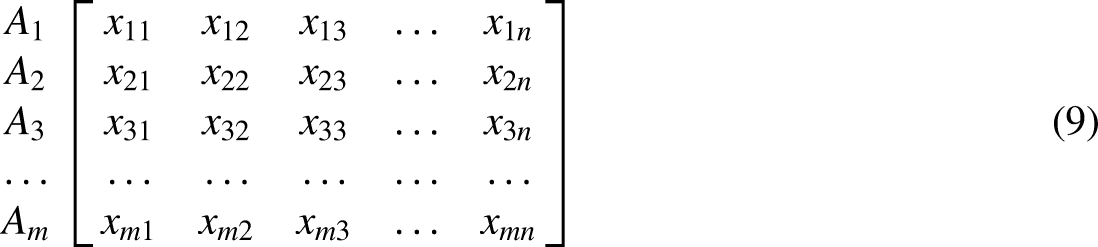
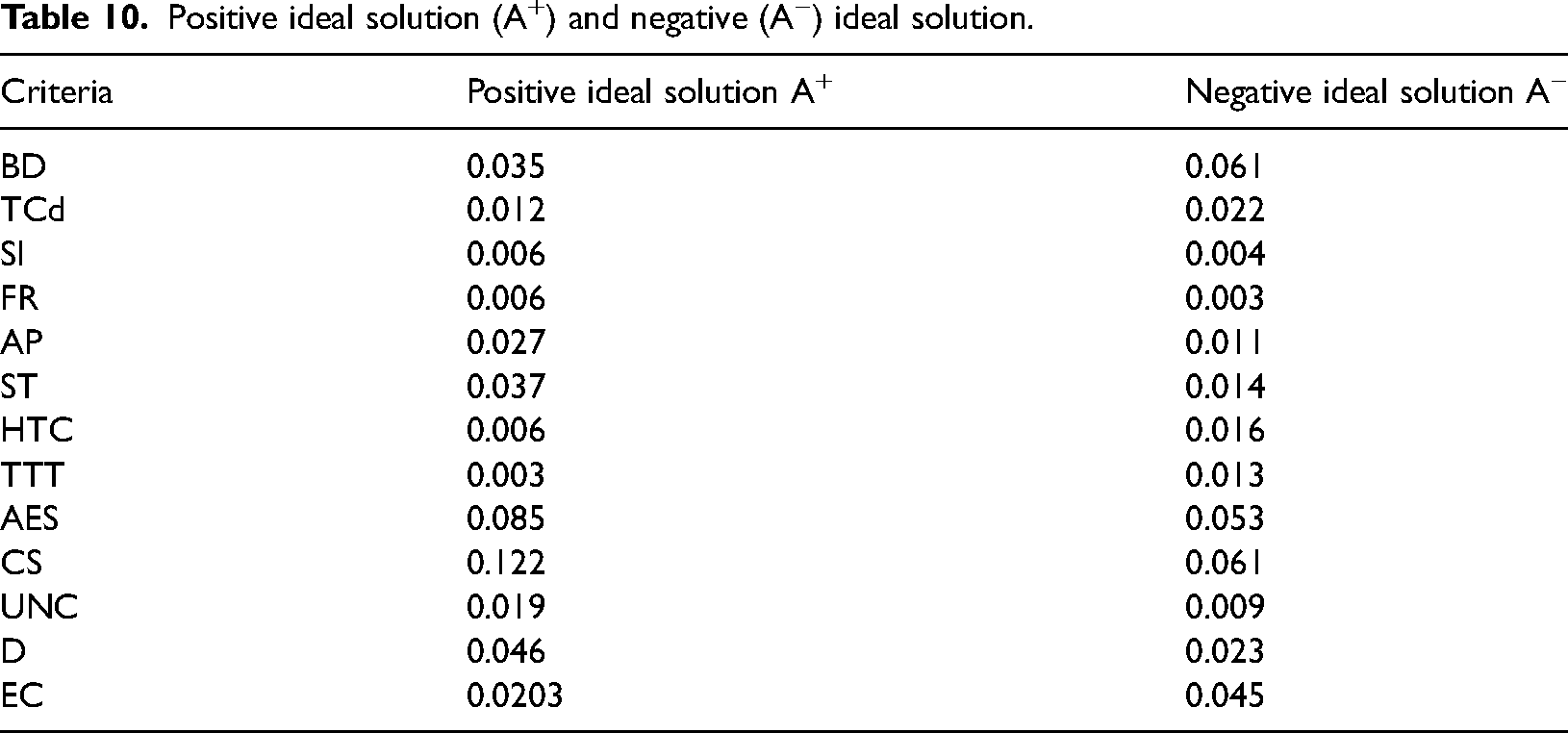
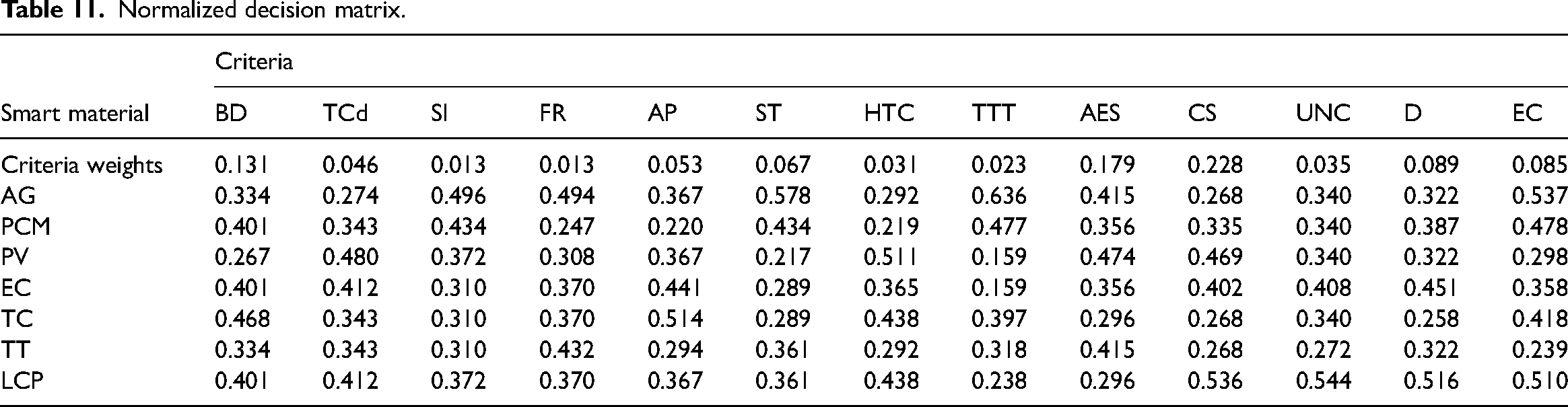
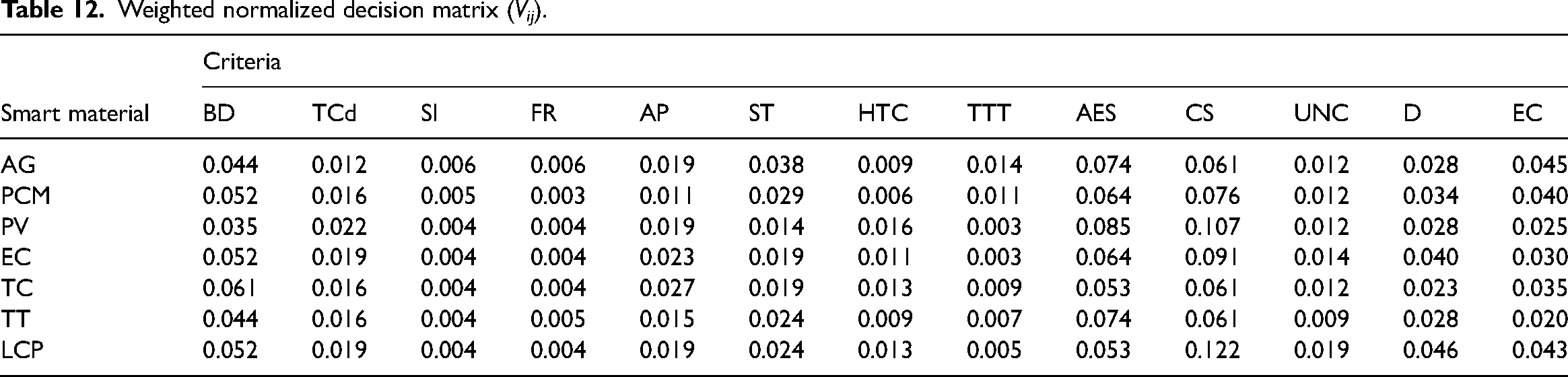
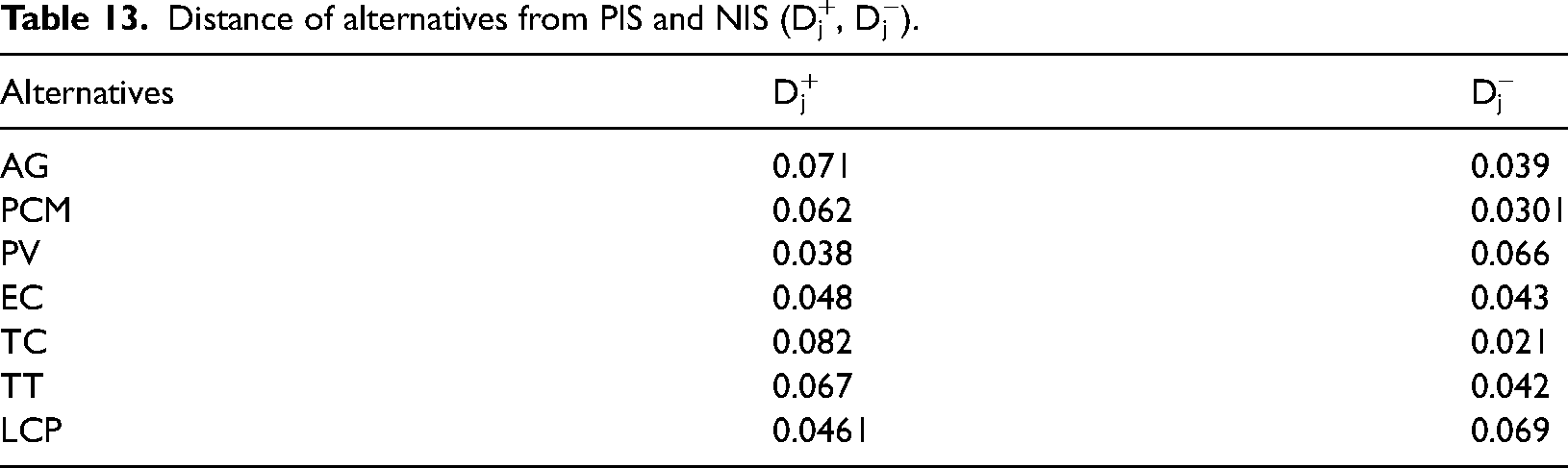
For TOPSIS computation, a decision matrix is developed based on the utility and properties of smart materials by following equation (9) and presented in Table 9. This matrix is then normalized using equation (10) presented in Table 10. The AHP criteria weights are considered to calculate the weighted normalized decision matrix using equation (11) and given in Table 11. The positive and negative ideal solutions are computed using equations (12) and (13) and are organized in Table 12. Separation measures of each alternate are calculated using equations (14) and (15) presented in Table 13. 67 Relative closeness to an ideal solution is computed by equation (16) and tabulated in Table 14 used to rank the smart materials. The comparative results from both MCDM techniques are used to select the suitable material for an adaptive transparent system.
Decision matrix.
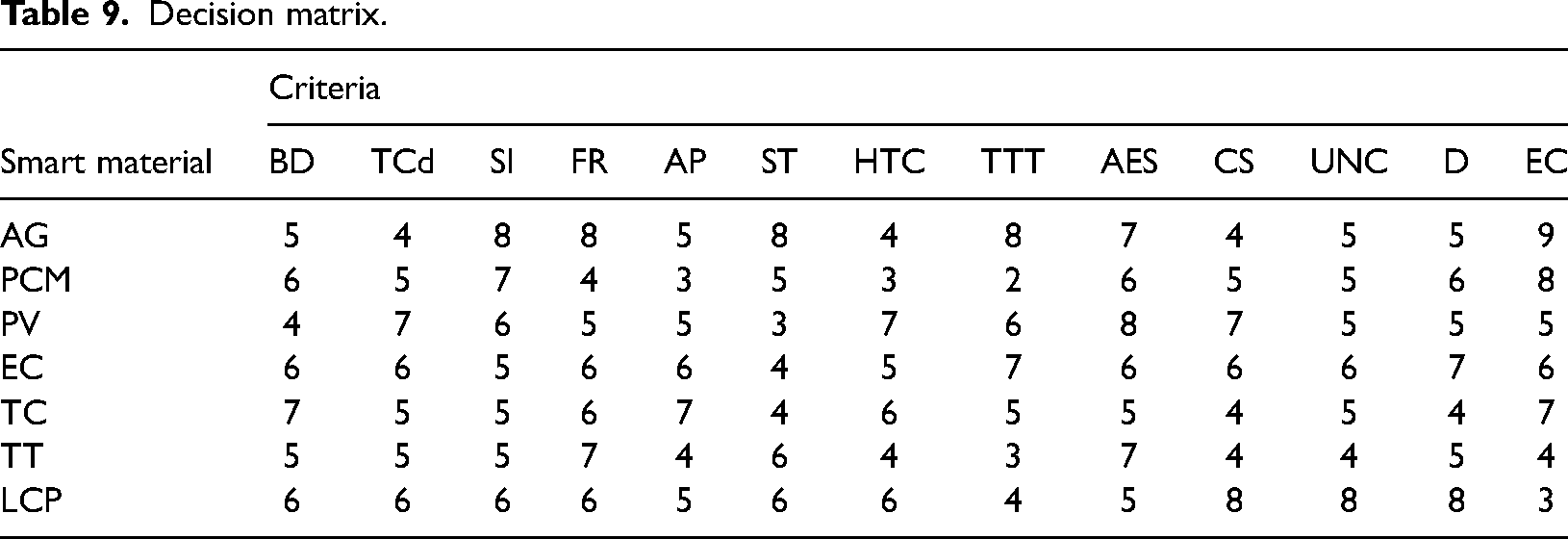
Positive ideal solution (A+) and negative (A−) ideal solution.
Normalized decision matrix.
Weighted normalized decision matrix (Vij).
Distance of alternatives from PIS and NIS (Dj+, Dj−).
Relative closeness (Rj) of alternatives from ideal solution and ranking.
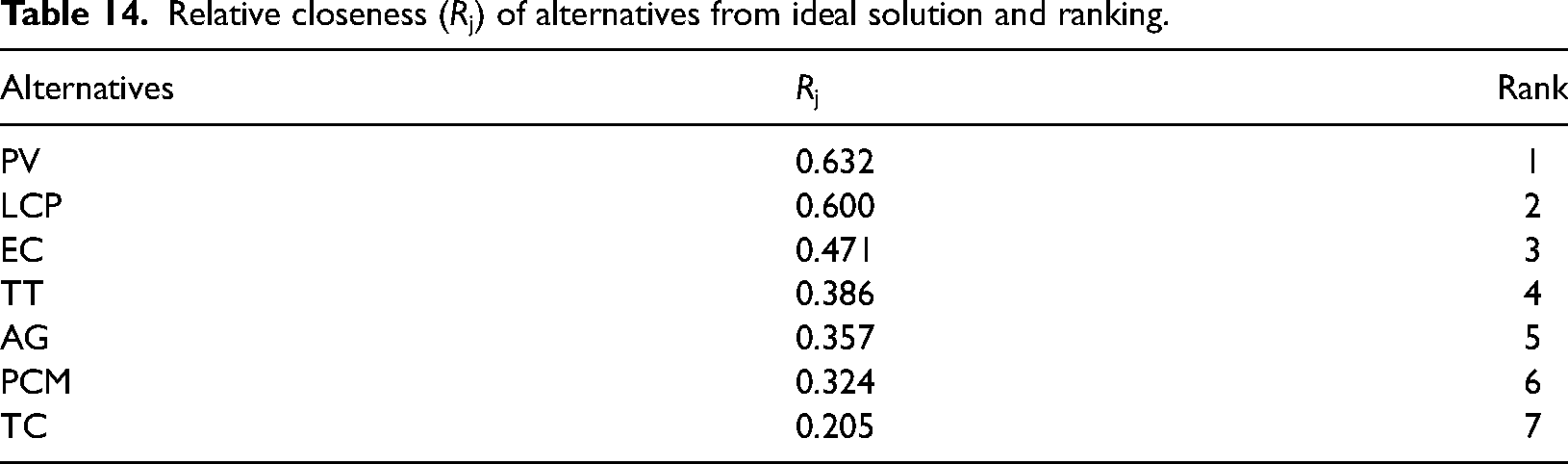
The results obtained from AHP are compared with TOPSIS results and tabulated in Table 15. The ranking order of materials in AHP methodology is based on the overall priority vector and positioned in descending order as PV > EC > LCP > PCM > TT > AG > TC. The ranking results of TOPSIS are PV > LCP > EC > TT > AG > PCM > TC. This ranking is positioned in descending order based on the relative closeness index values. The ranked materials are divided into three bands. The first band consists of three materials (i) PV, (ii) EC, and (iii) LCP. The second band is also consisting of three smart materials that are (iv) PCM, (v) TT, and (vi) AG while the third band consists of one remaining material (vii) TC. The results of both methodologies are almost similar with same the first and last material. The difference is created in the second band of smart materials, their indices values are so closer to each other that they may shuffle with each other easily having a minor difference of (0.007, 0.014) and (0.029, 0.033) between indices values obtained from AHP and TOPSIS method, respectively. The indices values are evaluated from MCDM techniques based on the properties of smart materials. The difference may also be produced due to the change in methodologies. AHP method is an irrational and subjective approach that integrates both maximum utility measures and minimum individual regret measures whereas TOPSIS is a rational approach that considers only the maximum utility measures at the scale of distance.
Results of proposed methodologies.
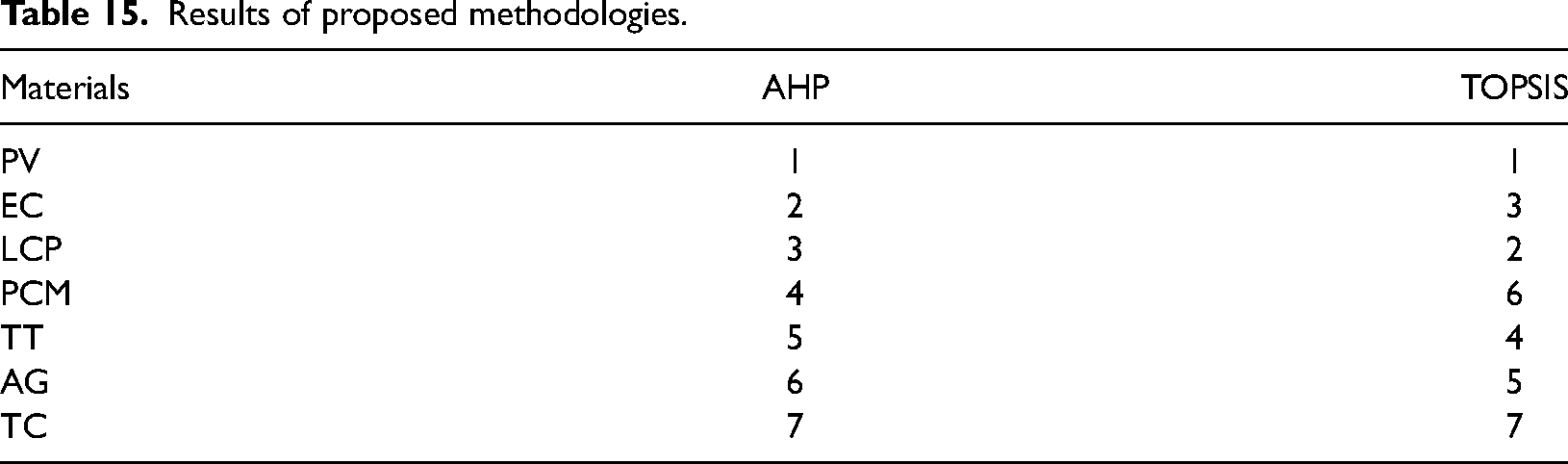
The comparative results show that the integrated approach of the proposed methodologies is a good combination. As AHP provides the criteria weights for TOPSIS and instead of using another MCDM technique for comparison same technique is used for analysis. The PV material is ranked as the most suitable material for adaptive transparent façade system ranked at the top while the EC and LCP is ranked after it at 2nd and 3rd position. TC is positioned at the last depending upon its properties and evaluation criteria. The study by Bilali and Valipour 51 reported PV as the most suitable building façade material according to sustainable development goals (SDGs) based on experimental work, expert choice software, and AHP. In the proposed research work, the optimum material is evaluated by considering various conflicting nature of criteria using AHP and TOPSIS techniques. The obtained results show PV as the best adaptive transparent façade material like previous researchers. The proposed work is significant support for selecting the most favorable material for building façade.
Identification of smart materials with properties from a comprehensive literature survey and analysis of these materials in ATS are the main objectives of this research. It is concluded by answering the research questions as well as providing information about the potential of smart materials to improve both indoor and outdoor environments and energy consumption of ATS as follows.
Seven types of smart materials are derived from the literature that can be used in ATS and then analyzed based on quantitative data extracted through past research. The applications and limitations of these evaluated materials are described below one by one.
AG: it is an advanced and emerging material that can be used in ATFS as an insulating or glazing material. It has many useful properties like low BD, low TCd, high acoustic, and fire insulation, high light transmittance, and also energy saving to some extent but the most important factors which resist its application and local availability are its high production cost and high EC emission with 8.5% and 22.8% criteria weightage respectively. So, AG material is ranked in the 6th position among all evaluation criteria as it is more suitable in cold areas used as insulating material than in hot climates (considered in the proposed study). Meanwhile, it is a very promising material and can be widely used at the commercial and local levels if its cost and carbon emission factors are minimized.
PCMs: these materials are very special and unique with the properties of changing phase (opaque to transparent and vice versa) and storing and releasing thermal energy. These can be used in HDSF systems for fenestration purposes and can also be integrated with PV. These materials are very durable, energy-saving, and cost-effective but have some negative aspects also. They are highly flammable having high EC emission, high energy density, and the least AP potential with 1.33%, 8.5%, 13.18%, and 5.31% criteria weight. So, these are ranked at 4th and 6th position by both methodologies.
PV material: it is a very common and popular material that can replace glass or building skin with the additional feature of power generation. However, it has one issue of overheating that can be resolved by integrating a HDSF system with natural ventilation. It improves the overall efficiency of building with negligible or zero carbon emissions and is also cost-effective and energy efficient. Hence it is ranked in the 1st position.
EC material: it is also a very popular material with the ability to change state (opaque to transparent) at a very low voltage supply. It is used in SG systems to control solar heat gain with UNC. It is very durable, energy-efficient, less costly, and has a very low EC emission but has a slightly higher HTC rate with a 3.16% criteria weight. For this reason, it is ranked in 2nd and 3rd position.
TC material: it is the material that changes its color and optical properties with temperature variation. Inorganic or polymer-based TC are cost-effective and promising materials that can be used in SG systems but these have high transition temperatures which makes them less useful. Although it has low carbon emission but has high BD, low energy saving, least D, and high TTT which have criteria weightage of 13.18%, 17.98%, 8.97%, and 2.23% respectively. So, it is ranked in the 7th position.
TT material: it is a more promising material for SG systems than TC due to its transparent state and light scattering property. It is used in hybrid hydrogel technology in which it is integrated with TC VO2 polymer. It is a durable, energy-efficient, and eco-friendly material but due to high cost and temperature-dependent properties with 22.8% and 2.23% criteria weightage. It is ranked in the 4th and 5th positions.
LCP: these are electrically activated materials with light scattering and phase-changing properties. These are known as the best suitable material in glazing or SG systems with excellent D, UNC, energy saving, CS, and most importantly CO2 particles capturing ability making it rank at 2nd and 3rd position as it has no power generation like PVs.
Conclusions and outlook
In this study, smart materials were used in ATS, and the materials were then critically examined using MCDM methods. For the aim of the analysis, AHP and TOPSIS MCDM methodologies were chosen. The following major findings from this study serve as an extensive summary of the investigation:
The smart adaptive façade was found as the most relevant façade system to the ATS as their requirements, potential, user interface, and limitations are identical. Seven smart materials and five ATS have been identified from the literature review. The evaluation criteria are selected based on literature survey. The PV material is ranked at the top as the most suitable material for adaptive transparent façade systems while the EC and LCP is ranked after it at 2nd and 3rd position and so on. TC is positioned at the bottom with 7th rank depending upon its properties and evaluation criteria. The closeness of preference indices of the smart materials are used to rank them into three distinct bands. There are three smart materials in each of the first and second bands, but there is only one in the third band. The first band of preference is occupied by PV, EC, and LCP smart materials, while the second band is occupied by PCM, TT, and AG materials. The last material, TC material, lies in the third band. There is less significance in the preference differences between the AHP and TOPSIS scores at ranks 4, 5, and 6 (the second band of preference). Because the values of their preference indices are so near to one another, there is a preference difference in the second band of smart materials. As a result, these may readily switch places with one another while only having a small index difference (0.007, 0.014, 0.029, 0.033).
Three of the five distinct ATS kinds identified in this study were investigated. It strongly encouraged that study be done in the following zones:
Critical assessment of smart materials that use the most advanced solar shading and daylighting technologies as ATS in building facades. A critical analysis of the intelligent materials used in building façade integrated energy conversion systems (ATS). The use of ATS design techniques to building façades. Development of an adaptive, transparent design framework. The application of transparent adaptive systems that consider material availability and local weather conditions.
Footnotes
Acknowledgments
The authors acknowledge the support by Liao Ning Revitalization Talents Program (XLYC1902068) and Science and Technology Partnership Program, Ministry of Science and Technology of China (KY202002012). The first author gratefully acknowledges the support provided by Architectural Engineering and Design department at University of Engineering & Technology, Lahore.
Declaration of conflicting interests
The authors declared no potential conflicts of interest with respect to the research, authorship, and/or publication of this article.
Funding
The authors disclosed receipt of the following financial support for the research, authorship, and/or publication of this article: This work was supported by the Liao Ning Revitalization Talents Program, Science and Technology Partnership Program, Ministry of Science and Technology of China (grant numbers XLYC1902068, KY202002012).
