



Abstract
This study examines the roles of natural resource wealth and financial structure in driving industrial diversification into medium- and high-tech manufacturing (TM) via a panel dataset consisting of 24 African countries from 1991 to 2021. By utilizing the method of moments approach to quantile regression and the HPJ Wald-type Granger non-causality test, this study provides insights pertinent to achieving sustainable development goal 9.B. The results reveal a U-shaped relationship between per capita GDP and TM, where early stages of economic growth hinder industrial diversification, but higher growth levels stimulate tech-driven industrialization. The study confirms that combined income from energy, minerals, and forest wealth negatively affects TM, particularly in less industrially diversified economies, thus supporting the resource curse hypothesis. Financial structure plays a crucial role; market-based systems foster TM, whereas institution-led financial development tends to impede it. The Granger non-causality tests reveal unidirectional causality from natural resource wealth, institution-led financial development, and market-based financial development to TM, with bidirectional causality between per capita GDP and TM. To fully leverage these findings, African economies should prioritize the development of robust financial markets, implement comprehensive banking reforms, and strategically invest resource revenues in technology-driven sectors.
Introduction
Africa is endowed with abundant natural resources, including minerals, hydrocarbons, agricultural land, forests, and fisheries. Countries such as Nigeria, Angola, and the Democratic Republic of the Congo are rich in oil, whereas South Africa is renowned for its mineral wealth, including platinum and gold. This vast resource base holds significant potential for financing industrial development, especially in sectors that can benefit from technological upgrading. However, the “resource curse” theory suggests that nations with abundant natural resources often experience slower economic diversification and industrial upgrading, a challenge particularly evident in Africa.1,2 Resource dependence can lead to an over-reliance on primary commodities, neglecting other sectors such as manufacturing, and increasing vulnerability to external shocks due to fluctuating commodity prices. 3 This phenomenon can undermine efforts to achieve sustainable development goals (SDGs). This study, therefore, aims to contribute to policy deliberations, as the need for effective strategies continues to be highlighted in recent studies.4–7
The “resource curse” hypothesis posits that resource-rich economies are more likely to experience lower levels of technological development. Factors such as rent-seeking behavior, corruption, and Dutch disease—characterized by an overvalued currency that reduces competitiveness in other tradable sectors—can impede technological progress.1,3 Consequently, the influx of resource revenues often results in underinvestment in crucial areas for industrial upgrading, such as medium- and high-tech manufacturing (TM). 2 Conversely, economies that are less dependent on resource wealth tend to focus more on innovation and industrial diversification, building technological capacities that enhance economic resilience and growth. 8 In terms of Africa's industrial progress, the region's performance in medium- and high-TM is uneven. Data from the World Development Indicators (WDI) reveal that, as of 2021, only a few African countries have substantial shares of medium- and high-tech industries in their manufacturing value added. Morocco leads with approximately 41.2% of its manufacturing value added from these sectors. Other countries, such as Nigeria, Egypt, Botswana, Cabo Verde, Senegal, South Africa, and Tunisia, have shown progress, with between 20% and 34% of their manufacturing attributed to high-tech industries. However, much of Sub-Saharan Africa lags behind, with many countries, particularly Central and West Africa, having minimal contributions from medium- or high-TM.
The limited share of high-TM in Africa highlights the urgent need for more targeted and strategic policies to foster industrial upgrading and stimulate growth in the manufacturing sector. The study argues that the structure of financial development—either institution-led or market-oriented—plays a crucial role in leveraging resource wealth for industrial diversification. Theories of financial intermediation suggest that financial institutions (FIs) such as banks, credit unions, insurance companies, and investment firms can address market failures such as information asymmetry and liquidity constraints, thereby facilitating long-term investment in technology industries. 9 However, the effectiveness of these systems is contingent upon rigorous regulation to prevent moral hazard, ensure transparency, and safeguard against corruption. 10 Without such safeguards, these systems may suffer from inefficiencies and financial crises. In contrast, market-oriented financial systems, which rely on private capital and competitive markets, are theoretically well suited to drive innovation and technological advancement through competitive dynamics and entrepreneurial activity. 11 The efficient market hypothesis and theories of financial liberalization suggest that these systems can spur economic dynamism and technological progress. 12 However, these systems may also favor short-term financial returns over long-term industrial investments, particularly if the regulatory environment is inadequate. This misalignment between short-term profit motives and long-term industrial goals is a significant concern in the financial development and industrial policy literature. 12
In addressing SDG Target 9.B—“Support domestic technology development and industrial diversification”—this study explores how the interplay between resource wealth and financial structure affects the growth of medium- and high-TM in Africa. While the literature addresses the resource curse and industrialization, notable gaps remain, particularly regarding the financial mechanisms that can transform resource wealth into productive, tech-driven industrialization. This study aims to fill this gap by examining how different financial structures can either exacerbate or mitigate the negative effects of resource dependence on tech-driven industrial diversification in African economies. By integrating natural resource wealth with financial development as dual factors influencing industrial diversification, the findings are expected to offer valuable policy insights and recommendations to help African countries overcome the resource curse.
The following sections of the study are structured as follows: Section “Literature review” delves into the theoretical framework that underpins the analysis and includes a review of existing empirical works. Section “Materials and methods” provides a detailed outline of the empirical methodology employed in the research. Section “Results and discussion” introduces and discusses the key variables guiding the investigation. Finally, Section “Conclusion and policy suggestion” concludes the study, addresses its limitations and proposes directions for future research.
Literature review
Theoretical background
Tech-driven industrialization can be effectively analyzed through interrelated theories such as the resource curse and finance-led development frameworks. The resource curse theory posits that countries endowed with abundant natural resources often face slower economic diversification and industrialization than those with fewer resources.3,8 This is largely due to an over-reliance on extractive industries, which limits investments in innovation and high-value sectors such as medium- and high-TM. 13 Resource-rich economies tend to direct capital into the extractive sector, constraining technological progress and industrial upgrading. 11 However, if resource revenues are properly managed, they can serve as a significant financial base for driving technological transformation and industrial development.
Finance-led development theories emphasize the critical role of financial systems, comprising institutions and markets, in facilitating growth. The structure of these financial systems—whether bank-based or market-driven—significantly shapes how efficiently capital is mobilized and allocated toward productive sectors. 14 In bank-oriented financial systems, banks play a dominant role in providing long-term capital, risk management tools, and credit for firms, which can be beneficial in supporting industrial development. 14 However, such systems may be less effective in funding innovation and riskier ventures in high-tech industries, particularly if they are overly conservative in lending practices. On the other hand, market-driven financial systems, where capital markets such as stock exchanges play a central role, may provide greater flexibility and access to a wider range of funding sources for emerging industries. 15 Market-based systems often encourage innovation by facilitating the flow of investment into high-tech firms and start-ups, driving industrial upgrading and technological advancements. 15 In Africa, where financial systems are often underdeveloped, this duality between bank-oriented and market-driven systems presents both opportunities and challenges for financing technology-driven industrialization.
Natural resources and industrial transformation
Recent studies have increasingly examined the influence of natural resources on the composition and transformation of industrial structures. For instance, Horváth and Zeynalov 16 investigated the effects of natural resource exports on economic performance in former Soviet Union countries from 1996 to 2010. Using panel regression models to address issues of endogeneity and clustering, their findings reveal that natural resources often crowd out manufacturing. Similarly, Amiri et al. 17 analyzed data from 28 natural resource-rich countries between 2000 and 2016. Their study focused on the interplay between natural resource dependence and the growth of the service sector relative to manufacturing. The results highlight the detrimental effects of the resource curse on manufacturing, emphasizing that resource-dependent economies may struggle to develop their manufacturing capabilities effectively.
In the context of sub-Saharan Africa, Asiamah et al. 18 examined the impact of natural resource dependence on sectoral growth from 2005 to 2019, employing the system generalized methods of moments (GMM) approach. These findings support the notion that a surge in natural resource exports can lead to currency appreciation, which diminishes the competitiveness of nonresource sectors in international markets. This phenomenon can result in a decline in both the manufacturing and services sectors, leading to a concentration of economic activity in the natural resource sector. Furthermore, the income generated from resource exports can shift resources away from other economic sectors because of rising wages, increased government spending, and reduced profitability in non-natural resource industries.
Other noteworthy studies include Song et al., 19 who utilized panel data from 30 Chinese provinces between 2008 and 2020 and applied a non-radial and non-angular SBM ML model to assess green manufacturing transformation. Their findings indicate that high-tech agglomeration fosters green upgrades, particularly in less developed and high-pollution industries, with technological innovation serving as a crucial driver. Wang et al. 13 explored the “resource curse” by analyzing panel data from 18 developing countries from 1995 to 2019. Their non-linear framework reveals that physical capital investment can hinder industrial transformation in resource-rich nations, whereas human capital has a positive impact. The study advocates for a balanced approach to resource investment and a focus on enhancing human capital to optimize industrial outcomes.
Ma and Wang 20 examined the roles of natural resources, remittances, renewable energy consumption, and trade openness in sustainable development between 1990 and 2020. Their comprehensive analysis using both parametric and non-parametric methods demonstrates that natural resources can negatively affect sustainable development, whereas remittances, renewable energy, and trade openness have positive associations. Shi et al. 21 investigated natural resource dependence, the industrial structure, and green innovation via panel data from Chinese provinces (2011–2021). Their study revealed that reducing reliance on natural resources, particularly in eastern regions, enhances environmental quality through industrial upgrading and green innovation.
Overall, existing studies have predominantly examined the broader relationship between natural resources and general structural shifts from primary industries to tertiary economies, often overlooking the nuanced impact of resource wealth on the specific transition toward technology-intensive industries. In particular, there is a notable gap in research focusing on how natural resources affect the development of medium- and high-TM sectors in Africa—a critical component of industrial transformation that remains underexplored. This study aims to address this gap by investigating the influence of natural resources on the rise of technology-driven industrial sectors in Africa. To explore this relationship systematically, the following hypothesis is formulated:
This hypothesis seeks to clarify the relationship between natural resource wealth and the development of technology-intensive industries within the African context. By exploring how natural resources can potentially impede technological progress and industrial diversification, this study provides new insights into the challenges faced by African nations. This focus is essential for understanding the specific barriers to tech-driven industrial growth in these economies and offers a complementary perspective to existing studies that have primarily examined economic diversification in more developed or less resource-dependent contexts.
Through this analysis, the study contributes valuable evidence to the literature by highlighting the complex interplay between natural resources and industrial transformation. It offers a fresh perspective on the obstacles that resource-rich African countries face in fostering sustainable technological advancements and provides actionable insights that can inform policy and strategies aimed at overcoming these barriers. By addressing this gap, this study not only enhances our understanding of industrial development in Africa but also adds a critical dimension to the global discourse on resource wealth and technological progress.
Financial development and industrial transformation
The role of financial development in industrial transformation has been a subject of significant research across various contexts. For example, Guermazi 22 analyzed the impact of financial liberalization on Tunisian firms, revealing that liberalized financial systems can increase investment in industries such as pulp, paper, and cardboard, although the prominence of real estate assets tends to decline. Similarly, Zhang et al. 23 explored how financial agglomeration and R&D investments influenced private enterprise growth in China from 2007 to 2015 and reported that financial agglomeration positively affects growth but has diminishing returns for larger enterprises. Akinlo et al. 24 showed that financial development can sometimes negatively affect the real sector—as measured by industrial value added—depending on the income group, thus revealing the complexity of the role of financial development in industrial growth. In the case of India, Thampy and Tiwary 25 reported that sector-specific credit, particularly in the manufacturing sector, was key to fostering industrial growth, with factors such as literacy levels also affecting credit availability. Lo and Cissokho 26 expanded the analysis by focusing on institutional quality in Sub-Saharan Africa and reported that financial development positively impacts manufacturing growth, highlighting the importance of robust institutional frameworks. Nwani et al. 11 demonstrated that financial development in Sub-Saharan Africa could shift economies from extractive industries toward non-extractives, indicating its crucial role in structural transformation.
Despite these contributions, the specific relationship between financial development and tech-driven industrialization in Africa remains underexplored. Moreover, the interaction between financial structures, such as banking and financial markets, and natural resource wealth has not been sufficiently discussed. To address these gaps, this study proposes the following hypotheses:
Hypothesis 2 posits that financial development has a significant positive effect on tech-driven industrialization in Africa, whereas Hypothesis 3 examines the interaction between financial development and natural resources, proposing that the combined effect of these factors significantly influences industrial transformation. Hypothesis 3 suggests that advanced financial systems may either mitigate the negative impacts of natural resource dependence or amplify their benefits in fostering technology-driven industries. By examining this interaction, this study aims to provide a deeper understanding of how financial development shapes the industrial landscape in resource-rich African economies, offering insights into promoting sustainable, tech-driven industrial growth.
Materials and methods
Theoretical framework and model specification
The concept of industrial upgrading within the context of economic growth is theoretically expected to follow a U-shaped curve.27,28 In the initial stages, when GDP per capita is relatively low, economic growth may actually impede the advancement of medium- and high-TM sectors. 27 This counterintuitive effect can be attributed to several factors: insufficient demand for high-tech products, a limited pool of skilled human capital, and underdeveloped infrastructure that cannot support more advanced industries. 28 At these lower levels of income, economies often struggle to generate the necessary conditions for technological innovation and industrial diversification. This suggests that growth may initially slow industrial upgrading due to these structural constraints. However, as GDP per capita begins to rise, the situation gradually changes. The constraints that once hampered industrial upgrading—such as inadequate demand, limited human resources, and infrastructural deficiencies—start to ease.27,28
At higher income levels, increased investment in education, infrastructure, and technology fosters an environment conducive to the growth of medium- and high-TM. As a result, after reaching a certain developmental threshold, economies experience a resurgence in industrial upgrading, marked by a significant increase in high-TM activities.
28
This U-shaped relationship suggests that the positive effects of economic growth on industrial upgrading are not immediately realized but rather emerge after overcoming the initial challenges associated with low income levels. The process of industrial upgrading is gradual and dependent on the economy's ability to transition from a low-income, resource-constrained state to one capable of sustaining more advanced industrial activities

At the core of this study lies the concept of resource wealth and its interaction with financial structure. The resource curse theory suggests that resource wealth can lead to an over-reliance on resource extraction and the neglect of other economic sectors, including medium- and high-TM.
3
This over-reliance can stifle the growth of industries that are crucial for long-term economic resilience
Equation (1) is thus expanded to incorporate natural resource wealth (NRW) and financial development through both institutional (FI) and market (FM) channels as follows:


Data
This study utilizes a dataset covering 24 African countries from 1991 to 2021, selected on the basis of data availability for key variables. Medium- and high-TM value added, measured relative to total manufacturing value added, serves as a crucial indicator for assessing industrial upgrading and technological advancement in the manufacturing sector. The TM data are sourced from the WDI Database of the World Bank, although they are available for only a few African countries during the study period. Moreover, some countries lack financial markets, leading to limited or no data on market-based financial development (FM) indicators. These data constraints explain the study's restricted sample size. For a detailed list of the countries included and trends in the data, please refer to Figure A1 in the Appendix.
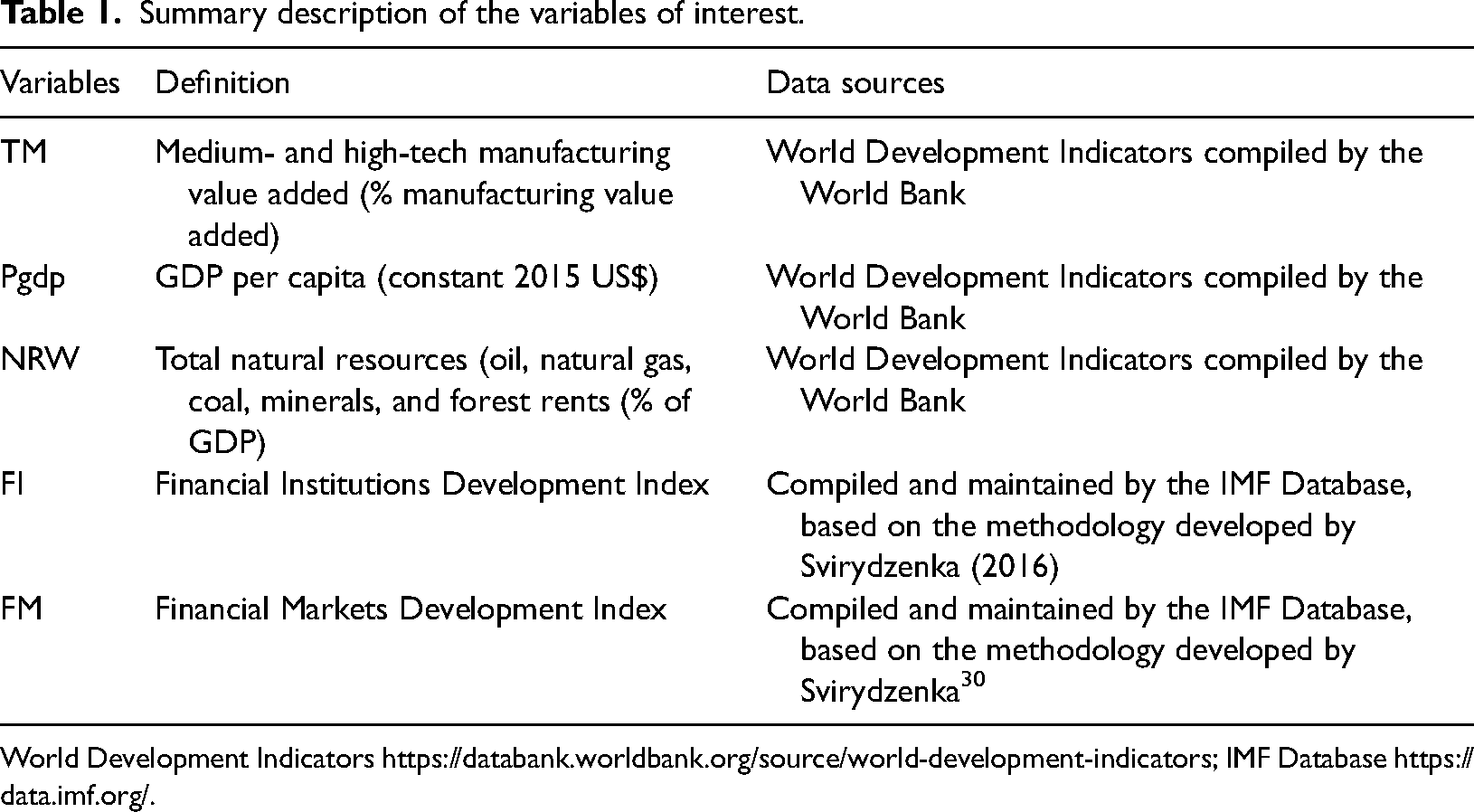
The dependent variable in this study is TM, which represents the contribution of medium- and high-tech industries to the manufacturing sector as a percentage of the total manufacturing value added. This variable, sourced from the WDI, is critical in assessing the extent of industrial upgrading in these economies. The independent variables include the following:
The GDP per capita (Pgdp) serves as a proxy for economic growth. It is expressed in constant 2015 US dollars and is sourced from the WDI Database. Total natural resource rents (NRW), also obtained from the WDI database, measure the proportion of a country's GDP derived from natural resource extraction. The Financial Institutions Development Index (FI) and Financial Markets Development Index (FM), both of which are compiled by the International Monetary Fund (IMF), are based on the methodology developed by Svyrdzenka.
30
These indices measure the development levels of FIs and financial markets, respectively.
Table 1 provides a summary description of these variables, their definitions, and data sources.
Summary description of the variables of interest.
World Development Indicators https://databank.worldbank.org/source/world-development-indicators; IMF Database https://data.imf.org/.
Econometric techniques
This study employs three distinct econometric approaches. The first approach involves a mean-based panel regression estimator that focuses on estimating the average effect of the independent variables on TM. Given the panel structure of the data, which includes both cross-sectional and time series dimensions, the model addresses potential issues such as heteroscedasticity and autocorrelation. To mitigate these concerns, Driscoll–Kraay standard errors are employed, which are robust to both cross-sectional dependence (CD) and serial correlation, making them particularly suitable for long panel data. 31
The second approach uses quantile regression via the method of moments (MQR) algorithm, as developed by Machado and Silva,
32
to estimate the conditional median or other specific quantiles of the dependent variable. Quantile regression is chosen over traditional mean-based methods because it allows for a more nuanced understanding of the relationships between the independent variables and TM across different points in the distribution of TM. Unlike mean-based methods, which assume a uniform effect of the independent variables across the entire distribution, quantile regression provides insights into how these effects might vary at different quantiles.
32
For instance, the influence of Pgdp or NRW may differ for countries at the lower end of the TM distribution (where industrial upgrading is less advanced) compared with those at the higher end (where high-tech industries are already more developed). In such cases, focusing solely on the mean effect might mask important variations that exist across different levels of TM. Quantile regression captures these heterogeneous effects, making it particularly valuable in exploring the complex dynamics of industrial upgrading, which may be influenced differently depending on the stage of development within each country. The quantile regression model can be expressed as:

The third approach focuses on causal relationships via the half-panel jackknife (HPJ) Wald-type test for Granger non-causality developed by Juodis et al.
33
This method is applied to determine whether the independent variables (Pgdp, NRW, FI, FM) can predict changes in the dependent variable (TM). The Granger non-causality test is well suited for panel data with cross-sectional heterogeneity, ensuring that the analysis accounts for unobserved heterogeneity across different entities (e.g., countries). In the multivariate system, the Granger causality test is applied to examine whether a group of independent variables jointly Granger-cause the dependent variable. The multivariate system considers the possible interactions among the independent variables, providing a more comprehensive view of the causal relationships. The multivariate system can be expressed as: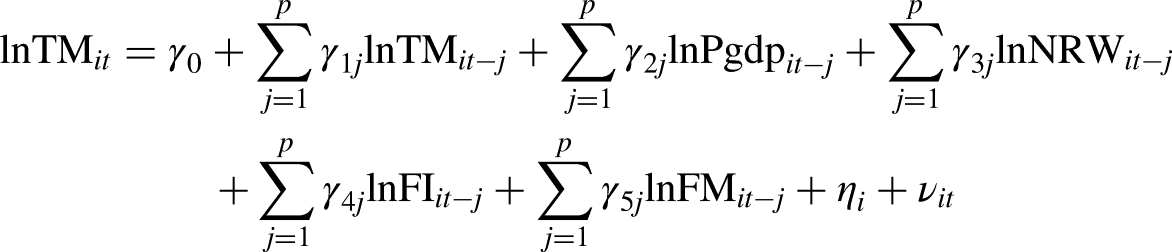

In the univariate system, the Granger causality test is applied to examine whether each independent variable individually Granger-causes the dependent variable TM. This system is useful for understanding the direct impact of each independent variable without considering interactions with other variables. For each independent variable, the univariate system is expressed as:




Results and discussion
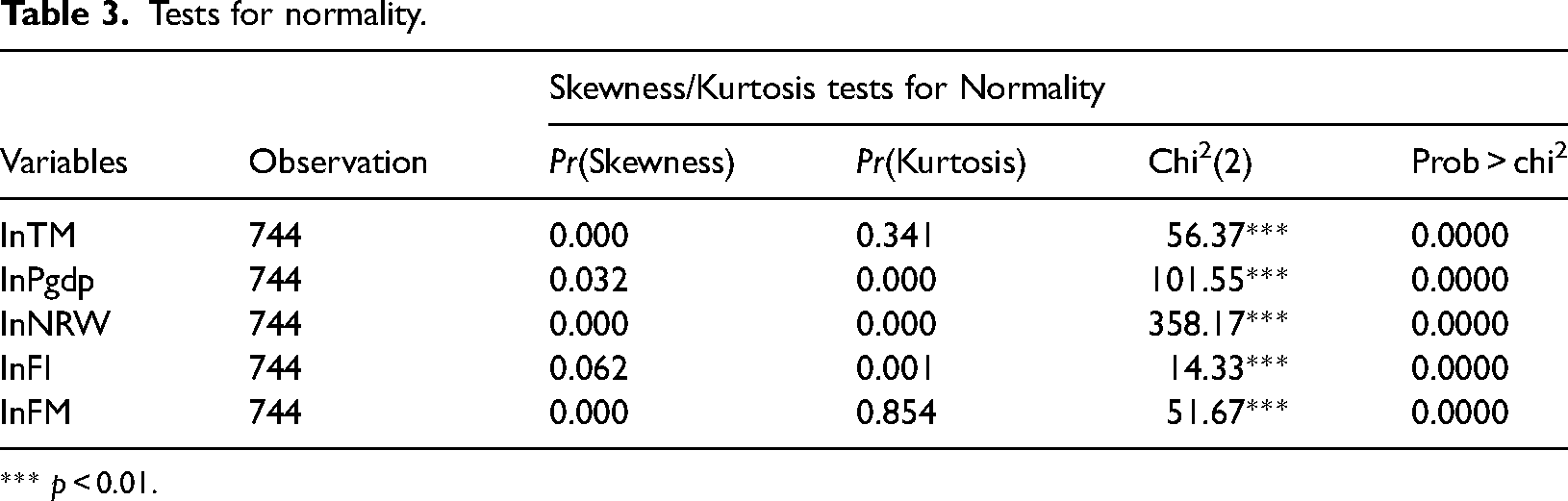
Table 2 provides a descriptive statistical analysis of the variables under study. TM exhibits significant variation across countries, with a few nations making notable progress in diversifying into advanced technological manufacturing, whereas many others continue to struggle with this transition. Pgdp also varies significantly across countries, reflecting economic disparities. NRW varies widely, indicating differences in resource endowments and exploitation. FI and FM exhibit varying levels of development, with many countries struggling with underdeveloped financial systems. The normality test results in Table 3 indicate that the variables deviate from a normal distribution. Figure 1 shows that most variables are right-tailed, except TM and NRW, which are left-tailed. Additionally, all variables, except Pgdp, exhibit peaked distributions, with TM, FM, NRW, and FI being leptokurtic. Pgdp is platykurtic, indicating a broader peak. Owing to these deviations from normality, quantile regression is applied, as it provides a more robust analysis that does not depend on the assumption of normally distributed residuals.
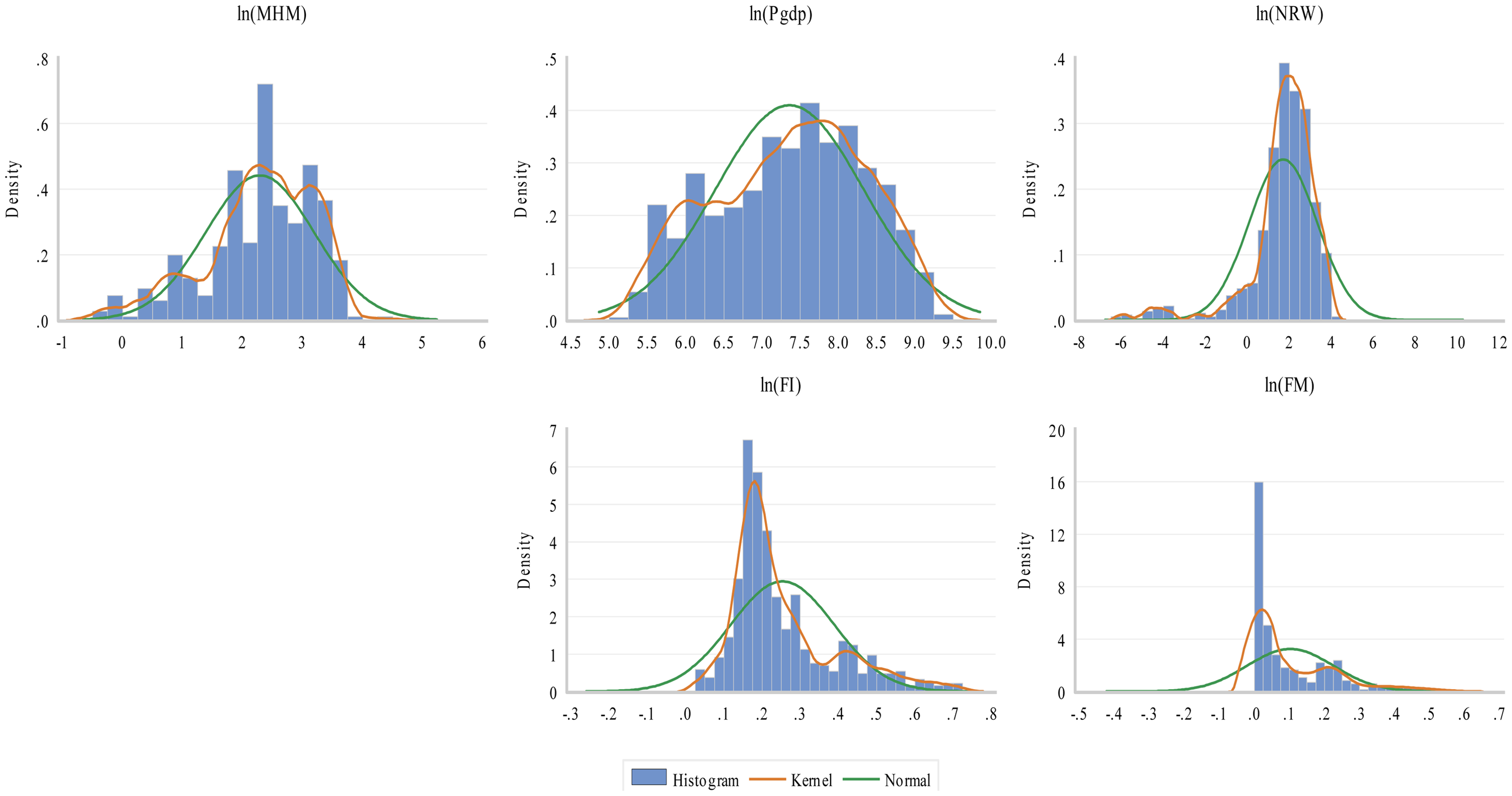
Distributional plots for normality.
Basic descriptive statistics.

Tests for normality.
*** p < 0.01.
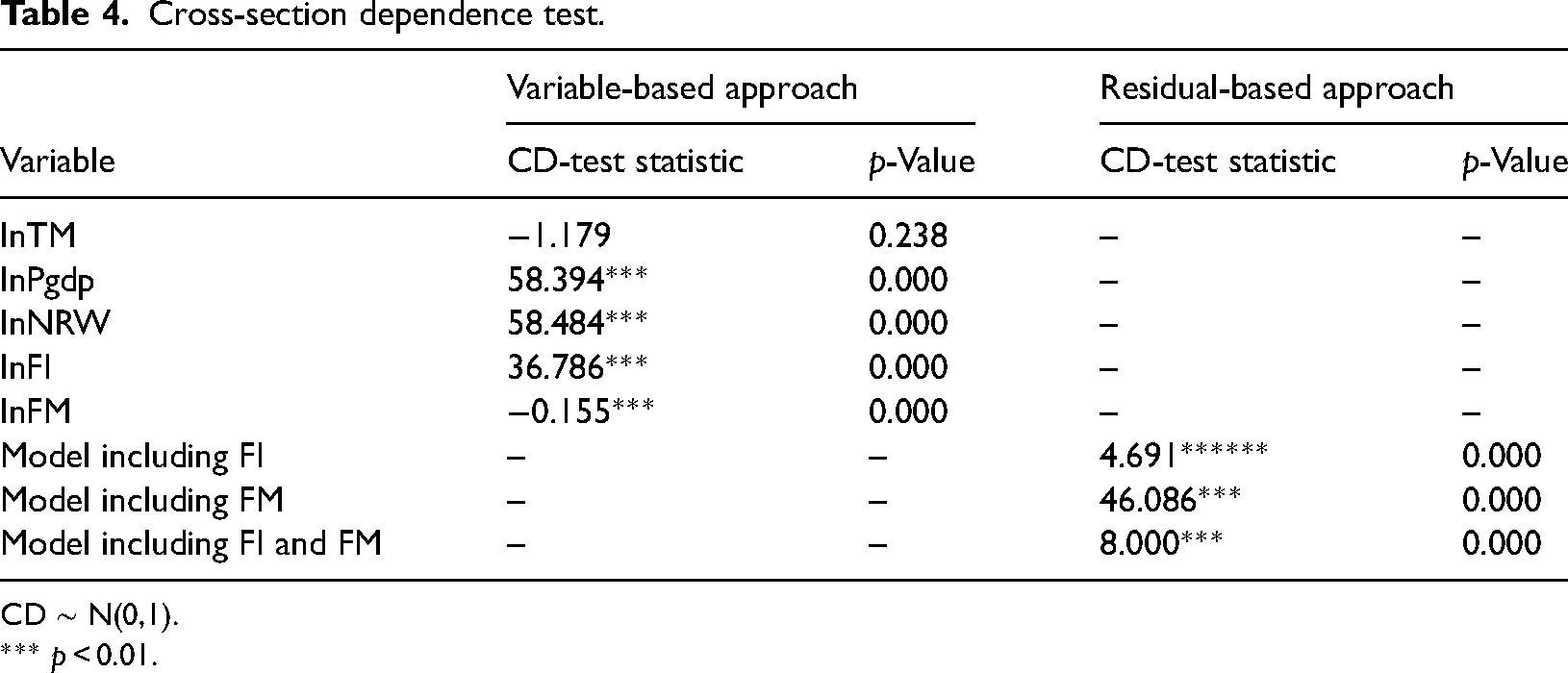
Table 4 presents the CD test results based on the Pesaran 34 methodology, evaluating two scenarios: the variable-based approach and residual-based approach. The variable-based test indicates that all the variables in the study exhibit significant CD, except for TM, as per the probability values. In contrast, the residual-based CD test shows significant results, leading to the rejection of the null hypothesis of strict cross-sectional independence 34 or weak CD. 35 This outcome suggests that first-generation cointegration procedures and regression model estimators, which assume cross-sectional independence, are inappropriate for this panel dataset. Consequently, the study will adopt second-generation cointegration tests and estimators, which are more robust in addressing CD issues and are better suited to the characteristics of the sample cross-sections.
Cross-section dependence test.
CD ∼ N(0,1).
*** p < 0.01.
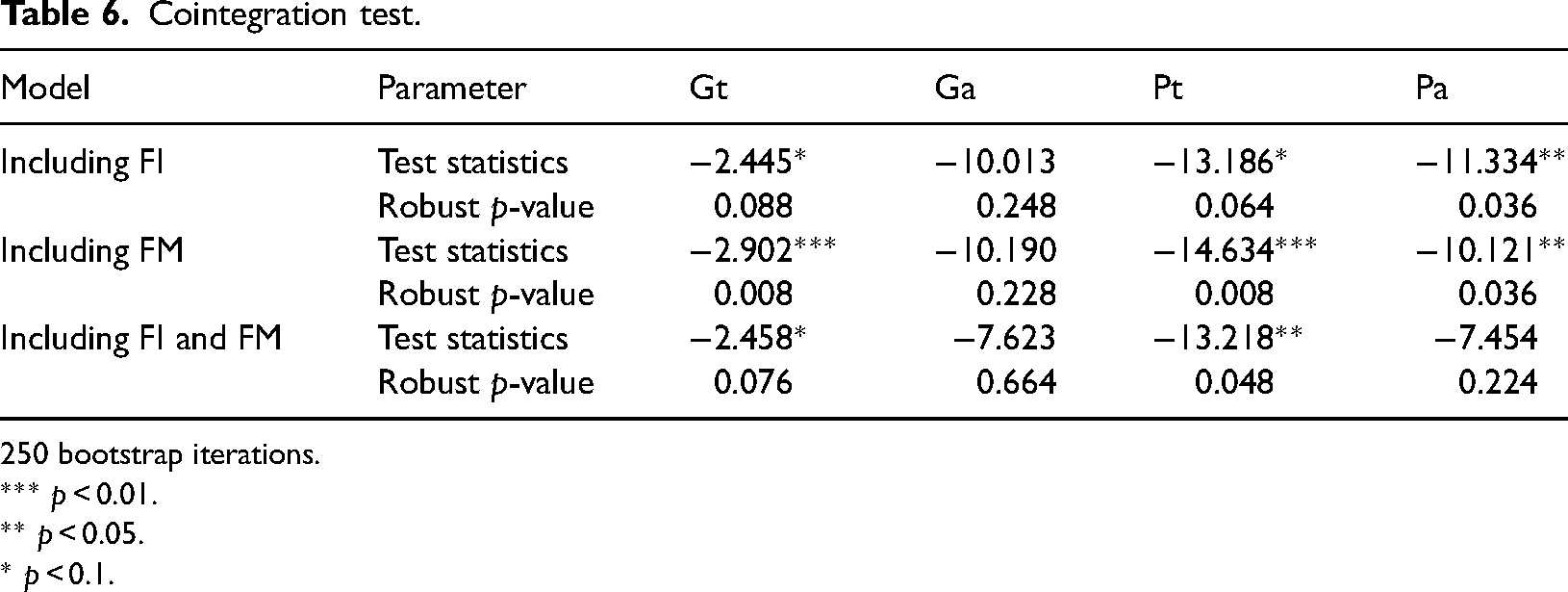
The study employed both first-generation and second-generation cross-sectionally augmented unit root tests, 36 applied at both levels, I(0), and first differences, I(1), as presented in Table 5. These tests included constant and constant-trend specifications. The results from both methodologies indicate that the variables are predominantly integrated of order one, I(1), providing a necessary condition for further analysis. Subsequently, cointegration tests were conducted to assess the long-run relationship between the regressors and the dependent variable, a key requirement for employing long-run panel estimators. Given the presence of CD, the Westerlund 37 panel cointegration test was utilized, as shown in Table 6. The Gt, Pt, and Pa statistics, at the 10%, 5%, and 1% significance levels, consistently reject the null hypothesis of no cointegration. This outcome confirms the existence of a long-run relationship among the variables, allowing for the use of long-run panel estimation techniques in the study.
Unit root tests.

*** p < 0.01.
** p < 0.05.
Cointegration test.
250 bootstrap iterations.
*** p < 0.01.
** p < 0.05.
* p < 0.1.
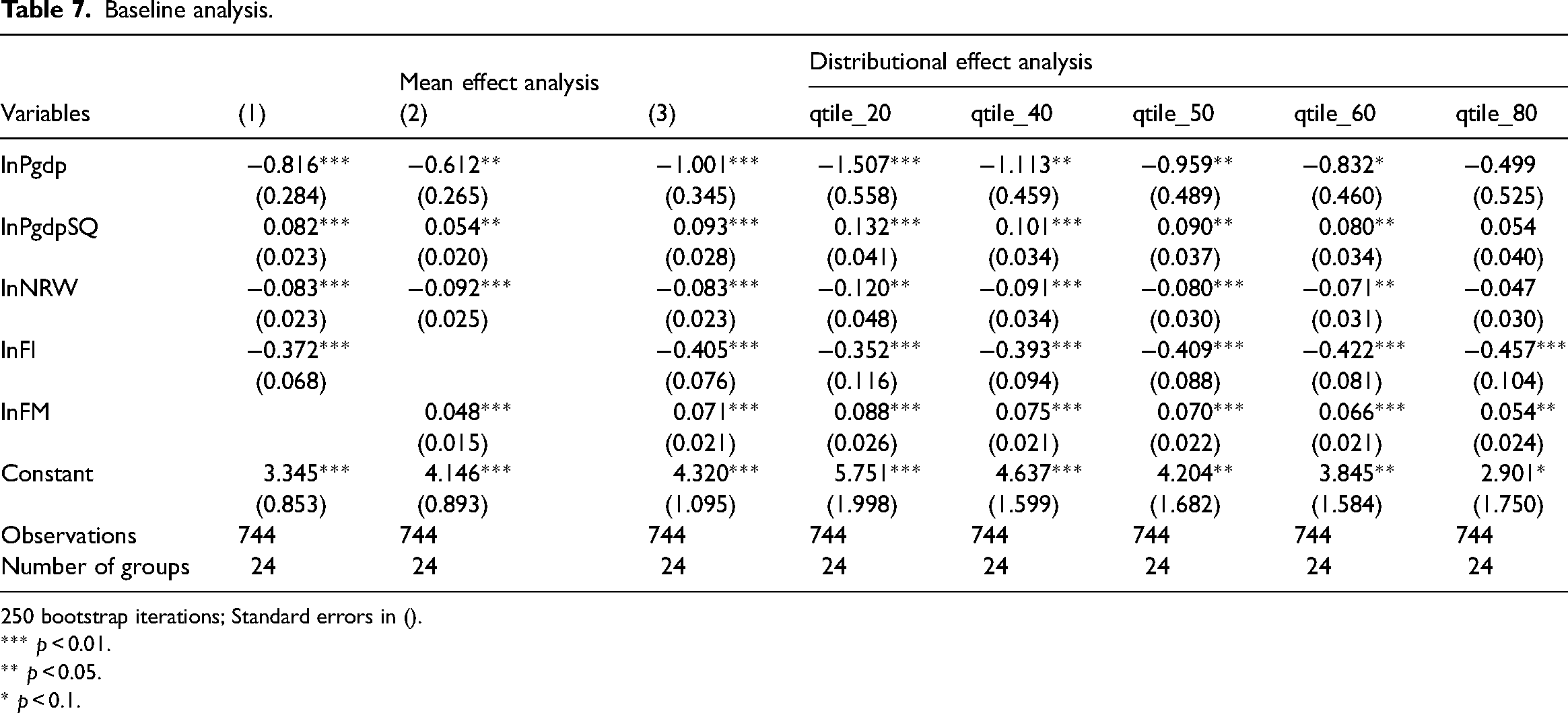
Table 7 presents both the mean and distributional effects of the baseline analyses. Distributional effects are assessed across quantiles: lower quantiles (qtile_20 and qtile_40), median quantile (qtile_50), and upper quantiles (qtile_60 and qtile_80). The findings offer valuable insights into the relationships among Pgdp, NRW, FI, FM, and TM. Figures 2 and 3 present the distributional effects across various quantiles, providing a visual representation of how the impacts of Pgdp, NRW, FI, and FM vary along the conditional distribution of TM.

Plots of distributional effects across quantiles (baseline analysis).
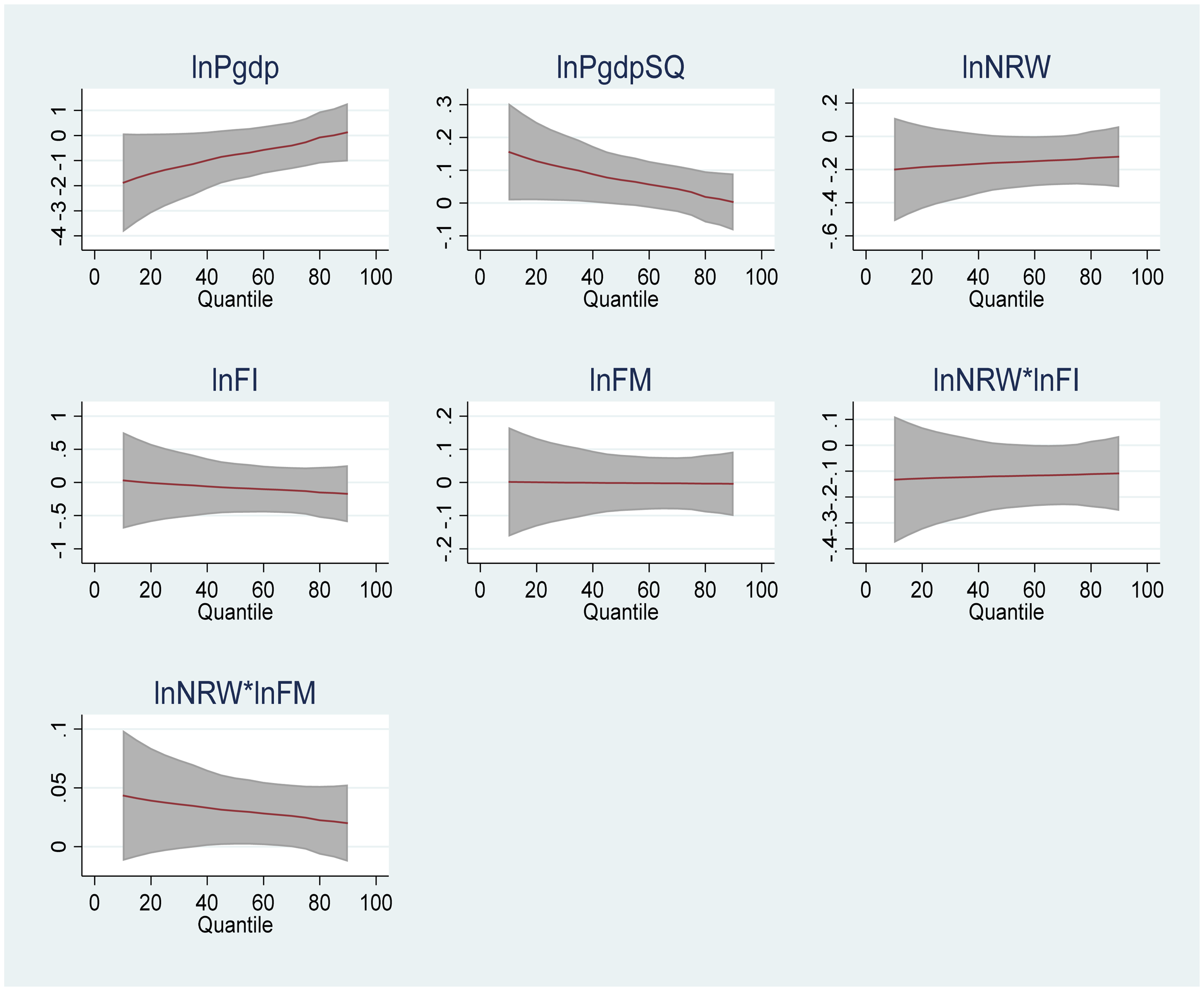
Plots of distributional effects across quantiles (interaction effects).
Baseline analysis.
250 bootstrap iterations; Standard errors in ().
*** p < 0.01.
** p < 0.05.
* p < 0.1.
The linear term for real per capita GDP (Pgdp) has a negative and significant mean effect, suggesting that at early stages of economic growth, an increase in per capita GDP tends to hinder diversification into the TM. This relationship is also reflected in the distributional effects, which remain negative and significant across lower quantiles (qtile_20, qtile_40) and up to qtile_60, although the effect diminishes at higher quantiles and becomes insignificant at qtile_80. The stronger impact at lower quantiles suggests that in economies at earlier stages of industrialization, higher GDP growth might be associated with resource-based or low-tech industrial activities rather than diversification into high-tech sectors. This implies that tech-driven industrial growth is constrained by the economic structure at lower income levels. However, the positive and significant coefficient of the quadratic term (PgdpSQ) indicates a U-shaped relationship, where higher stages of economic growth eventually reverse this effect, fostering diversification into the TM. This suggests the presence of a growth threshold where industrial upgrading into tech-driven manufacturing becomes more feasible, aligning with the theoretical expectations of economic transformation. Similar, structural transformational paths have been documented in earlier studies by Dabla-Norris et al. 27 and Botta et al. 28 From a policy perspective, this implies that early-stage economies may need targeted industrial policies and investment in technological infrastructure to catalyze this transition at earlier stages, thereby accelerating the U-shaped transformation.27,28
The coefficient for natural resource wealth (NRW) is consistently negative and significant across both the mean and distributional effects, indicating that resource dependence weakens industrial diversification into medium- and high-TM. The stronger impact observed at the lower quantiles (qtile_20 and qtile_40) underscores the particularly adverse influence of resource wealth on industrial upgrading in economies at earlier stages of tech-driven industrialization. As these economies move to higher quantiles, the negative effect diminishes and becomes insignificant by qtile_80. This pattern aligns with the resource curse hypothesis, which suggests that resource-rich countries often fail to diversify due to their over-reliance on extractive industries. This finding mirrors the results of prior studies by Amiri et al. 17 and Asiamah et al., 18 reinforcing the notion that natural resource abundance can impede broader economic transformation. Furthermore, as suggested by Song et al. 19 and Wang et al., 13 resource-rich economies must adopt more diversified growth strategies, prioritizing the development of financial and technological infrastructures to mitigate the negative effects of resource dependence. This would help shift their economies from resource extraction toward more sophisticated, tech-driven industrial growth.
Financial development plays a complex role in industrial diversification. The negative and significant coefficient for institution-led financial development (FI) suggests that banking sector-driven financial systems do not sufficiently support the shift toward medium- and high-TM in Africa. The stronger negative effect at higher quantiles (qtile_60 and qtile_80) indicates that as economies develop a larger TM base, the limitations of institution-led financial systems become more pronounced. This result could be attributed to inefficiencies in traditional banking systems, which often struggle to finance high-tech industries because of the riskier and innovation-driven nature of investments. Studies such as Kim et al. 14 and Jiang et al. 15 support this view, arguing that such systems are less adept at facilitating tech-driven growth. Similar insights have been shared by Akinlo et al., 24 who showed that financial development can sometimes negatively affect the real sector in African economies. Reforming banking systems to offer more targeted incentives or integrating market-based mechanisms may help overcome these limitations, as financial liberalization has been shown to increase industrial investment, as demonstrated by Guermazi 22 in Tunisia.
Conversely, the positive and significant coefficient for market-led financial development (FM) suggests that financial markets play a more supportive role in fostering industrial diversification into TM. The stronger positive effect at lower quantiles (qtile_20) indicates that even at earlier stages of industrialization, financial markets provide better access to capital for tech-driven industries than traditional banking systems do. This highlights the critical role that well-functioning financial markets can play in enabling TM, particularly in economies transitioning out of resource dependence. Similarly, Lo and Cissokho 26 reported that market-oriented financial development positively impacts manufacturing growth. This pattern is also consistent with findings from India, where Thampy and Tiwary 25 observed that sector-specific credit in the manufacturing sector was key to fostering industrial growth. From a policy standpoint, strengthening financial markets through regulatory reforms and capital market development could significantly accelerate industrial upgrading in African economies. 11
Existing studies have often used broader indicators of financial development without differentiating between institution-led and market-driven financial systems. The findings of the present study highlight the importance of disaggregating financial development to better understand how different financial structures can either hinder or facilitate industrial upgrading.
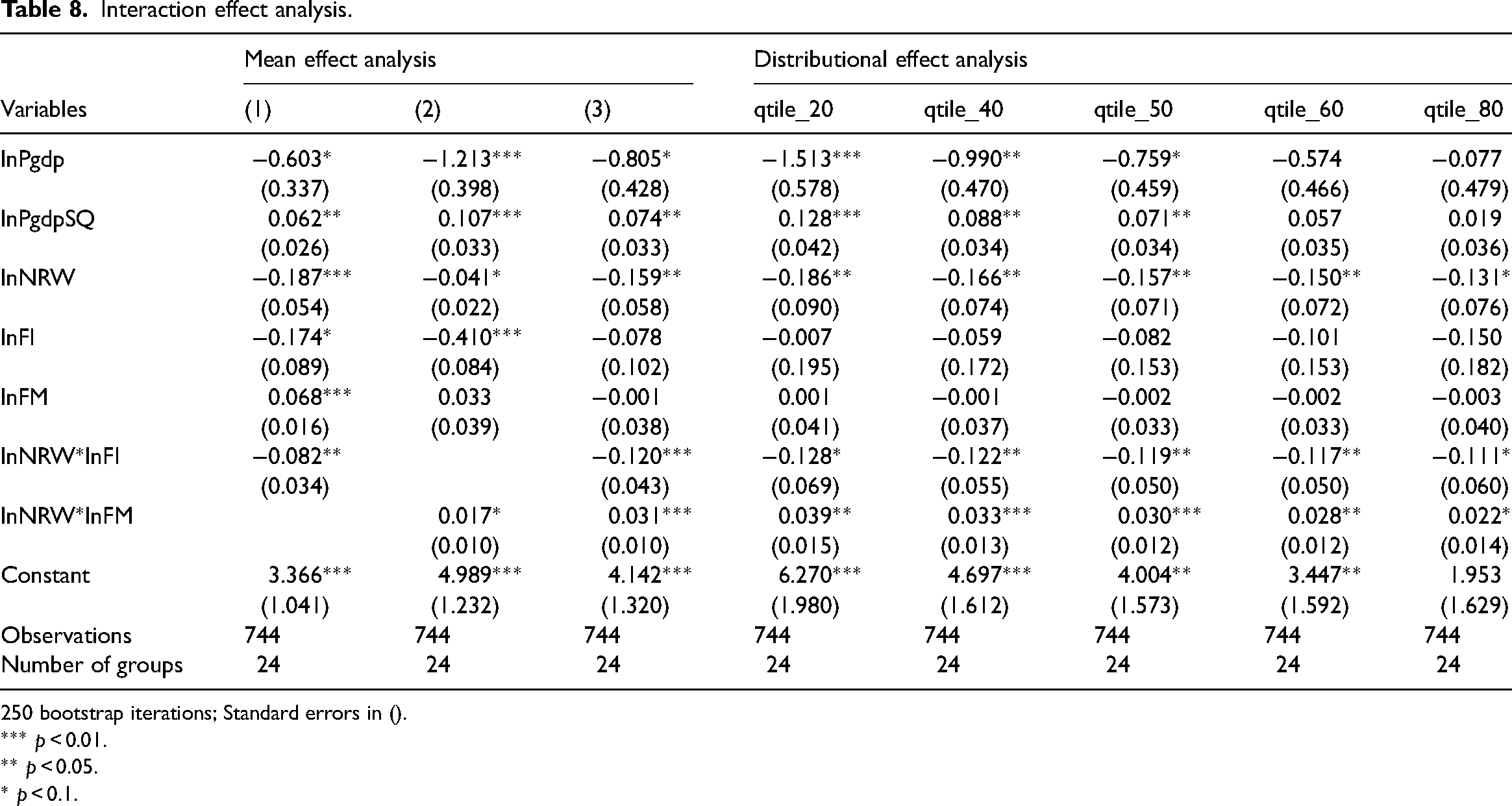
Table 8 presents regression estimates with interaction terms. When interaction terms are introduced, the coefficients for FI and FM become statistically insignificant, highlighting the limitations of these financial systems when considered independently. The interaction term between NRW and institution-led financial development (NRW*FI) shows a negative and significant effect, both in the mean and across distributional quantiles. For instance, the effect at qtile_20 is −0.128%, that at qtile_50 is −0.119%, and that at qtile_80 is −0.111%. These findings suggest that institution-led financial development exacerbates the negative impact of natural resource wealth on FM. This could be due to the inefficiencies of traditional banking systems in channeling resources toward tech-driven industries, which require greater risk tolerance and innovation-led financing. The theoretical implication here aligns with the broader literature, which argues that resource-dependent economies often struggle to mobilize adequate financial resources for diversification into high-tech sectors.14,15
Interaction effect analysis.
250 bootstrap iterations; Standard errors in ().
*** p < 0.01.
** p < 0.05.
* p < 0.1.
Conversely, the interaction term between NRW and market-driven financial development (NRW*FM) presents positive and significant coefficients, suggesting that market-driven financial systems can effectively counter the negative impact of natural resource wealth on FM. The coefficients at qtile_20, qtile_50, and qtile_80 are 0.039%, 0.030%, and 0.022%, respectively. This finding indicates that as financial markets develop, they create a more conducive environment for attracting investments into TM. Market-driven financial systems, by providing liquidity, capital mobility, and investor confidence, particularly appeal to foreign investors and facilitate industrial upgrading in Africa. From a policy perspective, the findings suggest that African economies must focus on reforming and enhancing their financial markets to support industrial diversification. Policymakers should prioritize creating efficient, transparent, and resilient financial markets to attract the capital necessary for the tech-driven industrialization of their economies. Additionally, reforms should be directed at the institutional banking system to address inefficiencies and align them more closely with the needs of high-tech industries.
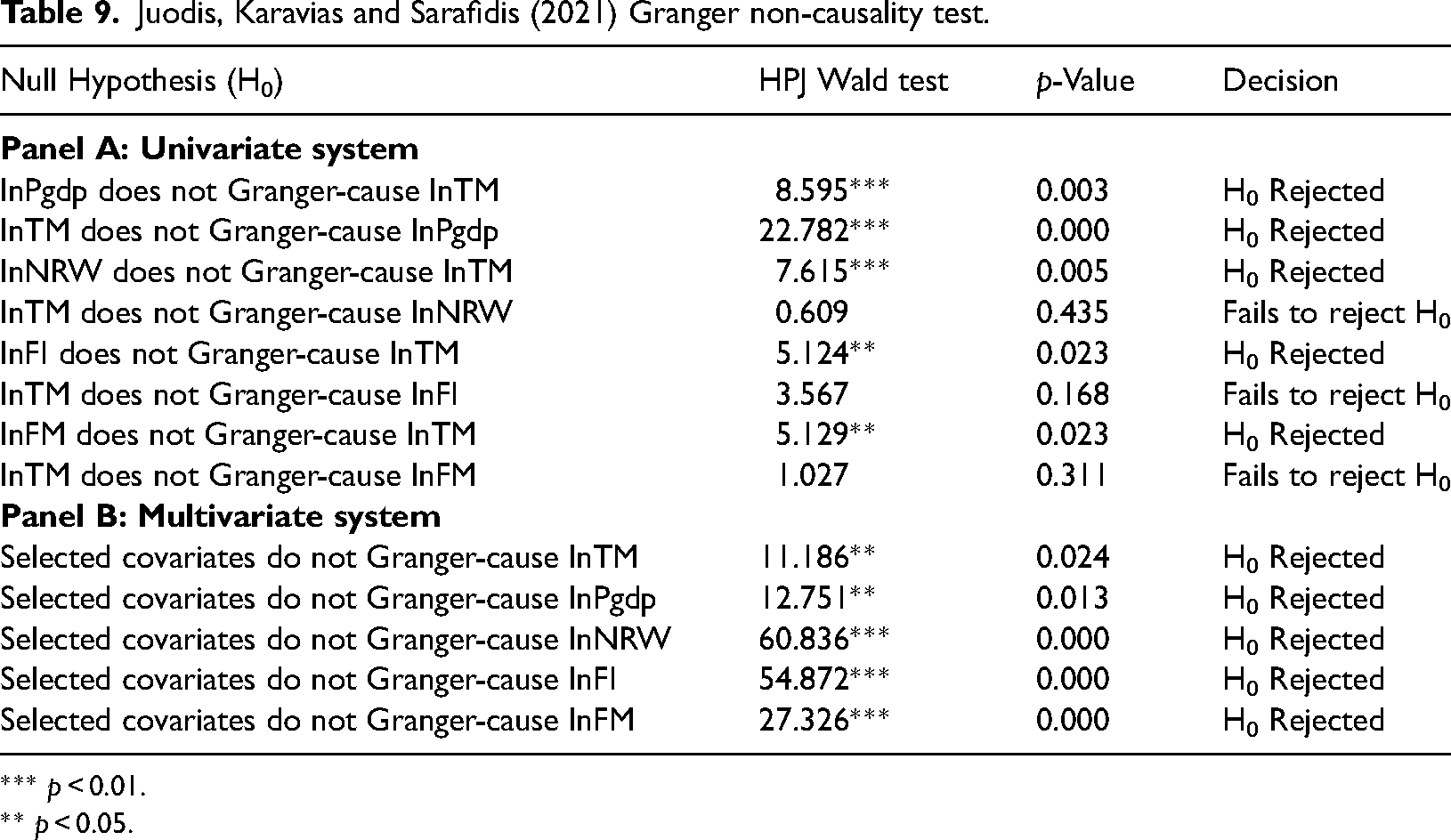
Table 9 presents the results of the HPJ Wald-type test for Granger non-causality, examining both univariate and multivariate systems. In the univariate system, the results reveal a uni-directional causality from NRW, FI, and FM to TM. Additionally, bidirectional causality is observed between Pgdp and TM, indicating that while economic growth Granger-causes industrial diversification into TM, the growth of the TM sector also drives further increases in per capita GDP. This bidirectional relationship underscores the dynamic interplay between economic growth and tech-driven industrialization in Africa. The findings align with endogenous growth theory, which posits that industrial upgrading and technological advancements can spur further economic growth. For the other regressors, such as NRW, FI, and FM, unidirectional causality is observed, indicating that these variables influence industrial diversification into TM, but there is no feedback loop from TM back to these variables. This suggests that while financial development and natural resource wealth play significant roles in shaping the trajectory of TM, the growth of the manufacturing sector itself does not directly alter the financial systems or resource reliance. These findings suggest that African economies need to address these structural challenges—particularly resource dependence and underdeveloped financial systems—if they aim to fully harness the potential of industrial diversification.
Juodis, Karavias and Sarafidis (2021) Granger non-causality test.
*** p < 0.01.
** p < 0.05.
In the multivariate system, the findings show a rejection of the null hypothesis across all specifications, reinforcing the conclusion that Pgdp, NRW, FI, and FM collectively Granger-cause TM. Strengthening market-driven financial systems and reducing over-reliance on natural resource wealth could help stimulate the industrial upgrading needed for sustainable growth in the TM sectors. Therefore, a comprehensive approach that combines financial reforms, resource diversification strategies, and investments in tech-driven industries is essential for achieving sustainable industrialization in Africa.
Conclusion and policy remarks
This study explored the roles of natural resource wealth and financial structure in driving medium- and high-TM in Africa, utilizing a panel dataset of 24 African countries between 1991 and 2021. The empirical analysis employed three main approaches: a mean-based panel regression estimator with Driscoll–Kraay standard errors, quantile regression using the MQR algorithm, and the HPJ Wald-type test for Granger non-causality. These methods allowed for robust estimations accounting for CD, serial correlation, and distributional effects.
The findings highlight a U-shaped relationship between per capita GDP and TM, where early stages of economic growth impede industrial diversification, but higher growth levels foster tech-driven industrialization. The study also confirms that combined income from energy, minerals, and forest wealth negatively impacts TM, reinforcing the resource curse hypothesis. This negative effect is more pronounced at lower quantiles, which represent economies in the early stages of industrial diversification. Financial structure also plays a critical role: institution-led financial development hinders TM, whereas market-driven financial systems support it, particularly in economies transitioning from resource dependence. Interaction terms reveal that market-based financial systems can mitigate the negative effects of natural resource wealth on TM, whereas institution-led financial development exacerbates it. The HPJ Granger non-causality tests confirm unidirectional causality from natural resource wealth, institution-led and market-based financial development to TM, with a bidirectional relationship between per capita GDP and TM, indicating a feedback loop between economic growth and tech-driven industrialization.
These findings have significant theoretical and policy implications for African economies seeking to accelerate tech-driven industrialization. The bidirectional causality between per capita GDP and TM suggests that fostering medium- and high-TM can create a positive feedback loop, driving both industrial diversification and economic growth. Policymakers should focus on creating an enabling environment for TM through strategic investments in infrastructure, technology, and innovation to catalyze this virtuous cycle. The U-shaped relationship between economic growth and industrial diversification highlights the need for targeted policies during early stages of growth to overcome structural barriers to industrial upgrading. African economies should prioritize policies that promote economic diversification beyond extractive industries, such as industrial policies, investment in education and research, and infrastructure development. These policies could help overcome the dependency on resource-based growth and encourage a transition toward tech-driven industrialization.
The contrasting roles of institution-led and market-driven financial development underscore the importance of financial sector reforms. Traditional banking systems, which are institution-led, have proven inadequate in supporting TM, especially in economies with a large industrial base. Policymakers should consider reforming banking systems to better align them with the financing needs of high-tech industries. This could include offering targeted incentives for innovation-driven sectors or establishing specialized financial instruments. Strengthening market-driven financial systems is also crucial, as financial markets provide better access to capital for tech-driven industries, particularly at earlier stages of industrialization. Regulatory reforms that enhance transparency, improve investor confidence, and create a resilient financial market structure are essential to support industrial diversification in Africa.
Finally, addressing the negative impact of natural resource wealth on industrial diversification is the key to achieving sustainable industrialization. African governments should adopt resource governance frameworks that encourage the reinvestment of resource revenues into industrial sectors. By doing so, economies can shift from resource dependence toward more sophisticated, tech-driven industries, mitigating the resource curse and fostering long-term economic growth.
While this study offers valuable insights into industrial diversification in Africa, it is important to recognize its limitations. A key limitation is the use of a panel dataset restricted to 26 African countries, selected on the basis of data availability. This limitation may affect the broader applicability of the findings, as the economic and industrial conditions of the included countries may not fully represent the diverse realities across the entire continent. Future research could address this issue by incorporating a more comprehensive dataset that covers a wider range of African nations. Additionally, exploring regional variations within Africa, such as differences between resource-rich and resource-poor countries or between sub-regions with distinct financial structures, could yield more nuanced insights into how different financial systems and resource wealth dynamics shape industrial diversification.
Footnotes
Acknowledgments
This project is sponsored by Prince Sattam Bin Abdulaziz University (PSAU) as part of funding for its SDG Roadmap Research Funding Programme project number PSAU-2023-SDG-113.
Declaration of conflicting interests
The authors declared no potential conflicts of interest with respect to the research, authorship, and/or publication of this article.
Funding
The authors received no financial support for the research, authorship, and/or publication of this article.
