



Abstract
The policymakers in emerging economies have accelerated their efforts to move toward sustainable development due to the associated challenges of environmental degradation and disparities in economic growth. The present study is an effort in that direction; it looks at trade-adjusted carbon emissions (TACE) to help policymakers develop a relevant policy response to mitigate climate change in the BRICST (comprising Brazil, Russia, India, China, South Africa, and Turkey) regions. The study investigates the impact of financial inclusion, green finance, and sustainable economic development on carbon emissions adjusted for trade. The study utilizes the panel dataset of the BRICST regions from 2000 to 2023 by employing the econometric methods of the Method of Moments Quantile Regression (MMQR) approach. It recommends green finance, financial inclusion, and sustainable economic development to curb TACE. The research findings indicate a noteworthy correlation between green finance, financial inclusion, sustainable economic development and TACE. The study recommends policy measures for the BRICST regions that align with the Sustainable Development Goals, focusing on green finance, financial inclusion, and sustainability. By promoting renewable energy, enhancing financial access, and encouraging international cooperation, these strategies aim to reduce TACE and foster sustainable development.
Keywords
Introduction
The contemporary global challenge is environmental degradation, which has gained international attention by bringing together researchers and policymakers at the global forefront. Various international agreements and treaties have been signed worldwide to cope with the increased carbon emissions, mainly caused by anthropogenic activities. The Paris Climate Agreement, ratified by 196 countries worldwide, intends to reduce the rise in global temperature. 1 International trade has risen multiple times due to technological advancements and globalization in the last few decades. Trade openness due to globalization has brought together several developing and developed countries. However, this trade openness comes at the cost of poor environmental quality.2,3
The influential research studies 4 provide a theoretical background for the relationship between the influence of trade on the quality of the environment. Eventually, various studies have explored the effect of trade to explain the rise in CO2 emissions.2,3 There are two separate strands of literature in this regard. On the one hand, several studies point out that trade openness often leads to an expansion in economic growth. 5 It is also considered that due to the rise in international trade, economies witness high growth in their economic activities due to the smooth flow of goods and services among the nations. Grossman and Krueger 6 state that the increased trade results in higher income for the countries that later attempt to reduce the negative impact of environmental degradation. This can be achieved by maintaining the balance between the trade and carbon emissions nexus through adopting environment-related technological innovations. On the other hand, studies like Liu et al.2,3 argue that international trade allows developed countries to position their production base of pollution-intensive industries and products to the developing economies, severely affecting the environmental quality.
The BRICST group countries are a group of emerging industrialized economies. Collectively, they occupy a significant share of the world's population (42%) and cover 30.1% of the Earth's total land mass area. 7 In 2021, their combined output produced was approximately $25.5 trillion. These countries have contributed substantially to the global gross domestic product (GDP), constituting 26.6%, with an average annual GDP growth rate of 7.1%. 8 However, their rapid industrialization has increased reliance on fossil fuels, contributing to climate change. The BRICST countries’ share of global emissions rose from 25.77% in 1990 to 47.60% by 2020, showing a consistent increase over time. 9 Notably, as per the report, 10 China alone is responsible for approximately 30.6% of global pollution emissions, while India, Russia, Brazil, South Africa, and Turkey collectively contribute about 7.01%, 4.52%, 1.34%, 1.31%, and 1.13%, respectively. Furthermore, as per British Petroleum, 11 these nations also account for 42% of global fossil fuel consumption in 2021, which also causes increased CO2 emissions. Considering these facts, BRICST economies have started showing an increased willingness to adopt environment friendly projects to diversify their existing source of energy consumption further, combat climate change, and make advancements towards sustainable development.
The current study seeks to meaningfully contribute to the literature by addressing environmental issues in BRICST nations, particularly conference of the parties (COP)-27 and COP-28 to meet the low carbon economy. The research offers valuable perspectives for policymakers in evaluating connections across different quantiles, thereby guiding strategic decision making for COP-27 and COP-28 initiatives. The findings of this research have the potential to assist BRICST countries in achieving sustainable development goals (SDGs) and targets explicitly, such as incorporating climate change measures into governmental policies (SDG-13.2), increasing the share of green energy (SDG-7.2), and promoting industrial technologies (SDG-9.5). The primary aim of this study is to make a substantial contribution to the existing literature by tackling environmental issues in BRICST nations, with explicit attention given to COP-27 and COP-28. Firstly, the study uses trade-adjusted carbon emissions (TACE), which can help formulate the much-needed climate policy at par with the objectives of COP-27 and COP-28. It explores the effect of financial inclusion and green finance on the TACE of the region, which has not been studied so far. BRICST region captures almost a quarter of the international trade share, implying its significance to be studied for the TACE. Thirdly, it uses advanced econometric techniques like Method of Moments Quantile Regression (MMQR) to examine the determinants of TACE. Lastly, most of the studies have looked at production-based carbon emissions. Recently, researchers have started to look at the TACE as a measure to check environmental degradation. The novelty of this study lies in its utilization of TACE, as most existing studies focus on production-based carbon emissions, which is sometimes misleading. This method calculates emissions by considering domestic fossil fuel use and the emissions embodied in the net exports. Notably, very few studies have investigated the influence of global trade on CO2 emissions adjusted for trade.
The current research explores the complex connection between financial inclusion, green finance, and TACE while considering industrialization and gross fixed capital as control variables. This study aims to comprehensively determine the complexity of the intricate connections between environmental sustainability and economic progress from the purview of emerging economies like BRICST. The study's results carry significant policy implications for the BRICST nations; it offers many insights and strategies to advance sustainable development within these economies. These economies can focus on implementing programs that combine economic strategies with environmental factors by utilizing green finance mechanisms and improving financial access.
The rest of the study has been structured as follows: The second section covers the literature review of the research idea, and the third section presents insights into the data and research methodology of the current study. Empirical results and the subsequent discussion are discussed in detail in the fourth section, followed by the contribution of the study, which is provided in the fifth section. The sixth section talks about the policy recommendations, and lastly, the seventh section discusses the conclusion and limitations of the existing study.
Literature review
BRICST nations have started emerging as an area of research interest due to their significant contribution to global environmental challenges and economic growth activities. These nations have exerted substantial influence on the global economy due to their rapid industrialization, which necessitates efforts to see them as critical players in achieving sustainable development goals. As emerging economies, the BRICST nations often grapple with trade-offs between economic growth and environmental sustainability. Their collective stance in global climate negotiations is critical in shaping international policies and funding mechanisms. For instance, their participation in COP-27 and COP-28 has underscored the importance of addressing climate change while ensuring equitable development pathways for developing economies.
Studies have highlighted that economic growth and environmental sustainability needs to be integrated by policymakers to implement strategies facilitating the shift to a more environmentally sustainable, low-carbon economy.12–14 The contemporary environmental sustainability literature has focused on TACE that are adjusted with international trade. Researchers believe that TACE is a more accurate and reliable metric for assessing environmental pollution compared to production based carbon emissions. Adjustments for trade in carbon emissions include subtracting export-related emissions, adding import-related emissions, and incorporating production-based carbon emissions. This method enables the evaluation of the influence of global carbon emissions on international trade.
Pata and Destek 15 studied the environmental quality of the Indian economy to understand the significance of integrating information and communication technology and renewable energy toward carbon neutrality. The study recommends policies for financial incentives and energy-efficient technologies. Liu et al. 16 explores the case of Sub-Saharan Africa to understand the environmental impact of economic growth, financial inclusion, natural resource depletion, education, and remittances. It advocates discriminatory interest rates for polluting industries and green credit schemes to promote adopting renewable energy and reducing carbon emissions. Similarly, Wang et al. 17 also investigates the economy of Sub-Saharan Africa to explore the energy poverty determinants. It observes that education and financial inclusion can significantly alleviate energy poverty, whereas parameters like natural resources and trade openness tend to exacerbate it. The insights into how financial inclusion through access to banking and other financial services affects energy poverty provide actionable insights for achieving holistic development. Destek et al. 9 explores the scenario of premature de-industrialization by examining the asymmetric effects of industrialization and de-industrialization on environmental quality. The study finds that de-industrialization mitigates environmental degradation in developed nations, whereas it often tends to exacerbate it in developing nations. The study recommends policies for strengthening environmental laws, promoting green industries, economic diversification, and renewable energy.
Table 1 below highlights a select few studies on BRICS and BRICST regions.
Review of the selected studies on environmental quality.
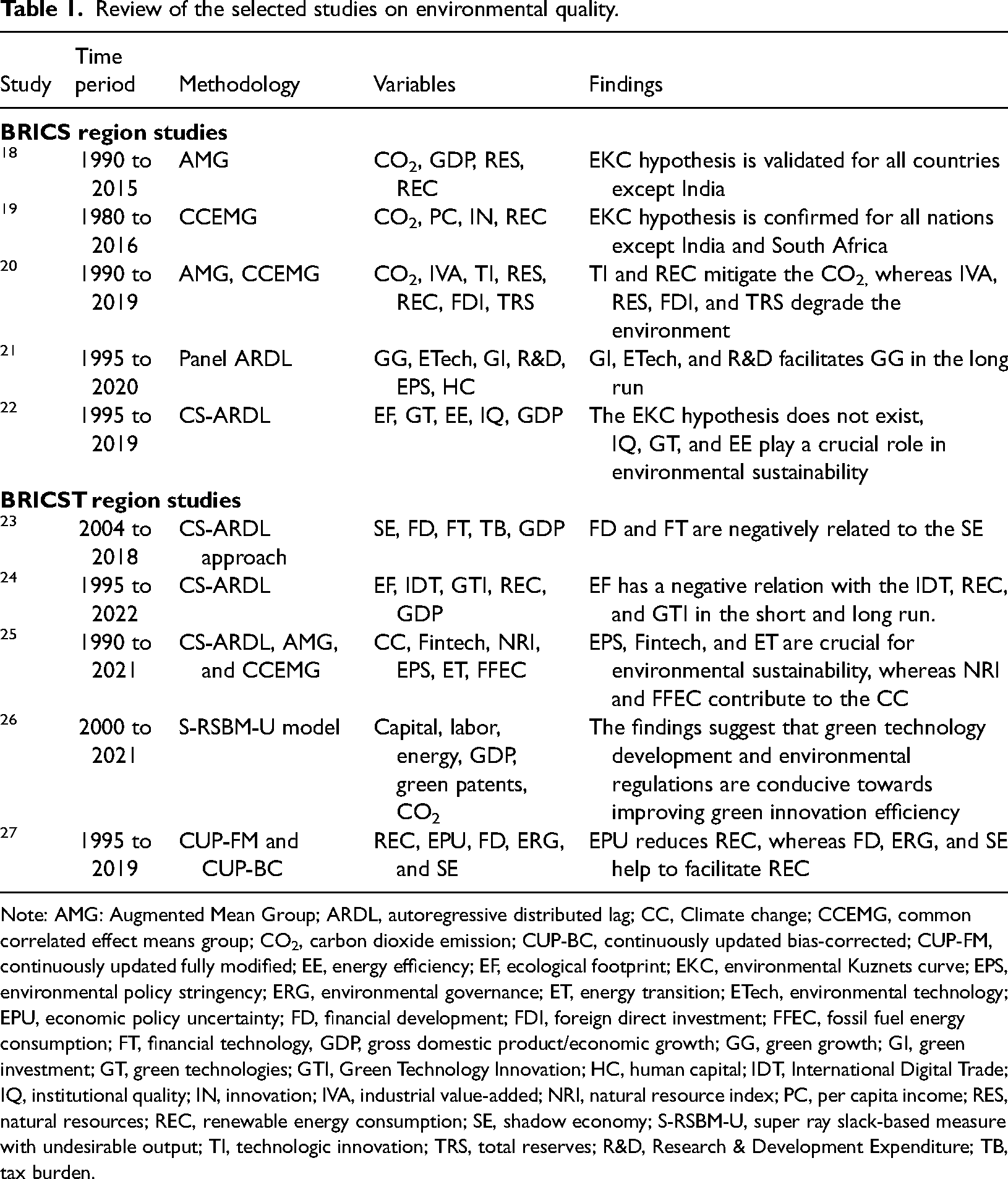
Note: AMG: Augmented Mean Group; ARDL, autoregressive distributed lag; CC, Climate change; CCEMG, common correlated effect means group; CO2, carbon dioxide emission; CUP-BC, continuously updated bias-corrected; CUP-FM, continuously updated fully modified; EE, energy efficiency; EF, ecological footprint; EKC, environmental Kuznets curve; EPS, environmental policy stringency; ERG, environmental governance; ET, energy transition; ETech, environmental technology; EPU, economic policy uncertainty; FD, financial development; FDI, foreign direct investment; FFEC, fossil fuel energy consumption; FT, financial technology, GDP, gross domestic product/economic growth; GG, green growth; GI, green investment; GT, green technologies; GTI, Green Technology Innovation; HC, human capital; IDT, International Digital Trade; IQ, institutional quality; IN, innovation; IVA, industrial value-added; NRI, natural resource index; PC, per capita income; RES, natural resources; REC, renewable energy consumption; SE, shadow economy; S-RSBM-U, super ray slack-based measure with undesirable output; TI, technologic innovation; TRS, total reserves; R&D, Research & Development Expenditure; TB, tax burden.
Trade-adjusted carbon emissions
Hasanov et al. 28 examined the nine oil-exporting nations, revealing a negative impact on exports from TACE. It observed a positive correlation between GDP and imports. Wang and Huang 29 investigate the case of BRICS countries and examine the access to cleaner technologies, renewable energies, natural resources, and income on the carbon emissions from 1990 to 2021 through quantile regression. The study's findings indicate that environmental degradation happens due to natural resource extraction, significantly contributing to it. The study underscored the need to transition towards cleaner technologies. Khaddage-Soboh et al. 30 look at the G-7 economies from 1990 to 2020 to explore the effect of taxes, environmental regulations, and natural resource rents using the MMQR technique. The results indicate the reverse relationship between carbon emissions and the income generated from natural resources at lower quantile distribution levels. Still, at the higher quantile levels, this relationship becomes positive. The increased adoption of renewable energy correlates with reducing carbon emissions. Li et al. 31 explore the BRICS member countries’ data from 1990 to 2019. The study explores that the increase in government expenditure, nonrenewable energy consumption, and economic growth tends to exacerbate TACE. Carbon emission mitigation is achieved through renewable energy consumption, stringent environmental policies, and tax revenue. Jiang et al. 32 use the G-7 countries’ data from 1990 to 2020 to examine the impact of the political risk index and the investment in environmental R&D on carbon emissions.
Green finance
There are not many studies that have delved into the impact of green finance (GF) on TACE. As per the extant literature, the research study 33 scrutinizes the repercussions of green finance for the BRICS countries on the TACE from 2000 to 2020. Along with GF, it looks at trade openness and green technological adoption using the CS-ARDL (autoregressive distributed lag) estimation method. The study reveals that GF and adopting sustainable technologies contribute to a long-term reduction in TACE, whereas trade openness correlates with increased emissions. Moreover, countries have shifted their focus toward green innovative technologies that are both resource-efficient and save energy through better process innovations. 34 Also, the study by Safi et al. 35 examines the case of G-7 nations to explore further the potential impact of natural resource rent, green innovations, and economic complexity on TACE. The findings from the study indicate that carbon emissions have declined mainly due to the increased economic complexity among the G-7 member nations. Furthermore, it describes that carbon emissions are negatively related to green innovations and environmental taxes, whereas economic growth shows a significantly positive relationship with carbon emissions.
Financial inclusion
Xin and Xie 36 explore the G-7 economies from 2000 to 2020 to understand the determinants of TACE by including the financial inclusion (FI) index, environmental innovations, and taxes. The empirical analysis suggests that environmental-related taxes, innovations, exports, and FI reduce TACE. Ma et al.12,13 points out that previous studies have largely overlooked the effect of FI and environmental technological innovations, particularly their impact on TACE. Therefore, Ma et al.12,13 examine FI and environmental innovations of the G-7 member countries from 2004 to 2019. It further investigates the role of exports, imports, and GDP using the novel MMQR method. The results indicate that FI and environmental innovations also tend to reduce TACE across various quantiles.
Conversely, GDP and imports contribute to an increase in TACE. At last, the study offers pertinent policy measures to promote sustainability in the trade through targeted efforts towards eco-innovation and FI. Tay et al. 37 look at the data of COVID-19 for developing economies to examine how digital financial inclusion impacts economic growth. The study found that enhanced digital FI in developing economies contributes to achieving SDGs, particularly in reducing poverty. It asserts to simplify the complex banking procedures and further enhance the digital infrastructure to improve the financial system.
Sustainable economic development
The present study takes GDP as a proxy variable for sustainable development as per the evidence from the extant literature.31,38 As pointed out by Wang and Razzaq, 38 the concept of sustainable development has gained significant attention and recognition in recent years, with the GDP serving as a crucial measure of its progress. The GDP is an essential measure of sustainable development, as it reflects the economic wellbeing of a country by considering factors such as consumption, government spending, investment, and savings. Therefore, GDP has been suitably considered a proxy for sustainable development. Balsalobre-Lorente et al. 39 investigated the case of the environmental Kuznets curve (EKC) hypothesis for the BRICS countries from 1990 to 2014 to understand the influence of urbanization and growth rate on carbon emissions. Their study analysis revealed that foreign investment is a moderating variable toward carbon emissions. Safi et al. 35 investigate the G-7 nations to analyze the potential impacts of green innovations, natural resources and economic complexity on TACE. The results indicate that there was a substantial decrease in emissions, which was primarily attributed to the rise in economic complexity. Xin and Xie 36 investigate the G7 economies from the period 2000 to 2020 by using the MMQR method for analysis. It utilizes financial inclusion, environmental taxes, and environmental innovations toward the TACE.
Industrialization
Since all the BRICST economies are transitioning to the advanced stage of industrialization, examining the relationship between TACE and industrialization becomes crucial. It leads to higher energy consumption, which is further associated with the degradation of environmental quality and resource depletion. It has been witnessed that as countries tend to industrialize, the rise in carbon emissions follows up with the higher energy needs. The connection between industrialization and environmental quality has been extensively studied. Nonetheless, the outcomes remain inconsistent. Similarly, Rauf et al. 40 looked at the Belt and Road Initiative countries, among other studies that provided evidence in favor of the idea that industrialization is beneficial for economic growth but comes at the cost of the environment.
Gross fixed capital
BRICST nations hold immense potential to make capital investments that can enhance the environmental efficiency of their existing production processes. Any significant flow of investments toward green technologies and sustainable infrastructure by deploying energy-efficient equipment can promote carbon neutrality. Bukhari et al. 41 emphasize the need to incorporate the idea of environmental sustainability into investment decisions, which can help decouple economic growth from environmental deterioration. Trade will reduce carbon emissions if capital is used to develop carbon-reducing assets. Conversely, if trade results in the import of production that produces carbon intensively, trade will increase carbon emissions. Low-carbon technologies’ composition and technological components will counter the scale effect and result in minimal environmental harm if capital is invested in them. On the other hand, it is observed that the scale, composition, and capital investment in carbon-intensive production will guarantee a rise in environmental deterioration. Bukhari et al. 41 examined the long-term relationship between gross fixed capital and foreign direct investment in Pakistan from 1974 to 2010 using the ARDL method. The findings demonstrate that rising gross fixed capital can enhance air quality.
Data description and research methodology
The present study uses panel data from 2000 to 2023 for the countries in the BRICST region. The research design of the present study can be followed through Figure 1. It lists the various stages used in the research methodology. The study computes the contribution of green finance using the IRENA database of public investment toward renewable energy. Furthermore, the other variables, measurements, and sources can be seen in Table 2. The present study is the first to explore the role of green finance, financial inclusion, and sustainable economic development on the TACE for the BRICST nations.
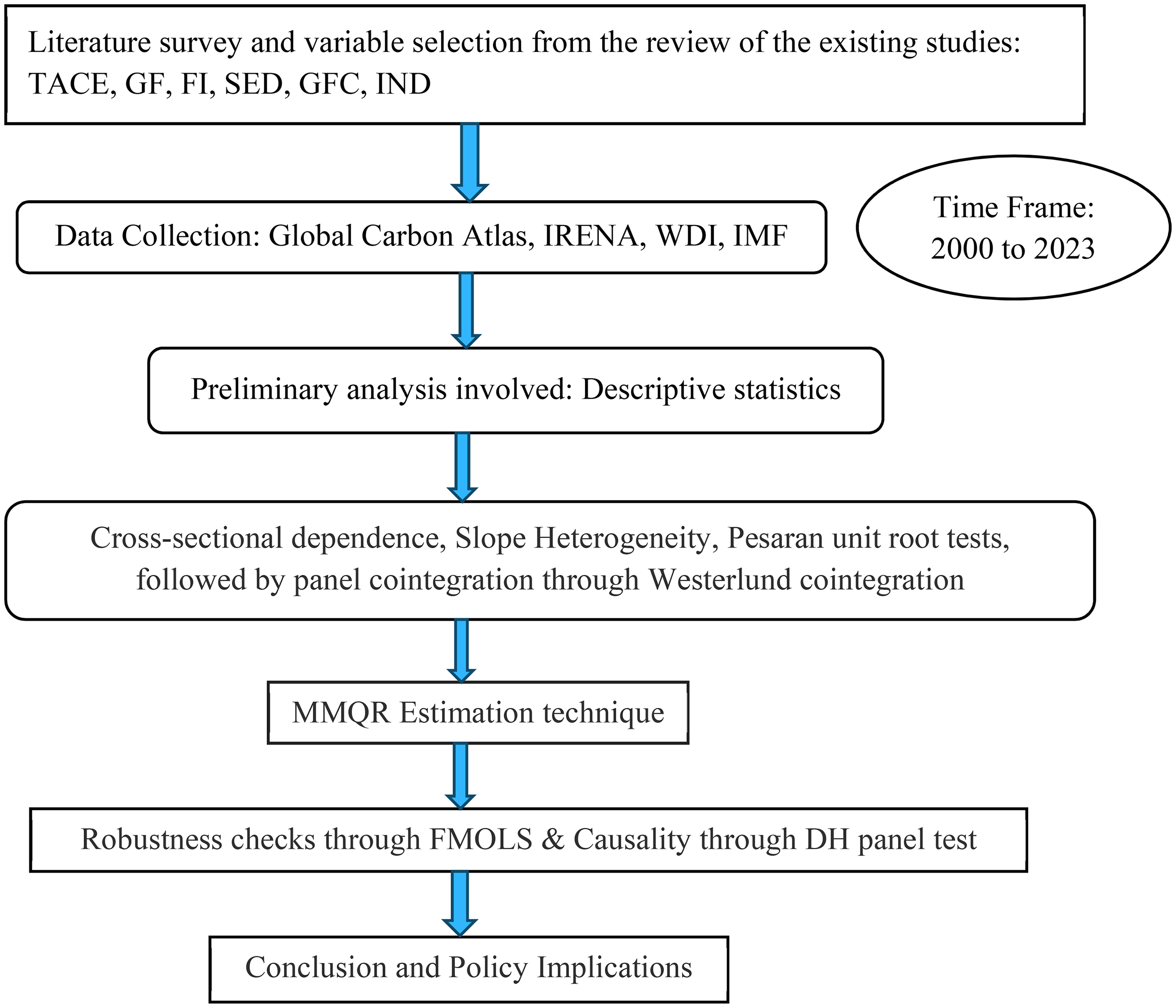
Research design process.
Description of the variables.
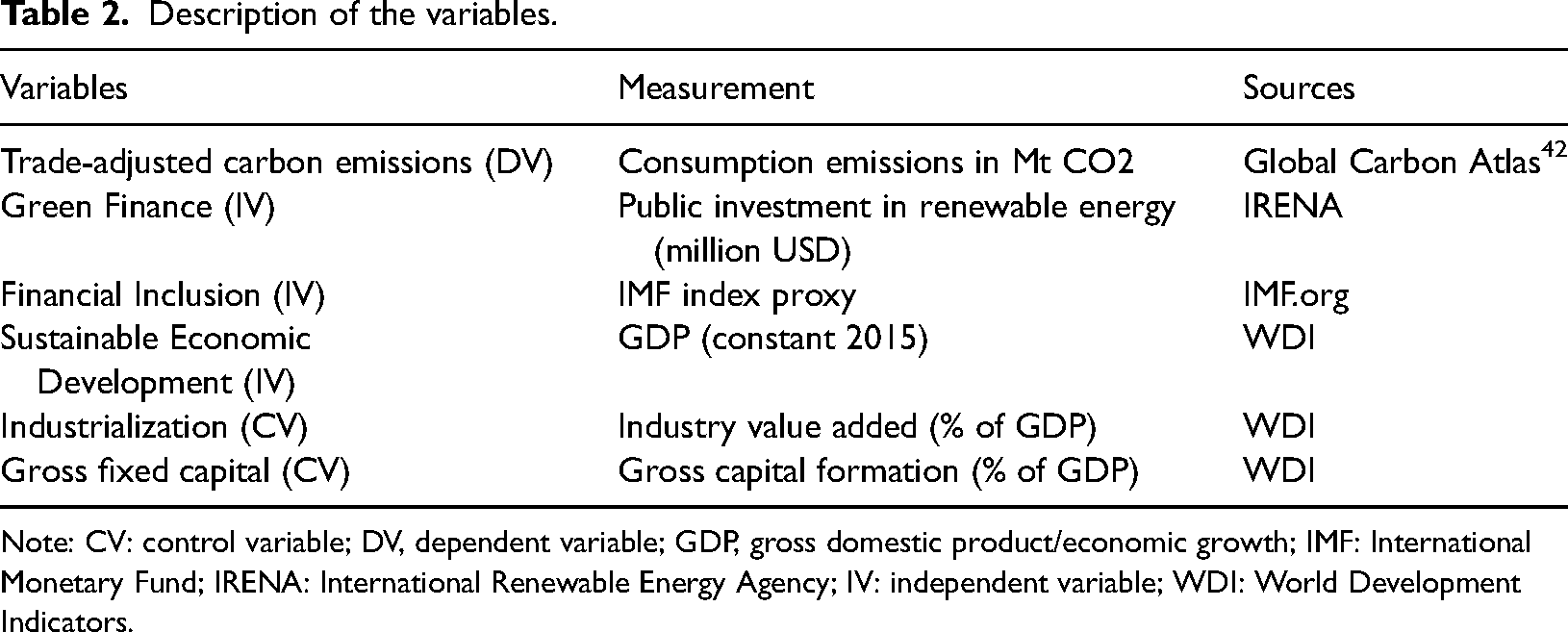
Note: CV: control variable; DV, dependent variable; GDP, gross domestic product/economic growth; IMF: International Monetary Fund; IRENA: International Renewable Energy Agency; IV: independent variable; WDI: World Development Indicators.
According to the current research study, the variance inflation factor (VIF) under empirical estimations is considered first when examining the multicollinearity between the variables of interest, followed by descriptive statistics. Determining whether the variables of interest have a higher degree of interdependency is made easier with the help of the mentioned method. The slope heterogeneity test provides evidence that the relationship between the independent and dependent variables is not continuous across the whole dataset. Some have viewed the test proposed by Swamy
43
as a modified version of the one stated by Pesaran and Yamagata.
44
Equations (1) and (2), in particular, based on both small and large sample sizes, slope heterogeneity will be tested.











¨Хit ; Qy (˙δ|^Xit) indicates Yit's quantile distribution. Equation (12) is taken into consideration to accommodate the optimization: Minq = (12)
MMQR is one of the most robust econometric methods, extending traditional quantile regression. It is suited for examining the heterogeneous effects across the conditional distribution of the dependent variable. Most of the conventional regression techniques only provide insights at the mean of the conditional distribution, whereas MMQR captures the full range of relationships, including those at the extremes. 47 This adds the advantage for the MMQR, particularly for the panel studies involving environmental or economic data, where variables often exhibit asymmetric behavior. Additionally, MMQR is equipped to address unobserved heterogeneity, a common challenge in panel data studies. MMQR offers a nuanced understanding of how predictors influence the outcome variable across different quantiles by incorporating quantile-specific effects. This is crucial for analyzing variables like TACE, which may be impacted differently throughout their distribution due to varying levels of industrialization, urbanization, or energy consumption of the BRICST nations.
While MMQR demonstrates significant capabilities, it does face certain limitations. One key drawback is its susceptibility to the influence of outliers, particularly at the extreme ends of the quantile distribution. This can skew the resulting estimates if appropriate data preprocessing techniques, such as outlier removal, are not implemented. Additionally, interpreting the findings for quantiles with sparse data points may prove challenging, potentially leading to less reliable estimates. Thus, the MMQR approach is noteworthy for its capacity to offer granular analyses of distributional variations, rendering it a compelling selection for the research objectives. Nevertheless, considering its constraints and investigating supplementary methodologies can enhance the study's methodological thoroughness.
Empirical findings and discussion
This section includes a discussion and a fitting explanation of the empirical results. The descriptive findings are first shown in Table 3. It shows that the highest mean is achieved by TACE (14.2), followed by sustainable economic development (SED) (6.78) and GF (4.678). Meanwhile, a minimum score of 12.56 and a maximum score of 14.78 are shown by the TACE. The study variables’ kurtosis and skewness have been found to exhibit diverse trends. It confirms that the study variables have a normal distribution. The study variables’ probability values are significant in the results, either at 1% or 5%, suggesting that the data confirming the absence indicates that the study variables’ nonlinearity-based asymmetric properties exist.
Descriptive statistics.
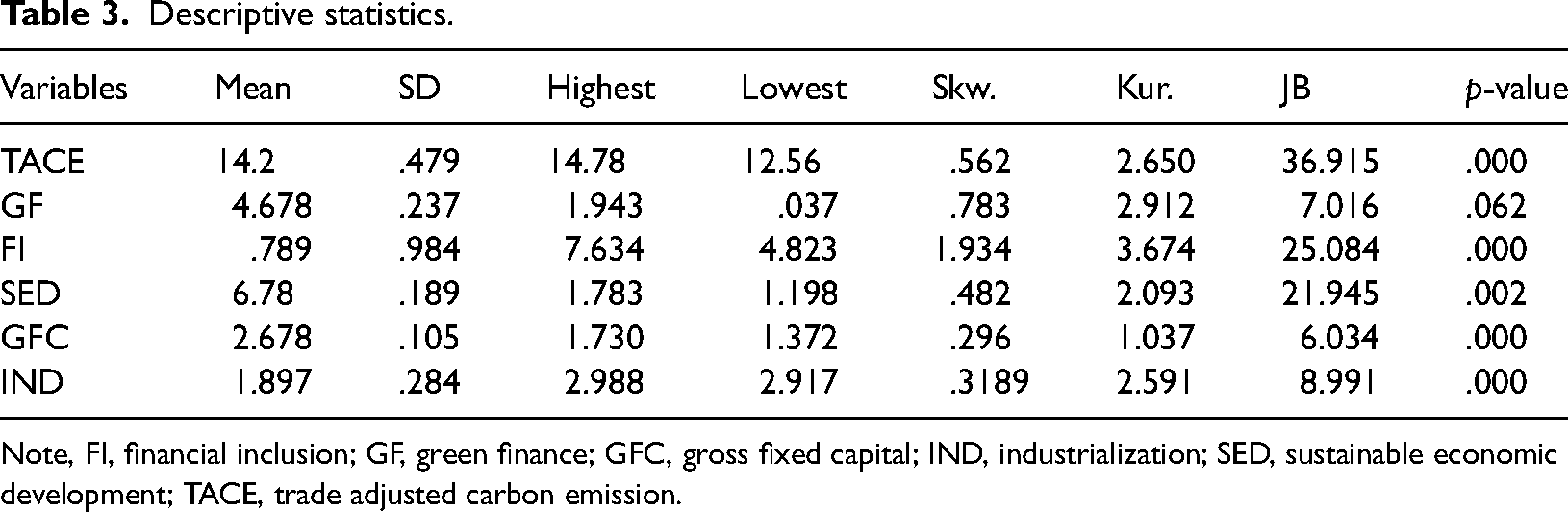
Note, FI, financial inclusion; GF, green finance; GFC, gross fixed capital; IND, industrialization; SED, sustainable economic development; TACE, trade adjusted carbon emission.
Table 4 highlights the VIF values for all the variables. Investigating the trends of increased interdependence between the variables of interest can help determine whether the correlation is potentially problematic. According to recent research, the VIF should have a threshold level of 5. Based on the results, the VIFs for the GF, FIN, SED, gross fixed capital (GFC), and industrialization (IND) are 1.23, 1.56, 1.36, 1.21, and 1.54. The greater multicollinearity between the variables of interest doesn't seem to be an issue, based on Table 3 mean VIF of 1.51.
Variance inflation factor (VIF).
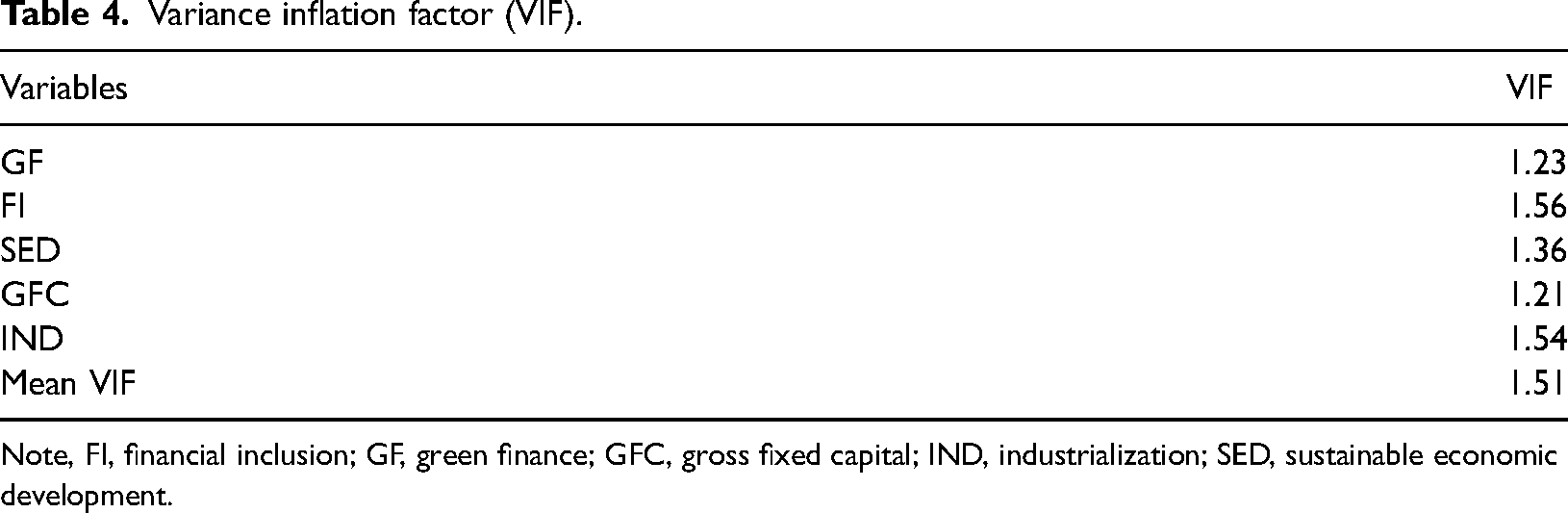
Note, FI, financial inclusion; GF, green finance; GFC, gross fixed capital; IND, industrialization; SED, sustainable economic development.
Examining the panel data prerequisites, including cross-sectional dependence and slope heterogeneity (SLH), makes sense. According to Table 5, the results are highly significant at 1%. The consequence of this is the nonhomogeneity of the slope coefficients.
Slope heterogeneity test.

Table 6 displays the study variable results to bolster the cross-sectional dependence.
CD test.
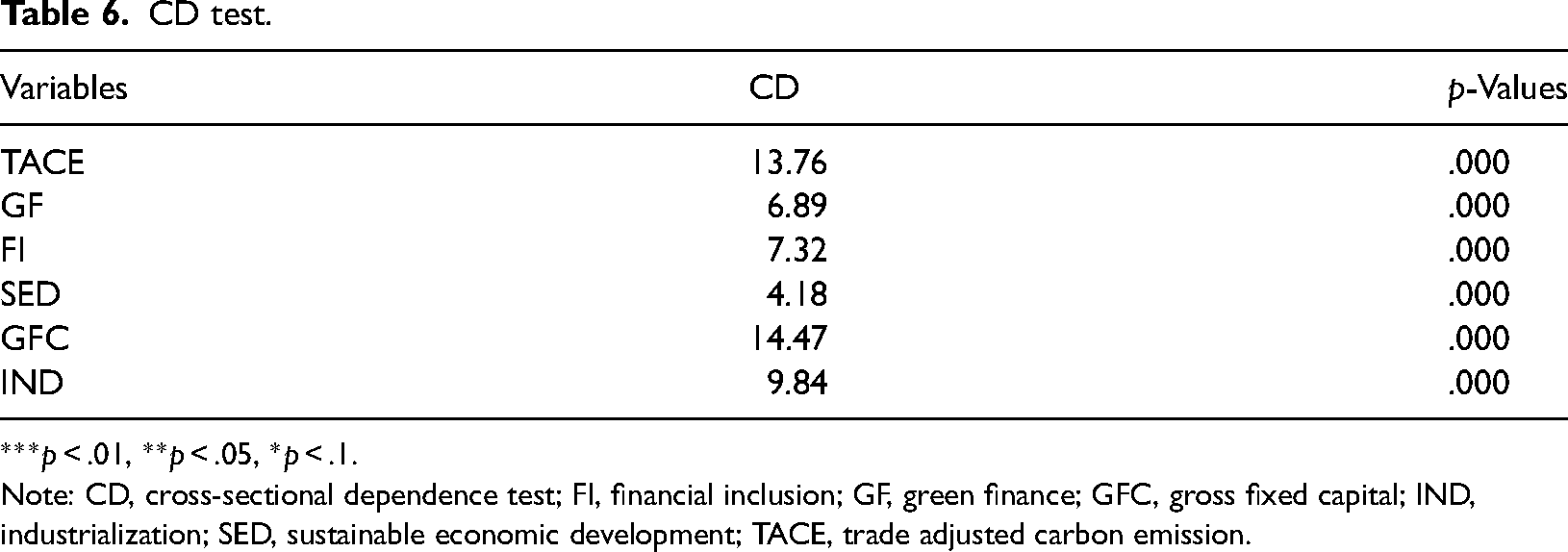
***p < .01, **p < .05, *p < .1.
Note: CD, cross-sectional dependence test; FI, financial inclusion; GF, green finance; GFC, gross fixed capital; IND, industrialization; SED, sustainable economic development; TACE, trade adjusted carbon emission.
The BRICST area is involved in several trade-related projects to promote dependency. However, in the wake of COVID-19, the economies of the BRIC countries have restructured their regional trade agreements and altered their supply chains in innovative ways. Table 7 displays the unit root test results.48–50 argue that examining the stationary properties is necessary for empirical inquiry. In this regard, recent research has used the unit root that Pesaran 46 proposed. The study variables, TACE, GF, FI, SED, GFC, and IND, all have unit roots, according to the analysis findings.
Pesaran unit root test.
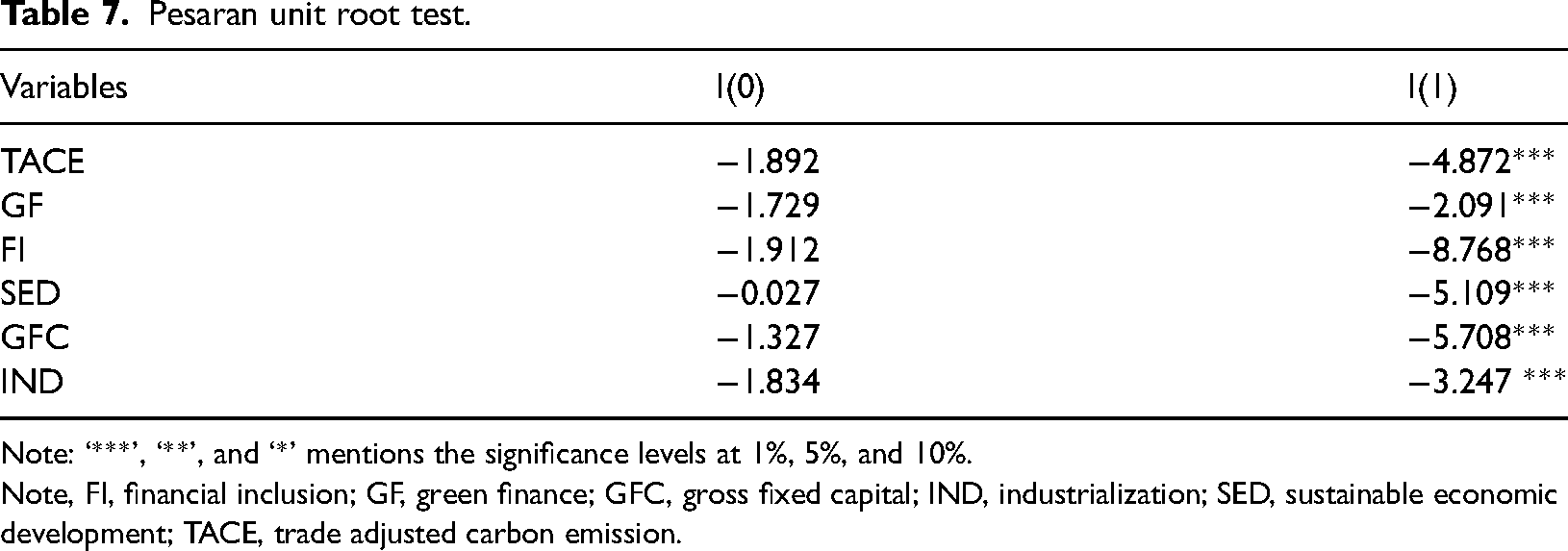
Note: ‘***’, ‘**’, and ‘*’ mentions the significance levels at 1%, 5%, and 10%.
Note, FI, financial inclusion; GF, green finance; GFC, gross fixed capital; IND, industrialization; SED, sustainable economic development; TACE, trade adjusted carbon emission.
The study employs Westerlund 51 error correction approach in the current study to test the co-integrated relationships between the variables; the results are displayed in Table 8. Explains that TACE and other variables designated SED, GF, FI, GFC, and IND, respectively, have an equilibrium relationship over considerable periods. These relationships allow the precise coefficient values for the significant regressors and control variables to be examined. Utilizing cross-sectional observational units and temporal data dimensions, the present study has empirically validated the presence of co-integrated panel-based relationships among the variables under investigation. More precisely, some new interlinkage channels made possible by the COVID-19 phase are TACE, sustainable economic development, green finance, financial inclusion, and capital formation. The empirical findings of the co-integration analysis suggest a long-term association between the variables.
Westerlund test.
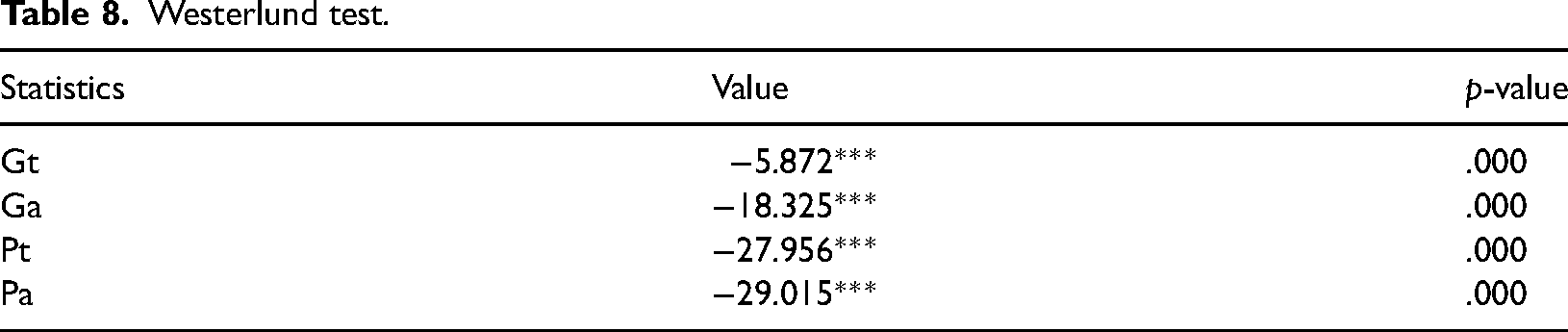
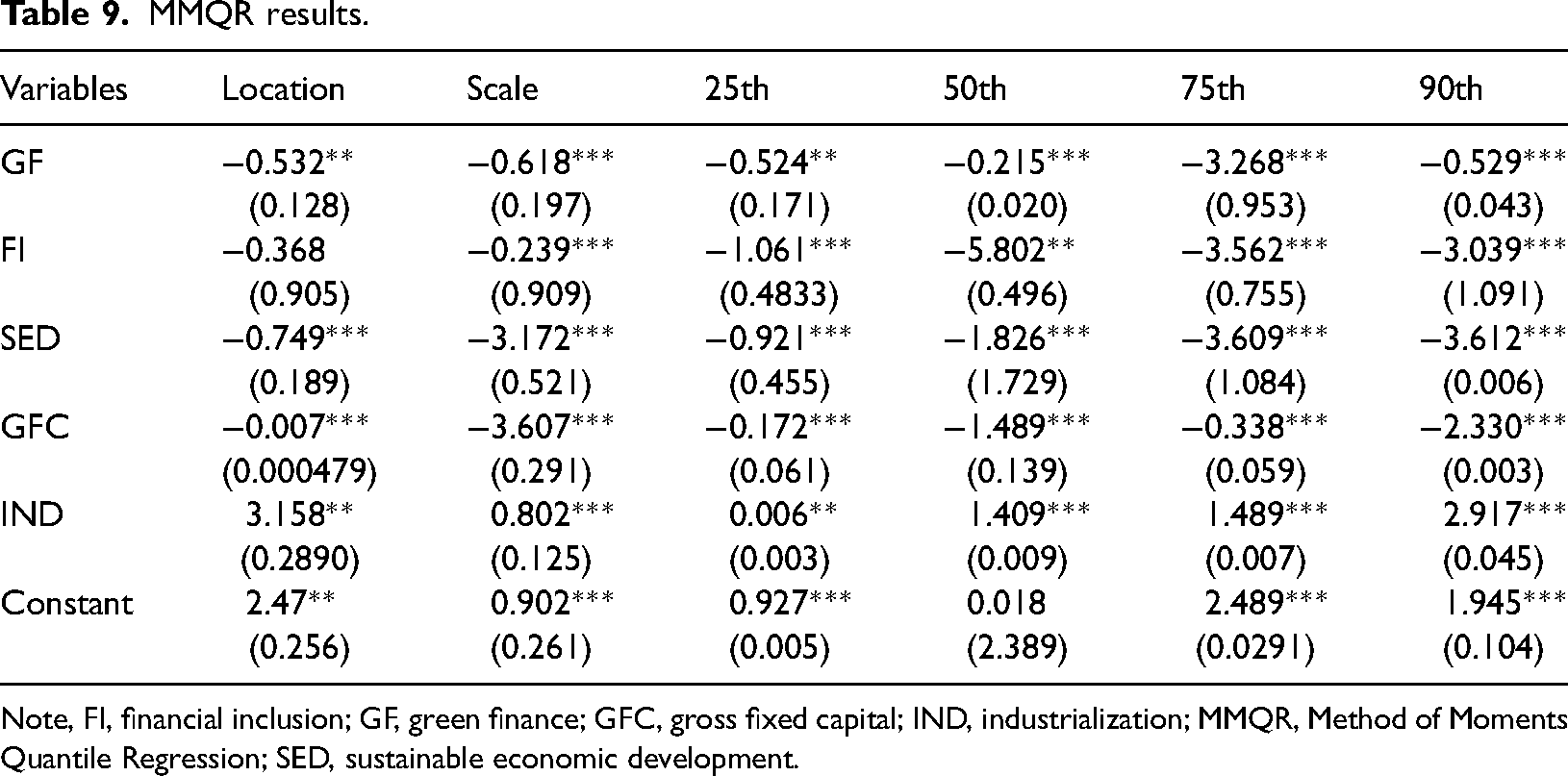
Table 9 investigates the connection between GF and SED using MMQR estimates. Due to consumption behavior tending to be heterogeneous across the distribution of the dependent variable, MMQR was selected as it allows the identification of quantile-specific relationships and, therefore, does not rely on mean-based relationships. This is especially relevant for environmental and economic studies since impacts at the extremes can be quite different than at other quantiles. 52 On the other hand, this method might provoke sensitivity to model misspecifications. MMQR can be complemented with alternative approaches, such as traditional quantile regression or fixed-effect models, to ensure robustness and verify findings. MMQR demonstrates that the coefficients are statistically negative for the given dataset at all three levels. More precisely, it verifies that a decrease in TACE is being caused by reliance on green finance.
MMQR results.
Note, FI, financial inclusion; GF, green finance; GFC, gross fixed capital; IND, industrialization; MMQR, Method of Moments Quantile Regression; SED, sustainable economic development.
These results show that green finance decreases TACE emissions in the BRICST countries. It indicates that, with all other things held constant, a 1% shift in the GF value results in a downward shift in the TACE value under the given quantiles. On the other hand, the 50th quantile has the most considerable effect on TACE, followed by the 90th and 75th quantiles, in that order. Although the relationship between TACE emissions and the demand for green investments is not linear, the demand for green investments increases in tandem with CO2 emissions. Our results contradict those of Stucki et al., 53 who found that green investment increases CO2 emissions in BRI countries, and it is in line with, 54 who found that green finance lowers CO2 in China.
According to the findings, FI has a negative effect on TACE in the BRICST economies while simultaneously promoting environmental sustainability. The results demonstrate that FI has a negative significant impact on TACE for all quantiles. It indicates that when all other variables remain constant, a 1% change in FI results in a downward shift in TACE value under the given quantiles. However, under the 50th quantile, FI has a more significant effect on TACE than it does under the 75th and 90th quantiles, respectively. Financial inclusion can make it easier for SMEs in the BRICST economies to participate in international value chains and trade networks by giving them access to trade financing and payment services. TACE may drop as SMEs reduce their carbon footprint by using cleaner production techniques and adhering to sustainability standards to access global markets. Additionally, they have concentrated on alternative energy sources, such as renewable energy, which enables the required degree of financial development to lower carbon emissions. Some studies support the existence of the inverted U-shaped EKC hypothesis in various regions, including Central Asia and Europe, 55 South Africa and China, 56 and the United Arab Emirates. 57
Furthermore, as Table 9 results demonstrate, GDP as a measure of sustainable economic development, has a statistically significant negative effect on TACE emissions in the BRICST region. It indicates that, with all other things held constant, a 1% change in GDP results in a downward shift in the TACE value under the given quantiles. On the other hand, the 25th quantile has a more significant effect on TACE than the 75th and 50th quantiles, respectively. The technology adoption models validated the U-shaped EKC hypothesis, which supported the EKC hypothesis and was tested. The U-shaped EKC hypothesis postulates that GDP reduces CO2 emissions in the early stages of development before they begin to rise.2,3 This is in line with the COVID-19 timeline. Achieving a sustainable economic recovery has been a focus of much attention lately, with a particular emphasis on blending more clean energy technologies with less conventional energy sources.
Some studies show that GFC is important for sustainable economic development, lowering the TACE, in addition to demonstrating the claimed positive impact of GFC on GDP as well as a negative effect on carbon emissions. 58 Lastly, Table 9 shows that TACE and industrialization have a strong and positive relationship. It illustrates how a 1% change in the IND tends to raise TACE across all quantile ranges while keeping all other factor constants unchanged. It has been observed that industrial production has a significant impact on CO2 emissions. 59 Many studies have found a connection between manufacturing activity and pollution, including those by Rauf et al. 40 Industrialization significantly impacts some areas, including global supply chains, trade dynamics, energy consumption, technological advancements, and policy responses. The findings have been summarized in Figure 2, which highlights the role of SED, GF, GFC, FI and IND toward TACE.
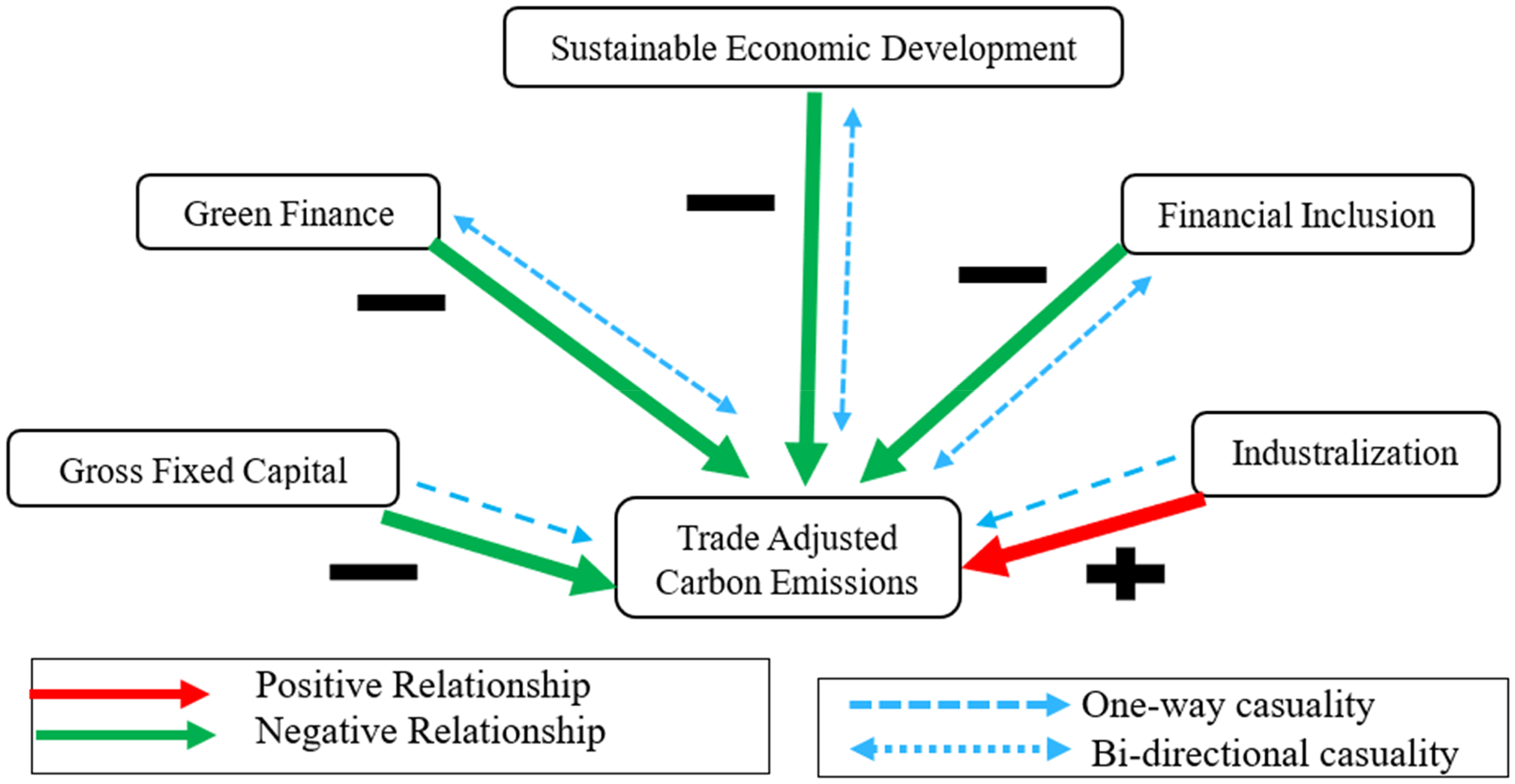
Summary of findings.
The coefficient values for green finance are negative across all the quantiles, suggesting that it effectively reduces the TACE across these high-emission nations. Furthermore, the fully modified ordinary least squares (FMOLS) results also reinforce the need for green finance as a long-term strategy to achieve carbon neutrality. It can also be seen from Table 9 results that industrialization increases the emissions at all the levels of the TACE, which implies that in highly industrialized nations, the production processes are energy intensive and heavily rely on fossil fuels. Similarly, it can be observed that the increased financial inclusion reduces TACE as it increases access to cleaner technologies. It is also evident that Sustainable Economic Development reduces TACE in the long run. Its negative coefficient at higher quantiles highlights the role of cleaner production processes, technological innovation, and energy efficiency in reducing carbon intensity for the BRICST countries.
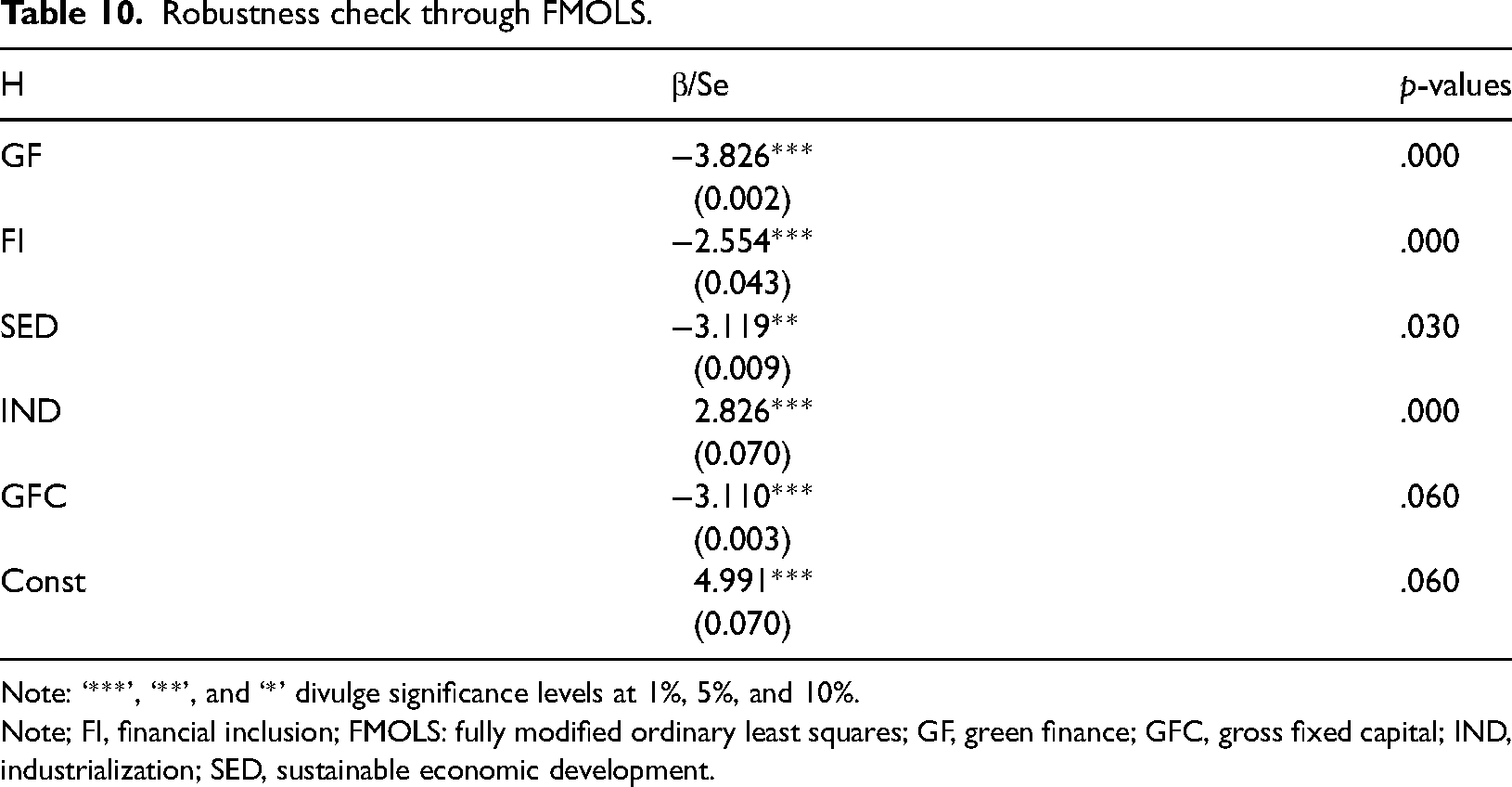
Table 10 presents the robustness analysis using the FMOLS estimation test. Under FMOLS, a significant negative relationship exists between TACE and GF, FI, and SED. Also, a substantial and positive relationship exists between industrialization, gross fixed capital, and TACE.
Robustness check through FMOLS.
Note: ‘***’, ‘**’, and ‘*’ divulge significance levels at 1%, 5%, and 10%.
Note; FI, financial inclusion; FMOLS: fully modified ordinary least squares; GF, green finance; GFC, gross fixed capital; IND, industrialization; SED, sustainable economic development.
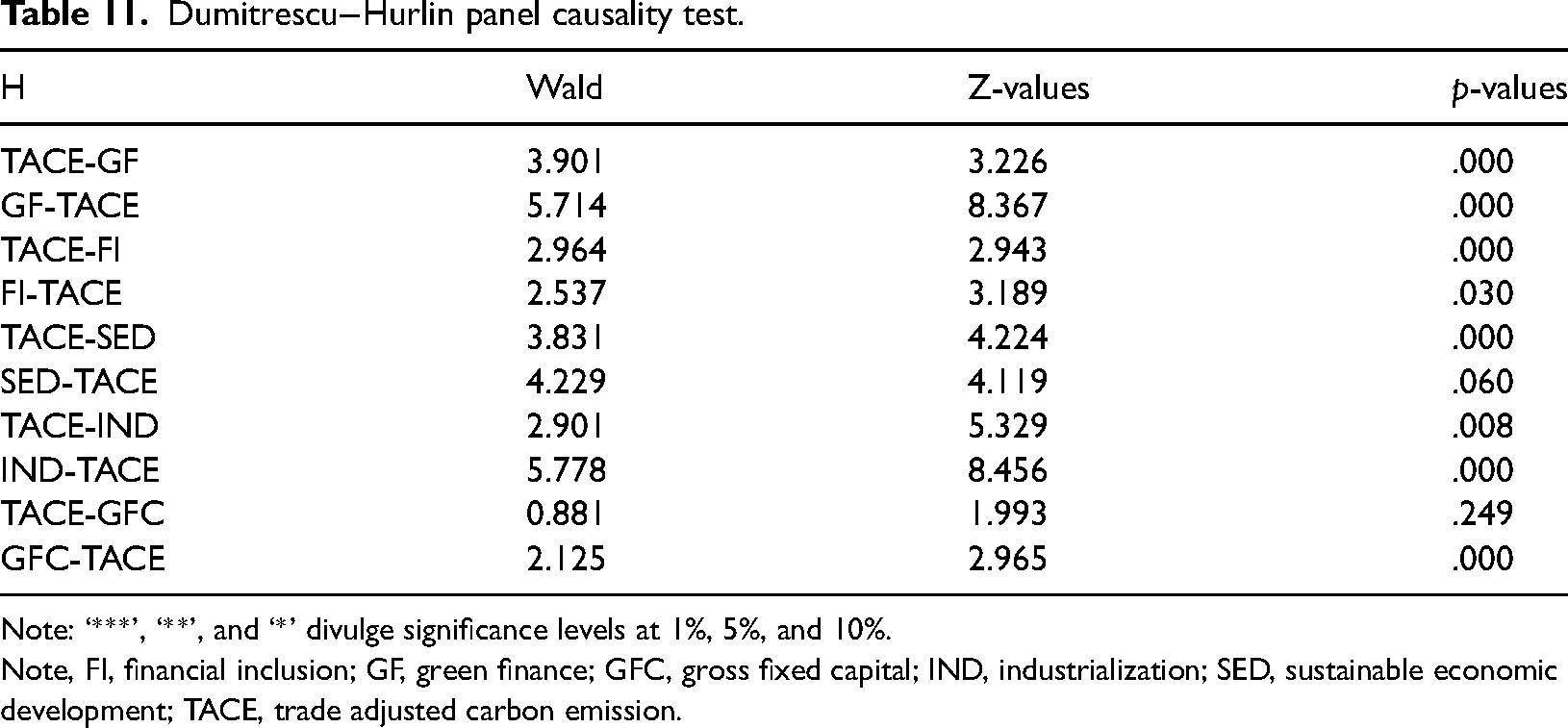
Lastly, we investigate the causal relationship between the factors that have been observed by employing the DH panel causality testing method. A unidirectional causal relationship between TACE and GFC is confirmed by the results shown in Table 11. Concurrently, bidirectional causalities between TACE, GF, FI, SED, and IND are verified. In certain BRICST economies, any policy focusing on these factors will impact TACE.
Dumitrescu−Hurlin panel causality test.
Note: ‘***’, ‘**’, and ‘*’ divulge significance levels at 1%, 5%, and 10%.
Note, FI, financial inclusion; GF, green finance; GFC, gross fixed capital; IND, industrialization; SED, sustainable economic development; TACE, trade adjusted carbon emission.
Contribution of the study
This study enhances the extant literature on environmental economics through its multifaceted contributions. It examines the underexplored and relatively new study region, namely BRICST. The study focuses on BRICST, which is the key player in contributing toward global emissions and growth, and it can help policymakers realign their growth objectives with environmental sustainability. The existing literature predominantly focuses on production-based carbon emissions, while using TACE as a metric remains underexplored. Incorporating TACE, the current study provides a more comprehensive measure that accounts for emissions embodied in international trade. There are few studies on the role of GF and FI in influencing TACE, especially in the context of the BRICST region. Most existing research studies examine these variables independently or in the case of developed nations, but their combined impact on emerging economies remains largely unaddressed.
Furthermore, it employs TACE, representing the most inclusive metric for assessing environmental quality. This helps to offer holistic insights as the traditional carbon emissions findings do not present the true nature of domestic emissions. The study explains the intricacies surrounding green finance, industrialization, financial inclusion, sustainable economic development and TACE. The present study findings provide policymakers with actionable insights to address the emissions embedded in the imports and exports of the countries, a critical point often overlooked in contemporary studies that focus too much on TACE. The use of the MMQR technique adds methodological advancement through a better understanding of how the determinants of TACE vary across different quantiles; this aspect has not been explored in prior research. Moreover, advanced econometric methods like MMQR allow an understanding of the relationship of FI, GF and SED across different quantiles of TACE. By adopting advanced methodologies and incorporating novel variables, this study significantly contributes to the literature, providing valuable insights for policymakers. The study underscores the need for FI, GF, and SED to reduce TACE. Addressing the commitments of COP-27 and COP-28 and aligning them with SDGs. To mitigate the impact of industrialization, the BRICST region policymakers should focus more on energy efficiency, cleaner technological processes and green technologies to align with the objectives of Industry 5.0. 60 This cleaner mode of industrialization will promote the shift from fossil fuel to renewable energy-based production. Also, expanding financial inclusion through increased access to green loans and sustainable project financing will reduce the TACE over the long term.
Policy implications
The study underscores the need for proactive policy interventions and strategic investments to address the complex challenges of balancing economic growth along with environmental stewardship to pursue a greener and prosperous future for all. The BRICST nations should reward green finance projects and initiatives. Investment support should be given for the various green finance instruments like green loans, green credit, green fintech, green bonds, etc. Moreover, the high-emission industries and sectors should be targeted to reduce the intensity of their carbon emissions. The government should give a boost to green projects capable of attaining carbon neutrality. Trade agreements should be signed, which can help the economic growth to decouple from the environmental degradation. Developed nations can transfer the knowledge of green production technologies and cleaner manufacturing processes to help the BRICST nations further reduce their carbon emissions. Therefore, the relevant trade partners should be held accountable for assisting the BRICST in nations reducing their TACE by formulating policies to reduce the stress on fossil fuels and enhance energy efficiency.
This study's result findings emphasize the need for policymakers to craft appropriate policy directions that can maintain the balance between environmental preservation and economic growth. Therefore, to achieve this balance, it is crucial to establish robust institutional frameworks characterized by effective governance. While promoting economic growth remains a priority for BRICST nations, it also becomes imperative to prioritize the policies that facilitate the low-carbon transition. Despite the potential of renewable energy, reliance on coal, natural gas, and oil persists in these countries. Furthermore, the study emphasizes the importance of reducing TACE in alignment with UN SDGs and introducing cleaner manufacturing processes to mitigate pollutant emissions. BRICST economies should prioritize the reduction of carbon emissions along with renewable energy adoption to safeguard the ecosystem further.
Green finance is important for the objective of a low-carbon economy for the BRICST nations. The government should prioritize green finance investments through subsidies and loan support for adopting sustainable practices. The government cannot solely achieve this objective. Therefore, it should encourage public–private partnerships with leading financial institutions and international organizations for the success of large-scale green energy projects. Additionally, there is a need to set up green investment funds to target the high energy emission sectors like agriculture, transportation, and manufacturing. Moreover, it is essential to enhance financial inclusion to empower the individuals of the BRICST region to enhance their accessibility so that they can adopt sustainable practices. Institutions should focus on SMEs so that they can transition toward the adoption of cleaner technologies and manufacturing processes. Sustainable economic development should be strengthened by embedding sustainability into international trade and industrial strategies to align environmental sustainability with economic growth. There is a need for increased R&D expenditure toward green energy technologies. Industries should be incentivized to use resources efficiently through additional financial incentives and technical support.
Conclusion and limitations
The present study findings have noteworthy policy implications, particularly in fulfilling the commitments made at international climate conferences such as COP-27 and COP-28. While BRICST nations face challenges in meeting their obligations, this research suggests specific policy interventions to help achieve the desired objectives of moving toward a low-carbon economy. To advance the progress towards climate change mitigation through SDG-13, recommendations provided in this study apply to BRICST countries and other nations, aiming to enhance overall ecological sustainability. Based on our research findings, a key recommendation is to increase investments, particularly in the renewable energy sector, focusing on expanding its availability and improving energy efficiency. Policymakers should consider implementing incentives for cleaner technologies and further allocate substantial support for R&D initiatives. It is also imperative to accept the study limitations, including the data constraints and potential variability due to external factors such as economic shifts or policy changes. Therefore, policymakers should interpret the findings cautiously and consider conducting longitudinal studies to understand evolving relationships better. Sector-specific analyses are recommended for the nuanced insights and evaluations of existing environmental policies. Furthermore, future research should explore the impacts of emerging technologies on sustainability to provide a more forward-looking perspective.
Based on the research findings, this study suggests policy recommendations for achieving a sustainable environment in the BRICST regions by aligning with the SDGs. Promoting green finance initiatives is crucial, including encouraging the issuance of green bonds and establishing green investment funds to attract private sector participation in environmentally friendly projects. Financial incentives and subsidies for green energy projects like solar, wind, and hydroelectric power will accelerate the transition to clean energy sources. Enhancing financial inclusion involves expanding access to financial services for marginalized and low-income populations through digital banking and mobile payment solutions. Supporting green microfinance programs focusing on sustainable agriculture, eco-friendly businesses, and renewable energy projects empowers individuals and small enterprises to engage in sustainable practices. Integrating sustainability into economic planning requires incorporating environmental criteria in economic policies, trade agreements, and infrastructure projects to promote sustainable growth. Finally, strengthening international cooperation (SDG 17) is essential, fostering collaboration between the BRICST region and international organizations. Participating in international climate change programs and accords, including the Paris Agreement, supports collaborative endeavors to lower greenhouse gas emissions and attain the SDGs.
Footnotes
Contribution statement
RZ was involved in writing—review & editing, writing—original draft, visualization, methodology, formal analysis, and data curation; KSD in writing—review & editing, writing—original draft, visualization, methodology, formal analysis, and data curation; TYY, AHG, and TCM in project supervision; and MKK in project supervision and writing—review & editing.
Declaration of conflicting interests
The authors declared no potential conflicts of interest with respect to the research, authorship, and/or publication of this article.
Funding
The authors received no financial support for the research, authorship, and/or publication of this article.
