



Abstract
Recently, demands for producing environment-friendly fuels and the strict regulations imposed on the petroleum refineries have been widely increased around the world. Therefore, use of efficient techniques is obligatory to meet the required standards. Hydrodesulfurization represents a conventional technique, with several drawbacks. Oxidative desulfurization of dibenzothiophene can be used as an alternative due to its advantages. The main aim of this study was to synthesize a novel catalyst (5% Fe2O3 + 10% NaOH)/TiO2 for the first time by adding active components of Fe2O3 to the surface of TiO2 and suppling the surface with a layer of NaOH which provides the surface with more hydroxyl produced from alkaline additives necessary for improving oxidative desulfurization. In the current study, oxidative desulfurization and upgrading of kerosene was investigated using a batch baffled reactor with H2O2 as an oxidant and nano-composite (5% Fe2O3 + 10% NaOH)/TiO2 as a catalyst under various operating conditions of temperatures (30, 45, 60, and 75 °C), batch times (30, 45, 60, and 75 min), and initial doses of dibenzothiophene (350, 500, and 650 ppm). The texture properties of the catalyst utilized in the current study were characterized via advanced surface techniques, field-emission scanning electron microscopy-energy dispersive x-ray spectroscopy, x-ray diffraction, and Fourier-transform infrared spectra analyses. The main finding of this study is a higher upgrading efficiency of kerosene greater than 92.76% of desulfurization efficiency and was obtained under best operating conditions of 75 °C, 650 ppm, and 75 min of temperature, initial concentration, and batch time respectively. Also, the kinetic parameters of desulfurization reaction (the activation energy value and reaction order) were calculated using the runs data. It can be concluded that the experiments were followed pseudo-first-order reaction and 24.573 kJ/mol using the prepared catalyst. It can be concluded that the experimental data reveled a well fit.
Introduction
Different types of sulfur compounds are present in crude oil and petroleum products (naphtha, kerosene, diesel) which can be divided into four major groups, including mercaptans, sulfides, disulfide, and thiophenes.1,2 Various combinations of hydrocarbons exist in distillates, e.g., kerosene (jet fuel), diesel, and gasoline which can be categorized depending on their boiling points.
3
These petroleum products can be lost depending on the physical and chemical properties.4–7 Kerosene represents one of these mid-type distillates with a range of boiling points (up to 130 °C). The substituted benzothiophenes represent the majority of sulfur compounds existed in kerosene, e.g., aromatic compounds. These compounds are more chemically stable and less susceptible to reduction than those present in gasoline.
8
However, thiophenes, benzothiophenes (BT), and dibenzothiophene derivatives are the most type of sulfur compounds existed in diesel and gasoline.
8
The compounds of sulfur can be transformed to disulfides, sulfones, and sulfoxides during oxidation processes which are more polar than hydrocarbons in feedstock.9,10 As a result, separation processes such as solvent extraction
11
and adsorption
12
may readily remove them. The elimination of sulfur compounds can be achieved using hydrodesulfurization (HDS) and non-hydrodesulfurization (non-HDS) techniques. HDS can be defined as a conventional process that involves hydrogen gas in sulfur removal technique from petroleum refinery products and via catalytic chemical processes. HDS process has been utilized to remove organo-sulfur via metal catalysts and commonly used in the petroleum refining industry.13,14 HDS can remove the majority of aliphatic and acyclic organo-sulfur.
15
The selection of technique depends mainly on many factors, including the type of sulfur compound to be eliminated, kind of the process (physical and chemical), and the role of hydrogen used. Various studies focused on HDS to remove sulfur compounds from fuels. Liu examined elimination of 4,6-DMDBT via the NiMo/Al2O3 catalyst using the HDS technique. It was revealed that 100% desulfurization efficiency was obtained.
16
More studies carried out on HDS are reviewed in literature. On the other hand, advantages of non-HDS are no need for hydrogen, low operating conditions, low cost, and the deep desulfurization of refractory sulfur compounds, such as adsorptive desulfurization, biological desulfurization, extraction desulfurization, oxidative desulfurization (ODS), chemical desulfurization, and electro-photo desulfurization.16,17,18,19–25,26–35,36–40 Besides the advanced research and huge efforts in the refinery sector, to select the right choice of technique to meet the sulfur criteria, the commonly used desulfurization method is still quite costly. ODS is a promising technique and a deep desulfurization method.41,42 ODS consists of two steps: oxidation of sulfur-containing compounds followed by extraction with a polar solvent. Various oxidants can be used in an ODS process such as molecular oxygen (O2, air, H2O2, KMnO4, ClO−,

Sulfide oxidizes to sulfone and then oxidizes to sulfoxide:
47

Thiophenes oxidize to thiophene sulfone and then oxidizes to thiophene sulfoxides:
48



The authors validated and commercialized industrial batch reactors to examine the removal of dibenzothiophene (DBT) from sour diesel via an ODS process using pure oxygen as an oxidant and activated carbon (Fe/AC) as a catalyst under different operating conditions. Based on the validated results it was revealed that the optimum dimensions estimated were 1.3 × 2 m. 49
ODS depends mainly on the catalyst, which must be efficient and selective to sulfur compounds. Various types of catalysts can be used in ODS processes, including activated carbon,31,33,50–54 oily sludge,55,56 and zeolite. 32 TiO2 has been used widely as a support material and catalyst that can be used in different fields especially in the petroleum sector as reviewed in literature. 57 Due to its physical and chemical properties, such as stability, refractive index, and optical properties, TiO2 can be used as a catalytic material.58,59 Many authors have studied and reported on ODS processes. A study examined the elimination of DBT from kerosene using hydrogen peroxide as an oxidant and MnO2/SnO2 as a catalyst. The oxidation reaction was studied under a range of operating parameters, such as loading levels of MnO2 (0, 1, and 5%), batch duration (25–100 min), and reaction temperatures (30–75 °C). An impregnation approach was used in this study to support MnO2 nano-particles on the surface of SnO2 by the use of catalysts. The results were validated using gPROMS software and a desulfurization efficiency of more than 94% was obtained. 60 A study conducted the elimination of DBT from diesel using an ODS process utilizing H3PW12O40/TiO2 as a catalyst. The findings showed about 95% of DBT conversion was obtained under operating conditions (70 °C and 90 min). 61 A study removed BT, DBT, and 4,6-DBT using an ODS process utilizing oxygen under operating temperatures (110–130 °C). Based on the results obtained, about 95% conversion was achieved at 90 min and 130 °C. 62 A study designed an industrial batch reactor for an ODS model of kerosene. It was revealed that the optimal dimensions of the industrial reactor were 1.2 and 1.5 m diameter and length, respectively, with a 99% conversion at 160 min and 379.4 K. 63 A study evaluated the ODS of kerosene with a batch baffled reactor (BBR) using ZnO/Al2O3 under different operating conditions (25–70 °C, 20–80 min, and 300–650 ppm). The findings of this study revealed more than 95.5% of DBT conversion was achieved. 64 Other study conducted the elimination of sour diesel (7365 ppm) using an ODS process under various operating conditions (80–110 °C) via AC as a catalyst and oxygen as an oxidant. It was revealed up to 90% of removal efficiency was achieved at the end of the reaction. 65 Use of various catalysts depend on the kind and the type of the process being used.66–73 However, to obtain a higher rate of desulfurization for sulfur compounds present in kerosene, a catalyst was prepared and enhanced the activity using a BBR. These kinds of reactors can also enhance the upgrading efficiency of kerosene. All these important parameters were applied together in this study to strengthen the proposed study.
In this study, a novel catalyst (5% Fe2O3 + 10% NaOH)/TiO2 was prepared for the first time by adding active components of Fe2O3 to the surface of TiO2 and suppling the surface with a layer of NaOH which provides the surface with more hydroxyl produced from alkaline additives necessary for improving the ODS, and this whole process represents the novelty of this study. Here, the ODS of kerosene with a BBR using H2O2 as an oxidant and nano-composite (5% Fe2O3 + 10% alkaline)/TiO2 as a catalyst under various operating conditions of temperatures (30, 45, 60, and 75 °C), batch times (30, 45, 60, and 75 min), initial doses of DBT (350, 500, and 650 ppm) was carried out to upgrade the kerosene.
The experimental work
Materials and chemicals
The feedstock used is the Iraqi hydro-treated kerosene and was prepared by adding DBT (99% purity) with different concentrations of sulfur (350, 500, and 650 ppm); the main specifications of feedstock are American petroleum institute gravity of 48.8, a flash point of 52 °C, and a specific gravity of 0.784. Hydrogen peroxide in the liquid form (31% purity and 1.1 g/cm3 density at 20 °C) was used as an oxidant in the ODS process supplied by firm Merck Millipore, Germany. Titanium oxide (TiO2) with 10.753 m2/g and 0.0201 cm3/g was used as a catalyst support obtained from Alpha Chemika Company. Ferric nitrate nonahydrate (Fe2O3) obtained from Himedia Company, and sodium hydroxide (NaOH) from Sigma Aldrich, with purity of 98% were used as alkaline layers supported on the surface of titanium oxide (TiO2).
Preparation of nano-composite catalyst (5% Fe2O3 + 10% NaOH)/TiO2
In this study, the catalyst was prepared using an incipient wetness impregnation method via a series of steps as described in literature. 74 Distilled water was used to dissolve Fe(NO3)3·9H2O and NaOH to form nano-particles of active components to be absorbed onto the surface of TiO2. The solutions of active components were mixed and stirred vigorously under atmospheric conditions of laboratory via a magnetic stirrer for 120 min ensuring complete dissolving of the active component particles. The particles of TiO2 were added in the desired quantities to the impregnate solution and continued stirring under the same conditions for 120 min. After that, the impregnate solution was kept constant overnight to obtain uniform distribution of active components on the catalyst support. Then, the solution was dried for 24 h using a furnace at 120 °C. The dried solution was calcined using a furnace in the presence of oxygen at 400 °C for 120 min, and then the calcination temperature was raised to 600 °C for 120 min to produce the nano-composite (5% Fe2O3 + 10% NaOH)/TiO2 catalyst. The calcined catalyst was sampled for characterization and then used in the ODS process. 75 The series and sequences of steps used in the preparation of nano-composite catalyst (5% Fe2O3 + 10% NaOH)/TiO2 are presented in Figure 1.
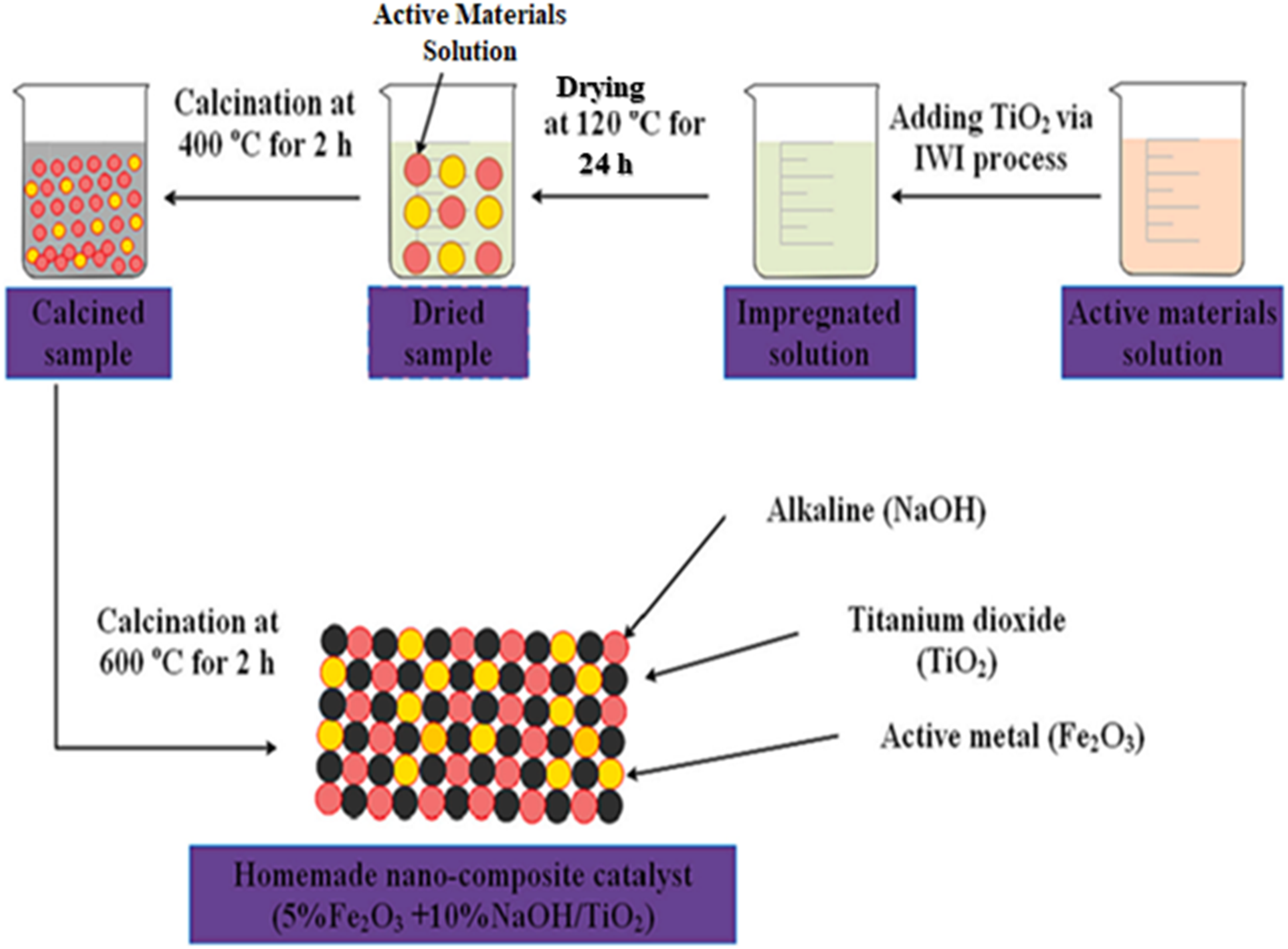
Schematic of preparation steps of the nano-composite catalyst (5% Fe2O3 + 10% NaOH)/TiO2.
Methodology of kerosene upgrading using BBR
The upgrading of kerosene was investigated in this study using a BBR as shown in Figure 2. The ODS process was conducted with the BBR using H2O2 as an oxidant, (5% Fe2O3 + 10% NaOH)/TiO2 as a nano-composite catalyst and acetonitrile as an extractant as reported in Table 1. Here, the effect of baffled and modified novel alkaline composite catalyst was examined on the upgrading efficiency of kerosene. The BBR used consisted of 200 ml reactor volume and four baffles prepared using stainless steel. Each baffle with dimensions of 20 cm height and 2.5 cm width was installed uniformly in the reactor. The outer perimeter of the reactor is completely isolated using woolen material. The upgrading process of kerosene was carried out with the BBR under atmospheric conditions, equipped with the 20 ml sample of kerosene, H2O2 fuel/oxidant (F/O = 30), and (5% Fe2O3 + 10% NaOH)/TiO2 as a nano-composite catalyst and the obtained product was stirred at 650 rpm using a magnetic stirrer and heated to the required conditions. The recovery of the fuel was conducted using acetonitrile as a solvent and a fuel/oil ratio of 1 was mixed and stirred for 30 min, and then the fuel was separated and measured.
76
After each experiment, the reactor was turned off and the sample was withdrawn to measure the upgrading efficiency of the fuel using an x-ray sulfur analyzer in terms of DBT removal as shown below:

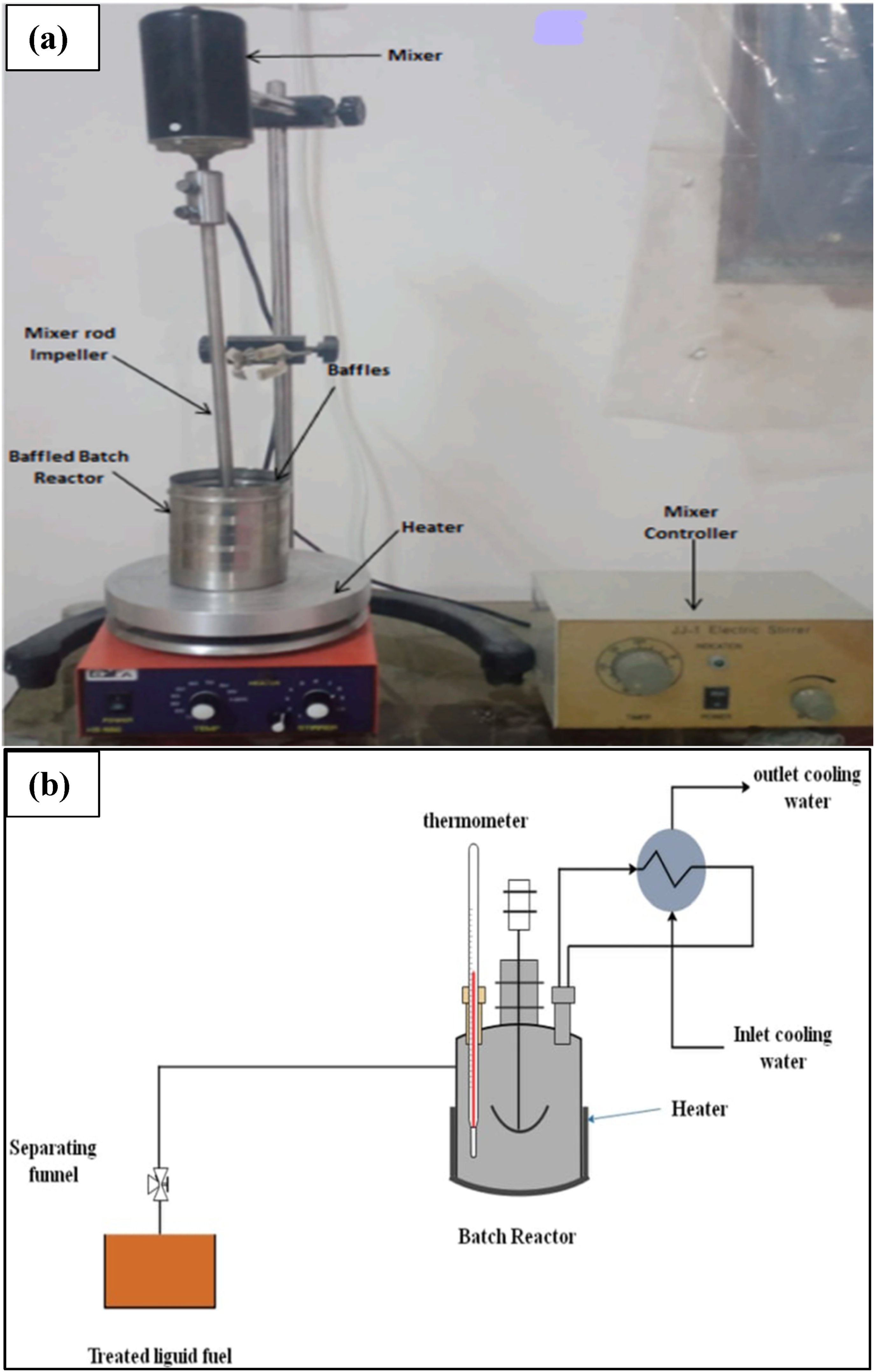
Methodology of kerosene upgrading process using a batch baffled reactor: (a) real photo and (b) schematic diagram.
Oxidant, catalyst, extractant, and conditions used in ODS process.
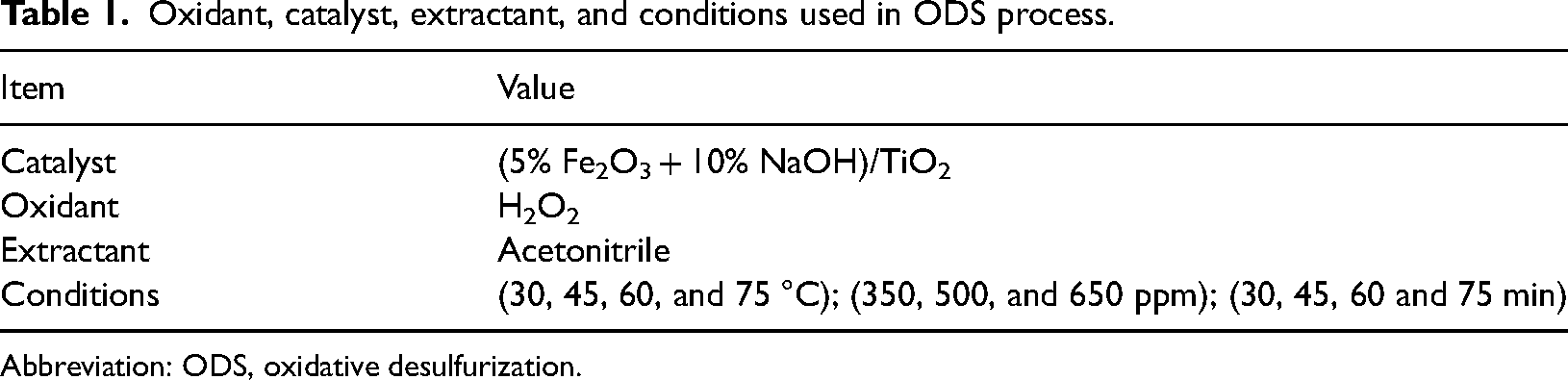
Abbreviation: ODS, oxidative desulfurization.
Spent catalyst regeneration
The activity of the spent catalyst used (5% Fe2O3 + 10% NaOH)/TiO2 in the desulfurization process was examined for five cycles under the best achieved maximum efficiency. After each cycle, the sample produced was centrifuged to separate oil phase, aqueous phase, and catalyst. The catalyst was regenerated by solvent extraction regeneration by treating with iso-octane, ethanol, and methanol. A 1 g of spent catalyst was mixed with 10 ml solvent and agitated via a magnetic stirrer for 1 h at 60 °C. Then, the catalyst was washed, filtered, and dried in an oven for 6 h at 110 °C. 76
Results and discussion
Characterizations of nano-composite catalysts
In this study, TiO2 was utilized as a carrier to load the nano-particles of NaOH and Fe2O3 to produce the catalyst (5% Fe2O3 + 10% NaOH)/TiO2. The prepared support and catalyst were characterized by N2-adsorption/desorption isotherms, field-emission scanning electron microscopy-energy dispersive x-ray (FESEM-EDX), x-ray diffraction (XRD), and Fourier-transform infrared (FTIR).
N2-adsorption/desorption isotherms
The isotherms for the support (TiO2) and nano-composite catalysts 5% Fe2O3/TiO2 and (5% Fe2O3 + 10% NaOH)/TiO2 were characterized using N2-adsorption/desorption as illustrated in Figures 3 and 4. The isotherms were conducted at 77 K and 0–1 relative pressure. These isotherms can provide valuable information on the catalyst, including the surface area, pore volume, and pore size distribution. The surface areas for TiO2, 5% Fe2O3/TiO2 and (5% Fe2O3 + 10% NaOH)/TiO2 are illustrated in Figure 3(a), (b), and (c), respectively. As can be seen from Figure 3(a), low adsorption behavior was observed with small ranges of relative pressures up to 0.6; further rising of relative pressures up to 1 could lead to a dramatic increase in adsorption capacity which can be attributed to the filling of internal pores with nitrogen gas. This trend can be seen in Figure 3(b) and (c) in the order TiO2 greater than 5% Fe2O3/TiO2 and (5% Fe2O3 + 10% NaOH)/TiO2. The low adsorption capacity can be attributed to low surface area in the order of TiO2, 5% Fe2O3/TiO2, and (5% Fe2O3 + 10% NaOH)/TiO2 is 10.753, 8.558, and 8.456 m2/g, respectively. Based on these isotherms observed, it can be classified to type IV according to IUPAC. The pore volumes were observed in the order of TiO2, 5% Fe2O3/TiO2, and (5% Fe2O3 + 10% NaOH)/TiO2 are 0.031, 0.019, and 0.018 cm3/g, respectively. Based on the results obtained it was observed that the surface area for TiO2 was greater than 5% Fe2O3/TiO2 and (5% Fe2O3 + 10% NaOH)/TiO2 which can be attributed to the filling of internal pores of TiO2 with nano-particles of Fe2O3 and NaOH. Also, this can be attributed to destruction of many pores due to the further quantities filled with nano-particles and high relative pressures. Filling these pores led to increase of the pore volume in the order of (5% Fe2O3 + 10% NaOH)/TiO2, 5% Fe2O3/TiO2, and TiO2. The texture property of the surface can be indicated as mesoporous structures as presented in Table 2. The pore size distribution was estimated via barrett-joyner-halenda method for TiO2, 5% Fe2O3/TiO2, and (5% Fe2O3 + 10% NaOH)/TiO2 and are illustrated in Figure 3(a), (b), and (c), respectively. From these figures, a good distribution of nano-composite particles of active components on the surface of TiO2 was observed. Average pore size distribution of 7.427, 8.705, and 10.573 nm was obtained for TiO2, 5% Fe2O3/TiO2, and (5% Fe2O3 + 10% NaOH)/TiO2, respectively. It can be observed from these isotherms seen in Figures 3 and 4 that adding the nano-composite particles of active components has significantly affected the texture properties of surface area, pore volume, and average pore size distribution. It is very necessary to take into account that texture properties can be affected also by other factors such as carbonization, calcination temperature, and the residence time. These results are in agreement with literature. Finally, it can be concluded that adding of alkaline 10% NaOH as an active component led to improve in the texture properties of the nano-composite catalyst. The same findings for texture properties are in agreement with other published research. 74
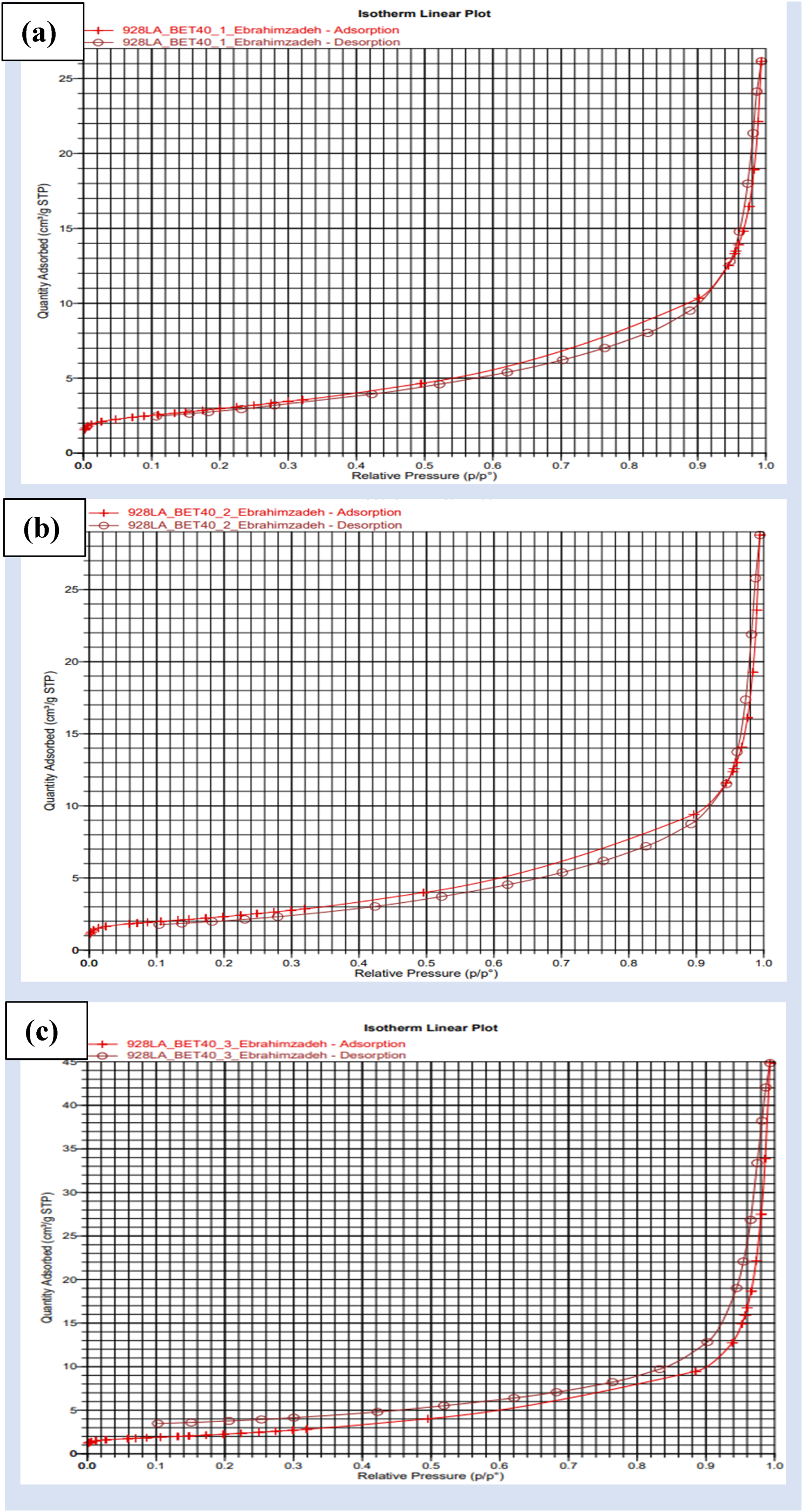
Surface area isotherms: (a) TiO2, (b) 5% Fe2O3/TiO2, and (c) (5% Fe2O3 + 10% NaOH)/TiO2.
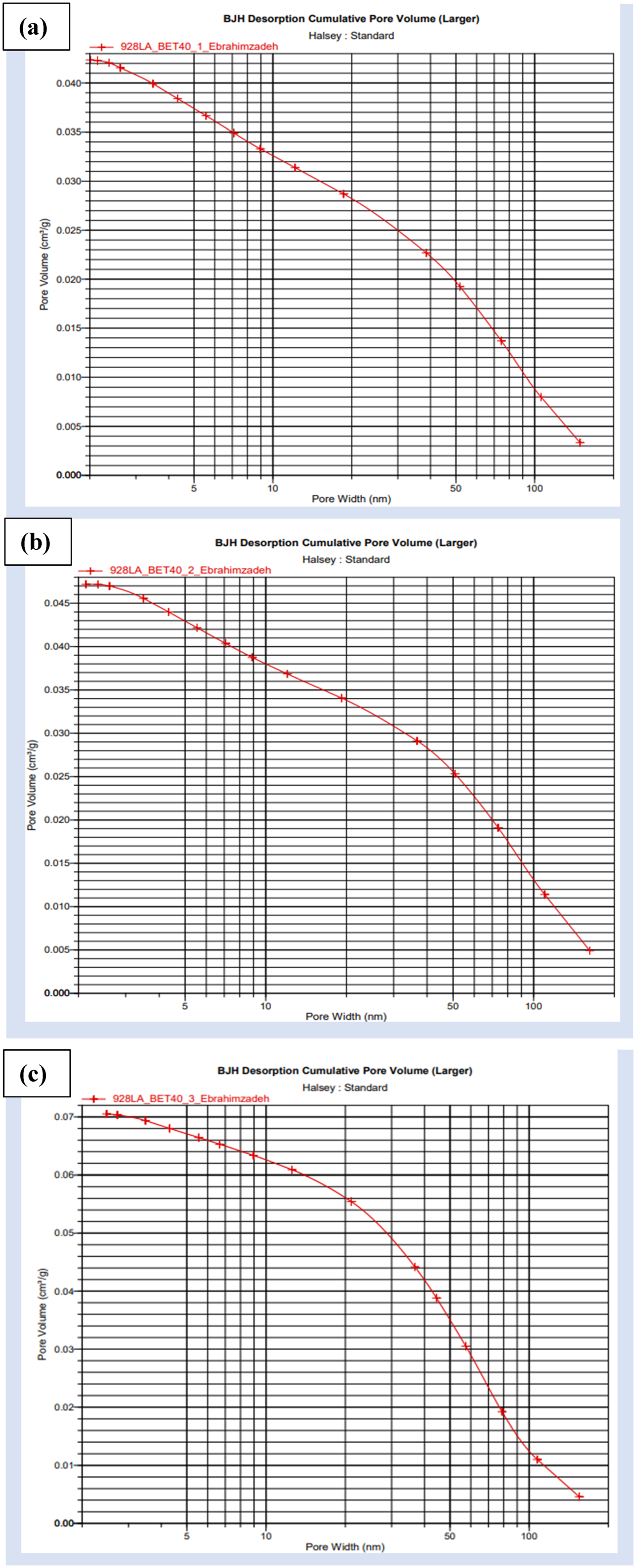
Pore size distribution: (a) TiO2, (b) 5% Fe2O3/TiO2, and (c) (5% Fe2O3 + 10% NaOH)/TiO2.
Texture properties of the catalysts.

FESEM-EDX analysis
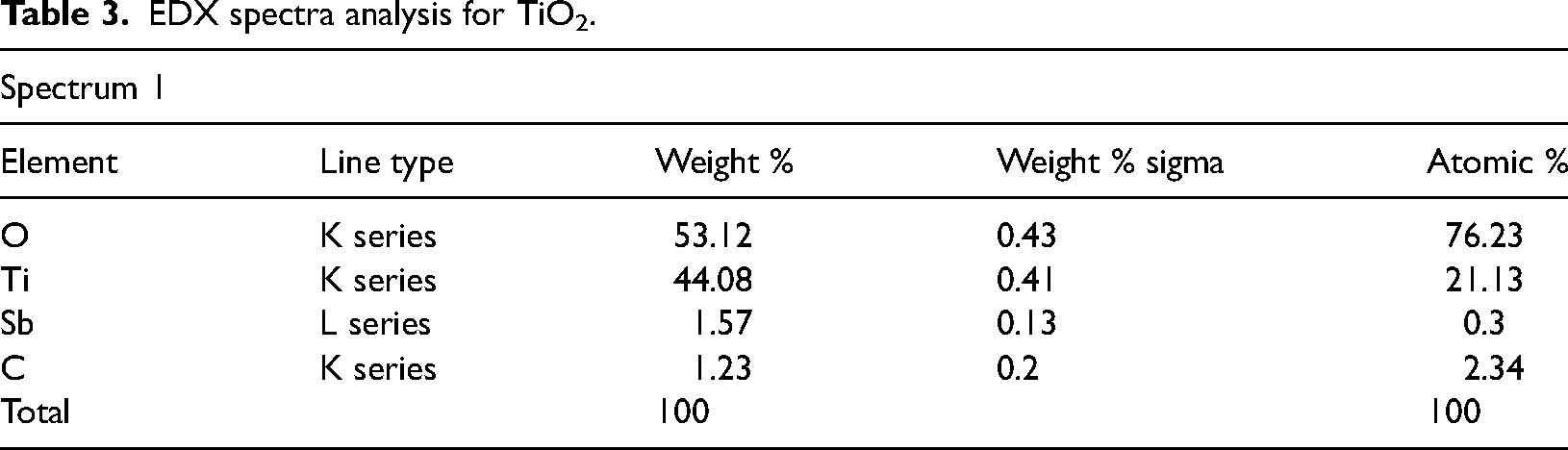
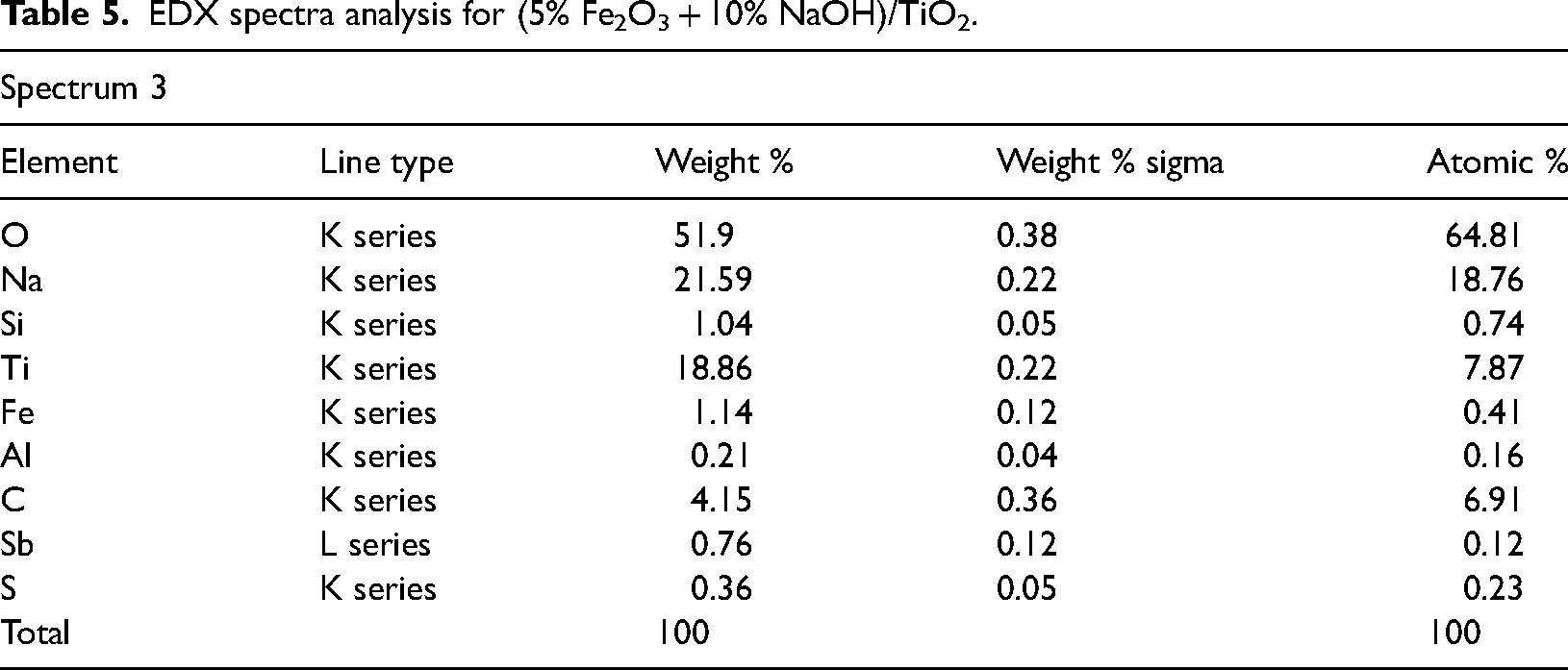
The morphology of the catalyst was observed via FESEM-EDX at different magnifications as illustrated in Figure 5. The morphology of TiO2, catalyst 5% Fe2O3/TiO2, and catalyst (5% Fe2O3 + 10% NaOH)/TiO2 is presented in Figure 5(a), (b), and (c), respectively. Figure 5(a) shows the microporosity of the surface of TiO2 with cracks, cavities, and uniform particle size distribution found on the homogenous surface. Generally, titania can exist in different types of crystalline phases, rutile (more stable), anatase (more active), and brookite. 77 Figure 5(b) and (c) indicates the distribution of nano-particles of 5% Fe2O3 and 10% NaOH on the surface of TiO2. It was noticed that impregnation of these active nano-particles could be distributed uniformly on the surface. For low magnifications, the surface could be seen as microporous, whereas at high magnifications the surface could be seen as rough and heterogeneous surface. The elemental compositions for TiO2, 5% Fe2O3/TiO2, and (5% Fe2O3 + 10% NaOH)/TiO2 were characterized with EDX spectra in Figure 6(a), (b), and (c), respectively. From Figure 6(a), the composition elements observed on the surface of TiO2 are Ti followed by O, C, and Sb. Such existing elements revealed the homogeneity of TiO2 in the preparation method. Furthermore, the elemental compositions for 5% Fe2O3/TiO2 (as presented in Figure 6(b)) and (5% Fe2O3 + 10% NaOH)/TiO2 (as presented in Figure 6(c)) revealed the most existed elements of Fe and Na, respectively. The percentages of these elements for each sample are presented in Tables 3 to 5. These observations from FESEM-EDX with the same distribution of active nano-composite catalysts and morphology of surfaces were noticed in previous studies. 74
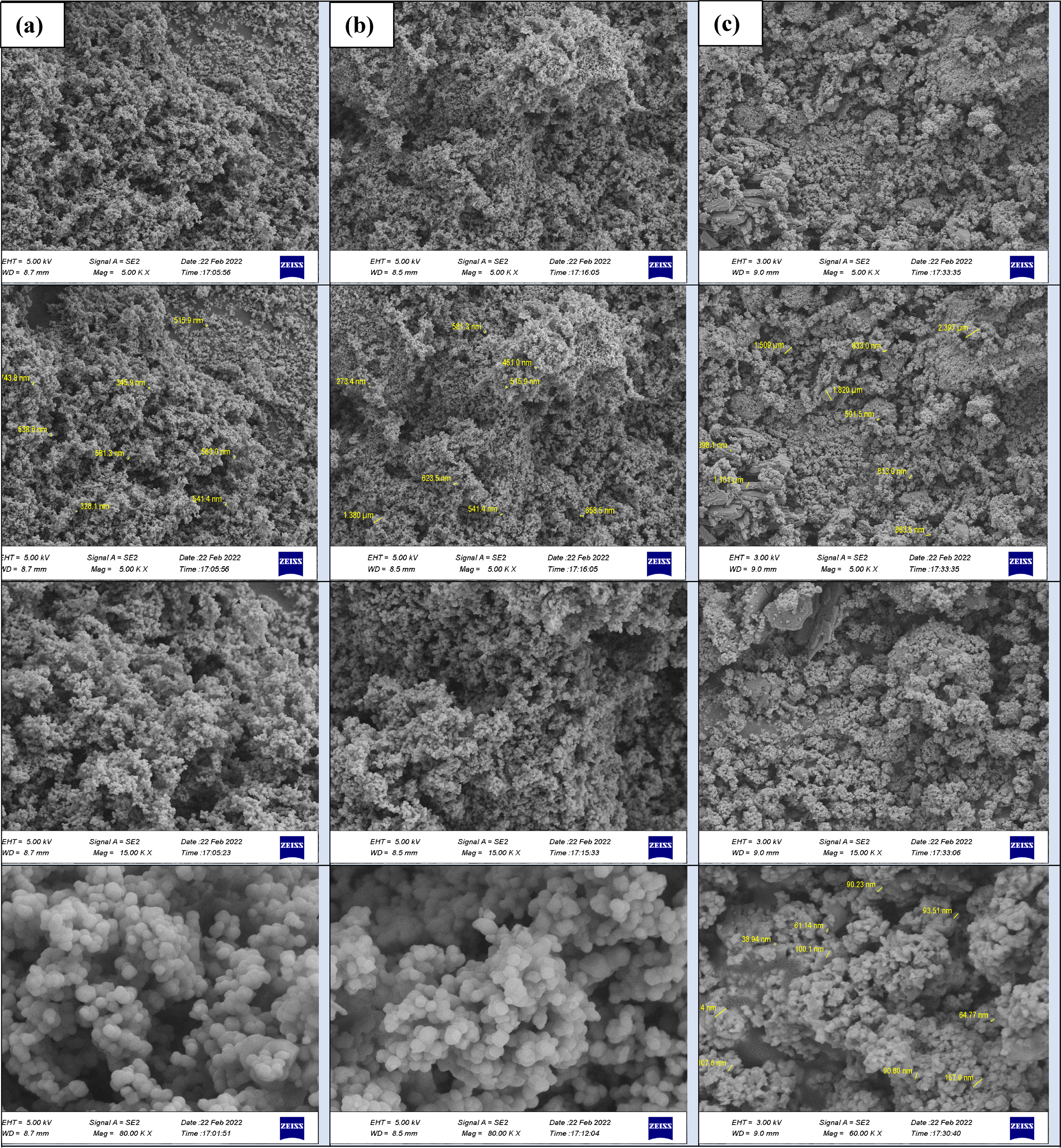
FESEM images: (a) TiO2, (b) 5% Fe2O3/TiO2, and (c) (5% Fe2O3 + 10% NaOH)/TiO2.
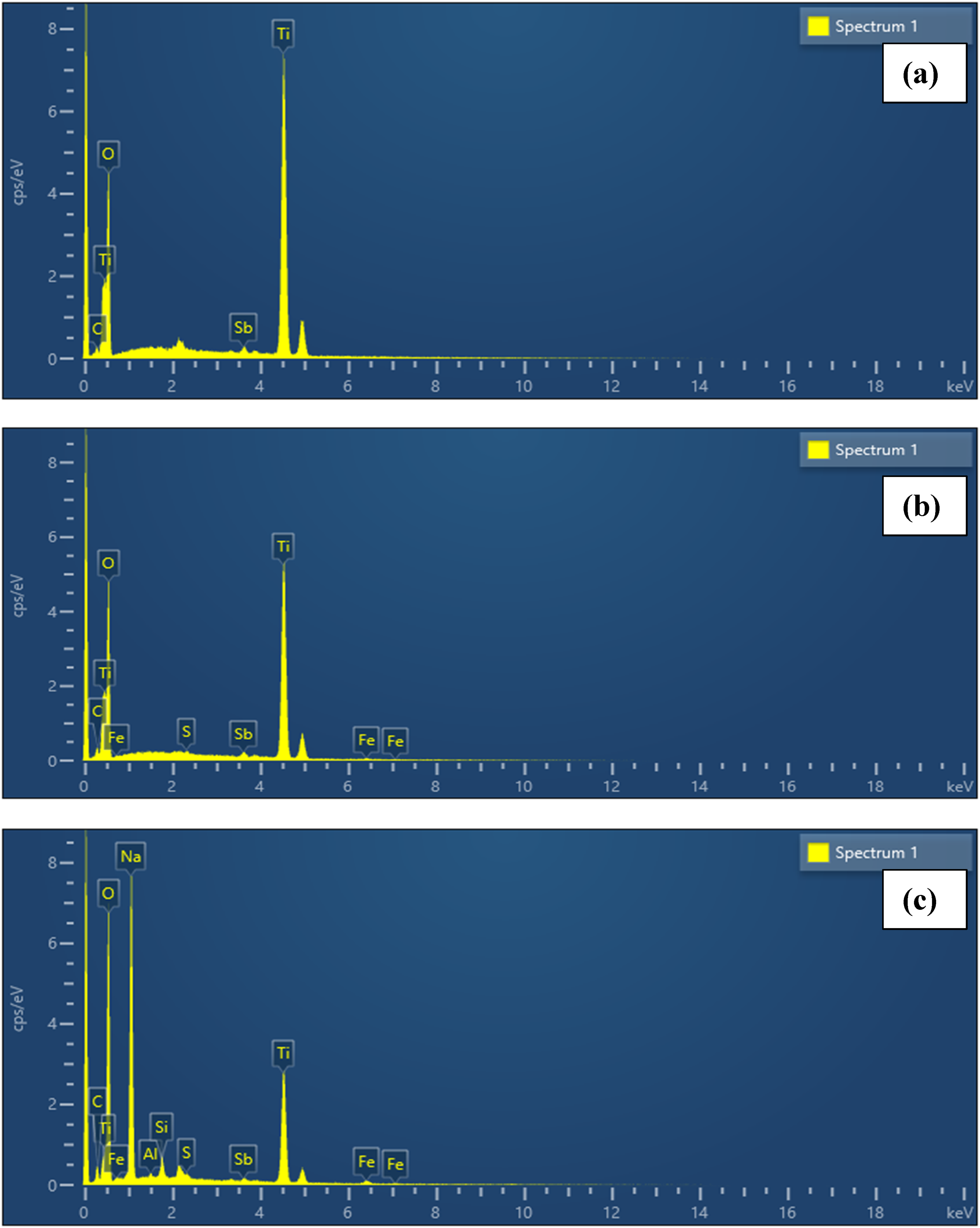
FESEM-EDX spectra: (a) TiO2, (b) 5% Fe2O3/TiO2, and (c) (5% Fe2O3 + 10% NaOH)/TiO2.
EDX spectra analysis for TiO2.
EDX spectra analysis for 5% Fe2O3/TiO2.
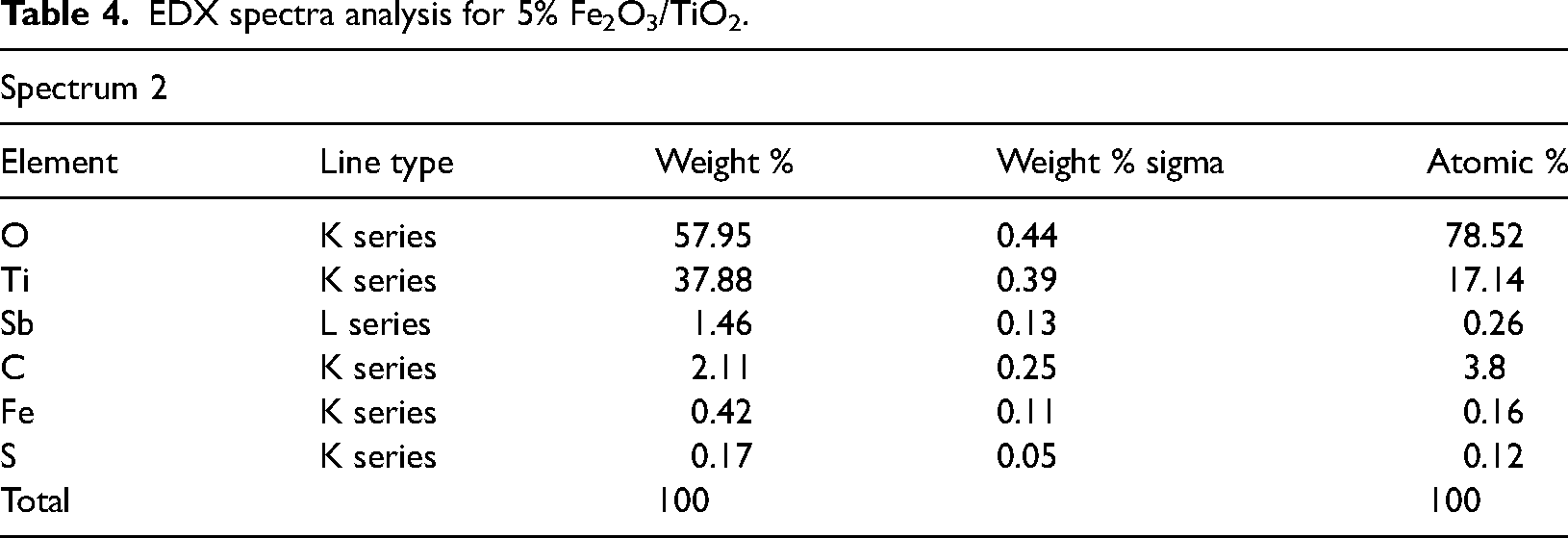
EDX spectra analysis for (5% Fe2O3 + 10% NaOH)/TiO2.
FTIR spectra analysis
Characterization of surface chemistry (acid or base functional groups) for the support and catalysts represents more significant for different processes uses. These groups are basic in adsorption, oxidation, and desulfurization process. In this study, the FTIR spectra obtained in the range of 400–4000 cm−1 for TiO2, 5% Fe2O3/TiO2, and (5% Fe2O3 + 10% NaOH)/TiO2 are illustrated in Figure 7(a), (b), and (c), respectively. It can be seen from these figures, several of the functional groups were present on the surface of the support and the catalysts with slight differences that could be attributed to the loading amounts of nano-particles for active components. A wide range of spectra could be observed in these figures from 1010 and 500 cm−1 are attributed to the alkene rings (C–H). 78 These bands appeared in the spectra of 1150‒1300 cm−1 are attributed to the C–O for esters, phenols, and alcohols. 79 The spectra ranges of 1650‒1500 cm−1 are attributed to aromatic and carboxyl structures. 80
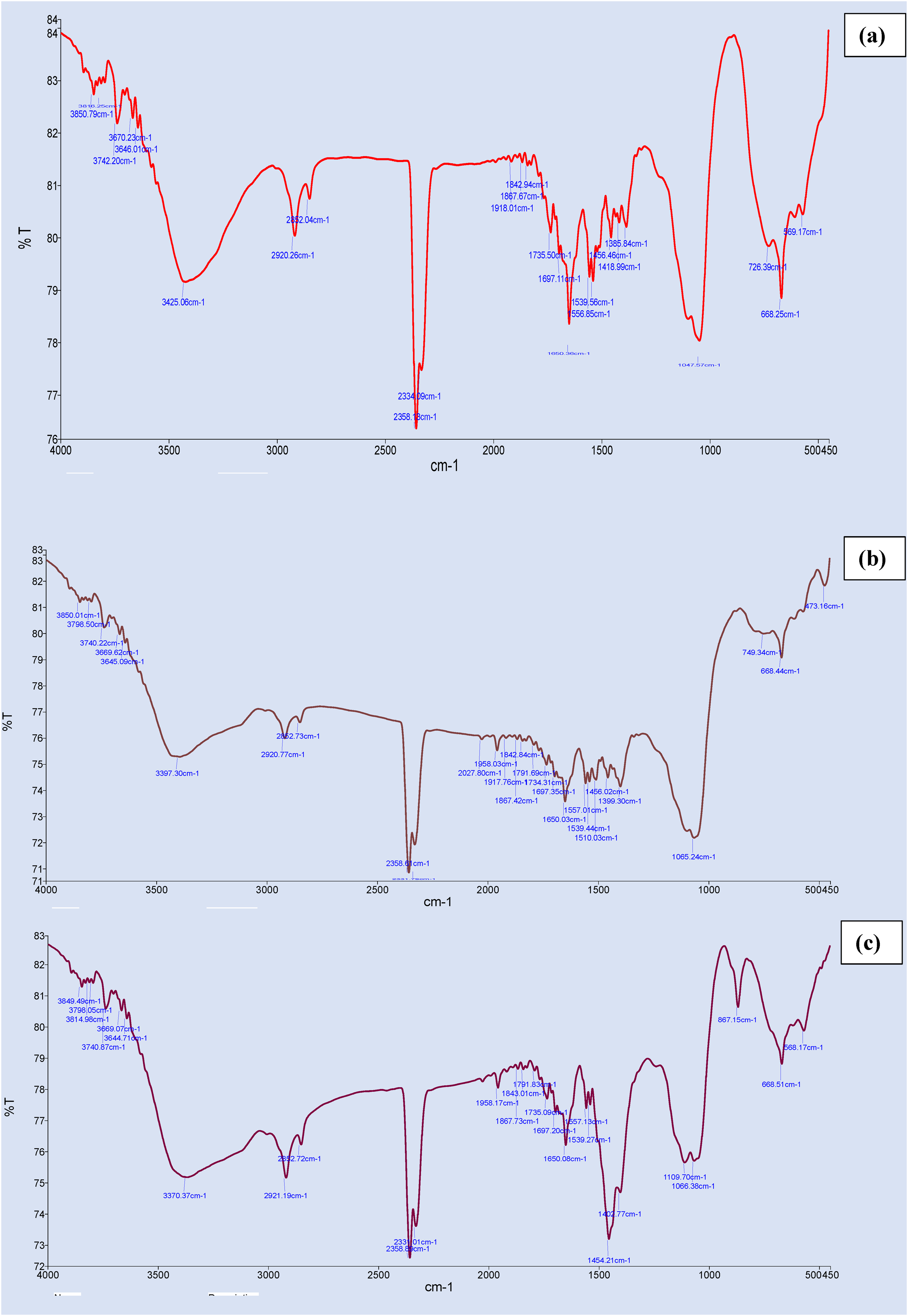
FTIR spectra: (a) TiO2, (b) 5% Fe2O3/TiO2, and (c) (5% Fe2O3 + 10% NaOH)/TiO2.
XRD spectra analysis
The crystallinity of TiO2, 5% Fe2O3/TiO2, and (5% Fe2O3 + 10% NaOH)/TiO2 was characterized in the XRD spectra in the ranges of 2θ = 10° to 2θ = 80° as illustrated in Figure 8. The spectrum of the surface is presented in Figure 8(a). It can be observed from Figure 8(a), strong peaks were presented at around 2θ = 25.5° and 2θ = 48°, attributed to the surface structure of TiO2. Also, other peaks with low intensities were seen at around 2θ = 38°, 2θ = 54°, 2θ = 54°, 2θ = 56°, and 2θ = 64°. The obtained spectra for the surface of TiO2 are the same as observed in literature. 81 Impregnation of active nano-particles of Fe and NaOH resulted in strong peaks on the surface of titania as shown in Figure 8(b) and (c). These peaks can be attributed to the dispersion of these nano-particles. This indicates a good and uniform distribution of impregnation of active components. The differences in peak intensities observed in Figure 8(b) and (c) were significant due to the amount impregnation for each catalyst especially after impregnation of alkaline materials. These peaks for XRD spectra were the same as observed in literature. 74
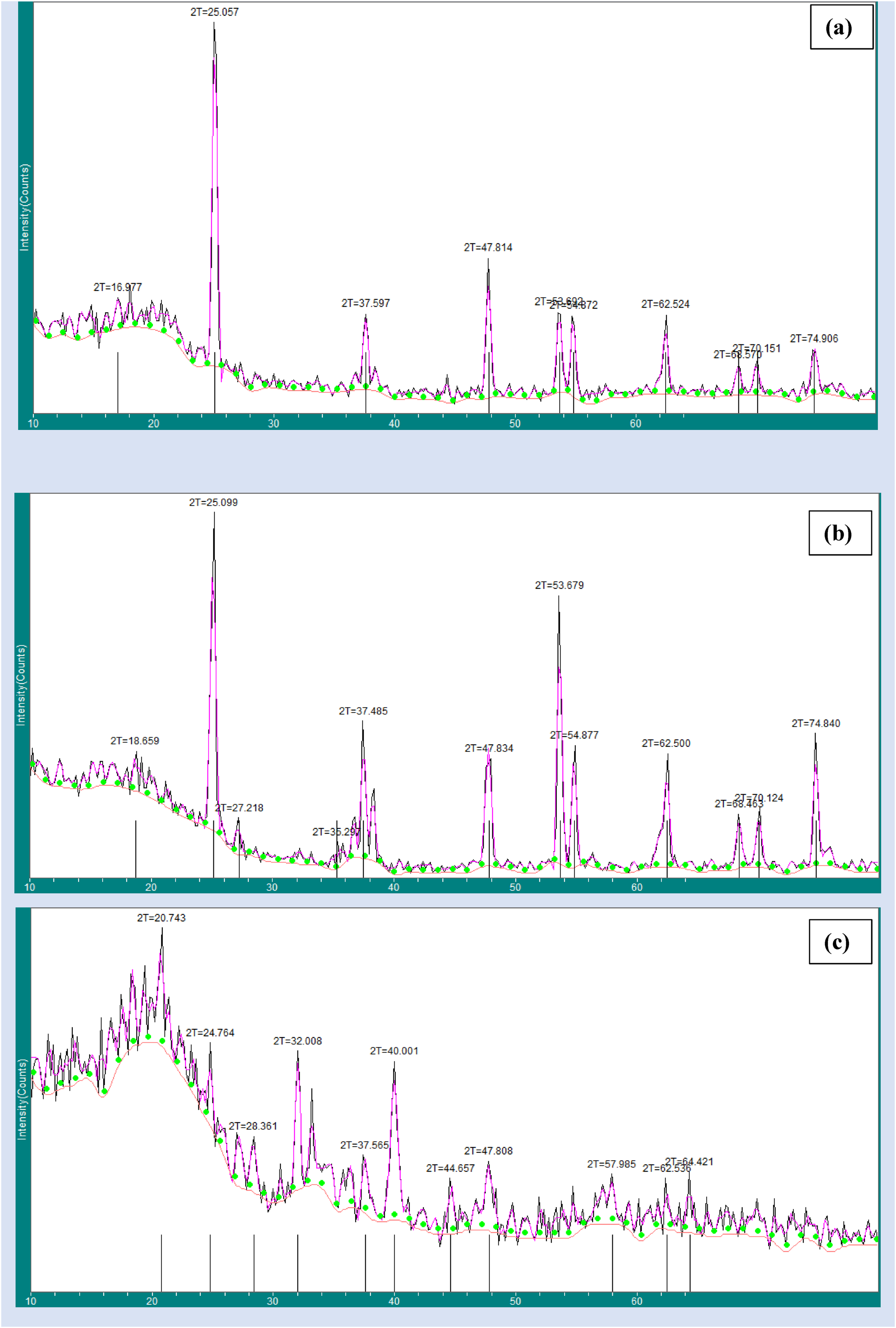
XRD results: (a) TiO2, (b) 5% Fe2O3/TiO2, and (c) (5% Fe2O3 + 10% NaOH)/TiO2.
Influence of process variables
The impact of temperature on upgrading efficiency
Temperature can impact the ODS process due to the strong controlling on the transport of components from phase to phase. In this study, the influence of temperatures on the upgrading of kerosene in the ODS process was studied at 30, 45, 60, and 75 °C with (5% Fe2O3 + 10% NaOH)/TiO2 as a catalyst and H2O2 as an oxidant as presented in Figure 9. As can be seen from Figure 9, the impact of temperature was examined under different doses of DBT of 350, 500, and 650 ppm. From Figure 9, it can be seen that the removal efficiency of DBT was increased from 50% to 92.7% with rising of temperatures from 30 to 75 °C, respectively, retaining the initial concentration at 650 ppm. The same behavior of the removal efficiency of DBT could slow down at 500 and 300 ppm. Enhancing the removal efficiency of DBT from kerosene with rising temperatures can be attributed to increase the rate constant which leads to the rising of the number of reacting molecules. On the other hand, slow down of the reaction temperature could lead to a decrease in the removal efficiency due to the lowering of viscous mixture (i.e., hindering of diffusivity), so the removal efficiency could be decreased. According to the findings of this study, it was revealed that the best operational temperature is 75 °C at which a higher removal efficiency was achieved.
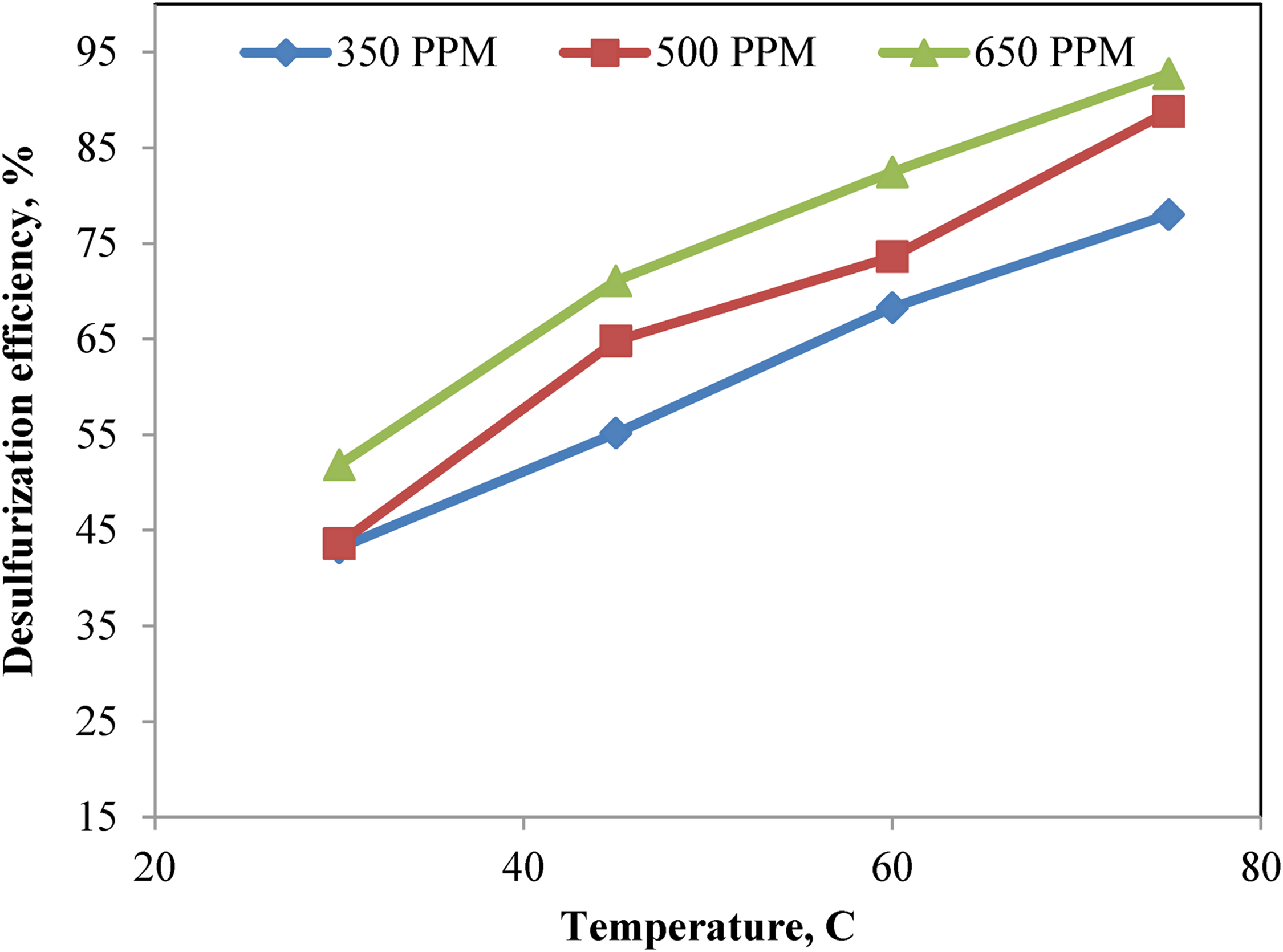
Impact of temperature on the upgrading of kerosene at various doses of DBT: (a) 350 ppm, (b) 500 ppm, and (c) 650 ppm.
The impact of DBT dose on upgrading efficiency
In this study, the impact of DBT concentration on the desulfurization efficiency is presented in Figure 10. The efficiency of kerosene upgrading in the ODS process affected largely with the initial doses of DBT with (5% Fe2O3 + 10% NaOH)/TiO2 as a catalyst. This effect was examined in this study under various amounts of DBT (350, 500, and 650 ppm) retaining the operational temperatures constant (30, 45, 60 , and 75 °C) as illustrated in Figure 10. Figure 10 shows the significant behavior of kerosene upgrading efficiency under different doses of DBT. It can be observed that the removal efficiency could be improved and enhanced up to 82% with rising doses of DBT to 650 ppm at a constant temperature of 60 °C. This behavior could be seen to enhance to 92% with increasing the doses of DBT and temperature to 75 °C. Improving the efficiency with increasing the initial concentration of DBT can be attributed to the chances of selective adsorption of sulfur compounds are decreased due to the continuous decrease in the initial sulfur compound concentrations, which decreases the reaction rate. 82
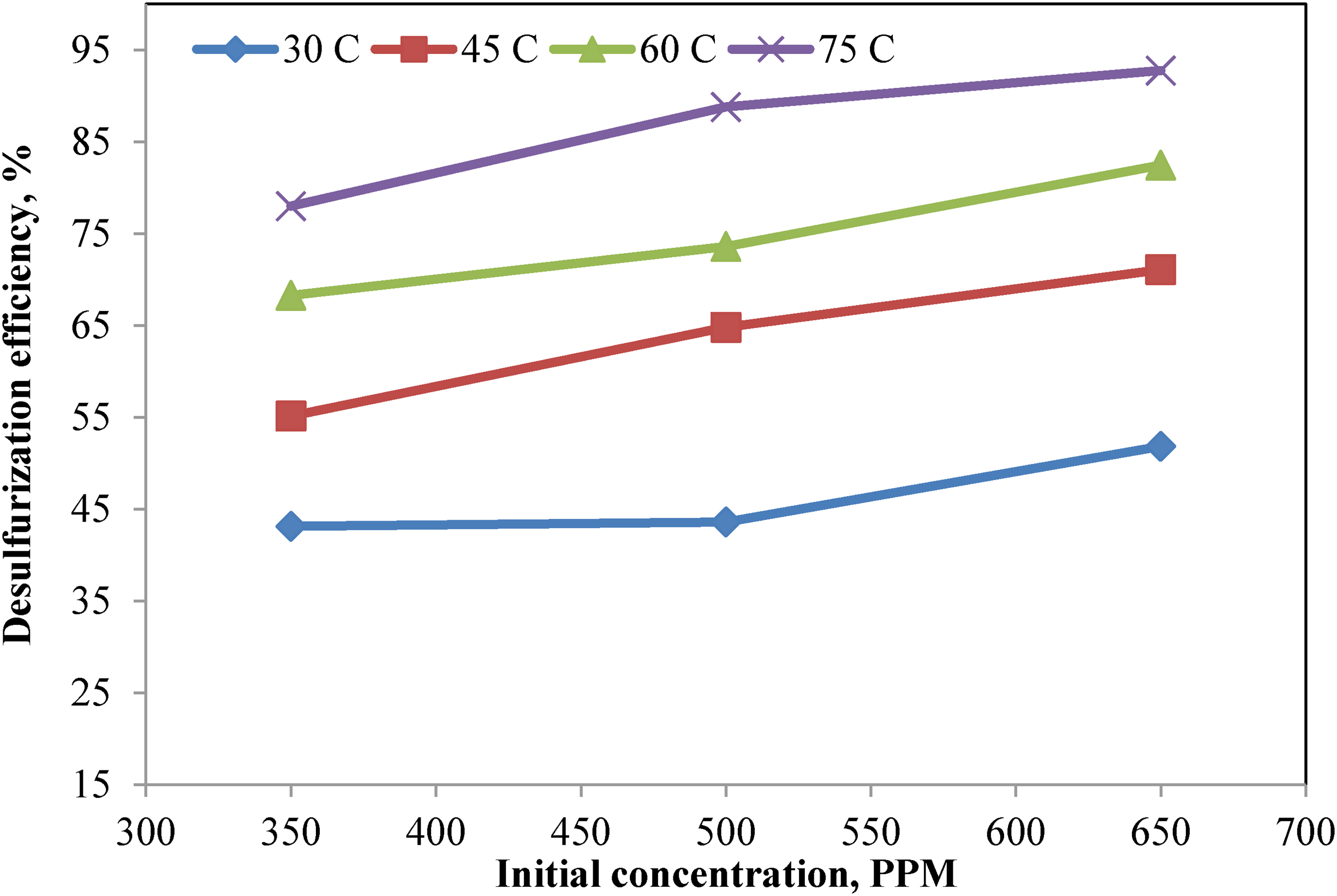
Impact of DBT doses on the upgrading of kerosene at various temperatures: (a) 30 °C, (b) 45 °C, (c) 60 °C, and (d) 75 °C.
The effect of time on upgrading efficiency
Another significant factor that can influence the kerosene upgrading efficiency in the ODS process is the reaction time. In this study, the impact of reaction time was examined in the ranges of 30, 45, 60, and 75 min retaining the other parameters constant of temperature (30, 45, 60, and 75 °C) and initial doses of DBT (350, 500, and 650 ppm) as shown in Figure 11. The impact of time studied at different doses of DBT and temperatures of 30, 45, 60, and 75 °C is presented in Figure 11(a), (b), (c), and (d), respectively. From Figure 11(d), the removal efficiency could be seen to increase dramatically from 66% to 92% with the raising reaction time from 30 to 75 min while the other parameters are constant (650 ppm and 75 °C). Improve in the removal efficiency is attributed to the increase in contacting time between the reacting molecules.
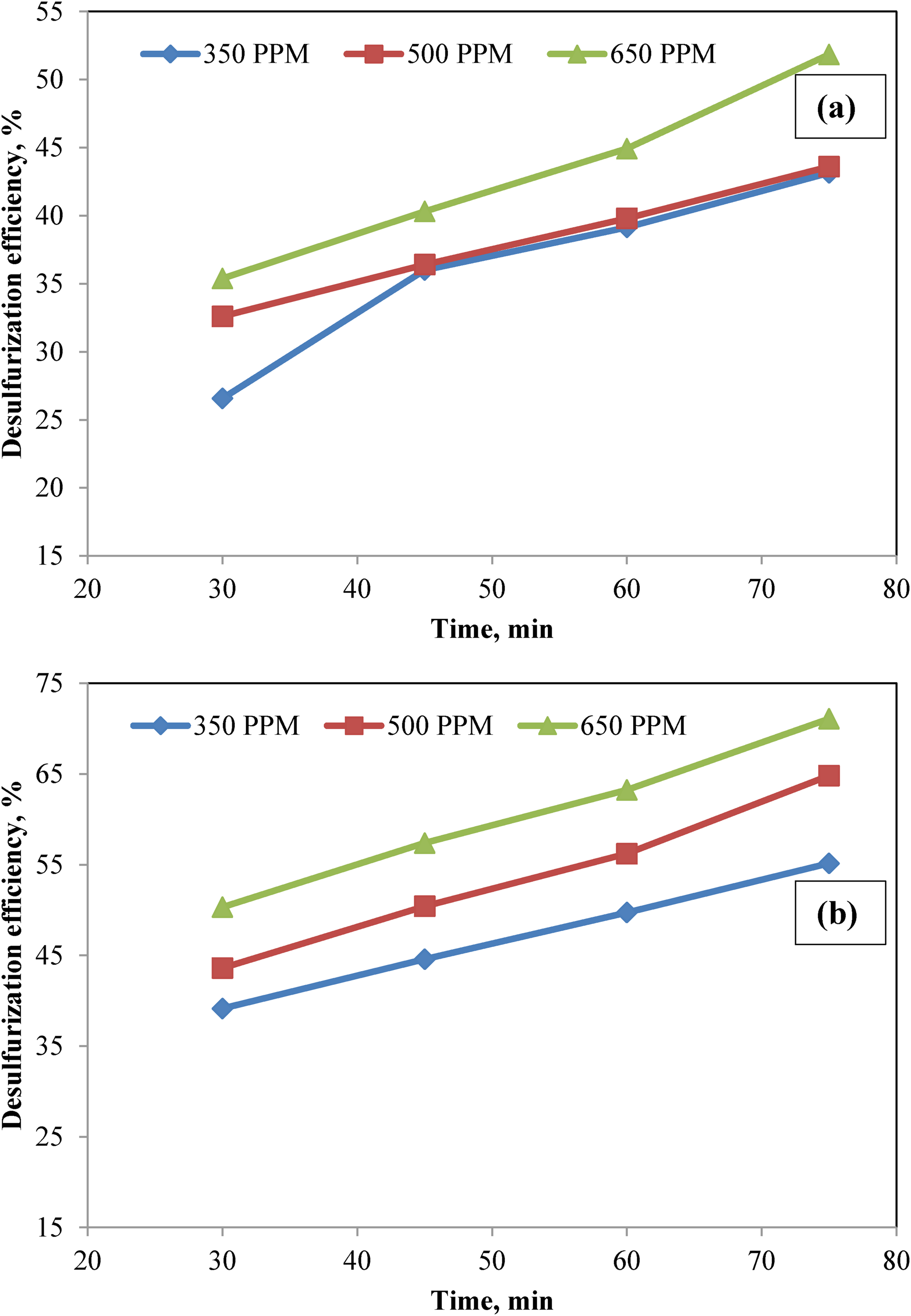
Impact of time on the upgrading of kerosene at various doses of DBT and constant temperature: (a) 30 °C, (b) 45 °C, (c) 60 °C and (d) 75 °C.
Determining the best operating conditions
In order to obtain the highest removal efficiency and improve the upgrading of kerosene it is very important to find the best operating conditions in terms of temperature, time, and initial concentration of DBT. In this study, the best temperature, time, and initial doses of DBT were determined for the ODS process according to the experiments. Figure 12(a), (b), and (c) present the best operating conditions of temperature, initial DBT doses, and time, respectively. These results were presented via factorial design of experiments with varying each parameter while the others were constant. The best operational temperature is presented in Figure 12(a), at various temperatures (30, 45, 60, and 75 °C) and constant initial DBT dose of 650 ppm. As can be seen from this figure, the maximum removal efficiency was achieved at a temperature of 75 °C. It can be concluded from the obtained results, the best operational temperature, initial DBT doses, and time was 75 °C, 650 ppm, and 75 min, respectively. These results obtained from this study are in agreement with many previous studies.
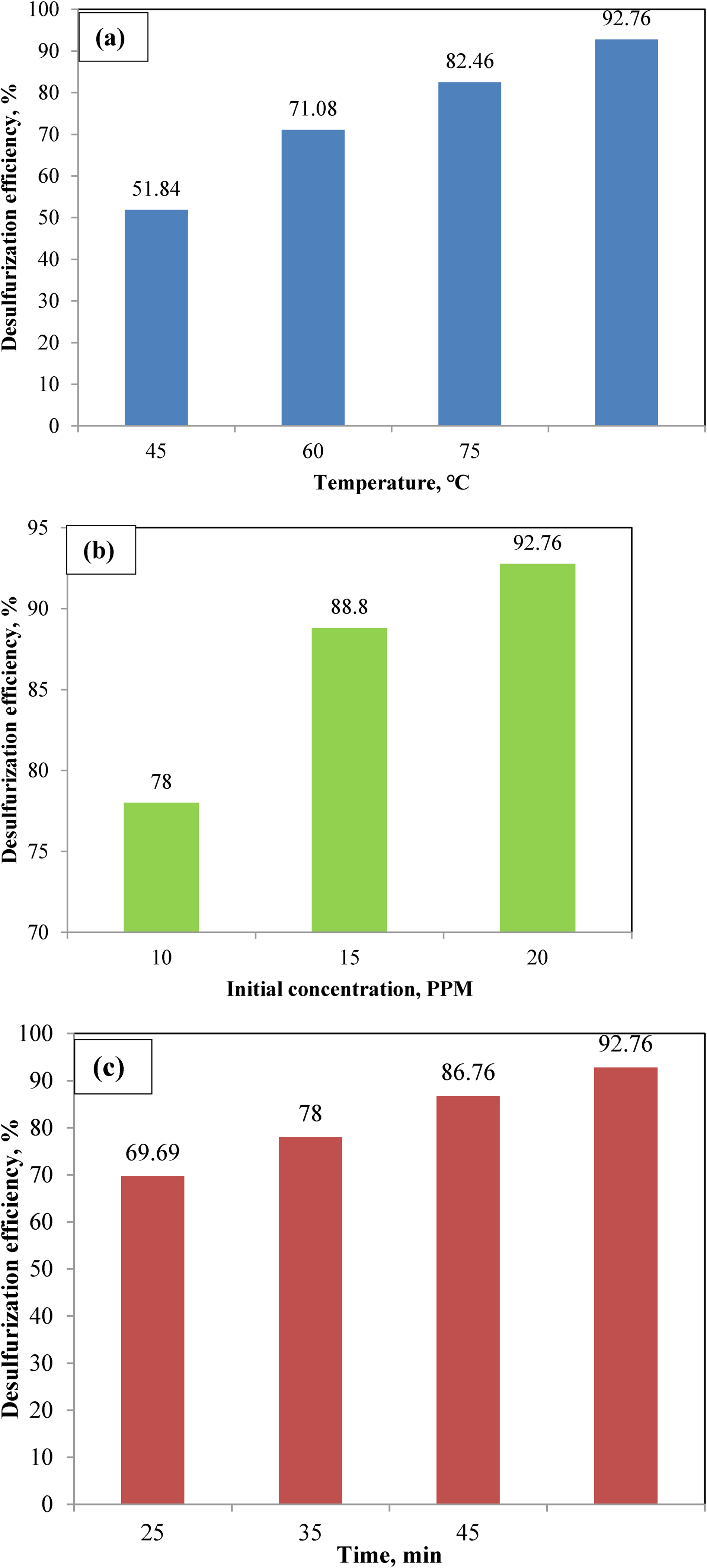
Optimum operating conditions of kerosene upgrading: (a) temperature, (b) DBT doses, and (c) reaction time.
The kinetics of kerosene upgrading
The upgrading of kerosene kinetic by the ODS process was examined in this study, utilizing H2O2 as an oxidant and (5% Fe2O3 + 10% NaOH)/TiO2 as a catalyst at various reaction temperatures (30, 45, 60, and 75 °C) and constant initial doses of DBT of 650 ppm. The integral method was used here to determine the order and activation energy of reaction as kinetic parameters. A pseudo-first-order for DBT concentration was assumed according to literatures:31,34

Integration of equation (8) led to the final first-order equation in terms of concentration:
Using Arrhenius equation to estimate the activation energy, we get:
Linearization of the above equation yields k, 
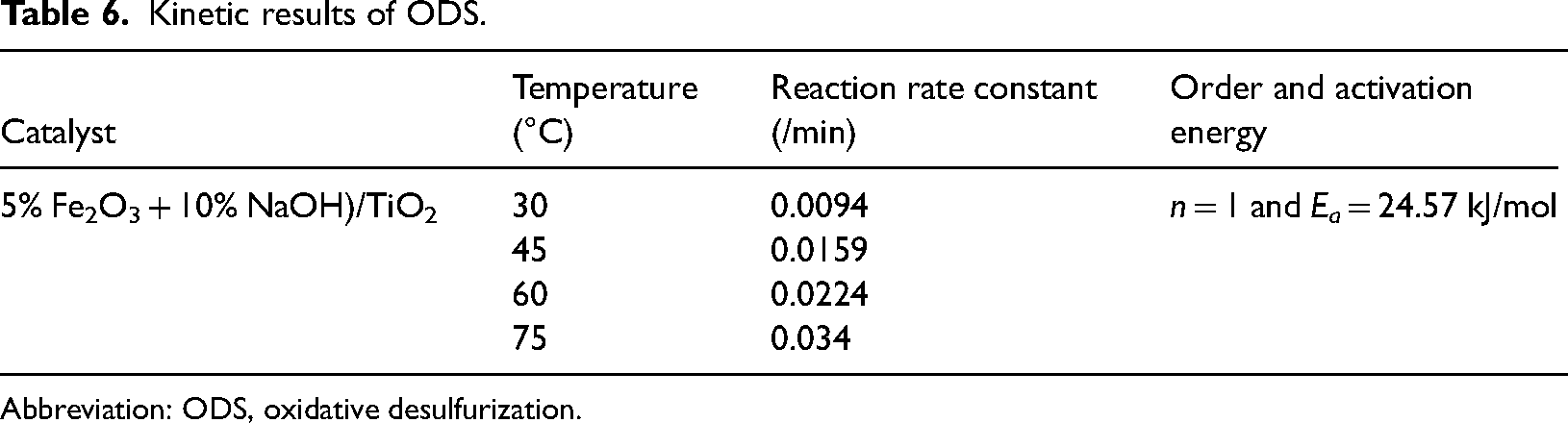
The experimental results presented in Figure 13 were used to estimate the kinetic parameters at various reaction temperatures (30, 45, 60, and 75 °C) and different reaction times (30, 45, 60, and 75 min). It was observed from Figure 13, the removal efficiency could be improved to the maximum value of 92.7% with rising the temperature and time to 75 °C and 75 min. From these experimental results, the data were fitted and followed first-order reaction to yield a linear behavior as illustrated in Figure 14. From Figure 15, the calculated value of activation energy is 24.57 kJ/mol with a correlation coefficient of R2 = 0.9962. The kinetic results of kerosene upgrading are summarized as presented in Table 6. As can be seen from Table 6, the kinetic parameters obtained from this study were in agreement with many of results reported in literatures. So, this indicates that the experimental data in this study were well fitted.
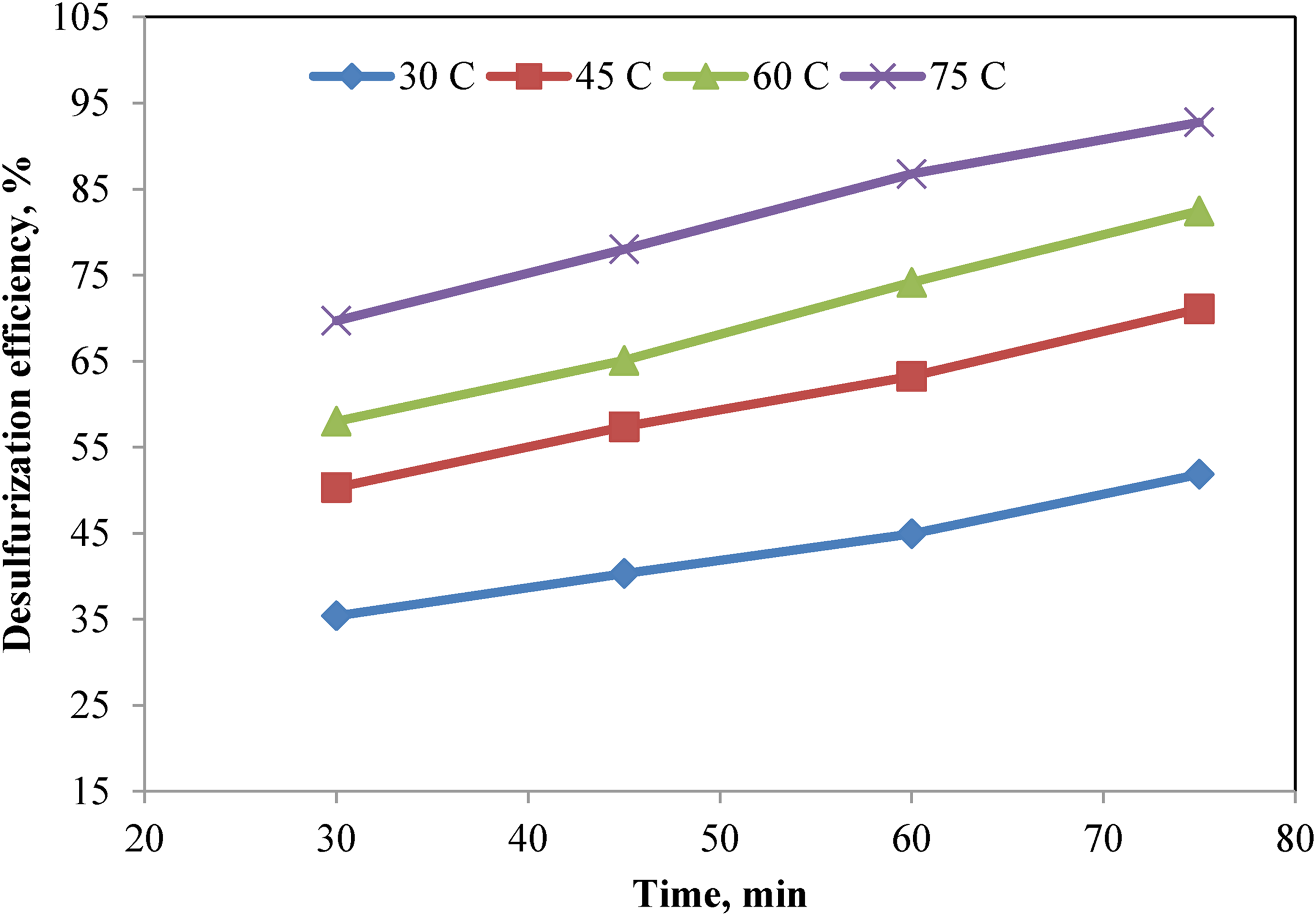
Removal efficiency at different temperatures and 650 ppm.
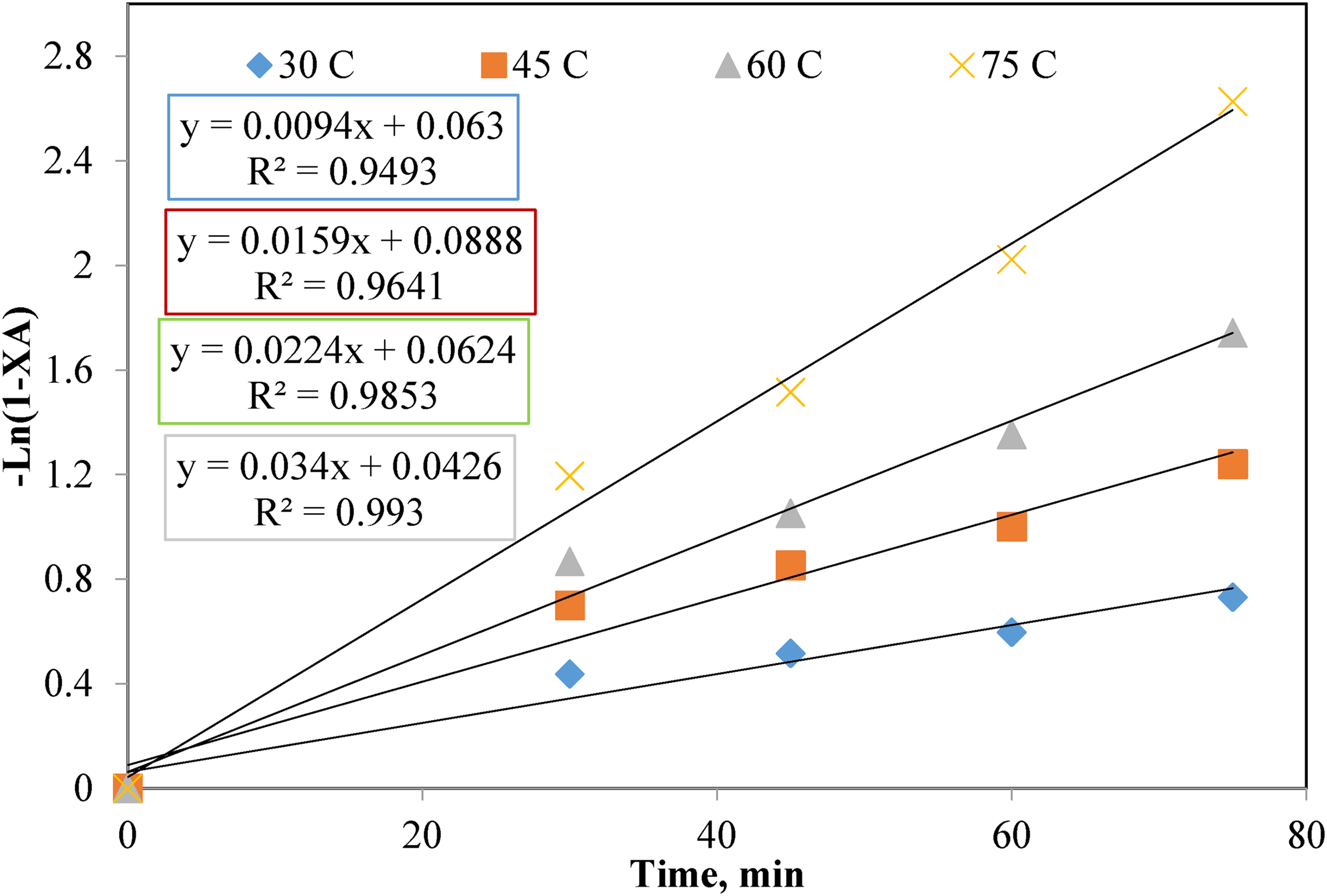
Desulfurization kinetic for pseudo-first-order at temperatures 30, 45, 60, and 75 °C and at 650 ppm.
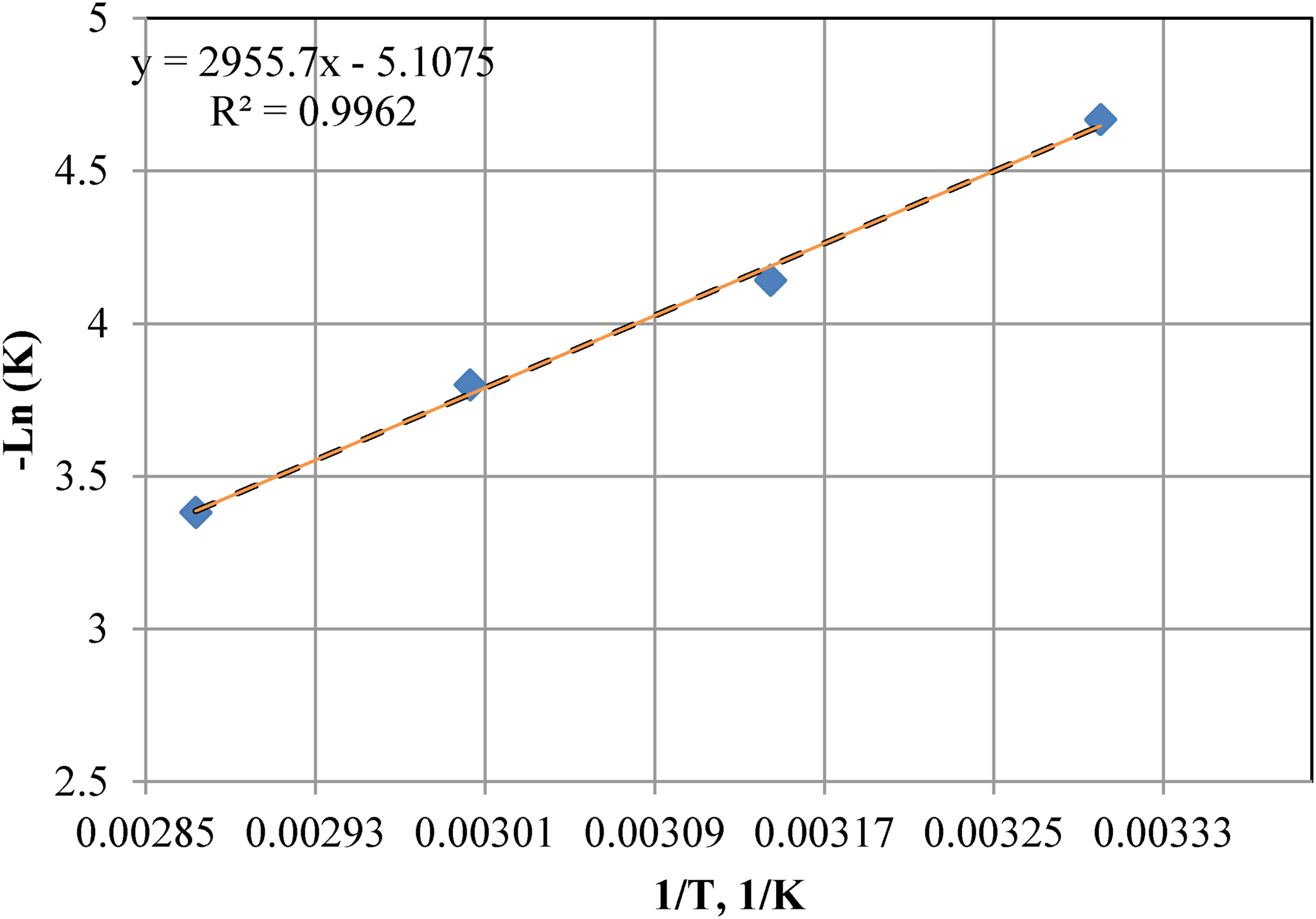
Arrhenius equation of linearization to estimate activation energy of reaction.
Kinetic results of ODS.
Abbreviation: ODS, oxidative desulfurization.
Suggested mechanism for upgrading of kerosene
The suggested mechanism for kerosene upgrading using the novel-nano-composite catalyst 5% Fe2O3 + 10% NaOH)/TiO2 with a BBR is illustrated in Figure 16 based on various publications present in literature.34,74 Previous studies observed that sulfur compound through process passes and undergoes three complex stages from organic to the bulk phase, then surface of the catalyst to reach the internal pores of the catalyst. However, the greatest challenges that refineries faced in the last few decades are the production of green kerosene in the ODS process to meet the local and global standards. Therefore upgrading of kerosene via the ODS process to reduce the sulfur content is a very complicated task depending on different parameters of the ODS process (oxidant, catalyst, and conditions). Each parameter plays a significant role and can change the suggested mechanism of the process. In this study, H2O2 is used an oxidant and (5% Fe2O3 + 10% NaOH)/TiO2 is used as a catalyst. To upgrade kerosene, it can undergo a complex mechanism consisting of a series of steps. The main aim is to convert the sulfur compounds within the fuel through these steps to sulfones, thereby obtaining environment-friendly kerosene by eliminating sulfur compounds in these steps. Generally, the suggested mechanism for kerosene upgrading can be categorized according to literature mainly into three steps as illustrated in Figure 16. 74 Several minor steps were eliminated and some of them were combined to make the suggested mechanism much easier. Briefly, the suggested mechanism includes conversion of DBT to sulfone (DBTO2) or sulfoxide (DBTO). First step is referred to as the adsorption step of DBT into the nano-particles of (5% Fe2O3 + 10% NaOH)/TiO2. The brunauer-emmett-teller and the FESEM tests showed the micro porosity structure of the catalyst. The texture properties of the prepared catalyst could enhance the efficiency of the adsorption process. After absorbing the DBT molecules, the second step followed directly which is oxidation of DBT molecules in H2O2. The second step can be referred to also as the reaction step, and can be enhanced by providing more molecules of H2O2. The sources of these molecules can be different depending on the dose and oxidant used. The products resulted from the oxidation step are sulfoxides (DBTO). Finally, these sulfoxides (DBTO) are converted in the third step to sulfones (DBTO2). Further minor steps such as the separation step include the separation of sulfones (DBTO2) which is more polar than DBT via various methods such as adsorption and/or extraction. 34 Figure 16 presents a schematic representation of the suggested mechanism for upgrading of kerosene in the ODS process using H2O2 as an oxidant and (5% Fe2O3 + 10% NaOH)/TiO2 nano-composite as a catalyst.
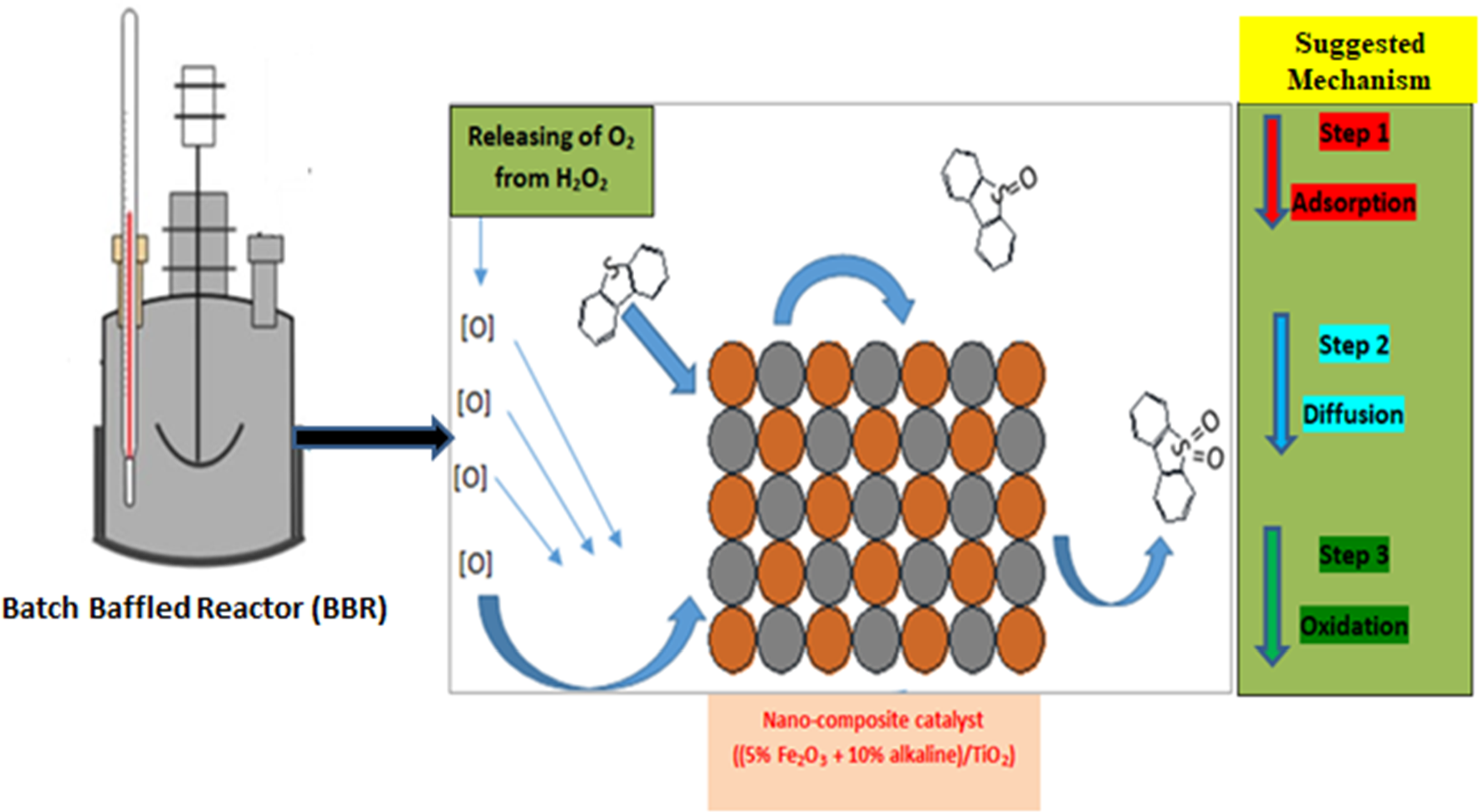
Suggested schematic mechanism for upgrading of kerosene with a batch baffled reactor (BBR).
Economic consideration of kerosene upgrading
In this study, the economic considerations for kerosene oxidation were taken into account due to the cost of the whole process until removal of the sulfur from the final product. Several parameters were considered in this study depending on the process selected, catalyst and oxidant used. According to the methods reported in literatures and their recommendations, a simple economic consideration was taken to reduce the cost of the whole process. Several researchers studied the economic analysis of kerosene because of the cost of the process. A study evaluated the economic cost of diesel upgrading by comparing the ODS of diesel with conventional hydrotreating using design modeling via ASPEN software. It was revealed that the final cost of diesel upgrading using the ultrasound method as ODS was lower than that using the HDS technique, taking into account some of the optimized stages. The total cost for ODS with ultrasound was $1.81/bbl lower than $3.40/bbl using the HDS technique. 83 Another study found that using ultrasound technique could enhance the removal of DBT up to five times which led to reduce the capital cost about 50%. This can be interpreted as the enhancement of oxidation rate removing the requirement of oxidation reactor such as the ultrasound probe. 84 Also other research studied the cost analysis of power-based kerosene production compared with two plant concepts.
Fischer–Tropsch synthesis and hydrotreatment (FT pathway) represent the first, and the second using direct methanol synthesis with downstream dehydration and oligomerization (MeOH pathway). FT pathway yields lower kerosene production cost than the methanol pathway (FT: €3630/t, MeOH: €4240/t). MeOH pathway shows lower cost (FT: €5070/t, MeOH: €4660/t). By-product revenue variation indicates benefits for the FT pathway if naphtha prices above 30% of the kerosene production cost can be achieved. 85
Conclusions
The removal of DBT from transport fuels especially kerosene was the most challenging faced by the oil refineries. Therefore, the efforts in this study were focused on the upgrading of kerosene using a new, efficient, and novel nano-composite catalyst. In this study, a baffled batch reactor was used for upgrading of kerosene using the nano-composite catalyst, (5% Fe2O3 + 10% alkaline)/TiO2, and H2O2 as an oxidant with different process variables (initial concentration, temperature, batch time). The effect of different operating conditions of temperatures (30, 45, 60, and 75 °C), batch times (30, 45, 60, and 75 min), and initial doses of DBT (350, 500, and 650 ppm) on the upgrading efficiency was examined. Different characterizations of the nano-composite catalyst were carried out for texture properties by FESEM-EDX, XRD, and FTIR. According to the results obtained from this study, it was revealed the prepared catalyst was efficient in removing 92.76% of DBT from kerosene using a BBR through uniform dispersion of nano-particles of iron oxide and alkaline. The best operating conditions of the process were determined based on the highest value of desulfurization efficiency: 75 °C, 75 min, and 650 ppm of temperature, baffled time, and initial concentration of sulfur, respectively. The desulfurization reaction order and activation energy were determined using experimental results and found to follow pseudo-first-order reaction with 24.573 kJ/mol. It was found that using of a baffled batch reactor was effective and efficient in enhancing desulfurization efficiency via swirling of fluid and improving the mixing. Finally, it was revealed that the nano-composite catalyst and the baffled batch reactor were efficient in producing environmental-friendly fuel that meets the regulations imposed by environmental protection agencies. According to the results of this study, validated with taken into account the heat effects and designed for commercial scale.
Footnotes
Declaration of conflicting interests
The authors declared no potential conflicts of interest with respect to the research, authorship, and/or publication of this article.
Funding
The authors received no financial support for the research, authorship, and/or publication of this article.
