



Abstract
Human capital affects carbon emissions and thus plays a significant role in emission abatement; however, the role of human capital is usually neglected or biasedly modeled in literature. This paper attempts to bridge the research gap by quantifying the interrelations between human capital investment (HCI) and emission trading scheme (ETS) in a computable general equilibrium research framework, taking China as a case study. The direct emission impact of HCI is measured by autoregressive distributed lag models. This paper's research period is 2021–2030. The results show that educational investment does not impact emissions statistically significantly, while the direct emission impacts of health and R&D investments are statistically significant. Hence, the emission impact of HCI is the aggregated impact of health and R&D investments, whereas the economic impact of HCI is the aggregated impact of educational, health, and R&D investments. Considering its economic and emission impacts, HCI increases labor employment, GDP, and emissions. The ETS weakens the HCI impact on GDP, but HCI strengthens ETS emission abatement. These findings imply that ETS decreases the economic benefits of HCI; human capital could be accumulated to facilitate achieving mitigation targets.
Introduction
As the accelerating global climate change is associated with surging carbon emissions, 1 researchers are keen to study the causes of anthropogenic emissions.2,3 Particularly, capital accumulation is believed to be an emission driver. This is because increasing physical capital leads to more use of energy and resources, and thus higher physical capital intensity causes more environmental pollution. 4 In contrast, as environmental issues are human-induced, 5 human capital can enhance environmental quality. Human capital reduces carbon emissions because it correlates with improved environmental awareness and compliance, 5 thereby promoting green technology adoption and environmental-friendly behavior. 6 In addition to its potential negative impact on emissions, human capital may also increase emissions as it stimulates economic growth. 6
How human capital impacts emissions has been widely studied by previous researchers. For example, Yao et al. 7 explored the effects of human capital on carbon emissions in the 20 OECD economies, suggesting that investing in human capital would be a promising avenue for addressing climate change in the long term. Mahmood et al. 8 studied the effect of human capital on carbon emissions in Pakistan, finding that human capital reduced carbon emissions. Human capital could be a significant player during environmental policy implementation 9 because it provides potential minds to understand environmental issues and knowledge to develop renewable energy. 10 Hence, the impact of human capital should be incorporated into policy evaluation frameworks.
Despite the negative impact of human capital on emissions, the human capital investment (HCI) impact on achieving mitigation targets is usually neglected in the literature. There are a few exceptions: for example, Lin and Ma 11 analyzed how human capital influenced the emission mitigation effect of green technology innovation in China; Carraro et al. 12 designed an integrated assessment model to investigate the interplays among economic growth, innovation, and human capital in the context of climate policy. These two studies only partially captured the role of human capital in mitigation efforts, but they cannot comprehensively reveal the impacts of human capital on emission abatement. This paper attempts to narrow the aforementioned research gap by quantifying the interrelations between HCI and emission trading scheme (ETS) in a computable general equilibrium (CGE) model.
Although human capital could be interrelated with emission abatement globally, this paper's research area is China. This is because China is characterized by growing HCI, particularly the rapid higher education expansion, 13 and it has become the biggest carbon emitter for approximately one decade. Unfortunately, not much has been done in the Chinese context regarding the impact of human capital on energy exploitation. 14 To the best knowledge, few previous researchers have quantified the interrelations between human capital and emission mitigation in China.
This paper is targeted to answer the research question: how HCI interrelates with ETS in China? As shown in Figure 1, to solve the research question, we need to study both the HCI impact on ETS and ETS effect on HCI. Incorporating human capital as an influential factor in policy evaluation reveals the HCI impact (the aggregated impact of education, health, and R&D investments) on mitigation measures. Studying the ETS effect on HCI reveals whether emission mitigation is advantageous or disadvantageous to HCI.
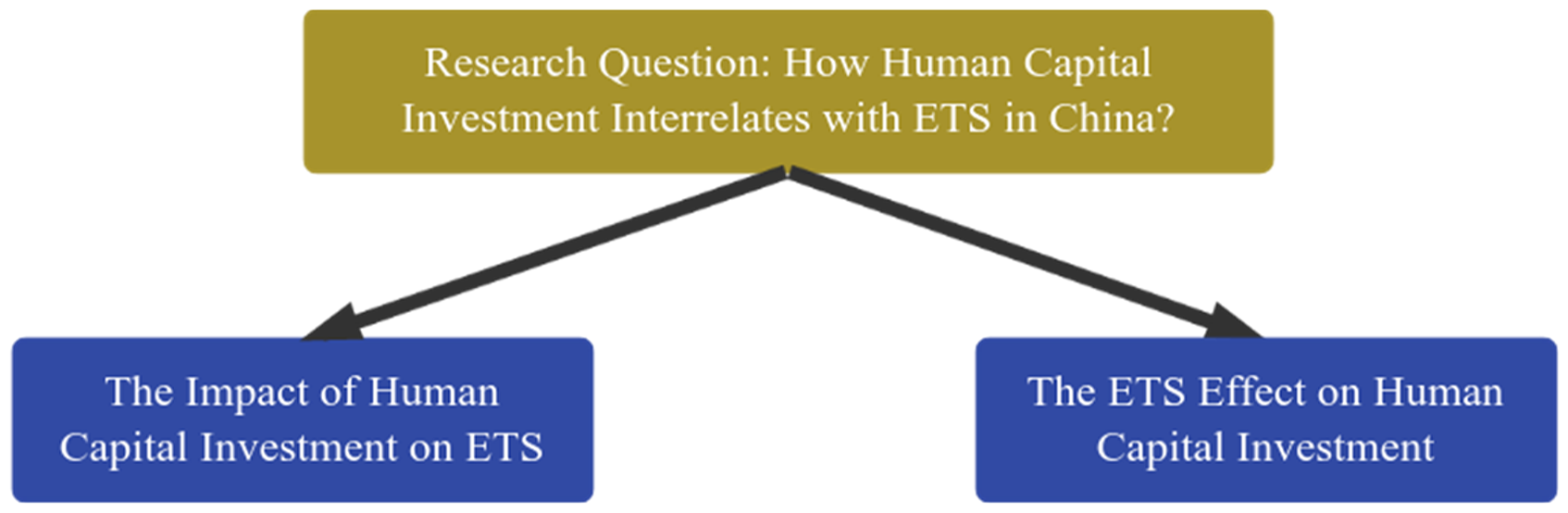
The research question in this paper.
This paper contributes to the literature in the following aspects: Firstly, HCI is divided into investments in education, health, and R&D. The domain of human capital studied in this paper is much wider than some previous studies, like Li and Ullah 15 who deemed human capital as education. Defining human capital less biasedly is beneficial to illustrating the HCI impact on emission mitigation. Secondly, we have established the research framework to analyze the interrelations between HCI and ETS in China. This research framework can be adopted to scrutinize the interrelations elsewhere since human capital accumulation and emission mitigation are prevalent worldwide. Lastly, we have found the positive impact of HCI on emission abatement, and this research finding could be thought-provoking. Similarly, Shen et al. 16 revealed the potential contributions of human capital in climate action, which is the 13th sustainable development goal.
Literature review
Examining the relations between human capital and carbon emissions has become popular in literature.5,17 Many previous researchers argued that HCI negatively affects carbon emissions.18–20 This empirical evidence could be found on a global scale 21 ; it is also provided by regional studies. For example, Sezgin et al. 17 concluded that human capital decreased CO2 emissions at the panel level in the BRICS countries from 2000 to 2020. Yao et al. 7 empirically found that human capital negatively impacted CO2 emissions in the Chinese provinces from 1997 to 2016. Mahmood et al. 8 and Bano et al. 10 performed regression analysis, showing the negative effect of human capital on emissions in Pakistan. These studies confirmed the negative association between HCI and carbon emissions.
Human capital reduces emissions because it increases green total factor productivity 20 and energy efficiency, 22 thereby reducing anthropogenic emissions from energy consumption. At the micro level, the firms with higher levels of human capital are more willing to adopt cleaner production modes and demonstrate better environmental compliance. 5 Hence, HCI is critical to mitigate environmental degradation. 23 Such empirical evidence could be found in China 24 and Mexico. 25
In addition to the direct impact on emissions, HCI may also indirectly affect emissions through the mediation of GDP growth. This is because economic growth is linked to carbon emissions from anthropogenic sources, and human capital influences nonrenewable energy exploitation. 26 With a significant and negative impact on fossil energy consumption, 27 human capital helps achieve economic development with a lower carbon footprint. 9
Despite the abundant evidence of human capital impacting carbon emissions, how human capital affects emission abatement is usually overlooked in literature. Some previous researchers focused on the interplay between human capital and technology in policy backgrounds. For example, Lin and Ma 11 adopted a partially linear functional-coefficient panel model to study how human capital could contribute to emission reduction through technological progress. Unfortunately, few previous studies have examined the direct nexus between HCI and ETS in general equilibrium models. Compared to partial equilibrium models where one or a few closely related markets are researched, 28 general equilibrium models are featured by simultaneously considering the equilibria of all the markets in the economy. Hence, general equilibrium models fully capture the impacts of policy shocks, and they could generate more reliable results than partial equilibrium models.
Within the domain of general equilibrium models, CGE models have been widely employed to analyze the effects of policy shocks. Stemming from the general equilibrium theory of Walras, CGE models are established based on the aggregated supplies and demands equalized across all the interconnected markets in the economy. 29 In the context of mitigating climate change, CGE models have the advantage of tracing the inter-sector linkages that drive the effects of policies targeted at energy sectors 30 . Owing to their immense capacities to model socioeconomic and environmental issues, CGE models have become useful tools to evaluate environmental policies, particularly climate policies. 31 Nevertheless, the role of human capital is usually neglected in CGE modeling. Defined as knowledge, skills, competencies, and attributes that facilitate the creation of well-being, human capital is intangible, and its measurement requires lots of time and effort in data collection, parameter estimation, and computation. 32 This paper has enriched CGE modeling by incorporating HCI in the policy evaluation framework.
Method
Method overview
Figure 2 displays this paper's research framework. HCI is constituted by educational, health, and R&D investments. Educational and health investments crowd out household, government, and enterprise expenditures on commodities, whereas R&D investment decreases government and enterprise expenditures. Since these investments affect the expenditures of the economic entities, they affect economic growth. Educational, health, and R&D investments have direct impacts on emissions, and the aggregation of these impacts is regarded as the direct impact of HCI on emissions in this paper. Human and physical capital investments determine the formation of capital, which, combined with labor and energy, is an input factor of economic growth. Together with emission factor, energy consumption induces carbon emissions.
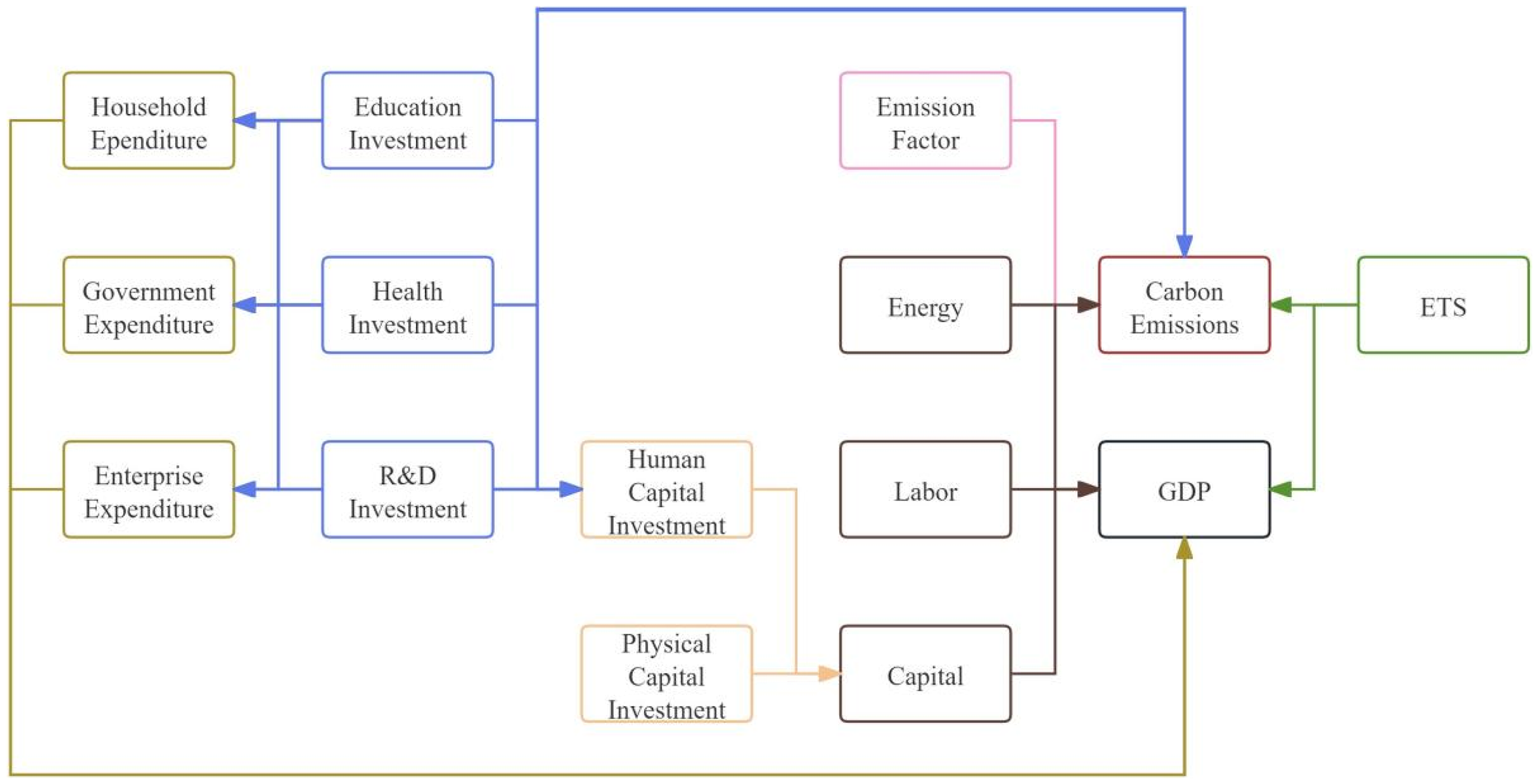
The research framework in this paper.
Soaring carbon emissions accelerate global warming which causes catastrophic outcomes; therefore, ETS is implemented to abate emissions. As ETS interrupts market mechanism, it has implementation cost and thus negatively affects GDP growth. In this paper, the ETS is designed based on the Chinese national ETS (CNETS); more details about the designed ETS are presented in Supplementary Materials. Built in 2021, the CNETS is believed to help China achieve the Nationally Determined Contribution target of emission peaking in 2030. 33 Hence, 2021–2030 is the research period of this paper. 34
The research framework depicted in Figure 2 is established based on a CGE model. The basics of the CGE model are from our previous research29,35 for instance, the social accounting matrix was displayed in Chen. 29 The CGE model is adopted to quantify the economic interrelations among the divided sectors, and the sector division is presented in Table S1 in Supplementary Materials. According to Table S1, the Chinese economy incorporates nine electricity sectors: one transmission and eight generation sectors. 36 The eight electricity generation sectors are further decomposed into the four sectors generating electricity from nonrenewable energy and four sectors exploiting renewable energy. 37 Transportation needs energy input and thus may have enormous carbon emissions; therefore, the transport sector is separated from the service sector even though it provides transport services. 33 The CGE model has quantified the relations among the four economic entities (the representative household, government, enterprise, and foreigner) and the relations between the entities and the environment.
To signify the operation of the economic system, the CGE model incorporates the modules displayed in Supplementary Materials. Different from other previous CGE models, this paper's CGE model includes an additional human capital module. In the human capital module, human capital investment (

This paper's CGE model has some unique features that need to be listed: Firstly, as technological progress is directly linked to R&D investment, its impact on carbon emissions is endogenously determined in this paper; in contrast, Jia and Lin 41 used autonomous energy efficiency improvement to measure the impact of technological progress on emissions exogenously. Secondly, with climate damage not quantified, the CGE model does not consider the negative externalities of carbon emissions. A similar setting could be found in the CGE model established by Jia and Lin. 41 Lastly, like Jia et al., 42 the Neoclassical macro closure is adopted for this paper's CGE model. In the business-as-usual (BAU) scenario, full labor employment and full capital usage are assumed; in other words, there is no idle labor or capital in the economy. From the perspective of Neoclassical economics, the market mechanism is capable of allocating resources efficiently. As ETS interrupts the market mechanism, it causes inefficient resource allocation and thus deadweight loss.
Economic impact of human capital investment
Human capital affects economic growth because its investment reshapes the economic system. In this paper, the economic impacts of HCI are decomposed into the impacts of education, health, and R&D investments.
Educational investment contributes to human capital formation because it raises environmental perception and awareness. 43 The Statistical Bulletin on Educational Spending by the Chinese government shows that the total educational expenditures were 5.79 and 6.13 trillion CNY in 2021 and 2022, respectively. To our best knowledge, there are no official projections for educational investment; in this paper, educational investment is calculated based on the China National Academy of Education Sciences 44 which expected that the educational expenditure would be 8.5 trillion CNY in 2030. The projected educational investment is assumed to change linearly in 2022–2030 as shown in the second column of Table S2 in Supplementary Materials.
Educational investment is collectively paid by the representative household, government, and enterprise. China Educational Finance Statistical Yearbook 2021 shows that the percentages of household, government, and enterprise spendings on education were 18.44%, 80.91%, and 0.65% in 2020, respectively. Assuming these percentages remain to be fixed over the research period, educational investment (

According to China Statistical Yearbook 2021, the health expenditure in China was 7.68 trillion CNY in 2021; it was expected to be 15.3 trillion CNY in 2030.
45
If health investment increases linearly in 2021–2030, the projected health investment is shown in the third column of Table S2. China Statistical Yearbook 2021 shows that the percentages of private, governmental, and social health spendings were 27.65%, 30.4%, and 41.94% in 2020, respectively. In this paper, private and social health spendings are assumed to be covered by the household and enterprise. If the percentage spendings are fixed over the research period, health investment (

The Statistical Bulletin on R&D Investment by the Chinese government shows that R&D expenditures were 2.80 and 3.08 trillion CNY in 2021 and 2022, respectively. The R&D investment intensity, defined as R&D investment divided by GDP, was projected to be 2.5–2.6% in 2030.
46
In this paper, we have chosen a medium value of 2.55% for the projected intensity in 2030. The Chinese GDP in 2030 was approximately 180.78 trillion CNY from the long-term GDP forecast by OECD. Hence, the projected R&D investment was calculated as the intensity multiplied by the GDP, and the number would be 4.61 trillion CNY in 2030. Assumed to change linearly in 2022–2030, the projected R&D investment is displayed in the fourth column of Table S2. China Statistical Yearbook 2021 shows that the percentages of governmental and enterprise spendings on R&D were 20.34% and 79.66% in 2020, respectively. If the percentage spendings are fixed over the research period, R&D investment (

Equation (5) defines the HCIs by the representative household (


Total capital investment (

Emission impact of human capital investment
The direct impact of human capital on emissions is attributed to the induced innovation of green technology. 11 As this paper has focused on the nexus between HCI and ETS, we do not conspicuously model the role of technological progress in emission abatement. Instead, induced technological change of human capital is embodied in the direct emission impact of HCI, and this impact was extensively studied in previous research. For example, Umar et al. 47 analyzed the link between human capital efficiency and carbon emissions, finding a negative relationship between HCI and emissions in eight countries spanning over 10 years. Similarly, Khan et al. 1 found that human capital played a key role in reducing carbon dioxide emissions in the Belt and Road countries. Nevertheless, how human capital impacts emissions in China exclusively remains to be explored. In this paper, we study the historical relations between HCI (educational, health, and R&D investments) and carbon emissions in China first. Subsequently, we project the direct HCI impact on emissions in the future, assuming that the historical relations continue to exist over the research period.
Owing to its capability of providing reliable results when researched variables are in mixed orders of stationarity, 48 autoregressive distributed lag (ARDL) models are employed to study how HCI directly affects carbon emissions in this paper. The prerequisites of conducting ARDL analyses are stationary time series, confirmed by unit root tests, and cointegration relations, confirmed by panel cointegration tests.
According to Bano et al.,
10
carbon emissions can be explained by energy consumption, GDP, and human capital through ARDL models. In this paper, the ARDL models are defined in Equation (8). Owing to the data unavailability, we have only considered the ARDL relations in 1995–2020; all the variables have been transformed into their logarithm forms to measure the percentage impacts of HCI on emissions.

After establishing the ARDL models, we need to confirm the reliability of the model results by performing robust tests to check whether the embedded statistical assumptions are violated. Only when all the statistical assumptions are met will we confirm that the ARDL results are reliable, otherwise remedial measures need to be taken. This paper's robust tests are the Breusch-Pagan-Godfrey test for heteroskedasticity, Breusch-Godfrey LM test for autocorrelation, Jarque-Bera Normality test for normality violation, and Ramsey RESET test for model misspecification from variable omission. The null hypotheses of these tests are no concerning issues of heteroskedasticity, autocorrelation, normality violation, and model misspecification from variable omission, respectively. We have also checked the variance inflation factors (VIFs) to determine whether multicollinearity is worrying. If all the VIFs are less than 10, we conclude that there are no concerning issues of multicollinearity in the ARDL models. The cumulative sum (CUSUM) and CUSUM of square plots are used to check whether the model results are stable. We can confirm the stability of the model results when the residuals lie within the critical lines in the plots.
The short-term impact of HCI on carbon emissions is quantified using error correction (EC) forms of ARDL models, namely error correction models (ECMs), as shown in Equation (9).
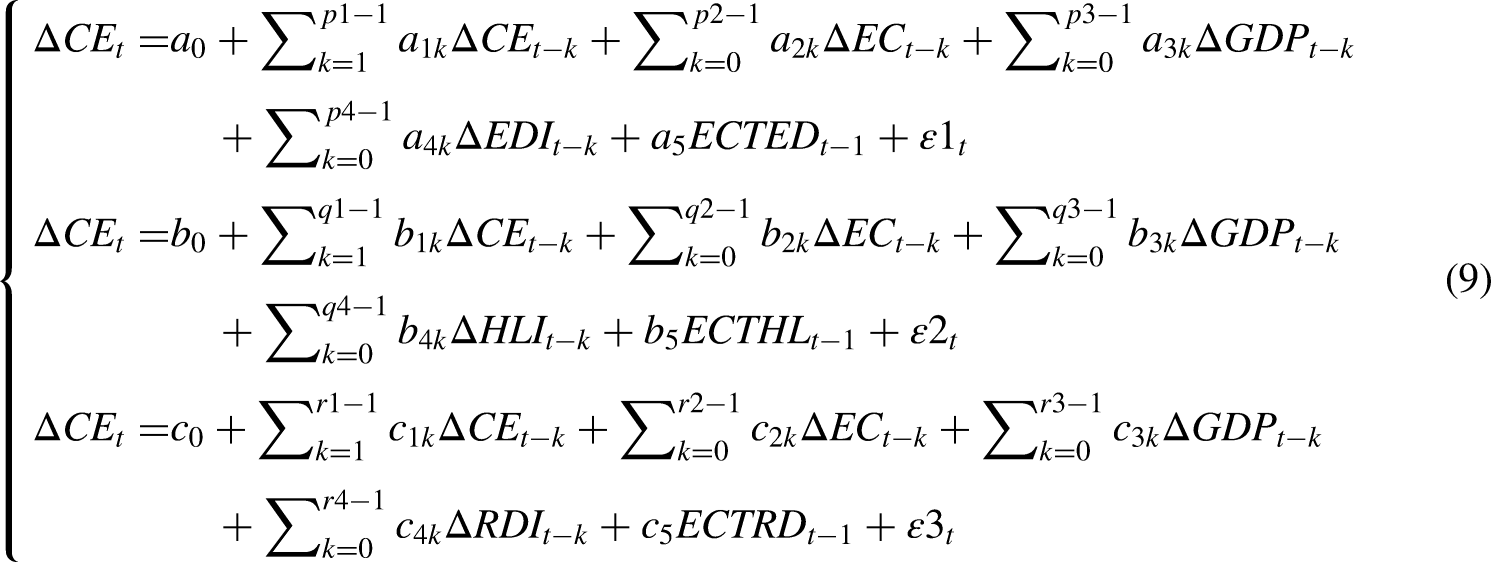

In this paper, the short-term HCI impact on carbon emissions, as shown in Equation (9), are assumed to exist over the research period 2021–2030. This assumption is rational as this paper's research period is not long, and thus it is reasonable to assume that the short-term ECM dynamics are extended to the research period.
From Equation (9) and Table S2, we can get the projected impacts of educational, health, and R&D investments on emissions in the BAU scenario. ETS changes HCI and thus affects the HCI impact on emissions. In this paper, HCI is assumed to be proportional to its impact on emissions, as defined in Equation (11). The superscript 0 denotes the BAU scenario.
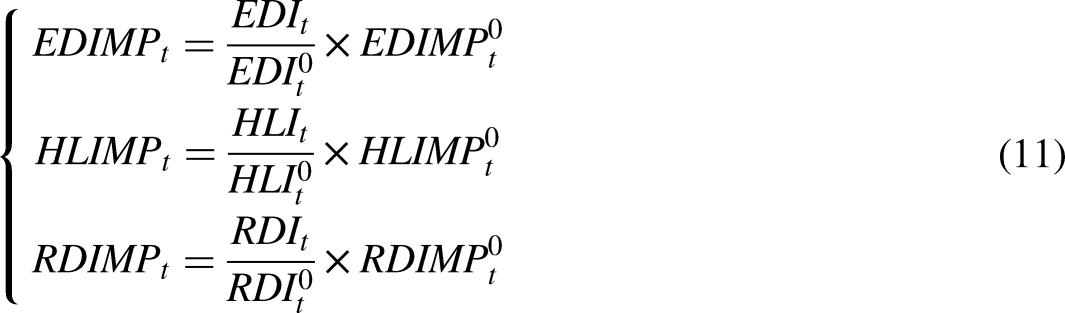
As HCI is defined as the summation of educational, health, and R&D investments, the HCI impact on emissions is equal to the aggregated impact of educational, health, and R&D investments, as displayed in Equation (12). Noticeably, we do not consider the interactive impacts of educational and health investments or health and R&D investments on emissions as to our best knowledge, few previous researchers have provided such evidence on the interactive impacts. Educational and R&D investments could lay mutual influences on emissions; however, with the statistically insignificant coefficient, the interactive term is excluded in this paper.

Scenarios
In this paper, we have designed the following scenarios. The BAU scenario denotes the baseline case without implementing the ETS or considering HCI impact. In the ETI scenario, the designed ETS is implemented without considering HCI impact; conversely, absent from the ETS, the HCA scenario is designed to incorporate HCI impact. In the EHC scenario, we have quantified HCI impact during the ETS implementation.
Result
Autoregressive distributed lag results
To check whether the variables are stationary, we have performed the unit root tests where the inclusions of intercept or time trend are based on the information criteria. The null hypothesis of a unit root test is the existence of a unit root in the tested time series. The results of the Augmented Dickey-Fuller and Phillips-Perron unit root tests are displayed in Table S3 in Supplementary Materials. We cannot reject the null hypotheses of the unit root tests for the variables at the levels and first-order differences, but we can reject the null hypotheses of the tests for the variables at the second-order differences. Hence, the studied variables in Table S3 are not stationary at their levels and first-order differences but stationary at their second-order differences; in other words, these variables are all integrated of order two, denoted by I(2). According to Kripfganz and Schneider, 50 when the variables are integrated of order one, the long-term relation embedded in an ECM corresponds to a cointegration relation. As the first-order differences of the variables are integrated of order one, they are introduced in the ARDL models.
Before running the ARDL models, we need to perform the Engle-Granger (EG) cointegration tests to confirm that the cointegration relations are not pseudo. The null hypotheses of EG tests are that the cointegration relations are pseudo. The results of the EG tests are shown in Table S4 in Supplementary Materials. According to Table S4, for the three cointegration relations, the Tau and Z statistics are significant at the 1% level; therefore, the EG tests have verified the cointegration relations.
Based on the information criteria to select the optimal lags, the coefficients of the chosen ARDL models are shown in Table S5 in Supplementary Materials. In Table S5, educational investment does not have a statistically significant impact on carbon emissions. Although health investment does not statistically significantly affect emissions, its second-order lag has a positive and significant impact on emissions. R&D investment has complicated impacts on emissions: its current term statistically significantly decreases emissions at the 5% level, but its first-order lag has a positive and significant impact on emissions. The second-order lag of R&D investment does not statistically significantly affect emissions, but the impact of the third-order lag is negative and statistically significant. Hence, within the domain of HCI, R&D investment plays the predominant role in emission abatement.
The results of the robust tests are displayed in Table S6 in Supplementary Materials. When studying the educational investment impact on emissions, the ARDL model does not have the concerning issues of autocorrelation, normality violation, and model misspecification from variable omission. This is because we have accepted the null hypotheses of the Breusch-Godfrey LM, Jarque-Bera Normality, and Ramsey RESET tests. The statistic of the Breusch-Pagan-Godfrey test is statistically significant at the 10% level, but it is not significant at the 1% and 5% levels; therefore, heteroskedasticity is not a severe problem in the ARDL model. Similarly, the ARDL model for studying the health investment impact does not have the worrying issues of heteroskedasticity, autocorrelation, and normality violation. The issue of variable omission may exist in the model, but it is not a grave issue at the 1% and 5% levels. The ARDL model for studying the R&D investment impact is free from heteroskedasticity, autocorrelation, normality violation, and model misspecification.
Table S7 in Supplementary Materials displays the VIFs of the ARDL models. In the ARDL model for studying the educational investment impact, all the VIFs are less than 10, and thus there is no multicollinearity issue. The ARDL model for studying the health investment impact does not have severe multicollinearity among health investment and its lagged terms, which implies that multicollinearity is not of great concern in this ARDL model. The ARDL model for studying the R&D investment impact is proven to have severe multicollinearity which inflates coefficient variances, but regression coefficients are still unbiased.
49
Among R&D investment and its lag terms, only
Figures S1–S3 in Supplementary Materials present the CUSUM and CUSUM of square plots for the ARDL models. In these figures, the residuals all lie within the critical lines; therefore, the residuals are stable. These figures imply that there are no worrying stability issues in the ARDL models.
Table S8 in Supplementary Materials presents the ECMs. In the ECM for studying the educational investment impact, educational investment is excluded, which implies that it does not influence emissions in the short term. Nevertheless, we do consider the economic impacts of educational investment as educational investment increases capital formulation, and it decreases disposable income. In the ECM for studying the health investment impact, the coefficients of health investment and its lagged term are statistically significant; therefore, health investment has short-term impacts on emissions. Similarly, the ECM for studying the R&D investment impact implies that R&D investment is a statistically significant factor that affects emissions in the short term.
As this paper's research period is only 10 years in length, we are particularly interested in the short-term dynamics rather than the long-term equilibrium relation of human capital and emissions. If the short-term dynamics, described in Table S8, exist over the research period 2021–2030, Figure 3 depicts the projected direct impact of HCI on emissions. Health investment was projected to increase emissions since 2024; the R&D investment impact is contrary to the health investment impact. The HCI impact on emissions is defined as the aggregated impact of health and R&D investments. The projected impact of HCI in Figure 3 is inputted into the CGE model in the HCA and EHC scenarios; the results of the CGE model are presented in Section 4.2.
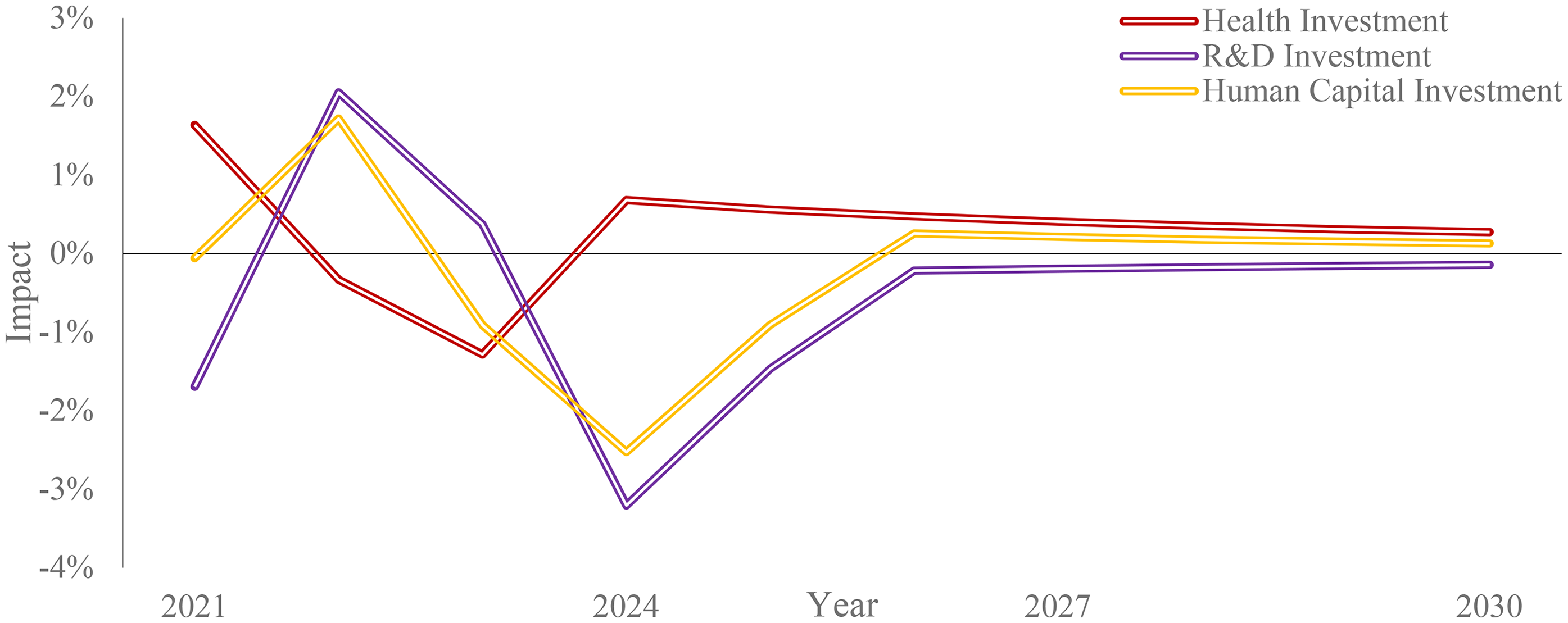
Direct impact of HCI on emissions. HCI: human capital investment.
Computable general equilibrium results
The projected impacts of HCI on employment and GDP are displayed in Figure S4 in Supplementary Materials and Figure 4. According to these two figures, HCI causes an economic boom characterized by expanding employment and GDP. With the ETS implemented, HCI generates lower economic benefits as the ETS induces deadweight loss and thus economic recession, thereby partially counteracting the positive economic impact of HCI. Nevertheless, the two curves in Figure 4 are convergent in the long term, which implies that the ETS effect diminishes over time. This is because the ETS is designed with the fixed policy content, and thus rational entities may take measures to relieve the negative ETS effect on the economy.
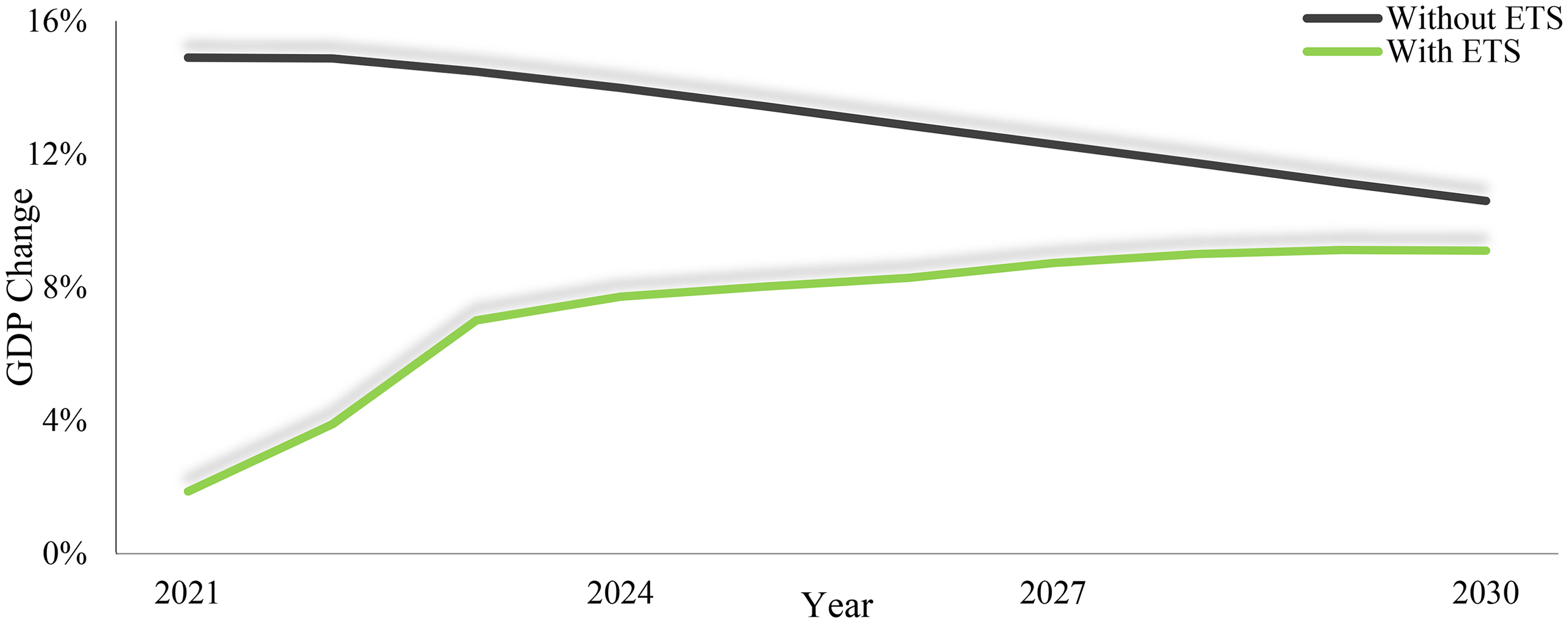
HCI impact on GDP. HCI: human capital investment.
Figure 5 shows how HCI affects emissions with and without the ETS implementation. HCI increases emissions as it boosts economic growth and thus increases nonrenewable energy consumption. When the ETS is implemented, this HCI impact diminishes because the ETS curbs anthropogenic emissions, and thus it weakens the HCI-induced emission rise.
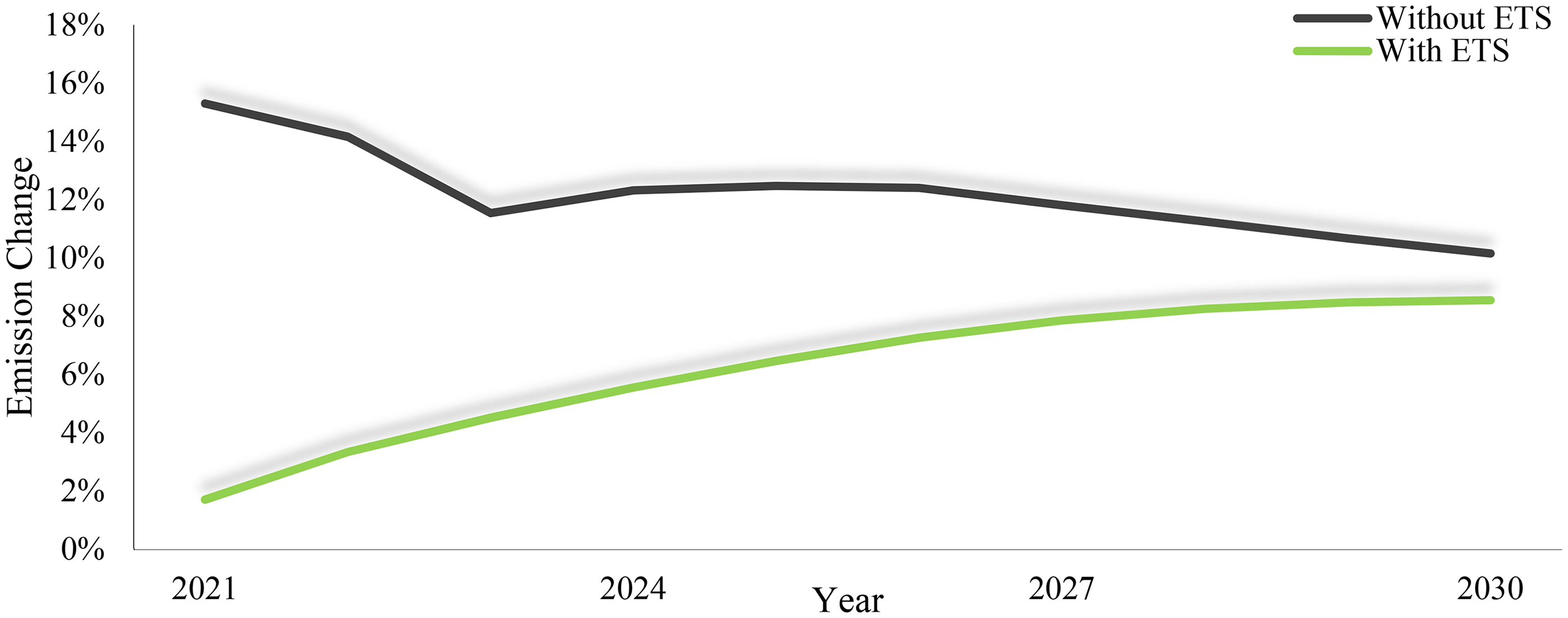
HCI impact on carbon emissions. HCI: human capital investment.
In Supplementary Materials, Figures S5–S7 display the ETS effects on educational, health, and R&D investments. According to these figures, the ETS decreases all these investments. Defined as the aggregation of educational, health, and R&D investments, HCI is negatively affected by the ETS, as displayed in Figure 6. Despite the instant fluctuation after the policy implementation, the ETS has a time-decreasing impact on HCI.
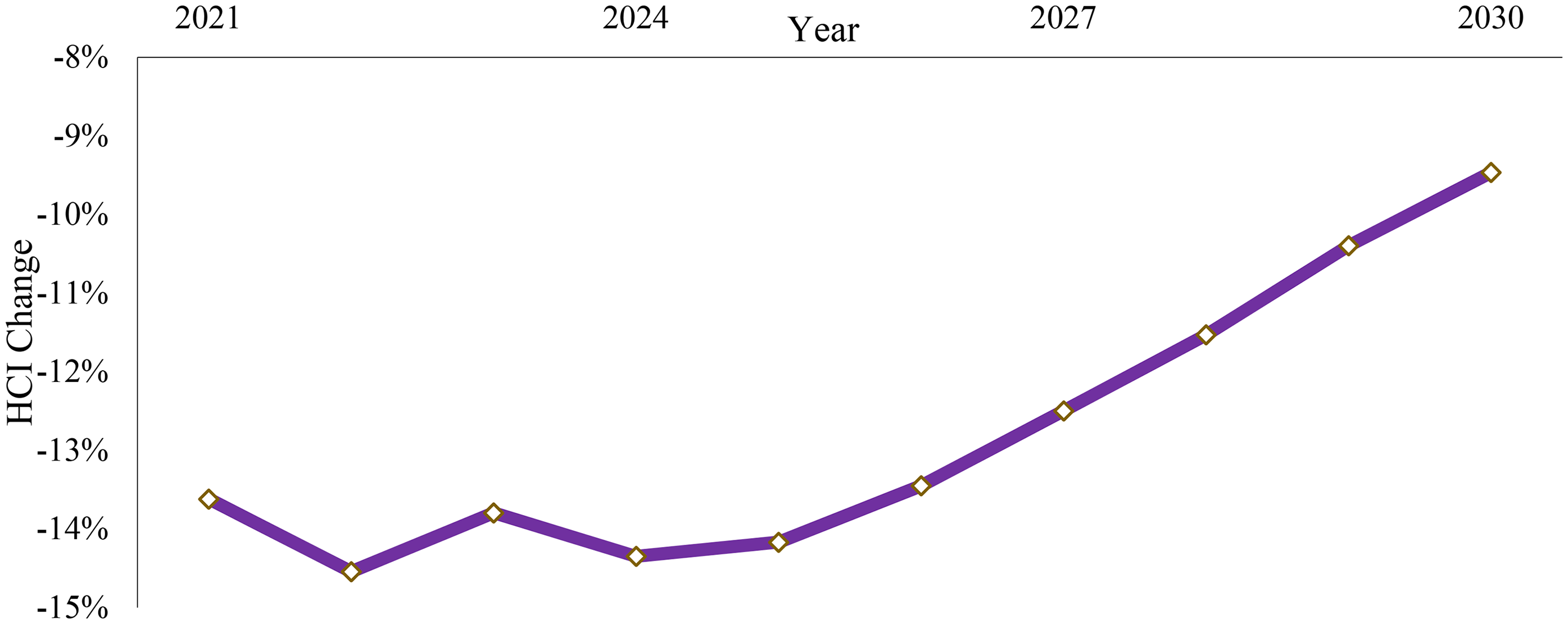
ETS effect on HCI. HCI: human capital investment; ETS: emission trading scheme.
Figure S8 in Supplementary Materials shows how the ETS affects employment, whereas Figure 7 presents the ETS effect on GDP moderated by HCI. Irrespective of considering HCI impact, the ETS generates negative economic outcomes, like employment loss and GDP loss. This is because the ETS curtails carbon emissions by increasing the cost of fossil fuel combustion; therefore, it interrupts the market mechanism and causes inefficient resource allocation. The ETS causes more deadweight loss during the HCI-induced economic boom.
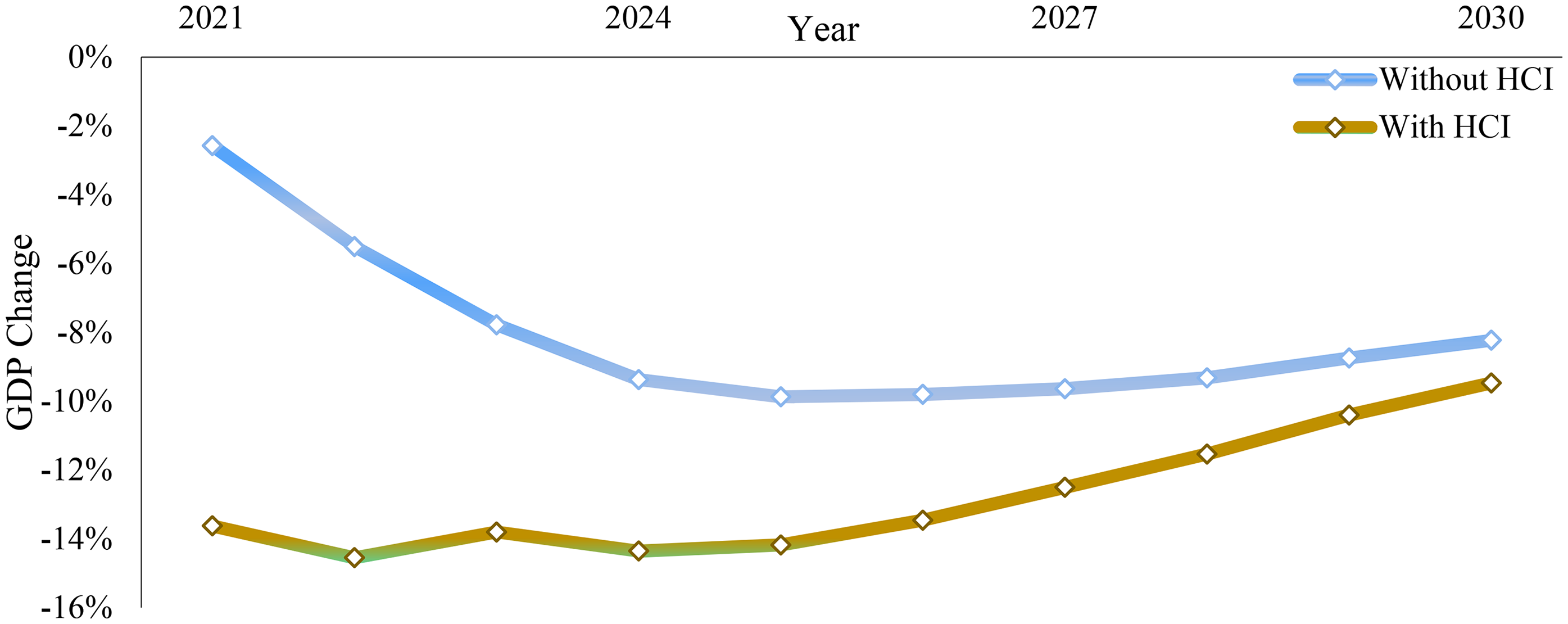
ETS effect on GDP. ETS: emission trading scheme.
How HCI affects ETS emission abatement is shown in Figure 8. The ETS decreases carbon emissions, and HCI reinforces the emission abatement effect of the ETS. The economic intuition underlying this result is that human capital positively affects emissions, and thus with higher emissions, the ETS causes more emission abatement.
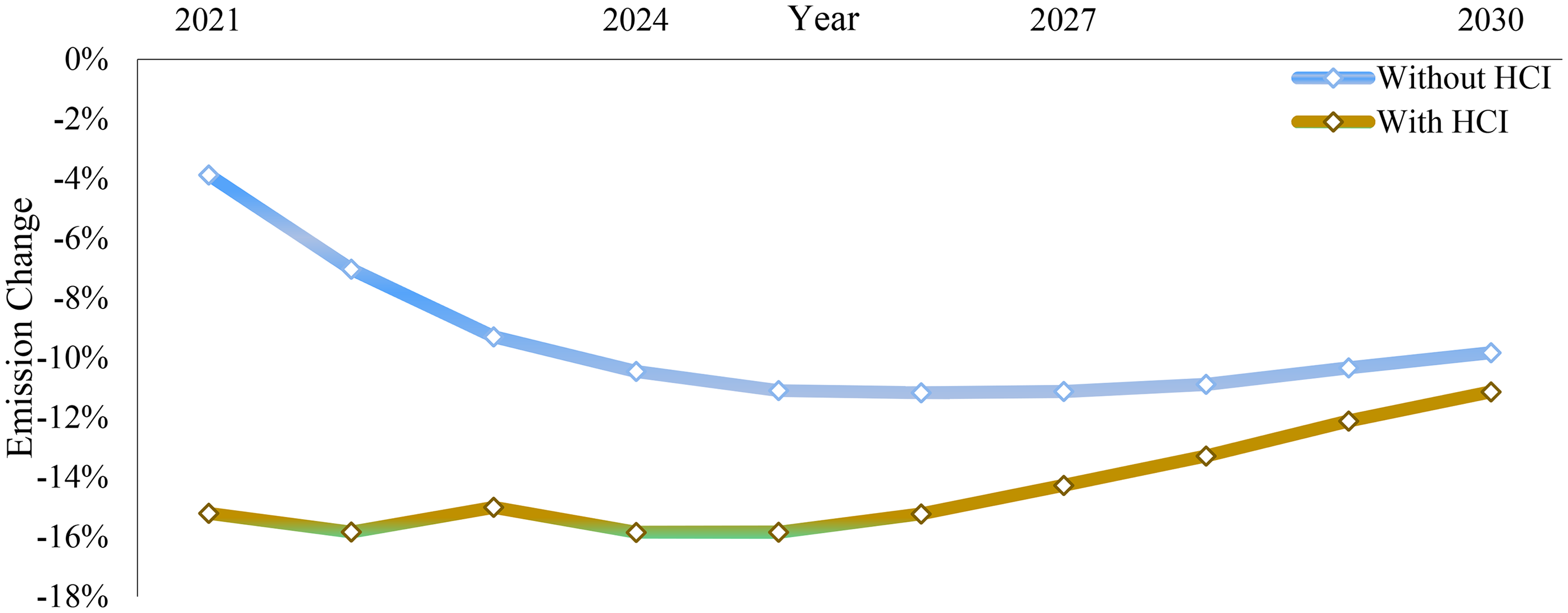
ETS effect on carbon emissions. ETS: emission trading scheme.
Discussion
The ARDL results imply that educational investment does not exert a statistically significant influence on emissions. The economic intuition is that educational scale and quality have a threshold effect on regional carbon emissions in China 51 ; consequently, educational investment does not linearly affect emissions. The educational investment impact on emissions could be minimal because education changes individual climate awareness,52,53 but residential emissions are minimal compared to industrial emissions. In addition to having a direct impact, educational investment also has an indirect impact on emissions because it affects economic growth. The educational investment impact on GDP is attributed to its impact on labor productivity. This evidence could be found in China where higher education affected total factor productivity and thus economic sustainability. 54
The emission impacts of health and R&D investments are statistically significant. Health investment affects emissions, which agrees with the previous research showing that governmental, private, and social health expenditures affect carbon emissions. 55 R&D investment has complicated impacts on emissions: it may increase anthropogenic emissions because it may be favorable to nonrenewable energy consumption; it may also enhance emission abatement through the promoting impact on clean technology. Health and R&D investments also have indirect impacts on emissions when economic growth acts as a mediator. Hence, in this paper, the direct emission impact of HCI is the aggregated impact of health and R&D investments, whereas the economic (indirect emission) impact of HCI is the aggregated impact of educational, health, and R&D investments.
The CGE results imply that HCI increases labor employment. This is because human capital has a positive effect on firm performance 56 ; with higher profitability, firms tend to offer more job vacancies. Similar empirical evidence was provided by previous studies. For example, Mushtaq et al. 57 suggested that human capital development could create more employment during globalization. Hansen and Winther 58 found that public and private human capital contributed to employment growth in Denmark. Simon 59 found a positive relationship between human capital and metropolitan employment growth in the US. These studies have confirmed the positive impact of human capital on employment.
Since human capital increases employment, it stimulates economic growth considering that labor input is indispensable to economic output. Plenty of previous evidence verifies the role of human capital in boosting GDP growth. For example, Garza-Rodriguez et al. 60 empirically found that human capital had a positive and statistically significant impact on the economic growth rate in Mexico during 1971–2010. Altar et al. 61 employed the Uzawa-Lucas endogenous growth model to confirm the contribution of human capital to economic growth in Romania. In the case of China, human capital was confirmed to contribute significantly to economic growth. 62
Human capital has dual impacts on emissions: it may promote economic growth and thus increase emissions; conversely, it may also stimulate emission-reduction technology and thus abate emissions. 6 The former dominates the latter if human capital is low, while the opposite is true if human capital is sufficiently high. 6 In this paper, human capital is proven to increase emissions, which implies that the amount of human capital is still not high enough to decrease emissions through the deployment of low-carbon technology in China. This finding agrees with Dong et al. 63 who explored the mechanism of human capital influencing carbon emissions in 2000–2019, concluding that human capital positively correlated with emissions in China. Similarly, Sarkodie et al. 14 argued that increasing human capital was conducive to the escalation of emissions and environmental degradation. In the long term, human capital was confirmed to decrease emissions, 64 but in the short term, it may increase emissions owing to the inverted N-shaped relationship between human capital and emission intensity. 65
The ETS weakens the human capital impacts on the economy and emissions: it decreases the economic benefits of HCI and curbs the HCI-induced emission rise. Similar evidence could be found in Carraro et al. 12 who adopted an integrated assessment model to study the relations between climate policy and human capital, suggesting that climate policy reduced the incentive to invest in human capital. Conversely, human capital reinforces the ETS effects on the economy and emissions, which agrees with the previous argument that human capital remains the panacea for mitigating human-attributable climate change. 14 This is because human capital promotes economic growth and increases anthropogenic emissions; consequently, with higher GDP and emissions, the ETS effects are more distinct. In addition, human capital increases the opportunities for cleaner innovations and thus enhances the effectiveness of mitigation policies. 12
Despite the interesting findings and potential contributions, this paper has several shortcomings to be acknowledged and improved in future studies. Firstly, we have not comprehensively captured the role of HCI in economic growth. A less biased study may lie in separately modeling the impacts of each component (educational, health, and R&D investment) of HCI on economic growth.
Secondly, capital investment is defined as the summation of physical and HCIs in this paper. Nevertheless, HCI may be a competitor for physical capital investment, 66 and thus the relation between physical capital and human capital can be denoted by a CES function. 67 Future studies may comprehensively explore how HCI is related to physical capital investment.
Thirdly, the ARDL models are employed to quantify the HCI impact on emissions. Unfortunately, such statistical models only show whether the HCI impact is statistically significant but cannot unveil the mechanism of human capital influencing emissions.
Lastly, we have omitted the potential impact of HCI on abatement cost even though human capital could impact policy implementation cost. For example, education conveys knowledge on climate change 68 ; therefore, well-educated people are more willing to support climate policy.5,69 Neglecting the HCI impact on policy cost is likely to underestimate the mitigation potential of human capital, and thus it should be avoided in future research targeted to unbiasedly quantify the role of human capital in emission mitigation.
Conclusion and policy implication
In this paper, the interrelations between HCI and ETS are quantified in the CGE research framework. The direct impact of HCI on emissions is measured using the ARDL models. The ARDL models show that educational investment does not have a statistically significant impact on emissions, whereas the direct emission impacts of health and R&D investments are statistically significant. Hence, the emission impact of HCI is the aggregated impact of health and R&D investments. Defined as the aggregation of educational, health, and R&D investments, HCI is featured with its economic impact equal to the aggregated economic impact of its components.
We assume that the short-term relations between HCI and emissions, as shown in the ECMs, are extended to the research period 2021–2030. This assumption is built considering that the one-decade research period is not long. Nevertheless, the socioeconomic status in 2030 could be very different from that in 2020, and thus we may have biasedly modeled the HCI impact on emissions in the research period.
The CGE model shows that HCI increases labor employment, GDP, and anthropogenic emissions. The ETS weakens the HCI impacts on the economy and emissions, whereas HCI strengthens ETS emission abatement. These findings imply that ETS decreases the economic benefits of HCI; conversely, HCI is beneficial to emission mitigation. Based on this paper's main findings, policy implications are listed as follows. ETS could be proactively implemented to lessen the negative environmental consequences of HCI. Governments could relieve or even reverse the negative economic impact of ETS on HCI by taking measures, like promoting clean technology to develop green economy or supporting renewable energy for low-carbon transition. As HCI enhances the emission abatement of ETS, more human capital could be accumulated to facilitate achieving mitigation targets.
Supplemental Material
sj-docx-1-eae-10.1177_0958305X251349472 - Supplemental material for The interrelations between human capital investment and emission trading scheme: A case study in China
Supplemental material, sj-docx-1-eae-10.1177_0958305X251349472 for The interrelations between human capital investment and emission trading scheme: A case study in China by Shuyang Chen, Yuan Liu and Can Wang in Energy & Environment
Footnotes
Declaration of conflicting interests
The authors declared no potential conflicts of interest with respect to the research, authorship, and/or publication of this article.
Funding
The authors received no financial support for the research, authorship, and/or publication of this article.

Supplemental material
Supplemental material for this article is available online.
References
Supplementary Material
Please find the following supplemental material available below.
For Open Access articles published under a Creative Commons License, all supplemental material carries the same license as the article it is associated with.
For non-Open Access articles published, all supplemental material carries a non-exclusive license, and permission requests for re-use of supplemental material or any part of supplemental material shall be sent directly to the copyright owner as specified in the copyright notice associated with the article.
