



Abstract
The aim of this study is to analyze the environmental impacts of industrialization, natural resource rent and energy intensity in the 27 EU Member States over the period 2000–2021 and to assess the impact of these factors on CO2 emissions in the context of the Sustainable Development Goals (SDG 13 (Climate Action), SDG 12 (Responsible Consumption and Production), and SDG 7 (Affordable and Clean Energy). For this purpose, marginal and dynamic relationships between variables are empirically investigated using Kernel-Based Regularized Least Squares (KRLS), nonparametric Simultaneous Quantile Regression (SQREG), and (GMM). The results of the study indicate that industrialization increases carbon intensity through energy intensity in EU countries with medium and high carbon intensity. Natural resource rent is found to be significantly detrimental to the environment at all quantiles. In EU countries, the majority of which are developed countries, economic growth and urbanization have been shown to reduce carbon intensity and support a green environment. On the other hand, renewable energy has been found to improve the environment at all quantiles. For the EU to accelerate its green transformation, policymakers must prioritize energy security. It must also integrate renewable energy into industry and natural resource extraction and reduce fossil fuel use.
Introduction
The emergence of the Industrial Revolution in the eighteenth century led to a significant increase in the world's population, and the rapid rise in production and consumption radically changed the dynamics of social life. As a result of intense migration from rural areas to cities, cities became increasingly crowded, and new business lines and social classes emerged. 1 Changes in production and consumption patterns have led to a rapid increase and spread of environmental problems. 2 Industrialization and human activities have changed the climate structure of the world by significantly increasing the emission volume of carbon dioxide (CO2) and other greenhouse gases (GHG). 3 With economic growth and development, energy consumption has continued to increase, causing CO2 emissions to rise. This situation negatively affects economic growth, while at the same time harming human health and negatively affecting the climate. 4
One of the regions where global environmental impacts are most clearly observed is the European Union (EU). According to the data of the World Bank, 5 the greatest environmental degradation in the world is experienced in the EU countries. While the average CO₂ emission per capita is 4.27 tons worldwide, this value is 7.52 tons in EU countries. 5 One of the important reasons for this situation is that the EU is the region with the highest energy consumption in the world. 6 In fact, the energy demand for oil and petroleum products in the EU reached 21,092 PJ in 2023, 94.9% of which was met by imports. And 40.8% of solid fossil fuels are imported, and the EU's total energy import dependency is recorded as 58.4% by 2023. 7 This high external dependency also shows that fossil fuels are still dominant in energy consumption. At this point, the use of renewable energy is seen as a critical strategy to reduce emissions. With the Kyoto Protocol coming into force in 2005, developed countries have prioritized renewable energy strategies to reduce GHG emissions. 4 It aims to include all relevant sectors in this process, focusing on areas such as increasing the use of renewable energy sources, ensuring energy efficiency, and sustainable management of ecosystem services. Following the Paris Climate Agreement, the EU has adopted a more effective approach to climate problems. It continues to rapidly develop its policies that support the transition to circular, green, low-carbon, and carbon-neutral economies to achieve Sustainable Development Goals (SDGs). 8
The role of natural resources in a sustainable economy is indisputable. Especially for developed countries, natural resource rents are seen as a blessing.9,10 However, one of the factors that can affect CO2 emissions is natural resource rents. Natural resource rents are obtained from the extraction of natural resources, but since this extraction process is energy-intensive, it causes serious chemical waste. 11 Most of the studies on the relationship between natural resource rents and CO2 emissions show that natural resources increase environmental degradation.12–14 When determining the level of CO2 emissions, the role of energy intensity and natural resource rent should be considered. 15 Energy intensity is an important indicator in assessing the impact of the low-carbon transition, and it reveals the extent to which economies are dependent on energy. 16 It is also used to measure the energy efficiency of country economies and is calculated in units of energy consumed per gross domestic product (GDP). A low energy density means less energy is used, while a high energy density means more energy is used, and energy becomes more expensive. 17 Intensive use of energy causes increased environmental pollution.18,19 Carbon intensity expresses the amount of carbon dioxide (CO₂) emissions from fossil fuels and industrial activities in kilograms per unit of GDP. 20 This indicator also provides an important criterion in assessing the fact that economic growth can increase CO₂ emissions. In fact, studies show that economic growth increases CO₂ emissions.21–25 The basis of the increase in pollution levels caused by economic growth is that rapidly increasing economic activities intensify the pressure on natural resources. 26 In contrast, it can be said that renewable energy and urbanization reduce CO2 emissions. The ecological footprint-reducing effect of renewable energy is due to the fact that it reduces CO2 emissions by replacing fossil fuels.27,28 On the other hand, Khan et al. 29 argue that as urbanization accelerates, energy use efficiency increases and, therefore, energy consumption decreases, which creates positive effects on the ecosystem. It also reveals that individuals living in urban environments benefit from wider educational opportunities, their environmental awareness increases, and their desire to protect a clean environment is strengthened.
The increase in industrial production and the resulting intensive consumption habits have caused irreversible damage to the environment. People's efforts to dominate nature and transform it in line with their interests have made the ecological balance more fragile and increased uncertainties. 30 At this point, awareness of environmental problems needs to be increased, and effective solutions must be developed. The focus of this study is to provide a comprehensive perspective on these problems and to make suggestions on sustainable methods. In this way, it is aimed to deepen academic discussions on the solution of the environmental pollution problem and to create a solid ground for future research.
The aim of this study is to analyze the environmental impacts of industrialization, natural resource rent and energy intensity in the 27 EU Member States over the period 2000–2021 and to assess the impact of these factors on CO₂ emissions in the context of the SDGs (SDG 13 (Climate Action), SDG 12 (Responsible Consumption and Production), and SDG 7 (Affordable and Clean Energy). The study is expected to make significant contributions to the existing literature. Firstly, in the existing literature, Hassan et al. 31 addressed the environmental impacts of industrialization in the context of urbanization and renewable energy, while Oteng-Abayie and Mensah 32 examined these impacts in terms of energy intensity. However, to the best of our knowledge, no comprehensive study has been found that addresses the variables of industrialization, natural resource rent, and energy intensity together and evaluates these series within the framework of the SDGs specifically for EU countries. This article is the first to examine industrialization, natural resource rents, and energy intensity in the context of the SDGs in EU countries. In this respect, it fills a significant research gap in the literature. Furthermore, the study provides an in-depth, holistic analysis of the environmental impacts of economic growth, renewable energy use, and urbanization, along with the variables of industrialization, energy intensity, and natural resource rents.
The second significant contribution is the estimation of the model constructed in the study using a machine learning (ML) algorithm. The Kernel-Based Regularized Least Squares (KRLS) Quantile Regression method of Hainmueller and Hazlett 33 was adopted, which can detect strong interactions among even the most complex variables and reveals the marginal effects of variables at different quantiles (0.25, 0.50, and 0.75). The robustness of the results was also verified using a Generalized Method of Moments (GMM) dynamic regression model. Furthermore, the nonparametric SQREG Quantile Regression used in the study provided reliable and unbiased estimates with 300 iterations and produced robust results under conditions of statistical uncertainty.
The policy implications developed from the findings of this study will benefit not only developed countries such as the EU but also developing countries. Examining the impact of energy policies, industrial incentives, and natural resource management strategies on environmental sustainability in EU countries can provide guidance for developing countries. In regions with high energy intensity, policies aimed at increasing the use of renewable energy sources and reducing fossil fuel subsidies are believed to reduce environmental impacts. Similarly, restructuring natural resource rents and industrial incentives to focus on environmentally friendly investments and green technologies, within the framework of SDG 9 (Industry, Innovation, and Infrastructure), is considered an indispensable tool for achieving the SDGs. Given the increasing importance of environmental pollution, this study is anticipated to make a significant contribution to the literature. Environmental pollution not only negatively impacts human health but also disrupts the functioning of ecosystems and threatens the future of natural resources. 34 This clearly demonstrates that fundamental elements such as air, water, and soil pollution play a critical role in achieving the SDGs. Therefore, it is of great importance to make environmental research more comprehensive and fill the gaps in the existing literature.
The rest of the article is organized as follows: the second section discusses the literature review; the third section presents the data and methodology; the fourth section provides the results and discussion; and finally, the fifth section concludes by suggesting relevant policy implications.
Literature review
Industrialization and environmental degradation
Empirical literature shows that industrialization has both positive and negative effects on carbon emissions. However, the majority of studies reveal that industrialization has negative effects on the environment. Most studies have found that industrialization directly increases carbon emissions through increased energy use. For example, Khalfaoui et al. 35 found that industrial expansion in G7 countries increased both economic growth and CO₂ emissions. Moro et al. 36 showed that a 1% increase in industrial production in MINT countries increased environmental pollution by 0.475%, while Sikder et al. 37 stated that it increased by 0.54% in their analysis for 23 developing countries. These findings demonstrate that industrialization significantly impacts the environment, and that the impacts are convergent. Vo et al. 38 in Vietnam; Yuhuan et al. 39 in 10 high-income countries; and Nkemgha et al. 40 in sub-Saharan Africa revealed that industrialization negatively affects environmental quality in the long term. These findings support the view that industrialization increases environmental pressures on a global scale. Furthermore, Caglar and Askin 41 and Anser et al. 42 argue that industrial competition and density also increase environmental degradation. Therefore, the level of competition and density, in addition to industry size, appears to be a determinant of environmental impacts. Some studies in the literature have reported findings contrary to these results. Ahmed et al. 43 stated that the environmental impacts of industrialization in Asia-Pacific countries could be positive; Ehigiamusoe 44 reported that industrialization reduced CO₂ emissions, and Opoku and Boachie 45 reported that industrialization did not create environmental impact in 36 African countries. It should not be overlooked that the impact of industrialization on the findings may vary from country to country and depending on the policy instruments applied. In particular, Okere et al. 46 found that industrial value added reduced CO₂ emissions in their study with data from the period 1971 to 2018 in Argentina. Analysis with the autoregressive distributed lags model reveals that investment in carbon capture and storage technologies is an important policy tool for environmental sustainability and combating climate change.
Conflicting findings in the literature suggest that many economic factors should be considered when assessing the environmental impacts of industrialization. The findings by Destek et al. 47 support this view. While deindustrialization slows down environmental degradation in developed countries, this process has been found to have even more negative environmental impacts in developing countries. This clearly demonstrates that the level of development is a key determinant shaping the industrialization–environment relationship.
Natural resource rent and environmental degradation
The relationship between natural resource rent and CO2 emissions has been the focus of many researchers in recent years. These studies show a complex interaction between natural resource use and emissions. 15 Some studies in the literature suggest that effective management of natural resources can improve environmental quality. For example, Khan et al. 48 and Ling et al. 9 emphasize that natural resource rent is an important tool toward sustainable development. Balsalobre-Lorente et al. 49 state that these resources can be used in a way that causes less pollution with energy-efficient technologies, especially in developed countries. Sinha and Sengupta 50 state that natural resources can contribute to the environment by increasing energy efficiency through foreign exchange inflow, trade, and green investment. Danish et al. 51 provide evidence supporting these positive views, arguing that the abundance of natural resources reduces CO2 emissions in the case of Russia.
Contrary to these studies, many studies in the literature draw attention to the increasing effect of natural resource rent on CO2 emissions. Lei et al. 14 in G-20 countries, Wang et al., 12 and Agboola et al. 52 reveal that resource use increases emissions, particularly in the G-7 and Saudi Arabia. In their studies conducted by Ahmed et al. 53 and Cai et al. 54 in China and Altinöz and Dogan 13 for 82 countries, they revealed that the use of natural resources increases both the ecological footprint and CO2 emissions. These findings show that the environmental impacts of natural resources are not only limited to carbon emissions but also lead to ecological pressures. Some studies, such as Qian and Chen, 55 have found that natural resource rents may have negative effects on green growth in the long run.
Some studies show that the environmental impacts of natural resource rent vary depending on quantile levels. Altinöz and Dogan 13 found that natural resource abundance had a reducing effect on emissions at low quantiles, while this was reversed at medium and high quantiles. Similarly, Liu 56 found in their quantile-based analyses that natural resources increase emissions in most cases. These findings reveal that the environmental impact of natural resources is not always in the same direction and will vary from country to country. In support of this, Balsalobre-Lorente et al. 49 argue that natural resources are used more efficiently and reduce emissions in developed regions such as Europe, while studies such as Shen et al., 57 and Yong et al. 58 argue that these resources cause environmental degradation in Latin America, China, and Global South countries.
Energy intensity and environmental degradation
Energy is an indispensable element for the sustainability of social and economic structures; however, energy intensity causes environmental pollution in relation to the energy dependence of countries. This situation is especially evident in countries that base their energy production on fossil fuels.18,19 There are many empirical studies that support this general view, and these studies reach similar conclusions for different geographical regions and periods.
Namahoro et al. 59 examined the effects of energy intensity on CO2 emissions in 50 African countries from 1980 to 2018. According to the findings from the panel estimators, energy intensity increases CO2 emissions. This result supports the findings obtained by Danish et al. 19 with data from 1985 to 2017 in the United States. The results obtained show that high energy density causes environmental pollution. Salahuddin et al. 60 investigated the relationship between energy intensity and renewable energy and CO2 emissions for 34 sub-Saharan African (SSA) countries during the period 1984–2016. The results revealed that the use of renewable energy reduces CO2 emissions and energy intensity, while fossil fuels worsen CO2 emissions and energy intensity. This finding is important because it shows that the effect of energy density varies depending on the type of energy source. In their study conducted with data from 26 EU countries in the period 2004–2019, Hodžić et al. 15 examined the effects of natural resources and energy density on environmental quality and found that high energy density increases environmental pollution. This situation shows that even in EU countries with developed environmental policies, energy intensity causes environmental damage, and the problem is structural in nature. Amin and Dogan 61 showed that the increase in energy intensity caused environmental pollution using data for China between 1980 and 2016. This result reflects the strong relationship between energy consumption and environmental pressure in a fast-growing economy like China. Dogan and Shah 62 investigated the impact of energy intensity and renewable energy on the environmental footprint of the United Arab Emirates for the period 1992–2017. The results show that environmental pollution is increasing in these countries, demonstrating that energy intensity contributes to environmental pollution, particularly in economies reliant on fossil fuel exports. Andersson and Karpestam 63 analyzed the short- and long-run determinants of energy intensity, carbon intensity, and scale effects using data for eight developed and two developing countries from 1973 to 2007. The results show that climate policies are more effective in the long run. This result shows that short-term increases in energy consumption harm the environment, but these negative effects will be eliminated as a result of effective policies implemented in the relevant countries. Similarly, Shokoohi et al. 64 stated that energy intensity is the main cause of environmental pollution in three countries with different development levels, such as Iran, Iraq, and Turkey. Li et al., 65 in their panel data analysis for 38 countries, emphasized that economic development directly increases carbon emissions by increasing energy intensity. This finding shows that economic growth increases energy demand and brings environmental damage, emphasizing that development has not only an economic but also an ecological cost. On the other hand, Zhou et al., 66 in their study focusing on the 41 most polluted countries, revealed that this relationship has become more severe over time, and especially from 1990 to 2021, the effect of energy intensity on emissions has increased significantly.
Literature gap
While most of the studies in the literature address issues such as urbanization, industrialization, or natural resource use for both different country groups and the EU, to the best of our knowledge, there is no study using energy intensity and carbon intensity variables together and applying KRLS Quantile Regression and SQREG Quantile Regression. The limited number of studies in the literature that adopt this approach constitutes the originality of the study. This approach is highly competent in capturing and adjusting to heterogeneity, additivity, and nonlinear relationships simultaneously. 67 It can also reveal the complex effects of all variables on carbon intensity at different quantile levels. Energy intensity emerges as an important concept in the assessment of low-carbon transition processes. Therefore, the inclusion of both energy intensity and carbon intensity in the model not only fills the existing gap in the literature but also has the potential to be an important guide for policymakers by more clearly revealing the steps to be taken in line with the EU's SDGs.
Data and methodology
Data
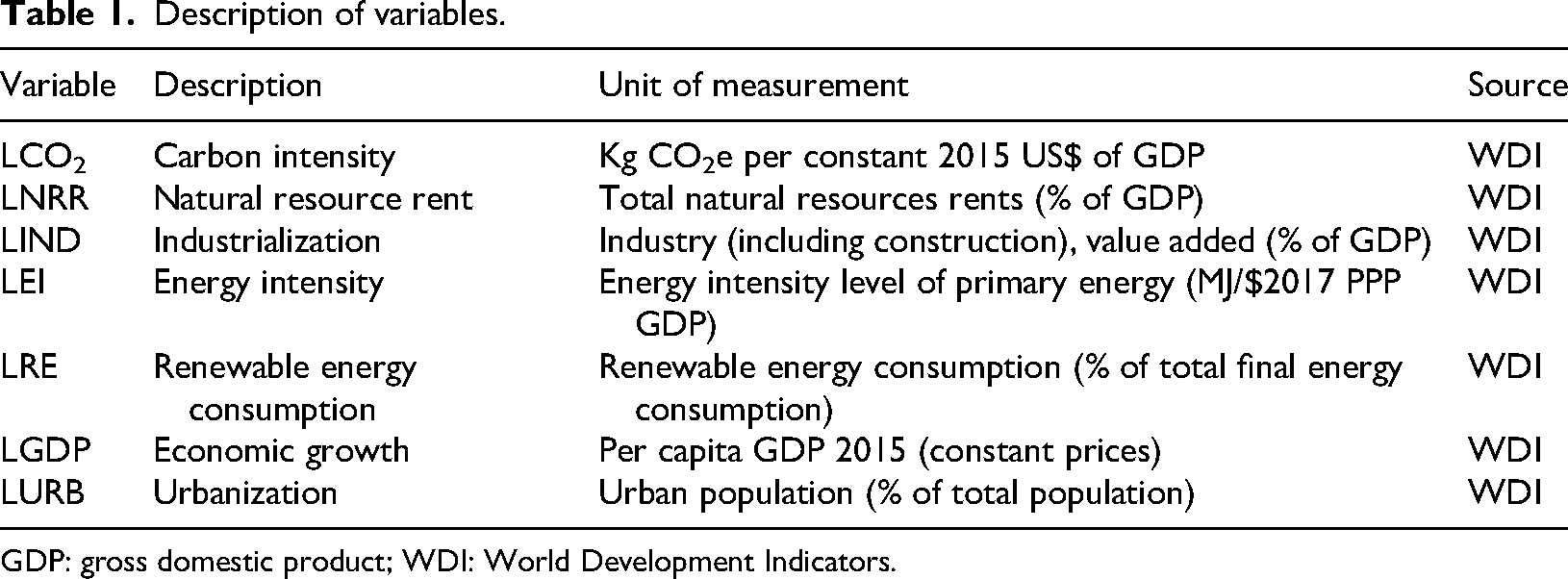
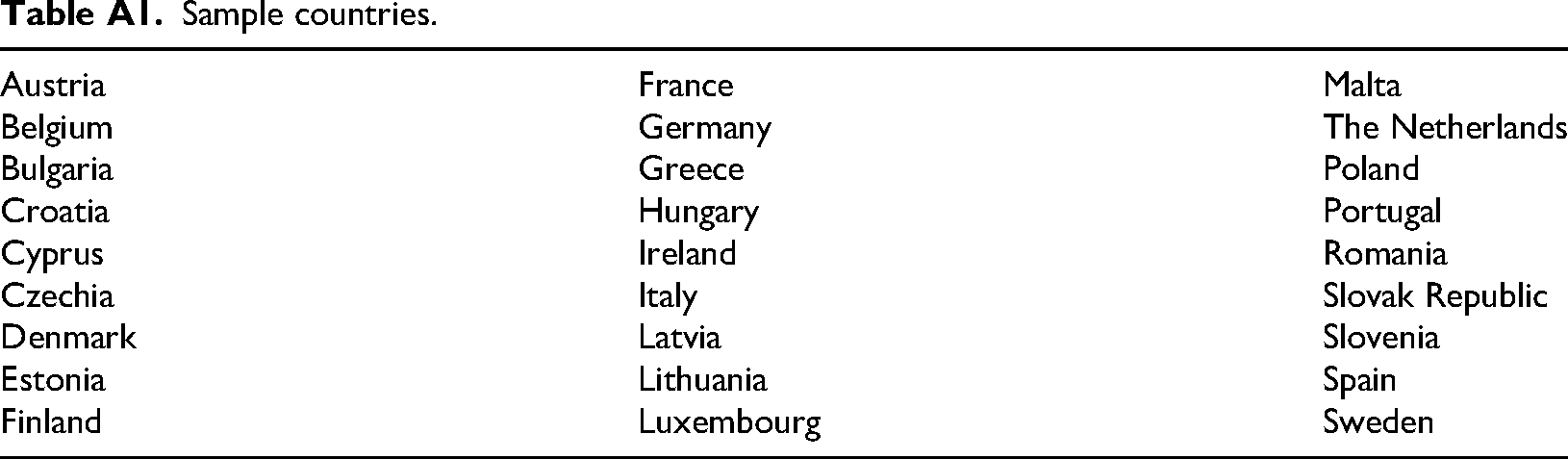
This study econometrically examines the long-term interactions of natural resource rent (NRR), industrialization (IND), energy intensity (EI), economic growth (GDP), urbanization (URB), and renewable energy use (RE) with CO2 intensity (CO2) using annual data for the period 2000–2021 for 27 EU member countries. All variables are taken from the World Development Indicators (WDI). Natural logarithmic transformations of variables were used in the analyses. Table A1 (in the Appendix) shows the research countries, and Table 1 shows the variable definitions, units of measurement, and related sources.
Description of variables.
GDP: gross domestic product; WDI: World Development Indicators.
The logarithmic linear regression and the function form of the model are shown in equations (1) and (2).

In the equations, i is the cross-section, t the time, β0 the constant term, β1,…, β6 the long-term coefficients, and εit the error term. Carbon intensity, calculated by WDI as the annual CO2 emissions, one of the six Kyoto GHGs, originating from agriculture, energy, and industry sectors, divided by GDP in 2015 US dollars, was selected as the dependent variable of the study. To understand the causes of carbon intensity in EU member states, one of the key independent variables in the regression model is industrialization, which, along with economic growth and prosperity, can cause ecological stress by increasing energy use, population, and urbanization.3,40 Considering the carbon and GHG emissions released into the atmosphere from increasing energy intensity with industrialization, energy intensity is another independent variable. 66 Another factor in the focus of sustainable ecological goals is the natural resource rents of economies. The high energy consumption used in the extraction processes of natural resources and the resulting chemical wastes can cause environmental damage. 68 Renewable energy was included in the econometric model following Ashraf et al. 69
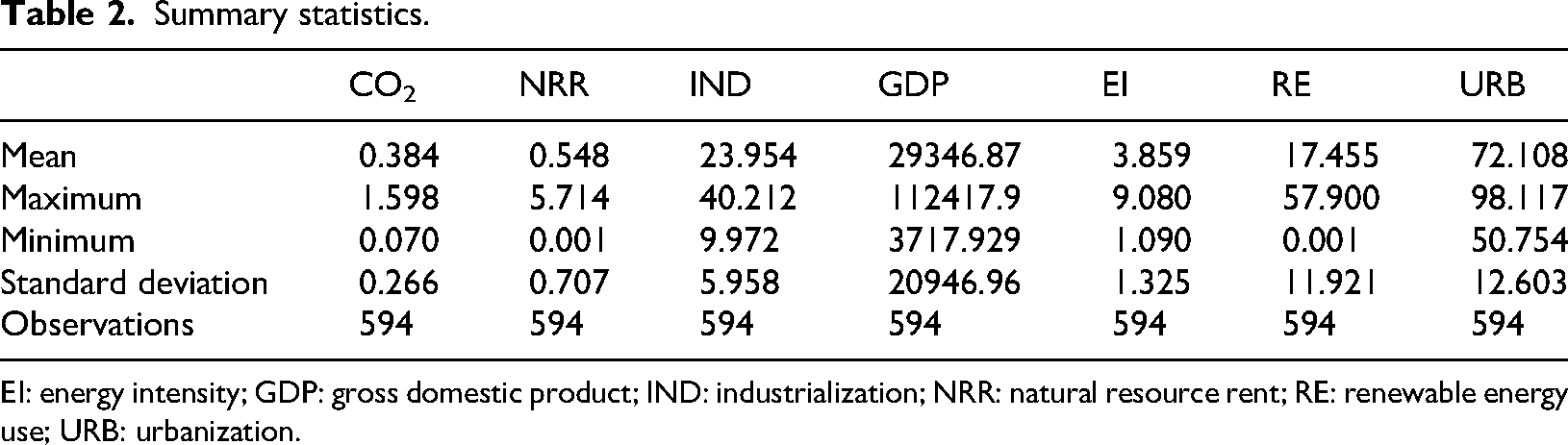
Statistical summaries of the variables throughout the analysis period are reported in Table 2.
Summary statistics.
EI: energy intensity; GDP: gross domestic product; IND: industrialization; NRR: natural resource rent; RE: renewable energy use; URB: urbanization.
The highest carbon intensity value is registered at 1.598 for Bulgaria, and the lowest value of 0.070 for Sweden, with an average of 0.384. The country with the highest percentage of natural resource rent is Poland (5.714), and the country with the lowest is Malta (0.001), with a panel average value of 0.548. The industrial value added is highest in Romania (40.21%) and lowest in Cyprus (9.97%). Per capita income is highest in Luxembourg at $112,417.9 and lowest in Romania at $3717.929, with an average of $29,346.87. The country with the highest energy intensity is Malta (9.08), and the country with the lowest energy intensity is Ireland (1.09), while the average energy intensity is 3.85. The country with the highest renewable energy consumption is Sweden (57.9), and the country with the lowest is Malta (0.001). The country with the highest urban population is Belgium (98.11), and the lowest is Slovenia (50.75).
Figure 1 shows the dynamics of each analyzed series over time.
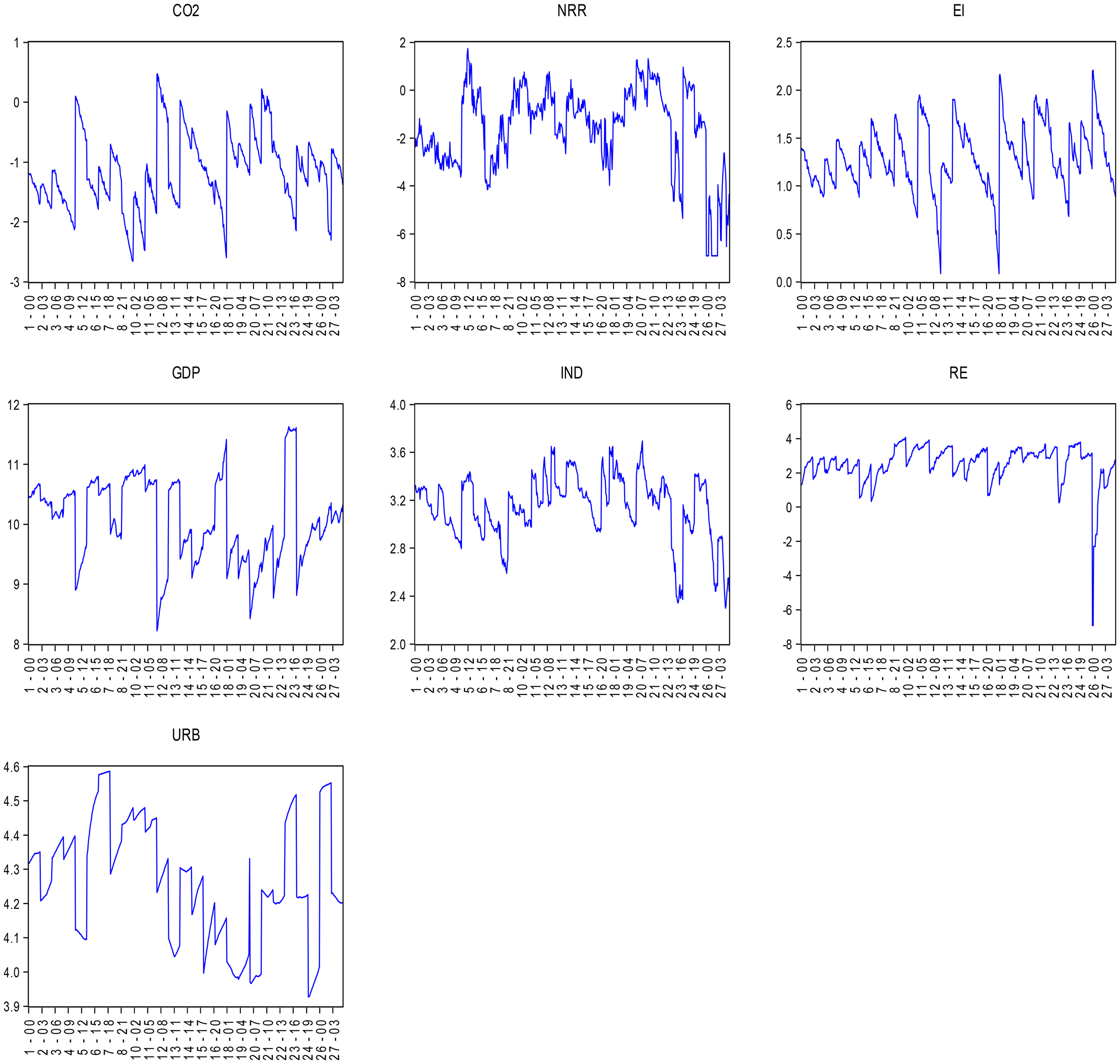
Evolution of the variables.
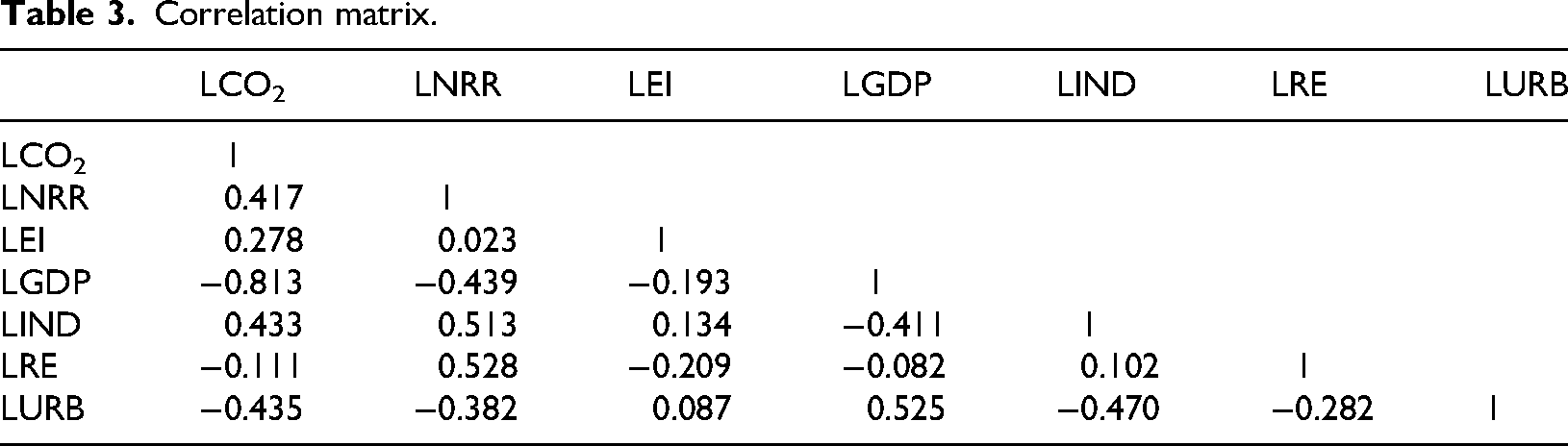
The results for the correlation between the variables are presented in Table 3. Industrialization, energy intensity, and natural resource rents are positively correlated with CO2 intensity. This might indicate that the increase in LIND, LEI, and LNRR in EU member states harms the environment by increasing LCO2. In addition, economic growth, urbanization, and renewable energy consumption are negatively correlated with carbon intensity and have a regulating effect on the environment.
Correlation matrix.
Methodology
Cross-sectional dependence test
Cross-sectional dependency between units was determined through four tests: Breusch and Pagan
70
LM, Pesaran
71
CDLM and CD, and Pesaran
72
LMAdj. The statistics of these tests are given below.



Slope homogeneity test
The homogeneity of the slope is also considered an extremely critical preliminary inference that needs to be made, as to whether all country slope coefficients are the same. Equality of slope coefficients among countries is a commonly held assumption of homogeneity, and straightforward standard tests suffice in such cases. Differences in slope coefficients, however, would suggest heterogeneity and warrant more sophisticated tests. The homogeneity of slope coefficients can be verified using the test for homogeneity developed by Pesaran and Yamagata
73
called the SH test, which is based on Swamy's random coefficients procedure.
74
The set of strong asymptotic results is provided below for the test statistics.

Panel unit root tests
The dataset used in the study has cross-sectional dependence and shows heterogeneous properties. For this reason, econometric methods were continued with second-generation panel techniques. The unit root test, which allows us to understand whether the shocks on the variables are permanent or not, was performed with the CIPS (Cross-Sectional Im-Pesaran-Shin) panel unit root test, which is based on the CADF (Cross-Sectional Augmented Dickey-Fuller) approach and developed by Pesaran.
72
The mathematical formulation of the test statistic is given below.

By following equation (10), CADF individual test statistics are calculated and CIPS test statistics are obtained by the arithmetic average of these test statistics, and the formulas are shown in equations (11) and (12).

KRLS regression
The analyzed dataset exhibits heterogeneity, as well as cross-sectional dependence. The series also contains a unit root. Thus, due to the complex stochastic properties of this dataset, the most appropriate econometric method is KRLS, as it can analyze all the complex properties of the variables with a very simple computational technique. The method can, in fact, isolate all individual complex interactions and reveal relationships in ways not possible with traditional techniques. Therefore, the KRLS procedure is adopted based on the ML techniques proposed by Hainmueller and Hazlett. 33 The Least Squares (LS) method is used to connect the sample points, measured by their target values in the model. This is a kernel that understands this relation, a trustworthy and flexible regression procedure that can probe into the marginal interactions of the variables over time.
Robustness tests
We conducted two separate tests to verify the robustness of the results obtained from the KRLS QR estimator. First, we tested the GMM dynamic regression estimator, which has effective results in estimating unknown parameters by taking into account problems such as endogeneity, autocorrelation, and heteroskedasticity. The GMM estimator can address the endogeneity problem by including a lagged value of the dependent variable in the model. 75
Second, we applied the nonparametric SQREG Quantile Regression estimator with 300 iterations. By estimating the standard error separately in each iteration, the test calculates new confidence intervals. Therefore, repeatedly calculated quantile estimates have reliable and unbiased results. The SQREG approach also yields robust results in cases of statistical uncertainty. 76
Dumitrescu-Hurlin panel causality test
Causality analysis is carried out with the Dumitrescu and Hurlin
77
Granger-based test. In this way, the test application includes stationary variables that consider cross-sectional dependency and slope heterogeneity. The analysis is applied with the lagged values of variables expressing unit roots. The test statistics can be given as follows (asymptotic and semiasymptotic):

Figure 2 shows the econometric flow chart of the study.
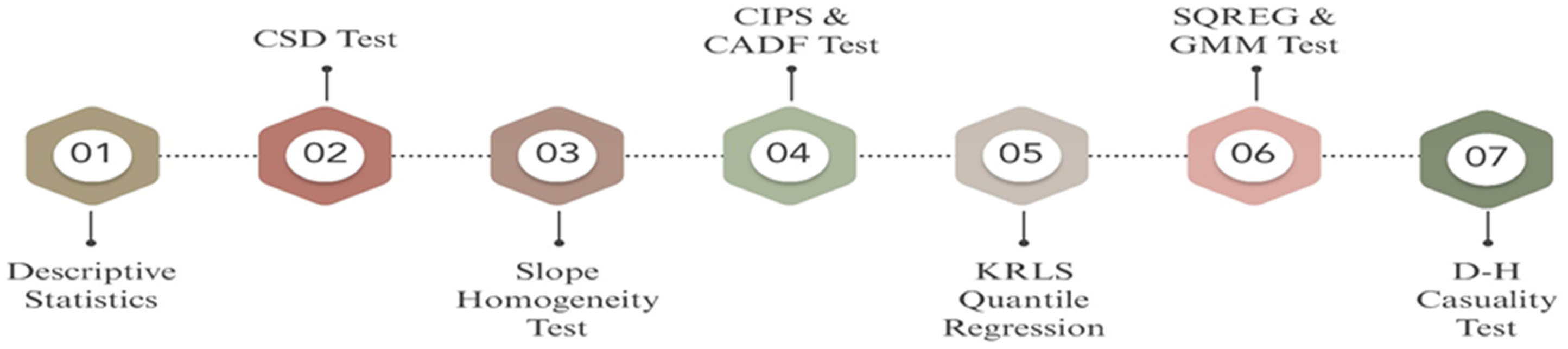
Flowchart of the analysis.
Econometric results and discussion
The cross-sectional dependency test was conducted to establish the essential features of the series before further regression analysis. The results are presented in Table 4.
Cross-sectional dependency test results.

All variables are significant at the 1% significance level for all tests (namely LM, CDLM, CD, and LMAdj). This implies that all results reject the null hypothesis of the absence of cross-sectional dependency. Thus, a shock that may occur in one country may affect the others. Another priori test is the Pesaran and Yamagata 73 homogeneity test, which is based on the slope homogeneity of the countries. The findings are given in Table 5.
Homogeneity test results.

Again, the null hypothesis is rejected, implying that the slope coefficients are not homogeneous. Panel data with a heterogeneous structure advocates for panel QR analyses.
In Table 6, both the CADF and CIPS test statistics at the level for all variables were found to be statistically insignificant. This indicates that the null hypothesis (H0), which expresses the presence of a unit root, cannot be rejected. All variables contain a unit root at the level. When the first differences of the variables were reanalyzed, the probability values of all the obtained test statistics were found to be significant. Therefore, H0 was rejected, and all variables became stationary. The CADF and CIPS panel unit root test results confirm the I(1) degree stationarity of the variables.
Results of panel unit root tests.
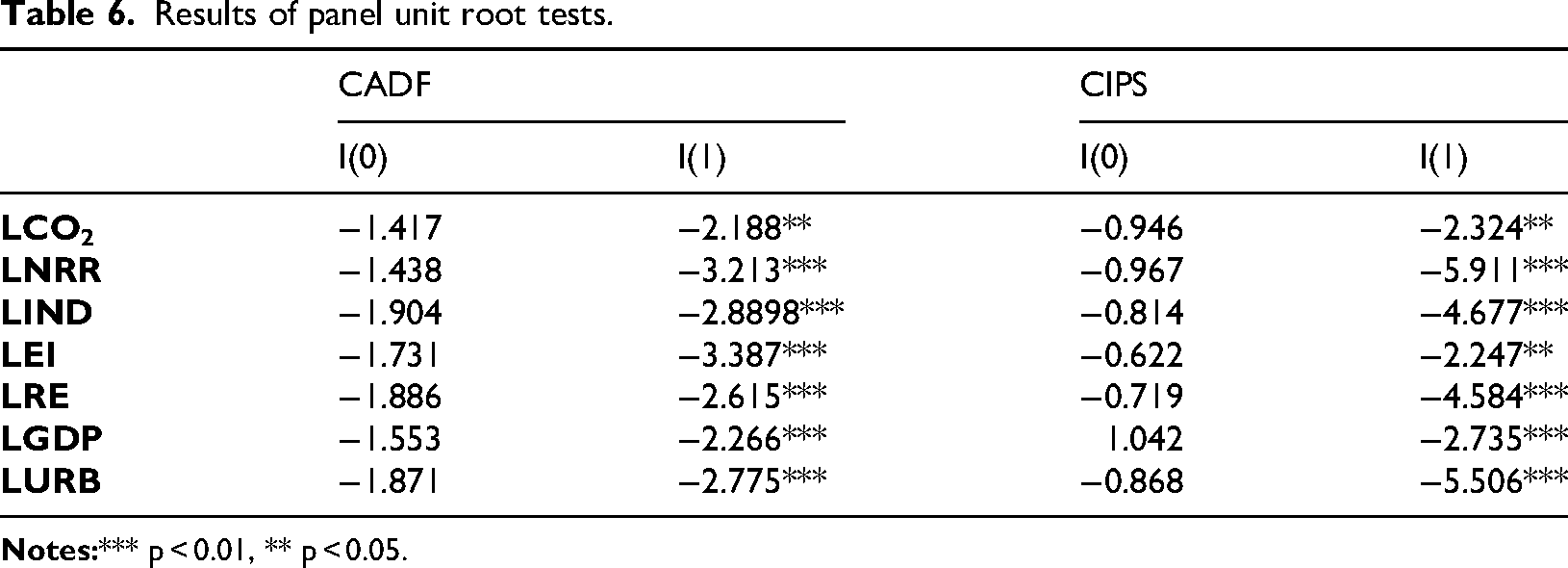
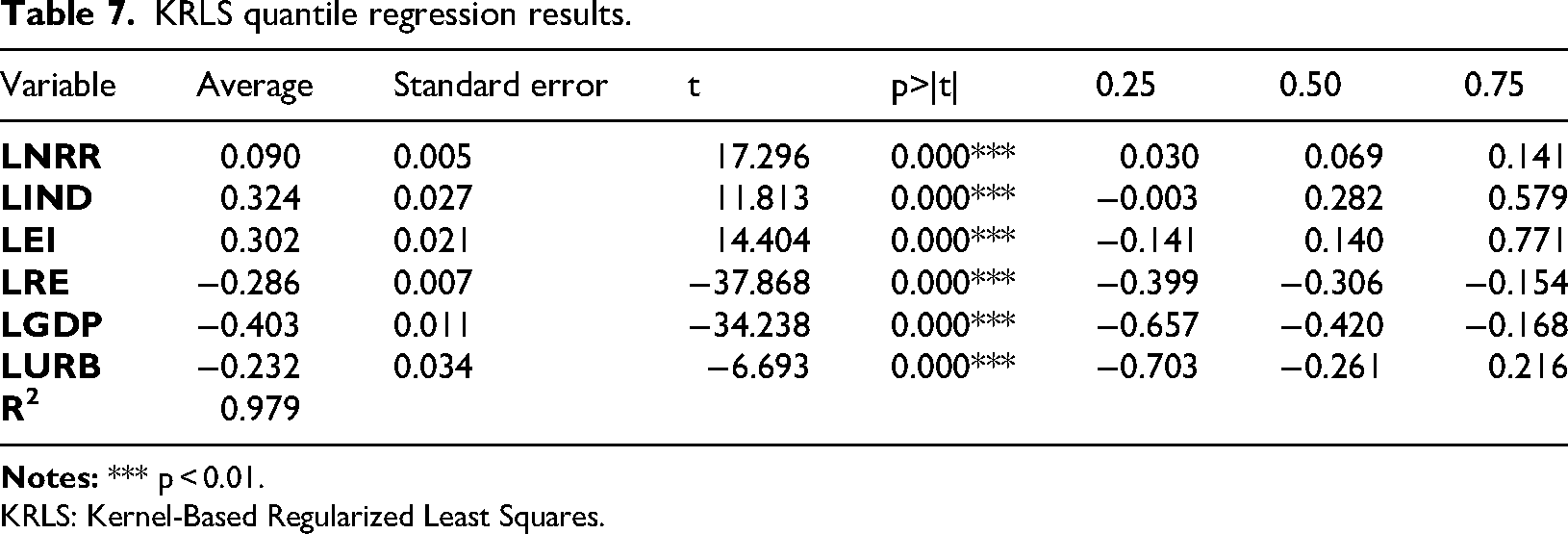
Table 7 shows the ML-based KRLS QR results. Natural resource rent has a positive and statistically significant coefficient (p < 0.01) at all quantile levels. Natural resource rent causes environmental pollution by increasing CO2 intensity in all EU countries. 13 The extraction process of natural resources causes many problems, such as noise pollution, food safety threats, soil and air pollution, and significant GHG emissions. 78 While increasing natural resource rents over time causes scarcity of resources, they also create environmental damage by increasing extraction costs.68,79 In addition to environmental destruction, the increasing exploitation of natural resources can threaten SDGs by disrupting macroeconomic balances. 80
KRLS quantile regression results.
KRLS: Kernel-Based Regularized Least Squares.
The coefficient for industrialization in EU countries is negative at the low quantile level (0.25) and positive and statistically significant (p < 0.001) at the medium and high quantile levels (0.50 and 0.75). While industrialization improves the environment in EU countries with low carbon intensity, it causes significant environmental damage in medium and high CO2-intensity countries. Furthermore, a 1% increase in industrialization increases carbon intensity by 0.282% at the 0.50 quantile, while an increase equals 0.579% at the 0.75 quantile level. Therefore, we can conclude that industrialization significantly affects environmental pollution in countries with high carbon intensity. This can be explained by the increase in CO2 intensity due to increased energy use during the rapid industrialization process of developing countries.3,81,82 Increasing energy use due to industrialization causes atmospheric temperatures to rise, significantly polluting the environment. The rapid acceleration of globalization accelerates industrialization, and the international transfer of products and services raises carbon emissions to critical levels.31,83 However, some studies claim the opposite.43,44,84 Zhou et al. 85 explain this situation by improving and optimizing the industrial structure, which reduces emissions and makes resource use more sustainable.
The energy intensity coefficient was found to be negative at the low quantile level and positive and statistically significant at other quantile levels. While energy intensity improves the environment in countries with low CO2 intensity, it pollutes the environment by increasing carbon intensity in countries with medium and high CO2 intensity. 15 Considering that approximately 70% of energy consumption in the EU originates from fossil fuels, the results appear consistent with the current context. Li et al. 65 emphasized that increasing energy intensity with economic development increases carbon emissions. Similarly, Zhou et al. 66 emphasized that energy intensity leads to a decrease in environmental quality. It is striking that the coefficients obtained from industrialization and energy intensity show parallel effects at the same quantile levels. While low-carbon-intensive EU countries can protect the environment with the energy intensity used in industrialization, it causes environmental destruction in medium- and high-carbon-intensive countries.
The coefficients for renewable energy and economic growth are negative and statistically significant at all percentiles, improving the environment by reducing CO2 intensity, with a decreasing trend from the lower percentile (0.25) to the higher percentile (0.75). Both variables have higher environmental ameliorative effects in low-carbon countries and lower environmental ameliorative effects in high-carbon countries. Renewable energy is one of the most important components of combating the climate crisis, as it can significantly reduce the amount of carbon emissions released into the atmosphere.69,86 The environmentally enhancing effect of economic growth can be explained by the fact that most EU member states are developed countries. While developing countries may neglect the environment through rapid industrialization, developed economies adopt more environmentally friendly growth policies. The coefficient on urbanization is negative and significant at the low and middle quintiles (0.25 and 0.50). This suggests that urbanization improves the environment in low- and medium-carbon-intensity EU countries. In high-carbon-intensity countries, the coefficient is positive, highlighting the insufficient environmental improvement of urbanization.
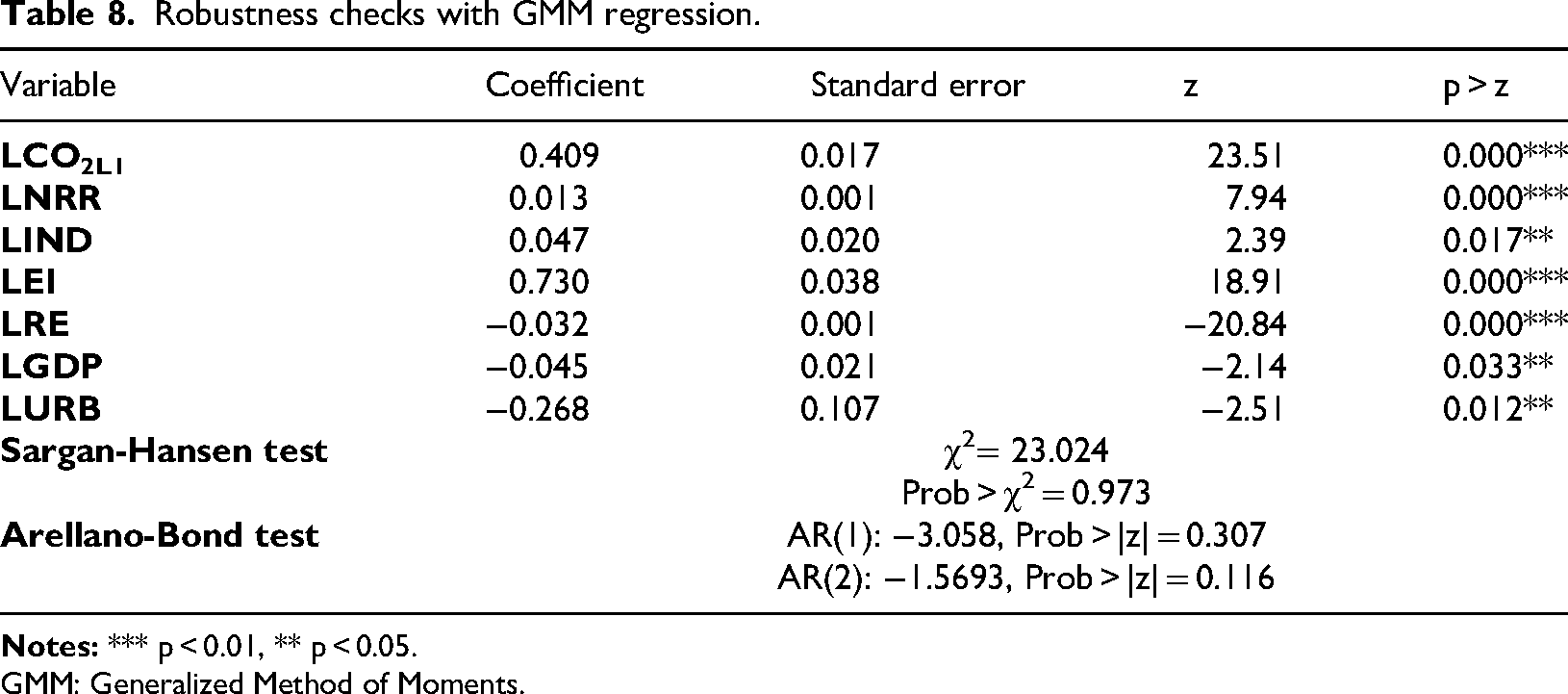
In the next step of the analysis, the robustness checks of the KRLS estimates are provided by the GMM dynamic regression analysis, which is able to detect the dynamic relationship between the variables (see Table 8).
Robustness checks with GMM regression.
GMM: Generalized Method of Moments.
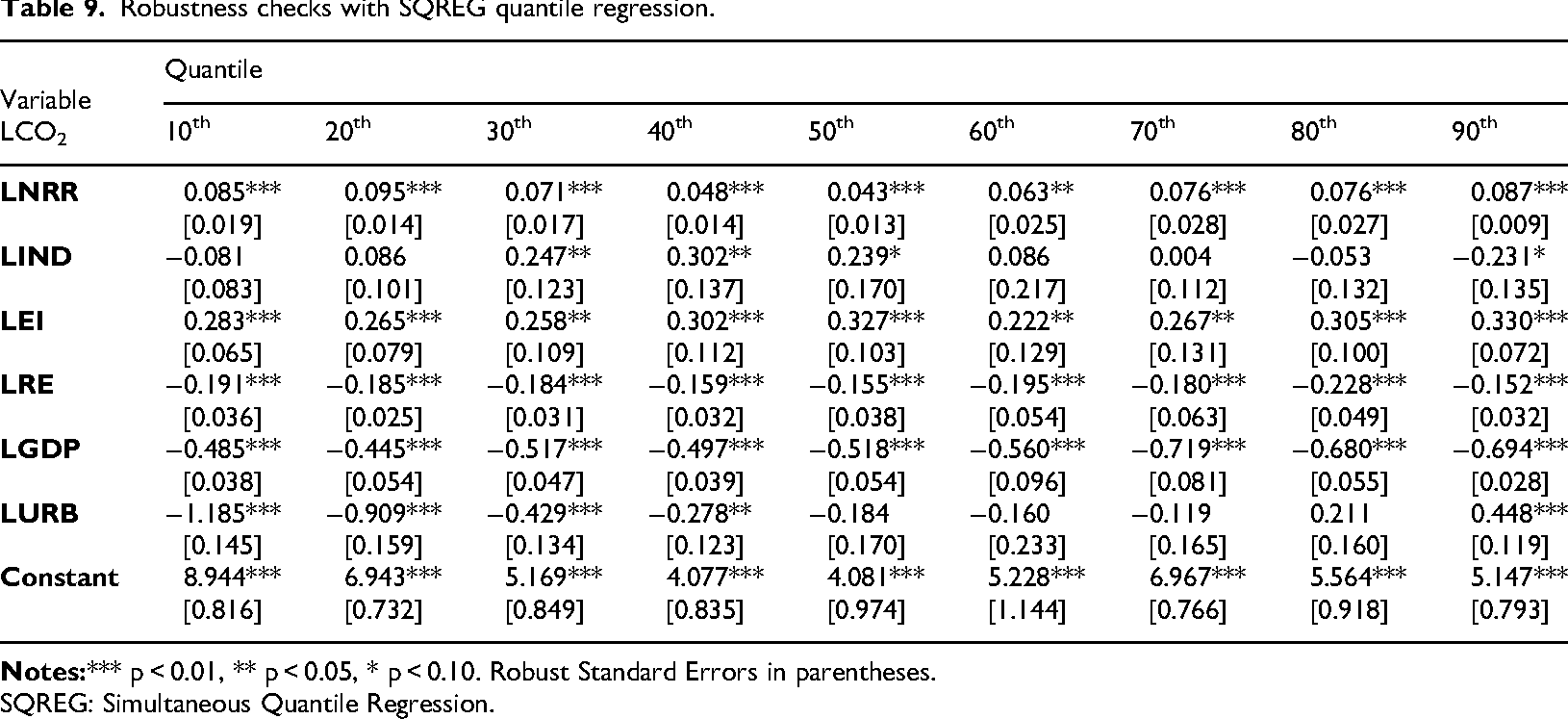
The results obtained from the Sargan-Hansen and Arellano-Bond tests demonstrate the robustness of the GMM assumptions. All estimated coefficients are consistent with the results of the KRLS estimations and are statistically significant. The GMM results indicate that while natural resource rents, industrialization, and energy intensity cause environmental damage in the EU region, renewable energy consumption, income, and urbanization improve the environment. Afterward, the robustness of the obtained estimates was checked using the nonparametric SQREG QR estimator. The findings are shown in Table 9.
Robustness checks with SQREG quantile regression.
SQREG: Simultaneous Quantile Regression.
According to the coefficients obtained from the SQREG QR estimator, natural resource rent and energy intensity cause significant environmental damage at all quantile levels (10th–90th), while industrialization causes environmental damage at middle quantile levels (30th–50th). Renewable energy consumption and income significantly improve the environment at all quantile levels. In line with KRLS estimates, the urbanization coefficient is negative at the low and medium quantiles and positive at the 90th quantile. Urbanization is insufficient to ameliorate environmental damage in the high-carbon countries of the EU region. As a result, the findings we obtained from the KRLS QR estimator are confirmed by both robustness tests.
Finally, the panel causality test is applied to inspect the causality among the variables.
The results in Table 10 confirm the causal relationships among industrialization, energy intensity, natural resource rent, economic growth, renewable energy consumption, and carbon intensity in EU countries.
Dumitrescu-Hurlin panel causality test results.
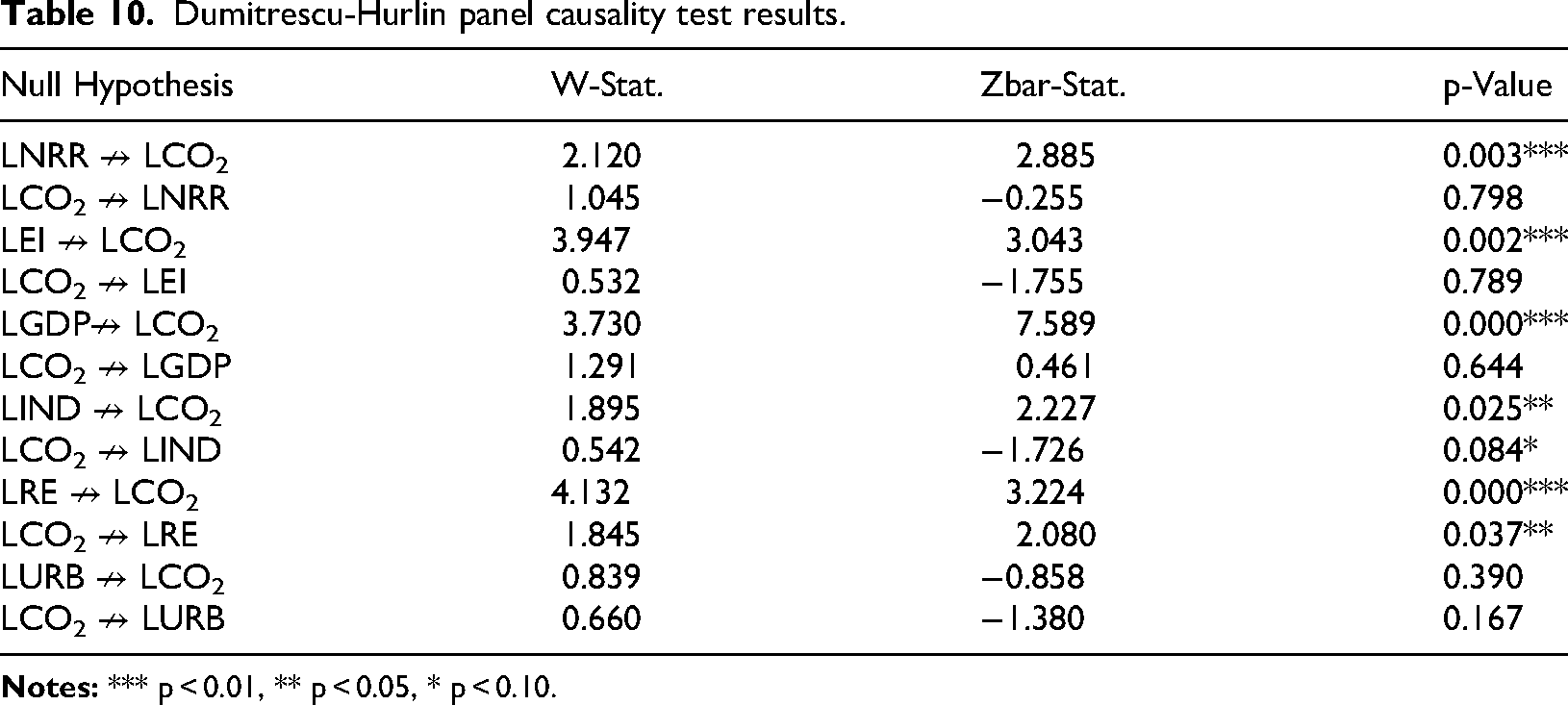
The unidirectional causal relationship we obtained from energy intensity to carbon intensity is consistent with the unidirectional causal relationship from energy consumption to carbon emissions found in the study conducted by Agboola et al. 52 for Saudi Arabia. The fact that an increase in energy intensity also increases carbon intensity suggests that a country should review its energy efficiency policies. Measures aimed at reducing energy intensity can contribute to reducing carbon emissions and, consequently, carbon intensity. Additionally, there is a bidirectional causality between industrialization and carbon intensity in the EU region. In the long run, industrialization explains carbon intensity, and there is also a feedback loop from carbon intensity to industrialization.
Another important finding in the causality analysis is the unidirectional causal relationship between natural resource rent and carbon intensity. This result suggests that EU countries should closely monitor the environmental impacts of their use of natural resources. Additionally, income also explains carbon intensity. Another important finding obtained in the causality analysis is that there is a unilateral causality relationship from natural resource rent to carbon intensity. This result reveals that EU countries should closely monitor environmental impacts while using their natural resource wealth. Furthermore, income also explains carbon intensity.
Another finding from the analysis is that the causality relationship between renewable energy and carbon intensity is bidirectional. This indicates that an increase in the use of renewable energy can reduce carbon intensity, while carbon intensity can increase the demand for renewable energy. This finding is important because it is known that policies to encourage the use of renewable energy have a long-term effect on reducing carbon emissions. Similarly, concerns about the increase in countries’ carbon intensity increase awareness of the transition to cleaner energy.
Conclusions and policy implications
Today, SDG-13's call to combat climate change has become an urgent global issue affecting the entire world. GHG emissions from social and economic human activities are increasingly polluting the world and causing a climate crisis. In order for these production and consumption activities to be sustainable (SDG-12), access to clean and green energy (SDG-7) is a global measure. It is critical for economies to analyze environmental factors in detail in order to create clean energy strategies and develop sustainable energy policies. The EU region consumes approximately 70% of its energy from fossil fuels. In addition, these countries developed their renewable energy strategies, which started with the Kyoto Protocol and the Paris Climate Agreement, and aimed for net-zero emissions by 2050 with the European Green Deal they announced in 2019. The Russia–Ukraine war has further increased the importance of energy security policies in EU countries.
In this study, the relationship among industrialization, natural resource rent, energy intensity, economic growth, and urbanization, with the regulatory role of renewable energy and CO2 intensity, is empirically investigated using annual panel data for the period 2000–2021 for 27 EU member states. In this study, robust coefficient estimates obtained with the ML-based KRLS estimator are verified with the GMM dynamic regression estimator and the nonparametric SQREG Quantile Regression estimator. Causality relationships between variables are analyzed using the Dumitrescu and Hurlin 77 panel causality test. The results show that industrialization in EU countries increases energy intensity at medium and high quantiles (50th and 75th) and causes environmental degradation. Natural resource rents cause carbon intensity and ecological degradation at all quantiles. The fact that most EU countries are developed economies has largely protected them from the environmental damage caused by economic growth and urbanization. Furthermore, the use of renewable energy improves environmental quality at all quantile levels.
Policy directions
We have some policy recommendations based on the findings of the study, which empirically examines the effects of industrialization, energy intensity, and natural resource rents on carbon intensity and the regulatory role of renewable energy for all EU member states. The findings suggest that renewable energy stands out as a fundamental element of a sustainable environment, given that natural resource rents and the industry's fossil energy intensity are causing environmental destruction. In this context, policymakers in EU economies should primarily focus on policies that will reduce fossil fuel consumption and fossil fuel dependency in industry and natural resource extraction processes. Energy use in industrial production should be diversified with clean energy, and strategies should be developed to reduce energy intensity. In addition, current clean energy efforts should be accelerated, renewable energy consumption, which is a commitment to 2030, should be tripled, and energy efficiency should be doubled. In this context, high environmental taxes applied to fossil energy use may be a deterrent. Clean energy needs to be integrated into natural resource management. 87 EU countries should support green investments by providing opportunities that increase the use of renewable energy in production and urban life. An infrastructure that facilitates access to clean energy should be provided. The use of green finance instruments for clean energy investments should be increased and expanded. Awareness should be created among decision makers, industrial organizations, and consumers about efficient energy use, and R&D studies should be increased for clean energy production. EU countries should transform unorganized and unproductive areas into environmentally friendly centers hosting clean technology in order to revitalize unused areas in cities and create a more sustainable urban structure.
Limitations and future directions
The study examined the relationship between the variables included in the model across the EU region, and the findings have the potential to be representative of relevant country groups. However, the fact that not all EU countries share similar socioeconomic and political structures is a limitation that should be considered when interpreting the results. Because it may not be possible to directly generalize the study findings to countries with different economic and political structures, future studies could examine the environmental impacts for each EU country in more detail. The empirical model used in the study could be adapted to different countries or groups of countries, and the validity of the findings could be presented more comprehensively. Furthermore, variables such as ecological footprint and GHG emissions could be used to represent environmental pollution instead of carbon density. This allows for different results to be obtained with different variables without reducing the environmental concept to a single variable. Furthermore, the failure to include some critical factors affecting environmental sustainability, such as population growth and technological innovation, in the model and their exclusion from the study's scope constitutes another limitation of the study. Therefore, it is recommended that future studies develop a comprehensive model by including these variables. Including various explanatory variables (such as technological innovation, institutional quality, and energy policies) in the model will increase the effectiveness and sustainability of environmental policies implemented by the relevant countries.
Footnotes

Funding
The authors received no financial support for the research, authorship, and/or publication of this article.
Declaration of conflicting interests
The authors declared no potential conflicts of interest with respect to the research, authorship, and/or publication of this article.
Appendix
Sample countries.
| Austria | France | Malta |
| Belgium | Germany | The Netherlands |
| Bulgaria | Greece | Poland |
| Croatia | Hungary | Portugal |
| Cyprus | Ireland | Romania |
| Czechia | Italy | Slovak Republic |
| Denmark | Latvia | Slovenia |
| Estonia | Lithuania | Spain |
| Finland | Luxembourg | Sweden |