




Abstract
Self-perceived job insecurity is characterised by a considerable variation across European countries; this is mostly attributed to different labour market conditions and welfare-state institutions. In addition to the previous, often static examination of these determinants, this study asks how labour market dynamics and changes in welfare-state interventions are linked to individuals’ perceptions of job insecurity. It is argued that the changing context represents a set of shared experiences that serves as a frame of reference for the perception of job insecurity. Hence, time series of context indicators provided by Organisation for Economic Co-operation and Development (OECD) and data from the European Social Survey are used to conduct multilevel analyses. The results reveal that job insecurity is dynamic, as it increases in countries facing an economic crisis, such as Greece, but decreases in countries with prosperous development like Poland. Furthermore, the results reveal that the past development of the labour market and changes in welfare-state interventions contribute to the explanation of individuals’ perceptions of job insecurity. The response to these changes differs, however, depending on the dimension of job insecurity and the socio-economic characteristics of the workers.
Keywords
Introduction
The changing nature of the labour market has received particular attention from researchers and the general public. A large portion of the discussion deals with the growing de-regulation and flexibility of labour markets in Europe, which has led to a spread of precarious labour forms such as part-time work, fixed-term contracts and temporary agency employment (Kalleberg, 2000). As part of this debate, self-perceived job insecurity – in terms of workers’ evaluation of their current jobs’ continuity – deserves growing attention (e.g. Böckermann, 2004; Erlinghagen, 2008; Hank and Erlinghagen, 2011; Organisation for Economic Co-operation and Development (OECD), 1997; see also Chung and Mau, 2014). To direct the focus towards self-perceived job insecurity is of particular relevance, as research frequently has shown that the perception of job insecurity – and not only objective insecurity itself – is associated with detrimental consequences for individuals, namely, reduced well-being (e.g. Carr and Chung, 2014; Drobnič et al., 2010), health impairments (e.g. László et al., 2010) and a large range of personal and family problems (e.g. Larson et al., 1994). Furthermore, researchers have pointed to the consequences for the economy as well as for social policy, as self-perceived job insecurity is related to cuts in consumer and household spending (e.g. Benito, 2006) and affects public support for redistribution (e.g. Marx, 2014; Paskov and Koster, 2014).
Against this background, there is a growing body of research dealing with the determinants of self-perceived job insecurity. One research strand focuses on individual characteristics: the perception of self-perceived job insecurity varies depending on socio-economic characteristics such as age, gender, health and education. Furthermore, self-perceived job insecurity can be linked especially to job features such as a fixed-term contract, firm size or industry (for an overview, see Chung and Mau, 2014). A second strand of research has mainly focused on the country-specific context as a determinant of individuals’ perceptions of job insecurity (e.g. Anderson and Pontusson, 2007; Chung and Van Oorschot, 2011; Clark and Postel-Vinay, 2008; Erlinghagen, 2008; Hank and Erlinghagen, 2011; Mau et al., 2012). The characteristics of self-perceived job insecurity vary considerably across European countries (OECD, 1997), and the number of employees who are concerned about their employment stability differs greatly. Thus, a main source of the variation is supposed to be the correspondingly different opportunity structures of the labour markets. Labour market performance is one important driver of job insecurity, because it determines the stability of existing jobs and the availability of job vacancies (Chung and Van Oorschot, 2011). In addition, welfare-state institutions are also regarded as crucial to the perception of job insecurity since they can either enhance or constrain labour market risks (Esping-Andersen, 1990).
Although the theoretical argument of welfare-states’ impact on self-perceived job insecurity and the important role of general economic and labour market conditions in understanding cross-national differences in subjective job insecurity is striking, the empirical findings are not fully consistent. Anderson and Pontusson (2007), for example, have found that unemployment rates as a general indicator of labour market conditions are negatively related to job security. While Mau et al. (2012) have found no effect of the unemployment rate upon job security, Erlinghagen (2008) has confirmed a negative correlation with long-term unemployment rates. In addition, Erlinghagen (2008) found no evidence for an association between individuals’ self-perceived job insecurity and the current general economic situation (measured by gross domestic product (GDP) growth) while Chung and Van Oorschot (2011) provide mixed results. Erlinghagen (2008) found no correlation between the strength of employment protection or social expenditures and self-perceived job insecurity; Chung and Van Oorschot (2011) show, however, some correlation between expenditures for active and passive labour market programmes and job insecurity.
This lack of consistency should not yet lead us to reject the theoretical assumptions on the impact of social, economic and legal context on individuals’ self-perceived job insecurity. Theoretical as well as empirical work rather needs some improvement to better understand the complex interdependencies between the macro- and the micro-level. In this respect, our article complements previous research by not only considering a country’s current economic and social conditions but also recent changes therein. Therefore, our main research question is whether there is an association between the degree of socio-economic or institutional change and self-perceived job insecurity which might help us to explain cross-national differences in job insecurity.
The article proceeds as follows. First, we develop the theoretical background of our analyses. The following section gives an account of the database and the method used in the study. We then provide some descriptive findings, before we report and interpret the results of our multilevel regression analyses. In the final section, we discuss the findings and limitations of our approach and the article ends with some concluding remarks.
Theoretical background
We know that individual unemployment experiences in the past have an impact on current self-perceived job insecurity (Böckermann, 2004; Chung and Van Oorschot, 2011; Erlinghagen, 2008). There is also some evidence for existing cohort effects, meaning that labour market conditions under which young people have entered the labour market sustainably influence their job perceptions over their life courses (Korpi et al., 2003; Müller and Gangl, 2003). In addition, inter-subjective comparisons are very important for individuals to judge their own situation (‘relative deprivation’; see for example Easterlin, 1995; Walker and Smith, 2002). Besides such experience-, cohort- and inter-subjective-comparison effects, there is also evidence that people adapt to certain security levels that are provided by the welfare state. In this context, Evers and Nowotny (1987) talk about what they call ‘security paradox’, indicating that people have the tendency to get used to a certain level of security so that different levels of objective (in)security may lead to the same levels of subjective insecurity (p. 61; see also Kaufmann, 2003: 93). But if people generally adapt to certain security levels, we may suggest that individuals’ perception of a given situation is not only influenced by the current security level but also by the degree and speed this current level has changed during the recent past.
Although the security-paradox assumption and the suggested impact of contextual change on self-perceived job insecurity seem intuitively plausible, no elaborated theory exists about this correlation. Here we just can rely on some work coming from more or less related fields. As an example, for some variation of the ‘security paradox’, psychological research shows that the negative impact of acute stress on mental well-being could be moderated by chronic stress (cf. McGonagle and Kessler, 1990; Sagy, 2002). Against this background, it can be suggested that next to inter-subjective comparisons, inter-temporal contextual changes should also have an impact on the individuals’ interpretation and definition of a situation (cf. Stevenson and Wolfers, 2008).
1
Tomasik et al. (2010) suggest
that the primary link between the macro level of social change and the micro level of individual behaviour can be conceived in terms of individually perceived demands that disturb habits, interrupt routines, and index a new state of affairs relative to what the individual was accustomed to. (p. 384)
Similarly, we can assume that economic shocks or fundamental welfare-state reforms should be accompanied by (at least temporarily) increasing individual job insecurity.
The assumption that the changing context matters is also supported by research on the integration of migrants. As an example, Meuleman et al. (2009) show that people’s attitudes towards migrants are not only influenced, for example, by the current number of immigrants but also by the degree and speed of contextual change represented by immigration flows and increase or decrease in unemployment rates. Furthermore, examples come from demographic research analysing the impact of economic shocks and crises on individual fertility decisions. Overall, it seems to be quite clear that rather than the current social context, changes such as a decline in GDP, a rise in unemployment rates or a liberalisation of employment protection may lead to a postponement of fertility decisions (‘tempo effect’). Based on an elaborated literature review, Sobotka et al. (2011) conclude:
The available evidence indicates that a change in unemployment or in consumer confidence matters more for fertility changes than the levels of these indicators. (p. 291)
In line with this result, we suggest that the changes in labour market conditions and institutional context also impact the way individuals perceive insecurity, as well as the current situation/state as examined by numerous previous studies (for an overview, see Chung and Mau, 2014). In addition, we expect that the degree of social, economic or institutional change should have a maybe even more important impact on job insecurity. For example, workers living in an economy with traditionally and persistently high unemployment rates might be accustomed to a certain level of economic insecurity. Under such conditions, workers do not experience much fear about losing their jobs, because they are used to living in an insecure environment. On the other hand, for workers living in an economy with traditionally low unemployment rates, an increase in unemployment might trigger a hike of feeling of insecurity, even if unemployment rates still remained relatively low in comparison to other countries. Until now, the question of whether the speed and the degree of contextual change can affect employees’ perception of their job situation has not been answered. We hypothesise that in addition to the current labour market situation and institutional policy context, the strength or degree of recent changes in labour market conditions or welfare-state institutions influence an individual’s feeling of insecurity, too.
Contrary to the widely used understanding of change as decades or even centuries lasting (mostly incremental) developments of evolving cultural or historical eras (e.g. Haferkamp and Smelser, 1992), we refer to short- or medium-term changes. We investigate changes from 1 year to another to medium-term developments up to 10 years in the past, not only covering shocks and frictions in the business cycle but also accounting for people’s delayed reactions on policy reforms. In this respect, the past development – which individuals are aware of due to their own experience during the recent past – can be understood as a set of shared knowledge and expectations towards the standard of job insecurity in a country. As a consequence, self-perceived job insecurity needs to be viewed in relation to the past development of economic and institutional contexts within one country.
Data and measurements
Data from the European Social Survey (ESS) are used, which are designed to monitor attitudes and behaviour patterns of Europe’s population (European Social Survey, 2012). Since 2002, the ESS has been conducted every other year with rotating modules to cover a wide range of topics. The partial repetition of modules creates opportunities for longitudinal research. Taking advantage of this, we use data of the Round 2 (conducted in 2004/2005) and Round 5 (2010/2011), which contain questions on self-perceived job insecurity. The ESS covers over 30 countries, whereas this study focuses on the 19 countries that took part in the relevant years and where the context data are available. Altogether, the analysis includes Belgium, Czech Republic, Denmark, Estonia, Finland, France, Germany, Greece, Hungary, Ireland, the Netherlands, Norway, Poland, Portugal, Slovakia, Slovenia, Spain, Sweden and the United Kingdom.
Previous studies often relied on single indicators of cognitive job insecurity (e.g. Chung and Van Oorschot, 2011; Erlinghagen, 2008; Hank and Erlinghagen, 2011) and, therefore, neglected the multidimensional nature of subjective job insecurity (Huang et al., 2010: 22). Since it can be suggested that different dimensions of job insecurity are separate in terms of their determinants and consequences, however, it is essential to be aware of the multidimensionality of job insecurity (Klandermans et al., 2010; Sverke and Hellgren, 2002). As a consequence, Anderson and Pontusson (2007) distinguish ‘cognitive job security’ (i.e. the propensity to lose a current job) from ‘affective job insecurity’ (i.e. the fear of losing a current job) and ‘labour market security’ (i.e. the propensity to find another job after dismissal) (see also Chung and Mau, 2014). Relying on this concept, we will investigate two dimensions of job insecurity, namely, ‘cognitive job insecurity’ and ‘labour market insecurity’.
The sample is restricted to dependent employees between 18 and 67 years of age. 2 Self-employed workers and nonworking individuals are not considered. After the exclusion of cases with missing values, there are 24,768 individuals remaining for the analysis of the cognitive dimension (perceived likelihood of job loss), and 24,201 individuals for the analysis of the labour market insecurity (perceived difficulties of job search). The perceived likelihood of job loss is measured by the following question: ‘Please tell me how true each of the following statements is about your current job: My job is secure’. A person perceives a high likelihood of job loss when he or she rejects this statement with ‘not at all true’. Individuals stating something different constitute the reference.
To assess the self-perceived difficulties of job search, respondents were asked, ‘How difficult or easy would it be for you to get a similar or better job with another employer if you had to leave your current job?’ The wording of this question in Round 5 is slightly different from the formulation in Round 2. In 2004, it is asked how difficult or easy would it be for you to get a similar or better job with another employer if you wanted to? The answer for both the questions was recoded on an 11-point scale, with 0 indicating ‘extremely difficult’ and 10 ‘extremely easy’. To keep the limitation due to the different wording small, a strict operationalisation is applied. The question is dichotomised as those who choose the answer categories 0 or 1 are defined as individuals perceiving a job search as difficult, and the others (2–10) constituted the reference. In this way, it is ensured that the job search difficulties capture a strong and distinctive feeling of labour market insecurity.
To measure the past development for all context indicators, various variables are generated by calculating the average of yearly percentage changes compared with previous year, over the last 3, 5 and 10 years. The percentage changes are chosen to avoid high correlations between the current and dynamic indicators, and consequently, these correlations do not exceed 0.47. As stated earlier, different periods of time are considered to include a wide range of past development from short to long term. This explorative approach is necessary as the time required to become aware of these changes and react to them is unknown. Due to its relative stability over time, the change in employment protection legislation (EPL) is captured by two dummies, indicating whether there was a decrease or increase in employment protection strictness in the last 5 years.
In addition, the analysis includes the following indicators representing current labour market conditions and welfare-state interventions: The per capita GDP (GDP/1000 in US$, current prices, mean-centred, OECD, 2011) is an economic wealth indictor at the present year. The unemployment rate (from OECD, 2011, mean-centred) reflects the share of unemployed individuals of the labour force. The value of active labour market policy (ALMP) expenditure (per head, mean-centred, OECD, 2011) represents the generosity of the welfare state with respect to active labour market programmes promoting (re-)employment. Furthermore, the strictness of the EPL (mean-centred, OECD, 2011) is captured by the overall summary index. The most recent data are available for 2008, which replace the missing data of 2010. These variables control for the overall level of economic prosperity or institutional context, which is necessary to identify the ‘net’ effect of social and institutional change covered by the above-mentioned measures of institutional or economic change during the past years prior to the respective ESS round.
Additionally, the analysis includes a large array of individual-level variables, which have been proven to be associated with the individual’s job insecurity (see Chung and Mau, 2014 for an elaborated overview). For our analyses, some of these independent variables are of decisive importance because we suggest that the impact of contextual change on job insecurity will differ with regard to working conditions (measured by employment contract, firm size and industry) and certain workers’ characteristics (measured by job tenure, educational level and individual unemployment experience). In addition, age, gender and family status serve as further control variables.
The relationship between self-perceived job insecurity and the changing context is assessed by multilevel logistic regression analyses. To capture the two-level structure of the data (individuals nested in countries) adequately, two-level random intercept models are applied (Rabe-Hesketh and Skrondal, 2008). First, descriptive findings are presented.
Descriptive findings
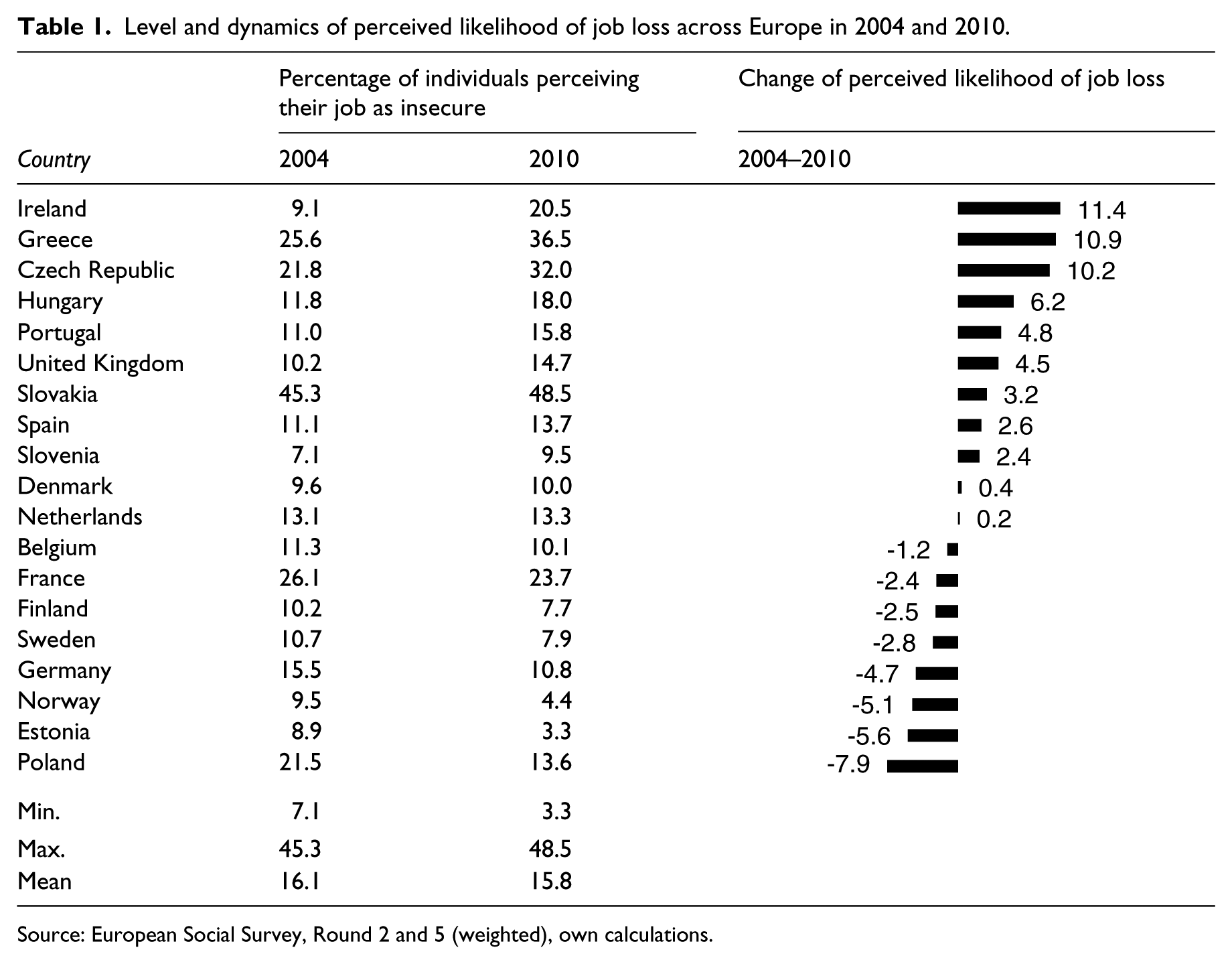
Starting with the perceived likelihood of job loss (shown in Table 1), there is both a great variation between countries and over time within countries. In 2004, the share of workers who perceive their job as insecure ranges from 7.1 percent in Slovenia to 45.3 percent in Slovakia. While Slovakia maintains its position with the highest share of people who feel insecure, the rest of the ranking greatly alters. The largest variations occur in Ireland, Greece and Czech Republic, where the share of insecurity increased by more than 10 percentage points. Furthermore, while Greece and Czech Republic also belong in 2004 to the group of countries with a relatively high share of job insecurity, Ireland starts from a relatively low level. At the other end, a decline can be seen in Poland, Estonia and Norway. Poland stands out as it started from a high level of insecurity. Hardly any change occurs in Denmark, the Netherlands and Belgium.
Level and dynamics of perceived likelihood of job loss across Europe in 2004 and 2010.
Source: European Social Survey, Round 2 and 5 (weighted), own calculations.
Table 2 shows the dynamics of the job search dimension across Europe in 2004 and 2010. Again, a great variation between countries as well as over time within single countries is displayed. The largest decrease, with a reduction of more than 10 percentage points, can be seen in Czech Republic and Poland. Both the countries, however, remain at a high level of self-perceived difficulties of job search. The largest increases can be seen in Ireland where job search difficulties grew by 14 percentage points from 2004 to 2010. Countries such as Denmark, Finland and Sweden hardly experience any change between 2004 and 2010.
Level and dynamics of perceived difficulties of job search across Europe in 2004 and 2010.

Source: European Social Survey, Round 2 and 5 (weighted), own calculations.
The descriptive overview revealed that the perception of job insecurity is indeed dynamic, as it not only increased in countries facing economic crisis such as Greece but also decreased in countries with prosperous development such as Poland. This holds true for cognitive job insecurity as well as labour market insecurity, although the latter seems to be slightly more volatile. Subsequently, the role of the changing context on the perception of job insecurity will be examined.
Multivariate findings
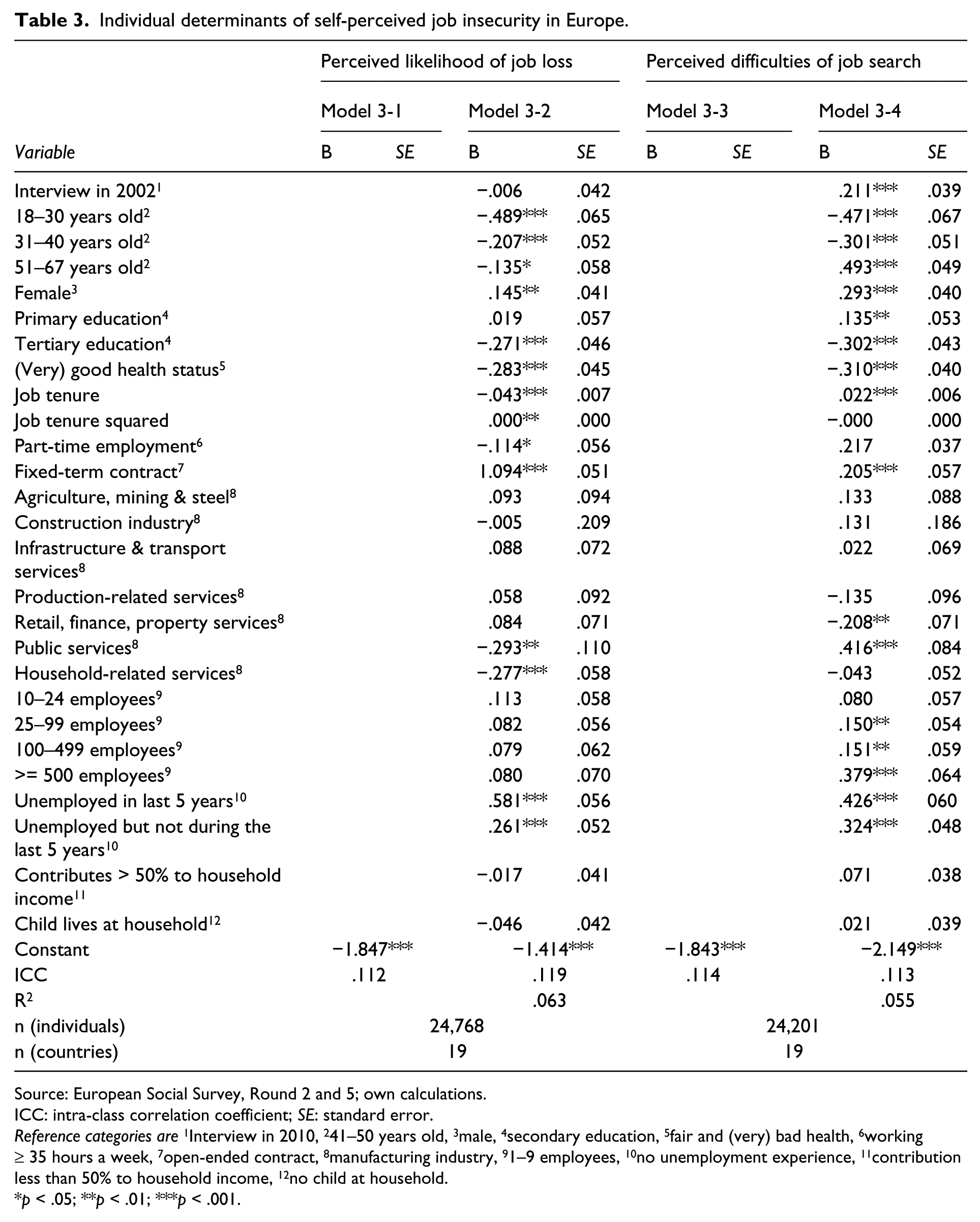
Multilevel analyses typically start with an empty model to get an idea of the extent to which the variation in the dependent variable is attributed to the context. In the present analysis, the first and third models in Table 3 can be used to estimate the between-country variance of the self-perceived likelihood of job loss (model 3-1) and self-perceived difficulties of job search (model 3-3) using the intra-class correlation coefficients (ICCs). The ICC of the likelihood dimension amounts .112 and that of the job search dimension .114. Thus, about 11 percent of variance of both the dimensions across individuals can be attributed to the country level. In both the cases, the individual variables (introduced in models 3-2 and 3-4) hardly explain the cross-country differences.
Individual determinants of self-perceived job insecurity in Europe.
Source: European Social Survey, Round 2 and 5; own calculations.
ICC: intra-class correlation coefficient; SE: standard error.
Reference categories are 1Interview in 2010, 241–50 years old, 3male, 4secondary education, 5fair and (very) bad health, 6working ≥ 35 hours a week, 7open-ended contract, 8manufacturing industry, 91–9 employees, 10no unemployment experience, 11contribution less than 50% to household income, 12no child at household.
p < .05; **p < .01; ***p < .001.
In line with previous research, fixed-term contracts and past unemployment experiences are positively associated with individual’s perception of job insecurity. Being young and in a (very) good health status are negatively related to both the dimensions. Older employees, who are 51–67 years of age, perceive a job loss as less likely than the reference group of 41–50 years of age. Older employees are, however, more affected by the worry of finding a new job. This may reflect the poor prospects in the labour market for older employees but also their comparably secure jobs due to seniority advantages.
Furthermore, the relationship between job tenure and both dimensions of job insecurity differs. In contrast to the difficulties of job search, the probability of perceiving the current job as insecure significantly increases with job tenure. It can be supposed that the prolonged job tenure is associated with high firm-specific skills that protect employees against layoffs (at least up to a certain point as the relationship is U-shaped). At the same time, firm-specific skills may make employees unattractive for other employers (see also the argumentation of human capital theory, for example, Becker, 1962; Lindbeck and Snower, 2001). Individuals seem to be aware of this relationship, as they perceive a job search as more difficult, the longer they work for the current employer. Furthermore, the longer the job tenure is, the further the last personal experience of job search is in the past. This may cause insecurity with regard to the job search opportunities. At the same time, the expectations and demands for a ‘similar’ job increase steadily, and it becomes automatically more difficult to replace the attained position with increasing job tenure.
The examination of determinants at the individual level revealed several hints about the nature of both dimensions of job insecurity. In particular, there was strong evidence that the perception of the likelihood of job loss and the difficulties of job search were differently related to certain factors. Keeping these findings in mind, the focus will be directed to the determinants at the context level.
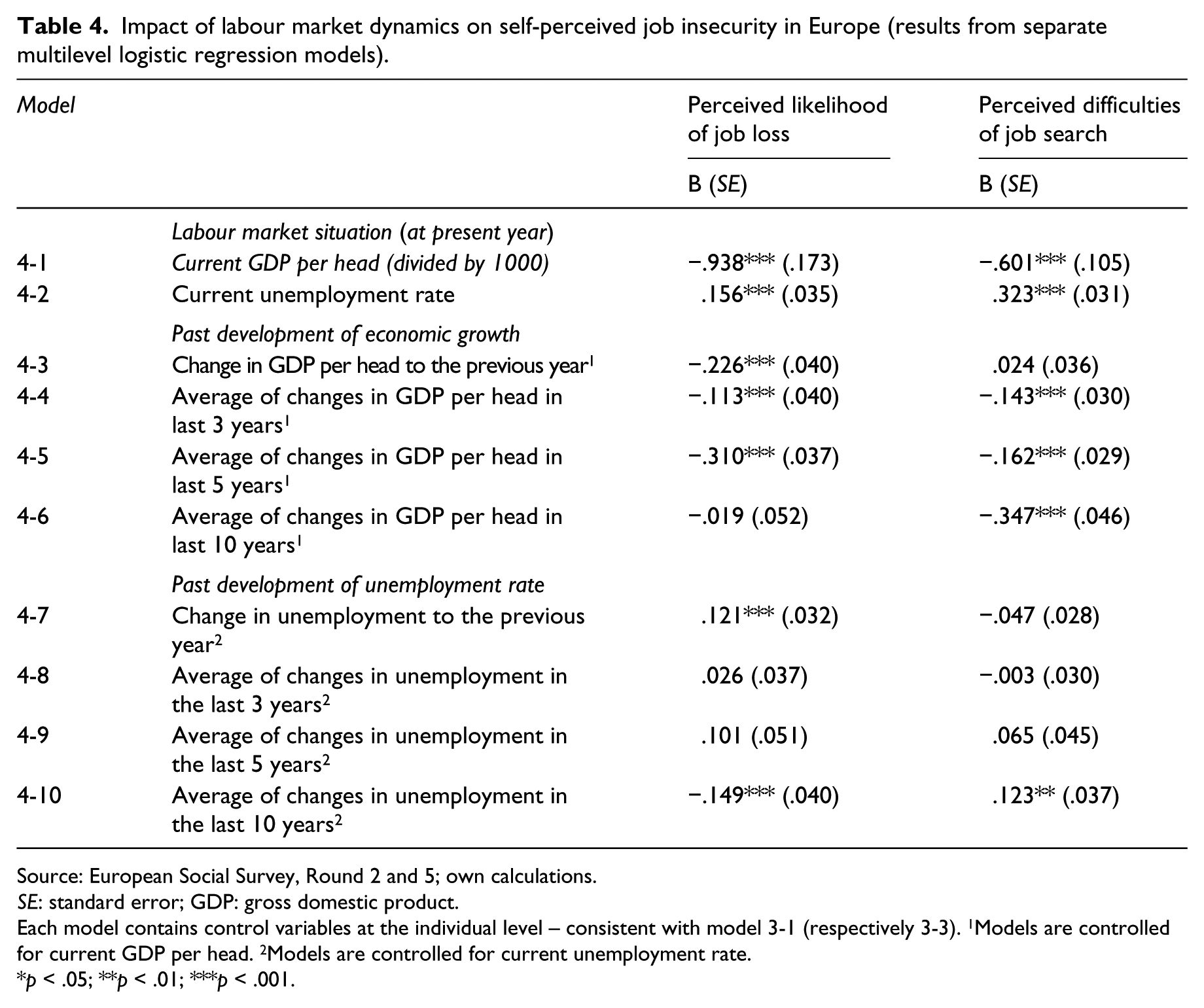
In Table 4, the results from separate multilevel logistic regression models for the perception of the likelihood of job loss and the difficulties of job search are arranged side by side. In the first two rows, the presented models contain each variable indicating the current opportunity structure of the labour market. The change in context is addressed by a set of four variables representing the past development. To reveal the additional impact of the change independent of the current situation, it is also controlled for the current level indicator. In addition, all models contain individual-level variables consistent with model 3-2 (model 3-4), as shown in Table 3.
Impact of labour market dynamics on self-perceived job insecurity in Europe (results from separate multilevel logistic regression models).
Source: European Social Survey, Round 2 and 5; own calculations.
SE: standard error; GDP: gross domestic product.
Each model contains control variables at the individual level – consistent with model 3-1 (respectively 3-3). 1Models are controlled for current GDP per head. 2Models are controlled for current unemployment rate.
p < .05; **p < .01; ***p < .001.
The results confirm the expected association between the current situation and an individual’s perception of job insecurity (models 4-1 and 4-2). The current GDP is significantly negatively related to both the job insecurity dimensions, indicating that prosperity reduces individual’s job insecurity in general. Similarly, high unemployment rate increases job insecurity. So far, there are no differences between both dimensions. This may demonstrate that the labour market reflects the overall framework of job insecurity. Further on, there is an additional, significantly negative relationship with the past development of economic growth and both dimensions of job insecurity (from models 4-3 to 4-6). This suggests that as people perceive economic growth in the recent past, they are more optimistic about future prospects – independent of the value of the current GDP (as it is controlled for it). As the GDP retains its significance, this additionally indicates that the economic affluence (measured by the current GDP) and the economic growth (measured by the past change of the GDP) are distinct determinants of job insecurity at the individual level. Comparing the strength of the indicators of the GDP and the economic growth, however, we find that the GDP matters more than the economic growth.
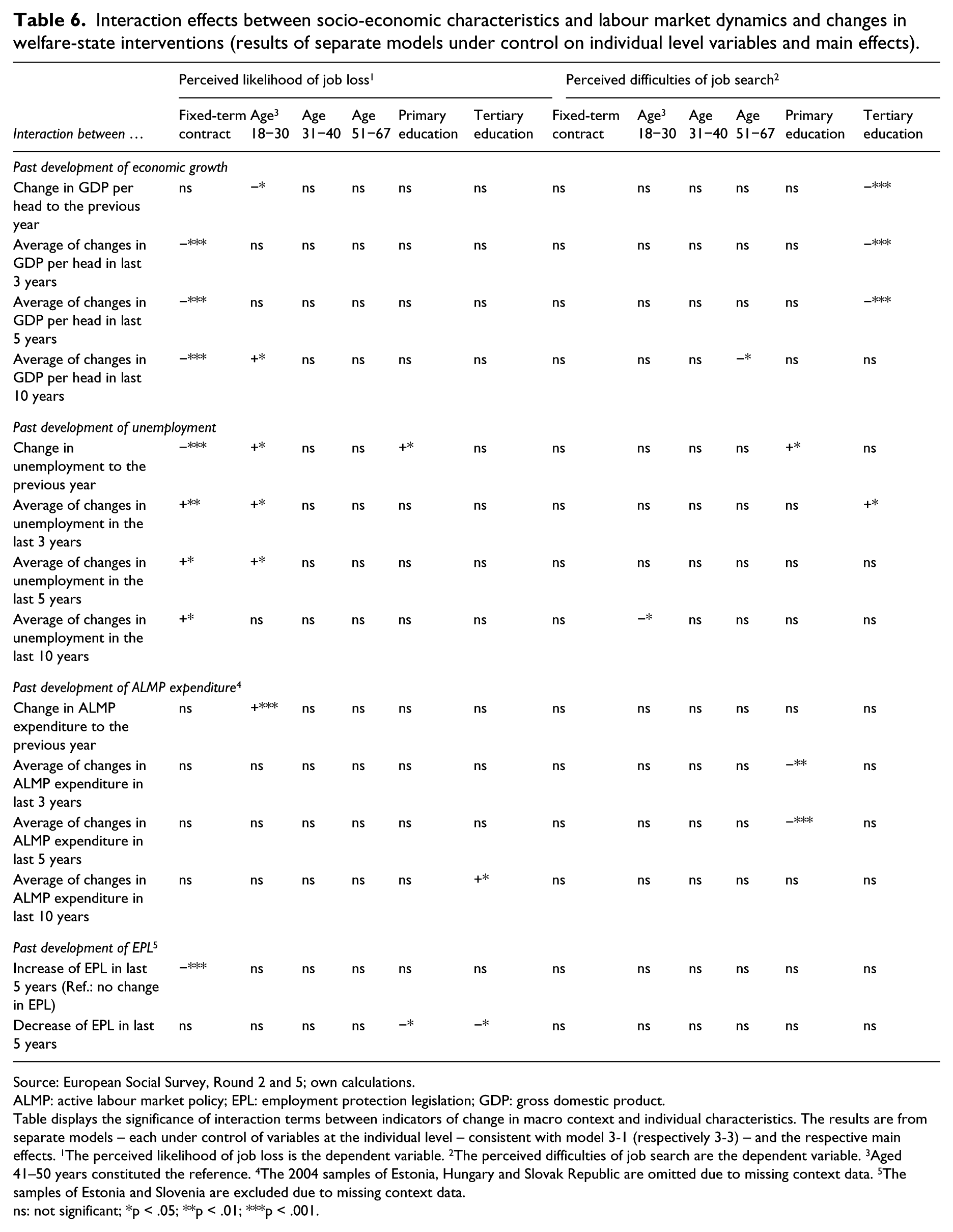
The relationship with the economic condition is similar in both dimensions of job insecurity. Furthermore, it can be assumed that individuals respond faster when it comes to the perception of the likelihood of job loss and that it takes some time before the development of the economic growth is related to the difficulties of finding a new job. More differentiated analyses reveal that workers with fixed-term contract are less sensitive to economic growth. Their evaluation of the likelihood of job loss is hardly impacted by economic growth that goes beyond 1 year, when compared with workers with an open-ended contract (see interaction effects in Table 6). This may be explained by the fact that the extension of a fixed-term contract heavily depends on the present economic outlook.
When it comes to the perception of the difficulties of job search, however, workers with fixed-term and open-ended contracts do not differ in their response to labour market change. Interestingly, workers with tertiary education do react less to changes in GDP, when compared with those with secondary education, which could be due to their general high employability that makes them rather independent of the economic development.
The short-term change in the unemployment rate is only significantly related to the job loss dimension, but not to the job search dimension. Here again, it seems that the perception of stability of the current job is more strongly associated with the labour market development than the perception of the job search difficulties. Independent of the current level of unemployment rate, growing unemployment is perceived as a threat for the current job. This supports the view that employees are aware of economic cycles. In the medium term, however, there are no effects so far. The missing significance of the short- and medium-term development of unemployment may be because this effect differs depending on certain characteristics of the workers. Positive interactions suggest that workers with fixed-term contracts and young employees do indeed respond with an increased perception of the likelihood of job loss to increasing unemployment (see Table 6). These groups respond faster (and stronger) to rising unemployment with increased perception of the likelihood of job loss. This is interesting as it reveals that vulnerable groups are more sensitive to changes, whereas workers with an established position on the labour market react with less sensitivity to rising or falling unemployment. Regarding the job search dimension, there are no systematic interactions. The association between the perception of the job search difficulties and the development of the unemployment rate does not differ according to the socio-economic groups under study.
Interestingly, the association with the change in unemployment rate in the last 10 years differs in the direction between the two dimensions. The likelihood of job loss is negatively associated with the development of unemployment rate, suggesting that with increasing unemployment, the concerns about the future of the current job decline. The reason for that contra-intuitive relationship may be a kind of selection and learning process. Insecure jobs are degraded first at times of increasing unemployment. At the same time, employees who remain in employment may experience that their jobs are stable and therefore stay optimistic about the future. A reverse relationship exists for the individual’s perception of the job search difficulties. Along with rising unemployment in the last 10 years, the perceived difficulties of job search increased. The medium-term rise in unemployment may be interpreted by employees as a general worsening of labour market opportunities.
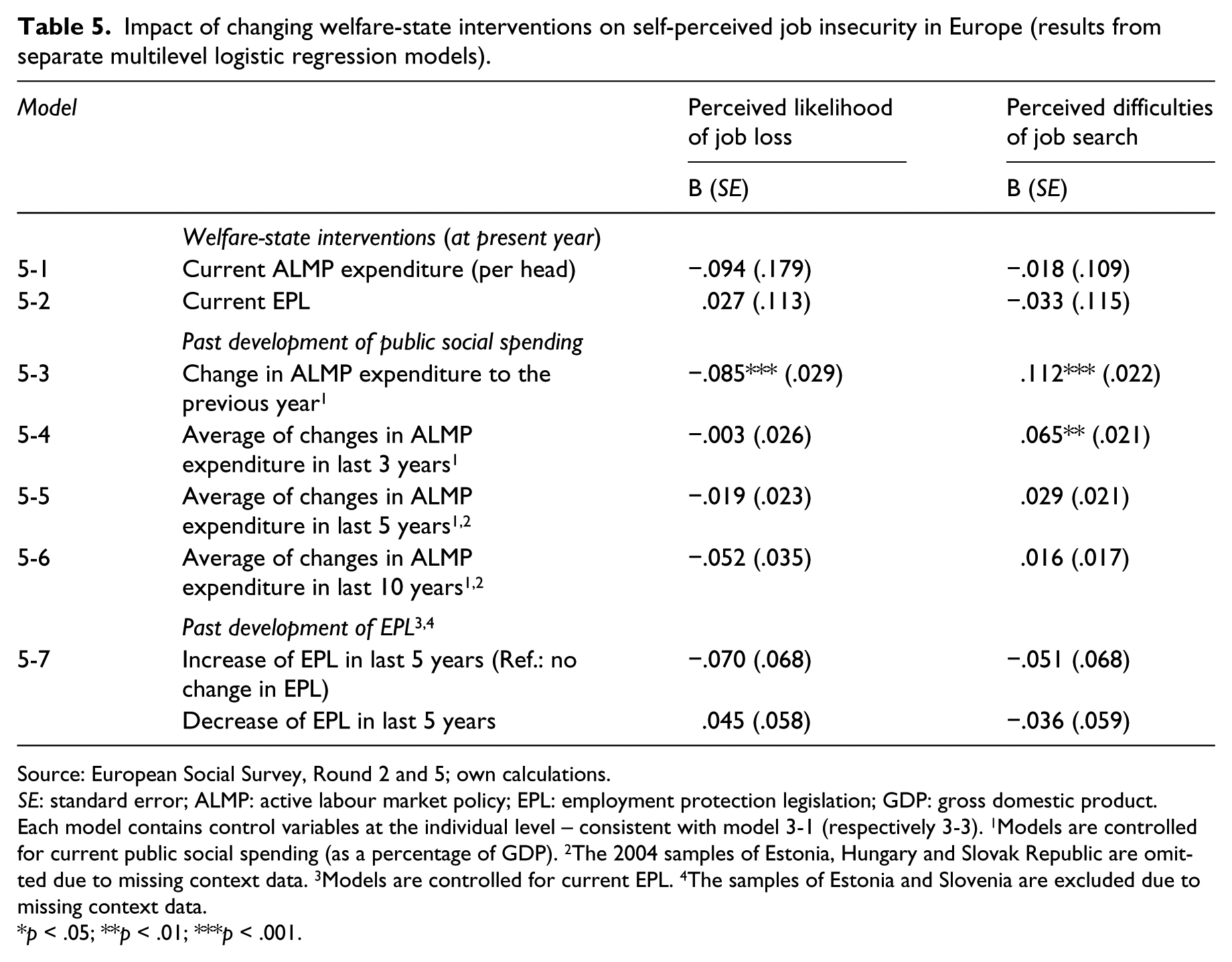
Table 5 has the same structure as the previous one: the results from separate multilevel models for the two dimensions of job insecurity are arranged next to each other. Now, variables capturing welfare-state effects are considered.
Impact of changing welfare-state interventions on self-perceived job insecurity in Europe (results from separate multilevel logistic regression models).
Source: European Social Survey, Round 2 and 5; own calculations.
SE: standard error; ALMP: active labour market policy; EPL: employment protection legislation; GDP: gross domestic product.
Each model contains control variables at the individual level – consistent with model 3-1 (respectively 3-3). 1Models are controlled for current public social spending (as a percentage of GDP). 2The 2004 samples of Estonia, Hungary and Slovak Republic are omitted due to missing context data. 3Models are controlled for current EPL. 4The samples of Estonia and Slovenia are excluded due to missing context data.
p < .05; **p < .01; ***p < .001.
One important measure is represented by ALMPs, including job search assistance, labour market training and wage subsidies (Van Vliet and Koster, 2011). Social spending for ALMPs could affect self-perceived job insecurity by buffering the consequences of job loss and helping to re-enter the labour market. For international comparisons, it is essential to put the amount of social expenditures in relation to the GDP or the rate of unemployment. Both are subject to change, though, and therefore may distort the results when it comes to their changes over time. For instance, an increase in the expenditure per GDP could also be owing to a decrease in GDP (or a decrease in expenditure per unemployment rate could be owing to an increase in unemployment). As the focus of this study is on the impact of the change, the ALMP expenditure per head is used by assuming that the population size is relatively stable over time. The current level of ALMP expenditure is neither significant for cognitive job insecurity nor for labour market insecurity. There are nonetheless interesting associations with the change in ALMP expenditure over time and both dimensions of self-perceived job insecurity. An increase in ALMP expenditure in the last year is associated with a decrease in self-perceived likelihood of job loss and increases the subjective propensity to find a new job in the future if necessary. Obviously the expansion of social spending may generally increase the confidence in the future, as it shows that the welfare state undertakes something to improve the situation. In particular, at the time of economic crisis, welfare-state interventions may signal that it is possible to overcome the economic difficulties. This is of particular relevance in the context with the Euro Stabilisation Mechanism (ESM) that should help countries to overcome their financial crisis. Supervised by the European Commission, the European Central Bank and the International Monetary Fund receiving countries have to cut back their social expenditure and particularly ALMP programmes in return for ESM bailouts (see www.esm.europa.eu for details; see also Lane, 2012). If this austerity really decreases future optimism, it can be suggested that it will also lead to growing anxiety for job loss with its negative consequences for health, families and – eventually – social cohesion.
For the job search dimension, however, the development of ALMP expenditure seems to have the opposite effect. An increase – under control of the current level – is on average associated with an increase in self-perceived difficulties of job search. In fact, the increase in ALMP expenditure seems to be perceived as the opposite of what it is intended to do – namely, the improvement in job search opportunities. One possible explanation is that workers’ awareness of labour market difficulties is heightened the more effort is being put into ALMP. If we take a more sophisticated look at the interaction between job search difficulties and the increase in ALMP expenditure, however, it turns out that this correlation is less strong for people with primary education (see Table 6). This suggests that the target group of ALMP indeed perceives these interventions as promoting security.
Interaction effects between socio-economic characteristics and labour market dynamics and changes in welfare-state interventions (results of separate models under control on individual level variables and main effects).
Source: European Social Survey, Round 2 and 5; own calculations.
ALMP: active labour market policy; EPL: employment protection legislation; GDP: gross domestic product.
Table displays the significance of interaction terms between indicators of change in macro context and individual characteristics. The results are from separate models – each under control of variables at the individual level – consistent with model 3-1 (respectively 3-3) – and the respective main effects. 1The perceived likelihood of job loss is the dependent variable. 2The perceived difficulties of job search are the dependent variable. 3Aged 41–50 years constituted the reference. 4The 2004 samples of Estonia, Hungary and Slovak Republic are omitted due to missing context data. 5The samples of Estonia and Slovenia are excluded due to missing context data.
ns: not significant; *p < .05; **p < .01; ***p < .001.
Another policy area which might affect subjective insecurity is the EPL. There is no significant association between the level of EPL either with self-perceived likelihood or with difficulties of job search (model 5-2). Furthermore, a change in EPL is not significantly associated with the two dimensions of job insecurity. There is an interesting interaction effect between the change in EPL and cognitive job insecurity, however (Table 6). It turns out that workers with fixed-term contracts benefit less from increased EPL than workers with unlimited contracts. The negative interaction suggests that the tendency to react to an increased EPL with a decreased perception of the likelihood of job loss does not apply for workers with fixed-term contract.
In the case of a decrease of EPL in the last 5 years, there is a significant interaction effect with tertiary education. The main effect that a relaxation in EPL is associated with an increase in cognitive job insecurity is lower for workers with primary and tertiary education. It seems that the core workforce with mainly secondary educated workers is particularly vulnerable to labour market flexibility. These jobs are characterised by a high stability, while low- and high-skilled jobs are characterised by a higher mobility. The already higher mobility of high-skilled workers could be a reason why this group of workers react less strongly to a decrease in EPL. Summing up, the perception of job insecurity differs depending on the labour market position of the employee. Individuals are not only aware of the development within their country, they also know their own position and align their evaluation of the context accordingly.
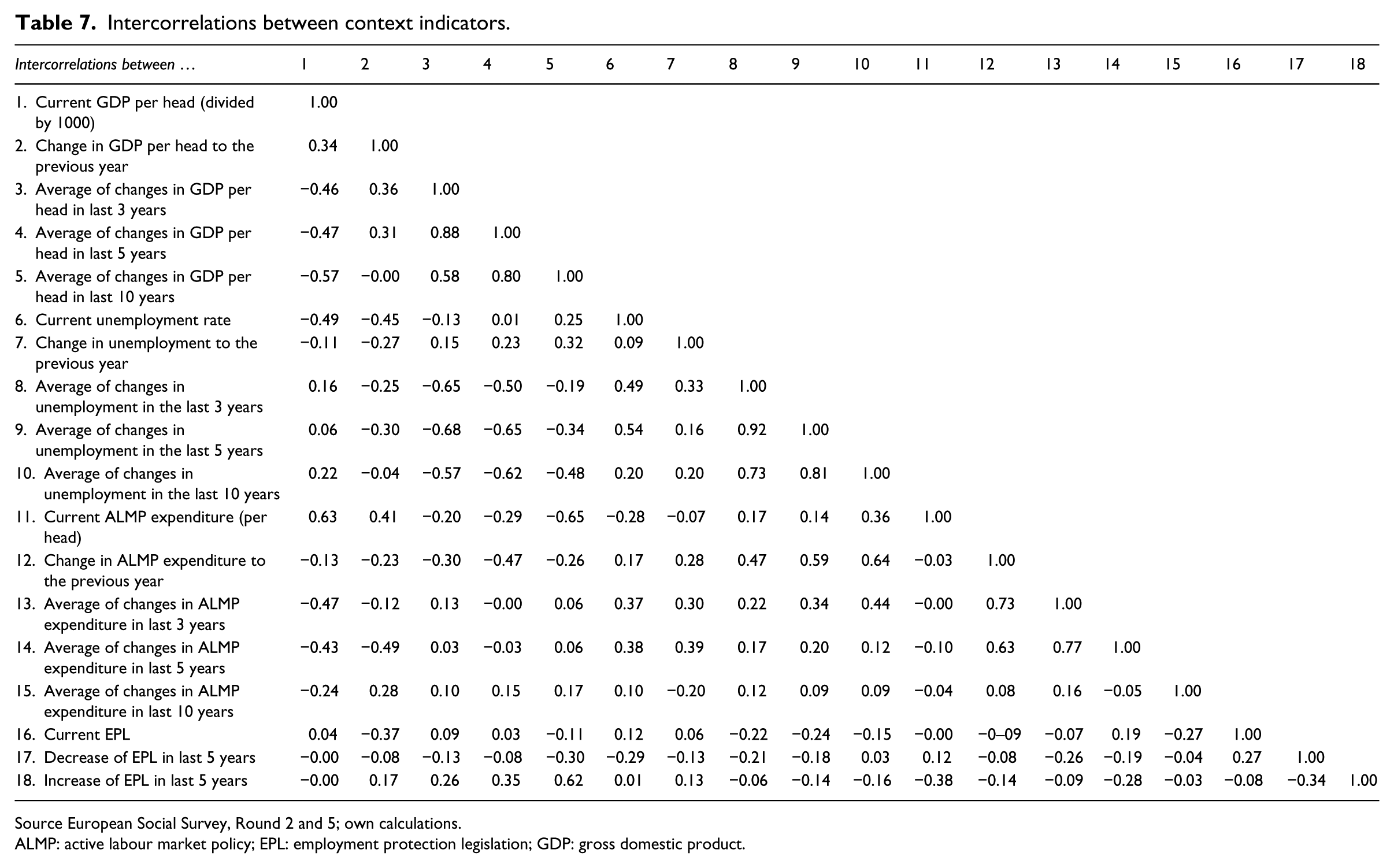
Finally, we would like to provide some information regarding the correlation between the context variables. Table 7 shows that the correlations are rather small, which may be also due to the fact that all context variables are standardised. Expectedly, there is a negative correlation between current GDP and the current unemployment rate. In a similar way, there is also a negative correlation between the change in GDP and the change in unemployment. More interesting is the correlation between the different dynamic indicators. Whereas the neighbouring indicators are relatively highly correlated, the correlation between the change compared to previous year and the change within the last 10 years is weaker – this is true for the change in GDP and unemployment rate. This shows that the dynamics of labour markets follows a certain path; however, there is a difference between short-term and medium-term development. This reminds us that there seems to be a difference in individual’s reaction to short-term economic shocks from 1 year to another compared to medium-term adjustment reactions to business-cycle-related changes.
Intercorrelations between context indicators.
Source European Social Survey, Round 2 and 5; own calculations.
ALMP: active labour market policy; EPL: employment protection legislation; GDP: gross domestic product.
Conclusion
The study examined the spread and determinants of job insecurity in the light of dynamic labour markets and changing welfare-state institutions. Analysing data from two rounds of the ESS, we investigated two dimensions of self-perceived job insecurity, namely, the perceived likelihood of job loss (‘cognitive job insecurity’) as well as self-perceived difficulties of job search (‘labour market insecurity’). Similar to previous research, we find a great variation in a country’s level of self-perceived job insecurity in both dimensions. Further on, our results indicate a more or less strong increase or decrease in insecurity levels between 2004 and 2010, at least partially reflecting differences in the extent to which European economies were affected by the recent economic crisis. In addition, our analysis largely replicates the correlation between important individual socio-economic and socio-demographic characteristics, on the one hand, and the two dimensions of self-perceived job insecurity, on the other hand.
Our article was mainly motivated by the question of whether there is a correlation between the degree and speed of economic or institutional change and self-perceived job insecurity that could help us to explain international differences. The present analysis thus aimed at complementing previous research by considering a country’s current economic and social conditions as well as recent changes therein. Based on socio-psychological assumptions about the impact of inter-temporal contextual changes on the individual interpretation and definition of a situation, we found that the development of the labour market as well as changes in welfare-state interventions contributes to explain individual’s perception of job insecurity. Thus, people seem to react not only to absolute context levels but also to the extent of context changes in what they are used to. In other words, context changes have an additional impact on people’s feelings of labour market insecurity, which is independent of the current situation in a country.
Further on, contextual changes have different short- and medium-term impacts on the two dimensions of self-perceived job insecurity, namely, cognitive job insecurity and labour market insecurity. Sharp short-term economic declines or respective upswings seem to affect first and foremost individuals’ cognitive job insecurity, whereas medium-term economic or labour market changes particularly affect labour market insecurity. It seems that the (cognitive) perception of stability of the current job is more strongly associated with the recent labour market development than the perception of job search difficulties. In other words, growing unemployment is perceived as a threat for the current job, whereas a medium-term rise in unemployment may be interpreted by employees as a general worsening of labour market opportunities.
Looking at the impact of the level of as well as the change in labour market policy on self-perceived job insecurity, we find that only changes in the degree of ALMP measures affect self-perceived job insecurity. Whereas the current ALMP expenditure and the current degree of as well as changes in EPL show no significant correlation with job insecurity, short-term changes in ALMP decrease cognitive job insecurity and increase the perceived difficulties of job search. On first sight, these overall contradictory or even lacking labour market policy effects on job insecurity are puzzling. It turns out, however, that whether and how changes in ALMP or EPL actually have an impact on job insecurity depends on individual working conditions (fixed vs unlimited contract), age and education. For example, short- and medium-term economic changes affect the cognitive job insecurity of underprivileged workers as well as the labour market insecurity of highly skilled workers. This reminds us that job insecurity is not only a multidimensional phenomenon but also that the interrelationship between these dimensions is rather complex, particularly if we are aware of differences between certain group of workers. Future research should, therefore, address such differences in more detail.
This study is a first step to examine the determinants of job insecurity from a dynamic perspective. A number of questions remain, however, which should be addressed in future research: this study argued that labour market dynamics and welfare-state changes act as signals, and that their impact on the perception of job insecurity need not be the same as that on the objective stability of employment. Furthermore, different context variables can only be indicators of a much more complex setting that workers are exposed to (cf. Hank and Erlinghagen, 2011). Further research should therefore study the determinants of objective and subjective insecurity in comparison with each other. By doing so, we could get more insight into the perception process, which is the basis of the self-perceived job insecurity.
In addition, based on a multidimensional understanding of job insecurity, this study considered two dimensions of job insecurity. To further justify this approach, it is necessary to expand the knowledge of these dimensions. Are they also differently related to consequences? What kind of workers are in particular affected by them? Moreover, further studies need to consider the affective dimension of job insecurity. The cognitive dimension that was under study here is a precondition of affective job insecurity, which captures the (negative) feelings concerning the continuity in a current job (Borg and Elizur, 1992). Not all kinds of cognitive insecurity need to be translated into worries about labour market opportunities, however. Only under consideration of all important dimensions of self-perceived job insecurity can its determinants and consequences be fully understood.
Besides these limitations, our study provides evidence that it is not only workers’ individual characteristics, individual working conditions or the current economic situation and current welfare-state interventions that determine self-perceived job insecurity. Social, economic or institutional change also has an important impact on individuals’ perception of their future employment prospects. Thus, we can conclude that changing context matters. This insight does not only help to better understand the complex interrelationship between different determinants of job insecurity. Our approach on self-perceived job insecurity also provides new insights for social policy. It reminds policy makers that the degree and the pace of institutional change as well as the relative decrease or increase in societal wealth have an impact on the incidence of subjective job insecurity with its negative consequences like decreasing health, increasing family problems as well as cuts in consumer and household spending. They should be aware of such possible side effects, if future welfare-state reforms or economic policy programmes will be developed or implemented.
Footnotes
Funding
This research received no specific grant from any funding agency in the public, commercial or not-for-profit sectors.