



Abstract
A positive shift in the oxygen isotope composition (δ18O) of lake carbonates in the Eastern Mediterranean from the early to late Holocene is usually interpreted as a change to drier (reduced precipitation and evaporation (P/E)) conditions. However, it has also been suggested that changes in the seasonality of precipitation could explain these trends. Here, Holocene records of δ18O from both carbonates and diatom silica, from Lake Nar in central Turkey, provide insights into palaeoseasonality. We show how Δδ18Olakewater (the difference between spring and summer reconstructed δ18Olakewater) was minimal in the early Holocene and for most of the last millennium, but was greater at other times. For example, between ~4100 and 1600 yr BP, we suggest that increased Δδ18Olakewater could have been the result of relatively more spring/summer evaporation, amplified by a decline in lake level. In terms of change in annual mean δ18O, isotope mass balance modelling shows that this can be influenced by changes in seasonal P/E as well as inter-annual P/E, but lake level falls inferred from other proxies confirm that there was a mid-Holocene transition to drier climatic conditions in central Turkey.
Keywords
Introduction
Understanding the detail of hydrological variability over multiple timescales is important in regions such as the Eastern Mediterranean where water stress is increasing (Issar and Adar, 2010) and where management of water supplies under a changing climate is essential (e.g. Kelley et al., 2015). Water availability issues have potentially been critical for societies in the region for millennia (e.g. Weiss et al., 1993), and an understanding of both changes in mean state and seasonality is required (Rohling, 2016). Many studies from the region have shown a shift in the middle Holocene to higher oxygen isotope ratios of lake carbonates (δ18Ocarbonate) (Roberts et al., 2008). These are usually interpreted as responding to changes in the balance between precipitation and evaporation (P/E) (Jones and Roberts, 2008), thus showing a mid-Holocene transition from a wetter early Holocene, with relatively more precipitation, to a drier late Holocene, where evaporation losses were relatively increased. However, the extent to which there were shifts in the seasonality of precipitation in the Holocene, and the degree to which these would have affected δ18Ocarbonate, remains an unresolved issue in Eastern Mediterranean Holocene palaeoclimatology. Stevens et al. (2001, 2006) suggested that a change from winter- to spring-dominated precipitation was potentially a driver of the increasing δ18Ocarbonate trend in the middle Holocene, based on the analysis of the sediments of Lakes Zeribar and Mirabad in Iran. Other authors, using pollen and microcharcoal records, have also argued that there were shifts in the seasonality of precipitation in the region through the Holocene (e.g. Djamali et al., 2010; Peyron et al., 2011; Turner et al., 2010).
Seasonality change analysis requires proxies that are sensitive to different seasons. Dean et al. (2013) showed that comparing δ18O from endogenic carbonates and diatoms at Nar Gölü (Gölü = lake in Turkish) in central Anatolia can provide insights into seasonality as they formed/grew at different times of the year. Such records, combining δ18O from diatoms and carbonates in the same core, remain rare. Here, we present a δ18Ocarbonate versus δ18Odiatom record from Nar Gölü for the entire Holocene, developing a rigorous methodology for diatom isotope data correction, coupled with an isotope mass balance model, to investigate how and why intra-annual variability (seasonality) of δ18Olakewater changed over time.
Site description and core material
Nar Gölü (38°20′24″N, 34°27′23″E; 1363 m a.s.l.; Figure 1) is a maar lake, ~0.6 km2 in area and >20 m deep, located in the Cappadocia region of central Turkey. The climate of the region is continental Mediterranean (Kutiel and Türkeş, 2005), with precipitation at a nearby meteorological station in Niğde, 45 km from Nar Gölü, averaging 339 mm per year and peaking in April and May. The crater geology is dominated by basalt and ignimbrite (Gevrek and Kazanci, 2000). The limnology and contemporary sedimentation patterns are described in detail in Dean et al. (2015a), but in summary endogenic carbonate precipitation in the lake surface waters is weighted towards the early summer (end of June/beginning of July), whereas diatom production is weighted towards the spring (end of March/beginning of April). There was ~1.6‰ intra-annual variability in δ18Olakewater through our June 2011 to July 2012 monitoring period (the period for which we have samples through all seasons), ~0.5‰ of which occurred between the estimated time of peak diatom growth in spring 2012 and carbonate formation in the early summer 2012 (Figure 2). We believe that the timing of diatom growth and carbonate precipitation is likely to have stayed roughly the same through the Holocene. As we show in section ‘Results’, δ18Olakewater reconstructed for the time of diatom growth is almost always lower than δ18Olakewater reconstructed for the time of carbonate precipitation, and this would not be the case if diatom growth was weighted to the summer or early autumn (Figure 2). Indeed, previous work showed there were three planktonic/facultative planktonic ‘bloom’ taxa common in the Nar Gölü diatom record over the last 1700 years that are likely to have been spring blooming: Synedra acus, Nitzschia paleacea and Cyclotella meneghiniana (Woodbridge and Roberts, 2011). These taxa were also the dominant ‘bloom’ diatoms in the early Holocene (11,700–6500 yr BP), and it is reasonable to assume that their seasonal ecology was the same at that time as during the late Holocene. The only additional early-Holocene bloom diatom is Aulacoseira ambigua, but this is only important in two samples (11,657 and 11,403 yr BP). In the section from 4400 to 3900 yr BP, it is possible that N. palaea was a bloom taxon and it is likely to have been spring blooming like N. paleacea. The majority of carbonate is always likely to have precipitated in the early summer in response to increasing evaporation (Dean et al., 2015a).
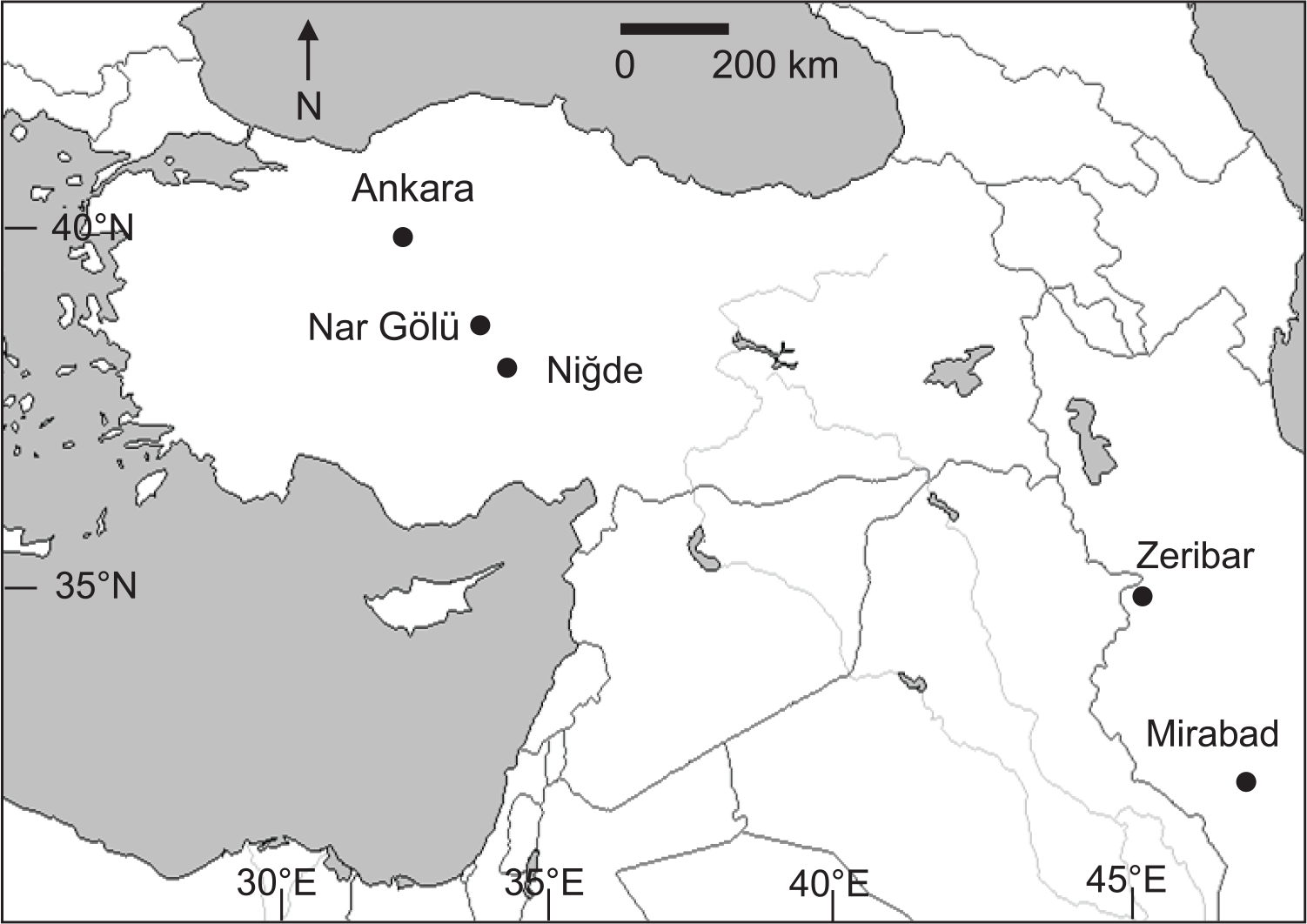
Location of Nar Gölü in Turkey and Lakes Zeribar and Mirabad in Iran.
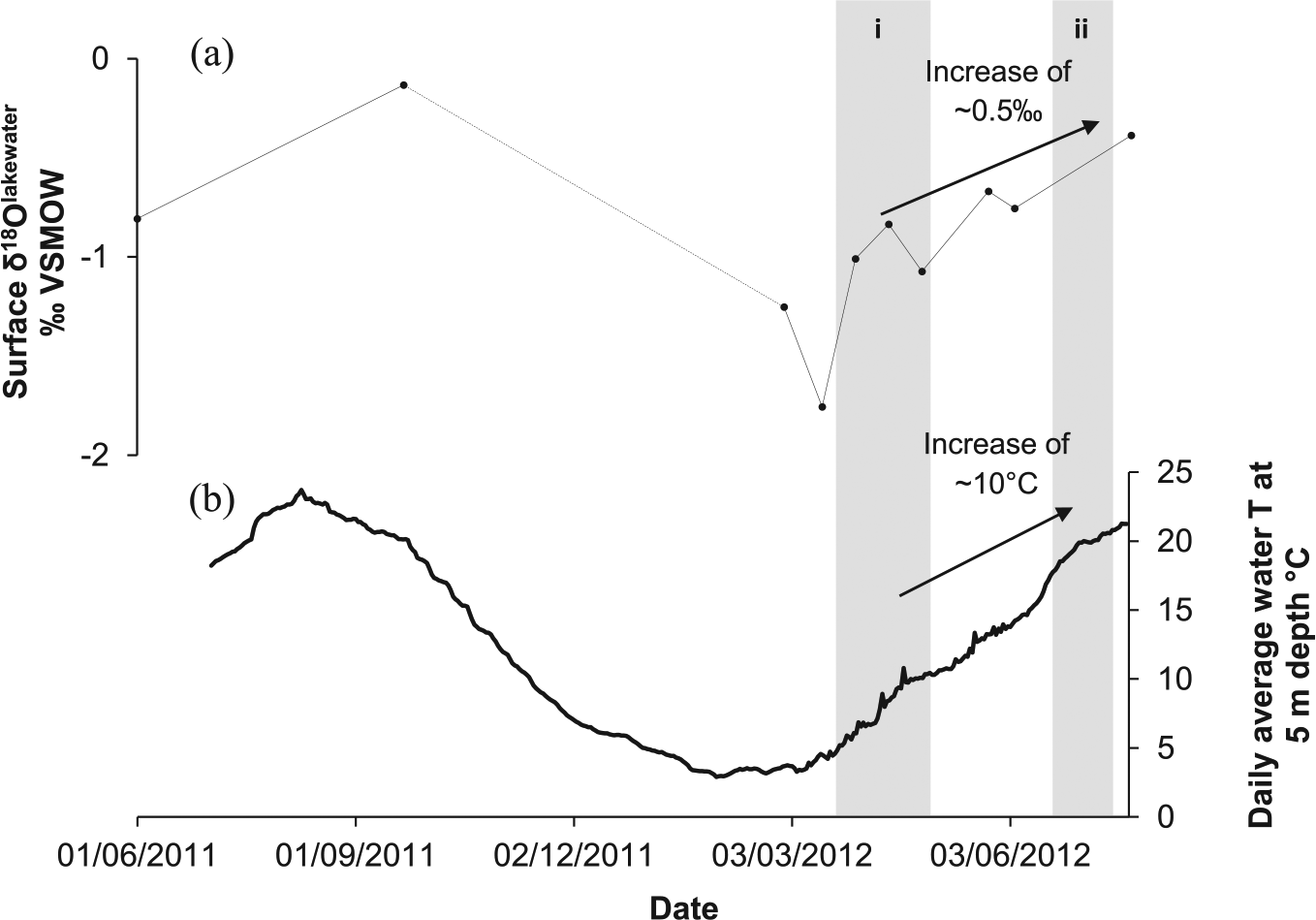
Seasonal data from 2011 to 2012, showing increase in (a) lake water δ18O and (b) temperature between the estimated times of year of (i) diatom growth and (ii) carbonate formation.
There have been a number of previous palaeolimnological investigations of the Nar Gölü sediments (e.g. England et al., 2008; Jones et al., 2006; Woodbridge and Roberts, 2010). Here, we combine data from the original core sequence taken in 2001/2002 (NAR01/02) with new data from a longer core sequence taken in 2010 (Roberts et al., 2016). The chronology of the NAR10 core was constructed by combining varve counting and U-Th dates (Dean et al., 2015b).
Methods
Isotope sample preparation and mass spectrometry
δ18Ocarbonate data were produced using classic vacuum techniques and an Optima dual-inlet mass spectrometer, as described in detail in Dean et al. (2015b). Specifically, the carbonate analysed for isotopes from the Nar Gölü record was calcite and aragonite, as detailed in Dean et al. (2015b). Data are given as ‰ deviations from VPDB, and analytical reproducibility was 0.1‰ for δ18O and δ13C.
Samples for δ18Odiatom analysis need to be as free as possible of non-diatom material since the analytical methods used will liberate oxygen from these other components of the sediment, such as carbonate and detrital silicates. Samples were, therefore, processed using techniques similar to those of Morley et al. (2004), with the use of hydrogen peroxide, nitric acid (to help remove organics; Tyler et al., 2007), hydrochloric acid, differential settling, sieving at 10 µm and heavy liquid separation stages. δ18Odiatom analysis was carried out on cleaned diatom samples using the stepwise fluorination technique and a Thermo Finnigan MAT 253 at the NERC Isotope Geosciences Facilities. The method is described in Leng and Sloane (2008) and has been verified through an inter-laboratory comparison exercise (Chapligin et al., 2011). The data are presented as ‰ deviations from VSMOW, and analytical reproducibility was 0.3‰.
Diatom isotope samples prepared from ~8800 to 7900 and ~4000 to 2350 yr BP had insufficient diatom silica for analysis, although there were still diatoms growing in the lake at this time (Roberts et al., 2016).
Correction of diatom isotope data
The samples from Nar Gölü still contained residual detrital silicates after the preparation described above due to a lack of density contrast between the detrital silicates and the diatoms, which reduced the efficacy of heavy liquid separation (Dean et al., 2013). A correction was, therefore, applied to account for the impact of detrital silicates on δ18O (Mackay et al., 2011):
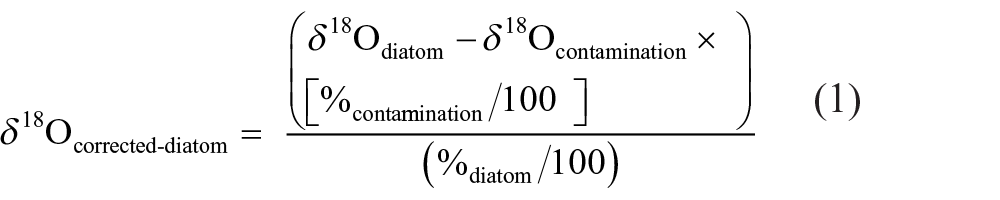
where δ18Odiatom is the original isotope value of the prepared diatom sample, %contamination and %diatom are calculated using Eq. (2) (details below) and δ18Ocontamination is the isotope value of contamination.
A number of modifications were made to the methodology for the contamination correction of δ18Odiatom samples that was previously used for Nar Gölü sediments (Dean et al., 2013) to make it more robust. For element concentration data, here we use an x-ray fluorescence (XRF; PANalytical Epsilon 3 XL) rather than an energy-dispersive x-ray spectroscopy (EDS) probe, allowing for more precise measurements of aluminium concentrations (a good marker for the amount of detrital silicates present (Mackay et al., 2011), with an analytical reproducibility of 0.03%. The XRF was set up to quantify the proportions of Na, Mg, Al, Si, P, S, K, Ca, T, Mn and Fe using the PANalytical Omnian program. Instead of calculating the δ18O of contamination through the intercept of the δ18Odiatom versus contamination plot, nine turbidites from along the NAR10 core were prepared and run in the same way as the diatom isotope samples. They had a mean δ18O value of 16.0‰ (±1.0‰), which is within uncertainty of the value of 16.5‰ estimated in Dean et al. (2013) from NAR01/02. It is likely that %contamination was overestimated in Dean et al. (2013) because some minerogenic contamination will be removed by the first fluorination stage before δ18O is measured (Swann and Leng, 2009), and diatom frustules can incorporate aluminium, so Al2O3% in the samples does not only reflect minerogenic contamination (Beck et al., 2002; Koning et al., 2007; Ren et al., 2013; Swann, 2010). To investigate the latter effect, scanning electron microscopy (SEM) was used to identify individual clean diatoms (i.e. with no detrital silicates visible at all), and the Al2O3 wt% of the individual diatoms was measured by EDS, averaging 1.0 ± 0.4% (1σ) for the individual diatoms measured across 16 samples. This suggests that there is a significant amount of diatom-bound aluminium, so a correction factor was applied to account for this. Based on the average Al2O3 value of the turbidite layers throughout the core sequence that were prepared and run as δ18Odiatom samples, 14.56% Al2O3 represents 100% contamination (i.e. all detrital silicates, no diatoms). 1‰ Al2O3 represents 0% contamination. Thus, there is an equation, derived from Figure SI-1 (available online), that can be used to calculate the new %contamination values for our samples:

where sampleAl is the measured Al2O3 concentration in each sample analysed for δ18Odiatom. Eq. (2) was used to calculate the %contamination values for Eq. (1). This modified methodology was used on the new samples from NAR10, as well as to recalculate the corrections to the NAR01/02 data presented in Dean et al. (2013). Henceforth, δ18Odiatom refers to the corrected δ18Odiatom data.
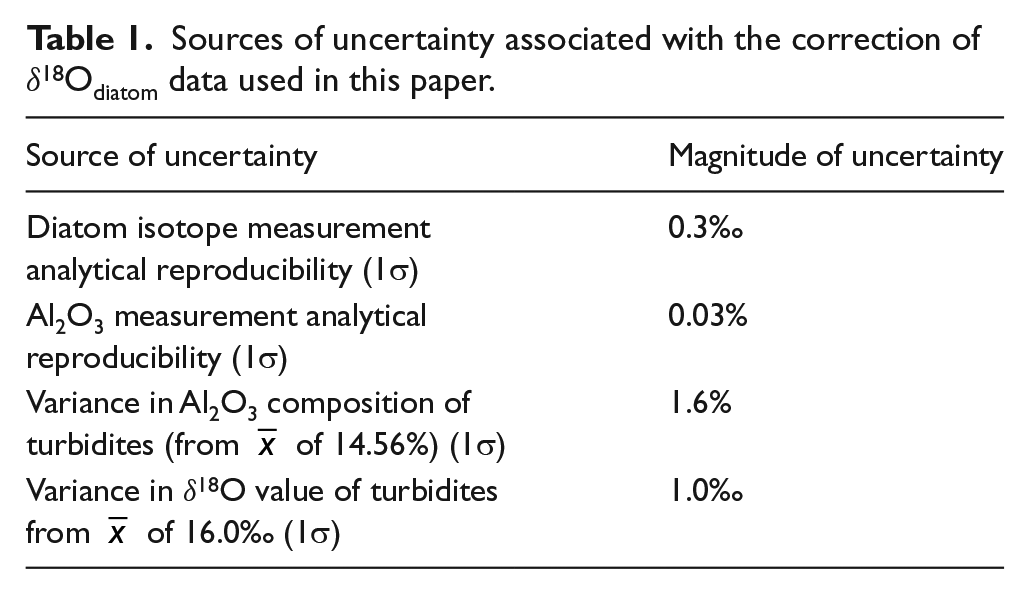
Uncertainties from individual components of the correction are outlined in Table 1 and were combined to calculate the overall uncertainty associated with the correction. Uncertainties are reduced compared with those reported in Dean et al. (2013) because of the improved methodology. Figure SI-2 (available online) shows the original corrected NAR01/02 data published in Dean et al. (2013) compared with recalculated values used in this paper. Although the actual values are slightly different and not all of the samples from Dean et al. (2013) had sufficient material remaining for reanalysis by XRF (so data are now excluded), the general trends are very similar, with periods of lower δ18O particularly at 1450, 1250 and 120 yr BP. The overall similarities in trends mean that the interpretations of Dean et al. (2013) are still valid, although for consistency in this paper we present the reanalysed NAR01/02 data along with the NAR10 data.
Sources of uncertainty associated with the correction of δ18Odiatom data used in this paper.
Calculating δ18Olakewater
To allow for direct comparison of the δ18O data from carbonates and diatoms, we estimate δ18Olakewater at the time of carbonate precipitation and diatom growth using the calcite (Kim and O’Neil, 1997), aragonite (Grossman and Ku, 1986) and diatom (Crespin et al., 2010) palaeotemperature equations, respectively:
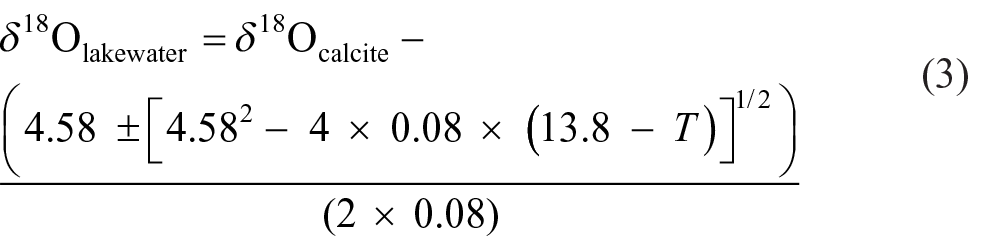


where δ18Olakewater and δ18Odiatom are expressed on the VSMOW scale, and δ18Ocalcite and δ18Oaragonite against VPDB and T in °C. We use a temperature range of +15 to +20°C for the time of carbonate precipitation and +5 to +10°C for the time of diatom growth, justified by our measurements of seasonal lake waters from 2011 to 2013 (Figure 2 and Eastwood et al., unpublished data). The temperature range for the time of diatom growth has been reduced from that used in Dean et al. (2013), where we estimated +5–+15°C, because of our increased knowledge of intra-annual epilimnion temperature variability with the additional years of temperature logging data from Nar Gölü. While we recognise that there will have been changes in temperature during the Holocene, these changes are likely to have been only a few degrees centigrade (see references in section ‘The early Holocene (11,700–6500 yr BP)’), smaller than the ranges of 5°C given for the times of diatom growth and carbonate precipitation.
Lake isotope mass balance models
To examine further the changes in hydroclimate seasonality and how this would be recorded in the seasonality of the lake δ18O system, we use an isotope mass balance model, employing the equations outlined in Jones and Imbers (2010) and Jones et al. (2016) and fully explained in the Supplementary Information (available online). The equations are based on monthly time steps to allow investigations of changing intra-annual δ18Olakewater variability under different climatic states that have been identified from the isotope data: for the present day (modern), the middle Holocene (here meaning from approximately 6000 to 1600 yr BP) and the early Holocene.
For the present day, average monthly values of temperature (average (Tav), minimum (Tmin) and maximum (Tmax)), total precipitation (P) and snowfall between 2005 and 2011 (only until 2010 for snowfall) from the meteorological station at Niğde were used to drive a model of modern conditions in a lake with the same volume (~7,500,000 m3) and lake area (556,500 m2) as Nar Gölü (Table 2 and Supplementary Information, available online).
Lake isotope mass balance model summary.
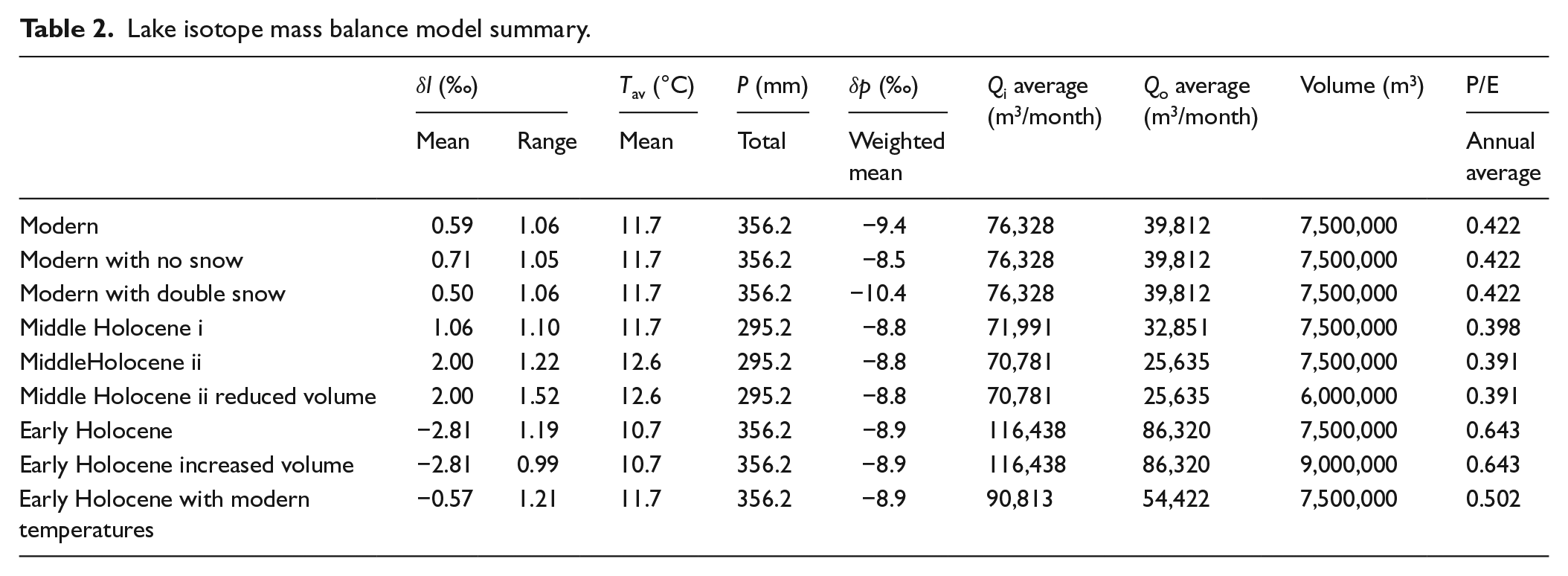
In this modern lake setting, annual average δ18Olakewater in the model is 0.59‰ with a range (intra-annual δ18Olakewater variability) of 1.06 (Table 2). This compares with measured summer values at Nar Gölü of between −1.9‰ and −0.2‰ for the same period (2005–2011) and an intra-annual range of ~1.6‰ (Dean et al., 2015a). The difference between the measured data and the model are due to a number of factors. First, the model is for a lake in Niğde, the location of the nearest meteorological station, not for Nar Gölü. This will affect the P/E components of the model, and therefore the parameterisation of surface and groundwater inflow and outflow, which have narrow windows for a given lake in a given location (Jones et al., 2016). Nar Gölü is also stratified, adding a level of complexity to the isotope hydrology not included in the model. However, the model in the modern scenario has mean and intra-annual δ18O values in the same order as Nar Gölü and is used here not to recreate conditions at Nar Gölü precisely but to inform our discussion of why δ18O may change in time. As such, the model is deliberately simple and appropriate. Inputs to the model for the palaeoclimate scenarios are based on our best understanding of regional temperature and precipitation changes from the literature (see discussions below).
Results
Figure 3 shows δ18Ocarbonate and δ18Odiatom plotted against depth. There are gaps in both the δ18Ocarbonate record, where interpretation of δ18Ocarbonate values is complicated by dolomite precipitation (Dean et al., 2015b), and the δ18Odiatom record, because there was not enough diatom silica for isotope analysis and/or samples were too contaminated (with detrital silicates and at times additionally with dolomite), even after cleaning, to run. Because of issues with the chronology discussed elsewhere (Dean et al., 2015b; Roberts et al., 2016), the data between 1034 and 1161 cm are not plotted in Figure 4.
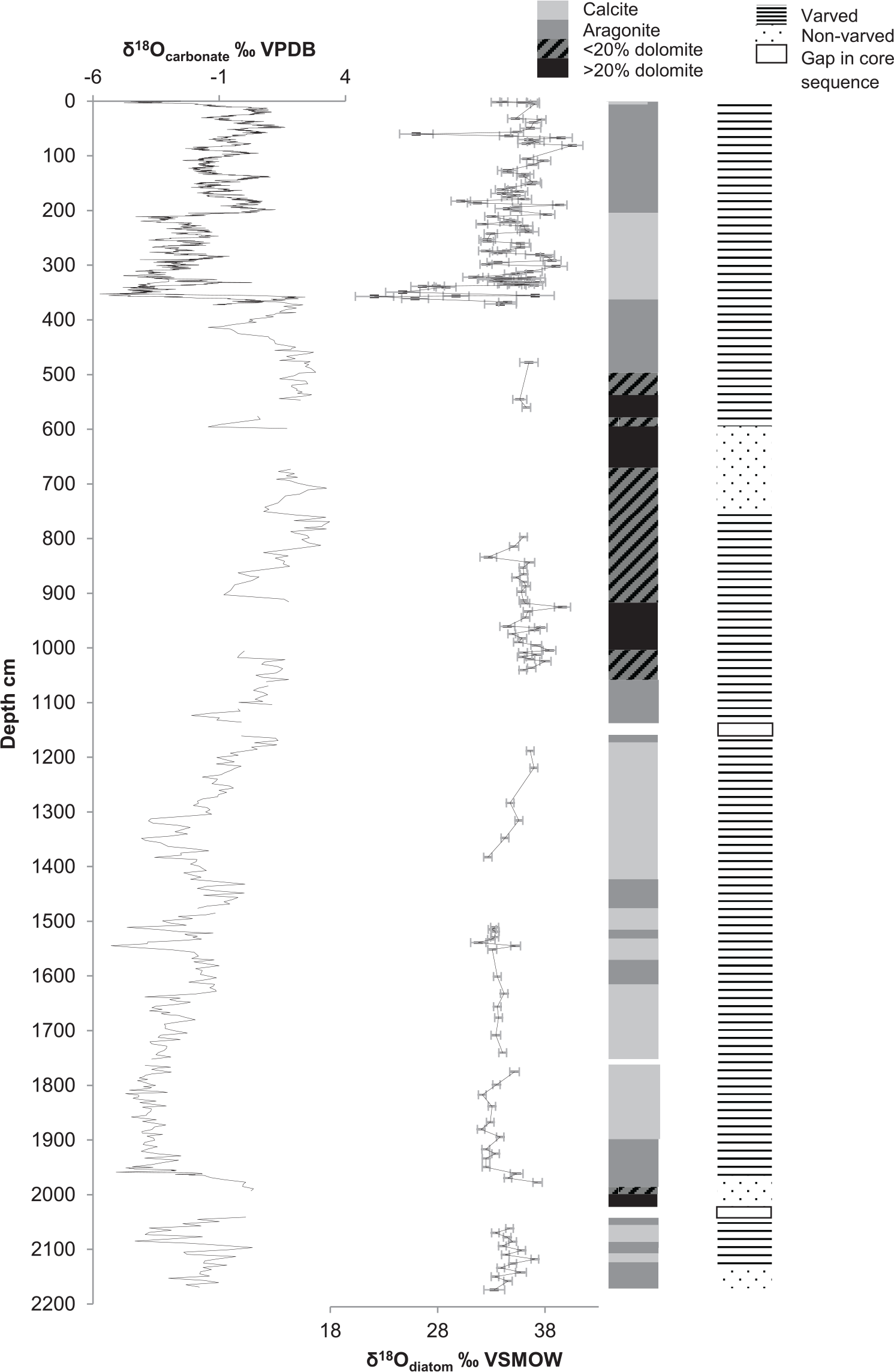
δ18Odiatom and δ18Ocarbonate data plotted against depth, with the error bars on δ18Odiatom representing the combined uncertainties from Table 1. There are no carbonate isotope data in sections where there were gaps due to coring (shown by white boxes on the lithology plot) or where there were high levels (>20%) of dolomite (explained in detail in Dean et al., 2015b). Gaps in the diatom isotope data are due to gaps in coring or insufficient amounts of diatom silica.
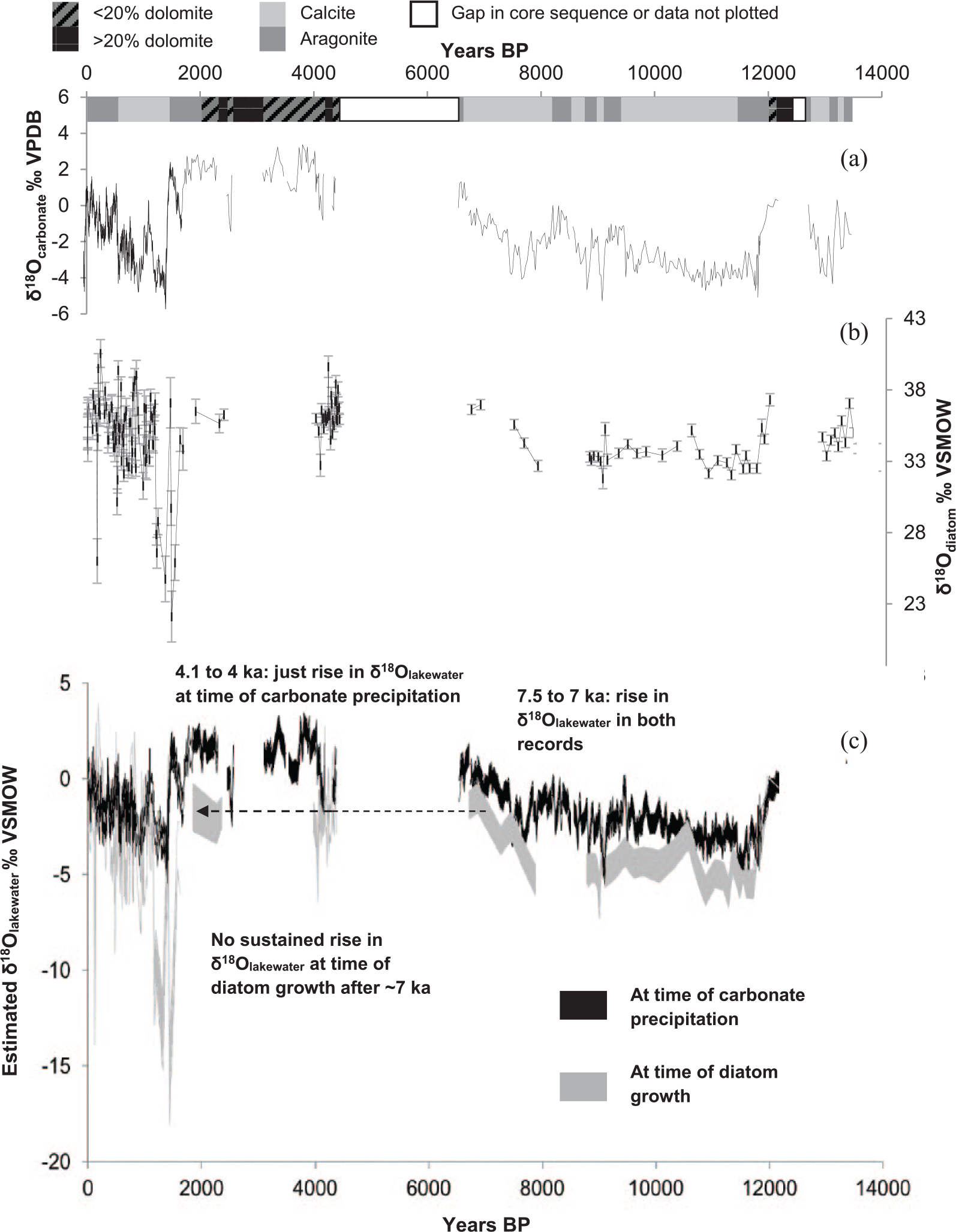
(a) δ18Ocarbonate (with carbonate mineralogy data) and (b) δ18Odiatom, with (c) data converted to δ18Olakewater assuming a temperature range of +15 to +20°C for the time of carbonate precipitation and +5 to +10°C for the time of diatom growth. Some isotope data plotted against depth are not shown against age due to issues with the chronology (discussed in detail in Dean et al., 2015b).
The overall trends in δ18Ocarbonate and δ18Odiatom are similar. Both have lower values towards the bottom of the core in the period likely to be at the time of the Bølling-Allerød, higher values at the time of the Younger Dryas and lower values in the early Holocene (Figure 4). Both δ18Odiatom and δ18Ocarbonate increase at ~7500 yr BP to higher values (by 4‰ VSMOW for δ18Odiatom and ~5‰ VPDB for δ18Ocarbonate). However, a major difference is that while there is another increase in δ18Ocarbonate (>2‰ VPDB) at ~4100 yr BP, ending with peak Holocene values that are maintained until ~1600 yr BP, there is no corresponding second increase in δ18Odiatom values. Where data are available, δ18Odiatom values are relatively stable, at c. +37‰ VSMOW for the period ~7000–1600 yr BP after rising from early-Holocene values of c. +33‰. Both δ18Ocarbonate and δ18Odiatom decline dramatically at ~1600 yr BP for ~400 years, before returning to higher values for most of the last 1000 years.
Figure 4 also shows δ18Olakewater estimated for the times of diatom growth and carbonate precipitation. Because late glacial temperatures are not well known, we only use the palaeotemperature equations to reconstruct δ18Olakewater for the Holocene, during which annual average temperatures probably only changed by a few degrees in the region (e.g. Emeis et al., 2000). The shaded areas on Figure 4c combine maximum and minimum δ18Olakewater values possible for the temperature ranges noted above, plus the uncertainties associated with the δ18Odiatom contamination correction. δ18Olakewater at the time of diatom growth increased from c. −5‰ in the early Holocene to c. −1‰ in the middle Holocene, before falling to c. −15‰ ~1600–1200 yr BP and then returning to higher values (c. −2‰ to −3‰) for the last 1000 years. δ18Olakewater at the time of carbonate precipitation increased from c. −3‰ in the early Holocene to c. +1‰ by ~6600 yr BP and to c. +3‰ by ~4000 yr BP, before falling to c. −4‰ by ~1600–1200 yr BP and then increasing to c. −1‰ for the last 1000 years.
Δδ18Olakewater, the difference between δ18Olakewater at the time of carbonate precipitation compared with the time of diatom growth, was only ~1‰ in the early Holocene. It then increased to ~4‰ for much of the time from ~4100 to 1600 yr BP, as δ18Olakewater at the time of carbonate precipitation increased at 4100 yr BP, but δ18Olakewater at the time of diatom growth did not (Figure 4c). Then, at ~1600–1200 yr BP, because the fall in δ18Odiatom is much greater than the fall in δ18Ocarbonate, Δδ18Olakewater values are >10‰. For the last 1000 years, Δδ18Olakewater declined to levels more similar to the early Holocene. Limited variability in recent times is also shown in our monitoring data, with only a 0.5‰ difference in our lake water samples between April and July in 2012 (Figure 2) and a 0.7‰ difference seen between April and August 2002 (Jones et al., 2005).
Discussion
From the isotope data, there appear to be three key lake states: (1) limited difference between δ18Olakewater at the times of diatom growth and carbonate precipitation, that is, Δδ18Olakewater ~1‰ (during the early Holocene and last 1000 years); (2) intermediate Δδ18Olakewater, at ~4‰ (middle Holocene and up to ~1600 yr BP); and (3) maximum Δδ18Olakewater, at ~10‰ (~1600–1200 yr BP). We discuss these in turn. The differences in resolution between the carbonate and diatom isotope data mean that we limit ourselves to comparing the long-term general trends in the data through the early and middle Holocene.
The early Holocene (11,700–6500 yr BP)
δ18Odiatom and δ18Ocarbonate values for the early Holocene are both low relative to the middle and late Holocene (Figure 4), which could indicate higher annual average P/E (i.e. effectively wetter conditions) in the early Holocene, as has been suggested by other studies (summarised in Roberts et al., 2008). Specifically, pollen data (Djamali et al., 2010; Kotthoff et al., 2008; Peyron et al., 2011, 2017), microcharcoal data (Turner et al., 2008; Vanniere et al., 2011; Wick et al., 2003), climate modelling results (Brayshaw et al., 2010) and δ18O data of freshwater mollusc shells from Çatalhöyük ~160 km SW of Nar (Bar-Yosef Mayer et al., 2012; Lewis et al., 2017) have suggested that the early Holocene in the Eastern Mediterranean region had wetter winters than present, but with many of the studies suggesting drier springs and/or summers. Annual average temperatures were several degrees cooler in the early Holocene compared with the late Holocene, as reconstructed by alkenone-derived sea surface temperatures (Emeis et al., 2000; Triantaphyllou et al., 2009) and speleothem fluid inclusions (McGarry et al., 2004). However, the prominence of Pistacia in the pollen record from Nar Gölü (Roberts et al., 2016) and from nearby Eski Acıgöl (Roberts et al., 2001; Woldring and Bottema, 2003), between 11,000 and 8000 yr BP, suggests winters were milder than today (Rossignol-Strick, 1999). Therefore, the inferred drops in annual temperature may have been concentrated in the summer. There is, however, a gap in the δ18Odiatom record between 8800 and 7900 yr BP due to there being too little diatom silica for diatom isotope measurements to be made. Intriguingly, this period coincides with a phase of marked spring floods on the Çarşamba river in Anatolia (Boyer et al., 2006), which would have been caused by enhanced spring snowmelt in its upper watershed in the Taurus mountains. Despite the fact that spring and summer precipitation may have been lower in the early Holocene than the present day, δ18Ocarbonate is still lower in the early Holocene and there is limited Δδ18Olakewater. Presumably, the lower δ18Ocarbonate and limited Δδ18Olakewater are due to relatively less summer evaporation of the lake waters compared with the middle and late Holocene, which is to be expected if there were lower temperatures in the early-Holocene spring/summer, as well as increased winter precipitation. Our mass balance modelling allows us to refine our basic interpretation of hydroclimate in the early Holocene.
In our early-Holocene model, we have reduced the annual average temperature by 1°C, as estimated from the studies cited above and as used in Jones et al. (2007); details are provided in SI Tables (available online). Annual precipitation values are kept the same as the present day, but the seasonal distribution has been shifted to more winter-dominated with no snow, as is indicated by the literature discussed above. Under this scenario, annual average lake water values are lower than the present-day model (−2.81‰) and could be even more so if annual average precipitation was increased under the same P/E seasonality regime, as seems possible (Roberts et al., 2008). This demonstrates that the seasonality of P/E, in addition to the annual average conditions, is important in controlling inter-annual changes in δ18Olakewater.
To investigate further the relative contributions of precipitation and temperature (linked closely to evaporation in this model), an early-Holocene scenario, using modern-day temperatures (as well as modern-day annual average precipitation levels again) and changing only the seasonal distribution of precipitation, was also undertaken. Here, δ18Olakewater was still lower than the present-day scenario (−0.57‰) and the average of monthly P/E increases (Table 2). This result drives a difference in this model because groundwater inflow and outflow are dependent on P/E, with additional groundwater outflow required in the early Holocene compared with present day to balance the lake system and suggesting higher lake levels under early-Holocene conditions. This indicates that changing the seasonal distribution of P/E, irrespective of annual average conditions, can lead to changes in both lake hydrology and lake isotope composition. It highlights the need to be careful when suggesting that the early Holocene was ‘wetter’ than the middle and late Holocene based solely on evidence from lake sediment isotopes, as now it is clear that changes in the seasonality of P/E have an impact on δ18O, in part due to changes in seasonal water balance as well as due to changes in δ18O of precipitation (Table 2), as suggested by Stevens et al. (2001, 2006) for Lakes Zeribar and Mirabad.
The middle Holocene (~6500–~1600 yr BP)
At Nar Gölü, a number of proxies respond to changes in lake level, usually driven by changes in P/E, such as lithology (varved vs non-varved), carbonate mineralogy (calcite vs aragonite and dolomite; Dean et al., 2015b), the Sr-Ca elemental ratio and certain diatom species (Roberts et al., 2016). These multiple proxies indicate that annual average P/E was probably lower after ~6500 yr BP compared with the early Holocene. We know at Nar Gölü that lake level falls lead to more positive δ18Ocarbonate (Dean et al., 2015a), and therefore, a significant part of the δ18O trend in carbonates and diatoms to higher values in the middle and late Holocene, compared with the early Holocene, is likely related to a shift to drier conditions. Other influences on δ18O, such as changes in the isotopic composition of the source of precipitation, amount effect and temperature, could not have accounted for the large size of the shift in both δ18Ocarbonate and δ18Odiatom from the early to middle and late Holocene.
Δδ18Olakewater does not initially increase in the middle Holocene because both δ18Ocarbonate and δ18Odiatom increase, but in the period ~4100–~1600 yr BP, δ18Olakewater at the time of diatom growth is up to ~4‰ lower than at the time of carbonate precipitation (Figure 4). Annual average precipitation must have been lower for most of the middle and late Holocene compared with the early Holocene (Jones et al., 2007). It is possible that a significant share of this precipitation decline occurred at ~7500 yr BP, while at ~4100 yr BP there was a rise in summer evaporation, but winter/spring precipitation levels did not change substantially. If that was the case, that would explain why both δ18Odiatom (responding more to winter/spring precipitation) and δ18Ocarbonate (responding more to summer evaporation) increased at ~7500 yr BP but only δ18Ocarbonate increased at ~4100 yr BP (thus leading to increased Δδ18Olakewater). However, lake-level change could account for some of this increased Δδ18Olakewater. Δδ18Olakewater will be more sensitive to inputs and outputs when the lake level and volume were lower, with less of a buffering effect than when the lake level is higher: this is a well-known phenomenon in limnology (e.g. Leng and Anderson, 2003; Steinman et al., 2010).
To test this with the lake isotope mass balance model, two model conditions are set for this period. In both, precipitation is reduced compared with the present day as multi-proxy evidence from Nar Gölü (Dean et al., 2015b; Roberts et al., 2016) and elsewhere in the region (Roberts et al., 2008) points to lower lake levels at this time. In the first mid-Holocene scenario (MHi), temperatures are held the same as the present day, resulting in an average δ18Olakewater value of +1.06‰, which is higher than the early-Holocene scenarios and thus supports our contention that some of the increase in δ18O could be due to reduced annual precipitation. However, the range in the model is only 1.10‰ (Table 2), which is similar to the early-Holocene model, despite the higher Δδ18Olakewater seen in the data in the middle Holocene compared with the early Holocene. In the second mid-Holocene scenario (MHii), summer temperatures are raised to increase summer evaporation such that P/E seasonality is increased relative to MHi. Average δ18Olakewater values become even more positive (+2.00‰) and the range increases (1.22‰; Table 2). Furthermore, a shift from a steady-state lake with the same volume as the present-day scenario, in MHii conditions, to one with a 20% smaller volume increases the intra-annual δ18Olakewater range to 1.52‰, showing how a change to lower lake levels could account for some of the increase in Δδ18Olakewater at this time (as discussed above).
To ensure steady-state lakes under the mid-Holocene climatic scenarios, the groundwater outflow constant has to be reduced (see Supplementary Information for model details, available online). In the model, this is partly a function of P/E as more water entering the lake will push more of it out; however, here it needs to be further reduced relative to present day to ensure a steady-state lake, that is, one where volume is not always increasing or decreasing at an annual time step. This suggests that there are further controls on groundwater outflow that are not described by our simple model, possibly linked to lake volume and depth, with the lower lake levels of the middle Holocene also potentially contributing to reduced groundwater outflow at these times.
Late Holocene (last 1600 years)
Around 1600–1200 yr BP, Δδ18Olakewater was at times >10‰. Dean et al. (2013) hypothesised that this was due to a seasonal freshwater lid of low δ18O snowmelt occurring at this time, in which the diatoms lived. To further investigate the sensitivity of the Nar Gölü system to snow volume, the modern lake isotope mass balance model was altered to have no snow or double the amount of snow, keeping all other variables the same. This produced more positive or more negative annual average δ18Olakewater values, respectively, as would be expected by putting less or more negative δ18O water into the system (Table 2). There is no impact on the range if these changes are made into a well-mixed lake system as in the model, further suggesting that density differences and stratification are probably important in explaining the Δδ18Olakewater variability reconstructed down-core at Nar Gölü as proposed by Dean et al. (2013) for this unusual period during the late Holocene.
Conclusion
The combination of two δ18O records, from diatoms and endogenic carbonate that formed in Nar Gölü in central Turkey at different times of the year, helps to inform discussion of palaeoseasonality. Our record indicates that there are three lake states through the Holocene: the early Holocene and the last 1000 years when there is limited Δδ18Olakewater, the middle Holocene and up to ~1600 yr BP when Δδ18Olakewater was at times ~4‰, and a short period at ~1600–1200 yr BP when Δδ18Olakewater was ~10‰. Modelling results indicate that the increase in Δδ18Olakewater from the early Holocene to the middle Holocene could be related to changes in P/E seasonality, but a shift to lower lake levels (and volumes) would have amplified the impact of any changes in P/E. Therefore, while we have shown that using Δδ18Olakewater to compare lake conditions at different times of the year can provide insights into seasonality, it is not a simple proxy for intra-annual P/E variability. In terms of inter-annual δ18O change, we suggest that lower δ18Ocarbonate and δ18Odiatom values in the early Holocene compared with the present day could partly be the result of changes in the seasonality of P/E. However, the multi-proxy evidence available from Nar Gölü clearly points to a middle-Holocene transition to lower lake levels driven by annual mean shifts to reduced P/E.
Footnotes
Acknowledgements
We would like to thank those others who contributed to fieldwork in 2010 at Nar Gölü: Samantha Allcock, Hakan Yiğitbaşıoğlu, Fabien Arnaud, Emmanuel Malet, Ersin Ateş, Çetin Şenkul, Gwyn Jones, Ryan Smith and Ceran Şekeryapan. George Swann is thanked for his useful advice with the diatom isotope corrections. We thank Gianni Zanchetta and an anonymous reviewer for helpful comments that improved the manuscript. A  file and a data file are associated with the online version of this paper.
Funding
JRD was funded by NERC PhD studentship NE/I528477/1 (2010–2014). Diatom isotope work was funded by NIGFSC grant IP/1346/1112 to MDJ. Fieldwork was supported by National Geographic and British Institute at Ankara grants to CNR. All authors have contributed intellectually and approved the final version.
References
Supplementary Material
Please find the following supplemental material available below.
For Open Access articles published under a Creative Commons License, all supplemental material carries the same license as the article it is associated with.
For non-Open Access articles published, all supplemental material carries a non-exclusive license, and permission requests for re-use of supplemental material or any part of supplemental material shall be sent directly to the copyright owner as specified in the copyright notice associated with the article.
