




Abstract
Avian populations can substantially influence lacustrine nutrient loading and biogeochemical cycling through guano deposition. Here, we examine the influence of climate-forced avian migration throughout the Holocene on Kettle Lake, North Dakota, using stable nitrogen and carbon isotope values (δ15N, δ13C) of lake sediment organic matter. Carbon content and δ13C values are negatively correlated with δ15N and appear to be driven by changes in charcoal abundance and watershed vegetation, respectively. We find enriched δ15N values when the guano mineral struvite is present in the lake sediment core in the early to Mid-Holocene. A strong δ15N-percent Nitrogen content relationship during periods with struvite, relative to periods without struvite, indicates that guano deposition from mass bird visitations altered past nitrogen cycle processes, likely through enhanced denitrification. These results attest to the ability of waterfowl to alter lacustrine N-cycling in a mid-continental North American lake, and indicate that paleo-N data in this particular lake are recording a unique history that does not necessarily represent regional paleoenvironmental conditions. However, a significant, positive relationship between δ15N and Ambrosia and Amaranthaceae pollen abundance suggests avian visitation and its impacts on the N-cycle occurred during periods of anomalously wet summers superimposed on the background conditions of early to Mid-Holocene drought.
Introduction
The glacially-formed Prairie Pothole Region (PPR) of northern mid-continental North America contains numerous wetlands and lakes and is a vital breeding ground for millions of waterfowl (Johnson et al., 2005; McKenna et al., 2021). The PPR is also used intensively for agriculture, and tens of millions of dollars are spent annually to assist in waterfowl conservation and understand how this region will respond to future climate change (Mattsson et al., 2020). The future of PPR climate and its impact on wetlands and waterfowl is a key question, as the climate regime of PPR is highly variable over the period of instrumental climate observations, with intermittent droughts and pluvial episodes on interannual to decadal timescales causing large changes in wetland cover and return cycles (Johnson and Poiani, 2016; Johnson et al., 2005). This variability greatly affects the movements and number of migratory waterfowl in the region, as well as the overall productivity of the landscape (Johnson et al., 2005; McIntyre et al., 2019; Steen et al., 2016, 2018). Future climate projections for the PPR indicate a trend toward increased temperature, aridity, and agricultural and ecological drought, despite small projected increases in winter and spring precipitation (Douville et al., 2021; Lee et al., 2021). The subsequent impact on PPR wetlands is drying, which will likely impact waterfowl migrations and breeding in one of the world’s most productive waterfowl habitats (Johnson and Poiani, 2016; McKenna et al., 2021).
Future projections of PPR climate lie outside the envelope of observed, 20th–21st century climate variability, but paleoclimate records from this region suggest that prolonged droughts were a common occurrence during the Holocene (Booth et al., 2005; Grimm et al., 2011; Laird et al., 1998; Woodhouse and Overpeck, 1998). The influence of Holocene climate variability, such as these prolonged droughts, on migratory waterfowl is an under-explored topic. However, a unique record from Kettle Lake, North Dakota presents an unusual case of evidence for past climate-induced influence on waterfowl and their lacustrine habitat in the PPR. Paleoclimatic and paleoecologic records spanning the last 13,000 years have been developed from a well-dated Kettle Lake sediment core, along with a record of the mineral struvite (Commerford et al., 2018; Donovan and Grimm, 2007; Grimm et al., 2011). Struvite, a Mg-ammonium-phosphate mineral, is rare in Holocene lake sediment records, but it is commonly precipitated in modern human and animal wastewaters (Donovan and Grimm, 2007; Johnson, 1980; Leng and Soares, 2021; Nelson et al., 2003). Apart from Kettle Lake, only a small number of lakes are reported to have naturally occurring struvite deposits, including Chalco Lake, Mexico and Mono Lake, California (Cohen and Ribbe, 1966; Pi et al., 2010). The rarity of struvite in Holocene lake sediments is largely due to the need for high abundances of nitrogen and phosphorus in order for it to precipitate, along with a Mg source and anoxic conditions.
The source of nutrient loading necessary for struvite precipitation at Kettle Lake was most likely large deposits of waterfowl guano (Donovan and Grimm, 2007). As a result of prolonged, punctuating droughts in the northern Great Plains during the early to Mid-Holocene, many of the small, shallow lakes and wetlands in the region evaporated, but the relatively deeper Kettle Lake (~30 m deep in the early Holocene) would have persisted, making it the only water resource available for >60 km to migratory waterfowl along the Central Flyway (Figure 1). Therefore, large numbers of migratory waterfowl in search of water may have been forced to land at Kettle Lake. With such mass visitation, large amounts of guano are hypothesized to have been deposited, leading to high inputs of N and P into the lake system. Coupling this with bottom water anoxia and increased Mg concentration due to evaporation of lake water, Kettle Lake met the specific conditions to precipitate struvite. Thus, the Kettle Lake struvite record presents a rich history of past waterfowl presence in response to varying climate in the PPR.
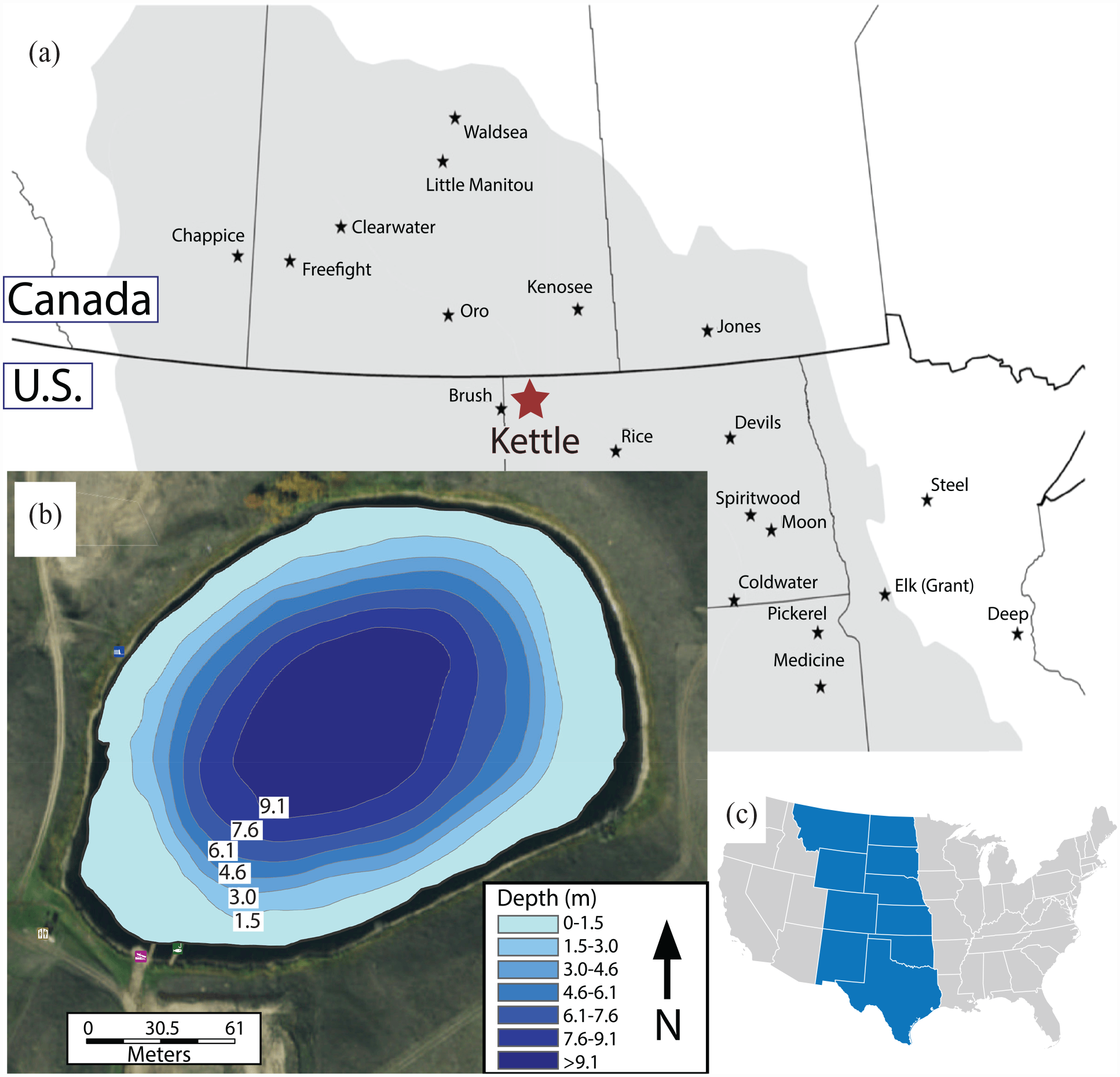
(a) Regional map showing Kettle Lake (red star) as well as other northern Great Plain lakes with Holocene climate records. Gray overlay shows Great Plains ecoregion (modified from Grimm et al., 2011). (b) Bathymetric map of Kettle Lake showing simple morphometry and depth gradient (adapted from North Dakota Game and Fish, 2018-2019). (c) United States map with Central Flyway shown in blue.
The presence of large avian populations can significantly impact terrestrial ecosystems by increasing nutrient availability through guano deposition (Hobara et al., 2005; Luoto et al., 2019; Michelutti et al., 2009; Mizota and Naikatini, 2007). Studies of avian influence on local nutrient loading and cycling typically focus on seabird populations in near-marine environments, with a particular attention paid to nitrogen (Caut et al., 2012; Conroy et al., 2015; Luoto et al., 2019; Michelutti et al., 2009). Stable isotopes of nitrogen, in both seabird and waterfowl studies, are used as a metric for avian influence on lacustrine ecosystems, as avian guano has distinctively high nitrogen isotope values reflective of their higher trophic status (Bird et al., 2008). However, there is evidence that terrestrial waterfowl (e.g. geese, ducks, swans) may also influence the nitrogen cycle in lacustrine and freshwater ecosystems (Dessborn et al., 2016; Donovan and Grimm, 2007; Kitchell et al., 1999; VillaRomero et al., 2013; Waters et al., 2010).
To date, there has been no investigation into the changes in biogeochemical cycling at Kettle Lake in response to past waterfowl presence. Here, we use nitrogen, carbon, and stable nitrogen and carbon isotope measurements of sediment organic matter to assess the impact of guano-derived nutrient loading throughout the Holocene on Kettle Lake. We then couple these new data with the extensive, existing dataset of Kettle Lake paleoenvironmental indicators in order to evaluate possible changes in nitrogen and carbon cycle processes and the overarching climate conditions that affected waterfowl presence and productivity at Kettle Lake.
Study Site
Kettle Lake, North Dakota (48°36.4200 N, 103°37.4460 W, 605 m a.s.l.) is a glacial kettle lake near the U.S. - Canada border (Figure 1). In the heart of the PPR, it is situated in the Northern mixed grasslands, and is one of thousands of shallow lakes (>8 m) and numerous wetlands. Modern Kettle Lake is relatively deep by comparison at ~10.2 m. Kettle Lake is a groundwater dominated lake with a simple “bowl” morphometry (Figure 1), with no surficial water inlet or outlet. Lake water ion concentrations are only slightly higher than groundwater in Na, Mg, Cl and SO4. Compared to other lakes in the region, Kettle Lake is relatively fresh, with dissolved solids less than 2000 mg/L and a pH of 8.2. Regionally, lake salinities can reach 240,000 mg/L due to high surface evaporation (Donovan and Grimm, 2007). The low salinity and ion concentration at Kettle Lake indicates a relatively short water residence time, consistent with a groundwater “flow-through lake.”
Climate in the Northern Great Plains is greatly influenced by the confluence of warm air masses from the Gulf of Mexico and cold, continental polar air masses, leading to high variability in temperature and precipitation (Rosenberg, 1987; Yu et al., 2002). Local climatological data are collected at Williston Sloulin Field Station, ~48 km south of Kettle Lake. Modern monthly average temperatures (1900–2020 C.E.) recorded at this station range from ~25°C to −25°C and monthly precipitation is less than 200 mm/month (Figure 2). Moisture from the Pacific Ocean is largely blocked, due to the western mountain ranges, and the Gulf of Mexico is the main moisture source region. Regionally, precipitation is significantly lower than evapotranspiration due to high summer temperatures and low humidity (Millett et al., 2009).
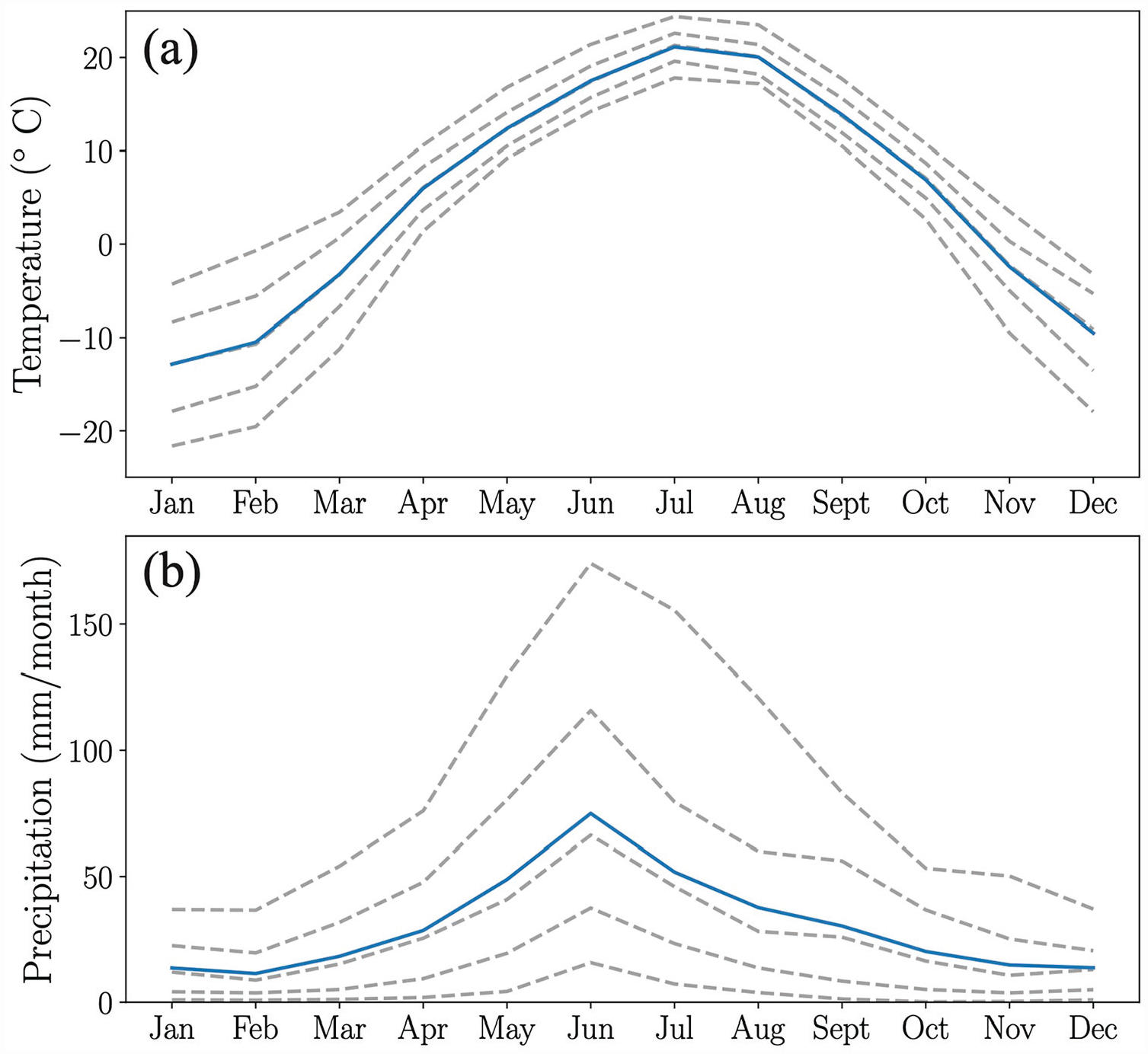
Williston Sloulin Field Station (48.18 N, 103.63 W) climatological data from KNMI Climate Explorer (Trouet and Van Oldenborgh, 2013). (a) 1879–2019 GHCN v3 mean temperature data from Williston/Slo (72767) shown in blue. Percentiles 2.5%,17%, 83%, and 97.5% are shown in dashed gray (b) 1894–2018 GHCN v2 precipitation data (all) from Williston (72767) in blue, percentiles same as in (a).
Kettle Lake is ideal for paleoclimatic studies as the simple morphometry and lack of surficial water sources limit confounding factors influencing the sediment record. Additionally, Kettle Lake has produced endogenic carbonates throughout the Holocene, providing an excellent, finely laminated sediment record that has been preserved by an anoxic hypolimnion (Grimm et al., 2011). Kettle Lake is also a well-studied lake with a robust age model (Grimm, 2011), which provides ample context for understanding paleoenvironmental changes.
Materials and methods
Core sampling
In 1996, two ~21 m-long sediment cores were taken with a Wright square-rod piston corer in 1 m drives (Donovan and Grimm, 2007). These cores (A & B) were taken ~1 m apart and were vertically offset from each other by 50 cm. The two overlapping cores were split and used to make a composite core (see Figure 4, Grimm et al., 2011). The sediment was subsampled into vials at 1 cm increments. These samples are stored at 4°C at the LacCore National Lacustrine Core Facility, University of Minnesota. Samples for this work were subsampled from these vials and homogenized.
Age model
The age model used in this analysis was developed from the 46 accelerator mass spectrometry (AMS) radiocarbon ages on charcoal and terrestrial macrofossils archived in the Neotoma Database (Grimm, 2011). The original age model of Grimm (2011) was created with the Bayesian age model program Bcal (Buck et al., 1999), and calibrated using INTCAL09 (Reimer et al., 2009), accounting for identified slumps in the sediment record. We have updated the age model by calibrating the original radiocarbon ages (including a surface age value of −45 cal yr BP, to match previous age models) with depths accounting for slumping, using INTCAL20 (Reimer et al., 2020), and defining an age-depth relationship using rBacon2.3.9.1 (Blaauw and Christen, 2011). A linear interpolation was used to extend the end of the age-depth model to the final depth of 2881 cm below lake level. The updated Kettle Lake age model is similar to the Grimm et al. (2011) model and even more similar to the updated ‘Neotoma’ model, and reveals a nearly continuous, ~13,000 year-long record (Figure 3).
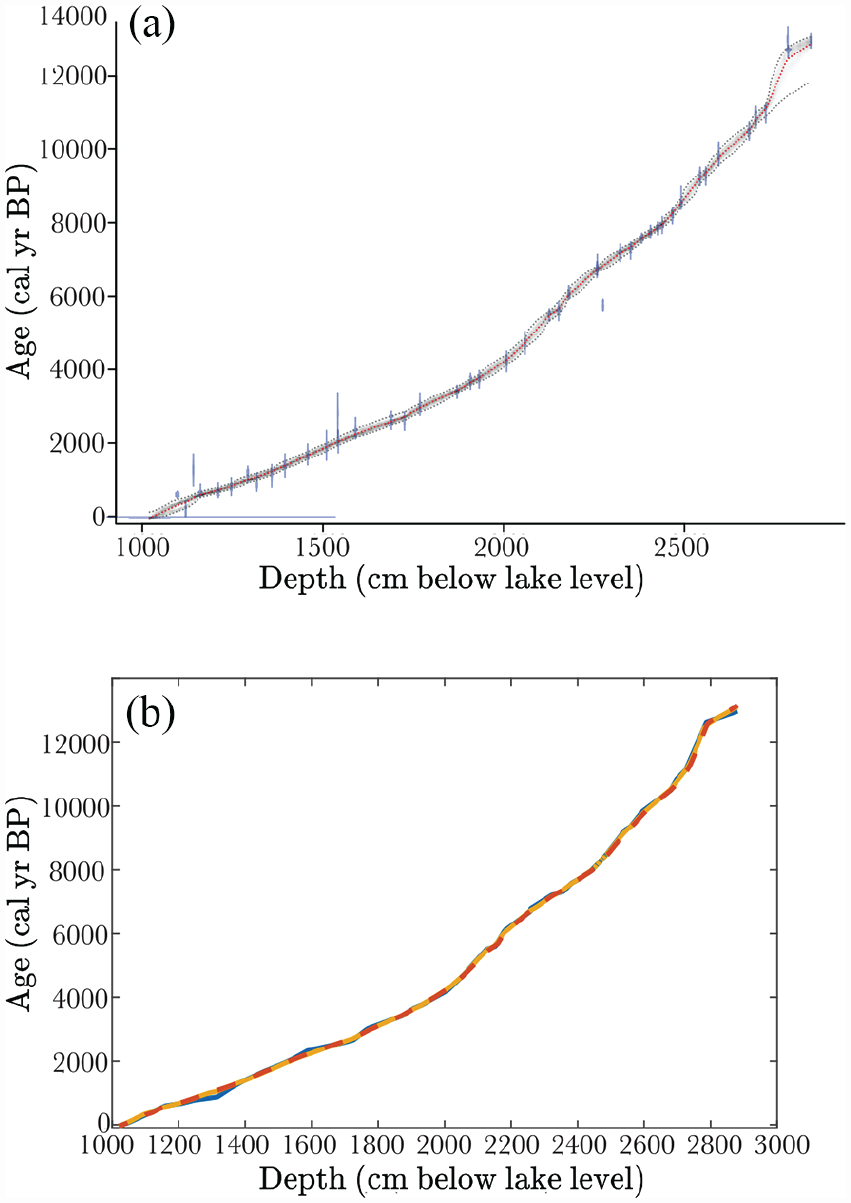
(a) Age-depth relationship modeled with rBacon and INTCAL20 radiocarbon age calibrations. (b) Age versus depth for Grimm et al. (2011) ages (blue line), Neotoma model (orange dashed line), and this age model (yellow line).
C and N analyses
We measured 286 1 -cm depth samples for stable nitrogen isotopes and percent Nitrogen (%N). The 286 sediment samples were taken at 20 cm intervals across the entire core, representing ~60–100 years between samples. In areas containing struvite identified by Donovan and Grimm (2007), a total of 206 samples were measured at ~8 year resolution over sections of the sediment core that represent 570–670 years. A subset of 113 samples were measured for stable carbon isotopes and percent carbon (%C) on organic matter at a lower resolution compared to the nitrogen record.
Samples for nitrogen analyses were freeze dried and then ground with an agate mortar and pestle. These samples were not pretreated with acid to remove carbonate, as is commonly done for paired nitrogen and carbon stable isotope measurements on sediment organic matter. The method used here avoids liberation of nitrogen-bearing biological compounds (e.g. amino acids, proteins), which is anticipated in a guano-influenced environment (Kim et al., 2016). Acid pre-treatment can also cause non-linear and unpredictable differences in stable nitrogen isotope values of lake sediments that are larger than instrumental precision (Brodie et al., 2011a, 2011b). A pilot group of sediment samples showed substantial differences between acid-treated and untreated samples (Supplemental Figure 1, available online). Samples for stable carbon isotope and %C measurements were freeze dried and then processed with sulfuric acid to remove carbonate following Verardo et al. (1990). Isotope ratios are reported in standard per mil notation as delta values relative to the standards of Vienna Pee Dee belemnite (VPDB) for δ13C and atmospheric nitrogen (Air) for δ15N:

Where Rsample = 13C/12Csample,15N/14Nsample & Rstandard = 13C/12CVPDB, 15N/14NAir
All samples were analyzed on Carlo Erba NC2500 elemental analyzer coupled with a ThermoFisher Delta V Advantage IRMS (ThermoFinnigan, Germany) at the Illinois State Geological Survey, with a total uncertainty of ±0.22‰ for δ15N and ±0.11‰ for δ 13C.
Results
Kettle Lake sediment %N values have a range of 0.12–2.41% with an average of 0.84 ± 0.34% (1σ) (Figure 4). Bulk δ15N values range from 5.69‰ to 13.5‰, with a mean of 10.24 ± 1.52‰ (Figure 4). Using the stratigraphic climate zones identified by Grimm et al. (2011), the lowest mean δ15N values occur in the late Pleistocene (12.97 ka–11.93 ka) and Pleistocene-Holocene transition (11.93 ka–10.73 ka) zones (Table 1). Maximum values are seen in the early (Zone C, 10.73–9.25 ka) and Mid-Holocene (Zone D, 9.25 ka–4.44 ka) sections of the core, where sub-mm struvite layers are present (Figure 4). The Late Holocene (4.44 ka–present) has depleted δ15N values compared to the early and Mid-Holocene, but enriched values compared to the Pleistocene and transition period. Median bulk sediment δ15N is enriched compared to native Great Plains soils (4.8 ± 2.1‰), native vegetation (0.9 ± 2.6‰), waterfowl guano (~6‰), and the average of 7 previously measured Kettle Lake sediment samples (Clyde et al., 2021; Donovan and Grimm, 2007; Frank and Evans, 1997; White et al., 2012).
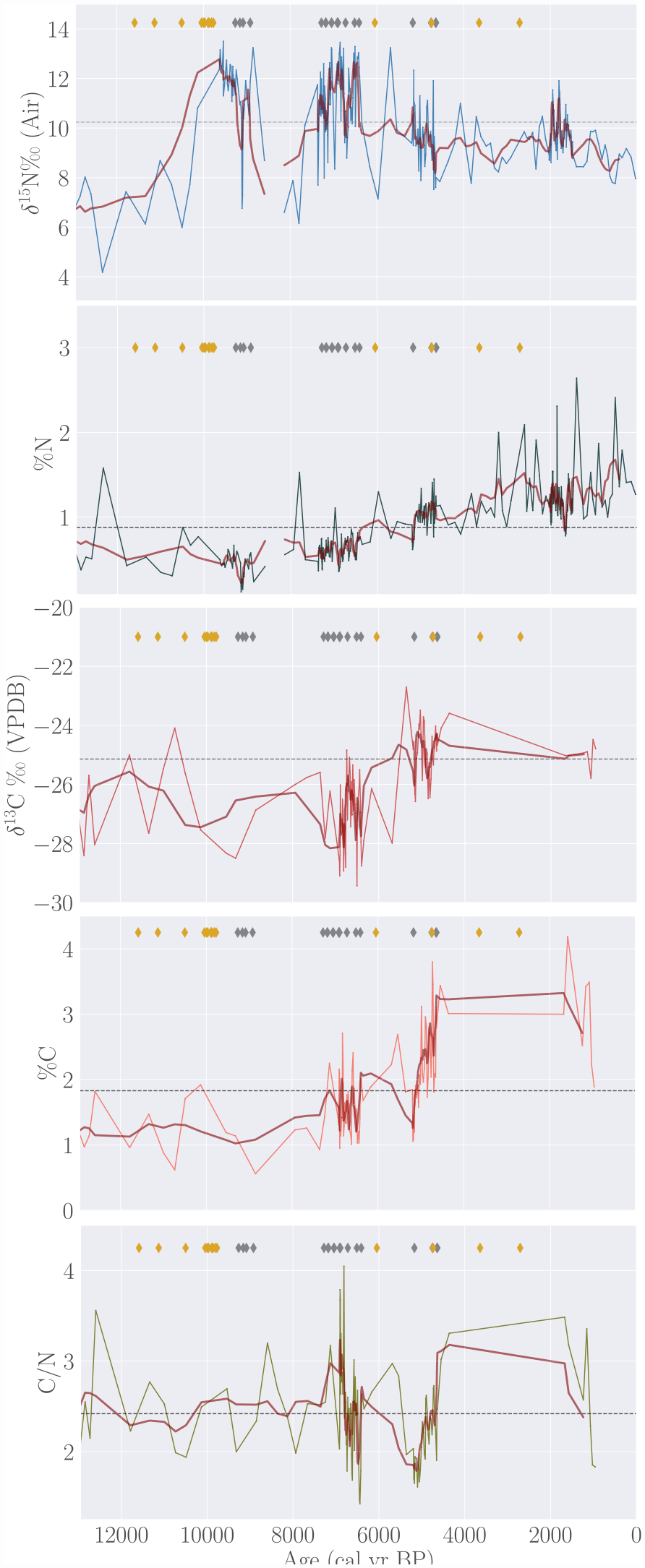
δ15N, δ13C, %N, %C, and C/N (mass ratio) time series in Kettle Lake sediments. Periods with noticeably higher resolution are those sampled for additional high temporal resolution analyses. Diamonds indicate struvite occurrences as visually identified in Donovan and Grimm (2007), with depths provided in Grimm et al. (2011). Gray diamonds represent 1 cm homogenized intervals containing struvite which were sampled for this study. Yellow diamonds indicate struvite incidences not directly sampled. Dashed lines show Holocene averages. Five step moving averages are shown in maroon.
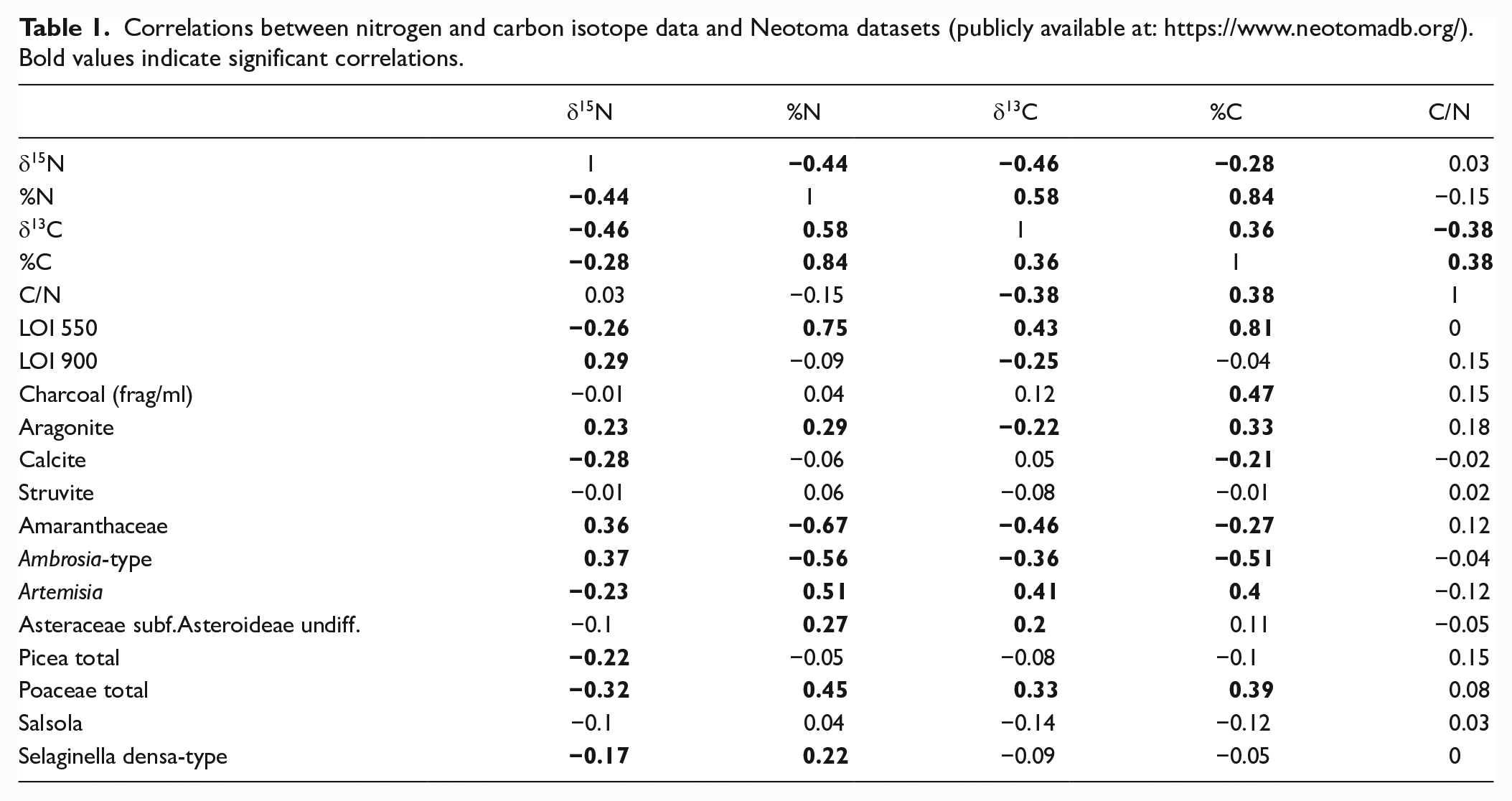
Correlations between nitrogen and carbon isotope data and Neotoma datasets (publicly available at: https://www.neotomadb.org/). Bold values indicate significant correlations.
Median sediment δ15N values at Kettle Lake are also enriched compared to δ15N values in Holocene-length sediment records from other lakes in North America (Supplemental Figure 2, available online). Similar δ15N values are found only in Devils Lake, North Dakota, in a record spanning 1860–2000 C.E (Lent et al., 1995). Sediment records of comparable duration to the Kettle Lake record typically show δ15N values ranging from −2‰ to 5‰ (Anderson et al., 2008; Donovan and Grimm, 2007; Lent et al., 1995; Lu et al., 2010; Moore et al., 2019; Theissen et al., 2012; Williams et al., 2015; Winston et al., 2014).
The struvite-bearing early and Mid-Holocene zones of the Kettle Lake core have significantly enriched (p > 0.05) δ15N values compared to zones containing no struvite (Figure 5). δ15N and %N are also significantly, negatively correlated in these zones, whereas no significant correlation between δ15N and %N is found in the remainder of the core.
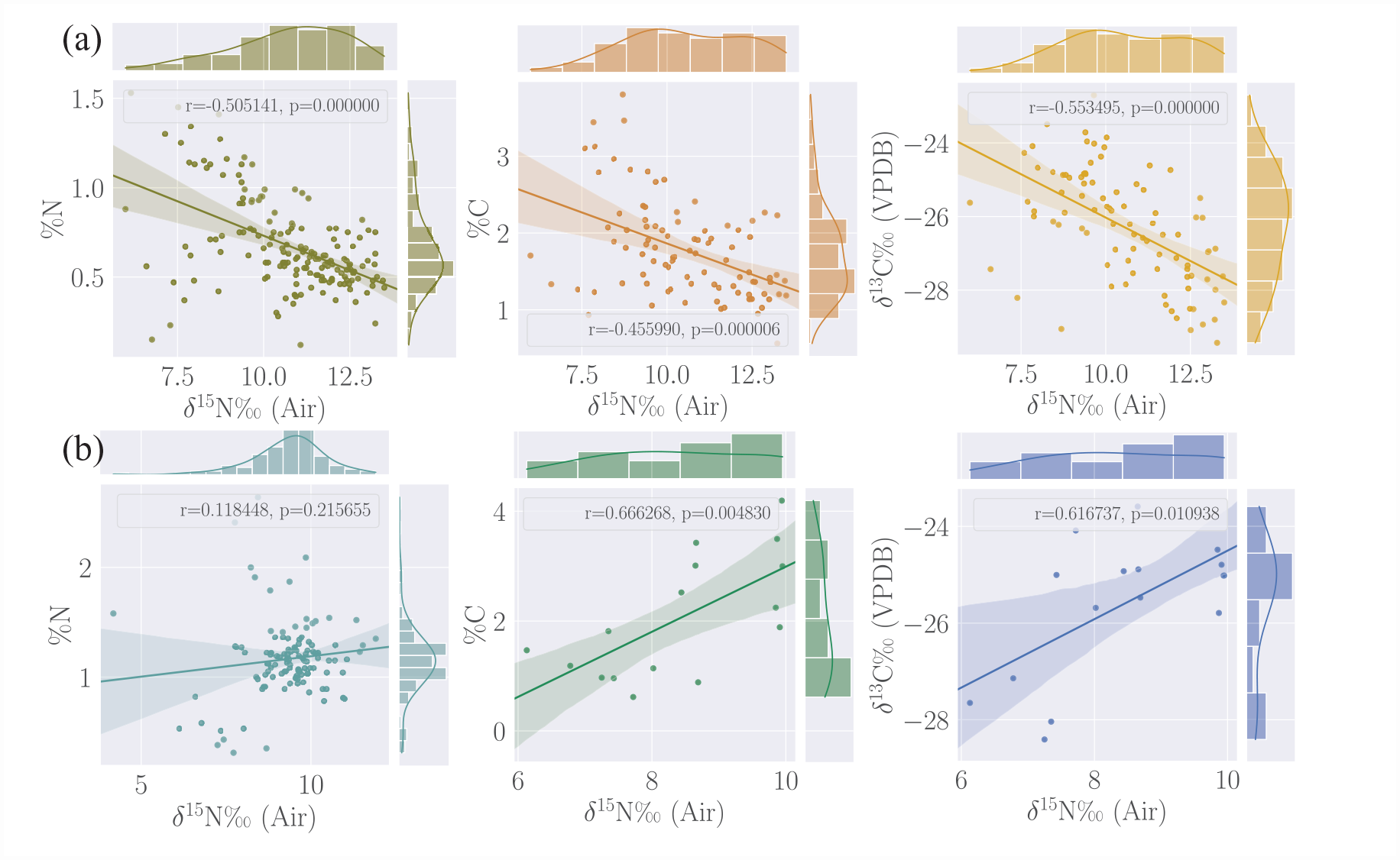
Scatter plots of δ15N-%N and δ15N-δ13C data for struvite bearing zones C and D (a) and the core intervals with no struvite (A,B,E1-3,F) (b). Histograms on upper and right margins of the scatterplots show the distribution of values within the main plot.
The mean δ13C value of Kettle Lake organic matter is −26.4 ± 1.7‰, and values are consistently in the range of ~−28‰ to −24‰ throughout the record. Mean %C values are 1.8 ± 0.70%, and C/N values are consistently low throughout the record (mean C/N = 2.4 ± 0.6). Comparison of the δ13C values with the (untreated) δ15N sample values shows a strong, negative relationship throughout the core (r = −0.46, p > 0.001, N = 286). Treated δ13C is also significantly, though weakly, correlated with %C (r = 0.35, p > 0.001, N = 113) and more strongly correlated with %N (r = 0.58).
Stable isotope, %C, and %N data were also compared to charcoal, loss-on-ignition (LOI) mineralogic, and pollen relative abundance data for Kettle Lake from the Neotoma Paleoecological Database (Williams et al., 2018). We find %C and %N are strongly correlated with LOI at 500°C, a proxy for organic carbon content (r = 0.81, r = 0.75 p > 0.001, N = 286). Percent C is also strongly and positively correlated with charcoal fragments/ml (r = 0.47, p > 0.001, N = 113), but there is no significant δ13C, δ15N, or %N-charcoal relationship (Table 1). Correlations with the relative abundance of main sediment minerals are weak overall (Table 1). Correlations between the carbon and nitrogen data and the relative abundance of dominant pollen taxa show stronger relationships: Higher abundance of Amaranthaceae and Ambrosia coincide with enriched δ15N, depleted δ13C, %N, and %C, whereas higher abundances of Poaceae and Artemesia coincide with depleted δ15N values and enriched δ13C, %N, and %C values.
Discussion
δ15N as a waterfowl signature in Kettle Lake and relationship with climate
Previous analyses of Kettle Lake pollen, mineral, and charcoal data identified six stratigraphic zones in the Kettle Lake sediment record from 13,000 cal yr BP to present (Grimm et al., 2011). Briefly, with the updated age model, these zones characterize the Younger Dryas (Zone A, 13.1–11.9 ka cal BP), the transition from the Pleistocene to the Holocene (Zone B, 11.9–10.7 ka cal BP), followed by a wet early Holocene period with high groundwater fluxes (Zone C, 10.7–9.3 ka cal BP). An abrupt transition to a drier period at 9.3 ka then occurred, with dry conditions continuing through the Mid-Holocene (Zone D, 9.3–4.5 ka cal BP). However, pollen evidence suggests the dry Mid-Holocene was also a period of high moisture variability. The decline of Artemesia and the sustained presence of Amaranthaceae indicate a decrease in moisture, but interspersed with at least some wet summers, as Ambrosia is drought intolerant and represents wet summers at present day (Commerford et al., 2018; Grimm et al., 2011). Kettle Lake climate becomes more moist during the Late-Holocene (Zone E, 4.5–0.09 ka cal BP), shown by a gradual increase in aragonite precipitation, the main proxy for Holocene moisture changes, with increased groundwater flux from increased regional precipitation leading to increased carbonate precipitation (Grimm et al., 2011; Shapley et al., 2005). The modern period, defined by invasive pollen taxa associated with European settlement (Zone F, 90 cal yr BP–present), follows. Struvite, and the inferred increase in waterfowl presence in the lake, begins in the early Holocene and becomes most abundant Mid-Holocene.
Within this context, δ15N values from Kettle Lake sediments are highest during the zones with struvite (Figure 4). Thus, the data support higher δ15N values in the lake sediment organic matter as a marker of the presence of higher trophic level waterfowl in the lake environment, as observed in other ornithogenic sediments (Conroy et al., 2015; Duda et al., 2021; Hargan et al., 2017). The majority of the struvite layers and enriched δ15N values occur in the dry but variable Mid-Holocene. However, the increased temporal resolution of δ15N data permit additional inquiry into relationships with other Kettle Lake climate and ecologic indicators. Prolonged and widespread drought in the PPR in the early to Mid-Holocene is hypothesized to have forced waterfowl to the deeper, more permanent Kettle Lake basin (Donovan and Grimm, 2007). However, the primary hydroclimatic indicator in the Kettle Lake record, the aragonite fraction, is only weakly, positively correlated with δ15N (r = 0.23, p > 0.001, N = 286, Table 1). LOI at 900°C, a proxy for relative carbonate abundance, is also only weakly, positively correlated with δ15N (r = 0.29, p > 0.001, N = 286, Table 1). This result is not surprising as Donovan and Grimm (2007) also observed no strong relationship between aragonite and struvite presence. It does suggest a weak relationship between wetter periods (with more aragonite) during background mean drought conditions and waterfowl presence.
More significant relationships exist between δ15N and several of the dominant pollen taxa in the Kettle Lake sediment core (Figure 6, Table 1). After interpolating the Kettle Lake pollen record in order to assess isotope and pollen data at the same depths, we find significant, positive correlation coefficients between δ15N, Amaranthaceae and Ambrosia, and a negative correlation coefficient with Poaceae (Table 1). An inverse relationship between these taxa is also noted in Grimm et al. (2011). High Amaranthaceae is thought to be derived from the presence of this family on dried-out lake beds, whereas high Ambrosia points to wetter warm seasons, as it is not drought tolerant. Thus, enriched organic matter δ15N and waterfowl presence occurred when many regional lakes were evaporated, but during wet summers. One possible inference is that occasional wet summers were key for breeding waterfowl populations during this background of prolonged drought, especially at Kettle Lake, which was permanently full of water. Therefore in the context of prolonged droughts, such as those expected in coming decades, deeper basins are a critical resource for waterfowl, especially in periods with anomalously wet summers that may occur.
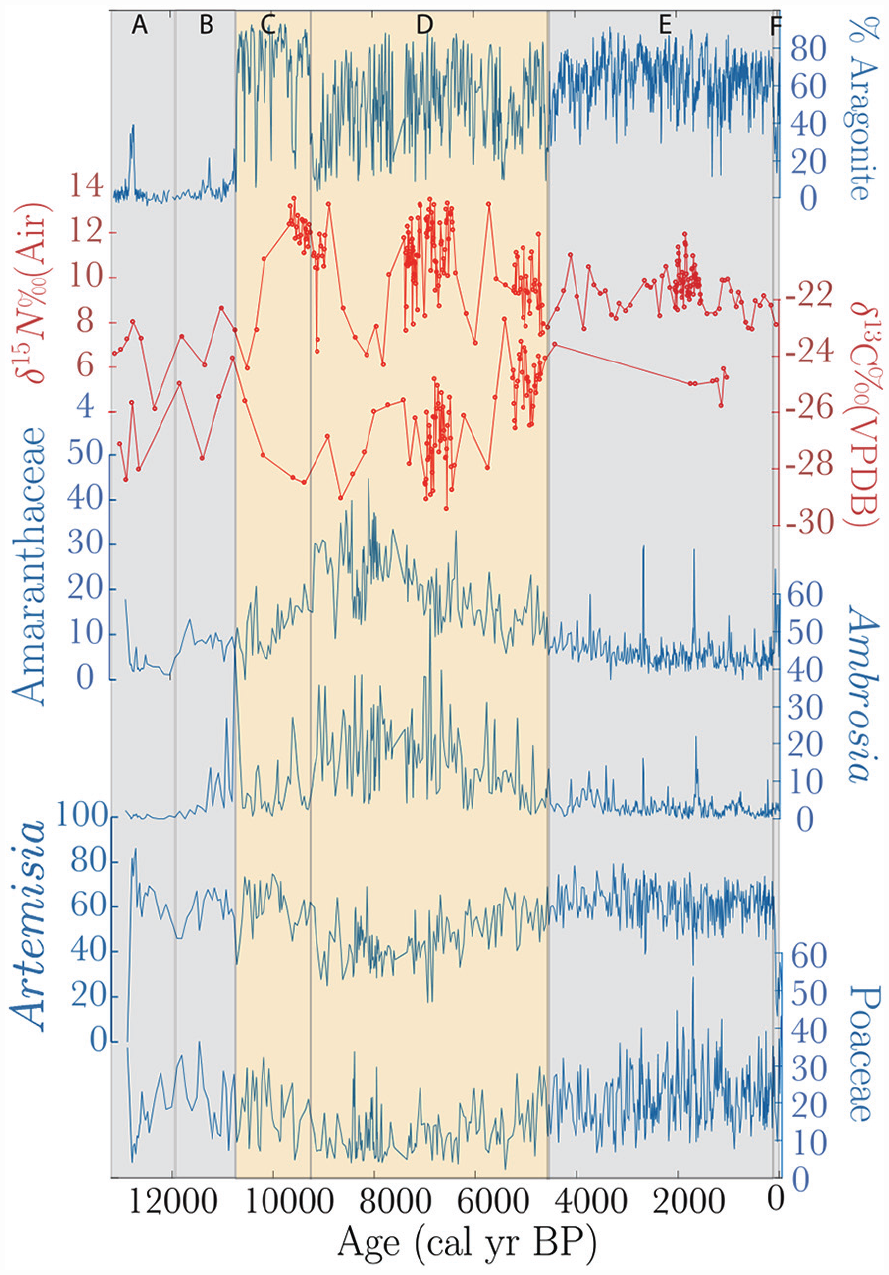
Time series for % aragonite, δ15N, δ13C and four pollen types present in the Kettle Lake sediment core. Labels A–F represent zone from Grimm et al. (2011). Yellow shading indicates periods of struvite deposition.
Kettle Lake N and C data in the context of waterfowl indicators
The additional %N, %C, and δ13C data offer further insight into differences in Kettle Lake biogeochemical cycles and carbon source changes during periods with and without the presence of waterfowl. The significant, negative relationship between δ15N and %N, found only during periods of struvite precipitation, suggests increased loss of isotopically light N from the sediment N-pool during periods of struvite deposition. Sediment δ15N values are enriched compared to δ15N values of struvite 7.51 ± 0.37‰ (N = 8), which are similar to the recorded δ15N values of omnivorous bird guano (~6.4–7.7‰, Bird et al., 2008). A main nitrogen cycle process responsible for this N-loss is likely denitrification, the reduction of nitrate and nitrite to N2 gas. Large fractionation factors are associated with denitrification (α = 1.02). Periods of high organic matter input (i.e. deposition of guano rich in N and P) into an anoxic hypolimnion and surface sediments of Kettle Lake, would promote denitrification, causing loss of N from the system and an increase in δ15N of the remaining N pool (Talbot, 2001). Notably, there is no significant δ15N- %N correlation during the control period containing no struvite. Consequently, we see that guano deposition, broadly indicated by periods of struvite deposition, significantly alters nitrogen cycling during these intervals.
Related processes must have also occurred to facilitate struvite precipitation and preservation. First, as guano deposition provided ample organic nitrogen to the Kettle Lake ecosystem, decomposition occurred and created a pool of dissolved inorganic nitrogen (DIN, in the form: NH4+ and NH3) and abundant hydroxide OH− in the hypolimnion. This in turn increased lake pH, creating favorable conditions for rapid struvite precipitation (Roncal-Herrero and Oelkers, 2011). In addition, increased pH shifts the NH4+ (aq) – NH3 (gas) equilibrium toward NH3 (Menzel et al., 2013), leading to increased volatilization and subsequent enrichment of the nitrogen pool in 15N. This would have led to further 15N enrichment, explaining why organic matter δ15N values are higher than measured values of waterfowl guano. Aerial volatilization (e.g. along the lake shore) may have also been amplified by the more seasonally variable climate of the Mid-Holocene. Altogether, high pH, nitrogen loading, and anoxia favored struvite formation, while denitrification and ammonia volatilization led to enrichment in δ15N of organic matter and concurrent N loss in the early and Mid-Holocene.
Interpreting carbon cycle information in Kettle Lake from %C and δ13C values of organic matter is more complex, as multiple factors, both internal and external to the lake, appear to influence these values. For example, %C is significantly correlated with charcoal abundance, indicating that some Kettle Lake C is terrestrial (Figure 7, Table 1). Overall, Kettle Lake organic matter δ13C values fall into the range of both terrestrial C3 plants as well as freshwater algae (Kohn, 2010; Meyers, 1994), making it difficult to separate these two sources of carbon to the lake sediment. However, C/N values are consistently low throughout the record, suggesting that most organic matter preserved in the sediment record is derived from algal sources, as C/N is a mass ratio with lower values reflecting an aquatic source (Meyers, 1994). Although N deposition from guano can complicate more traditional interpretations of C/N (Conroy et al., 2015), we do not observe different C/N values in the intervals with and without struvite, suggesting that this is not the case in Kettle Lake, perhaps because some guano-derived N is lost from the system.
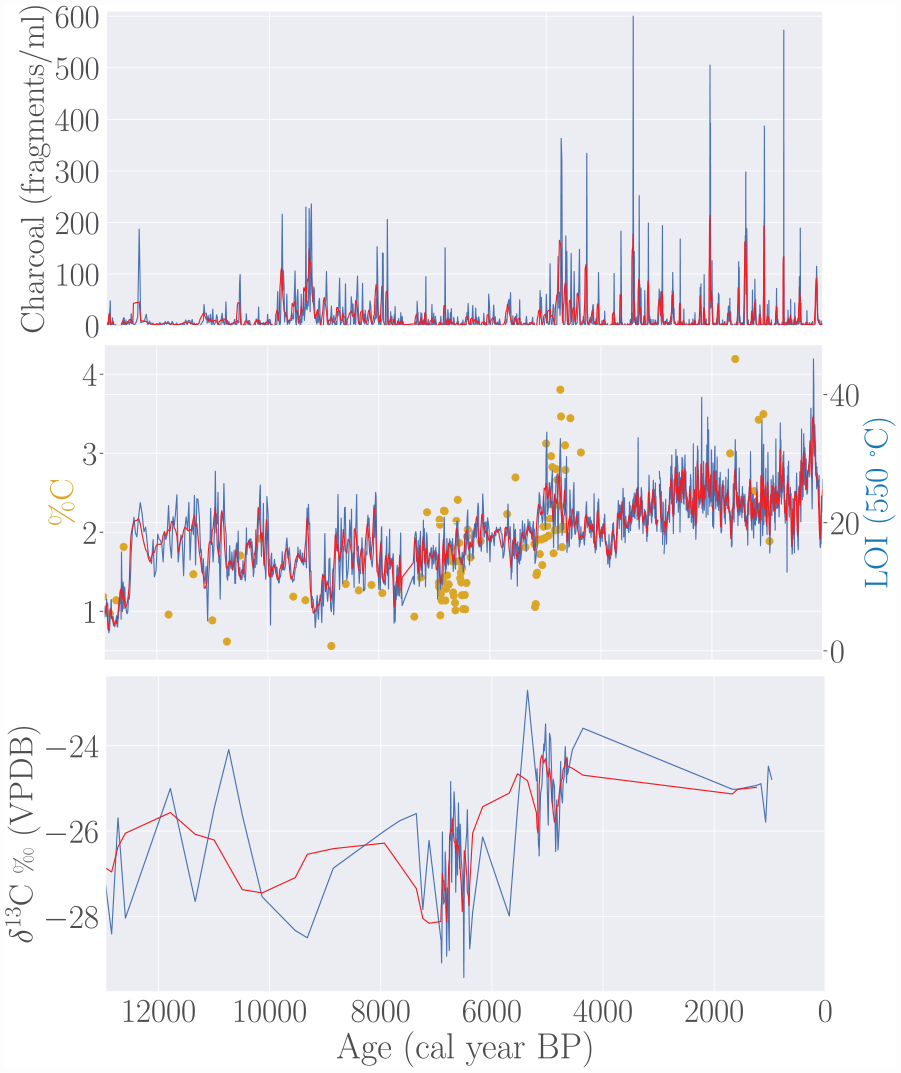
Kettle Lake time series of charcoal abundance, LOI at 550°C, δ13C, and %C. Five step moving averages are shown in red.
Zones with and without struvite also reveal different C - N relationships that suggest different processes at work in Kettle Lake during periods with greater waterfowl presence. Of note is that the direction of the δ13C- δ15N and %C - δ15N relationships are different in the stratigraphic zones with and without struvite (Figure 5). In zones without struvite, the relationships are positive, that is, higher %C and δ13C values occur with higher δ15N values. These relationships are negative in zones with struvite, with lower %C and lower δ13C values occurring with higher δ15N values (Figure 6). The relationships during non-struvite intervals reflect a common association between these variables, with increased productivity driving higher %C, δ13C, and δ15N values (e.g. Woodward et al., 2012; Wu et al., 2006; Yamamoto et al., 2020). However, when abundant waterfowl are present, %C and δ13C values decrease. Lower δ13C values could be a signature of waterfowl guano, similar to high δ15N values. In samples of bulk guano from several avian species (ranging from fully terrestrial to seabirds), δ13C values ranged from −27‰ to −18‰ over a wide range of dietary habits, overlapping Kettle Lake organic matter δ13C values (Bird et al., 2008).
Increased decomposition with increased nutrient loading could also lead to loss of C from the lake system, or recycling relatively lower δ13C DOC back into the water column (e.g. Meyers and Ishiwatari, 1993). Alternately, external factors could lower δ13C and %C when conditions are ideal for mass waterfowl visitation to the lake. δ13C and %C have strong negative correlations with Amaranthaceae and Ambrosia, and strong positive correlations with Poaceae and Artemesia, suggesting that these different taxa serve as carbon sources with unique %C and δ13C values. A reduced abundance of C4 Poaceae in the watershed during periods with waterfowl presence would lead to lower δ13C values in terrestrial organic matter flushed into the lake.
Avian presence in the Prairie Pothole Region: implications for Kettle Lake paleo-environment
Potential avian species influencing Kettle Lake changes can be inferred using modern data from the Prairie Pothole Region (PPR). The PPR hosts an enormous diversity of avian species that use this region as a breeding, nesting and hunting ground, as well as a stopover during long migration paths (McIntyre et al., 2019; Steen et al., 2016). Though it makes up a small (~10%) subset of the North American breeding habitat, 50–75% of waterfowl are hatched in the PPR (McKenna et al., 2021; Mitsch and Gosselink, 1993). Particularly, waterfowl (Anatidae) and sandpipers (Scolopacidae) are present in large numbers, based on modern use of the PPR (Steen et al., 2016). Duck populations can exceed 30 million individuals in years without drought and ~3.5 million sandpipers (Calidris spp.) may stop off in the PPR during their migratory pathway (Steen et al., 2016). However, these sandpipers are restricted to very shallow (<5 cm) waters (Skagen et al., 1999), making them unlikely candidates for guano deposition, as Kettle Lake remained relatively deep throughout the Holocene. Ducks (Anatidae), however, largely prefer mid to deep water resources for foraging and nesting habitats in the PPR (Steen et al., 2016), making the Mid-Holocene Kettle Lake a favorable environment. Several species may have visited and contributed to the biogeochemical changes at Kettle Lake; however, based on the significant population sizes in the modern PPR and water depth preferences for both nesting and foraging, we speculate that ducks (Anatidae) may have played a key role in guano deposition during the early to Mid-Holocene.
Conclusions and implications
Through the early and Mid-Holocene, mass bird visitation to Kettle Lake, North Dakota produced a sediment record with elevated δ15N values in organic matter and the guano mineral, struvite. The co-occurrence of struvite and higher δ15N values supports using elevated δ15N values as an indicator of a large waterfowl presence in mid-continental lacustrine environments. The influence of waterfowl presence on the Kettle Lake N-cycle is evident in the strong negative relationship between δ15N values and %N during periods with struvite, but the lack of a relationship between these variables in periods without struvite. Increased N-loading during mass waterfowl visitation likely altered the N-cycle, leading to higher δ15N values and N-loss through processes such as denitrification and ammonia volatilization. Thus, Kettle Lake δ15N data cannot necessarily be used as a regional paleoenvironmental indicator, but represents unique events in the history of this particular lake. The Kettle Lake C-cycle throughout the Holocene is more complex to interpret, as both external and internal factors influenced organic matter δ13C and %C values. However, taken together, the rich Kettle Lake pollen, mineralogy, and stable isotope datasets indicate that the increased presence of waterfowl on Kettle Lake likely occurred during periods with anomalously wetter warm seasons during background conditions of prolonged drought. Given the strong climatic gradient across the PPR (Johnson and Poiani, 2016), future research targeting other deep lakes in the PPR may hold additional information on past waterfowl visitation throughout the Holocene and provide a better understanding of spatial variability in waterfowl migration during times of regional drought. For example, the sediment record from Devil’s Lake, North Dakota is another regional lake with elevated organic matter δ15N values over the 19th and 20th centuries (Lent et al., 1995). It is also known for its large breeding waterfowl population, and could be one such target. If such lakes are investigated in future research, other ornithogenic indicators, such as biomarkers and environmental DNA from lake sediments (Ficetola et al., 2018; Hargan et al., 2018) could be used to detect past waterfowl presence in the absence of struvite.
The record from Kettle Lake provides insight into the potential fate of the many lakes and wetlands in the PPR and their waterfowl populations. Projections of future drought, coupled with continued intensive landscape use, may lead to the loss of a great deal of the waterfowl habitat in the PPR (Steen et al., 2014, 2016). The Holocene record of waterfowl presence and climate change in Kettle Lake points to the importance of more persistent, deeper lakes, such as Kettle Lake, as a resource for waterfowl during periods of prolonged drought. As such, these deeper lakes are a prime target for conservation to aid in waterfowl adaptation to climate change-related drought.
Supplemental Material
sj-docx-1-hol-10.1177_09596836231176490 – Supplemental material for Holocene relationships between climate, waterfowl, and lacustrine nutrient cycling at Kettle Lake, North Dakota, USA
Supplemental material, sj-docx-1-hol-10.1177_09596836231176490 for Holocene relationships between climate, waterfowl, and lacustrine nutrient cycling at Kettle Lake, North Dakota, USA by Nicole K Murray, Jessica L Conroy, Kate O’Brien, Eric C Grimm and Joseph J Donovan in The Holocene
Research Data
sj-xlsx-2-hol-10.1177_09596836231176490 – Supplemental material for Holocene relationships between climate, waterfowl, and lacustrine nutrient cycling at Kettle Lake, North Dakota, USA
Supplemental material, sj-xlsx-2-hol-10.1177_09596836231176490 for Holocene relationships between climate, waterfowl, and lacustrine nutrient cycling at Kettle Lake, North Dakota, USA by Nicole K Murray, Jessica L Conroy, Kate O’Brien, Eric C Grimm and Joseph J Donovan in The Holocene
Footnotes
Funding
The author(s) disclosed receipt of the following financial support for the research, authorship, and/or publication of this article: Funding for this work was provided by the Department of Earth Science and Environmental Change at the University of Illinois, Urbana - Champaign.

Supplemental material
Supplemental material for this article is available online.
References
Supplementary Material
Please find the following supplemental material available below.
For Open Access articles published under a Creative Commons License, all supplemental material carries the same license as the article it is associated with.
For non-Open Access articles published, all supplemental material carries a non-exclusive license, and permission requests for re-use of supplemental material or any part of supplemental material shall be sent directly to the copyright owner as specified in the copyright notice associated with the article.
