




Abstract
This study aims to understand the information behaviours of youth seeking health information on mobile devices and to explore differences by prior knowledge, gender and grade level. A survey was conducted in two high schools in Osijek, Croatia. Results indicate that among the total 408 participants, 84.3% reported having used mobile devices for health information and 54.7% reported having used applications for health information. Students seek health information about physical activity and eating issues/nutrition mostly on mobile devices. Students with more prior medical knowledge tend to have more information needs, perceive mobile devices as more beneficial, search health information and use health-related applications more frequently, and consider the tracking/recording/monitoring feature of applications more useful. Students with less prior medical knowledge tend to consider the video feature of applications more useful. Students rely heavily on searching health topics in search engines on mobile devices, rather than browsing or using applications. This study provides implications to better assist young people in using mobile devices and applications to manage their health issues.
Introduction
As various types of information sources become increasingly available, young people have come to seek and find information by themselves for everyday life decisions, including health issues. However, research has revealed that youth do not have sufficient skills to find and evaluate health information that is needed to solve their health issues or make necessary decisions (Ghaddar et al., 2012; Skopelja et al., 2008). Although research on youth’s health information behaviours has been actively conducted since the mid-2000s and the ownership of mobile devices by youth has substantially increased in recent years, most of the studies have focused on the Internet via computers (Kim and Syn, 2014; Park and Kwon, 2018). As more and more youth use mobile devices for everyday life information and applications are considered to have great potential ‘as sources of information, education and communication’ for various areas of knowledge, including health professions (De Oliveira and De Menezes Alencar, 2017: 235), it is important to understand how youth use mobile devices and applications for health information.
A recent study conducted in Croatia revealed that most young people (aged 14 to 29; average age 22) in the country have daily access to the Internet and their main reasons for accessing the Internet are using social networking sites and communicating with friends and relatives via telecommunication applications, such as Skype and Viber. Of those surveyed, 51% answered that they often read news and get information on the Internet, while 40% said sometimes and 9% said never (Gvozdanović et al., 2019). When it comes to smartphones and mobile applications, 96.9% of Croatian young people use a smartphone as a primary device, and 84% reported using a smartphone over 24 months. More than 40% of Croatian young people frequently use 3–5 applications per week, while more than 30% frequently use 5–10 applications per week. The most popular type of application is entertainment, followed by news, social network, finance, study, business, lifestyle, games and city information (Knežević et al., 2017).
The purposes of the study are to better understand the information behaviours of youth seeking health information on mobile devices and to explore any differences in their health information behaviours on mobile devices by prior knowledge, gender and grade level. Specific research questions of this study are:
RQ1: For what health topics do youth use mobile devices?
RQ2: What do youth perceive as the benefits of using mobile devices for health information?
RQ3: In what ways (e.g. searching, browsing and using applications) do youth use mobile devices to solve health issues?
RQ4: What features do youth consider useful in their selection and use of applications?
RQ5: Are there any differences by prior knowledge, gender and grade level in health information behaviours of youth on mobile devices?
The study provides a holistic perspective that covers overall health issues, not focusing on a specific health topic, and looks into potential impacts of prior domain knowledge, gender, and grade level on the health information behaviours of youth with mobile devices.
Literature review
Health information behaviours on mobile devices
Seeking health information on the Internet or via mobile devices has become ubiquitous. According to Eysenbach’s (2003) framework, the major types of health-related Internet use are information (content), support (community), communication and electronic commerce (e-commerce). Jadhav et al. (2014) examined how device choice impacts online health information behaviours by comparing health search queries submitted through Web search engines from mobile devices (e.g. smart phones and tablets) and personal computers (e.g. desktops and laptops). Findings show that regardless of devices, ‘Symptoms’ is the most frequently searched health category, followed by ‘Causes’ and ‘Treatments and Drugs’. The percentage of queries for ‘Symptoms’ is higher from mobile devices than from personal computers. It turns out that queries from mobile devices tend to be longer, have slightly fewer spelling errors, and be more descriptive than those from personal computers. Also, people ask more health questions using mobile devices than personal computers (Jadhav et al., 2014).
Mobile interventions are known to be effective at changing health behaviours (Free et al., 2013). Mobile health behaviour interventions have been studied in relation to (1) smoking cessation, (2) weight loss, diet and physical activity, (3) treatment adherence and (4) disease management. People predominantly rely on one-way inputs or outputs through text messaging, and rarely use two-way interaction of inputs and outputs for just-in-time health behaviour intervention (Riley et al., 2011). Tate et al. (2015) reviewed technology tools, including the Internet, mobile applications, social media and video games as a means for behavioural change and motivation for patients to constantly participate in physical activity, especially for patients with type 2 diabetes. Such technologies provide platforms to increase interactivity, reach a wider audience with low cost, engage underserved populations and personalize messages. But some challenges exist, including the safety and credibility of information, the measurement of engagement and outcomes, and the degree of effectiveness among populations depending on health literacy and socio-economic status (Tate et al., 2015). White and Horvitz (2013) examined how people transition from searching for symptoms and diseases on mobile devices to seeking health care utilization. Analysis of data logs from mobile interaction demonstrates that 12.8% of the healthcare utilization intent observed in search queries led to visiting healthcare units within 30 days, and that the time between a search and a visit to a healthcare facility tended to depend on the acuteness of symptoms (White and Horvitz, 2013).
Studies have been conducted to understand various factors influencing health information behaviours with mobile devices. Serrano et al. (2016) conducted a US nation-wide survey with 3165 patients where they revealed that information type and demographic group are associated with patients’ willingness to exchange health information via mobile devices. For instance, patients are less willing to exchange sensitive or complex health information via mobile devices. But, if they are younger, more educated and have more trust in professional information, they tend to be more willing to exchange health information via mobile devices (Serrano et al., 2016). Applying the Technology Acceptance Model (TAM) as a theoretical framework, Lim et al. (2011) examined Singaporean women’s acceptance of using mobile phones to seek health information. The findings indicate that perceived usefulness and self-efficacy positively predict the intention to use mobile phones for health information. However, the gap between intention and actual use exists. This is caused by various factors, including technical concerns (e.g. small display screens, graphic content), and limited in-depth information through mobile web applications.
Youth’s use of mobile devices for health information
Research found that youth have challenges in finding personally relevant and high-quality health information. They need health information about specific medical conditions and diseases (67%), followed by body image and nutrition (63%), violence and personal safety (59%), sexual health (56%), drug use and drinking (44%), and smoking (41%). Mental health – suicide and depression (22%), stress (11%) and grief and loss (7%) – was less frequently discussed than physical health (Skinner et al., 2003)
Possession of and constant access to mobile devices have greatly changed young people’s lives, and mobile device applications provide them with ‘a more selected and restricted view of information’ compared with the information found on the World Wide Web (Burford and Park, 2014: 622). Wartella et al. (2016) conducted a national-scale survey to examine how US teens aged 13–18 use the Internet, mobile applications and wearable technology for health information. The results show that 29% of teens with a mobile device have downloaded a health-related application. Exercise/fitness and nutrition are the most popular topics when teens search health information online and when they download health-related applications. However, it turns out that many fewer teens actually use applications after downloading: only 8% of those who have downloaded a health-related application often use them, whereas 47% rarely or never use them, and 45% sometimes use them. Females and teens with a lower BMI (body mass index) tend to more frequently use health-related applications (Wartella et al., 2016).
Boushey et al. (2015) studied how willing adolescents (aged 11–15) were to record their food intake through a smartphone application to manage their diets. The results showed a gender difference in that girls tended to capture images of food and beverages that they consumed more than boys. They reported that adding a game feature would motivate them to use the application and a majority of them were willing to use the application for a week or more. Blackman et al. (2016) designed smartphone game-based application (SGA) prototypes to promote physical activities for adolescents (aged 11–15) from low socio-economic status. The identified features included social networking and competition components, such as sports and recreational games. Donovan et al. (2016) examined the feasibility of a mobile application devised to teach mindfulness and self-compassion for adolescents (aged 13–22). Results showed that participating students perceived it beneficial to use the application and suggested that the application have more personalization of features, expanded content and a feature to share via social media. Gowin et al. (2015) interviewed college students (aged 18–0) to examine how they used health/fitness applications to change behaviour. College students used applications to support their established health behaviour or to adopt a new behaviour. It was also found that ease of use and free provisions were important in their decision to use an application. Game-like rewards were identified as a feature to motivate college students to use an application. About half of the participants reported that they would not use an application that was linked with social media, which is different from the findings in other studies (Blackman et al., 2016; Donovan, et al., 2016) indicating that adolescents prefer a feature to share via social media.
As shown above, increasing attention has been drawn to young people’s health information behaviours on mobile devices since the mid-2010s. However, most studies have focused on middle school students’ or college students’ use of applications about a particular health topic, such as diets, physical activity and mental health. Few studies have dealt with high school students who are known to have more information needs about sensitive health issues. Also, they have rarely explored broad health topics for which young people use mobile devices and applications. To fill this gap in scholarly work, this study aims to focus on high school students’ use of mobile devices and applications for health information in general. The findings will provide health application developers, health educators and information specialists with ways to better assist young people in using mobile devices and applications to manage their health issues.
Methods
Characteristics of the participants
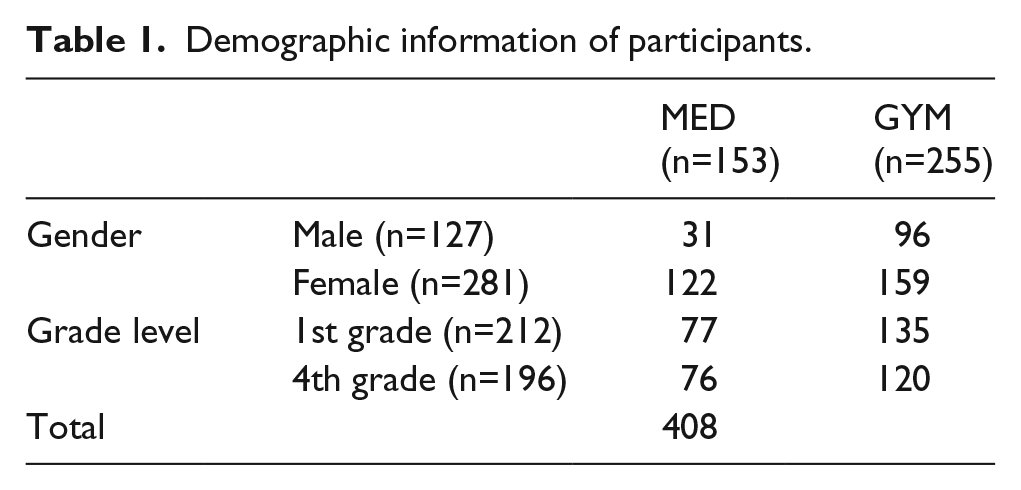
Participants in this study numbered 408 students (281 girls and 127 boys; aged 14–19) from two high schools, located in Osijek, Croatia. Osijek is the fourth largest city in Croatia and the main regional capital of Eastern Croatia. This study was funded by a university in Osijek where two of the authors worked and the other author visited as a guest researcher for the project. Local high schools in Osijek were recruited because physical visits were planned to discuss research procedures with principals and teachers and to survey students. Also, Osijek is the only city in Osijek Baranja County where both gymnasium and medical high schools exist.
Two different types of schools (medical high school (MED) and gymnasium high school (GYM)) and two different grade levels (First grade and Fourth grade) were recruited purposefully to compare differences by prior domain knowledge and grade level. After completing their elementary education, Croatian children have options to choose a type of secondary school among gymnasiums, vocational schools and art schools, depending on their interest and career plan. Gymnasiums provide a general curriculum for four years, while vocational schools (including medical high schools) and art schools focus on a specific area of expertise for one to five years. After completing four years of secondary education, students in any types of schools are eligible to take an examination, the state matura, to enter higher education institutions (Miroslav Krleža Institute of Lexicography, 2013).
For this study, three First grade classes and three Fourth grade classes from MED and six First grade classes and six Fourth grade classes from GYM participated. Each class had approximately 25 students. Details of participating students’ demographic information are demonstrated in Table 1.
Demographic information of participants.
Data collection
A questionnaire (Appendix 1) was devised by the researchers first in English and then translated into Croatian. The questionnaire consists of the following two parts:
Part 1: Demographic questions
Part 2: Health information on mobile devices
The questionnaire was administered in paper format in classrooms. As for parental permission, the recruited schools had general agreement from parents. In the beginning of each school year, schools ask parents to agree that their children will participate in research if the school administrative team acknowledges the value and safety of the research.
Data analysis
Students’ answers to the questionnaire were typed into Excel and were coded and entered in SPSS for statistical analysis. Descriptive statistics and Chi-Square tests were conducted. Descriptive statistics were conducted to present overall tendency as a whole group. With Chi-Square tests, differences by type of school (MED vs. GYM) were examined. Subsequently, differences by gender and grade level were examined within each type of school. Students’ answers to open-ended questions were translated into English and analysed with content analysis.
Findings
The results show that among the 408 participants, 84.3 % (n = 344) reported having used mobile devices for health information, which is 95.4% of participating students in MED and 77.6% of participating students in GYM. To answer the research questions of this study, data from 344 participants who had used mobile devices for health information were used. Table 2 shows the demographic information of the students who have used mobile devices for health information.
Demographics of students who have used mobile devices for health information.

Heath topics with mobile devices (RQ1 and RQ5)
Students were asked to choose health issues they had when using mobile devices for health information. They were asked to choose all that apply among:
Eating issues and nutrition (e.g. eating disorders, food allergies, health food choices, etc.);
Physical activity (e.g. fitness, weight management, sport activities, etc.);
Sexual health (e.g. safer sex, pregnancy, birth control, menstruation, infections, etc.);
Mental health (e.g. emotional issues, stress, sleepiness, dating, relationships, etc.);
Alcohol, drugs, and tobacco (e.g. substance abuse, addictions, etc.);
Safety (e.g. sports safety, first aid, violence prevention, etc.);
Any particular disease;
Other.
Those who chose any particular disease or other were asked to specify their answer.
Overall
The most commonly reported health topic for which they had used mobile devices was Physical activity (n=255, 74.1%), followed by Eating issues and nutrition (n=213, 61.9%), Sexual health (n=150, 43.6%), Mental health (n=149, 43.3%), Alcohol, drugs and tobacco (n=115, 33.5%), Safety (n=90, 26.2%), Particular disease (n=58, 16.9%), and Other (n=11, 3.2%) (Figure 1).

Health questions with mobile devices.
Students who chose Particular disease specified their answer by cancer (n=6), hypothyroidism (n=3), leukemia (n=3), dermatitis (seborrheic) (n=2) and scoliosis (n=2). The following answers were submitted by one student, respectively: AIDS, allergy, asthma, bipolar disorder, chronic bronchitis, cold urticarial, depression, diabetes, Ebola, eczema, epilepsy, gastritis, headache, HIV, increased blood pressure, injuries, laryngotracheitis, operation, overview of some diseases, pain in the ovaries, posttraumatic stress disorder (PTSD), psoriasis, schizophrenia, symptoms, syphilis, tachycardia, tuberculosis, varicocele and water in the knee.
Prior domain knowledge
For all health topics listed in the question, except for Particular disease, students in MED tended to show more information needs than those in GYM when they seek health information using mobile devices. Significant differences were found in Eating issues and nutrition (p<.05) and Sexual health (p<.01). When students in the same grades are compared between MED and GYM, First grade students in MED show more information needs in all health topics, except for Alcohol, drugs and tobacco, than First grade students in GYM. Significant differences were found in Eating issues and nutrition (p<.01) and Particular disease (p<.05). Fourth grade students in MED show more information needs in all health topics, except for Particular disease, than those in GYM. Significant differences were found in sexual health (p<.01) and Particular disease (p<.05). See Figure 1.
Gender
Gender differences in heath topics that students had using mobile devices were analysed within each type of school. In MED, female students tend to have more questions related to Eating issues and nutrition, Physical activity, Sexual health and Mental health than male students, while male students tend to have more questions related to Alcohol, drugs, and tobacco, Safety and Particular disease than female students. However, there was no significant difference found. In GYM, female students tend to have questions related to Eating issues and nutrition, Physical activity, Mental health, Safety and Particular disease more than male students, while male students have questions related to Sexual health and Alcohol, drugs and tobacco. It turns out that female students in GYM have significantly more information needs about Mental health (p<.01) and Particular disease (p<.05) than male students. Regardless of types of school, there were no gender differences found in Eating issues and nutrition, Physical activity, Sexual health, Alcohol, drugs and tobacco, and Safety. See Figure 2.
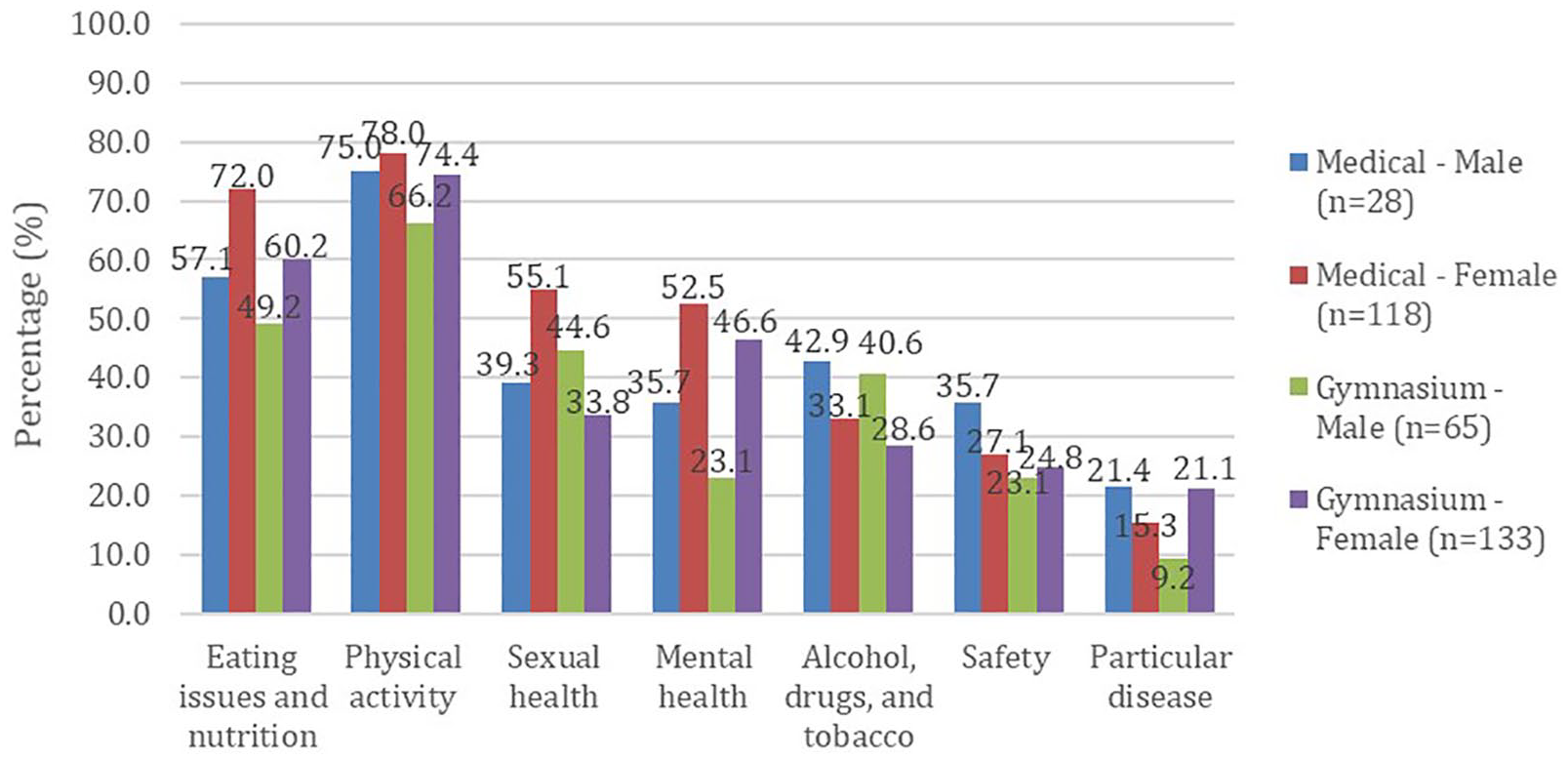
Differences by gender in health questions.
Grade level
Differences by grade level in health topics that students had using mobile devices were analysed within each type of school. Regardless of school type, Fourth grade students tend to have more information needs related to Physical activity, Sexual health and Mental health than First grade students, while they have fewer information needs about Safety. In both MED and GYM, Fourth grade students are significantly more likely to have Sexual health-related information needs than First grade students (MED p<.01; GYM p<.05). In addition, Fourth grade students in GYM had significantly more information needs about Eating issues and nutrition (p<.05) and Particular diseases (p<.001) than First grade students in GYM. See Figure 3.
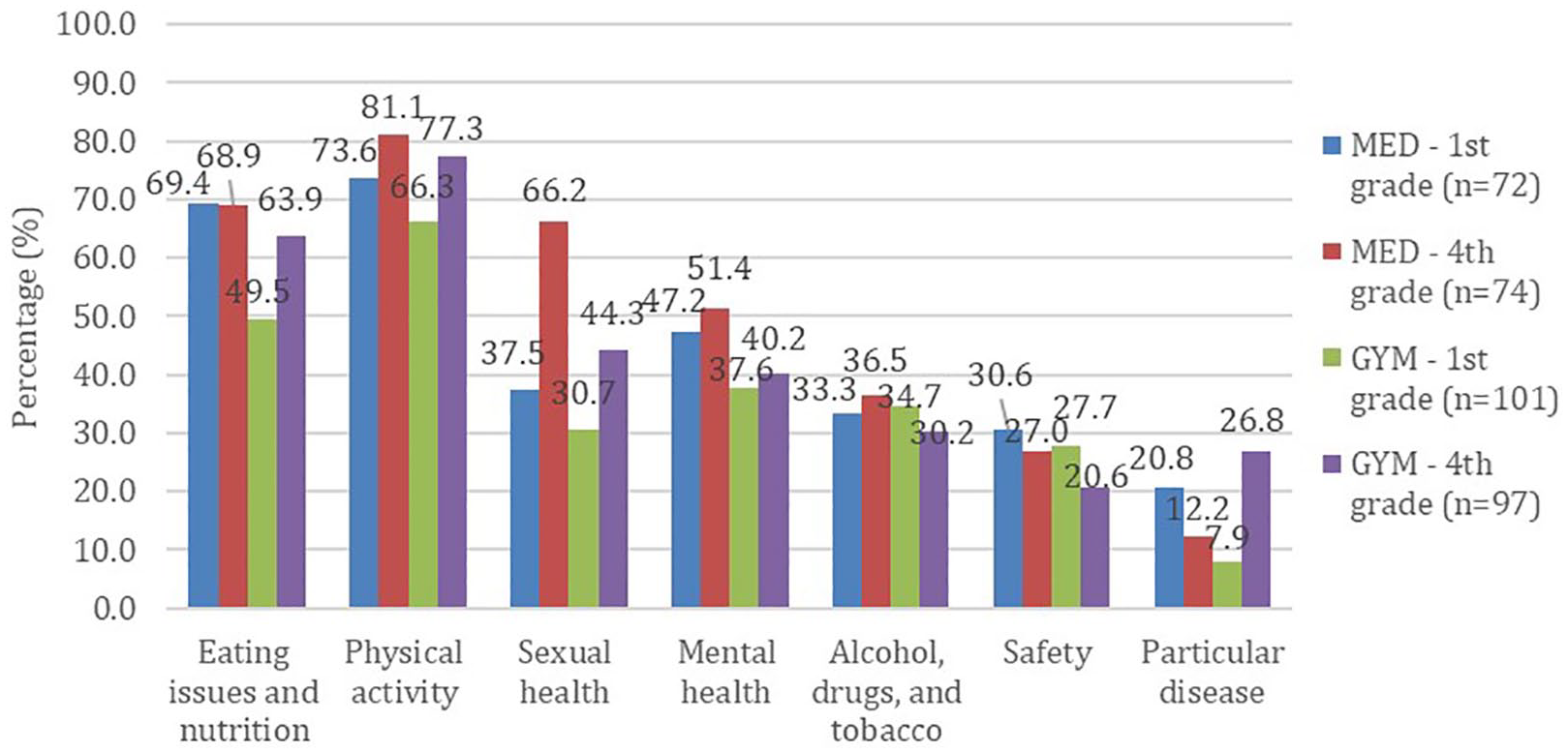
Differences by grade level in health questions.
Benefits of using mobile devices for health information (RQ2 and RQ5)
Students were asked to choose the benefits of using mobile devices for health information by choosing all that apply among the following: Ease of use, Portability, Timeliness, Easy to track/record/monitor health status, Easy to share health information and Other.
Overall
The most commonly reported benefit of using mobile devices for health information is the ease of use (n=303, 88.1%), followed by portability (n=191, 55.5%), timeliness (n=147, 42.7%), the ease of tracking/recording/monitoring health status (n=134, 39.0%), the ease of sharing health information (n=115, 33.4%) and Other (n=3, 0.9%). See Figure 4.
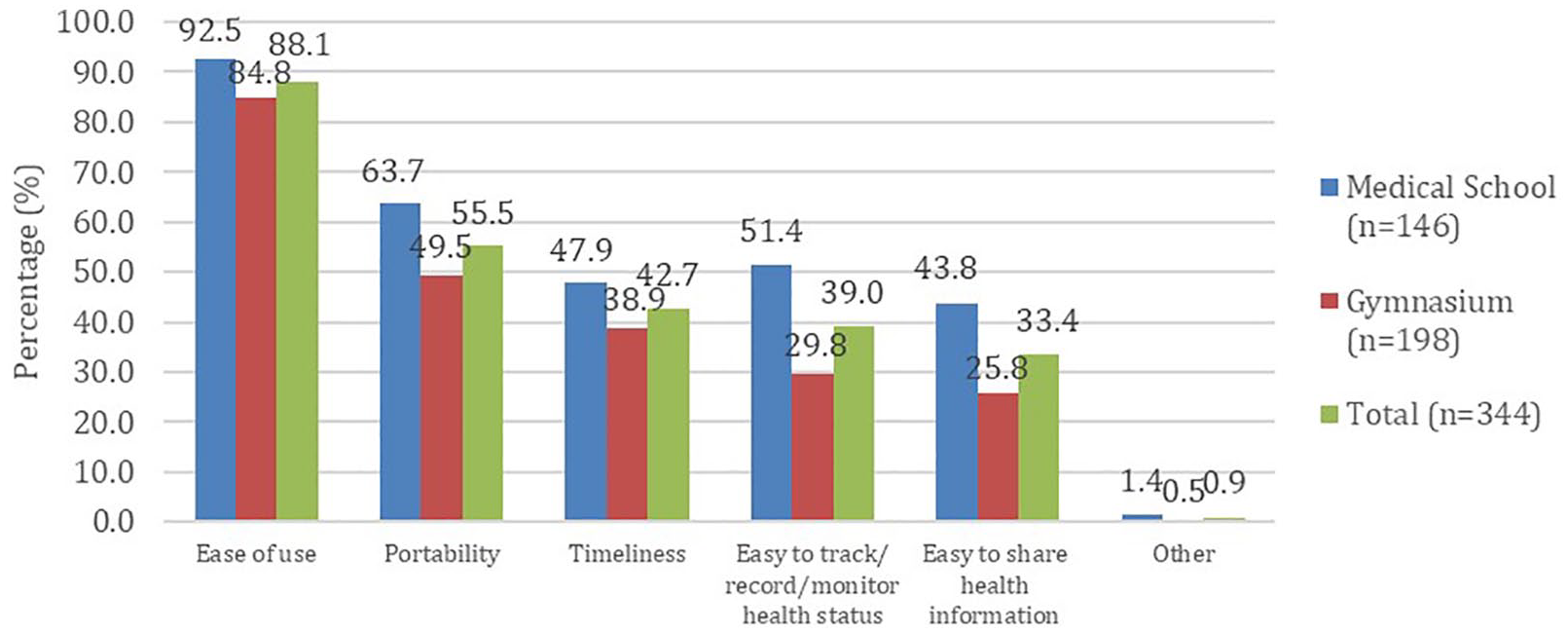
Benefits of using mobile devices for health information.
Prior domain knowledge
Students in MED tend to choose Ease of use (p<.05), Portability (p<.01), Easy to track/record/monitor health status (p<.001) and Easy to share health information (p<.001) as benefits of using mobile devices for health information significantly more than those in GYM. Students in MED also tend to choose Timeliness and Other more than those in GYM. However, there are no significant differences. When students in the same grades are compared between MED and GYM, First grade students in MED tend to consider all listed items as beneficial more than First grade students in GYM. Significant differences were found in Portability (p<.01) and Easy to track/record/monitor health status (p<.05). Fourth grade students in MED tend to choose all listed items, except for Other, as beneficial more than Fourth grade students in GYM. Significant differences were found in Ease of use (p<.05), Timeliness (p<.05), Easy to track/record/monitor health status (p<.01) and Easy to share health information (p<.001). See Figure 4.
Gender
Gender differences in benefits of using mobile devices for health information were analysed within each type of school. Female students in GYM tend to choose listed items as benefits more than male students in GYM. Significant differences were found only in Timeliness (p<.05). Students in MED do not exhibit any gender differences regarding benefits of using mobile devices for health information. See Figure 5.
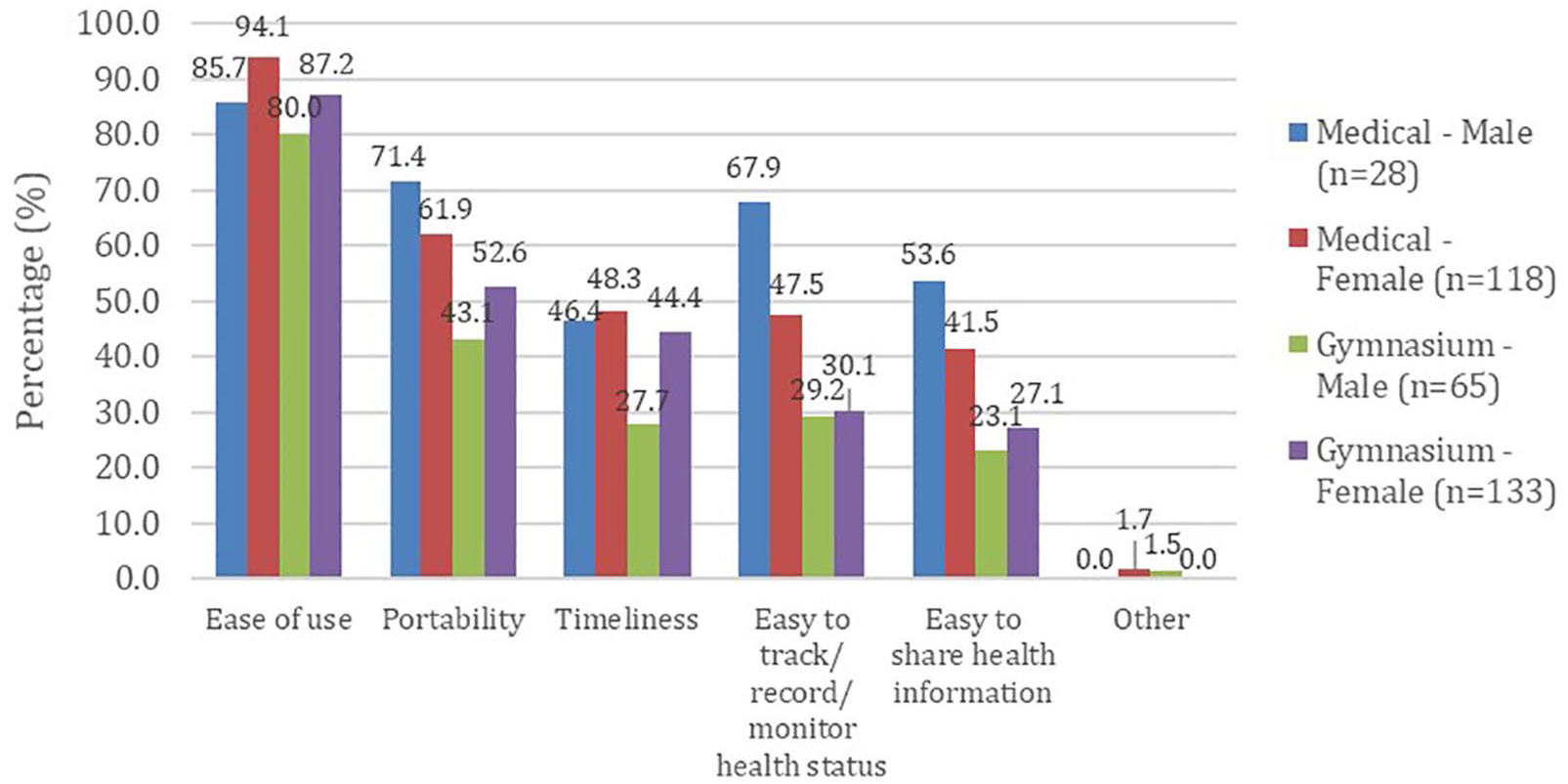
Differences by gender in benefits of using mobile devices for health information.
Grade level
Differences by grade level regarding benefits of using mobile devices for health information were analysed within each type of school. Fourth grade students in GYM are significantly more likely to consider Portability (p<.001) as beneficial than First grade students in GYM. Fourth grade students in MED are more likely to consider Easy to share health information (p<.05) as beneficial than First grade students in MED. See Figure 6.
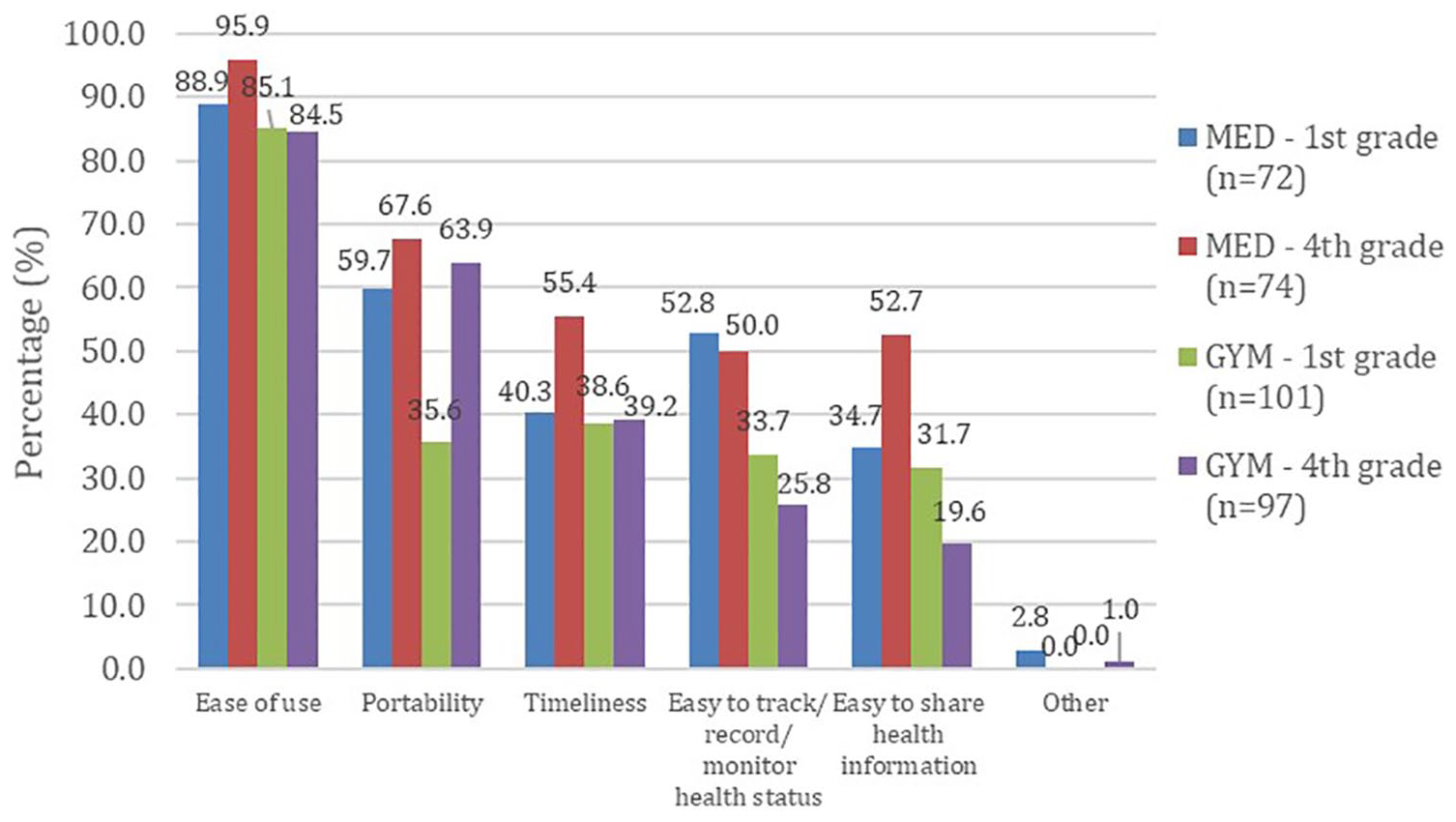
Differences by grade level in benefits of using mobile devices for health information.
Ways youth use mobile devices for health information (RQ3 and RQ5)
Students were asked to answer in what ways they had used a mobile device by choosing all that apply among Searching, Browsing and Using applications.
Overall
Of those who have used mobile devices for health information, about 71% (n=243) use mobile devices to search health information, while 30.5% (n=105) use applications and 29.1% (n=100) browse information (Figure 7). Among those who use applications (n=105), 29.5% (n=31) reported using applications to track/record/monitor health activities. For instance, 20 students said they used a menstrual calendar application, while others reported using applications to track/record/monitor walking, running, calories, water intake, diet and nutrition. Other types of applications include social networking site applications (e.g. Facebook, Twitter, Instagram, Snapchat) (7.6%, n=8), messenger applications (3.8%, n=4), YouTube (2.9%, n=3), and game applications (2.9%, n=3).
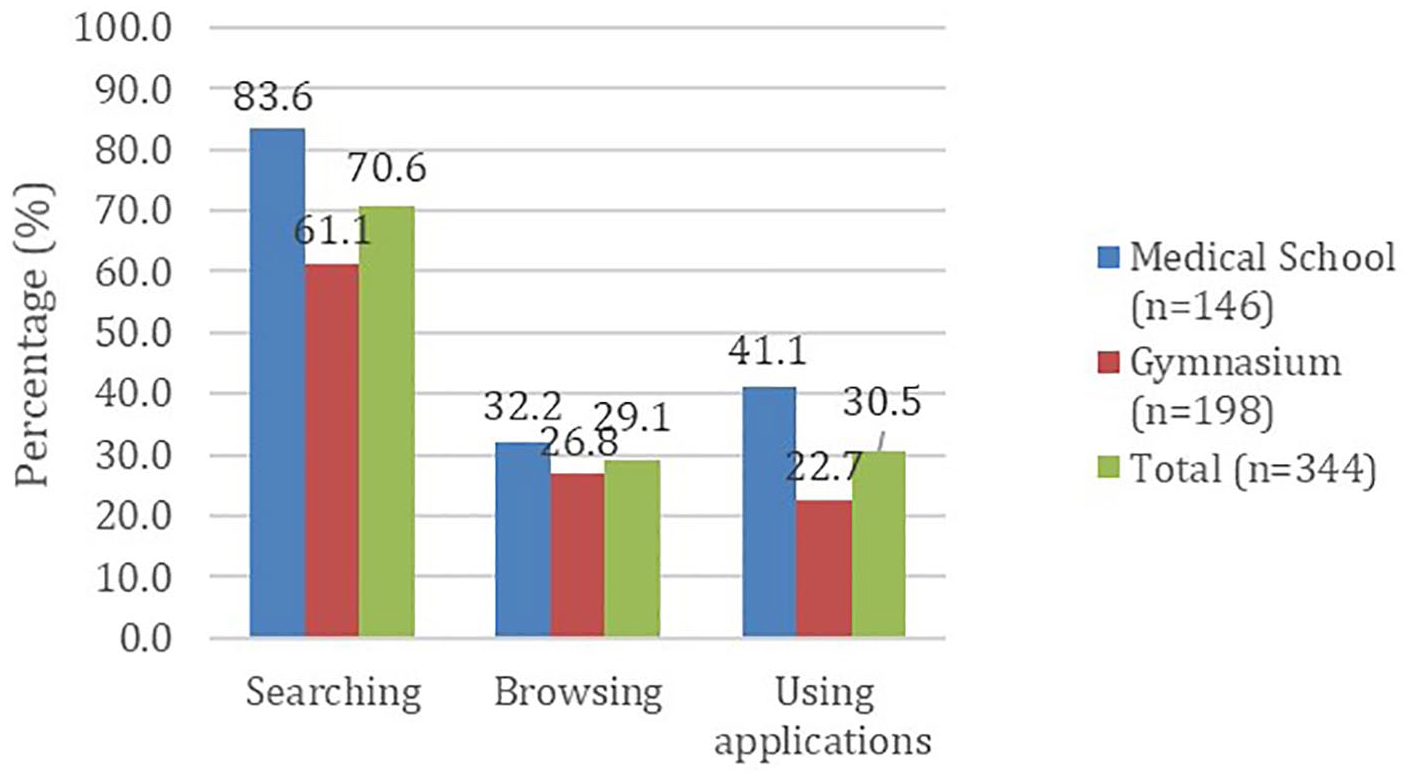
Ways to use mobile devices for health information.
Prior domain knowledge
In both MED and GYM, searching was the most frequently reported method of using mobile devices for health information. Students in MED tend to search, browse and use applications more than those in GYM, and significant differences were found in Searching (p<.001) and Using applications (p<.001). When students in the same grades are compared between MED and GYM, First grade students in MED tend to search, browse, and use applications more than First grade students in GYM. Significant differences were found in Searching (p<.001). Fourth grade students in MED tend to search, browse and use applications more than Fourth grade students in GYM. Significant differences were found in Searching (p<.01) and Using applications (p<.01). See Figure 7.
Gender
Gender differences in methods of using mobile devices for health information were analysed within each type of school. In both MED and GYM, there were no significant gender differences found (Figure 8).

Differences by gender in ways to use mobile devices for health information.
Grade level
Differences by grade level regarding methods of using mobile devices for health information were analysed within each type of school. In both MED and GYM, Fourth grade students tend to search, browse and use applications more than First grade students. And, a significant difference was found in Searching in GYM. That is, Fourth grade students in GYM search significantly more than First grade students in GYM (p<.01). See Figure 9.
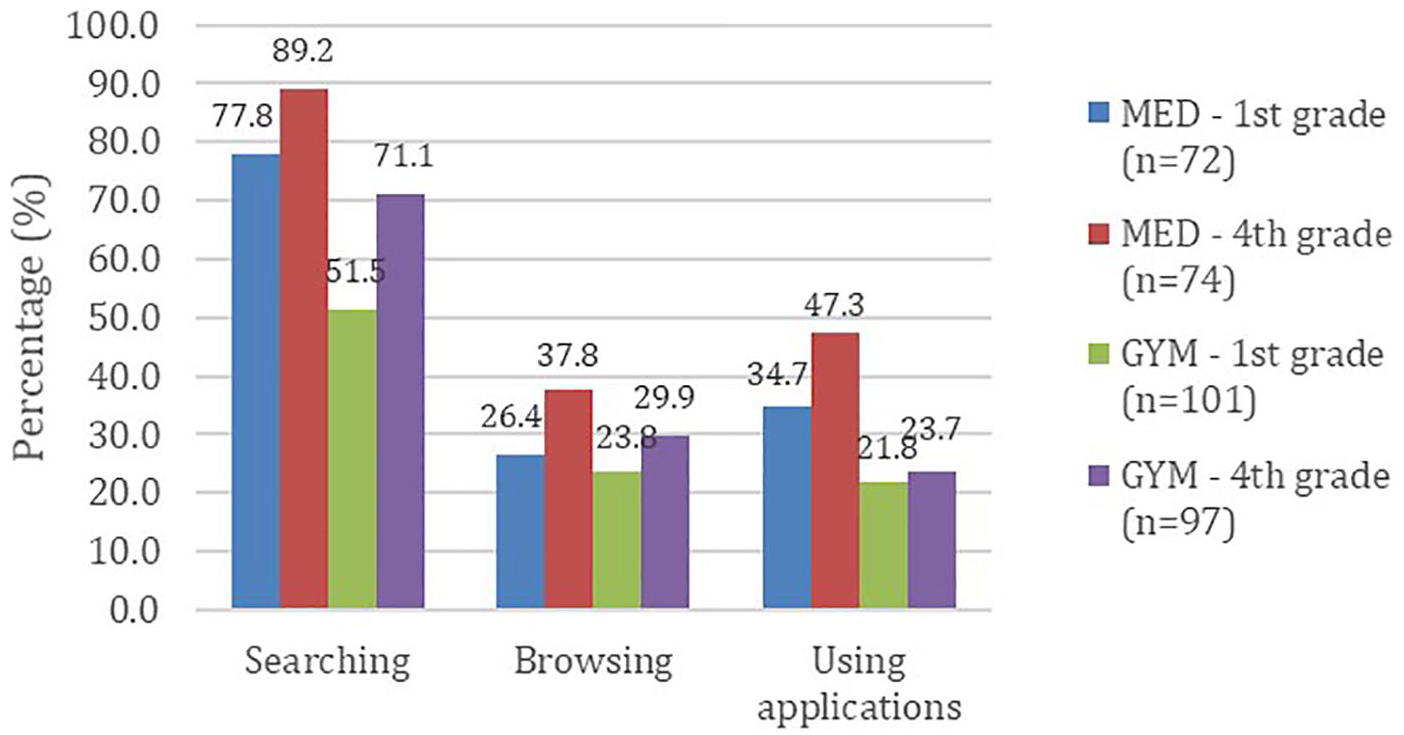
Differences by grade level in ways to use mobile devices for health information.
Useful features of applications (RQ4 and RQ5)
Students were asked what features of health applications they considered useful by choosing all that apply among the following: Tracking/recording/monitoring, Videos, Sharing, Alerting, Customized information and Other. In addition, there was an option to choose ‘I have not used any applications for health information yet’.
Overall
Of the total participating students, 223 students reported having used applications for health information, which is 54.7% of the total 408 survey respondents and 64.8% of those who have used mobile devices for health information. Among those who have used applications for health information, 100 students (44.4%) considered the Alerting feature as the most useful, followed by the Tracking/recording/monitoring feature (n=80, 35.9%), the Customized information feature (n=76, 34.1%), the Video feature (n=48, 21.5%), the Sharing feature (n=35, 15.7%), and Other (n=4, 1.8%). See Figure 10.
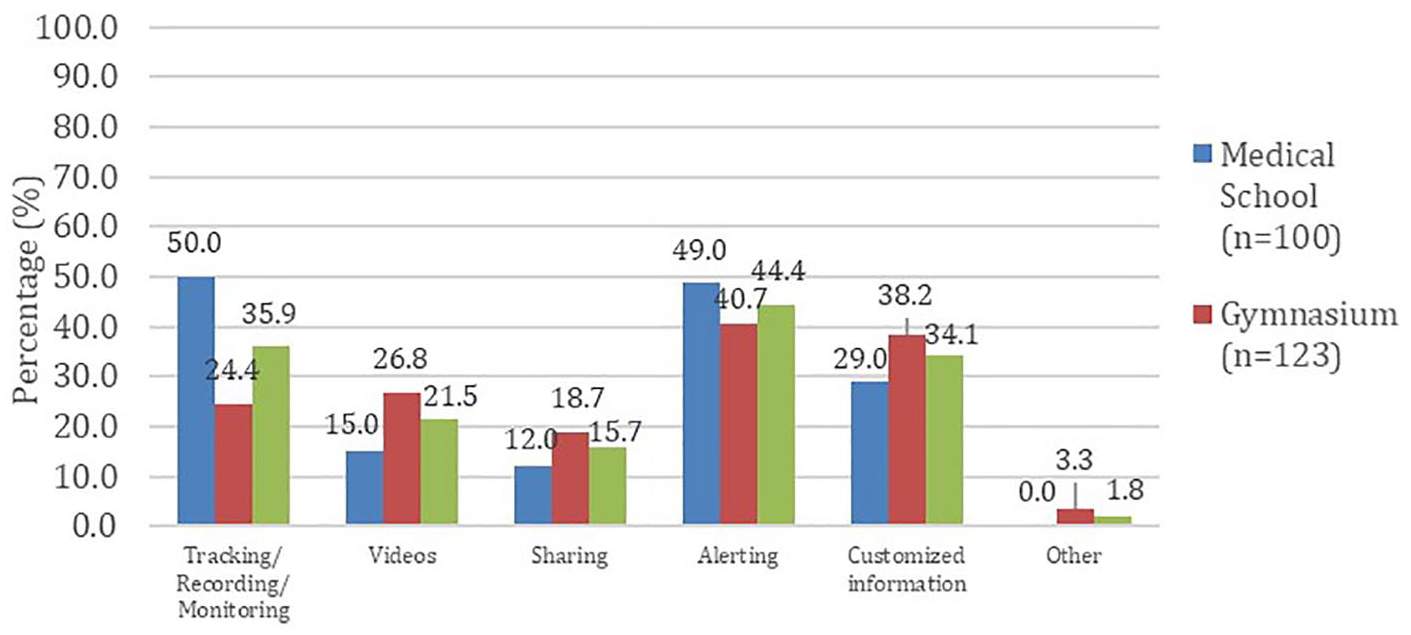
Useful features of applications.
Prior domain knowledge
Students in MED tended to consider Tracking/Recording/Monitoring (p<.001) useful significantly more than students in GYM, while students in GYM considered Videos (p<.05) useful significantly more than students in MED. When students in the same grades are compared between MED and GYM, both First grade (p<.05) and Fourth grade (p<.01) students in MED tended to consider Tracking/recording/monitoring useful significantly more than First grade and Fourth grade students in GYM, respectively. See Figure 10.
Gender
Significant gender differences were found in Sharing in MED. In MED, male students tend to consider Sharing (p<.05) useful significantly more than female students. See Figure 11.
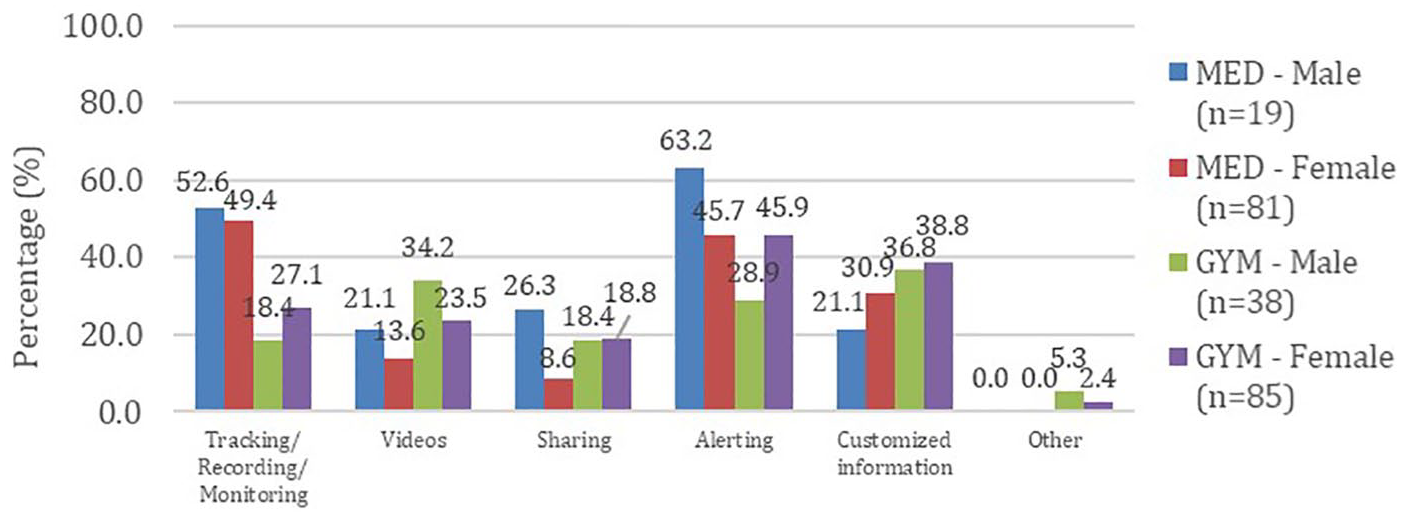
Differences by gender in useful features of applications.
Grade level
Differences by grade level regarding useful features of applications were analysed within each type of school. There were no differences by grade level found in both MED and GYM (Figure 12).

Differences by grade level in useful features of applications.
As an open-ended question, students were asked if there were any features that they hoped to have in health applications. Of 188 students who answered this question, the majority reported either that there were no desirable features (n=128) or that they did not know (n=22). Besides that, the most frequent answer was doctor’s feedback through online counselling or SMS (n=11), followed by more information (i.e. adding comments or health-related articles written by experts) (n=6), accuracy and credibility (n=4), simple facts without too much information (i.e. filtering unhelpful comments), visualization and user-friendly interface (i.e. graphic layout, full display of my health, easy navigation) (n=4), personalized information (i.e. age-appropriate information, everything about me) (n=2), availability of more applications for health (n=2), practicality and usefulness (n=2), body workouts (i.e. personalized training) (n=2), calorie calculation in food (n=1), help in organizing health information (n=1), Croatian language (n=1), measurement (i.e. measuring pulse and stress) (n=1), privacy (n=1), and a list of questions that can be answered (n=1).
Discussion
Overall health information behaviours on mobile devices
The most commonly reported health topic for which participating students had used mobile devices was Physical activity, followed by Eating issues and nutrition, Sexual health, Mental health, Alcohol, drugs and tobacco, Safety and Particular disease. This supports the findings of Wartella et al.’s (2016) study that show physical activity and nutrition are the most popular topics when teens search health information online and when they download health-related applications. The reason could be that physical activity and nutrition are relatively common health topics shared by a majority of people. At the same time, they are less sensitive topics for which people can use mobile devices without privacy concerns. Although great attention has been paid to research about adolescents’ online sexual health information seeking, findings of previous studies show that teens are less likely to seek sensitive health information online and prefer to ask parents, teachers and friends (Gray et al., 2005; Jones and Biddlecom, 2011; Lenhart et al., 2010; Mitchell et al., 2014). According to the PEW Internet & American Life Project (Lenhart et al., 2010), only 17% of teens reported they used the Internet for health topics that are hard to discuss with others, such as drugs and sexual health.
Students use mobile devices to obtain health information mainly because of the ease of use, followed by portability, timeliness, the ease of tracking/recording/monitoring health status and the ease of sharing health information. As for how to use mobile devices for health information, slightly more than 70% of students reported mostly searching health information using mobile devices, while 30.5% used applications and 29.1% browsed health information. As found in previous studies (e.g. Burford and Park, 2014), students shift between searching, browsing and using applications. It is notable that of those who have used mobile devices for health information, only 64.8% (54.7% of the total respondents) turned out to have ever used applications for health information and only about half of them appeared to constantly use applications for health information. This finding is consistent with Wartella et al.’s (2016) findings that 29% of teens with a mobile device had downloaded a health-related application, but only about half of them often (8%) or sometimes (45%) used them.
Only 64.8% of those who have used mobile devices for health information (54.7% of the total respondents) turned out to have ever used applications for health information. Students who have used applications for health information consider the alerting feature as the most useful, followed by the tracking/recording/monitoring feature, the customized information feature, the video feature and the sharing feature. Among those who used applications, 29.5% reported using applications to track/record/monitor a menstrual cycle, exercises, food/water intake or nutrition. Other types of applications that students mentioned include information-sharing tools, such as social networking sites, messengers and YouTube, which are not particularly focused on specific health topics.
Differences by prior knowledge
Previous studies have revealed that prior domain knowledge improves search performance and navigation efficiency. People with prior domain knowledge tend to produce a higher number of queries and more relevant ones (Lei et al., 2013), retrieve more useful search results (Vakkari, 2002; Vakkari et al., 2003), more efficiently evaluate search results (Tabatabai and Shore, 2005), and visit more relevant webpages (Hölscher and Strube, 2000). Domain experts are more likely to use exploratory search strategies than novices by visiting numerous webpages and adopting new keywords from search results (Dinet et al., 2012; Monchaux et al., 2015). Khosrowjerdi and Iranshahi (2011) revealed that information-seeking behaviour and prior knowledge (familiarity, expertise and past experience) of graduate students are strongly positively related.
In this study, students in MED (with more prior knowledge in health) tended to have more information needs in health than students in GYM (with less prior knowledge in health). Results show that students in MED tended to have significantly more information needs in Eating issues and nutrition and Sexual health than those in GYM. When students in the same grade level were compared, First grade students in MED tended to have significantly more information needs in Eating issues and nutrition and Particular disease than First grade students in GYM. Fourth grade students in MED tended to have significantly more information needs in Sexual health and significantly less information needs in Particular disease than Fiurth grade students in GYM.
As for the benefits of using mobile devices for health information, students in MED tended to consider Ease of use, Portability, Easy to track/record/monitor health status and Easy to share health information as beneficial significantly more than students in GYM. When students in the same grade level were compared, First grade students in MED showed a tendency to consider Portability and Easy to track/record/monitor health status as beneficial significantly more than First grade students in GYM. Fourth grade students in MED showed a tendency to consider Ease of use, Timeliness, Easy to track/record/monitor health status and Easy to share health information as beneficial significantly more than Fourth grade students in GYM.
Regarding the ways youth use mobile devices for health information, students in MED tended to search and use applications significantly more than students in GYM. When students in the same grade level were compared, First grade students in MED tended to search significantly more than First grade students in GYM. Fourth grade students in MED tended to search and use application significantly more than Fourth grade students in GYM. People with prior domain knowledge can better utilize applications than their counterpart as applications are considered more effective for specific information and need to be carefully selected by users (Burford and Park, 2014). In addition, prior domain knowledge helps people efficiently search by generating relevant queries (Lei et al., 2013), retrieving useful search results (Vakkari, 2002; Vakkari et al., 2003), efficiently evaluating search results (Tabatabai and Shore, 2005), visiting relevant webpages (Hölscher and Strube, 2000), visiting numerous webpages, and adopting new keywords from search results (Dinet et al., 2012; Monchaux et al., 2015). Because of the specific but limited scope of information provided by applications, people tend to keep a balance of using applications and searching the Internet (Burford and Park, 2014).
As for useful features of applications, students in MED tended to consider Tracking/Recording/Monitoring useful significantly more than students in GYM, while students in GYM considered Videos useful significantly more than students in MED. When students in the same grades are compared between in MED and GYM, both First grade and Fourth grade students in MED tended to consider Tracking/recording/monitoring useful significantly more than First grade and Fourth grade students in GYM, respectively. Multimedia features of applications, such as providing videos, appeared to be useful for people with lack of prior knowledge in health.
Differences by gender
Significant gender differences were found in GYM regarding health topics and benefits of using mobile devices for health information and in MED regarding useful features of applications. In GYM, female students tended to have significantly more information needs in Mental health and Particular disease than male students and tended to consider Timeliness more beneficial than male students. In MED, male students tended to consider Sharing useful significantly more than female students. There was no gender difference found regarding the ways students used mobile devices for health information either in MED or in GYM. This finding is different from the findings of Wartella et al.’s study (2016) that female teens reported using health-related applications more frequently than male teens. There have been previous studies that found gender differences in willingness to search for sensitive health information online (Lenhart et al., 2010); however, the participants of this study did not demonstrate gender differences in seeking sensitive health information on mobile devices.
Differences by grade level
In both MED and GYM, Fourth grade students are significantly more likely to have Sexual health-related questions than First grade students. In addition, Fourth grade students in GYM had significantly more questions about Eating issues and nutrition and Particular diseases than First grade students in GYM. Regarding the benefits of using mobile devices for health information, Fourth grade students in GYM were likely to consider Portability significantly more beneficial than First grade students in GYM. Fourth grade students in MED were likely to consider Easy to share health information significantly more beneficial than First grade students in MED. In both MED and GYM, Fourth grade students tended to search, browse and use applications more than First grade students. Fourth grade students in GYM tended to search significantly more than First grade students in GYM. There were no differences found in useful features of application by grade level.
Conclusion
As a survey study with high school students in Croatia, this study aims to better understand the information behaviours of youth seeking health information on mobile devices and to explore any differences in their health information behaviours on mobile devices by prior knowledge, gender and grade level. The results show that among the 408 participants, 84.3% reported having used mobile devices for health information and 54.7% reported having used applications for health information. The following are the key findings and implications of this study.
It turns out that youth tend to use mobile devices for health topics that are relatively common – as shared by a majority of them. They also tend to use their mobile devices for less sensitive health topics because of privacy concerns. This tendency has been found in their use of applications as the most frequently reported applications are those to track/record/monitor a menstrual cycle, exercises, food/water intake or nutrition. It then leaves the question: How can mobile devices and applications better serve youth to help them resolve their specific and sensitive health issues? This is critical because regardless of their prior knowledge in health, increased needs in sexual health information have been found in students with a higher grade level. It is recommended that application features should be customized depending on the nature of health topics that an application covers. For instance, sharing features can be desirable for exercise applications, while credible feedback from medical experts without sharing features are more suitable for applications dealing with sensitive health issues.
It is notable that only 30% of those who use mobile devices for health information use applications and merely half of application users consistently use applications for health information. Youth reported mostly searching health information using mobile devices. There could be several reasons why youth are less likely to use applications. First, information provided by applications tends to be very specific and limited, thus solely using applications may not adequately meet their health information needs (Burford and Park, 2014). Second, as findings of this study demonstrated, youth with less prior knowledge in health tend to use health applications less frequently. Youth may not often use applications because of their lack of knowledge in health. Third, more applications that are proper for their age and specific needs should be developed and simultaneously, youth need to be educated about health applications available to them.
This study indicated that prior knowledge plays a critical role in youth’s health information behaviours on mobile devices. Youth with more prior knowledge in health tend to more frequently use mobile devices for health information, better understand the benefits of using mobile devices and the useful features of applications, and better utilize applications. It turns out that prior knowledge facilitates youth to be active information seekers with decent insights about information technology. That is, knowledgeable people will gain information more effectively to become more knowledgeable, and vice versa. Therefore, to assist youth in resolving their health issues with information technology, building prior knowledge through educational programmes or assistive features of technology should be considered imperative. This study also showed that youth with less prior knowledge tend to consider the multimedia feather of applications more useful than those with more prior knowledge.
This study has limitations in that data were collected from high schools located in one city in Croatia. However, it helps to better understand young people’s use of mobile devices and applications for health information and provides implications for application developers, health educators, information specialists and researchers in this domain. Mobile devices are considered as an important tool to resolve health issues in developing countries as well because they allow increased access to healthcare and health-related information (Chigona et al., 2013). This study recommends that research should be further developed, especially about what criteria youth have in selecting applications concerning their health issues and how strategically they shift between searching, browsing and using applications in using mobile devices for health information.
Supplemental Material
appendix_1_questionnaire – Supplemental material for The use of mobile devices and applications for health information: A survey of Croatian students
Supplemental material, appendix_1_questionnaire for The use of mobile devices and applications for health information: A survey of Croatian students by Sung Un Kim, Ivana Martinović and Snježana Stanarević Katavić in Journal of Librarianship and Information Science
Footnotes
Funding
The author(s) disclosed receipt of the following financial support for the research, authorship, and/or publication of this article: The study was performed within a research project named UNIOS INGI 2015-15, which was funded by the Josip Juraj Strossmayer University of Osijek, Croatia.

Supplemental material
Supplemental material for this article is available online.
Author biographies
References
Supplementary Material
Please find the following supplemental material available below.
For Open Access articles published under a Creative Commons License, all supplemental material carries the same license as the article it is associated with.
For non-Open Access articles published, all supplemental material carries a non-exclusive license, and permission requests for re-use of supplemental material or any part of supplemental material shall be sent directly to the copyright owner as specified in the copyright notice associated with the article.
