




Abstract
The rapid development of information and communication technologies has revolutionized the lifestyles and learning practices of the younger population worldwide. Various new mobile platforms and forms of social media have been so pervasive and influential in the world of higher education that they have contributed much to the training of the next generation of medical professionals. As such, the current study aimed to compare the adoption of mobile learning amongst three groups of medical science students at the University of Hong Kong – namely, students majoring in Clinical Science, Chinese Medicine and Nursing. For this study, the authors used a questionnaire survey to collect a total of 150 responses. The data was analysed using descriptive statistics, Pearson’s correlation test and multiple regression analysis. The results from the study revealed that the students in the three different medical majors at the University of Hong Kong engaged with their mobile devices at slightly different levels. Although a few significant differences were found, Clinical Science students tended to have more diverse information needs and use their mobile devices for a variety of learning-related activities. In comparison, Chinese Medicine students indicated that they were less active users of mobile devices in terms of both learning and non-learning activities.
Introduction
Due to the worldwide proliferation of mobile technologies, current mobile devices such as smartphones and tablets have become almost ubiquitous in people’s daily lives (Dukic et al., 2015; Lau et al., 2020). Currently, with computing power comparable to traditional desktop computers, contemporary mobile technology provides additional advantages such as a portable size and a variety of downloadable application options, as well as many other additional productive features, regardless of temporal and geographical limitations, and has enabled them to permeate almost all aspects of our daily lives (Ko et al., 2015; Wai et al., 2018). Along with such new developments of wireless and communication technologies, mobile devices have become essential for learning both in education and the workplace. Thus, understanding students’ usage patterns of mobile devices for better teaching and learning support has captured the attention of many educational specialists, as well as library and information service providers, worldwide (Aharony, 2014; Ko et al., 2015; Lau et al., 2020).
Mobile technology possesses the capability to support seamless learning (Wong, 2012) and a seamless transition to different modes or styles of learning, such as in-class and out-of-class learning, with handheld or desktop use. In other words, mobile learning can take place anytime, anywhere, thereby extending the classroom into a variety of virtual and physical environments while creating an interactive social hub that facilitates collaborative learning and interactions among instructors and students (Fong et al., 2020; Lam et al., 2019).
Indeed, mobile learning has become increasingly popular, not to mention it being an essential tool for medical education (Chase et al., 2018; Masters and Al-Rawahi, 2012). As highlighted by Walsh:
In the past several years, mobile learning made rapid inroads into the provision of medical education. There are significant advantages associated with mobile learning. These include high access, low cost, more situated and contextual learning, convenience for the learner, continuous communication and interaction between learner and tutor and between learner and other learners, and the ability to self-assess while learning. (Walsh, 2015: 363)
Despite such apparent advantages associated with mobile learning in the clinical setting, there is scant research on the influence that mobile devices have in the medical learning environment, especially in Hong Kong.
In order to fill this research gap, this study plans to investigate the adoption of mobile learning amongst three medical science majors at the University of Hong Kong (HKU): Clinical Science, Chinese Medicine and Nursing. The study is guided by the following research questions:
How active are the medical students at HKU in using mobile devices for their everyday life activities?
How active are the medical students at HKU in using mobile devices for learning-related activities?
Are there any distinctive differences between the three groups of medical students (namely, Clinical Science, Chinese Medicine and Nursing) in terms of their mobile learning practices?
What are the main intentions behind mobile device usage amongst these three groups of medical students at HKU? What are the factors that shape their mobile learning practices?
Literature review
Mobile learning and its unique characteristics
In each era, there is a close correlation between contemporary technologies and specified education modes and learning styles. The role that technological advancements play in the learning paradigm shift should not be underestimated. E-learning refers to the delivery of learning materials through electronic media such as videos, computers, televisions, and so forth (Urdan and Weggen, 2000). Quinn (2011) defined mobile learning as e-learning through mobile technologies, which pinpoints the significant change in technological media and implies that mobile learning is an advanced form of e-learning. Early definitions of mobile learning have tended to focus on the importance of technological advancement. However, these tech-centred conceptualizations can be rather constraining since technologies are just vehicles for delivering instruction (Traxler, 2007).
As insights into mobile learning have deepened, definitions have shifted from technology-centred to user-experience-centred, mobility-centred and context-centred (Khaddage et al., 2016). Mobile learning is generally considered as the process of developing knowledge by exploring and communicating across various contexts using interactive technologies (Sharples et al., 2007). Thus, context is a crucial construct in mobile learning (Kukulska-Hulme et al., 2007) and needs to be fully understood, as context affects not just the users, but also the application design (Hong et al., 2007). The context regarding learners’ mobility may vary, including the spatial context, temporal mobility and mobility in technology (Nelson et al., 2017). Indeed, what moves with the human is not just the device, but also the whole learning environment (Fakomogbon and Bolaji, 2017). All learning experiences occur within contexts, and the mobile context permits contextual learning. Compared with the static context experienced in traditional learning environments (typically a fixed classroom, single teacher and agreed curriculum), the mobile context offers dynamism and impromptu tangents. The main characteristic of mobile learning is its capability to support learners in acquiring knowledge and keeping informed across contexts (Kukulska-Hulme et al., 2007).
Mobile learning distinguishes itself from other methods and platforms by enabling learning irrespective of time and location. Once learners identify their learning needs, they can search for the desired information through powerful mobile devices. Thus, mobile learning can satisfy spontaneous information needs, which is the most important characteristic of mobile learning (Ozdamli and Cavus, 2011). Uzunboylu et al. (2009) proposed that mobile technology could be integrated into formal learning. Moreover, classroom construction and mobile learning are frequently combined to create what is known as ‘blended learning’. This can enhance the quality of both top-down instruction and self-generated mobile learning (Bonk and Graham, 2012). Different from merely uploading passive courses online, mobile learning allows for real-time active and participative learning (Wang et al., 2009). Hence, mobile learning is interactive.
University students’ perceptions of mobile learning
The mobile learning behaviours of students are primarily decided by their mobile learning intentions, information needs and attitudes towards mobile learning, and whether they would repeat mobile learning behaviours (Pinto et al., 2020; Wai et al., 2018). Understanding students’ learning needs is crucial to enhancing learning efficiency and delivering an effective mobile learning design. Further, Wang et al. (2009) noted that the factors which promote mobile learning behaviours include an individual’s expectations of their performance and ease of effort, the social impact, the facilitating conditions, the perceived playfulness and learning management. Mobile learning distinguishes itself in that it aims to address problems that could arise anywhere and at any time. In other words, it can be difficult to transfer knowledge acquired through traditional learning to real-life resolutions of problems. Insofar as this is concerned, collaboration and interactions with the authentic context are necessary. Fortunately, mobile learning can help address real-life problems since it is spontaneous, ubiquitous and context-aware, and offers anytime, anywhere learning (Uzunboylu et al., 2009). Thus, the need to address real-life problems constitutes another extrinsic motivation for mobile learning.
Kukulska-Hulme et al. (2007) summarized the implications of mobile learning from the perspective of educators, stating that mobile technology could improve the quality of learners’ support and instruction, as well as course design and management. From the perspective of learners, mobile learning provides new opportunities to explore and investigate independently, and can help them to acquire up-to-date and on-the-spot knowledge (Pinto et al., 2020; Wai et al., 2018). After examining 18 key studies relating to student perceptions of mobile learning, Pollara and Broussard (2011) concluded that, whether in experimental studies or surveys, the overall attitudes of students towards mobile learning were positive and optimistic.
Many other researchers are advocates of this viewpoint (see, for example, De Winter et al., 2010). Kutluk and Gülmez’s (2014) study investigated the attitudes of accounting students towards mobile device integration into learning. The results indicated that a majority of the students held a positive attitude towards mobile learning and believed they already had the necessary knowledge and skills to exploit the mobile devices’ potential to enhance learning. Owing to constant, convenient connectivity to the Internet, teachers could also deliver learning materials by email, replacing the traditional, time-consuming method of handing out documents face-to-face in the classroom. The students tended to communicate more with their classmates and instructors, since constant access to the Internet brought about a change in the communication paradigm (Wai et al., 2018). Communication for short periods, but with high frequency, was considered more effective.
Mobile learning lends itself to short activities rather than intensive reading (Wang et al., 2009). Jonathan (2012) showed the influence of mobile learning on communication by noting that mobile technology helps realize the construction of collaborative learning platforms, where students can work on a single assignment synchronously from anywhere. This method allows ideas, suggestions and feedback to be transferred instantly. Thus, mobile technology’s integration into learning has the potential to transform didactic learning into self-directed and participatory learning. Al-Fahad (2009) investigated the attitudes and perceptions of 186 female undergraduates to the mobile learning techniques used at King Saud University. He found that the students widely accepted mobile learning because it changed them from passive learners into active and enthusiastic learners, who were behaviourally and emotionally engaged in the knowledge transfer and construction that occurred.
Research into mobile learning is blossoming because of the widespread adoption of mobile devices amongst the younger generation, and students generally seem to be willing to embrace mobile learning as a new learning style and are happy to exploit its potential. However, Ko et al. (2015) identified some issues that may hinder the adoption of mobile learning in both the higher education context and individual lives. Some educators still consider mobile devices to be detrimental to students’ learning process. As mobile devices provide so many functions to satisfy nearly all aspects of an individual’s needs, they could cause distractions. In Pikas’s (2013) study, the participants were particularly drawn to social media platforms. Although constant network connectivity is often perceived as one of the advantages of mobile devices’ integration into learning, there are instances where this might become a disadvantage. The participants in Jonathan’s (2012) study noted that easy social media access, email, applications and games were the most common distractions in the process of learning.
The challenges posed by the mobile devices themselves were another hindrance. The breaking of iPad screens was identified as a particular issue (Wang et al., 2014). Likewise, the small screen size affected the reading experience of learners (Ko et al., 2015; Lau et al., 2020; Wai et al., 2018); the small keypads of most mobile devices do not promote fluent and satisfying input; and some students regarded the cost of applications and an occasional unsatisfactory Internet connection as impediments to using mobile learning technology (Ko et al., 2015; Wai et al., 2018).
Theoretical framework and hypotheses
As information technology continues to develop at an unprecedented rate and information systems proliferate within fields as diverse as commerce, health care and education, the factors that affect users’ actual use of a particular type of technology have piqued the curiosity of experts. In order to address this problem, experts have developed tools to evaluate the satisfaction level of users. Satisfaction refers to the total of one’s perceptions and attitudes towards the factors that influence a particular situation (Legris et al., 2003). Thus, the reasons that lead to user acceptance or rejection of information systems are closely linked to psychological knowledge. For example, the theory of reasoned action put forward by Fishbein and Ajzen (1975), from the perspective of social psychology, formed the basis of the technology acceptance model (TAM) proposed by Davis (1989). The theory of reasoned action model posits that an individual’s behaviours are directly influenced by behavioural intentions rather than attitudes, whereas the influence of the attitudes of the behaviours is mediated through the intentions. Although the theory of reasoned action has been tested thousands of times in the social science field and has proven a useful model in predicting individual behaviours, it is not without its limitations. It has been determined that it is not possible to apply the theory of reasoned action model to all contexts. Assessing users’ acceptance or rejection of certain types of technology, for example, cannot be done using the theory of reasoned action model, as researchers’ attempts to create reliable measures to predict user attitudes towards information systems have always failed (Marangunic and Granic, 2015). Thus, a reliable model that possesses the capacity to predict users’ acceptance level of information systems is required. To this end, Davis made some changes to the theory of reasoned action model’s predictors and proposed TAM.
In the original version of TAM, users’ attitudes towards the use of information systems directly influenced behavioural intentions, which in turn directly influenced the system’s actual use. Perceived usefulness and perceived ease of use are two of the most crucial constructs influencing technology use, with perceived ease of use having a direct influence on the degree of perceived usefulness. However, Davis also noted the intrinsic motives and argued that an individual’s affections should be equally stressed when evaluating users’ acceptance of technologies. Venkatesh and Davis (2000) emphasized the determinant role that perceived usefulness plays in users’ intention and willingness to use information systems. Thus, TAM 2 was proposed. The extended determinants of the constructs of perceived usefulness and usage intention differentiate TAM 2 from the original TAM. Apart from TAM 2, TAM has been extended numerous times by eliminating or adding various variables to adapt it to specific contexts (Wixom and Todd, 2005).
With the help of the TAM instrument, Legris et al. (2001) reviewed high-quality journals published between 1980 and 2001 which analysed user attitudes and intentions towards information systems. The results demonstrated that TAM served as a useful prediction model for explaining users’ intentions and behaviours concerning information system utilization, since positive relationships between the variables were identified generally, except for a small number of inconsistencies. Both TAM and the extended TAM have already been proven to be trustworthy, powerful and economic models for assessing users’ intentions with regard to technology use. For this reason, they have been widely used across various information technology sectors. Despite this, TAM research in the mobile learning sector is relatively scarce. Park (2009) analysed the behaviour intentions of Korean students towards accepting e-learning by building an extended TAM model. Interestingly, self-efficacy and social norms ranked first and second, respectively, in determining the adoption of e-learning. Following this, Park et al. (2012) introduced major relevance into the extended TAM model, on the assumption that students who undertake technology-related courses will be more likely to endorse the integration of mobile devices into learning. Major relevance serves as an intrinsic motivational element. The results demonstrated that it had a significant impact on variables, such as students’ attitudes towards mobile learning and the perceived usefulness of mobile learning.
This study intended to utilize the modified TAM to investigate learners’ attitudes towards the integration of mobile technology into learning, and their intentions to engage in mobile learning. By adopting this analysis and prediction model, it is not only the conceptual value, but also the practical value that will be acquired. Based on the original TAM and its extended versions, we propose a hypothesis model in which three external variables (discipline difference, system accessibility and social norms) are predicted to relate to the perceived usefulness, perceived ease of use, attitudes and behavioural intentions of mobile learning. The hypotheses are as follows:
1. Perceived ease of use, system accessibility, discipline difference and social norms are having positive impacts on perceived usefulness.
2. System accessibility, discipline difference and social norms are having positive impacts on perceived ease of use.
3a. System accessibility, discipline difference and social norms are having positive impacts on attitudes.
3b. System accessibility, discipline difference and social norms are having positive impacts on behavioural intentions.
Method
This study aimed to examine three different groups of medical students at HKU regarding their perceptions and attitudes towards their mobile learning, as well as what roles their academic majors played in shaping their mobile learning practices. A questionnaire survey was used to investigate the attitudes, perceptions and actual learning practices of medical student groups from three different majors at HKU. All of the students participated in the study voluntarily. The questionnaires (in paper form) were distributed for students to fill out at the HKU Medical Library.
Data collection and analysis
A total of 165 responses were collected from this questionnaire survey, although 15 of the responses were identified to be invalid as they were not from the targeted participants (being from non-medical students). Thus, 150 self-completed questionnaires were found to be suitable for subsequent analysis for the study. The collected data was analysed with the use of IBM’s SPSS (Statistical Package for the Social Sciences).
Demographics of the survey population
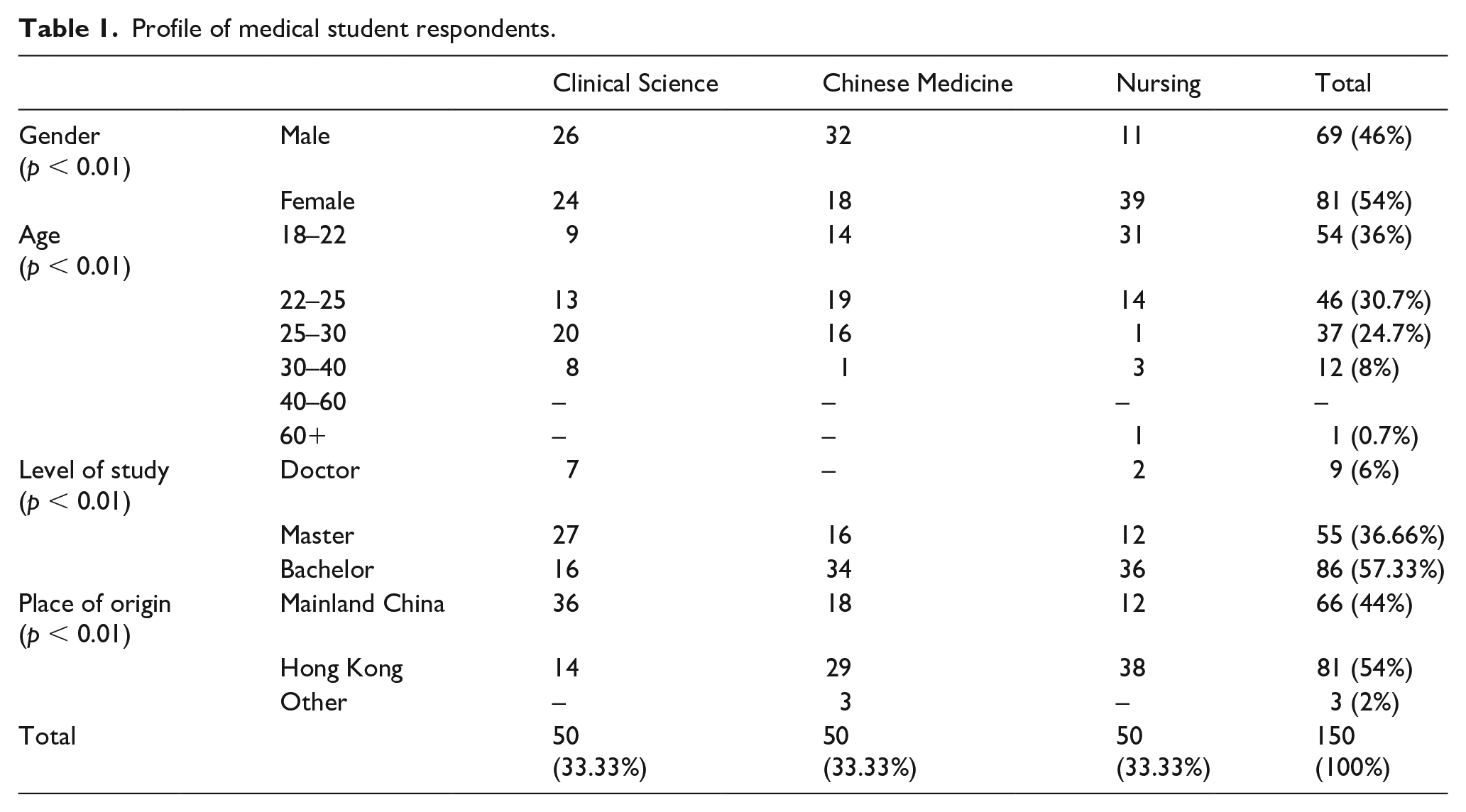
Survey respondents’ demographics may strongly influence their information needs, learning practices and, most importantly, attitudes as well as perceptions towards mobile learning. As shown in Table 1, out of the 150 responses, 50 were collected from each medical major. In terms of gender distribution, 69 (46%) were male, while the remaining 81 (54%) were female. Notably, a majority (86; 57.33%) of the student respondents were pursuing their medical studies at the undergraduate (Bachelor) level. Meanwhile, doctoral students made up only 6% of the total survey population (see Table 1).
Profile of medical student respondents.
Reliability and validity of the survey instrument
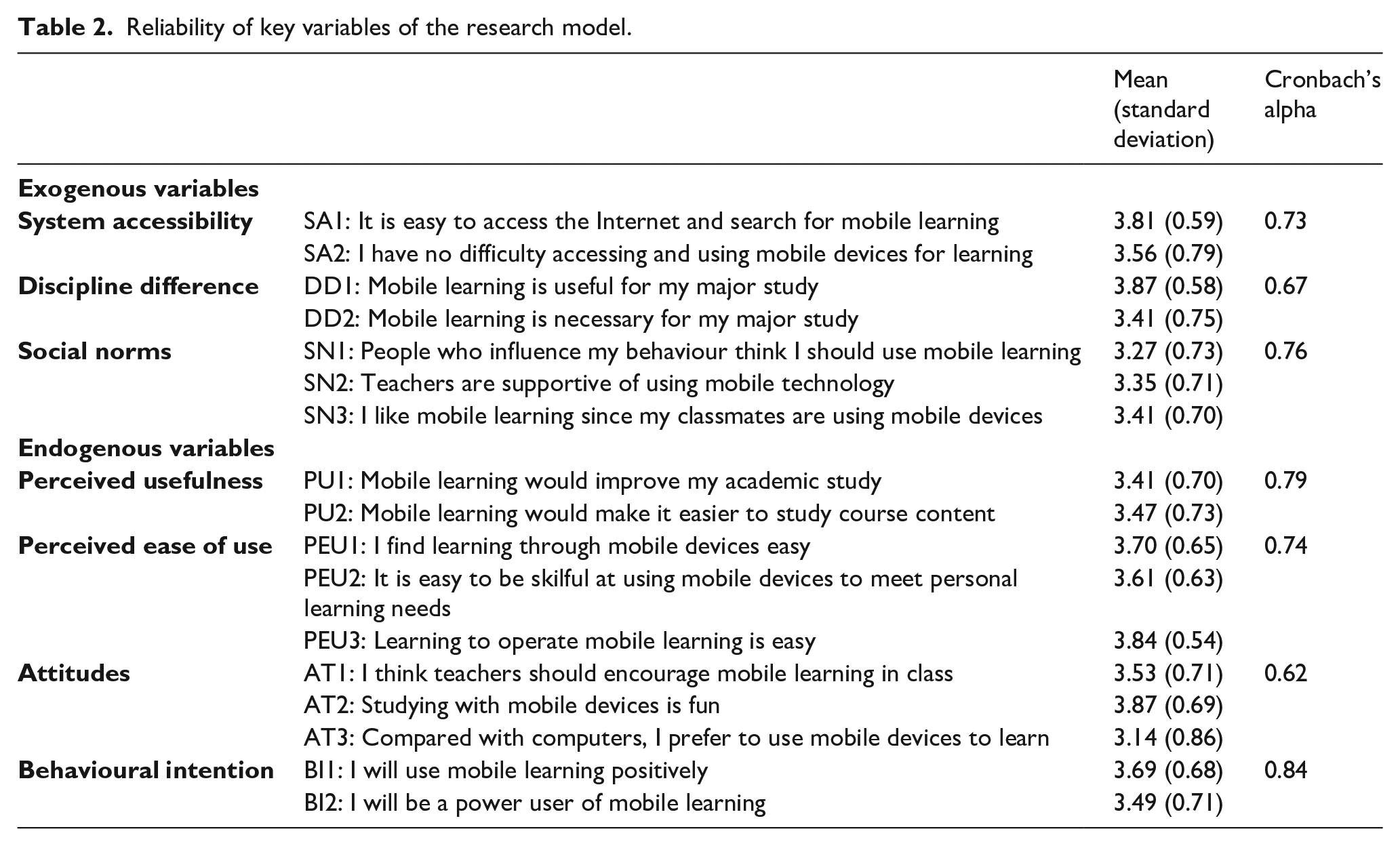
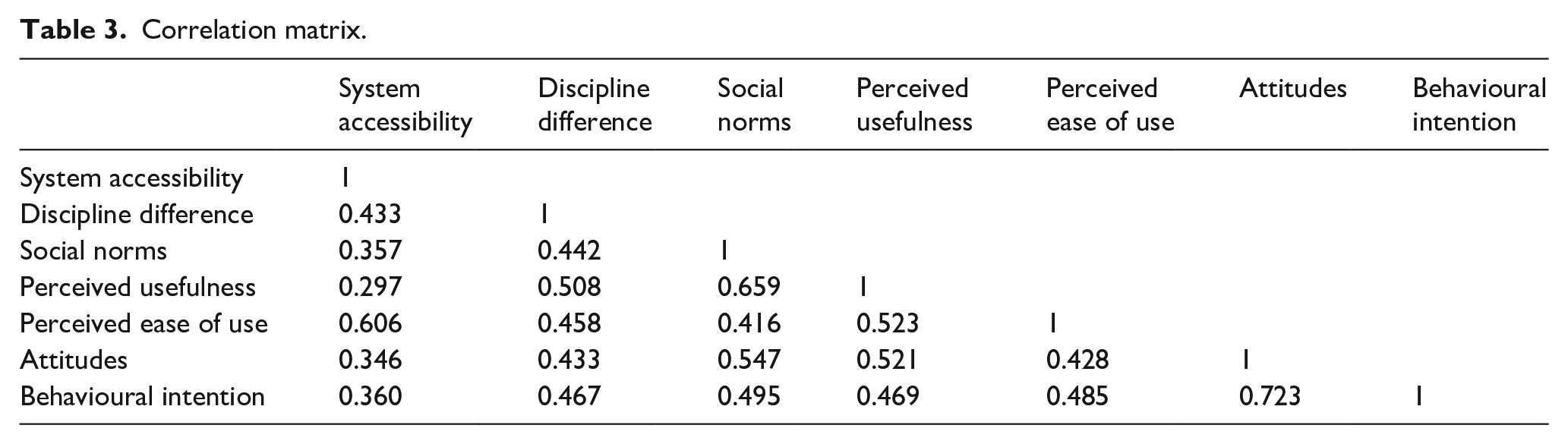
We tested the convergent validity and internal reliability of the survey instrument using Cronbach’s alpha. As shown in Table 2, all of the alpha values are greater than 0.70, except for discipline difference (α = 0.67) and attitudes (α = 0.62), which marginally exceed the threshold of 0.6 and confirmed the internal consistency of the questionnaire. The correlation matrix is reported in Table 3.
Reliability of key variables of the research model.
Correlation matrix.
Survey results and discussion
Mobile device ownership and relations to the use of mobile technology
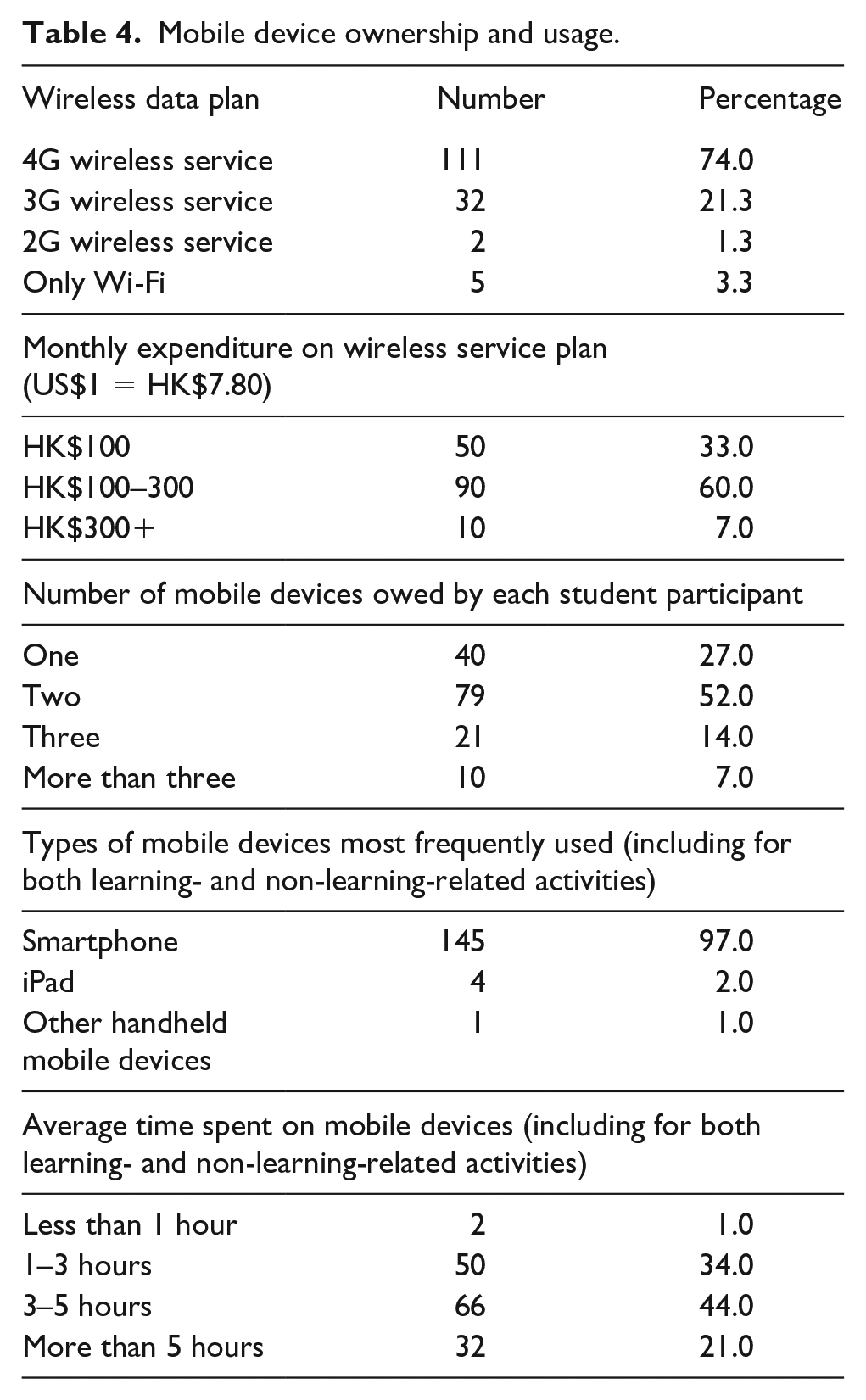
As shown in Table 4, of the 150 student respondents, a majority (111; 74%) subscribed to fourth-generation (4G) wireless data plans, while only a very small number (5; 3.3%) relied on free Wi-Fi services at selected public places. Notably, a majority (90; 60%) of the student respondents spent an average of HK$100 to HK$300 (US$12.80 to US$38.50) on their wireless service plans per month, which usually included xxG or unlimited data services. The majority of the students owned more than one mobile device. The most frequently used mobile devices amongst the respondents were smartphones, followed by iPads. Meanwhile, 66 (44%) spent an average of three to five hours per week on their mobile devices engaging in a variety of learning and non-learning-related activities.
Mobile device ownership and usage.
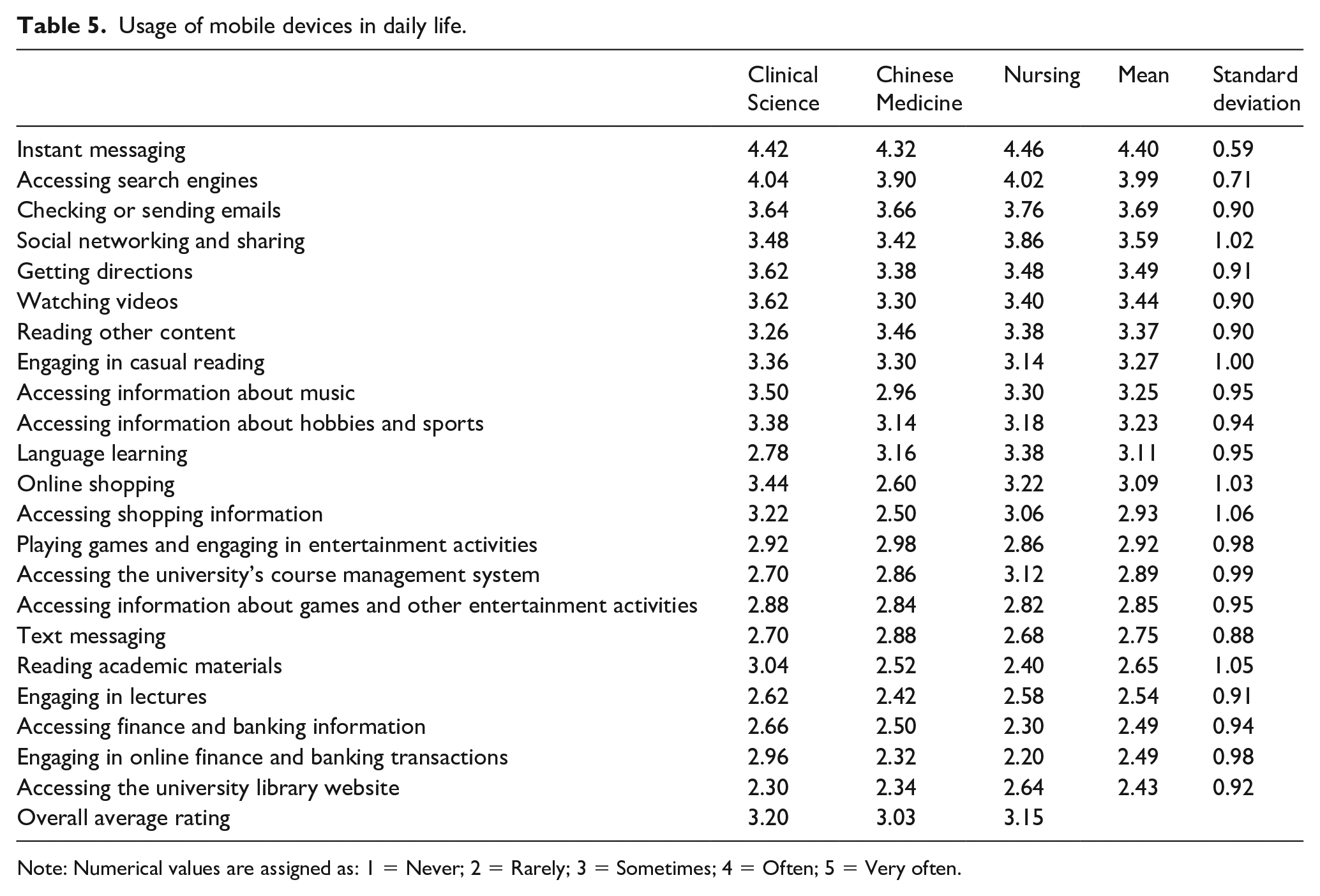
Usage of mobile devices in daily life
Table 5 summarizes the patterns of mobile device usage in everyday life amongst the three groups of student respondents. Overall, the respondents frequently used mobile devices for daily communication or looking up quick facts – for example, instant messaging, access to search engines and emails. On the other hand, relatively low usage was found in the following areas: engaging in online finance and banking transactions; reading academic material; accessing the university library website; and engaging in lectures. Interestingly, no distinctive differences were found between the three groups of medical students in terms of their mobile device usage in daily life.
Usage of mobile devices in daily life.
Note: Numerical values are assigned as: 1 = Never; 2 = Rarely; 3 = Sometimes; 4 = Often; 5 = Very often.
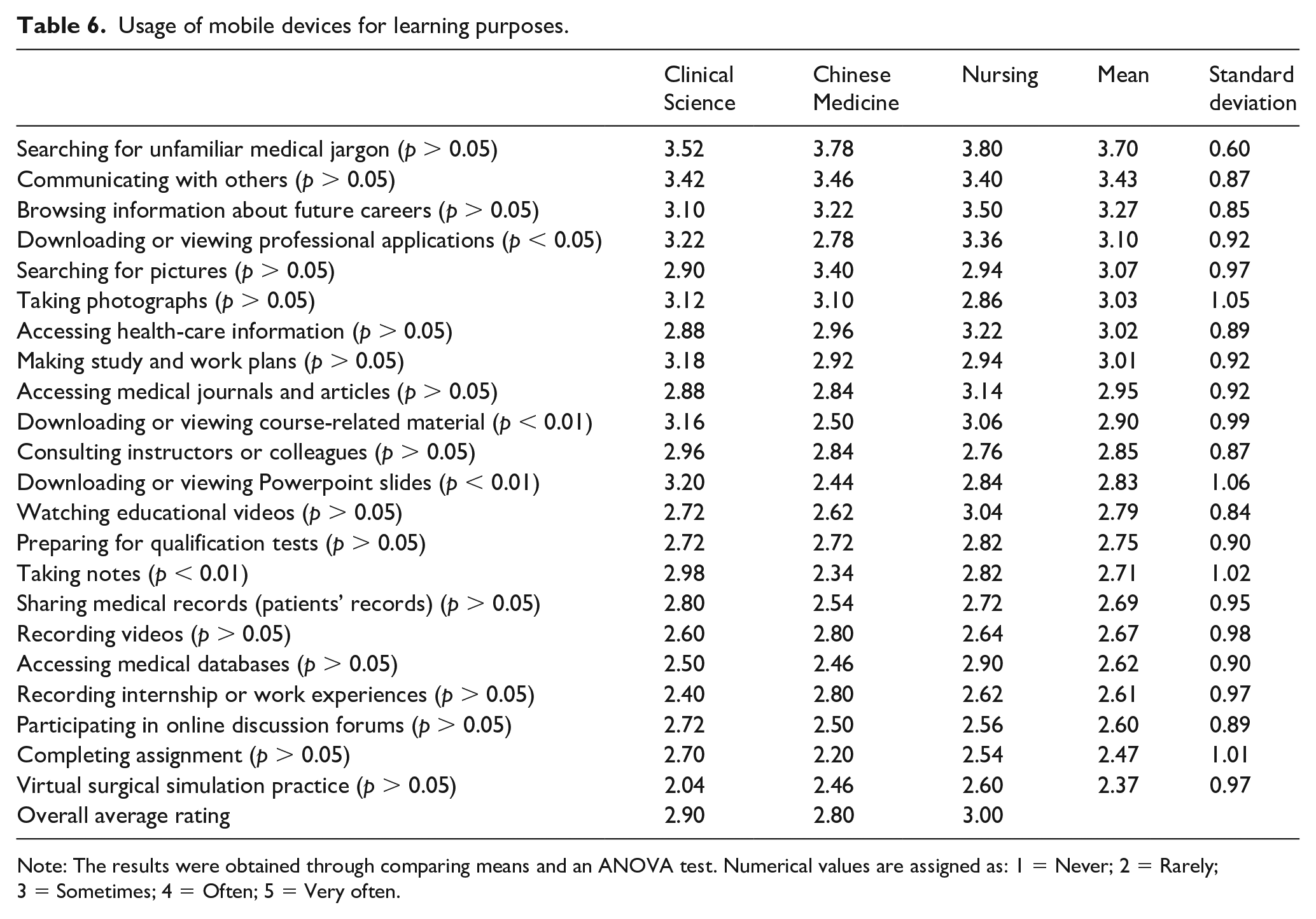
As shown in Table 6, the respondents often used their mobile devices for the following activities: searching for unfamiliar medical jargon; communicating with others; browsing information about future careers; taking photographs; and accessing health-care information. The researchers initially anticipated that the respondents would be actively engaging in the following activities with their mobile devices: virtual surgical simulation practice; watching educational videos (related to medical science); and taking part in online discussion forums.
Usage of mobile devices for learning purposes.
Note: The results were obtained through comparing means and an ANOVA test. Numerical values are assigned as: 1 = Never; 2 = Rarely; 3 = Sometimes; 4 = Often; 5 = Very often.
Factors that influence students’ adoption of mobile technology
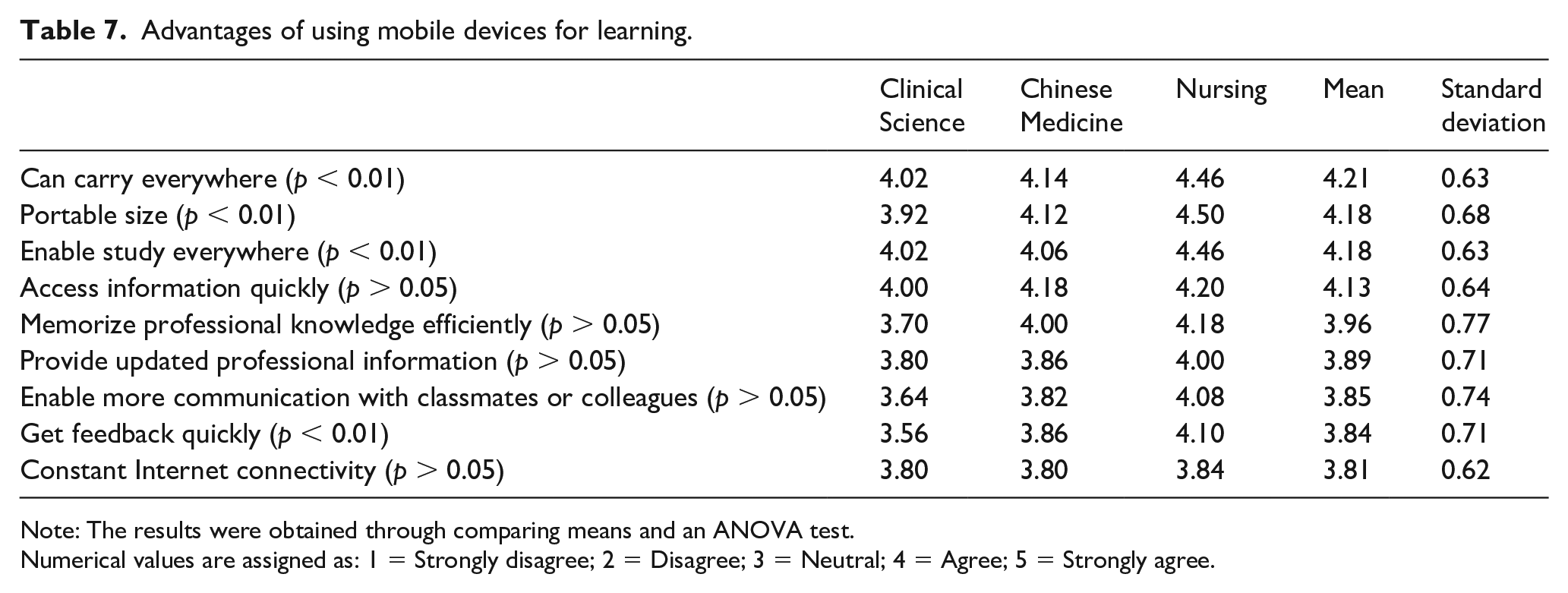
Table 7 shows various factors that influenced the respondents’ level of engagement in mobile learning, while Table 8 illustrates various disadvantages that the student respondents found in mobile learning. The respondents considered the portable size of mobile devices to be a key advantage that was conducive to learning, as it enabled learning to be carried out at any time and in any location. Being able to ‘access information quickly’ was also given a high average rating score (4.13) by all three student groups. Meanwhile, ‘constant Internet connectivity’ (3.81) and ‘enable more communication with classmates or colleagues’ (3.85) also received relatively high average rating scores (see Table 7). It is also interesting to note that there are significant statistical differences (in terms of rating scores) between the three majors. For example, Nursing students gave lower rating scores for ‘portable size’, ‘can carry everywhere’, ‘enable study everywhere’ and ‘get feedback quickly’ when they were asked to give reasons why they adopted mobile learning (see Table 7).
Advantages of using mobile devices for learning.
Note: The results were obtained through comparing means and an ANOVA test.
Numerical values are assigned as: 1 = Strongly disagree; 2 = Disagree; 3 = Neutral; 4 = Agree; 5 = Strongly agree.
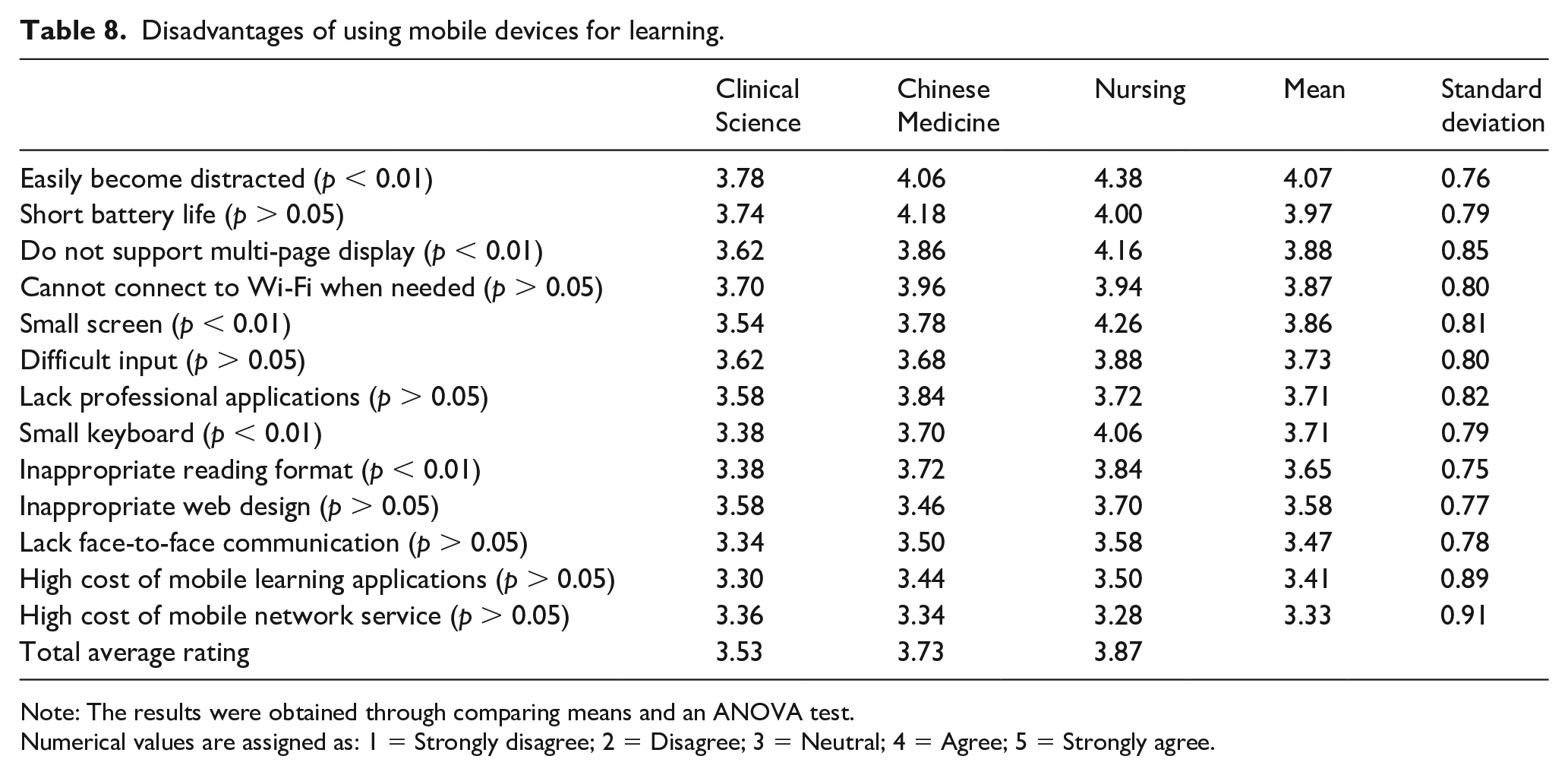
Table 8 indicates that the students considered ‘easily become distracted’ as the main barrier to mobile learning. With the lowest standard deviation, the students’ opinions tended to be consistent. Nowadays, the majority of websites provide various customized user services, such as recommending advertisements to the user based on their search history. If a student lacks self-discipline, using mobile devices to learn may not be advisable.
Disadvantages of using mobile devices for learning.
Note: The results were obtained through comparing means and an ANOVA test.
Numerical values are assigned as: 1 = Strongly disagree; 2 = Disagree; 3 = Neutral; 4 = Agree; 5 = Strongly agree.
‘Short battery life’ was perceived to be another major disadvantage of mobile devices. Applications and programmes that are more dependent on the Internet tend to consume more battery power. To be effective, mobile learning must always be connected to the Internet. So, a limited battery life becomes a vital factor in explaining why students reject using mobile devices for learning. What is surprising is that the majority of the students did not consider the high cost of mobile technology and applications to be a barrier. Given the proliferation of mobile technology, it is becoming increasingly affordable (see Table 8).
Our results also show significant statistical differences between the students from different medical majors and the criteria for measuring the convenience and ease of use of mobile devices. Nursing students generally agreed that the small screen and small keyboard, and lack of multi-page display functions had become key barriers when it came to mobile learning. Conversely, Clinical Science students generally agreed with these items at the weakest level amongst the three groups of students (see Table 8).
Extended TAM
TAM has become a trustworthy model for investigating user perceptions and attitudes towards technology, and identifying the factors that impact on their attitudes. According to the means and standard deviation statistics, overall the students considered the difficulty level of learning through mobile devices to be relatively low. This is in line with the phenomenon that young people generally find it easy to operate mobile devices, even without instructions. Although the students registered high scores on various disadvantages of using mobile devices as serious learning tools, overall they deemed mobile learning to be beneficial for their studies. Notable advantages included making full use of their spare time, accessing more shared valuable learning materials, and the sharing of learning information.
Multiple regression analysis was conducted to determine the influence directions and the level of influence between the different variables. In Table 9, perceived usefulness was regarded as a dependent variable, whilst system accessibility, discipline difference and social norms were independent variables. The standardized coefficients of discipline difference and social norms reached a significant level (3.9 and 8.1, respectively), which indicated that they positively influenced perceived usefulness. System accessibility, discipline difference and social norms were predictors of perceived usefulness, predicting a 48.3% variance of perceived usefulness. The regression model was valid since its F value reached a significant level.
Interactions between the dependent and independent variables.
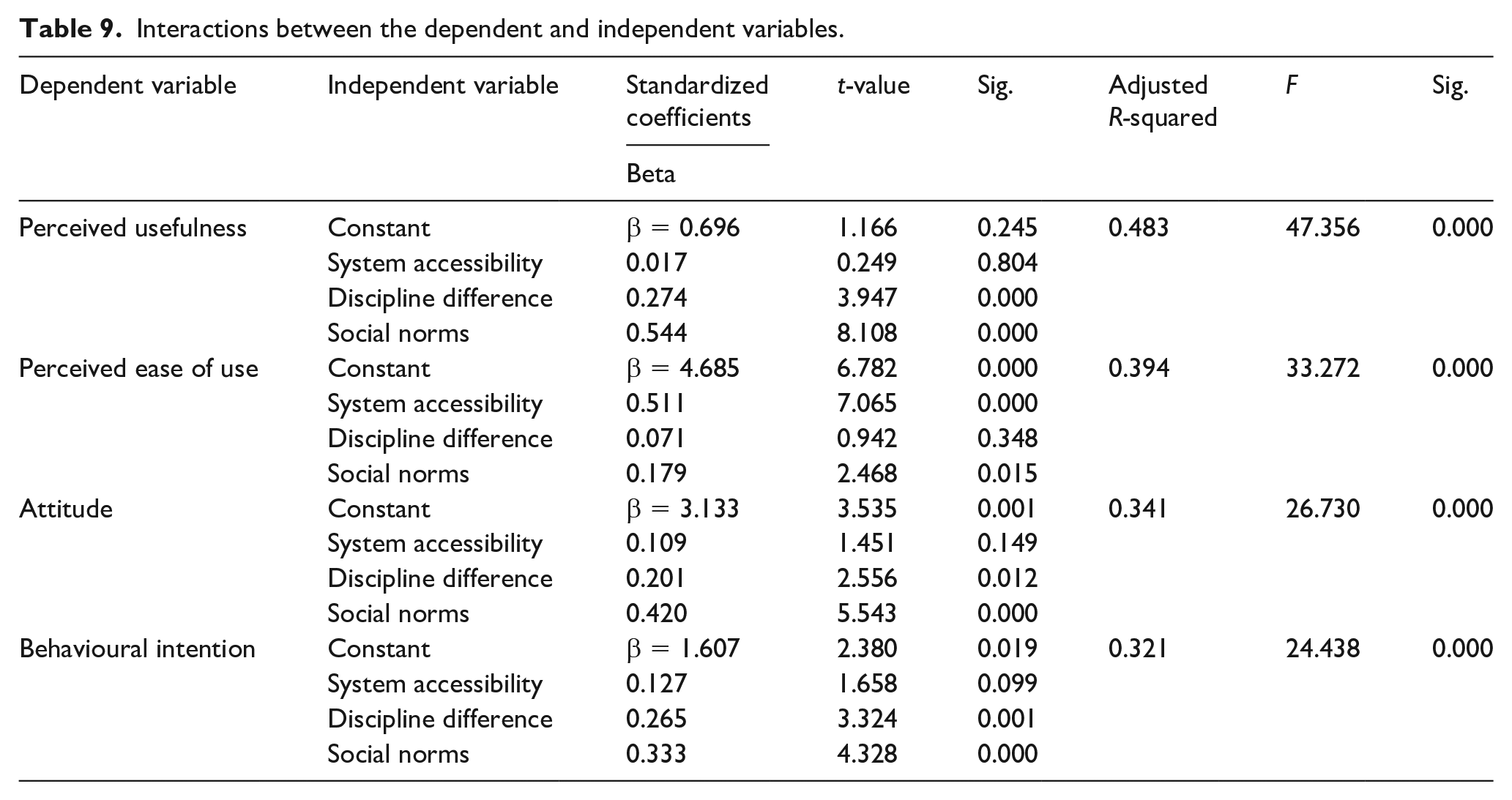
Similarly, the standardized coefficients of system accessibility and social norms reached a significant level, and these two variables influence the perceived ease of use positively. Further, discipline difference between the three student groups and various social norms that had positive influences on students’ attitudes towards mobile learning, with social norms being the most influential factor. The three independent variables predicted a 34.1% variance in attitudes. Last but not least, discipline difference and social norms had positive influences on students’ behavioural intentions towards mobile learning, with social norms being the most influential factor. The two independent variables predicted a 32.1% variance, and the regression model was thus proven to be valid.
Discussion
Mobile device penetration in the lives of medical students
Mobile technology involving wireless networks, smartphones and tablets is inherent in the life of the younger generation nowadays, regardless of their academic discipline. Our findings are consistent with the results of other studies in that many students have indicated a tendency to use their smartphones to engage in various leisure, recreational and relaxation activities, such as watching videos and listening to music (Fan et al., 2020; Ko et al., 2015; Wai et al., 2018). The medical student respondents in this study are no exception; the majority are digital natives and have been using mobile technology daily for a variety of social and entertainment purposes. Given the high penetration rates of mobile devices in their daily life, it is not surprising that over half (79; 52%) of the total respondents (even as students) owned two or more mobile devices (see Table 4).
The findings from this study extend and reinforce earlier studies (Dukic et al., 2015; Fan et al., 2020; Ko et al., 2015; Lau et al., 2020) in that these medical student respondents commonly used mobile devices for looking up quick facts, as well as for a variety of social networking and recreational purposes. For example, a majority of the respondents indicated that they used mobile devices for the following purposes: ‘instant messaging’; ‘accessing search engines’; ‘checking or sending emails’; ‘social networking and sharing’; and ‘getting directions’ (see Table 5). In other words, the students valued quick and easily accessible information. Regardless of their academic discipline, students tend to use their mobile devices for looking up quick facts, as well as managing their daily routines (using search engines and social networks), rather than for their formal academic activities (using online databases to search for academic material, for example).
The students in this study used their smartphones less frequently for formal academic reading. The major factors that discouraged the respondents from engaging in formal learning more actively with their mobile devices included: ‘easily become distracted’; ‘short battery life’; ‘do not support multi-page display’; and ‘small screen’ (see Table 8). This result is also in line with findings from earlier studies (Dukic et al., 2015; Ko et al., 2015; Lau et al., 2020). For example, activities associated with formal learning in the medical setting received relatively low scores (with an average score below 3) by comparison, particularly in the following areas: engaging in ‘virtual surgical simulation practices’; ‘recording internship or work experiences’; ‘sharing medical records’; ‘accessing medical databases’; and ‘participating in online discussion forums’ (see Table 6). Although mobile devices allow quick access to information with geographical independence and academic libraries are offering a variety of services for mobile devices, these services are still not used frequently, as the small screens of the devices are a major barrier and not conducive to formal academic learning (Dukic et al., 2015; Ko et al., 2015; Wai et al., 2018).
The benefits of mobile learning in medical education have been highlighted by many researchers (Mickan et al., 2013; Wallace et al., 2012; Walsh, 2015); it enables educational resources to be available when and where students need them, even at their bedside. Mackay et al. (2017) reported that mobile technology (iPads) could enhance teaching in the medical setting (in the implementation phase). Clay (2011) also reported that mobile technology has the potential to supplement information and communication technology, online learning and traditional training methods to educate practitioners in the clinical practice area. Moreover, mobile technology has allowed medical practitioners to feel empowered by placing the learning process firmly in the hands of the learner, thereby enhancing the acquisition of practical skills.
Factors shaping students’ levels of activity in mobile learning
According to Cao and Brown:
When we moved towards industrialization, modern Western medicine became the dominant medical practice with penicillin as a key discovery in disease treatment and exploration. Since then, herbal medicine gradually lost its dominant position in disease treatment . . . Traditional [Chinese] medicine . . . includes surgery, moxibustion, hot cupping, acupuncture, massage, herbal medicine, and nutraceutical medicine. Modern [western] medicine . . . includes surgery and most commonly single molecular drugs. (Cao and Brown, 2019)
For a long time, traditional Chinese medicine was marginalized. In addition to dominating modern medical practices, western medicine has also dominated the trends in scientific research and publications of medical science. In our study, the findings show that the Clinical Science and Nursing respondents belonging to western medicine had few significant differences in their mobile learning usage and preferences, while the western medicine group displayed some significant differences from the Chinese Medicine group.
Sharples et al. (2007: 91) define mobile learning as ‘the processes (both personal and public) of coming to know through exploration and conversation across multiple contexts among people and interactive technologies’. In other words, in addition to enabling students to learn anywhere and at any time, it is equally important to encourage students to be active through exploration and interaction across multiple content in an online format for mobile learning to be effective. To that end, whether a student is actively engaged in mobile learning is highly dependent on the amount, variety and relevance of the tools, resources and services made available by the university library in an online format. As highlighted by Walsh (2015), despite the convenience of such mobile technology, students are interested in mobile library services only when they can actually see the need, the benefits are apparent to them, or the digital content is relevant to their study and practice. Along the same lines, whether a university library is providing access to relevant and adequate content for learners could be one of the critical factors determining students’ level of activeness in mobile learning (Fan et al., 2020). Appendix 1 provides a comprehensive comparison of the tools (online learning applications), e-journals, databases and other online library workshop materials for western medicine (Clinical Science and Nursing) and Chinese Medicine available at the HKU Medical Library. Notably, the size, scope and content of the western medicine digital collection available at HKU Medical Library is overwhelmingly large and wide-ranging in comparison to the Chinese Medicine digital collection. This could be one of the key factors in determining why the students of Chinese Medicine tended to be less active in mobile learning.
For obvious reasons, the researchers initially anticipated that the medical student respondents at HKU would be more actively engaged in mobile learning. Unexpectedly, the results of this study have proven the contrary. Whether these medical students were already aware of the potential positive impacts of mobile learning remains unknown; recent studies have shown that HKU students are probably not very aware of the library services – especially the mobile services (Fong et al., 2020; Ko et al., 2015; Lam et al., 2019; Wai et al., 2018). In order to address this problem, the library should promote its mobile services (Chen, 2019), the benefits of mobile learning and the information literacy required (Aharony et al., 2020; Allard et al., 2020; Rantala et al., 2019), as well as design more innovative information services to attract patrons (Wójcik, 2019). Educators should also augment the curriculum to maximize exposing students to mobile learning and integrate learning activities in mobile platforms (Aharony, 2014).
The extent to which these students embrace mobile learning in the clinical setting remains unclear. Given the recent societal changes and the social implications of mobile technology, along with advances in multimedia technology in the medical publishing industry, it is believed that mobile learning will become a ubiquitous component of medical education, particularly in medical students’ learning practices (Wallace et al., 2012). Hence, further research is needed to determine the impact of the revolution brought by mobile technology on instructional design and learning effectiveness, as well as ‘virtual’ interactions between medical instructors and students at HKU.
Furthermore, medical schools, libraries and medical applications developers should make purposeful plans to incorporate mobile learning, while considering how medical students use mobile devices and their fundamental needs for accessing their desired materials for learning and research. Despite its limitations, this study provides an important reference point for the mobile learning practices of medical students from HKU. The characteristics of their mobile learning usage and preferences have also been highlighted. It is expected that the results of this study could serve as a valuable reference tool for future research in similar fields.
Limitations
For the purposes of this study, only 150 survey respondents were recruited from one university – that is, HKU. Hence, the (small) number of samples may not be large enough to make the results representative of all medical students’ mobile learning practices in Hong Kong. Owing to the small sample size for the questionnaire survey, the results from the study make generalizations difficult. Future research may replicate the same research by using a larger sample size involving medical students from other universities that offer both Western Medicine and Chinese Medicine programmes in Hong Kong and the Greater China region – for example, Mainland China, Taiwan and Macau.
Conclusion
The findings of this study reveal the varying attitudes and perceptions towards mobile learning amongst three groups of medical science students at HKU. Usage frequencies and patterns, as well as other factors, influenced these medical students’ behaviours and, most importantly, their relations to TAM. The study found that a majority of the medical student respondents used mobile devices for various social networking, recreational and even entertainment purposes. The small screen size, entertainment characteristics and issues such as privacy prevented them from engaging in other types of formal learning activities with the same frequency as entertainment purposes. Few significant differences have been found between the three groups of medicine majors in terms of their specific mobile learning activities. Notably, the Clinical Science and Nursing students had similar perceptions and behaviour, and tended to have more diverse information needs, in addition to expressing a preference for exploring other potential functions of their mobile devices. On the other hand, the Chinese Medicine student respondents were not as active as mobile learners in comparison to the other two majors.
The author-tested hypothesis, based on TAM, and the results were consistent with previous research through the Pearson’s correlation test and multiple regression analysis. Thus, system accessibility, social norms and discipline differences are closely related to perceived usefulness, perceived ease of use, attitudes and behavioural intentions. System accessibility is the most critical factor in positively influencing the perceived ease of use, while social norms are the most influential factor that positively correlates to perceived usefulness, attitudes and behaviours. The majority of the students deemed mobile learning to be beneficial to their professional study and noted that their confidence in using mobile technology skilfully was high. This implies that mobile technology in the context of the medical field is in the prime of its development and that this field is worth investigating and researching further.
Supplemental Material
Appendix – Supplemental material for Medical students’ attitudes and perceptions towards the effectiveness of mobile learning: A comparative information-need perspective
Supplemental material, Appendix for Medical students’ attitudes and perceptions towards the effectiveness of mobile learning: A comparative information-need perspective by Xin Zhang, Patrick Lo, Stuart So, Dickson KW Chiu, Tin Nok Leung, Kevin KW Ho and Andrew Stark in Journal of Librarianship and Information Science
Footnotes
Declaration of Conflicting Interests
The author(s) declared no potential conflicts of interest with respect to the research, authorship, and/or publication of this article.
Funding
The author(s) disclose receipt of the following financial support for the research, authorship, and/or publication of this article: This research was partially funded by the Faculty Research Fund of the Faculty of Education at the University of Hong Kong.

Supplemental Material
Supplemental material for this article is available online.
Author biographies
References
Supplementary Material
Please find the following supplemental material available below.
For Open Access articles published under a Creative Commons License, all supplemental material carries the same license as the article it is associated with.
For non-Open Access articles published, all supplemental material carries a non-exclusive license, and permission requests for re-use of supplemental material or any part of supplemental material shall be sent directly to the copyright owner as specified in the copyright notice associated with the article.
