




Abstract
The extent to which nuclear energy technologies are, in some sense, “stigmatised” by historical environmental and military associations is of particular interest in contemporary debates about sustainable energy policy. Recent claims in the literature suggest that despite such stigmatisation, lay views on such technologies may be shifting towards a “reluctant acceptance,” in the light of concerns about issues like anthropogenic climate change. In this paper, we report on research into learning and reasoning processes concerned with a largely unknown nuclear energy technology; namely fusion power. We focus on the role of the nuclear label, or “brand,” in informing how lay citizens make sense of the nature of this technology. Our findings derive from a comparative analysis of data generated in Spain and Britain, using the same methodology.
Keywords
1. Introduction
The need to develop practical ways to address anthropogenic climate change has become increasingly clear in recent years (e.g. Stern Report, 2006). Such concerns have brought a new urgency in the search for sustainable sources of energy. Fusion, the production in microcosm of the form of nuclear reaction that powers the Sun and other stars, is a technology that has long been recognised as a potential source of safe, sustainable, and essentially limitless power (Jukes, 1959; Hendry and Lawson, 1993). However, development work on fusion has faced a series of technical challenges that have slowed progress, and sometimes called into doubt the very practicability of using this source as a basis for industrial-scale energy generation. The recent decision to establish a European Community-led, and internationally supported, demonstration-scale fusion facility (ITER: www.iter.org), at Cadarache in France, signals a new optimism about the possibility of building commercially viable fusion reactors that can make a major contribution to future energy needs (Llewellyn Smith and Ward, 2008).
Despite its fifty-year period of research and development, fusion power is not a widely familiar technology, and certainly not well understood, among European lay publics. It is therefore perhaps unsurprising that perception studies suggest that historical associations with the military use of nuclear technologies and with the fission power programme have a dominant role in shaping views about fusion, where they do exist. 1
The problem of anthropogenic climate change may be urging the development of new sources of energy like fusion power, but is it also changing the character of public discourse about nuclear power technologies? This intriguing suggestion has recently been advanced by Bickerstaff et al. (2008) in the pages of this journal; with the argument that a re-framing of the terms under which nuclear power is discussed in political and policy debates is beginning to create the cultural conditions in the UK under which lay perspectives towards nuclear power which they describe as “reluctant acceptance” have been made possible.
The nuclear (fission) power lobby has certainly been quick to argue that nuclear power provides an essential component of any feasible low-carbon energy strategy for the future (Kinsella, 2008). However, recent findings based on national US survey data suggest that American public ambivalence persists despite renewed interest in nuclear power within policy circles (Whitfield et al., 2009). In Europe, a recent continent-wide survey indicates that nuclear power divides public opinion, with an average of 37% opposed to and only 20% in favour of its use (Eurobarometer, 2007). However, a long-standing annual survey of Finnish attitudes towards energy issues has been registering the most positive figures for nuclear power for two decades, with almost half of respondents agreeing that nuclear power is an environmentally friendly means of generating electricity (Kiljunen, 2005).
Of course, the recent research mentioned above is concerned with fission energy, the technology associated with conventional nuclear power, and which makes a significant contribution to energy generation in a number of countries around the world. Our work has been concerned with fusion, a distinct technology, and one still at the research and development stage. It is therefore important to ask what our findings might have to say about this debate concerning possible shifts in lay views towards nuclear power.
In this paper, we focus on examining evidence of the extent to which the labelling of fusion as a form of specifically nuclear energy source serves to “stigmatise” the technology. Here we have in mind the extensive body of research findings that have revealed the negative associations and imagery (e.g. accidents, destruction, contamination, mushroom clouds, child cancer etc.) often linked with such technologies (Slovic et al., 1990; Boholm, 1998); and which have been variously described by expressions like “nuclear fear” (Weart, 1988) and “nuclear stigma.” The latter term draws on a literature which has been much concerned with the siting of industrial facilities, and the manner in which certain technologies have the property of discrediting places and communities with which they are associated (e.g. Flynn et al., 2001; Bush et al., 2001). Here, the word stigma is used in Goffman’s (1963) sense of a having a “spoiled identity.”
Our approach is primarily concerned with explicating patterns of practical reasoning deployed by lay people in making sense of fusion power technology. Methodologically, it draws on what has been termed “interpretative” studies of risk perception; a body of work that emerged in the mid 1990s, which has recognised the central roles of meaning and social interaction in structuring understandings of technological hazards (e.g. Zonabend, 1993; Walker et al., 1998; Irwin et al., 1999; Marris et al., 2001; Timotijevic and Barnett, 2006).
In conducting this work our analytical focus has been on the fine detail of what people demonstrably do in accomplishing such practical reasoning. Importantly, by relaxing normative conceptions of the nature of the risk object, this approach has made the research receptive to an appreciation of the sometimes oblique and situationally specific logics entailed in the practical accomplishment of the sense-making task (discussed in detail in Horlick-Jones, 2005; Horlick-Jones and Prades, 2009). Our analytical approach was also strongly informed by a perspective which recognises the central role of talk in such sense-making processes, and the ways in which linguistic and cultural resources are deployed in supporting various modes of reasoning, in ways that are sometimes playfully inventive and that have regard to ideas of accountability and moral acceptability (Garfinkel, 1967; Blum and McHugh, 1971; Goffman, 1972; Silverman, 1994; Horlick-Jones et al., 2007a; Myers, 2007).
The evidence we present draws upon part of a comparative cross-cultural study of learning and reasoning processes concerned with fusion (see also Prades López et al., 2007, 2008, 2009). As we will explain in the methodology section below, for this investigation we chose to adopt a novel, hybrid, method that brought together elements of research and citizen engagement. We then go on to examine the evidence we generated: focusing on the nature of what we term the “nuclear brand,” and its cultural embeddedness; the presence of pragmatism towards nuclear energy in the light of energy security considerations, significantly including the views held by moderate environmentalists; and the relevance of social accounting practices in shaping the structure of pro-nuclear sentiments. Finally, we discuss our findings.
2. Methodology
When we set out to conduct research into lay reasoning about fusion power, we recognised that we needed to find a way of allowing respondents to gain sufficient knowledge about the technology in order to take account of the complexities of associated issues in a considered way, but without the terms of that deliberation being dictated by technical orthodoxy. We wished to avoid simply instructing our respondents in facts about nuclear engineering and other technical bodies of knowledge, and then seeing how effectively they had assimilated those facts by testing their ability to reproduce them.
In adopting a research design, we were influenced by methodological developments that have begun to generate a hybridisation between the use of focus groups as research methods to investigate social group norms (Barbour and Kitzinger, 1999; Bloor et al., 2001), and the use of group-based techniques as part of attempts to implement processes of citizen and stakeholder engagement in policy-making and decision-making (Renn et al., 1995; Myers, 2004). Such hybridisation was in evidence in the design of the UK government-sponsored public dialogue about the possible commercialisation of genetically modified (GM) crops, which took place in 2002–3 (Horlick-Jones et al., 2007a, 2007b).
Analysis of data generated by that public dialogue about GM showed that a component part of the process which used reconvened discussion groups had been effective in promoting participant sensitisation, learning and quasi-naturalistic deliberation. It also generated data that demonstrated how the modes of reasoning deployed by participants shifted as they became more familiar with aspects of GM technology (Horlick-Jones et al., 2007a). An elaborated version of that group-based design had subsequently been used by one of us to conduct a pilot engagement/research exercise for the UK railway industry. Evaluation of that exercise demonstrated the capacity of the new design to “translate” technical knowledge in ways that lay citizens were able to grasp; to promote processes of informed consideration; and to be “user friendly” for participants (Horlick-Jones, 2008). We chose to adopt this latter design as the basis for our investigation of lay reasoning about fusion power.
We ran a series of reconvened discussion groups. Participants were additionally invited to examine stimulus materials and to engage in information searches during the period (of 7–10 days) between group meetings, and to keep a diary to record their findings during this period. The method utilised components of problem structuring methods; techniques developed within operational research and management science to support complex decision-making processes (Rosenhead and Mingers, 2001), and here used as facilitation devices to promote effective “brainstorming” and to support appreciation of the relevance of everyday notions of resource allocation. We also used a vignette script (Hughes, 1998), and a pack of written stimulus material drawn from nuclear industry, environmentalist and media sources.
Eight discussion groups were convened in both Spain and the UK. 2 Each group, comprising 8–9 individuals, met for between one and a half to two hours on two occasions (see Figure 1). Six groups A–F were segmented along age and socio-economic lines, with a gender balance. Participants were selected so as to omit those with possibly strong pre-existing views about fusion; namely those belonging to environmental groups or people who (or whose immediate family) work in energy-related employment. The views of such “excluded” people were explored by the two groups G and H. Commercial specialist agencies were hired to assist with the recruitment process. When recruited, participants were informed that they are being invited to take part in discussions about “energy issues.” All group meetings were held in neutral and conveniently located venues. Participants were paid an honorarium for taking part in the groups and for participating in the interval exercises.
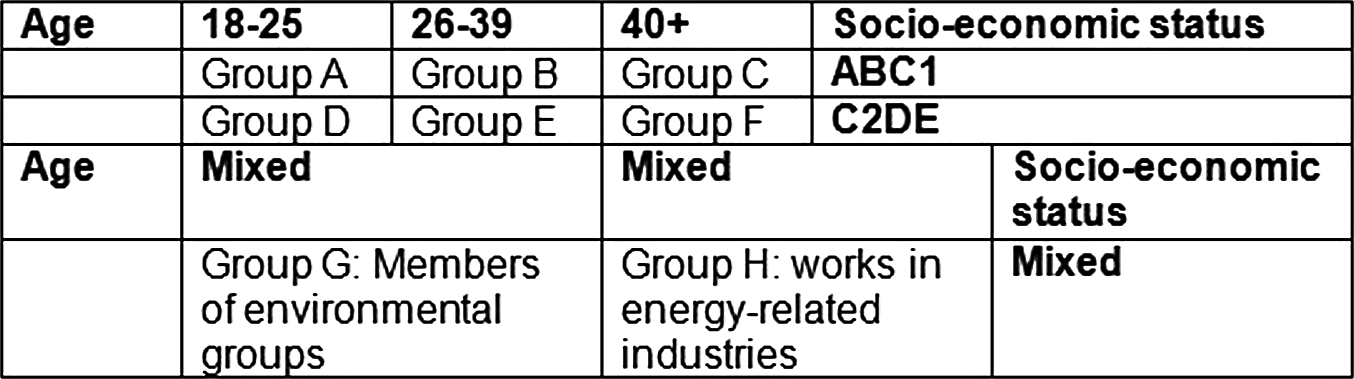
The composition of the groups.
Regarding the number of groups, it should be recalled that there exists no hard-and-fast formula to determine the number of focus groups (and there is a clear similarity with the discussion groups described here) appropriate to address a given research issue. Of particular importance here is the quality and richness of the data generated by the exercise, and the depth of evidence for given claims that can be found within those data (Seale, 1999; Bloor et al., 2001). Existing practice using such hybrid methods suggested that these numbers would be sufficient to generate suitable data (Horlick-Jones et al., 2007a; Horlick-Jones, 2008).
It should be noted that, for a number of practical reasons, it was not possible to stage the group processes in Spain and the UK at exactly the same time. In Spain, Group A–F meetings took place in October 2007, and Group G and H meetings in November 2008. The UK group meetings all took place during the period April–July 2008. We fully appreciate that developments during this period, perhaps most notably the emergence of the international financial crisis (Tett, 2009), might well have had some effect in differentially shaping the views of our respondents (in particular the Spanish G and H groups).
In order to enhance the quasi-naturalistic quality of the group conversations, the moderators adopted an informal facilitation style that concentrated on promoting a high density of inter-participant interaction, rather than producing a group interview or classroom format. All the group sessions were audio (and some video) recorded, having first gained the participants’ approval. We also took observational notes in order to assist with the data analysis.
The audio recordings were transcribed in full, and analysed using transcripts, observational notes, and repeated listening to the recordings. This process utilised a broad approach to discourse analysis, which was sensitive to both the detail of conversational interaction, and the resources deployed in such talk (Sarangi and Roberts, 1999; Horlick-Jones et al., 2007a; Myers, 2007). The data were interrogated using analytic induction (Bloor, 1978), with analysis of the recordings carried out in a linked way with that of observational notes and data generated by participants’ “diaries” (Fielding and Fielding, 1986). A synthesis of the Spanish and UK findings was then carried out by means of a qualitative meta-analysis (Noblit and Hare, 1988; Britten et al., 2002).
3. The nature of the evidence
Here we present a number of strands of evidence that emerged from our fusion-related research, and which relate directly to questions we considered at the start of the paper concerning the significance for lay understanding of an energy technology being labelled “nuclear.” The extracts from group conversations have been accurately transcribed from the audio recordings and observational notes, with minimal dynamics added. Participants are labelled Fi (female, i = 1, 2 …) and Mj (male, j =1, 2 …), and the facilitators as Mod (for “moderator”). Observer comments are added in double parentheses.
First reactions: Evidence of the nature of the nuclear “brand”
At the very start of the group discussion process, we sought to begin discussion about fusion in the context of participants’ everyday experience of energy use, and awareness of wider debates about energy issues. In practice, our suspicions that the groups would not spontaneously begin to discuss fusion proved sound. Indeed, only the groups in which participants had a working or family relationship with the energy industries or belonged to environmental organisations had anything but the most vague notion of the nature of fusion. 3
We were interested in the participants’ early reactions to hearing about the existence of fusion. We provided them with a brief description of the technology, of the order of 100–150 words in length. In Spain, we used an extract from an article in El País newspaper; in the UK, the first page from an item on the BBC news website (http://news.bbc.co.uk/1/hi/sci/tech/1573450.stm). Both pieces of stimulus material described fusion as a source of energy that powers the stars, and noted that although the technology was a promising source of energy, it was still at the research and development stage.
In Extract 1, one of the Spanish groups responds to the moderator’s introduction of the idea of fusion with a diffuse and vague sense of recognition. A number of both Spanish and UK groups reacted similarly. By the end of the extract, just a few seconds later, members of the group are deploying cultural resources, in the form of a “disease” metaphor, and the figure of the Chernobyl nuclear disaster, as interpretative resources.

Turning now to Extract 2, this time from one of the UK groups, a similar, almost visceral, reaction to the word nuclear is in evidence. As F3 puts it, at lines 16–17, “it sends shivers down your spine.” In the following line, the moderator seeks clarification of why nuclear technologies are so regarded. These questions prompt utterances that invoke military connotations, and then, at lines 32–40, the figure of a child cancer-producing nuclear plant (probably alluding to the alleged health effects associated with the reprocessing plant at Sellafield, in the North-West of England).
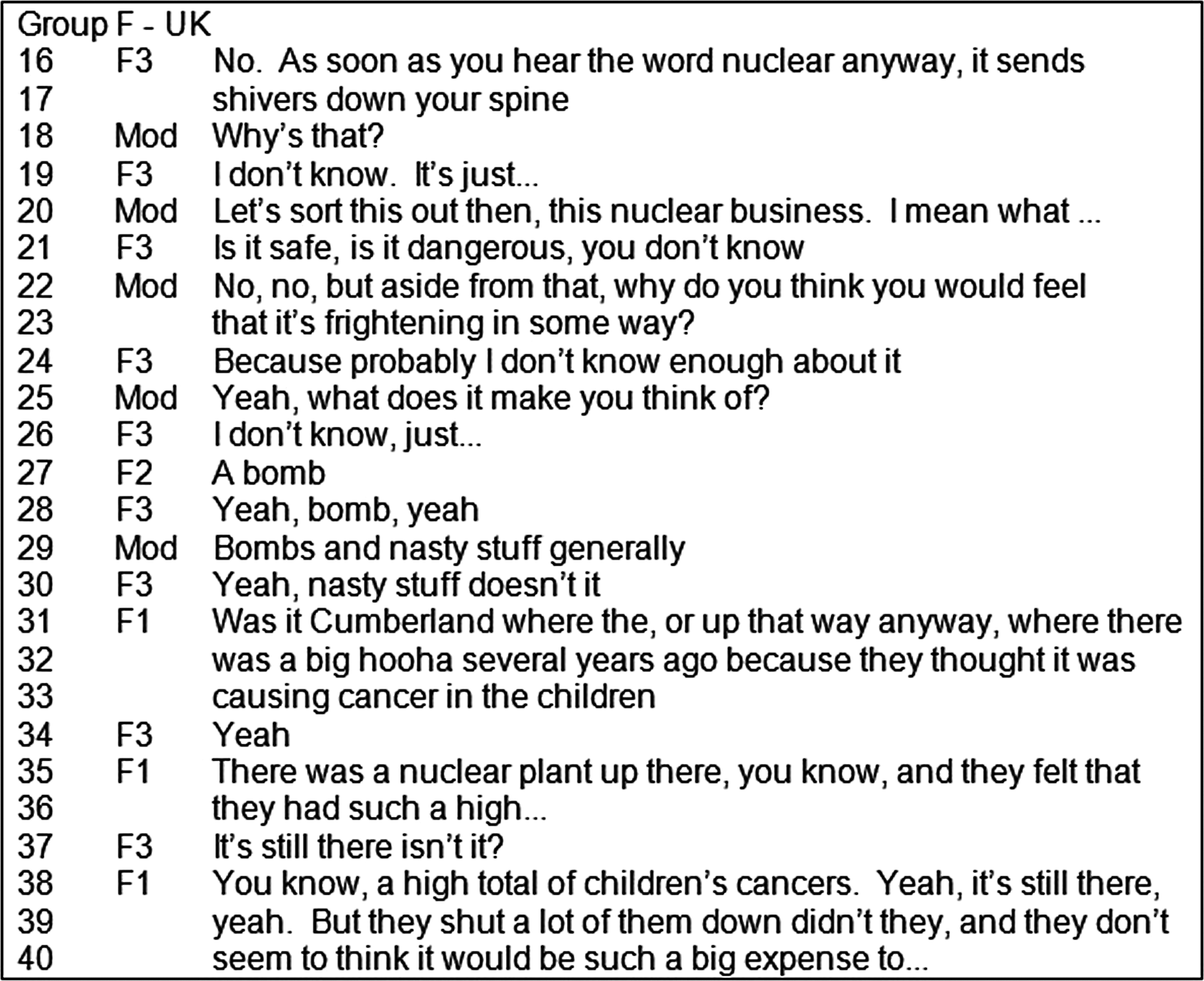
Drawing a comparison with the notion of a “brand” in marketing (Myers, 1999), it is as though a nuclear label serves to very powerfully communicate a rich and detailed collection of ideas and images. This is not a calculated response to information; indeed, it is evident that these participants know very little about fusion. Rather, the response seems to be an instantaneous emotional sense of fear, prompted simply by the technology being labelled by the word nuclear. We note in passing the interesting similarities here with nice/nasty distinctions in parts of developmental psychodynamics (Klein, 1986), and in studies of the role of the notion of contamination in creating order and meaning (Douglas, 1966; Miller, 1997). Indeed, one might speculate that in some way it taps into fundamental, or even primordial, aspects of human experience.
The cultural embeddedness of the nuclear brand
The group conversations provided much evidence of not only the power of the nuclear brand, but the extent to which this source of meaning drew upon the existence of a host of associated cultural resources. Both Spanish and UK groups invoked a range of dramatised fictional sources; perhaps most notably the globally syndicated American cartoon series The Simpsons (www.thesimpsons.com). We found this choice of interpretative resource particularly significant, partly because of the use of nuclear-related stereotypes in the series, but also because of the degree to which its use generated a great deal of humour and enjoyment amongst the participants.
Extract 3, which is drawn from the conversations between young people in one of the UK groups, begins at lines 1–4 with the moderator seeking to explore the nature of the nuclear brand. The two word utterance “The Simpsons” at line 5 serves to prompt immediate mirth and shared gestures of understanding. The account that M1 gives of his decision to introduce this (possibly frivolous) topic is interesting: he acknowledges that it “sounds stupid,” but notes that the cartoon series has always been a part of his life. He then articulates what he sees as the significance of a recurrent storyline within the series; namely the association of nuclear with “bad” and “evil.” This contribution prompts yet another round of laughter, and evident enjoyment, from his fellow participants; and, at lines 14–16, a co-operative exchange with F2, which reinforces the imagery about which they have a shared memory. At lines 18–22, the mood changes as F4 invokes the figure of the Chernobyl nuclear accident as a real-world warrant for the essentially negative view on nuclear power about which she and the rest of the group have just been laughing.

Myers (2004: 55) has noted that focus group talk is often humorous in character, and indeed can include what he describes as a “joking send-up” of the discussion taking place; but there seems to be more going on in this exchange about The Simpsons. Humour can, of course, also serve a very serious role in talk when participants feel discomfort about certain issues, or the matters under discussion are regarded more generally as “delicate” in some respect (Barbour and Kitzinger, 1999). Indeed, there may be some element of humour being used here to deal with worrying aspects of nuclear safety. However, the dominant mode of discourse seems to be a satirical or political one; with the perceived shortcomings or absurdities of nuclear power being lampooned, and the group enjoying the joke “at nuclear power’s expense” as it were (Mulkay, 1988).
In this way, a range of everyday cultural resources have embedded within them certain ideas about nuclear power, which serve to reinforce a common sense of expectations about the technology. Some resources, like The Simpsons, which take the form of dramatised or humorous writing and performances, convey their message about nuclear technologies informally (and arguably more powerfully), as the main focus is on the enjoyment of cultural consumption.
Pragmatism in the light of energy security considerations
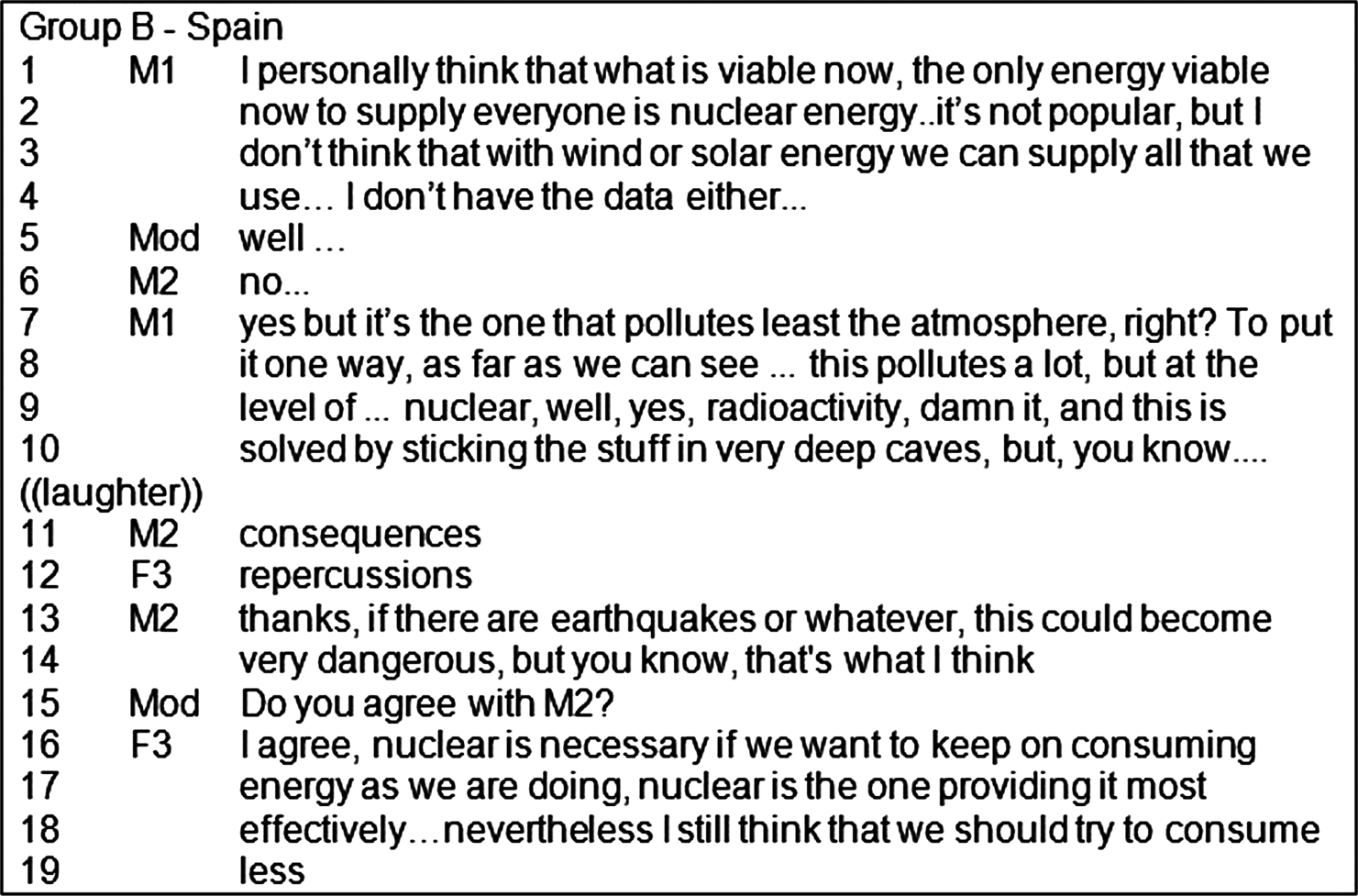
It is notable that the group discussions we convened had perhaps surprisingly little to say about climate change and the arguments, much aired in the media at that time, about the possible role of nuclear power in creating low-carbon energy futures. 4 In contrast, most of the groups displayed a concern with issues concerning energy security: the need to secure reliable sources of energy for the future in the light of diminishing supplies of fossil fuels; the political instability of some energy-producing parts of the world; the limitations of renewable energy sources; and with the cost of energy. Most of our respondents displayed a pragmatic view about the need for nuclear power; in both Spain and the UK by arguments about energy security, and, in the UK in particular, grounded in the everyday practical experience of rising energy bills. In this way, these sentiments may have been influenced by the global economic crisis that was emerging and establishing itself during our period of data gathering. In Extract 4, one of the Spanish groups is engaged in just such a discussion. As M1 puts it, despite its dangers, nuclear is the only energy source that can guarantee security.
At the very end of the group process, participants were invited to make a short statement about their views about the prospects for nuclear fusion. The contribution of one of the UK participants, which we have reproduced at Extract 5, very nicely captures the sense of pragmatism that informed much of the group discussions. Of course, the topics she considers are focused on the uncertainties concerning the development of fusion, and arguments, for and against, continued investment in its research and development. However, starting at line 5, she makes a bold statement about not being “held to ransom”; which earlier group exchanges suggest relates to the risk posed to security of energy supply by political instability in energy-producing parts of the world. She brings her statement to an end in lines 15–19 with a worldly appreciation of the potential safety risks posed by nuclear power, but with the overriding imperative “if the French can get it cheaper, I want it as well.”

Pragmatic reasoning by (moderate) environmentalists
We recruited our “environmentalist” groups on the basis of membership of one or more environment-related organisations. We defined this category as including both those campaigning organisations typically with strong anti-nuclear views, and those with broader agendas concerned with appreciation and conservation of the natural world. In practice, the conversations that these groups generated took a fairly moderate tone. They were prepared to engage with the idea of fusion power, and in the process of so doing, had a great deal to say about nuclear power more generally.
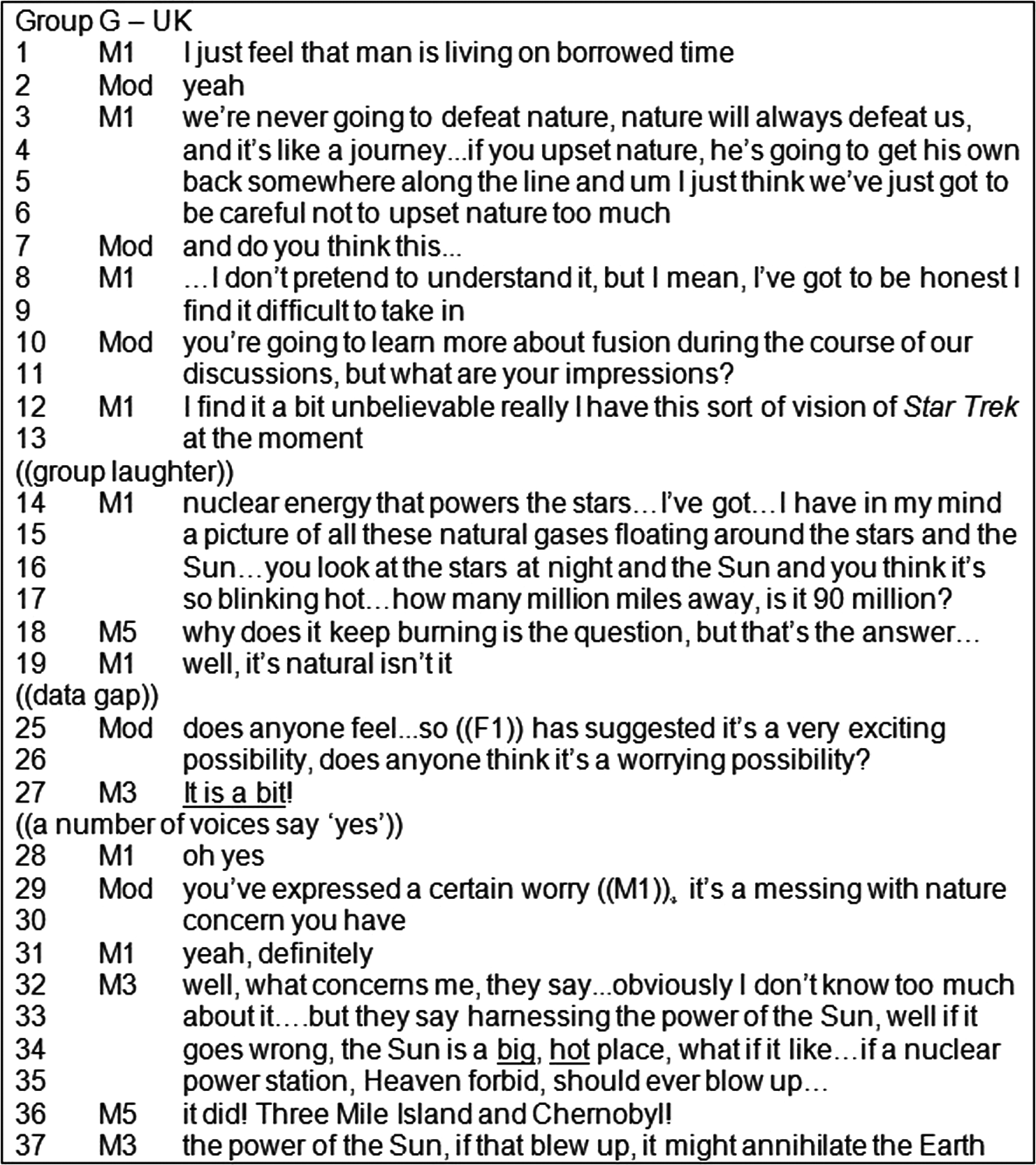
In Extract 6, we join the UK environmentalist group participants as they begin to try to understand the nature of fusion power. Interestingly, the notion of natural order and natural form looms large; explicitly in M1’s contributions, but also in astronomical considerations about the nature of the Sun and why it keeps burning. Once again, the invoking at line 12 of dramatised cultural resources (in the form of the television space serial Star Trek) prompts amusement. In response to the moderator’s question at lines 25–26, it is clear that a number of participants have early concerns about fusion, but the basis for these worries is more quasi-scientific than rooted in an instantaneous response to the nuclear brand.
In Extract 7, which is drawn from the Spanish environmentalist group’s discussions, there is a pervasive mood of pragmatism; first in recognising the existing role of nuclear power within the Spanish energy economy, and then in coming to the conclusion that “nothing is clean.” In Extract 8, drawn from the same Spanish group, this conversation has moved on, but the sense of pragmatic even-handedness is dominant. M1’s use of the knife metaphor at lines 5–7 drives home the idea that technologies are not inherently good or bad. In lines 19–24, F1 returns to her point about nothing being (perfectly) clean, and forcefully argues for an approach to public policy that is rooted in the search for “the least bad” rather than “the best” solution.


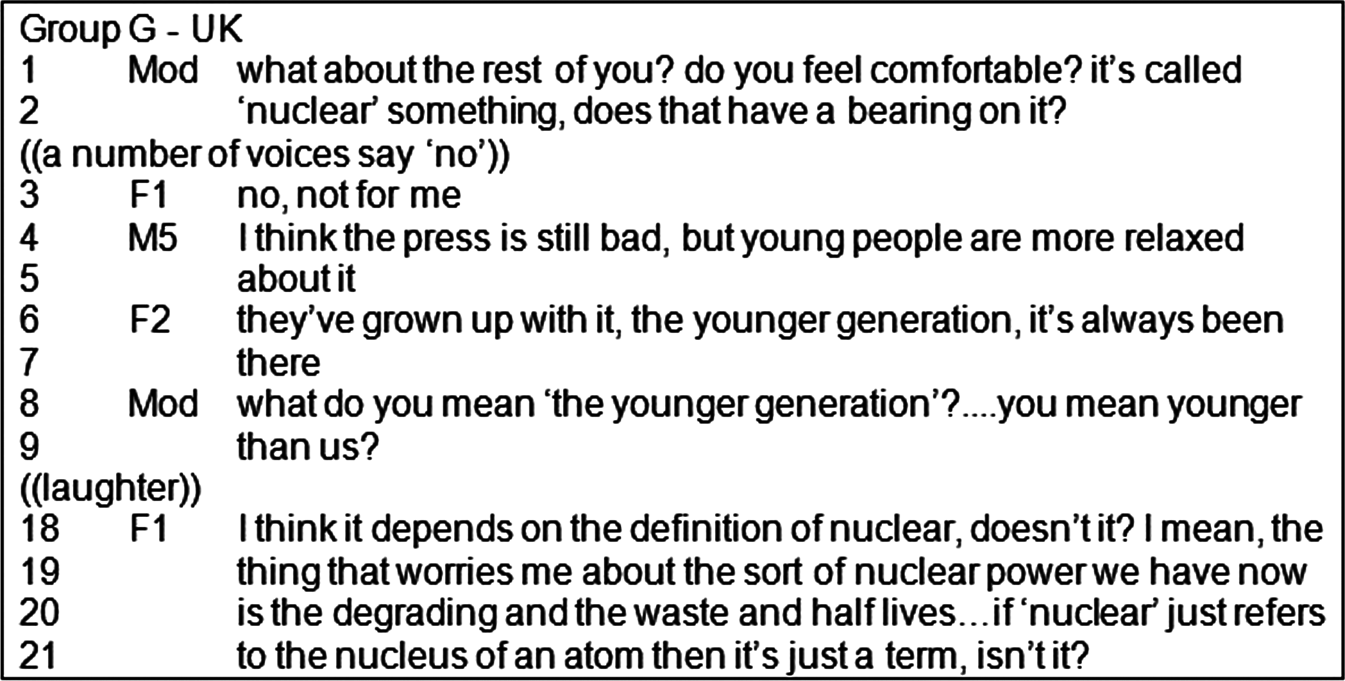
Finally, in Extract 9, we return to the UK environmentalist group’s deliberations, which again indicate the lack of importance of the nuclear brand in shaping participants’ views about nuclear power issues. Interestingly, their perceptions of the views of young people suggest a diminishing role for the nuclear brand within British society. Given the role of environmentalist groups in representing, and articulating, anti-nuclear arguments within society, it is perhaps especially significant that one can find evidence of both the limited importance of the nuclear brand, and a pronounced tendency toward pragmatism, in their reasoning processes.
Social accounting practices: The structure of pro-nuclear accounts
At the start of the paper, we noted the important role of social accounting practices in the body of research findings that has been influential in shaping our approach to researching these topics. All social interaction has within it an imperative for agents to present themselves as sensible and morally reasonable individuals (Blum and McHugh, 1971; Goffman, 1972). Recent research has argued that risk issues pose particular difficulties for social accounting practices, and that this property provides important insights into the social nature of risk (Horlick-Jones, 2005; cf. Myers, 2007). In this section, we examine social accounting displayed by our group participants as a way of seeking evidence of the strength of the nuclear brand. In so doing, we pose the question: is there evidence within the two corpora of data that we collected, that it is socially acceptable to adopt a pro- or anti- position toward nuclear power?
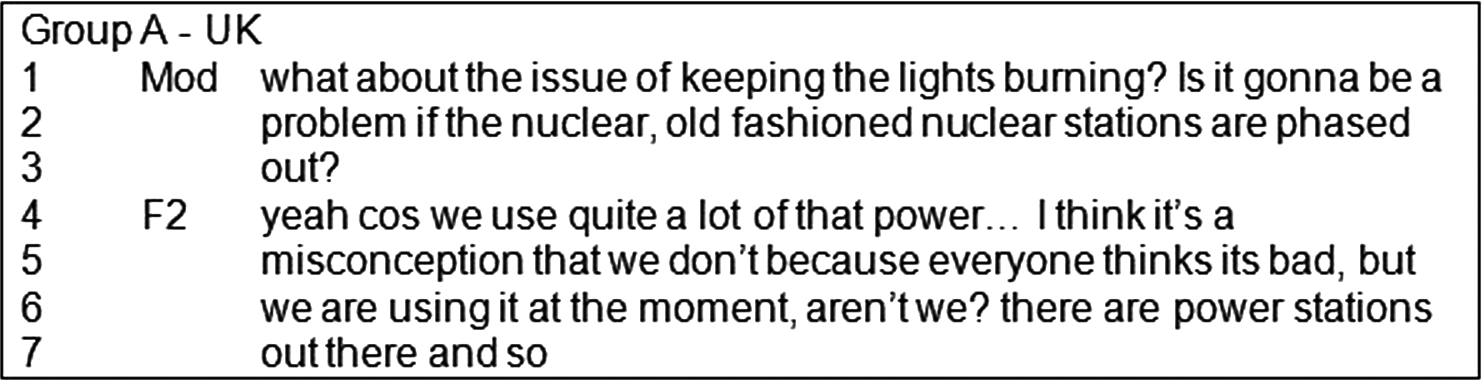
In Extract 10, drawn from discussions among some young people in the UK, the moderator begins the exchange by asking a question about the significance of retaining nuclear (fission) power for future energy security. F2’s response is particularly interesting, not only because of her tone of pragmatism, but especially so because she displays a need to rationalise her response to the question in the affirmative. At line 4, she notes that “we use quite a lot of that power,” and at line 6 she asks the rhetorical question “we are using it at the moment, aren’t we?” Between these utterances, she makes a bold assertion to the effect that: “I think it’s a misconception that we don’t [use a lot of nuclear power] because everyone thinks it’s bad.” In so doing, she is explicit in recognising the common sense (what “everybody” thinks) that nuclear is “bad.” Her utterances comprise not only a contribution to the ongoing group conversation, but also an account of the reasons why she has adopted what might be regarded by her co-interlocutors as a pro-nuclear position.
Extracts 11 and 12 are taken from the end of the second meetings of two of the UK groups. An exercise has taken place in which participants have been invited to individually allocate a limited number of counters to different energy sources. We join the conversations as participants are taking it in turn to talk about the distribution of counters that they have chosen. In Extract 11, M2 describes in detail his pragmatic choice which includes a sizeable investment in nuclear power. Significantly, at line 6, he uses the word “sorry” to preface his rejection of energy sources that might be regarded as “greener” in some respect. In Extract 12, this time drawn from the UK environmentalist group discussions, F1 describes a rather similar pragmatic choice. At line 1, she also introduces her choice with the word “sorry.” She goes on to state that “as much as I hate the idea of nuclear fission and I’m not convinced of how safe it actually is with regards to disposing of waste materials,” but still goes on to make a significant investment in nuclear power.
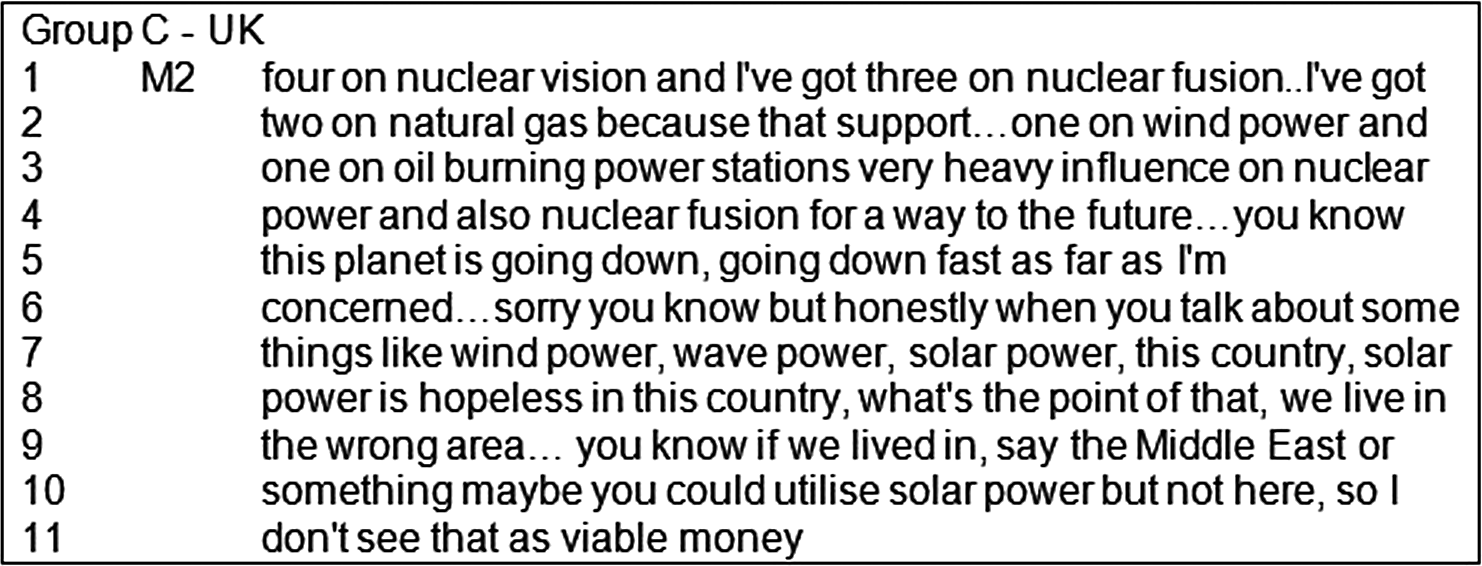
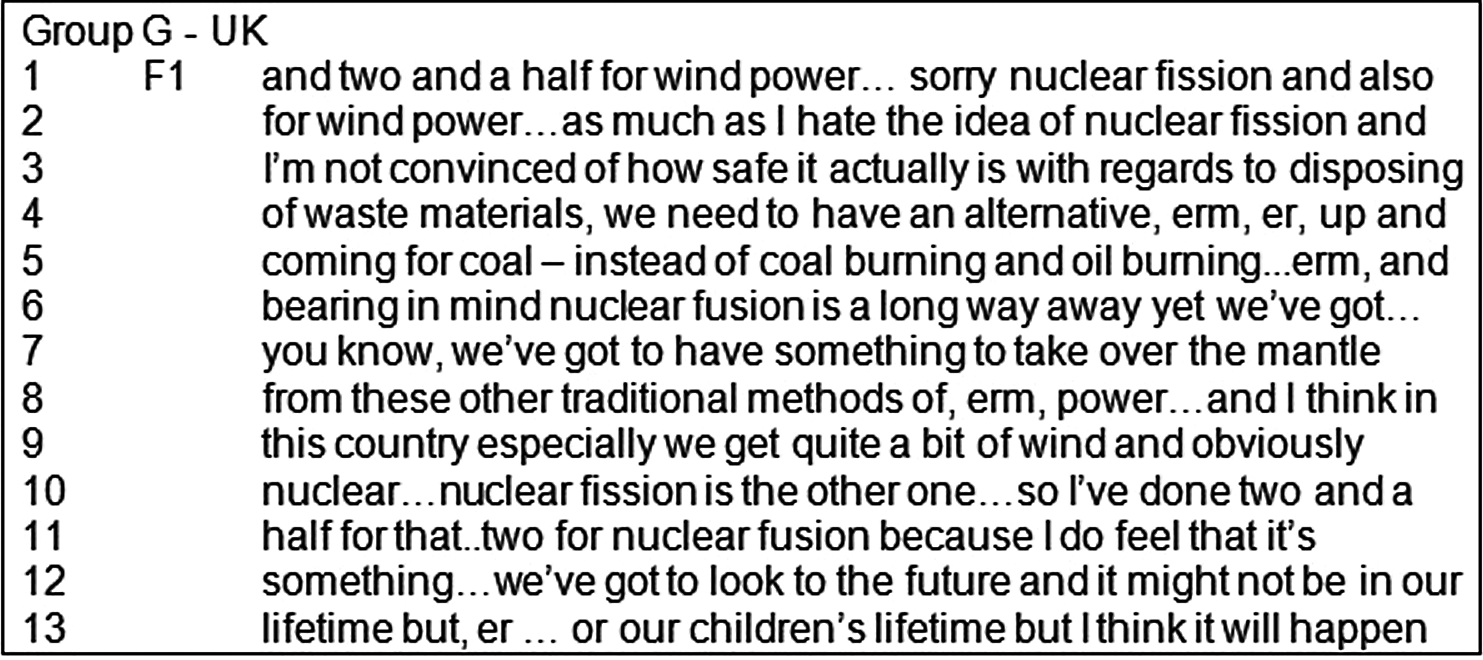
Extracts 11 and 12 provide evidence to support the indication from Extract 10 that people in the British groups felt an obligation to clearly account for their adoption of what might be regarded by fellow participants as a pro-nuclear position. In other words, they feel a need to justify utterances that present them in such a way that they may be seen as holding views in tension with “a reasonable suspicion of nuclear power.” We might have suspected that the environmentalist groups would have displayed this sort of behaviour, and indeed, F1 from Extract 12 deploys a more elaborate form of social accounting than M2 from Extract 11. However, both these participants feel a need to apologise in the most explicit manner, namely by saying “sorry.”
Turning to the Spanish corpus of data, we consider two sequences in Extracts 13 and 14. In the first one, the group is discussing the investment exercise. It is interesting to note how the participant M1, having acknowledged his significant investment in fusion, pauses and says “I believe, well, the thing is …” prior to stating his general support for nuclear power. We suggest the extended pause is significant, demonstrating a resistance to making the subsequent utterance. This interpretation is reinforced by his subsequent acknowledgement of problems associated with nuclear power, and his stated hope that his investment in fusion will also serve to diminish some of the threats associated with fission. In sequence 14, F3 begins by pointing out that where she lives electricity blackouts are common. M2 responds by introducing nuclear power as a means of maintaining supplies of electricity. However, he qualifies this option by using a Spanish term that translates roughly as “stick his neck out,” meaning a risky option. This prompts a sharply worded intervention by M3, who notes that it is hypocritical to be critical of nuclear power when Spain is importing nuclear-generated electricity from France. Here, he uses a Spanish term which might be translated as “political incorrectness.” In this way he spells out in literal terms the social imperative of being seen to regard nuclear as anathema.
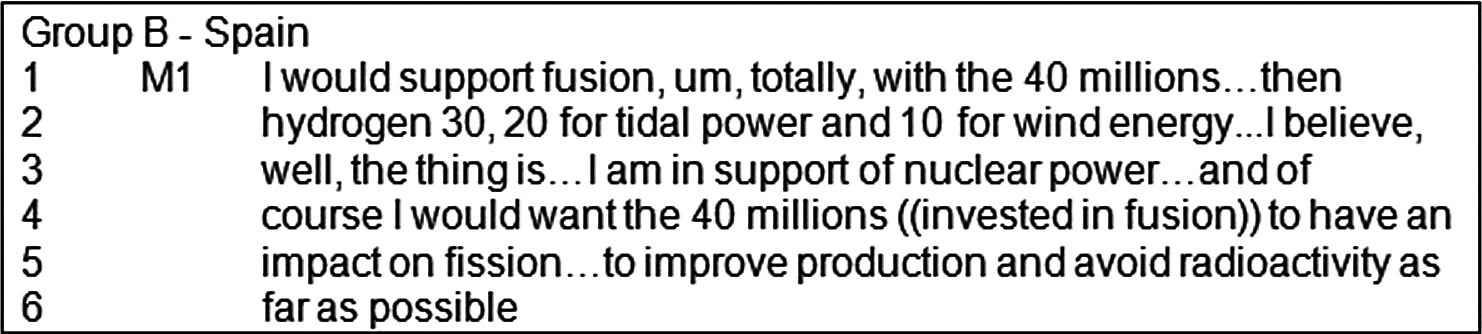

Significantly, we failed to find any evidence within the group conversations of a similar social accounting need with respect to anti-nuclear sentiments. This lack of symmetry also applied to the groups whose participants had working connections with the energy industries. On this basis of these data, we conclude that the social norms and cultural formations of both British and Spanish societies continue to possess a deep-seated suspicion of nuclear power technologies.
4. Discussion and conclusions
We have presented findings forming part of a larger cross-cultural study into lay reasoning practices about fusion power (see also Prades López et al., 2007, 2008, 2009). Given the low level of awareness of this technology among lay publics, this programme of work may be regarded as an investigation of the contours of what Popkin (1994) has described as “low information rationality.” Elsewhere we have reported upon the specific modes of reasoning by which lay understanding of fusion and other technologies is practically accomplished (Horlick-Jones et al., 2007a; Horlick-Jones and Prades, 2009; Prades López et al., 2009). That work has revealed the sometimes artful ways by which lay people can find meaning in situations characterised by obscure technical knowledge. It has also served to problematise categorical distinctions between expert and lay understandings of technologies and associated risks.
We have used a methodology designed to allow groups of lay people to shape the terms under which they acquired different sorts of knowledge about fusion and related matters; and an analytical stance that relaxed normative conceptions of the nature of expertise and rationality, so allowing the resulting data to speak for themselves. We have been alert to the dangers of regarding such group interactions simply as instances which reflect wider cultural logics; in effect reducing the participants to “cultural dopes” (Garfinkel, 1967), acting in simple conformity to the cultural imperatives of the day. Equally, we have been careful not to over-interpret the group data. In common with most focus group-based research, our method used a relatively small sample, and its findings can only be regarded as, in some sense, valid, if it is recognised that the focus of our investigations was not the (possibly idiosyncratic) views of individual participants, but rather the patterns of practical reasoning displayed by the groups as a whole; patterns that are accountably reportable (i.e. “make reasonable sense”) within the language communities they inhabit (discussed in Horlick-Jones et al., 2007a; see also Lynch, 1993).
In this paper, we have focused on the extent to which a nuclear label is able to generate a sense of stigma for the technology in question. We have shown that this label, or “brand,” exerts a powerful influence on the lay imagination, as evidenced by its role in shaping social accounting practices. It does so, despite the lay people and environmentalists in our groups sharing a perhaps surprising degree of pragmatism in their views towards nuclear power technologies. We speculated that this persistence of stigma might reflect the nuclear brand’s capacity to chime with certain primordial features of human experience.
We return to the suggestion that a re-framing of the terms under which nuclear power is discussed in political and policy debates is beginning to create the cultural conditions under which lay “reluctant acceptance” has been made possible. Gamson and Modigliani (1989) in their well-known paper on media framing of nuclear power make an important point of direct relevance to this re-framing argument by warning (after Converse, 1964) of the dangers of imposing what they term as “elite” categories (in this case drawn from energy policy discourse) in interpreting lay reasoning. Interestingly, Gamson and Modigliani (1989) go on to advocate the very sort of conversation-based research into reasoning practices on which we have reported in this paper.
The evidence we have presented shows how the group participants displayed an orientation towards the cultural norm of nuclear stigma, whilst tending to argue, in pragmatic ways, for the benefits of nuclear power technologies. Significantly, rather than simply “absorbing” the logics of fashionable contemporary debates within media and policy circles about the possible role of nuclear power in addressing anthropogenic climate change, the participants often warranted pro-nuclear views in terms of arguments concerning energy security. These latter arguments selectively drew upon their everyday experience of the rising cost of energy bills, and of wider shared cultural knowledge of the economics and politics of energy issues, in addition to technical knowledge acquired during the group process. Whilst we found a great deal of similarity between Spain and the UK, the Spanish groups displayed a little more confidence in the capacity of science and technology to address societal problems.
Of course, our work provided a snapshot, at a particular point in time. Arguably, the cultural resources upon which our groups drew in their practical reasoning activity were all, to some degree, over-determined by the complicated social, cultural, economic, political and technical contexts from which they were drawn. We therefore have no way of estimating the stability of the patterns of reasoning that we observed. Additionally, as we have shown, despite being taken on a learning process, most participants were reasoning on the basis of a very limited appreciation of technical discourses about energy policy and related matters. There is a clear need for more research into the impact of contextual change on patterns of lay reasoning about nuclear energy technologies, and how such patterns might change over time.
Footnotes
Acknowledgements
Earlier versions of this paper were presented to sessions at the Society for Risk Analysis (SRA) US conference in Boston in December 2008, and SRA European conference in Karlstad in June–July 2009. We are grateful to Alison Cullen and (the late) Bill Freudenburg in the US, and Ann Enander in Sweden, for their practical support; and the audiences at these presentations for their enthusiasm and stimulating questions. We are pleased to acknowledge the excellent research assistance provided by Christian Oltra and Joaquin Navajas. We are also happy to acknowledge the helpful role of conversations with many colleagues, in particular Julie Barnett, Mick Bloor, Jordi Farré, Rob Flynn, John Hannigan, Bill Kinsella and Rosario Solá. The paper draws on research supported by the UK Economic and Social Research Council (ESRC award RES-000–22–2664) and by a series of projects funded by the European Fusion Development Agreement (EFDA). We thank Christian Eherer, formerly at EFDA, and Magdalena Gadomska, the current EFDA-SERF officer, for their encouragement and constructive observations. It should be noted that the views expressed in this paper do not necessarily represent those of the European Commission. Finally, we are grateful to the reviewers for their efforts.
Notes
Author Biographies
Tom Horlick-Jones is a professor of sociology at Cardiff University School of Social Sciences, and a visiting scientist at CIEMAT-CISOT. Over a period of some twenty-five years he has specialised in investigating risk-related behaviour, and associated reasoning, communication and decision-making processes. His publications include the books Natural Risk and Civil Protection (lead editor, Spon, 1995), Social Amplification of Risk: The Media and the Public (co-author, HSE Books, 2001) and The GM Debate: Risk, Politics and Public Engagement (lead author, Routledge, 2007; paperback 2009).
Ana Prades is Head of the Socio-Technical Research Unit (CISOT) of the Spanish Government Agency CIEMAT, based in Barcelona. Her research is mainly concerned with risk perception, risk communication and public engagement, as they relate to energy technologies. Her publications include the book Energía,Tecnología y Sociedad: Evolución Histórica y Estudio de un Caso (Ediciones de la Torre, 1997) and, most recently, a contribution to the European Wind Energy Association volume Wind Energy, the Facts: A Guide to the Technology, Economics and Future of Wind Power (Earthscan, 2009).
Josep Espluga teaches environmental and health sociology at the Autonomous University of Barcelona. His research work is particularly concerned with social aspects of risk perception. He has extensive experience in qualitative methods, in particular focus groups and participatory research. He has held visiting posts at the Department of Urbanism of the University of Venice, and at the INNOGEN Centre of the University of Edinburgh.