



Abstract
The image prevailing among the public of scientific research and researchers constitutes a contradictory and complex combination of traditional stereotypes. We explore central facets of the image of scientific research and researchers as reflected in Greek adolescent students’ drawings. Drawings were produced by 171 students participating in a drawing competition launched in the context of the “Researchers’ Night 2007” implemented by three research institutions in Greece. Analysis of students’ drawings involved dimensions related to the image of scientific researchers and of scientific research. Outcomes indicate that the students hold fairly outdated views of scientific researchers and their activity, involving stereotypic views of scientists and science, as well as gender stereotypes. Therefore there is an urgent need to promote a more relevant image of scientific researchers and their activity to young people and especially students.
Keywords
1. Introduction
The image prevailing in society about scientific research constitutes a relatively stable albeit contradictory amalgam of traditional stereotypes, drawing their historic references from the pre-scientific period (even from 14th century alchemists) and modern, constantly transforming perceptions about scientific and technological progress and its positive and negative effects on society and the planet (Flicker, 2008; Ηüppauf and Weingart, 2008; Schummer and Spector, 2008). This popular image of scientific research indicates ambivalence and a retrogression of the public between trust and mistrust towards science (Flicker, 2008; Locke, 2005).
The origin and underlying cause of the stereotypic images of scientists are difficult to trace. There is constant interaction and mutual amplification between images projected by the media and those held by the public about techno-scientific research and its people (Flicker, 2008). Those images echo the low level of public understanding of professions related to science (Palmer, 1997).
Two distinct but intrinsically related lines of research explore the image of scientific researchers. The first focuses on non-specialists – mainly students and teachers, but also the general public, as well as scientific researchers themselves and science media communicators. The second line of research concentrates on the image of scientific researchers as promoted by a variety of media addressing the general public including the press, television, films, comics and cartoons, literature and more recently the internet. Both attend to characteristics of scientists – including physical and personality traits – and to characteristics of their activity. Next, the main outcomes of these two lines will be presented in parallel, since they constitute complementary parts of public “dialogue” regarding scientific researchers.
Public images of scientists
The media, including cartoons, comics, newspaper articles, but especially television and films, play an essential role in students’ learning about science and scientists (Long and Steinke, 1996; Reis and Galvao, 2004; Steinke, 1997). Thus the “popular visual image” of scientific researchers is more nourished by science fiction than by actual scientific research (Ηüppauf and Weingart, 2008).
Although “the media” do not constitute a unified, homogeneous entity, or present a universal or consistent description of the scientist, there are several “clusters” of images that are (re)produced and diffused across time period, medium, and genre (Basalla, 1976; Haran et al., 2008; Nisbet et al., 2002). Central aspects of these clusters will be outlined next.
The image of scientists
Mead and Metraux (1957) made the first attempt to systematically describe the image of scientists held by American high school students. This image revealed a stereotypic and complex perception of scientists as elderly or middle-aged males wearing glasses and white coats and working in laboratories, surrounded by test tubes, Bunsen burners, flasks and bottles. This rather unattractive image was confirmed by others (Krajkovich and Smith, 1982; Ward, 1977), indicating that throughout the 1960s and 1970s young people’s stereotypic images of scientists remained relatively stable.
Some years later Chambers (1983) developed a new technique – the Draw-A-Scientist Test (DAST) – to reveal visual details of stereotypic images of the scientist held by pupils. Children’s drawings were analysed and scored according to the presence of particular features, used as indicators of the stereotypic image of the scientist. These include: lab coat, eyeglasses, growth of facial hair, research symbols, knowledge symbols, technology, and relevant captions. In subsequent research by She (1998) an eighth indicator was added to the list: natural objects.
The DAST technique has been used extensively by researchers and school practitioners to determine the image of the scientist held by pupils (Finson, 2002; Losh et al., 2008; Mason et al., 1991; Newton and Newton, 1998; Schibeci and Riley, 1986; Schibeci and Sorenson, 1983) and teachers (Hatzinikita, 2007; Hatzinikita et al., 2009; Moseley and Norris, 1999; Quita, 2003; Rubin et al., 2003). This methodology has proven to give valuable information regardless of participants’ age, grade levels, gender, race, ethnicity and culture (Barman, 1999; Finson, 2002; Fung, 2002; Mays, 2001; Scherz and Oren, 2006; Schibeci and Sorenson, 1983; She, 1998; Song and Kim, 1999; Sumrall, 1995).
The stereotypic image of the scientist portrayed by the indicators presented above is prevalent among students’ drawings. It develops early, even from the age of 8, and is continually enhanced until adolescence (Christidou et al., 2006; Finson, 2002; Mason et al., 1991; Newton and Newton, 1998; Schibeci and Riley, 1986). Older students’ drawings tend to include more indicators of the stereotypic model (Chambers, 1983; Losh et al., 2008; Mays, 2001; Schibeci and Sorenson, 1983; She, 1998), to be more detailed and to depict more specialized symbols of knowledge, research and technology (Buldu, 2006).
Similar images are also common in the media (Basalla, 1976; Flicker, 2008; Mitchell, 2008). Obviously the self-concept and self-image of the scientific community differ significantly from those perceived by the public. However, scientists themselves often reproduce even the most conservative stereotypes – to which they otherwise object – in their self-representations, thus participating in their perpetuation and dissemination (Schummer and Spector, 2008).
Personality traits of scientists
Students’ perceptions of scientists’ personalities and relevant public representations are wide-ranging and controversial. Scientists are often represented as immoral, insensitive, and obsessed caricatures working individually and committed to secret controversial projects (Chambers, 1983; Kirby, 2003; Reis and Galvao, 2004; Rubin et al., 2003; Schibeci, 1986; Song and Kim, 1999; Ward, 1977; Weingart et al., 2003). Sometimes their enthusiasm and scientific curiosity can put humanity in danger, since they possess secret knowledge and power over nature. Within this picture scientists can be mysterious, magical, or dangerous, even “madmen” (Locke, 2005; Long and Steinke, 1996; Mitchell, 2008; Song and Kim, 1999; Weingart et al., 2003). Accordingly, their social dexterity is limited: they are often presented as inept, eccentric, isolated and unsociable (Basalla, 1976; Finson, 2002; Long and Steinke, 1996; Mason et al., 1991; Rubin et al., 2003; Schibeci, 1986; Ward, 1977).
Prevalent is that scientists are considered eccentrics with weird – often robotic – characteristics (Huber and Burton, 1995); this perception has dominated for more than thirty years (McAdam, 1990). Children often depict scientists as “mad, bad and dangerous” (Haynes, 2003: 251–252), as atheists, arrogant and brutal (Turkmen, 2008).
Such representations are common among young people, as well as in film (Kirby, 2003; Long and Steinke, 1996; Terzian and Grunzke, 2007; Weingart et al., 2003), television (Long and Steinke, 1996; Reis and Galvao, 2004; Schibeci, 1986), literature (Haynes, 2003; Schummer, 2006), children’s books (McAdam, 1990) and super-hero comics (Locke, 2005).
Yet there are instances where scientists are portrayed as geniuses, positive role-models (Turkmen, 2008) who can use science and technology to improve life (Mead and Metraux, 1957; Nisbet et al., 2002). This image of scientific researchers is dominated by positive – albeit stereotypic – characteristics: eccentric but harmless, dedicated to the extension of knowledge boundaries (Rubin et al., 2003), they devote their wisdom to the service of society. They combine optimistic faith in a better future with unsated curiosity, dynamism, and aspire to investigation (Flicker, 2008; Locke, 2005; Long et al., 2001; Long and Steinke, 1996; Mitchell, 2008; Pansegrau, 2008; Song and Kim, 1999).
Both positive and negative images promote the idea that the scientific researcher is not “someone like us,” but a member of an elite, omniscient and privileged group, deviating from the norm and constituting heroes of a broad mythology about the world of science (Long and Steinke, 1996; Nisbet et al., 2002).
Gender of scientists
Women are rarely present in students’ drawings (Buldu, 2006; Chambers, 1983; Finson, 2002; Hill and Wheeler, 1991; Mason et al., 1991; Schibeci and Sorenson, 1983; Sumrall, 1995; Turkmen, 2008). Female scientists tend to be drawn by girls (She, 1998), boys exhibiting greater gender and overall stereotyping of scientists (Huber and Burton, 1995; Steinke, 1997; Steinke et al., 2007).
The public image of science is also largely male (Boyce and Kitzinger, 2008; Flicker, 2008; Haran et al., 2008; LaFollette, 1988). Sporadic representations of women scientists in newspapers, magazines, films and television drama, mainly incorporate components of gender stereotypes rather than scientific ones (Boyce and Kitzinger, 2008; Haran et al., 2008; LaFollette, 1988; Long et al., 2001; Steinke, 2005). Roles of women scientists in the public field are secondary, differentiated from those of their male counterparts. In traditional versions of this stereotype, a woman works under supervision of a man, as a student or assistant (Flicker, 2008). In more contemporary versions, the “only” impediment to undertaking a role equivalent to that of men is a male-dominated scientific system and her “immature,” or exceedingly sentimental nature (Flicker, 2008; Schummer and Spector, 2008). Thus, scientific research is presented as requiring certain “masculine” attributes (LaFollette, 1988), making it difficult to compromise scientific career with balanced family life (Monhardt et al., 1999).
In their public representations women scientists do not generally contribute to negative myths of science. They remain realistic and dedicated to the general good, adding intuition and emotion to scientific research. They also embody societal fears and reflect public scepticism about disputable scientific issues (Flicker, 2008).
Media images of female scientists have improved over time. Recent depictions tend to represent them in professional positions of high status, as professional and realistic, hardworking, eloquent, honest, passionate about their work, confident, inventive, and autonomous, at the same time as ordinary in their relationships with colleagues and families (Haran et al., 2008; Steinke, 1997, 2005).
Types and nature of scientific research
The types of activities considered by students as scientific vary – although variety is narrowed down as they progress to higher grades. In addition to science-related specialties, the professions of doctor, engineer and – more frequently – teacher are typically considered by younger children as scientific (Fung, 2002; Rubin et al., 2003; Samaras, 2009; She, 1998). According to the majority of students, scientific activity takes place exclusively in research laboratories (Barman, 1999; Chambers, 1983).
Scientific research is considered – mainly by girls – as impersonal, abstract, competitive, practical; a mechanistic activity of proof and demonstration; of an experimental and quantitative nature; and a collection of data, foundation of rules, certainties, and positive knowledge (Mitchell, 2008). Overall, science careers are represented as requiring total commitment to and immersion in the scientific enterprise (Monhardt et al., 1999), but also as “masculine,” deprived of imagination, and rather uninviting (Hill and Wheeler, 1991; Losh, 2010; She, 1998; Steinke, 2005).
On the other hand, there are positive portrayals of science as omnipotent and offering hope for the future (Nisbet et al., 2002). These images present science as truth, fun, a part of everyday life and an activity for everyone (Long and Steinke, 1996). Especially some media or genres (newspapers, science television, television drama series, documentaries and science magazines) promote positive and non-gender-stereotyped images of science. They portray science more realistically and less as a one-dimensional or masculine endeavour. Many motivations for engaging in science are presented. Social, international and interdisciplinary dimensions of scientific research are highlighted, and a variety of careers to be pursued are depicted (Haran et al., 2008; Nisbet et al., 2002). Such positive images have recently been found to be enhanced among the general public as well (Losh, 2010).
Aim and rationale of the study
This paper aims to identify essential aspects of the image of the scientific researcher and scientific research as reflected in drawings produced by Greek students.
Previous research concerning the image of scientists as reflected in drawings of non-specialists (particularly those of students and teachers) mainly focused on indicators of the stereotypic model proposed by Chambers (1983). In Greece, research in this area is limited (Hatzinikita, 2007; Hatzinikita et al., 2009; Samaras, 2009). In this context, the present study aims to extend the potential of analysis of such drawings beyond the dimensions usually discussed, by developing a more comprehensive framework of analysis, attending to additional components of the public image of science and scientists. This analysis is expected to allow a productive comparison between the students’ images and those prevailing in popular culture.
2. Method
Sample and data collection
Data for the present study include drawings produced in the context of “Researchers’ Night 2007” in three Greek cities: Volos (under the auspices of the University of Thessaly), Patras (under the auspices of the University of Patras), and Heraklion (under the auspices of the Foundation for Research and Technology in Crete). “Researchers’ Night” is a European Commission initiative, funded by the 7th Framework Programme, held at different European cities each year. This initiative, its central catchphrase “Researcher: Someone like us,” aims to a) improve the image of the researcher in society; b) raise public awareness about research, innovation and new technologies; c) bridge the gap between researchers and citizens by presenting possibilities of research and technological foundations to serve society; d) familiarize youth with techno-scientific issues; e) encourage teachers and governments to systematically support young people in choosing research careers.
The 2007 “Researchers’ Night” focused on the relation between art and research. One of its central actions involved a drawing competition titled “Please draw a researcher,” which addressed 12–18 year old students inviting them to represent visually people of research, as they conceive of them. In total, 171 students (67 boys and 104 girls) voluntarily participated in the competition. Twenty students were attending primary school (ages 7–11), 124 students were attending lower secondary school (ages 12–14) and 27 students were attending senior secondary school (ages 15–17) in public institutions in the regions of the three participating Greek institutions. The students had a special interest – sometimes qualification – in arts; however this was not a prerequisite for participation. Drawings were individually produced at home within a given deadline and subsequently delivered to the adjacent institution.
Analysis framework and procedure
The framework of analysis involves two distinct axes: a) the image of the researcher, and b) the image of scientific research (Figure 1). Each of these axes is presented along with their particular dimensions. The framework integrates indicators and categories proposed by previous studies and was further enriched to reflect the data as accurately as possible.
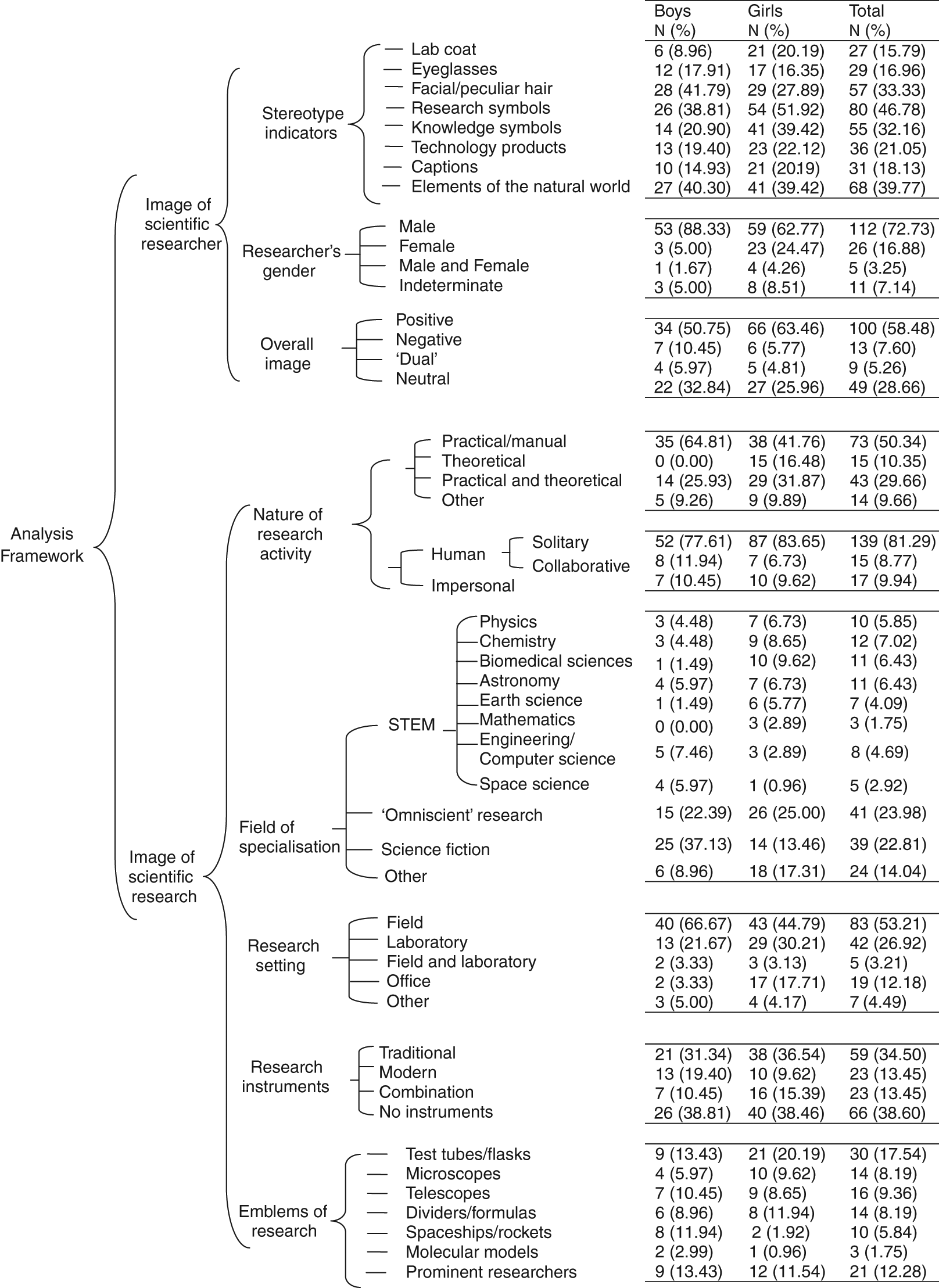
The analysis framework for the image of the researcher and scientific research, relevant frequencies and percentages.
The image of the researcher
The image of researchers depicted in students’ drawings derives from three distinct dimensions, presented in Figure 1. These include a) use of the eight indicators identified by previous researchers (Chambers, 1983; She, 1998), distinctive of the stereotypic image of scientists; b) researchers’ gender; and c) overall image of the depicted researchers. These dimensions are further described below:
Indicators of the stereotypic image of the researcher involve lab coats, eyeglasses, facial hair or peculiar hairstyles (e.g. beard, moustache, abnormally long sideburns), research symbols (laboratory equipment and scientific instruments), knowledge symbols (e.g. books, filing cabinets), technology products (e.g. computers), captions like “eureka!,” mathematics or chemical formulae, taxonomic classifications, etc., and natural objects (e.g. animals, plants, or astronomical objects).
The second dimension concerns the gender of the depicted persons. Researchers were classified as male or female, but there were instances of drawings including both male and female figures, as well as figures with no apparent gender-distinctive features.
The overall dimension is related to the emerging stance of students towards researchers. Therefore, the overall image of a depicted researcher can be classified as positive, negative, “dual,” that is combining positive and negative aspects, or neutral in cases without apparent positive or negative connotations.
The image of scientific research
Students’ drawings of researchers also disclose aspects of their understanding of research activity. These include the following dimensions: a) nature of research activity; b) fields of specialization of scientific research; c) setting of scientific research; d) types of depicted research instruments and apparatuses; and e) “emblems” of research (Figure 1). More particularly:
The first dimension – related to the nature of research – involves two components: the first examines if research is regarded as a practical/manual or a theoretical activity (Mitchell, 2008). Alternatively, research can be depicted as a combination of practical and theoretical work, but also as a different type of activity, classified as “other.” The second component of the nature of research concerns its social aspect. Analysis along this component takes into account the presence or absence of researchers from students’ drawings. In the former, research is classified as a human activity, either solitary (a researcher working alone) or collaborative (more than one researcher depicted). In the latter, absence of a researcher is classified as an impersonal representation of scientific research.
The second dimension concerns the specialization fields of research, involving disciplines related to science, technology, engineering and mathematics (STEM): physics, chemistry, biomedical sciences, astronomy, earth science, mathematics, engineering/computer science, space science. Some depictions of researchers combined elements from different disciplines and scientific fields (e.g. researchers performing astronomical, biological, and chemical research at the same time), promoting an “omniscient” image of science, which possibly reflects an outdated perception of scientific researchers originating from the naturalists of the early scientific era (Schummer and Spector, 2008). Others, inspired by science fiction, indicated possible imagined impacts of science and technology on society or the environment, introducing imaginative settings alternative to our empirical environment (futuristic landscapes, outer space, robotic creatures, or fantastic archaeological explorations). Specialization fields with sporadic occurrence were classified as “other.”
The third dimension relates to the research setting. In this component, research can be perceived as fieldwork, laboratory experimentation, a combination of the two, an activity taking place in offices, or classified as “other.”
The fourth dimension of analysis concerns the level of contemporariness of research instruments and apparatuses. In this dimension research equipment can be traditional, including objects used in research from the outset of science – or even earlier. Alternatively, research equipment may involve modern and complex apparatuses, typically drawing on technological progress. Also, research activity may be depicted as making use of both traditional and contemporary instruments and apparatuses. Drawings that did not include any research instruments were categorized as “no instruments.”
Finally, the fifth dimension involves the symbols introduced, serving as “emblems” of research (Schummer and Spector, 2008). These are widespread in the public image of science and include test tubes and flasks, microscopes, telescopes, dividers and mathematical formulae, spaceships and rockets, molecular models, and portraits of prominent researchers – symbolic figures of their disciplines.
Analysis procedure
Each drawing was analysed along different dimensions of each axis (image of researcher and image of research) described previously. Analysis was independently performed by two of the authors and yielded an inter-rater agreement of at least 93% for each dimension. Discrepancies were discussed and resolved with the contribution of the third author.
As well as the independent description of the outcomes along each dimension, the analysis also investigated the existence of correlations between each dimension of the framework and student gender, and between dimensions of analysis. For this part of the analysis the magnitude of chi-square served as a means to detect educationally valuable statistically significant correlations (Blalock, 1987).
3. Results
In the following sections the presentation of results will follow the two axes of the analysis framework and corresponding dimensions as presented in the Method section.
The image of the researcher
Indicators of the stereotypic scientist
Researchers in students’ drawings have diverse characteristics, typical of the stereotypic scientist (Chambers, 1983; Mead and Metraux, 1957; She, 1998). Each drawing involved 2.2 stereotypic indicators on average, girls’ drawings being slightly more stereotypic than boys’ (2.37 and 2.03 average indicators per drawing correspondingly).
As indicated in Figure 1, among the most popular indicators are: research symbols (in 46.78% of the drawings); elements of the natural world (39.77%) – for instance astronomical objects, as in Figure 2a; facial hair and/or peculiar hairstyles (33.33%); and knowledge symbols (32.16%). These are followed by: technological equipment (21.05%); captions (18.13%) – e.g. chemical formulae in Figure 2b; eyeglasses (16.96%); and lab coats (15.79%).

Researcher with research instruments (telescope), knowledge symbols (papers, pencils), technology products (portable computer) and elements of the natural world (stars).
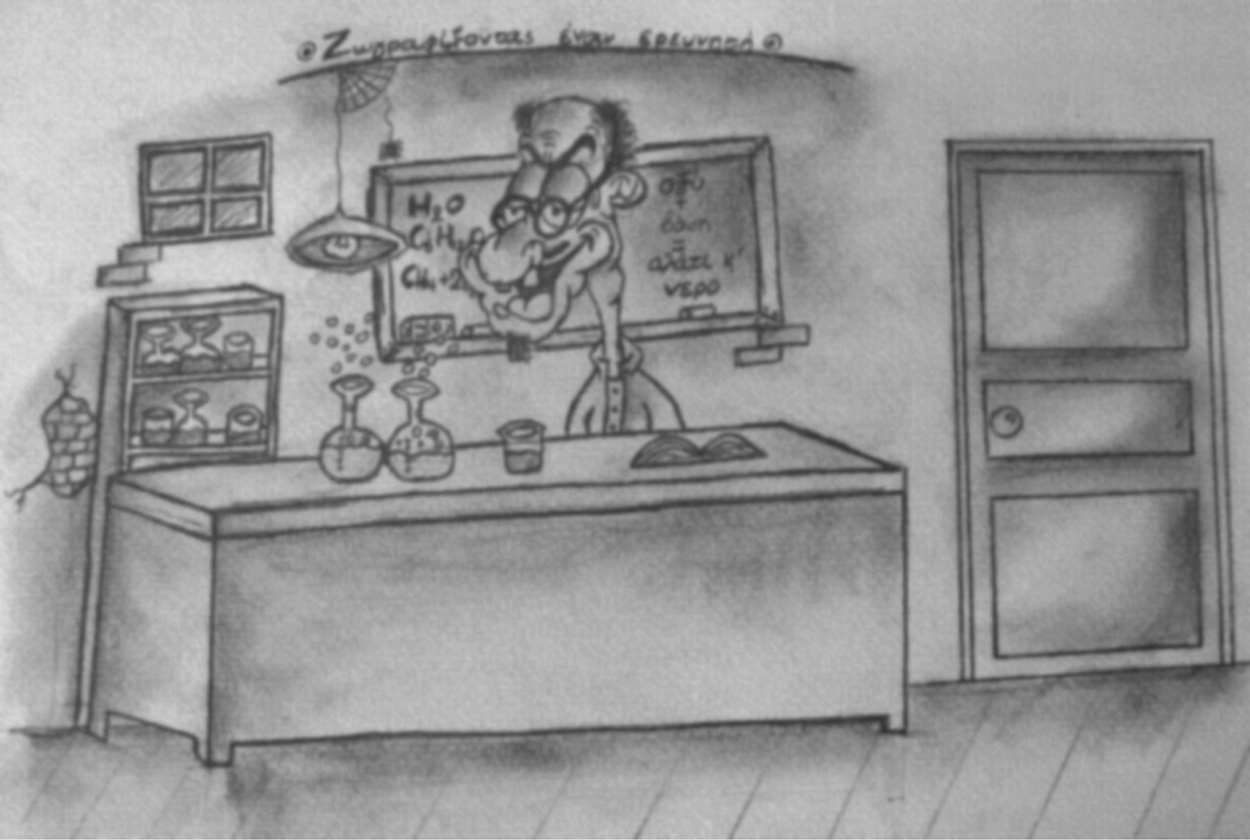
Researcher with a white coat, eyeglasses, facial hair, knowledge symbols (blackboard), research instruments (glassware), and relevant captions (chemical formulae).
Researcher’s gender
Seventeen drawings included no human figure, and were therefore excluded from this part of the analysis. The remainder (154 out of 171) were analysed in respect to gender. Relevant percentages refer to this part of the sample.
The majority of depicted researchers are male (72.73% of the drawings). The strong preference to male researchers was not equally expressed by girls and boys: the latter tended to draw male figures, while the former tended to draw females more frequently than expected; this difference is statistically significant (χ2 = 12.90, df = 3, p < 0.01).
In a small number of cases (3.25%) male and female individuals working together were depicted. In those, women tend to undertake equivalent roles to those of men, but there are cases where they are restricted to secondary roles, as students, or assistants, as in Figure 3 where the woman takes on the “practical” part of the work, while the man, detached, and holding his notes, seems to possess and instruct in theoretical knowledge.
Male and female researchers in unequal roles: the woman deals with observation, the man with theoretical knowledge.
In some instances (7.14%) the gender of the represented person was not evident (see Figure 1).
The overall image of the researcher
As the data in Figure 1 indicate, the majority of the participants represented researchers positively (58.48% of the drawings). This positive tone is expressed through an apparently diligent dedication to the study of nature, and/or through the attribution of friendly and sympathetic facial traits. Einstein, in Figure 4a, typifies this positive representation.
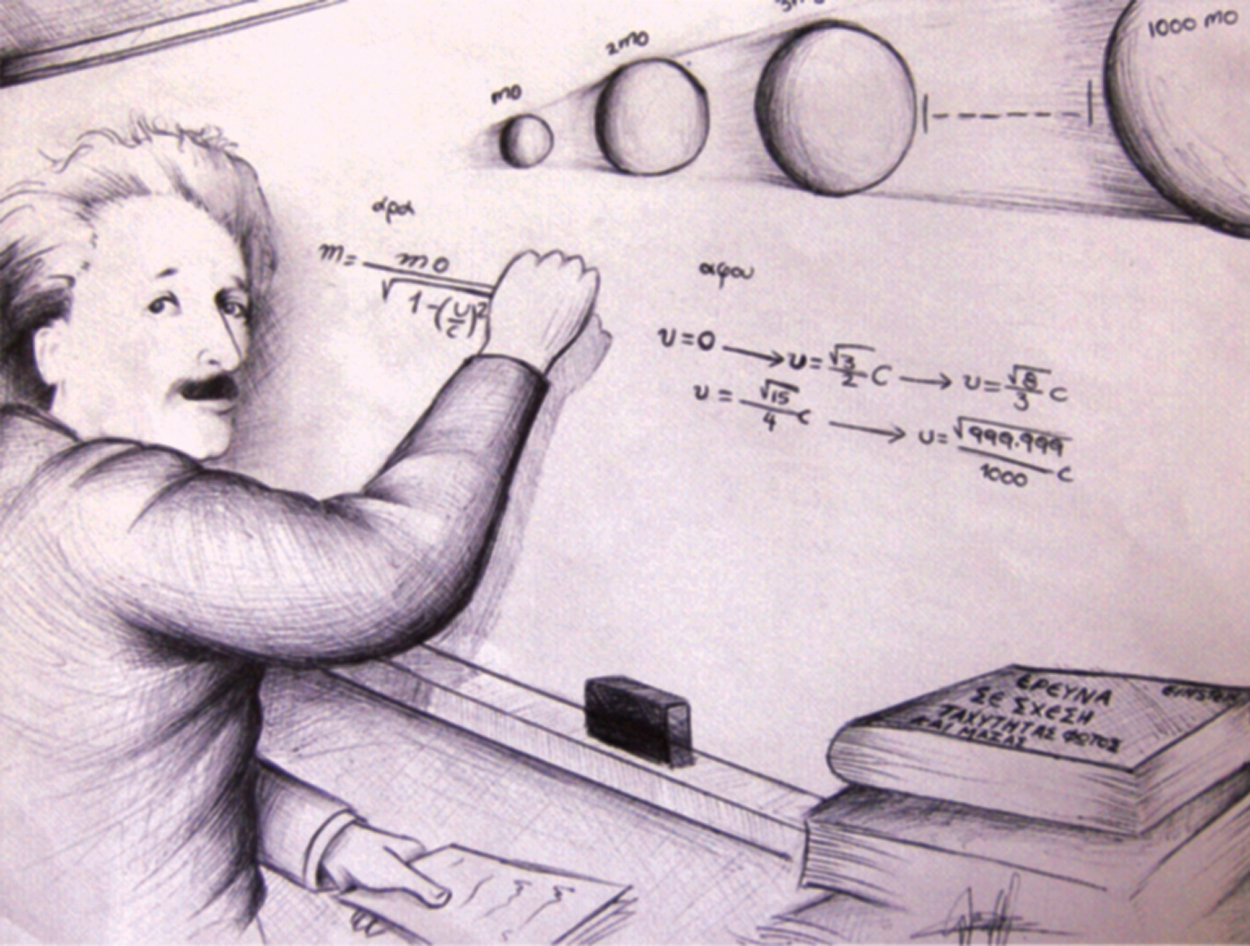
Einstein as a sympathetic representative in a positive depiction of scientific researchers.
A small number of drawings (7.60%) reflect a negative stance towards researchers, represented as eccentric individuals with peculiar (sometimes extraterrestrial) or mythical traits. In such representations the researcher seems unsociable, hostile, possibly disturbed (Figure 2b). Moreover, some of these drawings seem primarily inspired by science fiction, displaying extraterrestrial creatures, or Frankenstein-like figures.
Some drawings (5.26%) combine positive and negative aspects of the public image of science and technology, expressing a contradiction between “noble” and dangerous uses of research, or between nature and an artificial environment, created by techno-scientific progress (Figure 4b).

A “dual” depiction of the researcher split between the natural, and an ominous man-made, technological environment.
Last, in several cases (28.66%) the researcher was neutrally represented, that is with no apparent positive or negative connotations.
The overall image of the researcher is correlated with his/her gender: male individuals are negatively depicted more frequently than expected, while no negative representations of female researchers were recorded. When the represented individual’s gender is indeterminate, representations tend to be neutral (χ2 = 15.57, df = 9, p < 0.1).
The image of scientific research
The nature of scientific research
As mentioned in the Method section the nature of scientific research involves two dimensions: whether research is primarily a practical/manual or theory-laden activity and the social dimension of research, whether research is considered a solitary or collaborative activity, or even impersonal.
Regarding the first dimension, 26 drawings were excluded, as they presented decontextualized portraits, or impersonal representations of research. Percentages presented in Figure 1 refer to the analysed drawings (145 in total). The majority of these (50.34%) signify observation, experimentation and measuring as the crucial aspects of scientific research. Figures 2a and 2b exemplify the practical perspective of research. On the other hand, some drawings (10.35%) focused on theoretical aspects of research, largely denoted by researchers studying books, taking notes, writing formulae, or constructing theoretical models (see Einstein in Figure 4a). Moreover, in several instances (29.66%) theory and practical work are combined in the same depiction (see Figure 3). Also, in some cases (9.66%) it was not possible to discern whether the activity of the researcher is primarily theoretical or practical.
There are significant gender differences related to the nature of research. First, scientific research was primarily represented as a practical and experimental activity by boys, while girls tended to favour theoretical aspects of research, or to combine practical/manual with theoretical activity in their drawings (χ2 = 12.89, df = 3, p < 0.01). Analogous differentiations appear in regards to the gender of the depicted researchers as well (χ2 = 11.37, df = 4, p < 0.025).
Regarding the social dimension of research, students’ drawings imply that it is mostly considered a solitary activity. Therefore, researchers are typically (81.29%) portrayed as working individually, concentrating on their experimentations or study. Two or more researchers, working in collaboration, appear in 8.77% of the drawings (Figure 5a). Also, in some instances (9.94%) scientific research is represented impersonally, researchers being completely absent, as is the case in Figure 5b, which associates research with general yet crucial questions such as “Why is there life?”
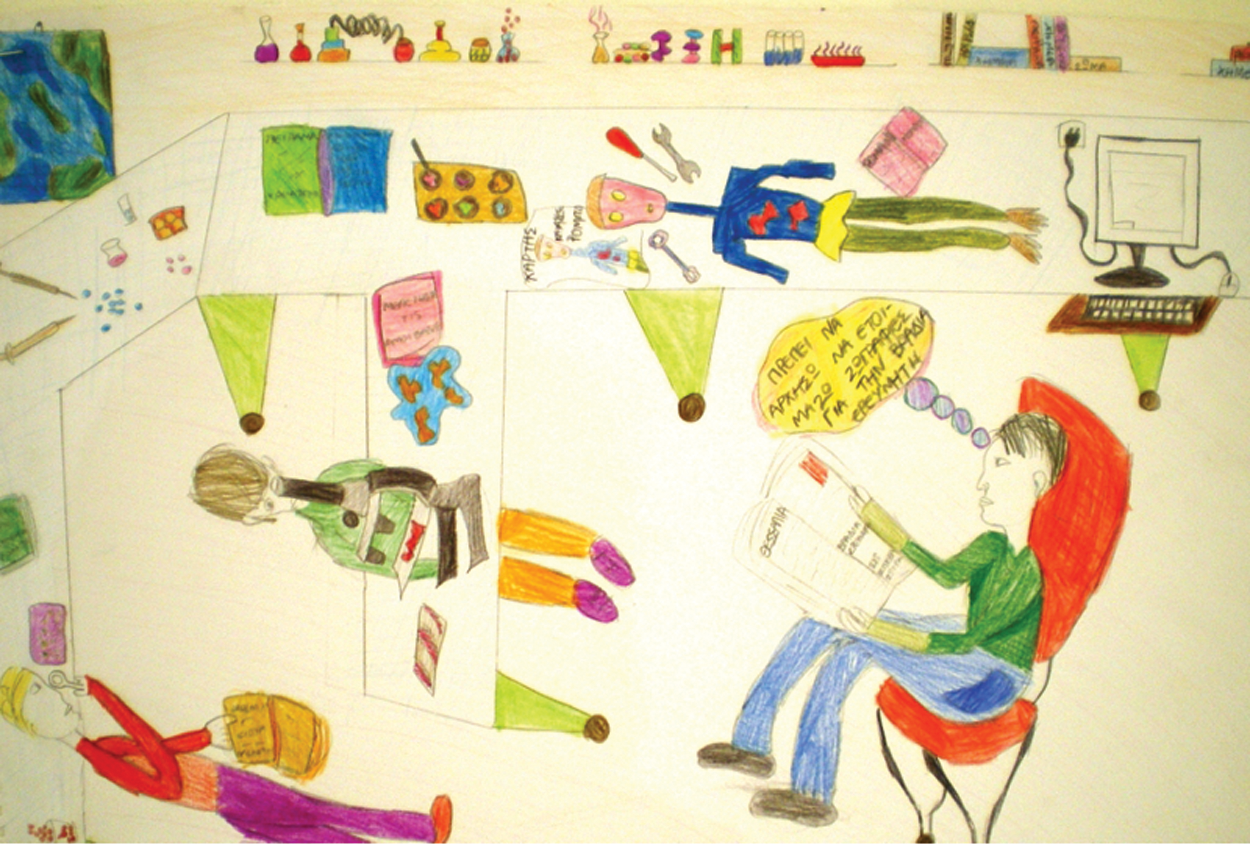
A group of researchers working together.
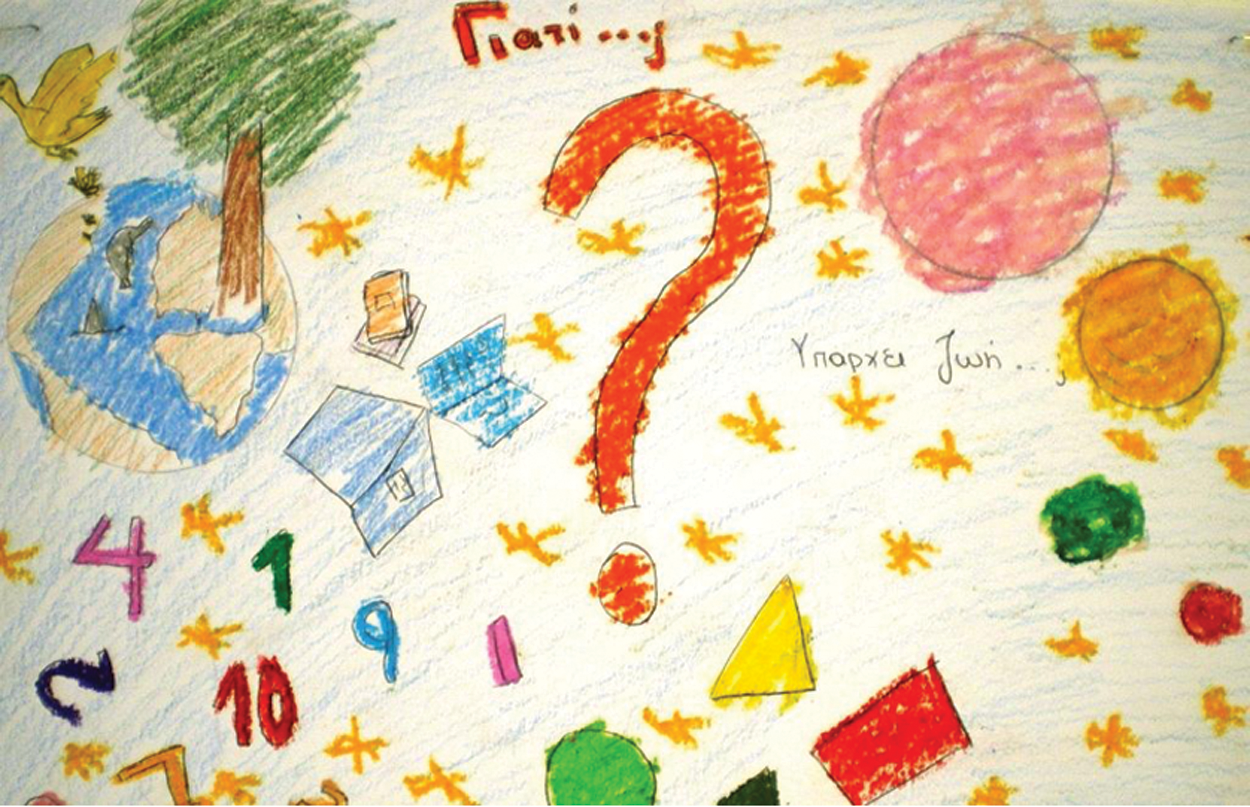
An impersonal representation of scientific research.
Fields of specialization
Fields of specialization in students’ drawings vary remarkably. A major category involves activities related to science, technology, engineering and mathematics (STEM), which corresponds to 39.18% of the collected drawings (see Figure 1). This comprises the fields of chemistry (7.02%) as in Figure 2b, biomedical sciences (6.43%), astronomy (6.43%) as in Figure 2a, physics (5.85%) – see Einstein in Figure 4a, engineering and computer science (4.69%), earth science (4.09%), space science (2.92) and mathematics (1.75%).
STEM-related disciplines were found to correlate with other dimensions of the analysis. Biomedical sciences were depicted in girls’ drawings more frequently than expected; engineering/computer science and space science were favoured by boys (χ2 = 16.05, df = 7, p < 0.05).
Second, male and female researchers were not uniformly represented across different STEM fields. Physicists and chemists tended to be male more frequently than expected, while biomedical researchers tended to be female. Also, the coexistence of male and female researchers in the same drawing was more frequent in representations of earth science (χ2 = 34.23, df = 21, p < 0.05).
Third, indicators of the stereotypic scientist were not introduced uniformly in drawings depicting different STEM-related specializations. Researchers in biomedical sciences tended to wear lab coats more frequently than expected, chemists and earth science specialists tended to be surrounded by research symbols, engineers and space science experts by technological equipment (mainly computers and spaceships, rockets and satellites), and astronomers, earth science and space science experts by elements of the natural world – mainly astronomical objects (χ2 = 105.18, df = 49, p < 0.001).
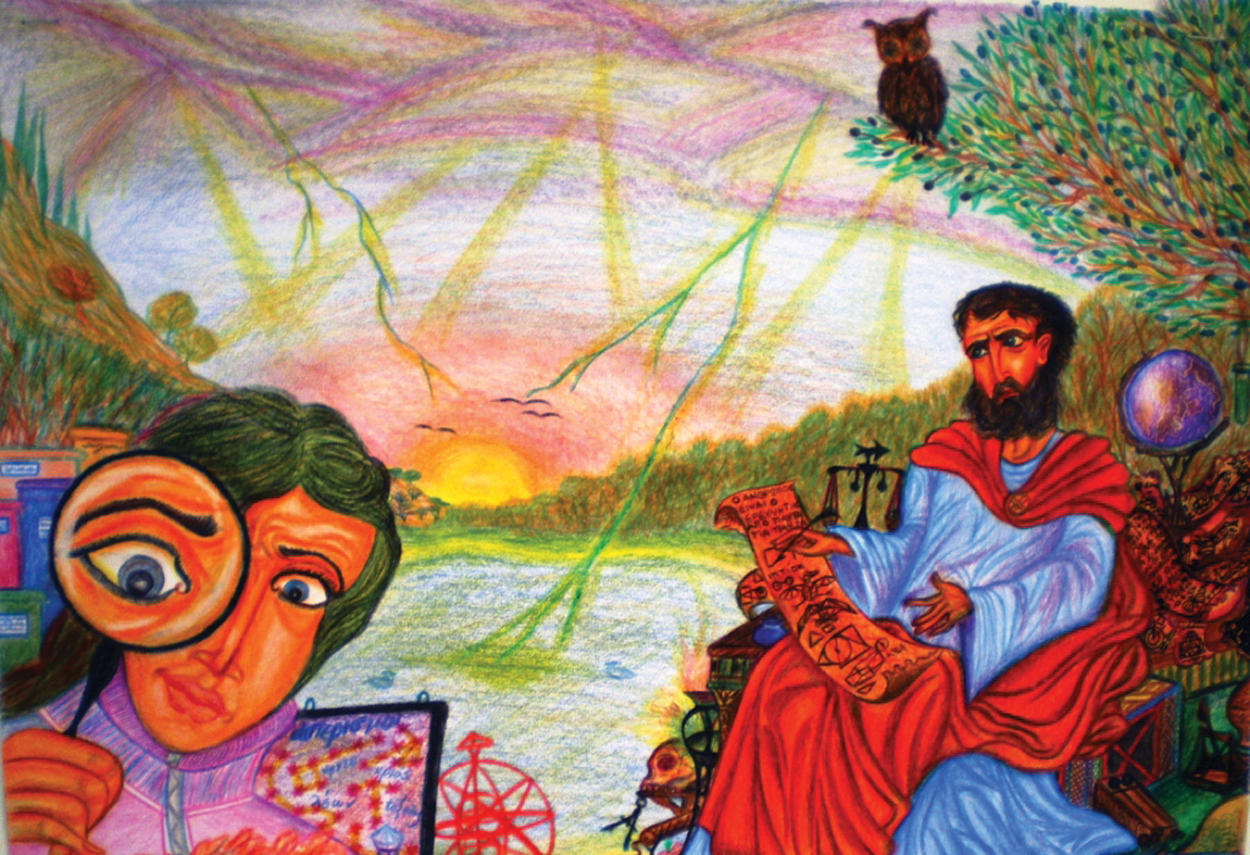
In several cases (23.98%) elements indicative of different fields of research activity, often corresponding to different disciplines, were combined in the same drawing (Figure 1). Such drawings promote the image of an “omniscient” researcher, historically originating from the outset of science. These historical references are often made more explicit, through the depiction of ancient philosophers or naturalists. The researcher in Figure 6 is an example, with research interests ranging from astronomy and space exploration, to biology and earth science.
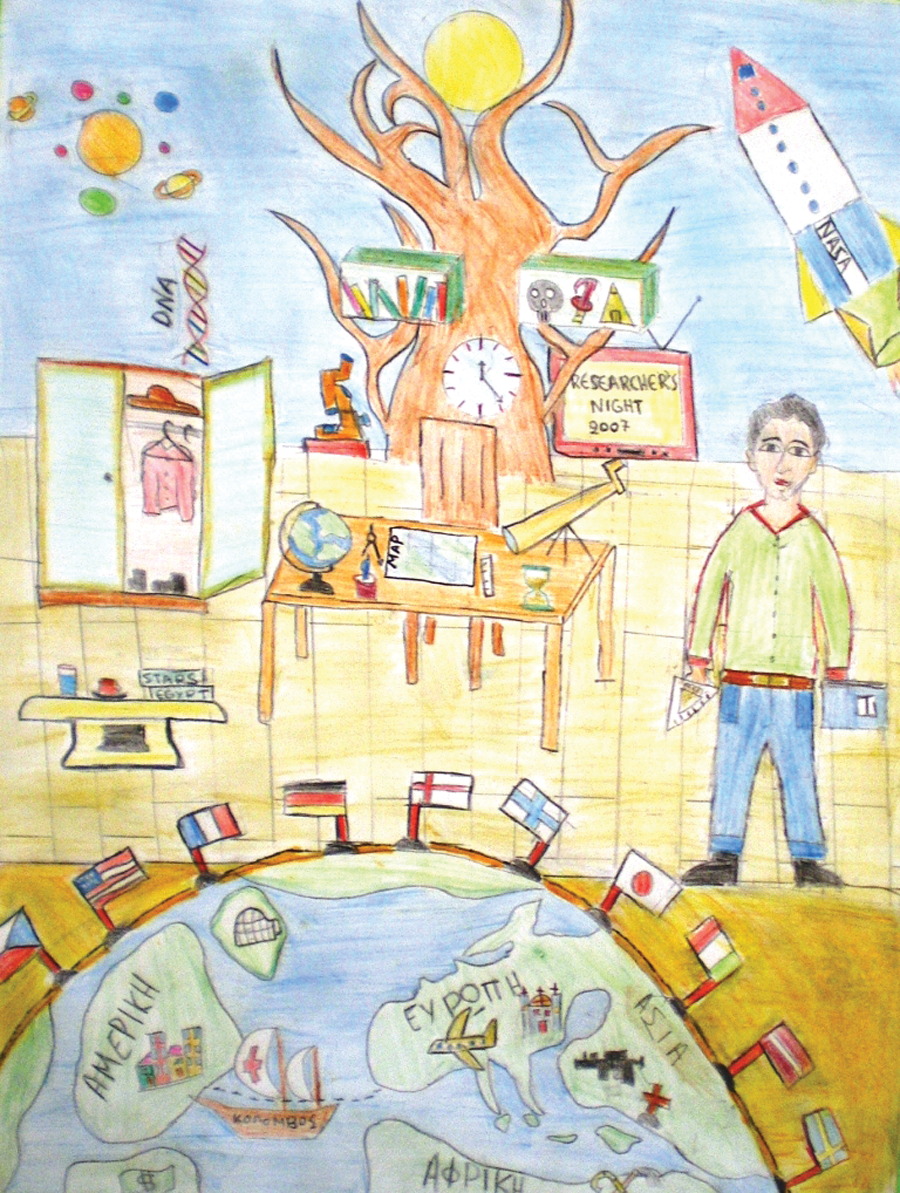
Depiction of multiple elements representative of a variety of disciplines.
A considerable portion of drawings (22.81%) depict activities apparently inspired by science fiction. Such activities are usually not related to any identifiable research field, but may involve adventurous explorations, or imaginary inventions (Figure 4b).
Occasionally (14.04% of the drawings) other, frequently indistinct, fields were represented. Archaeology appeared in some of the drawings in this category. Yet, research fields related with humanities and social sciences tended to be absent.
Gender differences were also observed regarding the general categories of research specialization. Girls tended to depict STEM-related activities more frequently than expected, while boys relied heavily on science fiction, but also represented other fields (χ2 = 13.58, df = 3, p < 0.01). Also, omniscientist researchers in students’ drawings tended to be female, while figures inspired by science fiction tended to be male (χ2 = 23.66, df = 9, p < 0.01).
Furthermore, indicators of the stereotypic scientist did not appear evenly in depictions of different specializations. More particularly, chemists were the most stereotypically represented (3.6 indicators of the stereotypic model per drawing on average), followed by astronomers (3.5 indicators on average per drawing), omniscience researchers (3.1 indicators on average), biomedical researchers and mathematicians (2.7 indicators per drawing for each field). Physicists, earth science experts, engineers/computer scientists, figures inspired by science fiction, and other specialists were less stereotypically represented (average indicators per drawing ranging from 1.3 to 1.8).
Last, whether research is presented as a practical or theoretical activity depends on the field of specialization depicted. Within STEM-related fields, physics and mathematics are presented as theoretical endeavours, while chemistry tends to be represented as a combination of experimental and theoretical activity more frequently than expected (χ2 = 37.64, df = 14, p < 0.001). Taking into account all general specialties, omniscience researchers tend to be depicted as combining theory and practice, while representations inspired by science fiction mostly promote practical and experimental work, and STEM-related fields tend not to be presented as combining experimental and theoretical activity (χ2 = 63.56, df = 6, p < 0.001).
Setting of scientific research
This dimension of analysis concerns the 156 drawings involving different research sites and percentages presented hereafter refer to this number. The remainder (15 in total) involved decontextualized portraits of researchers, with no identifiable elements of the sites where they work, and were excluded from this part of the analysis. As indicated in Figure 1, researchers are most frequently (in 53.21% of the drawings) depicted as doing fieldwork, observing plants, animals, stars, or exploring space. Otherwise, research is performed in laboratories (26.92%), using specialized equipment (as in Figure 7).
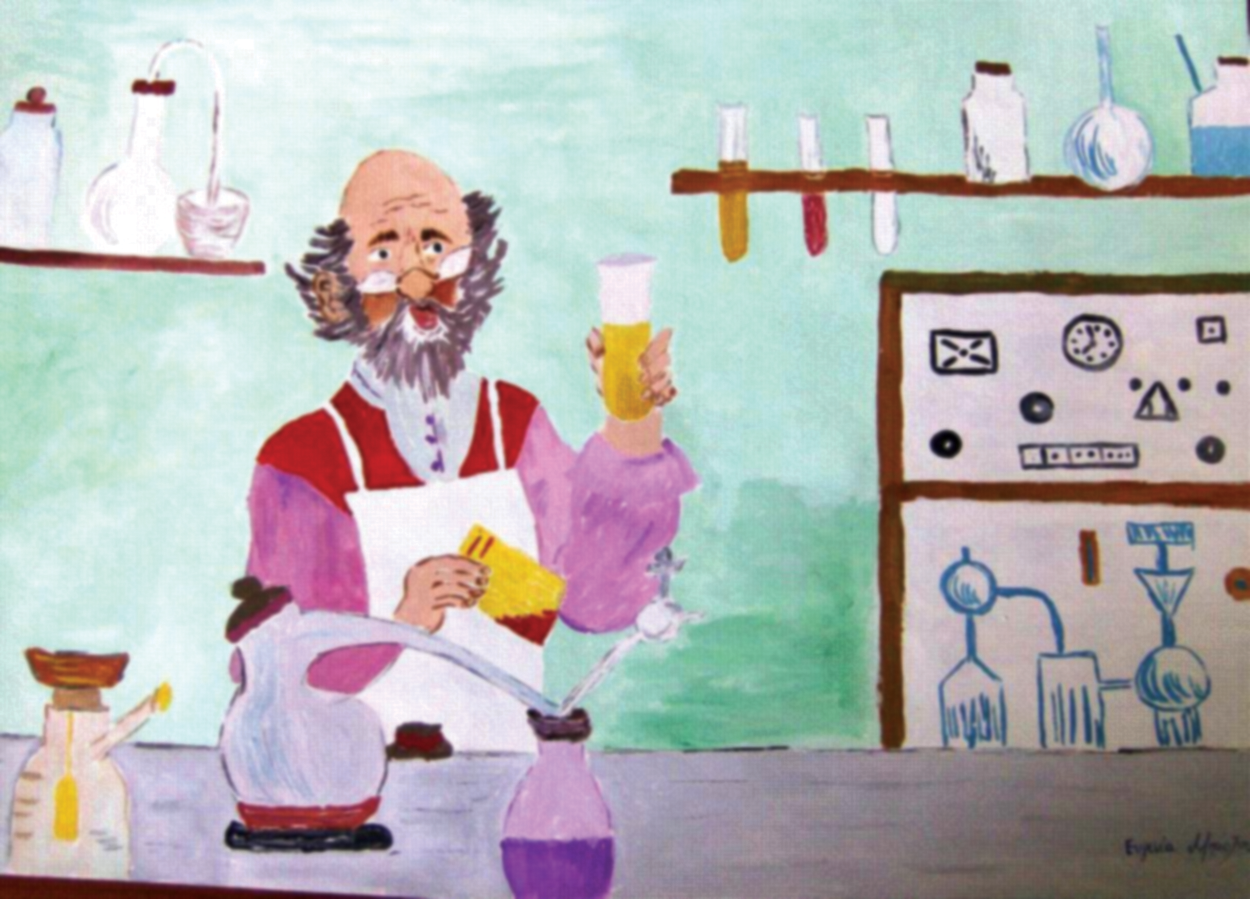
A researcher working in a laboratory.
In a small number of drawings (3.21%) research involved both fieldwork and laboratory experimentation. These drawings mainly concern depictions of “omniscientists” engaging in multiple research fields. The site of scientific research may also involve offices (12.18%), as well as other settings (4.49%).
Male and female participants seem to favour different research settings. Specifically, boys tend to represent researchers doing fieldwork, while girls prefer laboratories and offices as research locations (χ2 = 10.65, df = 4, p < 0.05).
Contemporariness of research instruments and apparatuses
As mentioned, laboratory equipment constitutes a typical symbol of research activity. Such equipment was included in 105 drawings (61.40%). The equipment drawn to symbolize research mainly (34.50%) consists of traditional instruments like test tubes, flasks, telescopes, dividers, microscopes, or magnifying lenses (see Figures 2b and 3).
Modern experimental settings with specialized or complex technological equipment and references to contemporary research methods were introduced in 13.45% of the drawings depicting research instruments (see Figure 1). Contemporary research equipment mainly includes computers as well as spaceships and rockets. In another 13.45% of the drawings involving research instruments both modern and traditional ones were included (see Figure 7). Drawings not involving any research equipment amounted to 38.60% of the total.
“Emblems” of scientific research
Analysis of students’ drawings revealed an extensive use of symbolism to denote scientific research. Test tubes and glass flasks (included in 17.54% of the drawings) were introduced in depictions of chemistry-related research (see Figure 1), as in Figures 2b, 7, and 8a. In the case of physics, scientific research is vastly identified with portraits of eminent researchers (appearing in 12.28% of the drawings), most typically Einstein (see Figure 4a), but also Archimedes, Newton, Torricelli, and others.
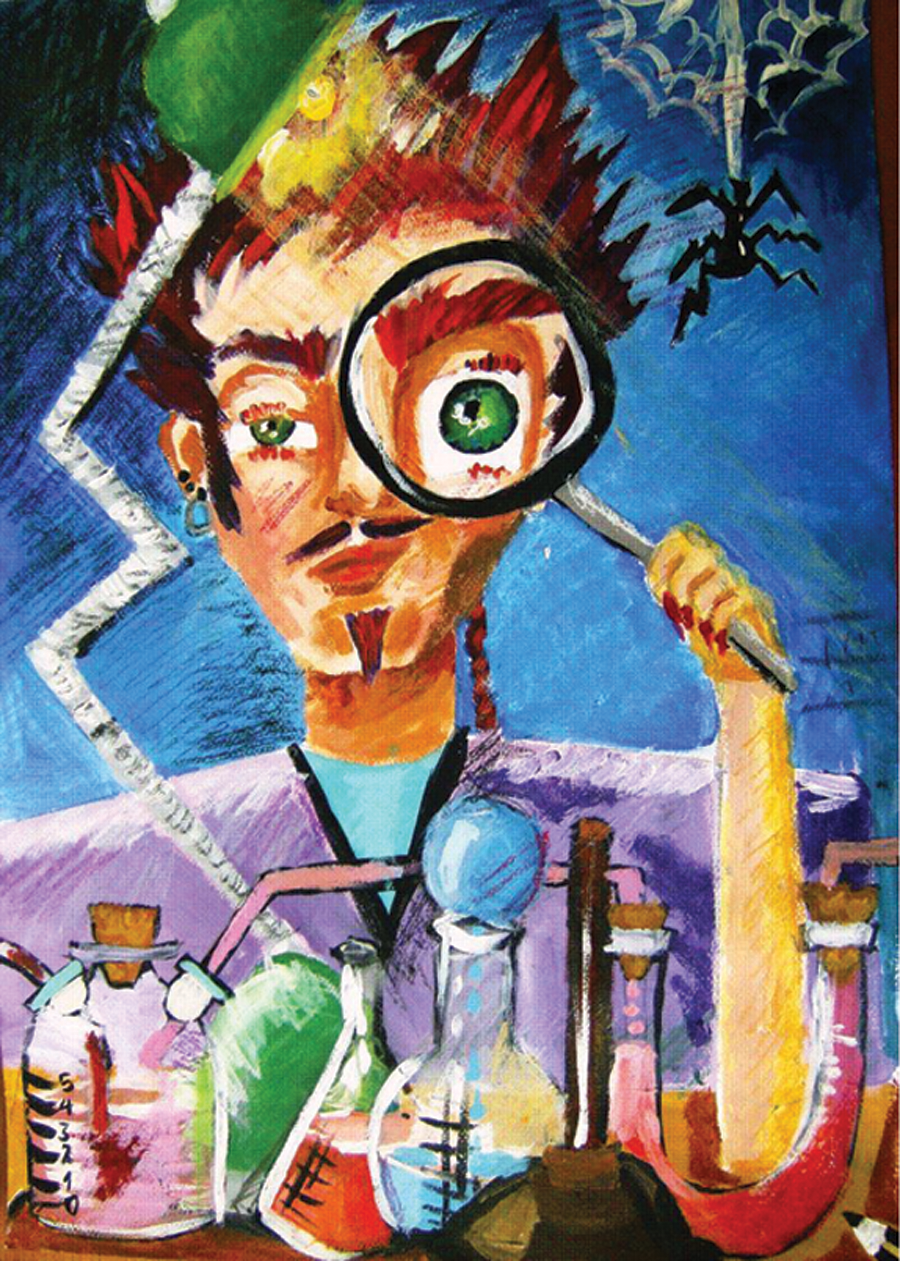
The emblems of chemistry: flasks and test tubes.
Other emblematic symbols involve typical observation instruments, and particularly telescopes (9.36%) signifying astronomy (Figure 2a), microscopes (8.19%) signifying biomedicine, and dividers or formulae (8.19%) standing for mathematics research. Spaceships and rockets (5.84%) are the emblems of space science. Molecular models (like the DNA molecule in Figure 8b) play the role of research emblems of biomedicine, or chemistry in a small number of drawings (2.34%).
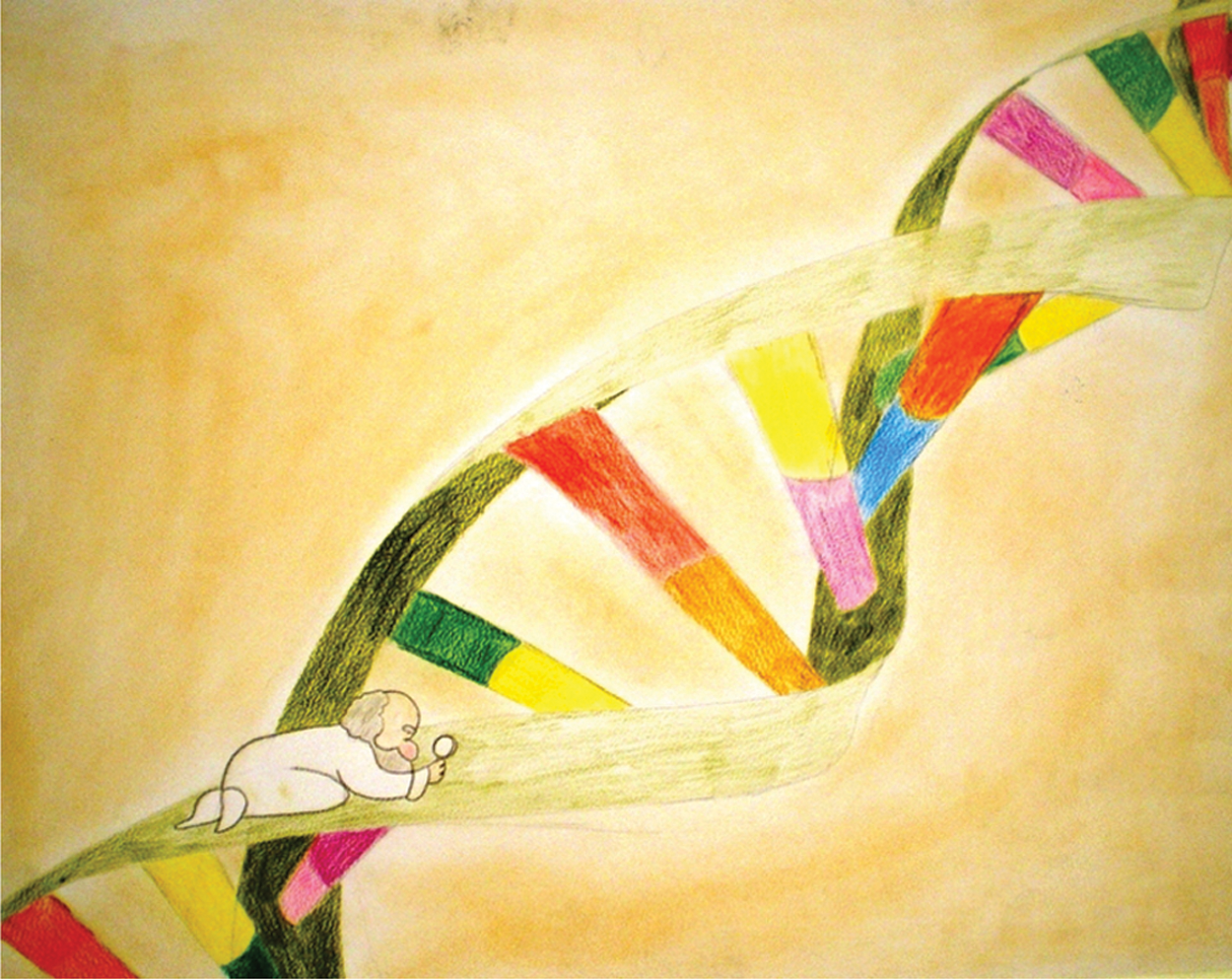
Depiction of the double helix as an emblem of biological research.
4. Discussion and conclusions
Drawings collected during the “Please draw a researcher” competition as part of the “Researchers’ Night 2007” constitute expressive instances of how Greek teenagers might conceive of researchers and their activity. The images revealed comprise a variety of traditional stereotypes and explicit historical references. As we will discuss, students’ representations of researchers are more stereotypic in some respects and less stereotypic in others.
Researchers are represented with a variety of stereotypic characteristics (indicators). Nonetheless, the image of the researcher revealed by the present study is less stereotypic than the image of scientists previously recorded in studies exploring the image of scientists in students of younger or similar ages (Barman, 1999; Chambers, 1983; Fung, 2002; Samaras, 2009) or teachers (Hatzinikita et al., 2009; Quita, 2003): participants’ drawings tended to include fewer indicators of the stereotypic model on average.
The present study revealed a strong gender stereotype. The preference to male researchers is particularly important, considering that girl participants were over-represented in the drawing competition. Therefore scientific research is considered as a male occupation even by girls. This outcome is consistent with previous research findings (Buldu, 2006; Chambers, 1983; Finson, 2002; Hatzinikita, 2007; Hill and Wheeler, 1991; Losh et al., 2008; Mason et al., 1991; Quita, 2003; She, 1998; Sumrall, 1995; Turkmen, 2008). It also indicates that girls rarely identify with the role of a dynamic researcher, an attitude which could discourage them from engaging in scientific research in the future. Despite this general trend, however, girl participants seem to favour biomedical research as a field appropriate for women. This outcome is consistent with other research findings (Christidou, 2006; Jones et al., 2000; Joyce and Farenga, 1999).
Girls tend to represent researchers working in laboratories – another aspect of the stereotypic image (Barman, 1999; Chambers, 1983; Mead and Metraux, 1957) – while boys favour fieldwork.
The overall image of depicted researchers in the present study tends to be positive – or at least “neutral.” Negative depictions of anti-social, unfriendly, or threatening individuals, typically considered to correspond to students’ conceptions of scientists internationally (Mead and Metraux, 1957), are not frequently observed and do not involve female researchers (Flicker, 2008). Therefore students’ drawings tend not to reflect the fear and awe inspired by techno-scientific research, considered to be dominant within the general public and promoted by the mass media (Flicker, 2008; Pansegrau, 2008; Song and Kim, 1999). However, this generally positive image might have been instigated by the context of the present study. Students participating in the “Please draw a researcher” competition, aware that this activity is part of the “Researchers’ Night” programme aiming at promoting a positive image of research, might have embraced this stance. Moreover, the students, who voluntarily participated, might be positively predisposed towards science in the first place. This is a limitation of the present study, which requires more investigation.
The image of scientific research is fairly traditional and stereotypic regarding the fields of specialization represented, the nature of research activity, the emblems of research and the contemporariness of relevant instruments and apparatuses.
Specifically, research activity is first and foremost related to STEM disciplines, corresponding to wide areas of science, according to a traditional, generalized view. What is more, an “omniscient” perception of research, as well as views inspired by science fiction, were quite frequently observed. Modern, specialized fields are generally absent from students’ drawings. The only activity with explicit references to current techno-scientific developments, and without traditional origins, is space science. Such images obviously do not correspond to the contemporary foundation of research in finely specialized and clearly bounded research areas (Flicker, 2008; Schummer and Spector, 2008). A point of differentiation with previous research is that teaching professions – common in students’ (Fung, 2002; She, 1998) and teachers’ (Hatzinikita, 2007; Hatzinikita et al., 2009; Quita, 2003; Rubin et al., 2003) drawings of scientists – were not included in these depictions of researchers.
Research is represented primarily as a manual operation of experimental equipment and secondarily as a theoretical activity. However, a considerable percentage of drawings – especially produced by girls and/or depicting female researchers – combine practical and theoretical work, a view which more accurately reflects scientific research. Interestingly, however, such a view is unusual in representations of STEM-related specializations – except chemistry. Also, the social dimension of scientific research is generally absent, since research activities are mainly regarded as solitary – even impersonal. Again, this indicates a restricted and outdated image of scientific research, identified by previous research (Finson, 2002; Mason et al., 1991; Rubin et al., 2003): currently, techno-scientific progress presupposes teamwork, communication and collaboration between researchers (Schummer and Spector, 2008). Yet, these features in students’ drawings could be induced by the nature and context of this study. First, the theoretical aspect of research – and theory construction in particular – is difficult to represent graphically; this is not the case for experimental activity. Second, the students were asked to “draw a researcher,” and this instruction might have directed them towards drawing isolated individuals.
Participants in this study broadly used widely recognizable symbolism to denote scientific research. These symbols refer to a variety of research “emblems,” prevalent in the popular visual culture of science (Schummer and Spector, 2008) and distinctive to different disciplines. Moreover, instruments and apparatuses represented were mostly traditional, invented since the 17th century or earlier.
A marked deviation of the results from stereotypic images of science concerns the research setting. While previous studies (Barman, 1999; Boylan et al., 1992; Buldu, 2006; Chambers, 1983; Krajkovich and Smith, 1982; Mead and Metraux, 1957; Turkmen, 2008) suggest that research is predominantly imagined as performed in laboratories, students in the present research favoured fieldwork.
Students’ drawings indicate that they are not familiar with the organization, specialization, possibilities, means, and achievements of modern research. Instead, they form images of researchers and research based on outdated and distorted clichés about science and technology, originating from popular culture and fiction, which draw references from the period before the 19th century, when science and technology had not yet developed in the current sense. The outcomes of this study indicate that the participants adopt a strongly consolidated public conception of scientific research unaffected by rapid and radical processes of scientific development during the last two centuries. Given that this period has been marked by the improvement of public education, as well as by the diffusion of the visual image as a primary means of communication, one can assume that such social and technological progress has had little effect on the formation of the image of scientific researchers and their activity. Thus far, attempts of formal education and those of informal channels of science diffusion have proven rather ineffective in promoting more realistic images of scientific research (Schummer and Spector, 2008). Therefore, there is still much to do in order for contemporary scientific research to re-establish its public image and start influencing relevant perceptions and attitudes of the public, especially those of young people as prospective citizens and potential researchers.
Meaningful interventions are needed in order to achieve these goals (Scherz and Oren, 2006). Relevant suggestions range from critical reading of media texts in classroom contexts (Steinke, 1997), to exposure of students to counter-stereotypic information representing science as a holistic, creative, and innovative endeavour, or involvement of the research community in a systematic promotion of its people and activities to the general public. Universities and other research institutions are therefore challenged to convey their research activity in an unequivocal and appealing way, to open their gates to the public, to communicate with society, whose funding ensures their viability.
Other suggestions include ways to promote more – and more positive – representations of women in science (Boyce and Kitzinger, 2008; Kitzinger et al., 2008). This could involve increasing visibility for women in science through science teaching and through the media, and avoiding stereotypic representations and cultivating more pluralistic images of “ordinary” people, realistic and inspirational, engaged in teamwork and co-operation, with diverse possible careers and specializations, exciting but not entirely “life-consuming” (Kitzinger et al., 2008).
As far as formal education is concerned, Moseley and Norris (1999) suggest teachers develop skills and experiences required for evaluating science as presented in the public sphere and systematically explore and modify their own stereotypic images. As Schummer and Spector (2008) argue that visual imagery permeates popular culture, communicates more readily to the public and is easily adopted and reproduced in young people’s imagination and drawings, perhaps this effort could put special emphasis on the visual public image of scientific researchers and research.
The present study, despite its methodological constraints (sample size, context of data collection) provides an opportunity for dialogue between images of scientific research and researchers held by the Greek public – in our case students – and those dominating in popular culture. By suggesting comprehensive systemic networks for analysing students’ drawings, it allows new readings of relevant data.
The preceding analysis also raises questions requiring further investigation. One such question concerns the degree to which tendencies revealed by this study are representative of Greek adolescents’ images of scientific research and researchers. Another concerns the extent to which the context (Researchers’ Night), drawing task and instruction (“Draw a researcher” instead of “Draw a scientist”) directed students to draw differentiated images (less stereotypic, more positive, excluding teaching as a research activity, favouring fieldwork over lab work) of scientific researchers.
Footnotes
Author Biographies
Vasilia Christidou is Associate Professor at the Department of Preschool Education, University of Thessaly, Greece. Her research interests include teaching and learning in science, the promotion of public understanding of science, and the process of recontextualization of scientific texts addressed to non-experts. She has coordinated and participated in a number of research projects, and has published numerous research articles and studies in journals, books, and conference proceedings.
Vassilia Hatzinikita is Professor, coordinator of the ‘Educational Research in Action’ module and academic coordinator of the Master in Education in the Hellenic Open University. She is National Project Manager of the P.I.S.A. program of O.E.C.D. in Greece. Her research interests concern science teaching and learning as well as the analysis and development of educational materials. She has published a considerable number of research papers in journals, books and conference proceedings and has developed educational material for the Science Education module of the Hellenic Open University.
Giannis Samaras is a primary teacher and a postgraduate student at the Department of Preschool Education, University of Thessaly, Greece. His PhD thesis concerns primary school children’s images of scientists and their relations to teaching practices in science classrooms.