




Abstract
This article addresses the complex legal endeavour to shape the frontiers between two of the most fundamental liberal rights in multicultural nation states: the right to cultural difference and the right to religious freedom in Colombia. I follow one dispute, between members of the indigenous Arhuaco group who are Evangelical Christians and their indigenous local authorities. This example illuminates longstanding debates surrounding the relationship between religion and politics within legally plural states. I put together different scales of analysis for understanding: (i) the legal definition of the right to religious freedom and the right to ethnic cultural difference as private or public and individual or collective; (ii) the debate about the political meaning of religious practice by studying, for example, how it relates to claims over inequality and land access; and (iii) the importance of understanding the meaning of conversion for addressing the legal difficulty of creating a sustainable boundary between these two rights.
Keywords
In spite of all the efforts of liberal democracies to separate the fields of politics and religion, even if only in the political imagination, history has shown the complex intricacies of such an endeavour and the overarching difficulty of its achievement. For some authors, religion has always been embedded in the construction of political ideals of modernity, individual agency and freedom (Bowen, 2003; Keane, 2007). Likewise, as authors within political and legal anthropology have shown, the relationship between politics and religion must be understood in the ongoing context of an ‘epoch of legal theology’ in which ‘the two, rites and right, conjoin in parallel significance as never before’ in democratic and non-democratic contexts and in political regimes ‘from A to Z’, from America to Zimbabwe (Comaroff and Comaroff, 2010: 193). In spite of these broad claims and generalities, there are various differences within and across countries, which show a wide variety of conflicts and claims drawn from the liberal project of separating religious freedom from politics.
One particular contemporary instance of the slippery frontiers between politics and religion is the incorporation of minority rights and ethnic recognition in many nation states. Now more than ever, nation states are willing to recognize different forms of indigenous customary law in which they embrace, at least rhetorically, the coupling of ‘native’ religions and politics. This political recognition has been crucial for the legal inclusion of what Tamanaha (2008) calls ‘customary normative systems’ and ‘religious normative systems’, which in various contexts fundamentally constitute the legal plurality of a nation state. Legal pluralism is considered to be everywhere (Tamanaha, 2008: 375) ‘as a situation in which two or more legal systems coexist in the same social field’ within colonized and non-colonized societies (Griffiths, 1986; Merry, 1988: 870; Moore, 1986). But more than an awareness of a general state of affairs, ‘a legal system is pluralistic in the juristic sense when the sovereign commands different bodies of law for different groups of the population varying by ethnicity, religion, nationality, or geography, and when the parallel legal regimes are all dependent on the state legal system’ (Merry, 1988: 871). Hence, such an overlap of legal systems and rationales may generate a wide variety of clashes and of social and political articulations that vary across time and space.
This article addresses the complex legal endeavour to shape the frontiers between two of the most fundamental liberal rights in the context of multiculturalism: the right to cultural difference and the right to religious freedom in Colombia. I chose to follow one dispute between members of the indigenous Arhuaco group, who are Evangelical Christians and their indigenous local authorities. Indigenous Evangelical Christians filed a lawsuit complaining about the ‘arbitrariness and abuse’ of Arhuaco traditional authorities (denial of the right to worship, evictions, detentions and imprisonment of members of the church), while indigenous authorities claimed that the rigidity of evangelical beliefs was isolating Evangelical Christians from the traditional cultural practices of the group.
I seek in particular to understand the political implications of the dispute as it is lived and conceived by the different actors involved (Arhuaco Evangelical Christians, Arhuaco leaders and the Constitutional Court). The 1991 Constitution and the Constitutional Court jurisprudence have been crucial for the consolidation of minority rights in Colombia, especially by means of two legal tools: actio popularis (acción de inconstitucionalidad) and tutelary action (acción de tutela). 1 As Greenhouse has argued, what is interesting and ‘theorizable of legal pluralism is neither law nor pluralism per se, but the ways the conceptual and practical boundaries of legal recognition and legal jurisdictions draw on and contribute to repertoires of signs by which cultural identity is recognized and contested in the broader social landscape within and beyond the law’ (1998: 63). Some of the political issues at stake involve, for example, the extent to which religious beliefs and spaces, such as churches or reservations, may be framed as public or private; the manner in which religious conversion is addressed as a mechanism for resisting social inequality and challenging strong hierarchies in place within the group and the use of spatial frontiers as delimitations of access to the right of religious freedom.
Using archival and ethnographic analysis, I study both the Constitutional Court judgment that attempted to solve the dispute legally as well as the manner in which indigenous peoples actually make sense of it and explain the different political meanings of the ongoing conflict. The lawsuit was an acción de tutela filed by the legal representative of the Iglesia Pentecostal Unida de Colombia (United Pentecostal Church of Colombia and 31 indigenous Arhuacos ‘against various authorities of the indigenous Arhuaco community for considering that they have violated their Fundamental Rights to life (Colombian Constitution CC 11), their Personal Integrity (CC 12), the Free development of their personality (CC 16), their Freedom of Conscience (CC 18), their Freedom of Cult and Religion (CC 19), their Freedom of expression (CC 20), their Right to have their Honor respected (honra) (CC 21) and to their Personal Freedom (CC 28)’) (Colombian Constitutional Court (CCC), 1998: SU510/98).
Addressing the broad political implications of this dispute and the manner in which it is lived by the persons involved is vital in order to understand both (i) the challenges that religion (understood mainly as Western religions) may entail for the practice of minority indigenous rights and (ii) the different ways in which contemporary multicultural legal regimes may re-instantiate longstanding debates between religion and politics in Colombia. These concerns are not unique to Colombia but are relevant to the broader debate on multiculturalism, given that they are also present in many other countries that have granted legal recognition to ethnic and religious minorities (for Australia, México or Canada see, e.g. Marroquín, 1996; McIntyre, 2010; Rostas and Droogers, 1995).
The first section of the article addresses the manner in which religion appears as an interference in the construction of an ethnic public and political domain that is granted to recognized indigenous groups by the Constitution. In this context, the legal translation of the dispute is addressed as a conflict between the individual right to religious freedom and the collective right of indigenous communities to cultural ‘preservation’. This point of contention is further complicated by contrasting interpretations of, and claims over, the public/collective and the private/individual character of rights, political subjects, religious practices and indigenous reservations. These debates are in part framed by an obsolete notion of culture. As legal anthropologists have argued for decades, the progressive acknowledgment in law, not only of individual but also of collective community rights, has been accompanied by a disappointing tendency to address culture as a coherent, homogenous grid of meaning. Despite such a tendency, conflicts all over the world have shown how ‘culture is neither a totalizing explanatory device for legal institutions or legal conflicts, nor a unified singular thing agreed upon by all members of any given society’ (Riles, 2008: 285). Critical legal pluralism as well as contemporary anthropology have worked intensely to shape a dynamic vision of culture that addresses the historical articulations that shape culture today as a web of meanings imbued with power relations (Comaroff and Comaroff, 1992; Hall, 1996; Roseberry, 1989; Volpp, 1996). However, these approaches have not replaced the pervasive static notions of culture completely and, in the Colombian case, the legal construction of the concept takes the form of a repertoire of traits that can be listed as isolated and discrete wholes.
The second section of this article seeks to open the debate about the political meaning of religious practice by including not only the legal analysis and reception of court rulings but also by studying the manner in which a religious dispute is articulated, for example, with struggles and claims over land and social inequity. This level of analysis follows the widely held premise in contemporary studies of religion according to which religious disputes should not be understood in isolation as conflicts occurring in a perfectly delimited ‘religious domain’. Also drawing upon literature on legal pluralism, it brings into focus not only the specific conflict over religion but also its articulations with multiple social issues. This calls attention to how a dispute is framed as religious (an old discussion addressed by Asad, 1993) and to an understanding of how debates surrounding religious practice ought to be considered in context, within a range of social issues (see, e.g. Comaroff and Comaroff’s (1997) discussion of the articulation between religion and capitalism, Robbins’ (2004) argument for religious change as an ethical contradiction or Hirshckind’s (2006) discussion of religious revival with the consolidation of a counter public sphere). Thus, in this section of the article, I study how, on the one hand, indigenous authorities perceive the issue of religious freedom as a problem of political dissidence and, on the other, Evangelical Christians consider the dispute as a claim for political change. Furthermore, the meaning of the dispute acquires a spatial connotation due to the existence of Christian spatial enclaves within the reservation, or ‘ghettos’ as some authorities call them, one of the most common sources of confrontation.
Finally, I study the difficulty for court judgments to create a sustained boundary between the right to cultural difference and the right to religious freedom. As in many other cases in multicultural nation states, the law does not necessarily provide a shared mechanism of commensuration between different cultural or religious communities (Povinelli, 2002). Neither the legal interventions nor the quotidian interactions between Evangelical and Non-Evangelical Christian Arhuacos show the possibility for an easy coexistence between them or a prompt resolution to their disputes. In addition to recognizing the manner in which struggles over land and education play a role in the conflict in question, these factors alone do not provide a sufficient explanation of such conflict. Hence, it becomes necessary to address the meaning of conversion and why and how this factor may or may not provide a space for negotiation and interaction between Evangelical and non-Evangelical communities. In the case under study, evangelical Christian conversion appears to be a rapid and definitive change, which goes against the findings of the predominant literature in Latin America that argues for a more syncretic explanation of religious conversion. Thus, Evangelical Christianity is conceived of by the actors in this context as a faith that is rigid and regimental, which stands in contrast to Catholicism that allegedly shows more flexibility. For this reason, even though the Court’s judgment does not assign much importance to conversion, I will argue that its significance ought to be seriously considered in order to fully grasp the resilience of this dispute.
Short Discussion on Methodology
Methodologically, this article is the result of a broader ethnographic research project that focused on analysing the manner in which multicultural legal regimes shape the imagination and practices of ethnic recognition. In particular, I am concerned with the extent to which spatial arrangements such as indigenous reservations (resguardos) are used to define who is an indigenous subject and to delimit the exercise of minority rights. Resguardos are a colonial construction in Latin America but have been consolidated both by the states and indigenous social movements, who consider such spatial delimitation a crucial vehicle for autonomy and for social and legal recognition (Jackson, 2007; Laurent, 2005; Rappaport, 1990). Currently, resguardos are inalienable and are collective property of each indigenous group. I focused on analysing different conflicts that arise from such spatial exceptionalism of the law that inherently links ethnic rights, indigenous identities and reservations. The complex discrepancies between Arhuaco Evangelical Christians and Non-Christian Arhuaco leaders are grounded in conflicting meanings about what defines an indigenous subject and conceptions of the space in which they are supposed to live.
The Arhuaco indigenous group, which accounts for 14,000 individuals, 2 has been very active in politically promoting land negotiations with the state. They were successful in demanding the expulsion of the Catholic Capuchin Mission in 1983 and have been trying to stop the construction of mega projects such as dams and seaports within their territories or in nearby areas for the last 20 years. The dispute I analyse is yet another instance of the group’s public appearance. On this occasion, however, the dispute has taken place within the group itself. My work consisted of studying the Constitutional Court judgment that attempted to settle the dispute and carrying out interviews with indigenous Evangelical Christians, indigenous Catholics and several recognized local political authorities. I also analysed the court settlement by tracing the decisive arguments used by justices and following the critical approach found in many sociolegal studies that seeks to understand how people outside a legal court system conceive of a particular conflict (Mahabir, 2004; Palmié, 1993). This ethnographic approach by no means entails the relegation of a detailed analysis of courts’ judgments to a secondary theoretical and methodological strategy. As many authors have argued, ‘the longstanding vision of a uniform and monopolistic law that governs a community is plainly obsolete’, but it is still crucial to understand how people engage with a normative legal system and how they use it and interpret it (Tamanaha, 2008: 409). I also observed the interactions in three towns (Agua Dulce, Jewrwa and Pueblo Bello) located in different areas of the Arhuaco indigenous reservation in the Sierra Nevada de Santa Marta, in which there is a strong presence of Evangelical Christians (Figure 1). My purpose was to analyse daily routines and understand the moments in which the different persons involved in the dispute could not avoid meeting, namely when sharing transportation vehicles and at everyday meetings between school teachers and the Evangelical community. I was not present during moments of open dispute and conflict, but I used interviews with the people involved to understand how they framed and explained the history of the conflict differently. 3
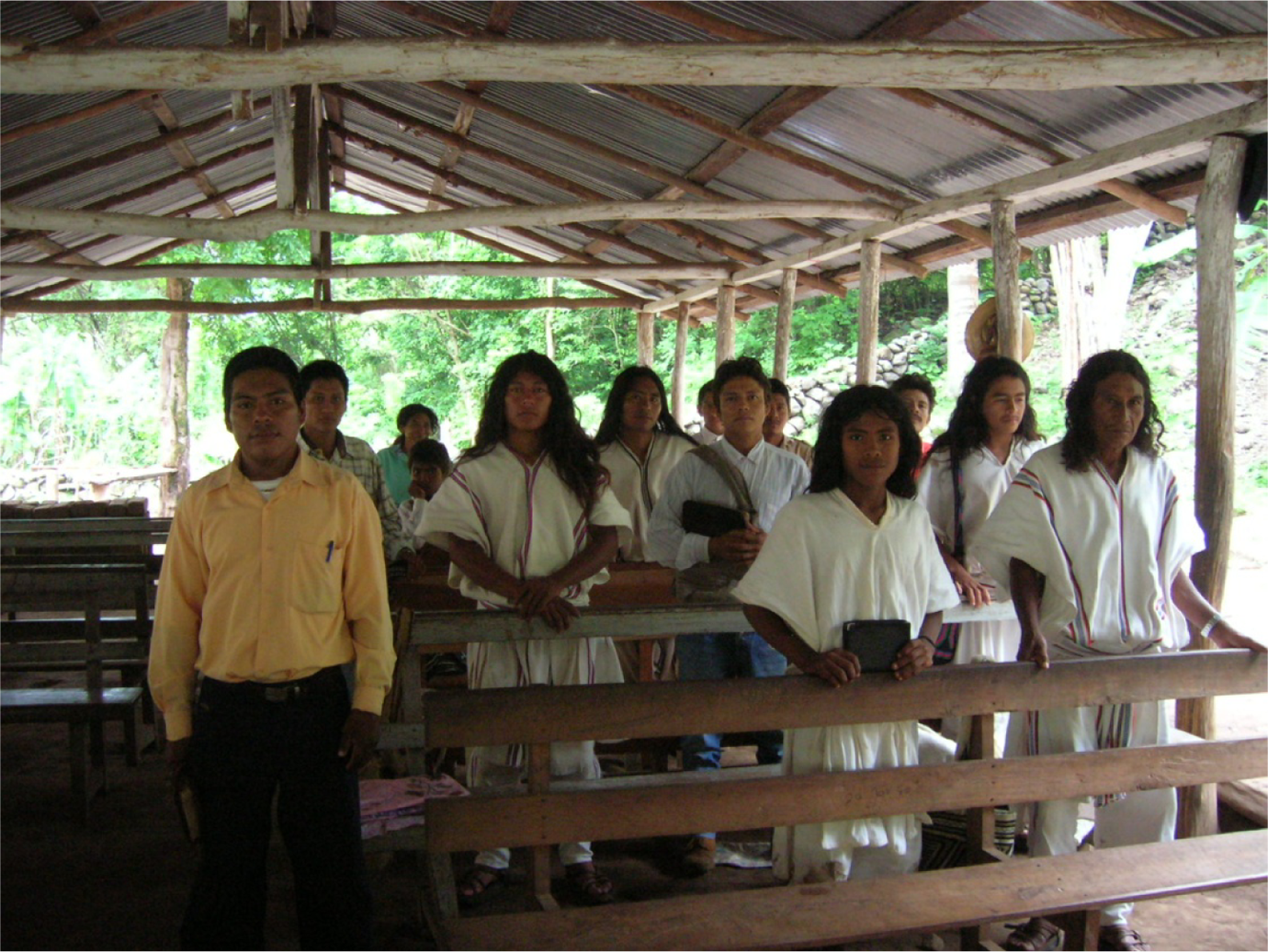
Indigenous Evangelical Christians in Agua Dulce. Photograph by Diana Bocarejo in 2006.
This analysis follows a theoretical, methodological and political approach that foregrounds the complex lived experiences of the dispute that coalesce with the legal intervention in the courts – rumours, disordered confrontations and actions – that do not resolve the dispute but constantly reignite it. Such a view has allowed me to take a critical distance from the main political and intellectual focus that this debate has generally had in Colombia. In fact, most activists choose to silence the different concerns that are at stake in such ‘religious’ disputes by arguing for a radical indigenous political autonomy and/or espousing an optimistic conviction that the rule of law can solve old and new issues of religious conversion in Latin America. The experiences recounted in this text will reveal that both of these stances prove to be insufficient.
Once again, the law seeks to shape a frontier between religion and politics, a frontier that is, in this case, physically spatialized. The paradoxical conclusion of this frontier is that, by following the letter of the law, indigenous Evangelical Christians actually believe that their only chance to be both Arhuacos and Evangelical Christians is to create an indigenous Evangelical Christian reservation. In Colombia, spatial frontiers have been crucial in shaping the coexistence of plural legal systems. As such, the manner in which cultural indigenous recognition (in particular, customary law or fuero indígena) is incorporated within the state legal system is based upon two factors: ‘one is personal or subjective in character, which means that the individual should be judged according to the rules and authorities of his/her own community, the other is geographic in character, which allows each community to judge conducts occurring in their own territory, according to their own norms’ (Colombian Constitutional Court, 1996: T496/96). The complexity of the case analysed in this article thus rests on the difficulty the court faces in making distinctions regarding indigeneity when both sets of actors involved in the dispute self-identify as Arhuaco and live and want remain living within the state-recognized indigenous reservation.
The Political Struggle Over Religion as a Private or Collective Social Phenomenon
As Talal Asad argues, because the citizens of liberal states are supposed to have the same ‘legal personality’ and the same power of representation in the body politic, religion is thought to belong ‘to civil and not to political society – that is, to the private domain, where difference is permitted’ (1993: 272). However, many studies in various nation states (both in so-called ‘developed’ countries and otherwise) have clearly shown that religious minorities, or majorities in some cases, do not necessarily follow such a neat pattern of ‘liberal’ adjustment. Something similar has happened in what Kymlicka (1995) calls ‘multi-nation states’, where cultural diversity is the product of an incorporation of previously self-governing, territorially concentrated societies into a larger state. In these contexts, ethnic religiosity has also challenged the strict frontiers of the public political domain (for Australia, see Povinelli, 2002; for Bolivia, Albó, 2002, Gustafson, 2002 and Van Cott, 2000; for Canada, Bibby, 2000; for France, Bowen, 2003).
The legal multicultural framework instituted by Colombia’s 1991 Constitution faces similar challenges. The case I will focus on involves a recognized ethnic group that has internal disputes based on different claims over religious beliefs and differing conceptualizations of their private and public domains. The ‘Antecedents’ of the Dispute Can be Read in the Judgment: The judicial representative of the actors [United Pentecostal Church of Colombia IPUC and 31 Arhuaco indigenous peoples] informed that around 39 years ago, the IPUC settled in the Sierra Nevada de Santa Marta at the time of the foundation of Sabana del Jordán. Since that moment, various Arhuaco indigenous peoples adopted the evangelical religion, becoming members of the IPUC. The representative recounted that indigenous peoples have been object of arbitrariness and abuse by Arhuaco traditional authorities (…) [he] notes ‘such abuses consisted specifically of the denial of the right to worship under threat of detention; the confiscation of biblical texts and personal objects; detentions and effective imprisonments of members of the Church who are obliged to kneel down on stones; arbitrary detention on three occasions of the pastor in charge Sr. Francisco Izquierdo, who is an indigenous person; eviction and arbitrary closure of the temple’. (CCC, 1998: SU510/98)
In the 1998 Constitutional Court judgment, indigenous Arhuaco Evangelical Christians and Arhuaco authorities disputed the characterization of what constitutes a private and/or public religious space. This is a particularly important route of analysis since, as in many areas of the world, one of the main discussions regarding the judgment of religious practices as political is their classification as either public or private. In the case under analysis, the first group of arguments claimed that religion was a practice that belongs to the private realm, and therefore the ban on religious practices in public spaces did not entail a violation of religious freedom. In fact, the Constitutional Court recognized that one of the main triggers of this dispute was the fact that indigenous leaders ‘impede the collective and public practice of the Evangelical religion’ through such means as closing the temple, prohibiting religious services ‘in public places’ and forbidding proselytism (CCC, 1998: SU510/98). The Court downplayed these actions by stating that indigenous authorities did allow ‘people who belonged to the evangelical church to practice their religion in private, individually or in small family groups’ (CCC, 1998: SU510/98). This idea that religious practice is something that belongs within the realm of the home and the household is still advocated today by various Arhuaco leaders and by different members of the community that I interviewed. For instance, one indigenous leader who opposes the creation of churches expressed the following with regard to Christians: ‘if you are God’s creature you will be with God wherever you are. It doesn’t have to be in a church, it could very well be in the private space of your house’. Even Evangelical Christians today recognize that they have persisted in their beliefs due to the strength of their religious values within the private realm of their homes, but they also stress the importance and necessity of having periodic gatherings.
The debate over judging cultural practices as public or private has been a recurrent challenge faced by legal pluralist states that have recognized minority rights (Alvarez, 2009; Mahabir, 2004; Rozo, 2010; Valverde, 2012). In fact, what specific spaces are legally available to perform minority cultural practices? How are cultural practices limited by social constructions of the meaning of public or private space? The binarism employed by the Court and in the discourse that currently frames the dispute presupposes that it is possible to trace when religion and the actions of religious practitioners are public or private. Religion is conceived as something that is internal to the individual and that he or she has the choice to make public: ‘although individual beliefs apparently cannot be extirpated, their exteriorization as a collective manifestation could clash with the equally collective exercise of group religiosity’ (CCC, 1998: SU510/98). Despite the theoretical acknowledgment that the exercise and reproduction of religious practice takes place in the private realm of the self and the home, the Court, the indigenous leaders and indigenous Evangelical Christians involved in this ongoing dispute do not seem to believe that this is an option. Can liberal forms of political inclusion completely define public and private spaces to recognize plural cultural practices? Interestingly enough, the problem is framed more as an issue of ‘controlling’ the instances in which religion encroaches on the public sphere, rather than as a problem of a radical impossibility to keep one’s own religious ideas and practices completely private. The problem of controlling religion is explained by the relevance given to proselytism by Evangelical Christians. In fact, although Arhuaco Evangelical Christians stress the fact that conversion is an act of free will, they constantly insist on the importance of mission work and proselytism, which openly runs against the idea of religious practice as part of the private and interior realm.
Proselytism then poses an open challenge to the limitation of religious practices within defined private spaces. The indigenous pastor of Agua Dulce and the members of his congregation explained that Christianity ‘is a revelation, not an act of brainwashing or a rational conviction’. Revelation thus not only becomes the leading argument to counter protests by indigenous leaders regarding proselytism, but it also openly acknowledges the impossibility of addressing religion as a private choice to be kept only in the private realm. On the one hand, Christian revelation lacks connotations of intentionality, since as one pastor affirms, ‘it is not our fault that someone believes in the gospel, the son of a mamo (an indigenous spiritual leader) can believe, and it is not his fault either’. In the words of a congregation member in Pueblo Bello, ‘God revealed the gospel to him not because someone brainwashed him, but because there was a revelation’. Whether one chooses to call it proselytism or revelation, there are many arguments regarding the strong manner in which followers of Pentecostalism carry out the duty of expanding and sharing their faith (Robbins, 2004). As a pastor in Pueblo Bello concludes, ‘as long as we are capable and able, we must tell all souls that Christ loves, that Christ saves. It is a mandate, whether I believe it or not. But I repeat, if you do not want to believe that is not a problem’. In a similar fashion, an indigenous follower in Pueblo Bello reasons, ‘Who am I if I do not profess the gospel! Because then God will ask me, and the gospel must penetrate all places without sitting still, like water’.
The realms of private and public cultural practices are quite porous and as many sociolegal theorists stress, the acknowledgment of the coexistence of plural forms of legal reasoning also entails recognizing the porosity and difficulty of rigidly fixing spaces of cultural expressions (Bowen, 2003; Mahabir, 2004; Palmié, 1993). For the particular case at hand, given the impossibility for practitioners to address Evangelical Christianity as a belief to be relegated to the private realm, how did the Court proceed to settle this dispute? The short answer is that it was done by appealing to a spatial jurisdiction. Thus, if religion could not be ‘extirpated’ – a word used in the language of the Court judgment – then it ought to be spatially contained (CCC, 1998: SU510/98). The Court spatially limited the possibility of collective and public religious practice, and relegated it to outside the limits of indigenous reservations. It stated that, ‘the collective exercise of the service can be prohibited within a territory’ (CCC, 1998: SU510/98). Moreover, because ‘to impede someone who believes in another religion from -travelling to another place to deepen his or her collective religious experience in the company of fellow followers is considered arbitrary’, Evangelical Christians were allowed to leave the reservation to carry out the public ‘externalization’ of their religion (CCC, 1998: SU510/98). However, the implications of the judgment for indigenous Evangelical Christians go beyond the need to leave their territory in order to practice their religion.
The issue of the legal (and physical) boundaries of public and private religious practice was, and still is, a truly pivotal point in the portrayal of the dispute. Physical jurisdictions in this case are used to define the dispute over the public or private meaning of religious practice and, more generally, the dispute over the clash of two legally recognized cultural systems. As I analyse in the following section, the conceptualization of what constituted ‘public life’ and ‘public traditional space’ of the indigenous Arhuaco group was the basic premise for the spatialization of this religious conflict.
Indigenous Secularization? Religious Communities as ‘Individual’ Subjects and Indigenous Territory as a Fundamental Right
A contestation of religious practice, conceived as belonging to the private realm of peoples’ lives, entails a struggle over the idea of a secular state in which religion and politics are completely separated. However, two crucial conditions in Colombia are designed to maintain the secular nature of the state (even if only within legal courts), while at the same time recognizing the intimate relationship of political power and religion for ethnic groups: (i) the a priori conceptualization of indigenous homogeneity (Bocarejo, 2011b; Del Cairo, 2011) and (ii) their supposed easy mapping within indigenous reservations (Bocarejo, 2011a).
In the case at hand, the Court stated that, ‘there is no separation between church and state since in Ika culture – in contrast with others – there is a close relationship between sacred religion and profane politics and law’ (CCC, 1998: SU510/98). For the Court, however, as is supposed to be the case for any liberal state, clear criteria must be set delimiting these exceptions to the principle of separation of Church and State. Hence, the spatial character, the literal containment if you will, of indigenous autonomy within the boundaries of the reservation. In effect, liberal secular law applies not exactly to populations but to territories, or rather, to populations addressed as if they were territories. In the discussion about the public and/or private nature of religious membership, the Court and indigenous authorities set in motion the idea of an Arhuaco public territory. The reservation is not only a state-recognized indigenous jurisdiction, but it is also a vessel and locus of indigenous religious practice as well as a materialized ‘evocation of the community’ (CCC, SU 510/98). In this sense, such an ‘evocation’ of Arhuaco-ness in the territory is explained by the Court in the following statement: ‘collective identity is, in part, the product of the communities’ religious beliefs as they are projected externally (…) in the case of the Arhuaco, their territory is also the space where they practice their religion and serves as a constant source of spiritual evocation for its members’ (CCC, 1998: SU510/98).
The idea of a public space is homogeneous and defined by shared and uncontested conceptions of a cultural cosmology. As Jackson argues, indigenous otherness in Colombia has come to be seen as involving a ‘non-materialist and spiritual relation to the land, consensual decision-making, a holistic environmentalist perspective, and a goal of re-establishing harmony in the social and physical worlds’ (2007: 3). This is a crucial premise that informs the pervasive idea of a static notion of culture that, despite the warnings of legal anthropology and legal pluralism regarding this topic, still assumes a harmonious homogeneity within indigenous groups. This tendency does not acknowledge the fact that ‘our positionalities – as gendered subject, as class subject, as racial subject – can be understood as the result of various social relations formed through different discourses and our own reappropriations of tradition’ (Volpp, 1996: 1581). Hence, the notion of a public space where different ideas, religions and cultures can coexist is considered to be impossible within the territorial boundaries of a reservation because, as stated by the Court, ‘the intricate links between land and religion take away all neutrality from it and deny the possibility of considering it as a public religious forum’ (CCC, 1998: SU510/98). The problem surrounding the existence (or non-existence) of a public space is salient in this case because many liberals, predominantly adopting Habermas’ perspective, consider that conflicts that may arise from multiculturalism can and should be solved through a ‘healthy public sphere’ (Habermas, 1994). However, it seems that such a public sphere, healthy or otherwise, can only be possible and conceivable as an external disposition of the liberal Colombian state, and not within the actual jurisdictions where the grantees of multicultural rights live.
The categories of collective or individual rights and subjectivities become key definers in the ongoing dispute over religious freedom. Indigenous leaders consider that, ‘we cannot conceive of evangélicos as a community, only as individuals’. Another leader of the indigenous organization in Valledupar claims that, ‘Evangelical Christians do not hold an idea of an indigenous community, they are individualistic, they are detached from nature, they have no rituals of integration’. The Court furthered these claims by qualifying certain rights and subjectivities as being either collective or individual. This decision not only defined the limits of a private and public space in the delimitation of religious practices but also defined an individual liberal subject in contrast to the characterization of a collective indigenous subjectivity. In fact, in many Court decisions, indigenous peoples are taken to be collective subjects and their territory is defined as a Fundamental Right. In contradistinction, the subject of the right to religious freedom is thought to be individual rather than collective, even if claims for religious membership are mobilized as collective or, at least, as community complaints. As Zambrano (2002: 227) explains, ‘freedom of conscience, religion, opinion and congregation are based upon individual rationality, while ethnic and cultural diversity appeal to the structural form of community life and its historical rationality’. The Court accepted the ban of congregation spaces following two main principles: the collective character of Evangelical religious belief that could not be confined to a private space, and the individualistic conceptualization of an Evangelical Christian subject that contradicts the idea of an indigenous collective subject as a proper subject to ‘safeguard’ in the multicultural nation state.
Political Dissidence and ‘Christian Enclaves’: A Challenge to Cultural Integrity or a New Evangelical Potentiality?
The religious dispute addresses struggles over the possibility to build spaces of congregation, to access land, and to define the kind of education imparted to children in indigenous reservation schools. First, I will address the manner in which spaces of congregation have acquired a pivotal role in the conflict and then I will reflect on the manner in which the religious dispute under study is claimed to be a form of political contestation. This is understood as dissidence by indigenous leaders and as a vehicle of change and a reflection of the social inequities within the group by Evangelical Christians.
The meaning of a dispute, as argued by the proponents of Critical Legal Studies, not only rests in the lawyers, judges and testimonies present in a court case but in the manner a conflict is lived and explained in a broad social context beyond a courthouse. What Carol Greenhouse (1998) argues are the processes of cultural identification ‘within and beyond the law’, which could be seen in this case in the particular disputes over symbols such as sites of congregation. Disputes over symbols have been shown to mark important milestones in multicultural conflicts that can destabilize or at least question the imagination of liberal democratic nation states (Bowen, 2003; Mahabir, 2004; Marroquín, 1996). The prohibition against building churches, temples or sites of congregation (all names are interchangeably used by Evangelical Christians) became one of the most visible measures taken against the indigenous Evangelical community. The acts of closing and destroying Evangelical temples dramatically materialized complex power relations in the area.
Although indigenous authorities expressed their intent to ban the building of churches before and after the 1997 lawsuit – both in documents and in community gatherings – there was no consistent and direct enforcement of such decisions. In 2006, 9 years after the Court’s verdict, there were at least five new temples within the reservation. Many leaders assert that, ‘there has not been a strong and constant action from the cabildo and the indigenous organization to actively deter the growth of “the gospel” within the reservation and, especially, the construction of churches’. By the end of 2005 and beginning of 2006, the local leaders in two towns (Simonorwa and Jewrwa), with the support of the indigenous organization, shut down the new churches. One of the main leaders in Jewrwa affirmed, ‘we constantly told them not to build the church, we told them it was forbidden to take and use materials from the river like stones and sand, but they did not listen. They did not even know of the Court’s verdict’. The leaders in Jewrwa not only shut the church down but described what they had done in terms that were overtly political: ‘we took it into custody’, they explained. In other areas such as Agua Dulce, where the 1997 legal dispute began, there has been no actual closure of the new church.
However, years before the lawsuit was filed, the Evangelical community of Agua Dulce was subjected to one of the most aggressive ‘shut downs’ of their church. It was bombed and completely destroyed by a faction of the ELN (Ejercito de Liberación Nacional) guerrilla group, who tagged the church’s two remaining walls with graffiti. The episode is clouded in hearsay and speculation about the involvement of indigenous leaders in the act (Figure 2).
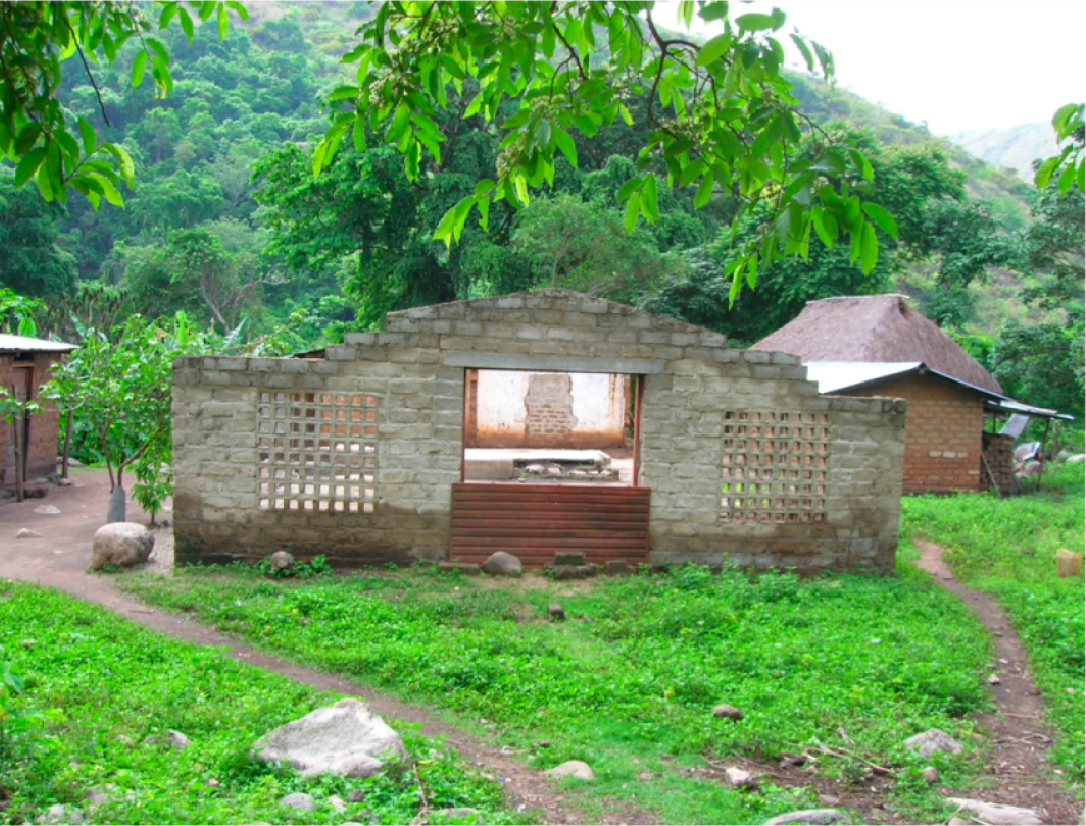
Indigenous evangelical temple in Agua Dulce (Arhuaco indigenous resguardo), which was bombed by one of the guerrilla factions of the Sierra Nevada. Photograph by Diana Bocarejo in 2006.
In the conflict between indigenous authorities and Evangelical Christians in the Sierra Nevada in Colombia, there is more rumour than actual evidence proving a relationship with guerrilla or paramilitary groups. But fear and speculation about the intervention of guerrilla and paramilitary groups is present in quotidian talk about the building and repression of sites of congregation. The reticence of indigenous leaders to allow the construction of sites of congregation is also part of a broad fear over the consolidation of spatial Christian enclaves within the reservation. In fact, for indigenous Evangelical Christians, access to land is a main topic of dispute with indigenous leaders that demonstrates the manner in which they contest the rigid structure of political leadership and distribution within the Arhuaco group. It is evident that for Evangelical Christians, their conversion has a broad social and political potential.
The discussion and analysis of the political and social potential of new or reformed religious organizations in Latin America is not new (Dow and Sandstrom, 2001; Martin, 1990; Padilla, 1992; Stoll, 1990). For some authors, Evangelical churches have become engines pushing social reforms that contest traditional Catholic hierarchies and ‘have the necessary potential to promote progressive social and political reform’ (Levine, 1995). In the case at hand, pastors, especially those who belong to the indigenous group, consider their religious community to have significant potential for social and political change.
This potential is explained by the fact that the indigenous Evangelical community is composed mainly of indigenous members who have been marginalized by indigenous political elites. Evangelical Christians do not come from established political families that rule the group and founded the indigenous organization. One pastor considers that the confrontational attitude of indigenous authorities vis-á-vis their religion results from a feeling of political insecurity rather than a real problem of religiosity: ‘Why are they attacking us? Well, they are attacking our organization because our project is not only spiritual but also social and they know it, and our community is poor and we are in the process of organizing members of the Arhuaco group who have been neglected for decades’.
What tools have been used and what are the results of these potentialities in practice? One of the principal symptoms of political contest (according to indigenous authorities) or means for change (according to indigenous Evangelical Christians) is the formation of spatial enclaves or ‘Christian ghettos’, as some authorities call them. Such enclaves are not common within the territory of indigenous reservations, but in the cases of Agua Dulce, La Caja and some areas of Jewrwa, the Evangelical community has carved out a defined space for itself. Why are those enclaves considered to be a threat for some and a means of change for others? On the one hand, authorities argue that indigenous Evangelical Christians do not participate and fulfil their duties in terms of communal work. Local leaders in Jewrwa and Agua Dulce affirm that by living separately, they avoid control and shirk their share of the work. Indigenous leaders also argue that the evangelical community does not represent or fight for what they call ‘the indigenous cause’.
As a consequence, leaders have curtailed Evangelical Christians’ access to funding and participation in any sort of project, especially those related to land purchases. The Court has backed this decision since it was, in their opinion, only natural that the community should allocate resources on the basis of ‘cultural identity’ (CCC, 1998: SU510/98). This position is consistent with those Court decisions that have granted an increased autonomy to indigenous communities considered to be ‘most traditional’. As Justice Cepeda states, ‘when there is a greater degree of conservation, there will be a greater degree of autonomy’ (Cepeda, 2001: 235). Following this precept, the Court states: In the case at hand, evangelical Indians have set themselves apart from the traditional culture that inextricably links them to ‘mother earth,’ and, in addition they are compelled by the Church IPUC representatives to give up 10% of what they produce, as well as the firstborn of each animal, the first egg of each bird, and any other properties that they consider may be transferred. Under these conditions, we do not think it inequitable that traditional authorities take into account the ‘cultural identity’ of the people inhabiting the reservation when land must be distributed in order to maintain its collective ownership, as long as the properties handed over to evangelical families are not confiscated and they distribute the land among indigenous families in an equitable manner, according to traditional norms. (CCC, 1998: SU510/98)
The Constitutional Justices seem to be actively trying to incorporate the particularities of each case by showing the ways in which the right to ethnic cultural recognition displaces the application of the liberal constitutional right to religious freedom. The Court took into special consideration the manner in which Arhuaco leaders explained their cultural distinctiveness and the way in which they define an indigenous collective subject. However, Evangelical Christians tried to explain the complex social articulations of the dispute by showing, for example, how land distribution is an extremely contentious issue within the community. This is why, as one of the members of the indigenous evangelical community argues: ‘the Court and indigenous authorities are hiding a problem over resources by disguising it as a problem of religious freedom and the preservation of the indigenous cultural identity’. Such a statement may follow studies of Protestantism in Latin America that posit that these new religious communities acquire a ‘dimension of protest’ that does not limit itself to disputing a space for their religious practice, but also tries to build a new social order (Garrard-Burnett, 1998; Gros, 2000: 163; Padilla, 1992).
In Latin America, Peterson et al. (2001: 15) have argued that Evangelical Protestantism, as well as progressive Catholicism, offer ‘institutional structures, practices, and narratives that help individuals navigate economic difficulties, sickness, and domestic troubles’. However, what social possibilities have been opened following the creation of spatial enclaves for the Evangelical community? Interestingly, Evangelical Arhuacos did not consider the creation of Christian enclaves as a clear strategy or an active initiative. Indeed, leaders and Evangelical Christians agree that Evangelical missionaries found these areas of the reservation to be perfectly suited for Evangelical mission work. However, even if we take such an enclave to be ‘spontaneous’ or a contingent spatial grouping, the number of Evangelical Christians is still growing. The Pentecostal Church, for example, claims to have around 500 followers, including several indigenous pastors born within reservation boundaries and recognized as Arhuaco members.
In the interviews, followers of Evangelical Christianity consider their aid network as one of the principal values of their community. In fact, indigenous authorities and others acknowledge that the ‘evangelical community is very tightly knit, they help each other in household repairs, taking care of children and other family matters’. Nevertheless, such an aid network does not expand to broad quotidian practices of agricultural production such as community gardens or the improvement of coffee production, and it does not translate into better access to education and jobs outside the indigenous resguardo.
Evangelical Christians have tried to exert a higher degree of control over education, but this is only possible at the elementary school level. The municipal government pays for the school and teachers within the indigenous territory and the curriculum is supposed to be negotiated with indigenous leaders and the indigenous organization. This is part of the effort to implement ‘ethno-education’ programs in indigenous reservations, which, in the case of the Arhuaco, comprise a number of hours of ‘traditional work’ with indigenous spiritual leaders (mamos). However, indigenous Evangelical Christians do not participate in this ‘traditional work’ and are for the most part exempt from the ‘traditional’ education at the school.
The schoolteacher of the Agua Dulce community, who is an Arhuaco and active participant in the indigenous organization, explains that ‘97% of the children at the school are evangélicos, so I can’t follow the ethno-education programs, which are based on our tradition’. He states that he has not received a direct request from the community about this, but he knows that if he follows the curriculum, the children will no longer attend classes. He acknowledges that he ‘cannot oppose their ideology and that we cannot use our own textbook because we talk about sacred places, indigenous authorities, traditional houses, ideas about the creation of the world. So, I have to limit myself to teaching them how to read, write, add and subtract, and ignore cultural education’.
In Jewrwa, Agua Dulce, Las Cuevas and Pueblo Bello, indigenous Evangelical Christians have been able to transform the curriculum and adapt some of its components. However, this level of educational ‘semi-autonomy’ is only true for elementary schools. If an indigenous child wants to continue studying, his parents must send him away; the only high school available within the indigenous resguardo is located in the town of Nabusímake. Not only do parents have to cover the cost of transportation, housing and food but they also have to accept the school’s rules in order to enrol their children. The main problem that indigenous Evangelical Christians face is that the high school requires children to be ‘traditionally baptized’ and must participate in ‘traditional work’ as part of the curriculum. In conversations in Pueblo Bello and Agua Dulce, many Evangelical Christians affirm that they do not even try to enrol in the school. Those who have studied there mention that they felt a certain degree of discrimination and that it was impossible to avoid participating in what Arhuacos call ‘traditional work’, which ultimately led them to drop out.
Even non-Evangelical members of the indigenous group acknowledge the subaltern condition of the Evangelical community. This, however, does not keep them from raising criticisms against them. In Jewrwa and Agua Dulce, neighbours living near indigenous Evangelical Christians affirm that they could do more to help their community, especially because there are numerous cases of alcoholism and children being left alone at home while parents spend long hours in prayer. As a leader of the Jewrwa community states, ‘they appear to be very organized and cohesive when facing problems with the indigenous leaders, but they have not been able to create a real social organization’.
Both the Evangelical community and the indigenous authorities present conflicting images of the manner in which this dispute is broadly understood socially and politically. In the view of the Evangelical community, there is a hyper-centralization of power among a small number of families that manage not only the public representation of the group but also its finances. By contrast, indigenous authorities criticize the Evangelicals’ dependency on the church and their lack of a ‘real’ and strong organization that has had success in improving the conditions of their community. Within such a highly disputed political landscape, is there really any possible space for negotiation and coexistence?
Is Religious Coexistence Possible? The ‘Permissiveness’ of Catholicism Versus the ‘Rigidity’ of Evangelical Christianity
Are indigenous authorities and indigenous Evangelical Christians of the Arhuaco community willing to negotiate and make any concessions? The answer seems to point towards the negative. In fact, as argued previously, the religious dispute under study is constantly re-instantiated in different issues and claims involving land, education and claims about inequity and rigid political structures within the indigenous group. Nevertheless, I do not consider that this dispute or other religious disputes are only ‘masks’ or merely repositories of conflicts over capital and land. Rather, I believe that it is crucial that we come to understand the meaning granted to religious conversion in order to address the possibilities for religious coexistence and conflict resolution in this case.
Indigenous authorities are frequently displeased by Evangelical Christian rhetoric when referring to Christian religion and ‘traditional indigenous culture’, especially references to conversion. The authorities describe how Evangelicals say things like ‘I am free now’, ‘I accepted it’, ‘I gave myself to it’, ‘it was there, I began to walk’ and ‘I saw the light’, which in their view casts a negative light on indigenous traditional culture. One leader said, ‘they talk about the light, and the revelation, and we are depicted as ‘obscure’, ‘dark’ and ‘backwards’. Taking this rhetoric at face value, the indigenous cabildo of Jewrwa affirms, ‘there is little space for negotiation, their sect is authoritarian and fundamentalist, whatever isn’t theirs is the devil’s’. In fact, in several interviews, indigenous Evangelical Christians in Pueblo Bello expressed themselves as strongly against indigenous ‘traditional’ practices. One of them affirmed, ‘mamos bother evangélicos because they practice occult sciences, and we know what the Gospel says about occultism, and we know who owns occultism! We know his name’.
Many Evangelical Christians, however, do not judge these practices so harshly. One pastor said, ‘we are not saying that what they do is occultism but we only believe in one God and they practice ceremonies for water, stones, etc’. Even if such statements appear to be less ‘insulting’ to indigenous traditional practices, it is clear that this more nuanced perception does not necessarily imply acceptance and much less a submission to them. As such, the general consensus from the Evangelical Christian community is ‘we do not do spiritual work with mamos or use the poporo. 4 They are not good for us’.
In this case, is a legal coexistence between the right to religious freedom and the right to cultural indigenous difference possible? Moreover, if the notion of conversion is a constant concern within the Arhuaco Evangelical group and they do not want to incorporate or participate in any ‘religious’ traditional practices, can a coexistence of indigenous cosmology and Evangelical Christianity be possible? The answer from indigenous leaders is a blunt and straightforward ‘no’. In contrast, indigenous Evangelical Christians constantly state that they could – and actually do – live within the reservation as long as indigenous leaders do not try to force them to join any religious ‘traditional’ practice. They frequently proclaim that ‘we are equal, in daily life everything is the same, the only difference is spiritual life’. In Agua Dulce, some evangélicos even state that ‘we are even more traditional than indigenous leaders, we live in the reservation, we use the manta (traditional dress), cap, and speak the language, while some leaders do not even live here and have lost many of our beliefs due to their education’. However, indigenous leaders consider that Evangelical Christians ‘are not important’ to the community because what is important is ‘what is ours, so that they have no weight even though the number of evangélicos has grown’.
Interestingly enough, indigenous Evangelical Christians follow some contemporary conceptualizations of intersectionality in explanations of their own identity. In fact, as reviewed by Leti Volpp, ‘intersectionality is not about alternatively identifying as a member of one group or another, but about critiquing discourses – political, structural, representational – that are shaped to respond to exclusive and separable categories’ (1996: 1581). Indigenous Evangelical Christians talk about both indigenous Arhuacos and evangelical Christians, openly contesting the homogenous views of ethnicity in Colombia.
In the interviews I carried out with local leaders and evangelical Christians, they both considered that the ‘rigidity’ of conversion is a crucial source of their conflict. For both, religious conversion to Christian Pentecostalism does not allow a ‘religious mixture’ or a syncretic religious practice between indigenous cultural values and Evangelical Christianity. In contrast, there is much talk about the flexibility of Catholicism, a religion for which religious practices are not completely banned within the resguardo. These statements could be seen as paradoxical, especially because of the long history of Arhuaco struggle against the Capuchin mission that controlled the education and health systems within the resguardo.
In 1984, monks from the Capuchin order were forcibly expelled from the Arhuaco indigenous resguardo in a widely publicized event. In spite of this history of indigenous struggle against the Capuchin mission, indigenous leaders firmly insist, ‘the difference with Catholics is, and was, that it was the priests who were arbitrary, while with evangélicos it is their doctrine itself that is arbitrary’. For the local leaders in Jewrwa, the main distinction lies in the fact that Arhuaco Catholics ‘participate in the indigenous struggle, do not seek to convert anyone and do not pray as much’. However, while acknowledging Catholic flexibility, they say, ‘it does not mean that we are going to allow the emplacement of a network of priests, nuns, churches and parishes’. Indigenous Evangelical Christians in fact see themselves as much less flexible in their beliefs than Catholics and value their strong attachment to Christian beliefs within all aspects of their life. One of them states, ‘I can do traditional work, but I do not believe in it, it is not real for me, so the point isn’t simply to go to the mamo, but to really believe’. In the same fashion, the indigenous Evangelical pastor of Agua Dulce says, ‘We cannot serve two masters. We understand that spiritual matters must be respected, if I believe in the mamo I must respect him, if I believe in God I must respect him’. Strong statements against Catholics sometimes accompany claims of spiritual subjective coherence by Evangelical Christians. The indigenous pastor from Jewrwa, who moved to Pueblo Bello after the temple was closed, said, ‘indigenous Catholics do traditional work, not because they believe in it, but out of pure self-interest’. Furthermore, the Evangelical community believes that Catholics are not persecuted because Catholicism is the national religion and, more importantly, the religion of the rich and powerful in nearby cities like Valledupar and Santa Marta.
In sum, both sides involved in the conflict reject the possibility of religious coexistence. The reasons stated by the indigenous authorities hinge upon the rigidity of Evangelical religious beliefs and practices, which means that the life of a member of the Evangelical community is completely taken out of what they call the Arhuaco ‘axis of life’. Evangelical Christians cite syncretic practices and religious flexibility as a form of hypocrisy, claiming that this is the case of indigenous Catholics.
Conclusion
As Mauss (1985 [1938]) has argued, there is a strong correlation, if not a definite association, between Christianity and the idea of a ‘moral person’ (Mauss, 1985 [1938]: 358). To put it in other terms, ‘our own notion of the human person is still basically the Christian one’ (Cannell, 2006: 18). The mobilization of a moral citizen within liberal regimes supposes the shared value of a legal framework as the basic premise for interaction or even as the basis of a social and community contract (see Comaroff and Comaroff, 2003). Such ‘legal morality’ within liberal regimes has tried to relegate religious belief and practice to the private realm of a citizen’s life (see Asad, 2003), while, paradoxically, religious diversity is widely protected worldwide within multicultural constitutional reforms. These discussions have been at the centre of a broad variety of sociolegal studies that have tried to study how legal orders have overlapped across time in different contexts. In fact, a crucial contribution of legal pluralism has been to study not only the ‘normative systems themselves (including the people who staff them), [but also] how they exist and interact with one another’ (Tamanaha, 2008: 410). I studied the manner in which, in the Colombian case, the right to religious freedom was limited in order to protect cultural indigenous difference within the liberal framework of a multicultural constitution. I also tried to carefully explore the different meanings of the dispute for both indigenous leaders and Evangelical Christians in order to show the complexities of this particular case and the manner in which they still have to live this ongoing conflict. In spite of the legal settlement, the dispute survives in intermittent states of calm or effervescence both in quotidian practices of interaction and in certain sporadic events. This constant reappearance of the dispute is connected to the different social meanings it has acquired for the persons involved, a crucial concern for actually understanding the social, political and legal meaning of a dispute. Only by taking seriously this theoretical and methodological framework, is it possible to understand the complex practices of contemporary legal pluralism. In the particular case I analysed, there are two main points of contention: the spatial connotation of the dispute and the explanation and meaning given to religious conversion. The spatialization of the dispute and of its legal settlement have become crucial mechanisms for shaping Colombian legal pluralism in a way that tends to follow a very well-known old equation in anthropology and other social sciences that strongly connect a people, a culture and a place with, in this case, indigenous customary law (see Gupta and Ferguson, 1997).
For instance, the spatial connotation of this and probably other disputes involving religious practice include: (i) discussions regarding the private and public domains of religious practice, (ii) concerns about the creation of religious enclaves within indigenous reservations, (iii) overt land disputes that question the internal indigenous hierarchies in land distribution and land use and, finally, (iv) the construction of a legal imagination in which social difference is managed and contained spatially, as expressed by the Court, and indigenous territories are not a neutral public space within which a diversity of religions could coexist.
Court decisions and the actors involved in defining legal judgments do not merely impose ways of understanding and analysing a dispute but are key interlocutors that define the contours of cultural identity, thereby transcending the legal field. What is at stake in the court judgment addressed in this article is not only the decisive jurisprudence of the Constitutional Court regarding the clash between the right to religious freedom and the right to cultural difference but more significantly the conditions under which a subject may or may not be defined as indigenous. I consider that this topic is particularly related to the issue of conversion. I want to conclude by stressing that conversion should not only be read as a form of false consciousness that masks social and political inequality but instead it is a crucial factor that shapes processes of self-formation and understanding of one’s own being and of others. It is evident that this also includes the complex disputes regarding the place of the ‘other’, which in Evangelical Christian eyes includes the negative portrayal and strong judgments of indigenous rituals and of indigenous Catholic practices. What I seek to stress is the manner in which one’s understanding of one’s own self and others must be constantly negotiated in the mundane practices of daily life, such as the school lessons of indigenous children and also in the sporadic interventions of agents such as lawyers, anthropologists and armed groups in the area. In conclusion, my claim is that the power and complexity of the dispute cannot be reduced to the emergence of a form of collective action mobilizing the language of social inequity, but is instead to do in the long run with the enormous changes and quotidian conflicts that arise out of the emergent forms of subjectivity shaped through religious conversion, a problem that exceeds the Constitutional Court’s reasoning.
Footnotes
Acknowledgement
I would like to thank the two anonymous reviewers of the article for their suggestions as well as my colleagues at the Escuela de Ciencias Humanas for their generous insights.
Funding
This research was in part funded by the Wenner Gren Foundation for Anthropological Research.