



Abstract
The essay explores some recent controversies in British music copyright through the evolving technologies used to perform or play music in the courtroom. Whilst the conceptual tension between cases has caused doctrinal anxiety about the effect of popular music in copyright, the essay contends that the recent stream of music copyright cases can be considered from a historical perspective, taking into account the tools, materials and experts as they featured in court. In doing so, the essay connects a history of legal expertise to the emergence of new technologies whilst arguing that legal knowledge about music copyright was, in fact, stabilized in the courtroom.
In early 1987, almost a quarter of a century after his first appearance as an expert witness in a music copyright trial, Geoffrey Bush was called again to the stand. The case involved what has become an increasingly familiar copyright drama: the alleged infringement of a famous pop song – in this case, Vangelis’ Chariots of Fire. With a professional reputation built on developing strategies against copyright infringement claims, it was hardly surprising to see Bush deployed by the defence, giving evidence for one of the co-defendants. Indeed, the aural controversies at issue resembled those of previous landmark cases in which he had already intervened: a degree of musical similarity between songs, difficulty in establishing derivation and claims of subconscious copying (Francis, Day & Hunter v. Bron 1963; Ledrut v. Meek, 1968; Roberton v. Lewis, 1976). However, in retrospect, there was one crucial difference that made this case historically significant and that would have a then-unknown impact on the future of music copyright. In previous cases of this kind, the collaborative relationship between experts, clerks and solicitors endured after the dispute (Bellido, 2013). However, this time, the defence team included a young apprentice who had stumbled upon the case ‘by mistake’, but who felt so drawn to the copyright world that he would continue to work in, and subtly influence this realm for the next three decades. 1
The appointment of this young apprentice eventually led to the development of forensic musicology as an area relevant to British copyright, and the apprentice eventually became one of the main forensic experts in British music copyright in the late 20th century (Bently, 2009). His name was Guy Protheroe, a composer and conductor who, like Bush, had studied at Oxford and later worked for the British Broadcasting Corporation (BBC) (Foreman, 1998; Miller, 2001: 658–659; Protheroe, 1994). And like Bush, he had just been appointed as an expert witness for the defendants. However, unlike Bush, he was a complete novice, not having any previous experience in music copyright litigation. A few years later, when he looked back on the case he considered it a rite of passage of sorts, describing it as a true ‘baptism of fire’ (Protheroe, 1994).
By describing his trajectory as an expert witness, the essay focuses not only on the contingent ways in which expertise is established but also on the different forensic practices developed by musicologists in order to materialize the intangible in the courtroom. In particular, it raises questions about the impact of these practices on the way music was understood in legal terms and how this, in turn, affected the evaluation of copyright issues such as the nature of musical authorship, the requirement of fixation and the definition of copying. In doing so, the essay connects a history of expertise with the emergence of technological artefacts, arguing that music copyright depended on a series of practices that became stabilized in the courtroom and in turn, that music copyright concepts have been shaped by these practices. This account shows music copyright as a contingent product of the complex interaction between technology, music expertise and legal knowledge. Although the literature on copyright has been preoccupied with the impact of media technologies, it has not been so prolific in tracing the innovative use of media in juridical processes of producing, ordering and assessing evidence in copyright disputes. By highlighting the elusive ways in which new audio media and musicological expertise momentarily converged, the essay contends that legal distinctions shape, and are simultaneously shaped by, the material ways in which the intangible musical work is constructed and sensed in the courtroom.
Cassette Tapes
The Introduction of Audio Guides
When the experts for the defence first met at the Vangelis studio in Marble Arch, London, in order to prepare the case before it went to court, Protheroe quickly realized an important feature of this case. It was not only that he was working with a musical expert; it was that Bush had truly become a ‘copyright’ expert, someone who had capitalized on his previous litigation experiences and used them to assist subsequent clients. At the initial meeting, Bush explained one of the primary defensive tactics he had learned previously, which the two experts decided to try in this case: the preliminary recognition of a common ground of audible similarities between the songs (Bell, 1987; Brown, 1987: 245; Griffin, 1997: 47). Deliberately admitting a degree of resemblance between the songs enabled Bush and Protheroe to establish a musical frame from which a counterclaim could be launched. 2 More specifically, such a frame of reference gave the defendants the opportunity to demonstrate musical influences and coincidences that could explain why different songs might sound similar. In this case, for instance, Bush found musical equivalences between the songs that, he argued, were from a source ‘sufficiently common to rank as a cliché’ and as a result, not a copyright infringement. 3 The similarity concentrated on a sequence of four notes that were defined in the proceedings as the ‘turn’ (EMI Music Publishing Ltd v. Papathanasiou, 1993, para. 310).
The subsequent expert report that Protheroe produced for the case reflected Bush’s advice and past techniques. He transcribed the songs for piano and prepared examples of the shared melodic fragments to be listened to ‘at the same pitch’. 4 However, Protheroe also introduced other innovative evidential strategies to support Vangelis’ defence. Indeed, acknowledging the common assumption of music copyright – that ‘music is not seen, but heard’ (Laddie et al., 1980: 20) – he thought that there was no better way of distinguishing aural qualities than by assembling an audio guide. He put together two tapes of musical examples to assist the judge in the rather tiresome task of reading a pile of expert reports. The songs were interposed with Protheroe’s interjections, in which he indicated the fragments that deserved special aural attention. As a result, two very specific sound recordings became a new vehicle – to give the judge immediate access to the songs and, more importantly, to the expert’s opinion of them. The tapes, quite simply, facilitated a different approach to the material and offered an innovation beyond the previous musical copyright cases that had consolidated the then-typical ways of demonstrating the existence or absence of infringement (Francis, Day & Hunter v. Bron, 1963; Roberton v. Lewis, 1976). The relevant musical compositions were played in court, and given to the judge, along with Protheroe’s supplementary audio guides. Rather than merely replaying performances in the courtroom, the tapes, accompanied by an expert’s explanation, produced a different kind of relationship between the judge and the material under consideration. What is striking about this practice is not only how the case drew on the audio technologies of the time but how these technologies affected the material conditions and listening experience fundamental to the outcome of the case. Indeed, if we read the law report carefully, we find several passages in which the judge, Whitford J, voices his appreciation of the benefits of the technology submitted to him; the cassette, he said, ‘made it possible for me to listen to the works again’ (EMI v. Papathanasiou, 1993, para. 310). However, the law report does not mention the infrastructure necessary for him to listen again, to pause and to rewind: a portable device – a Sony Walkman – which enabled the evidence provided by the defendants (Figure 1) (Bell, 1987; Griffin, 1997: 46).
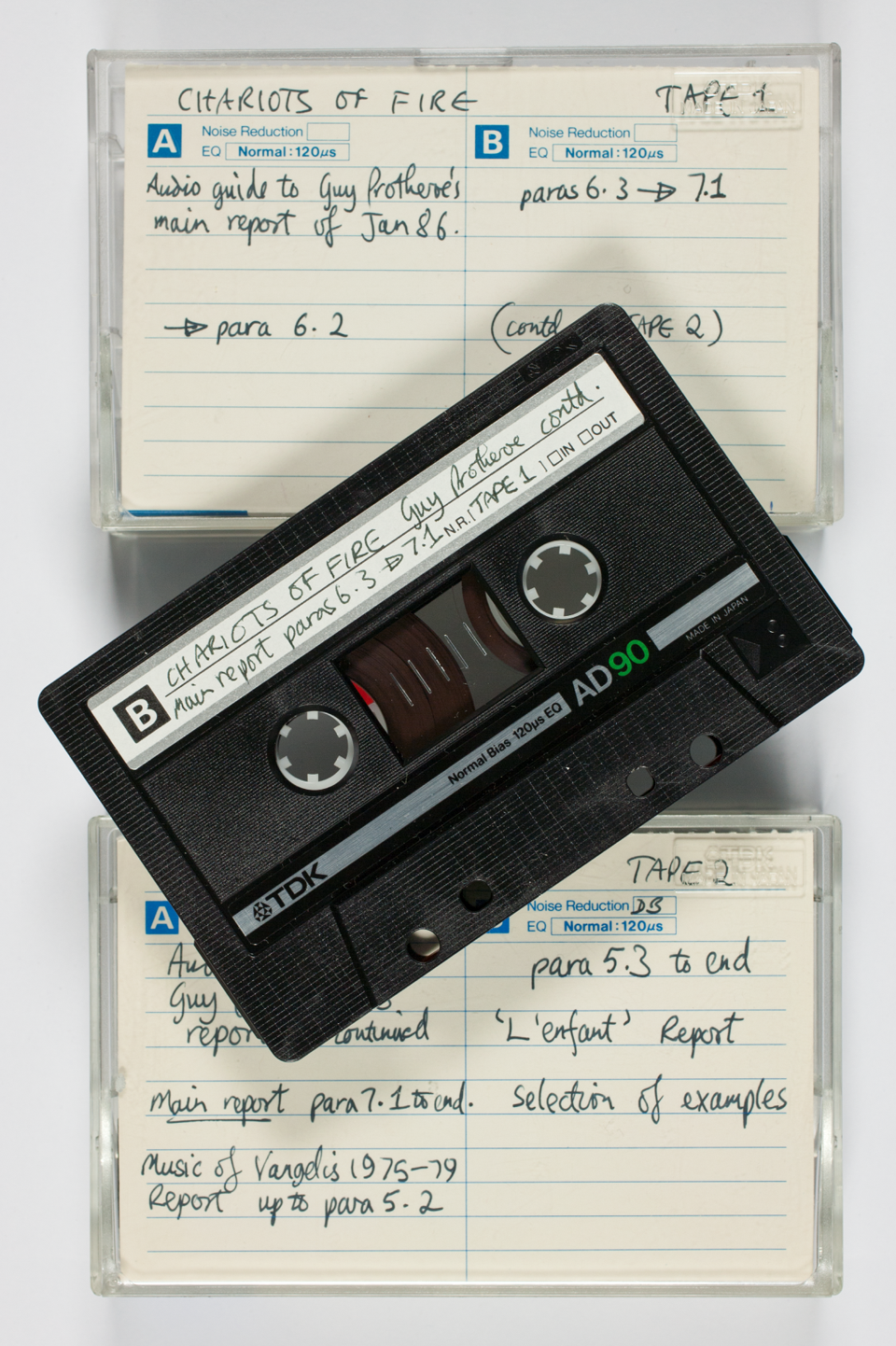
Cassette tapes (Vangelis). Courtesy of Guy Protheroe.
The audio guide and its enabling technology provided an immediate evidential link between the oral and the written, enhancing the relationship between the different forms of evidence. In this way, the tapes directed the judge to specific musical fragments and, in so doing, connected the music previously recorded at the studio with his report, supporting the arguments made by the co-defendants’ experts like Geoffrey Bush. The defensive strategy was even seen in the sequence by which the songs were linked and juxtaposed with other melodic phrases. In other words, the structure of the recorded material reinforced the overlap between the litigated music and non-copyright sources. The connection with common sources not protected by copyright strengthened the defence’s argument that there was no copyright infringement.
More importantly, such a specific and material use of evidence affected the mode in which the questions of the case were to be considered. Firstly, the audio guide and its associated technology subverted the emphasis on copyright evidence, from the usual reliance on visual testimony to an increasing reliance on aural testimony. In other words, as a forensic tool, the tapes made it possible to listen to the evidence, both in the courtroom and beyond. Furthermore, if the law of evidence, as some scholars have suggested, tends to privilege sight over the other senses (Bently, 1996; Haldar, 1991), then the immediate contact with the aural in this case elicited a rather different relationship between the senses. Indeed, it transformed the fleeting (and performative) character of giving evidence in court into a more careful, affective process of compiling a tape. It also transformed the process of listening to and reading the evidence to a perpetual possibility of rewinding, and relistening, to a tape. Secondly, the tapes themselves established a sequential and ordered way of listening through which the judge could be guided. Not only did the tapes contain more playing time than typical gramophone records but they could be edited to emphasize exactly the bits of music that the defence wanted the judge to hear. The combination of curated musical selections and expert guidance provided a remarkable strategy.
The British Academy of Experts
Accreditation and Standardization
The aural evidence achieved its aim; the judge, Whitford J, declared that if there was any aural resemblance, ‘this was a result of coincidence’ (Brown, 1987: 246; EMI v. Papathanasiou, 1993, para. 315; Stone, 1992: 379). However, the defence’s experience in the courtroom was not as smooth and simple as they had expected. Geoffrey Bush had already highlighted the importance of litigation practices in the music copyright context (Bush, 1983). Above all, he knew that cross-examination was a key moment in which things could go terribly wrong. For someone as experienced as him, the inevitable duel between legal and other forms of expertise was nevertheless treated as a game, an exercise to be handled with skill, but also with humour. He did not have any problem answering tough questions. In contrast, Protheroe’s appearance on the witness stand was not so rewarding. It was his first appearance in court, so his nerves were understandable. Furthermore, the plaintiffs’ counsel, Andrew Morrit QC, challenged Protheroe’s objectivity in the dispute due to his previous musical collaborations and relationship with the defendant (Protheroe, 1994) Torre, 1998: 67. Despite (or precisely because of) the fact that he survived the challenge in the witness box, and eventually won the case, the uncomfortable experience prompted some soul-searching. Although his competence was apparent, and the overall experience was gratifying, he was not sure about whether, and how, to embark on the business of expertise. 5
Later that year, the British Academy of Experts was founded. For the legal profession, this was an unprecedented institutional achievement since ‘for the first time in Britain’ there was ‘a single source of independent experts in a wide range of professional, industrial and commercial disciplines’. 6 The Academy’s initial aim was to create a hub for the gathering of recognized experts across disciplines and to shape the standards of expertise. That standardizing impetus led to the production of a Member’s Handbook and a Model form of Expert’s Report, later described as indispensable tools for those wanting to become experts (Cohen, 1997). The academy, in turn, exercised significant influence on the organization of specialist witnesses in Britain. For instance, the Academy capitalized on the need for learning and training following the enactment of the Civil Procedure Rules (1999, which followed the Woolf Report, 1996). Although musicologists had begun to appear as expert witness decades earlier (Bellido, 2013), it was through this professional body that Protheroe gained confidence and decided to persist as an expert musicologist. The Academy did not merely regulate the accreditation of experts but it also helped people like him, who had a connection to the world of expertise (and perhaps had had an unnerving experience within that realm), and were curious about the opportunities therein. More importantly, the Academy’s institutional framework taught Protheroe about administrative and practical issues such as invoicing and contractual arrangements, promoting and advertising his services and securing his professional advice with indemnities. The Academy’s influence is evident in the pages of its journal, The Expert (Protheroe, 1994). Among the institutional habits and normalizing gestures promoted, the journal and the training courses offered by the Academy insisted on sharing accounts of experts’ personal experiences. In fact, the Academy assumed a guiding and affective role of collectivizing embodied knowledge and individual experiences by reporting instances in which judges had differentiated between or commented upon the role of experts in a given case. In a curious, and revealing, coincidence, a few months after Geoffrey Bush and Guy Protheroe worked together, the Academy’s directory began to index the term ‘forensic musicology’ as a distinctive field of expertise (Swanston, 1998: 16).
Collaboration as Technology
Becoming an Expert
Over the next decade, Protheroe made his mark as the main expert witness in British music copyright (Candy Rock Recording Limited v. Phonographic Performance Limited, 1999; Penfold v. Fairbrass, 1994; ZYX Music GmbH v. King, 1995). After Geoffrey Bush’s death in 1998, no other forensic musicologist in London achieved the same prestige and professional record. A key feature that distinguished Protheroe from Bush was their different relationships with solicitors’ firms. Whilst the latter spent a substantial part of his career as an exclusive expert with the same law firm, Davenport Lyons, Protheroe worked for almost all the solicitors’ firms in London in the niche discipline of copyright. This non-exclusive attitude and the experience accumulated enabled him to overcome the difficulties faced in his first courtroom appearance. During the 1990s, he provided advice to an average of 30 clients per year.
It is thus unsurprising that Charles Russell Solicitors contacted him in January 1999 to defend the pop musician Gary Kemp in a copyright and contractual case (Hadley v. Kemp, 1999). Three members of Kemp’s group, Spandau Ballet, had fallen out over the publishing payout with Kemp and subsequently sued him (Hadley, 2005: 262–271; Kemp, 2000: 263, 2010: 290; Southall, 2009: 175). At first glance, the controversy seems very different from Protheroe’s first courtroom appearance a decade earlier, given it was a dispute over authorship rather than infringement. However, there were some commonalities. For example, one of the most interesting pieces of evidence produced by Protheroe in the Vangelis case had concerned the ways in which the Greek musician composed music (see EMI v. Papathanasiou, 1993, paras 315–317). Although this earlier controversy hinged on Vangelis’ innovative use of synthesizers and other electronic accessories, similar analyses unpacking how composers actually compose their music had since become standard in music copyright cases, for instance, in Francis, Day & Hunter v. Bron (1963). It was this type of advice that he was now being asked for in the Spandau Ballet case.
There might be a historical explanation for the similarity of evidential perspectives in cases where authorship and infringement are disputed. Since the concepts of the author and work are inevitably paired in copyright (Rose, 1994: 23), the processes of creation and appropriation become so malleable in practice that they tend to draw their vocabulary from the very same discourses of originality (Pottage and Sherman, 1997). On the one hand, the creative process of the composer may be examined in infringement cases so as to identify musical commonplaces and hence to elucidate the work in copyright (Bush, 1983: 133). On the other hand, cases related to the distinction between authorship and performance also turn out to the question of the copyright work. However, the crucial difference between the contexts is their different temporalities, which account for their different visions or interpretations of what constitutes the copyright work (Sherman, 2011). Whereas an examination of infringement often involves an analysis of the work in the present, the contest over authorship tends to view the work retrospectively (Bently, 2009). Whilst these temporalities are distinct in the attempt to compare the two works, the question of derivation is the evidential threshold that allows the narrative of past events to be introduced in copyright infringement cases (Bellido, 2014).
In contrast to the Vangelis case, the Spandau Ballet controversy had a considerable impact on copyright doctrine and thus has been written about extensively (Bently and Sherman, 2009; Cornish et al., 2010). In order to avoid recounting this large body of scholarship, I will just focus on a few specific issues frequently neglected in those accounts. The most interesting of these is the obstacle that Protheroe faced after receiving instructions from the solicitors’ firm. As he recalled in a recent interview, he encountered considerable difficulty since he was not a specialist on drumming. 7 However, instead of rejecting the client or becoming embroiled in a risky and problematic auditory enterprise, he decided to strengthen the defence’s case by combining his expertise with that of another expert, a professional drummer and percussionist. He initially assumed that the search for a suitable candidate would be easy since, as a freelance musician and conductor, he knew a handful of session musicians suitable for the role. However, he needed more than just someone who could produce a case-winning report; he had to find a musician articulate enough to stand up under cross-examination. Eventually he found Charlie Morgan, a prestigious English drummer. Reading the decision by Park J, it appears that the overall effect of the defendants’ collective expertise, concurrently deployed, was crucial to a successful defence ( Hadley v. Kemp, 1999, para. 647).
Equally interesting, the manner in which both experts presented their expertise shows how much the music profession had evolved in just a few years. Instead of analogue tapes, they submitted recorded examples on digital audio tapes. Whilst copyright scholarship has concentrated on the way that digital technologies have affected the subject matter of copyright (Aplin, 2005; Stokes, 2001), a corollary question remains unexplored: How these technologies have influenced and informed the way copyright evidence has been presented. The case demonstrates the possibilities of digital technology within the complex interaction between experts, the evidence they harness and judicial perception. The digital audio tapes allowed for more flexibility, fostering a particular way of listening to music, reorganizing and indexing tracks, making excerpts and playing parts in succession or simultaneously on keyboards or other instruments. Whereas the judge in the Vangelis case was able to pause and rewind the analogue tapes offered by Protheroe, the judge in the Spandau Ballet case could listen directly to the songs already processed on the demo tape. More importantly, the digital encoding facilitated the controversial task of qualifying the contributions made by the plaintiffs, for instance, the saxophone solo in the Spandau Ballet song ‘True’. The defence team succeeded in demonstrating that the particular contributions in question were not sufficiently creative in terms of copyright to warrant authorship status. Their evidence, statistical analysis, enabled by the digital technology, which measured the number of seconds that the specific musical instrument, the saxophone, appeared in a given song. The main point here is not the overall importance of quantitative proof in the case. Rather, it is to see how technology helped quantitative analysis to become qualitative (Figure 2). In other words, it is important to notice how the decision by Park J also adopted this mode of statistical analysis ( Hadley v. Kemp, 1999, para. 650).
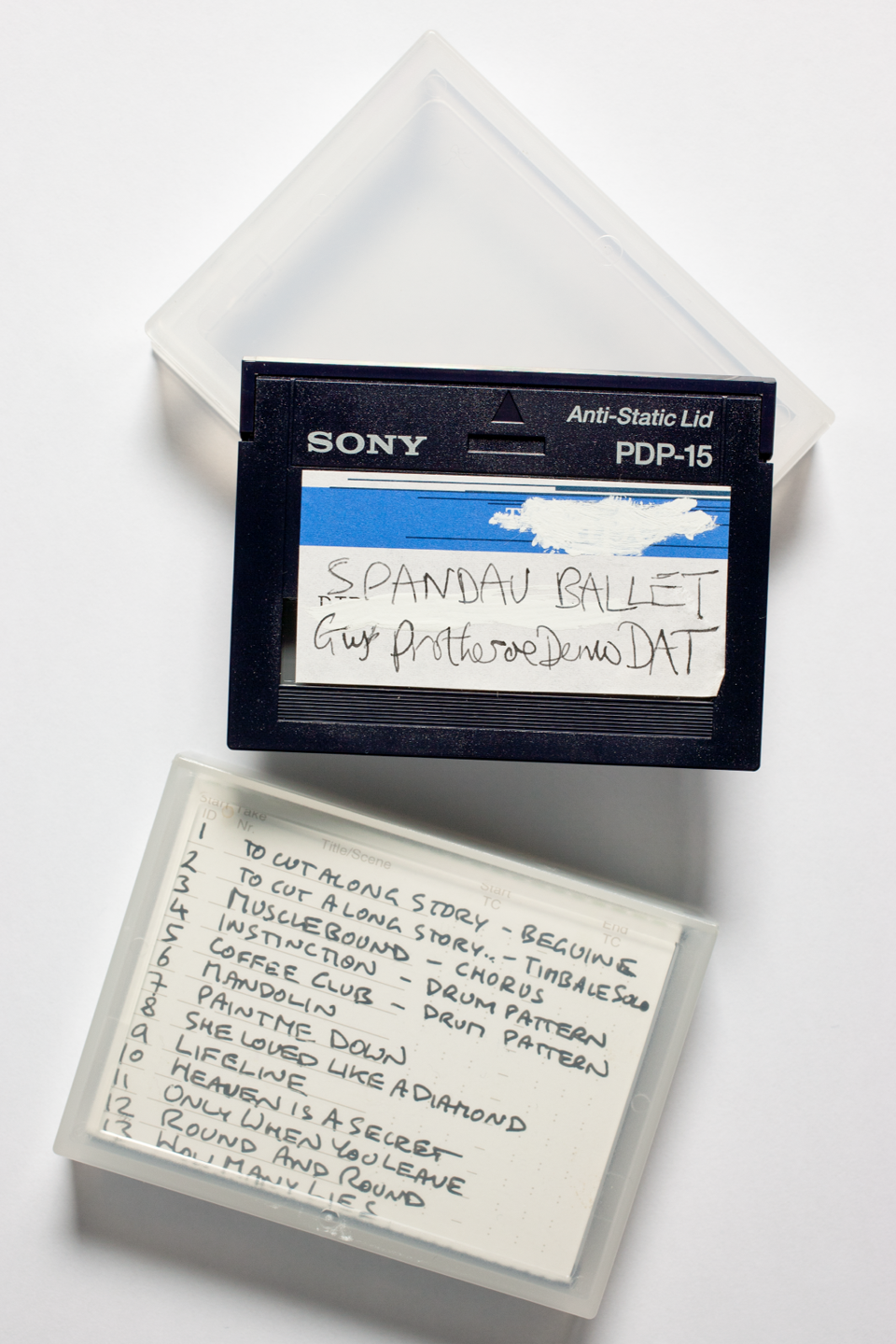
Digital audio tapes (Spandau Ballet). Courtesy of Guy Protheroe.
Yet it is ironic that recorded examples were used as a proxy for an unrecorded work (a song conceived in the composer’s mind). Moreover, following rather unsuccessful attempts to refer to the unconscious in copyright infringement cases (Bellido, 2013), a puzzling feature of the judge’s decision lay in the appeal to musical consciousness as an element for consideration in the proving of music authorship (
Hadley v. Kemp, 1999, paras 646–649; Barron, 2006: 29). The judge also seemed to accept that it was possible to hear music which had not yet been played. Thus, the reference to musical consciousness enabled the defendants’ experts and lawyers to refer their evidence to a moment before the music writing process (Osborn and Greenfield, 2006: 313), therefore overcoming the procedural and material difficulties posed by the absence of any documentary trace in the case. This iteration also reveals the effect of a normative understanding of the senses on copyright law (Bellido, 2014). Notation practices and their visual components had often been used as techniques to bring to life the moment of writing music, enabling the judge or jury to ‘see’ the copyright work in question; here, aural evidence developed a more problematic evidential relationship between the record and the deed, indicating how the work could have emerged in the past. Privileging the aural over the visual did not only affect copyright litigating practices it also had an impact on the relationship between the idea of a piece of music and its embodiment. As one well-known practitioners’ book noted after the dispute: In contrast to a literary work, which must be expressed in writing, speech or singing before it can exist as a literary work, a musical work may exist as such in the mind of its composer as well as when it has been merely played or sung. (
Copinger and Skone James on Copyright, 2010: 136)
Contribution to Music
The Work and Its Embodiment
This complex relationship between the emergence of a copyright work and its musical embodiment was seen in another case just a few months later. In February 2000, Protheroe was called up by another solicitors’ firm to assess the contribution of a session musician, the violinist Robert Beckingham, professionally known as ‘Bobby Valentino’, in a similar controversy over authorship (Southall, 2009: 204–213; Free, 2002: 29). He was instructed to compare the material played by Valentino with, once again, the saxophone solo in Spandau Ballet’s True in order to ascertain whether the violin material constituted a more extensive contribution to the song than the saxophone solo in Hadley v. Kemp. Although he pursued an almost identical argument to that of the previous case, on this occasion, the defence team lost; Valentino was deemed a co-author of the song. The similarity between the two legal disputes, and the stark contrast between their outcomes, makes the cases textbook examples – both for lawyers and scholars – of the difficulty in interpreting section 10 of the Copyright, Designs and Patents Act (1988). For instance, Zemer (2007: 195) suggested that ‘the cases show how arbitrary and subjective the assessment of contribution can be’. Similarly, other commentators highlighted this apparent judicial contradiction (McQueen et al., 2010: 92–94). Although it can be argued that Valentino’s contribution was qualitatively different than Kemp’s contribution in the Spandau Ballet case, it can also be suggested that the evidential techniques used to present Valentino’s claim affected the outcome. These differences in evidence between the cases demonstrate the divergent ways in which the judges viewed the litigated music. Before exploring such an evidential gap, there is also another feature that needs to be highlighted. Whilst the earlier case of Spandau Ballet involved a dispute over authorship between members of a group, Valentino appears to have benefited from his distinct background. He was not a member of the group but rather a freelance musician hired by the group for that specific recording ( Beckingham v. Hodgens, 2003, para. 8). Although no categorical distinction was explicitly established, this position already individuated him and aided the perception that his contribution was of a different kind. In other words, it seems that the legal expectations (and not just the contractual ones) between these two cases were markedly different from the outset.
On 2 July 2002, Christopher Floyd QC heard the evidence at the Chancery Division of the High Court. Undoubtedly, the most remarkable appearance in the witness box was that of Valentino, who not only gave testimony but also played a fragment of the music before the judge (Southall, 2009: 207). The defendants’ legal team submitted a transcription of the music that isolated his contribution visually, arguing that it was not of copyright significance. The main evidence employed by the plaintiff to counter this argument and therefore to prove his role as an author was a real-time performance. Although the law report does not make explicit how the performance was taken into account, the impact of the performance was such as to produce a different aural experience of the song. The plaintiff apparently believed that there was no better way to determine the value of his contribution than to play it in the courtroom ( Beckingham v. Hodgens, 2003, para. 50). Yet it is important to consider again the troubling irony of this strategic move: a live performance being used as a technique or a medium to reconstruct the moment of authorship of a song composed a long time ago. Assessing the impact of this iterative technology is highly speculative, but its relevance can be identified when we consider the underlying reasoning set out in the decision. It is not incidental that the ultimate judgement appears to shift the legal focus on the question of collaboration from an appreciation of the composers’ minds to their bodies, from the musical consciousness to the bodily gestures made by Valentino as he played the musical instruments, as they sought to create something of musical – and legal – significance.
Split Listening
The Analysis of Aural Contours
The contradictions between these two precedents gave rise to a number of other copyright conflicts over the next decade. Most of these disputes were settled out of court. However, beyond this flurry of controversies, the most significant consequence of the contrasting outcomes was a degree of uncertainty generated across the music industry as a whole. The confusion and ambiguity meant further work for Protheroe, who not only continued to analyse musical contributions but also started to recommend percentages on settlements. Moreover, his parallel activity as a music consultant led to his involvement in a wide range of activities, from giving advice over the legality of ‘soundalikes’ of popular songs commissioned by advertising agencies to assessing the possibility of piracy in sound recordings. Despite his growing prominence in the field, it is important to consider him as someone curious enough to simultaneously engage with and acquire expertise from different sectors of the music industry. His ubiquitous and multifaceted presence across institutions made him aware of the variety of copyright problems and also gave him insight into the array of techniques available for investigating them. In other words, he became more of an expert through each successive collaboration, learning more and more in the process. His membership in and recognition by the Musician’s Union was crucial for him to mediate the authorship controversies that emerged in the post-Valentino era, but similarly, his long-standing link with the International Federation of Phonographic Industry (IFPI) enabled him to explore different ways of detecting piracy in sound recordings. 8 In doing so, he collaborated with sound engineers in order to develop forensic methods for comparing recordings. 9
The first method was direct aural comparison, which paid attention to the aural contours of the recordings themselves. Listening carefully to two recordings of the same song, it was possible to determine aural similarities in sound quality or performance style in order to identify unique extraneous events and to distinguish bootlegs and other forms of piracy. The second investigative method, synchronization, was undoubtedly more complicated but potentially more valuable; listening to the two recordings simultaneously enabled him to hear the phasing effects and the variations between performances. As a result of this experimentation, he appeared as an expert in music cases that involved the use of digital recording tools such as Cubase (Taylor v. Rive Droite Music, 2004). Although this mode of machine-based sensing appeared, at first glance, to break from the type of expertise he was used to, in fact it did not. His curiosity and capacity to learn from different contacts had been and continued to be one of the factors that enabled him to accumulate expertise from experience. The insistence of solicitors’ firm on repeatedly using the same experts, such as Protheroe, in music copyright litigation converted them into the medium through which the inherent instability of a copyright controversy became momentarily stabilized. Forensic musicologists and the practices they developed operated as contingent stabilizing factors in the uncertain event of a copyright dispute both within and outside the courtroom.
Sound and Vision
As Protheroe steadily concatenated cases and opinions, his authority increased accordingly. Perhaps the most salient indication of his expanding prestige was his appointment in a 2004 music copyright infringement case as the single joint expert by both parties (Malmstedt v. EMI, 2003). Nevertheless, the prototypical scenario in which he continued to assist clients was always conditioned by an adversarial context. If the battle between experts is the rule in music copyright trials, it is worth considering the other experts that Protheroe worked against. Of all the expert witnesses he confronted, Peter Oxendale was his most frequent adversary. According to Protheroe’s estimation, he and Oxendale dealt with almost 90% of the controversies in music copyright in Britain in the last three decades. The frequency by which Oxendale and Protheroe were hired shows how much lawyers liked the stability that came with knowing the experts. Oxendale was another member of the British Academy of Experts who, after a career as a popular keyboard player, had become an expert witness and consultant in music disputes (Fisher v. Brooker, 2006; Locksley Brown v. MCASSO Music Productions, 2005; Taylor v. Rive Droite Music Ltd, 2004). However, Protheroe’s most distinctive and challenging adversary was undoubtedly the music historian and musicologist Stanley Sadie (1930–2005). Sadie had been a music critic for The Times (1964–1981), but his major contribution to music scholarship was his work as editor of major reference encyclopedias such as the New Grove Dictionary of Music and Musicians (1980; 2001) and the New Grove Dictionary of Musical Instruments (1984). Although Sadie had previously been peripherally interested in the subject of copyright, reviewing the 10th edition of Copinger (Sadie, 1966), he never considered developing a professional career as an expert witness. He ultimately only appeared twice as an expert witness, and in both cases, Protheroe was the expert musicologist on the other side.
In January 2001, he met Protheroe during a dispute regarding the attribution of the music from a James Bond film (Norman v. Times Newspapers Limited, 2001). A few years earlier, The Sunday Times had insinuated that Monty Norman was not the author of the musical theme in question (Burlingame, 2012; Fiegel, 2001). Norman decided to sue the newspaper on the grounds of copyright infringement and libel. Although the possibility of these two claims was an interesting reflection on the (then) new statutory protection of moral rights in British copyright law, the most distinctive aspect of the case was its procedure. This trial, with the outcome decided by a jury rather than by a single judge, shaped the experts’ struggle when explaining music in the courtroom. Both experts had been explicitly advised by counsel to scale down their analyses into a concise description that would be comprehensible to the lay listener. As the hearing evolved, problems emerged when different musical scores were submitted by each side. Would jury members (or the judge) be able to read or understand them? Not only was the music notated differently, some parts of these scores were said to be not ‘singable’ at all. Despite the fact that both legal teams tried to bridge these differences by singing the songs, playing the music, projecting the film and submitting musical examples – now via compact discs – the legal strategy of both sides embraced the idea that an ordinary listener ought to be able to detect the distinction between authorship and performance. Whilst it is problematic to suggest that the ordinary listener is the key judge of the nature and extent of authorship – since that standard is not currently established in British copyright law – the explicit formulation in the James Bond case reveals an aspect often obscured in music copyright litigation: the objective is not only the need to distinguish whether music is a matter for the ear or the eye but to distinguish whose ear (or eye) is constructed in the judicial assessment (Figure 3).
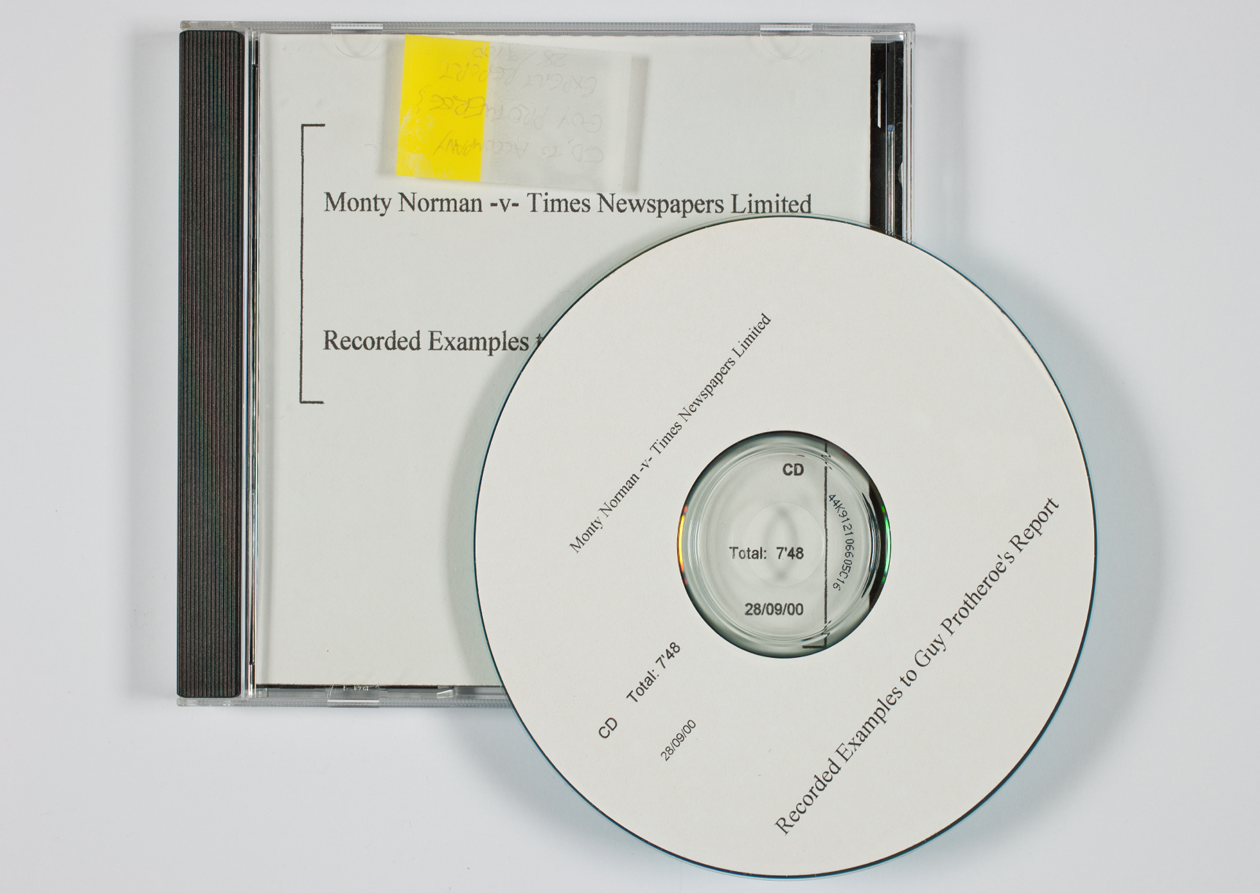
Compact disc (Monty Norman v. The Sunday Times). Courtesy of Julie Anne Sadie.
As performances and musical techniques made it possible to listen to music in the courtroom, it seems that the visual comparison of songs was losing some of its demonstrative and persuasive capacity. This view will certainly convince those who believe that the law mirrors reality. If the relationship between the composer and the arranger in popular music is no longer primarily mediated by scores (or at least not as frequently), examining them as evidence would now be a lost cause. The shift from visual to aural could explain why the majority of British music copyright cases in the last three decades, both in the framework of authorship and copyright infringement actions, have been fascinated with different modes of listening as the main vehicle to experience music. However, the appeal to vision as a way of making inferences, and demonstrating similarities and differences between works or between works and performances, has never disappeared from judicial assessment. Even in typical disputes over authorship of popular music, the transcription of music was, as discussed, frequently linked with attempts to connect the music to the moment that the law tries to reconstruct (EMI v. Papathanasiou, 1993, para. 309). In these processes of musical and legal imagination, musical examples, notations, performances and illustrations are produced in the courtroom by experts and lawyers, not only with the purpose of listening to (or viewing) the music but also to reveal how the scene of collaboration or the act of copying might have left a mark on the music played. In fact, it is exactly the historicity, time, and subjectivity evidenced in the reproduction or the performance of the songs, which facilitates an explanation of the ways that music is composed by composers.
In early 2004, Stanley Sadie and Guy Protheroe met again as expert witnesses, now to assess a different kind of complexity between the aural and the visual dimensions in which music evolves. Lionel Sawkins had sued Hyperion Records Limited for copyright infringement, claiming that the recording company had copied his editions of four musical works by Lalande (1657–1726). Whilst the case revisited, in the framework of classical music, long-standing problems in popular music, it is interesting to observe how the case was and has been perceived differently by lawyers, expert musicologists and laypeople. What has made this case so attractive for copyright scholars is that it allows for clear-cut distinctions and classifications (Pila, 2010: 235; Rahmatian, 2009), a rarity in copyright cases. For laypeople, the controversy reflected the possibility of recognizing the existence of copyright in a work comprising non-copyright material. For musicologists, the case was simultaneously interesting and complicated in its potential consequences for the profession. It was the first time that a musicologist had brought a copyright claim based on his work. Precisely because of that, Stanley Sadie’s assistance was considered crucial. Sadie was well known as a music historian and writer, particularly as a Mozart and Handel expert (Sadie, 1972, 1996, 2006), but he had also been the president of the International Musicological Society (Kozinn, 2005).
Significantly, he had also prepared performing editions of works by Lalande and some of his French contemporaries for the BBC (Link D and Nagley J, 2005: 219–237). In April 2004, a week before the court hearing, solicitors and counsel representing the plaintiff travelled by train to Sadie’s Somerset home in order to discuss their final strategy. 10 Curiously, this time the controversy did not focus on the transposition of music as a means to prove its originality but on assessing the task of transcribing music in order to imagine how a musical work might have been created. In other words, the judge’s task was to assess the creativity of the system of notation developed by the claimant in order to consider the originality of his music. Mr Justice Patten ruled in favour of Sawkins on 2 July 2004. One of the key documents submitted by his legal team had been a set of elaborate charts in which the judge could see the different editorial interventions made by Sawkins to produce a practical performing score. Again, we can observe here the resilience of the visual, not in representing the sound or nature of the music but as a means to reveal the creative process at work and therefore to evidence musical authorship (Figure 4).
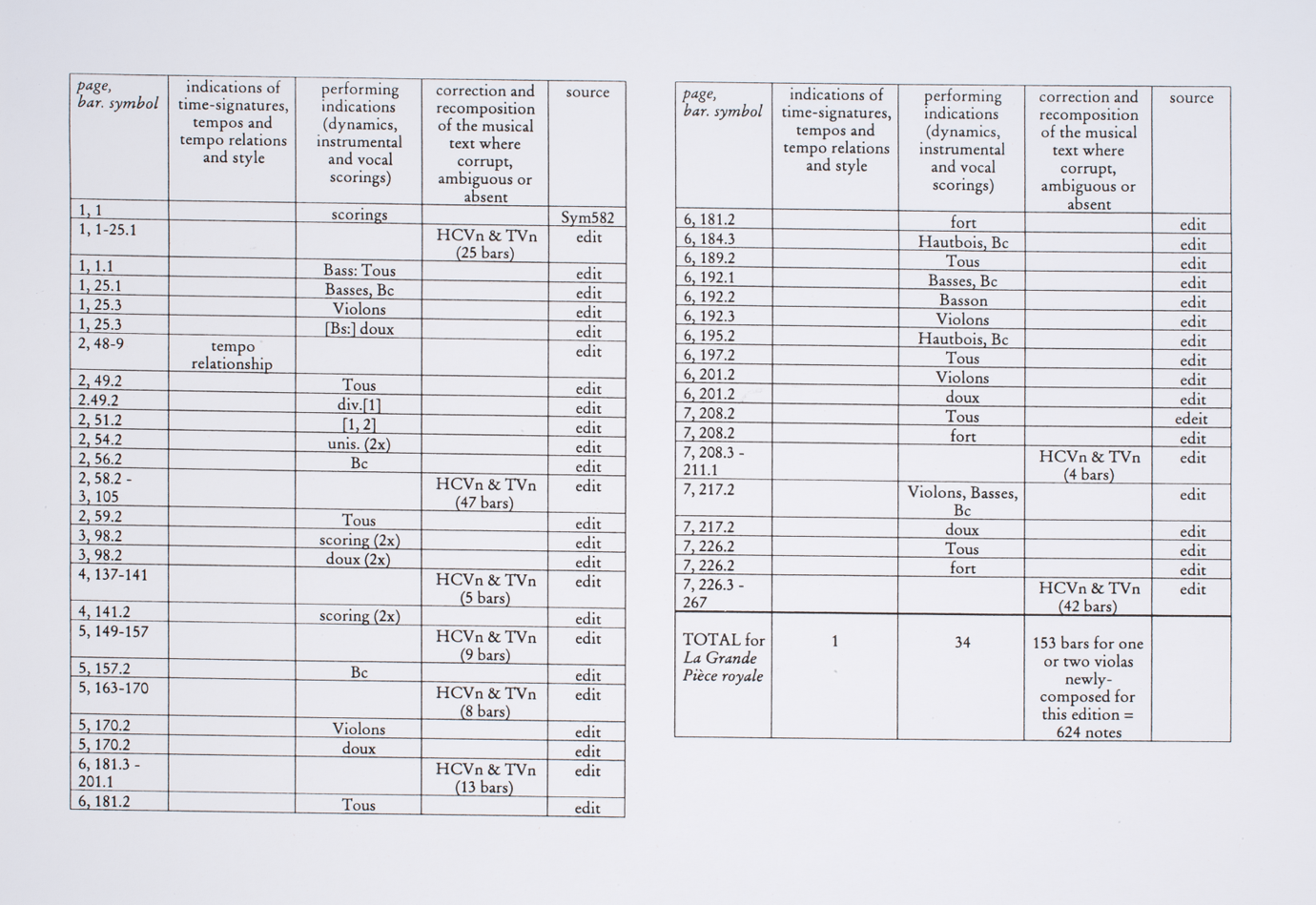
Tables by Lionel Sawkins ( Sawkins v. Hyperion Records ). Courtesy of Julie Anne Sadie.
Music Expertise in Copyright
Although scholars have recently emphasized the important role played by experts in music copyright disputes (Bently, 2009; Bellido, 2013; Cason and Müllensiefen, 2012), key questions remain: What specific techniques have the experts used, and what has their impact been in the development of the law? One way to answer these questions is to follow the controversies in order to consider the ways in which the musical work is constructed in the courtroom. Rather than drawing on an a priori perspective, the historical perspective enables us to see how expertise might be indeed transmitted and learned from one expert to another and how teams of experts and lawyers have worked together through copyright issues involved in different trials. Whilst this perspective shows the ways knowledge is generated in practice, it also reveals how collaborative and contingent expertise turns out to be. On the one hand, experts and lawyers render the intangible work intelligible through particular visual, aural and argumentative techniques. On the other hand, their combined role is also relevant in preparing arguments and evidence for one of the most ubiquitous debates in recent music copyright scholarship: the legal distinction between authorship and performance (Arnold, 1999).
The historical analyses not only point to the complex linkages between musicological and legal expertise they also reveal the ways technology has mediated and constituted their relation. The switch between audiovisual material, performances and different recording formats, and their various uses as evidential clues, had an impact on the way that musical judgements were reached. In this sense, the different aural and visual registers elicited in trials were entangled in such convoluted ways that they produced evidential gaps. Aural and visual registers were channelled through different instruments and technologies in order to allow the judge (or the jury) to listen and to see the music under litigation. Each technology resulted in its own relationship between sensory perception and knowledge production; or, to put it differently, each of these technologies simultaneously enabled and constrained – each in its own slightly different way – the ability of the judge and the jury to understand and adjudicate the case. Three decades ago, for example, cassette tapes were an innovative means to guide judges as they listened to the evidence; in more recent years, performances and digital technologies have become instrumental to indexing and visually presenting songs to judges, enabling them to see whether an artist contributed to the composition of a song or whether the work was a copyright infringement. The possibility of experiencing music differently in the courtroom and beyond has also created contradictory results in some cases and a subsequent struggle to make sense of them. In all these ways, the combination of law and practice has affected the evolution of copyright theory, not only the abstract distinction drawn between authors and performers but also the special characteristics attributed to musical works. Forensic musicologists’ recurrent strategy of tracking the emergence of a musical work back to the consciousness of the composer is one of the features that made music copyright litigation distinctive.
Conclusion
Whilst the combination of legal and musicological expertise could have facilitated the development of doctrine and legal categories, it is more interesting to highlight the ubiquitous presence of a particular group of musical experts. Their pervasive appearance in different trials shows a more subtle and yet important role. These particular experts and their techniques have served as points of stabilization in the conceptual tensions embedded in copyright disputes. Precisely, because their continuous involvement in a stream of cases elucidated different conceptual and analytical issues, it is vital to consider the controversies as they evolved in order to appreciate how different technologies have governed the sensory experience in British courts over the last three decades. As the practices of both lawyers and music experts have been mediated by different technologies, the question of how they will impact future disputes is as murky as the question of how future technologies will shape music – and authorship and performance – itself. Tracing the past encounters between specific experts and legal practices and linking them to their particular legal settings, however, helps us to better understand music copyright as a dynamic entity that is continually in the making.
Footnotes
Acknowledgments
Thanks to Nathan Moore, John Shiga, Guy Protheroe, Julie Anne Sadie, Alain Pottage, John Maher, and David Lobenstine for their comments. Versions of this paper were presented at the ASLCH conference (Birkbeck, March 2013) and ‘Sensing the Law’ (Carleton University, May 2013). Thanks to the participants of these conferences for many helpful suggestions. All errors are mine.
Declaration of Conflicting Interests
The author(s) declared no potential conflicts of interest with respect to the research, authorship, and/or publication of this article.
Funding
The author(s) received no financial support for the research, authorship, and/or publication of this article.