



Abstract
State prison populations in the United States have been regularly declining since 2009, and, at the end of 2014, the combined federal and state prison population was at its lowest level since 2005. Criminologists were caught by surprise by this development in the country that epitomized contemporary ‘mass incarceration’. Their theoretical accounts were steeped in a ‘punitive worldview’ that left no space for the stabilization and eventual decline in mass incarceration in the United States. This article focuses on policy processes, rather than structural conditions, as drivers of penal change. The article begins with an overview of theories of punishment and their shortcomings. The framework that guides our study is based on the concept of ‘critical junctures’, which are seedbeds of long-term transformative change that present opportunities and constraints for actors in the penal field. The empirical research presented here analyses the adoption of legal reforms aimed at reducing mass incarceration by the 50 US states. We find that a trifecta of conflicting actors – legal, political and public – accounts for the complex and sometimes contradictory ways in which states move towards penal reform.
Keywords
Introduction
At the end of the last century, crime rates began to fall in the United States and in most Western democracies. Criminologists were mostly caught by surprise by this development, as they had mainly predicted an unprecedented increase – particularly in violent crime – in these countries. Criminologists equally failed to predict the decrease in imprisonment in the United States, the country that epitomized contemporary ‘mass incarceration’ at the beginning of this century. Yet the signs of such a turn could not and cannot be disputed. In 2009, for the first time in 38 years, the number of prisoners in US state prisons dropped by 0.3%, after an unabated increase of 708% since the 1970s. Leading states showing the drop in prisoner numbers were California with more than 4000, Michigan with more than 3000 and five other states with about 1000 prisoners or less, including Texas. In sum, 26 US states reduced their numbers of prisoners, while 24 increased their number – but none by more than about 2200 in Pennsylvania (Pew Center on the States, 2010). Was this just exceptional weather or real climate change, as Jonathan Simon (2012) asked?
As it turned out, it was climate change. 1 State prison populations have been regularly declining since 2009, and, at the end of 2014, the combined federal and state prison population was at its lowest level since 2005 (Friedman, 2015; Montopoli, 2013; Knafo, 2014). Between 2014 and 2015, the state prison population fell by a further 2% and the federal prison population fell by 7%. This was the largest decline since 1978 (Carson and Anderson, 2016). Although not every state experienced a decline, some states witnessed particularly dramatic decreases over a longer time period. The prison populations in New York and New Jersey, for example, fell by more than a quarter from 1999 to 2012 (Mauer and Ghandnoosh, 2015). In addition, the number of individuals under supervision in the US adult correctional system declined by 115,600 in 2015, which amounted to the lowest rate detected since 1994 (Kaeble and Glaze, 2016). In 2009, 29 US states had implemented legal changes to reduce reliance on incarceration (Brown, 2013), which increased to 41 and 45 states in 2013 and 2015, respectively, with a range of different legislative initiatives (Vera Institute of Justice, 2014, 2016).
It was a climate change not only in numbers but in the attitudes of politicians, experts and members of the public (Karstedt, 2013, 2015; Thielo et al., 2016). In a 2013 speech, the former US Attorney General Eric Holder (2013) announced, ‘Too many people go to too many prisons for far too long for no good law enforcement reason. It is time to ask ourselves some fundamental questions about our criminal justice system’. The change emerged from unexpected quarters and involved unforeseen actors and coalitions who initialized the downsizing of the prison population, such as Republicans in Texas and Michigan, and the population of California. Prominent Republicans demanded that ‘conservatives must lead the way to fix [the criminal justice system]’ and increasingly saw prisons as representing ‘big government waste’ (Dagan and Teles, 2012: 20). Other unusual actors in the turn of penal policies included right-wing evangelical Protestants in alliance with Republicans (Green, 2013).
As criminological theorizing was informed by a ‘hegemonic punitive worldview’ (Listwan et al., 2008), accounts of ‘why nations jail’ (Karstedt, 2015) were geared towards explaining (and predicting) an ever-rising prison population not only in the United States but across European countries. While these theoretical accounts were modestly successful in explaining differences across countries, they failed at explaining developments over time, in particular the stabilization and final decline in mass incarceration that is observed for the United States (for the United States, see Campbell et al., 2015). This article therefore does not follow any of the master narratives of punishment as outlined above. It focuses on proximate rather than distal causes and drivers of punishment and incarceration, and on policy processes rather than structural conditions. First, a brief overview of theories of punishment will identify a number of shortcomings and justify the policy-centred causal approach that we take. Next, we canvass the range of explanations for the reduction in prison populations in the United States. The framework that guides our study is based on the concept of ‘critical junctures’ (Soifer, 2012) which are seedbeds of long-term and transformative change. With its focus on opportunities and constraints for actors in the penal field, this framework fits within a newly emerging family of conceptualizations (Phelps, 2016). The empirical study that follows analyses the adoption of legal reforms aimed at reducing mass incarceration by the 50 US states. We conclude by exploring what can be learned for theories of punishment and comparative perspectives from our results.
Contemporary Theories of Punishment: Why They Fail
The unprecedented growth and unparalleled size of the US prison population between the 1970s and the first decade of the 21st century – termed ‘mass imprisonment’ – attracted the attention of criminologists. Was this just another case of American exceptionalism, or was the United States avant-garde of a development that would spread globally? Most criminologists bought into the latter perspective. As a ‘hegemonic punitive worldview’ took hold, many scholars saw ‘no escape from a punitive future,’ neither for the United States nor elsewhere (Listwan et al., 2008).
This was the start of the search for the magic bullet variable that could explain why nations generally jail, and why the United States does so extraordinarily and massively. Two master narratives emerged: a political economy of ‘neo-liberalism’, and a framework focusing on the characteristics of ‘high-crime societies’ (Garland, 2001) and ‘penal populism’ (Pratt, 2006) as the drivers of ever-increasing prison populations. Within the framework of the political economy of punishment (Cavadino and Dignan, 2006; Lacey et al., 2018; Reiner, 2007), processes of globalization, ‘market-centred policies’ and the downsizing of the welfare state were linked to the ghettoization of large populations, and their control through criminal justice (Wacquant, 2001: 20). Consequently, where welfare state provision largely remained intact as in Europe, such provision was deemed a bulwark against a massive increase of imprisonment that was nonetheless expected as a global development (Snacken and Dumortier, 2012).
Within the framework of ‘high-crime societies’ (Garland, 2001), democracies were and are assumed to be particularly vulnerable and accommodating to penal populism and to public demands for harsher punishment (Dzur et al., 2016; Lacey, 2008; critical: Miller, 2016). With regard to the United States, Zimring and Johnson (2006) argue that it is not public opinion but instead the inbuilt responsiveness of the criminal justice system (or, more specifically, the criminal justice system’s lack of insulation from direct democratic accountability and community pressure) that pushes prison populations up. For US states, different types of democratic regimes have been compared in terms of their responsiveness to popular demand for harsh punishment of offenders (Barker, 2009; Miller, 2008), and public opinion was found to be a driving force in policymaking between 1953 and 2010 (Enns, 2014). Campbell (2018: 5.1) outlines key forces responsible for both local variation and national trends in incarceration; state-level penal cultures, institutional structures, interest group activism and conflicts all play important roles in conditioning state penal trajectories in the United States.
Comparative theoretical accounts of punishment come with a number of problems. They are nearly exclusively based on countries in the global North, and on developed and democratic Western-style countries. Such accounts mostly ignore imprisonment outside this group. In fact, poorer and less developed countries have on average lower imprisonment rates (Miethe et al., 2017; van Dijk, 2008). Often, a small number of highly selective country cases are used (e.g. Lacey, 2008), in which specific conditions coincide (e.g. majority rule and common law). Observed imprisonment rates differ much less than the theory would have required, as, for example, within the neo-liberal framework that Cavadino and Dignan (2006) used. Master narratives and magic bullet variables tend to miss out on complex conditions; thus, even if inequality is on the rise in the wake of globalization and neo-liberal policies, we see very different trajectories of prison populations in countries that are equally affected.
Further, these theoretical frameworks are exclusively geared towards explaining upward trajectories of imprisonment. Thus, none of the conditions identified in the political economy framework as causes of punitive criminal justice had changed when, in Europe as well as in the United States, imprisonment rates started to fall at the end of the 2000s (Karstedt, 2013). Democratic regimes did not change either, and it can be doubted that public opinion in the respective countries went through sweeping changes (Zimring and Johnson, 2006: 275). For US states, Campbell et al. (2015: 180) found that those factors that explained the rise of mass incarceration ‘lost power once imprisonment stabilised and declined’; instead, several periods could be identified in which a different and contingent set of factors was responsible for changes in the imprisonment rate (Campbell and Schoenfeld, 2013).
Framing the ‘Climb Down’ From Mass Incarceration
Given the persistent decline in the correctional population across US states, analytical frameworks abound that aim at explaining this change. These conceptualizations focus on proximate causes rather than structural and distal ones, and thus on the criminal justice system itself and the political environment where criminal justice policy is made. Downsizing prisons implies changes within and of the system itself, and the political will to implement such changes (Jacobson, 2005; Raphael and Stoll, 2013). In this debate, we find pessimistic voices that hardly see a way out of the ‘prison state’ (Beckett et al., 2016; Gottschalk, 2015; Phelps, 2016), and for whom efforts at reform are mainly targeting ‘low-hanging fruit’ while decisive issues are not addressed. Others like Dagan and Teles (2016) are more optimistic, and see cause for hope in a change of previous proponents of law and order politics. Other optimists focus on small steps and modest and incremental change, as well as promising programmes (e.g. Jacobson, 2005). Four explanatory frameworks have emerged so far.
Given the coincidence of the global financial crisis in 2008 and the earliest visible reduction in incarceration rates in 2009, the first potential explanation for recent declines in state incarceration rates is economic (Aviram, 2015). The recession that began in 2008 placed heavy burdens on public budgets; did this pressure lead states to reduce their incarceration levels? In response to budgetary stresses, a number of states have closed or concentrated prison facilities, but other states have opened new facilities or added capacity to existing facilities instead (Turner et al., 2015), illustrating the difficulties of establishing a clear causal relationship. On the other hand, Brown’s (2013) study of policies to reduce correctional populations adopted by states in 2009 found that state revenue and federal funds for corrections were both significant – a finding that underscores the importance of economic variables. Economic considerations cross political lines. In particular, conservative groups have become increasingly concerned about the high costs and ineffectiveness of mass imprisonment, with the influential American Legislative Exchange Council (ALEC) advocating for some sentencing reforms as early as 2010 (Dagan and Teles, 2012; Levin, 2010). Such widespread concern about the costs of prisons became particularly salient among policymakers as the economic crisis evolved.
A second potential explanation for recent declines in state incarceration rates refers to specific programmes and justice reforms. For example, the Justice Reinvestment Initiative, a programme in which more than half of US states have participated (Austin et al., 2013), has been cited as one contributing factor to recent declines in state imprisonment rates and is seen as a route out of mass incarceration (Fretz, 2016). Initiated by the Council of State Governments, the Justice Reinvestment Initiative is an effort ‘to downsize prison populations and budgets and re-allocate savings to leverage other public and private resources for reinvestment in minority communities’ (Austin et al., 2013: 3).
A third potential explanation is state-specific policy changes. Incarceration rates differ considerably among states, and policy changes unique to a particular state can have a bigger impact on that state’s incarceration rate than national or historical trends (Bekiempis, 2015; Campbell, 2018). Texas, a historically tough-on-crime state, has become one of the most innovative in redesigning its approach to criminal justice (Dagan and Teles, 2012; 2016; Pickett, 2016). In California, the Public Safety Realignment Policy (implemented in 2013 to reduce overcrowding in state prisons) and Proposition 47 (implemented in 2014 to retroactively reclassify some drug-related felonies as misdemeanours) likely drove declines in the state prison population (Annals of the American Academy of Political and Social Science, 2016; Carson and Anderson, 2016: 3; Eaglin, 2015). Bipartisan action and support on the federal and state level seems to be indicative of a value-based consensus to rethink crime policies (critical: Beckett et al., 2016). Voters seem to be supportive: In 2012 and 2014, Californian voters adopted a moderation of its excessive three-strikes laws and reduced sentences. In Texas, the public supported rehabilitation measures and legal reforms (Thielo et al., 2016).
A fourth potential explanation is simply the inverse of the drivers of mass incarceration. The theories that have been advanced to explain the growth in US incarceration rates from the 1970s through the mid-2000s mirror the two master narratives of contemporary theories of punishment as outlined above (e.g. Barker, 2009; Beckett, 1999; Garland, 2001; Simon, 2007). As mass incarceration has disproportionately impacted African Americans and communities of colour, explanatory frameworks incorporated the context of race relations in the United States (Alexander, 2010). In contrast to Enns (2014), Smith (2004: 935) found that increases in state incarceration rates between 1980 and 1995 were not a response to increased crime rates, ‘citizen attitudes’ or ‘presidential-level electoral cycles’; neither were they a response to a growing underclass as predicted within the neo-liberal framework. Instead, increases in incarceration rates were driven by ‘partisan control of state government, gubernatorial election cycles, selected policy decisions, and race’ (Smith, 2004: 935). Pfaff (2011; 2012) situated the decisive changes that drove prison populations up directly within the criminal justice system: a dramatic change in decision-making by district attorneys that increased charges for felonies filled prisons in particular in the 1990s. Were the same factors that drove the ‘hockey stick’-shaped trend of US incarceration rates in the political system and within criminal justice institutions also responsible for the present decreases?
Campbell et al. (2015: 180) stress the ‘importance of historical contingencies in shaping state-level imprisonment rates’. What we need to understand is why changes that originate in certain historical moments have long-term and transformative impacts. The ‘hockey stick’-shaped trend of mass incarceration indicates a short time frame, during which such changes took off and consequences started to accumulate. Similarly, the trend was reversed starting slightly before it became visible in 2009. As Campbell et al. suggest, those factors and conditions that kept the incarceration level rising lost their power once imprisonment stabilized at the beginning of the century. Such historical moments when change is possible and favoured over the status quo are ‘critical junctures’ (Soifer, 2012). It is a distinct feature of critical junctures that constraints on decision-making are loosened, and they ‘allow for agency or contingency to shape divergence from the past or divergence across cases’ (Soifer, 2012: 1573). Soifer distinguishes two types of causal conditions that are working at such critical juncture: ‘permissive conditions’ ease constraints and make change possible; productive conditions ‘in the presence of permissive conditions produce the outcome or a range of outcomes that can be reproduced’ (Soifer, 2012: 1573). Productive conditions can be seen as sustainable programmes or agents of change.
There is considerable agreement that the financial crisis in 2008 presented such a ‘critical juncture’, as the financial pressures on state budgets increased (e.g. Phelps, 2016: 156–7). In particular, it offered a new terminology and discourse that redefined the problem not in terms of crime, law and order but in terms of economy and efficiency (Aviram, 2015). These constituted the permissive conditions, which provided actors – in particular, Republicans – with opportunities to reposition themselves. Productive conditions included new alliances between actors that shaped the political and social environment (Green, 2013), a range of policies and programmes that were available for states, and changes in values that Tonry (2011) argues are needed in order to achieve sustainable change in correction policies in the United States. The critical juncture of the combined crises of states’ budgets and criminal justice systems (permissive conditions) and productive conditions has the potential to produce more but incremental change. Still, given both permissive and productive conditions, actors are motivated by ‘drivers’ or incentivizing structures on the one hand and discouraged by ‘spoilers’ of change on the other. Importantly, actors continue to be involved in ongoing struggles as the dominant orientation changes, which accounts for contradictory as well as ‘tepid’ reforms (Phelps, 2016: 163).
Our study of sentencing and corrections reform legislation to reduce state prison populations uses this framework of historical and institutional change. We identify as a ‘critical juncture’ the pressures of the financial crisis on state budgets and the burden of high levels of incarceration, which together created a sense of emergency and presented the permissive and opening-up conditions. We use as conditions within the political environment characteristics of actors in the political system as well as the ideological orientation of the citizenry.
We identify two features of the criminal justice system itself that are related to change. First, the responsiveness of criminal justice to public demands and the lack of insulation from the political system as indicated by the election of justice officers certainly allows for agency of this group at a critical juncture. Second, previously introduced punitive measures like truth-in-sentencing laws, three-strikes laws and the death penalty are indicative of an overall punitive climate. Both might constrain change, or act as incentives (e.g. if seen as a cause behind a skyrocketing prison population, three-strikes laws might act as incentive and also as a constraint in a punitive system of justice; elected justice officers might push for change or prefer the status quo).
We further posit that the perceived social threat from crime (Baumer et al., 2003; Garland, 2001) is a constraining condition that restricts actors’ change-directed choices. The basic logic of the social threat hypothesis is that Whites and economic elites perceive non-Whites and poor people as threatening. When the size of these groups increases, so does social threat, and pressures for more crime control mount. Finally, the general innovativeness of a state – or its willingness to adopt new policies and experiment with new programmes – should indicate a condition of general propensity to reforming criminal justice (Boehmke and Skinner, 2012).
Methods
The strongest indicator of a ‘climb-down’ from mass incarceration is a decline in the prison population or the incarceration rate in the prisons of a state over time. However, such a decline might be slow and spurious, and substantively reducing prison populations takes time. Following Brown (2013) and Zimring (2016), we focus on state sentencing and correctional reforms that were designed to reduce the state’s prison population, though we cannot assume a direct translation into (reduced) prison populations (Phelps, 2016: 156). The Vera Institute has compiled the types of such legal reforms for each state for 2013 (Vera Institute of Justice, 2014, appendix B) and between 2014 and 2015 (Vera Institute of Justice, 2016, appendix B). As the categories and types of reforms listed differed slightly between the two periods – for 2014 and 2015, more and differently worded types were listed – we used three overarching categories of reform also used by the Vera Institute: reducing prison populations, expanding community corrections including diversion and supporting re-entry of prisoners into the community.
Reducing prison populations encompassed both ‘front-end’ and ‘back-end’ reforms like repealing or limiting mandatory penalties, reclassifying offences or altering sentencing presumptions, expanding access to early release mechanisms and reducing penalties for property offences and drug offences. Expanding community corrections covered measures like increasing diversion and expanding community-based sentencing options, problem-solving courts, graduated responses to violations of orders or deferred adjudication. Support for re-entry included the creation/support of re-entry services, facilitating access to public benefits, housing, voting and employment, and limiting public access to criminal history information. For 2013 and for 2014–2015, for any measure falling under one of the categories, the category was coded as present (1); if no reform measures were enacted in that category, the category was coded as absent (0). We created an indicator of intensity of legal change during this period that measures whether any of the three types has been adopted in each of the years: a state might have only adopted one type, but in each year, or different types in one or both periods. It ranges from no legal reform at all (0) to a maximum of covering all types of reforms within the whole period (6).
Determining factors represent the critical juncture and conditions during the preceding period between 2008 and 2012. We group these conditions into six categories: pressures to adopt change or permissive conditions; political orientation of the citizenry and state legislators; responsiveness of criminal justice; punitiveness of criminal justice; social threat through crime; and innovativeness. Pressure factors towards adopting change include the burden of incarceration and the financial situation of the state; these were operationalized as incarceration and parole rate (per 100,000 of the population) 2 and the total amount of outstanding debt for each state government per capita (mean 2008–2011). 3 Political orientation includes citizen ideology and the party control of all branches of state government (i.e. both upper and lower legislative chambers and the governorship). Citizen ideology was measured according to Berry et al. (1998) and further annual data retrieved from a website repository. 4 Berry et al. propose an indirect measure of a more liberal or conservative state citizenry based on interest group ratings of each state’s elected officials. Estimates of citizen ideology in each district of a state were retrieved and then combined into an average for the state as a whole (mean 2008–2010), with higher levels indicating greater liberalness. Following Allen et al. (2004), party control of the legislative and executive branch of each state was computed as a sum score of Republican control of the lower and upper house, as well as the governorship, with a range from 3, indicating Republican control of all branches, to 0, indicating Democratic control of all branches (mean 2008–2012). 5
According to Zimring and Johnson (2006: 274, 277), we used election of judges at lower and higher levels of the judicial system to capture the responsiveness of the system to political pressure and changes in the political environment: election of judges at appellate courts (appointment = 0; election = 1) and at intermediate appellate courts and general jurisdiction courts (0 = appointment, 1 = appointment and elections, 2 = elections [non-partisan], 3 = elections [partisan]). 6 For measuring punitiveness of the criminal justice, we used three indicators: whether between 2008 and 2012 a state had the death penalty, three-strikes laws and truth-in-sentencing laws (yes = 1; no = 0). 7 Social threat was measured according to Baumer et al. (2003): we include the homicide rate, the rate of violent crime and the proportion of African Americans and Hispanics. 8 Finally, we measured policy innovativeness as previous legal changes introduced in 2009 in order to reduce the reliance on incarceration (Brown, 2013); if such legal changes were enacted this was coded as 1, if not 0.
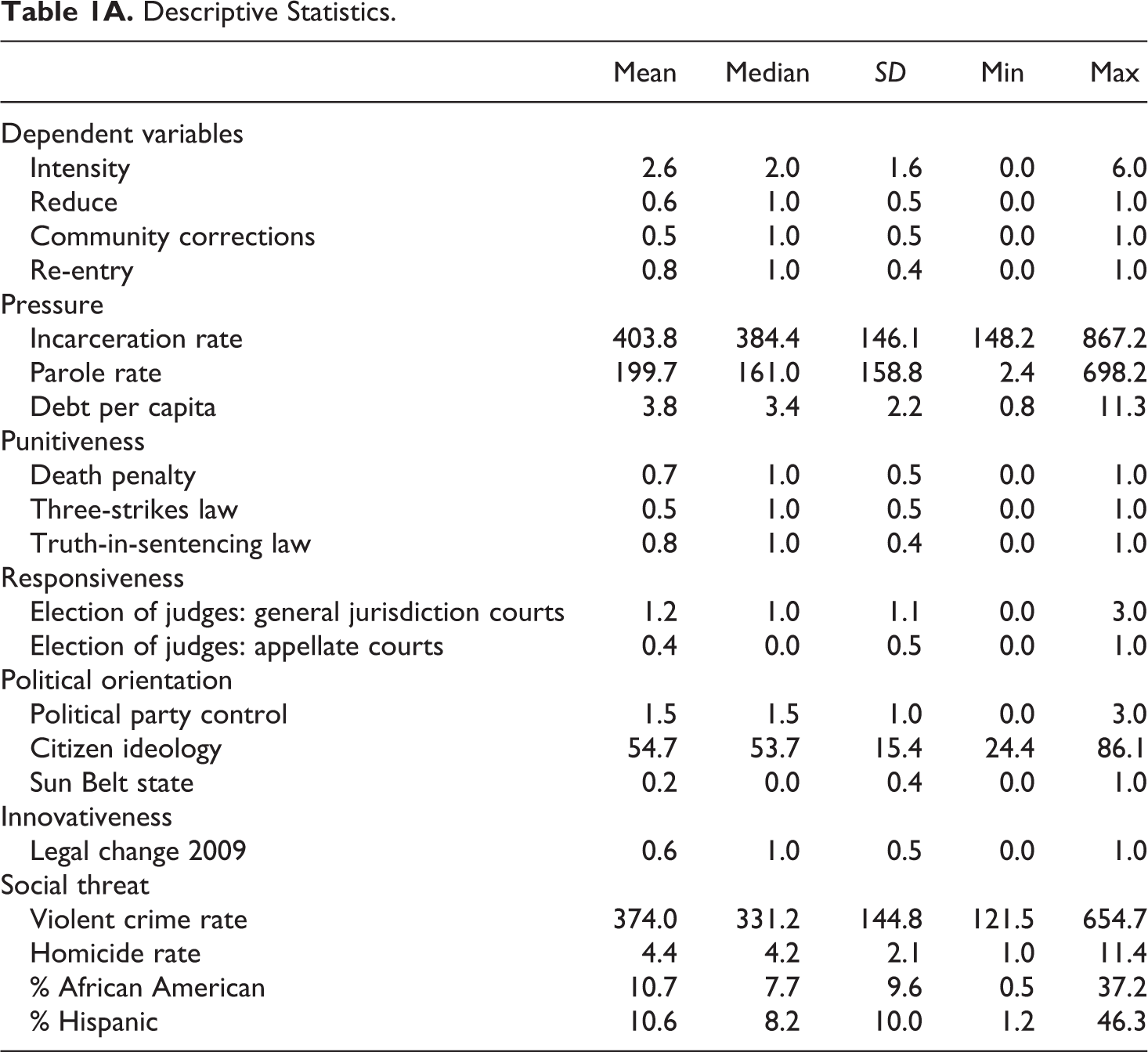
Our analyses combine comparative case methods with multivariate models, which in conjunction give a fuller picture of specific constellations of factors. We proceed in three steps: First, we present an overview over the legal changes in 50 US states between 2013 and 2015. Next we use conjunctive case comparisons (Ragin, 1987) in order to explore complex constellations of factors that drive the intensity of legal change. We deem this method particularly suitable for exploring the conditions that a critical juncture opens up. Finally, we conduct multivariate analyses for the intensity of legal change as well as for the three different types that we identified: legal reforms intended to reduce incarceration; reforms at the ‘back-end’ intended to improve outcomes by supporting re-entry of prisoners; and, finally, reforms that enhance and improve community corrections, and instigate a broader use of alternatives to imprisonment embedded in the community. (For descriptives, see Appendix.)
Results
Figure 1 gives an overview over the intensity of legal changes adopted within the two years between 2013 and 2015. Only five states did not adopt any legal changes during this period, which does not imply that they did not do so before. Equally rare were the maximum of six actions taken by state legislators, and both the lower and upper end of the intensity of legal change are balanced in terms of the proportion of states. Most states adopted either two or three legal reforms, and taken together the majority of the states took more than one action.
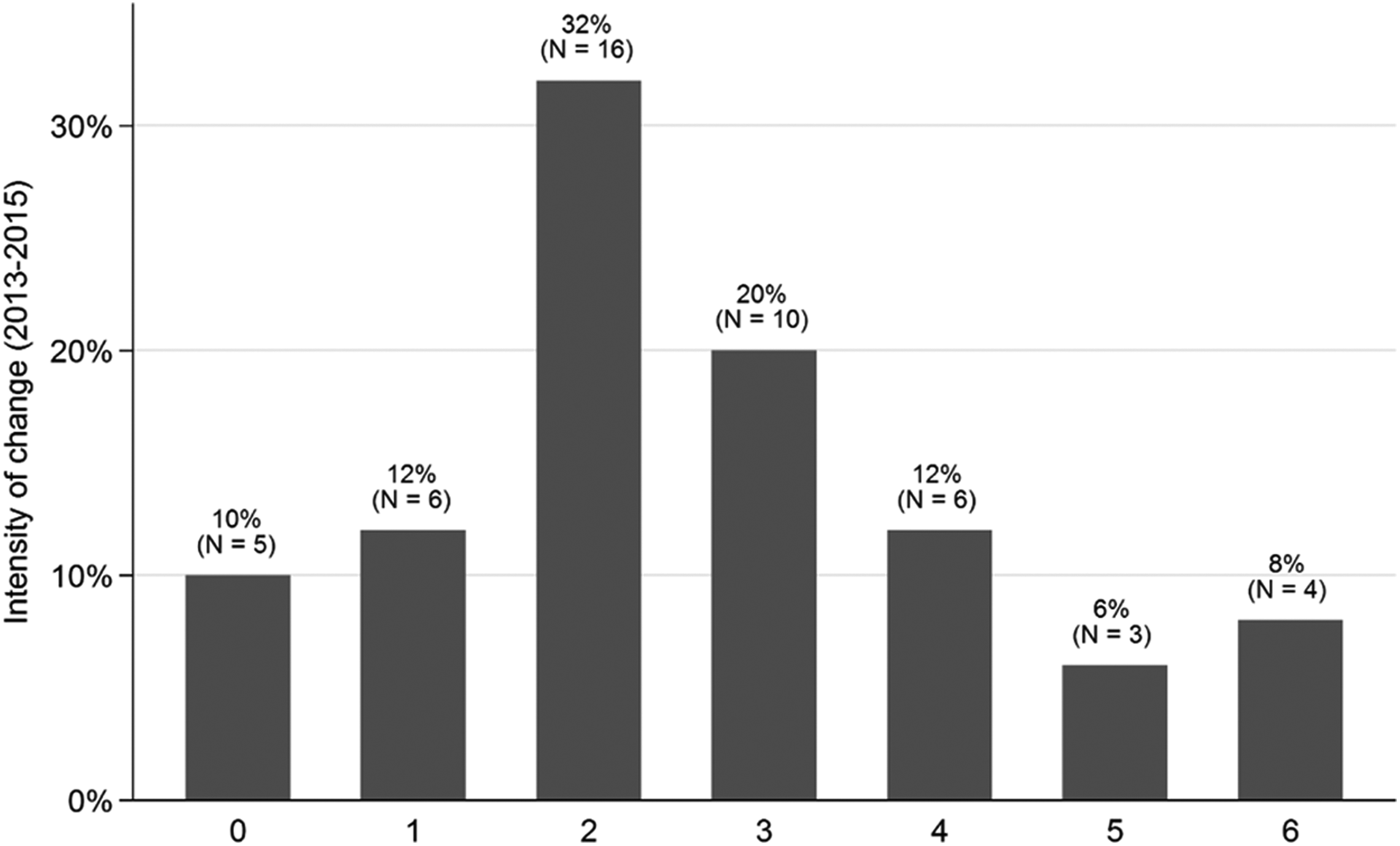
Intensity of legal change 2013–2015.
Figure 2 shows which states were particularly active during the period. There is no clear regional pattern in the intensity of change. The states with the most changes (Washington, Louisiana, Illinois and Indiana) are quite diverse in their political and economic make-up. The intensity of change seems to be driven by more complex constellations and cannot be explained by a single political or economic factor.

Intensity of legal change 2013–2015.
Which types of legal changes were favoured during this period? Figure 3 shows that, in 2013, the majority of changes adopted focused on the ‘back-end’ of the criminal justice process, with measures to improve re-entry (42%) the most popular change, followed by reforms that enhanced community corrections (34%) and reforms that aimed to reduce imprisonment in the first instance (32%; see also Phelps, 2016: 155). In 2015, measures to improve and ease re-entry of prisoners had kept their momentum as the most favoured legal change with two-thirds of states adopting such measures. Measures to reduce the number of imprisoned individuals became increasingly popular, and the proportion of states introducing them nearly doubled (58%). Community corrections remained at the same level with one-third of states adopting legal changes in that direction (32%). It seems that re-entry reforms are the low-hanging fruit that can be easily adopted without decisive changes at the front end of admissions.
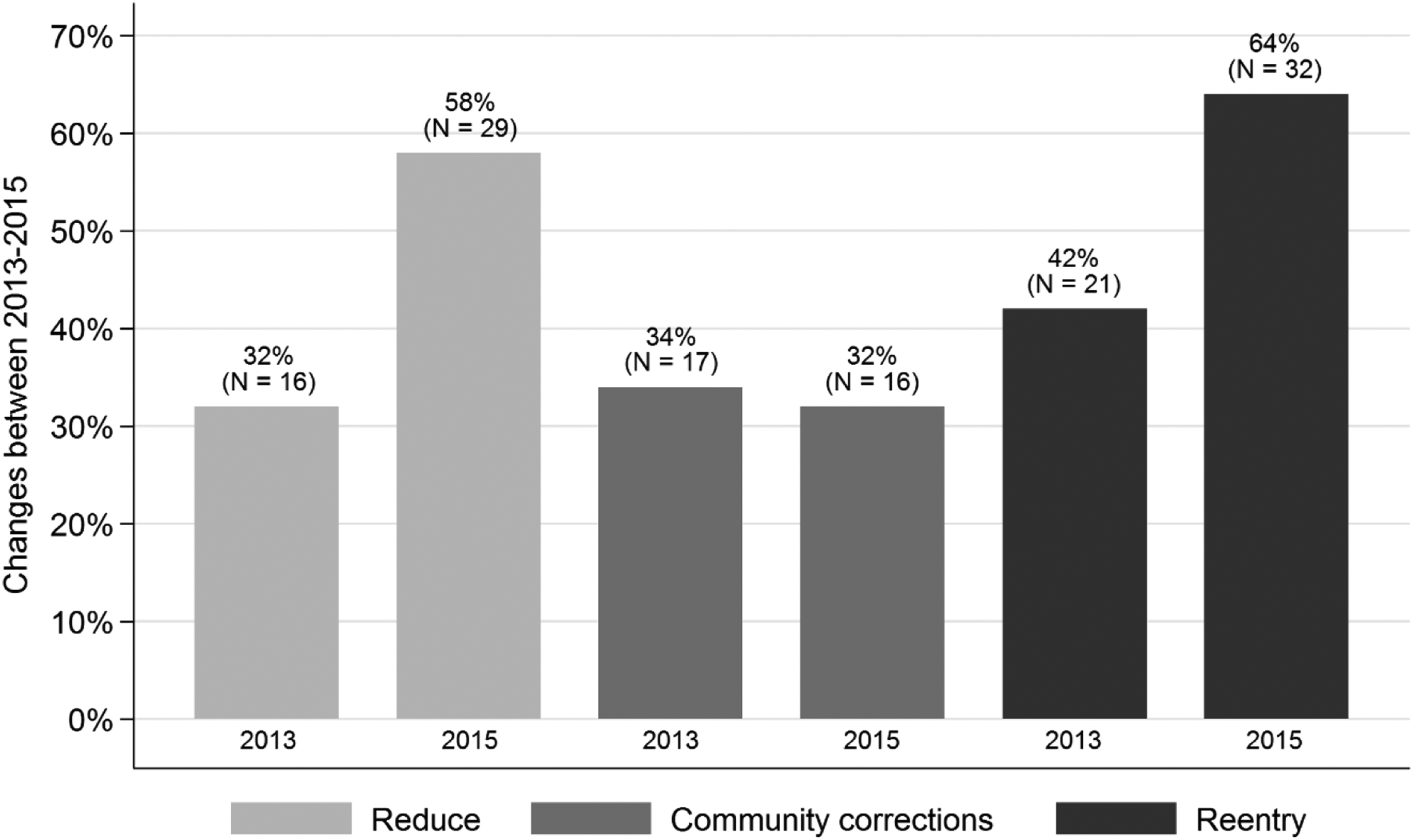
Types of legal change 2013–2015: reducing prison populations, expanding community corrections, supporting re-entry.
A diverse range of US states made legal changes apt to reduce their correctional populations, like repealing or limiting mandatory penalties, reclassifying offences or altering sentencing presumptions, or expanding access to early release mechanisms. The states that did not reduce are primarily Western states and southern states. Surprisingly, two traditionally liberal and innovative states, New York and New Jersey, did not adopt legal changes to reduce in this period. Since their prison populations fell by more than a quarter from 1999 to 2012 (Mauer and Ghandnoosh, 2015), there may have been no urgency to implement further changes. A wide variety of different types of states expanded community corrections during this period. This policy shift was not limited to a particular political or geographic unit, but was instead a much broader phenomenon, perhaps indicating a truly nationwide shift. Again, some of the more traditionally progressive states (e.g. Massachusetts, New York, Connecticut and Minnesota) did not expand community corrections during this period, although, it is possible that such states had already done so in previous years, and other states were now catching up. Almost every state took measures to improve re-entry into the community during this period, indicating once more the broad-based nature of this phenomenon. Therefore, we assume that state-specific constellations rather than broader political or regional pressures account for the adoption of such measures.
In order to achieve a clearer picture of such constellations, we conducted a comparative case analysis to identify constellations between 2008 and 2012 that either inhibit or facilitate the adoption of legal changes. The outcome is the intensity of legal change between 2013 and 2015 and the mean value of intensity for this specific group of states is presented. Case analyses were conducted for four categories of conditions: pressures to adopt change that represent the ‘critical juncture’; political orientation of the citizenry and the political actors; punitiveness of criminal justice; and social threat through crime. If appropriate, mean levels were calculated for each state for the period between 2008 and 2012, with the median as the cut-off point between high and low levels. Otherwise, the presence or absence of the condition during the period was used. For each configuration and outcome, the proportion and number of states is shown.
Results in Table 1 show a mixed pattern of configurations and outcomes. For pressures to reduce incarceration, higher debt levels between 2008 and 2012 were more conducive to change than incarceration rates, as they resulted in the highest mean level of legal change (2.82 and 3.00, respectively). Legislators in states with the lowest levels of incarceration and debt were least inclined to embark on legal changes, while states with both high incarceration and debt levels adopted a mean of three legal changes within these years. Configurations of higher pressure seem to present the critical juncture that sets states on a trajectory towards legal change.
Comparative case analysis: pressure, political orientation and social threat.
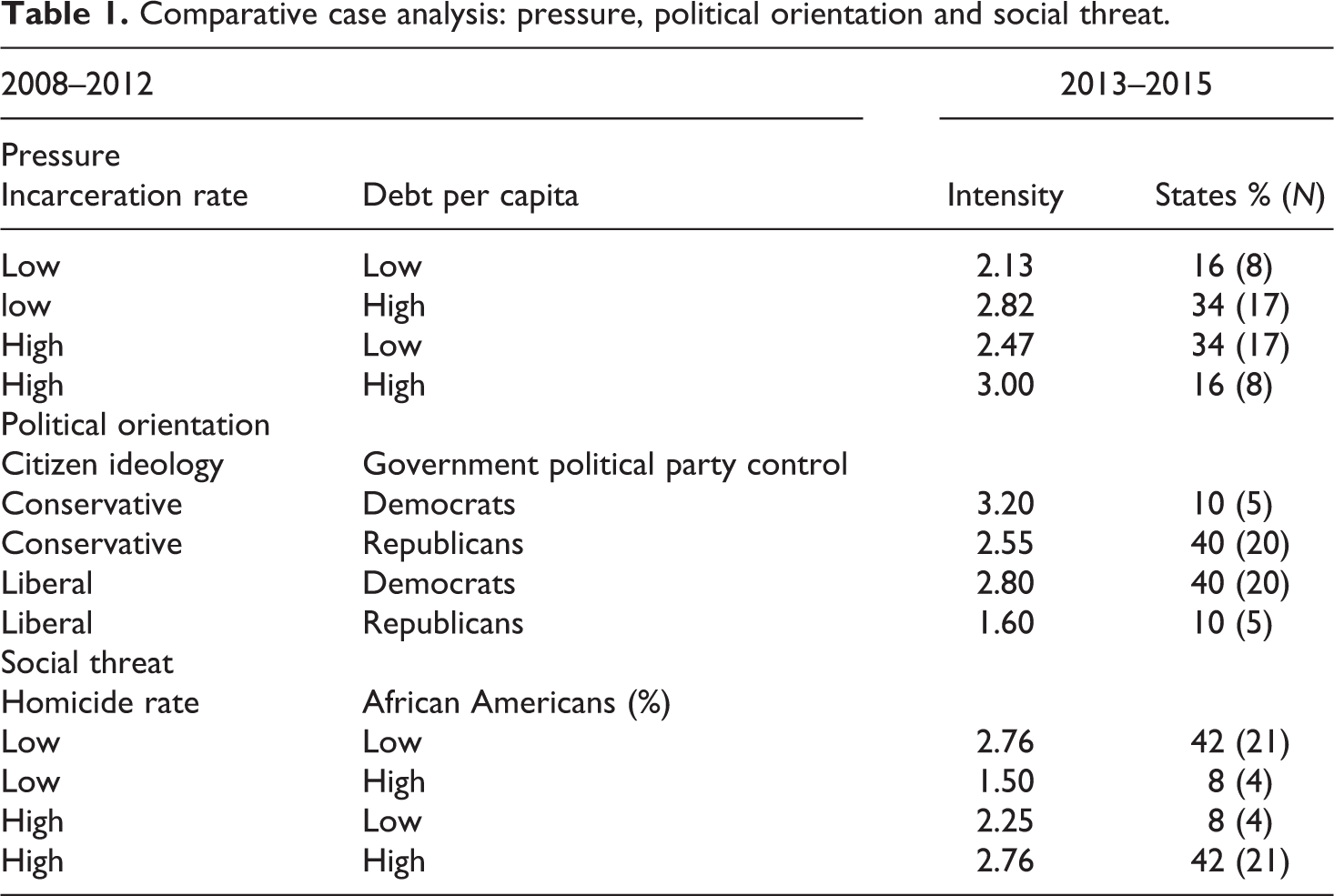
The results for political orientation of the citizenry and government/legislative powers show a mixed pattern. We find the highest level of legal change (3.2) where the citizenry tends to be more conservative and the governing bodies are more often controlled by Democrats; however, the second-highest level is found for states where the citizenry is more liberal and the governing bodies also controlled by Democrats. Interestingly, a substantive change level also exists where Republicans are in control of government and citizens are more conservative. Our results therefore indicate that both ideological agreement and ideological discrepancy between citizenry and government can foster legal change. However, ideological discrepancy can also reduce legal change, if a more liberal-oriented citizenry has a Republican-controlled state government. These findings might be indicative of conditions that encourage bipartisan action among legislators (Campbell et al., 2015; Dagan and Teles, 2016) but also of antagonistic conditions (Phelps, 2016). They further suggest that political elites are leading these legal changes without much involvement from the citizenry from either side of the political spectrum, as Zimring (2016) finds for California. Finally, legal change seems to be independent of constellations of social threat: both high and low levels of threat have the highest levels of legal change, and nearly half of the states (42%) embark on legal change under high threat conditions.
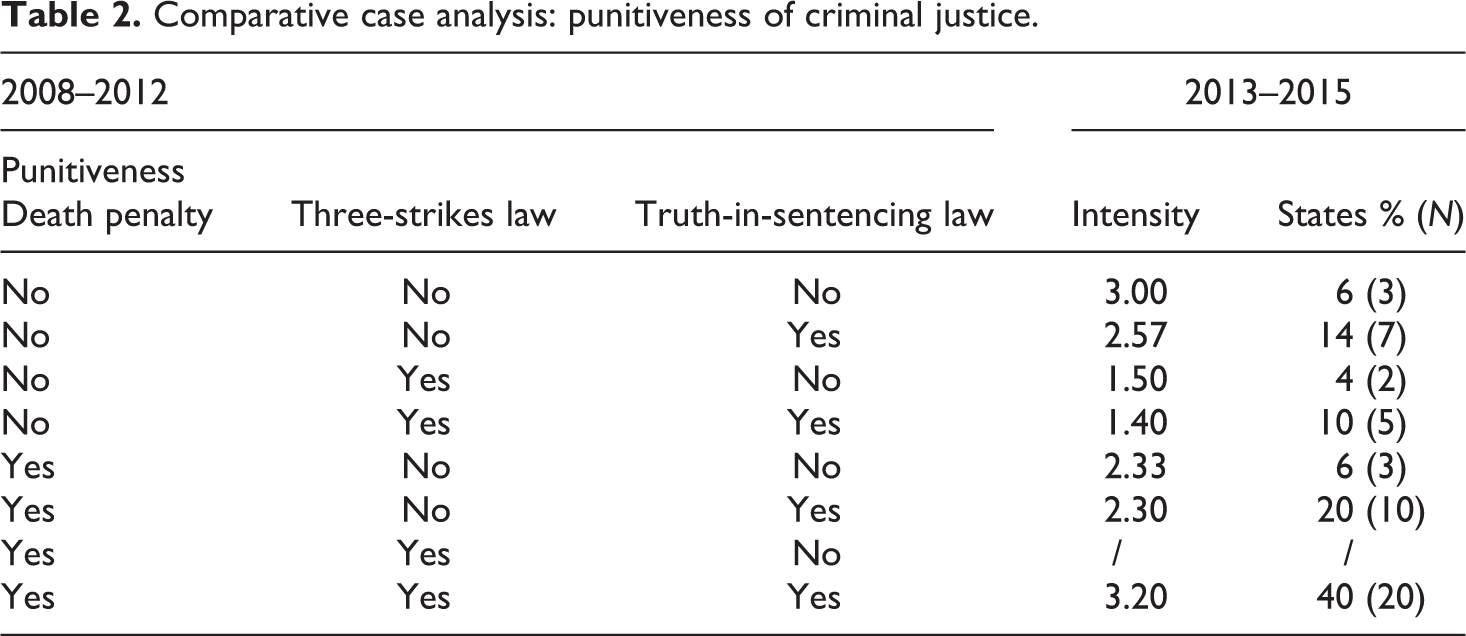
Table 2 presents the results for configurations of three conditions within the criminal justice system that indicate a more punitive orientation. However, two of these – three-strikes laws and truth-in-sentencing laws – have been identified as potential incentives for legal changes that either repeal or at least amend their impact, like, for example, enacting general sentencing reform or creating safety valves from mandatory minimum sentencing. Our results indicate that this might actually happen, in particular, in states with truth-in-sentencing laws. For three out of the four configurations, where states have truth-in-sentencing laws, we find the highest levels of legal change (2.57, 2.30, 3.20); these also comprise three-quarters of the states (74%). In contrast, only one of the three constellations with three-strikes laws has a high level of legal change (3.20), while the other two have the lowest levels of legal change. 9 As three-strikes laws do not affect large numbers, and presumably are less easy to amend than truth-in-sentencing laws, they might motivate legal change less. The potentially incentivizing effect of punitive laws is further demonstrated by the fact that the most punitive constellation has the highest change levels with an average of more than three changes within this group (3.20). The presence or absence of the death penalty does not seem to make a difference: three constellations where it is present have high to mean levels of change, as does one where states do not have the death penalty. The overall results for constellations of punitiveness suggest that previous punitive policies do not constrain legal change and might actually motivate enactment of legal changes.
Comparative case analysis: punitiveness of criminal justice.
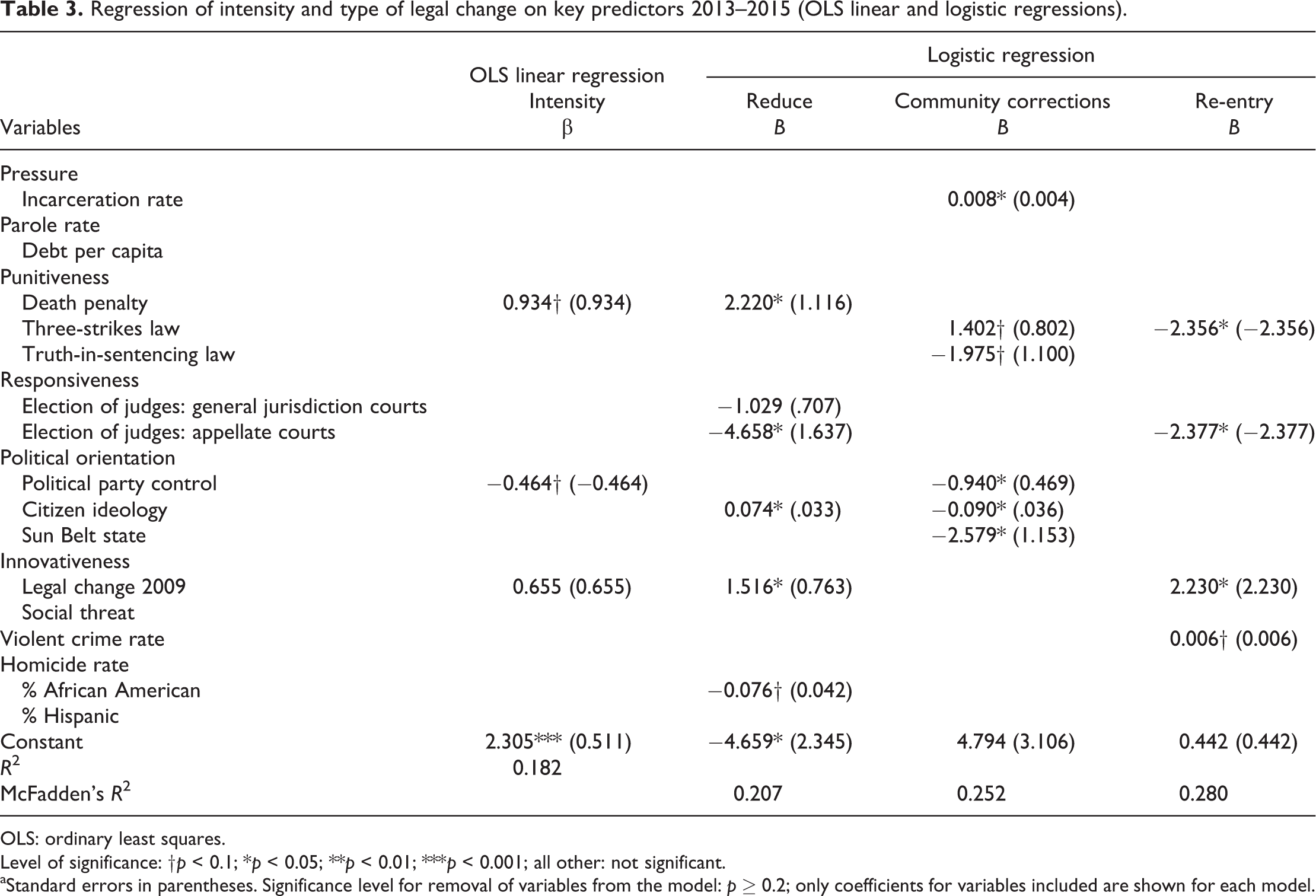
Comparative case analyses show how ‘conditions combine in different and sometimes contradictory ways to produce the same or similar outcomes’ (Ragin, 1987: x). Multivariate analyses take a different approach by breaking cases into separate and distinct characteristics along which they are then compared. They thus make simplifying assumptions about causes and their interrelations with each factor as a stand-alone (Ragin, 1987: x). Table 3 shows the results of the multivariate analyses for the intensity of legal change between 2013 and 2015, and its three components: whether legal change was implemented to reduce front-end imprisonment, to enhance community corrections or to improve re-entry of people leaving prison. Both linear (intensity) as well as logistic regressions (reduce, community corrections, re-entry) were conducted as stepwise models with a cut-off point for removal at p ≥ 0.2. We introduced all categories of variables, including pressure to change (incarceration and parole rate, debt per capita), punitiveness (death penalty, three-strikes laws, truth-in-sentencing laws), responsiveness of the criminal justice system (elections for courts of general jurisdiction, and for appellate courts), political orientation (government political party control, citizen ideology and Sun Belt state 10 ), innovativeness (legal change 2009) and social threat (violent crime rate, homicide rate, percentage African American, percentage Hispanic). Results for all variables that were included in each of the final models are shown.
Regression of intensity and type of legal change on key predictors 2013–2015 (OLS linear and logistic regressions).
OLS: ordinary least squares.
Level of significance: †p < 0.1; *p < 0.05; **p < 0.01; ***p < 0.001; all other: not significant.
aStandard errors in parentheses. Significance level for removal of variables from the model: p ≥ 0.2; only coefficients for variables included are shown for each model.
The results for the intensity of legal change reflect the mixed pattern that was achieved by comparing the outcomes of different conditions. In line with these, we find a positive impact of the death penalty on legal change. In addition, supporting the findings on party control of the government, control by Democrats tends to coincide with higher levels of change, while control by Republicans reduces legal change in this period. However, both variables are only significant at p < 0.1, and no other variable is included in the model. This speaks to the divergent and bidirectional impact of constellations in the political environment, public opinion, pressure and social threat in enacting legal change that we found in our case analysis.
For each of the three types of legal change a different set of determinants emerges. For measures reducing prison populations, both the presence of the death penalty and previous similar legal change have a positive impact, now significant at p < 0.05. Liberal citizen ideology is conducive to such legal changes. Most interestingly, the election of judges turns out to prevent legal change, with elections for general jurisdiction courts as well as for appellate courts having a significant and negative impact. In fact, a range of the different legal changes included in this category (e.g. repealing or limiting mandatory penalties, reclassifying offences or altering sentencing presumptions, deferred adjudication or reduced penalties for drug offences) might interfere with the policies promoted by those who were elected to judicial offices. A larger proportion of African Americans in the state also decreases the likelihood of adopting such measures; this finding indicates the continuous influence of race on crime policies, as none of the other crime-related factors comes into the equation.
Legal change to enhance community-embedded corrections is the only type that is driven by the pressure of high incarceration rates. Otherwise, such change is dependent on dominating political orientations: political party control of government, citizen ideology and Sun Belt state status all significantly impacted the adoption of measures like increasing diversion options, or graduated responses to violations of probation orders. Following our results from the comparative case analysis, Democratic control of governorships and legislatures increases the adoption of community-based criminal justice, and, simultaneously, a more conservative orientation of the citizenry has the same effect. Sun Belt states are significantly less inclined to adopt community corrections. Three-strikes laws seem to be an incentive for legal changes that divert from imprisonment, while truth-in-sentencing laws make legislators more averse to changes that provide alternatives to imprisonment, and keep sentenced individuals within the community.
Legal changes to improve re-entry into the community include services facilitating access to public benefits, housing and employment, or ameliorating the consequences of a criminal record (by, e.g. limiting public access to criminal history information). Previous legal change as measured in 2009 is conducive to such changes, which speaks to the continued popularity of these types of measures. In addition, even states with a higher violent crime rate adopt re-entry programmes, presumably because of the expectation of beneficial outcomes for recidivism; however, this is a small effect. In contrast, two characteristics of the criminal justice system turn out as impediments to such changes: both three-strikes laws and the election of judges for state appellate courts have a negative effect on the implementation of re-entry programmes. Indeed, as many of re-entry programmes are introduced within the framework of criminal justice agencies, it seems that entrenched harsh reactions as well as the responsiveness of criminal justice bodies to the population slow the pace of legal changes.
Conclusion
Both the financial crisis and the crisis of criminal justice combined into a ‘critical juncture’ (Soifer, 2012) that created a sense of emergency among policy actors and the public, and instigated new coalitions for change and shaped an environment for change. We use case and multivariate analyses in conjunction to explore the complex process when states aim to reduce high imprisonment rates, and adopt legal changes to achieve this goal. We find no clear-cut regional or political pattern across the states for the intensity of such changes between 2013 and 2015, nor for the three types of changes (i.e. reducing imprisonment, enhancing community corrections and supporting re-entry). As reform initiatives gain momentum across the United States, the impact of the original ‘critical juncture’ and the pressures of high imprisonment rates and debt lose their impact. It is specific combinations of permissive and productive conditions in states that drive change, and these conditions as well as drivers and spoilers of change vary according to the type of change. Both types of analyses thus demonstrate the complex patterns behind sometimes contradictory legal reform achievements in the states (Beckett et al., 2016: 239), and illuminate the ‘agonistic’ environment in which they are enacted (Phelps, 2016).
Our findings support some general conclusions. First, the punitiveness of a state’s criminal justice system can drive and motivate legal change but can also inhibit change. While the existence of the death penalty does not prohibit change, three-strikes laws simultaneously motivate and prevent change, while truth-in-sentencing laws seem to have a positive impact in conjunction with other characteristics but tend to prevent changes to re-entry.
Next, legal change can be held back from within the criminal justice system itself. Even if a more liberal-minded citizenry might facilitate change orientation among legislators – as we find for measures reducing imprisonment in the first place – the election of state court judges, and thus the responsiveness of the justice system, has a mostly negative impact on legal change. Given the fact that a more conservative orientation of the citizenry does not prevent change by default, it can be argued that judges elected in previous and more punitive periods seem to be the spoilers of some types of changes, and thus the justice system itself has a certain level of path dependency and inertia. Combining these results and our findings on the role of political actors and the citizenry, we suggest a triangle of conflicting actors – legal, political and public – accounts for the different and sometimes contradictory ways to produce penal reform in the states.
Third, our findings on the role of bipartisanship confirm the political elites as drivers of change (Zimring, 2016: 307). Given the complex pattern of citizen ideology and the political orientation of government and legislators, it can be assumed that the general public is not driving penal policies as in previous periods (Campbell et al., 2015). Citizens were found to be supportive of rehabilitation in Texas and giving a ‘permissive space’ to reform (Thielo et al., 2016; critical: Wozniak, 2016); our findings show that citizens on both sides of the political spectrum allow for such a space, and that they tolerate such changes. Such tolerance gives legislators the latitude they need to initiate and implement changes to reduce imprisonment. In such circumstances, social threat through crime and race plays a minor and inconsistent role.
Our findings indicate that each of the four explanations for the climbdown from mass incarceration (as outlined above) apply under certain circumstances, but none provides an overarching narrative for the legal changes that should generate such a decline in prison numbers. Our results do not give support to the grand narratives of punishment; neither a political economy framework emerges as dominant, nor one in which democratic structures and public demands interact in unambiguous ways. Instead, our results provide a cautionary tale about such grand narratives and the limited conditions in which such narratives apply; our findings also offer lessons for cross-national comparative analyses of punishment and the search for silver bullet variables. Ultimately, these findings warn us not to get locked into ‘punitive world views’ while ignoring signs of change.
Footnotes
Acknowledgements
The authors would like to thank Johanna Schönhöfer and Anthony Vander Horst for their assistance in the research.
Declaration of Conflicting Interests
The author(s) declared no potential conflicts of interest with respect to the research, authorship, and/or publication of this article.
Funding
The author(s) received no financial support for the research, authorship, and/or publication of this article.
Notes
Appendix
Descriptive Statistics.
| Mean | Median | SD | Min | Max | |
|---|---|---|---|---|---|
| Dependent variables | |||||
| Intensity | 2.6 | 2.0 | 1.6 | 0.0 | 6.0 |
| Reduce | 0.6 | 1.0 | 0.5 | 0.0 | 1.0 |
| Community corrections | 0.5 | 1.0 | 0.5 | 0.0 | 1.0 |
| Re-entry | 0.8 | 1.0 | 0.4 | 0.0 | 1.0 |
| Pressure | |||||
| Incarceration rate | 403.8 | 384.4 | 146.1 | 148.2 | 867.2 |
| Parole rate | 199.7 | 161.0 | 158.8 | 2.4 | 698.2 |
| Debt per capita | 3.8 | 3.4 | 2.2 | 0.8 | 11.3 |
| Punitiveness | |||||
| Death penalty | 0.7 | 1.0 | 0.5 | 0.0 | 1.0 |
| Three-strikes law | 0.5 | 1.0 | 0.5 | 0.0 | 1.0 |
| Truth-in-sentencing law | 0.8 | 1.0 | 0.4 | 0.0 | 1.0 |
| Responsiveness | |||||
| Election of judges: general jurisdiction courts | 1.2 | 1.0 | 1.1 | 0.0 | 3.0 |
| Election of judges: appellate courts | 0.4 | 0.0 | 0.5 | 0.0 | 1.0 |
| Political orientation | |||||
| Political party control | 1.5 | 1.5 | 1.0 | 0.0 | 3.0 |
| Citizen ideology | 54.7 | 53.7 | 15.4 | 24.4 | 86.1 |
| Sun Belt state | 0.2 | 0.0 | 0.4 | 0.0 | 1.0 |
| Innovativeness | |||||
| Legal change 2009 | 0.6 | 1.0 | 0.5 | 0.0 | 1.0 |
| Social threat | |||||
| Violent crime rate | 374.0 | 331.2 | 144.8 | 121.5 | 654.7 |
| Homicide rate | 4.4 | 4.2 | 2.1 | 1.0 | 11.4 |
| % African American | 10.7 | 7.7 | 9.6 | 0.5 | 37.2 |
| % Hispanic | 10.6 | 8.2 | 10.0 | 1.2 | 46.3 |