



Abstract
There appears to be a rift between the theoretical and normative understandings of what reconciliation means and offers, and what people expect to happen in postconflict scenarios. Here we present a conceptual framework that captures the definitional diversity surrounding the concept of reconciliation and then operationalizes it in order to analyze responses from postconflict populations. The illustrative application of our framework to responses from a representative survey of 1,843 Colombian citizens reveals that people’s convictions are just as diverse as scholars’. Nevertheless, significant proportions of respondents seem to understand reconciliation to be primarily a psychological and political process which aims to achieve the re-establishment of quotidian or day-to-day relations and cooperation; which should be preceded by the cessation of violence, dialogue, goodwill, and attitudinal and emotional change; and which should be accompanied by social welfare and security. It is noteworthy that understandings of reconciliation as a process mediated by justice, truth, and memory are scarce. The application of this framework will help to reveal differences between hopes and promises, and inform scholarly work and policymaking that is more realistically rooted.
Introduction
In transitional contexts, reconciliation is a catchword that is used to encapsulate a broad range of peacebuilding activities including rebuilding infrastructure, promoting social investment, tending to the needs of refugees and internally displaced populations, overcoming ethnic divisions, making reparations to victims, and reintegrating former combatants into (sometimes hostile) communities. In the context of a certain structure of incentives and of a specific public discourse underscoring the need to involve all of society in the task of building lasting and sustainable peace, actors are prone to label all sorts of activities as synonymous with—or conducive to—reconciliation.
The academic literature has not made significant progress toward overcoming this lack of precision. The term is used diffusely and is often reduced to narrow and profoundly subjective perspectives (Worchel and Coutant, 2008). In more expansive approaches, arguments suggest that reconciliation supports overall happiness, welfare, and productivity (Enright and North, 1998; Maltby et al., 2005), and that it is related to trust-building and the creation of virtuous social capital (Putnam, 1994) as well as the capability of designing institutions for economic development and political stability (Rodrik, 1999; Vargas, 2012).
The concomitant ambiguity in the translation of a large-scale reconciliation mandate into specific public policy may have practical implications. One central suggestion of the academic literature on peacebuilding is the need for policy to deliver palpable benefits to all of society in the short term once an end to conflict is achieved, so as to build legitimacy and viability for ongoing change and upcoming political and material costs. When reconciliation means too many things to different people, or when it means different things for society and for policymakers, such a goal may be more difficult to attain and risks for sustainable peace may be greater. In the absence of a proper characterization, policymakers may be at a loss as to how to fulfill promises and expectations related to future reconciliation in war-torn societies, while society may feel that its fundamental needs are neither being heard nor addressed.
What do ordinary people mean by reconciliation? To what extent do the scope and definitions of the term ‘reconciliation’, as expressed by citizens, reflect the dominant discourse of reconciliation policy? Does the people’s understanding of reconciliation reflect their experience of armed conflict or, more specifically, do forms of victimization have an impact on how people envision reconciliation? And finally, to what extent do scholarly propositions on what reconciliation means differ from ordinary citizens’ expectations?
We propose a methodological tool capable of accounting for the varying forms in which reconciliation’s contours have been defined by scholars, and also to describe to what extent people’s conceptions reflect them or not. By means of a definitional analysis as developed by Gerring (1997), we have created a multidimensional typology of seven scales and 60 categories to serve as a tool to systematically analyze people’s responses to questions on what reconciliation means.
Our focus on the micro-level is coherent with a recent academic interest in understanding every-day peacebuilding (MacGinty, 2014), which studies how ordinary citizens are involved in bottom-up peace and how their expectations shape the end of armed conflict and the implementation of peace agreements. The findings of this literature on local practices and challenges of peacebuilding question some of the unexamined tenets of transitional justice and peacebuilding models. Brounéus (2008b), for example, examines the healing power of truth and reconciliation processes in Rwanda and finds that, instead of relief, victims encounter renewed trauma and even ill health. Cilliers, Dube and Siddiqi (2015) studied postconflict recovery in Sierra Leone, and found mixed results: reconciliation efforts both strengthened social networks and caused depression and anxiety among individuals. On the issue of historical memory, Mälksoo (2015: 1) suggests that the ‘securitization of memory’ has delegitimized some forms of historical remembrances while criminalizing others. Mani (2005) argues that certain transitional justice mechanisms, such as trials and truth commissions, may deepen more than overcome social divisions. Andrieu (2010) develops a critique of top-down approaches to peacebuilding and transitional justice and proposes an approach focusing on civil society, dialogue, and social relations. These examples illustrate the need to continue uncovering the complex social mechanisms and meanings that produce—or fail to produce—peace and reconciliation. As suggested by some of these examples, more structural accounts of peacebuilding that focus on large-scale institutional and social reform or the design of funding schemes are important, but may be failing to grasp what peace and reconciliation represent for people in their daily and local practices, shaping, empowering, or curtailing the possible impacts of reconciliation policy. Colombia—a country witnessing an ongoing peace process between the government and the largest remaining guerrilla groups—represents an ideal case to show how conflict-affected societies assume the challenge of reconciliation. While each conflict context is unique, Colombia shares with other conflicts of long duration—such as Angola, Guatemala, Northern Ireland, and Sri Lanka—a history of spurs of violence as well as fatigue, multiple actors involved in fighting in addition to profound social divisions, and a legacy of conflict-related institutional atrophies. As an illustrative case, we applied our comprehensive framework to responses provided by citizens in a representative survey of 1,843 participants. Here we find that individuals’ conceptions are just as diverse as scholars’. However, significant proportions of citizens understand reconciliation to be chiefly a psychological and political process, whose aim is to achieve coexistence and acceptance; which relates to intergroup and interpersonal levels of conflict; and which should be preceded by the cessation of violence, dialogue, goodwill, and attitudinal and emotional change.
We expect our comprehensive framework to translate to other societies transitioning from war to peace, as a methodological alternative to measure people’s expectations.
In the following sections, we embark on an explanation of the difficulties of defining reconciliation and propose a new approach to deal with these difficulties by means of a comprehensive framework, before examining how experiences of victimization affect such views. We then present Colombia as an ideal case to test our empirical typology and present the results of coding people’s responses. We finish by summarizing our findings and suggest future lines of research.
A comprehensive framework
Rhetorical use, and abuse, of the term ‘reconciliation’ has led to it being sapped of a consistent, recognizable meaning. In fact, grand, overarching concepts typically suffer from over-stretching; that is, the attribution of meanings that go beyond the original formulation (Adcock and Collier, 2001; Brady and Collier, 2010; Sartori, 1970; Collier and Mahon, 1993).
Sartori (1970) proposes a careful definition of the relationship between the concepts in question and others that are broader and more abstract, and between them and those that are narrower. For their part, Gerring and Barresi (2003) suggest differentiating between minimal definitions—which capture the essence of the concepts and are applicable to most cases—and maximal definitions that describe specific types of cases and their attributes in greater detail.
We established the year 1996 as the start date of our literature review, given that it marks the most important contemporary surge of scholarly works on reconciliation, triggered by the establishment of the Truth and Reconciliation Commission in South Africa. As a result, the first works under review come from books edited in 1997. 1 In order to give relative weight to approaches currently under public debate, we also added peer-reviewed articles in indexed scientific journals from the last decade. 2 While we do not claim to have included every single work in the field, our systematic review ensures that every major current approach has been included to the most reasonable extent. We acknowledge continuing academic production, and would expect it to be addressed in any further use of our proposed framework. Examining 162 scientific articles, books and reports published between 1997 and 2014, 3 we identify at least five common approaches to the concept:
As a rhetorical resource, where no concrete meaning is defined;
As a synonym of neighboring terms such as peace, harmony, etc.;
As a multivocal term, with authors simply abstaining from choosing one definition over the many existing ones;
As a goal, where reconciliation is described as the endpoint of all manner of peacebuilding efforts;
As a process, which does not necessarily lead to a concrete outcome.
How do we come to terms with such diversity? Instead of arriving at a new best-conduct definitional analysis (Gerring, 1997) through which we can distinguish the essence of the concept from the variety of attributes attached to it by authors in a non-systematic way, we propose a precise description of the core issue and related attributes, and an operative multidimensional typology that captures the concept through the use of seven different scales: perspective, understood as the disciplinary emphasis in use; axis, addressing the presence or absence of references to the recent past or near future; levels, referring to who should reconcile; context, which provides a particular, given setting; depth, which refers to how far reconciliation should go; mechanisms, understood as what conditions are to be met before reconciliation can be possible; and assessment, which captures whether or not people believe in reconciliation as an achievable goal.
While some works have provided narratives to account for the variety of definitions available (Bloomfield et al., 2003; Bloomfield, 2006; Brounéus, 2003; Meierhenrich, 2008; Nadler, 2012), here we make use of the seven dimensions, and the categories they encompass, in order to systematically describe the way the literature approaches the concept.
Perspective
Many works reflect the influence of religious perspectives in their understanding of what reconciliation means. Usually, this influence takes the form of references to elements such as forgiveness (Brewer et al., 2010; Chan and Arvey, 2011; David and Choi, 2006; Mukashema and Mullet, 2012; Staub et al., 2005; Tam and Hewstone, 2008; Worthington and Aten, 2010), apologies (Gibson, 2006; Rigney, 2012; Staub, 2006; Verdeja, 2010), repentance (Amstutz, 2006; Lederach, 1999), or guilt (Behrendt and Ben-Ari, 2012; Lu 2008; Wüstenberg, 2009); or direct advocacy for a role for religious leaders in reconciliation processes (Clark, 2010; Horn, 2010).
Meanwhile, psychological perspectives typically link reconciliation to processes of attitudinal and/or emotional change (Bar-Tal and Bennink, 2004; Brounéus, 2009; Bruneau and Saxe, 2012; Kaufman, 2006; Long and Brecke, 2003; Mukashema and Mullet, 2010; Nadler et al., 2008; Poitras, 2010); as well as personal healing (Abu-Nimer, 2001; Brounéus, 2010; Duncan, 2009; Hirsch, 2012), that should ideally affect postconflict behavior and personality traits and conditions.
Philosophically, some authors discuss the inherent difficulties of defining the logical contours of the term (Bhargava, 2012; Lingis, 2011; Schaap, 2006). In literature with a juridical leaning, reconciliation is usually seen as the endpoint of a process mediated by elements such as justice, truth, reparation, or memory (Aiken, 2010; Arenhovel, 2008; Du Bois and Du Bois-Pedain, 2009; Clark and Kaufmann, 2009; Gellman, 2008; Humphrey and Valverde, 2008; Huyse and Salter, 2008; Isaacs, 2014; Kelsall, 2005; Quinn, 2009; Rettig, 2008; Rushton, 2006; Szablowinski, 2008; Ure, 2008). Closely related to this, historical perspectives also stress the need to come to terms with the recent past of violence, but not necessarily with juridical ends (Encarnación, 2008; Kwak and Nobles, 2013; Suh, 2010; Shih and Chen, 2010). Economic perspectives tie reconciliation to the creation of new contexts of insertion and fair competition in a labor market, especially for affected populations (Fearon, 2009; Zorbas, 2004).
Political reconciliation, for its part, entails coexistence with adversarial groups within a commonly accepted political system, such as democracy. This understanding usually implies intergroup dialogue and sometimes the building of a vision of a common future (Chen 2010; Kohen et al., 2011; Dembinska and Montambeault, 2015; Gibson, 2007; Murphy, 2010; Raftopolous and Savage, 2004; Schaap, 2004, 2005; Schiller, 2011; Verdeja, 2012; Whittaker, 1999; Xyangyu et al., 2012). Going even further, some authors suggest this understanding implies a transformation of ideologies, beliefs, narratives, and identities better suited to a postconflict setting (Moon, 2006; Rigby, 2001; Theidon, 2006; Verdeja, 2009).
Dimensions of reconciliation: A comprehensive definitional framework.

Axis
Most works are situated on a horizontal axis; that is, referring to a present-time relationship between individuals, groups, or societies as a whole. However, some works specifically define reconciliation as coming to terms with the past and/or projecting a common future (Lederach, 1997; Rigney, 2012; Rushton, 2006; Staub, 2006), along what is described as the vertical axis. 4
Levels
Most works focus on intergroup- and individual-level reconciliation. However, at higher levels of abstraction, some authors describe reconciliation between states or nations (Dingli, 2010; Elbe, 2003; Funabashi, 2003; Horne, 2009; Pratt, 2006; Suh, 2010; Ripsman, 2005; Yang, 2003). And immediately below, some works present reconciliation as a national, societal-level task (Bornman, 2006; Brounéus, 2008a; Siani-Davis and Katsikas, 2009; Verdeja, 2010) in which official apologies are sometimes necessary.
Context
We confine our definition to four types of comparable settings. While reconciliation as a concept may be applicable to a wider array of social interaction spaces (e.g. family, work, organizations, etc.), we are interested in cases where societies attempt to overcome a recent past of violence and division. Post-internal armed conflicts provide the most common context from which empirical evidence is collected, but there are also works derived from contexts of post-mass violence or genocide (Amstutz, 2006; Clark and Kaufman, 2009; Kohen et al., 2011; Gellman, 2008; Ishiyama and Backstrom, 2011; Mukashema and Mullet, 2010, 2012; Rettig, 2008; Staub et al., 2005), post-international wars (Bakke et al., 2009; Dingli, 2010; Funabashi, 2003; Horne, 2009; Kwak and Nobles, 2013; Maoz, 2009), and post-authoritarian regimes (Arenhovel, 2008; Encarnación, 2008; Gibson, 2005; Horn, 2010; Humphrey and Valverde, 2008; Moon, 2006; Du Pisani et al., 2010).
Depth
Our scale is composed of ten ordered categories that capture a range from a minimal, i.e. mutual recognition, to a maximal depth of reconciliation, i.e. interdependence. Each of these categories is found in the literature under review and reflects the level of demand imposed by authors in order to consider a relationship to be restored, and reconciliation to have taken place.
Mechanisms
This is a 30-category scale that reflects the varying answers to the question ‘What needs to happen in order to achieve reconciliation?’ Some literature reflects notions according to which restoration of a relationship based on a cessation of violence amounts to a minimal form of reconciliation (Bouandel, 2004; Duncan, 2009; Gellman, 2008; Rushton, 2006). At the other extreme, reconciliation is conceived of as a concept that falls just short of peace. In between, authors assume a number of preconditions for and consequences of a reconciliation process, on which they remain far from consensus.
Thorough reflections on what reconciliation means do not lead to naïve conceptions in which, ideally, every mechanism should be put into motion in order to achieve a maximal level of reconciliation. In fact, a good number of authors call into question the assumption that elements such as truth help reconciliation, and suggest ways in which it might even impede it (Brounéus, 2010; Clark, 2012; Mendeloff, 2004). Another group of authors points out the dangers of some forms of memory, which may lead to the counterproductive stirring up of negative emotions, thus pulling antagonists even farther apart (Clark, 2013; Neff, 2005; Rieff, 2011; Robben, 2012), not to mention the potential backlash in response to mechanisms of punitive justice (Vrbetic, 2013) or even attempts at reparation (Immler, 2012; Vogel, 2005). Going even further, Eastmond and Selimovic (2012) propose silence, rather than explicit interaction, as a legitimate form of reconciliation, while MacGinty (2014) defends the idea of escaping conflict in everyday life.
Assessment
Our final scale reflects either a positive, skeptical or openly negative perception of the possibilities of reconciliation in real life. By definition, all authors reviewed here assume reconciliation to be a feasible process or goal, with varying degrees of skepticism. In the tradition of Hanna Arendt (1998 [1958]), however, we could also argue that in the presence of ‘radical evil’, reconciliation is simply impossible.
From most of the cited literature, we can infer a common attribute shared by different authors and disciplines: relations. Some texts describe reconciliation as establishment or re-establishment of fractured relationships between individuals, groups, societies, or even institutions. From here, we conclude that a core definition of reconciliation which is consistent with most literature and which could broadly be applied to most works is: ‘the (r)establishment of relations between former antagonists’. Different maximal definitions might use this as starting point in order to better suit policy or scholarly interests.
A methodology of projection
While there has been some criticism of nominal-scale typologies, particularly regarding their suitability for use in old-school quantitative analysis, their empirical contribution remains uncontested (Collier et al., 2012).
Our proposed typology departs from ideal types in order to devise an operative tool that might be put to use in empirical works. Each of our seven scales can be considered collectively exhaustive—accounting for most definitions—but only partially exclusive; that is to say, a definition might fall into more than one category simultaneously (Collier et al., 2008), in recognition of the complexities of different understandings of the concept.
Our comprehensive framework is applied here as an exploratory projection technique that aims to gather information about individuals’ cognitive associations. Projective techniques have been used in cognitive and non-cognitive psychology in order to explore personality traits or emotions. Although there is some controversy as to whether projective techniques are scientifically reliable (Lilienfeld et al., 2000), they are nevertheless acknowledged as methodologically useful to generate hypotheses which can later be tested more systematically (Soley and Smith, 2008; Storey et al., 2014). Hence, here we opted not to make use of any specific clinical projective technique intended to generate precise diagnoses (Hibbard, 2003), but rather to employ a free associative task by which individuals spontaneously link the concept of ‘reconciliation’ with the variety of attributes mentioned above. We assume that the ambiguity of the concept itself helps to better reflect the respondents’ inner personality (Leichtman, 1996). Conversely, a more structured approach where all categories would be presented beforehand to respondents could trigger strong social desirability biases, limiting the quality of information we could derive from individuals.
In the case of our Colombia-based survey, presented as an illustrative case in the following section, our framework is used to code responses provided by our sample to two free-association oriented questions.
Colombia as an empirical case study
The Colombian armed conflict has left a legacy of social wounds and broken relations in need of reconciliation. About 5.7 million people were internally displaced in Colombia between 1958 and 2010; another 220,000 were killed, 80% of them civilians. There have been approximately 11,000 landmine victims; about 30,000 kidnappings; and as of 2013, 25,000 people were still classified as forcibly disappeared (CNMH, 2013).
Governmental efforts to put an end to the armed conflict have included a set of material and financial incentives encouraging right-wing and often government-sponsored paramilitaries and leftist revolutionary guerrillas to demobilize. Between 2003 and 2015, about 35,000 paramilitary and 15,000 guerrilla fighters demobilized and resettled in communities, where social tension has been on the rise (Prieto, 2012; Nussio, 2011). Ex-combatants and war victims—primarily the internally displaced—tend to resettle in communities that are already violence-affected and marginalized. Even though some rapport is established between them due to social proximity (Rettberg and Prieto, 2010), ideological identities and war-related stereotypes usually remain. 5 Ex-combatants and victims feel stigmatized by host communities, while members of receiving communities fear and distrust them. These three segments, in turn, demonstrate clear signs of resentment and distrust toward state institutions, which are typically blamed for their grievances (Ibáñez and Velásquez, 2009; Nussio et al., 2015; Rettberg, 2014). 6
In light of an ongoing peace process between the government and the main guerrilla groups in the country, underway since 2012, the armed conflict is now abating. However, postconflict windows—time- and space-bound opportunities during which the conflict remains inactive and thus peacebuilding measures can be pursued—have enabled the Colombian government, over the last ten years or so, to draw up and implement strategies aimed at moving toward a postconflict scenario. This strategy has included the passing of legislation (the Justice and Peace Law and Transitional Justice Law in 2005 and 2010 respectively) that aimed to provide judicial benefits to demobilized ex-combatants; a Victims’ Law in 2011 to pursue land restitution and compensation for displaced persons as well as other forms of reparation; a functioning reintegration program for about 55,000 voluntarily demobilized ex-combatants under the supervision, since 2006, of the Colombian Agency for Reintegration; and a Victims’ Unit charged with assisting about eight million people registered since 2006.
Much like other conflicts of long duration, such as those in Angola, Sri Lanka, and the Philippines, Colombia has undergone waves of more or less intense and brutal violence, as well as the spread, diversification, and transformation of illegal armed actors. After more than five decades of armed confrontation, people’s attitudes, depending on their level of exposure and region of the country, range from indifference to ongoing fear and disdain.
Within this context, in 2012 the National Center for Historical Memory (CNMH in Spanish) led a consortium of researchers to conduct a representative survey about people’s perceptions of peace and justice. 7 The survey included 90 items, including questions about forgiveness, truth-seeking, historical memory, prosecution, and victim reparations. 8 A total of 42 municipalities in the six Colombian macro-regions were selected to take part in the survey, before five households in each selected block were randomly surveyed. These procedures resulted in a total sample size of 1,843 respondents. 9
Two open-ended questions on reconciliation were included in the survey. Question One was: ‘When you think of reconciliation with former members of armed groups, now demobilized, what comes to mind?’ Question Two was: ‘In your opinion, what is required so that the country can advance with a reconciliation process?’ The following section describes our methodological strategy used to apply the comprehensive framework to responses in our representative survey. Results describe the general way in which ordinary citizens conceive of reconciliation within the wide array of conceptual options offered by scholars.
When looking at other transitional societies, we see that individuals who have been victimized tend to differentiate in their attitudes and behaviors in a number of ways when compared to those relatively unharmed. War experiences affect people’s financial decisions (Voors et al., 2012), political leanings (Canetti et al., 2013), moral values (Dyrstad, 2013), and public opinions (Aguilar et al., 2011; Brewer and Hayes, 2011; Samii, 2013). In addition, the perceived depth of war-related crises and the resulting perception of security, which vary across time, also affect people’s opinions: Increased (perception of) crisis reduces recalcitrance and promotes openness to innovative solutions, while diminishing crisis activates intransigence in transitional contexts.
The Colombian case, on the other hand, shows that patterns of differentiation start to blur when conflict protracts, causing fatigue. In fact, opinions and attitudes toward key issues such as justices, truth, or reparation measures among victims and non-victims tend to converge, expectedly due to mechanisms of resilience, social desirability, proximity, or even victimization spill-over (see Nussio et al., 2015). As a result, we expect people’s opinions to vary according to whether they experience a recent or protracted, surging or waning type of conflict, which should, in turn, reflect on the pattern of responses on their views on reconciliation. 10
Methods and results: What do people expect to happen?
A group of 11 codifiers undertook the task of using our comprehensive framework to codify the qualitative responses of the 1,843 respondents. 11 For each dimension, coders pre-classified the exact wording of respondents according to whether it resembled each category in every dimension. In cases where exact wording coincided between our framework and a respondent, coders would code ‘1’ for the given category, and would assign ‘0’ to the remaining ones. When respondents’ wording was not the same but came close enough to one or more categories, coders selected the less ambitious option (e.g. ‘recognition’ rather than ‘harmony’) in order to keep a conservative and replicable coding scheme. In a few cases, coders marked more than one category in each dimension, when responses clearly encompassed them. 12
Reliability tests
A number of reliability tests were applied to the final coding. Procedures for these tests included the following steps:
Five randomly selected respondents from the survey were blind-assigned to all coders.
For each coder, we estimated the number of matches with the codes assigned by the remaining ten coders.
Then, we estimated the proportion of matching codes between the given coder and the rest.
Finally, we estimated an average proportion of matching codings between each coder and the remaining ten.
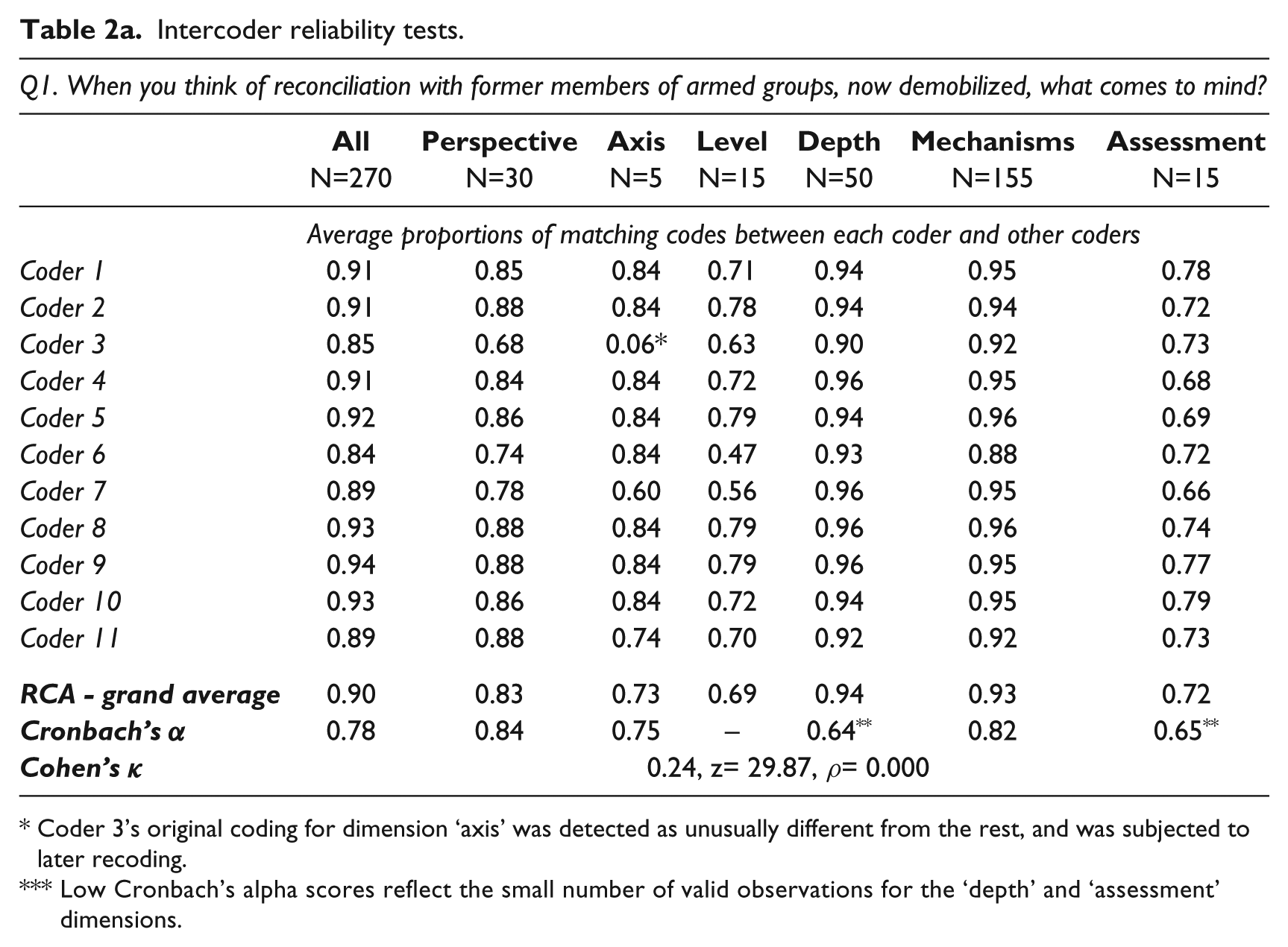
We repeated this procedure until each coder had an estimated matching average. Table 2a shows matching averages for each coder for a total of 270 coding decisions on answers provided by the five randomly selected respondents to Question One. In addition, we disaggregate averages for each reconciliation dimension. The last rows present an average of averages—Rate of Intercoder Agreement (RCA)—for the full set of codes, and for each dimension. We include Cronbach’s alpha and Cohen’s kappa as additional measures of how close each coder tended to assign categories with respect to others.
Intercoder reliability tests.
Coder 3’s original coding for dimension ‘axis’ was detected as unusually different from the rest, and was subjected to later recoding.
Low Cronbach’s alpha scores reflect the small number of valid observations for the ‘depth’ and ‘assessment’ dimensions.
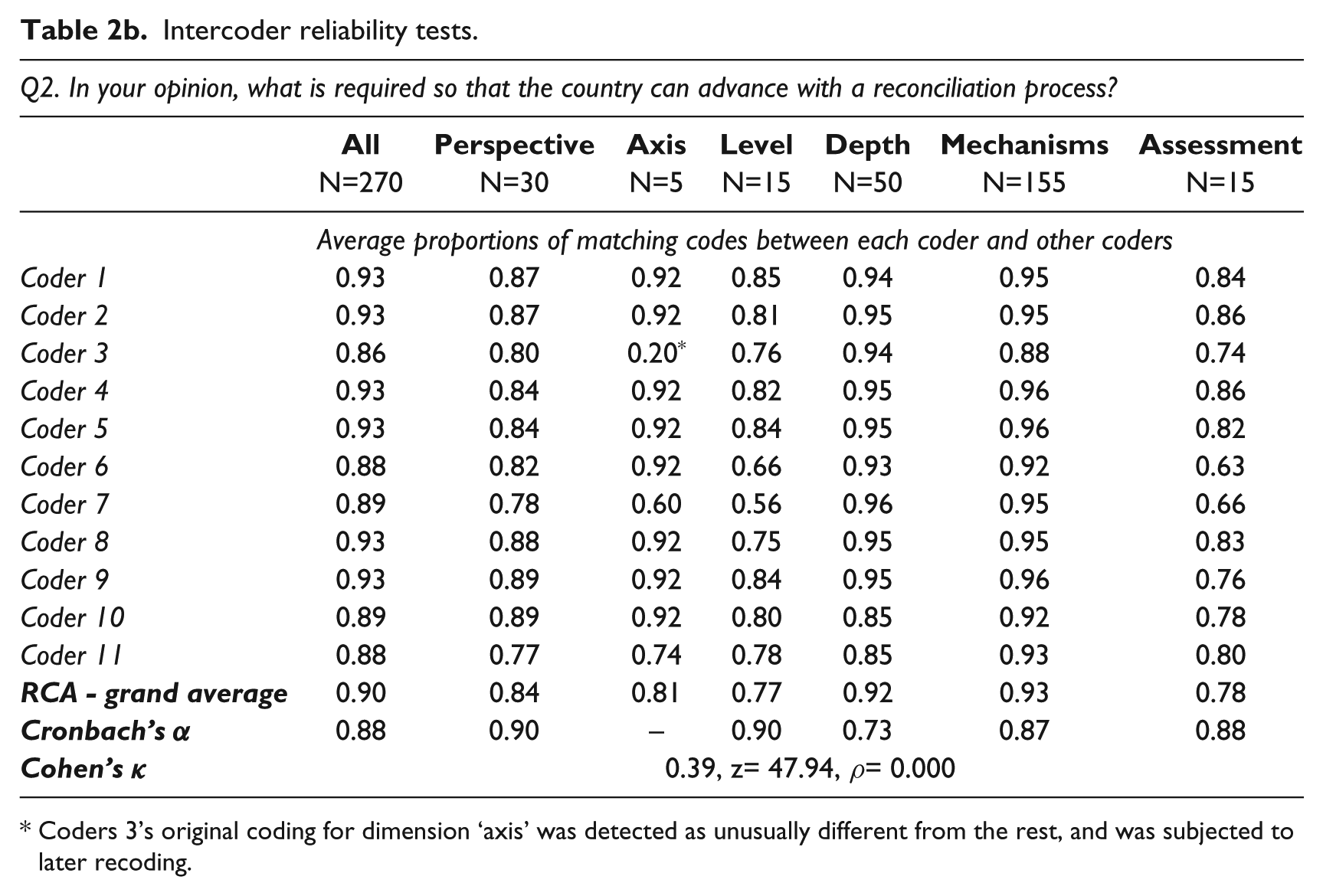
In general terms, our reliability measures show that codes assigned by the coders are relatively close to one another. We observe, for instance, that according to the RCA, the 11 coders on average tended to assign the same codes in 90% of the cases. We also notice that one out of 11 coders (Coder 3) had problems with the axis category and her codes were significantly different from those assigned by her colleagues. Thus, we later decided to resubmit this subset of codes to a new round of coding. The most difficult codings were levels and assessment, where the levels of subjectivity were comparatively higher. Table 2b presents an analogous exercise applied to answers provided to Question Two.
Intercoder reliability tests.
Coders 3’s original coding for dimension ‘axis’ was detected as unusually different from the rest, and was subjected to later recoding.
Again, we see that our RCA, Cronbach’s alpha, and Cohen’s kappa measures suggest a slight variation between coding decisions among our 11 coders. But we also observe that Coder 3 had problems with the axis category, and therefore this subset was resubmitted to a new round of coding. In the case of Question Two, the most difficult codings were those for the levels and assessment dimensions, although we can see they are fairly reliable.
Descriptive results
In this section, we present the descriptive results of our coding scheme, disaggregated for the six dimensions under study. 13 In each case, a series of graphs displays the frequency of codes ‘1’ assigned to each of the categories in each question, and then the aggregated frequencies for both questions.
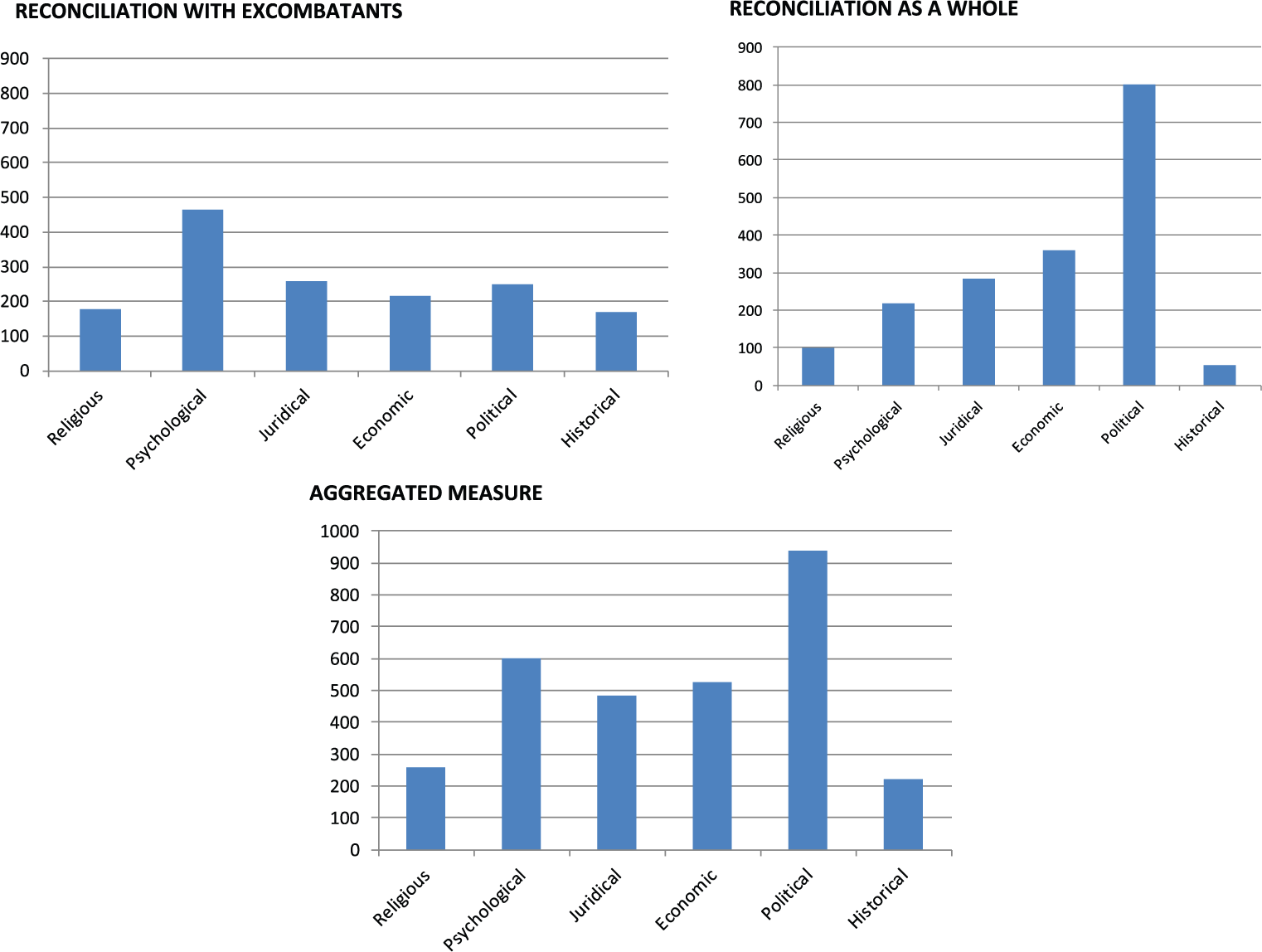
As seen in Figure 1, when asked Question One, referring to reconciliation with former members of armed groups, people tended to associate the concept with the need for attitudinal and emotional change. When asked Question Two, referring to reconciliation in general terms, people conceived of reconciliation as a political process related to a new functioning of state institutions, and the promotion of dialogue and a civilized exchange of ideas. According to the composite measure, most respondents assumed reconciliation to be primarily a psychological and political process.
Perspective (disciplinary emphasis).
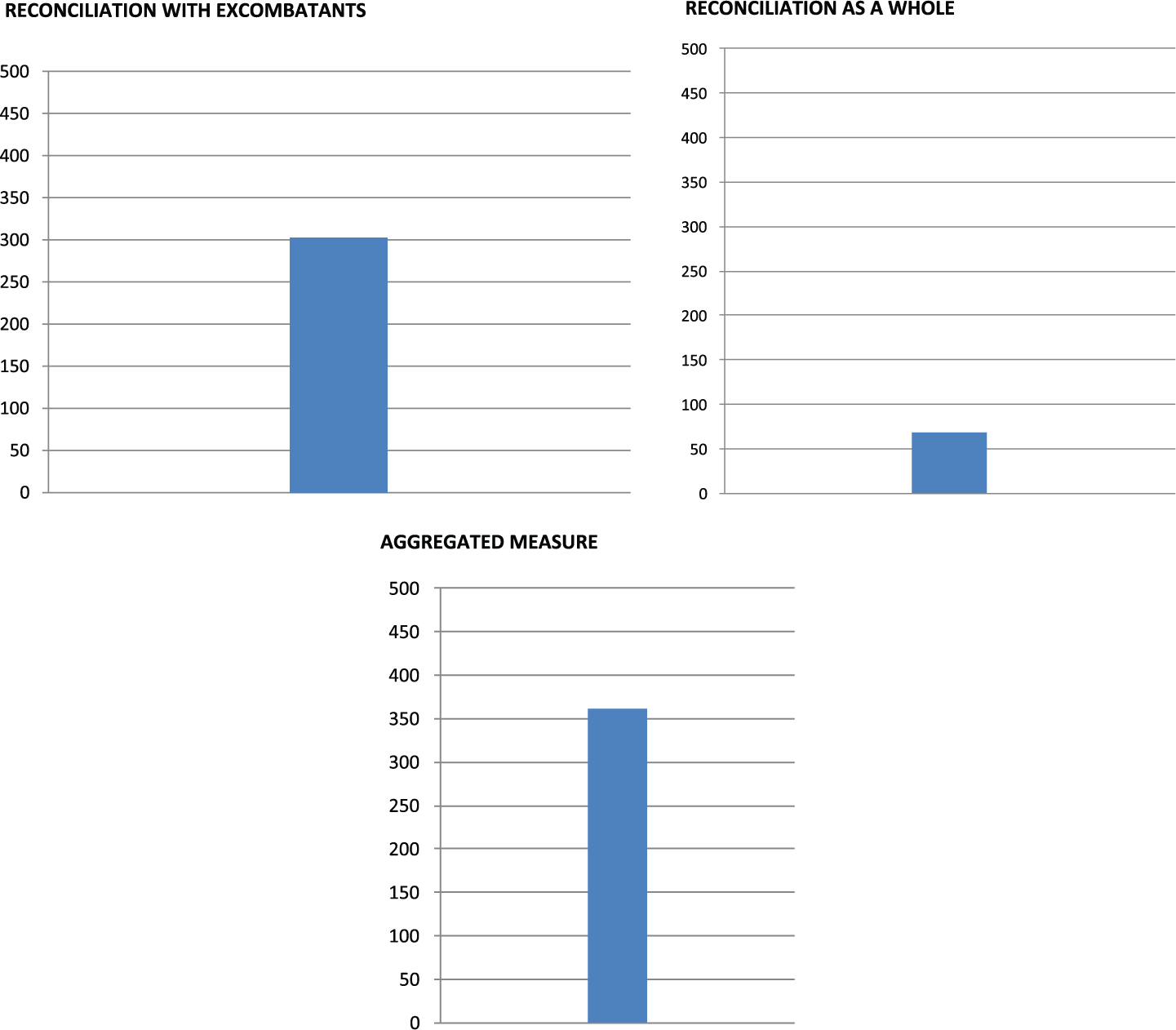
Figure 2 shows that only a small fraction of respondents associate reconciliation with the challenge of coming to terms with the recent past of violence. That is, most respondents assume reconciliation as a horizontal, rather than vertical, process.
Axis (references to past or future).
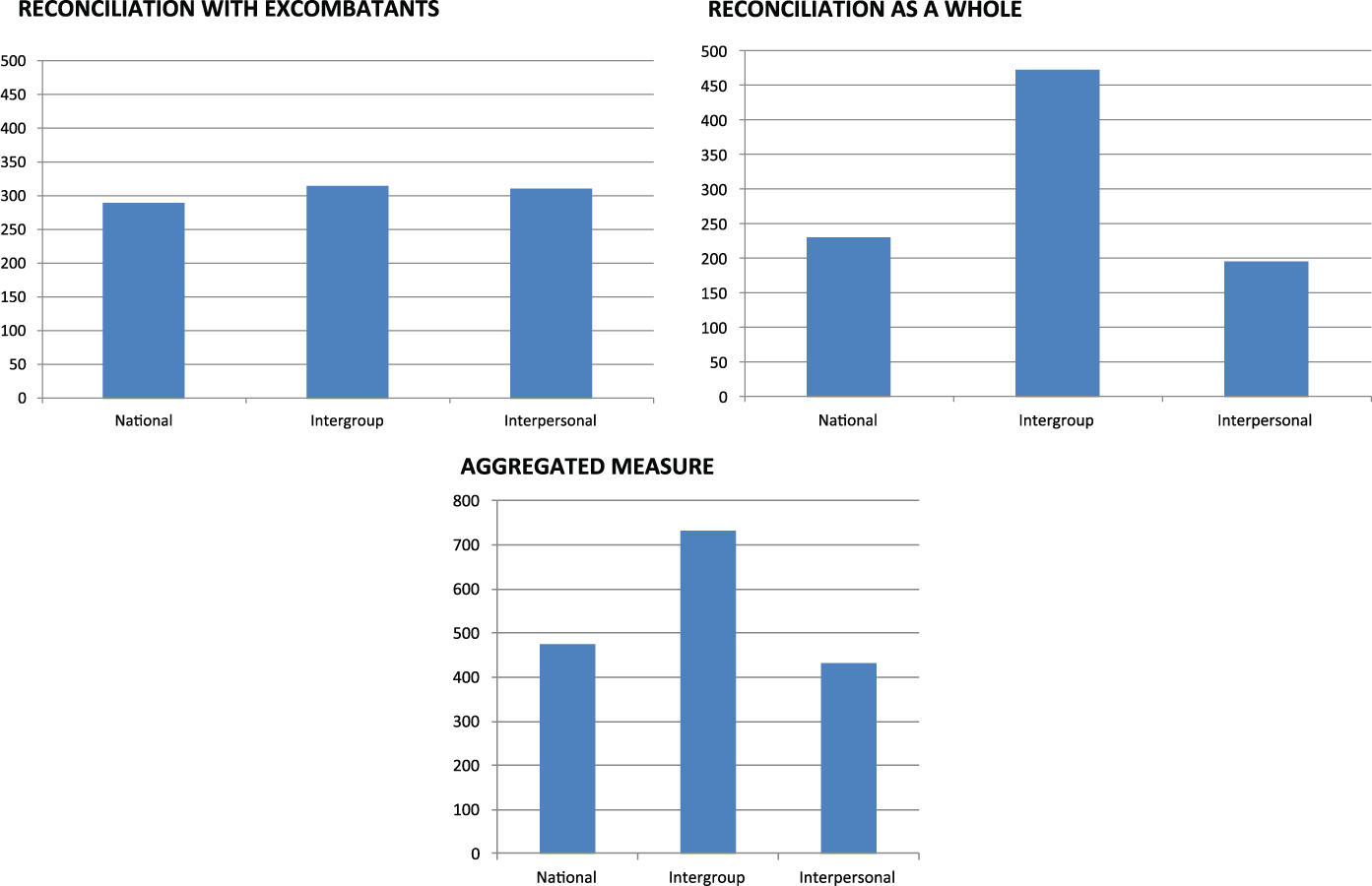
According to Figure 3, there is a great variation in how people think of the level at which reconciliation with ex-combatants should take place: as a societal goal, as an intergroup process, and as an interpersonal challenge. However, in the case of Question Two, people describe reconciliation mainly as an intergroup process, which is also the tendency according to the composite measure.
Levels (who should reconcile).
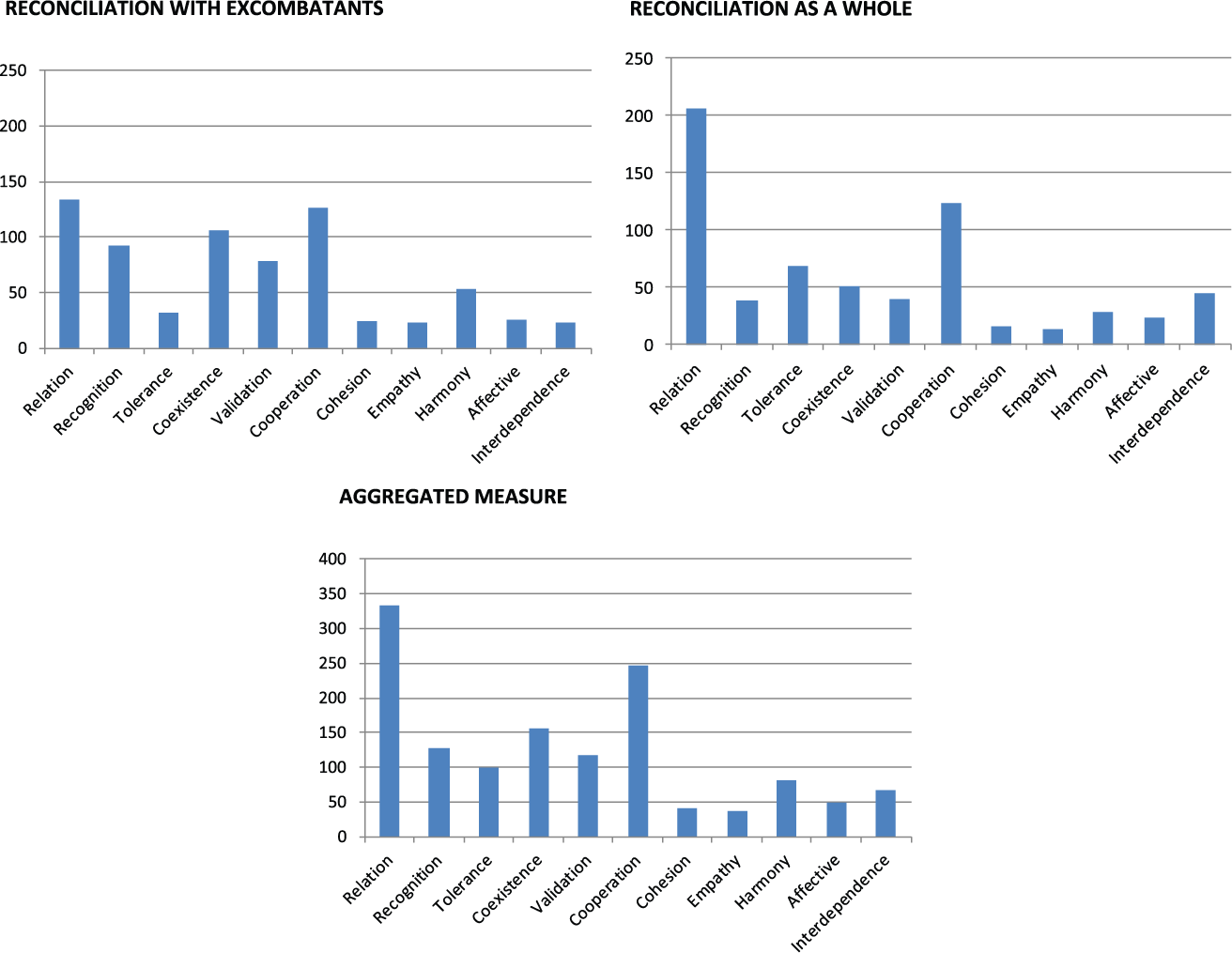
In Figure 4, we see a wide variety of conceptions regarding how far to go in a process of reconciliation with ex-combatants. However, most participants would go no further than cooperation, falling short of attempting to achieve cohesion, empathy, harmony, affective bonding, or interdependence. Asked about reconciliation in general terms, people conceive of it as a process of re-establishment of relations and cooperation, rather than recognition, tolerance, coexistence, or any other attribute. This latter result is highlighted by the composite measure.
Depth (how far reconciliation should go).
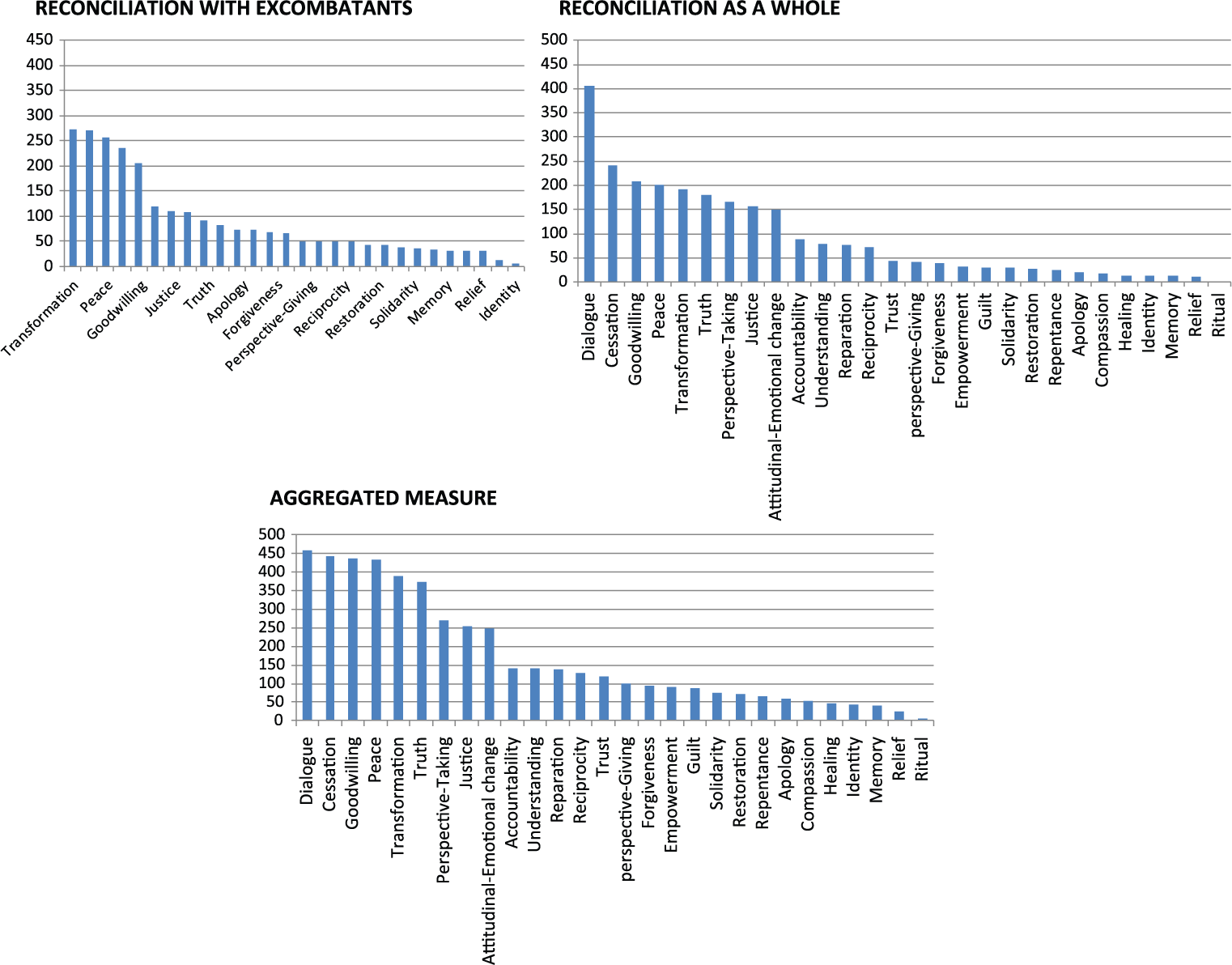
When opining on how to achieve reconciliation with ex-combatants, people mention the need for personal transformation and attitudinal and emotional change, a cessation of violence, showing goodwill, and ultimately attaining peace first. This is shown in Figure 5a. When explaining how to achieve reconciliation as a general concept, most respondents mention the same elements, adding dialogue. This element draws further attention in the composite measure. An additional mechanism, structural change, is analyzed separately in Figure 5b.
Mechanisms (what are conditions for reconciliation).
Structural change.
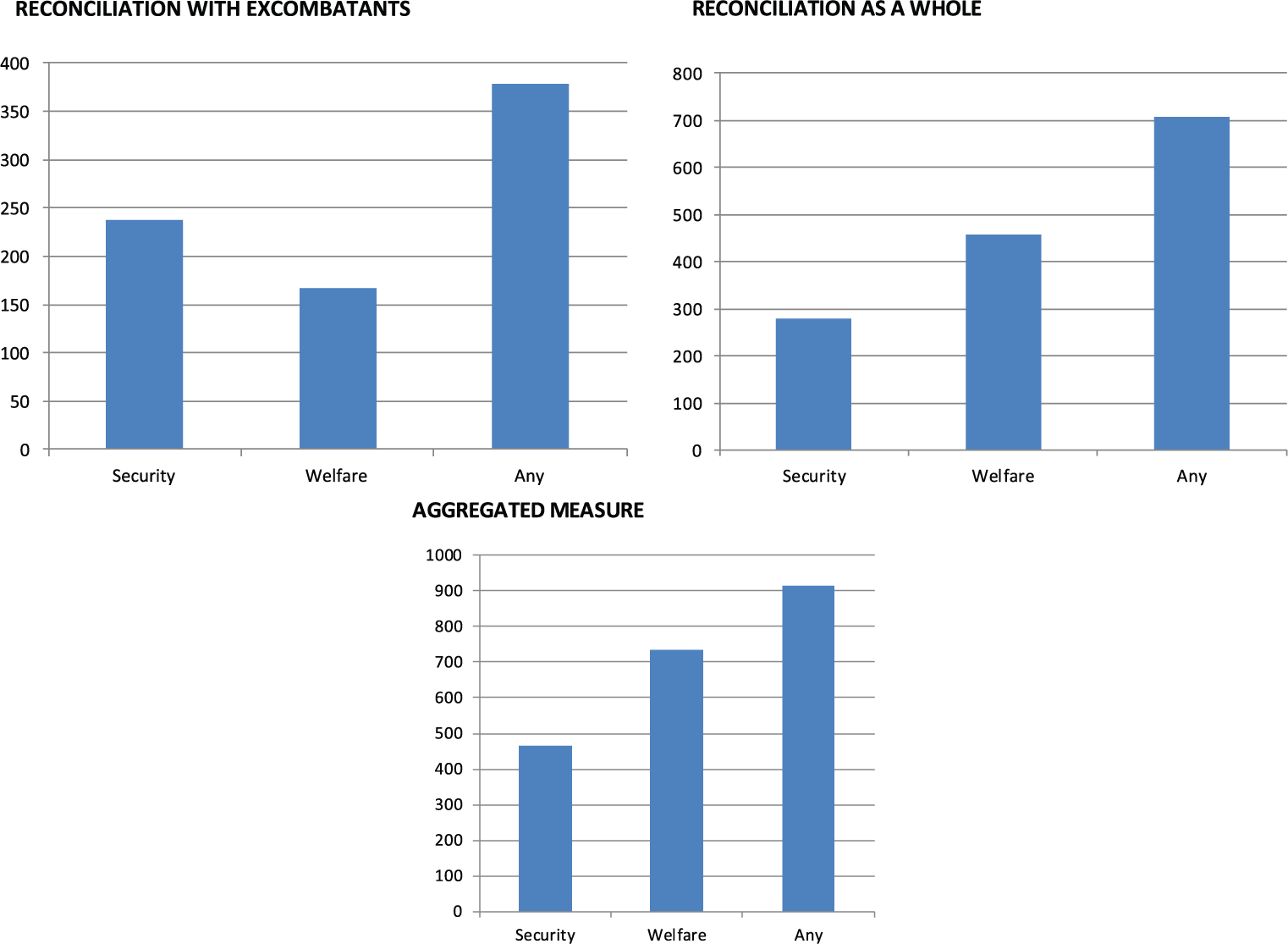
All three measures in Figure 5b show that large proportions of respondents consider the establishment of security conditions and social welfare—education, health, housing, and state transparency—as the principal conditions for reconciliation to take place, with security conditions coming close. About half of respondents cited at least one of these two categories.
As shown in Figure 6, only a minority of respondents to the two questions assume a pessimistic stance, according to which reconciliation is simply not feasible. Conversely, those who express that reconciliation is hard to achieve (skepticism) or who have an optimistic stance (hope) are a majority.
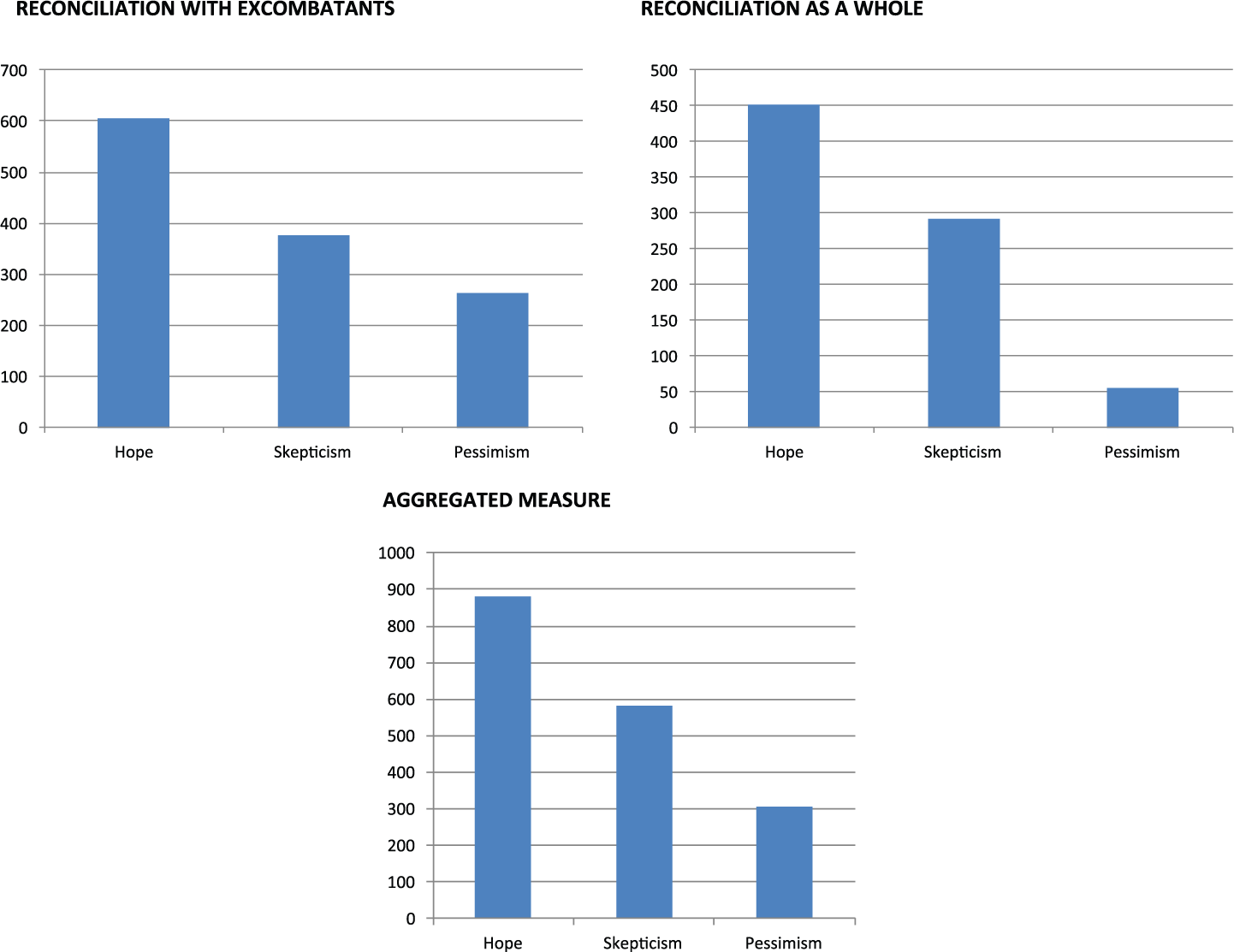
Assessment (how achievable is reconciliation).
Discussion
The findings presented here offer a replicable route of interpretation and a set of theoretical categories of individuals’ views and opinions on the vast concept of reconciliation based on their local practices and expectations. They may support other scholars’ endeavors to better understand the social context and mechanisms in which transitional justice mechanisms and reconciliation efforts are implemented and must take root. Based on these results, hypotheses can be generated to operationalize reconciliation and turn it into an effective tool for understanding and eventually overcoming some of the obstacles to sustainable peace in transitional countries.
The findings presented here contribute to a growing effort to empirically ground and support transitional justice policy design and academic production (Van der Merwe et al., 2009; Cilliers et al., 2015). For example, the findings suggest that reconciliation policy should be oriented much more toward promoting and improving social relations than toward singling out and underscoring the traumatic experiences of specific victims’ groups. In addition, the findings suggest that an orientation toward restorative justice may be more conducive to providing individual perpetrators with opportunities for acknowledging responsibility and aiding in overcoming harm—thus actively promoting the restoration of social bonds and trust—than what results from many more punitive approaches in transitional justice. Finally, the more specifically policy acknowledges particular experiences—instead of nationwide approaches—the more effective it may be in producing feelings of redemption needed for rebuilding broken social ties.
In addition, a number of specific lessons can be extracted from this comprehensive framework-based analysis of reconciliation. Above all, this framework helps answer the question of what comes to people’s minds when asked about reconciliation. The findings presented here illustrate that individuals appear to adopt psychologically and politically minded perspectives much more frequently than historically or judicially focused ones (Figure 1). People appear to care more about their well-being and their relations with others in their immediate context than for abstract processes of rebuilding historical memory at a central level. In fact, only a few respondents explicitly explained reconciliation as a process of dealing with the past or the future (Figure 2). Added to that, references to justice, truth, or memory are relatively scarce in comparison with other requirements for reconciliation to take place (Figure 5a).
In addition, the findings suggest that citizens seem to prefer initiatives aimed at working with specific groups, rather than national approaches that lump together regionally and sectorally distinct experiences with violence and victimization (Figure 3). In terms of the depth of social relations associated with reconciliation (Figure 4), people stop short of idealistic visions of cohesion and harmony, reflecting a down-to-earth approach focusing on peaceful coexistence and social relations. People demand improvements in social welfare and security in order to provide the material underpinnings of reconciliation (Figure 5b). This underscores the need not only to work at the level of individual psychological traits, but also to account for the structural conditions in which postconflict reconciliation needs to occur; that is, people expect reconciliation to address aspects of local development, besides specific peacebuilding policies for reparations for victims, and the reintegration of former combatants. In this sense, the concurrence and coherence of reconciliation with development strategies should become clear, as the strengthening of social relations appears to relate to an improvement in access to basic services. Overall, despite the conflict’s long duration, people’s responses are very hopeful overall (Figure 6), and convey trust that reconciliation can and will occur.
These findings are important for many reasons. First, they suggest that for the Colombian population, reconciliation is tied to concrete action in terms of bringing individuals and communities together, adopting political reform, and providing the material (structural) underpinnings for such change. Digging deep into the historical past does not figure prominently among people’s concerns, while a vision of a shared future appears to be much more relevant. As suggested by these findings, people pin their hopes on reconciliation as a practical instrument to overcome structural and institutional deficits that will improve their daily lives and those of others.
Second, perhaps as a result of how a conflict of such duration has worn down idealistic or retributive desires, the findings point to a positive disposition toward reconciliation or to accordance much more than toward a perpetuation of pain and vengeance. This may also be the result of prolonged frustration with efforts to end the confrontation, a context in which it is more likely for people to abandon demands for comprehensive reforms and change in exchange for an end to the violence. This suggestion is supported by the fact that regions which have experienced greater intensity than others are more likely to adopt minimal expectations and refrain from punitive approaches. In this sense, periodic repetition of surveys such as the one analyzed here may reveal progressive change in people’s demands and perceptions. This has also been suggested by the experience of other countries, in which each new generation following mass violence has developed different approaches to dealing with the past.
Third, the current institutional context for transitional justice in Colombia—and in many other countries—does not seem to correspond with what people believe is necessary for reconciliation. Whereas the current policy framework and debate is based on the assumption that historical memory and the pursuit of truth and justice writ large will bring long-term healing to society, respondents to the survey appear to demand a psychological and material foundation for peaceful and productive coexistence among social groups. Of course, this is not incompatible with other institutional mechanisms, political responses, or strategies implemented in transitional contexts 14 . However, it does hint at a missing accent in current reconciliation policy designs.
Notably, the findings fail to suggest any significant difference between victims and non-victims in terms of their opinions and preferences, a finding that we also arrived at in an earlier work (Nussio et al., 2015) and which suggests that either the violent experience of armed conflict impacts people’s opinions on transitional justice mechanisms less than previously expected, or permeates the general population in a spill-over effect to such an extent that it levels people’s preferences.
Conclusions
Of course, the fact that there appears to be a mismatch between public opinion and the theoretical and normative framework is not a reason in and of itself to alter the latter to suit the former. One of the principles of modern democracy and of most judicial systems is to prevent the tyranny of the majority, and, especially, to resist the tides of public opinion. However, knowing that people’s expectations may go counter to the prevalent wisdom and discourse of reconciliation offers important insights to policymakers seeking to sow the seeds of lasting peace and implement politically and financially costly peace agreements. The answers provided in the Colombian case are a good starting point for a future systematic comparison with other postconflict contexts. Will people in other societies coincide or differ in their views on who should reconcile, to what extent and through which mechanisms? What has the experience of other countries been in terms of dealing with the apparent schism between the normative transitional justice prescriptions and local practices and beliefs? How can scholarly work and public policy design better grasp the complexities that mark transitional contexts? With this article we hope to have opened a path for future research.
Footnotes
Acknowledgements
We wish to thank Usdin L Martínez and Alejandra Ortiz-Ayala for their substantial contribution to the systematization of data cited in this article. We also thank Camila Zuluaga, Natalia Rojas, Maria Fernanda Orozco, Laura Pedraza, Daniela Guzmán, Andrés Martín, Nicolás Ortiz, David Cano, Laura Cortés, Nathalia Hurtado, and Sebastian Azuero for the coding of the survey that serves the empirical section.
Funding
This research received no specific grant from any funding agency in the public, commercial, or not-for-profit sectors.