



Abstract
Giuseppe Moscati was a physician, medical school professor and a pioneer in the field of biochemistry and Italian studies on diabetes. He was declared a Catholic saint in 1987. In order to respond better to both the physical and spiritual needs of his patients, he developed his own holistic approach to healthcare involving meticulous drug regimens, meditation and discipline.
Keywords
Giuseppe Moscati (Figure 1) was born in Benevento in Southern Italy. His life as a man, as a physician and as a scientist may be framed within the cultural climate of positivism that spread during the last years of the 19th century and the beginning of the 20th century. He was the seventh of nine children born to aristocratic Italian parents. As a student in Malerba’s Laboratory of Physiological Chemistry he wrote a Doctoral Thesis on the genesis of urea. He graduated with a degree in Medicine and Surgery, summa cum laude, in 1903 at the age of 23 years. Two months later he beat the competition to become Assistant Physician and Lecturer at the Incurabili Hospital of Naples and Assistant Researcher in the Institute of Physiological Chemistry at the University of Naples. Later he won a public completion and was appointed Manager of the Biochemistry Laboratory at the III Medical Clinic of Naples, directed by Cajetan Rummo, and also at the laboratory of the Cotugno Hospital.
1
Giuseppe Moscati (1880–1927).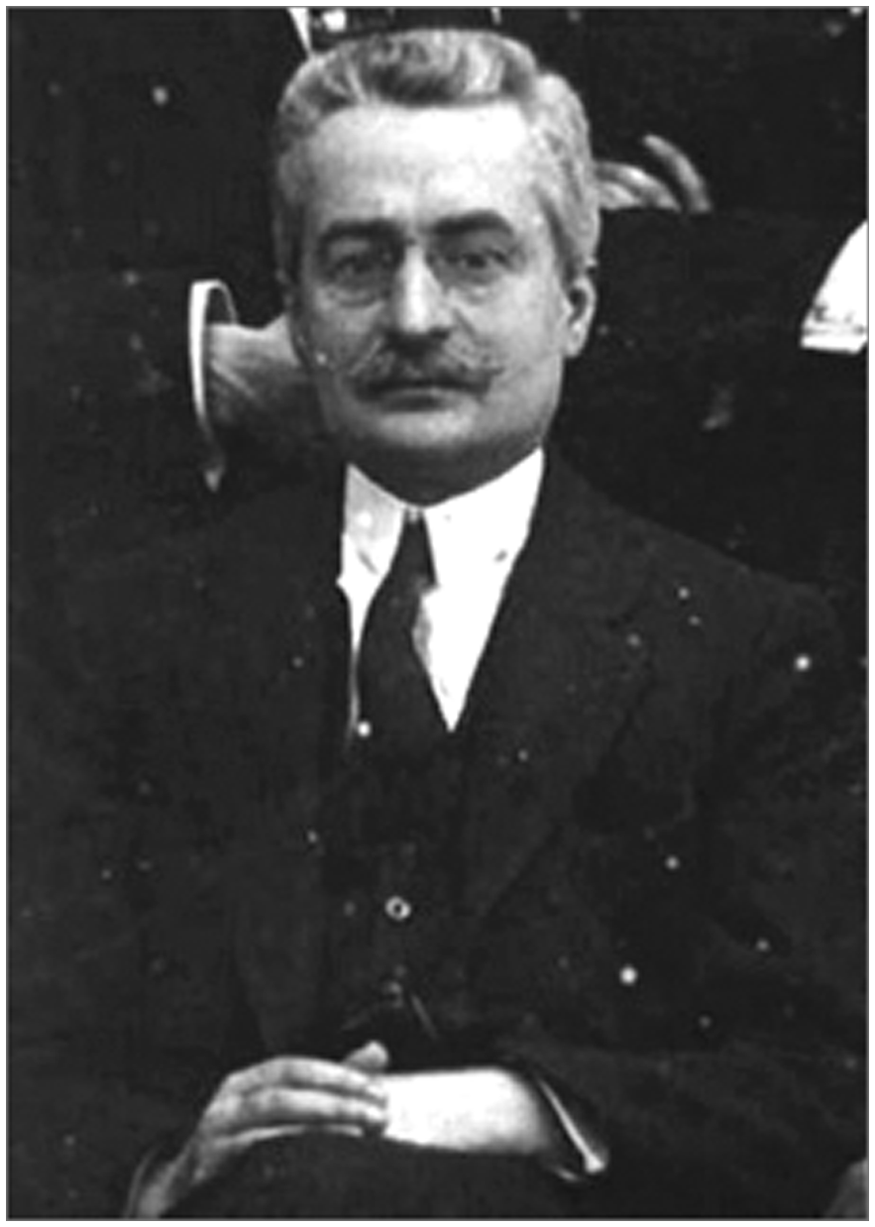
Moscati contributed to the improvement of patient care, using meticulous drug regimens and a methodology of spiritual care involving meditation and discipline as part of his holistic approach to healthcare, pioneering a more patient-centred, holistic approach to medicine and primary care.
Moiscati's research papers help us understand his original contributions to the scientific community and in particular those concerning the treatment of juvenile diabetes. He was the first to introduce insulin therapy in Italy and can be considered a pioneer of modern diabetology and endocrinology. In 1923, he established relations with the first foreign business companies that had started experimental production of insulin. He was able to obtain the precious drug from one of his ex-students who worked in the USA although at a high price. In a letter dated 19 April 1926 he notes ‘it is for years that he has been dealing with diabetic boys by using insulin' 2 and he established current treatment guidelines, underlying the need to control the exact dosage insulin, noting that excess ‘can be harmful and its insufficiency useless'. He wrote of the importance of regulating dietary regimens and insulin injection according to both blood and urine glucose levels at a time when this principle was not yet well established. In relation to side effects he noted that the physician ‘must have patience in choosing the doses and above all know how to sacrifice himself close to the patient'.
By 1926, Moscati had already trained a group of physicians to be prepared specifically for the management of diabetes, notably anticipating the concept of specialization in diabetology. He was also able to underline the particular need for each patient to detect impending hypoglycaemia. He affirmed the need for patients’ self-diagnosis and therapy, one of the crucial concepts in the modern clinical practice of diabetes care. He is also famous in Italy for his studies on the determination by light microscopy of the amount of blood in experimental nephritis and this study allowed him to explain the clinical and pathophysiological difference between nephritic and nephrotic syndromes and the existence of the extended clinical syndrome of nephritis. 2 More specifically, he discovered that in nephropathies with high albuminuria, for example in the nephrotic syndrome, there is a chronic tendency to retention of salt and water and salt with consequential weight gain.
Moscati was well known in Italy as an outstanding figure both as scientist and physician, well known for his clinical and diagnostic acumen. He was able to reveal the complex diagnosis of a sub-phrenic abscess, by clinical examination and percussion only, in his patient, the famous singer Enrico Caruso. 1 Moreover, he diagnosed cirrhosis of the liver when shaking hands with a patient when he felt the dilated subcutaneous veins (caput medusae) on the abdomen. He used to examine poor patients without charge, sometimes even leaving them money to purchase prescribed drugs. In addition to meticulous drug regimens he also employed spiritual care, guiding his patients to meditation and self-discipline as tools for a holistic approach to well-being, as well as mental and physical health.
Professor Moscati died aged 47 years during the most productive period of his professional life. Undoubtedly, the religious aspects of his life are attractive but what surprises so many people today is the way in which he developed, in his own words, ‘the sublime mission of a medical doctor' and his behaviour in the culture and scientific context of Southern Italy, particularly in Naples. His short life, his genius as scientist, his contribution as a physician and as a man and his detachment from money, remind the reader in the 21st century of the words of Plato ‘All the gold on and under the earth is not as worthy as virtue'.3–4