



Abstract
A surprising finding was made by JG Kidd (1909–1991) that guinea pig serum could make tumours disappear in mice. A later finding made by JD Broome (1939–) showed that asparaginase could suppress or kill tumour cells. However, the major mystery was why were only tumour cells but not normal cells affected by the asparaginase? The biology underlying this mechanism was unravelled by a young post-doctoral student, Bertha K Madras (1942–) who hypothesized that cells with low asparagine synthetase are those that die following treatment with asparaginase. To test her theory, Madras developed an assay for asparagine synthetase. The hypothesis was supported by the results that cells with normal asparagine synthetase were protected, while cells with low levels of this enzyme were killed by asparaginase. The findings provide a clinical guide for the use of asparaginase in acute lymphoblastic leukaemia in children and adults.
Approximately 6000 new cases of acute lymphoblastic leukaemia occur in the USA each year, accounting for 70% of all childhood leukaemia cases. 1 The rate peaks for children aged two to five, steadily decreasing with age until age 50 when the incidence rises once again. 1
Among the many medications used to treat acute lymphoblastic leukaemia, asparaginase is one of the mainstays for children and adults.1,2 Because asparaginase treatment has stood the test of time for the last half century, it is of interest to examine some of the historical steps that were critical to its use in acute lymphoblastic leukaemia. In particular, it is worth noting a major step that recognized why some leukaemia cells were vulnerable to asparaginase and others were not.
A pioneering discovery was made in 1953 when John G Kidd 3 (1909–1991) (Figure 1) at the New York Hospital-Cornell Medical Center found that serum from guinea pigs, when injected into mice who had lymphoma tumours, would cause the tumours to regress and disappear. It was mysterious that this effect only occurred with guinea pig serum but not with serum from other animals.
Kidd’s work was followed up by JD Broome 4 (1939–) who showed that it was asparaginase in the guinea pig serum that was responsible for causing the regression of the transplanted lymphomas. Subsequent work by others showed clearly that tumours that responded to asparaginase depended on the presence of asparagine; when asparagine was metabolized by asparaginase, then the tumour cells died. Moreover, Broome’s work showed that only the tumour cells were eliminated by the asparaginase but not the normal host cells.
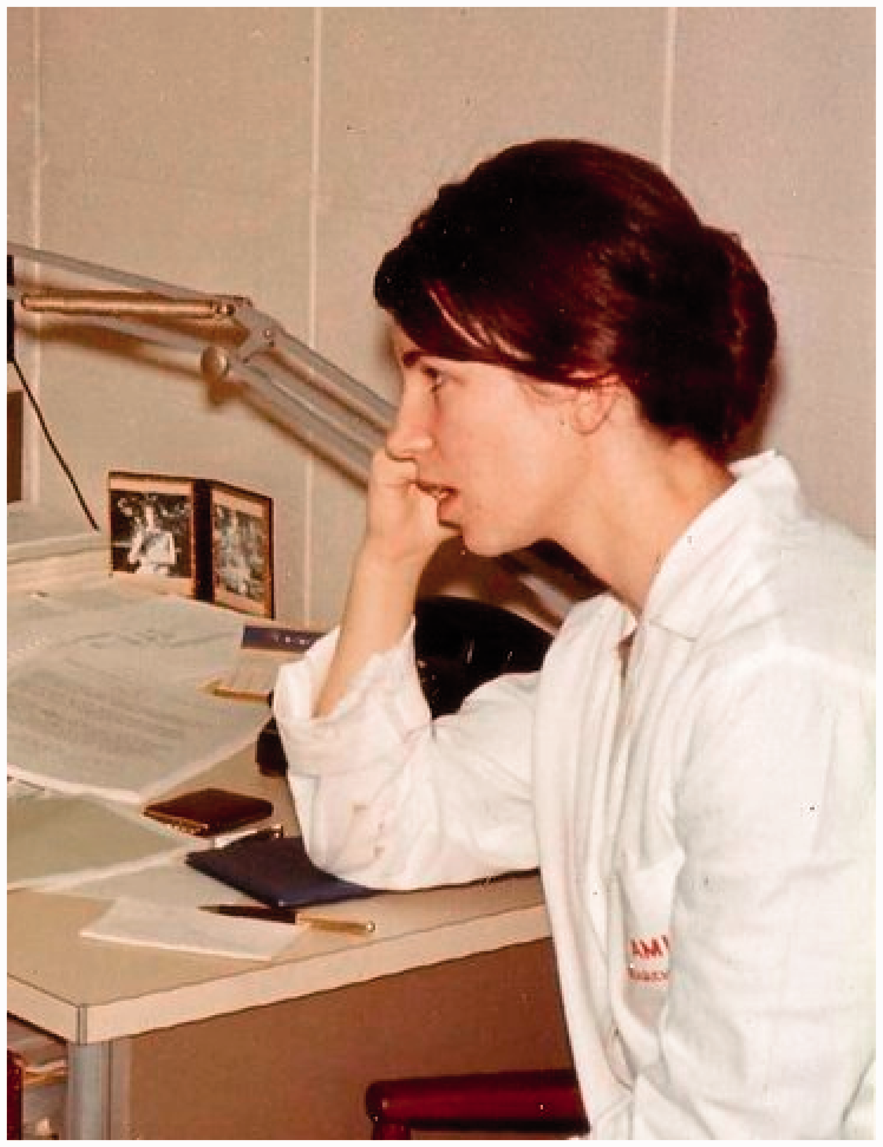
The essential question between 1963 and 1966 on Kidd’s mysterious finding was ‘What was it about tumour cells that made them vulnerable and made them die upon treatment with asparaginase while normal cells remained intact?’ This is the question that preoccupied the graduate student, Bertha K Madras, who had just completed her PhD thesis at McGill University in Montreal (Figure 2).
The freshly minted Dr Madras had become an expert on liver enzymes. However, in order to join her family in Boston, she had to leave Montreal and McGill medical school. Her supervisor, Dr Theo Sourkes (1919–), advised Dr Madras to contact Dr Alton Meister (1922–1995) at Tufts University in Boston. Dr Meister had recently published two volumes on the biochemistry of amino acids.
Leaving the commanding view of Montreal from McGill’s high location on Mount Royal, Madras went to the downtown campus of Boston’s Tufts University Medical School. After extensive discussions with Meister and several post-doctoral Fellows in his laboratory as to possible avenues of research, Madras chose to ‘crack open’ a new field or ‘forge ahead in a new direction’ as she put it. 5
She had developed an interest in the asparagine question and decided to work on developing a method to study the synthesis of asparagine from aspartic acid. Such a conversion from aspartic acid to asparagine essentially would be a method for measuring asparagine synthetase for which a method was not yet available and evidence for its existence in mammalian tissue was lacking. Madras started the reaction with radioactive [14C]-aspartic acid and normal liver tissue to measure the amount of radioactivity found in the final product of asparagine. Separation of the substrate (aspartic acid) from the product (asparagine) was possible because their net electronic charge differed. She compared the final product with purchased standard amounts of [14C]-asparagine. However, for six months she was not able to show any obvious conversion of radioactive aspartic acid into asparagine from various normal tissue preparations.
At this point Madras further examined Broome’s work of 1963 and immediately realized that tumour tissue was needed 6 in order to test the method for asparagine synthetase; she predicted immediately that ‘Tumours with low amounts of asparagine synthetase and no external source of asparagine (i.e. blood supply depleted of asparagine by asparaginase) and with low capacity to produce asparagine would die in the presence of asparaginase in blood, but normal tissue with normal amounts of asparagine synthetase or an external supply of asparagine would be protected against asparaginase’. 5
After a short taxi ride across the Charles River, Madras obtained rats with Novikoff liver tumour tissue from Charles River Laboratories. The following day she discovered vast levels of asparagine synthetase activity in this tumour, confirming the validity of her assay and supporting her view that tumour cells without this enzyme would be susceptible to asparagine depletion by blood asparaginase. She continued the development of the asparagine synthetase method and passed the project on to graduate student Bernard Horowitz (1945–), after the Meister laboratory relocated to Cornell University in New York.
The work was completed successfully and published in Science. 6 The publication clearly showed a reliable method for asparagine synthetase. Most important, the results perfectly fit the prediction made by Madras – that is, mouse leukaemias that were low in asparagine synthetase were suppressed or abolished by blood asparaginase, while leukaemias that contained high levels of asparagine synthetase were not suppressed by asparaginase.
Subsequently, in the 1970s asparaginase was introduced into clinical practice.1,2 In general, the clinical leukaemia work 7 has supported Madras' hypothesis although some studies have found an apparent exception to that guideline. 8
The clinical doses of asparaginase used have ranged from 200 IU/kg to 10,000 IU/m2 with an overall survival of 70–86% for children and 20–50% for adults in the clinical trials.2,9 Overall, the clinical use of asparaginase for acute lymphoblastic leukaemia is established, but improvements in the type of asparaginase are rapidly continuing. 2
Dr Madras moved on to other new directions, becoming Professor of Psychobiology at Harvard Medical School and an international authority on marijuana usage. For several years, she served as Deputy Director of Demand Reduction in the United States White House office of National Drug Control Policy.
JG Kidd, MD, Professor and Chairman, Department of Pathology, New York University-Cornell Medical School (1960). Courtesy of Dr William H Feldman, with permission of the National Library of Medicine, and Light, Inc. Bertha K. Madras as a McGill University graduate student at the Allan Memorial Institute in Montreal; image approximately 1965. Philip Seeman, OC, MD, PhD, Professor of Pharmacology and Psychiatry, Faculty of Medicine, University of Toronto, Canada; image approximately 2011.

Footnotes
Author biography
 ) in Winnipeg, Canada, received an MD from McGill University and a PhD in the laboratory of Dr George Palade (1974 Nobel Laureate, Medicine (1912–2008)) at Rockefeller University. After Postdoctoral work with Sir Arnold SV Burgen (1922–) at the University of Cambridge, he became Chair of Pharmacology at the University of Toronto in 1977. He has held the University of Toronto Tanenbaum Chair in Neuroscience. In 1975 he discovered the brain's antipsychotic dopamine D2 receptor, the key target for all antipsychotic drugs and anti-Parkinson drugs (Proceedings of the National Academy USA, as communicated by Charles Best (1899–1978), the discoverer of insulin). Because all antipsychotics bind to the D2 receptor in direct relation to clinical potency, the research is an important basis of the dopamine hypothesis of schizophrenia. He has received 25 awards (Lieber Award, Ariens Receptor award, Dean Award, Prix Galien award, Pasarow Award, Killam Prize and the Order of Canada).