



Abstract
This paper explores the life and works of a man who defied the limitations of his humble beginnings to become recognised as one of the most notable physicians in the UK to date. Sir George Frederic Still was a pioneer in the field of paediatrics and has earned a reputation as a man who loved both his work and his patients. It is the intention of this paper to cast light on the contribution this man made to the medical profession.
Early life
Sir George Frederic Still, who preferred to be addressed by his second name, Frederic, was born in Highbury, inner London on 27 February 1868. His upbringing was far from privileged. His father was a customs officer from Dublin who died while George was just 17, leaving his family to struggle financially. His mother, Emma, originally from Cornwall and an avid horse lover, 1 was left to provide for their sizeable family. Still’s childhood was fraught with further loss as four of his 11 siblings succumbed to illness, three of whom died before they reached the age of one year, with the other surrendering to scarlet fever.
Despite the fact that the finances of the family were very tight, George managed to win a scholarship at Merchant Taylor’s School, from there distinguishing himself further academically by receiving a second scholarship for Caius College Cambridge to study the Classical Tripos where he learned ancient language, history and philosophy, and an understanding of classics. He graduated with First Class Honours in 1888.
1
His success demonstrated his immense passion for languages, a passion he nurtured by studying and becoming well versed in Latin, Greek, Hebrew and Arabic.
2
From the Classical Tripos he went on to study medicine at Guy’s Hospital under the tutorage of Sir James Goodhart (1845–1916) and in 1893 he qualified and joined the medical profession (Figure 1).
A portrait of Sir George Still that hangs in Kings College Hospital. Courtesy of the Wellcome Library, London.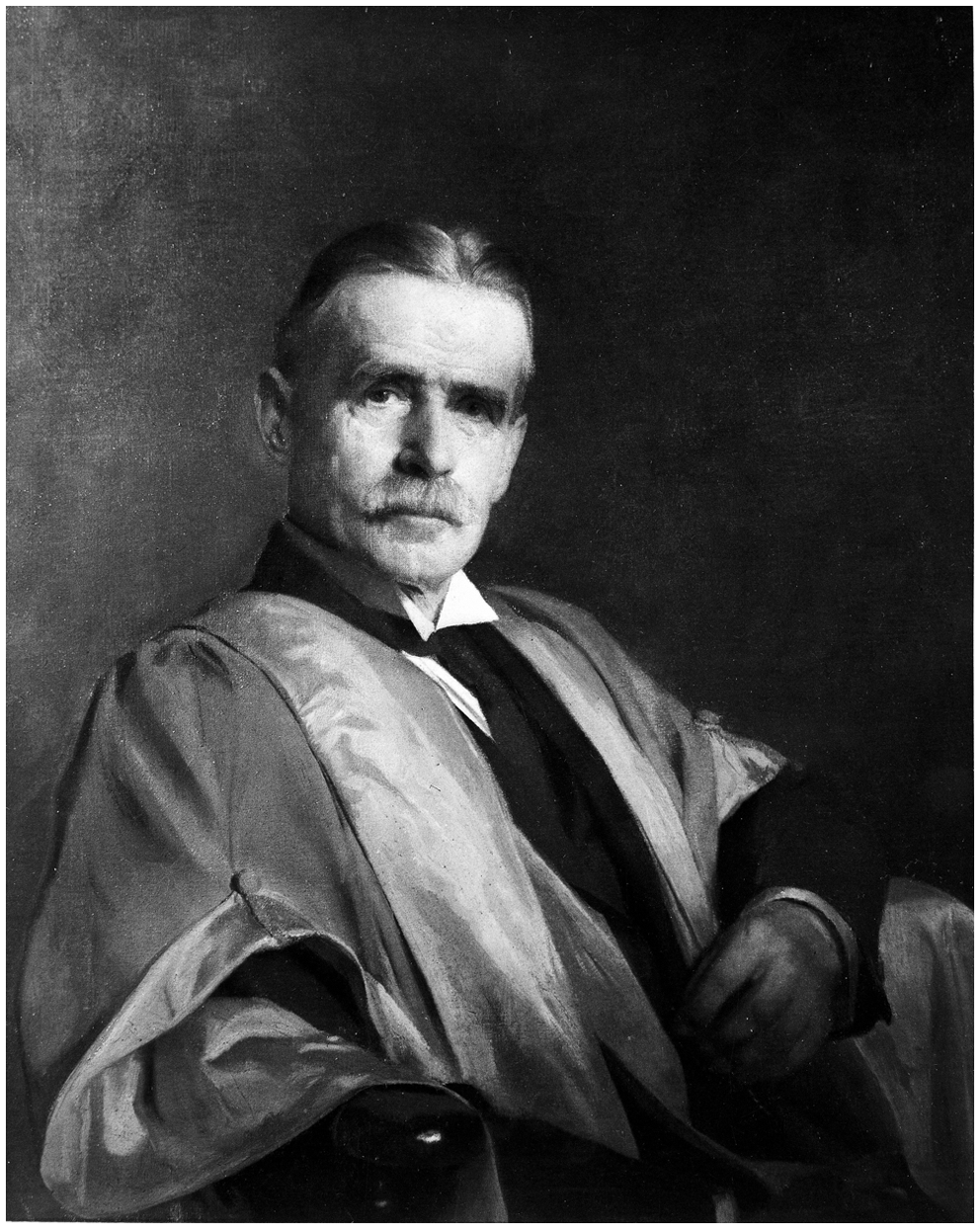
Medical career and personality
After qualification Still became a House Physician at Guy’s Hospital, his medical career progressing quickly to Registrar and then to pathologist at Great Ormond Street Hospital. In 1897 he published his MD thesis on joint disease in children and he described the disease we now know as Still’s Disease. 3 While at Great Ormond Street he studied childhood diseases and in 1899 he moved to a newly created department, in Kings College Hospital, that was devoted to the new subject of childhood diseases where he was selected to be the physician in charge. Then in 1906 he became a Professor in Paediatrics at King’s College Hospital, the first paediatric chair in London. As the first and only paediatric Consultant and Professor in this new field within the United Kingdom, he exerted great influence in this area of medicine which lead to the opening of many societies dedicated to the healthcare of children, for example. The Edinburgh and Glasgow Paediatric Club and The Society for the study of children’s Diseases. 2
During his progression within the medical profession Still's financial situation was not at its best. Collis, his last house physician at Great Ormond Street Hospital, reported that when asked about his income after taking up paediatrics Still replied ‘Oh, I doubled my income; I made £2'. His living situation suffered as a result and at times ‘he was so cold that he had to get up and go out and walk up and down'. However, his appointment at Great Ormond Street Hospital saw his salary increase to £20. It was clear that his motivation to pursue a career in paediatrics was borne of a love for the medical profession and the result of an inquisitive mind, rather than a product of a man chasing wealth. His early life was spent in poverty but, after accepting the post of Professor of Paediatrics at King’s College Hospital, his annual income swelled to the princely sum of £10,000, a substantial amount at that time. 4
Still was known for his closed manner towards many, especially mothers; bar his own mother, Emma, and the Queen Mother he hardly ever spoke well of mothers. He remained a renowned bachelor and lived with his mother until she died in 1914. 1 Collis wrote of his ‘arresting’ appearance and his ‘courteous, yet implacably reserved’ manner. However when it came to the subject of children a ‘sudden transformation' was apparent and he would take it as if ‘the sufferings of children … appeared to hurt him personally’. This notorious change in his demeanour when it came to the subject of children may have been due to his own upbringing. The fact that his childhood was not fortunate enough to give him financial security, plus the fact that four of his siblings died at an early age, may have contributed to his passion and enthusiasm toward children and his need to help them in every way he could. 4
Accomplishments in medicine
Still accomplished much, some of medical significance, some not, and much acquired very early in his career. On graduation from the Classical Tripos he won the Winchester Prize, reading public passages in classical English, his first love. He then became Murchison Scholar, a scholarship for high attainment given by Edinburgh University and the Royal College of Physicians, a year after he became a house physician at Guy’s Hospital. Some achievements he obtained late in life, for example his LLD from Edinburgh University.1,2 He published 113 works (five books and 108 Journal papers); 5 his most famous contribution was editing the text titled The Diseases of Children1,6 which was the work of his tutor Sir James Goodhart (1845–1916) 3 and this work has been published many times and even after Goodhart died. One of Still's own books, Common Disorders and Diseases of Childhood, 7 became a well known reference years after its original publication in 1909. Another well known book was titled The History of Paediatrics; the process of the study of diseases of children up until the end of the XIIIth Century.2,8
Still did more than just merely write papers and books in his field for he was also an avid activist, becoming the first President of the British Paediatric Association in 1928 and later recognised as the President of the 3rd International Paediatric Congress. He was appointed a Fellow of the Royal College of Physicians in 1901 and of the Royal Society of Medicine in 1937. 2 Not only did he lead many bodies within paediatrics, he also taught and delivered many lectures on his research, being keen to contribute and increase awareness within a field that previously had been marginalised within the profession. He was asked to give the Goulstonian Lectures in 1902, the Lumleian Lecture in 1918 and the Fitzpatrick Lectures in 1928 and 1929, a combined honour rarely bestowed by the Royal College of Physicians. 2
Still’s addition to the medical profession
Still noted many differences in child and adult diseases, 3 many of which have been named after him. He observed and treated children with a form of juvenile idiopathic arthritis that had been known to cause connective and joint tissue damage and may cause visceral lesions, later to be called Still’s syndrome or disease. Associated with this is Still’s Rash which is seen in most cases of Still’s Disease. Felty’s Syndrome, another condition that bears his name (Frederic), is an atypical form of rheumatoid arthritis accompanied by leucopenia, fever, splenomegaly and sometimes anaemia and thrombocytopenia. Still’s Murmur is an early systolic and functional murmur heard near the left sternal edge rarely usually before adolescence. These conditions were all observed, reported and described by Still in his observation of children through his medical career. 3
In 1902 Still was asked to give the Goulstonian Lectures on a topic that was quite radical. He gave three lectures (on 4, 6 and 11 March) at the Royal College of Physicians on Some Abnormal Psychical Conditions in Children. In these lectures he was the first to describe a condition he observed in several children and now recognised as common in modern day paediatrics. One six year old boy was unable to ‘to keep his attention' yet who was as ‘intelligent as any child could be'. This child’s behaviour clearly demonstrated Attention Deficit Hypersensitivity Disorder (ADHD). During the lectures Still also pointed out that, even though he had found and reported on something new, more must be done to develop understanding of this condition.9–11 This observation was a radical development in the issue of childhood psychology, not thought to be of any real relevance in the medical profession at that time.
Later life
Still retired from the medical profession and from King’s College Hospital in 1933 and from most of his medical commitments in 1936. 2 However, his list of achievements was about to increase in the following year for in 1937 he was Knighted for his excellent service as a Physician to King George VI’s family and especially to the Princesses Elizabeth and Margaret. 2 After all his work in the field of paediatrics he left London and spent the remainder of his life in Salisbury where he enjoyed fly-fishing. 2 During his retirement he wrote many poems that were published in the book Childhood and Other Poems. 12 Here he wrote of his love of children (In My Garden) 12 and dedicated a poem to his mother (Mother). 12
Still died on 28 June 1941 at the age of 73 and his ashes rest in the East Green of the Cathedral Close.
1
‘For my garden is the garden of children Cometh naught there but golden hours, For children are its joys and its sunshine, And they are its heaven sent flowers.’ 12, p.16 ‘Years have gone since that sweet presence. And her ‘boy’ is old and grey, But I hear my mother calling’ I am yet a child at play, And my mother has my heart-love, And it seems but Yesterday.’ 12, p.26
Footnotes
Acknowledgments
I am truly indebted to, and thank, my advisor Dr Neil H Metcalfe, SSC Lead in History of Modern Medicine, Hull York Medical School, for his thoughts and guidance throughout the production of this paper, without which this paper would not have been possible. I owe sincere and earnest thankfulness to my family who provided me with support throughout the production of this paper.