



Abstract
From the 13th to the 18th centuries, a small village in Umbria produced a remarkable multifamily dynasty of highly proficient surgeons. Skilled in lithotomy (cutting for the stone), couching cataracts, repair of hernias, and castration, the Surgeons of Preci or the Norcini, were preeminent in Europe, famous, and wealthy. Sophisticated instruments, use of cautery, knowledge of analgesics, and narcotics were passed down from father to son over 400 years: the most dextrous were summoned by crowned heads, including Charles V1 of France and Elizabeth of England. Yet, the history of their activities is almost forgotten, the result of vicious personal rivalries and the impact of professionalization of 18th-century surgery. Today in Italy, the name Norcini means only pork butcher, ironically the original skill from which the dynasty developed.
Keywords
The Surgical School of Preci
The patient was tied with the feet behind the buttocks and with a tight band in the middle of the waist. In fact, even the hands were tied, so dangerous was it if the patient moved; the thighs were splayed as much as possible. With the scalpel, a cut was made approximately four fingers long, in the part where the stone was the most painful, close to the groin so that the wound was in between the groin and the anus. A thin iron instrument was inserted in the same person’s member. It went into the body until it reached the stone in question. There was also another iron, curved like a hook, which went into the cut and hooked onto the stone. In order to pull it out as fast and painlessly as possible, the surgeon put his finger into the anus with which he pushed the iron…
1
This description of the crushing and removal of a bladder stone, or lithotomy, carried out in 1488 was written by Bartholomeo Senarega, a politician and chronicler of Genoa. How, he wondered in De Rebus Genuensibus 1488–1514 (Of Things Genoese), could a cure so horrible, atrocious, and dangerous that the soul recoiled in horror from it, give hope of life being saved? The answer lay in the skill of the surgeon performing the operation.
In this case, the surgeon was Giacomo of Norcia, one of a multifamily surgical dynasty from Preci, a small village in Umbria. From the 14th to the 18th centuries, these highly proficient surgeons were preeminent in the treatment and cure of cataracts, of bladder stones, and the repair of hernias. 2
The Norcini, as they were also known, after the surrounding district, consisted of about 30 families in Preci itself and 15 in the immediate vicinity. The surgical skills, which brought fame and wealth, were handed down from father to son as trade secrets, along with the sophisticated surgical instruments they developed.
Furthermore, though they did not understand the nature of wound infection, they sterilized their instruments in fire contributing to a rate of infection and mortality in their patients that would not be improved until the advent of modern surgery. They were also familiar with uroscopy, the study of urine, essential to a successful cutting for the stone and differentiating urinary diseases. 3 How was it that such impressive surgical skills developed in an obscure Southern Italian village? Why did they flourish for so long and why do we know so little about them today?
Between the 4th and 10th centuries, many descriptions of ancient Greco-Roman surgical techniques, texts, and medical manuscripts were lost or destroyed. Those that did survive were most often preserved in monasteries such as the Abbey of Monte Cassino, situated between Rome and Naples, founded in 529 AD by St Benedict of Nursia, or Norcia, to whom legend interestingly ascribes a miraculous ability to remove bladder stones.
The Rule of St Benedict laid great emphasis on particular aspects of a monastic life: “to pray and to work, but before all and above all to care for the sick,” “ore et labore,… infirmorum cura ante omnia et super omnia adhibenda est.” 4 Particular responsibility for the sick, monk, or lay, fell to the monacus infirmarius or medicus. 5 The Benedictine Abbey of St Eutizio, close to Preci, records such a monk’s death on 15th May 1089 in its Calendario… death of Adam, Deacon, and Monk and Medicus of our congregation. 6
Many monasteries became significant medical centers prior to 1300, a nexus of hospitality, knowledge preserved in texts, and the skills of specialized monks. 7 At the same time, however, there was a growing concern among the Church authorities that monastic orders were mixing too freely with local communities simply as doctors, being paid and finding themselves in positions that could lead to embarrassment and scandal.8,9 The attitude of the Church was that monks and priests were to save the soul and not the body, and there was a need to control and regulate the healing role of the clergy. 10 The Councils of Rheims 1131, and Tours 1163, forbade priests and monks to attend public lectures on medicine and clergy to undertake surgery. In line with this, the Abbey of St Eutizio's Library Catalogue of 1170 makes no mention of any medical or surgical treatises, nor even a standard medical herbarium such as Dioscorides’ De materia medica. 11 By 1215, the Canon of the Fourth Lateran Council, ordered all religious to abstain from surgery, specifically cutting or burning, under penalty of excommunication, suggesting by this date the role of medicus in treating the sick had become one of assistance only. 12
Who then was offering the sick the practical help they needed in this context of increasing prohibition against monastic medical intervention? Step forward the population of Preci and Norcia, among them individuals particularly receptive to medical ideas and curative skills, already experts in animal anatomy, with experience in observing and operating on stones and cysts in pigs and donkeys. Enlisted in the care of the population drawn to the monastery’s infirmary, their skills were combined with the knowledge base that St Eutizio and its monks provided, creating the necessary conditions for the Preci school of surgery to evolve and flourish. 13 One other factor influenced its development: the proximity of Salerno, an ethical, cultural, and economic cross roads between East and West in the Medieval period, principal meeting ground for Latins, Greeks, Saracens, and Jews.
Salerno was the center of the revival of medicine and surgery in Western Europe from the 10th to the 13th century. Unlike the rest of Europe, the Church did not govern the School of Salerno. Here medicine and surgery were held to be equal and, critically, it began as a center of medical practice as opposed to medical theory. 14 Constantine of Africa (1020–1087), a Carthaginian, was part of this Salernitan tradition. His translations of Greek and Arabic medical works into Latin had a powerful influence on Salerno and Western Europe, and there is no doubt that he taught medicine at Monte Cassino. 15 Constantine’s practical writings, and Roger of Salerno’s 12th-century commentaries on them, would be adopted word for word by the Preci lithotomists when they wrote about cutting for the bladder stone.
Masters at Salerno began to produce surgical texts from their own experience, and worked with newly translated Greek and Arabic texts, which they discussed as a group, after the grove of academe in Greece. 16 They were also well known for considering the observations of the cataract-curers, hernia-carvers, and lithotomists, who met scorn elsewhere. 17 The oldest Salerno surgical text, from at least mid-12th century, the eminently practical Bamburg Surgery manuscript, probably had a number of authors, followers of Paul of Aegina and Albucasis, who added notes from their own personal experience. 18 Dissecting human bodies was forbidden, but useful knowledge was acquired from the anatomy of pigs, following Galen’s example, resulting in texts such as Anatomica Porci, Anatomy of the Pig, by Cophos. 19 Since the Norcini specialized already in these things by the 13th century, the implication must be that they were the cataract-curers, hernia-carvers, and lithotomists in question.
The first explicit mention of a Norcino as a surgeon is in the records of the University of Perugia. Practising between 1222 and 1246, Magister Petrus Perusinus was a Medicus vulnerarius, or doctor of wounds, a title employed by the Norcini to differentiate a surgeon from a Medicus physicus or doctor of medicine. 20 A Codex in the Casanatense Library, Rome contains a collection of surgical works that belonged to a surgeon Magister Berardus from Poggio di Croce, Norcia, whose father also a Magister, was a surgeon in the first half of the 14th century. The works include notable titles such as Albucasis’ Book of Surgery, translated by Gerard of Cremona, a Taccuinum or Notebook by Buhalyhyha Bingezla, translated by Faraggio di Agrimento, and a Grande Rogerina by Roger of Salerno. The texts are well used, sprinkled with personal observations, indices, glossaries, and drawings of iron surgical instruments. On the back of his Albucasis in Berardo’s own hand is the date 1384, and a selection of recipes for sciatica from Gentile di Foligno, the notable author and anatomist from Padua and Perugia.21,22 In the same Codex, a Maestro Pietro from Norcia is also mentioned, along with a pharmacist, Apotheca Ludorici Francisci Martini known to be dispensing in Perugia in 1384. 23
Lithotomy
Ancient Hindu, Greek, Roman, and Arabic surgeons are known to have practised perineal lithotomy. It has been said that in the preantiseptic era, no operation was more testing of a surgeons’ skill and mastery of wound management. 24 But what did cutting for the bladder stone through the perineum, the operation on which much of the Preci surgeons fame was built, actually involve? Bartolomeo Senarega’s graphic description given earlier outlines the horrific procedure.
Celsus (c.30 AD) emphasized the importance of initial fasting and exercise to push the stone to the bladder neck. Hindu instructions in Susruta (c.300 AD) included such tips as the surgeon should ensure that his fingernails were closely cut for the operation and afterward the patient was to be placed in a bath of warm water and hemorrhage treated with bladder irrigation by means of a syringe. But the facility and agility with which experienced Preci lithotomists could remove bladder stones was astonishing. Their cure rates were of the order of 80–90%, and their astoundingly low mortality rates were neither equalled nor surpassed with the arrival of anesthesia and antisepsis, in large part because of fire-sterilized instruments and cauterization. They also recognized the need for urgent relief from the retention of urine. If urine starts to regurgitate from ureter to kidney and then mixes with blood, the patient’s death is unavoidable wrote Girolamo Marini in 1723. 25 The need for a differential diagnosis before passing a sound or operating was paramount, uroscopy was another necessary skill possessed by the Preci surgeons to distinguish between kidney and bladder stones, gravel, strictures, and infection.
It is still a mystery why bladder stones were so common in the past, in both adults and children but whatever the relationship between diet, climate, and infection that caused them, the 17th and 18th centuries were a peak period for lithotomy operations. One technique known as the lesser operation or apparatus minor used only a knife and a pair of forceps or hook to extract the stone. About 1520, another technique was introduced known as the apparatus major, which employed additional instruments. This later operation carried a higher risk of hemorrhage, infection, impotence, incontinence of urine, and fistulas. 26 The Preci surgeons seemed to operate predominantly with the simple technique, modified by their own instruments and experience.
Fabius Chisius, later Pope Alexander VII, in a letter to a friend, wrote a most poignant account of his own operation by an unnamed surgeon in 1643.
27
In your most kindly letter, you make much of my not having been aghast at the risk to my life involved in being cut for the stone…
…I warned the lithotomist that presently weakness of the flesh would come on […] and so he should take care to tie me down and restrain me more tightly than other patients. And certainly the outcome justified the advice! For my body had barely been cut and the forceps inserted, when a stone was grasped of the shape and size of a hen’s egg; it got broken up, and so the lithotomist strove for three quarters of an hour to get out all the bits, and after inserting his tools about twenty times, and enormous torments for me, he was told to desist by Riolan and Aquinus […] they evidently feared that I could not stand such torture and would die under the steel. Accordingly, ten days later the agonies were repeated, but more briefly, and as I lay, three large pieces of stone were taken out, and at last the bladder was freed.
Couching cataracts
The couching of cataracts was the other principal skill for which the Preci surgeons were known, besides repair of hernias and castrations. To couch a cataract, they would sit with the light behind them, and the patient before them, at a lower level (Figure 1). Durante Scacchi in 1596 describes operations on the eye in detail in his Subsidium.
28
Angela, wife of Biasio Meneghela, lost her sight. She had the cataract removed with a silver scalpel by a doctor from Norcia, and with thanks to The Blessed Virgin Mary regained full health. 1674. (Cruciani, Cerusici e Fisici).
The surgeon Sigismondo Carocci was called by the Empress Eleanora Gonzaga of Austria to
… couch her cataracts, at which he happily succeeded. For this, he gained considerable emoluments, he gained an enormous privilege awarded him by Emperor Ferdinand III sent on 28th November 1648. The privilege was the Noble Order of the Holy Roman Empire, as such he and his descendants in perpetuity, male as well as female, would be declared noble.
The instruments of the Preci surgeons
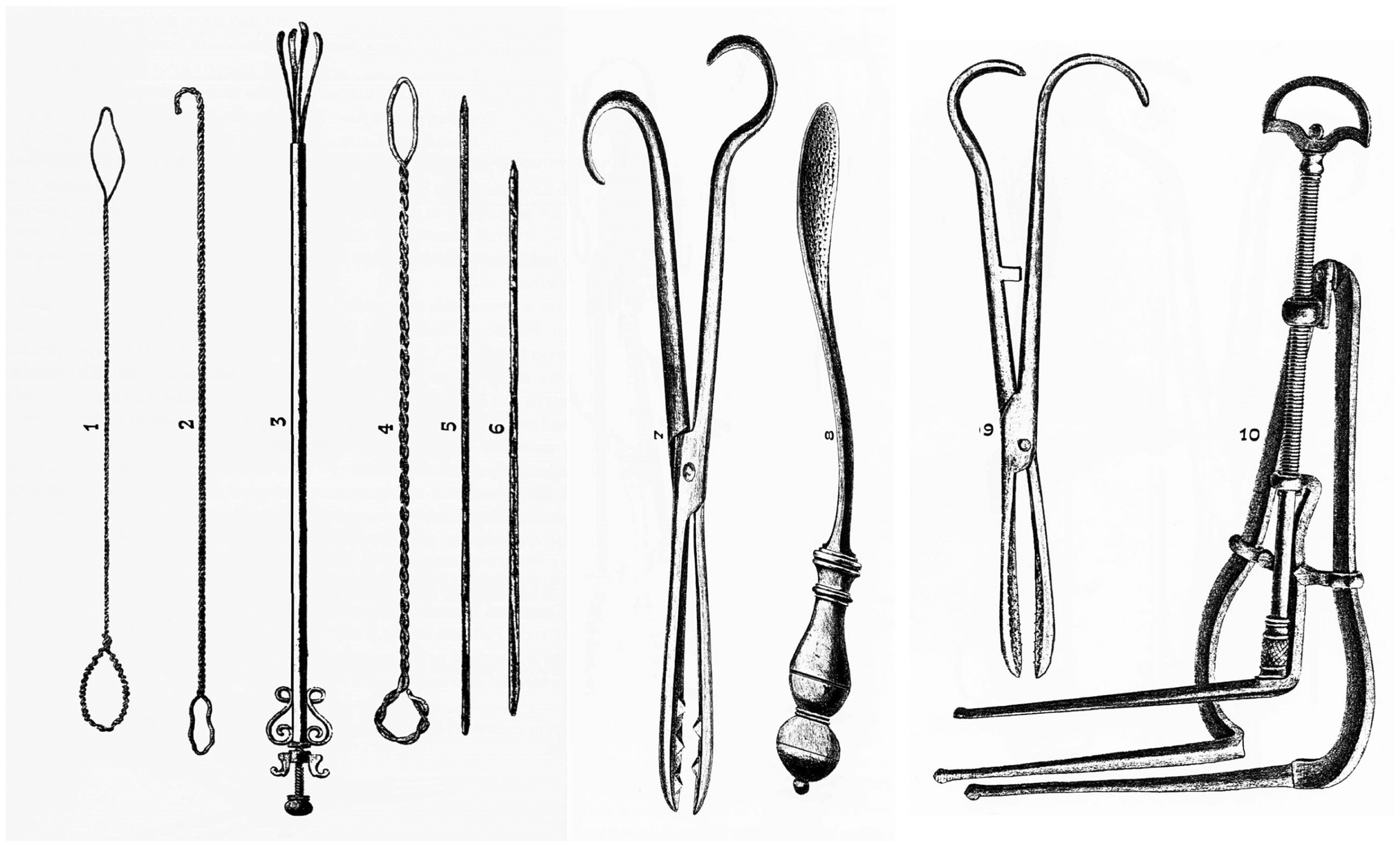
Preci surgeons were able to crush large stones with their frangitore scissors with diamond-shaped teeth, known as crushing pincers (forceps), which would later be reinvented by the French surgeon, Ambrose Paré (1510–1590). 30 They removed all the pieces with a silver spoon, as they realized that even one fragment left behind could form the center of another stone. Their instruments in iron, bronze, silver, and gold, and techniques produced an extraordinary refinement in the treatment of bladder stones. Scalpels, called razors, were made to order because cut and cauterization were done as one procedure. Sounds, also known as syringes, were used for exploratory work. Specula were used for dilating, sounding, and probing.
They also designed new instruments including dissecting forceps, dilating forceps with a thumbscrew, lancets with blades folding into the handles, retractable tricuspid forceps in a fine tube, a blow pipe and, a century before the famous Chamberlen family, (c.1650) used obstetrical forceps. 31
Around 1683, Pietro and Carlo Lapi designed a thin conical tube of soft-waxed cambric cloth, called a candelette, as a sound to dilate strictures of the urethra, cleaner, and gentler than the usual sounds of metal. Girolamo Marini later modified the candelette and used wax, sweet almond oil, and kid fat to lubricate the candelette and the metal sounds. 32
There were several different instruments used for couching cataracts. The instruments used by Durante Scacchi, designed by himself in silver, gold, and iron, included a silver-bladed scalpel, a fine rosemary leaf-shaped needle, a cautery to prevent haemorrhage, and the use of a goose quill for scraping part of the eye. The second eye of the patient he protected with a concave eye guard. 33
Narcosis and analgesia
In addition to their surgical expertise, the Preci surgeons were aware of the haemostatic, diuretic, antiseptic, narcotic, and pain-killing properties of many plants. They knew the effects of henbane, containing hyoscyamine, hemlock, mandrake, opium, and poppy seeds. These ingredients were made into a paste with water and applied to the area for cutting or mixed with red wine and drunk to produce analgesia, forgetfulness, and drowsiness. “Lettuce juice” considered by some historians to refer to laudanum, though by others to have been a specific variety of lettuce, had a similar effect. 34 Turpentine, vinegar and hot red wine washed the wounds. Durante Scacchi advised soothing tepid baths for the pain of a stone at the neck of the bladder, with thick barley juice or sweet almond oil squirted into the bladder. Breast, goat or ass milk was used as an alternative. Truly, the Preci surgeons were the vanguard of modern lithotomy.
The school of Preci
The most notable feature in descriptions of life in Preci and the early years of the School of Surgery is the continual discussion of clinical cases between families in the community. Even the children of Preci, it was said, acquired medical and surgical knowledge from their elders. But around the late 14th century, two discrete categories of surgeon emerged: the empirici, who carried the title Medicus vulnerarius, Lithotomus, Ophthalmicus, Phlebothomus, and the Laureato or Aulic, meaning learned. They shared the same skills and performed the same operations, removal of bladder stones, couching of cataracts, hernia repairs, castrations, gynecological operations, and occasional bloodletting, but to become Laureto required additional academic learning, beyond the empiric’s practical skills.
Lack of theory did not hold back the empirici surgeons’ progress. Amedeo VI, Duke of Savoy, had stones removed in 1382 by the empiric lithotomist, Azzolino da Camerino.
35
Preci empirici lithotomists treated Pope Innocent IV in 1249 for the stone, and Louis I, Duc d’Anjou.
36
Indeed Guy de Chauliac (1298–1368), one of the few university surgeons of the period in Europe, advocated that certain of the most dangerous operations should be reserved for the peripatetic empiricists: He who has a stone in his kidneys or bladder does not live without danger because if it is retained and closes the opening [meatus] it leads to hydronephrosis and death and the kidneys should not be cut. If the bladder is cut there is a danger of spasm, haemorrhage and fistula and for this reason the experts left this operation to the itinerant empiricists.
37
By 1609, Cesare Scacchi was writing, Even the most minor [Preci surgeon] could have operated better than a theoretically and practically qualified foreigner… Not only [were] they born into it… their experience was passed down from generation to generation. Each operation was discussed so freely and openly that even as babes-in-arms, they heard the experiences so many times while growing up that they already knew more than the qualified outsiders before they started to study it. For this reason both the patient suffering from these complaints and their physicians, elected to be cared for by the Preciani, knowing that surgery had reigned there for many hundreds of years.
38
However by the mid-17th century, the empiricist’s star was no longer in the ascendant: lack of privileged knowledge beyond the practical, and the lower status that went along with it began to tell. Without the protection of the academic establishment, their reputation suffered by association with the itinerant charlatans and quacks of Cerreto, close-by Preci, who played on the Norcini name to sell potions, pull teeth, and attempted to remove urinary stones.39,40
In 1673, the Surgical College of Venice made their first, unsuccessful, attempt to impose a qualifying examination on all empiricists, by that date considered ignorant rustics. In 1678, the College made a qualifying examination obligatory to prevent charlatans bringing the profession into disrepute. The examination led to a licence or diploma of mezza-chirurgia or half-surgery issued for a period of six months to four years, or for a lifetime, depending on the individual surgeon. Permitted procedures included lithotomy, couching cataracts, hernia repairs, castration, some gynecological operations, simple bloodletting, and the treatment of syphilis (morbus gallicus), but not with quicksilver or mercury. Prohibited operations included bloodletting from a vein, unless instructed by a physician, and any action that might infringe physicians’ rights, such as giving medicines by mouth.
Florence and Rome followed Venice in imposing qualifying examinations. Giovanni Angelucci was awarded his license from Florence University in 1732. His permitted operations were castration, removal of cataracts, lithotomy, and the healing of wounds. He was also allowed to blood-let, but only if really necessary. 41
The privilege of the Norcini to practice licensed empiric half-surgery would only last until 1751, when the system was quashed by Carlo Guattani, personal physician to the Pope and Head Doctor of the Santo Spirito Hospital in Rome.
He wrote in a memo only Laureato University doctors could practise medicine and surgery. In the past it was customary to pass on the cases of litotomia, cataract couching and urinary syringing to a breed of people, who we knew as the Norcini, who only practised this delicate and important work because they had been born into it. This type of Norcini operates like this because his father, grandfather and uncle operated like this. I do not want to seek why High Roman Surgery has been side-lined from these crucial operations. I know very well that this breed of people has created a total monopoly in such a way that if the patient does not have funds to pay the Norcino, they cannot count on his help. No cerusico [surgeon] would think of providing syringes because he would consider them useless, since he is not allowed to learn how to use them in the hospitals. For this inhumane deprivation I am obliged to limit them only to practising on cadavers since the Norcini cannot stop me doing so. In 1751 it fell to the most worthy Monsigneur Buffalini, Commandatore of Santo Spirito, to remove the barbers important surgical operations, independently of the death of Achille Mensurati, [a senior highly respected Norcino surgeon], I have taken it on myself, not so much because I was very involved in France with these operations but because this useful and important job needs to be taken out of the shadows and away from the barbers.
42
Why did Guattani stop the Norcini licences? Ostensibly, he seems to be protecting High Roman Surgery, but the tone of his memorandum reads like a personal vendetta, a personal response to a threat from their success, or a professional response from the University to the Università dei Norcini e Casciani.
The professional surgeons
The Preci surgeons, who emerged in the 16th century from wealthy empiricist families, built on the early empirical tradition of lithotomy and ophthalmology with further academic learning in philosophy and medicine from the Universities of Padua, Venice and Perugia. They became an elite group known as laureato physicians or Doctores physici. The medical centres in these cities taught theoretical and practical medicine and surgery to a high standard. They also awarded a licenza superiore e privilegio, a full lifetime surgical licence.
There are frequent references in the Castle of Preci archives to eminent general surgeons, excellens doctor physicus, viewed as godfathers of the school. 43 Sixteen famous families were recognized for their writings, among them Scacchi, Accoramboni, Catani, Marini, and Mensurati the most well known. All together they contributed only 58 publications, in order to protect their thoughts and techniques, the secrets of their tradecraft.44,45 Other lithotomists, such as the mid-16th century Collot family of French surgeons similarly wrote little.
Laureati were sought after as university lecturers in Anatomy and Medicine, chief physicians and lithotomists in hospitals, and as physician–surgeons to communes such as the city of Pisa. They would take on the role of medicus physicus to a commune at the top grade salary of 300 gold florins, with lodgings and horses. 46 Benedetto Accoramboni was the first Norcino to be paid by Pisa in 1700, four ducats per month per head of population. 47 When a physician had passed his examination, received his official diploma and acquired a letter of recommendation, he was elected by secret vote to a post. Contracts were for one year initially; a letter of benservito (good work) was required for an extension for a further two or three years. The most important communes also paid for a surgeon of the second grade, a phlebotomist and a barber–surgeon like Angelucci, who with his diploma in mezza-chirurgia, served the Grand Duchy of Tuscany. By comparison, in the late 16th century, a doctor in England was paid about £5 4s per year and a surgeon about £3 18s. 48
The commune’s medicus physicus did not have the same status as the university doctor, who might have Papal or Royal patronage; the medicus vulnerius or maestro cerusico was more practical and less scientific than the medicus physicus. He rarely held the title of Doctor. Both his capabilities and salary were distinctly lower than the medicus physicus on whose authority he had to rely to carry out his work. 49
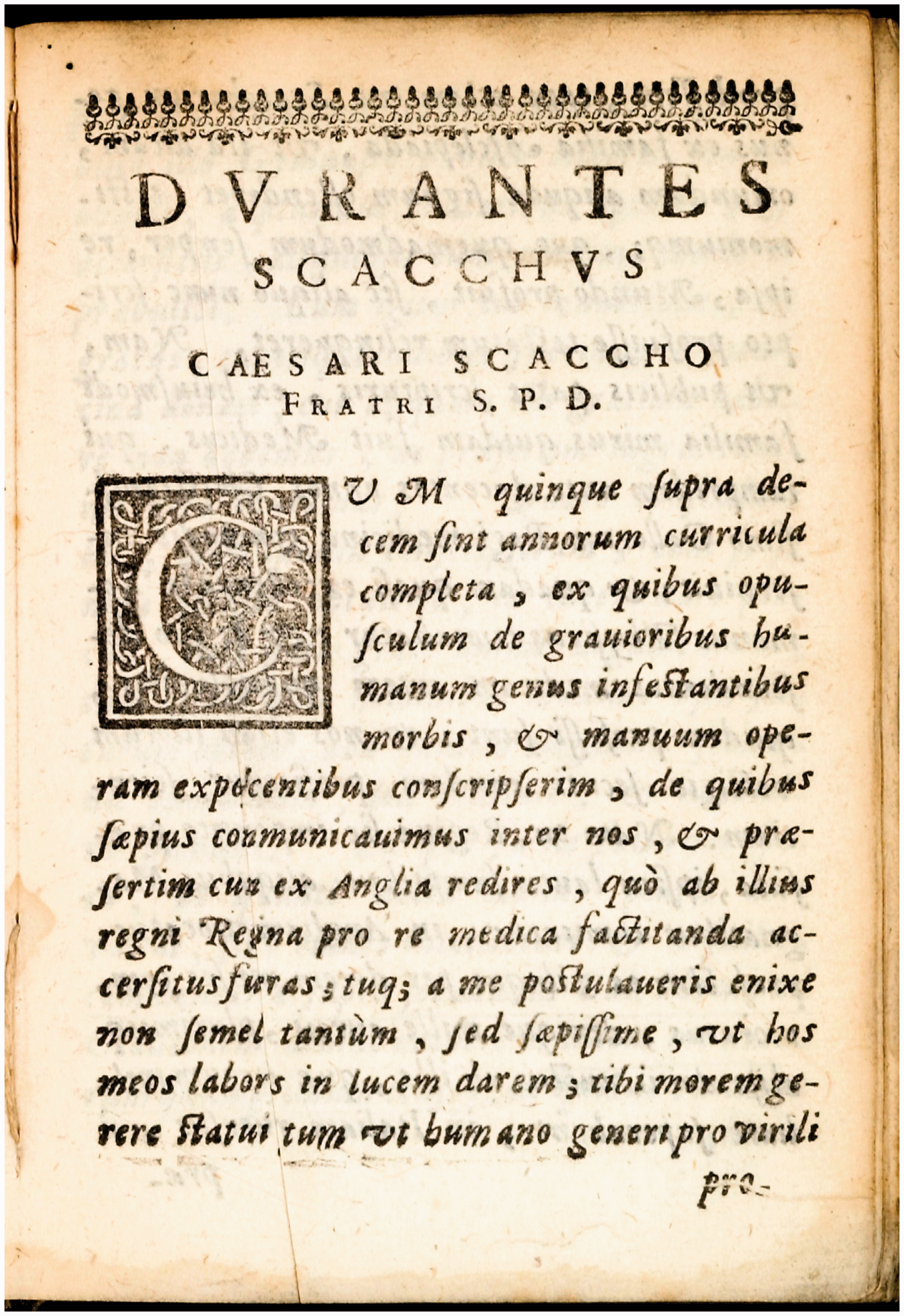
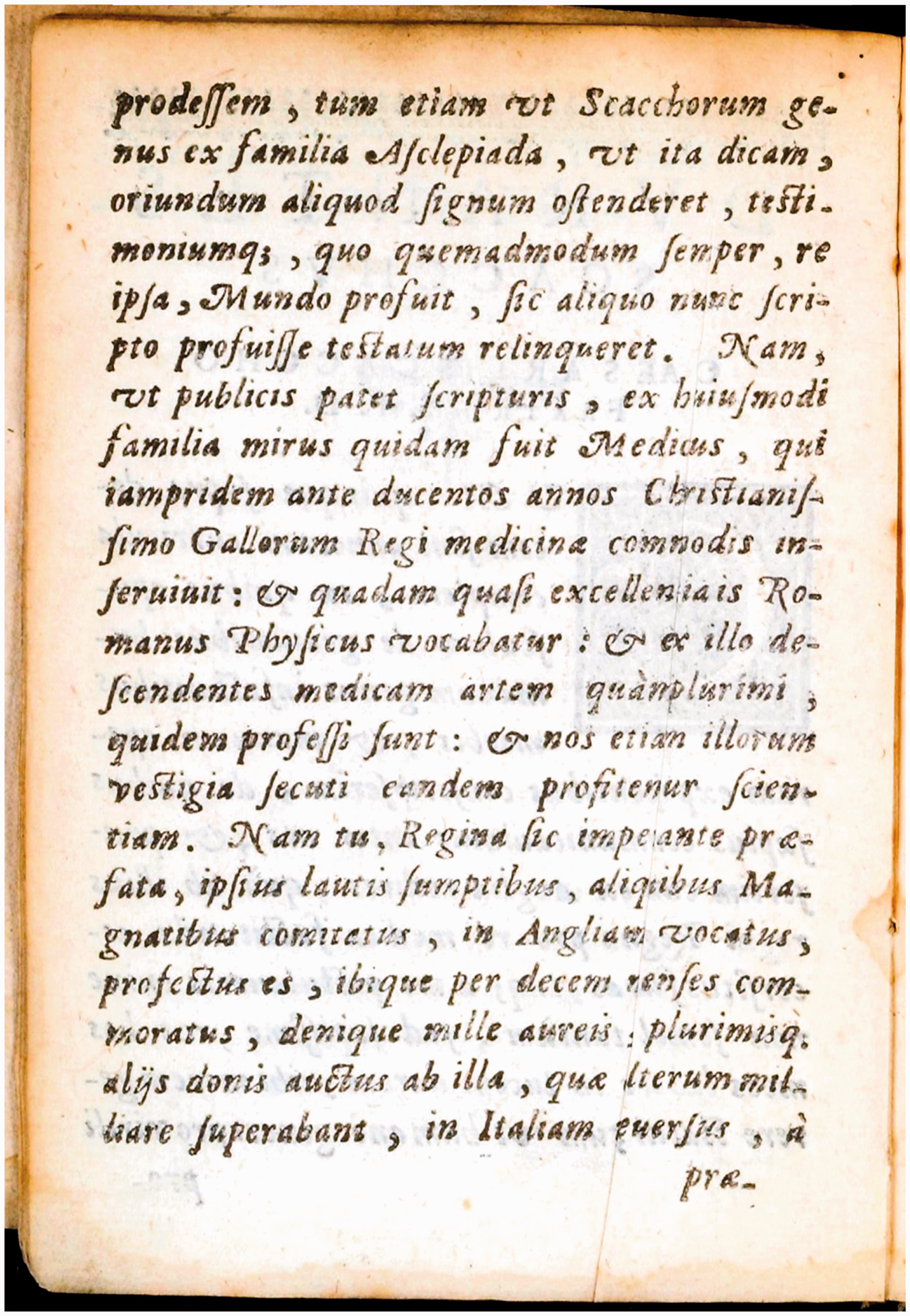
The professional Norcini worked throughout Europe. They are epitomized by the Scacchi family, two brothers and a son. Family records date from the 14th century, but it is through the writings of Durante, Cesare, and Francesco Scacchi in the second half of the 16th century that much of the family’s history comes to us. Durante (1540–1620) was a celebrated doctor who worked in the Santo Spirito Hospital in Rome. He was also an important author, publishing in 1596 Subsidium Medicinæ, a volume of letters, discussing the health properties of the waters at Cerreto, and a practical surgical handbook. At the beginning of the Subsidium he remarks, in an open letter to his brother Cesare, “…a famous physician of this kind of family, [Scacchi], some two hundred years ago, was of service to the medical needs of the most Christian King of France. Because of his distinction he was described as the Roman Physician.” 50
The ancestor to whom Scacchi refers is likely to be Antonio Scacchi, who treated Charles VI, 1380–1422, mad from 1392 until his death. Most authors assert that Charles VI received care from a Fisici Romano, although identity of the Re Christianissimo in question is disputed: Louis XIth who came to the throne in 1461, is a possible alternative.
In the same open letter, Durante also mentions a summons from Elizabeth I to Cesare, “… when you were on the way back from the Kingdom of England, to which you had been summoned by its Queen on a medical errand. Indeed when the Queen, already mentioned, made that request, you set out for England in response with a train of some notables, and at her lavish expense. And you stayed there for ten months, and in the end were the recipient of a thousand gold pieces and numerous other gifts, which were worth more than another thousand. You returned to Italy, and with an escort of notable citizens of Fermo, took up the Office of Public Reader in the Public Gymnasium [University] there, at the desire and request of a number of communities; at some of these you have acquitted yourself with enormous credit.”
51
Cesare is known to have returned to Fermo University from England around 1590. It has been suggested the summons by Elizabeth was to operate on her cataracts in 1588—unfortunately, the Domestic State Papers from November 1588 to March 1596 do not mention her health or treatment. 52 However, the medical errand mentioned is more likely to have been not for the Queen herself, but her valued courtier and spymaster Sir Francis Walsingham, known to have suffered from the stone.
Walsingham (1532–1591) had severe, acute-on-chronic abdominal colic over a period of at least 20 years for which he probably took opiates.53,54 He also had urethral carnosities (fleshy urethral growths) and difficulty in passing urine. His symptoms suggest inoperable kidney and urinary stones that culminated in uraemia and death. His problem with kidney stones was already present in 1571 during his embassy to France.55–57 He was treated then by Roderigo Lopez, the Portugese–Jewish physician, who later became doctor to Elizabeth. 58 Walsingham would without doubt, have been familiar with the surgeons of Preci. Widely traveled, fluent in Italian, Latin, and French, he was a student of Civil Law at the University in Padua from 1555 to 1556, and Consularius and Electionarius of the English Nation, representative of English students in the Faculty. 59
Cesare Scacchi would have assessed Walsingham’s situation, helped generally but could not have operated on his kidney stones. In June 1589, around the time Scacchi was present, George Gilpin, Secretary of the Council of State wrote to Walsingham that he hears he has “ease if not full remedy” of his disease and is returning to Court. 60 Walsingham’s health continued to deteriorate with seizures and weakness. 61 He died in 1591.
Several Norcini became archiatri or chief doctors to the papacy: Benedetto of Norcia treated Sixtus IV in 1426, Antonio Petrucci administered to Pius III in 1503. Girolamo Accoramboni was commissioned twice, to Leo X in 1527 and to Paul III in 1534. Reflecting the importance of the role, Accoramboni held his commission to Paul III at the same time as Realdo Colombo, the famous anatomist who first described the pulmonary circulation. Francesco Fusconi, also known as da Norcia, was doctor to Adrian VI, Clement VII, and Paul III, as well as to Benvenuto Cellini, the famous goldsmith.62–64
Conclusion
The two categories of surgeons, the empiricist with his mezza-chirurgia and the learned laureato, both practising their skilled surgical art with highly developed and specially designed instruments, created a surgical institution that bridged the gap between the learned and the practical for centuries. There are a variety of possible reasons for the collapse of the institution of the School of Preci and the gradual loss of its independence.
The Norcini, professional and highly skilled, in all likelihood paid the penalty for being confused with the fraudulent Cerretani, who played on the Norcini name as a cloak of credibility. Certainly it is said of lithotomy and lithotomists that,
“no chapter in surgery is so replete with intrigue, perfidy and dishonest dealings with both patients and associates. Mountebanks intermingled with dedicated practioners. Quarrels, jealousies and struggles for the impermanent limelight of ascendancy and the glory of success enter freely into the picture.”
65,66
By the end of the 18th century, the School of Preci no longer existed, the Preci empiricists no longer operated as empiricists. Some became physicians or took degrees becoming academic Readers in anatomy and medicine. Others put their talents to use outside the sphere of medicine.
The demise of the School of Preci coincided with a rise in the fashion for the power and purity of the “white voice,” the singing of the male castrato, especially at the Sistine Chapel and public and private theaters. 67
The operation was performed on boys at the age of 11 or 12, sometimes earlier, and clearly carried great risks. The Norcini, experienced in castration and hernia repair, which often required the removal of a testicle, were in possession of the practical talents required to minimize these risks. The last Sistine Chapel castrato, Alessandro Moreschi, may have been born with an inguinal hernia for which castration was held to be a cure.
68
He died in 1922. It is ironic that such an operation, the very one with which their veterinary forefathers may have begun the story of the Surgeons of Preci should conclude their tale.
69
Today in Italy, the name Antico Norcineria over a shop window only means pork butcher.
Benedictine Abbey of St. Eutizio, close to Preci in Umbria; its Calendario records the death of Adam, Deacon, Monk and Medicus of their congregation in 1089. (Cruciani, Cerusici e Fisici, p. 54). Instruments used for removing the stones from the bladder, for holding firmly onto the stone and for stretching the opening to remove the stone. [continue with names of instruments as before] (Illustrations, Cruciani, Cerusici e Fisici, pp. 104, 105, 106.) First page of letter from Durante Scacchi to his brother Cesare, mentioning that his brother had been summoned to England, by the Queen of that country, on a medical errand.(Subsidium Medicinae 1596, Wellcome Library, London). Second page of letter from Durante Scacchi to his brother Cesare, mentioning how he stayed in England for ten months and in the end received a thousand gold peices and numerous other gifts worth more than another thousand. (Subsidium Medicinae, 1596, Wellcome Library, London).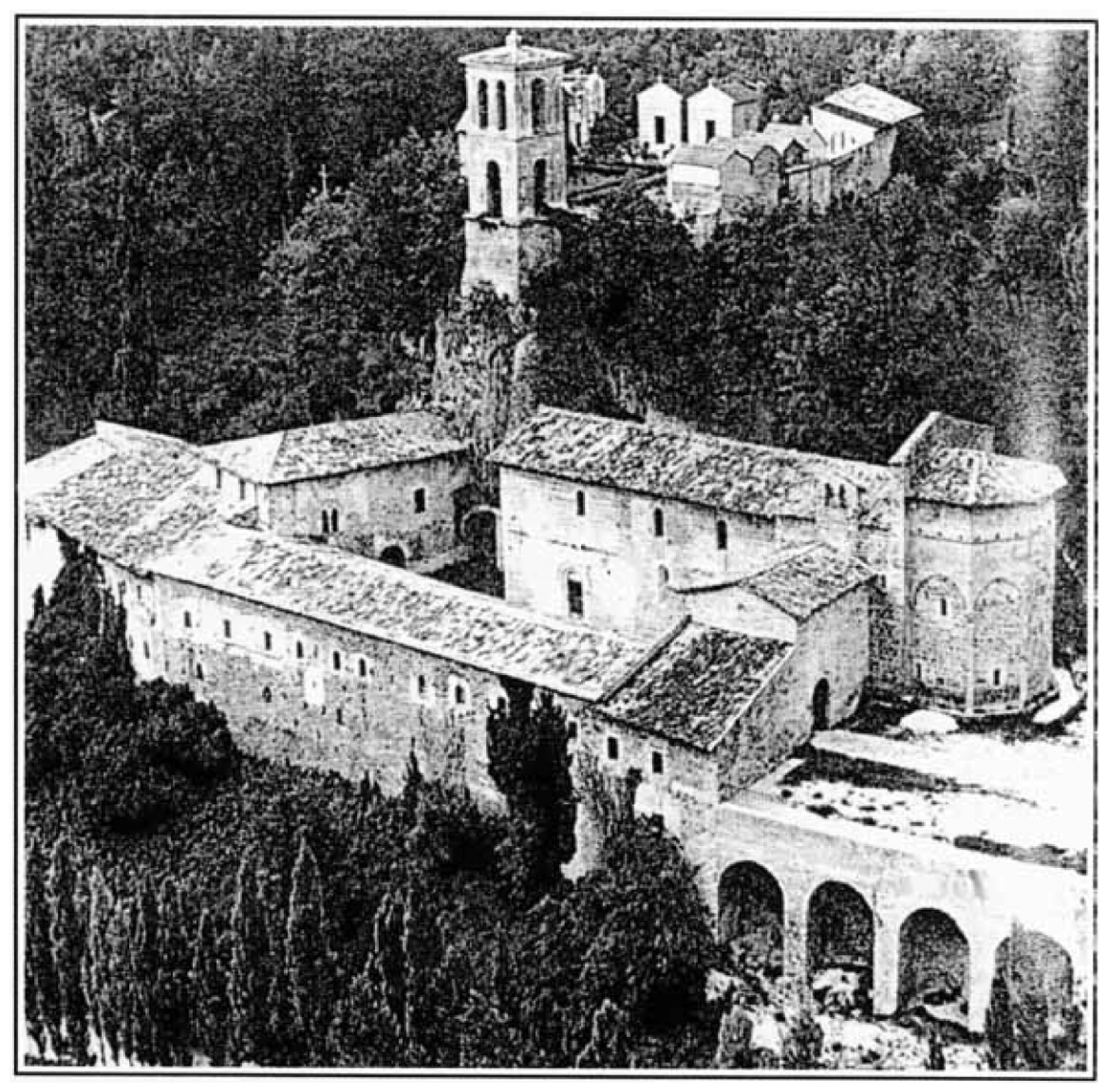
Footnotes
Acknowledgments
I would like to thank: Luciann Flynn MA and Benedict Flynn M Litt for their help with Italian translations; Dr John Forrester for his help with Latin translations; The Wellcome Library and the editor of Cruciani’s Cerusici e Fisici for permission to use the images; Benedict Flynn for proof reading the script; and Len Edmunds for his help with the computer.
Conflict of interests
The author(s) declared no potential conflicts of interest with respect to the research, authorship, and/or publication of this article.
Funding
The author(s) received no financial support for the research, authorship, and/or publication of this article.