



Abstract
Alexander Falconer Sr (1843–1915) came from Scotland to New Zealand. A practical Christian, he set up places of relaxation for miners, sailors and soldiers; he became the Seamen’s Missionary. Son, Dr Alexander Falconer (1874–1955) trained at Otago University Medical School. As medical superintendent for the mentally ill, he urged the early introduction of psychotherapy. His son, Murray Falconer (1910–1977) was the first Nuffield Dominions Clinical Fellow, training in neurosurgery in Oxford. He was the first director of the Guy’s-Maudsley Neurosurgical Unit in London and was internationally known for the surgical management of temporal lobe epilepsy in adults and children.
Keywords
Emigration from Scotland of Alexander Robertson Falconer Sr
Alexander Robertson Falconer was born in Edinburgh on 16 June 1843 and christened in the Presbyterian Non-Conformist Church of Bristo Associate Congregation, Edinburgh.
1
In a religious revival in 1859 he became a practical Christian, deeply interested in the temporal and spiritual welfare of his fellows. This was a time of great Scottish interest in missionary work and, in 1863, Alexander Falconer sailed in the ship ‘Viola’ to Dunedin in the South Island of New Zealand. He settled in Hokitika, in the goldfields of the West Coast, working as a hairdresser. He used his own home as the ‘Diggers’ Rest’ where miners could relax in homely comfort with reading and writing material available and he could carry out his practical, evangelical work. Within a few years, the alluvial gold petered out and Alexander moved to Port Chalmers, the port of Dunedin in the province of Otago. Here he went into business and, in 1872, he established a ‘Sailors’ Rest’ on similar lines. A year later, he took charge of the Bethel Mission to Seamen, established here in 1863 with the support of the shipping and local communities. As Seamen’s Missionary, Alexander Falconer continued his dynamic leadership. ‘His gatherings in the Bond Store combined singing, services and hospitality and provided an alternative to the hotels, especially for young seamen and apprentices’. A notable convert was Frank Bullen (1857–1915) who became a popular author and a lifelong friend.2,3 Later a shipping company repaid Alexander’s good work with the seamen with a trip back ‘home’ (Figure 1). Alexander was described as short in stature, but long in wisdom and compassion and a Christian in the highest sense of the word.
4
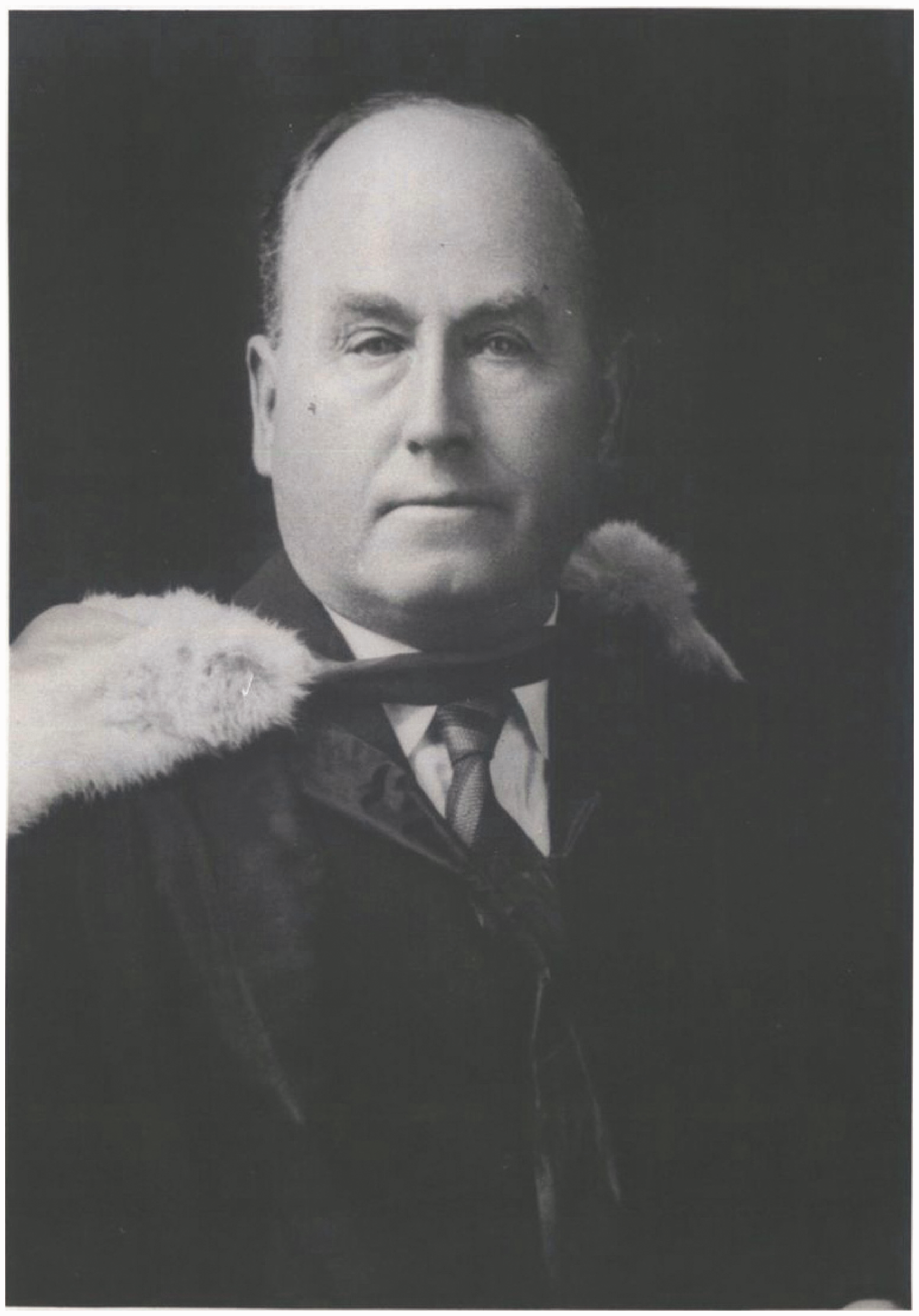
In 1870, Alexander Falconer Sr married Anne Smith who had left Lerwick in the Shetland Islands the previous year to sail to New Zealand. The couple had four boys and four girls. The second child and second son, born on 5 January 1874 in Port Chalmers, were named after his father, Alexander Robertson Falconer (Figure 2).
Alexander Robertson Falconer Sr during his visit overseas. Dr Alexander Robertson Falconer CBE.
Early years and training of son Alexander Robertson Falconer
Alexander remarked later that he was almost entirely educated on scholarships. At the local Port Chalmers District High School, he gained a Provincial Junior Scholarship with the second highest marks and, the following year, a Provincial Senior Scholarship. 5 He transferred to Otago Boys’ High School, the preeminent secondary school in Dunedin and at the end of his schooling, he was awarded the Gray Russell Scholarship (1891–1894) for study at Otago University. 6 Alexander entered the Medical School in March 1892. 7 Although the Otago Medical School was established in 1875, initially the School taught only the first two years of a medical course and medical students were required to complete their medical qualifications overseas, usually at the University of Edinburgh. From 1885, it was possible to complete the whole medical course in Dunedin and the Otago Medical School remained the only such school in New Zealand until 1968 when a Medical Faculty was established at Auckland University. 8 In 1898, Alexander was awarded MB BCh (NZ) having obtained BA (NZ) in 1894 and BSc (NZ) in 1895. A course of lectures on mental diseases was given by Dr (later Sir) Frederic Truby King (1858–1938) and, upon qualifying, Alexander was appointed assistant medical officer (1898–1902) to Truby King at the Seacliff Lunatic Asylum. 6
The Seacliff lunatic asylum
In 1878, the Government decided to build a number of rural asylums as the need became paramount. Seacliff Lunatic Asylum, 20 miles north of Dunedin, was the first and the largest of these, an imposing Scots baronial edifice built, against advice, on an isolated but geologically unstable coastal site. Seacliff was reported to be inexpressibly dreary and dispiriting for the 500 inmates and 50 staff in 1886; 217 inmates were working on the farm designed not only to give employment but to cut down the cost of food. In 1889, the post of medical superintendent became vacant and, with his impressive curriculum vitae, the post was awarded to Truby King. Born in New Plymouth, he had trained overseas graduating MB CM with honours from Edinburgh University; a BSc degree in Public Health followed.9,10 King also attended the university course of 19 clinical lectures on mental diseases given by Dr (later Sir) Thomas Smith Clouston (1840–1915), superintendent of the prestigious Royal Edinburgh Asylum. 11 Clouston was a ‘somatocist’, a widely held view in Britain at the time 12 that considered mental illness to be linked to defective bodily function. He promoted exercise, fresh air, good diet, work and recreation in bright and airy surrounds to treat mental illness. Loss of self-control was considered to lie at the root of most insanity and the role of the asylum was to provide a strict ordered regime to help patients regain control of their unruly behaviour. 13
As medical superintendent, Truby King was given free rein to implement Clouston’s concepts at Seacliff Asylum. Within months of his appointment, the entire landscape surrounding the hospital was changed. The virgin bush rapidly cleared to make way for lawns, flower gardens and playing fields. For those with more restricted liberty, recreational yards with scenic views were constructed. Drainage to remedy the structural instability of the building was instituted and sanitation and ventilation upgraded. Truby King then turned his formidable mental powers to the problem of the diet of the patients. He studied the growing of crops and nutrition of animals and transformed the badly run farm. The ordered regime was implemented by nurses and other staff, but he sought to give patients as much liberty as possible. Truby King was an autocratic individualist and initially refused the offer of an assistant. However by 1898, when Alexander Falconer arrived, the asylum was running efficiently and Truby King, whose health was poor, was often unwell.9,10 The newly graduated doctor would have had considerable responsibility and be in need of good social skills during his period as medical assistant.
The South African War (1899–1902)
With the Second Boer War imminent, the New Zealand Government offered to send troops to South Africa in support of the British Empire. By the outbreak of war in October 1899, the first contingent of New Zealand soldiers was preparing to depart for South Africa. Alexander Falconer Sr established a ‘Soldiers’ Rest’ in the training camp at Karori, Wellington where material for quiet reading and writing was supplied. Military authorities encouraged his setting up of a ‘Soldiers’ Rest’ in other camps. Before embarkation, Alexander Falconer Sr presented each man with a small, well-bound copy of the New Testament suitable for the tunic pocket. 14 In December 1901, he made a similar gift to each of Captain Scott’s men before the Discovery sailed from Port Chalmers for the Antarctic. 2 In New Zealand, he became widely known as the ‘Soldiers’ and Sailors’ Friend’ and was held in high esteem. After 40 years’ service, Alexander Robertson Falconer Sr retired, and died on 26 September 1915, aged 72 years.
On 12 March 1902, Dr Alexander Falconer, now Surgeon-Captain on the Battalion Staff of the South Island Regiment of the Ninth New Zealand Contingent, sailed from Port Chalmers in the ‘s.s.Kent’ for Durban. 15 On 30 May, Alexander wrote a long letter from Vereeniging, south of Johannesburg, where the contingent had joined the Second New Zealand Brigade on 12 May. The camp was about 2 miles from the Peace Conference Camp where Lord Kitchener (1850–1916) was talking to the Boer Peace Delegates. Writing of his journey, Alexander mentioned the diseases that had occurred within the regiment of which dysentery encountered at Newcastle was the worst. He considered that No 14 General Hospital (Newcastle) and No 16 General Hospital (Elandsfontein) were very well managed but not so the Government poultry farm under the charge of the Army Services Corp at Elandsfontein which was far below the standard at the Seacliff home farm. As regards the sea voyage, they were proud that they had lost only 6 of their 560 horses. 16 The war ended with the signing of the Treaty of Vereeniging on 31 May, 1902 and, on 13 August 1902, The Otago Witness reported the return of the Ninth New Zealand Contingent and that Dr A Falconer was present at the Otago High School Old Boys’ Annual Dinner.
Further training in London of Dr Alexander Falconer
In early 1903, Surgeon–Captain Alexander Falconer arrived in London and, with a fellow officer, he enrolled in a course at the Volunteer Ambulance School of Instruction run by the Royal Army Medical Corps (RAMC). In the RAMC, a certificate of proficiency in this course was a requirement for Captaincy. 6 On completion, Falconer obtained the post of resident surgeon at the Western General Dispensary in St Marylebone, London17,18 and entered University College London, to study for and obtain the Diploma of Public Health (Lond.) in 1904. Henry Kenwood (1862–1945), Professor of Hygiene, directed Falconer to the work of GF McCleary (1867–1962), medical officer of health of Battersea, London. 6 McCleary was one of a number of doctors concerned with the high rate of infant mortality from diarrhoea due to poor infant nutrition and unsanitary living conditions. To counter this, Dr Léon Dufour (1856–1928) had set up the first milk depot, ‘La Goutte de Lait’, in Fécamp, Normandy, France in 1894 and, in 1902, McCleary established a milk depot in Battersea supplying sterilised milk to needy mothers. 19 Back in New Zealand, Falconer continued to follow McCleary’s work on infant nutrition and also other medical advances as an overseas member of the West London Medical-Chirurgical Society.
On his return, Dr Falconer’s first appointment was senior assistant medical officer to Orokonui Home, a hospital for alcoholics near Seacliff Asylum under the authority of Truby King. Recently King had begun a publicity campaign against cramming for school examinations, which he considered was responsible for the onset of insanity of adolescence (schizophrenia). Falconer was unenthusiastic and when King confronted him, he pointed out that most of the damage might have already occurred in infancy; he brought McCleary’s work to King’s attention. This intervention coincided with the concern of King’s wife about the lack of progress of their adopted infant daughter, possibly due to poor nutrition from artificial feeding. Truby King redirected his formidable attention from the nutrition of animals to the feeding and care of infants. Thus the Society for the Promotion of the Health of Women and Children, commonly and still known as the Plunket Society, was founded in 1907. Truby King’s ideas on infant welfare were taken up later in England though not without controversy.9,10
Dr Falconer at Dunedin Hospital (1906–1927)
In March 1906, Dr Falconer left Orokonui Hospital to become senior house surgeon at Dunedin Hospital. He rose rapidly in seniority, appointed Resident Medical Officer the following year and, in 1910, Medical Superintendent of Dunedin Hospital and General Medical Superintendent for the Otago Hospital Board responsible for regional hospitals. 6
In family affairs, Dr Alexander Falconer married Agnes Jane Simpson in the Anglican Church of St Michael, Christchurch in May 1909 and their first child Murray Alexander Falconer was born a year later; two more sons and two daughters completed the family.
On 4 August, 1914 the New Zealand Government declared war on Germany and Major Falconer (NZMC) became chief medical officer of the Otago Military District in addition to his other duties. Later he was appointed assistant director of New Zealand military medical services and was mentioned in despatches. Lieutenant–Colonel Falconer received the honour of Commander of the British Empire (CBE) in 1919 for services rendered in connection with the war. 6 Postwar Falconer began his long service to the St John Ambulance Association acting as chairman of the Dunedin centre from 1929 to 1940. Within the Order of St John, he became successively a Serving Brother (1927), Officer (1929) and Knight of Grace (1936). 20
Falconer was keen to learn of developments overseas and, in 1924, he had the opportunity to speak at the 26th Annual Conference of the American Hospital Association in Buffalo, New York and to tour various hospitals in the United States and Canada studying methods of organisation and administration. He was impressed with the introduction of a modern social service department within hospitals and, in his annual report to the Otago Hospital Board, pressed for such a department to receive ‘earnest consideration’.21,22 However, outside events caused Dr Falconer to resign his positions at Dunedin Hospital in February 1927 and to return to the management of a mental hospital.
Medical superintendent of Ashburn Hall for the mentally ill
In 1916, Dr Falconer had bought shares in Ashburn Hall, a private hospital for the care and treatment of mental and nervous disorders and was appointed to the Hospital Board. In 1926, the incumbent Medical Superintendent retired and an extensive search in New Zealand and advertisements overseas failed to find a replacement. The Director-General of Mental Hospitals Dr Truby King threatened closure of Ashburn Hall and Falconer felt that he had no option but to take on the role of Medical Superintendent. Ashburn Hall was founded in 1882 as an alternative to the crowded public asylums of the day providing superior custodial care with small patient numbers, pleasant surroundings and superior facilities. The Hall, close to the centre of Dunedin, was set in about 130 acres of grounds, partly laid out in pleasant lawns, flower gardens and walks and a considerable area in native bush. The hospital incorporated the new concepts introduced by Truby King with an open reception and early treatment ward and Falconer later had two separate cottages for convalescents built; one of which was named after Sir Thomas Clouston. The home and poultry farms made the hospital self-sufficient for food. 23 When Dr Falconer took charge, Ashburn Hall, with its 66 bedrooms, was in need of an overhaul. However by 1929, Dr Gray, Director-General of Mental Hospitals, reported that ‘The whole institution presented a bright and cheerful appearance under the capable, earnest, and whole-hearted direction of Dr Falconer’. He noted that convalescent patients had appreciated spending recuperative periods at Dr Falconer’s seaside cottage. In 1930, there were 52 patients in residence, 3 of whom were voluntary boarders. The facilities included a golf course, bowling green, tennis court and croquet lawn; various types of handicraft were available. Falconer was always looking for ways to improve the health of his patients and the therapeutic value of occupation and recreation was studied and varied to the needs and capacities of each patient. 24
In 1929, with the support of the Otago University Medical School, Falconer succeeded in setting up a New Zealand National Council of Mental Hygiene. Adolf Meyer (1866–1950), Professor of Psychiatry at Johns Hopkins University, Baltimore, USA was a major proponent of this international movement in which doctors were questioning beliefs on the causes of mental illness. In seeking fresh ideas and ways to treat and prevent mental disease, psychosocial aspects were being considered.12,25 In 1936, Falconer was New Zealand delegate to the Fourth European Congress on Mental Hygiene held in London and to a meeting of the international committee. He was overseas for nine months during which he attended the mental hygiene section of the annual British Medical Association Congress at Oxford and visited mental hospitals in England and psychiatric clinics in Germany and Austria.23,26 Falconer realised that psychotherapy was an important way forward in treatment and recommended to the Otago Hospital Board that a psychiatric unit be established attached to the Medical School for teaching and training. Otago University was represented on the Board of Ashburn Hall, which was ideally situated for such a purpose; furthermore, the daughter of James Hume, founder of Ashburn Hall, had left a bequest for such a purpose.
23
However, Falconer was a voice crying in the wilderness. Truby King had always disparaged the psychological approach and, in his report as Inspector General of Mental Hospitals in 1925, he wrote of the ‘extraordinary credulity’ of those who supported psychoanalysis and psychotherapy for treating insanity. Historian Barbara Brookes commented that King’s scepticism of new trends in psychiatry was a hidden legacy bequeathed to the nation.
10
This can be seen from the writings of the New Zealand author Janet Frame who was mistakenly diagnosed as schizophrenic and in Seacliff Asylum for long periods in the 1940s.
27
In her novel ‘Faces in the Water’ in which she uses her observations and experience, she wrote: ‘in spite of the gradual adoption of the “new” attitude, the idea still prevailed that mental illness was a form of childish naughtiness which might be cured in a Victorian environment with the persuasion of stern speech and edifying literature’.
28
With the passing of the Social Security Act of 1938, the fees for Ashburn Hall were subsidised by the state so making the hospital available to a greater number of people. The hospital gradually became an institution for the chronic and severely ill who remained in locked wards and the airing courts; few patients were now well enough to use the amenities. This was not an uncommon condition in mental hospitals at this stage in the history of psychiatry. 12
A new era began slowly in 1946 when the Otago Medical School appointed a psychiatrist to attend outpatients in Dunedin General Hospital. Later arrangements were made for patients requiring intensive treatment to stay at Ashburn Hall as Falconer so dearly wished. However with his eyesight failing, Dr Falconer retired in 1947 and left his successor Dr RW Medlicott to turn Ashburn Hall into a modern teaching institution with an active treatment program.23,31 Dr Alexander Falconer died on 29 September 1955, aged 81 years.
Early years of training of Murray Alexander Falconer
Murray Alexander Falconer was born in Dunedin on 15 May 1910 (Figure 3). He was educated at Otago Boys’ High School and in 1927 entered Otago University Medical School. His father was now Medical Superintendent of Ashburn Hall and a colleague remembered Murray at the annual golf tournament for the Hume Cup which Dr Falconer organised for medical students on their nine hole course.
3
Murray remained a keen golfer. Whilst an undergraduate, Murray received both the junior and senior clinical prizes and one for applied anatomy,
32
graduating MB ChB (Otago) in 1933. After a year as a house surgeon at Dunedin Hospital, he headed for London taking a post at The London Hospital whilst he studied for and obtained his Fellowship of the Royal College of Surgeons of England (FRCS) in 1935. Mr (later Sir) Hugh Cairns (1896–1952), an Australian and outstanding neurosurgeon, was one of his teachers. After various posts including surgical registrar at Aberdeen Royal Infirmary, Murray was awarded a Fellowship in Surgery to study at the Mayo Clinic in Rochester, Minnesota in 1937. Here he trained in gastroenterology and in neurosurgery. Whilst at the Mayo Clinic, Murray wrote to Cairns to enquire about the possibility of further neurosurgical training and enclosed some reprints. Cairns advised him to apply for one of the new Dominions Clinical Assistantships which the philanthropist Viscount Nuffield (1877–1963) had been encouraged to create by Cairns. Back in New Zealand in 1938, Mr Murray Alexander Falconer was awarded Master of Surgery (MCh) from Otago University and told of his appointment by the University of New Zealand to the first Nuffield Combined Dominions Clinical Assistantship.
33
Murray Alexander Falconer. (Barr Photographer Ltd)
Nuffield Department of Surgery and St Hugh’s Military Hospital for Head Injuries, Oxford
In January 1939, Murray Falconer became Cairns’ house officer working in the Nuffield Department of Surgery, Radcliffe Infirmary, Oxford. 33 That year he married Valda Helen Turley. Cairns foresaw that war with Hitler was inevitable and in 1938 he had been given permission to plan a military hospital for head injuries for army and air force personnel. In October 1939 soon after the outbreak of war, the RAMC requisitioned St Hugh’s College, University of Oxford, close to the Radcliffe Infirmary, to set up a Military Hospital for Head Injuries under the directorship of Hugh Cairns. Cairns joined the RAMC when the hospital opened in February 1940. 34 As part of their work Murray Falconer and Dorothy Russell (1895–1983), a neuropathologist of repute, were given the task of investigating the effects of antiseptics such as acriflavine and sulphonamides on the tissues of the brain in order to determine if they could provide the scrupulous asepsis essential during head operations; proflavine proved consistently satisfactory. 35 At the end of his Fellowship, in 1941 Falconer joined the RAMC as a Major, working at St Hugh’s Military Hospital for Head Injuries. Later Cairns wrote to Dr (later Sir) Charles Hercus (1888–1971), Dean of Otago University Medical School, about the excellent clinical and research work that Falconer had done since his arrival in 1939. Otago University decided to create a new post and, in March 1943, Falconer returned to Dunedin to become associate professor in neurosurgery. This was in accordance with the aims of the Nuffield scheme. 36
Neurosurgical Unit Dunedin Hospital 1943–1949
Murray Falconer showed his characteristic vigour and determination in setting up the new neurosurgical department. In addition, he examined patients at centres in Christchurch and in Wellington and Palmerston North in the North Island. A Major in the New Zealand Medical Corps and Consultant in Neurosurgery, New Zealand Forces, Falconer visited each hospital ship returning with casualties. In the first 15 months, 152 operations were carried out in the unit, 99 being civilian cases and 53 military or war pension cases. In 1945, the neurosurgical unit moved into special accommodation designed by Falconer along the lines of the Oxford unit. By 1949, the standard of neurosurgery in the unit had reached the international level to which Falconer aimed. 3 In 1944, Murray Falconer was elected Fellow of the Royal Australian College of Surgeons. That year, he undertook his first anterolateral spinal chordotomy for intractable phantom–limb pain; later he reported on the follow-up of 12 such cases. 37
Falconer developed a particular interest in the surgical treatment of intracranial aneurysms that cause bleeding and was one of the first to advocate such a procedure.38,39 This subject was of great interest to Sir Charles Symonds (1890–1978) a distinguished neurologist of Guy’s Hospital, London, who knew Murray Falconer from their time at St Hugh’s Military Hospital. A new neurosurgical unit to provide services to Guy’s and Maudsley Hospitals was being proposed and Murray Falconer was invited to be the first director. Falconer accepted and in 1950, he and his family moved to London.32,40
Neurosurgical Unit of the Guy’s, Maudsley and (later) King’s College Hospitals
Temporal lobe epilepsy
En route to London, Murray Falconer visited Wilder Penfield (1891–1976) and his group at the Montreal Neurological Institute, a centre that was studying the surgical treatment of epilepsy. 41 The use of the electroencephalogram (EEG) to record the characteristic spike and sharp waves of an epileptic discharge within the cerebral cortex had transformed the ability to localise the site where seizures began. In epilepsy involving the temporal lobe, the group was reporting some success in the control of seizures and amelioration of associated personality disorders following unilateral resection of the temporal cortex. 42 In 1951, Falconer commenced surgery for temporal lobe epilepsy in conjunction with Professor (later Sir) Denis Hill (1913–1982), a psychiatrist specialising in EEG recording, and Professor Alfred Meyer (1895–1990), a neuroanatomist who undertook the neuropathology. Operating on carefully selected patients whose fits could not be controlled by drugs, Falconer utilised a new technique of unilateral anterior temporal lobectomy whereby deeper structures such as parts of the hippocampus and amygdala were removed in one block together with the superficial parts of the temporal lobe. This allowed detailed histological examination of the deeper structures for the first time. 43 The patients, mainly from the Maudsley psychiatric hospital, were already severely incapacitated and preoperative as well as postoperative assessments of their social adjustment were documented. In an early study, the follow-up of 30 such patients showed that 12 became fit free and 14 others greatly improved as regards their epilepsy; 20 benefitted as regards their personality changes, 17 markedly so. 44 In a series of 100 patients, the most common single lesion was unilateral sclerosis of the deeper structures, described as mesial temporal sclerosis. 45 A subsequent study showed that patients with this pathology had a significantly better relief of epilepsy and overall social adjustment postoperatively than other groups of patients undergoing the operation. 46 Children aged 15 years and younger with intractable temporal lobe epilepsy also underwent the operation. Again the best results of surgery, not only in seizure relief but also in loss of aggressive behaviour, were obtained when a similar pathology was found at operation. An association was observed between the presence of mesial temporal sclerosis and a history of prolonged convulsions in early childhood; a later study of 40 children strengthened this view. Falconer and Taylor concluded that mesial temporal sclerosis was probably a sequel of anoxic episodes in early infancy at a time when the deeper structures are particularly vulnerable to asphyxia; the glial scarring that follows neuronal loss is known to be potentially epileptogenic. They urged prompt treatment of infantile convulsions to prevent the onset of early epilepsy.47,48
Murray Falconer was involved in all aspects of temporal lobe epilepsy and the extent of his work is given in biographies by Peter F Bladin 32 of Melbourne, a former trainee neurosurgeon and by Peter H Schurr, 40 a colleague and subsequent Director of the Neurosurgical Unit of the Guy’s, Maudsley and King’s College Hospitals. Murray Falconer was meticulous in all he did and dogmatic in his views which he held with great tenacity and sincerity. He was singleminded in his desire to do the best for his patients for which he spared no effort.49,50
Psychosurgery
As a neurosurgeon attached to a psychiatric hospital, Falconer encountered patients with severe problems of intractable mental illness, one of which was involutional melancholia. In this condition, patients are overwhelmed by agitated depression and mental distress, which has been described as ‘unremitting mental agony’; 30 other patients showed ‘seething tensions and fear’. 51 Prefrontal leucotomy that aimed at separating pathways between the thalamus and frontal lobes had given relief in carefully selected cases where previously no treatment had offered hope of improvement. However in early procedures, side effects of undesirable traits of personality accompanied by loss of finer mental qualities were observed postoperatively. In 1954, Falconer reviewed the modified procedures being used which were reported to reduce tension without significant changes in personality. He chose the modification of bimedial leucotomy, which required full neurosurgical facilities and was carried out under direct vision through trephine openings in the frontal bone. Before such a destructive operation was undertaken, a conference with psychiatrists was always held to fully evaluate the condition of and prognosis for the patient.51–53 The final decision rested ultimately with the surgeon but, as a colleague noted, ‘Murray Falconer never hesitated to operate if he considered that surgical treatment was indicated. And as many patients as well as psychiatrists can testify, he was seldom wrong’. 54 By 1959, Murray Falconer and fellow neurosurgeon Peter Schurr (1920–) had operated on about 80 cases. 51 Their experience agreed with that of Boston workers who noted an improvement in their patients, which was maintained over five years of observation postoperatively. 55 The high esteem in which Murray Falconer was held was shown with his election as Fellow of the Royal College of Psychiatrists in 1971 – ‘a signal honour for a surgeon’. 54
The wider field
Murray Falconer collaborated with colleagues in other areas of neurosurgery. 40 He was a stimulating worker with a New Zealander’s willingness to commit himself in discussion and to constructively criticise. He enjoyed travelling and over the years was visiting Professor of Surgery to the Universities of California at Los Angeles (1960, 1966), Harvard (1971), St Louis (1972) and Pittsburgh (1975) as well as honorary consulting neurological surgeon at Johns Hopkins Hospital, Baltimore from 1959. Illness came early but with drive and determination he continued working and travelling even after his retirement in 1975. Finally severe strokes ensued; Murray Alexander Falconer died on 11 August, 1977, aged 67 years. He was survived by his wife, a constant, reassuring support, and two daughters.
Epilogue
In their lives and work, the three generations of men, Alexander Falconer Sr, son Alexander Falconer and Murray Alexander Falconer had many characteristics in common. All accepted challenges and continually looked for new ways to ameliorate suffering. Above all, they showed great solicitude for the well-being of sufferers and used their skills with missionary zeal and determination to this end. For Murray Falconer, ‘there are an untold number of patients who owe him everything’. 54
Footnotes
Acknowledgments
I wish to thank Robin and Feriel Falconer for invaluable help with the family photographs, Mr Peter H Schurr CBE, former director of the Neurosurgical Unit of Guy’s, Maudsley and King’s College Hospitals for reading a draft of the paper and for helpful suggestions, and Kate Guthrie, Archivist of the Hocken Library, University of Otago, Dunedin and Susan Partel of Ashburn Clinic, Dunedin, New Zealand for their valuable assistance.
Funding
This research received no specific grant from any funding agency in the public, commercial, or not-for-profit sectors.