



Abstract
Fraser Rose was a general practitioner in Preston, Lancashire, England and a medical politician. He was one of two doctors who in 1951 took the initial steps and subsequently played a major role in the founding of the College of General Practitioners, later to become the Royal College of General Practitioners. This paper examines his life, his career in general practice and medical politics, and his unique contribution to the ‘Steering Committee’ that set up the College.
Keywords
Early years
Fraser Rose (Figure 1) was born on 3 February 1897, his parents' eighth child, at South Side River Denys, Cape Breton, Nova Scotia, a small farming, fishing and lumbering community populated by the descendants of emigrants who had left Scotland during the 19th-century Highland Clearances. Fraser's father, John (1849–1922) had been ordained while living in Scotland and in 1884 had responded to the call to serve as a minister in Nova Scotia.
1
The family also worked the land and Fraser had a happy childhood on their small lakeside farm, which he called his ‘Eden’.
2
Fraser Macintosh Rose. OBE, MB, ChB (Edin), FCGP (c.1963) .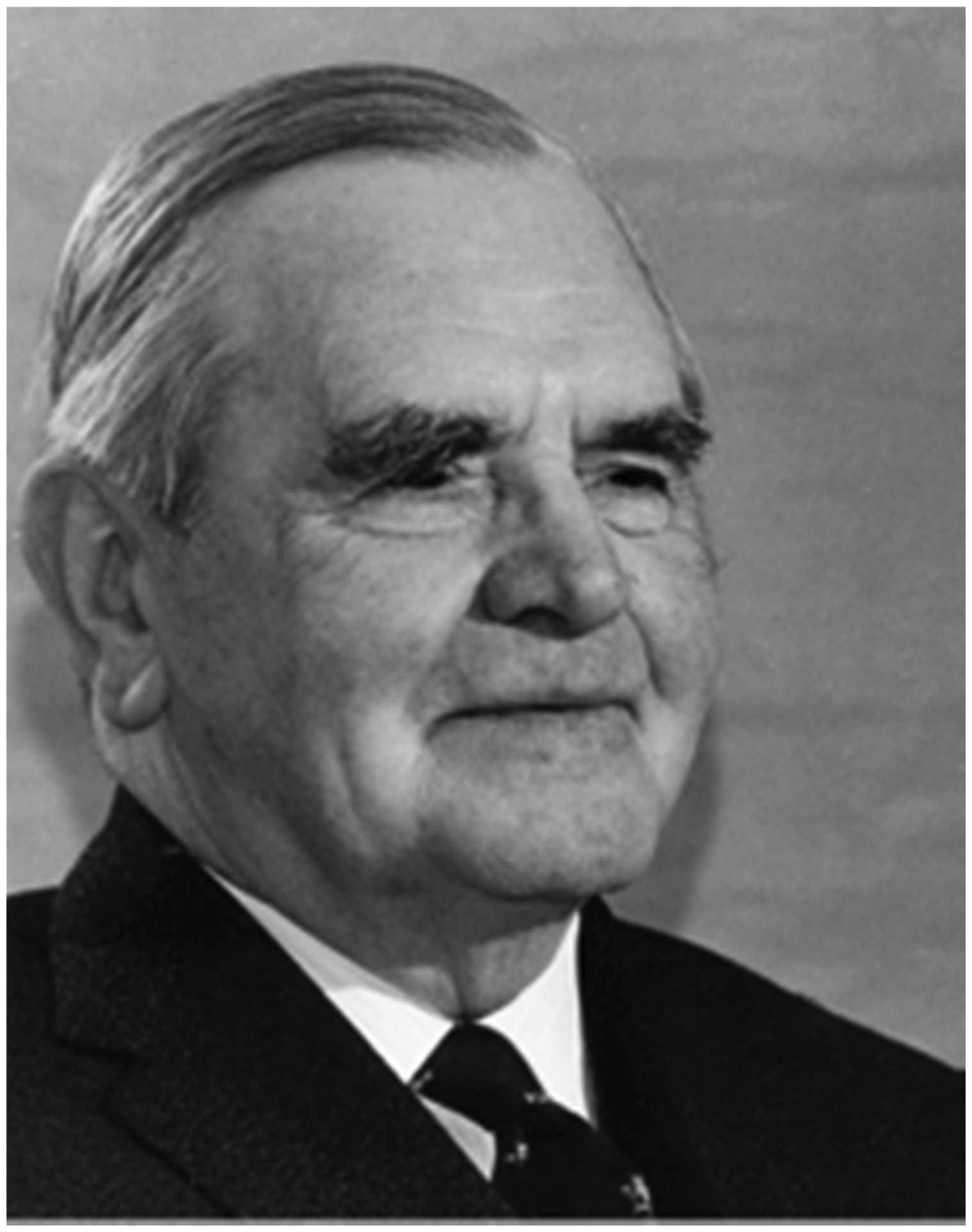
Rose was named after Fraser McAulay (1872–1943), the young local doctor who came on foot through a snowstorm to attend the birth. His second Christian name was derived from a close friend of his father, Dr. McIntosh (died c. 1894). Rose later wrote: It looked as though my parents had dedicated me to medical science, but I doubt if their intention went any further than the paying of a tribute to these two doctors. Nevertheless, the very occasional reference to the origin of my name may have had some sub-conscious influence!
3
In October 1909, feeling the need for a change, the family returned to Scotland and settled on the Outer Hebridean Isle of Lewis. They setup home at the Manse of the Free Church in Crossbost, 10 miles from Stornoway. Rose was enrolled at the village school before proceeding in 1910 to the Nicolson Institute, Stornoway where he started a school debating society. He passed his Lower Leaving Certificate examination but progress towards his Highers was interrupted by the outbreak of the First World War in August 1914. The previous year, while still underage, Rose had joined the Ross Mountain Battery, part of the Highland Territorial Division, and with many of his school friends, he was mobilized on the first day of the war. 4
He was posted to Gallipoli as a ‘driver', leading and caring for the horses and mules that were vital for the transport of guns, ammunition and supplies (Figure 2). He took part in the landings at Cape Helles in April 1915 and at Suvla Bay in August 1915. Clearly affected by the horrors of warfare, he wrote in his diary: The plight of the horses moved me more than anything else. Nearly every day we had one or more horses to bury … I am afraid I was becoming disillusioned … one day I ran into Lieutenant McKenzie of the Ross Battery who asked me how I was liking it. I told him that I was not liking it at all.
5
Driver F.M. Rose c.1914–1918.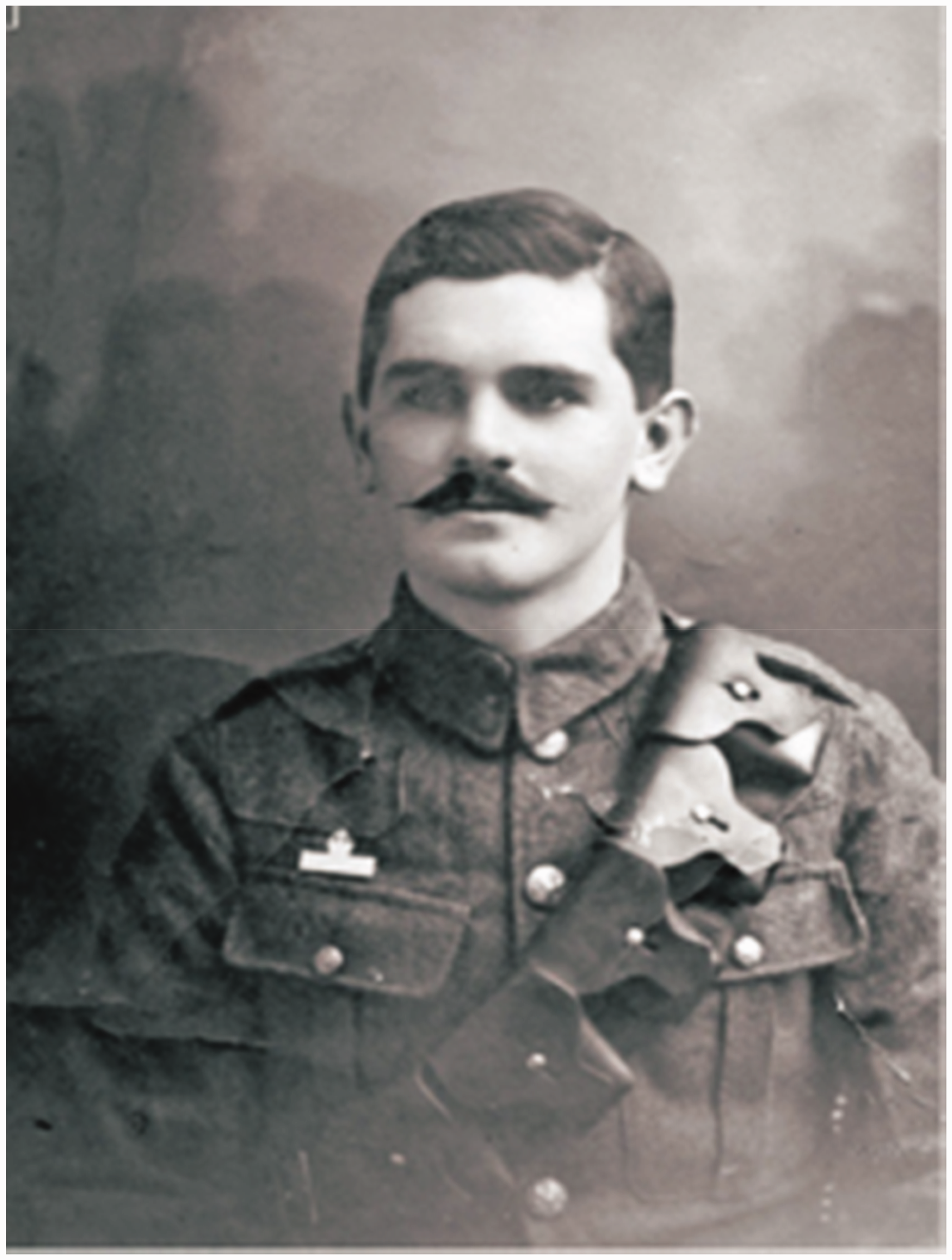
Rose recovered from a bullet wound in his arm, but later contracted severe dysentery at Gallipoli and had to be evacuated on the RMS Mauritania to England in November 1915. 6 In August 1916, he returned to his unit on the Struma Front in Macedonia and remained there as a driver with the artillery until a back injury and sciatica forced his re-evacuation to England in July 1918. He was discharged on health grounds one week before Armistice Day and returned home to Scotland. 7
After the War, Rose rejected his father's suggestion of the clergy and enrolled as a medical student at Edinburgh. He was elected to the University's Student Representative Council and became its President in his final year. 8 He qualified MB ChB in 1924.
There was a surge of entrants to medical school immediately after the war and junior doctor posts became oversubscribed. Rose had difficulty finding a resident post and a fellow student described how he approached Professor Lorrain Smith (1862–1931), Dean of the Faculty of Medicine: … Rose gave him two weeks and if he was unable to find a job for him, he threatened to write to all the newspapers stating that he was prepared to work as a labourer, after having spent five years learning the art of medicine. Prof. Lorrain Smith found him a residency …
9
General practice
After two years as a junior hospital doctor, Rose entered General Practice in 1927 in partnership with Dr A T Gibb (born 1892) at the Surgery at 99 Fylde Road, Preston, Lancashire. It was common at this time for doctors who had qualified in Scotland to move to England to find practices, most settling in the North of England. There was also a trend for new doctors to enter a partnership rather than into single handed practice. 10 After Dr Gibb left the following year, Rose’s partners were Dr Ronald Guyer (1899–1962) for 17 years, followed in 1946 by Dr Callum MacKenzie (1914–1990), another Lewisman. 11 Both were Edinburgh graduates.
In the 19th century, Preston was a centre for the cotton industry, but this collapsed in the 1920s leading to very high unemployment. Over the following two decades, several new industries including aircraft manufacture and a rayon factory gradually restored employment. Rose's house in Fylde Road was a large Victorian home about half a mile from the centre of town, with a garden running down to the Lancaster Canal. Attached to one side was a smaller house, Moss Cottage, where his partner and his family lived.
Their surgery adjoined the rear of the two houses. Morning, afternoon and evening surgeries were held from Monday to Friday, with home visits in-between, and a morning surgery every Saturday (Figure 3). Each doctor had one half day off a week, and all of the weekend and night work was shared between the two partners. Holidays were rare. Rose’s sons can recall only one family holiday in their youth, and a couple of trips to the Isle of Lewis when they were late teenagers. Rose did also manage a few trips back to Scotland and to visit relations in Canada.
12
Dr. Rose in his consulting room in Preston.
In 1951, Rose wrote ‘my partner and I have a list of over 8000 between us and we consider that we give good service’. 13 A National Health Service (NHS) patient list of this size was certainly large for the time (in 1948 the average GP list for England and Wales was 2500), but not exceptional for the under-doctored industrial towns. In 1948, Wakefield had average lists per GP of more than 3600 and Swindon of more than 4200. 14
In 2003, several people responded to a request in the local paper for recollections of Rose. One described him as very strict: ‘if you got a sick note off him you knew you were ill’. Ken Hill was the first child that Rose delivered in the practice and recalled that he ‘was a bit curt, had no bedside manner but was an excellent GP’. He was remembered by others as a dedicated doctor, who had time to listen. He was ‘a good friend’ and a ‘lovely gentleman’. A lady wrote about her grandfather who was confined to his bed for many years and who was visited by Rose regularly from 1952 until he died in 1962. Another recalled that as a child I had to keep my hand in a sling for a short while. As there was a scripture exam due at my school, I asked him if I could use the sling for a bit longer. He said he wasn’t in agreement with scripture exams and gave me permission to “play” on it.
15
Family life
In 1927, the same year that he settled in General Practice, Rose married Margaret Jean Howe (1900–1937) who came from a County Durham family with Scottish connections. Their first son was born in 1930 and twins arrived in 1935. Jean died at the young age of 37. In 1940, Rose married Catherine Dickinson (1904–1977), the daughter of a Methodist minister. Two more sons were born in 1941 and 1944. 16 Three of his sons later qualified as doctors and his daughter as a nurse. A close friend wrote that Rose ‘was a prolific reader and possessed an up to date library … with his wide knowledge of reading and travel he was very good company’. 17 Rose’s son wrote that ‘the Guardian crossword used to be efficiently dealt with each breakfast time and there was seldom need to refer to a reference book’. 18
Medical committee work
In 1954, Rose compiled a list of 30 local and national committees on which he had served. 19 On average, he sat on each committee for more than 10 years, suggesting that he was regarded as competent and trustworthy by his colleagues, who repeatedly re-elected him.
British Medical Association
Rose joined the British Medical Association (BMA) on graduating. Within a decade of entering general practice, he was becoming established in local medical politics and administration. He was Honorary Secretary of the Preston Division of the BMA from 1936 to 1954 when he was elected Chairman.
Rose was also active at the central offices of the BMA. In 1942, he was elected to the Council of the BMA by the members of his local branch. After a gap in the post-war years, he was re-elected in 1950 and served until 1962. When the NHS started in 1948, Rose was also elected to the General Medical Services Committee on which he served for 14 years. This important committee negotiated with the government the terms and conditions of service for general practitioners (GPs). There was much discontent among GPs in the years after the creation of the NHS and it was ‘quite an achievement by Rose to keep getting re-elected in such times’. 20
By 1950, Rose was well established in medical politics. In that year Sir Henry Cohen, Vice President elect of the BMA, installed Rose as the first President of the ‘North Lancashire and Westmorland Branch' of the BMA. In his speech, Sir Henry said he had known Dr. Rose for many years as an ardent worker for the BMA and an active and useful member of many Central Committees. He knew of no one who was more sincere in his desire to advance the profession, increase the status of the General Practitioner, and uphold the honour and interests of the Association.
21
Health service administration committees
Rose served on several important local committees that supervised the 1911 National Health Insurance scheme in Lancashire and Preston. In 1948, he joined the newly formed local NHS administrative committees.
National committees
In 1953, Rose was appointed to two high-profile national committees. He served for six years on the Central Health Services Council which was setup to advise the Minister of Health on all technical matters in the running of the NHS, and he sat for nine years on the NHS Tribunal, a judicial body which determined whether doctors who had been convicted of serious offences should be employed.
Looking back on his committee work in 1962, Rose wrote: The comment of some doctors reading this may well be that only by neglect of practice work can any-one engage in such a range of extraneous activities. There has to be some sacrifice of course and the co-operation of colleagues, partners in my case, is necessary. The sacrifice of leisure time is very great.
22
That the workload was sometimes almost overwhelming is illustrated in a letter in 1951 when Rose wrote ‘… I have arrived at the stage where evenings, half days and week-ends are all submerged in one thing or another …’ 23 Not only did Rose have to find the time from his busy practice to attend these committees but he also had to make the innumerable train journeys to and from London, which even today average two and a half hours each way. When not returning to Preston, he often stayed the night at the Caledonian Club, Belgravia. It is remarkable that his practice managed with just two partners until 1955 when a third partner was added. Rose ‘often admitted his indebtedness to his partners without whose help and forbearance much of his other work would have been impossible’. 24
The College of GPs
GP demoralization
By 1950, general practice was undergoing a crisis. 25 Following the creation of the NHS, the annual GP consultation rate rose by 15% representing an average additional 1750 consultations a year for each doctor. 26 One GP wrote ‘Even in 1957, forty surgery consultations and twenty home visits in a day in the winter were not uncommon’. 27 Discontent was further increased by repeated bruising confrontations with the Government over their remuneration (resolved in GPs' favour by the Danckwerts award in 1952). 28
The first half of the 20th Century had seen a rapid growth in medical specialization. The two Royal Colleges of Physicians and Surgeons were joined by the College of Obstetricians and Gynaecologists in 1929. In addition, ‘the techniques of orthopaedic surgery, ENT surgery and others were likely to lead to separate specialties …’ 29 As late as the mid 1940s, many GPs, some with higher qualifications but many without, held part-time appointments as hospital specialists. By 1948, under the new NHS appointments committees, almost all those GPs without higher qualifications were excluded from hospital consultant posts, causing great resentment. GPs were becoming regarded as ‘minor functionaries suitable for little more than sorting out patients for referral’. 30 One doctor wrote to Rose: ‘As things are GP is no longer a respectable calling … It won't attract the right type any longer. Only … those who cannot help themselves will drift into it, without hope or enthusiasm’. 31 To add to the frustration of GPs, there was an almost complete absence of appropriate undergraduate and postgraduate training for their discipline.
Another blow to GPs' morale was delivered by Joseph Collings, an Australian doctor who published a highly critical report in The Lancet in 1950. It was based on a study of practices mainly in industrial areas. In Rose's words it ‘painted a black picture of crowded waiting rooms, queues, lack of surgery equipment, inadequate examination of patients even in the better practices visited, and of unsatisfactory standards generally’. 32
The memoranda to the BMA
Rose was ‘shaken’ by the Collings Report and wrote ‘I realized that, though the picture had been overdrawn, there was nevertheless much truth in the allegations’. His response demonstrates his political skills: It seemed to me that … there was still enough truth in the charges to make it essential, indeed urgent, that additional and more personal efforts should be made by General Practitioners to improve standards of practice. Coupled with this was the need to revive General Practitioners pride and confidence in their craft. The formation of a College of General Practice seems to be the most appropriate means of achieving these ends. The General Practice Review Committee appeared to be a suitable platform to promote such an object. A recommendation from the committee would, I thought, reach a larger medical public and make the initial work of the foundation of a college easier. Accordingly, in May or June 1951 I approached C. W. Walker [the committee chairman] and Stephen Hadfield with my suggestion. Though in neither case was the initial reaction encouraging their second thought was that I might perhaps write a memorandum on the subject for the committee …
33
Stephen Hadfield (1908–2007), the Assistant Secretary of the BMA, also invited Dr John Hunt (1905–1987), a respected London GP in private practice, to submit a memorandum to the General Practice Review Committee. Hunt and Rose met and spoke to each other for the first time the day before they were to address the committee on 3 October 1951. 34
Rose delivered his memorandum first. He started by outlining the changes to medical practice in his professional lifetime, which he described as the ‘cleavage of the profession into planes’. Specialists, most of whom used to begin their careers in General Practice, now trained entirely in hospitals. They lacked any understanding of the ‘chastening discipline of General Practice’ and were often inclined to regard the average general practitioner ‘as an unscientific blunderer’. The National Health Service, with its rigid requirements for hospital practitioners which excluded most GPs, had accelerated this change. 35
Rose went on to support the idea of general practice as a special and distinct branch of medicine. He explained that the particular sphere of general practice ‘… is in the beginnings of disease processes’. He continued: ‘It is the doctor patient relationship which is the first and dominant fact … [The GP] sees the social background, the home, the office, the factory’. This remarkable statement, capturing the essence of general practice, looked forward to Michael Balint's seminal book of 1957 on the role of the GP: The Doctor, His Patient and the Illness. Rose continued with a list of the commonest fields that concern the general practitioner, including the extremes of life, the beginnings of disease, chronic disease and ethics. But above all, Rose saw the role of the general practitioner to be the ‘personal doctor of the patient – the known and respected figure to whom the patient may return after the confusion and anonymity of registrars and housemen and whatnot in hospital’. 36
Rose's vision for a College of General Practice included a role in medical education (particularly postgraduate education) with the development of lectureships, and departments of General Practice in Medical Schools. He envisaged a research role: ‘The collection of clinical papers, facts and statistics bearing on general practice …’ He saw the College cooperating on equal terms with the other medical Colleges. He perceived a role in maintaining standards in general practice and evaluating merit. He regarded the awarding of higher qualifications in general practice as a natural development and even at this early stage offered the idea of Membership being awarded to candidates ‘passing a broadly based examination … having particular reference to domiciliary practice’. 37 All Rose's suggested roles for the College reappear in the subsequent Report of the Steering Committee published in 1953, although a membership examination, which had attracted controversy, is mentioned only as a vague future possibility. 38
As an experienced medical politician, Rose was aware of the need to reassure the BMA that the proposed College would not encroach on its territory. Through his membership of the BMA Council, he was well placed to do this. In his memorandum, he stressed that the College would not ‘deal with such fundamental necessities as adequate remuneration, clinical freedom, participation in the administration of the service …’ and observed that ‘the General Medical Services Committee (of the BMA) is alive to its duty in regard to them all’.
Hunt's memorandum was briefer than Rose's. It, too, set out the reasons for a College with emphasis on appropriate medical education, on raising standards and on the development of higher qualifications for general practitioners. However, it lacked Rose's detailed analysis of the unique features of general practice and it omitted Rose’s specific reassurance to the BMA. 39
At the end of the meeting Rose and Hunt agreed to publish a joint letter in the British Medical Journal and The Lancet in order to test support for the idea of a College. Rose was the first named author. Because of this, and in consideration of his priority at the Committee meeting, ‘his longer, more profound memorandum’, and his ‘experience … within the BMA’, he has been regarded by some as ‘the de facto leader of the campaign’ at this initial stage. 40
Rose continued to work hard on the project and 10 days after the meeting had prepared two close-typed pages entitled ‘Notes on the Setting up of a College of General Practice'. These ‘Notes' were really a detailed action plan and demonstrate both the depth of thought that Rose had given to the idea of the College and his political competence. He recognized the need to gain support from GPs throughout the country as well as from the BMA, the Conference of Local Medical Committees and the Medical Practitioners' Union. However, he regarded it as important that none of the above mentioned bodies should act as sponsors, nor should the initial meeting or committee be under the auspices of any of these bodies. The independence of the new College should not be compromised in this way.
He went on to consider in detail the steps needed to establish a College: The formation of an organizing committee; sources of legal advice; the funding of the College; possible locations of office space; a declaration of the aims and objects of the College; criteria for membership of the college; and the future election of a Council with members drawn from all parts of the UK. 41
In these notes, one also detects a possible response to John Hunt who, in his Memorandum of 3 October, had been less firm than Rose about the need for complete independence of a future College. Hunt wrote It is not easy … to start up a new college or academic body out of the blue; and it would seem to me that it might possibly be better to invite an academic body which is already in being to help us and advise us in this matter.
He ended by suggesting ‘the formation of a College or Faculty of General Practice’. Rose is unwavering in his aim for a fully independent College, despite the difficulties.
Rose and Hunt
The pairing of Rose and Hunt was a fortunate one. Rose wrote that the BMA’s Committee meeting had served ‘one purpose … only, the bringing together of John Hunt and myself’. 42 Although both were successful GPs, they came from very different practices and each had a unique contribution to make. Hunt had exceptional skills in administration, communication, and public speaking. He had a wide range of contacts in the medical profession – both GPs and senior consultants, mainly London based. He was, however, a private GP in Sloane Street, London, with a very different practice from those of most GPs. The collapse of an attempt in the 1840s to found a college of general practice had partly been due to the London-based leadership failing to attract sustained support from GPs in the rest of the country. Rose, by contrast, was an NHS general practitioner, also well respected and with a successful practice in the industrial North. He was in many ways a typical GP, although possessed of exceptional energy and shrewd political skills. He, too, had a wide range of GP contacts, many of them outside London, especially in the North of England and Scotland. Ancrum Evans (1918–2006), who became the College’s first accountant, wrote ‘His role was to be known [sic] as a leading, well respected general practitioner … his widely recognized reputation [was] an essential factor in the early stages …’ 43 The rank and file NHS general practitioners could look to Rose as one of their own … a true colleague who understood their difficulties and could be trusted to lead them.
Overcoming opposition from the establishment
With the exception of the Worshipful Society of Apothecaries of London, which offered encouragement and practical help, the medical establishment was generally antagonistic to the idea another College. The President of the Royal College of Physicians wrote on behalf of all three Royal Colleges (Physicians, Surgeons, and Obstetricians) to oppose strongly any attempt to form a new College and instead advocating for GPs the vague concept of a Joint Faculty linked to all three existing Colleges. 44 When Rose received a copy of this hostile letter, he wrote to Hunt rather triumphantly to say that he welcomed it as being ‘of immense importance … I know of nothing more calculated to arouse the mass support of general practitioners …’ 45
In his diary Rose recorded as ‘very heartening’, the receipt of supportive letters from colleagues in response to his and Hunt's joint letter. The two met several times in London to look for a base for some initial meetings, and by December 1951, they had accepted an offer by Ancrum Evans of temporary accommodation at number 7 Mansfield Street, the home of his late father Dr Geoffrey Evans. Geoffrey Evans (1886–1951), a consultant physician at St. Bartholomew’s Hospital, had been a firm supporter of General Practice. 46
The steering committee
By 23 December, Hunt had succeeded in enlisting Henry Willinck (1894–1973), a past Minister of Health, to chair a ‘Steering Committee’. Willinck had required some persuasion and Rose wrote in his diary ‘It is a great triumph and will carry much weight to have a former Minister of Health as our chairman’. 47
Rose and Hunt recruited four supportive specialists as members of the steering committee, including Sir Wilson Jameson (1885–1962), late Chief Medical Officer and soon to be Master of the Society of Apothecaries, and Sir Heneage Ogilvie (1887–1971), Editor of The Practitioner. They also selected three more general practitioners to join them and recruited a further five over the next few months. They deliberately chose GPs from all over the UK, including a representative from each of Scotland, Wales and Northern Ireland. Only two (including Hunt) were London based. 48
On 28 February 1952, Rose attended the first meeting of the Steering Committee. Two points carried unanimously were that (as Rose had argued earlier in his writings) the ‘headquarters should be an autonomous body and that it should be in the form of a College rather than a Faculty or Academy’. The minutes record Rose's comment that ‘one of the main objects of our headquarters was to counter the … doctrine that general practice was only a sorting house …’ He also pointed out that it would be difficult to run such a college from one headquarters, that much decentralization would be necessary, and that local faculties would be needed in the provinces. 49
The Steering Committee met again on 20 March, when Willinck reported that the Presidents of the three Royal Colleges remained firmly opposed to a new College. Rose responded that the word ‘College’ would stir the imagination of general practitioners and there should be no compromise over it. Others agreed. Rose led the discussion about criteria for membership which he thought initially should be by producing evidence of postgraduate medical educational study, but perhaps later on by examination. He recognized that pressure for examinations may in time come from public demand. Rose also supported educational and research roles for the College. On research Rose said there was ‘a splendid opportunity for first class work to be done from a general practice level … general practitioners should be encouraged to collect facts and this … would lead to much new information.’ 50
Finally, as a member of the BMA Council, Rose's opinion was sought by the committee on the relations with the Association. He did not think the BMA would be against this new project of a College. The subject had already been broached in the General Practice Review Committee [of the BMA] where it had had ‘a good hearing’. 51 It is likely that Rose had already been informally reassuring members that the College would not threaten the BMA's negotiating role.
Rose attended the third meeting of the Steering Committee but was forced to miss the July meeting. He attended the fifth meeting in September when the group started to compose its report. On the mention of the persisting hostility of the Presidents of the Royal Colleges, Rose held his ground firmly: I think it would be a sign of weakness to start with a lesser name [than ‘College’] for fear of the wrath of the Royal Colleges. We should start with every intention of becoming an incorporated body, and this is merely a step in that direction.
52
Rose regarded it as critical that the College should find the correct political stance. He remained acutely aware of the BMA's concerns over conflicts with its role as the doctors’ representative in negotiations with the Government. During discussions on the creation of the NHS, the consultants' interests had been promoted by their increasingly powerful Royal Colleges and ‘the BMA became … identified with the cause of General Practice’.
53
The hostility of the BMA would have seriously weakened the widespread support of GPs for the College, and Rose was careful to ensure that the Steering Committee’s report avoided any hint of encroaching on the BMA's role: It is not our intention that the proposed new body should deal with the terms and conditions of service, or in any way compete with the official body, the General Medical Services Committee – I think we should say that.
Later in the report, he advised the committee to avoid the phrase ‘an academic body … to represent general practitioners’: ‘I think that the expression ‘to represent general practitioners' may be misunderstood … it is better not to use it …’
The minutes of this meeting offer another glimpse of Rose's vision: … what we really want is that the general practitioner shall do in his surgery a lot of work that he now sends to hospital, which would be a very good thing for the hospitals … and it would add interest to his practice.
54
By early October, Rose was in hospital suffering from a heart attack. Hunt refers to him having been ‘desperately ill’. He was unable to attend either of the next two committee meetings. Hunt kept in touch, however, and sent Rose the draft ‘Memorandum and the Articles of Association’. Despite being in hospital, Rose replied a week later with several suggestions, three of which Hunt highlighted. 55
Rose was well enough to attend the final meeting of the Steering Committee on 19 November 1952. He took an active part in discussions about the requirements for GPs to qualify for Foundation Membership and about the continuing education to be required to retain membership. After the signing of the ‘Memorandum and the Articles of Association’, the Steering Committee was formally dissolved in favour of the future Foundation Council. Rose led the motion of thanks to the Committee members. 56
The first meeting of the Foundation Council of the new College was held immediately after the dissolution of the Steering Committee. Rose was elected Vice Chairman of the new Council, with George Abercrombie as its Chairman and John Hunt continuing in the role of Honorary Secretary.
57
One wonders why Rose, as a co-founder of the College and an experienced committee man, was not elected Chairman. It may be that his recent serious illness played a part. He was only just well enough to attend the final meeting of the Steering Committee and the members may have felt that the demanding post of first Chairman should go to someone else. However, Rose continued to play a very active part in the early years of the College. He was a member of the first three College Councils and Chairman of Council from 1956 to 1959. He was elected President for 1962–1964 and was awarded a rare Honorary Fellowship of the College (FCGP) in 1963. He received an OBE in 1962 (Figure 4).
58
The commemorative plaque at 99 Fylde Road, Preston.
Conclusion
From his school and student days, Rose demonstrated an ability to negotiate and to run organizations. After he qualified, this developed into wide ranging committee activity. Rose was a very hard worker, possessing a strong sense of duty. By 1951, he had learned to function effectively in committees, knew his way around the medico-political scene and had formulated his own clear ideas and vision. A fellow Preston GP and close friend later wrote ‘He held very firm opinions, but was always prepared to listen to, and understand, other points of view … his honesty of purpose and his strength of character were always recognized by those who knew him well’. 59 Thus, when the opportunity came to develop a new college of General Practice, Rose was fully equipped to be a leader of GPs, but was also grounded in his ‘ordinary’ practice.
In his James Mackenzie Lecture in 1972, Hunt said of Rose ‘we never had any significant disagreements’. He went on to describe Rose's ‘friendship and wisdom, his generosity and unselfishness, his influence on the Council of the BMA, his readiness always to help and advise, his quiet humour and good sense, and his judgement of character’ and to acknowledge the ‘immeasurably important part’ Rose had played in the foundation and development of the College. 60
Epilogue
Rose continued to work in General Practice until he was almost 71, retiring in 1968. He continued to hold offices in several medical organizations and committees until a few months before his death.
In the year of his retirement, Rose made a round the world trip by air, visiting his sons in Canada and Australia. 61 In 1957, the family had moved away from the surgery at 99 Fylde Road to a large house in the Fulwood area of Preston. Rose moved again the year after his retirement to a chalet bungalow in suburban Preston where, with time to indulge an enthusiasm for gardening ‘he set about clearing the wilderness around his new home and left beautiful … lawns and flowers beds.’ In retirement, he also researched his family tree, ‘investigating, often personally many a graveyard and records office’. 62
Following his heart attack in 1951, Rose’s last 20 years became increasingly dogged by heart disease, diabetes, dermatitis, and cataracts. He died suddenly at his home early on the morning of 2 October 1972 aged 75 years. The College of General Practitioners received its Royal Charter three weeks later.
The Fraser Rose Medal was established by the Royal College of General Practitioners (RCGP) in 1972 and is awarded annually for exceptional performance in training and in the College membership examination. The Rose Prize is awarded biennially by the RCGP and the Worshipful Society of Apothecaries of London for original research into the History of General Practice. It commemorates two Roses: Fraser Rose and William Rose, the London Apothecary who won a crucial legal case in 1704 giving Apothecaries the right to prescribe. The Rose–Hunt Award is the highest accolade of the Royal Australian College of General Practitioners awarded for outstanding service to General Practice.
Footnotes
Acknowledgements

Declaration of Conflicting Interests
The author(s) declared no potential conflicts of interest with respect to the research, authorship, and/or publication of this article.
Funding
The author(s) received no financial support for the research, authorship, and/or publication of this article.