




Abstract
Sir William Ellis (1780–1839) was superintendent of the West Riding Pauper Lunatic Asylum and Hanwell Asylum. He was a practitioner of moral therapy and non-restraint. He added his own religious aspects to his treatment based on his personal experiences. These interventions were novel and benefitted his patients. However, he is less well known in the present day than his contemporaries who also championed non-restraint. In 1838, he left Hanwell Asylum, as he disagreed with plans to expand patient capacity. The resurgence of Whig politics at the time also played its part in his resignation. Ellis died one year later, his contributions to modern psychiatry remaining in relative obscurity. This paper seeks to shed light on Ellis and analyse his resignation as an example of how politics can affect healthcare.
Keywords
Introduction
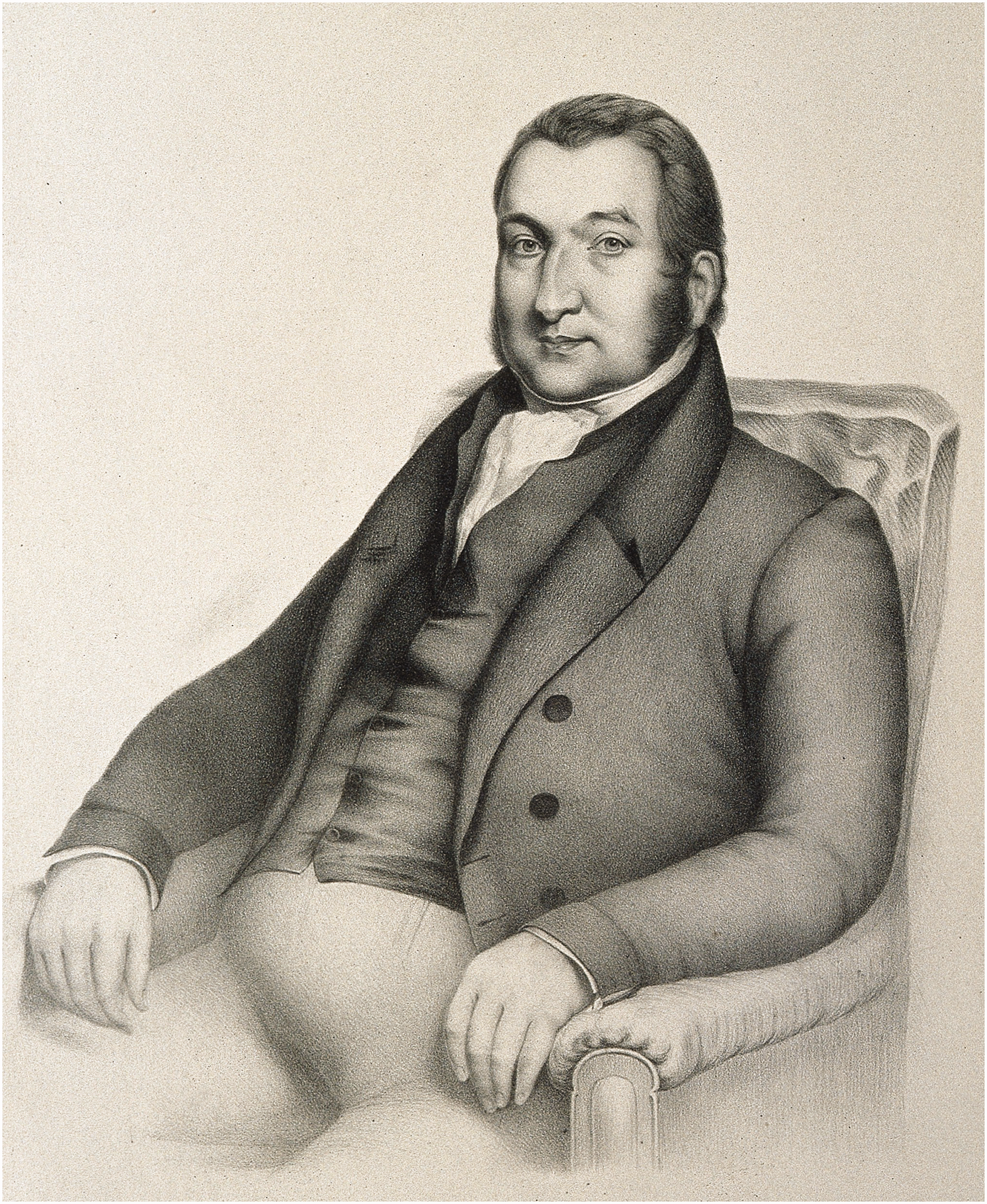
The year is 1838, in Britain the Victorian Era has just begun, and the recent Reform Act of 1832 is helping to bring politics to the population. A new age of prosperity is about to begin. However, on 5 February 1838, William Ellis (Figure 1), a man recently knighted for his services to the mentally ill was signing his resignation letter from Hanwell Lunatic Asylum. He had been superintendent and his wife Matron at Hanwell for seven years. In this time, they had perfected their own version of moral therapy.
A lithograph of Sir William Charles Ellis by W. L. Aldous.
1
Moral therapy was a humane paternalistic approach to the treatment of the mentally ill. Its methods included creating a homely, caring atmosphere and also dictated the design of institutions to be pleasant environments. Moral therapy had its beginnings in the eighteenth-century age of enlightenment.
A recognised pioneer of the enlightenment was the seventeenth-century philosopher and physician John Locke. In his 1689 An Essay in Concerning Human Understanding, he suggested that our minds begin life as a blank slate, ‘tabula rasa’. The mind then receives input from the outside world, being shaped by our experiences. He stressed the importance of education with its ability to nurture suitably this blank slate and prevent formation of ‘false beliefs’. Locke included the delusions of those who are mentally unwell as false beliefs. 2 Progressing Locke’s work, the associationist philosopher David Hartley (1705–1749), suggested behaviour is shaped by emotions, and Alexander Crichton (1763–1856) described a psychological model for mental illness in his work. 3 In science, the anatomist Thomas Willis suggested in 1664 that the aspects of the soul could be located to the circle of arteries at the base of the brain that now bears his name. 4
These discoveries challenged the previous aetiologies of mental health conditions, giving them physical causes as opposed to diabolical. This in turn allowed mental health illnesses to be viewed and treated as other physical conditions. Moral therapy was based on the idea that behaviour and thoughts of the mentally ill patient could be changed by managing their external environment. Encouraging a homely, nurturing and educational atmosphere in pleasant surroundings was the treatment, as opposed to an adjunct.
In 1774, the Madhouse Act was passed which stated that all institutions for the mentally ill would now have to have a licence. Failure to have a licence would result in a fine of £500. Institutions were also to be subject to inspection. Isolation and inhumane treatment continued to be ‘normal’ practice despite the Act. This was seen first hand by William Tuke, a Quaker and pioneer of moral therapy, who founded the York Retreat in 1796. He resolved to create a new institution to care for the mentally ill in a humane way with less use of restraints. 5 Other practitioners of moral therapy before Ellis included William Bakewell who practiced in Spring Vale, Staffordshire and Joseph Ferrier of the Manchester Infirmary. 3
Based on Moral therapy, the Ellises had developed at Hanwell a kind of colony, where patients voluntarily undertook work and a family atmosphere prevailed. Patient satisfaction was reported to be high, as were cure rates. Ellis was even affectionately referred to as ‘our Doctor’ by his patients.
6
Yet Sir William chose to leave his creation behind him when he resigned. The reasons for his resignation were the subject of much speculation. In an attempt to quell media and public interest, Sir William publicised his version of events in The Phrenological Journal and Magazine of Moral Science:
7
alterations have been proposed in the internal management of the institution, which are inconsistent with our views of its well-being, and of the comfort and happiness of the patients
Biography6,8
William Charles Ellis was born on 15 March 1780 at Alford, Lincolnshire to William Ellis, a rector, and Sarah Frances Ellis. He was taught classics from a young age and when he left school had knowledge of Latin and Greek and had also memorised many classical texts, some of which, according to his daughter’s biography, he never forgot. It is apparent that Ellis, as a boy, worked hard and with great aptitude. There is no mention, however, of either Medicine or Surgery as a possible career in his younger days. His father had plans for his son to train as a lawyer. However, his father also had ‘an excessive love of building and making improvements’ and so did not have the money to provide for his son’s training. William was instead sent to learn the ways of a surgeon-apothecary (roughly equivalent to a general practitioner today) in Hull. Unfortunately, before he had completed his studies, his father passed away. It transpired that his father had left little money, perhaps due to his aforementioned love of building. His family were left almost penniless and homeless. William acted immediately to provide for his family and with the help of a loan from a friend made a home for his mother and sister and educated his younger brother. He finished his surgeon-apothecary training and became a member of the Royal College of Surgeons.
In 1806, he married Mildred Wood in what was considered by his daughter as a ‘preeminently happy marriage’. This union, while of course personally significant, would also have a profound effect on his professional life as he would come to work so closely with his wife. Settling in Hull, Ellis continued his work while also wrestling with many personal dilemmas over religion.
While working as a surgeon-apothecary, he had treated some psychiatric cases which, according to his daughter, had always been of particular interest to him. He was influenced in his study of mental disorders by the work in the nearby hospital, Sculcoats Refuge. The Refuge had based its treatment methods on those used at the York Retreat which pioneered more humane treatment for the insane.
In 1815, a Select Committee, appointed to consider provision being made for the better regulation of madhouses, included an account of the scandalous conditions in York Lunatic Asylum (which had no connection with the aforementioned York Retreat). This consequently raised public awareness about the treatment of the insane and resulted in a new asylum being built in Wakefield, located in Yorkshire's West Riding. In the same year, Ellis published a letter to Thomas Thompson MP, in response to the revelations from the York Lunatic Asylum. In it, he outlined his thoughts on madness and how asylums should be run. 9 This letter effectively became an unintentional job application with the result that he was voted unanimously by the county magistrates to become director and superintendent of the newly built West Riding Pauper Lunatic Asylum. It is worth noting here that the head magistrate was Godfrey Higgins. Higgins was a friend of William Ellis and, while there is no direct evidence of this, it seems probable that this friendship played a part in his appointment.
He took up his post in December of 1817 and appointed his wife as Matron. He immediately put into place all that he had mentioned in his published letter. It is at this point that we learn much less of Ellis the man, compared to his treatments. William Ellis and his wife ran the West Riding Asylum for 13 years. They enjoyed a high reputation due to the success of their methods, and they become well known and respected. Sir Andrew Halliday, a royal physician to William IV, commented that Ellis was ‘an able superintendent’, and his system has produced ‘best results’. 10
Thus, they were subsequently invited to run the newly built Hanwell Asylum in Middlesex, at the time the largest asylum in the country. Here, the Ellis's methods were put into place on a larger scale. People coming to Ellisses’ asylums were having better outcomes compared to older treatment methods. 11 The renown of the Hanwell Asylum led to the foundation of the Queen Adelaide’s fund initiated by Colonel Clitherow in 1835. 12 The fund was for the support of those discharged and cured from Hanwell Asylum. In the same year, the Colonel brought Ellis to the attention of William IV, and he was awarded a knighthood for his services to the mentally ill.
The year of 1838 was an eventful one for Ellis. He published a book, which he had been working on for many years entitled A Treatise on the Nature, Symptoms, Causes, and Treatment of Insanity in which he consolidated his ideas and methods on insanity and the running of Asylums. This crowning achievement was then offset by his resignation from Hanwell in the same year.
After leaving Hanwell, Ellis and his wife established a small private asylum at nearby Southall Park where they continued to practise their treatment but Sir William’s health deteriorated. He died on 24 October 1839, the cause of death noted as dropsy.
The influence of religion
Religion was one of the pillars of Ellis’s treatment plan. We read in records from the Stanley Royd Hospital that from 1818 to 1828 William Ellis himself ran church services for the members of the West Riding Asylum until a new law was passed requiring a member of the clergy to be appointed. 11 Emphasis on religion is also mentioned extensively in his book A Treatise on the Nature, Symptoms, Causes, and Treatment of Insanity. 13 He writes of how many patients arrive at the asylum having ‘paid little attention to their religious duties’. While they have been to church and said prayers Sir William postulates that they have not done these things with ‘the power of Godliness’. He uses an example of a devout Catholic brought to him in a state of ‘furious mania brought on from drunkenness’. This lady, he commented, in addition to being insane was also ‘grossly ignorant of the vital truths of Christianity’. Throughout her stay at the Asylum, her religious needs were attended to and it is this, according to Ellis, which allowed her to give up her vices. He also goes on to mention that she then became a member of the Protestant church upon her cure. Earlier in his book, Ellis mentions the ideal attributes of a matron and superintendent which included ‘high moral and religious character’ among other things. The cornerstones of his treatment depend on the importance of benevolence, patience, lack of prejudice and belief in cure.
Ellis’s religious convictions may have developed from his upbringing. His father was a rector of All Hallows, Steyning in London and would have likely set strong religious values in his household. His father’s overspending and the financial circumstances in which he left his family may have affected William’s attitude towards religion. Some years later, when he moved to Hull, he was influenced by the preaching of Rev. Joseph Milner. William Ellis was, according to his daughter, very keen to meet Rev. Milner and discuss religion at length with him. However, since William was a relatively unknown man, he was not granted an introduction. William stopped going to church for seven years shortly after. With other distractions, such as work and looking after his ageing mother, the reasons for his non-attendance are likely multifaceted. In nineteenth-century England, actively not going to church would have been a very rare thing indeed, and with Ellis’s religious background it was perhaps more so. At this time in his life. William said he was ‘without God and without hope in the world’. He did enter a church again for his marriage to his wife Mildred and, as was customary, they attended Church on the first Sunday after their marriage. The preacher seemed to stir William’s religious convictions but not enough to wake them. As time went on William Ellis developed an illness, which was referred to as a ‘cold caught in bathing’. The present-day classification for his condition is unclear. His illness caused acute bodily pain and according to his daughter threatened his life at some points. He also felt that his job was going nowhere and was frustrated at his lack of income.
It was at this time that he became acquainted with the Wesleyan Society which later became the Methodist Church. The society members invited him to worship with them at Hull. Their deep-felt conviction seemed to reawaken religious conviction in Ellis. He referred to the following year as a time of many emotions and penitence. He came out of this period with a sincere faith that would become a central part of his entire life. This renewal of faith would help form part of his treatment plans. It is not clear whether other institutions at the time used religion as a core part of their treatment philosophy. William Tuke was, as mentioned, a Quaker and initially the York Retreat only took on patients who were Quakers themselves. However, there are no descriptions of a strong religious element to the treatment. Other contemporaries such as Thomas Bakewell (1761–1835) were not religiously motivated. 3
On treatment of insanity
William Ellis viewed mental diseases as two distinct types. The first was called incipient insanity where an acute disease process was occurring in the brain. The second was chronic insanity where the continued disease process caused ‘diseased organisation’. He believed that a cure could only be expected when patients were incipient. This therefore is his first assessment: is the patient incipient or chronically insane? If chronically insane then he must restore them to being incipient before they can be cured. Ellis also viewed mental symptoms to be attacks and believed that they could be prevented from happening with the correct intervention. Before his treatment could begin Ellis tried to ascertain the cause of the disease. If the causes were what he deemed physical ‘blows, fevers, tumours…[or if the] brain was sympathising with another diseased organ’ then a medical cure would be most appropriate. If the cause of disease was moral ‘jealousy, too great an anxiety placed on religious subjects or any other constantly operating moral cause’, then the cure would be a moral treatment. Note that Ellis mentions anxiety of religious subjects as an example of moral causes of disease.
For medical treatment of the incipient stages of disease, Ellis discussed various medical causes. As an example, his suggested treatment to prevent insanity after a blow to the head was copious bleeding from the temporal artery, free purging with calomel and extract of colocynth and cold applications to the shaved head…..the patient taking at the same time, nitrate of potash in ten-grain doses, with a small nauseating dose of tartar emetic. local bleeding may follow, either by leeches or cupping as may be convenient. a pair of wide canvas sleeves, connected by a broad canvas shoulder-strap, so as to rest easily on the shoulders.
Although religion and medical practice were important treatments, it was his moral therapy for which Ellis was known in scientific and social circles. Ellis’s moral therapy was based on the identification and removal of any moral cause of illness as soon as possible. His opinion was that the best way to achieve this was by ‘removal to other senses’ combined with medical treatment. This was relatively easy if the cause of the moral problem was physical, for example, other patients on a ward. The removal of the suffering patient to a different ward or scene would, Ellis suggests, prevent an attack of insanity. However, usually moral causes were not easily removed since they did not have a physical component. If a person cannot escape from their moral cause, Ellis suggested a distraction as an alternative: The usual routine of his habits ought to be broken in upon, and the attention attracted by a change in the little domestic arrangements; and, however painful should be at once withdrawn from the society of his friend. If the diseased action be but small, and the attack just in its commencement… [send] the patient on an excursion into a fine country, mountainous if possible: the air, the scenery, the exercise, all have salutary influence
Ellis suggested many more forms of moral therapy including scientific lectures, and taking up employment as a distraction. The employment he envisaged was that of gardening, baking and other activities that helped the running of the Asylum. When discussing planning an Asylum, he suggested that the bake house should be doubled in size so that patients can bake there as a form of therapy. The day-to-day actions of his patients are recorded well by Harriet Martineau in an article for Tait’s Edinburgh Magazine 17 . She noted that patients are found helping tend to the garden, waiting on Lady Ellis, and tells stories of patients who were once chained to their beds now walking freely in the grounds.
The main aim seemed to be to treat the patient as courteously as possible and with respect, discourage unsociable behavior and distract them from the causes of their insanity.
There is no doubt that to be effective, every treatment had to be personalised and tailored to the individual. In another chapter of his book, he states that the resident physician should be: intimately acquainted with the character and circumstances of each individual patient, so as to contrive with the physician and matron, that not an opportunity may be lost of taking advantage of any favourable turn in disease one keeper (i.e. a carer/nurse) ought not to have under his charge more than twenty or twenty-five patients at the most; and it is more convenient for each ward to contain that number only, than for them to be larger with two keepers to each
Methods of management
Ellis goes into detail on the design of Asylums. In the relevant chapter in his book, Ellis covers construction, room design and even the correct placing of a grating over certain pipes connected to toilets in the shape of an ‘S’. It is by his own admission ‘dry and uninteresting’, but we can see attention to detail in every aspect of the Asylum’s organisation and management. He also covered two jobs as superintendent and physician. This gave him control over almost all aspects of Asylum management. One could call into question whether anyone could carry out these two job roles effectively.
Not only was he adamant that the ratio of staff to patients was critical but also that the staff should be caring. Ellis suggests that many Asylums were run and staffed by people who neglected the patients. He encouraged regular unannounced inspections of the asylums by the county magistrates. He said that inspections were ‘a great incentive to activity to those who might be disposed to be negligent if entirely freed from such useful inspection’.
Public reaction
Ellis received positive and negative responses to his treatment methods and management. One such positive response was from Harriet Martineau in Tait’s Edinburgh Magazine in 1834 quoted above. In her report, she gives details of the Hanwell Asylum and treatments, all of which are favourable.
17
The Ellises were ‘lavish of air, sunshine, liberty, and amusement to their patients’ according to Martineau. Much of her article is spent discussing individual patients and describing Mrs Ellis’s role under the title ‘equal participation of a woman’. Sir William Ellis’s knighthood can also be seen as testament to a positive opinion of his work. Nevertheless, negative critics were to be found. Caleb Crowther wrote a book in three parts entitled ‘Observations on the management of mad-houses, illustrated by occurrences in the West Riding and Middlesex Asylums, London’, the tone of which was negative.
18
This might have been influenced by the fact that Crowther was an ex-employee at West Riding Asylum when Ellis was superintendent. While the relationship between them is not known, the possible contempt towards his former employer cannot be discounted. Another critic was John Conolly, who is well-known today for his principles of complete non-restraint, which began at Hanwell after Ellis. Conolly supported Crowther publicly and also launched his own personal attacks on Ellis. From an article by Suzuki, we see he accused Ellis of losing sight of the medical side of treatment:
18
the asylum becomes a good boarding-house, a safe prison, a kind of show-house, but not a hospital, not a place of cure
Politics
Sir William’s resignation, as we know, was a reaction to a decision made by the magistrates, who were his employers. These magistrates were subject to the whims of politics. It is worthwhile therefore to analyse the political changes taking place at the time. 18
Colonel James Clitherow was a key player in Hanwell from its inception in 1827. He also chaired the group of magistrates in charge of the Asylum. Personally, he was a very religious Tory and had connections with the Royal Family. These connections helped him set-up the Queen Adelaide’s fund for ex Hanwell patients ‘to enable them to make a fresh start in life’ 12 and prevent them from going into the workhouse. He was also a friend and supporter of Ellis (who was also a Tory) and recommended him for his knighthood. Ellis in turn dedicated his book to him. Clitherow resigned from the committee in 1839, a year after Ellis’s resignation. which could indicate……..was this coincident with death of Ellis?
The political mood at the time of Ellis’s resignation was affected by the 1832 Reform Act, which increased the size of the electorate by 50%–80%. 19 This in turn gave many people a new interest in politics and led them to demand more from their Government. The amendment of the Poor Law in 1834 forced the parishes, which managed workhouses and asylums, to form Unions. The Unions fell under central government control and so therefore did the parishes. The resulting government control of the parishes challenged the power of the asylum magistrates. In the case of Hanwell, the magistrates had previously let Sir William Ellis run the asylum without becoming too involved.
In 1835, the vestry of the Parish of St. George, Hanover Square, now effectively under government control accused the Hanwell magistrates of wasting public money. A surplus in funding had been used for enlarging and improving the Asylum. The vestry demanded a refund to the public. The asylum magistrates disagreed. The Home Secretary at the time, Lord John Russell (of the Whig government) became involved with the dispute and sided with the vestry of the parish. Lord Russell also supported a motion from Whig MP Henry Knight to establish a committee to inquire into Ellis’s management of the Asylum, arguing that statistics Ellis had provided were incorrect. The attacks of the Whigs did not cease; in 1836, a Whig member of the asylum committee, Robert MacWilliam, attacked Ellis personally and later accused him of ‘waste and neglect’. 18 While Ellis and his friends on the committee resisted these attacks, the march of political change and Whig resurgence would prove unstoppable. By 1838, even some Tories were embracing modernisation. One Tory, John Adams, became chairman of the magistrates in 1836 and sat on the committee in 1839. Another Whig, Charles Tulk, joined the committee in 1838. Upon Tulk’s appointment, Ellis and his allies were no longer in the majority in the committee and in that same year Ellis resigned. Clitherow continued to be on the committee until the following year when he resigned due to ‘sudden illness’. He did, however, hold another office until 1841, which could suggest personal reasons for leaving the committee or pressure from committee members. As perhaps a last act of defiance, when the committee was choosing a replacement for Ellis, John Conolly, a Whig and previous critic of Ellis, was running against James Millingen for the post. Clitherow cast the deciding vote for Millingen. This did not stop Conolly, however, who became superintendent a year later when Clitherow had left his post. The political aspects behind Ellis’s resignation could be seen as a microcosm of the Whigs return to power that took place in Parliament. The Whigs had lost all five elections between 1807 and 1830 but returned to power winning four out of five elections from 1830 to 1841.
Conclusion
Changes in the larger political scene towards the end of Ellis’s career had their effect on his control of Hanwell Asylum. In a microcosm of the political mood, the mostly Tory magistrates were criticised heavily by the Whig government. Other vocal critics such as John Conolly also had Whig sympathies. As we have seen, Ellis had firm views on the running of Hanwell and controlled the minutest details. His words to a parish overseer (shouted over the Asylum gates) of ‘I am master here and nobody else’ alludes to an almost totalitarian management of Hanwell. 18 Ellis’s critics would probably have known this and changing the rules of who could hire staff may well have been a calculated move to frustrate his principles. Ellis had come under criticism for some years, a drastic contrast to his previous success and knighthood. His health may also have been deteriorating. Previous reports of illness as a younger man and the fact that he passed away so soon after his resignation support this. Ellis may have seen further difficulties ahead with issues of who could hire staff being the thin end of the wedge that would have threatened his control over Hanwell. Resignation therefore may have been a very tempting possibility, and we can imagine Ellis being relieved to go.
Ellis’s contribution to psychiatry is an important and often overlooked stage in the movement to non-restraint care in British asylums. Modern day occupational therapy and other therapies such as horticultural or baking therapy have echoes of Ellis’s treatment. His resignation was part of a much larger political change taking place at the time. We see in his story how politics and healthcare can become intertwined, a factor that is still relevant today.
Footnotes
Declaration of Conflicting Interests
The author(s) declared no potential conflicts of interest with respect to the research, authorship, and/or publication of this article.
Funding
The author(s) received no financial support for the research, authorship, and/or publication of this article.