Abstract
The first rudimentary medical gloves were made in 1758 from the cecum of a sheep. The gloves were used by a German physician, Johann Walbaum, for gynecological examinations and deliveries. Clumsy rubber gloves were worn by pathologists for post-mortem examinations in the 1840s. The gloves were thick and difficult to work with. 1 Then in 1844, Charles Goodyear revolutionized the rubber industry by discovering the vulcanization process for rubber. This process allowed rubber to withstand temperature extremes which led to the production of a more pliable and thinner glove that still maintained its strength. Vulcanization laid the foundation for the development of medical gloves to become the gloves that we use now. 2
However, surgeons did not wear gloves while performing operations until the end of the 19th century. Surgeons carried out operations with their bare hands wearing filthy smocks that were stained with dried blood and pus. 3 It is not surprising that operations carried a high rate of infection and the post-operative mortality due to sepsis was tremendous. It was not until 1890 that the surgical glove, as we know it today, would be introduced into the operating room by Caroline Hampton and William Halsted.
Caroline Hampton was born as the youngest of four children to a prominent Southern family on 20 November 1861 near Columbia, South Carolina. She was only a year old when her mother died of tuberculosis and her father was killed in the Battle of Brandy Station in Virginia. Caroline’s father, Frank, was the youngest brother of Confederate General Wade Hampton III who later became the governor of South Carolina and a US Senator. She was raised by her three aunts.
4
In 1885, against her family’s wishes, Caroline pursued nursing in New York City, graduating from New York Hospital in 1888. She moved to Baltimore in 1889 to become the chief nurse of William Halsted’s operating room at Johns Hopkins Hospital (Figure 1).
5
Caroline Hampton in 1889. Reprinted with permission of the Alan Mason Chesney Medical Archives of the Johns Hopkins Medical Institutions.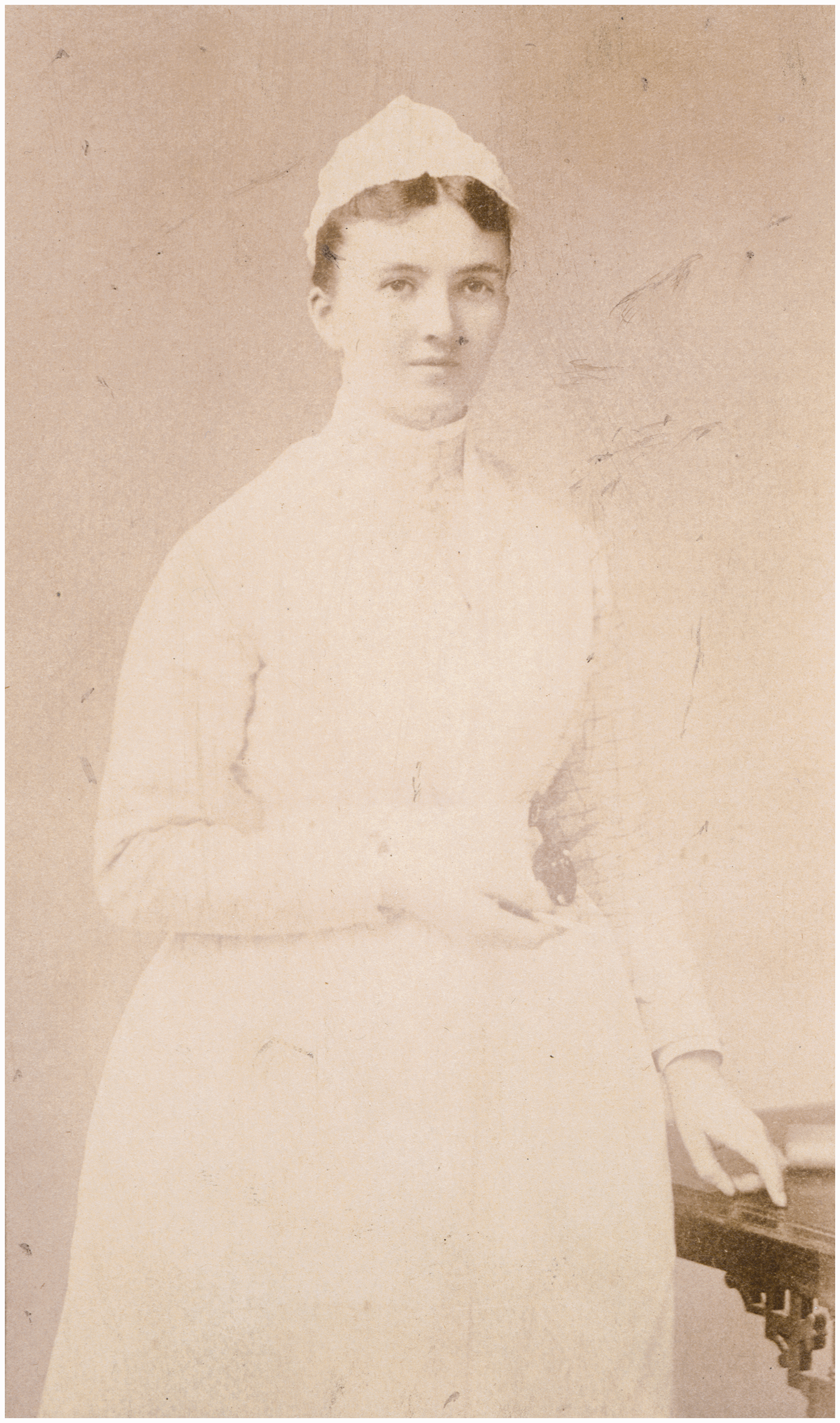
William Halsted was born in New York on 23 September 1852. In the United States, he is known as the father of modern surgery. His many contributions include the institution of formal residency training still in use today which was based on the European method of training he encountered on his educational travels. He also contributed to the development of new surgical techniques to treat breast cancer and to the advancement of safer operations by emphasizing careful handling of tissues. Dr Halsted would later become the Chief of Operation at Johns Hopkins Hospital.6,7
At Johns Hopkins Hospital, Caroline was the head nurse of the surgical division and Halsted’s scrub nurse. As a child, Caroline had to wear gloves while gardening to protect her sensitive hands. As Halsted’s scrub nurse, her contact dermatitis returned. The scrubbing process was a very demanding procedure that was harsh on the skin. After washing with soap, the hands and arms were placed in a potassium permanganate solution followed by a hot oxalic acid solution. Then the hands were washed with mercury bichloride. Caroline developed severe contact dermatitis caused by these disinfectants.7,8
Since Halsted considered Caroline an “unusually efficient woman,” he took special interest in her and wanted to help with her hand dermatitis problem. Therefore, around the winter of 1889 or 1890, he arranged for the Goodyear Rubber Company to make two pairs of thin rubber gloves with gauntlets. 9 These were made to fit plaster casts of her hands. 8 The rubber gloves proved to be so effective that more gloves were ordered. Other assistants started wearing gloves also and became so used to wearing gloves that eventually, they felt more comfortable operating with gloves than with their bare hands. 9 Caroline and Halsted married on 4 June 1890 at the Trinity Episcopal Church in Columbia, SC. 10
However, even after the surgical gloves were introduced into the operating room, routine use of gloves did not occur for the next seven years. Initially, assistants who passed instruments wore gloves to protect themselves from the carbolic acid used to wash the instruments, but surgeons rarely wore them.
11
Their routine use was controversial and there was concern that glove use would obtund the sense of touch leading to inferior surgical outcomes. In 1898, Dr Robert Morris said, I have been much interested in everything that seemed to be in the nature of progress in surgery…but have arrived at the conclusion that the practical disadvantages of gloves counterbalance their theoretical advantages. Surgeons who were doing first class work three years ago seem to me to be doing second or third rate now, on account of the interference made by their gloves. The greatest danger to be feared is that the younger generations of surgeons may fail to develop the sense of touch to the highest degree and we shall have much second rate work done, particularly in abdominal surgery … to the younger generation of surgeons I say fight with your might against the idea of using a means that will damage your most precious possession—the sense of touch.
12
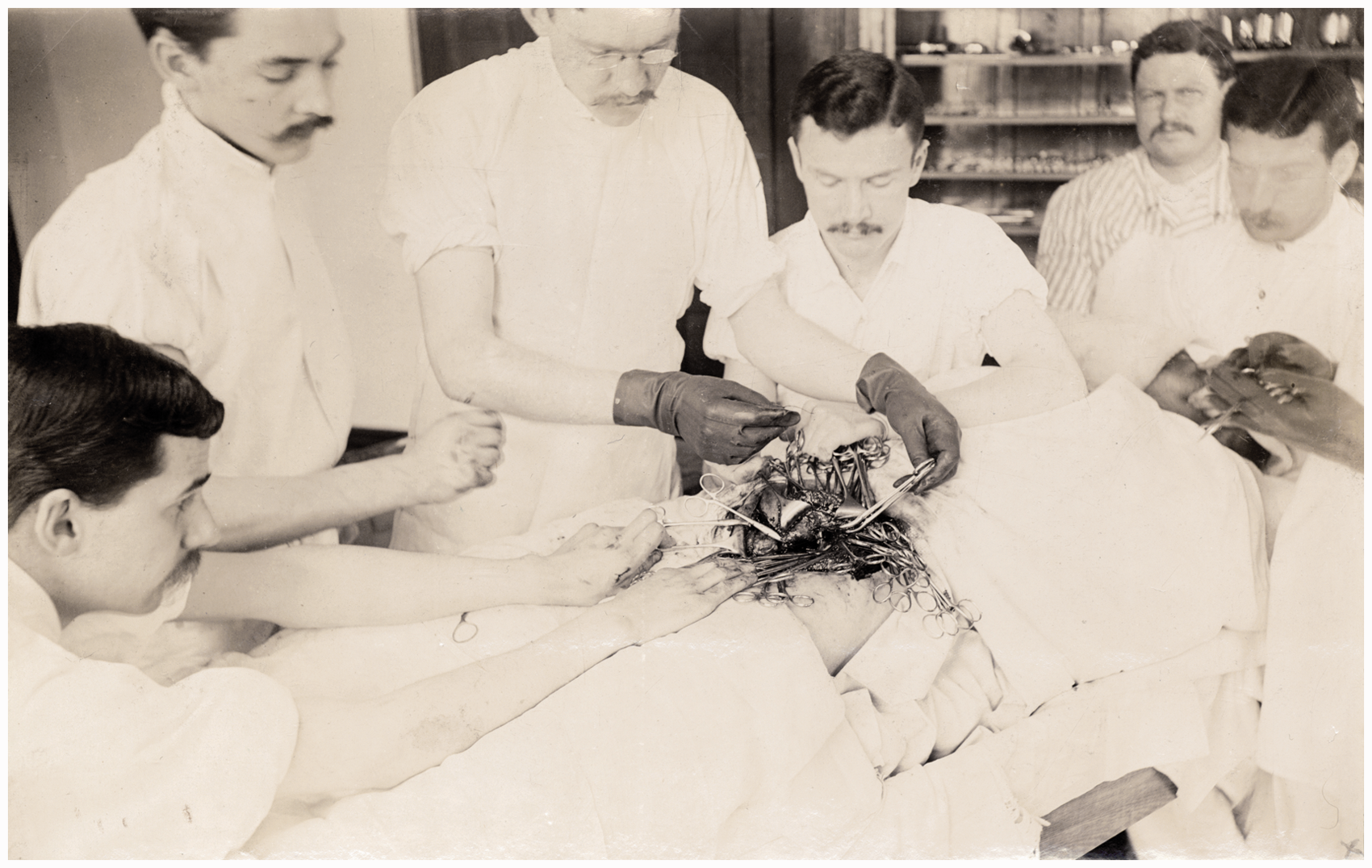
Over time, there was mounting evidence that the use of gloves clearly protected patients from infections. Soon after the introduction of the rubber gloves for Caroline, Dr Joseph Bloodgood, one of Dr Halsted’s students and eventually his colleague, began using gloves for all of his operations (Figure 2). In an extensive 10-year review of hernia operations from 1889 to 1899, Dr Bloodgood wrote that the addition of surgical gloves worn by the entire operating team decreased the rate of infection from 38 infections out of 220 cases to 4 infections out of 226 cases.
11
After this compelling report, Dr Halsted chastised himself for not realizing the paramount importance of gloves in preventing infections. Dr Halsted would remark, … operating in gloves was an evolution rather than an inspiration or happy thought, and it is remarkable that during the four or five years when as operator I wore them only occasionally, we could have been so blind as not to have perceived the necessity for wearing them invariably at the operating table.
9
In 1893, Dr James Mitchell had this photograph taken of the first surgical operation where the operator was wearing rubber gloves. From L to R: Chauncey P Smith, James F Mitchell, Joseph C Bloodgood, Harold C Parsons, John (Orderly), Sidney Cone. Reprinted with permission of the Alan Mason Chesney Medical Archives of the Johns Hopkins Medical Institutions.