



Abstract
Dr Božidar Kostić (1892–1960) – physician of noble heart – was born in Niš (Kingdom of Serbia) in a distinguished family of academically educated parents. As there were no medical faculties in Kingdom of Serbia, after high school, which he had finished with great success, in 1911 he enrolled at the Graz University of Medicine, a prestigious medical university. Soon he transferred to the Faculty of Medicine at Charles University in Prague, where he continued his studying for another ten semesters. In Prague, The Golden City, after the First World War, he finished his studies with an average grade of 10. After the Second World War, he worked as a doctor with a private medical practice in Belgrade, but soon he moved to Vranje, where he established the Town Polyclinic and contributed to the final flourishing of the most important forms of health care activities in liberated Vranje, donating his rich knowledge and skills, which led the health service to move to forms of independent work and development of new activities. For his contribution to the community, by decree of His Majesty King of Yugoslavia Alexander I Karađorđević, he received the Order of Saint Sava. Dr Božidar Kostić and his wife Pravda devoted their lives to the health and educational upbringing of the people in the south parts of Serbia (then Social Federative Republic of Yugoslavia). Until his last days he lived and worked as a true folk doctor.
Introduction
Life itinerary of doctor medicinae universae Božidar Kostić – Bata Lule (Figure 1) is extremely exciting and full of interesting facts regarding his profession and life. Unfortunately, our society is susceptible to obliviousness. And oblivion is a tragedy, because, as the Latin saying goes, “Verba volant, scripta manent” (Words fly, but the writing remains), so everything that is not written down seems like doesn't even exists. Serbian medical service goes hand in hand with European and World medical growth. Great individuals in the past, in the field of medicine, deserves a certain respect because of their huge dedication. The following article is published to commemorate the 60th anniversary of Dr Kostić death. Dr med. Božidar Kostić.
Kostić’s birth and origins
Born in 1892 in Niš, into a distinguished family of academically educated parents, Dr Božidar Kostić never suspected that the turbulent and decisive years for Serbian people were ahead of him. He graduated from Gymnasium (high school) with excellent success and already demonstrated a penchant for languages. However, there was no medical faculty in Kingdom of Serbia then, so he enrolled at the Graz University of Medicine, a prestigious medical university, in 1911 as a scholarship holder “in gold”. Having the restless spirit and being eager to get to know other elite educational centers, Kostić soon transferred to the Faculty of Medicine at Charles University in Prague, where he continued education for another ten semesters. Some of his professors were Prof. Dr Otakar Kukula, Prof. Dr Jan Deyl and Prof. Dr Josef Pelnar. In that period he also visited other European countries, learnt different languages, got to know other cultures and customs, and he spiritually enriched himself. During his studies, he prided himself on his origins, emphasized his Serbianness and Slavness, and let his virtues speak of the positive values of his people (Figure 2). In Prague, after the war, he completed his studies with an average grade of 10 and, during his stay in the Golden City, he also made close contacts in cultural and social circles. This is indicated by a letter from the Czechoslovakian embassy, which expressed the most heartfelt gratitude for the hospitality shown to Dr Edward Benesh, the President of Czechoslovakia and a personal friend of Dr Božidar Kostić, during his visit to Belgrade. The significance and magnitude of the Doctor's work is also evidenced by the anecdote that, whenever he received mail from abroad, it was sufficient to simply address it “Dr Božidar Kostić, Bata Lule, Europe” and to have the item arrive at the right address.
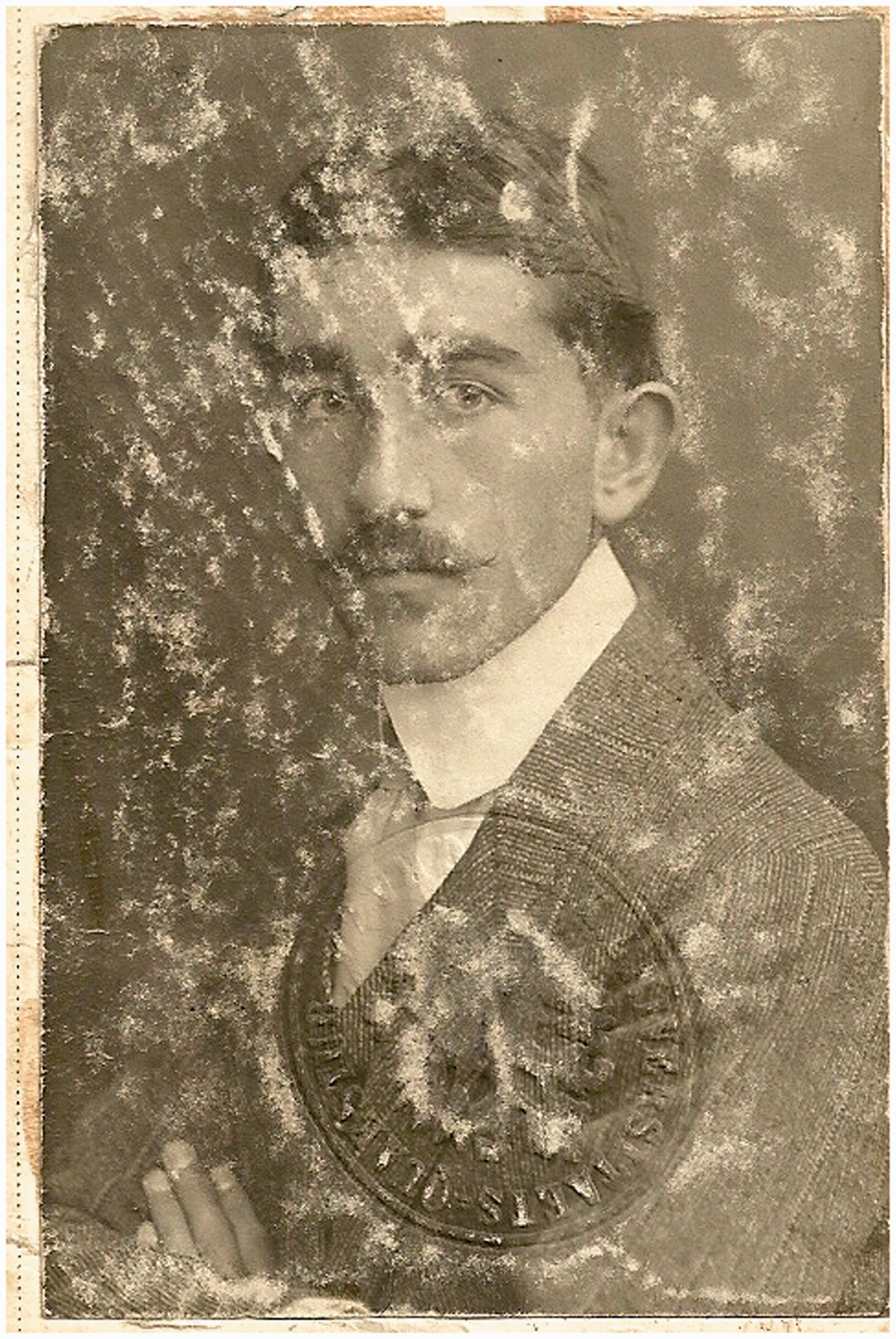
Student Božidar Kostić.
First World War and period between two wars
When Kostić heard that his fatherland was in danger of war, he returned to his country, and like most academic youth, he fought in the wars that followed. After the end of the Balkan wars, the Great or First World War began, in which he participated, and, unwilling to leave the country, in 1915 was interned in the Austro-Hungarian concentration camp for Serbs, today's Austrian city of Kufstein in Tyrol, so he was interned for the whole time of war. In order to remedy the consequences of war and to take care of the wounded in the country, he put his testimony of the Faculty of Medicine of Charles University in use, because he wanted to help the liberation act of the brave Serbian people with his scientific and humane work. In the post-war years, he served as a military doctor at the Tetovo district command, as there was an epidemic of typhus and Spanish flu. This is how he did good to people, which is an experience that helped him in later years.
In 1925, he continued his medical practice in Prizren as a district doctor (serb. sreski lekar) at the Sharplanin district, where he established himself as a good doctor and most important, a good man. In addition to his great expertise, he was blessed with a talent for connecting to people and he was friendly with everyone, no matter what religion or nation they belonged to. There is another thing that says how truly liked he was in his district: whenever he would go walking through the streets of the city, women would show their respect by picking peony flowers and putting them on Dr Božidar’s lapel. His easy-going manner won people around the town, but his dedication and seriousness with which he took his job made people in the entire Prizren district comfortable to openly seek advice from him, and he always helped, whether the problems were of health or social nature. I mention this because Prizren was a city with many nationalities and religions at the beginning of 20th century. That good man, that friend, was loved by the people of the whole Prizren region. As an intellectual with ideas that were ahead of his time, Dr Boža was often in the company of similar people. Together they would participate in the May Day festivities (Dr Mihajlović wrote),1 a celebration of social and spiritual rebirth of people who, though shattered by war, did not kneel.
Humanitarian work
Doctor Kostić's nobility is also reflected in the fact that every Christmas he would give presents to children from orphanages and dress them from head to toe. He was also a patron in the construction of one of the churches in Vranje. These were the years when appreciation was shown to people who contributed a great deal to the community, by the decree of His Majesty King of Yugoslavia Aleksandar I Karađorđević. Thus Dr Boža received the Order of Saint Sava of the 5th degree.
Married life and family
He married Pravda Kujundžić (Figure 3), a teacher who worked in Prizren at the time. Upon hearing, that Pravda is the daughter of Lazar Kujundžić (the leader of the movement for the liberation of South Serbia from the Turks), and that she is a very beautiful, inteligent and dedicated to the idea of social justice, he purposely seeks for medical practice in Prizren. The intoduction that followed, as well as mutual sympathy and closeness in same views of life, led to marriage in front of the Vladikas of the Patriarchate of Peć. They had three daughters, Radmila, a pharmacist, Vera, a speech therapist, and Nadežda, a professor of World and Yugoslav literature.

Pravda Kostić, his wife.
Dr Božidar Kostić and his wife Pravda devoted their lives to the health and educational upbringing of the people in the south parts of Serbia (then Social Federative Republic of Yugoslavia). Their mission was continued in Vranje by their daughter Nadežda Pocevski (Figure 4), professor of literature. Knowledge about literature and grammar were not the only things that younger generations gained from her teaching – she was also a breathing example of good morals and etical principles. She remains remembered as a rigorous, righteous educator and a psychologist, an outstanding expert in methodology and pedagogy, a professor who viewed her students as individuals.

Prof. Nadežda Pocevska, his daughter.
Vaccination and health care service
Dr Kostić also achieved remarkable results by organizing collective inoculation (serb. pelcovanje) which was then called vaccine delivery, while also raising awareness about health care among the people. He went through the villages of the southern Serbian regions and conducted immunization of the population against diphtheria. The results of vaccination are largely influenced by the attitude of one population to its importance. At that time, the word of a doctor was obeyed, and people realized that collective immunization was needed to save many lives. In addition to the vaccination of the population, he is also remembered as a good obstetrician, because in the most inaccessible places, outbreaks, he managed to help women give birth no matter what time of day it was. In order to be ready to help at all times, it was necessary to ride skilfully, otherwise it was very difficult to reach all these different places. He successfully treated typhoid fever, gonorrhea, syphilis before the onset of penicillin with salvarsan, and other infectious diseases that were very prevalent at the time. Primarily he was paediatrician, but as he was in small town, as Vranje was back then, he successfully performed childbirths, also solved problems of infective medicine and sexually transmitted diseases. Because of his omnipotence he was a favourite physician of the region. He proved himself as reluctant practitioner and great diagnostician.
Second World War
Always attached to the south and southern parts of Serbia, he briefly served in the Kičevo Caserne, but soon, with the rank of medical major he transferred to the position of director of the Bitola military hospital (Figure 5). He remained in this position until the very beginning of Second World War. He was captured by the fascist occupier in Prizren and interned at the camp Puki in northern Albania, from where he was sent to Palermo (Sicily) and the island of Ustica. The Puki camp was ruled by famine, lack of drinking water, harassment by guards and abuse by the camp administration. As a doctor, he was assigned to provide medical help to Yugoslavs. However, this medical assistance was minimal due to the lack of basic instruments for work and diagnostics. But even so, it existed because Dr Kostić was an impeccable diagnostitian. After all, as a polyglot was fluent in German, Italian, French, Czech and Polish, he had no trouble understanding people. The Ustica Island camp was also ruled by famine, and as 150 grams of bread was obtained daily, people were dying of both starvation and infectious diseases. He survived the camp quite well, and he helped all internees in all aspects, as the survivors testify. Along with other war prisoners, he took a journey that went from Padua via Brener, Innsbruck, Vienna, Maribor and Zagreb, to Belgrade. There he was taken to a camp at the Sajmište.

Medical Major Dr Božidar Kostić.
The postwar period and establishing city polyclinic
After the war he worked in Belgrade at Brankova 8 as a doctor with a private medical practice. Despite his internment, Dr Boža did not lose his cheerful nature, positive spirit and optimism. According to his colleague and student Dr Mihajlović, when life path brought Dr Kostić to the Vranje region, his life forces were already badly affected.1 But even then, Dr Boža offers the socialist community his last powers and his extensive medical experience, where he also established Vranje City Polyclinic. Although freed from going to field as field doctor from the Polyclinic, Dr Boža did not adhere to it, so – working often in the most difficult field places – he courageously endured the most difficult days of rebuilding the health service in the liberated Vranje region. Dr Boža Bata Lule contributed to the final flourishing of the most important forms of health care activities in liberated Vranje (Figure 6), donating his rich knowledge and skills, which led the health service to move to forms of independent work and development of new activities.

Dr Božidar Kostić.
It is still being talked about the human goodness of Dr Kostić, about his legendary hat and always decorated lapel in the region of Vranje. He passed away in 1960. His body was received by the earth, his soul received by eternity, the eternity of the Vranje that does not die.
Near catafalque, in the presence of the family, his colleagues and students paid their respects, among them the aforementioned Dr Dragoljub Mihajlovic, the director of the AT Dispensary, who gave a speech on the occasion, Dr Miodrag T. Dimitrijevic – Sobinac, surgeon, dear colleague and friend, Dr Slavoljub Kostić, his colleague and student, Dr Jordan Aćimović, colleague and friend, Dr Slobodan Palamarević, head of the surgical department.
The death of Dr Božidar Kostić, called Bata Lule Evropa, was a national mourning for the entire Vranje region.
Conclusion
Such bright examples from the past should just be the impetus and the guiding light for future generations. The life and work of a physician of noble heart, folk healer, comfort and hope, who showed that one cannot be a good doctor without first being a good man, became an inspiration to his descendants, compatriots and countrymen.
Footnotes
Declaration of Conflicting Interests
The author(s) declared no potential conflicts of interest with respect to the research, authorship, and/or publication of this article.
Funding
The author(s) received no financial support for the research, authorship, and/or publication of this article.
