




Abstract
Johann Alexander Vogelsang, a pioneering figure in maxillofacial surgery, played an important role in developing this field in East Germany, particularly in Dresden. Born in 1890, Vogelsang pursued dentistry against his family's wishes, studying at several German universities before his education was interrupted by the First World War. His experiences treating facial injuries during the war significantly influenced his professional focus. After the war, he worked in Dresden, advancing maxillofacial surgery and overcoming significant challenges posed by the rise of National Socialism. Despite political repression, he continued his work, later contributing to the war effort in the Second World War. Postwar, Vogelsang was instrumental in rebuilding Dresden's dental medical infrastructure and establishing educational programs. His legacy endures through the institutions he helped build and the advancements he made in the field. This article chronicles his life, highlighting his contributions to dental and maxillofacial surgery and his lasting impact on medical practice and education in Dresden.
Introduction
Johann Alexander Vogelsang stands as a seminal figure in the development of maxillofacial surgery, particularly within the context of East Germany and his adopted home, the city of Dresden. His career, marked by remarkable academic and professional achievements, unfolded during a tumultuous period that included both World Wars, the rise and fall of National Socialism, and the establishment of a communist state in East Germany. Born into a large family in Werl, Westphalia (Germany), Vogelsang's early life and education set the stage for his pioneering contributions to dentistry and maxillofacial surgery. His professional journey, deeply intertwined with historical events, reflects the challenges and advancements in medical practice during the early to mid-twentieth century. This article aims to chronicle Vogelsang's life, from his formative years and academic pursuits to his role in the establishment and development of maxillofacial surgery in Dresden.
Early years
Johann Alexander Vogelsang, a distinguished maxillofacial surgeon, was born on 31 January 1890, as the second of 11 children of a saltworks administrator in Werl, formerly part of the Province of Westphalia, Kreis Soest, Germany.1–3 He completed his secondary education in Attendorn, a small town in the Sauerland region, where he passed his exams in the spring of 1911. 2 Despite his family's suggestion to pursue a career in education, Vogelsang followed the advice of his high school teachers and began studying dentistry at the University of Freiburg in the same year. 4
Vogelsang, however, only remained in Freiburg for the summer semester before transferring to the University of Leipzig on 19 October 1911. 3 In May 1913, he passed the preliminary dental examination in Leipzig with excellent results and subsequently transferred to the Friedrich-Wilhelms University in Berlin in October of the same year.2,4,5 At that time, it was common to acquire the latest academic knowledge by studying at different university locations in Germany. The dental university education in Berlin, especially, was considered one of the best in the entire German Empire and in Europe. 4
The outbreak of the First World War required Vogelsang to undergo an emergency dental examination in August 1914, and he received his dental licence in 1916. 1 As an officer in the “Garde-Artillerieregimentes zu Pferde”, he was conscripted in 1914 and remained in the German army until his discharge in December 1918. The war led to a significant increase in jaw and facial injuries worldwide, necessitating the establishment of specialized hospitals for these types of injuries, with dentists playing a crucial role in treating the war-wounded. Consequently, the war accelerated the development of the field of maxillofacial surgery, significantly influencing Vogelsang's professional focus. 4 During his time in military service, Vogelsang encountered a variety of facial and jaw injuries for the first time, although he was not yet a fully trained maxillofacial surgeon. 4
The path to Dresden
Vogelsang commenced his work in Dresden as an assistant dentist in January 1919.2,6 During this period, he conducted clinical studies for his dissertation. He was awarded a Doctorate of Dental Medicine (Dr med. dent.) in July 1920, with his dissertation titled “The Reaction of the Pulp to Sudden Enamel Deficiency”. 7 In 1921, he was appointed as the head of the newly established Dental and Maxillofacial Clinic at the City Hospital Dresden-Johannstadt. 3 The City Hospital Dresden-Johannstadt was opened on 2 December 1901, as a direct consequence of the rapidly increasing urban population and the resulting deterioration of healthcare services at Dresden-Friedrichstadt Hospital, to relieve its burden. 8 During this time, it built a reputation that few comparable institutions in East Saxony could match.
The rise of the National Socialists brought significant disruption to Vogelsang's career. In 1934, he was forced to resign from his position as chairman of the Association of Licensed Dentists of Dresden and Surroundings, which he had held since 1926. 3 Additionally, his role on the board of the Central Association of German Dentists ended with the founding of the German Society for Dental, Oral, and Maxillofacial Medicine in 1933. 4 Vogelsang, who was critical of nationalist ideas, attempted to distance himself from them. Through this circumstance, he lost his membership in the Saxon State Health Office by decree of the Saxon Interior Minister in 1936. 4
During the Second World War and a new beginning
Following the German invasion of Poland in September 1939, 9 Vogelsang was mobilized back into military service. Initially, he served in hospitals in Poland and later in occupied France. 10 Upon his discharge from military duty, Vogelsang resumed his responsibilities at the City Hospital Dresden-Johannstadt. However, in 1942, he was once again required to leave, this time to establish and lead a maxillofacial surgery unit at the municipal hospital in Arnsdorf near Dresden. During this time, he was primarily involved in the treatment of war-related maxillofacial injuries, which shaped his practical work throughout Vogelsang's later years.1,6,10
In 1945, following the end of the war, Vogelsang returned to Dresden and focused on rebuilding the dental department at the City Hospital Dresden-Johannstadt. By 1946, he had expanded it into a dental and maxillofacial clinic with an affiliated ward. In 1950, he commenced teaching at the “Institute for Dental Trainees,” 5 which prepared dental professionals for licensure or a condensed dental medicine programme (Figure 1). In 1954, 39 students were trained as dentists specializing in maxillofacial surgery. 10
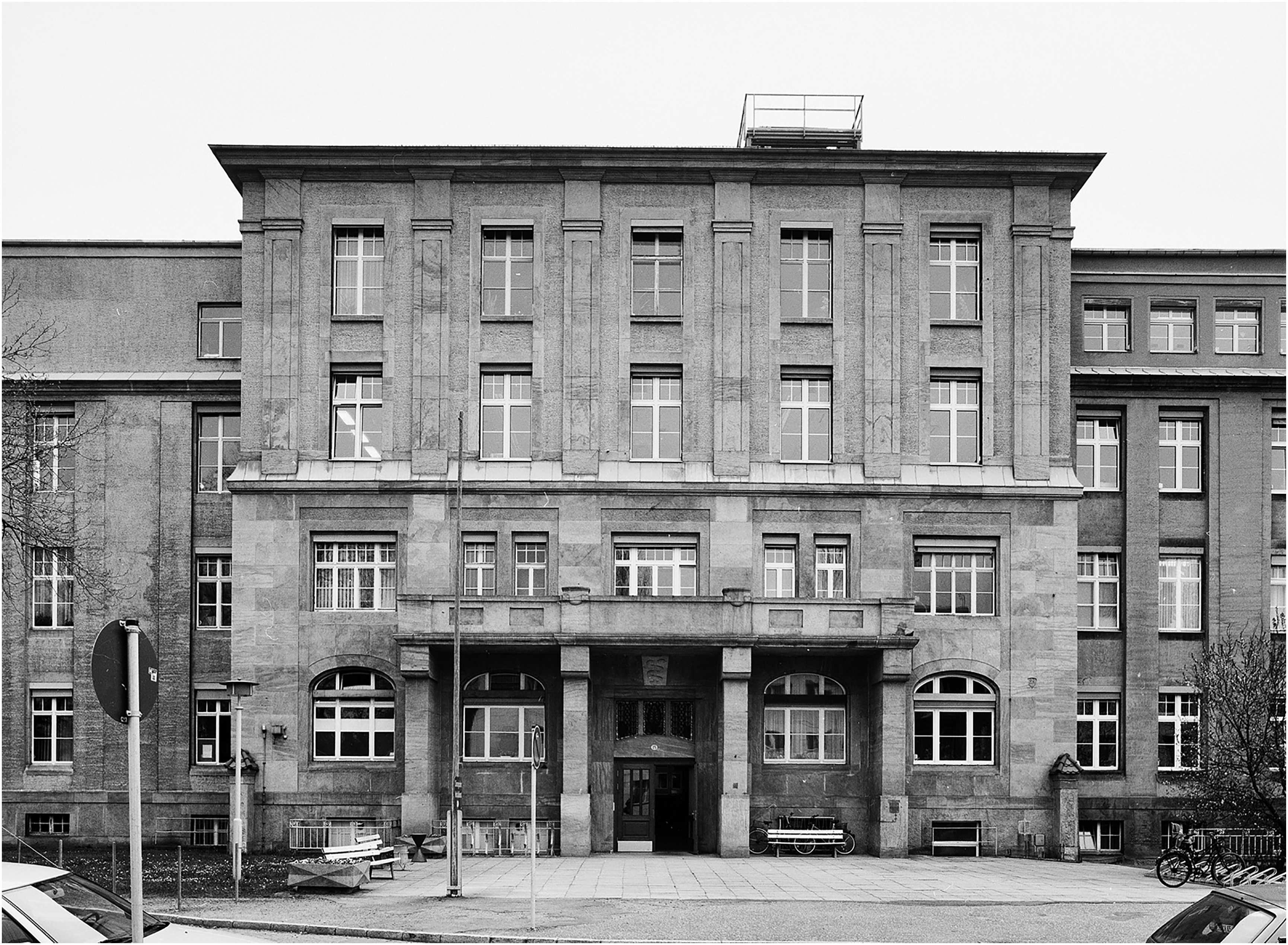
The building of the Institute for Dental Trainees in Dresden. Source: SLUB / Deutsche Fotothek, André Rous, CC BY-SA 3.0 DE.
Late years
In 1955, Vogelsang was confirmed as the head of the Dental and Maxillofacial Clinic at the City Hospital Dresden-Johannstadt and received a teaching assignment in maxillofacial surgery. On the occasion of his 68th birthday in 1958, he was awarded the title of professor in dental medicine/maxillofacial surgery by the Medical Academy Dresden. 10 This was a special honour for Vogelsang, as he was never able to complete his habilitation due to the National Socialists and later professional political conflicts in the German Democratic Republic. The habilitation is the highest academic degree that can be achieved in Germany and is typically a prerequisite for a professorship.
Johann Alexander Vogelsang (Figure 2), a highly esteemed dentist and contributor to the development of maxillofacial surgery in Dresden, died following a heart attack on 8 May 1963. 3
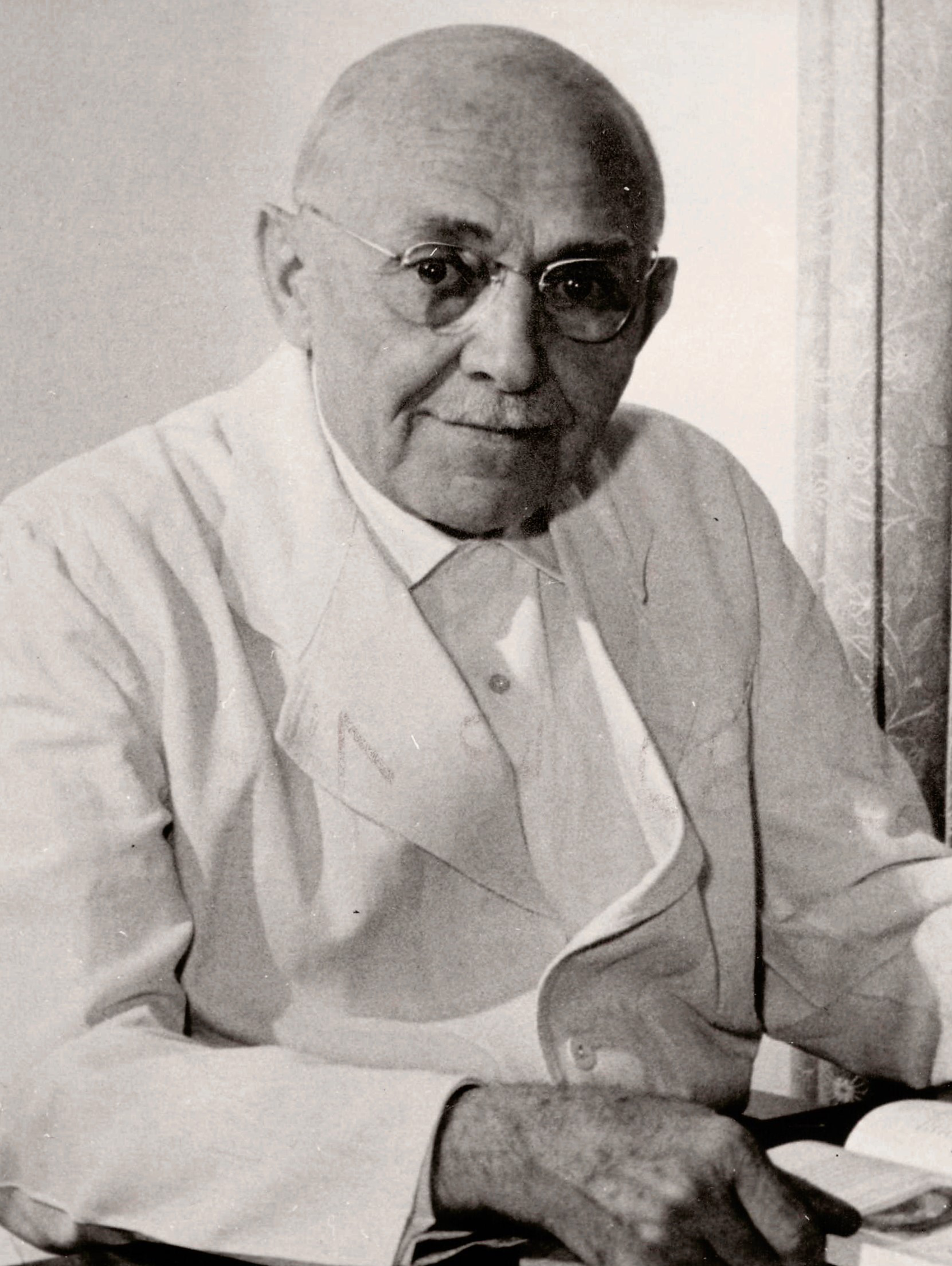
Johann Alexander Vogelsang. Source: Gabriele Börner.
Footnotes
Declaration of conflicting interests
The author declared no potential conflicts of interest with respect to the research, authorship, and/or publication of this article.
Funding
The author received no financial support for the research, authorship, and/or publication of this article.
